
 Ask ChatGPT



Description: A candid podcast hosted by Camilla Tominey and Tim Stanley discussing significant news topics including UK politics, culture, and foreign affairs, featuring interviews with notable figures.
The episode explores Britain’s readiness for potential military threats, particularly from Russia and China, amidst new governmental defenses investments.
Written by AI. May contain mistakes.

Get the gist, explore an idea or ask about something said.
 Claude
On The Daily T, what are the key points of this episode?
Searching your listeningAutomatic transcript. May contain errors.
0:09Defence Secretary John Healy has said the Russians are coming, but don't worry because Labour Britain is ready to defend itself. Or is it? We speak to former MI6 boss Sir John Sawyers to discuss the threat not just from Russia but also China and we couldn't resist asking him who his favourite James Bond was. Welcome to The Daily Tea with me, Tim Stanley. And me, Camilla Tomini.
0:43Tim, shall we talk about our preparedness for war? It's a serious topic. My father was at a dinner in the City of London at the weekend and was sitting next to a former spook. I mean, was he? Because why are spies telling my dad that they were once spies? Yes, good point. Anyway, this person did work for MI5, was unnamed, and he was just having a casual discussion with my dad over dinner about how we could be at war with Russia in the next two to three years. Wow. Bit scary. And then I discussed this with somebody else this morning who is interested in security and other matters, and he sort of said, well, we're already partially at war with Russia, aren't we?
1:19But the point is we've got a conversation going now, Chinese spying concerns in the background after the collapsing of that case, the defence secretary, John Healy, stressing the need to reinforce our defences in the face of the Russian threat. I personally think this is all nonsense. I don't think Russia wants to invade us. I don't think it even wants to invade France. And if it were to try to invade us, it's got several other countries it needs to get through first. But I think this is all about building the case for rebuilding Britain's defence and for investing more in defence, which, don't forget, is a conversation started by Donald Trump when he placed pressure upon NATO to up its defence spending.
2:00A committee report, a defence committee report, has stated that Britain is not ready for a war. No, which surprises no one. We've got the smallest army since the Napoleonic Wars. Right, right. I also wonder if we should be ready for a war. I just don't think it's a natural state of countries to be on a war footing all the time. But nonetheless, OK, we can come back to that. But the experience of Ukraine, maybe. Did we expect there to be a land war that isn't dissimilar in how it appears to the outside world as the First World War and the Second World War? I thought if we were going to go to war, it was either going to be nuclear, God forbid, or it was going to be some kind of cyber war.
2:34And what we've observed from the invasion of Ukraine is that, no, it's actually troops on the ground in ditches defending territory. And I just don't feel that the UK is in a position to do that anymore. But it might have been 30, 40 years ago. That's the problem, right? Well, it might have been. But we're not going to be defending our own territory, is my point, because no one's going to be parachuting into Devon. and we're also, we're not going to be in the business defending Ukrainian territory either. I don't think we can, I don't think we should. We need to have the appearance as if we might be able to do that if it happens, possibly.
3:05Modern defence for a country like ours is about bang for buck. It's not about numbers, it's about lethality. They like to say how lethal are your weapon system. They can kill lots of people with very little effort. Yes. So a committee reporter said we're not ready for a war. I don't think we're ever going to fight. But also, Defence Secretary John Healy has announced£1.5 billion to be invested, which will result in 13 new munitions factories. So, again, this is partly about re-industrialising the country. Now, John Healy disagrees with me, and he thinks that Russia does pose a direct and imminent threat to the UK.
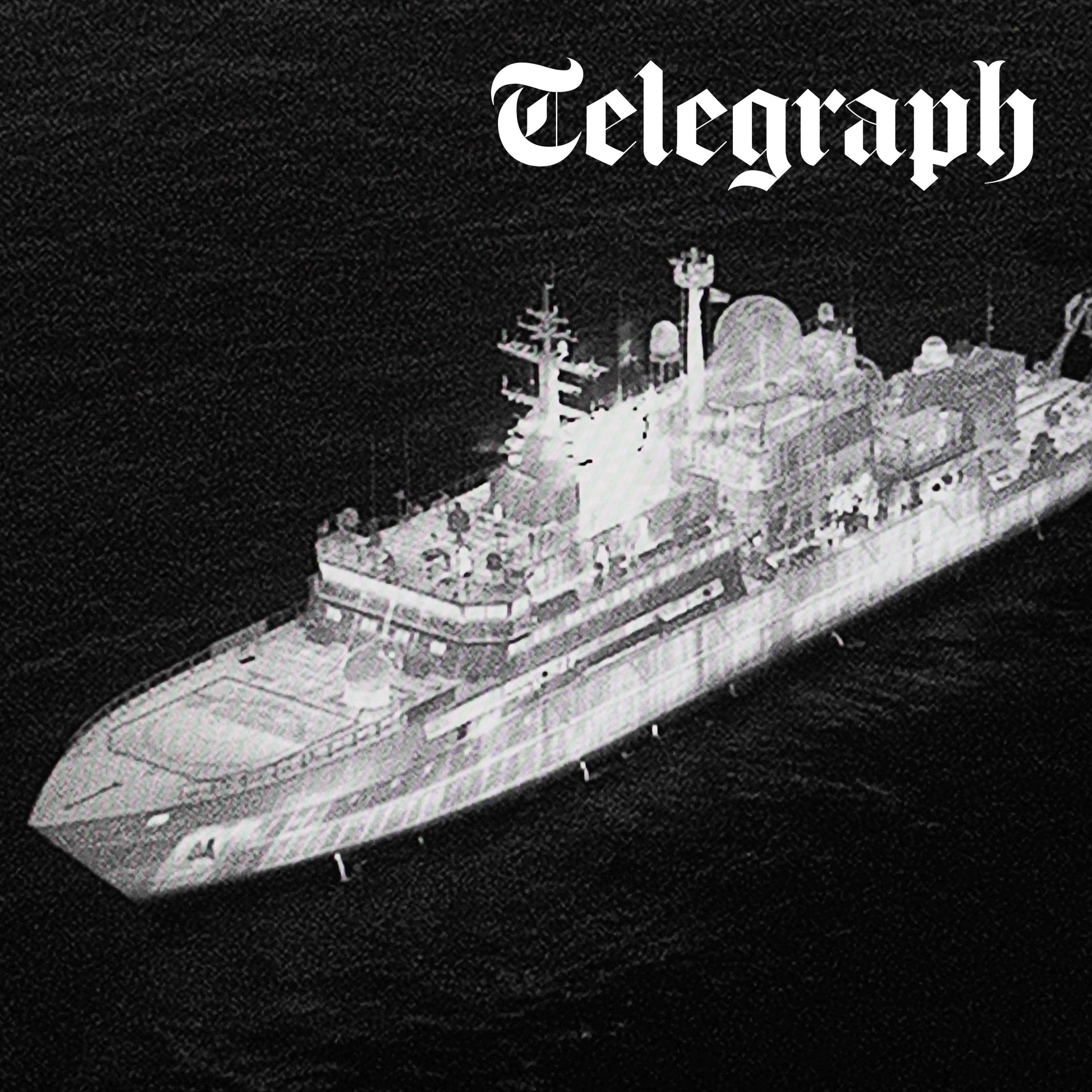
3:40Here's him talking about it. As I speak, a Russian spy ship, the Yantar, is on the edge of UK waters north of Scotland, having entered the UK's wider waters over the last few weeks. This is a vessel designed for gathering intelligence and mapping our undersea cables. We deployed a Royal Navy frigate and RAF P-8 planes to monitor and track this vessel's every move, during which the Yantar directed lasers at our pilots. That Russian action is deeply dangerous. And this is the second time this year that this ship, the Yantar, has deployed to UK waters. So my message to Russia and to Putin is this.
4:30We see you. We know what you're doing. And if the Yantar travels south this week, we are ready. I tell you what, it's more effective than shut up and go home from Gavin Williams. That's right, yes. I think it's... But we are ready. Does that mean we're going to blow it out of the water? I don't know what we're going to do. But to be fair, there are concerns, aren't there? This is all down to the undersea cables. Right. We've got these Russian ships coming over and delving around in our undersea cables. Yes. And there are lots of doomsday scenarios involving, you know, our internet being completely shut down.
5:03Suddenly planes are falling out of the sky. And Britain, because it's an island, needs to trade. So it's a maritime nation. So this is why things like the Yazidis mattered so much to us in Yemen, because we need our waterways to be open. We need access to the sewers so that we can trade. So it's important to us in a way that perhaps isn't quite so important to the Americans. All the focus is upon Russia because that's fighting the Bang Bang War. But actually, there is another kind of war going on, which is the intelligence war with China. Yes. And there we've had a number of stories, be it the ongoing efforts to build a massive Disney theme park style Chinese embassy.
5:44Beijing meets Mickey Mouse. Right, which is unnecessarily large with sort of rooms that if you wanted to could fit a torture chamber into. Yes. We have a case against the alleged Chinese spies that fell through. and we also have of course the ongoing persecution of Hong Kongers which is the real reason I think why much of this matters is because British MPs tend to be heavily involved with Hong Kong dissident movements and therefore if the Chinese are spying on parliamentarians they might be able to do nasty things to their people back home. And concerns about the cars that are driving around our ministers and officials and a warning that went out this week that if you're in a Chinese made car possibly a good idea not to discuss confidential information.
6:30It could be listening. So it's like they were concerned, the Liberal Democrats are concerned about Teslas. May I humbly suggest, Sir Ed Davey, that this is the least of your worries if we've got officials and others being driven around in, I mean, because China are taking on Elon Musk, aren't they, when it comes to producing these electric and battery-operated cars. And we know the net zero pledge means that we must buy into all of this stuff, which could be naive and extremist. If Beijing are listening in on my car, they're just going to hear a lot of GB News and Classic FM because I'm of that age.
7:02Well, you have displayed a paranoia about people listening in to you in general. Yes. Because earlier we interviewed the former head of MI6, also known as... Fascinating man. ...C. Yes. The MI5 chief who dealt with James Bond is called M. We know that. This is C because C is in charge of MI6 and M is in charge of MI5. Sir John Sawyers. Now, you felt quite intimidated. Some context to this interview. I didn't realise it was about to happen. We had just finished one recording. He appeared spy-like. Suddenly there was this tall man with penetrating eyes standing in the recording studio. And unprepared for him, I was saying, who is this man?
7:42He just showed up. He was actually in the gallery when you said that. I know. I think he heard. And then he came in with low expectations of our qualifications when it came to interrogating him. However, to be fair to Sir John, he answered our pretty direct questions with pretty direct answers. He very much did. And we covered all manner of subjects when it comes to spy craft. Who does pose the greatest threat? Russia or China? All the way to obvious and frankly quite lowbrow questions about 007.
8:25So John Sawyers, thank you very much indeed for joining us on The Daily Tea. Pleasure, Camilla. We are facing difficult times, but I'd like to go back in time and find out why it was that you first joined MI6. Well, when I was at university, I was actually running the Students' Union for a year after I graduated and I was very attracted by the Foreign Office, so I applied for the Foreign Office and slightly to my surprise, I was accepted and all geared up for joining what was then the Foreign and Commonwealth Office in September, when I got a sort of tap on the shoulder from a professor I knew at Nottingham University.
8:58And she asked me to come around for a cup of coffee and said, congratulations on getting accepted by the Foreign Office, but would you like to do something even more exciting? And that even more exciting turned out to be MI6. I love that there is a literal tap on the shoulder. Yes. Why were you tapped on the shoulder, do you think? Well, I don't know. I think because someone obviously thought I might be an interesting proposition to be considered by MI6. What were you studying? I went to study science. I ended up with a degree in physics and philosophy. Okay. It's a bit of a combination, isn't it?
9:30It is a combination, yeah. Right, right. So I thought they sometimes liked people with languages. They do, but languages are things you can graft onto people. Right. And I studied Spanish and then I studied Arabic and worked a lot in the Middle East. So you learn those things, but certain personality qualities you can't graft onto people. What were your personality traits, do you think, that made this professor single you out? I don't know. Come on, John. I mean, we were talking earlier, actually, about whether you needed to be introverted or extroverted to be a good spy. I think on balance, the best diplomats tend to be extroverts and the best intelligence officers tend to be introverts.
10:07And actually, I discovered that after a few years in MI6 that actually my real interest lay not so much in operations and in gathering intelligence, but in politics and policy and diplomacy. And so I spent most of my career in the foreign office rather than MI6 until I got a second tap on the shoulder, this time from the cabinet secretary saying, we need people to apply for the job of chief of MI6 and we think you'd be a credible candidate. Could you please apply? And so I applied and the second tap on the shoulder saw me going back to MI6 for five years as its chief. And there was a big difference in the world and its situation between when you were first drawn into this world, which had been the Cold War, and then later on in the new era of terrorism and cyber war and things like that.
10:56It was very much so. I mean, MI6, I have to be honest, had not reformed and modernized particularly much during the intervening 25 years. And of course, one reason why they wanted someone who hadn't spent their career inside the service was that MI6 was going through some question marks about its role and its contribution in the wake of the false intelligence on Iraq, the question marks over treatment of detainees. And so confidence needed to be restored in MI6 and in its intelligence product. and that was part of the role for part of the purpose of sending a relative outsider like myself. I started in MI6 but as I say most of my career was elsewhere.
11:34Did that mean greater transparency? It involved a bit more openness. You had to rebuild trust. You can't rebuild trust by saying nothing and that trust was with other departments of government, it was with parliament, it was with the media and more widely with the general public. So I opened up a little bit as to what we were doing and why certain things needed to remain secret and why secrecy and intelligence were so important for our national security. And I think explaining that did help rebuild some of the trust that had been eroded in previous years. Can you talk to us a bit about what the role actually entails?
12:09How many hours are you having to put in? Are you sleeping much? If there's something very, very critical on your radar, presumably it is keeping you awake at night, Were you beset with worries and felt traumatised by what you were witnessing? What are your kind of most stark memories from performing such a significant role? Well, it's an enormously responsible job. In most parts of the public service, you have a minister of some form who's seen as the most senior person in the organisation. You go into the Foreign Office, you say who's in charge, they'll say the Foreign Secretary. In MI6, who's in charge?
12:44It's the chief. You are genuinely the leader of the organisation. You have to inspire and motivate the people. You have to have the best technology to ensure that your operations are safe and secure and productive. And you have to ensure that you build that relationship of trust and compliance with the obligations on you with the legal framework in order that, you know, that sort of compliance is your your license to operate, if you like. And you have to nurture that and value that. And so it's the job of chief MI6 is unique in one sense. And you're the only avowed person in the organization or the only person in the organization at that time who can say, yes, I represent MI6.
13:26Everybody else has a cover role. Yes. Good point. And so there's a lot of dealing with external players, say the media, the parliament and the other government departments. So it's very much an outward facing role, as well as ensuring that the operations and the work of MI6 is as reliable and productive as possible. Now, I didn't have an operational background, but there was no shortage of people inside MI6 who know about running successful intelligence operations. And I could rely on most of that for them. But there were times when we were conducting particularly risky operations. I'm not really able to talk about them, but particularly risky operations, especially on the counterterrorism side, when I did have to make the assessment as to whether the risk was justified, have to explain it to the foreign secretary or the prime minister and get their approval for us going ahead.
14:21Was that the kind of operation that would keep you up at night? I mean, if you think back at your time there, your tenure, was there a particular period? I appreciate you can't go into details. It's the one man in the world that can say, I'm sorry, that's classified. But you can't go into details. But can you just perhaps point out some periods which were particularly tricky for you? Well, there were individual operations where you were putting your agent in a position of real risk and you had to guard against all sorts of possibilities. Could they be compromised? Could they be killed? Could they be turned against you?
14:55But we know that the operations that we conducted saved hundreds, if not thousands of lives over the years. And people who have no idea that their lives were at risk. And when you stop a bomber getting on board a transatlantic airliner with the intention of blowing it up as it comes into land in JFK, well, that's, you know, nobody notices that something doesn't happen. Yes. And the same was true probably in the London Olympics. I was chief in the run-up to and through the London Olympics. David Cameron was prime minister at the time, and he said to myself and the head of MI5, can you ensure that we have a terrorism-free Olympics?
15:31And we said, well, we can't give you an absolute guarantee, but we will do everything we can to deliver that. And we devoted a huge amount of effort to keeping the London Olympics safe. And it was fantastic London Olympics. Jessica Ennis won a gold medal, and Mo Farah won two gold medals. But the biggest triumph for me was nothing happened. There was no security threat against the London Olympics, and that was a triumph of intelligence. Of course, that was a particularly sensitive period because we had just won the bid for London 2021, hadn't we, when 7-7 happened. Yes. I mean, it went from joy to tragedy in a matter of hours, didn't it, in the UK?
16:05Yes. Was your principal role then to keep the public safe, or is there a philosophical component to it? Are you also fighting for British values? No, you're fighting for British interests, upholding British values. The biggest threats we deal with now are from state actors, Russia above all, China. A change has happened in your time. It has. And certainly when I was chief of MI6, the highest priority on the list was countering terrorism, stopping terrorist attacks in the UK. And we were relatively successful at that. We had our arms around the problem, although it got worse again in the middle of the last decade, partly as a result of the Syrian civil war and radicalization that that generated.
16:44So some of it is operational and keeping people safe. But the bigger part of it is ensuring that government ministers are able to take the best informed decisions that they can on the big security threats that we as a nation faces. A good example of that is probably the run up to the Ukraine war, where there was a lot of speculation as to why Putin was assembling around the borders of Ukraine an army of almost 200 ,000 people. What was that? What was the purpose? And many people say, oh, we know Putin. This is just get leverage. This is just to get some traction. But it was MI6 and CIA who said, no, actually, we think this time he's deadly serious.
17:21And that enabled Boris Johnson, I think, was prime minister at the time and Joe Biden in the United States to prepare the ground for a full scale Russian invasion aimed at toppling the regime and toppling the government in Ukraine. And that's the sort of strategic intelligence that can give policymakers more time, better clarity as to what it is they're up against and make better decisions as to how to deal with it. And that's an example of it. And what if you got a prime minister who, by many people's judgment, is bad for national security? What if Jeremy Corbyn had won in 2017 or 19? How would MI6 have handled a prime minister who has such controversial views about national security?
18:05Yeah, well, that was a particularly difficult time. I share the implied concerns about Jeremy Corbyn. We didn't have a great choice in the 2019 election between Jeremy Corbyn and Boris Johnson, but it was clear to me which one was the bigger danger to the country. And had he been elected, as we faced a similar problem with Michael Foote back in 40 years earlier, what if he'd been elected in the 1983 election? Well, I think the first thing to say is the British public are wise enough not to put people like that into power. And that's happened twice now. Second thing, had he got in, well, ultimately, we are in service of the country.
18:40If the people of the country have elected someone who we don't think is entirely reliable, we're not going to undermine them. That's not the role of a security service. is to try to educate them, try to keep them informed, try to support whatever they're willing to do to buttress UK defence and UK values. Did you not agree with those who said, whatever he might be like domestically, actually Boris Johnson is a good global statesman? Well, I think one of the good things that Boris did was on Ukraine. He was very clear and very strong on Ukraine. I think he was unrealistic about his global Britain tag.
19:16I don't think that recognises the extent of the changes in the world that have happened over the last 25 years. And Britain has to sort of play a role which is commensurate with our weight in the world. We're still hugely admired as a country, but we are, you know, in terms of our share of global GDP, we are half what we were 20 years ago, and that impacts on our influence as a country. I note that your tenure at MI6, 2009 to 2014, is in the run-up to Putin's invasion of Crimea. Are you there as the head of that organisation, tearing your hair out because you are witnessing a degree of political complacency towards the Russian president?
19:54I wouldn't have said that. The 2013 crisis that led to the 2014 intervention in Ukraine by Putin was not something which Putin orchestrated. It wasn't like the 2022 invasion of Ukraine. It was something that stirred on the streets of Kyiv when the pro-Russian president of Ukraine was basically ousted by the people on the Medan Square. And so it was a crisis that crept up on all of us, including on Putin. And in the end, Putin wasn't able to sustain his his placeman in power in Kiev. He'd insisted that the Ukrainians tie their economy into that of Russia rather than that of the European Union, which the Ukrainians wanted to do.
20:37And it was in the end, Putin smelt an opportunity both over Crimea and in the Donbass to turn this crisis, which he hadn't planned for, to his own advantage. And it was when he started moving people into Ukraine, into Crimea, that we realized this was a major national issue, which we needed to really address very, very clearly and very strongly. And, you know, to his credit, David Cameron as prime minister, he did recognize this. He understood it. I think Philip Hammond was Foreign Secretary at the time. He, too, recognised it. I know. I mean, the only criticism would be that Cameron had entertained Putin at the judo and all sorts, and therefore perhaps they were asleep at the wheel.
21:20Well, you could say the same about their policy towards China as well. I think they were a bit naive about the scale of the challenge that these countries face. And politicians like to get on with their counterparts. It is an important part of diplomacy and foreign international relations. to talk to people you disagree with. And it's easy to talk to the leaders of France or the United States or Germany or whatever, or Australia. It's much harder to get progress with the leaders of Russia, China, Iran, and so on. And I think it's right to reach out, right to have engagement with them. But you have to do it with very clear eyes and know where the threats and the challenges lie.
21:57I think the embrace of China during the early time of Xi Jinping in office was overdone. And this golden era quickly went sour. So, yes, mistakes are made. But equally, I don't think it was clear that Xi Jinping was taking China in a radically different direction until 2014 or 2015. It took a while for that to sink in. Was MI6 conscious of the slow degrading of the military? And is that something that concerns you today? Well, we're very conscious that defense is a collective effort, which involves the armed forces, the intelligence services, the more enforcement authorities as well. I mean, for example, the declining size of the army.
22:37Well, that is obviously a concern. Now, I'm not surprised that armies are depending more on technology. We're seeing in the Ukraine war how drones and unmanned vessels in air, sea and land are playing a bigger and bigger role. And obviously, if you have more unmanned vessels, unmanned kits, then it's the guy operating the computer back in base, which is the crucial skill. and you need fewer of them than you do people on the front line if you're in a sort of traditional old-fashioned conflict. So I think the key thing for the armed forces is for them to adapt. I'm not fixed on a particular size of the Army or the Air Force or the Navy, but you've got to have a certain capability, and a lot of that capability now comes through technology.
23:23And it's the same in the intelligence space. And when I arrived, we had an MI6. We had a target for the size of the service, which meant we had to put most of our money into recruitment. And I quickly worked with the people who were involved in this and inside the service and on the tech side. We realised actually the requirement for the service wasn't for more people, it was for better tech. And so we diverted, we scaled back our growth ambitions in order to divert more money to the tech side of the business so we could keep up with a rapidly changing tech environment. We can't really keep up with Russia and China though necessarily when it comes to issues like cyber hacking and the threat to our underseas cable.
24:04I mean, you mentioned a sort of, I suppose the telegraph perception would be of an axis of evil there, China, Russia and Iran. Which of those poses the greatest threat to the UK right now? There's no doubt it's Russia. That's not to say the others don't pose a threat. They do in their different ways. You have Iranian operatives trying to kill or take out critics of the Iranian regime. You have China very active in gathering intelligence and trying to some way subvert our system. But the biggest defense threat is undoubtedly Russia. They're the ones who should be the focus of our national defense.
24:40They've shown in Ukraine, both in 2014 and again in the last three years, that they are ruthless. Sometimes they can be very effective. They can be very violent, that they can employ propaganda and hybrid warfare. cyber attacks, as you say, in support of their military effort. So Russia is undoubtedly the biggest of the threats as far as the UK is concerned. What do movies and TV get wrong about spycraft? I mean, I'm wondering if a young John was a John le Carré devotee, somebody who free-based James Bond. I'm just wondering whether these are real depictions of what actually goes on in the field.
25:21It's not really the reality, any much as slow horses is a reality of what happens inside MI5. It's quite fun. Do you watch it? I do watch slow horses. I think it's great fun. It actually says something quite accurate about MI5 as well. But that's why MI6 people enjoy it so much. What the politics of play inside. And their self-defensiveness. Yes, OK. But as far as foreign intelligence is concerned, and James Bond is also fantastic fan. I'm a great Bond fan. But what it suggests is that it's all about the individual. And what intelligence work is really about these days is teamwork. Yes. It's about a collective effort to develop a plan using the very best technology in order to exploit a weakness in one of the organisations that threaten us, whether it's a terrorist organisation or a hostile state, in order to get to disrupt their activities and to get better information on their intentions.
26:13Before we move on to more serious fare, I have to ask you who you think was the best Bond? Undoubtedly, Daniel Craig. He was outstanding. Oh, interesting. I'm a Daniel Craig fan. Yes, me too. I'm afraid that makes me doubt MI6. Don't say Roger Moore. It's Roger Moore. Oh, come on. Can I just say that that is so Tim Stanley that you picked Roger Moore of all of them. It's Daniel Craig, closely followed by Sean Connery. I agree 100. I'm with you 100 % Camilla. Oh, no, no, no. For goodness sake. No, Bond needs to be a gentleman who can wear a safari jacket. You don't have a pen that can fire a laser or anything like that.
26:47I used to. Poison the bone. Really, is he? There you go. You're joking. Stop this. That's incredible. In this autumn, the CPS dropped a case against two alleged Chinese spies. You called the decision perplexing. Explain that for us. Why was it perplexing? Why was it disappointing? And what signals did it send to China? Well, it was perplexing because I didn't understand what had led to the prosecution being dropped. And there were lots of rumors in the press. And I didn't know what the true story was. I think more information has come out of it since. It looks like a failure resolved by the Director of Public Prosecutions, who failed to take forward a prosecution, which even though the case, as far as I understand it, was backed by strong evidence.
27:27So there was a miscommunication somewhere along the line between the Cabinet Office and the DPP, Department of Public Prosecutions. But I tell no reason why the prosecution should be dropped. What do you think about the prospect of this super embassy being built on the site of the old Royal Mint in Tower Hamlets? There's been concerns raised by the intelligence services, by the police. Blueprints have appeared of spy tunnels underneath this very importantly placed sort of national monument in the capital. Well, do the Chinese want to have a sizable embassy here in London? Yes, they do. And we want to have a substantial presence in Beijing as well.
28:06There are arguments in both capitals about development of embassy sites. I think we must clearly look at what the Chinese are planning with a view to how they might exploit this against our interests, against our security threats. If there are cables running underneath the Royal Mint building, can they be diverted? Can they be moved? So I think there are some practical questions in here. I don't think we should block a plan simply because it's Chinese. As I say, you've got to have a relationship with China. China is the second biggest economy in the world. We as a country want to grow our economy.
28:44China poses a threat, but it's not an enemy of the UK, I don't believe. And they're of scope for the UK and China to work with one another for mutual advantage. We can't work out if they're an enemy or not because of the language around the collapsed spying trial. They're a threat. They're not a threat. They're the enemy. A competitor. Just on the Chinese theme. Sorry, just to clarify on that. Yes, please. They do pose security threats to us. Yes. That is absolutely clear. Yes. And the attempt, if the allegations are true, and there's fairly strong evidence for it, that they were trying to subvert AIDS in Parliament, well, that's an example.
29:14But you don't have to be an enemy for that to be illegal. If that was done by friendly power, I would hope that was illegal as well. In terms of counterterrorism, how has the threat evolved in the last decade or so? Well, when I was chief, and indeed in the years after 9-11 and including 9-11, the terrorist threats tended to be complicated. They tended to be dramatic, like taking down buildings or blowing up airplanes in the sky. During my time as chief, MI5 and our own service were more skillful at breaking into these plots and understanding what was going on and disrupting them. Obviously, we had the terrible experience of 7-7 back in 2005.
29:57Other countries, the Spanish, the French, the Germans, also had major terrorist attacks in that period. But as cooperation on counterterrorism improved, the terrorists themselves realized that if they did anything complicated, they were likely to expose themselves to being discovered and found out. And so they turned to simpler versions. They turned to hiring white vans and driving into crowds or taking knives and attacking people. It got more brutal on a sort of personal level, but less lethal in that the perpetrators weren't able to carry out mass casualty attacks, which they had aimed at previously.
30:32But of course, the simpler an attack is, the more complicated it is to disrupt. And I think MI5's goal has become increasingly difficult of disrupting these attacks and knowing where the threat is coming from. What are your views on the PREVENT programme? We have covered on the podcast some of the deficiencies that were pointed out in the investigation that is ongoing into the Southport killing. Axel Rudicabana was flagged to PREVENT. We've also spoken to Sir David Amos's daughter, Katie, who has spoken about the fact that Prevent was meant to investigate her father's killer, the Tory MP, and they had a coffee in a McDonald's and it was left at that.
31:10Repeated concerns being raised and indeed an extremely comprehensive report by William Shawcross suggesting that that programme is no longer fit for purpose. Well, I've been reading those accounts. I mean, Prevent is now 20 years old, as indeed the whole counterterrorism strategy has been, in which Prevent is one of several lines of approach. I think, as we say, the attack has evolved. I think when PREVENT was drawn up, it was focused on threats from groups that adopted extremist ideology, particularly extreme Islamism. And I think the PREVENT program was trying to identify people who have been radicalized in mosques or whatever and were inclined to violence for ideological purposes.
31:56I think what's happened recently, and I'm not a sociologist, I can't explain exactly why, but more people are drawn to violence for non-ideological purposes. They're just attracted to blood and gore. There's a nihilism now, isn't there? And thank heavens we don't have the sort of gun laws they have. We have much tighter gun laws than the Americans have because some of these knife attacks would be with automatic weapons if the perpetrators could get hold of them. We're very thankful that we've got the tight control of weaponry that we have in this country. So I think it has evolved. Obviously, Prevent has to evolve with the changing threat.
32:30And if Willie Shawcross has studied this, and I trust his judgment on this, then it needs to evolve. It's no longer fit for purpose. It needs to be adapted. Well, I'm sure he's right. Social media must have made the job of MI6 and MI5 so much harder. Yeah, people expose themselves more, of course. Oh, good point, yes. So you can track what is happening. You can track who is associating themselves with these radical views and ideologies. But it is difficult. There's just so much information out there, triaging it to work out what is a real threat. I think that is the massive challenge that the police and MI5 and others have.
33:10I think that's one reason why I feel very nervous in your company. I don't know. You're feeling so nervous. I'm sweating. It's the temperature, but it's also the presence of MI6. I mean, I'm sort of... Nothing to hide Tim Stanley. That's the way it should be, Tim. If Tim Stanley has anything to hide, it will be carved into a Bible somewhere. In a democratic free society, I don't know, I remain very sceptical of the intelligence services. I worry they have too much power and that actually social media has made it easier for them to keep tabs on us. And some of your definition of what is a threat might almost tip over into just policing people for their private opinion.
33:45Well, Tim, this is an important concern you're raising. I think upholding the values of our society, free speech and so on, is really important. If someone is trying to disrupt your capacity to walk freely down the street or to say what you want to say, then that is a challenge that the law enforcement and intelligence services need to address, not just you personally, but I mean if it's a wider threat. The sole purpose of the intelligence agencies is to keep this country safe so that the values that we live by can be upheld. True, but I mean, I can't point to anything directly that MI6 has been found guilty of because it's MI6, but you have policemen who adopt fake identities and abuse people.
34:28You have the US military droning and killing innocent people. The way you've just put it, that your job is there to keep us safe, I mean, that does imply a certain, almost as if you're trying to maintain the rules, perhaps by operating a little bit above the rules. And that's one thing that concerns me, that there's a group of people in our society who have that kind of not just power but self-confidence that they're doing it for my benefit? Well, Tim, the legal framework for the operations of the security services are very clear. There's a Security Service Act and an Intelligence Services Act.
34:55The oversight and authority required to operate comes directly from elected ministers, Foreign Secretary and the Home Secretary. And there is oversight by Parliament and oversight by the judiciary. So the monitoring of the way in which the intelligence services use their powers is very thorough. and I always, when I was chief, and I know my successors have done the same, you make a really serious point to make sure that those who are overseeing your work understand it, understand the context, and if they've got reservations or concerns, that they air them so that we can address them and, if necessary, change what it is we're doing.
35:31And as technology changes, then obviously the intelligence services need to adapt and if the nature of that technology is to be more and more intrusive, then finding the right balance of that isn't a matter solely for the intelligence agencies. That's a matter for those who oversee and empower and authorise the agencies as well. I'm wondering if this is a bluff, double bluff. You two secretly know each other. The umbrella you have downstairs... I'm a member of CND. As in the old days, do I automatically go on a file? Well, I don't know. Journalists don't make... Are you on a file? Oh, this is what this boils down to.
36:05Are you on a file? Am I on a file? No. Because I support, like Jeremy Corbyn, nuclear disarmament. We may be being monitored by the Russians and the Chinese, but I don't think we're being... We're just not important or significant enough to... Oh, you are naive. Camilla, you're a source of good sense. See, Sir John. Right, final question. How does MI6 future-proof itself? What does MI6 need to be? What does it need to morph into? You've mentioned technology. I'm thinking about who you need to recruit for the future, how we need to take on these threats from China, Russia, Iran, and everyone else.
36:37Well, that's the challenge facing Blaise Metrovelli, the new chief of MI6, and she's brilliantly qualified and prepared and developed as a professional intelligence officer to address some of these concerns. So I think she's the right person to answer that question. I think, obviously, we need to develop an intelligence service that can produce those insights into the intentions and plans of those who are hostile to the UK. And that requires having human access. It was interesting looking at the report the Israeli Security Service did into the atrocities on 7 October 2023 by Hamas. And the Shin Bet concluded that they were over-reliant on technical intelligence and didn't have enough human intelligence.
37:23And they made the wrong interpretations. And in a sense, Hamas were able to play them by saying one thing on the technical side and then having their real communications done by traditionals or word of mouth. Now, no two situations are the same, but there's no doubt that technical intelligence gives you a certain level of understanding, but it's only when you get inside the head of the leaders and decision-makers in foreign countries that you really know what the threat is that you face. The threat is the combination of capability and intent, and you only get the intent, really, from human intelligence.
37:58So that's interesting. So if you're a Gen Z or Gen Alpha and you want a job that isn't going to be replaced by AI... That's the only way. Join MI5 or MI6. That's a very good plug. Thank you, Kumaila. It's a good plug. Also, we can conclude safely that while the new James Bond is still being chosen, it will not be an AI composite. It will be someone who speaks human. I'm hoping it's Tom Hiddleston. I really am. Are you? Who are you hoping it is, Sir John? I don't have a favourite. Idris Elba. The Aaron Taylor-Johnson is in the frame. Tom Hardy. All thugs. My favourite. You're just mentioning people who are just all play thugs.
38:33Henry Cavill. What about a gentleman? How about Henry Cavill? Yeah, OK, fine. Could we have a moment just to appreciate Henry Cavill? The most important thing is that James Bond continues and there's a new generation of Bond films which we can all thoroughly enjoy. Well, it's a good recruitment tool, I believe, for the intelligence services. He will return. Sir John Soyuz, thank you very much because we've talked about very serious issues, but thank you also for having a sense of humour about your time at MI6. Great to have you on The Daily Tea. Thanks, Camilla. Thanks, Tim. Now that Sir John is no longer in the studio, Tim, are you convinced?
39:04Do you think he is listening into your calls? Who is listening into Tim Stanley's conversations? With his mother, with Bertie and with others? I'm not only paranoid, I have a very old-fashioned understanding of how the technology works. I always listen out for a click on the phone. Do you know what? I mean, you could have been given a tap on the shoulder at Cambridge quite easily. Yes. Maybe you are a secret agent. I would be very, very deep. So deep even I don't know. In sketching. I think it's a lovely idea to be a spy, but I'm the kind of person who would go around saying to people, I'm a spy.
39:38Yes, I know. I would not be able to keep it under my hat. But then again, it could be a double bluff. So that could make me the perfect spy. Yeah, I would also be blabber-mouthing everything I'd found out and also showing people my poison tip umbrella, you know, recording videos on X and Insta about it. So journalists probably don't make good spies, but we do make good interrogators of ex-MI6 chiefs. I think actually in the end he was pleasantly surprised that we were actually capable of asking him some serious questions about some serious issues. Yeah. Now, talking of which, you're going to be doing an economy pre-budget special tomorrow with...
40:16Yeah, Alisa Heath and Jacob Rees-Mogg. And it's going to be punchy. We'll be back tomorrow, 5pm.
40:27Thank you.
A stark new review has found that Britain is not ready for war, warning landing on the same morning the Government unveiled fresh plans to boost the nation’s defences.
This morning, Defence Secretary John Healey unveiled a major £1.5bn investment in 13 new UK munitions factories, a bid to ramp up Britain’s defence industry as global threats escalate.
The announcement came as Healey revealed that a Russian intelligence-gathering ship, the Yantar, has been skirting the edge of UK waters north of Scotland, allegedly firing lasers at RAF surveillance pilots and mapping Britain’s undersea cables. “My message to Russia and to Putin is this: we see you… and we are ready,” he said.
All this lands as MI5 issues fresh warnings about Chinese espionage. Following the collapse of the case against two men accused of spying for Beijing, security officials have now named two Chinese state-linked ‘recruiters’ using LinkedIn to target Westminster insiders.
Camilla and Tim discuss the future of Britain’s defence with the former head of MI6, Sir John Sawers, as they ask him about China, the failure of the Prevent anti-terrorism scheme programme and why he thinks Russia is the greatest threat to this country.
We want to hear from you! Email us at [email protected] or find @dailytpodcast on TikTok, Instagram and X
► Sign up to our most popular newsletter, From the Editor. Look forward to receiving free-thinking comment and the day's biggest stories, every morning. telegraph.co.uk/fromtheeditor
Producer: Georgia Coan
Senior Producer: John Cadigan
Video Producer: Will Walters
Studio Operator: Meghan Searle
Executive Producer: Charlotte Seligman
Social Producer: Nada Aggour
Editor: Camilla Tominey
Hosted on Acast. See acast.com/privacy for more information.


