
 Ask ChatGPT


 The Daily T
26 Sep 2025 · 1h 2m · 22 chapters
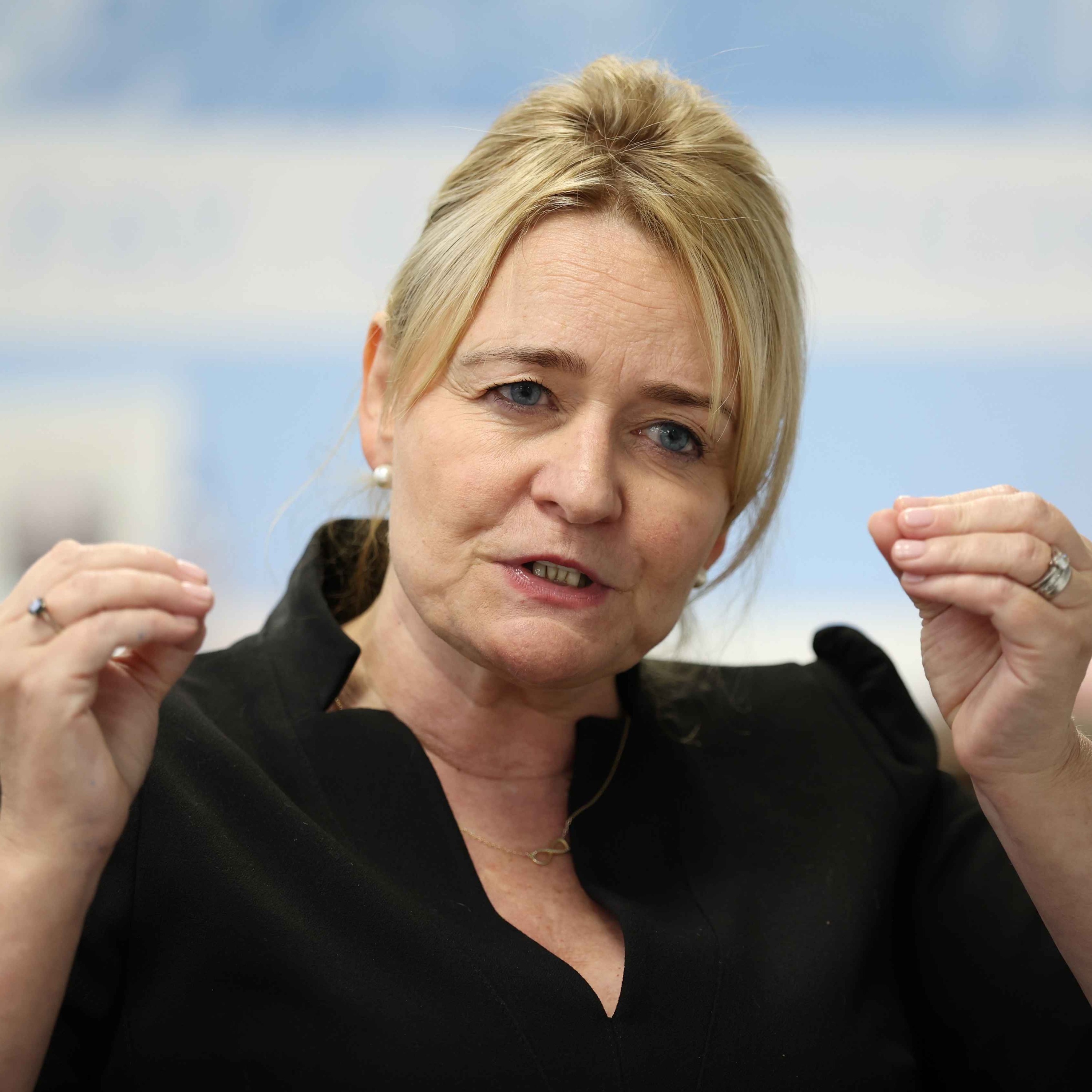
Unite union General Secretary Sharon Graham argues Labour is no longer “being Labour,” criticising Keir Starmer and Rachel Reeves for weak delivery on jobs, pay and conditions. She says Labour’s economic approach is too timid on investment and fiscal rules, leaving everyday people feeling no change while Reform and Nigel Farage gain support. She also discusses Unite’s internal fight to “realign” the union to the workplace and to uncover corruption, including a reported £30m overspend at the Birmingham Hotel and Conference Centre.
Sharon Graham is the outspoken General Secretary of Unite, representing about 1.1 million members (around 72% male). She says she was the first woman General Secretary of Unite and focuses union resources on workplace bargaining. The host is Kamal Ahmed, a Telegraph interviewer.
Labour must change fiscal rules to fund infrastructure and industrial investment (she cites Germany’s approach). She supports renationalising energy and “buy British” policies (e.g., UK steel for UK infrastructure). She rejects labelling Reform voters as racist, but says Labour’s lack of delivery is driving voters away.
reversing the winter fuel allowance after Unite pressure; Grangemouth refinery closure and importing green fuel; steel and green steel opportunities; potential shift from UK Typhoon procurement to US F-35s; Unite’s Birmingham Hotel overspend investigations and threats to her address.
Written by AI. May contain mistakes.
Sharon Graham, General Secretary of the Unite Union, discusses her background and vision.
“away from the podcast after a very successful year, launching it with me, and is now delivering big interviews for The Telegraph.”
Sharon shares her thoughts on union leadership and her goals for the Unite Union.
“Sharon Graham, welcome to the Daily Tea Podcast.”
Sharon discusses the challenges of being a female leader in a male-dominated sector.
“what I said I would do when I was elected jobs paying conditions and make sure I fight for workers.”
Sharon details her fight against corruption in the Birmingham Hotel project and its impact.
“And I'm making damn sure that will never be able to happen again.”
Discussion on the upcoming Labour Party conference and Sharon's key focus areas.
“So the thing for me is how those people aligned to those groups reacted.”
Sharon outlines her views on the current economic situation and necessary government actions.
“And so the economy is going to be the big thing that I'm going to be talking about.”
Discussion on the importance of investing in domestic industries like steel and infrastructure.
“Now, even if you didn't believe that that was a big thing, post-COVID, surely, with the political, the geopolitics that's going on, surely we must understand that we need to make our own stuff.”
Analyzing Keir Starmer's leadership and Labour's lack of clear policies and vision.
“The criticism of Keir Starmer is that we're stuck not knowing what really his vision is.”
Exploring the idea of public ownership, especially in energy, as a solution to current economic problems.
“Andy Burnham has been talked about as a possible next leader he's talked about public ownership of housing public ownership of transport.”
Discussing Labour's failure to address critical economic issues and the rise of Nigel Farage.
“of policies, including things on net zero, where we are building, you know, a proper industries, look, I'm for net zero, I've got no problem with net zero.”
Sharon Graham discusses the potential reevaluation of Unite's affiliation with Labour based on their performance.
“But I do think this, he's a very good communicator.”
Explore the relationship between Unite and Labour, and potential changes.
“if that budget doesn't do it, would it then be time for Unite to break their affiliation with Labour, which of course brings Labour£1.4,£1.5 million a year?”
Discussion on Labour's policies and their impact on British jobs and industry.
“a debate is because Keir Starmer isn't Labour.”
Insights into the political dynamics surrounding Labour and voter dissatisfaction.
“Do you keep hearing podcast ads, like this one for example, but always wonder how you actually get involved with them for your own brand or organization?”
Insights into the political dynamics surrounding Labour and voter dissatisfaction.
“You've touched on this issue that many people said that Keir Starmer was too quick to describe people who supported reform as racist on the issue of immigration.”
Explore why Unite is withholding support for Labour candidates and their core concerns.
“But that must be an abject failure of Labour that such an important voice as yours, as your members, as Unite, is not able to support either candidate in the deputy leadership battle.”
Discussion on Angela Rayner's leadership style and her recent resignation.
“Out of the ravages of war, we were absolutely...”
Analysis of Nigel Farage's communication skills and his connection to worker issues.
“And I think, you know, anybody looking at that story would say, you know, what a remarkable thing to have happened.”
Examining how immigration affects local workers and economic disparities.
“I will speak to anybody that can move this along.”
Understanding public opinions on strikes and the reasons behind industrial disputes.
“that that I'm seeing and I have been seeing for many years.”
Learn about the current struggles within the Labour Party from Sharon Graham's perspective.
“You know, most employers actually understand that if you've got workers, you sort of have to pay them fairly if you want to keep them.”
Learn about the current struggles within the Labour Party from Sharon Graham's perspective.
“Tim and I will be back on Monday from the Labour Party conference, 5pm.”

Get the gist, explore an idea or ask about something said.
 Claude
On The Daily T, what are the key points of this episode?
Searching your listeningAutomatic transcript. May contain errors.
0:02The Telegraph.
0:30Sharon Graham: If you are 45 or older and at average risk, ask your healthcare provider about screening for colon cancer with a Cologuard test. You can also request a prescription at Cologuard.com. Hi, it's Kat and Nat, and this episode is sponsored by Michael's, your destination for all things birthday parties. With seven kids between us, we're always planning a celebration. Summer is no exception.
0:51Kamal Ahmed: With prices starting at just 99 cents, Michael's Party Shop has over 4 ,500 party supplies across more than 60 themes for every age and every celebration. Whether your kids are into bluey, rodeos, soccer, rainbows, or something totally different, you'll find everything you need in one place.
1:09Sharon Graham: Plus, you can get a free helium inflation on select balloon styles. Shop online, pick up in-store, or get same-day delivery. Visit Michael's in-store or shop online now.
1:24Kamal Ahmed: On today's Daily Tea, we are delighted to welcome back Kamal Ahmed, who took a step away from the podcast after a very successful year, launching it with me, and is now delivering big interviews for The Telegraph. He's spoken to Sharon Graham, the outspoken General Secretary of the Unite Union, a massive Labour backer, but she doesn't hold back when it comes to her criticism of the current Labour government, what she did to sort out the mess left by Red Len McCluskey, what she thinks of Starmer and indeed the challenge to his leadership by Andy Burnham, and of course, the rise of reform. What does she make of Nigel Farage's claim that his party is the one truly representing working men and women in Britain?
2:08Kamal Ahmed: Enjoy.
2:20Sharon Graham: Sharon Graham, welcome to the Daily Tea Podcast. Thanks so much for giving us some of your time. We always ask a question of our guests on the podcast. Before we start, give them our name. How do you take your tea?
2:34Kamal Ahmed: I take it very strong. Breakfast tea, English breakfast tea with a very small bit of milk.
2:39Sharon Graham: Now, we also ask, no family, but alive or dead, who would you most like to have a cup of tea with?
2:49Kamal Ahmed: Jack Jones. And I've met Jack Jones, actually. I worked with Jack Jones.
2:53Sharon Graham: Famous union leader.
2:54Kamal Ahmed: Famous union leader. The person that opened the box to the union representative in the workplace. The fact that actually workplaces should have a union representative in there. Somebody that fought for workers. Somebody that didn't want to be the Labour Party. He was a trade union leader. He understood that he was a trade union leader and didn't want to be the Labour Party and I think that's really important that we are the voice of workers no matter the colour of the rosettes we have to fight for workers and I would like to ask him I'd say to him how did he think I was doing he was someone that mentored me
3:26Sharon Graham: and I'd very much like to ask that question how do you think you're doing Sharon well I think that
3:30Kamal Ahmed: I'm certainly doing what I said I'd do I'm doing what he said on the tin you know I promised that when I came in I'd do two things that I would focus on jobs pay and conditions and I would make sure that our union was absolutely putting its money and its resources into the workplace and I would fight for workers the Labour Party would be secondary to me as far as that's concerned and that I would also uncover the potential corruption that there was around the Birmingham Hotel and Conference Centre the cleanup of the union which quite frankly has been one of the most horrendous parts of what I've had to do I've had attacks from you know the old regimes friends and you know etc but it was something I needed to do and I did that so you know for me I've got to keep true to what I said I would do when I was elected jobs paying conditions and make sure I fight for workers.
4:17Sharon Graham: The nasty edge to a lot of those attacks some of that was also seen to be down kind of was it misogyny because you were a woman have you found being a female leader in what has traditionally been a really male dominated sector the trade union movement?
4:35Kamal Ahmed: Well it's interesting because actually our union is predominantly male. So I think around 72 % of our 1.1 million members are male. And they voted me in and people may know, your readers may or may not know that I wasn't the anointed son, I wasn't the favoured candidate, because I had a very different vision for the union to go back to jobs, pay conditions, the workplace and realign what we were doing with Labour. We're not Labour, we are a trade union.
4:59Sharon Graham: Because your predecessor, Len McCluskey, almost seemed to be running the party alongside Jeremy Corbyn. That was the criticism of the union, wasn't it?
5:06Kamal Ahmed: Indeed, and for me, we're a trade union. And so therefore, the people pay their dues into a trade union for us to fight for them, to fight for their jobs, to fight for their pay, to fight for their conditions. Yes, of course, we are sitting with ministers, we're sitting with the Prime Minister, we're sitting with the Chancellor to push what our members are asking for, better investment and all of those good things. So I think the first thing is that actually, I was very proud to be elected the General Secretary of Unite. I was very proud to be elected the first woman general secretary of unite and but actually i think that was a secondary thing the main reason i was elected was to realign our union back to the workplace and that's something that i have made sure that i've done but what about being a woman
5:42Sharon Graham: though in this very male dominator sector the trade union movement is that tough well look i
5:48Kamal Ahmed: think what no for me it hasn't been tough in the sense that you know i'm quite robust i know very clearly what i came in to do i think what has been tough though and thing that i found quite surprising not of any of the putting the union back to the workplace and the fight that i had to do that because there was a fight because a lot of people um wanted our union to remain just really a sort of arm of the labor party that is not what a trade union should be but the most toughest thing i've had to deal with without a shadow of a doubt is that was uncovering uh the truth around the birmingham hotel and conference center a 30 million pound overspend so there was independent inquiries that we did kc inquiries that showed what happens there and that process has been quite frankly ugly and you can in moments during that process you can understand why women don't go into politics it was absolutely horrendous including my address being accessed and you know there were moments in there you're thinking yeah what is going on here you know if there is something to uncover we need to uncover it and so of course there are some people inside the union still doing it of course some people outside the union who preferred I did not do that But that is not how I do business.
6:56Kamal Ahmed: I said that I would uncover it. I have. And I'm making damn sure that will never be able to happen again.
7:01Sharon Graham: Did you feel scared at any point with that accessing of your address? Did you worry that people were going to target you?
7:07Kamal Ahmed: I did. Actually, I did feel not for me. You know, at that time, my son was 12 years old. And, you know, I was concerned that my address had been accessed, that, you know, I was having threats in terms of, you know, not uncovering what I uncovered. but the thing that annoyed me the most was a scorched earth approach that people that I knew didn't want me to do it you know people on some of our committees that I knew didn't want me to do it but would have thought overall well actually it's a good thing to do and that's where you take you know factionalism and all those things too far if the membership have put me in because they want me to take the union back to jobs paying conditions they want me to really realign my relationship with Labour because that's what I said I would do, no more blank checks.
7:52And they want me to uncover what happened in the Birmingham Hotel and Conference Centre project
7:57Kamal Ahmed: where the overspend was absolutely eye-watering, eye-watering of over£30 million. Then have the respect of the people that voted me to do that and allow that process to take place. Don't try to have a scorched earth strategy where you are, where I'm being threatened, but also where you are just, you know, throwing mud in the hope that it will stick, when in fact, obviously, it doesn't because that's not where we are. So the thing for me is how those people aligned to those groups reacted. But it didn't stop me. You know, I've done one of those reports is out already. The second one is going to come out.
8:34Kamal Ahmed: And I am making absolutely sure two things. One, I'm doing everything in my power to get that money back. And two, I will make sure it can never happen again.
8:42Sharon Graham: Now, we are just ahead of Labour Party conference. I think you're going to be travelling up there this weekend. It's a big moment for Keir Starmer. So we will be focusing on a bit of the politics. There are some important debates to be had there. Last year, Unite, you were there and you raised the issue of the winter fuel allowance. You said that it was a policy that should be reversed. You were successful in the vote at conference last year on that. Subsequently, Keir Starmer had to reverse that policy. He got a lot of criticism for it and he got a lot of criticism for the U-turn as well. This year, Sharon, what is going to be your main point to raise at conference that you think this government has to solve?
9:25Kamal Ahmed: Well, I think what the government have to do is they have to show the country that voted for change that they are going to change. They're going to have that type of change. And of course, that means people have to feel it in their pockets. It's, look, we've got a situation where food prices since 2021 have gone up by 38%. It's gone up by 5 % just in the last 12 months. So this is rising and it continues to rise. We've got energy prices going up in the same period by over 40 % and that is continuing to rise. So Labour's got to look at the economy. And so the economy is going to be the big thing that I'm going to be talking about.
10:03Kamal Ahmed: Look at the economy and do something that changes what we're doing. It changes the dynamic of where we are. The tinkering round the edges is not going to work. We have to do something far more radical than that. I mean, I say the word radical. I don't actually think it is radical. I'm saying radical because more than what they're doing now. But far more radical than that so that people can feel the change. And at the moment, the problem Labour's got is nobody feels the change. And they've got a real serious problem in relation to that.
10:31Sharon Graham: What do you think the government should be doing?
10:33Kamal Ahmed: Well, I think there are two things really across the board. I mean, first of all, there is their fiscal rules. You know, there are two parts of the fiscal rules, day-to-day spending and then obviously keeping, you know, us in line with our debt to GDP. Those are the two things that Rachel Reeves discussed. But actually, it's not working when you've got, had a 100-year event, that's what we're told. COVID was once in a 100-year event and we've got no plan to match it. If we're going to do the things we need to do, we're going to need money. I don't think that's the, that's not the, you know, most important sentence anyone's ever said.
11:06Kamal Ahmed: we're going to need money. Where are we getting it from? And so we should look to do more what the Germans have been doing. And the Germans changed their fiscal rules to allow themselves to have one trillion pounds. Can you just imagine that figure? One trillion pounds to deal with infrastructure, diversification, decarbonisation. Now, we have got, if we're lucky, 50 billion. Now, I know the German economy is 30 % bigger than us. So, you know, on those maths, 700 billion pounds is what we would be looking at. We need to look at that in a serious way. On the day-to-day spend, we need to look at wealth tax.
11:41Kamal Ahmed: I don't think that this is, again, madly radical. The top 1 % being, paying 1 % more, would give£25 billion into the economy. So the first thing they need to do is to get the money, and the fiscal rules is part of that. The second thing is they must invest in Britain. They must buy British. They must invest in Britain. They must stop looking at things, humming and hawing, dancing around their handbag. Look, we had a situation recently where the Grangemouth refinery is going to shut. I mean, the jobs are going. They're going. I say to the government, look, why can't we make that into a green fuel site?
12:21Kamal Ahmed: They don't do that. What they're allowing is for us to import green fuel. Now, that sentence, we are going to import green fuel, really sums up what's happening with this government. That is ridiculous for us to be put into that position. Buy British and back British infrastructure. You need money, you're going to have to change the fiscal rules.
12:43Sharon Graham: Do you worry, Sharon, and this is what Rachel Reeves, the Chancellor, says, if we borrow more, the cost of that borrowing is going to go up. with then saddling our children, our grandchildren with those debts, that it is not responsible government to borrow more money. That is the Chancellor's position. You're just saying you disagree with that position.
13:03Kamal Ahmed: I totally disagree with the position because, of course, you're borrowing to invest. So it's not like going down the pub and drinking a pint and it's gone. You're investing in infrastructure. So you're investing in our steel industry. You're investing in our refineries. You're investing in green fuel. You're investing in diversification. I mean, you can't say on one hand that there's oil and gas workers jobs that are going to go, we're going to stop drilling in the North Sea. So that's a decision that they've made. But the other side of that equation, you haven't got any plan whatsoever in terms of where those jobs are going to go.
13:36Kamal Ahmed: We are buying wind turbines from Denmark instead of building them here. We are humming and hawing about buying British typhoons and maybe we'll be buying American F-35s. at every single measure, we are not back in Britain. We need money in order to build these industries. Otherwise, we'll be a shell. We'll look back on ourselves and go, we don't make anything. I mean, the question for me is, does it matter if Britain makes things? Does that matter? Now, even if you didn't believe that that was a big thing, post-COVID, surely, with the political, the geopolitics that's going on, surely we must understand that we need to make our own stuff.
14:15Kamal Ahmed: we need to make our own steel, we need to be sufficient. Surely we think that. To do that, if we believe it, you need money to do that. And now in Germany, where they have changed their fiscal rules, they didn't do it with a tinkering around the edge, we're going to get a couple of billion because it doesn't change anything. What they need to do is to say, what money do we need to invest, get the fiscal rules changed, and then those things go on your balance sheet. You know, it's not like they disappear, that goes on to your balance sheet. And so therefore, I think they've got completely the wrong strategy in terms of what they're doing going forward.
14:47Sharon Graham: For the economy.
14:48Kamal Ahmed: For the economy, yeah.
14:49Sharon Graham: Why do you think Keir Starmer and Rachel Reeves simply do not agree with you? They say that the fiscal rules is what maintains confidence from investors in the United Kingdom. What is it about the two of them that means that they don't understand what you're saying, do you think?
15:09Kamal Ahmed: Well, I think, and I think there's about a number of things, it's really important as a leader in your gut, you know what you want to do. So when I stood to be the General Secretary of Unite, I knew I wanted to take our union back to the workplace, jobs pay conditions. My job is to be the voice of workers. So every decision I make is done on that basis. Now, if you don't really know what you want to do, who you represent, what you are there for, what your aims are, then, of course, you are floundering in every decision. And I think, in a way, that is what is happening here. They're not really clear, for good or for bad, whether people disagree with you or not, that this is my vision for Britain.
15:47Kamal Ahmed: And the vision for Britain must be that we have replacement industries for the industries we're saying that are going. We must, for example, have a good steel industry. We must have infrastructure projects. We must make sure we're making decisions that are good for the country. Look, I said to Keir and Rachel, on steel, way back when, before even we had the problem, why don't we say that all UK infrastructure projects must use UK steel? Over a period of time, that would be£8 billion into our economy. So why wouldn't everything we build use British steel? What would be the problem with that? Then they come up with a problem, well, we can't do that because, you know, that would be illegal.
16:27Kamal Ahmed: Well, no, it wouldn't be illegal if you made steel a critical infrastructure area. These are things that can be done. Now, if that, if you, where there's a will, there's a way. We want to be a Briton. I want to see Britain where we are building things, we are making things, we back British jobs, we back Britain, that there's good wages, that there's profitable business. In order to get that done, when we're in the state that we're in now, you need to have government understanding that they must invest. And if the government isn't going to invest, we're not going to grow. We're going to be in this doom-luck cycle and we will never get out of where we are now.
17:01Kamal Ahmed: And that cannot be the plan for Britain.
17:03Sharon Graham: Now, we're over a year since the general election. We still seem to be stuck. The criticism of Keir Starmer is that we're stuck not knowing what really his vision is. He's made a number of U-turns, winter fuel allowance, the proposed cuts to disability welfare. the economy is not growing is Keir Starmer the right person to lead this government well what
17:29Kamal Ahmed: I think about that is because I don't want to get into the personality of Keir Starmer particularly because in a sense there's a lot of that that already there's already happening I don't want to add to that but what I would say is what is important is their policies now you know you've said a couple of times about winter fuel and you know the direction of that policy which is why I moved it at the late last Labour Party conference and we had to do a huge campaign in terms of getting that pushed back was it showed an unbelievable direction of travel that I think blindsided all of us I mean it blindsided me for sure yes I didn't think I'd agree with everything but when you pick the pocket of pensioners but you leave the super rich totally untouched and you're a Labour government people are going sorry what's just happened there and I think people would have forgiven some of the maybe you know things that happened around freebies and all of this other stuff that you know came out if they did what it said on the tin we're a Labour government and everybody sort of knows what they think that means and most people think it means take those to the back of the queue bring them to the front back workers back British back jobs in Britain all those things back in back communities public services we sort of know what we feel that Labour stands for the problem is on every measure they haven't shown that what they've shown is a bit of dither and delay going on uh you know okay winter fuel bad idea reverse it now they've had a lot of they get people uh say why have you why have you reversed it um keeping your core what you are and i think kia's got to very very quickly let people understand what he stands for who is he representing because if at the heart of every discussion that's who we're representing is up in the middle of that table then you know where you're going but if you if every decision is you know free fall well then you don't know where you're going so for me it's not about him as a person this is about what policies are labour going to drive forward because if they don't start delivering then people will look elsewhere they already are let's just face that that the truth is they already are because labour is not delivering for them.
19:29Sharon Graham: Andy Burnham has been talked about as a possible next leader he's talked about public ownership of housing public ownership of transport. He thinks that Labour should go back to that sort of pre-Thatcherite settlement where the state owned many, many more of the services that the public get. Is that a more of a Labour prospect? I know you don't want to get into the personalities, but is that more of a Labour argument, something that you could back?
19:59Kamal Ahmed: Well, I'd say what you need is Labour solutions for the problems that we have. So you take energy and the eye-watering bills that have gone up in relation to energy and I could talk about you know the huge profit of the companies and you know windfall taxes and what people would expect me to say on that and I think that all of those things are true you know there's eye-watering profits as people are struggling to heat their homes but in truth we should renationalize energy now I'm not saying renationalize everything the moves I mean obviously you know that is not what I'm saying but with energy this is something that we need the bills are going up out of our control you've got price cap you know there's going to be introduced in October, where the bills will be going up again.
20:41Kamal Ahmed: There's no off button for anybody. Food's up, energy's up, and people can't cope in the middle of it. What is a Labour solution to the problem that we have in terms of energy spiralling out of control? A Labour solution would be to renationalise energy. Now, obviously, that costs money. And I've done a very detailed plan before they first got in about how much it would cost to renationalise the grid, because there is an issue around that and in terms of energy itself so for me you see these huge problems many that have come from covid but many that happen uh you know in a sort of once in a hundred year event that covid is but we don't have a plan that matches what has happened to our economy and our society because of what happened in covid not exclusively but there is definitely things that happen there that we don't have a plan to match the event uh that that that stood before us.
21:29Kamal Ahmed: And I think that those policies are really important. If somebody backs those types of policies, including things on net zero, where we are building, you know, a proper industries, look, I'm for net zero, I've got no problem with net zero. What I have a problem with is making these targets on one side of an equation, and then there's no plan for jobs on the other side of the equation. And for me, you have to slow that down in some way in order to begin to build these industries. And that is what needs to happen. Now, if we can see that there is somebody who comes in and backs those types of policies, and that to me will be Labour policies.
22:06Kamal Ahmed: At the moment, I don't know what the policies are.
22:08Sharon Graham: I'm getting a sense from you in this conversation that you don't believe so far that this government has been a success.
22:17Kamal Ahmed: No, I don't believe so far that it's been a success. I think you might be hard pressed to find anybody if you went out on the Street and spoke to a thousand people who said that it was. Look, the truth of the matter is, for me, there is no doubt they have come in with, you know, wanting to do the right thing. I mean, I don't think anyone would dispute that Keir Starmer wants to do the right thing. I think that would be unfair for anyone to say anything other than that. The problem that has happened is that we've had lots and lots of policies, lots and lots of announcements, lots of things that might be happening in the future.
22:46Kamal Ahmed: But in the day to day, two ore refineries are shutting in Britain and we're going to be importing domestic fuel and green fuel. What is that? How have we allowed that to happen in relation to it? We've got the steel industry, you know, where one part of it's had to be bailed out for a certain amount of time because we haven't got a plan about saying, look, we could be the biggest producers in Europe of green steel. Why are we taking that opportunity? We've got the skills, we've got the infrastructure, all you would have to do would invest. So for me, on those markers, which is what I'm interested in, on jobs, on pay, on conditions, on communities, on what's happening out there in terms of infrastructure.
23:25Kamal Ahmed: On those measures, we haven't got to where we need to be, unless something changes radically in this budget.
23:31Sharon Graham: You mentioned that people will go elsewhere. The biggest issue that Labour is facing is that in the polls, Nigel Farage and reform are the strongest party. The arguments he is making about immigration, the arguments he's making about crime are really connecting with the public. Is Nigel Farage someone that you can do business with? He is maybe being radical in the way he is discussing issues. One of the things that maybe you would agree with Nigel Farage on, he says that we should re-nationalise steel to support Scunthorpe and the Scunthorpe plants. Do you agree with Nigel Farage on some things which maybe you wouldn't have expected to agree with him on?
24:16Kamal Ahmed: Well, I think that what Nigel Farage, I don't think Nigel Farage is the answer. Let me just first start with that point. But I do think this, he's a very good communicator. There is no doubt about that. And he does put his finger on the pulse. For example, in the steel debate, he very quickly came out and spoke about the renationalisation of the steel industry. Whether he would do that if he was in government is a question, actually. And, you know, I have no idea, you know, whether that would be right or whether that would be wrong. But I tell you what we cannot do, and it is a mistake for us to do it, is to label everybody that is thinking of voting for Nigel Farage a racist.
24:53Kamal Ahmed: That is too simple in terms of what's going on out there, and it would be wrong, actually. It would be totally and utterly wrong to label it in that way. Nigel Farage is giving very easy one-line answers to very complicated problems. And we would need to see, you know, you'd need to see what the detail of all of those problems were. I don't think he is the answer. But what I do think is that if Labour don't start taking by the throat the issues of those people that selected them, then they will fail at the next election. I mean, that's evident. I mean, that's there for everybody to see. And so for me, it's not the issue of those voters voting reform or saying they're going to vote reform that I am blaming.
25:33Kamal Ahmed: I am blaming Labour's lack of delivery. Because if people can see, look, in my community, we've got jobs coming to the fore, wages are getting better, we are doing things in terms of the big problems, in terms of food prices, in terms of energy prices, all those things that hit everyday people, then Nigel Farage would be in the rearview mirror. But the problem you have is that we are not doing that. And unless that happens very quickly, and I'm, you know, people are talking May, I actually think prior to May, the budget to me will be a big indicator of whether there's going to be real change.
26:06Sharon Graham: If the budget doesn't do what you're asking, or at least starts the journey, you're very passionate, Sharon, about what you believe the country should be like and what the government should be doing. If the budget doesn't achieve that, or at least show that that is what this government is for, surely at that point you would have to say, Keir Starmer, that's enough, it's time to move on.
26:30Kamal Ahmed: Well, we've already had a conversation within the union, we had a policy conference in July, so not that far away, although, you know, a week in politics, as they say, is a long time, but it's not that far away in the past, is essentially we had a vote on what do we think about the relationship with Labour? I mean, it came as an emergency motion to the conference. You've got 800 delegates in that meeting, everyone from defence to aviation, hospitality, all the way through to the oil and gas industry. And aside from five people, these are representatives of thousands and thousands and thousands of workers, everybody voted to say, look, we have to seriously think of our relationship with the Labour Party.
27:10Kamal Ahmed: Now, look, you don't do these things in nature because that's sort of a headline for a day. These things have to be thought through, what's best for the union, what isn't. But I have to say, in all of my years, 35 years that I've been around the movement, I have never seen such unanimous support for saying, actually, there is a serious problem here. And part of that is because Labour aren't being Labour. You know, whether you disagree previously that, you know, previous Labour governments, they did a bit of what we liked and a bit of what we didn't like, but you could, you sort of felt, well, look, they're sort of Labour, you know, that we can put them in that lane.
27:43Kamal Ahmed: If you shut your eyes and you did not know who was talking, I think you'd be hard pressed to know who was speaking. Is this Labour speaking or is it not Labour speaking? And they have to grab hold of some identity very quickly so that people know exactly what they stand for.
27:57Sharon Graham: When do you think you would need to make the decision? If that budget does not do what you're asking and what your membership may well want, if that budget doesn't do it, would it then be time for Unite to break their affiliation with Labour, which of course brings Labour£1.4,£1.5 million a year?
28:17Kamal Ahmed: Well, when I was elected, and of course, you know, many people will know that I wasn't the anointed son. I wasn't the Lem McCluskey choice of the person that got in. I stood very much on standing up for jobs, pay and conditions and to readdress this relationship we had with Labour in terms of the amount of money we gave them. And I said at the time there'd be no blank checks. I mean, we used to give seven, eight million pounds. and so all that we do now is we pay our affiliation fee which is a sizable sum of money let me tell you and but that is becoming very difficult to justify it is becoming very difficult to justify now look I am the leader of a trade union where I am the voice of the members who are in my union it's not in fact it's less important what I think it's more important what they think and we will be going on an exercise of asking our members what do they feel about this relationship that we have in order to break the link it has to be a rules conference without getting too sort of into the minutiae of this but there has to be a rules conference and of course then there would be a vote at that rules conference but it's important to talk to the members as well to talk to everybody what do we feel there are pros there are cons but overall overall from my just my own personal uh sort of experiences before the election whether i was on a picket line in a negotiating room or in the hairdresser everyone was saying god we've got to get labor in we have got to get them in the whole we are on our knees we must get them in in those same environments picket line negotiation hairdresser everyone's saying to me what the hell are they doing what are they doing and so when you've got that ringing in your ears and I've got thousands of jobs you know at risk in the oil and gas industry I've got no investment in some of the other areas like defence I mean look defence has been invested in terms of money there is no doubt about that in terms of money there is defence investment but does that relate does that does that turn into british jobs why is there a conversation going on of whether the raf should have replacement typhoon fleets two fleets that's supposed to be replaced and i have to get into quite robust conversations about the fact that they might swap that to american f-35s they do totally different things typhoons are you know without getting into the into the bones of this our very particular aircraft uh we've got huge skills around British typhoons.
30:31Kamal Ahmed: If we're not going to buy them, how do we expect anybody else to buy them? Why is that a debate that's going on? Why do I have to push so hard to get the basic things agreed? So I think Labour have got a long way to go to say to our members, you know, in manufacturing, in a whole range of different areas, that they are on their side. And I think they're going to need to wake up to another coffee.
30:49Sharon Graham: I think a lot of people would argue the reason that why that is a debate is because Keir Starmer isn't Labour.
30:55Kamal Ahmed: Well, look, I mean, you know, for me, again, I don't get into personalities because obviously the personality bus is off and running but are the policies Labour? No I mean what what who was in the room? I've asked this myself who was in the room when somebody thought it was a good idea to take away the winter fuel allowance? I mean who was in the room when that was agreed and did nobody when they came out of the room and said by the way this is what's going to go down on paper stop that? I mean what is happening around those types of policies. So you get that, okay, you know, that was very bad direction.
31:29Kamal Ahmed: But then you get, which is important to me, what's happening in British industry? What's happening in British jobs? Where is the plan? I mean, I've said many times, we have the extension of the Heathrow airports, which I lobbied for. I wanted that to happen, good for jobs, good for skills. At the same time, when the government says we need to have a percentage of SAFU, sustainable air fuel in aeroplanes by 2030 so it's a million metric tons without boring you to death a million metric tons and then the refinery that can make half of that green air fuel they don't back and they let go to the wall and we're now going to import it where is the coordination of these two two things they could have been held up as heroes we're going to have the third runway and we're going to save the jobs in grange valve and we could become the biggest producers in Europe of green fuel.
32:20Kamal Ahmed: Why is that not a good idea? I mean, why is that a bad idea?
32:23Sharon Graham: If you ever thought of having a political career, you should maybe be the Prime Minister.
32:27Kamal Ahmed: Well, I mean, my job is to defend my members, which I do robustly, I have to tell you, and whether that's in government conversations or whether that's, you know, in other conversations, because look, a lot of the conversation I'm having with industry as well, remember, look, we're a trade union of over a million people. And essentially, we've got most of the big companies are in our yeah we've got recognition he brings with very often i'm having conversations with ceos whether that be the steel industry or the defense industry or anywhere else say look how can we get investment into your organization so a lot of the time i am pushing for good investment because that creates good jobs those good jobs in turn create good pay that good pay goes into the economy uh and you know is really good for growth because most people who get paid uh you know everyday people do not go to the Cayman Islands, they spend it here.
33:15Kamal Ahmed: And so therefore, that's a really good, very, you know, not a huge, but it's a bit of the growth piece that needs to be there. So for me, you know, I want to make sure I'm defending workers. I'm going to do that hugely robustly.
33:35Sharon Graham: This is going to be an extremely busy month. I have to watch 104 soccer games, follow the pregame, the post game, yell useless opinions at the TV? It's a lot. So I knew that when it comes to screening for colon cancer, the choice was clear. The Cologuard Plus test. It can be used at home and can only take 15 minutes. So I can do it during halftime and not miss any action. If you are 45 or older and at average risk, ask your healthcare provider about screening for colon cancer with the Cologuard test. You can also request a prescription at Cologuard.com. Hi, it's Kat and Nat, and this episode is sponsored by Michael's, your destination for all things birthday parties.
34:12Sharon Graham: With seven kids between us, we're always planning a celebration. Summer is no exception.
34:16Kamal Ahmed: With prices starting at just 99 cents, Michael's Party Shop has over 4 ,500 party supplies across more than 60 themes for every age and every celebration. Whether your kids are into bluey, rodeos, soccer, rainbows, or something totally different,
34:32Sharon Graham: you'll find everything you need in one place. Plus, you can get a free helium inflation on select balloon styles. Shop online, pick up in-store, or get same-day delivery. Visit Michael's in-store or shop online now. Do you keep hearing podcast ads, like this one for example, but always wonder how you actually get involved with them for your own brand or organization? Well, it's easier than you think. We're Acast, and we give you the platform to do it all yourself. Browse thousands of popular podcasts, choose the shows that match your perfect audience, set your budget, and launch. And if you want a hand, our podcast specialists are there to help you launch with confidence.
35:11Sharon Graham: This is podcast advertising without barriers. Get started at acast.com slash advertise.
35:27Sharon Graham: Now, you've spoken about reform. You've touched on this issue that many people said that Keir Starmer was too quick to describe people who supported reform as racist on the issue of immigration. And then we've had the Raise the Colours campaign. We've seen some Georgia's flags and union flags going up on bridges and bus stops all around the country. what do you think about the role of the flag and politics and whether that is something that you
35:57Kamal Ahmed: feel that you need to speak about well look for me what i see bringing this to the trade union and what i see about you know the divisions that are created because i do think it is really dangerous for us to be saying and i don't think it's true that everybody who was on the march everybody who what who thinks they might vote reform remember it's no no deals are done there's no done deals here that change can happen um is a racist because of course this is a showing and an outward showing i'm sure there are people around the nucleus um you know that may have views that people don't agree with but we're talking about what is becoming to be a bit of a mass movement in terms of a particular thought process and this is because people are unhappy with their lives what is happening to them in their lives how can we have a situation that food prices have gone up by 38%.
36:48Kamal Ahmed: I mean, it's eye-watering. Everything I've got around to my mum and dad telling me about it, it's eye-watering. You buy something for a certain amount of money, and it's gone up by nearly 40%. And at the same time, the supermarkets, Tesco, made£3.1 billion in profit in just one year. In just one year. Now, you have energy. No solution to what's going to happen in energy i mean rachel reese may take the vat i understand off energy maybe that will happen maybe six pound whatever it might be and but you know long-term solutions about what is happening to energy and and in terms of energy prices in those for those things there are no real answers there are answers but they're not taking those answers and because of that you've got people coming out saying i am unsatisfied with what is going on and unless that changes unless labor decide and sit in a room with the right people in there and say, look, we are going to have to go in a very different direction.
37:43Kamal Ahmed: We're going to have to do different things in the economy. That movement will grow. I've got no doubt about that. You know, we've got less tribal voting than we had before. I mean, you know, that isn't the same as we had before. One of the things that really stuck in my mind just after the last election, and I said it, I've said it many times, you know, maybe the day after when we saw the results, in Clunethley, in Wales, reform came second with a thousand votes less than Labour that was before they got into government in Clunethley in Wales now I've been around a long time Labour and Wales I mean although they would say some things didn't happen right there was always that absolute strong connection and if that was happened prior i.e that's what the election did you know that's what you saw really on the first day of the government then of course now that that that supports dissipated and gone, effectively.
38:34Kamal Ahmed: So Labour have to do something quite dramatic in order to get these voters back.
38:39Sharon Graham: What's the timing for that affiliation vote if you're still not happy? Let's say the day after the budget and you're still feeling this frustration that they are not a real Labour government, you're going to have to put a timetable in place.
38:53Kamal Ahmed: Well, look, we have to talk to our members. I mean, look, the thing about me is that, you know, I'm very much focused on the voice of members and the voice of workers. So it will be something that's never been done before. Normally, a very small group of people decide in a room, and then we come out of that room and somebody says, this is what we're doing. That isn't the way I do business. There will, at each stage, be proper consultation with our members. Our members decide. I don't decide that. They will decide that. Now, the Rules Conference is supposed to be in 2027. That is the date of the Rules Conference.
39:20Kamal Ahmed: That's when the Rules Conference is set, because we have a constitutional programme. Now, obviously, as we go back to the members and we keep speaking to them, if we feel we have to bring that Rules Conference forward, then we will do that. but the members will make that decision.
39:32Sharon Graham: So that could be 2026, possibly.
39:34Kamal Ahmed: It could be 2026, exactly.
39:36Sharon Graham: Given your frustrations with the Labour government, what are your thoughts on what's for the moment called your party? Jeremy Corbyn, Zahra Sultana, others, saying that a truly left party should be led by the likes of Jeremy Corbyn and Zahra Sultana. Could you imagine Unite being more close in terms of what they are proposing to do?
39:59Kamal Ahmed: Well, look, at the moment, I just see that as a bit of a sideshow. I'm sure there's very good people within it, but I see at the moment what needs to happen is that Labour need to stand up and fight for workers and communities. And if they don't do that very, very quickly, then they are going to see their votes going to a whole range of different arenas. I'll be really interested to hear Keir Starmer's speech at the conference because that has to be something more than tinkering around the edges. The speech will be a moment, I think. But the budget to me, as I said, is going to be the biggest moment because it will say the sense of direction.
40:38Kamal Ahmed: If you have no more money and you are relying on growth in the ether that may never appear, then we're not going to change direction. And that will be a really defining moment.
40:48Sharon Graham: What signal would it send if either Bridget Philipson or Lucy Powell wins the deputy leadership? Are either of those candidates, would they give you hope that Labour is starting to get it?
41:01Kamal Ahmed: well look we're not nominating in the deputy leadership um and it's a decision that was made last week um and the reason being and this is an important piece for me there's no point me having this conversation with you and saying look jobs pay conditions what is labor doing how have they done this they need to change course and then we nominate as in you say this person is the person i want in this position um anybody who you don't think is going in that direction you have to stand up and be counted that you know that is the whole point and so for for us we're not nominating because clearly there isn't somebody doing that in those two candidates good women you know good women no no I'm not you know I'm not having a go at any of the two women good women trying to furrow a path you know in terms of what they're doing but that is not what we need what we need at the moment is a totally different direction and none of those two two candidates are articulating that they're not articulating that and so for me it's not because someone brands someone left or someone brands someone right I mean I've had 35 years of seeing that and I tell you something people get bored of it after a while it's what are they saying they're going to do and what do they do and what did they do and so for us we don't think it's right to put all of our members voices behind anybody that is running for the deputy leadership position because they're not articulating what my members are talking about, which is infrastructure, fiscal rules, effectively we need our lives to be better, we need more money to back British jobs and British industry, and they're not talking about that, and so therefore we won't be nominating.
42:36Sharon Graham: But that must be an abject failure of Labour that such an important voice as yours, as your members, as Unite, is not able to support either candidate in the deputy leadership battle. That is a failure of Labour, surely.
42:52Kamal Ahmed: Well, I think what it sort of says, really, is that there is a real issue going on here. And you see, what happened before is that we probably would have nominated somebody. OK, who's been told, said is this person? Who's backing this horse? Who's backing that horse? But we are a trade union and we shouldn't be following anything like sheep. What my job is to say, who is actually backing workers? I don't think I could put my name in any of those columns and actually go back and justify why I had done that.
43:22Sharon Graham: Who is this person? Is there somebody that you see that is in Labour, in the parliamentary party, an MP or group of MPs who are saying the right thing? There's the Red Wall group. Are there groups of people that you say, actually, that's the tone we need, there's real Labour?
43:42Kamal Ahmed: Well, I think it should happen because there are good people. Of course, there are good people. I mean, there's no doubt about that. I'm not suggesting there isn't. But what hasn't happened yet is that people, those good people have come together and said, look, this is the direction of travel. You can't just do it on single issue stuff. What we're looking for, what society is looking for, is that after a once in a hundred year event like Covid, after 14 years of austerity, after all of the pain that people have gone through. You know, often I say, and I think it's absolutely right, why is it always everyday people that pay?
44:15Kamal Ahmed: You know, after Covid, you know, people during Covid, they went out to deal with it, and some of those people paid with their lives. In austerity, everyday people paid. I want a group of people to come together and say, this is how we change that. Not on political left-right lines, on actually saying we are here to change what's happening in the economy. And that could be done. You know, Labour, if they did that, I think it could be transformational. You know, in 1945, our debt to GDP was three times. Three times after the war. Out of the ravages of war, we were absolutely... We had no money. No money at all.
44:54Kamal Ahmed: That Labour government didn't go in and go, well, do you know what, we're going to have to tighten our belts, we're going to have to have fiscal rules. They said we're going to build an NHS. Why? Because actually the people that went out and fought in the war, we need to make sure that when they come back, that actually they are part of society, they are not on the fringes of society, that they're able to access healthcare in a proper way, so not dying young. This government needed to go in with that mindset. Yes, we've got 100 % debt to GDP, that is true. But actually, if you did this right, we could build industry, we could actually become very prosperous, people could share a bit more of that around, quite frankly, and they would be in for a long time.
45:33Sharon Graham: Was Angela Rayner the type of Labour leading figure that you liked? Because, of course, you clashed with her over the bin dispute in Birmingham, which is still ongoing. I just want to get onto that in a couple of minutes. But just was Angela Rayner, did she strike the type of note on politics that you felt you could support? Are you sorry to have seen her had to resign?
45:56Kamal Ahmed: Well, look, I think Angela Rayner is a good woman. I think that she has got, you know, she's come through a lot of adversity in her life in order to get where she was. And I think, you know, anybody looking at that story would say, you know, what a remarkable thing to have happened. She certainly was true to herself. I think, you know, she was authentic in terms of what she said. But for me, the thing that I'm looking for is for a plan, an absolute plan in terms of what is happening with the economy, something that actually moves the dial. And at the moment, inequality is getting bigger and bigger.
46:28Kamal Ahmed: it's never been so wide the gap in in terms of the rich and the poor has never been so wide so for me it's less about the personalities you know there's always really good personalities there's people who you know can command a room there's people who speak really well but really in truth after you take away all of that fluff what is it that they are standing for and what are they going to do that is my that's my thing that's probably why they find me quite annoying I mean I'm on the naughty step more times than uh than i'm not i mean at the conferences i'm so far in the back i'm we're nearly hanging out in the toilet the delegation but we don't mind because that because our job is to offend workers and so so you know i am not going to be silent just because uh there's a red rosette in the seat our job um and actually people that are not standing up and saying things have to change i think are doing a disservice because if it doesn't change then i think the country will move towards reform.
47:21Kamal Ahmed: I genuinely believe that could happen. I don't think it's beyond the realms of possibility that that could happen. So actually, you know, pushing Labour into a direction of much more focus on the core values of trying to change what's happening to people out there in the real world, I think is important for us to do.
47:40Sharon Graham: Would you be happy to meet Nigel Farage and have a discussion with him? Have you met Nigel Farage?
47:44Kamal Ahmed: No, I haven't met him. I haven't, our paths haven't crossed in any way, shape or form. But you know, from my point of view, when I am sitting, trying to deal with issues for my members, quite frankly, I talk to the devil himself. So because for me, if I am trying to save a refinery, or I'm trying to save jobs, or I'm trying to do something that is saving the people out there in terms of their wages and their jobs, their pay and their conditions, then evidently, it's not for me to say, well, I'm not talking to you, you or you. I will speak to anybody that can move this along. But I have to say to you, I don't think that Nigel Farage is the answer.
48:22Kamal Ahmed: I still haven't. I mean, there is no, I mean, I don't, what he says, you know, it's very soundbite-esque, but it doesn't talk about what is happening. He didn't vote, for example, for the Employment Rights Bill, let's be really clear. And so, therefore, I doubt, you know, we're of kindred spirits. Let's put it that way around. But, you know for me what needs to happen and what Labour need to do they need to understand why is Nigel Farage able to link in and touch in so easily to people one he's a very good communicator I think that has to be said but but it's also because he's touching on the issues that people are talking about but equally he's saying uh look what's happening in society is wrong it's wrong that you you know can't go down the the pub and buy a pint because you've literally got no money So he's locking into a lot of that.
49:07Kamal Ahmed: Now, I think a lot of it's fluff, by the way. But the way Labour deal with that is not to say everyone who votes reform is a racist. The way they deal with that, and it's in their gift, is they make the change that people voted for. That is their job to do that.
49:20Sharon Graham: Is he right on immigration, that we have far too high immigration into the United Kingdom?
49:26Kamal Ahmed: Well, look, I think what we have to say on immigration, certainly he's got an awful lot to say about it. We've got a lot of people in our society who are working in our NHS, who are working in our care service, who bring a lot to this country. And I think some of the language that's being used is not helpful. What I would say, bringing it to my role and what I have seen over many, many years and what I think causes a lot of this division, I was in a food plant in the car park of a food plant where there was a fight, including knives, over overtime. Now, what that fight was over was the agency workers, who were mostly Polish, were doing the overtime at a flat rate.
50:06Kamal Ahmed: And the overtime rate was normally time and a half. And none of the local people got the overtime. And this huge... I mean, the fight was... The fight ensued. It was broken up. It ended. But actually, to me, it was the microcosm of the whole. What has happened here is that a lot of migrants have been used as cheap labour in many, many industries. Not just the food industry, in many, many industries. and you're seeing local workers who are working in those industries who either aren't in that instance getting the overtime or they aren't a or their pay has been suppressed because actually what's happened is those migrant workers have been exploited and those local workers were undercut that is that was never dealt with you know I was saying way back then unless we start dealing with the rate for the job there was a rate for the job that is the rate that people should get paid the rate for the job and migrant workers are being used to undercut through agencies undercut local workers you are going to have these deep divisions so this didn't just start in the last two years this has been going on and on and on and on for a whole range of years and so I do think we need to look at all of that and what that is but of course people are saying and they are feeling well hang on a second I in my life I can't buy food I can't heat my home I can't do any of these things and of course these divisions are there if people weren't in that position if people were feeling well actually my life is quite good I can go on holiday once a year I can do the normal things that you expect somebody to do to live you know a good life then I suspect a lot of those divisions would fall away and I think there's a responsibility about how migrant workers have been used to exploit the T's and C's the terms and conditions of local workers and there's a lot of that that I'm seeing and I have been seeing for many years.
51:50Sharon Graham: Let's talk about strikes, industrial disputes. We've got Birmingham, we've got lots of other strikes. For the public, don't they look at those things? They look at the bin bags not collected on the streets of our second city. They've had the tube strike here in London, which means that people can't get to work. And they're thinking, are we going back to the sort of 70s? Are we going back to an era of industrial strife and might they blame the unions for that?
52:19Kamal Ahmed: Well I've had really the opposite that people have said funnily enough because I think what people feel is that actually the power of workers in terms of pushing up their pay has been pushed down so much that actually pay you know overall I mean you know we can argue about you know whether it's gone up here or there but overall has gone down. Look if you take Birmingham which I think has been an absolute disgrace and you know if you're saying to telegraph readers look effectively these workers woke up one morning and they were told to take up to an eight thousand pound pay cut which is a quarter of their pay now i would ask anybody in any walk of life if you had to take a quarter of your pay just out now by the way we've just decided that's not your pay anymore you're going to get a new rate of pay of course for these workers their homes are at risks that their rents can't be paid their mortgages can't be paid.
53:07Kamal Ahmed: And the reason that this has happened, with all the fluff that's gone on, is because that there is a huge debt in Birmingham City Council of£3.1 billion, predominantly through austerity, actually, and all the measures that happened there, you know, in terms of cuts, but also in terms of mistakes they made,£90 million on an IT system that doesn't even work, extra, that's the additional cost on it. And what's happening here is that councils after councils are going to try and use workers' pay as a way to push down the pay bill and therefore try to recoup some money. What I have said during this dispute is that what we need to do is restructure council debt because what is happening is that they're paying a huge amount back to the Treasury.
53:50Kamal Ahmed: Birmingham's£250 million a year. £9 million of it is over guilt rate interest, i.e. the Treasury is profiteering from the debt. Why is the Treasury profiteering from the debt? Take off that 0.8 % extra, put it at cost price and restructure the debt. Stop trying to make workers pay the price. So what I'd say about Birmingham is what else are they going to do? They've literally been told they're going to take an£8 ,000 a year pay cut, up to, and if you don't like it, jog on. I mean, for me, what I'm saying is that is not acceptable. That cannot happen. You must come to the table and do a deal. I walked into ACAS on the 5th of May, and the deal was done on the 6th.
54:32Kamal Ahmed: It was taken back by the managing director and the government commissioners blocked it so we've got a real issue here that now this sits in the hands of the government which is why of course you mentioned Angela Rayner I was very very disappointed that she didn't take that look at it and come down on the side of the workers how can the workers possibly expect it to take a quarter of their pay in a pay cut it's just not acceptable and so that's why unfortunately it's been a very long dispute not least for the workers but I think for the residents it's been a shambles because this should have been sorted out ages ago do you worry though
55:06Sharon Graham: that the public will be looking at that and saying whoever's fault it is people shouldn't be striking because people need to get the streets cleared this should be sorted out people need to be able to get to work and they're worried about strikes i just wanted to ask you about the broader issue around industrial disputes that the public may feel very negatively about well actually i just
55:27Kamal Ahmed: I don't have that. You see, I'm on picket lines an awful lot. So and I don't get that feeling. Don't get me wrong. It's an inconvenience and nobody wants it. I mean, who doesn't want their bins emptied? I mean, that is not that is an inconvenience. And also it's a health hazard. But that's got to be firmly at the door of the people that have caused the dispute. So this dispute has been caused because Birmingham City Council have basically said they're going to cut the pay of these workers. So for me, at the last at the very last knockings, strike action is what happens. There's a whole range of things that happen prior to strike action happening.
56:00Kamal Ahmed: In most of the negotiations I do, we don't have strike action. You know, most employers actually understand that if you've got workers, you sort of have to pay them fairly if you want to keep them. And actually, you know, there should be a bit more of a share of the profit around that. Most employers accept that. Most employers accept that. Very unusually, you have a situation where that doesn't happen. And then, of course, you have strike action. But it's the only form that you can take. What's the option for the Birmingham workers? To say, OK, then, no problem. I'll go back to work, pay me a quarter less.
56:32Kamal Ahmed: I'll just chalk it up to experience. I mean, there isn't another option. It's the only option they've got. And so the problem you have here, what's so odd about this? It's a Labour council under a Labour government where I come in as the General Secretary and do the deal after months and months and months of shenanigans going on. I come in and do the deal that I can put to my members. Members decide, obviously, at the end of the day. It goes back. The managing director says, no problem whatsoever. I could do that. I'll send it over to you and doesn't return to the negotiating table. And then I have a WhatsApp message that says the commission has blocked the deal.
57:07Kamal Ahmed: It's incompetence.
57:09Sharon Graham: Just finally, Sharon, a little bit about you. I've really felt your passion, your energy for the role you have. Tell Tell us a little bit about your background. I mean, a lot of people won't know a huge amount about who is Sharon Graham, but what might be described as your fight for rights started as a teenager. Tell us about your first industrial dispute.
57:29Kamal Ahmed: Well, I suppose it happened a little bit before that, because my mum's Irish, my dad's a Georgie. And so when I was about eight or nine, my dad, I'd hear this story about my Uncle James, great Uncle James, actually, who died in a rock fall in a Durham mine when he was 33 years old and left behind three children under the age of 10. And I remember hearing that story when I was really young, you know, thinking, oh, God, that's awful. Of course, it has knock-on effects to families and the family going forward. And I was saying, God, thank God that couldn't happen now. You know, don't you think as a child everything's so, you know, wonderful?
58:02Kamal Ahmed: And, of course, as you go into the world of work, you realise, actually, it starts exactly as it looks. And so I was a silver service waitress. I was quite good, actually. I could always go back to everybody. Where was that, Sharon?
58:13Sharon Graham: Where were you silver?
58:13Kamal Ahmed: I used to do banquets, actually. so so predominantly in london but not exclusively so i did a lot of banquets um and i was 17 uh worked with a lot of irish women um i was 17 and um there was a scenario where they were bringing in workers to do the job that we were doing with us but they were getting less money and it didn't take a rocket scientist to know that meant that we were going down that way obviously if more people are coming and getting paid less than we're either getting paid less or we're not there anymore um and i i don't know bizarrely we were serving a banquet so the first course was served and when without boring you to death here when you do a banquet like that you get people that do the top table and you stand behind the top table and you put your hand up when they finish for everyone to clear the room so that's the signal so i just didn't put my hand up for everybody to clear the room and of course the the point was what i was saying is we need i need those workers to be given the same money as us now to be honest with you looking back on it was quite braised I mean I could have been I could have been sacked on the spot but I wasn't um and what that sort of said to me what I felt from that moment first of all was completely wrong what was going on it was just not right um and I had another incident uh again which was you know sort of fed into that where somebody I was working with was pregnant and got sacked so there was this these two things I think that really shaped me to say well actually this is completely and utterly wrong I was absolutely furious about it um and so i wasn't in a union at that time i mean you know i was well there was a no union that time um so i think that that whole thing about you know making that change you know um i felt well actually that's what i want to do that's what i want to do going forward
59:48Sharon Graham: what was it about your mother and father that gave you some of those that approach because i think that a lot of people at the age of 17 or 18 were just glad to be in a job and wouldn't have dared not put their hand up. Well, I'm just interested in what your mother and father do would be helpful to know. And also then, what was it about your family or your background or your friendship groups that meant that in that situation you were happy to keep your hand down to make a point about what was going on?
1:00:20Kamal Ahmed: Well, I come from a very long line of very strong women. My mum is Irish. My grandmother was a very strong woman. My aunt is a very strong woman. My poor old dad is surrounded by, I've got, you know, I'm one of four. So there's three girls, one boy. And so my brother and my dad are some, you know, pushed into that. I think, look, my dad, you know, has a very strong, you know, family too. I mean, mum and dad were both in the hospitality industry, actually. My dad used to do split shifts, you know, used to come home. I remember him coming home to have a ham sandwich, you know, to see us at 3.30 when we came home from school.
1:00:56Kamal Ahmed: and then we'd go back and didn't come back, you know, until maybe 10, 10.30 at night. My mum was a waitress as well, and she, obviously, when she had the children, she was with us, and then, obviously, she did some of that. I think, you know, that sense of justice, of what's wrong, what's right, was massively big, you know, for us. I remember being around, well, we used to have Sunday, you know, have sort of breakfast on a Sunday. No-one would get a word in edgeways. I mean, it was literally, I mean, if you stopped, then somebody would dive into the conversation. So even though I didn't think about it at the time, when I was growing up, we were always talking about something that was happening, whether it was something in the news that had happened or whether it was something to one of us that had happened or my father's, you know, my father's uncle, my great uncle.
1:01:40Kamal Ahmed: You know, there was always a conversation about that. So I sort of felt quite like that, you know, from being really young, that sense of fairness that actually it's not fair for this to happen to people. That's not right. And I think it sort of grew from that, really, where I just think that there's a lot that trade unions can do. I think we're good. I think actually broadly trade unions are good for society with a great equaliser. You know, there is a really quite interesting stat that if we went back to the same collective bargaining coverage as 1996, so I'm not going back to the 70s, just as 1996, then there would be 2.8 % more in terms of growth because obviously we push up pay.
1:02:20Kamal Ahmed: You know, trade union workplaces are paid better than non-trade union workplaces. That's just a fact. And my point that workers spend money in localities, they spend it in the economy, they don't go to the Cayman Islands, means that obviously that's really good for the economy. So actually trade unions are part of a growth strategy too. So yeah, and I think it just was a very natural home for me. I mean, I've loved doing it. I've loved every minute of it. And, you know, I intend to do more.
1:02:47Sharon Graham: Did you come from a Labour family?
1:02:49Kamal Ahmed: did i come back well yeah i suppose they never spoke about you know we're voting labor or we're not voting labor yes i mean yeah absolutely i came from a labor family but it wasn't done in the way that my you know my they weren't shop stewards or they weren't you know my dad my dad was at work my mum was at work um and they were very sort of labor in their values but it wasn't a big discussion you know that you know we're going out we're going out to vote labor and everybody in the family must vote it wasn't like that but it was the fact that labor was was the was what they believed you know They believed that Labour would be Labour.
1:03:20Kamal Ahmed: You know, that's the reality of it.
1:03:22Sharon Graham: Do you think that your mother and father would be looking at this government and wondering, does it have Labour values?
1:03:29Kamal Ahmed: Well, I wouldn't let my mum and dad in a room with Keir Starver at the moment. My dad's 90 in November and my mum's 86. And I can tell you, neither of them swear, but that room was blue when they heard about the Winterfueler announcement. I mean, they are absolutely... They can't even discuss, mostly, how upset that they are. And they're friends. I dare go in now to see them on a Sunday where I normally get a drilling about what the hell is Labour doing. I mean, look, I think that the people, the older people, they do sort of feel what's going on here. Do you know what is going on here? People have worked all their lives.
1:04:02Kamal Ahmed: You know, the reason they got winter fuel was, you know, we haven't got control of our energy and how much is going up and, you know, how high it is. You know, yes, everybody agrees there should be some sort of a, you know, a line somewhere, but to do it where they did it, no sort of notice. So I just think older people feel very let down. I think people at work actually feel, where's the plan for the infrastructure? And these are skilled jobs in Britain. Why aren't we using those skills? Because if we turn around in 10, 20 years' time, we're a shell of ourselves because we're not making anything.
1:04:35Kamal Ahmed: We're not driving anything. The Germans, with their£1 trillion investment fund, they're doing it because they understand what's going to come next.
1:04:44Sharon Graham: Sharon Graham, thank you so much for joining The Daily Tea.
1:04:46Kamal Ahmed: Thank you.
1:04:51Kamal Ahmed: What a great interview from Big K, who will be popping up again in future with big interviews for the Daily Tea. Tim and I will be back on Monday from the Labour Party conference, 5pm.
1:05:27Sharon Graham: Hi, it's Kat and Nat, and this episode is sponsored by Michael's, your destination for all things birthday parties. With seven kids between us, we're always planning a celebration. Summer is no exception.
1:05:38Kamal Ahmed: With prices starting at just 99 cents, Michael's Party Shop has over 4 ,500 party supplies across more than 60 themes for every age and every celebration.
1:05:48Sharon Graham: Whether your kids are into bluey, rodeos, soccer, rainbows, or something totally different, you'll find everything you need in one place. Plus, you can get a free helium inflation on select balloon styles. Shop online, pick up in-store, or get same-day delivery. Visit Michael's in-store or shop online now. This is going to be an extremely busy month. I have to watch 104 soccer games, follow the pregame, the postgame, yell useless opinions at the TV. It's a lot. So I knew that when it comes to screening for colon cancer, the choice was clear. The Cologuard Plus Test. It can be used at home and can only take 15 minutes.
1:06:23Sharon Graham: So I can do it during halftime and not miss any action. If you are 45 or older and at average risk, ask your healthcare provider about screening for colon cancer with the Cologuard Test. You can also request a prescription at Cologuard.com. You
The first female general secretary of the Unite union is clear about her priorities: “jobs, pay, and conditions”. She is also convinced that Labour is failing to improve all three.
Unite is one of the party’s biggest financial and political backers, but Sharon Graham says Labour has strayed from its working class roots. Now she is threatening to pull the union’s funding for the party entirely.
In a wide-ranging interview, she tells Kamal Ahmed about where Starmer is going wrong; why Reform’s Nigel Farage “puts his finger on the pulse”; and the future of Unite’s relationship with Labour.
Sign up to our most popular newsletter, From the Editor. Look forward to receiving free-thinking comment and the day's biggest stories, every morning. telegraph.co.uk/fromtheeditor
We want to hear from you! Email us at [email protected] or follow @dailytpodcast on Instagram, X and TikTok
► Sign up to our most popular newsletter, From the Editor. Look forward to receiving free-thinking comment and the day's biggest stories, every morning. telegraph.co.uk/fromtheeditor
Producer: Lilian Fawcett
Senior Producer: John Cadigan
Planning Editor: Venetia Rainey
Video Editor/Camera Operator: Will Walters
Social Producer: James England and Ece Celik
Executive Producer: Charlotte Seligman
Hosted on Acast. See acast.com/privacy for more information.


