
 Ask ChatGPT



Diana's Private Secretary on Bashir's BBC Betrayal
In a special episode, hosts Camilla and Tim interview Patrick Jephson, former private secretary to Princess Diana. The discussion revolves around the infamous 1995 BBC Panorama interview, the deception executed by journalist Martin Bashir, and the subsequent fallout that affected Jephson and the royal family.
Written by AI. May contain mistakes.

Get the gist, explore an idea or ask about something said.
 Claude
On The Daily T, what are the key points of this episode?
Searching your listeningAutomatic transcript. May contain errors.
0:02The Telegraph
0:09He was Princess Diana's right-hand man until Martin Bashir's lies turned the princess against him. In this exclusive Daily Tea interview, we speak to Patrick Jefferson, the princess's former private secretary, about how Bashir deceived her, the subsequent BBC cover-up, and what the princess was really like to work for. Welcome to The Daily Tea with me, Tim Stanley. And me, Camilla Tomini.
0:43This week marks the 30th anniversary of the Panorama interview that Princess Diana famously gave to Martin Bashir of the BBC. A previous Daily Tea podcast has detailed the contents of a book called Diana Rama by Andy Webb, which points out not only the conspiracy that Bashir executed in order to hoodwink Diana into doing the interview, but the subsequent fallout and indeed the BBC cover-up. Patrick Jefferson, as her former private secretary, has been featured heavily in the book and was given a BBC payout after the Dyson inquiry revealed just how nefarious the tactics employed by Martin Bashir actually were.
1:30Patrick Jefferson joins us today on The Daily Tea to discuss the findings of the book, the anniversary, but also his royal life. Thank you very much for joining us from the US of A, Patrick. Great to see you. Glad to be with you, Camilla and Tim. Let's begin. And I did kind of do a disclaimer before the last Daily Tea that we know each other, don't we, Patrick? We share an agent. Tim, does that impress you? We share an agent and we have lunched before and been in communication. So I'm quite familiar with your story, but others won't be. And it's probably best to begin with how you first ended up working for Princess Diana.
2:12Well, Camilla, that is a good place to start. I was born and grew up in Ireland. My mother, who was from the outer Hebrides, bless her, sent me to school in Scotland. And from there, I went to Cambridge, where I spent three very valuable years reading political science. And from there into the Royal Navy, which I expected was going to be my career for life. It's a vocation. I love the sea. I loved the Navy. I loved what we were doing. I love the people I worked with. And that, I thought, was going to be me set for life. but one of the lesser known jobs that can come your way in the Navy is to be an aquari, that's to say military aid to a member of the royal family.
3:02And these are very rare jobs. They only come up very occasionally. And they're generally regarded as something to be envied. And I was very surprised when I finished one appointment in a hardworking anti-submarine frigate to be asked if I wanted my name to go forward to be a potential inquiry to the then Princess of Wales, Princess Diana. They were kind enough to say that there were many candidates and that I was only one and that I was very much more than likely not going to get the job. And I did say, well, why am I not going to get the job? And they said, well, let's face it, you're not tall enough, you're not handsome enough, you're not rich enough, and it's the army's turn.
3:46So I thought, OK. And they said there were some other nice jobs coming up. So they told me to forget about it. And I did until out of the blue, I was summoned to Kensington Palace for an interview. And my captain said, what the heck is all this about, Jefferson? And I said, well, it's a job I'm not going to get, but they want me to be interviewed by Princess Diana. And he said, well, it's very inconvenient, but I suppose you'd better go. and my interview was lunch with Princess Diana and her lady-in-waiting. And as you could imagine, swapping 248 hairy sailors in a small frigate for lunch with the most famous woman in the world was no great hardship.
4:29But again, I didn't think I was going to get the job. This is just an interview. And I thought, well, I better enjoy myself. So I did and was very surprised then soon afterwards to be offered the job. and that was two years as as a query to princess diana and at the end of that i was due to go back to the navy but at the end of those two years she and prince charles were obviously on diverging paths and she said she wanted her own organization so would i please leave the navy um become a full-time courtier and um become set up her office and run it and she said to me patrick we are going to go conquer the world.
5:07I can hardly say no to that. Now, Patrick, she obviously had a very strong public image, beautiful, fragile, the people's princess. What was she really like in private? And could she be difficult? Well, I think, Tim, that any great historical figure probably has their difficult moments. And I believe Princess Diana is a great historical figure. And yes, she wasn't all sweetness and light all the time, which of us is. What I would say is that given the kind of pressures she was under, not just the ordinary pressures that go with being Princess of Wales, that's to say future queen, and it's important I mention this, I didn't go to work for her as Princess of Wales, I went to work for her as being the next queen, that that she was remarkably level-headed and down to earth, lots of common sense, terrific willingness to see the funny side of absolutely everything.
6:05Great desire to be happy, great desire to laugh. But also, let's not forget, not the girl next door. She, unlike her successor as Princess of Wales, was an aristocrat to her fingertips. And indeed, I remember at the time of the royal wedding, the joke was the only mistake she made was to marry beneath herself. The Spencers will, I think, claim rightly to have to be one of the oldest, noblest, most esteemed aristocratic families in all of England. And Diana was able, and this is one of her great gifts, to flip from being wonderfully accessible and emotionally articulate to being an icy aristocrat.
6:51And she could be a princess. And that was important because people expected her to be a princess. She knew that if you were going to stand behind a crowd barrier for two hours in the rain in a cold industrial city waiting for a glimpse of a member of the royal family, you better not disappoint. she knew that if people wanted to see a princess she better give them a princess and she was to her fingertips a very professional very hard-working very meticulous princess and therefore a very demanding boss and um it was not a it was not a joyride no but can i ask did she enjoy it did she enjoy the role she was playing well tim that is also a very good question because sometimes um she could be given to moments of self-pity and goodness knows she had reason for uh for for self-pity i think as her life turned out but she was also um she didn't tolerate self-pity much in others uh and um she did enjoy her life when she was busy, when she was doing something productive, particularly when she was able to bring her own experience of unhappiness to benefit other people who were in great need.
8:10So perhaps like the rest of us, she didn't know she was happy until maybe until later. I observed and I would tell her this, you know, you are happiest when you are working hard, when you have a structure, when you have discipline. She's like all of us in that way. and I think when her unhappiest moments came, it was when she was not working hard, when people were not appreciating what she did. And therefore, I think that, you know, the only discipline royal people have ultimately is the discipline they impose on themselves. And we are given to believe as members of the public that the royal family work terribly hard all of the time.
8:48But I don't think it's letting you into a big secret when I tell you they don't actually work terribly hard all of the time. But I do observe that they are happiest, most fulfilled when they are busy doing their job as royal people. The happiness question is pertinent, Patrick, because you join her and you enter her orbit in 1988, at a time that we now know was becoming increasingly difficult for the Waleses and their marriage, two young princes thrown into the mix. You're there in a professional capacity. How involved do you become in her personal life? Well, I knew as her private secretary, as her advisor, that it was very important for her to feel that she could keep some parts of her life private from me, just as I wanted to keep parts of my life private from her.
9:41It's just a good professional relationship. On the other hand, given that she was not experiencing a normal royal existence, you know, normally, when I took on the job, I knew it would be hard work, but I also expected it would be quite bearable, that there would be quite a bit of time off, there'd be some interesting travel, decent holidays, you know, the life of a courtier, all those palaces, all that, those private jets and banquets and things, I mean, what's not to love? But it turned out that it was very different and the most important thing for me was that she should be happy not just in her work but as far as I could arrange it outside her work too because you know she came to work happy then we'd have a good day inevitably I had to know more about her life than perhaps in other respects I would have expected to I could look at my colleagues in other households working for other members they're all family who had a more traditional model of of their profession as courtiers who had no involvement in their royal bosses private lives I perforce became propelled into the prince and princesses private lives particularly once separation negotiations started divorce negotiations I was very involved in that everything from you know where she would live and what she would be what her allowances would be to her contact with her children.
11:08These were not easy negotiations. She had nobody else apart from her divorce lawyer to conduct them for her. So I got thrown in at the deep end with that sort of thing. But it was still important that she felt that we had a professional relationship and that we both had space in our lives for the things that we might laughably refer to as a work-life balance. We heard when we were discussing the Diana Rama book that by 1995, she felt uncomfortable about being unable to provide for her children what the rest of the family provide in terms of land and time and things like that. Is that a fair representation of her relationship with her children?
11:49Did she feel that she wasn't able to give them as much as Charles was? Well, I think, too, if you remember that the formal separation happened in 1992. two. The divorce wasn't finalized for another three and a half years. All that time, we were engaged in legal maneuvering. And not just lawyers battling it out, but there was a very unpleasant period of what the media came to refer to as the Battle of the Walesies, where I became aware that some in her husband's camp were briefing against Diana. And I was also aware that she took her own PR into her own hands. And there were competing narratives in the media.
12:35We're trying to get, Patrick, to the genesis of the Martin Bashir interview. Some say it was a retaliation against Prince Charles speaking to Jonathan Dimbleby. but I mean what do you remember from conversations about her wanting to do a big sit down and what are your first recollections of encountering Bashir? Yes so there was this what in political terms I suppose you would see as a briefing war but it was happening against the backdrop of normal day-to-day royal life. There had been the Dimbleby book, the Dimbleby TV series, which I think her husband's supporters saw as giving Charles the upper hand in the publicity war.
13:26Diana had, of course, cooperated with Andrew Morton in the Diana, her true story revelations. And she did feel that the establishment media was ranged against her. I was certainly aware of this. And, you know, in the War of the Waleses, if you were an establishment person, which side do you take? Well, people assume that they should take, I think, the prince's side against the princess. And this was something which the prince's advisers and friends took full advantage of. And I was not aware of Martin Bashir until Panorama was in the can. but I was aware that that she was keen for her side of things to be known my belief was that her best argument was to carry on doing her job and be photographed doing it and she worked very hard and the things she did people were able to understand it was mostly a visual story and I think that her work spoke for itself she didn't need fancy spin doctoring she just needed to get on with being herself and people liked what they saw and were happy to to give it the benefit of the doubt.
14:36So you, despite your close working relationship, had no idea that the Bashir interview was going ahead? No. And I think we now know, thanks to Andy and his extraordinary dogged perseverance, his courage and tenacity in digging out the truth here, Bashir went to work late in 1995, deliberately to exclude me from the decision-making process, because he knew quite correctly, I think, that I would have advised against, not against her giving an interview, I think she was probably entitled to do that, but giving an interview of this kind in this context and without any proper preparation and indeed as about being part of a wider narrative about what she was doing and what her intentions were.
15:27That's so devious. So that a part of his plan for getting the interview with her involved driving a wedge between you and the princess. That we now know, yes. And it does, in hindsight, and Tim, you can imagine this, I only discovered this 25 years after the event. Yes. And even now, to this day, I'm still learning details that I didn't know then. But could you tell at the time that Diana's attitude towards you had changed? Yes. And this is why I have rerun in my own mind the events of late 1995, early 96. And I now look at those events through her eyes with the belief that I was betraying her, which is really scary and very painful.
16:15But it helps to explain some of her behavior. I think in the Panorama broadcast, she says, I believe in keeping my enemies confused. Well, I thought, well, gosh, maybe she saw me as that enemy, in which case, yeah, I was very confused. And I mean, as you can understand, in the course of the eight years I worked for her, we'd had good times and less good times. We'd been through tricky patches. I mean, we worked very closely together. And there had always been a requirement on my part to absorb her good moods and her bad moods and try and maintain a nice stable equilibrium between the two. But we'd always come through those.
16:59And I had always hoped that we'd come through this one, whatever it was. I couldn't work out what had caused it. Normally, I could work out what I had done or not done. But in this case, I couldn't. and when I realised that things were not going to get any better, I decided I couldn't work this way and I resigned. I said to her, I don't know why, but our working relationship is obviously broken down and I need to resign. How did that make you feel at the time? Because you must have been so confused and you must have had so many unanswered questions at that point. Well, Camilla, you can imagine that in the atmosphere we lived in and the kind of complicated working relationship I had.
17:40In some ways, it was a bit like working in the Navy. You knew when not to ask questions. You know, I was familiar with the idea. There was information I couldn't have or couldn't acknowledge having. And therefore, the idea of not badgering my boss with questions was the way I had survived. I mean, it's pretty good advice to most people, I think. And only ask questions when you really feel you can handle whatever the answer might be. And usually the answer to my question would emerge without me having to ask it. That was the best way to proceed. But in this instance, I didn't feel I had any evidence that I could confront her with.
18:28I couldn't just say, you know, you're being horrid to me. Why? That was not the professional basis on which we operated. So you either stayed and dealt with it or you left. And if you look at the careers of courtiers, particularly in the Wales household of that period, a lot of people left. or a lot of people felt obliged to leave, it was not a happy time to be a courtier in St James' Palace. You later find out, and this, as you say, is 25 years later, when Lord Dyson carries out an investigation to parts of the Panorama interview, Martin Bashir's behaviour, how it was set up and partially the subsequent BBC cover-up.
19:14and you discover that the reason she has lost trust in you is because Bashir used forged bank statements suggesting that you were being paid to spy on Diana. Now, we'll get on to your reaction to hearing that in a moment, but let's just go back in time again. You've left her employment and tragically it is not too long afterwards that you discover that she has been killed on August the 31st, 1997. Where were you, Patrick, when you heard that? And what was your reaction to that news? Well, I had moved on with my life. And I remember it was a weekend and I was at home in the country. And I woke up for no very obvious reason very early in the morning, about four o 'clock.
20:10and I knew I couldn't go back to sleep. So I went downstairs to make a cup of tea and I noticed there was a message on the telephone answering machine. And I listened to it and it was a Fleet Street newspaper editor saying, I expect you've seen the news, Patrick. Let me know if there's anything you want to say. And I hadn't seen the news. So I turned on the TV and there was the news. And initially it was saying that she had been injured and then it said that she had died. and I was very numb, strangely, I think, but I was conscious of a huge loss and it is true that it has taken all the time since then for me to process that and Andy's revelations have helped that process.
20:58They have been a great relief, but the process continues and what that loss meant to me personally and professionally and what it meant for the wider royal family, what the constitutional implications were and all that. I mean, all those things went through my mind, but principally it was a numb feeling of loss. And that sense of loss continues. Coming up next, Patrick debunks some of the myths about Diana spread by her critics and also what is the future of the British monarchy.
21:42Patrick, do you think that if the Bashir interview had not gone ahead, Dinah would have been killed? Well, Tim, it's easy to get into lots of what-ifs. But I think some of them are legitimate now. I do believe that by listening to Martin Bashir, by believing the lies he told, not just about me, but about a number of people close to her, she became susceptible to other lies he told her. that she lost confidence, not just in me, but in the wider aspects of the royal machine, the royal machine, which it's easy to make fun of, and which she, I think, found irksome sometimes. But things like protocol, proper organization can be irksome, but they are also there for a purpose.
22:43They do also have the simple intention of keeping the royal person safe and able to do their work and for people to understand the value of what they are doing. Now, the visit to Paris was a private visit, but I'd been to Paris many times with Diana. There were particular hazards involved in going to Paris, particularly the paparazzi. And we had dealt with them in the past. I've no doubt we would have dealt with them again. But by putting herself in the hands of people who were not competent to look after her, then Diana hugely increased the risk of something bad happening. And indeed it did. When you found out, when did you first find out, Patrick, because you're in this desperately difficult situation that somebody you've worked for and, I mean, I'd say loved and admired.
23:32I think that's an accurate way to describe your relationship with Princess Diana. I mean, yes, I mean, love in the sense that I admired what she did. I respected her. I felt that I was making a contribution to her happiness, to her fulfilling her own duty. And yes, she was somebody I felt enormous sympathy for, whose predicament I felt I understood better than most people, who I wanted to help, but felt very limited, obviously, in the degree to which I could help her, but was determined to do all I could. But you're left confused because of how your relationship with her ended. We then have the aftermath of her death and the sort of recriminations against the media.
24:16We remember vividly, don't we, Earl Spencer's eulogy at her funeral, talking about her being hunted, having a go at the royal family for their mistreatment of her. we also have a situation where her sons, Princess William and Harry, are presumably treating you with a huge amount of scepticism, confused themselves about what has gone on here. So in the aftermath of her death, how difficult was life for you? Well, I had already, in a sense, moved on. When I resigned in 1996, I realized that whatever my future held, it was going to be a future without her in it, except as an observer. And so when she died, I was able to see it pretty much as a spectator.
25:12I was obviously involved then giving some commentary. and my concern very much was also for William and Harry who had lost their mother for whom now what was already a very difficult destiny was going to be infinitely more difficult without her wisdom and love and guidance but so far as I was concerned it was it was something which nevertheless had repercussions for me because I couldn't write that part of my life had involved her. I mean, she had been a formative force in my life. The Navy was a great formative force. My time in Royal Service was formative. It had given me, I hope, experience and a degree of wisdom that I was then able to apply to the rest of my life, which I then got on with.
26:09You had a bit of flack from the Pinsets, didn't you? Because you went on to write a book and they seem to have some knowledge. And of course, we know it was completely false. This sense that you had in some way betrayed their mother, either in life or indeed in death, which now, with the benefit of hindsight, seems completely unfair because they also didn't know what had been said about you behind your back by Bashir. Yes. What I was most conscious of, I suppose, was that the forces that had been hostile to Diana when she was alive redoubled their efforts after she died. there were very systematic attempts to paint her as having been in some way mentally not up to the job yes incapable of being a princess that in a sense nobody said it in these terms but that ultimately her husband maybe the wider royal family was better off without her that by implication then that that her replacement would be an improvement and indeed you have to look at something like Penny Junor's book, Charles Victim or Villain, which was a vehicle for, I think, a contemptible fake diagnosis that Diana was mentally ill.
27:28Now, given the fact that all sorts of untrue and very hurtful things were being written about my late boss, I definitely felt it was right for me to do something to redress the imbalance. And so whatever was written about Diana in the rest of history. They would find my little tuppence worth in the pile there somewhere because I was with her. I did see important events and I thought it was necessary to write them down. And I took the precaution before I did anything, getting the clearance from the Queen's lawyers and a pretty clear nod from the Queen's office as well before I wrote a book about my time with Diana.
28:14And I'm glad to say that it was all true. It is all true. And it has been vindicated by everything that has come out since. In 2022, you were paid substantial damages by the BBC, which you donated to the Tihafan Children's Hospice, which is something I'm sure Diana would very much have appreciated. you say you felt vindicated but did all this has all this come 25 years too late that's a long time to correct the record well tim i do believe that things happen at a particular time for a particular reason i haven't spent the last 25 years feeling sorry for myself i've been very blessed uh i think that that we are advised to give thanks at all times for all things i have been very blessed with my life.
29:01I have been very fortunate. I have been wonderfully blessed with the people who have loved me and particularly with the support I have had from often very unexpected places. And so I've never felt a moment's self-pity for it all. The T. Hafen opportunity was one that my wife and family thought was a good way of turning a bad experience from learning what Martin Bashir had done into something of lasting good. T. Hafen was the last charity patronage that I worked on with Princess Diana, and so it seemed like a really good idea to use the money from the BBC settlement for a very, very good purpose and something that would perpetuate Diana's memory, the very best of her memory.
29:53And T. Hafen have used the money to build a building which they call the Sanctuary, which is for the families and parents of children with life-limiting illnesses, a place where they can find peace and hopefully solace, and which will be a permanent memorial to Diana's involvement with the very earliest days of the charity. Is the saddest aspect of all this, Patrick, the fact that she died thinking you'd betrayed her when you'd done nothing of the sort? It would be, Camilla, if I didn't feel that in the meantime I had done my level best to speak up for her, to explain her life and her value. and while at the time you know when I resigned she and I were very unhappy with each other for reasons that at the time weren't obvious but which I think I hope if she's observing from anywhere that she now has a different view just as I do and that there is a wonderful sense of resolution to all those events.
31:08I think that Andy's extraordinary hard work and the fact that he has been able to answer so many questions that have troubled many minds, not just mine, for so long, I think is a very good continuing tribute to her ability to bring happy things out of bad situations. On the subject of the book, Tim Davey, of course, resigned from the BBC over the splices that were made to film related to Donald Trump, as well as some other things related to trans and Gaza coverage as well. But the point is he went just before the book came out. Had Dianorama been published, do you think he might have had to go over that or at the very least would have felt compelled to answer questions about that, which might have done even more damage to the BBC's reputation?
31:56Well, Tim, I think there are lots of experts weighing in on the BBC my communication with the BBC on this subject has been through lawyers that's probably the best way to leave it and people can speculate on that I think it is true that what has brought peace of mind to me and to many other victims of Bashir's lies has brought some soul searching elsewhere and I hope that that is all for the best although as Andy Webb pointed out actually Martin Bashir hasn't faced that much of a sanction over his behaviour incredibly he was hired back by the BBC as religion editor in 2016 we refer to Davy there because serious concerns were raised to him by Diana's brother Earl Spencer as soon as he became director general, which he dismissed, preferring instead to believe Bashir's lies.
33:00How do you feel towards Martin Bashir right now? You know, Camilla, I don't think about Martin Bashir very much. I prefer to use the time I have, the brainpower I have to think about positive things. I think it's safe to say that I don't associate his name with very many good things, indeed with any good things. But I hope that his role in this is now properly understood. It's for others to judge. I'm just grateful to Andy for having allowed me and others to understand what was really going on. And in that way, I think a lot of the harm Bashir did can be corrected. For the rest, it's between him and his conscience.
33:47You moved to the United States, where you now live, where, of course, there is a very famous royal exile at present. I wonder if you could speculate on what Diana might have thought of Harry and Meghan and what's happened to them. Well, Tim, I won't speculate on what Diana might have thought, because one of the things that we lost because of Bashir's lies is any real understanding of Diana's relationship with her children as anything other than boys. They never had the benefit of her guidance as they grew through teenage years or into adulthood. And I don't know what lessons they take from her life.
34:29I do hope that they understand that there was far more to her life than the rather simplistic image we have in the statue in Kensington Palace grounds. She was so much more than Shai Dai or Diana the Charity Queen. She was a substantial royal figure in her own right. She was going to be the next queen. But for Bashir, it's not impossible that she would still have been the next queen. And there is therefore everything for her sons to regret in not being able to observe at first hand how she handled the responsibilities and demands of her life as a princess and future co-monarch. I think a key thing that stands out to me because we've done a number of interviews about Diana now and I've learned so much about her is I always bought into the folklore myth that she was someone who is swept along and swept up.
35:31Right. She was just this fragile person who wound up in this relationship, found herself in line to the throne, and it was all too much. And actually, from the people we've spoken to who've worked with her, various butlers and yourself and the biography, the image one gets is a far more intelligent woman who understood the institution much better, who understood the game much better. In the case of Bashir, was misled and lied to, which helps to understand when the context of a divorce, why you would lose some of your sort of North Star solidness. But nonetheless, the general picture I get is this was a much cannier and more intelligent woman.
36:08who wanted the royal family to succeed and wanted her boys to succeed as royals too. Tim, yes, I would ask you to question the basis of that impression that you just described, that you had of Diana as somebody essentially insubstantial. Well, it's the crown, isn't it? It's the crown and it's the tabloids and it's the Diana appearing in a cloud nonsense. It's the Saint Diana, this innocent woman just swept along that we've all been told for 25 years. Well, I would, yes, I can only urge you to re-examine the origin of that information. It is exactly the impression that her critics and I would say enemies would want you to have.
36:50And I do urge you and everybody listening to reassess Princess Diana, to question the impression they have and where that impression came from. It has suited a lot of people in the years since her death to see her as an essentially peripheral figure. a footnote in the royal story. She was something far more central than that. And she was a very, yes, canny and intelligent. She could be pretty ruthless too. She had a very clear-eyed understanding of her future role, of her, particularly her eldest son's future role. And she understood the potential of the royal family. She was a great admirer of the monarchy.
37:32She had her doubts about her husband, as we all know, but she definitely saw the potential of the monarchy to do good, particularly for those for whom society just seemed to have an imperfect safety net. Her concern was for those who had been ignored or excluded by every other aspect of society. But she also, we should remember, did enormous good for British interests abroad. The overseas tours that I organized for her were not all charity. They had a charity element, but they were straightforward royal diplomacy. You look at the pictures of Diana with presidents of France or Argentina or the United States or the Emperor of Tokyo You know, these were Diana on her own as a solo royal super ambassador for the UK.
38:25She was not some airy-fairy charity hero. She was an enormously successful and effective ambassador for UK interests. It's forgotten what she did for UK trade. For every charity project we went to, we went to a tractor factory at an Invisibles conference and a British council building too. So, yeah, that's interesting. Ask, ask, you can't ask any of them now because they've died. But, you know, people like President Bush or President Mitterrand or the president of Argentina, Carlos Menem, you know, these were people who took Diana seriously. The great shame to me is that her family and the family she married into failed to take her seriously and as a result denied the country an enormous asset.
39:11They let her slip through their fingers and we've all been the poorer as a result. Final question, Patrick. We've touched on the enormous impact that Diana's absence has had on the monarchy. We've talked about Megxit. We've had both the king and the princess of Wales diagnosed with cancer in recent years. We've had the defenestration of the Duke of York, Andrew Mountbatten-Windsor, as he's now known, stripped of all of his titles, sent off into exile at Sandringham. Can the monarchy survive all this? I think it's fair to ask the question, because the future of the monarchy now comes down essentially to the prince and princess of Wales and their children.
39:55I think that you as a political observer, very astute one I might add, are aware of the shortcomings of polls. But the poll numbers for the royal family, for the monarchy generally, are not good. And I think that when all the history books are written about this period, there will be criticism for those who have been responsible for the management of the royal brand, of the royal institution generally. There has been a succession of poor decisions. And I think that there isn't space for many more poor decisions. I think that there was an enormous, indeed bottomless, reservoir of goodwill towards the monarchy.
40:35It is, after all, the means through which British people express their patriotism. I am now a naturalized American citizen. I swear allegiance to the Constitution and the flag. British people express their patriotism through this family. That puts an extra burden on them to be worthy of that trust. And there's a lot of damage been done to that relationship. And I think that it's going to be an uphill job to repair it. Patrick Jefferson, thank you very much. Thank you, Tim. Thank you, Camilla. We'll be back on Monday, 5pm.
41:27To be continued...
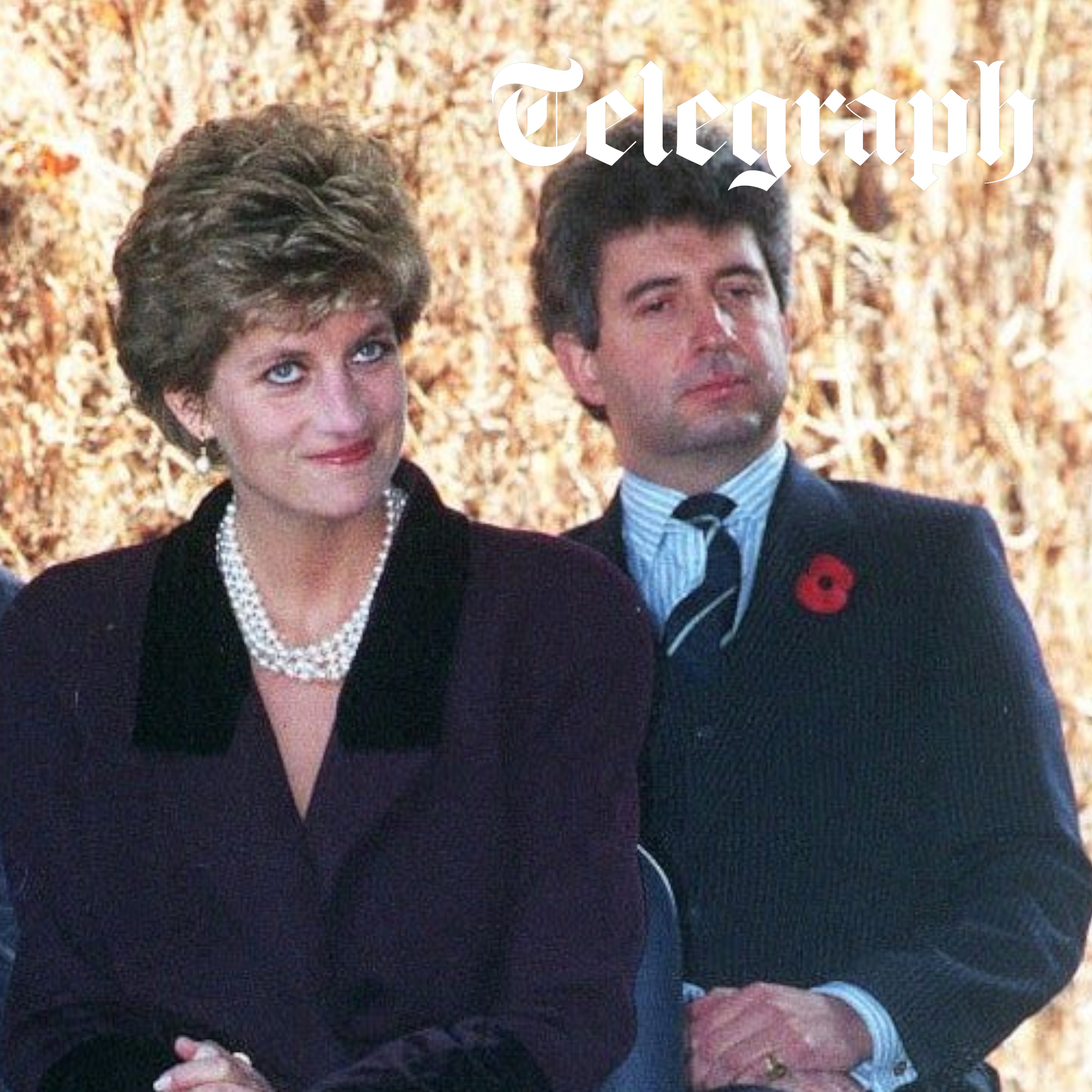
In a Daily T exclusive, Camilla and Tim speak to Princess Diana’s long-time former private secretary, Patrick Jephson.
In 1995 the BBC journalist Martin Bashir convinced Diana that the trusted adviser was spying on her, in order to secure the now infamous Panorama interview. Jepshon left his role soon after and the Princess went to her grave believing he had betrayed her.
Thirty years on, Jephson tells The Daily T about his relief that the world knows about Bashir’s deception, his regret at never reconciling with the Princess, and the future of the Royal family.
We want to hear from you! Email us at [email protected] or find @dailytpodcast on TikTok, Instagram and X
► Sign up to our most popular newsletter, From the Editor. Look forward to receiving free-thinking comment and the day's biggest stories, every morning. telegraph.co.uk/fromtheeditor
Producer: Lilian Fawcett and Georgia Coan
Senior Producer: John Cadigan
Video Producer: Will Walters
Studio Operator: Meghan Searle
Executive Producer: Charlotte Seligman
Social Producer: Nada Aggour
Editor: Camilla Tominey
Hosted on Acast. See acast.com/privacy for more information.


