
 Ask ChatGPT



Ian Dale discusses his book on Margaret Thatcher, arguing that many “left-wing” myths about her are wrong and that her public image misses her personal warmth and key policy nuances.
Ian Dale, author of a new short biography of Thatcher (Swift Press). He has met Thatcher multiple times, including as a young student in 1983 and later through his Westminster political bookshop Politicos. Hosts: Camilla Tominey and Gordon Rayner (Rayner is a journalist from a mining community; he recalls covering Thatcher-related events as a reporter).
Thatcher’s “Iron Lady” label helped her as a woman leader; she was compassionate and privately kind; she pressured South African leaders to release Nelson Mandela despite not imposing sanctions; she was not simply anti-European; some major criticisms are overstated or context-dependent.
1983 Downing Street reception; 2002 Savoy dinner where she tried to speak after a stroke; Mandela’s 1990 visit; Northern Ireland/Anglo-Irish Agreement aiding the Good Friday process; Falklands letters to servicemen’s families; myths on “milk snatching,” the poll tax, and deindustrialisation in Wales/mining towns.
Written by AI. May contain mistakes.
Exploring the mixed perceptions of Margaret Thatcher and her legacy.
“Ian Dale joins us in the studio with his new book on Margaret Thatcher.”
Ian Dale discusses the challenges of writing a biography of Margaret Thatcher.
“It is a very good question because I'd never intended to write a biography.”
Ian shares memorable experiences from meeting Margaret Thatcher.
“So I mapped out a sort of chapter plan, and I have done it chronologically, but how do you write about the Falklands War in 2 ,000 words?”
The hosts and Ian reflect on Thatcher's influence and public reception.
“I was a student at the University of East Anglia.”
The hosts and Ian reflect on Thatcher's influence and public reception.
“That's why Midi offers virtual health care specially tailored to women's needs.”
A discussion about how Margaret Thatcher is viewed, especially by women and the left.
“What is it you think that people get wrong about Thatcher?”
Exploration of Thatcher's duality as a leader and her relationship with feminism.
“and a couple of quite left-wing teachers behind me were sort of on the corridor at school celebrating it.”
Debunking common myths surrounding Thatcher's policies and actions in South Africa.
“and be really tough at the despatch box, but also shock horror, have the ability to make a shepherd's pie and love their children.”
Discussion of the criticisms faced by Thatcher regarding her policies and their impact.
“If it was left out in the summer, that was horrible.”
Explore the consequences of mine closures in the 1980s and the lack of planning for affected workers.
“Now, we did replace those industries in the medium term with a more service-based economy.”
Discuss the myths surrounding Thatcher's economic policies and her views on Europe.
“And the other sort of myth that I think has grown up is that she was very anti-European.”
Analyze the similarities between Thatcher's leadership and current Conservative challenges.
“You talk in the book about how when she was first elected, a lot of the MPs who chose her had what you call buyer's remorse.”
Speculate on Thatcher's views of modern political figures like Nigel Farage and Donald Trump.
“I mean, he would say, well, she was the one that inspired me to get involved in politics in the first place.”

Get the gist, explore an idea or ask about something said.
 Claude
On The Daily T, what are the key points of this episode?
Searching your listeningAutomatic transcript. May contain errors.
0:02The Telegraph.
0:30Camilla: Midlife needs MIDI. Visit JoinMIDI.com to book your first visit today. That's JoinMIDI.com. Insurance coverage varies. Check with your plan for coverage. Cooking up a storm. Dressing to impress. Staying fit and healthy. Whatever interests you, you'll find it in the Telegraph's newsletters. Explore the complete collection. From recipes with Diana Henry to fashion and beauty with me, Lisa Armstrong. Get the best of our journalism delivered to your inbox. Visit telegraph.co.uk slash newsletters today.
1:11Camilla: Margaret Thatcher. Some people love her, some people loathe her. A great many myths have grown up around her. We'll be talking to Ian Dale, the author of this new book about the Iron Lady, and he'll be giving us his personal recollections of her and what history has got right and wrong. Welcome to The Daily Tea with me, Camilla Tominey. And me, Gordon Rayner.
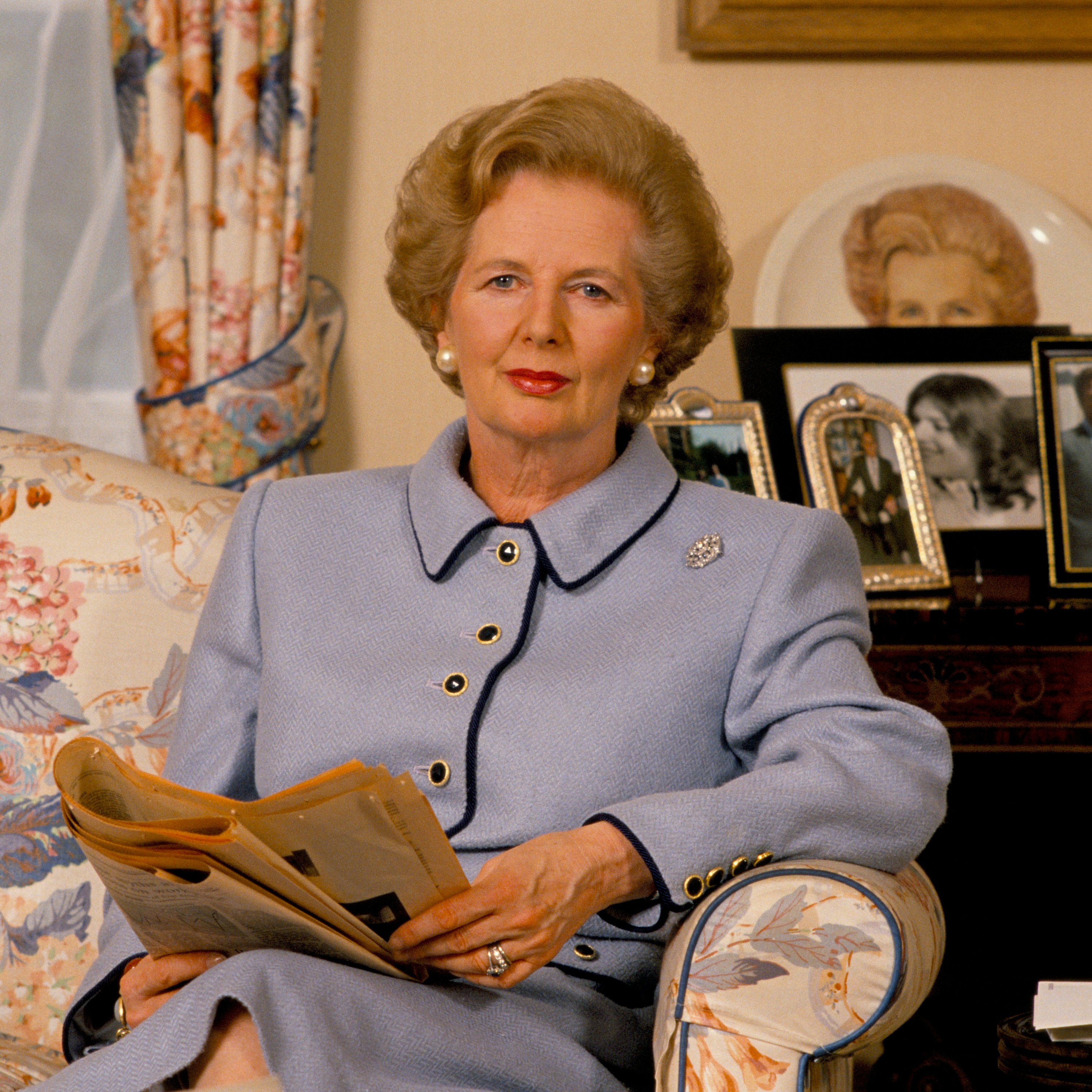
1:41Camilla: Ian Dale joins us in the studio with his new book on Margaret Thatcher. And before we do this, chaps, can I just have the great lady with her. Now, as Gordon Rayner, who's sitting alongside me, knows. I love you already. I did before. But this is the picture I do have on my desk. She does. Often to the horror of some of our more left-wing colleagues who grimace as they walk past, and I suppose that's the point. She is the Marmite figure. Some of us love her, myself included. Some of us loathe her. I don't know why you're looking at me. I don't know. That was really weird, wasn't it? Because you're from the north, you know, from a mining community, and I'm wondering, are there any sensibilities here, Gordon, we need to know about before we start this?
2:23No, actually, my grandfather, who was a coal miner, was a very avowed conservative and hated Arthur Scargill.
2:33Camilla: Ah, well, so much to discuss on this podcast. Ian, the first question, why did you write it? It is a very good question because I'd never intended to write a biography. Why would you after Charles Moore's epic three-volume biography of her? I think he is the Robert Caro of Britain. I don't know if you've read all three volumes. I've read one and a half. Well, you should read the others. It is just superb. So when Swift Press approached me to do this, they're doing this series of books on prime ministers, and they said they'd like me to do it, and could I write 30 ,000 words? Well, I thought 30 ,000 words, that's a pamphlet, not a book.
3:11So I stretched them to 45 ,000, and then, coincidentally, I broke my hip. The two things are unrelated. And I had to take on a personal trainer, which I know sounds pretentious, but anyway, I did. At 25 years old, Once he found out what I did for a living, he said to me, oh, now Margaret Thatcher, I've heard of her, but what did she do? Didn't even know she was prime minister. And when you think about it, if we were now in 1925, as opposed to 2025, it would be the equivalent of me writing about Disraeli, because it's 35 years since she left office. So you've got effectively three generations of people who weren't alive when she was prime minister.
3:52You have to be 56 years old to have voted in 1987. So there's so many people who have fallen for a lot of myths that the liberal left put out about Margaret Thatcher. So I thought, well, let's do a book that is aimed at people who don't really know much about her and don't remember her particularly. So it's aimed at a younger generation, but also aimed at busting a few of the myths that have grown up about her. What sort of challenges did that present when you were trying to write the book in terms of thinking about how you present this to a new generation? Well, the first problem is, how do you include everything in a book of 45 ,000 words?
4:30So I mapped out a sort of chapter plan, and I have done it chronologically, but how do you write about the Falklands War in 2 ,000 words? How do you write about all of her trade union reforms in 2 ,000 words? so I found that it was much more difficult to write a short book than a long book which I know sounds ridiculous but it's a bit like tabloid journalists yes I think you didn't have time to write a longer version present company accepted I think tabloid journalists as writers are possibly often more talented than they don't worry we've both done both so you're not insulting us so I did find that a challenge and it took me a lot longer to write than I thought I thought I could write most of this off the top of my head.
5:09But again, I soon found out, no, you do still need to do the research. And there were a few surprises. I hadn't intended to include a chapter on Northern Ireland, but I did in the end because I'd written, there was so much in all the other chapters, I thought, no, I've got to do something separate. This is the most difficult book I've ever had to do, I have to say, even though I probably know more about her than I do anybody else.
5:30Camilla: Before we get into what she got right and what she got wrong and how she may have informed future generations of politicians. Shall we share some of Thatcher anecdotes? I take it you've met her, Ian. I met her quite a few times. Yeah, and how did you find her in the flesh? Tell us about your experiences of meeting her. Well, the first time I met her was in January 1983. So I was 21. I was a student at the University of East Anglia. And she did a reception for all of the chairmen. And they were all chairmen of the different university conservative associations. I didn't even know her suit at the time.
6:04So I remember buying this sort of ridiculous pinstripe three-piece suit and driving down to London in my orange Ford Cortina Mark III, arriving four hours early, just in case, and being shown into Downing Street, walking up that staircase with all of the pictures of former prime ministers, thinking, what is a boy from Essex doing here? And there was this diminutive little figure at the top of the stairs because she was literally, I think she was five foot six and very very small and she had this thing of she'd shake your hand but as she shook your hand she guided you into the room so you didn't stop and talk for 20 minutes so there was i don't know how many people were there probably 50 or 60 people from universities most of the cabinet were there and i have a very low tolerance for alcohol to the extent i've just decided not to drink it anymore and I remember having two glasses of wine thinking no that's enough don't but you know what it's like in these things you feel a bit of a dick if you haven't got a glass in your hand so I grabbed another one went to sip it and as I did she walked past me but it wasn't wine it was whiskey which was her favorite tipple and I found myself heaving luckily I wasn't sick but I know exactly what would have happened had I been sick on her feet she would have cleared it all up.
7:27Good God.
7:28Camilla: Imagine if you would imagine a different book entirely. The day I vomited, that would be a hell of an anecdote. And then other times? Well, there were quite a few other times. I suppose the most memorable was in 2002. I used to run a political bookshop in Westminster called Politicos. And I thought, well, we're five years old, let's do a dinner. So I did a literary dinner. And she was the guest of Honour. She'd just published Statecraft. And three weeks before the dinner was due to take place, it was at the Savoy, we charged people£100 a ticket, which in those days was a lot of money. And three weeks before the event, she had the first of her strokes.
8:11And I thought my world had collapsed because I'd got 500 people who had paid to see Margaret Thatcher. So what do you do? So I got Bernard Ingram, John Knott, Professor Peter Hennessy and Giles Brandreth. I thought, well, I know all of them together can't equal Margaret Thatcher, but that's the best I can do. And people were fine about it. And then her office rang me and said, well, look, she will come, but she's not allowed to speak. And your task during this dinner is to prevent her from getting to the microphone because she will try. Yes. And I'd done really well in this up until the moment that she was about to leave.
8:49And I remember I had Margaret Thatcher on one side, Dennis Thatcher on the other, Carol Thatcher was there too. And she had been really good company doing this, didn't it? Because I sat next to her for 90 minutes and I was thinking, oh my God, what do you say to Margaret Thatcher for 90 minutes? But she was quite gossipy. And when Bernard Ingham was speaking, she just leaned over and whispered in my ear, that man has a very good imagination. He was telling anecdotes and sort of Thatcher tours all over the world. Anyway, so it got to the end and she was going to leave before, I think, John not spoke.
9:23And I turned to Dennis Thatcher just to make sure. And he basically had a row of gin and tonics over the course of the evening. I was just making sure he was OK. And with that, I just felt her get up and she made a beeline for the microphone. And at that point, 500 people were on their feet chanting 10 more years, including the likes of Kevin Maguire and Paul Routledge.
9:47Camilla: Wow. And it was just one of those moments... Just to point out, Kevin Maguire and Paul Routledge for The Uninitiated are very left-wing journalists. Indeed. Kevin Maguire did work for this establishment at one stage. That was when I first met him. So I then, I can recall it as if it was in slow motion, I then got up and ran after her. She got to the microphone, grabbed it and bellowed into it and I've still got the recording somewhere. Thank you. Thank you for that kind of reception. It's the kind of reception only an ex-Prime Minister can get. Of course, that set them off even more. And by that point, I got my arm round her waist, trying to pull her away.
10:28And there is a photo of this, and there's Jars Brandreth in the background, sort of basically laughing himself silly about what was going on. And it was one of those iconic evenings that everybody who was there will remember for the rest of their lives.
10:41Camilla: God, what a great story. Gordon, did you ever meet her? No, I didn't. He's far too young. I know, well, do you know what? When I was a cub reporter on the Sunday Express, I was sent to cover the Yvonne Fletcher Memorial in central London and Mrs Thatcher was there and my old news editor, this is what news editors do, they're like, is Thatcher going to be there? Because we've got another story running about, I can't even remember what it was. Will you go up to her and ask her X, Y and Z? And I thought, my God, and I'd only been in the trade for a matter of months, I think. So quite nowadays I'd go, oh, don't be ridiculous.
11:14Camilla: But of course, being young and keen and wanting to get ahead in the industry, I agreed. So I bowled up to me. I literally broke into the private reception of this memorial event, which was obviously quite solemn because that was the police officer who was killed back in the 1980s. And I saw her just there standing with a cup of tea, a cup of tea and saucer. I just thought to blend in, I'll grab some tea. I turned to her and I said, Baroness Thatcher. She said hello and I asked her this question about something completely unrelated to the event that we were at and she said I don't think I could possibly comment on that today and I said I know you can't I'm sorry I'm just doing my job and she said my dear we all have a job to do and I just thought this is the greatest moment ever what am I doing?
12:02I remember another time, I think this is about 1996, Telegraph Connection here as well. I'd taken an American friend of mine to an event at the Reform Club, which she was speaking at the T.E. Utley Memorial Lecture. And she'd done her speech. And my friend Daniel is a sort of really staunch Republican. He said, I got to meet her. I got to meet her. I said, well, go up and introduce yourself then. Oh, no, I can't. So I took him over and I said, Lady Thatcher, my friend Daniel's from the United States, he'd love to say hello to you. So he starts on this sort of gushing American thing that they do.
12:35And she sort of stood there just listening. And he's probably six foot three. So she's five foot six. She looks up at him and starts jabbing him in the chest. She says, your president, President Clinton, he is a great communicator. The trouble is, he has absolutely nothing to communicate. And then she just flounced off. And he was like standing there thinking, oh my God. And he's remembered it obviously to this day.
13:14Camilla: Hot flashes. Rage crying. Forgetting words mid-sentence. Yeah, we know. Menopause is a lot. Midi Health gets it. That's why Midi offers virtual health care specially tailored to women's needs. Built for women by women. Every symptom, every stage, every question. Visit joinmidi.com to get started today. That's joinmidi.com. Individual results and coverage varies. Check with your plan for coverage. Cooking up a storm. Dressing to impress. Staying fit and healthy. Whatever interests you, you'll find it in the Telegraph's newsletters. explore the complete collection from recipes with Diana Henry to fashion and beauty with me, Lisa Armstrong.
14:01Get the best of our journalism delivered to your inbox. Visit telegraph.co.uk slash newsletters today.
14:20What is it you think that people get wrong about Thatcher? You know, she's coming across in all your recollections of her as this sort of, you know, very funny, warm person. It's not how a lot of people on the left, anyway, view her. Have people got her wrong and why? Well, I think they have, but in a sense it's partly her fault. When she was dubbed the Iron Lady by that Soviet newspaper in 1977, I think, it was the best thing they could have ever done for her. Because we forget now that it was a really big thing for a woman to be elected leader of the Conservative Party. And I remember the day she was elected, February 11, 1975, I was, I think, 12.
14:59And I knew the significance of this. And I remember running up the stairs to tell my grandmother, who was ill in bed, and she burst into tears. and it was because I said to her later why did you react like that and she said because I never thought I would live to see a woman do that and since the book has come out I've had lots of women in their sort of 50s 60s 70s contact me and say yeah this was I mean I remember thinking to myself well women can now achieve anything so she did shatter that glass ceiling and I think a lot of women on the left now recognise that in a way that they didn't before.
15:36Harriet Harman wrote a book once on something about women in politics and barely mentioned Margaret Thatcher. Well, Harriet Harman, I've got an endorsement from her on the back of this book. So I think even she and people like her coming from the left recognise what the achievement was. Shabana Mahmood, the Justice Secretary, said recently that Margaret Thatcher was her heroine. Not because she agreed with her politics, but just because of she achieved getting to the top and showed people like Shabana that it was possible for a woman to do that. But I think in her later years, Margaret Thatcher became almost a caricature of herself.
16:14She knew what people expected of her. She went to make a speech. If she interacted with people, she knew that she was why they had come to see her and she had to play up to the image that they had but i i've got another book out at the moment on margaret thatcher called memories of margaret thatcher it's 250 people who worked with her met her the politicians journalists whoever and some very ordinary people as well and they've all they've all got memories whenever you meet margaret thatcher you remember it and and the margaret thatcher that comes across in that book is exactly what you were saying Gordon, a very compassionate, empathetic person.
16:55Anybody who worked with her in Downing Street would say that. And just sort of acts of personal kindness and things where she didn't seek any publicity. I think one of the Downing Street messengers, his wife died, and she went to the funeral, didn't tell anyone she was going, didn't tell him she was going. And she just walked in at the back of the church sat there and then quietly left she's just sort of just a woman of such great
17:22Camilla: character really i mean the same can be said for the queen there's something kind of unique about these female figures looming large largely in the last century i mean i remember i was born in 78 so i was a child of thatcher and i always find it funny when you talk about harriet harman you know there's no acknowledgement by some very senior female politicians of my generation now the Bridget Phillipsons, the Rachel Reeves, they were also children of Thatcher. They're now in their mid-40s. And I went to an all-girls school and she was a kind of like figure that we did look up to, regardless of whether we agreed with her politics, of someone, a woman who had made it to the top.
18:01Camilla: And I vividly remember when she was deposed and a couple of quite left-wing teachers behind me were sort of on the corridor at school celebrating it. She's gone. And I was from a Thatcher-supporting family, So I was really sad that she was gone and I didn't like the fact that she seemed to have been deposed by men. But there has been a debate, Ian, about whether or not she was a feminist. She was a contradiction because the first volume of Charles Moore's book is so interesting. She's a girly girl. She's obsessing with her sister about what she should wear to events and the handbag and the hair.
18:34Camilla: And she talks in great detail about meeting Dennis and how to impress Dennis from a visual point of view. There was a degree of obsession with how she looked, which is why she was so iconic. But at the same time, some feminists don't think she did enough for women and she portrayed herself as this prime minister that was happy to get a pinny on and make a shepherd's pie for the head of the army and apparently that was problematic. And she didn't promote many women, did she? No, but she only had about 20 to choose from, let's remember. But was she more of a man's woman, let's be honest, Ian? Yes, absolutely.
19:06And she used her femininity to great advantage, particularly with world leaders. I mean, Francois Mitterrand, remember what he said about her? The eyes of Caligula, the mouth of Marilyn Monroe. Or was it? No, it wasn't the other one. And she liked men who did have sort of dashing good looks. I mean, Cecil Parkinson was one where you sort of thought, sort of had she been a bit younger? And there's lots of evidence to show that she was able to use, I'm not going to say, I mean, people say feminine wiles, it's a bit sexist, but she wasn't beyond turning that sort of charm on in a way that I think other female politicians might have shied away from.
19:50I was also very struck by the mention in your book of her writing individual letters to every single serviceman's family who died in the Falklands War and also the Falkland Islanders who died in the war and how much that affected her. I mean, that's quite an undertaking for somebody to write a personal letter to. Yeah, and she was writing them during the war. yeah and I think that whole experience had a profound effect on her because she knew that she could have lost her job over all of what happened and she took a lot of advice from woolly white law and and and I mean Francis Pym she never had a very good relationship with but they both sat her down once I think it was after the first British ship was sunk and they'd both fought in the Second World War, and they had to say to her, look, in war, these things happen.
20:42There will be setbacks, and you have got to cope with them. And I think for any prime minister, regardless of whether they're male or female, that would have been quite something. And you talk to any of the subsequent prime ministers, and they will all say that sending British troops into battle is the most difficult decision that they ever have to take, because they know that there will be casualties. I mean, inevitably, there will be. But I mean, Carol Thatcher says that she would often because she was actually living in Downing Street at the time. And she would return home in the evening to find her mother in the flat writing these letters, all handwritten, all original.
21:18She wasn't writing the same letter to everyone. And she was just doing it with tears rolling down her face. And there were other occasions when, like when Mark, her son, was lost in the Sahara in some car rally. She cracked up then and sort of visibly cried in public. Now that went totally against the Iron Lady image of this uncaring dictatorial woman that people sort of got this image of. But there was an emotional side to Margaret Thatcher.
21:45Camilla: But it's also about how women are depicted in the public eye and people can't get their heads around the idea that somebody can be immovable in some of their policy beliefs and be really tough at the despatch box, but also shock horror, have the ability to make a shepherd's pie and love their children. This is the trouble. It was almost like she was the test case for what a woman should be if she is in power. But even now, people take that attitude. On the podcast that I do with Tessa Dunlop, where we try and sort of look at political events of today and then relate them to the past. We had this debate about Margaret Thatcher's feminism this week.
22:23And Tessa was taking exactly that view. Well, she wasn't a feminist. And she was reading things out that I thought proved she was a bit of a feminist in many ways. She was in the 1950s. She was doing things that most women wouldn't have dared do. Now, she did have Dennis to back her up and his money, of course, which helped. But she was bringing up twins and holding down a full time job in law and then getting elected. Well, very few other women did that. So I think she was blazing a trail for women. I mean, she would never have described herself as a feminist. but what more can you do than prove that women can do the jobs that previously people only really thought men could?
23:02Yeah. At the back of your book you have a section where you go through myths, 12 of them, 12 myths about Thatcher that you're keen to sort of... I could have extended that to about 50. Sure. Do you want to just take us through two or three of the most egregious sort of myths that are built up about her and the ones that you feel are the most wrong? Well, the first one that I will say is on South Africa. Now, she refused to impose sanctions on South Africa to put pressure on them to get rid of apartheid. And she was castigated for it. Now, I can understand if you're on the left and you refuse to go along with the consensus, then people are going to draw their own conclusions.
23:39And the conclusions they drew was that she was racist and that she supported the apartheid regime. If you bother to look into the archives and look and see what actually happened, there are a huge number of occasions where she personally put pressure on Bota and then de Klerk to release Nelson Mandela and to start the dismantling of apartheid. Now, this wasn't just done in letters, although there are some quite direct letters from her to them. You have to look at the evidence. And Robin Rennick, who was the ambassador in Pretoria at that time, I published a book by him 10 years ago, I think, which details in exhaustive detail exactly what happened.
24:22And there's various visits that she made. And he was there. He was probably the only witness to all of these things. and you have to draw the conclusion that that was a much more successful way of doing it than just being slightly virtue signaling and imposing sanctions now she got castigated for this and she didn't help herself in many ways because there was a commonwealth summit where i think she was probably quite tired and i think she'd she'd agreed that we wouldn't buy or export i don't know Krugerrands. And she looked at the waiting press and she said, it was such a little concession on my part.
25:03You thought you didn't have to say that. Yes.
25:05Camilla: She could sometimes say one line too many, right? Yeah. And there was a lot of that in Northern Ireland on the Anglo-Irish agreement, which I think without that, there wouldn't have been a Good Friday agreement. But she gratuitously offended Gareth Fitzgerald, the Irish Taoiseach, in a way that she didn't need to do. And the next day she kind of apologised for it. She knew she'd gone too far. So there's always that part of her character that might just say the wrong thing at the wrong time. But on South Africa, Nelson Mandela thanked her for her role in getting him released. When he came to Downing Street in July 1990, Robin Rennick sat her down and said, look, he's waited 30 years to have this kind of conversation with you.
25:46She said, oh, you mean I mustn't say very much, Robin? He said, exactly, Prime Minister. So she sat there for an hour listening to Nelson Mandela to the extent that the waiting lobby journalists in Downing Street started chanting free Nelson Mandela. And it is a fascinating, as I say, Robin Rennick's written a book about it all. But it's well worth reading because it just shatters this myth that somehow she was in favour of apartheid.
26:13Camilla: The three kind of main points of criticism by her detractors are she was the milk snatcher when she was the education secretary. when I became a Thatcherite. I hated school milk. I hated school milk as well. Especially in the summer. It was all warm. If it was left out in the summer, that was horrible. But again, it was the Labour government under Harold Wilson that started that. She was actually against it. But it was the Treasury forced it on her and she, like a good soldier that she was, she went out and sort of defended it. Secondly is the poll tax. Yeah. Now that is where she did the wrong thing for the right reason.
26:48Camilla: OK. And the third thing, I think, And this is becoming, I think, really relevant today in the current politics, Tories, reform and Labour. And it's the deindustrialisation of Welsh mining and other towns of England. And I think there is a legitimate criticism of her for not providing an alternative for some of those communities. And we've seen its rear its head, haven't we? Trump has won in Rust Belt America largely by saying we will rebuild the factories and we will re-employ the communities. It's Vance-ian, it's Farage-ian, and it seems to be playing very well with the electorate in Britain in 2025.
27:27Camilla: Was that a mistake? Did she mishandle that whole period, Ian? No, I don't think she mishandled the whole period, but I think there were things that she could have done but didn't. And, I mean, Gordon, we heard earlier you come from a mining community. often in mining communities every single male adult in those communities worked down the mine it's a bit like in ports that all of the males worked in the docks and these jobs were largely inherited over over generations and i don't think enough thought was put into or okay well what then if the mine shuts what what happens to all of these people because they won't have jobs and there were various schemes that were dreamt up to try and retrain people but they were all a bit piecemeal there was no real planning to them and i mean you might say well it was such a large problem because it wasn't just the mines i mean there's lots of manufacturing industry shut down in the 80s not because she shut it down as the modern myth would tell you it was because these industries were way past their sell-by date they were all unprofitable they were being taxed to the extent of billions by the taxpayer.
28:37And in the end, something had to give. Now, we did replace those industries in the medium term with a more service-based economy. But in the 80s, I mean, unemployment went up massively. I mean, it did start coming down afterwards, sort of 84, 85. But I don't think there was enough thought given to, well, what now? And there are still resentments in those communities because of it. So I think that was one of her failures. There were plenty of others, and I detail them in the book. I mean, this is not, I would agree, it's not a hagiography. I try to be fair. Poll tax was another big failure. And the other sort of myth that I think has grown up is that she was very anti-European.
29:21And that is because of one or two quotes that are taken out of speeches, which seem anti-European, like the Brood speech in 1988, where she said, well, we haven't successfully rolled back the frontiers of the state in the UK to have them reimposed at European level. Completely understandable sentiment from my point of view. But if you actually read the rest of that speech, it's incredibly pro-European. And she was promulgating the single market as the sort of greatest thing since sliced bread. And I'm very doubtful as to whether she would have voted leave if she'd still been alive in 2016. and most people who worked with her and knew her best would agree with that.
30:02We'll never know because she did develop into much more of a Eurosceptic, particularly after she left office. She harangued John Major about the Maastricht Treaty, for example. But would she have voted to come out? I'm not so sure. I've got to ask you about how she relates to the present day. You talk in the book about how when she was first elected, a lot of the MPs who chose her had what you call buyer's remorse. You talk about how a lot of Conservative associations didn't really back her. And, you know, there are parallels here. I mean, with Kemmi Batenok perhaps. How do you see those parallels?
30:37And what do you think we and perhaps the Tories should learn from that as we sit here now? Well, as I was writing the chapter, which details her period in opposition, 75 to 79, virtually every 400 words I think oh this is a bit like now with Kemi and Thatcher was the first female leader Kemi is the first black leader there is one big difference though that Margaret Thatcher would give four or five set piece interviews each year with Robin Day David dimblebee people like that and that was it you didn't expect to hear from a party leader talking about the death of deirdre barlow's husband in coronation street like tony blair did i mean that only came later and we've got to the point now where if a party leader doesn't say something virtually every day people then accuse them of being lazy or sort of hidden away or not being on top of their job.
31:37And I think that is a real problem for Kemi, because as we all probably know, Kemi is not a great fan of the media, but she knows she's got to do it. And I think there are all sorts of parallels. Margaret Thatcher was given time to develop a policy platform. Well, every day you read pieces in the papers now, even from right-wing commentators, saying, well, where are the policies? Well, she's been in office, what, seven months, for goodness sake. And I know that Kemi's studied Thatcher's period in opposition a huge amount. And I hope she learns the right lessons from it. But it was a very uneasy time for Thatcher.
32:14Most of the Conservative Party, whether it's the Parliamentary Party or the Voluntary Party, wanted to get rid of her. They thought they'd made a huge mistake just because they wanted to get rid of Heath. She was the only one that had the guts to stand up and stand against Heath. But now, if they get rid of Kemi, and then they bring someone else in, and then inevitably get rid of them, they're absolutely finished. Now, the Conservative Party in the late 1970s, their future was not existential. There was no thought that the Conservative Party could cease to exist. Well, there is that thought now.
32:45So that's why it is a little bit different. I think the scale of Kemi's challenge is actually bigger than what Margaret Thatcher faced.
32:52Camilla: Final question, Ian. What do you think Margaret Thatcher would make of Nigel Farage?
33:00you see the question i'm usually asked is how would margaret thatcher deal with donald trump to which the answer is i don't know i mean how how can you know because i don't think she i don't think she would have seen donald trump as one of those men that she could sort of turn on her feminine ones with no farage i don't know i mean i think she she quite liked roguish characters in some ways, would he have been a sort of natural soulmate of hers? I mean, he would say, well, she was the one that inspired me to get involved in politics in the first place. I think she would find him an intriguing character.
33:34I don't think there would be a cat in hell's chance that she would have left the Conservative Party to join reform. There's no way that would have happened. I mean, she was an instinctive Conservative in a way that people nowadays maybe not, maybe they aren't.
33:50Camilla: Ian Dale, thank you very much for discussing your book on Margaret Thatcher and joining us on The Daily Tea today Thank you very much indeed
34:19Thank you.
She is simultaneously one of the most loved and hated figures in British history. But Margaret Thatcher certainly made in indelible mark on our politics.
Broadcaster Iain Dale is the author of a new book on the Iron Lady which seeks to bust some of the myths around our first female PM and introduce her to a younger audience.
Camilla and Gordon speak to Iain about his personal interactions with Thatcher – including coming dangerously close to vomiting on her shoes – and what she would have made of Brexit and Nigel Farage.
We want to hear from you! Email us at [email protected] or find @dailytpodcast on X, Instagram and TikTok.
Producer: Georgia Coan and Lilian Fawcett
Senior Producer: John Cadigan
Planning Editor: Venetia Rainey
Executive Producer: Louisa Wells
Social Media Producer: Ji-Min Lee
Video Editor: Will Walters
Studio Operator: Meghan Searle
With assistance from Andy Mackenzie
Original music by Goss Studio
Hosted on Acast. See acast.com/privacy for more information.


