
 Ask ChatGPT



Debate on UK energy bills and Labour’s alleged “absurd” approach; includes claims about North Sea drilling, electricity pricing, and net zero. Second segment pivots to the Morgan McSweeney stolen phone scandal and questions about police handling and possible missing evidence.
Claire Coutinho, Shadow Energy Secretary (Conservative). Kemi Badenoch, Shadow minister for women and equalities (Conservative). Gordon Rayner, journalist/commentator discussing the McSweeney case.
Coutinho argues drilling in the North Sea would increase supply/security and generate tax revenue (cited: £25bn over 10 years) that could cut bills (cited: £200 off average household; 20% off business electricity). She claims Labour would raise costs via welfare bailouts rather than cutting policy levies/VAT/carbon and outdated renewable subsidies. She criticizes “net zero” as offshoring emissions and says Labour’s approach imports higher-emission LNG. On burqas, she supports banning face coverings and considering banning cousin marriage, citing equality and health concerns.
LNG supply comparison (2035: 50% foreign vs 6% LNG if North Sea used); Spain’s renewables electricity costs; land-use comparison (wind/solar vs nuclear). McSweeney: reported stolen government phone, remote wipe, Met Police reopening investigation, release of call transcript, wrong address/CCTV search, and alleged use of multiple phones.
Written by AI. May contain mistakes.
Discussion on why energy prices are high and the government's approach to address it.
“Claire Coutinho, thank you for joining us on The Daily Tea.”
Exploration of the Tory party's plan to reduce household and industrial energy costs.
“So that's affecting our ability to grow.”
A discussion about the balance between net zero targets and fossil fuel usage.
“At the moment, Ed Miliband is killing the North Sea.”
Arguments regarding the environmental and economic impacts of renewable energy sources.
“We've been doing this for years and they haven't.”
Debate over the potential burqa ban and its implications for British values and tolerance.
“We'll look at it as sort of a generational mistake.”
Discussion on how cultural practices, like face coverings and gender segregation, impact British values and gender equality.
“Ali, you say our values are being tolerant, but what about tolerance of the burqa?”
Exploration of the rise of political Islam in Britain and its implications for national identity and societal cohesion.
“And I think instead, again, of being able to talk about that, frankly, last year you saw the NHS promoting cousin marriage and talking about the benefits of cousin marriage.”
Analysis of the controversy surrounding the theft of Morgan McSweeney's phone and its potential implications.
“We're not saying you can't wear any religious affiliation in your wardrobe at all.”
Discussion on the ongoing investigation into the theft of Morgan McSweeney's phone and related political dynamics.
“Rachel, as we heard, And Kemi has described the Morgan McSweeney phone saga as deeply fishy.”
Discussion on the errors made during the police investigation into a stolen phone incident.
“And the fact that the Met clearly felt that they were in danger of being accused of some sort of incompetence or not responding properly or not doing enough to try and find it, etc.”
Analysis of the miscommunication regarding the address and its implications.
“They are now going back to see if any CCTV still exists from the correct location.”
Exploration of the missing phone's tracking capabilities and government actions taken.
“And secondly, did the government try and track his stolen phone?”
Discussion on the potential loss of important evidence due to the phone being wiped.
“That's one of the reasons that Kemi Baden-Ock cited for this idea that things are a bit fishy.”
Examination of how lack of transparency can lead to conspiracy theories.
“reported stolen phone to factory settings, therefore wiping it totally, presumably there are records in the cloud of WhatsApps.”

Get the gist, explore an idea or ask about something said.
 Claude
On The Daily T, what are the key points of this episode?
Searching your listeningAutomatic transcript. May contain errors.
0:09The government is choosing for your energy bills to be as high as they are. So says the Shadow Energy Secretary on today's Daily Tea. With the Iran war sending prices soaring, Claire Coutinho tells us we must drill baby drill in the North Sea. But as we ask her, how would that bring down our bills? And Kemi Badenock says the curious case of Morgan McSweeney's stolen phone is fishy. With the Met Police reopening their investigation into the theft, we run through the questions that Starmer's former chief of staff still needs to answer. Welcome to The Daily Tea with me, Tim Stanley. And me, Rachel Johnson.
0:56Claire Coutinho, thank you for joining us on The Daily Tea. I've got a very almost moronic first question, which is about the price of gas and the price of energy. And why? Can you explain in simple terms? Because if I don't know, maybe people listening won't know. why is the price of our energy set globally? Thank you so much for having me. So it isn't set globally, but it is set regionally. So you have a separate price, for example, for gas in the US than you do in Europe. And actually, the UK does have a separate price as well. However, the UK and European prices are very close because it's all so connected.
1:34You have a lot of flows going back and forth. Now, people say that if you drill more in the North Sea, it won't affect prices. That's likely to be true, not necessarily true. But the point that we've been making, and that is completely ignored by some of the most fervent sort of greeny supporters, is that you earn a huge amount of tax revenue from the North Sea. And if you earn that tax revenue, you can do things with it. You could use it to help people by cutting their bills, for example. So the independent analysis is that you could make£25 billion in tax over the next 10 years if you use the North Sea.
2:09And if you wanted to, you could put all of that into cutting bills. But there is evidence that the North Sea basin is pretty mature, has been pretty well mined out already. And so your supposed gains from actually drill baby drill there won't come up with enough supply to make a big difference or to accrue those revenues. So I disagree. I think it will make a big difference. Like I said, the independent view is£25 billion in tax over the next 10 years. I'd much rather that comes from a thriving industry than it comes from a hard-pressed taxpayer. But even in terms of our supply, the supply of our gas overall, you could either in 2035 have 50 % of the UK gas supply come from foreign LNG, which is higher emission from places like the US and Qatar, or you could have 6 % of that supply come from LNG if you used the North Sea.
3:07That is a massive difference in terms of your security. One of the biggest problems we've got at the moment is that that LNG market is incredibly squeezed because of the war in Iran and what's happened in Qatar. So being able to get much more from the North Sea does give you enormous security. It also, like I said, brings in those tax revenues, supports all those jobs. And frankly, it's just common sense. If you can make stuff in Britain, we should, rather than importing it from abroad. Claire, let's take a step back. The price of electricity in this country is already very high by global comparison, which not only affects domestic purchases of energy, but it also importantly hits industry.
3:44So that's affecting our ability to grow. It's likely to keep on going up because the Iran war and what's happening in the Strait of Hormuz, which affects the overall global price. So tell us, what is the Tory solution to this? And what policy that you propose will directly result in money coming off our bill? So there's two parts of our policy. One, we should be making the most of our own resources, which is the drill, baby drill, make the most of the North Sea. And the second is one of the biggest problems that we have, as you said, is that our electricity is incredibly expensive. Some of the highest industrial electricity prices, some of the highest household electricity prices in the developed world.
4:23So our second part of our policy is to try and make that electricity cheap. And we would do that by cutting some of the taxes and levies and policy costs that government is choosing to impose. So the thing that people often don't realise is that if you look at an electricity bill, about 25 % of that bill is what we call the wholesale cost, the cost of the fuel, the cost of your electricity power. The rest of it is policy costs. It's taxes, it's levies, it's things that the government is choosing to impose upon you. So we would start taking those taxes and levies off. We've identified some, VAT, for example, the carbon tax, these old wind renewable subsidies, which are incredibly generous, which we think are now outdated.
5:09And all of that together would take£200 off your average household bill and crucially cut costs for business in terms of their electricity by 20%. Now, none of that would cost the taxpayer a penny. And this is the big difference between us and the Labour position. What Labour have set out is that they want to go back to taxpayers to ask for more money to do a bailout for people on welfare. So if you're on, say,£35 ,000 and you're not well off, you are not going to get any help from the struggles that you're going to have with the prices going up from the Iran war. I think that's wrong. I think we can cut costs in the system.
5:46And we can do that without subsidising that from the taxpayer by just taking out those costs, cutting spending elsewhere. And then we could help everybody by making the cost of energy cheaper in this country. When you talk about taking VAT off bills, is that financed by opening up exploration in the North Sea? Because presumably that would take a long time to develop and a long time to tax? So we've said we'll take VAT off for good for the next three years and hopefully longer. And for the next three years, it'd be funded by scrapping those old renewable subsidies. So the key thing in our policies, we've looked very carefully to make sure it's got proper funding, we won't be coming to the taxpayer for the money.
6:23And in the long run, you know, if the North Sea is up and running, like I said, there's£25 billion of tax revenue there that you could then use to continue that cut. But to do that, they have to change policy now. At the moment, Ed Miliband is killing the North Sea. He'd rather that we get the gas from Norway, from Qatar, from the US instead. And that means he's putting all of those tax revenues at risk. I suppose what he would say if he were here, and we'd love to have you on the show, Ed, we really would, is this is all about direction of travel. And oil and gas will continue to be part of the mix because they just are.
6:56But what we need to do with government policy is push things in the direction of renewables. Because if you look, for instance, at Spain, which is invested heavily in renewables, it's paying a much lower price for its per megawatt hour production of energy. And the problem we have in this country is everything hinges upon the prices set by the most expensive generator that you use. You're dependent upon those gas wholesale prices. The gas industry does not build volumes so that it can mitigate for if there's a crisis in production. So in other words, we are held hostage by our being reliant upon fossil fuels.
7:30And even though we will continue to use them in some part, we need to generally move towards renewables. And that's where the focus of government policy ought to be. Well, you mean you should have Ed on the show. And if he does say that, what you should say back to him is that he's conflating two completely different issues. If you drill in the North Sea, that does not stop you building a wind farm. These two things are completely separate. So you've got to separate out your production of oil and gas and your consumption of oil and gas. Now, look at somewhere like Norway. It exports and produces lots of oil and gas, generates wealth from it.
8:06It has a lot of people who drive electric vehicles. We could be like that. We could be someone who's building nuclear power plants. I do think wind and solar can be more expensive in this country. Solar, for example, is about twice as expensive in this country than it is in Spain because we have less sunshine, for example. but you can build whatever you want as government. This doesn't get in the way. And the problem is he's conflating those two issues because his issue isn't that drilling in the North Sea creates a reliance of fossil fuels. That's absurd. His issue is that he thinks it's generally climate vandalism.
8:37What he wants is for us to be a world leader on these issues. And he thinks that if we shut down our own production, he gets to fly around the world preaching at everyone else to do the same. But I can tell you when I was Energy Secretary and I met these different countries, the counterparts wouldn't say to me, you know, your net zero looks great. Can we follow suit? They would say, why is your energy so expensive? And they'll be looking at what he's doing in the North Sea and thinking, gosh, why are you making your country poorer? If we sign up to net zero, do we have to do the same thing? Because the thing that persuades other countries is prosperity, not Ed Miliband preaching from a pulpit.
9:13And that's what he's got to realise. We can't force ourselves into a hair shirt and hope that everybody follows suit. They won't. We've been doing this for years and they haven't. What you have to do is look after the environment. Of course we should, but do that in a way that protects the economy and protects living standards. And that's our position. Use your own resources, make electricity cheap. Those are the two sensible things to do. But what about the ultimate aim of net zero, which is to protect all of us long term from the effects of climate change, which look at the long term effects of climate change and what they could do for immigration, for example.
9:50You know, we need to do something. And it's a Tory policy, Claire. It was adopted at COP26 in Glasgow in 2021. Alok Sharma was your climate change delegate. My father happened to be advising there as well. Has the Tory party turned its face against net zero? And has it turned its face against trying to stop the worst effects of climate change? simply for the short term gain of making people's bills cheaper? So, as I've always said, I think you can have a climate policy. I think it's deeply conservative to care about the environment. I actually had Roger Scruton as a lecturer when I was at university.
10:31And I believe in his philosophy that we want to preserve things and hand them down to the next generation. Net zero is not doing that. Firstly, net zero is not nature. And actually, net zero in some cases pulling against nature is making us use lots and lots of land for wind and solar rather than energy-dense sources of supply like nuclear and gas. And secondly, the biggest problem with net zero is at the moment we're just offshoring emissions. So all you're doing is replacing British production, whether that's of gas or steel or chemicals or plastics, with imports from abroad because that doesn't count in your domestic targets.
11:05So you've still reduced your emissions. But actually in terms of climate change, it's worse because those imports have much higher emissions. The gas that we're going to be importing because of Ed Miliband's plans for the North Sea, has four times higher emissions than the gas that we could get from the North Sea. Like it simply doesn't make sense. And this is what I don't like about the net zero legislation. It's allowed bureaucrats to eradicate common sense when it comes to energy policy in favour of this narrow-minded myopia about domestic emission targets. That's not working for the environment.
11:36It's not working for global emissions. It's certainly not working for the economy either. In terms of just renewables, I think everyone likes renewables. The idea of wind power, solar power, sea power, whatever power. Have you been to South Lanarkshire recently? The landscape is scarred by these things. Also, Scottish landowners are making money hand over fist. I know one who's made tens of millions of pounds by lying his glens to be destroyed by wind farms. And it's not just the windmill. A road has to be built to the windmill. The windmill has to be replaced at various points. It degrades, etc.
12:11It's an incredibly costly thing. And I just think in 50 years' time, we'll look back at those scars on the landscape and feel much the same way as we do about, say, Battersea Power Station. We'll look at it as sort of a generational mistake. We don't understand why we did it. Well, I mean, here's a stat for you. Wind and solar use up to 3 ,000 times more land than nuclear. Right. And we're a small island, right? We've got beautiful countryside, but we're small. We're quite dense. So using something which uses much less land like nuclear is a much better thing to do. And that is zero emission as well.
12:43I want to ask you about some other things that are going on. There is talk of the Tories coming out in favour of a ban on the burqa. Is that a likely thing? Well, look, I am also shadow minister for women and equalities. And from that perspective, I would ban the burqa. The burqa and the communities where it generally come from cultures which are very misogynistic. This is something people don't often want to admit, but it is true. Now, obviously, we are looking at this in the round. There's a question of how would you operationalise it? What does it mean for policing? And so those are the wider questions we're looking at.
13:18But yes, I think overall in this country, there are cultural practices which are happening which don't accord with British values and which aren't healthy for society as a whole when it comes to integration. And one of the things that we've set out, we've got an integration commission at the moment is we should take some of these things head on, because overall, that would be better for society. You'd have a more welcoming and tolerant society if people didn't think that we have mistaken a tolerance for permissiveness, a sort of anything will go, even if we don't like it, even if it doesn't accord with our values, we'll let it go if you're from a diverse culture.
13:55That's what people worry about at the moment. But I guess, first of all, it wouldn't be welcoming and tolerant to women who might choose to wear the burqa in public. And secondly, Ali, you say our values are being tolerant, but what about tolerance of the burqa? So I think it's undermining tolerance as a whole, this permissiveness. So if you think about either the burqa or what happened with the grooming gangs, where people just turned a blind eye to the abuse of young women and girls, those kinds of things happening makes people feel that we do not have a society as a whole, which is treating all cultures equally, which is standing up for the things that we believe in.
14:32And then that's what breeds prejudice. If you have people wearing sort of religious head coverings, I don't think anybody feels that that undermines anything which is fundamentally British. If you're wearing a hijab and, you know, it could be a kippur, it could be, you know, a turban, any of these things. A nun's habit. A nun's habit. Nobody feels that undermines something. It's face coverings we're talking about, isn't it, rather than head coverings. I think face coverings do undermine that personally because there's two things. There's one, what does it mean about what that's saying about women?
15:02And I think in this culture in Britain, we very strongly believe in equality between the sexes. And not only are we seeing more people wearing burqas, you're also seeing people call, for example, for gender segregation of public places. That's something that we've seen as well increase. There was someone, I think, I can't remember if it was the last local elections or someone before, but there was a candidate who said, actually, what I want to do is have gender segregation in public places. I think that rise of us allowing cultures who do not think that the sexes are equal is a problem I think that's a problem for one of the fundamental principles that we have in Britain of having that equality between the genders I mean I do note that Kemi Badenock has slightly followed snapping at the heels of reform on this because this has been something that's been rumbling around the reform manifesto for many months ever since Zia Yusuf who we interviewed last week seemed to step down after Sarah Pochin, his only female MP, said that reform should ban the burqa.
16:02So are you kind of playing catch up with reform on this? So I think Kemi Badenok, of all people, is someone who's been very forthright about all of these issues. She was the Equalities Minister before me and she's always been very forthright on these issues. I mean, she talked about even when she was running for leader, which is, I think, well before Nigel Farage. I stand corrected. I don't remember her saying that. Sort of twinkle in reform's eyes. But she talked about, for example, grooming gangs and saying we can't have this sort of two tier level of justice depending on which cultures you're from.
16:33And so she worries a lot about integration. She has for years and she's spoken very publicly about that. But I think it's more what you're seeing at the moment is a greater conversation around these issues because of what's happening in Britain. And that's the rise of political Islam. We've talked about Islamism and extreme Islam for years. Everybody understands that. Everybody has an understanding of the terrorism that's linked to that group. But it's a very, very tiny proportion of the Muslim community. But what you're seeing now is something different, but also concerning, which is the rise of political Islam in groups like the Muslim vote, which is enhanced sectarianism in this country for the first time.
17:10So last election, there were five MPs elected. We've obviously seen them supporting the Green Party in recent by-elections. And that is its own set of concerns, because sectarianism is something that we haven't had in this country for a long time. I think you have to go to sort of Northern Ireland to see what that looks like in practice. And where it happens, conflict and strife follows, because what you're doing is getting groups who identify either by religion or ethnicity, who then are banding together to say our manifesto should be about us and our concerns only, rather than being part of a nation which considers itself as a whole.
17:46And that's something, again, which I think fundamentally undermines our sense of nationhood and what it means to be British. You're also considering first cousin marriage. Is that accurate? You're thinking about banning that too? So we have a integration commission where we're looking at all of these things. And it's not, I should say, just within one community. We're looking at it across the piece where we think there are these cultural practices that aren't working well for Britain. But yes, I would also consider banning cousin marriage. And why is that? Because we know there has an increase of childbirth defects, a quite serious market increase with childbirth defects.
18:21And I think instead, again, of being able to talk about that, frankly, last year you saw the NHS promoting cousin marriage and talking about the benefits of cousin marriage. and it also feeds into this problem that we've got where I think you've got our public services feeling that they have to promote diversity so much that they are actually promoting cultural practices which do not work well, which we should not be promoting and cousin marriage for me sits in that bucket. See, the question I always have with the Tories is why didn't you do this before? Because you are right, sectarianism, political sectarianism has grown, more than one MP has been elected But if you turn the clock back by about 20 years, there was George Galloway, right?
19:03And I remember in the 2010s, lots of debates about should we ban the burqa and all this sort of stuff. I feel this issue has been going on for a long time. And the curious question to me is why you need to have a commission to investigate it? Why the Tories have to have a big conversation? Why didn't you just ban this stuff? Why isn't it the conservative instinct to just ban this stuff? Is it because reforms started to say it and reforms beating you in the polls? So I only came into parliament in 2019. Kemi was 2017. So we weren't here for a lot of the time before. So I can't speak to that. I know in my time, we had a lot of other pressing issues like COVID, for example, the war in Ukraine.
19:40And I do think it's become more of an issue. Like I said, we didn't have the Muslim vote before the last election. So actually, there has been an increasing problem in the country because you've had this level of immigration, which is why all political leaders need to grasp it. So, no, I don't think it is us chasing reform. There's a good question for many things of why did you not do that when you were in power? I think that's completely fair. But I do not think it's unfair to say there is a growing issue around this area. And you've seen that, by the way. I feel that personally, that you can see the division.
20:11You can see increasing resentment in this country, increasing sense that anything goes if you're from one of these minority cultures. and yet we, the sort of British native population, as it were, are facing different levels of whether it's policing or whatever else it might be. There is definitely a sense in the country that that's increased, which is why you're seeing people talk about it more. I think the most important thing is that we are gripping the issue, that we're able to speak frankly about it. You get a lot of people who try and shut down these conversations. They say it's too culturally sensitive, you can't talk about it, and I think that's the wrong approach because if you do that, These conversations will just happen underground and outside of the other end will pop up something which is, you know, incredibly illiberal, incredibly divisive.
20:57And I think it's important that mainstream politicians actually just talk about these issues, frankly. Mothin Ali, deputy leader of the Green Party and a councillor, his wife wears a face covering. She wears a burqa. Do you think she should remove that burqa? Well, look, it's not about a single individual. It's not about singling individuals out. We've just been talking about in the abstract. Let's talk about what it actually means for women who wear the burqa. So my point is you have countries, right? This is not we wouldn't be the first country to do this. You have France, you have Belgium, you have, I think, Switzerland as well.
21:31You have countries which say we don't think people should wear the burqa. We ban the burqa. It is possible to do that. You can wear a religious head covering, for example. We're not saying you can't wear any religious affiliation in your wardrobe at all. But you can, it's totally possible to say, we think face coverings are a step too far in this country. So this is not about singling out any individual. But yes, I personally think you could do it. Final question, because we need to get your, we want to get your take on this. If in some future government, you were working for Kimi Baden-Ock and heaven forbid you were mugged.
22:08And your phone was stolen. What is the first thing you would do? I mean, I would tell security. I would tell the police. I would say, I've got a government phone with sensitive information on this is who I am. Can you help me? I mean... We're referring here to Morgan McSweeney, who, to be fair, did tell security when his phone was stolen. He did tell security and the phone apparently was wiped remotely. But he didn't tell the police who he was. I think that's... I mean, I think Kemi said it was fishy. To me, this is fishier than a tin of sardines. It is extraordinary. I mean, a government phone is a very sensitive piece of kit.
22:41If you're the chief of staff to the prime minister, it's incredibly sensitive. The idea that you would say, hello, police, I'm just a person on the street who's lost their phone. You're not going to look into it. That all seems fine to me. And they did these follow up calls that he didn't even pick up the phone to. I mean, come on. This is extraordinary. What about the timing of it? Yes. I mean, if you look at the timeline, they were worried about what might be found on the phone. And then suddenly the phone gets stolen. So, yes, there are questions to be answered. Personally, I think they need to spend less time looking at CCTV, more time trawling the Thames to see what they can find.
23:14And we should, look, we should get Morgan McSweeney in front of Parliament and we should be able to ask these questions. This is a very important issue. This is the person who told the Prime Minister that they should make Peter Mandelson ambassador, even though we can now see that they knew what they knew about that relationship with Jeffrey Epstein. There is a conspiracy theory that you only want to drill the North Sea in the hope that you might find Morgan McSweeney's foe. and Rebecca Vardy's agents. And Rebecca Vardy's agents. Claire Cotino, thank you very much. Thank you. Well, coming up next, Gordon Rayner will fill us in on the latest twists and turns of the Morgan McSweeney scandal.
23:55Hello, I'm William Sitwell, and as a proud ambassador of the Telegraph Save Our Pubs campaign, I'm here to tell you about our nationwide competition. Nominate your favourite pub and tell us in 250 words what it means to you and your community. Five winning pubs will win a£5 ,000 round for punters like you to enjoy on our National Pub Day on the 16th of May. Entries close on the 11th of April, so mark your calendars and get nominated. Visit telegraph.co.uk slash pubs today.
24:31Rachel, as we heard, And Kemi has described the Morgan McSweeney phone saga as deeply fishy. One Labour MP, Karl Turner, has said the Prime Minister needs to get a grip, or this could destroy the Labour Party's reputation for an entire generation. The government has pushed back. Earl Kenz, the security minister, has said, this is a waste of time given everything we're up to at the moment. We've got two wars on the way and people are fussing about a cell phone. And the government is also trying to frame the whole thing as a conspiracy theory, that this is Britain's version of Area 51 and the aliens, right?
25:06It's Morgan McSweeney's phone. But the thing about this story, which is not inconceivable that the prime minister's chief of staff was mugged. I mean, hey, we live in Labour's Britain. There's a lot of crime. He was mugged. He lost his phone. That means some messages may not be available. That's not inconceivable. But the thing is that with every week, new details about the story come out that do make it smell more and more of cod or halibut. We're joined by Gordon Rayner. Let's discuss a couple of things that have emerged this weekend which add to the sense of mystery around this. One is, how many phones did Morgan McSweeney actually have?
25:44Three, we believe. Right. Okay. What are these phones? So he had the work phone that he reported stolen, and then he, we believe, had two personal phones. He certainly had at least one because in the phone call to the police, he talks about having, well, he used his personal phone to make that phone call. Right. But we believe he had another personal phone as well. So hang on, when he was mugged, did he go home and ring the police? No, he rang straight away. He said, I've just been mugged. The guy on a bike snatched my phone. He's ridden off in this direction. And then he gives them an address.
26:15The lies of the rich and powerful that you can ring the police from your second phone to tell them that your first phone was stolen. Yeah. Right. And do we have any idea what kind of messages might have been on those phones? Well, it's conceivable that he was using both or all three phones to make phone calls, WhatsApps, texts to people. We just don't know. Obviously, the thing that the Tories and a lot of Labour MPs want to know is, were there messages on those phones that were potentially compromising in terms of the Mandelson appointment? Obviously, it's important to remember that Mandelson had been sacked as US ambassador by the time that this phone was stolen.
26:52And at the time, the Tories were sort of pushing for all the messages between McSweeney and Mandelson to be disclosed. Obviously then his phone goes missing. That means it's much harder to get hold of that information. I remember in 2016, the scandal around Hillary Clinton's email server. Part of the issue was that she'd been using a private account for government business. Is it the rule now that people like Morgan McSweeney should do all political stuff through the government phone? They should, but we certainly know that that's not always the case. I think we've seen in previous examples where we've looked into people WhatsAppping each other and quite often they try and do it off the books.
27:31In fairness, if you've got three phones, it might be quite hard to keep track of which one's which, mightn't it? So who knows, he might have used the wrong phone by accident. Who am I to judge? What's the police reaction to this? Why is Scotland Yard reopening this? The police reaction to this is absolutely fascinating, Rachel, because for a start, last week they released the transcript of that phone call between when he rang to report his phone stolen. They almost never do that. I mean, this isn't America. This is not normal practice. So that's the first thing. And the fact that the Met clearly felt that they were in danger of being accused of some sort of incompetence or not responding properly or not doing enough to try and find it, etc.
28:14they felt they needed to put that transcript out to effectively get themselves off the hook or just to absolve themselves of any blame. And that's not a great situation for the Prime Minister to be in when the Metropolitan Police is sort of working against him rather than with him. So that's the first thing. And then secondly, they told us last week that they were going to effectively reopen in the investigation by going back to try and find the CCTV of this incident because when it was reported they went to the wrong location, he had given them the wrong address and so they looked in the wrong place.
28:50They are now going back to see if any CCTV still exists from the correct location. He gave them the wrong location. He said Belgrave Street, not Belgrave Road, which is in Stepney. So it's a waste of police time as well. Well, it's a funny one because in that call, he says Westminster. And then the call handler looks up the address and says, is that Tyra Hamlets? And then I think he's probably a bit confused. It might not have been a very good line. And then there's some discussion about, are you near so-and-so? And he says, yes. He's probably not listening. They then go off on the wrong foot.
29:23They think that he's in the wrong place. They go and send people to look for the CCTV. Obviously, there's nothing next. That's not the right address. Now they're trying to look in the right place. but it's a long time I don't, it exists anymore. Right, because just as I thought it was conceivable that crime being so high, his phone had been stolen, I also thought it was conceivable that the police being incompetent, they just got the wrong address. But it's more complicated than that. No, he gave them the wrong address. He gave them the wrong address. And then there is this question of why did he not use the inbuilt tracker in the phone to chase it?
29:57So in the call transcript, he is asked if there's a tracker on the phone and he says, yes, it's a government phone and it's got a tracker. So two things come from that. One is, did he use his own other phone to try and track where his stolen phone had gone? And secondly, did the government try and track his stolen phone? As far as we can tell, he reported it stolen to number 10 and the phone was very quickly wiped and just, you know, everything deleted, which I think is fairly common practice. but why didn't they try and track it? I don't know. Right and perhaps the police might have encouraged him to do that if he had told them that he was chief of staff to the Prime Minister.
30:40Yes and they did say in that phone call if you get any updates from the tracker call us back and let us know so that they were willing to try and go and find it for him if he could tell them where it was but obviously he didn't and as you say he didn't say I'm the Prime Minister's Chief of Staff, which a lot of people are saying was odd. That's one of the reasons that Kemi Baden-Ock cited for this idea that things are a bit fishy. You know, if you're playing devil's advocate, you might say, well, he was probably quite shaken up. He had just been mugged. Yeah. Yeah. And he did give chase, he says.
31:14Yeah. Yeah. So maybe he was also exhausted from having done that. Do we have any sense actually of what we've lost here in evidential terms? No, because nobody's saying, are they? I mean, Morgan McSweeney has not come out and said, oh, I had a load of WhatsApps to Peter Mandelson on that phone. We just don't know. And that's why people like Carl Turner are saying that Keir Starmer needs to tell Morgan McSweeney to, quote, turn out his pockets, hand over these phones. His other two phones. Yeah. Who was it who said three, it's like martinis, two is just right, three is one too many. Yeah. Or breasts, sorry.
31:52I think that was Christopher Hitchens. Christopher Hitchens. Yeah. It smells fishy, I agree. Even if Downing Street security teams restored the lost government, reported stolen phone to factory settings, therefore wiping it totally, presumably there are records in the cloud of WhatsApps. Not necessarily. Okay, next thing. I think especially if you have that auto-delete setting on your WhatsApp, that it deletes messages after a certain number of days. But government, I thought, well, I just heard Helen McNamara saying this and she was in a previous government. She worked in cabinet office. The laws surrounding government business were you had to keep a record if you were using a government phone and it was government business.
32:44You did not set your WhatsApp to 24-hour, 7-hour, whatever, delete. Or you do. I know from WhatsAppping a lot of people in government over the years. They've still got it on. But this is the problem, isn't it? There are so many things that are unanswered that it's all very well Bridget Phillipson's saying to Laura Koonsberg at the weekend that we're getting into conspiracy theory territory. But if they don't answer the questions, people are just going to carry on theorising. Isn't that what Richard Nixon's Republicans said about the ingress into the Watergate building? Yes. Yes, but what this all comes back to is a conspiracy, which is, I mean, it was an open conspiracy to make Peter Mandelson, the ambassador to the United States, despite the fact that everyone knew that he was dodgy and had a dodgy past and dodgy friends.
33:32And what we're trying to unveil here is how that decision was made and who precisely argued for it and why the prime minister was convinced by that argument. So it kind of is a conspiracy that we're trying to unravel here. Yeah, I think you're right that the appointment, you know, there was a lot of conspiring going on. But this is where governments end up when they get into this territory of not telling the truth, not being transparent, leaving things unanswered, that people fill in the blanks. And that's where conspiracy theories arise from. And it's kind of their own fault. And it's always the cover-up that does the men in the end.
34:10Gordon Rayner, thank you very much. We'll be back tomorrow at 5pm. Ahead of May's critical local elections, we're taking the daily tea on the road, visiting key battlegrounds across Britain and answering... The best part about living every day like it's a getaway is that every day feels like a getaway. That's the world of Tommy Bahama. They're the experts at instantly transporting you to a beach somewhere. Sun on your face, cold drink in your hand. Because Tommy Bahama doesn't just make clothes. They make art, elevated details designed with intention. From iconic men's shirts to effortless dresses and breezy linen, their spring collection feels as good as it looks.
34:52Dressing up or just hanging out, they have everything you need for total relaxation. And if it's always a good time for a Mai Tai, check out their restaurants and bars, island-inspired drinks, food, and vibes served daily. It's not just a place to have a meal. It's a destination to kick back and unwind. So if you're into artistry, quality, and living like you're always on vacation, Tommy Bahama has your back and your wardrobe. Visit TommyBahama.com to find a restaurant, bar, or a store near you. That's TommyBahama.com. Your questions with four special live events. Join me and Camilla, plus special guests, in London on April 27th, Cardiff on April 28th, Warwick on April 29th, and Worthing on April 30th.
35:41You can buy tickets now at telegraph.co.uk forward slash Daily Tea Live.
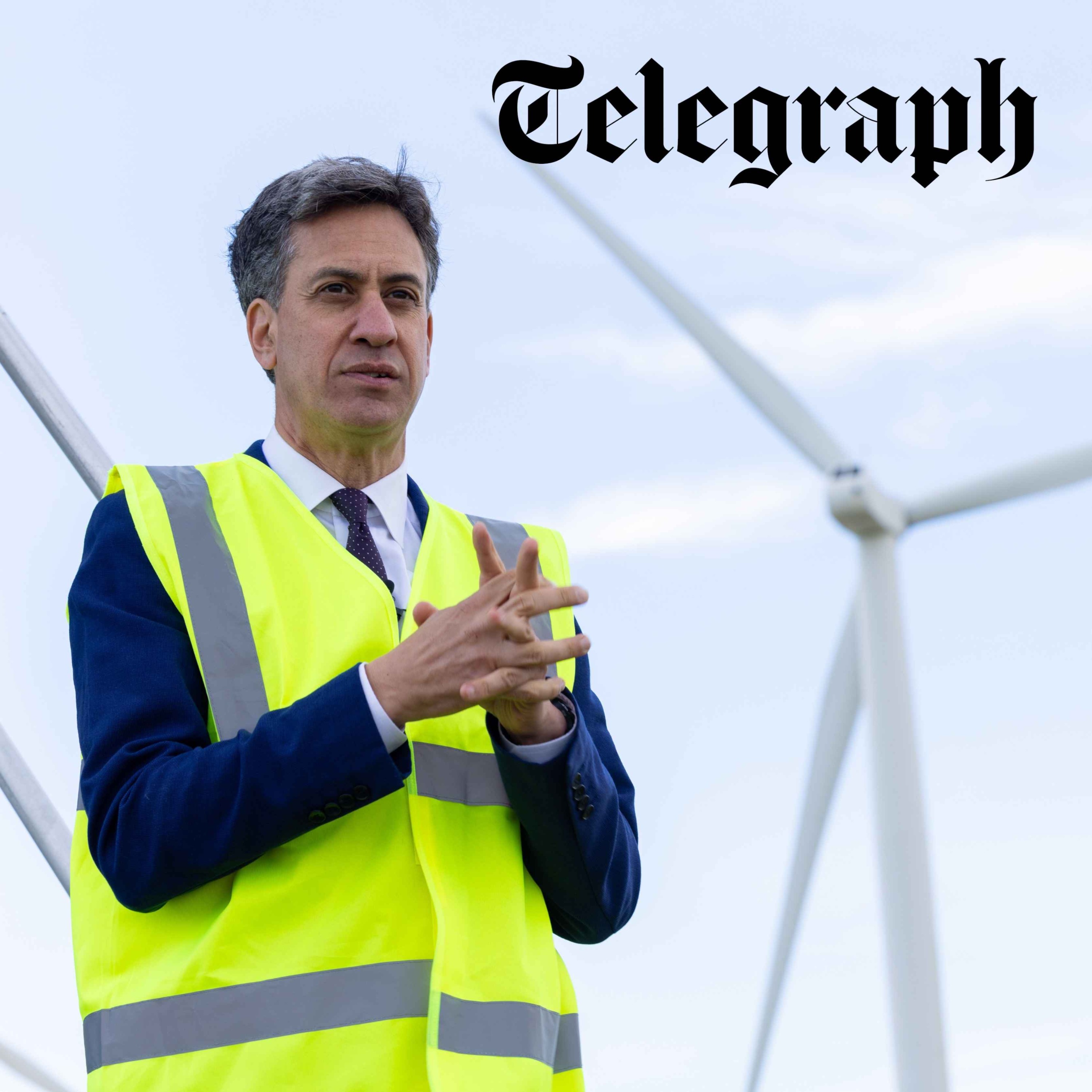
The Government could cut your energy bills by drilling more in the North Sea, says shadow energy secretary Claire Coutinho, but chooses not to; ideologically wedded to net zero, they instead prefer to view production of oil and gas as “climate vandalism”.
Coutinho scriticises Ed Milliband for failing to use Britain’s own resources to keep energy cheap, and that in many cases his drive for net zero has ‘eradicated common sense’ when it comes to energy policy.
Elsewhere, Gordon Rayner updates Tim and Rachel on the latest in the Morgan McSweeney stolen phone saga, with the Met Police announcing that they are reopening the investigation into the theft.
We want to hear from you! Email us at [email protected] or find @dailytpodcast on TikTok, Instagram and X
► Sign up to our most popular newsletter, From the Editor. Look forward to receiving free-thinking comment and the day's biggest stories, every morning. telegraph.co.uk/fromtheeditor
Producers: Georgia Coan and Lilian Fawcett
Senior Producer: John Cadigan
Executive Producer: Charlotte Seligman
Video Producer: Andy Mackenzie
Studio Operator: Meghan Searle
Social Media Producer: Nada Aggour
Hosted on Acast. See acast.com/privacy for more information.


