
 Ask ChatGPT


 The Daily T
7 Nov 2025 · 44m
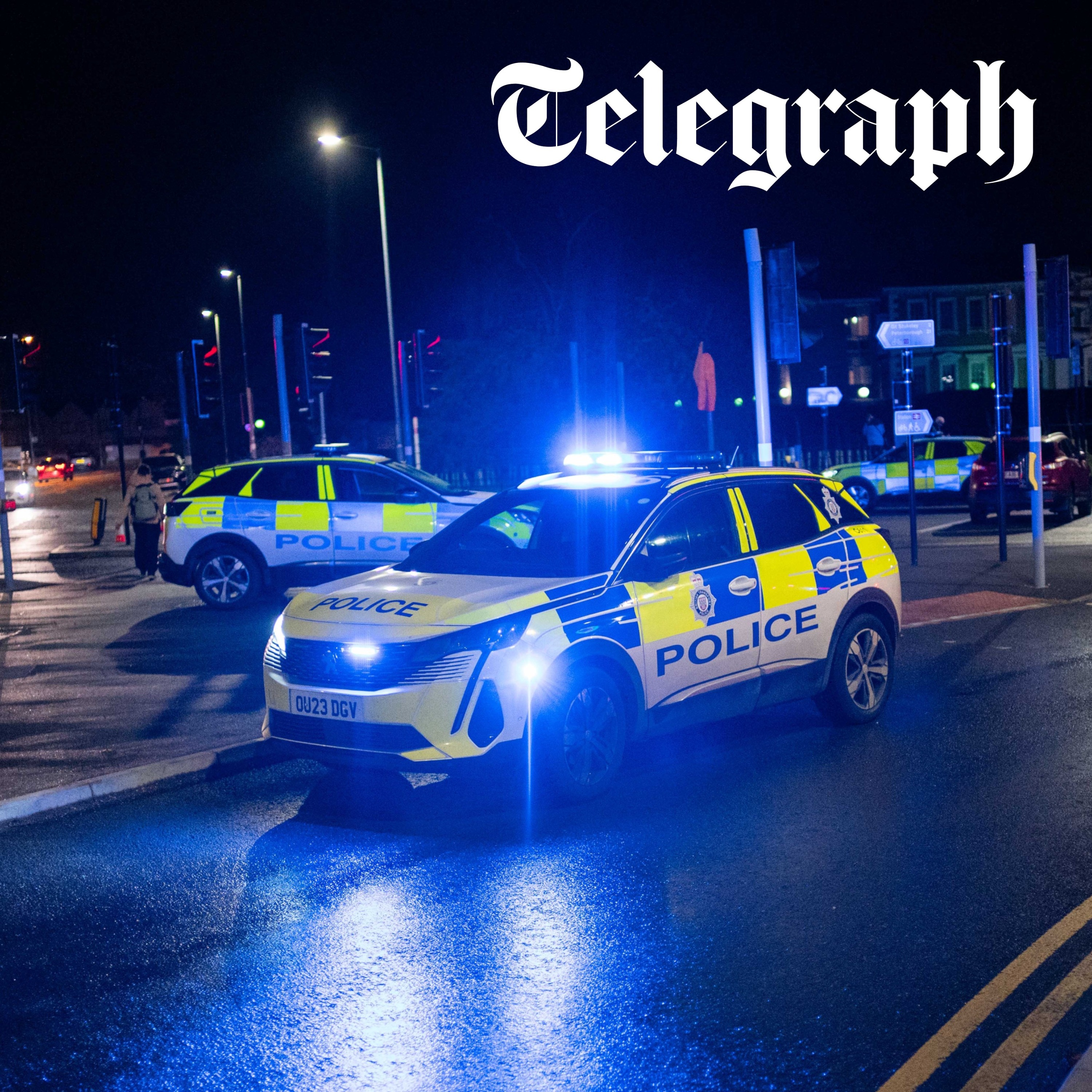
In this episode of The Daily T, hosted by Camilla Tominey with guest Peter Bleksley, a former New Scotland Yard detective, the discussion centers around the recent increase in knife crime and public safety in the UK. The conversation is prompted by a violent stabbing incident on a train and a troubling trend of prisoners mistakenly released from custody.
Written by AI. May contain mistakes.

Get the gist, explore an idea or ask about something said.
 Claude
On The Daily T, what are the key points of this episode?
Searching your listeningAutomatic transcript. May contain errors.
0:02The Telegraph
0:10Every day millions of us board trains, walk through town centres, pick up our children from school trusting that our streets and public transport are safe. But this past weekend that trust was shaken. On a high-speed train headed to London, a lone attacker wielding a knife injured multiple people in an incident that has reignited questions around how safe we really are in this country. We've also had several criminals accidentally released from prison, which doesn't exactly inspire confidence in the criminal justice system. In this episode of The Daily Tea, we're going to examine what this latest incident tells us about knife crime in the UK, what the recent spate of attacks on public transport mean for our safety, and if we can trust the police and indeed prison officers to protect us.
0:57We're joined by Peter Blexley in the studio, a former New Scotland Yard detective and policing and crime expert. Welcome to this special Daily Tea with me, Camilla Tomini.
1:19I mean, I've given that praise, Peter, and I don't want to be scaremongerish. You know, we saw that incident on the train in Huntingdon. My initial reaction was one of abject horror. The idea that you can be on a train and be subject to this sort of attack and we need to be careful about the specifics of it because there is somebody now currently facing an investigation and a future trial. So just speaking in general terms, how horrifying did you find the news of what had happened between Doncaster and King's Cross? Well, I'll pick another recent incident, if I may, where somebody has been charged, so the usual caveats will apply, of course.
1:58But that was the stabbing in Hillingdon, widely reported as being in Uxbridge. Yes. Because a colleague who I work with from time to time in the media lived very local to that. And she said to me afterwards she was really shocked by it. And my attitude is, why? Why are you shocked? we have rampant knife crime. Yes. We have a shockingly high amount of very serious crime, a murder. And when we see people, members of the public, interviewed on television and they often go, I'm shocked because that kind of thing doesn't happen round here. Well, hello, it does. You refer to that incident in Uxbridge, Peter.
2:51That is the murder of Wayne Broadhurst, a bin man who was out walking his dog. We now have an Afghan national called Safi Dawood, who's 22, having been charged with murder and two counts of attempted murder. And we can't say anything further on that in order to not prejudice the trial. But then hasn't it always happened, Peter? We're just highlighting it more now because I think the advent of social media means that we are seeing much more videos of things actually playing out before our very eyes that we never used to be party to. We used to just let coppers sort this stuff out. We didn't see it.
3:30We didn't see how the sausage was made, so to speak. Now we're being bombarded daily with different videos of different people doing different things, often criminal, be it somebody who's wrestling someone to the floor for their Rolex in the middle of Mayfair, be it somebody who's on the back of a motorcycle snatching phones, be it the footage that we have seen, both in the run-up now and the aftermath of Huntingdon. Maybe we're just seeing this in Technicolor and it's making us feel as if we're all in grave danger, when not much has changed. OK, if you go onto social media or onto the internet, generally speaking, and express an interest in something that is crime related, then of course the algorithm is in all likelihood going to send you more of that similar sort of stuff.
4:16But, and this is a very big but, it has changed enormously from when I was policing. And I'm not going to give you a policing history lesson other than to say if in the late 70s, early 80s, when I was wearing a police uniform and there was a stabbing, the whole relief, as we were called then, shift, the whole shift would descend on the place. CID would be mobilised. It would be a big, major event because they were rare. Stabbings these days are anything but rare. And the epidemic of knife crime that we are facing is a major, major problem. Let's delve into the statistics, though, because the other confusing aspect of this, Peter, I think you probably agree, is we're constantly having rows about whether crime has gone up or down.
5:10Let me just tell you what I've got written down here. Our producers here have done some great research, as ever. So here are the facts of the matter, right? According to the official crime statistics. In the year ending March 2025, there were around 49 ,600 offences involving a sharp instrument in England and Wales that excludes Greater Manchester. That was 1.4 % lower than in the previous year, 23 to 24, and 4.5 % lower than in 2019 and 20. However, ONS data shows that in the last year, the Met Police has recorded the highest rate of 182 offences per 100 ,000 of the population. So what that's telling us is that knife crime has marginally gone down in England and Wales but appears to have risen in London.
6:08Let's just deal with that first of all, Peter, because this is what my former columnist here, Fraser Nelson, was at The Telegraph now at The Times, he's constantly insisting actually violent crime's gone down. That's what the statistics tell us. Are the statistics lying because people aren't reporting? Here's the best thing to do with any knife crime statistics. But Peter, how can you say that? We've got to record it somehow. I'll tell you, I'll come to exactly that very point, OK? They are only the offences that we know about. Yeah. Where a victim comes forward and says, I've been stabbed, or the police come across a victim, or somebody is arrested in possession of a knife or a bladed article and so on.
6:55Yeah. What we do not know, what we have absolutely no comprehension of is how many people are carrying knives. Right. And I would confidently suggest it is a huge number. Yes. I was at a function last week and a man in his 50s came up to me, a law-abiding man, self-made man, successful businessman. And he said, Peter, I can't believe it. He said, I was with my mates the other night, again, men in their 50s, law-abiding, taxpaying, contributing members of society, who are so concerned about the state of affairs. They were saying, shall we start carrying a knife? It's so worrying and bizarre that you said that because after Huntingdon, I tried to put myself in the position of the people on the train.
7:46And I imagined having my three children with me who are 17, 15 and 12. and I thought well what would I have on me what would I have in my handbag that could protect us in that situation and then I'm a bit ashamed to say it the thought did cross my mind do I need to carry a knife now I say that can I just caveat why I said that I remember reading something once about the Potter's Bar rail crash and about a businessman who was desperately trying to get out of the carriage, which was set on fire, and he couldn't smash the glass. He had nothing to smash the glass. And after that incident, he went to work every day of his life with a little hammer in his briefcase.
8:28So I was thinking, well, what can you carry? Should I carry? Like, if you're completely defenceless, we've already seen, you know, one of the chaps with his hand bandaged. He only had his bare hands to defend himself against a knife. What do we do? How do I protect my children? Then I went down the route of thinking, do I need pepper spray? Then someone in the office said, no, it's illegal in the UK. Then I had to stop myself and say, Camilla, what on earth are you talking about? You're not going to start putting knives and pepper spray in your handbag, are you? No, absolutely not. I'm clear and unequivocal here.
9:02Do not carry a weapon. It's been shown on many, many an occasion, sadly, that when people have produced a knife, it's only been turned against them and they've lost their lives. as a result of it. Not to mention, of course, to mention the fact it's illegal. Don't carry an offensive weapon. But it's this feeling of fear that people keep contacting me and telling me about. They are fearful, not only for themselves, but looking forwards into the future. They're fearful about the nation that's going to be left behind for their kids and their grandchildren. Now, the state's primary responsibility is to keep its citizens safe.
9:50That's the government's words, not mine. You can find it on their website very easily. And of course it's their job. But whilst we've got prisoners being released early, and even police chiefs have finally summonsed up the courage to find their voice and say this week, this will lead to a spike in crime. When we've got open borders and people washing up on our shores who we simply don't know where they've come from, don't know what their backgrounds are, don't know what their intentions are. Well, it's worse than that. My colleague Alison Pearson has done an investigation this week and found out that asylum seekers are being granted leave to remain in this country, even if they've been found guilty of committing sex crimes.
10:39Yeah, of course, because a Labour government that's pledged to get asylum seeker numbers down will do it. How? Yeah, you're in. Next. Yeah, you're in. Next. Yeah, you're in. Next. And then they will spout that they've reduced the numbers. So couple that early prison release, the knife crime epidemic not being tackled, open borders, the streets are becoming increasingly more unsafe for us all. Now, I'm not saying we're all going to hell in a hangar and we're all going to die, but what we all have to do is take precautions. I mean, I think the other high-profile cases that have contributed to the perception that we are less safe, Valdo Calicane, who killed Barnaby Webber, Grace O'Malley-Kumar and Ian Coates in Nottingham.
11:25And seriously injured a number of others. Indeed, with a knife, rampaging with a knife. And a van. We've interviewed Mrs Webber, Barnaby's mother, and very compelling. I mean, I think about that case quite a lot because it's one of those there for the grace of God go I. It could have been anyone's kids. My son was in the same nightclub as Barnaby and Grace at the same time. My son came out of that nightclub with his mate and got in a taxi. They would have walked the same direction. Now, of course, that's nothing compared to the tragedy that then ensued. But the perception that that gave was that this was a person who clearly had extremely complex mental health problems but had fallen through every state net.
12:08You know, you speak to the parents of all those, the two youngsters involved, and then, of course, to Ian Coates' family. And, like, at every stage, the system let them down. Then you look at Axel Rudicabana and you hear that he had been referred to prevent. We heard this week his father and brother talking about the fact that he'd taken delivery of these knives. He's going out in a mask. He's taking a knife out. They don't think he's going to do anything. You listen to it and you think, how has this been allowed to happen that this youngster just walks into this Taylor Swift dance class? We've had huge questions about the availability and the purchase of knives.
12:46In this case, it was on Amazon, for the love of God. And then we have Huntingdon. I mean, I suppose when it comes to transport, so you're saying the statistics aren't worth the paper they're written on? Knife crime statistics. I agree with that. Do you know what? I'll tell another personal anecdote. I won't name which relative it is, but somebody very close to me in the last few weeks, unfortunately, was sort of stopped outside a train station in Hertfordshire. And it was very clear that two balaclavadol masked lads had a knife on them, grabbed his phone out of his hand, actually just threw it across the road.
13:25They were on bikes. Oh, he was also on a renter bike, which was then taken off him. And this all happened and it was told to me a little later on. And then my father got involved in it and said, why on earth aren't you reporting this to the police? And of course we didn't because we didn't have any names. We didn't have any registration plates. We didn't really have the impetus to start describing people that we couldn't even see their faces. And we just wanted to put the whole incident behind us. So I can understand the non-reporting, even though that probably sounds quite frustrating as a response from the public to crime by a former copper.
14:01Well, there's a few points that I need to deal with there. First of all, you call them lads. I'll call them vermin because that's what they are. They're not lads. They're scummily earth. Secondly, not reporting it is a dereliction of your civil duty on your behalf. It has to be reported to the police. Otherwise, we do not get clear picture about the levels of crime. and then that allows people like Fraser Nelson to say crime is going down. I don't want to slag off Fraser Nelson because he's a friend and a former colleague. Of yours. But this is the fact, you see. I come across many, many people who have been victims of crime and when I say to them, did you report it to the police, they shrug their shoulders and say, what's the point?
14:44I'm going to lay out what the point is. The point is so the stats become clear. The police know just how dreadful things are on their patch. I know. And we get closer to the truth. I know, but, like, people's experience of reporting stuff to the police isn't getting Peter Blexley round to have a look at what's gone on, dust for fingerprints, check out your ring doorbell footage and make a full report. It's a sort of shrugging of shoulders, have a crime number, oh, go down to your local constabulary, oh, sorry, no, it's been closed down, how do I even contact the police? You know, you don't end up with a lovely, satisfying, you're nicked moment at the end of it.
15:22And then people rightly ask, well, why am I going to be bothered with this? Why am I going to go through the rigmarole of giving names and addresses and long statements when nothing's probably going to happen because the police are under-resourced and overworked? But that's exactly the point. It then allows politicians and certain journalists to tell a manifestly untrue lie. Well, hang on, they're just speaking... The crime is going down. They're speaking to the statistics. If it all got reported, if every person who was a victim of each and every crime reported it, these stats would be different and we'd get closer to the truth and we'd know just what a catastrophic state we're in and why so many people live in fear.
16:05All right. Well, I tell you, I'm going to give you some stats now that you will agree with because they do seem to reflect what has been happening on public transport. I'll be the judge of that as to whether I agree with them or not. Thank you. Peter, I'm beginning to feel as some of the suspects that encountered you in an interrogation room might. According to the Office for Rail and Road Statistics, in the past year, the number of assaults on passengers has hit a record high. In 2024 alone, there were 10 ,231 such instances. That's registered on mainline rail. That's the greatest recorded in 20 years of data.
16:42that included nearly 5 ,000 cases of harassment, nearly 4 ,000 cases of common assault and one and a half, more than one and a half thousand cases of actual bodily harm. That represented an increase of 6.9 % year on year. So that's significant, isn't it? Just in light of Huntingdon and in light of actually, if I think about it, a lot of the footage I see nowadays of criminal behaviour and knife branding seems to occur on a station platform or on a train or a bus. I have lots of people coming to me telling me they're tales of woe, horror, victims of crime on a public transport system. And those stats, which again will be incomplete because there will have been people that were victims of crime and haven't reported it, are grim.
17:28I suspect the real truth is that it's even grimmer. What do you think we should do to better protect train guards and others if that is the case? If the statistics are saying that there is an increased amount of criminality on public transport, is it now time to better protect bus drivers, train drivers, train guards? I mean, let's think of this hero, Samir Zitouni. He had worked on LNER for more than 20 years. He put himself in harm's way. He's not a member of the emergency services. I mean, this bloke genuinely does deserve some kind of gallantry medal, in my opinion, Peter. And whilst we share the comfort of a studio, Samir is lying in a hospital bed.
18:12Yeah. He's been fighting for his life. Yeah. His condition, thankfully, appears to be improving. What a heroic man. How do we strengthen security? How do we make people safer? Well, the train companies are not going to put their hands in their pockets and suddenly start paying for security guards on trains. No. That's not going to happen. That's wishful thinking. if they did do it, they would levy that cost onto the passengers. And we know how expensive train travel is these days. Although isn't there such a thing as British Transport Police? Where are they in all this? Yes. See it, say it, sort it.
18:50Well, I would like to see you. I would like to see your officers on my platforms if this is the case. I might be being unfair and I'm sure BTP do a fantastic job and let's not forget the job that they did on 7-7. but at the same time they're not the most visible force. No, they're not. Maybe that's the point, Peter. How do they operate? This is the point broadly across British policing per se. They are not visible on their feet. No. They are visible in cars. There they go with the two-tons and the lights flashing as they go from call to call to call. Policing, it doesn't patrol the streets like it used to.
19:31It really doesn't. And consequently, people do feel less safe as a result. There's nothing like seeing a uniformed police officer that you can engage with, whose name you might know, who you have a point of contact for, who you trust, to make communities and people feel safer. Likewise, we always get these reassurance patrols announced after somebody's been murdered. It's all a bit too late. If you'd actually been patrolling before the murder had happened, then maybe there would be no need for reassurance patrols. But you see, those daft idiots who run policing believed, they believed their academic chums when they did all these fancy reports and said that patrolling the street wasn't cost effective.
20:22No. Well, that's just complete nonsense. Anybody, it just goes to show. It's public effective. I mean, it's criminal effective. Because they couldn't put a tick box on a spreadsheet, right, to measure the effectiveness of it, they ditched it. They walked away from police patrolling because they couldn't measure it. Well, actually, some of the best coppers I ever knew would go out of the nick in the morning, come back eight hours later. They hadn't nicked anybody, but they were awash with tea and biscuits and they were awash with information. Quite. They knew everything. And then they'd come over to the office where the oikie blokes like me were in jeans and T-shirts, and we'd then go 6 o 'clock the following morning and take the door off the hinges of the bloke they told us had committed the burglary.
21:11And that was great. I love this, Peter. How many doors did you take off hinges, do you think? Oh, too many to count. But, no, OK, look, I totally get that. I think the visibility aspect is a really important one, particularly as a woman travelling late at night, you know, have to go to dinners, have to go to after-work events and all the rest of it. I do wonder what I would do if I was propositioned or in some way threatened or harassed on a late-night Metropolitan Line train with literally no actual staff apart from the driver on board. I would hope that other passengers would come to my aid and all the rest of it.
21:45The other frightening development, I think, is quite understandably, and that's what's so remarkable in the case of Huntingdon, And it does restore one's faith in human nature that so many people did try and tackle this guy, did get in the way, tried to protect others, including, I believe, a young girl, a middle-aged man was very badly injured, saving the life of a passenger that presumably he didn't even know and hadn't met before, which is hugely admirable. But I think it's also the prevalence of these zombie knives, the prevalence of machetes. I mean, I used to associate machetes with local newspaper stories from my old neck of the woods.
22:24I lived near Luton and the Triads back in the 1980s. These days, machetes and zombie knives seem to be readily available. What's your experience of the type of knife that is available to criminals and how are they using them, Peter? We've had legislation passed to make the purchase and the sale of them illegal. And so there has been some progress. But of course, we've no idea how many are sloshing about out there. We simply do not know. But even then, that's kind of almost an irrelevancy because you've only got to look in your top drawer in the kitchen. Yeah. And you will see some very lethal weapons there, potentially.
23:05We've all got knives in our houses. These are everyday implements. You can go into a shop and buy something piercingly, lethally pointed and dangerous. Yes. And if people have the intent to then use them, you can't ban the use of knives. You can't ban the sale of knives. You could blunt the sharp end of all knives, as has been suggested by some. Yeah, well, I'm more in the camp that I would like visible, robust police patrolling. And robust doesn't mean to say, it doesn't say, please, thank you, good morning, good afternoon and good evening, because it will do all of that. But that's what I want.
23:47I think that's what the public want. They want to be reassured so that events don't happen rather than being reassured after they've happened. It's all a bit too late for the victim then. Yes. Back to the train guards and public transport argument then. I mean, you're saying that the train companies won't pay for extra security. I'm sure they wouldn't. should we be giving train guards, I don't know, a little baton, a taser? Should all police carry tasers, Peter? I just had a conversation before I came in this building with two young men in uniform working in security. They're called travel safety officers.
24:23So we have a natter. I used to work in the security industry. I'm very interested in it. They were nice lads, very engaging, and they were telling me about who employs them, how long their shifts are, what their responsibilities are. Of course, they don't carry any kind of defensive or offensive equipment. They're not allowed to. They're members of the public in a uniform. I was talking to a member of security on reception who was very, very experienced. And actually, his experience is almost a weapon in itself. Yes. Because he knows the security industry inside out. He's faced danger on more times than he could remember.
25:01so he has an awareness and a physical ability and such. If we go down the route of arming security, then I think we are on an even dangerous slope that we're at. Some might disagree with me and say I want them on the train. But what about tasers? Look, I'm not talking about guns. I don't want to become America. But what about tasers? People will find it unbelievable that all cops don't carry tasers, by the way. Every frontline police officer should have a taser. Yes. If they want it. I would suggest they should all want it. And it's scandalous that the funding hasn't been found for people to be suitably trained and equipped.
25:41Is it funding or is it your academics, your lofty academics saying, no, we don't need this? Or is it actually the resource? Well, policing is so much in the grip of academia, I don't actually know, but I suspect it's probably funding in the first instance.
26:06Let's move on, Peter, to talking about the state of our prisons. I've got some history. I've been into a few prisons as a reporter. I've spoken to quite a few prison ministers and justice secretaries. I've been into a prison with Dominic Raab. I've been into prisons with Rory Stewart. Remember Rory Stewart? He sort of leaned back in his chair and said, we need to fix the windows. I thought, mate, you need to fix more than that but I suppose it's a place to start We know that the reforms that were introduced by Chris Grayling then the Justice Secretary under Theresa May well, we hear from people inside prisons the people working inside prisons that they had a hugely detrimental effect They forced the experienced prison officers out They've been replaced by people who do not have the experience We've got stories of gangs running prisons We've had a few riots in the last three to five years.
26:58We've then got an Islamic extremism problem with Islamists converting other prisoners to their cause, which clearly isn't a positive development. And now we've got this bizarre situation. And actually, this week, I think it's interesting. Early release seems to have been conflated with accidental release. We can have a debate about early release and who should be released early and who shouldn't, whether it should happen at all. Obviously, prisons are overcrowded. But what's happened in the case of this manhunt that has been carried out? We have the Epping migrant who obviously was released from HMP Chelmsford accidentally and has been recaptured.
27:33That's Hadouche Kabartou. Then we've got these two subsequent prisoners that have been accidentally released from HMP Wandsworth. Before we came in the studio, we've seen footage of one of them, the fraudster, the 35-year-old man, re-entering the prison. We're still looking for the 24-year-old Algerian who's still on the run. It might have been found by the time this goes out. But, I mean, it doesn't inspire confidence, does it, Peter? No, it certainly doesn't. But you can't talk about policing and you can't talk about prisons without really discussing the entire criminal justice system because it's all joined up.
28:10So we have policing at the front end, the sharp end, and we know about the challenges, shortfalls and crises that policing is in. Then we go to the Crown Prosecution Service. Understaffed, underfunded, underperforming, I would suggest, certainly from what I hear from serving police officers. Then we go to the courts. Crumbling roofs, rubbish IT, courts sitting empty because there's not enough judges there. Let's remember we had a barrister strike not so long ago. Huge backlog of cases. So another part of the system in crisis. Then we get to the prisons. Absolute state of flux. And then, of course, lastly is the probation service, who should look after the prisoners when they're released and monitor them and supervise them.
28:55And we know that the probation service is only efficiently handling about a quarter of its cases. So the entire criminal justice system is woeful. It's not functioning like it should do. Is it a post-Covid thing? Is it a post-Teresa May cuts thing? Because it's always easy to reach for the button that blames resource cuts. but it doesn't matter how much money you plough into a system, if it's dysfunctional and it can't be more productive, I mean, we can look at record spending in the NHS, it's still not more productive than it was before Covid. So what is the solution to some of these issues? Is this about bad management?
29:34It's about a lack of funds? It's about systems being gummed up since the pandemic that have never been ungummed? Well, bad management has to be a feature of it. without a doubt, in my opinion. We know that the prison service is still anchored in paper systems, for example, where people are shuffling mountains of paper around left, right and centre. Is it any wonder that things slip through the cracks? Yes. Mistakes are made. No, of course it isn't. We're in 2025, the age of AI and technology, which surely must be able to make the system work more effectively. And some technology should be applied to policing, but you need the funding for it so that you have a proper crime reporting system which is joined up and that all the forces in the UK talk to one another.
30:33I thought we had that. No, likewise with facial recognition, for example, where things can be uploaded and then get shared across the nation. Because funnily enough, criminals cross boundaries. They don't only commit crime in one particular city or county. Again, I thought we had that. I thought we were being more surveyed than we've ever been. None of it is joined up. None of it works properly. None of it is fit for purpose. And of course, part of the problem is policing for decades has had its trowson taken down, basically, by sharp-suited people from IT companies. Yes. Because, of course, you don't expect police necessarily to be experts in IT.
31:16They know what they want, they can explain it, but their shysters come in, produce systems that are effectively not good enough, and the police moan and groan about it. Duplication, slow systems, not performing properly. We put a man on the moon over 50 years ago You'd think we'd be able to sort out some computers that would link up crime reports, link up facial recognition cameras and CCTV, the length and breadth of the country. You would hope so, Peter. I feel that the same fate has befallen people trying to implement new IT systems in the NHS. I know what the solution to all this is, though, because the Prime Minister is a former director of public prosecutions.
31:59I don't know if you knew that, Peter. He does sometimes mention it. And the solution is ID cards. Yeah, righto. Yeah, yeah. What? An ID card is not a catch-all save-all. The things that I've spoken about beforehand are far more important to policing. A joined-up crime reporting system, a joined-up CCTV network, and joined-up facial recognition. They're way more important. Yeah. And actually, if you do those things, you don't have to erode people's civil liberties by enforcing them all to have an ID card. Make the other bits work properly. and we can retain our freedoms. Yes. And then we'll be safer, and then the police will be more effective, and they'll be happier.
32:42They'll be able to nick bad people quicker. Talking about people who are retaining their freedoms, this is the other interesting aspect of all this. How convincing is it when David Lammy, for instance, the Justice Secretary, tells PMQs this week, everything that's going on is all the Tories' fault? I say that in the context of the following stat. Now, maybe, Peter Blexley, you'll believe this one. Would you believe that there's been an 128 % increase in the number of prisoners mistakenly released under Labour compared to the Conservatives? Yes, the Conservatives did mistakenly release quite a few prisoners, but actually that number has shot up in the year or more that Labour have been in power.
33:26Yes, I'll believe that statistic because it's a measurable and provable statistic. Fair enough. So, of course, I believe it. I actually think that David Lammy should now be referred to as the Minister for Monopoly because what happens is many, many people are being granted a get-out-of-jail-free card, right? So it's ludicrous. Again, we come back to their paper systems, inefficiencies and the suchlike. When is the public service going to get a grip of what it does? There are people in it earning very big salaries. And what's being delivered? Ineffectiveness. somebody get a grip on all of this.
34:07Instead of wasting time, effort and money on, I don't know, diversity initiatives, for example, just do your core job properly. Yes. Because it doesn't matter the colour of your skin or what sexual orientation you are or anything like that. It's all mere window dressing. The question for me is can you do your job properly and effectively and even better and can you make it better and can you make the systems better? I don't care where you come from, what your faith, colour, creed, sexual proclivities are or anything like that. Can you do the job properly? Can we please have public services staffed by committed, talented people who actually want to do their job properly?
34:53But then maybe this is the problem. We are spending so much time denigrating the current state of things, saying it's awful, saying that people are rampaging around the country with machetes and whatnot. Who would be a copper in 2025, Peter? Brilliant, wonderful, brave, courageous people. And their parents contact me. Yeah. And they say, my son or my daughter is in policing. They want to be locking up bad people. They don't want to be sat in A &E for an entire shift, guarding someone who's having a mental health crisis, for example. They don't want to be in a police station or a custody suite with an open cell door guarding somebody because they might self-harm, for example.
35:30They want to be out on the streets nicking people. and I'm still as much in love with frontline policing as I was all those years ago when I did it. There's great people out there, but they're led by some very, very dubious, greasy pole climbers who have spent a dog's watch on the frontline, that's all, and got away from the rough and tumble as quickly as they possibly could because they thought it was a bit beneath them. Peter, I've never been in any doubt as to your fondness for nicking people. Can I just state that for the record right now? Right, let's come up with some recommendations here.
36:02I want to finish on a positive note. Much better leadership in policing. Yep. Including, I mean, every chief constable needs to be a copper first and an academic second. I think is that what you're saying? Yeah, I want leadership, not management. Thank you. And I want people promoted who can lead, not manage. And we can apply that equally to the prison service. We can't have prison governors and officers working from home, can we, Peter? No. We want better technology and joined up technology so that all the forces speak to each other. We want a system of facial recognition that crosses boundaries.
36:40Yep. And we want better reporting between forces and among forces and a move to AI and properly integrated IT systems. Yep. And so I'm a very smart person to work on the quandary of linking up CCTV systems because there are so many of them. All right. We want more visible policing. We have concluded on our railways and our transport routes. Everywhere. Everywhere, please. But how do we recruit them and where do we get the money from? Well, we can try and dispense with some of the tasks that could be done by others, I would suggest, guarding responsibilities and the such like. So we may need to bring in or introduce a task force of people to deal with the mentally ill and take that responsibility away from coppers, even though they have the sectioning rights.
37:32How do you square that, sir? Well, it's a tricky one because some people in mental health crises could hurt others, yes. So that is very challenging. But we don't need police, well, and I welcome the announcement by the Met Commissioner a couple of weeks ago that they're not going to investigate non-crime hate incidents. I want to hear every chief constable in the land echo that. I want some kind of system put in place whereby people are guarded in hospitals and custody suites, not by police officers. I don't want them taken away from the front line. I want policing to revert to the policing the public want and not the police services that a generation and a half of senior officers have created, which is some kind of pseudo-social work, right?
38:17ditch all that nonsense, get out there, nick people and investigate crime. That's what the public want. And speaking of the public, finally, we need the public to do their job. The public need to be reporting crime. Peter, if the public see crime taking place, I'm thinking of Huntingdon, I'm thinking of that bravery, but I'm also thinking we don't want people to be cavalier. If people are carrying very large knives, what should people do? You might be on a late-night tube. You see something going down. I mean, I've obviously, like any parent, I had to say to my children some time ago, you just hand over everything.
38:56If a knife is produced, you give your phone, you give your wallet, you give the whole lot. My messaging is clear. Don't make a bad situation worse. Yeah. OK, if you're out on the streets or wherever you are, dial 999. If you're on the transport system, text 61016 if 999 doesn't work. If you are physically able with a specialism in being able perhaps to disarm people or to physically challenge people, then it is your decision whether you want to get involved or not. Don't add to the victim list would be another bit of advice. And there's nothing wrong with saying I actually chose to be an alive coward rather than a dead hero.
39:44I'm not going to criticise you for that in the slightest. If you've got the compulsion, if you've got the ability, and if you want to get involved, then likewise, I'm not going to criticise you for doing that. But think, make a dynamic risk assessment. Is there something I could do in the here and now that might be more useful? For example, giving a commentary on 999. Yes, yes, yeah, giving descriptions. You don't need to know exactly what is going on. You don't need to get involved in the danger. Your precise location. Yeah, yeah. The description of an attacker or attackers. Yeah. Their direction of travel if they're out on the streets.
40:20You know, the name... Should we be filming? Yes, of course, it's evidence. I mean, we should be filming before we're helping someone. If you can. If you can. But film it all. If you can. There's no shame in it, all right? But please remember, if you are filming a tragic incident... Yes. I would ask you not to upload it because in that tragic incident, somebody could lose their life and somebody might find out about the loss of a relative through social media rather than that knock on the door that we all dread and hope we never get. So just a bit of consideration there, please, I think. You know, some thoughtfulness for others might be appreciated.
40:59I'm going to leave you with a positive anecdote. Would you believe that I had to phone 999 last night? I'm collecting my little one from cheerleading. I'm going up a country lane near me. I live in Hertfordshire. And suddenly this lorry just drives towards me. I sort of had to swerve thinking, my goodness, what's going on? I approach this very dark country lane and a bloke gets out of his car and starts gesticulating and has his hazards on. The lorry has dumped an entire brick wall in the middle of a country lane for about 20 metres, there are bricks. The guy who had stopped for me appeared to be a delivery driver, you know, a delivery guy, and he said, look, I'm working.
41:42Can you call the cops? So I thought, I'll call the police. My daughter found it all quite exciting. Anyway, phoned straight through to the police. Within about five minutes, members of Hertfordshire Constabulary came out, a whole team of people in a van. They, by hand, got these bricks out of the road. A neighbour had a digger, a few doors up. He came out. I felt that last night I witnessed the very best and the very worst because the idea that people can fly tip an entire dismantled brick wall on a country lane in the middle of the... Well, it wasn't the middle of the night, 9 o 'clock. I mean, if I hadn't been flagged down by this driver, I'd have ploughed straight into it.
42:21But the coppers who came out were absolutely brilliant and resolved the situation within the hour. What scum those people are. I know. But I have a question for you. Do you have front and rear dash cams fitted to your car? No. Well, if you did have, you'd have got that van. I've got the plate. You'd have got that van. I gave a description. No, no, but you'd have had video. I'd have had video. You would have had video evidence of it, possibly even an image of the driver. Also video evidence of my own bad driving, Peter. That's the problem. Shall I get one? Can you please, on your next day off, go and source and have fitted front and rear dash cams, please?
42:55Love that advice. They are relatively inexpensive. intensive, your insurer will be very grateful to you, and as the events of last night, you would have captured much of it on film, which could have provided very useful evidence. To be fair, my little 12-year-old did vlog the entire thing, and I can show you the footage in just a moment, Peter, but noted. Very good advice. Thank you. Peter Blexley, as ever, you have not held back in your opinions about how we can try and sort out the state of lawless Britain. thank you as ever for joining us on The Daily Tea thank you for having me
Every day, millions of us step onto trains, walk through busy town centres and trust that we’re safe. But that trust was shattered this past weekend when a man armed with a knife went on a violent rampage aboard a high-speed train bound for London.
And not long after that horror unfolded, confidence in the justice system was shaken again after two prisoners were mistakenly released from HMP Wandsworth this week, part of a wider pattern of failures that’s seen record numbers of inmates let out in error.
In today’s episode of The Daily T, we examine what the Huntingdon train attack tells us about knife crime in the UK, why assaults on public transport are rising, and whether our justice system is doing enough to protect us.
Camilla is joined by former New Scotland Yard detective Peter Bleksley to discuss the truth about knife crime, the state of policing, the government’s crime strategy, and whether facial recognition, tougher sentences or more officers on the beat could restore public trust.
Producer: Georgia Coan
Senior Producer: John Cadigan
Video Producer: Will Walters
Studio Operator: Meghan Searle
Executive Producer: Charlotte Seligman
Social Producer: Nada Aggour
Editor: Camilla Tominey
Hosted on Acast. See acast.com/privacy for more information.


