
 Ask ChatGPT



The hosts argue Andy Burnham’s “fraud” campaign for the Makerfield by-election is “Starmer 2.0”: nostalgia and “vibes” rather than policy, using Thatcher as a convenient target while Labour has implemented similar neoliberal policies. They also debate whether Keir Starmer should stand down amid Labour infighting and poor polling.
Baron Fawkes (George Foulkes), Labour MP for Carrick, Cumnock and Doon Valley; minister in Tony Blair’s government (1997–2002). He defends Starmer as having turned Labour electable and delivered manifesto commitments (e.g., stopping social housing sales).
Burnham’s slick four-minute “walk around” video lacks substance; his Thatcher criticism is disingenuous given his background and Labour’s continuity with Thatcherite/neoliberal agendas. Labour’s community decline is blamed partly on broader modernity/austerity and privatization, not Thatcher alone.
jogging as political “hubris” (Jimmy Carter, Blair/Cameron/Boris Johnson); Burnham’s “Makerfield” video; right-to-buy council housing; youth unemployment at an 11-year high; Starmer’s “30 resets and 16 U-turns” and health secretary resignation.
Written by AI. May contain mistakes.
Discussing the cultural phenomenon of jogging among politicians and its roots.
“In 1971, the Tory MP Ernest Marples appeared on the BBC and introduce Britain to a crazy new thing called jogging.”
Exploring how Andy Burnham's campaign reflects a nostalgia for past political figures and policies.
“But this was really, the modern British political obsession with jogging is really a Blair era thing.”
Analyzing the tactics employed by Burnham and their implications within contemporary politics.
“and it was the sense of injustice I got about the way this country is run that took me towards politics.”
Discussing how Margaret Thatcher's policies continue to influence current political arguments and perspectives.
“And his drummer is a Labour councillor, was once.”
Critiquing the inconsistencies in Burnham's narrative about Thatcher and Manchester's growth.
“They managed to live in a nice semi-detached property up in that area of East Cheshire.”
Examining the economic strategies of the UK government and their historical context.
“Yes, but she is like a mythical figure, isn't she?”
Contrasting UK political strategies with those in Australia during similar eras and their impacts.
“statistic of the Labour government right now today Tim I'm just looking at our ticker tape Top story, youth unemployment at an 11-year high.”
Explore the differences between Thatcher's and Hawke's approaches to privatisation.
“That politics in that era is nowhere nearly as controversial in Australia as it is here in the UK.”
Understand how mass migration has impacted the UK housing market since 1997.
“by an absolutely giant leap in immigration from 1997 onwards.”
Discuss the factors behind Manchester's regeneration and its implications for local towns.
“going to take responsibility for their own lack of regeneration?”
Critique Andy Burnham's political image and policy stance in comparison with Thatcherism.
“that Burnham's a bit of a fraud as he parades around Makerfield in a black T-shirt seemingly borrowed from Simon Cowell's wardrobe.”
Analyze the longing for a pre-Thatcher political landscape and its implications on current politics.
“Because I can't define Burnhamism any more than I can define Starmerism, any more than I can define streetingism, any more than I can define Rainerism.”
Examine the dynamics and current opinions within the Labour Party regarding leadership.
“this Edenic world of England before Maggie Thatcher came along.”
Discuss the prospects of the Labour Party under Starmer's leadership and member sentiments.
“because we're taking the electorate for absolute mugs.”
A humorous exchange about jogging and its implications for health.
“and we wondered, George, have you ever gone on a run in front of news cameras?”
A robust defense of Prime Minister Starmer and his party's achievements.
“I am, because he changed the party, turned the party around.”
Discussion on the challenges facing Starmer's leadership and electoral performance.
“and it's probably time for him to go, isn't it?”
Analysis of Starmer's popularity on the international stage compared to home.
“I mean, you say, George, he's a nice man.”
Examining the political divide between sovereigntist and globalist perspectives.
“When you see what he's done in terms of Ukraine, when the fact he kept us out of attacking Iran along with the Americans.”
Discussing the leadership dynamics within the Reform Party and Farage's role.
“George, we are talking about 30 resets and 16 U-turns in less than two years.”
Exploring the implications of Burnham's ambitions and the dynamics of Labour leadership.
“But, of course, Farage's fans will say this is whataboutery.”
Discussion on potential candidates and the future of Labour leadership in the UK.
“I think one of the things we have at the moment is that it's not clear that Andy Burnham is either, first of all, going to win the by-election.”
Debating Starmer's commitment to lead and the pressures he faces as Prime Minister.
“There are some really very good Labour ministers at the Minister of State level who ought not to be underestimated.”
Discussion on the impact of Thatcherism and community breakdown in Labour politics.
“He's digging in because he doesn't want to be pushed out.”
Explore the relationship between community breakdown and political figures like Thatcher.
“And there was much greater community then.”

Get the gist, explore an idea or ask about something said.
 Claude
On The Daily T, what are the key points of this episode?
Searching your listeningAutomatic transcript. May contain errors.
0:04Camilla: The Telegraph.
0:10Camilla: Is Andy Burnham a bit of a fraud? Rather than talk about his own policies, he seems to just want to have a go at Margaret Thatcher. It's time for the King of the North to be honest about who he really is and admit he's Starmer 2.0. And we'll also speak to the Labour grandee, Baron Fawkes, a minister under Tony Blair, who thinks Keir Starmer is right to keep digging in. Welcome to The Daily Tea with me, Tim Stanley. And me, Camilla Tominy.
0:47In 1971, the Tory MP Ernest Marples appeared on the BBC and introduce Britain to a crazy new thing called jogging. Morning, Mr Marples. Morning. Now, what's this about, this jogging? What's it all about? The idea is it's an exercise which people can take, no matter what age they are, to keep themselves fit. It's a well-balanced exercise worked out by an Olympic Games coach. First class, you walk 55 yards and then you jog the 55 yards. Now we're jogging, and this really is halfway between a walk and a run. This was an import from America, Camilla.
1:24Camilla: I didn't know that jogging was something people didn't do before the 1970s. No, they just walked very quickly. We were English, we just walked very quickly. And in 1979, President Jimmy Carter, I remember this from my PhD, tried to promote jogging. And he took part in a run around Camp David that was meant to be 10K. But four miles in, he lost control of his body and nearly collapsed. Love to see it. And we shouldn't laugh, but... We will laugh. It became a great example of political hubris. Yes. Of trying to prove that you're very fit and encourage others to follow your saintly example. Yes. But actually, he couldn't go the distance.
2:05Camilla: And we're discussing this because of Andy Burnham's run in his famously short shorts, which, as you say, could have led to some kind of, let's call it a wardrobe malfunction. Well, I call it a sackflap, which is the male version of a nip slip. A testicular event. But this was really, the modern British political obsession with jogging is really a Blair era thing. And it was a copy, of course, of Bill Clinton, who was trying to stay on top of his McDonald's addiction. He was trying to stay on top of quite a lot, I think. But Tony Blair copied it. David Cameron copied Tony Blair. And now we're in a horrible downward cycle where every person who's interested in a high office thinks they have to put on sneakers and shorts and go running around the block.
2:46including most notoriously Boris Johnson.
2:50Camilla: I used to love his jogging outfits. It was like part what I would wear to the beach, part what I'd wear to a cricket match. He basically just delved into his old boarding school trunk, pulled out whatever he could find and put it on. He always looked like he had spotted a bus out the window, had thrown on clothes and was trying to catch it. Chase it. And never quite did. There was a, I can't pull this off, look about him. Do you know who never ran? to be fair to her, Theresa May apart from through a field of wheat and we don't even know if she did that even Liz Truss in a bid to reignite her career was famously photographed running across Brooklyn Bridge during an international visit.
3:30That would have been to show off the clothes and she wouldn't have broken a sweat no, dear perfect Liz she was in a coral top
3:37Camilla: but Andy Burnham has also been doing some walking he's been walking around Makerfield in his new very slick four minute campaign video already been made. It's impressively quick, that, isn't it? Anyone would have thought that he might have been planning this for months. What did you think of the video? I thought it was very effective. Did you? You're so easily pleased, aren't you? It's completely without substance. Yes. Look, we're going to have this debate for the next four weeks. I can disagree strongly with Andy Burnham while recognising that even though he's on the other team, he's a very good player.
4:09And one thing I find curious about him is this is a video in which he just walks around, says, you're right, to people, and they go, I found the manum! I know. That's all that happens for four minutes. Well, that's why I'm unimpressed with it. But that is Nigel Farage. In fact, let's hear a little bit of it now. It was growing up in and around these streets that I saw what Thatcher's government did to places like this, the de-industrialisation, the draining away of economic, social and political power. It left places like Makerfield behind, and Britain has been on that path for the last 40 years, and it was the sense of injustice I got about the way this country is run that took me towards politics.
4:48You OK? Yeah, well, I'm a United supporter. How are you? You are more than welcome, Aston. Oh, really? You should know that. Thanks very much. That's all Nigel Farage does. He just walks around saying, have a nice day, darling,
5:00Camilla: and they all go, I can't believe it's Nigel Farage. I've never said that there is not more to politics than Farage on Clacton Pier with an ice cream in his hand. Right. But it's like, if you were going to AI, how does a Mancunian candidate, how does he win over Makerfield? And what it is apparently according to AI is walking around in a t-shirt being glazed by members of the public, funny enough they've cut out anyone saying you're just an opportunist at him in the street to the strains of, I think it was Elbow and then of course some might say by Oasis. Right. Is this also this guy seems to be rather the greatest band that ever lived by the way in case any of them are listening.
5:37Camilla: I was, do you know what, I think Noel Gallagher does listen because he did once contact Rachel Johnson to say that he found you and I quite funny. There you go. And we love you for that. Although I was always a bit more of a... I was more Blair. Right. I had To The End as my wedding song. Posh. And I was sort of slightly obsessed with Damon Albarn. But that's another story. And he's Labour, isn't he? Anyway. Oh, he's very left-wing, yes, indeed. In fact, his drummer and I once appeared together on Celebrity Mastermind. And his drummer is a Labour councillor, was once. But we're digressing here.
6:06Camilla: But my substantive point would be... Yes. Reform Party tries to tap into a sense of being left behind, ignored by Westminster. I'm an ordinary person just like you and I can better speak up for you in the halls of power. And I just find it curious that Andy Burnham's great reinvention, we're on Burnham 3.0 now, is a left-wing version of Reform vibes. OK, so it's the politician that we all want to have a pint with. And in fact, he's even pictured in that footage in a pub with a lager in his hand. So well done, Andy. I love the Man of the People Act. You said yesterday that, I mean, I just I sort of look at it all go, isn't there more to it all than this?
6:49No, because if there were, if we were to talk about policy, he'd lose. God. Because if he were to talk about the government's record and let us not forget, and this is being forgotten in Manchester. he is running as a Labour MP to prop up a Labour government. And if he were to walk around talking about specifics, either people would say, well, your government screwed that up, haven't they? I mean, look at youth unemployment and how people can't get jobs. Or they would say to him, what are you going to do different? What is your actual policy to do things differently? It's much easier to run against the ghost of Margaret Thatcher than it is to run with the real corpse of Keir Starmer.
7:27Camilla: But this is the other thing that you'd put into AI. What should I campaign on in Makerfield that was once a mining town? What would really ingratiate me with the people that are going to vote in this by-election? I'll tell you what, I'm not going to come out with any great ideas. I'm going to first of all have this kind of homage to Britpop of the 1990s. And then I'm going to go further back and I'm going to attack Thatcherism. It's like sort of socialism 101, isn't it? Let's go back to the Thatcher era. But isn't it actually rather disingenuous for two reasons? First of all, Andy Burnham's born in 1970.
8:06Camilla: He is a child of Thatcher. His mother's a receptionist. His father's a telephone engineer. They managed to live in a nice semi-detached property up in that area of East Cheshire. He then goes to a very good Catholic school and ends up in Cambridge. OK, as he would suggest, I suppose he's working to middle class. So he's a perfect example of social mobility under Thatcher. By the way, the likes of Bridget Phillips and Rachel Reeves and all the others are too. He then is suggesting in one breath that Manchesterism is the model that we need to adopt across the rest of the country. Now, I don't think the growth of Manchester has happened just on his watch, by the way.
8:48Camilla: I think urban regeneration has been going on for several decades. It may have started with somebody like Thatcher and indeed Lord Heseltine, who she appointed as the minister for Merseyside, back in the 80s and has continued since. So is he giving the Tories no credit at all for urban regeneration of the north? Does he not remember that Thatcher, although she was the milk snatcher and the person that closed down the mines, And by the way, she was following the rest of Western Europe and indeed North America in doing that, because as manufacturing became cheaper in parts of Asia, all of these economies shut it down on their own patch.
9:27Camilla: Point one, he's not giving her any credit for the Nissan plant in Sunderland. He's not giving her any credit at all for the fact that some of those houses he walked past in his video were bought by council house tenants. In fact, of the 1.3 million. That's probably why they're very nice. Well, the 1.3 million homes that were bought by council tenants under right to buy, of those, 25 to 30 percent were in the north of England. So that was the scheme that gave people a generational inheritance. But apparently, Thatcher is all evil. It's an unfair representation. Yes, but she is like a mythical figure, isn't she?
10:04and she lingers in the imagination of Britain as a turning point, as if there's life before 1979, when healthy welfare state, everyone worked in a factory and we rubbed along all right. We had our problems, but we rubbed along OK. Hang on a minute.
10:17Camilla: We were economically bankrupt in 1979. Right, OK. There was rubbish in the streets. The lights went out. Yeah, but my point is that in people's imagination, there is the world of pre-1979 and then there's Thatcher and Thatcher just sort of undid all of that. And again, I come back to, this is why Burnham's quite reformy, he's running on nostalgia, and much of the left does. By the way, in that nostalgic history of Britain, in which the key bit is 1979 to 1997, very little said about 97 to 2010, when a great number of manufacturing jobs were lost in this country. Yes. I mean, Thatcher started it, but Blair gave it rocket fuel.
10:57Manufacturing declined in large part because of modernisation, because automation and because of the rise of the service economy. And Manchester's revival, there's a bit of manufacturing there, yeah, but a lot of it is off the back of services. It's off the back of office space, finance, conference centres, things like that. But also he has to explain what he was doing. If he hated Thatcher, what was he doing in a new Labour Party that was the heir to Thatcher? Yeah, doubling down. implemented many Thatcherite and neoliberal policies. In the same way that the Tories have to explain why did you oversee the opening up of the borders, Labour has to come to terms with the fact that they were implementing much of the neoliberal agenda that they claim to dislike.
11:43Camilla: Also, why aren't the Labour Party and Labourites like Burnham just a bit more honest about growth? So this government came in in 2024 pledging growth at all costs. We must have growth. We've got to get back to growth. what they're saying is we've got to get back to Thatcherism because the average growth rate for those 11 years yes was 2.3 to 2.5 percent now they'll say well it wasn't good growth because it wasn't well distributed growth but the last time I checked the Chancellor just takes the growth rate okay they would be giving their eye teeth for a growth rate like that right now what's the statistic of the Labour government right now today Tim I'm just looking at our ticker tape Top story, youth unemployment at an 11-year high.
12:27Camilla: Sorry, get your brains in gear. Right. OK, like, oh, so you're going to disassociate and condemn what was, I think, altogether, collectively in real term, a rise in British GDP 29 % to 30 % during Thatcher's tenure. You want to completely rubbish that because, of course, the alternative, this unique brand of, what is it, Manchesterism, which is business-friendly socialism, as if that isn't an oxymoron. Well, it's private-public partnership, and it picks up off the back of where Heseltine started, which is Heseltinism was not actually laissez-faire at all. It was about the government stepping in and saying, we want this area to regenerate, and we will help it.
13:10And look at Liverpool tax today. Tax cuts, improvements of infrastructure and things like that. But what I would say is, while I think Britain's become richer because of Thatcherism, The controversial thing, perhaps, is the way that she went about it.
13:22Camilla: Yes. And that's partly the practical policies. Monetarism in the early 1980s imposed punishingly high interest rates, which many factories, many businesses just couldn't cope with. And therefore, although Manchester and other parts of the North had been de-industrialising for a very long time, it happened rapidly. Yeah. And there wasn't a transition plan. There wasn't a transition plan. That was never her intention. She wanted manufacturing, but it all happened very, very quickly. And it was accompanied by a rise in the availability of drugs, the breakdown of the traditional family, decline of church attendance, to create an impression of an era.
13:58But the other thing is that you compare Thatcher with, say, Thatcher's Britain with Australia under Labour in the 1980s, under Bob Hawke and Paul Keating. Labour also began the process of deregulation and privatisation. They did many Thatcherite things. That politics in that era is nowhere nearly as controversial in Australia as it is here in the UK. And part of the reason for that is because for Hawke and Keating, privatising and deregulating were not ideological. They were pragmatic.
14:28Camilla: Yes. But for Maggie, they were ideological. Yeah. So for those who were against them and who feel they lost out, it was like an experiment that was imposed upon them. Yes. And that, I think, is what a lot of people resent about her. the idea that this sort of Victorian matron came along and forced the medicine down your throat. All right, but look at the medicine that was forced down our throat by Blair and Brown, under which Burnham served. Well, mass migration. Exactly. So the left like to insist that the reason we've got a housing shortage right now is because nobody built enough council homes to replace those that were sold under right to buy.
15:03Camilla: Anybody with any sense knows why we've got a housing crisis now and why Andy Burnham's parents, who were both working to middle class, could afford a semi-detached home, whereas nobody who was a receptionist or a telephone engineer today could do so. And that's because of mass migration. It's because of housing shortages brought about by an absolutely giant leap in immigration from 1997 onwards. Yes, we can have a go at the subsequent Tory government for doubling down on that, rather than honouring the pledge of bringing immigration down to the tens of thousands. But if the left seriously think that our housing shortage has been caused by Thatcher rather than their own policies, then I'm sorry, they're completely bonkers.
15:48Camilla: And everyone can see it. They also dislike her because she went to war with what was then devolution, which was very, very powerful municipal governments. And they say she did that for political reasons because they were dominated by the left. The counter argument is she did that because they were preventing the regeneration of their areas because their policies involved large tax rises, overspending, poor accounting and things like that. And so they sort of had to have Thatcherism imposed on them. But again, the whole narrative of Burnham is give people back local power, let them take their local services into public ownership and they will run things better.
16:27That is his argument. And that's one part of his anti-Thatcherism. It's this sense that she over-centralised the country. Yes. And she undermined local government.
16:36Camilla: But since these northern towns and cities have all largely been under Labour control, regardless of the change in government over the course of the last 30 years, at what point are the Labour MPs and mayors in control of those areas going to take responsibility for their own lack of regeneration? OK, Burden wants to take all this credit for revitalising Manchester as a city centre. and when he goes through this video, he's being high-fived and people are saying, oh, if he can do for Manchester, for the rest of the country, if he can do what he's done in Manchester, that's great. Okay, well, the regeneration of Manchester has largely been brought about by huge amounts of foreign investment, including from the Chinese, who are heavily embedded in the redevelopment of Airport City, heavily embedded in loads of the tower blocks that have gone up there.
17:21It's also a process of gentrification.
17:22Camilla: Of course. Because lots of people in the 80s just left. I mean, really, parts of Manchester is totally depopulated and those people have been coming back because of universities, because the BBC has moved up to Manchester and the place just looks nicer now because it's full of a lot of middle class people. Precisely that. But then the divide isn't north and south anymore then, is it? No, no, it's not. It's city and it's town. It's city and it's seaside town. And that's why, and Matt Goodwin made this point yesterday, that's why we're seeing reform surge in places like Wakefield or indeed in long forgotten seaside towns that haven't had any funding in years.
17:57Camilla: And that's also why there's a disconnect between Burnham's Manchesterism and the towns in Greater Manchester that haven't benefited from it at all. Absolutely. Where the high streets are boarded up, where there aren't university students wandering around spending 10 quid on a cocktail. Or indeed, people attending party conferences, because that's when... Precisely. And just on that point, I mean, where do we always go for party conferences? We go to the great success stories of regeneration, Birmingham, Liverpool and Manchester. We don't go to Morecambe anymore. We don't go to Blackpool anymore.
18:30Camilla: I wish we did, because you and I could go on that big roller coaster together. It'd be great content for socials. If you look at the development of Liverpool Docks, right? That's all around restaurant fine dining. Yeah. Very expensive leather satchels. Right. And other gift shops selling exorbitantly priced things. Exactly. They have undergone a process of emborgeoisification, which is Thatcherism. Yes. And the left now takes credit for that. Right. And they do so rightly because they're proud of their places and they're proud of the fact that they have returned and they're now roaring successes and people from all over the world want to go there.
19:05That's great. But one could argue that it's a combination of left and right wing policies that's done that.
19:11Camilla: Yes. And we need to apply that very pragmatically to the country, not talk around, as Burnham has done, not go around talking about nationalising everything. So we're actually fast concluding, aren't we, that Burnham's a bit of a fraud as he parades around Makerfield in a black T-shirt seemingly borrowed from Simon Cowell's wardrobe. What is it with this guy? Why can't he wear a tie? Oh, because he's far too cool Britannia for that. He's so ruddy, bloody normal. Well, nobody normal wears a black T-shirt and a black jacket. All the time. Unless they're on a judging panel of a talent show, by the way, or like working behind a bar somewhere.
19:45Camilla: But anyway, you know what? I've got a thing about sartorial standards in politics and let's be honest, They've slipped. But I'm sorry, there's something dishonest about this guy, right? He can't work out where he stands on Brexit. He's having a go at Thatcher, even though he's an heir to Thatcher and a child of Thatcher. He's going on about not being a neoliberal, but then supported neoliberalism for most of his Labour career. This guy's just a charlatan like all the rest of them. And by the way, everybody in this race, frankly, and I'm sorry, and I probably apply the same maxim to the right as well as the left.
20:13Camilla: They're just thoroughly unimpressive. Yeah, well, that is true. I agree. But I think Britain is very into mediocrity. I think Britain is drawn like moths to a flame to the mediocre. And I think it's partly because we don't want to be challenged. We don't want to have to work too hard ourselves. So we keep settling for cultural icons and political figures who just won't stir anything in us. I mean, OK, why do we hate Thatcher? partly because she demanded that we get out of bed and get a job. Well, you like her. Well, I've got a picture of her on my desk, as you know. And I've got a picture of Churchill on my desk at home.
20:53Camilla: So I think you know where my priorities lie. Yes. Leadership, courage, ideology. Yes. A grounding in something. Yes. Could we have the people challenging the Prime Minister to actually be grounded in something? Because I can't define Burnhamism any more than I can define Starmerism, any more than I can define streetingism, any more than I can define Rainerism. I mean, she's left, oh she's not that left. Well that's because all these people in the Labour Party, they are all trying to define a political philosophy that has died. Or they're just trying to be all things to all men because they're just opportunists Tim.
21:36They're power crazed opportunists. It's partly that but democratic socialism has died and in the 1980s there were people like Michael Foote and Neil Kinnock who knew what it was, could articulate it and had something of a plan to build it.
21:52Camilla: And even the right had respect for them for that, by the way. Yes, and that has been completely discredited and no one's doing that anymore. Like I almost have more respect for Corbyn. Yes. Because at least we know where he stood on things and by the way, apart from the flip-flopping on Brexit for political expediency, he's believed in that stuff for decades. But Corbyn was a nostalgia vote. There were young people saying, I want the 70s back. They had no idea how awful they were. They wanted the wrong part of the 70s back. If you look at the logo of the Labour Party, it was returned to a flag.
22:22If you look at the lettering, if you look at the colouring, if you look at its styling under Corbyn, it was all a play back in time to the pre-Thatcher era. And I come back to this idea that people have in their head that there is this pre-Lapsarian world, this Edenic world of England before Maggie Thatcher came along.
22:40Camilla: You're going fully prof here. I'm loving it. Go on, carry on. Right. Which is what we need to get back to where you could, you know what they say, you could leave your front door unlocked. Yeah, you did. Everyone was in and out of each other's houses. People were scrubbing the doorsteps. With each other's things. Yes, exactly. They were borrowing sugar from each other. Right. But also this, and this has been mentioned by a number of Daily Tears and do keep the emails and the messages coming through because we read all of them and I often personally reply. but quite a few people have pointed out the absolute sort of I don't know the kind of shallowness of what Josh Simons has actually done here Josh Simons is a man who's at the helm of the think tank Labour Together that was actually responsible for Keir Starmer's premiership it propelled him to power it said we need to clean up after the Corbyn years and this is the man to do it he is part of the Morgan McSweeney Peter Mandelson axis that puts Starmer in as a Trojan horse pretending to be a Corbynite and then turn the party back towards the centre.
23:43Camilla: Although I think he's so flip-floppy, he is part Corbynite, by the way. I don't believe Starmer's part Ken Loach, part Gordon Brown. I don't know what the hell he is. But the point, you know, Maxine Peake would play him in a biopic of his life. But the point with a wig on and, you know, whatever. But the point is here, Josh Simons has turned around to the people of Makerfield who only elected him less than two years ago and is basically two-fingered salute, say, now I'm backing a different horse. Hang on, you got Starmer elected, you're now having buyer's remorse, and you're going to use this constituency of 100 ,000 people to play out some kind of form of political 3D chess to get Burnham into Westminster.
24:22Camilla: Oh, and by the way, while we're doing it, we're all going to pretend that we're not doing it and that he doesn't actually want to be Prime Minister because we're taking the electorate for absolute mugs. Right, well, none of this makes any sense. Nigel Farage is the patriotic candidate, and he spends a significant amount of time outside of this country. Andy Burnham is running to be Mr Local for Makerfield. And if he wins and then becomes prime minister, he'll probably never visit Makerfield ever again, because prime ministers don't spend much time in their constituencies. So none of this makes any sense.
24:53It's all about vibes. Vibes. But I just find it fascinating that reform and Burnham are appealing to the same vibes, the sense that something has been lost, vote for me and I will reconnect you to a past which many people didn't actually live through and have no memory of.
25:11Camilla: That's right. Shall we just finish before we speak to Lord Fowkes, who is an ally of Starmer, is going to make the case for the Prime Minister to stay in place. Let's just reflect on what Labour members think. I don't often like to get into the heads of Labour members, but on this occasion... Oh, they're all right. I know they are. I'm kind of just playing this up. Just as Thatcher is derided as an old harridan who only ever perpetuated evil, I also like to play up to my own reputation for being a, quote, right-wing battle axe. Right. Carry on. Labour members think Wes Streeting was wrong to resign as health secretary.
25:46Camilla: Well, I agree with them on that. And would rather Starmer beat Streeting in a leadership challenge by 65 % to 15%. I find that very funny and reassuring. That is. Nearly half of members, 47%, rank Andy Burnham as their first preference for Labour leader, compared to 31 % for Starmer, and 59 % rank Burnham above Starmer in their preference for leader. But Starmer hasn't completely tanked. It's not as if you haven't got a lot of Labour members still wanting this guy to continue in office, right, which is interesting. 66 % of party members believe Starmer has done a good job as Prime Minister. Just 28 % think Labour are likely to win in 2029 if he stays leader, though.
26:26Camilla: 61 % want him to stand down before the next general election. But that's not saying they want him to stand down now. This whole idea that the whole Labour leadership is clamouring for Eyelash McGraw is completely wrong. Yes. Well, we've mentioned Heseltine. Streeting has played the role of Heseltine in all of this, hasn't he? He's the person who first wielded the knife and it has destroyed his reputation. Yes. And people are angry about it. And they can't stop banging on about reversing the referendum, so they've got that in common too. Right. So he has bequeathed them a civil war they don't want to have, but if they're going to have to have it, then they will probably pick Burnham.
27:01And finally, 80 % of Labour members say the party has done a good job in government.
27:07Camilla: I'm making no further comment on that. Let's speak to Lord Fawkes next.
27:24Camilla: George Foulkes joins us in the Daily Tea studio. I should say Baron Foulkes, Labour grandee, MP for Carrick, Cumnock and Doon Valley. What a great constituency that must have been. It was called South Ayrshire for the first few years. But then they changed it to Carrick, Cumnock and Doon Valley. Much to my joy, because it describes it far better. It's very poetic. That was from 1979 to 2005. and you were a minister in the Blair government from 1997 to 2002. The glory is, George. We will get on to the current machinations of Starmer, Streeting, Burnham and all the rest of it, but we were just chatting about politicians being filmed jogging and we wondered, George, have you ever gone on a run in front of news cameras?
28:08If you look at me, you wouldn't need to ask that question. Certainly not. No, I'm not a jogger. I ought to have been. I would be healthier if I... But I've managed to get to quite a high age without jogging.
28:24Camilla: Maybe you've got to that high age because you haven't jogged. Maybe. My father says jogging is bad for the over 40s. He said the only reason you'd want to go out jogging is if you want to hear the sound of heavy breathing again. And on that bombshell, Tim, I'll hand over to you. It's terrible on the knees. It's very bad on the knees, isn't it? I advocate incline walking with a six-kg vest on, but that's a discussion for another time. Tim, you kick off with George about Starmer, because I think, George, you're going to launch a robust defence of the Prime Minister. I am, because he changed the party, turned the party around.
28:57If you remember, we were led, well, led in inverted commas by Jeremy Corbyn, because he's not a leader, really. And he turned the party around when he took over, made it electable, and we got elected with a huge majority. Not a huge percentage of the vote, I concede, but that's in a multi-party situation. A huge majority for five years. And he's implementing that manifesto commitments. We implemented a huge number of them in the first session. And in the King's speech just last week, a number of others, including stopping social housing being sold off, a whole range of other things. So he's doing the job that he was elected to do.
29:41And that's why I think it's wrong to challenge him. OK, but George, this is not a presidential system. He's not elected for a fixed term, which he's definitely going to serve unless impeached. He is elected because he can command the confidence of the House. He's lost that. He's lost that because the local election showed Labour's doing very badly and because he polls as one of the most unpopular prime ministers in history. And his health secretary has resigned. and now there is someone trying to enter Parliament explicitly to get rid of him. Well, okay, implicitly to get rid of him. In other words, things change, and things have changed for Starmer, and it's probably time for him to go, isn't it?
30:21He's had a bad press. I'm not just blaming the press for that. It's partly our fault, partly his fault, and partly the Labour Party's fault in doing things but not getting over to the public what we have been doing successfully. And he's a great lawyer, a determined man. He's not the best politician. He doesn't understand some of the dark arts of politics very well. And that's why a lot of people like him, because he's not a sort of smooth politician. But that's harmed him. And the media have been going at him. Not everyone in the media, but a lot of the media going at him incessantly. And a lot of fake news has been published, which isn't true about some of the things.
31:12And when you say, for example, that this was a terrible election result, it wasn't good, the local elections. But if you look back, I've been looking at a number of them, to 2004, for example, when the great Tony Blair was prime minister, and I'm a great fan of Tony Blair's. We had very bad election results, both in local elections and in the European elections in 2004. And in 2005, Tony Blair was elected for the third time with a substantial majority. But that was seven years into his tenure. And because he was a good politician. Yes. I mean, you say, George, he's a nice man. And I accept I think he's a patriotic man.
31:52I think he's got a good temperament. There are many fine qualities to Keir Starmer. But saying he's just not a very good politician is like saying he's a great pilot. He's just bad at flying. And the prime minister has to be a good politician. The difference between him and Blair is Blair could take a big loss in local elections. And because he was politically gifted, spin it and win it. But Keir Starmer can't. And that's why he has to go. But you see, one of the ironies is that he's probably far more popular, if that's the word to use, better understood and better respected overseas than he is at home.
32:30I mean, when you see him on the international stage with Macron, with the Chancellor of Germany, with the Prime Minister of Italy, I mean, he is getting on well with them and doing well. When you see what he's done in terms of Ukraine, when the fact he kept us out of attacking Iran along with the Americans. He's doing a good job there and is very well respected. And that's one of the ironies. I mean, the irony is that if he wanted to, if there was a vacancy for Secretary General of the UN or some other major international job, he would probably be the frontrunner.
33:10Camilla: But then isn't that an indication that really he's Davos man, that he is a globalist? And Lord Glassman, who I know you'll be familiar with in the House of Lords, He made this point that Tim and I discussed yesterday that actually this isn't now a battle between left and right. It's a battle between sovereigntists and globalists. And unfortunately, Starmer represents this kind of lanyard class that appears quite disconnected from the electorate. The electorate have obviously got very serious concerns about how the country is being run, notwithstanding his negative press. George, we are talking about 30 resets and 16 U-turns in less than two years.
33:49Camilla: That's shambolic. I can understand why you're raising questions about the current prime minister. But I wish all the media would raise the same kind of questions about the potential prime minister, Nigel Farage. We are talking about elections to the leadership of the Labour Party. How did Farage become leader of reform? Was he elected? No. No. In a democracy, to have a party, which is a limited company, which is to some extent owned by him, without any election, and recently they've got a new chairman without any election, in a democracy is really quite worrying. And then I see on the BBC have now taken up this question about the five million pound donation that he got from a crypto currency billionaire and the one point four billion pounds that he spent on a house, which he then said he got from his TV.
34:58Camilla: I think it's million, not billion. I mean, if it were billion. Yeah, sorry. Hang on. House prices under Labour. I'm going to stop you there because I appreciate the balance. But, of course, Farage's fans will say this is whataboutery. We've now got this farcical situation where the Prime Minister does look like a lame duck. He says he's going to support 100 % the candidate that's announced for Makerfield, who we believe will be Andy Burnham. Andy Burnham's recorded this slick four-minute video about basically how he'll be a better Prime Minister than Starmer because of everything that he's achieved in Manchester.
35:33Camilla: This is all playing out before the public's gaze and the public are rightly wondering what on earth is going on here. You yourself, as a former Blairit, at least there was a degree of professionalism to that outfit, notwithstanding the rivalry between Blair and Brown. This is just an absolute farce. The thing about Tony Blair and Gordon Brown is that it was clear that when Tony Blair was going to eventually give up as prime minister, who was going to take over. Yes. And everyone, almost everyone, accepted it was going to be Gordon Brown. It is alleged that Gordon hoped it was going to be earlier and regularly approached Tony Blair about when he was going to step down.
36:19But it was never in any doubt that it was Gordon who was going to take over. I think one of the things we have at the moment is that it's not clear that Andy Burnham is either, first of all, going to win the by-election. I mean, I hope, always hope that Labour wins by-elections, wins any election. And then if he does win, he has to challenge Keir Starmer. And that, again, is uncertain. So there are a lot of ifs before we get to the situation. Can you see an outcome in which he does get elected and he just serves in a Labour government, doesn't challenge Starmer, but there's a reconciliation? I think that's a possibility.
37:00And that would be the ideal possibility. But from my point of view, I would prefer to see Keir Starmer continue his term. And then Andy Burnham would be one of the contenders when there was a vacancy created by Keir Starmer, either deciding that his time was up because he'd had enough or being appointed some major international job or for some other reason, a vacancy arose. And then it would be, Andy Burnham would be one of the key candidates and one of the favorites to take over. But no doubt there would be others, whether it would be Wes Streeting, Angela Rayner, or some of the newer people.
37:38You know, we've already had Al Karn's name mentioned. But there are others. There are some really very good Labour ministers at the Minister of State level who ought not to be underestimated. And then there are dark horses like John Healy. I mean, John Healy would be a very good prime minister. Now, he's a politician. He may not be as charismatic as some, but he is a very effective politician. And so there would be other contenders if a vacancy arose properly in the proper way.
38:15Camilla: You mentioned Blair earlier in setting out a timetable. I mean, as you say, Gordon Brown was constantly in his office checking his watch. Is the timetable up yet, Tony? Shouldn't Keir Starmer, for the sake of the party and indeed the country, with all of this confusion and chaos, set out his own timetable now? I think, to be honest, if there hadn't been so much challenging, so much questioning, so much aggression, he might well have started thinking about that. and I think it might be better now if people stood back, if people decided not to press and gave him the freedom to decide when he thought it was best to stand down.
39:03Camilla: But do you think he is of the character of someone who is willing to let it all go? Because I think as you've quoted Lammy, You know, one man's determination is another man's stubbornness. He's massively digging in. And that seems to suggest that he doesn't plan on going anywhere. He's digging in because he doesn't want to be pushed out. Right. Deciding to go at your own time is not being pushed out. And I think... He said 10 years. And that's deluded, isn't it, George? I think he was saying that he'd been elected for five years and he would like on a programme for 10 years. But at the very least, he thinks he's going to fight the next general election.
39:50That's not realistic, is it?
39:51Camilla: Do you think he does think that or he's just saying that? I think he's manifesting it. Yes, good word. Whether it's true or not, I think he is acting as though it's true. Do you think he thinks he can actually fight the next general election? I certainly think up until recently, he thinks that he can turn things around. Whether he currently thinks it, I'm not so sure. We've been discussing Andy Burnham and Margaret Thatcher because he seems to be running against Maggie as much as he's running against reform or the prime minister. Now, Blair got elected by setting himself as an heir to Thatcher or at least reconciling Labour to Thatcher.
40:25Why is Labour now turning against Thatcherism? That's a very good question because we see all the effects of it. I see it in what was my old constituency, which the communities are breaking down. Communities don't exist in the same way. Churches, people don't go to church in the same way. But is that really Thatcher's thought?
40:48Camilla: I mean, I appreciate the famous quote about there's no such thing as society. But also people would say that communities have lost cohesion because of mass migration that began under Blair, not Thatcher. I think there are a lot of factors that have broken it down. But if you think of the austerity, not just Thatcher, but subsequent austerity, when you think of the centers that have closed, of the swimming pools that have closed down, of the whole range of amenities that people used to use, as well as, as I say, no longer going to church, no longer getting involved in parties. because someone was saying to me the other day, do constituency Labour parties still meet?
41:32And we do. But the last one I was at was online. And it's not the same. I remember going back to the days of the old Edinburgh City Labour Party when the then MP Ronnie King Murray used to chair meetings with 150 members there. And we had constituency meetings with that kind of numbers. And when I was MP for Carrick Cumnock in Dunn Valley, we had over 2 ,000 members and we had about 5 ,000 people who participated in a tote every week giving money. And there was much greater community then. And of course, I had 10 ,000 miners and all of that infrastructure that supported young people and made sure that youngsters were looked after.
42:23And those sort of communities don't exist now. But a lot of conservatives would listen to what you're saying and would agree. And Margaret Thatcher herself regularly attended church. She didn't want a society in which people don't go to church or don't involve themselves in politics. Heaven's the opposite's true. And I just wonder sometimes if the left blames modernity on Thatcher. It blames a whole range of things, some of which we have no control. You can't uninvent the iPhone and you can't bring back coal mining. Ed Miliband doesn't want to do it. So is he sort of like Don Quixote, tilting at windmills, having a pop at Thatcher, when really she's no longer the big issue?
43:02I agree you can't blame her for everything that has happened in terms of the breakdown of our communities and our society. And she in some ways is a sort of token, a sort of totem and a scapegoat in some ways for things that were beyond her control because of some of the things that she did which were in her control. which have the privatization of so many of the water companies, the privatization. I mean, the fact that our postal service isn't as good as it used to be and a whole range of other things not working as well, and not working as well as European countries. And in fact, some of our services not working as well as even in the United States.
43:53Well, they're owned by foreigners. Some of our services are actually owned by foreigners. And I think that's been part of the problem. And if you look at France, they wouldn't allow as many of our services, their services, to be owned by people from overseas. So we haven't done that. We haven't looked after our national interest as well as we should have done.
44:15Camilla: George Fowles, thank you very much indeed for joining us on The Daily Tea. Thank you very much indeed. I've enjoyed it. Thank you. Both you, Camilla, and Tim as well. Thank you very much. We'll be back tomorrow at 5pm with PMQs and Wes Streeting's resignation speech. Thank you.
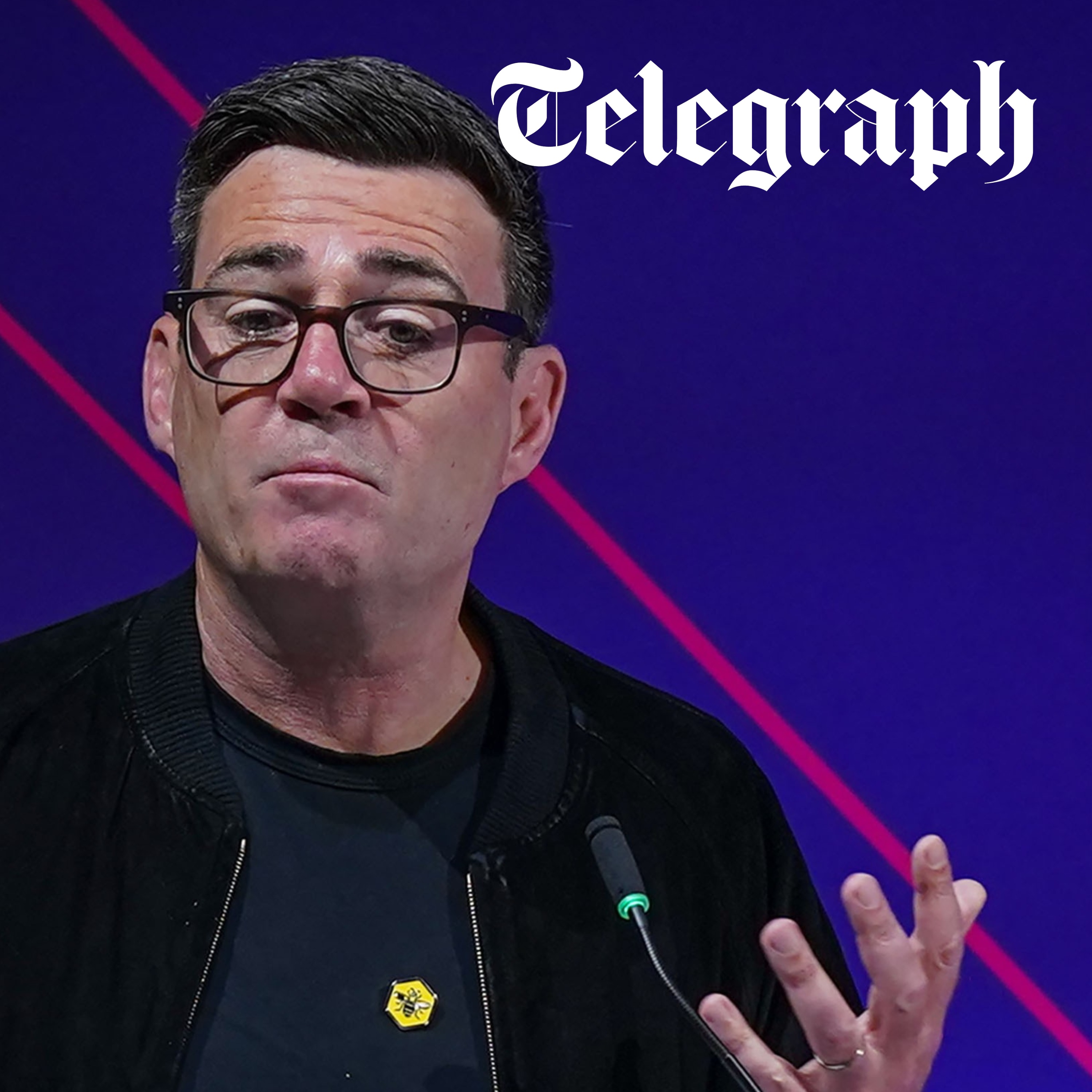
Andy Burnham launched his by-election campaign video last night, and used it to attack the legacy of Margaret Thatcher and the deindustrialisation of areas like Makerfield, whilst promising to reverse the “draining away of economic, social and political power” that happened during her tenure and in the years since. On today’s Daily T podcast, Camilla and Tim criticise the Manchester mayor for attacking Thatcher rather than laying out policies of his own.
Elsewhere, Camilla and Tim also speak to Labour grandee Baron Foulkes - a minister in Tony Blair’s government - who says Keir Stamer has been a victim of the right-wing press and is doing the right thing by maintaining that he’s going nowhere.
We want to hear from you! Email us at [email protected] or find @dailytpodcast on TikTok, Instagram and X
► Sign up to our most popular newsletter, From the Editor. Look forward to receiving free-thinking comment and the day's biggest stories, every morning. telegraph.co.uk/fromtheeditor
Producers: Georgia Coan and Emma Williams
Social Media Producer: Conor Clark
Senior Producer: John Cadigan
Executive Producer: Charlotte Seligman
Video Producer: Will Walters
Studio Operator: Meghan Searle
Editor: Camilla Tominey
Highlights
Hosted on Acast. See acast.com/privacy for more information.


