
 Ask ChatGPT


 The Daily T
11 Aug 2025 · 48m · 17 chapters
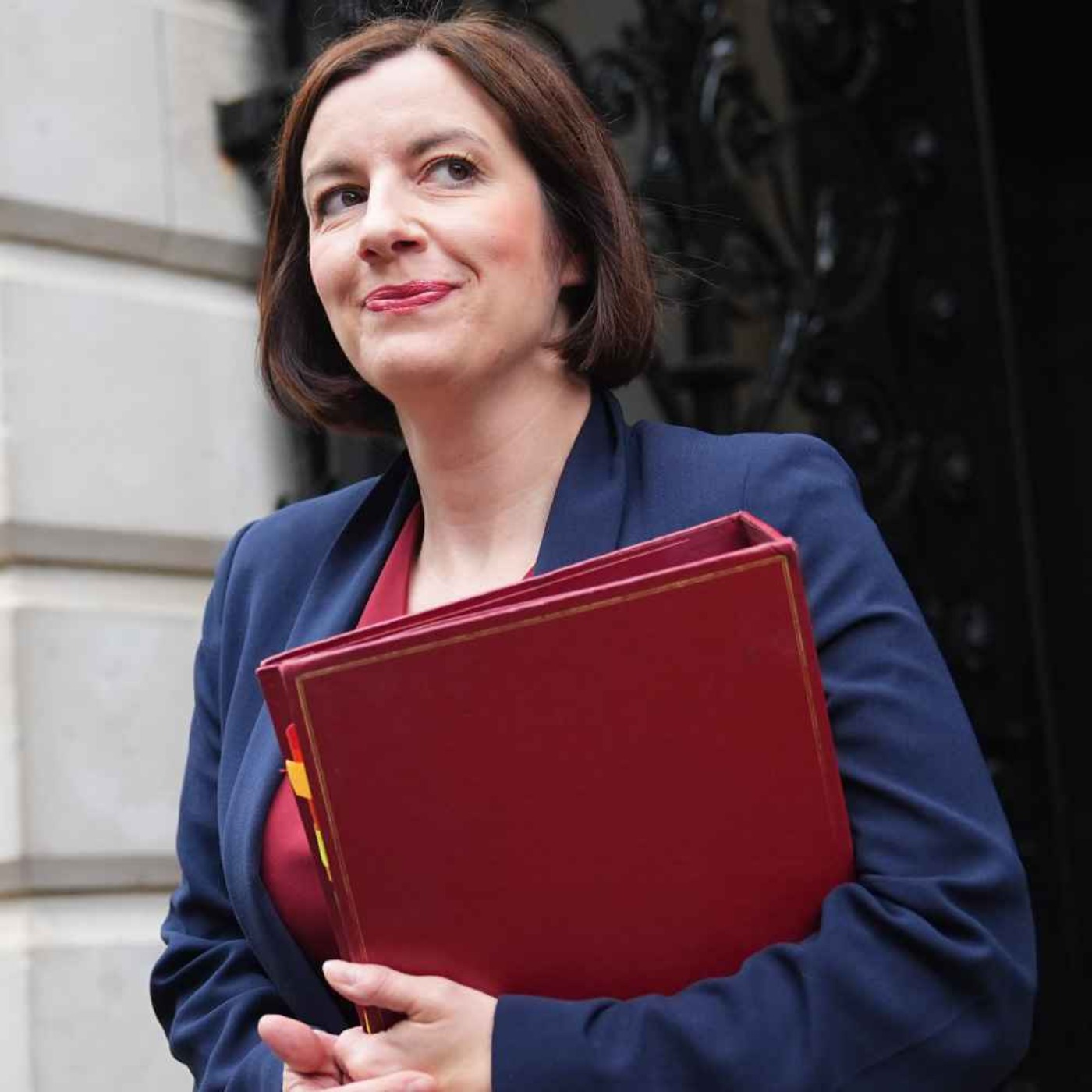
Episode topic: Labour’s “two-tier” education system is failing white working-class pupils, with discussion of attendance, exclusions, and proposed reforms; second segment shifts to how campaigners used data and public pressure to ban XL Bully dogs and to push “Crush Crime” and “Looking for Growth” policies.
Sir Nick Gibb, former Conservative Education Minister (under Michael Gove), author of Reforming Lessons; Bridget Philipson, current Labour Education Secretary (discussed via her Telegraph comments, not as a guest); Dr Lawrence Newport, founder of Looking for Growth and Crush Crime, who led the XL Bully Dogs ban campaign.
Labour admits failure of white working-class pupils; government plans to publish more performance/suspension/exclusion data and use AI to identify underperforming schools. Gibb argues progressivist, skills-focused teaching (e.g., “guessing” words) replaced evidence-based systematic phonics and teacher-led instruction; academies autonomy and “warm, strict” behaviour improved outcomes. Newport claims petty crime and phone theft are driven by repeat offenders and low detection; politicians respond to peer circles, not just public opinion.
phonics screening check; international league table improvements (PIRLS/reading; PISA maths); Michaela School and DeMercia School; XL Bully Dogs fatalities rising and police seizure data; sting operation reducing bike theft by 90%; “walk the purple line” fare/phone theft prevention.
Written by AI. May contain mistakes.
Discussion on Labour's acknowledgment of failing white working-class children and upcoming interventions.
“Now, the government is preparing a series of interventions to tackle the issue in a white paper to be unveiled in the autumn.”
Sir Nick Gibb discusses the historical context and his reforms in the education sector.
“Ministers will, for the first time, publish data showing soaring school suspension and exclusion levels among white working class pupils.”
Analysis of the shift towards evidence-based teaching methods and the importance of a knowledge-rich curriculum.
“says that children need a knowledge-rich curriculum because knowledge builds on knowledge.”
Exploration of the academy system's role in improving education standards.
“And what's particularly pleasing about that statistic is that the reason why England's score went up so rapidly, such a big jump, was because of the low attaining pupils.”
Discussion on current education challenges for white working-class pupils and notable success stories.
“And I think that's been part of why our education system has improved because these head teachers now and their senior leadership teams are running their schools as they, as professionals, want to run them.”
Explore the effectiveness of educational reforms aimed at closing the attainment gap for disadvantaged children.
“the outcomes for these children unless there are further changes?”
Discuss the ideological biases in teaching and the resistance to reforms from educational unions.
“Do you think that that's possibly because there is still this sort of underlying progressive ideology among a lot of teachers?”
Learn about the need for persistence in education reforms and the impact of COVID on educational progress.
“Why do the unions still want to stick to these outdated methods that have been proved to be wrong, that don't work?”
Learn about the need for persistence in education reforms and the impact of COVID on educational progress.
“Experience one place for all your HCM needs.”
Learn about the campaign to regulate dangerous dog breeds and the challenges faced in getting politicians to act.
“I should say that you were a legal academic and you were on paternity leave while all this was going on.”
Discover the Crush Crime initiative focused on tackling petty theft and its implications on public safety.
“And I think that is perfectly encapsulated in crush crime, which I'd love you to tell us about.”
Explore the Looking for Growth campaign aimed at fostering economic development and addressing public frustrations.
“And you're extending this now to economics.”
Explore how economic growth is perceived and its real-world implications.
“onto something much more concrete, because growth is like a metaphor.”
Discuss the importance of varied professional experiences in driving practical solutions.
“So we actually do have a lot of people from police backgrounds.”
Examine the potential for bipartisan cooperation on critical issues.
“And who have you been impressed by so far?”
Analyze how government budgets are allocated and the challenges of prioritizing spending.
“and you look back and go, well, kind of, what did we do?”
Analyze how government budgets are allocated and the challenges of prioritizing spending.
“AI easier to securely deploy and scale with ready to use agents and the broadest set of AI tools and services you can build, buy, or partner your way.”

Get the gist, explore an idea or ask about something said.
 Claude
On The Daily T, what are the key points of this episode?
Searching your listeningAutomatic transcript. May contain errors.
0:02The Telegraph.
0:30Sir Nick Gibb: real-world challenges and succeed. Your future is waiting, and Walden is here to help you achieve it. Take the first step to make your impact.
0:38Gordon Rayner: Visit waldenu.edu. Walden University, set a course for change. Certified to operate by Shev. Hi, this is Monica Reinagle of Nutrition Diva. Today's show is sponsored by Nature Raised Farms. Grocery shopping can be a little overwhelming, especially if you're reading labels. And in my opinion, chicken shouldn't be complicated. Which is why I appreciate Nature Raised Farms. It's chicken that's just chicken. And their lightly breaded chicken nuggets are free from gluten, dairy and soy. Look for Nature Raised Farms on your next grocery trip and feel more confident about your choices.
1:20Gordon Rayner: Labour have admitted to failing white working class children in Britain. Ahead of A-level results day on Thursday, the Education Secretary, Bridget Philipson, says it's a, quote, national disgrace that so many are being left behind, with rates of school absence rising and attainment figures going the other way. Now, she inherited a strong school system from the Tories, one of the more positive outcomes from 14 years of Conservative government. So how has this been allowed to happen? I'll be joined by the former Conservative Education Minister, Sir Nick Gibb, to try and get to the bottom of it.
1:53Gordon Rayner: Plus, you'll hear a chat Tim and Cleo have had with the man responsible for the campaign to get XL Bully Dogs banned, who's now turning his attention to reforming the British political system, no less. Welcome to The Daily Tea, with me, Gordon Rayner.
2:19Gordon Rayner: Now, Tim is on assignment today and Camilla is still on her well-deserved holiday so you have just me today and the front page of the Telegraph has a story that's really got you talking Labour admitting that white working-class children in Britain are being written off by society Bridget Philipson, the Education Secretary said it was a national disgrace that so many white working-class pupils were unable to get the marks needed for university. Now, the government is preparing a series of interventions to tackle the issue in a white paper to be unveiled in the autumn. The plans include publishing more data on how white pupils are performing, as well as harnessing artificial intelligence to identify schools that are falling short.
3:02Gordon Rayner: Under the Education Secretary's reforms, Ministers will, for the first time, publish data showing soaring school suspension and exclusion levels among white working class pupils. The government's also considering expanding its AI-powered attendance tool, showing schools how they fare against those with similar demographic make-ups. Now, as I said, school standards were rising when Labour took over from the Tories, and that was thanks in no small part to Sir Nick Gibb, who was for many years the Conservative Education Minister under Michael Gove and others. He's written a book called Reforming Lessons, Why English Schools Have Improved Since 2010 and How This Was Achieved, which is out today, I believe.
3:45Gordon Rayner: Is that right, Sir Nick? It is, yes, published today. All Good Bookshops and Amazon. Excellent. OK, well, I've read it. I can recommend it to anybody who has any kind of interest in education. Nick, I think one of the things that really struck me about your book, and we'll come on to talk about some developments today with the current education secretary and what she's been talking about. But one of the things that really struck me reading your book was it felt a little bit like the post office scandal in as much as in the same way that lots of stories were written over the years about education in this case and the way that Labour was letting children down and the way that the Tories were able to sort of turn that around.
4:23Gordon Rayner: It's only when you see it all brought together in one place, as you've done, that the real scandal of the way that Labour let down a whole generation of children really sort of hits home. So perhaps you could just explain briefly to our audience what it was that you found when you came into office that had gone so badly wrong. It's a long term problem facing our education system. There was an ideology in education that stretched from how you teach children to read, how you teach young children maths. the content of the curriculum had become less full of knowledge and more geared to teaching so-called skills and the problem with this ideological approach to schools is it just didn't work the evidence suggests that you have to teach children to read using the tried and tested method of systematic phonics the sounds of the letters how to blend them into words but what was happening in our schools is that other methods which essentially encouraged children to guess the word based on the context of the story.
5:22Gordon Rayner: What is it likely that the word is, given that the children are in a forest? Is it not likely that it begins with a, is it therefore a tree? I mean, this is a terrible way of teaching children to read. There's so much evidence that phonics is the way to teach children to read. And so that's why when we came into office in 2010, Michael Gover and I set about introducing phonics into the national curriculum. It became a requirement. And we introduced a test for six-year-old called the phonics screening check, which was designed to make sure that the school was teaching children phonics. That's just one aspect of what was going wrong.
5:55Gordon Rayner: And we can come on to other aspects as we talk. Yeah. So I think one of the things that I found really striking was that, as you say, the educational establishment was pursuing a method of teaching which just didn't work. But because it fitted in with their worldview, we're basically talking about a left-wing worldview here, aren't we? It's a sort of ideology versus reality, which we see so often in politics that, you know, the left follows an ideological path that doesn't work. And then the right follows a path that is based on reality and evidence, as you so rightly say. And you just had teachers deciding that learning should be child centred, as you put it in the book, that children should be sitting around in groups, sort of being left to their own devices, and that the idea that a classroom could be dominated by the teacher, where you had children sitting in rows and being actually taught, as opposed to almost teaching themselves, had become the norm.
6:54Gordon Rayner: And it just wasn't working, was it? No, it wasn't. And it essentially says that children should learn by self-discovery. But, you know, they've only got a limited amount of time at school. So, you know, you just need to teach children from the front. And all the evidences that teacher-led instruction is the most effective way to help children to learn. And this has now formed a movement, this sort of, if you like, counterculture in education. It's called the science of learning, which essentially says that children need a knowledge-rich curriculum because knowledge builds on knowledge. The more knowledge you have, the more you can acquire.
7:29Gordon Rayner: And if you have a school that downplays knowledge and instead emphasizes creativity and problem-solving skills and critical thinking and And tries to teach those skills, which, by the way, you can only acquire those skills if you have deep knowledge of a subject. That's why we've had so many problems in our schools. And we were declining, if England was, if UK was, in the international league tables as a consequence of this approach. And as I said, this is a global problem. It isn't just in this country that these ideas have carried such weight. You talk, Jordan, about the left and right. And you are right in the broad sense that the left tend to be more sympathetic to progressivist education ideology.
8:12Gordon Rayner: But there are a lot of left-leaning people in England, including paid-up members of the Labour Party, who actually take the same view that Michael Gove and I did when it comes to actual education policy. They may not vote conservative, they may not agree with us on the economy or anything else, but on this one issue of phonics, of traditional teaching of maths, the East Asian approach to a knowledge-rich curriculum, teacher-led instruction, really good behaviour policy, what's called a warm, strict behaviour policy, they are with us 100 % on those issues. Yeah. One of the criticisms that people make about the Tories in power was that people say, oh, you had 14 years and you did nothing.
8:50Gordon Rayner: It's not true because particularly with education, that was a huge success story for the Tories, largely thanks to you. Thank you. But the problem that you had was you had a lot of resistance, didn't you, to bringing in changes from the educational establishment? You are right. We were facing criticism the whole time and resistance, even to phonics when there was so much evidence for it. There's a whole band of people that would write to the newspapers and complain about the phonics screening check and so on. And also, there's a lot of hostility to the concept of a deeply rich, knowledge-rich curriculum for children.
9:22Gordon Rayner: They think it's just preparing children for a trivial pursuits quiz. Well, it isn't. There's so much evidence that if you want to improve the cognitive ability of young people to think, And to be creative, you need to have a lot of knowledge in your long term memory. So not only do you need to be taught it, you need to make sure that in schools that children are actually remembering what they're being taught as well. Just explain to us how you managed to turn this around and just give us some of the figures. There are some very striking statistics for the way that English schools climbed the league tables internationally thanks to those changes.
9:56Gordon Rayner: So there's an international league table called Pearls, which looks at the reading ability of a nine-year-old all over the world. And we are now fourth in the world in the last survey that came out in 2022. We're now fourth beaten by Singapore, Hong Kong and Russia. And that's an amazing achievement. And what's particularly pleasing about that statistic is that the reason why England's score went up so rapidly, such a big jump, was because of the low attaining pupils. It's the least able children who now can read, who in previous generations would have been left still struggling. That's why we're fourth in the world.
10:34Gordon Rayner: Just tell us where we were when you took over. We were 10th, and then five years later, we went up to eighth in the world, and now we're fourth. And then in maths, in PISA, this is the OECD's survey of 15-year-olds, in maths, we've gone from 27th in 2009 to 11th last year. and we're going up this is the point when we came into office in 2010 we were heading down in all these international league tables so we had to sort of wrench the tanker around and then head it to an upward trajectory yeah i have to say i didn't teach any of those children in any of our 23 000 schools we have 450 000 teachers who have responded extraordinarily well to what has been a very changed environment about how we teach children what we teach children yeah who've made these achievements.
11:24Gordon Rayner: And the other big change, as well as the changes to the curriculum, the other big change people will be very aware of is academies, which was something which I think had already begun before you came in, but you oversaw an enormous expansion of the academy system. Just tell us a bit about how that has helped. Well, we were worried about this ideology. Michael Gove and I had come to the view this was the cause, this ideological approach to education. So the problem was it had been so entrenched for decades that most of the senior people in education in the local authorities and the quangos were wedded to this ideological approach.
11:59Gordon Rayner: So we had to get schools away from local authority control. And we wanted teachers and headteachers to have more autonomy over what they taught. So if the evidence says use phonics, they should be allowed to use phonics. So we allowed schools to become, it was built on the Labour's, the Blair Government's academies programme. We had 200 academies when we came into office and we allowed schools that were really good to just voluntarily become academies, autonomous institutions funded directly by central government through a contract. Now, 83 % of all secondary schools are academies and 43 % of primary schools are.
12:35Gordon Rayner: And I think that's been part of why our education system has improved because these head teachers now and their senior leadership teams are running their schools as they, as professionals, want to run them. They're not having to ask county hall, whether they can introduce a better approach to behaviour or a better approach to the content of the curriculum. So that's been a major factor in pushing up standards. Just to bring things up to date. So Bridget Phillipson, the current education secretary, has written for The Telegraph about white working class pupils. She says that they're being failed.
13:09Gordon Rayner: She says that the statistics are that 18.6 % of white British pupils eligible for school meals achieved a five in English and maths GCSEs last year. For people my age, that's the equivalent of a C, compared with 46 % of all state school pupils achieving that level. So 18.6 % as opposed to 46%. So she is saying that she thinks part of the reason for that is poor attendance levels. But as you say in your book, plenty of headteachers have proved that you can take children from deprived backgrounds and they can achieve spectacular results. People obviously will know about the Michaela School in London, headed by Catherine Burgelsing, but there are plenty of others.
13:54Gordon Rayner: Is Bridget Phillipson wrong to say that you can't basically improve the outcomes for these children unless there are further changes? Or do you think that the changes are already there? Why aren't all schools doing what schools like the Michaela School do? Well, I mean, she's right to take this issue seriously. I mean, everything we did, Michael Gove and I did in government, was about closing the attainment gap between children from disadvantaged backgrounds and their peers. So everything from teaching reading, from out of the curriculum, the behavior policy in schools, making sure that we converted weak schools that just were not delivering for anybody into academies.
14:35Gordon Rayner: And we got a new leadership into those schools. All that hard work was about closing that attainment gap. So she's right to do that. And you are also right to say that there are schools that are getting these results. So you don't always have to look at Michaela. DeMercia School in Sheffield, for example, serves a very disadvantaged community. That school is in the top three, maybe I think a second actually in the league table of progress. Number one is Michaela. But if you look at the progress that the disadvantaged children are making at that school, it's actually higher than the overall result of the school.
15:10Gordon Rayner: So they're doing better than less disadvantaged children at that school. So what that shows, and there are other schools I could cite, is that it can be done. Schools that run their school with direct teaching, warm, strict discipline so that there's very little misbehavior in school so that children can concentrate and work and learn, it can be done. So that's what our reforms were about. What is disappointing about the government is that they are seeking to undo some of the measures that actually have delivered better results for disadvantaged children. and so for example I mentioned that we had we took measures to tackle underperforming schools so if a school had gone into special measures in the inspection we had a piece of legislation that said they automatically had to become a sponsored academy sponsored by a higher performing school to turn that school around now we've turned around several hundred such schools that for decades have been underperforming they are now good or outstanding most of them like somewhere 80 90 percent of those schools are now good or outstanding that piece of legislation is going to be repealed by the government in their children's well-being and schools bill and there are other measures in that bill that chip away at the autonomy of academies it's that autonomy that has resulted in higher standards so it's a so it's a great pity and a tragedy in many ways that the government is pushing that bill through parliament and undermining the very measures that you need to be able to improve the education and improve the schools that disadvantage white children, white working class boys in particular, are attending.
16:45Gordon Rayner: Do you think that that's possibly because there is still this sort of underlying progressive ideology among a lot of teachers? I mean, I think most of us who've had children going through the school system would say that there is a sort of inbuilt left-wing bias in teaching, okay? I don't mind saying that, even if you don't. And is it that perhaps there is still a resistance, even despite all the reforms that you brought in, that people in teaching perhaps still want to go back to that progressive ideology or are resistant to what you did? I mean, I agree with you. There's a high proportion of Labour voters amongst teachers than in other professions in other parts of society.
17:26Gordon Rayner: Having said that, most teachers I meet are conscientious, intelligent professionals who want the best of their children. where their schools fail is because the school, for whatever reason, is still wedded to outdated approaches that the evidence says don't work. And as I mentioned earlier, Gordon, there are a lot of paid up members of the Labour Party who believe in the things that Michael Gove and I introduced. The problem is with Bridget Philipson and the new Labour government is that they have not done the work in opposition to try and understand how you improve the education for the most disadvantaged children.
18:03Gordon Rayner: And they've been listening to the teacher unions too closely, who are very critical of everything we did. They're opposed to the academy's programme. They're opposed to the phonics screening check. They're opposed to the multiplication tables check that we introduced for nine-year-olds. They're opposed to a knowledge-rich curriculum. And they're opposed to all the autonomy that we gave academies. So she listens too much to those voices. And that's what's fed into her bill. So because of that, she won't succeed in delivering her objectives to the extent that she undermines what's happening. The reason why I'm still optimistic, though, is that teachers actually have embraced the reforms.
18:39Gordon Rayner: And they see the results of better math teaching, the East Asian approach to math teaching. They see how the children get it and they become quite accomplished mathematicians as a consequence. So the teachers themselves actually are the bulwark against what I think the Labour government are doing in office. So it's fascinating, isn't it? It's fascinating and it's really depressing. Why do the unions still want to stick to these outdated methods that have been proved to be wrong, that don't work? and why they're resistant to the things you brought in, which the evidence shows quite clearly do work.
19:17Gordon Rayner: That I'm baffled by, I have to say, because all the trade union leaders, they represent, you know, in combination, 450 ,000 professional teachers who will have a variety of views on these issues. So it is odd. I can understand why they want to campaign for higher salaries, of course, and better working conditions, of course, but I don't understand why the unions think they should have a view on the content of the curriculum. And I think the way it works in reality is that the kind of people that get onto the committees of these organisations, the clients through the ranks, tend to be people that are very wedded to that ideological approach to education.
19:54Gordon Rayner: But I think they ought to represent the whole spectrum of opinion within their membership, not just one particular narrow view. Quite. Just lastly, you've talked about schools like Michaela, Mercia, these outstanding schools that achieve incredible results with children from all backgrounds, I think a lot of people listening to this will be thinking, well, look, the answer's there. We've cracked this. We know what works. So if we found the answer, why aren't all schools following the same path? I mean, that is the key question. It's what we were doing in office. So these academies that have autonomy are now forming into multi-academy trusts, sort of groups of schools with a chief executive.
20:34Gordon Rayner: And in the most successful multi-academy trust, they do that. They spread that best practice to all the schools in their group. And that's why moving to a multi-cadding trust is the right long-term approach for our school system. But it's a school-by-school, idea-by-idea program. You've just got to be persistent and keep at it. We had this concept called hubs, maths hubs or English hubs, that was about we gave the particularly good schools some extra funding to have teachers who could go out and basically teach other schools how they would teach reading or teach foreign languages and so on. So I think that is a good approach.
21:12Gordon Rayner: Again, the government has cut the funding to some of those hubs programs, which is, again, I think a short-termist view. Think about education policy. It takes time, but it is succeeding. This is a frustrating thing, Gordon, because before COVID, we were seeing the attainment gap closing by 13 % in primary schools, by just over 9 % in secondary schools. That went because of COVID, But you've just got to get back to the reforms, get back to children attending school, and we'll get back to that gap between disadvantaged and non-disadvantaged children closing once again. OK. Well, Sir Nick Gibb, once again, your book, Reforming Lessons, is out today.
21:49Gordon Rayner: Thank you so much for joining us on The Daily Tea. I'm not sure I mentioned at the start there that you're actually in Chile for a conference. So thank you for interrupting your very busy schedule. Thank you once again, Sir Nick Gibb. Coming up, Tim and Cleo have had a chat with Lawrence Newport, the campaigner who got XL Bully Dogs banned, and who, with the backing of Dominic Cummings, is now turning his attention to reforming the British political system.
22:39Gordon Rayner: We'll see you next time. Growth comes easy. Experience one place for all your HCM needs.
22:48Sir Nick Gibb: Start now at paylocity.com slash one.
22:51Gordon Rayner: This message is brought to you by today's sponsor, Walden University. Set a course for change. Now is the time to make a real change in your life, career, and community.
23:02Sir Nick Gibb: At Walden University, we give you the support and flexibility to get the W. Walden's online programs are designed for working professionals like you. You'll gain hands-on skills to take on real-world challenges and succeed. Your future is waiting and Walden is here to help you achieve it. Take the first step to make your impact.
23:20Gordon Rayner: Visit waldenu.edu. Walden University. Set a course for change. Certified to operate by Shev.
23:28Sir Nick Gibb: You're a pro at running your life. At committing to your workout. At showing up every day. At Bombas, we're pros too. Pros at making socks. Our sport assortment has specialized socks for whatever sport you're committed to. Running, hiking, golf, Pilates, and so much more. Made with sweat-wicking yarns, blister-fighting details, and targeted arch support. Bombas Sport is pro-level socks from the pros of socks. For another pro, you. Go to bombas.com slash audio and use code audio for 20 % off your first purchase. That's bombas.com and use code audio.
24:06Gordon Rayner: Now you might have seen the videos of a group of vigilante cleaners removing graffiti from the London tube, among them the GB News presenter Tom Harwood. They're part of Looking for Growth, a campaign group that wants to kick-start our failing economy. They say our politics are fundamentally broken, too slow and too ineffective, echoing one of their backers, Dominic Cummings. The group's co-founder is Lawrence Newport, who made his start in political campaigning with getting XL Bully Dogs banned. He also runs another action group called Crush Crime, which says the justice system is broken. Earlier, he spoke to Tim and Cleo.
24:49Gordon Rayner: Dr Lawrence Newport, hello. Hello, thanks for having me. It's a pleasure. Given that you're not an MP, not even a councillor, you've got a remarkable CV. You've founded two campaign groups looking for growth and crush crime. You and your team of wonks have drafted an infrastructure bill, forced a government not to water down its planning reforms, launched a monthly tracker of popular opinion on growth, launched a podcast, been interviewed countless times, held large meetings with MPs, been endorsed by Dom Cummings, by Labour's growth group and by reform. And all this began with a walk in the park in 2023.
25:30Gordon Rayner: Can you explain to us what happened to you that day?
25:34Sir Nick Gibb: Yeah, I live in London and I was walking my dog and there were two dogs hanging upside down, jaws locked on a branch of a tree with their owner yelling, get it, get it, get it. These were huge dogs, about, I'd estimate, between 40 and 60 kilos of size. They were very, very, very large dogs. Both look like pit bull type dogs. And I knew from my law degree that because of the Dangerous Dogs Act in the 1990s, pit bulls in this country have been banned. So I decided to look into what are these types of dogs over the next two, three, four days, really next two weeks. I saw them all over my local area.
26:12Sir Nick Gibb: And so I tried to find out what the breed was. I couldn't really find much information. I then decided, well, actually, let's just look. if there's suddenly this uptick, I'm seeing an uptick in these very large dogs. Are there any actual real world effects? I just took all the fatality data. This is fatalities of people to dogs. You can see you basically get about an average of three fatalities a year to dogs until three years previously, in which case they suddenly jump. They jumped up to 10. 70 % of those deaths were explained by one dog breed. And that dog breed was the American bully. Click on it.
26:47Sir Nick Gibb: that's the dogs I saw. There is something happening here. I tried to look into this in any more detail and it only takes a bit of Googling to find these are indeed pit bulls. They have been bred from fighting stock. Dog fighting are champions who have been aggressively inbred for about 30 years to produce a dog that's triple a pit bull size. And I decided something had to happen about this that we didn't have to accept suddenly, all this uptick in stories. In my area, I saw flyers of local dogs who'd been attacked. Every single time, description very similar. Suddenly, these large dogs, same thing, same thing, same thing.
27:27Sir Nick Gibb: And this seemed to me something which needed to change now. And if we waited too long, even two, three more years, there would have been enough of these dogs in the dog population. It would be almost impossible to stop.
27:38Gordon Rayner: So these were sort of fashion dogs. I remember them being very trendy at the time. Yes. But 77 days later, they're banned.
27:45Sir Nick Gibb: Yes.
27:45Gordon Rayner: How did you do that?
27:47Sir Nick Gibb: Basically, this is the start of the Ban the Bully XL campaign, which at the time I didn't think of as a campaign. It wasn't really until like a week before Rishi Sunak announced they were going to ban them that someone said to me, you know, you've just ran a very successful campaign. And I was like, what do you mean? I just wanted something done.
28:04Gordon Rayner: I was just on paternity leave.
28:06Sir Nick Gibb: I just want this finished. I just want this solved.
28:09Gordon Rayner: I should say that you were a legal academic and you were on paternity leave while all this was going on.
28:14Sir Nick Gibb: Yeah. It became very obvious to me what was happening. I wrote a blog post. I laid out, here are the stats on the deaths. Here are the stats on the attacks because attacks had also gone up. So there was a lot more logging in hospitals of the data. And we tried to estimate the actual dog on dog attacks because no one's collecting their data at all. All of this, I put in a blog post, put it online. that went viral. I was contacted as a result of that from someone who represents a victims group. This is for people who have had their dogs killed by other dogs. And they said, you know, we keep hearing it's the same dog breed.
28:45Sir Nick Gibb: It's the same thing. Will you do something about this? Because no one with any credentials will ever speak about this issue publicly. They're always worried about it because you get a lot of pushback. And I said, sure. And what I actually did was I talked to a few people I knew in government, spads, advisors, and so on. And I sent them a two pager just making super clear what the problem was, how they could solve it, because it was super easy to solve. It's literally, the Secretary of State just writes a sentence, adding them to the dangerous dogs list. They already should be banned. They are already pit bulls.
29:19Sir Nick Gibb: I was just proving to them, you've actually already banned these things just because your laws are about 30 years out of date, that the breeding has moved on. And they basically tell me they agree, but they're not going to do anything about it unless it was a national issue of some kind. And so I was like, OK, then. But this was like my major signal to me of just how busted things are in this country. You can essentially say, like, this is obviously something that should be stopped.
29:48Gordon Rayner: A building is on fire. You have pointed out to people in government that it is on fire, but they won't put it out until everyone else notices that it's on fire. But not only that, here's a hose in a bucket. Yeah, I'm telling you how you can put it out.
30:01Sir Nick Gibb: Yeah, I mean, it's easy. So I talked to the person who was running the victims group and they had loads of different contacts in various areas in terms of just like people who were trying to do things. So someone trying to estimate the dog on dog attacks, they were just scraping all this data themselves and uploading it to a website, didn't know what to do with it. So we got myself, about four or five other people. We then got police data because they break down by breed the dogs they seize. And for instance, very large other dogs that people sometimes get worried about, like Rottweilers were like 2 % of seizures and Bully XLs were 35%.
30:35Sir Nick Gibb: It's unbelievable difference in scale. And so we basically decided we're just going to do this. We're going to keep making noise on this. We are going to push as much as possible. We are going to try to put out as much data as possible. We got an opinion poll, which I also mistakenly thought would suddenly shift everything. But we had no money or funding. This was a friend of mine won three YouGov questions in a raffle. But it was very good for us. We got these questions back and it was massive majority support for banning the bully XL. This is something which we released with a big splash, made zero impact as well.
31:14Sir Nick Gibb: And that taught me right then, actually, politicians are not optimizing for what is true. They already agree that this is a problem. They already told me they agree. They're not optimising for directly what the public thinks. They're optimising instead for what is permissible in my social circles. So then my goal became, we have to basically make everyone in Westminster obsessed with this issue. And then when they get obsessed by it, they will then go, well, is it popular? Oh, it is popular. We should do this thing. It's free, basically. And that became the entire mechanism. I became completely obsessed with how do we just make it something so that everyone around their dinner table in Westminster and circles around it are talking about this thing, which is why we focused on Twitter in particular, because journalism and politicians, they're all on Twitter.
32:05Sir Nick Gibb: I was not particularly good on Twitter before at all. And I just like had to quickly learn.
32:09Gordon Rayner: You're prolific now.
32:10Sir Nick Gibb: Yeah, now I can't stop. Now I'm also addicted to the thing. But yeah, it was like trying to build exactly as you say. And in fact, after Rish Sinek had left government, there was a poll asking people what they most liked about what they've done. And the third thing above several tax cuts was banning the Bully XL. So, you know, it was popular and it was the right thing to do. But they could have done it months previously and immediately when they actually already knew about it and actually had already said they agreed.
32:41Gordon Rayner: Well, it's exciting to hear that a citizen can change things. But it's also really depressing to learn that I thought politicians just slavishly responded to what the public want. They don't. They slavishly respond to what their peer group wants. And that actually for the citizen to change things, they don't target the general population. They need to target a few thousand people living within one postcode.
33:05Sir Nick Gibb: Well, you kind of want to do both. in that what you want to do, because you need to make it also something that when they decide, oh, actually, all my friends like this and all my wider dinner circle likes this, but also the public is on side. It gives that nice, that every part is making it an easier slide into doing something. The reality is it needs so much pushing, so much prompting, and so much of making the slide as easy as possible. That's the thing. It's like trying to get through on that. That's the real difficulty.
33:35Gordon Rayner: I want to move us on slightly to crush crime because I'm really interested in what you said about something being a kind of cultural issue, something popular with the public and feeling anecdotally true to politicians. And I think that is perfectly encapsulated in crush crime, which I'd love you to tell us about. But in particular, mobile phone theft. When Robert Jenrick did a video recently about people dodging fares on the underground, it was so exciting to see a politician out there with the people. but chiefly he was picking up on things, petty crimes, that annoy people everyone sees, everyone experiences, everyone's had a bike nicked or a phone nicked.
34:14Gordon Rayner: I wonder if you could tell us a little bit about Crushed Crime and how you've learned from the kind of Excel Bullies campaign to bring that into force.
34:22Sir Nick Gibb: Yeah, so after the Bullies campaign, a lot of people around me, I would, just at events, parties and stuff, I'd hear people say, oh, my phone got nicked last week, my bike got nicked two months ago. I mean, and it's everywhere. And suddenly I was thinking, weirdly, no one is talking about this thing. This is clearly a problem. It wasn't the case two years ago or five years ago. So something's changed. Like this isn't like normal chit chat. And so I started looking into this. It had a similar pattern. You know, you suddenly see like a massive spike.
34:52Gordon Rayner: Yeah, I mean, exactly this.
34:53Sir Nick Gibb: And also just trying to find something because there's so much in Britain that just feels broken and just extremely depressing. because now, for instance, petty theft and shoplifting is the highest ever recorded. This is now something that we are really in the midst of an epidemic on. And it's something which we know the things that work. We know that just 10 % of offenders are responsible for over half of all crime. These are people who have 15 or more offences to their name. So 15 or more previous offences. Now, at Crush Crime, we release them actually kind of daily. people who have maybe 300 previous offences who are regularly receiving either no prison time at all or very minimal prison time, maybe a couple of weeks, a couple of months, something like this.
35:40Sir Nick Gibb: If we have this kind of revolving door like this, these same people, of course, get back out. They commit the same offences. It makes things much, much more difficult for all of us. Whereas we know targeted policing and imprisoning these people for longer, depending on how many offences they've had previously, reduces crime rates. You can look at an example of the city of London, where there was one bike theft gang. The local police did a sting operation. They arrested, I think it's about seven people, and bike thefts in the area fell by 90 % for the period that these people were away for. They were doing all of the thefts, essentially.
36:16Sir Nick Gibb: Similarly here, we know there's at least one person in London who's responsible for about 1 % of all phone theft in the city going around prolifically stealing phones, several hundred a day. Like, that's possible. They can do it at scale. and we are choosing through inaction, through not focusing on it, to not arrest and imprison these people for longer periods based on their previous offences. And for that reason, we're seeing this huge increase as essentially if your phone is stolen or you witness shoplifting, even if you report it to the police, the rate of suspect identified, not convictions, but just identified is 1%.
36:51Gordon Rayner: I wonder what you think of these new grab lines. They're now drawing purple lines down pavements in London and saying walk that side of the line,
36:59Sir Nick Gibb: not close to the road so that someone can steal your purse. Wow. What do you think of that sort of policy? Well, I think it actually just shows what we've been trying to say for the past year almost now. This is actually worse than ever. It actually does require police action, and if you don't, it will keep going at scale. And, of course, what happens is the general public is essentially blamed. It's saying, oh, no, you're standing too near to the curb. You should know that these guys are going to steal your phone. I mean, the problem with phone theft now is it's actually like an industrial scale in that if you have your phone stolen, so many people, including what happened to my sister-in-law, her phone got stolen when she turned to look after her toddler.
37:39Sir Nick Gibb: Someone nicked it out of her pocket.
37:40Gordon Rayner: Yeah.
37:41Sir Nick Gibb: Within two days, three days, it was in China. Yes. That's being flown there. Like, this is a massive industry, probably in a whole bag of other phones. Like, this is big. And the reason it's big is because they're not getting caught. The police aren't focused on it. The courts aren't focused on it. And as a result, if you know you're only going to get caught less than 1 % of the time, way less than 1 % of the time, and if you do, you're only going to go away for a very short period, you also make a lot of money. It's worth the trade to a lot of people.
38:09Gordon Rayner: So if I can summarize, what I sense you're doing is you're spotting daily nuisances that ruin people's lives, looking into the data behind it, and then offering government straightforward solutions, which they can hardly say no to, and trying to persuade them that it's in their best interest to do them. And you're extending this now to economics. You're wearing a T-shirt. Yes. Looking for growth. What is the Looking for Growth campaign?
38:34Sir Nick Gibb: So this was born after frustration. At the same time I was spinning up Crush Crime, I became increasingly depressed by the news on, or rather the trailed kind of suspicions about what was going to be in the budget, the upcoming budget at the time. And it sounded to me a lot like what had happened the previous year and the previous year and the previous year. This is Reeves' first budget. Yes. It looked to me, yes, so October, November last year. It just looked to me like, oh, my God, people voted massively for change. And yet again, it is still the same thing. It's still the same process. This is like incredibly frustrating.
39:11Sir Nick Gibb: And I just, out of frustration, talked to my brother, who was previously worked in the Treasury, and he left because of how frustrating that is. and a friend of mine, Joe Reeve, who left school at 16, worked in Silicon Valley, he's been trying to do several things to just like spur on innovation in the tech sector in London and really across the UK. And I was like, we should do something about this. We should just build something that makes noise on this in a very coordinated way and makes clear arguments in ways that politicians will actually have to listen to because we'll push it in front of them repeatedly.
39:49Sir Nick Gibb: And so we started LFG in a bar in Camden. It was over 400 people attended our first event. It was completely packed, completely around. And I thought, what is the least nebulous thing you can do with growth? And that's produce an actual bill. And so we launched with a bill that could be passed the very next day if government wanted to, that would enable them to build nuclear power stations, overhead electricity cables and AI data centers within about six months of it being passed. Essentially, you could put space in the ground and start digging rather than at the moment. It takes like 15 years.
40:21Sir Nick Gibb: We stripped back a bunch of the processes. We had new environmental protections that were streamlined as well. We have payments for local people, all this kind of thing. we launched then to be able to say well look we can do it maybe you've got a better plan show us your better plan and um the plan they did produce the planning bill some bits were similar and inspired by what we had released and a lot more watered down increasingly watered down unfortunately but this was the kind of thing that we want to produce more of as well doing so at the moment looking at a few other areas to be able to say like look here is actual
40:54Gordon Rayner: things you can do it's tricky isn't it because with excel bullies you have this very sort of visceral image-led campaign which could take the public with you that turns out the public were already there and it is difficult growth because it's like change or delivery it's just a word to a lot of people and actually economics for a lot you know for a lot of people's kind of including me it basically means nothing 0.1 percent of what yes it really reminds me of the debate we had in government when Boris Johnson came up with leveling up which he did not have a clear definition for and that worked really well for him because he could bang on about it and it meant different things different people and it just sounded good yeah and ultimately to me it became down to leveling up for people to actually see it and feel it they have to see spades in the ground they have to see the cranes up they have to see the foundations being poured and that's the tricky element for lfg isn't it that you guys can take sw1 so far yes but they have to take it to the next stage.
41:56Sir Nick Gibb: So I'm actually extremely focused at the moment on exactly trying to hone our messaging onto something much more concrete, because growth is like a metaphor. It's not just a metaphor, of course, it's like a metaphor politicians have used for the last 15 years. And essentially, it's been kind of used as a bit of a scam, you know, because people keep hearing, we're going for economic growth, we're going for economic growth, you know, but they don't feel it. They don't feel it. And they think when politicians are saying that, actually, somewhat correctly, when they're not talking about me, because my life's not getting better.
42:25Sir Nick Gibb: So they must be talking about their rich friends. And so I think in many ways, economic growth is seen as an actual direct negative. So one thing that we really want to do is to bring it home. This is what this means. This is what we care about. We want a reduced cost of living. We want lower energy prices. We want more jobs. We want people to actually be able to enjoy their lives and for things around us to function. I mean, largely what looking for growth really is in kind of a broader umbrella is like anti-decline. It's both really crush crime and looking for growth. It's anti-decline. And Britain is in decline.
42:56Sir Nick Gibb: And we are very, very, very much against both the causes of decline, which is the economic side, and the symptoms, of which is actually also the graffiti cleaning, which is showing that it is actually stuff that can be done. We spend$130 million a year on cleaning the tube. They probably could make sure it's not covered in graffiti.
43:13Gordon Rayner: I guess the issue is that choices have to be made when it comes to growth. So, for instance, The Telegraph has played host of debate about allotments with Jeremy Corbyn.
43:22Sir Nick Gibb: Yes.
43:22Gordon Rayner: And there are some who regard these things as wonderful because they bring the countryside to the city and they give people who wouldn't have an opportunity to garden a place to garden. Others see it as an unviable use of land that's taking away from people at a period of property hunger that we could be building on. How would you respond to that? How does one make a choice in that case?
43:42Sir Nick Gibb: There's loads of low-hanging fruit across this country. And I think that if you remove things, for instance, you can make arguments about parks. Should we just get rid of parks and cover them in concrete blocks of flats? I'm not supportive of just covering your parks. The whole point of economic growth is to make life actually better for people. Life should be better. This does mean, though, that we will need to densify our cities. People want to move to London. They want to move to Manchester. They want to move to these places, which is why the poverty prices are so high. This is killing towns across the country.
44:13Sir Nick Gibb: It's killing cities across the country. We're all suffering for it. It doesn't mean that you necessarily have to destroy all the things that people like in order to build these things. It's why I say looking for growth is really an anti-decline thing because it's about you can build nice houses. We did it in the past. It should be cheaper today. We have better technology. We have better goods. We have more expertise. We can do it at scale. It isn't something that should be more expensive than it was historically. And it isn't something that we should think should trump everything about enjoyment in life because the entire point of growth is to make life better for us.
44:43Gordon Rayner: I'm keen to know more about who you guys are so when I've been looking at some of the events you've had and everyone looks so young and cool slightly male leaning it's like a sort of Silicon Valley tech bro vibe I suppose and I suppose one of my fears for your organizations is and do correct me if I'm wrong here is that your group of energized academics or young people with tech and science backgrounds, I worry that you don't have enough, I don't know, former planning officers, former police officers, people with some experience of when the theory actually hits the practicalities.
45:29Sir Nick Gibb: So we actually do have a lot of people from police backgrounds. We do have a lot of people from tech, a lot of people from outside, from certainly a wide range of industries. certainly over the last month or two as well, a wider age demographic. But we do trend still quite young, which is quite rare in Westminster. But yes, we do actually have quite a few people who were previously in government or previously around government or have worked to various levels of frustration in the civil service and otherwise, because I want to be able to build things that are practical, that will work. But it's also the case a lot of people inside of the system have spent so long around it, they're not used to disruptive behaviours, which a lot of people from the tech industry and otherwise are like, what do you mean it's been the same way for like 100 years?
46:14Sir Nick Gibb: That's insane. And it's stuff like that that's a very refreshing, very different thing. So pulling those people together in the same room has often actually worked in a very, it produces interesting debates, interesting discussions, but chiefly what we're aiming at is we are not a think tank. We're about building stuff, making stuff and making change happen now and pushing politicians to adopt those changes.
46:33Gordon Rayner: Do you have a group you're particularly keen to work with? Are you staying apolitical? You'll work with anybody? And who have you been impressed by so far?
46:43Sir Nick Gibb: So we will work with people who want to do the good things. And we will be extremely critical when they or anyone else doesn't want to do the good things. There is so much about politics, which does get down to, you know, the finities of, you know, different political philosophies. but there's a lot you can do with broad strokes. And right now, it's petty crime is something that realistically, nearly everyone across the spectrum actually agrees needs to be solved. They're just not doing it. Similarly, doesn't matter if you're Labour, reform, the Conservatives, you do want economic growth. You might not like all the different ways of going about it, but you can at least agree this is actually necessary to do.
47:20Sir Nick Gibb: And I think it is extremely important on that basis to be able to be very clear that regardless of who you are, If you do the right stuff, we will support it. And if you don't do the right stuff, we really will not. In terms of who's particularly good, I mean, there's actually quite a few MPs that really, really seem to care from the Conservative side. Katie Lambs, brilliant. She really cares. Andrew Griffith, great as well. I mean, there's many, actually. Nick Timothy, Neil O 'Brien's very good. On the Labour side, I'm really impressed by Chris Curtis. He cares a great deal. Actually, a lot from the Labour Growth Group are very interesting.
47:56Sir Nick Gibb: Josh Simons has got particularly interesting views on the system and Westminster and how frustrating that is. Reform, Zia Yousef obviously really cares about growth and nuclear power. You know, so there's people across the spectrum that I think actually get it, they understand it, and they want things to get better. The question is whether or not, one, they are able to actually enact that change, and if they are able, not just with their parties, but also for themselves to stay true to the target and not end up like, unfortunately, everyone seems to, which is completely bogged down and stuff. And then five years pass you by and you look back and go, well, kind of, what did we do?
48:38Sir Nick Gibb: It looks like we kind of muddled through that five years.
48:40Gordon Rayner: What particularly the left will then say is, well, we agree with everything you're suggesting, but it comes down to tax and spend. And where's the money going to come from? So your campaigns are great. But someone in government's got to make the really controversial decision to say, and we will spend more, therefore we will raise your taxes.
48:58Sir Nick Gibb: So when the government has a necessity in front of them, they actually do move money to do this thing. We just found out they were for several billion pounds hiding a massive mess up by the MOD. We're sending several billion a year on asylum hotels. It's very clear that when the necessity arises, government can move money to those places. But they have to take it from somewhere first. For sure. Yeah. I mean, there's prioritization. I think if you're a government and you're spending several hundred billion a year and you look at anything, OK, well, if we spend another one, two billion on expanding prison spaces, emergency prison spaces, one thing you could do, in fact, they passed legislation like this in the 80s, is designate emergency prison spaces.
49:36Sir Nick Gibb: For a lot of shoplifting, a lot of phone theft, you don't necessarily need maximum security prisons. You need somewhere to hold people. You need somewhere which is safe and available. And there are places across the country that can be identified and used. They did it before historically, only a few decades ago, it's possible to do it now. It would require legislative change, they would have to do it quickly, but like we've seen with steel and otherwise, the government can do things, they can do things very, very quickly when they are focused on doing it. Dr Lawrence Newport, thank you very much.
50:05Sir Nick Gibb: Thank you very much for having me.
50:39Sir Nick Gibb: We'll see you next time.
50:49Sir Nick Gibb: AI easier to securely deploy and scale with ready to use agents and the broadest set of AI tools and services you can build, buy, or partner your way. Stop overthinking. Start building. AWS AI is how.
51:03Gordon Rayner: Hi, this is Monica Reinagle of Nutrition Diva. Today's show is sponsored by Nature Raised Farms. Grocery shopping can be a little overwhelming, especially if you're reading labels. And in my opinion, chicken shouldn't be complicated, which is why I appreciate Nature Raised Farms. It's chicken that's just chicken, and their lightly breaded chicken nuggets are free from gluten, dairy, and soy. Look for Nature Raised Farms on your next grocery trip and feel more confident about your choices.
Labour have admitted to failing white, working-class children in Britain.
Writing in today’s Daily Telegraph, Education Secretary Bridget Phillipson says it’s a “national disgrace” that so many pupils are being left behind, pointing to an alarming rise in school absence whilst all-important attainment figures go the other way.
Having inherited a strong schools system from the Conservatives, Gordon Rayner is joined by former Tory education minister, Sir Nick Gibb, to try and understand what’s gone wrong. Gibb believes Labour “didn’t do the work in opposition to try and understand how to improve” and that they’ve been “listening to the teacher unions too closely”.
Plus, Tim and Cleo speak to Lawrence Newport - the co-founder of Looking for Growth, a campaign group that wants to kick-start our flailing economy. Newport, who made his start in political campaigning by getting XL bully dogs banned, says our politics is fundamentally broken, too slow and too ineffective - echoing one of his group’s backers, Dominic Cummings.
We want to hear from you! Email us at [email protected] or find @dailytpodcast on X, Instagram and TikTok
Read:
White working-class pupils ‘written off’ by society, admits Phillipson
Producer: Lilian Fawcett
Senior Producer: John Cadigan
Planning Editor: Venetia Rainey
Video Editor: Andrew Mackenzie
Social Producer: James Simmons
Studio Director: Meghan Searle
Executive Producer: Louisa Wells
Hosted on Acast. See acast.com/privacy for more information.


