
 Ask ChatGPT



The Daily Tea episode argues that UK free speech is applied with “double standards,” with police and political institutions treating some offensive speech as criminal while overlooking similar conduct from others. It centers on the Met Police decision not to pursue charges after a Zach Polanski social media post referencing Nigel Farage with a guillotine image, which Reform says shows “two-tier policing.” Hosts cite data on arrests under Communications Act 2003/Malicious Communications Act 1988, contrast with cases like Lucy Letby (apology, incitement) and Southport-related speech prosecutions, and question inconsistent policing definitions of “incitement.” They also discuss Alison Pearson’s door-knocking by Essex Police and her subsequent five-figure payout/apology.
Martin Fizal (Martin Frizzell), former This Morning editor, whose wife Fiona Phillips has early-onset Alzheimer’s; he discusses stigma, delayed diagnoses, and Andy Burnham’s proposed social care reforms, including moving care outside the NHS and funding options (levy/death tax/insurance). Notable examples include Anne Widdicombe’s free-speech stance and Quentin Letts’ “short skirt” joke controversy.
left-leaning institutions use lawfare/law to police speech; practical free-speech defense is needed to avoid backlash.
Written by AI. May contain mistakes.
Discussion on the implications of Polanski's situation and accusations against him.
“The Met says it will not pursue charges, even though reform accuses him of inciting murder.”
Exploration of accusations regarding two-tier policing and social media posts.
“Welcome to The Daily Tea with me, Tim Stanley.”
Discussion on the fairness of policing actions and the double standards experienced.
“for then signal boosting this image on their own social media.”
Debate over the definitions of incitement and the implications for free speech.
“after the Southport riots were also treated pretty horrifically over speech offences.”
Analysis of Alison Pearson's legal struggles with the police and implications for free speech.
“And my understanding of incitement was it was actually advising people to go and do something rather than just expressing a very unpleasant and malevolent view.”
Discussion on how political alignments influence policing and legal actions.
“I mean, it's so Kafkaesque to accuse you of having committed a crime when she hadn't actually committed a crime.”
Reflection on the philosophical implications of free speech in modern politics.
“It's about trying to defend the private sphere and the private life against the encroachment of the state and even the community.”
Explore the nuances of free speech through personal anecdotes and social commentary.
“Now, I lost a friend in the Brighton bomb.”
Delve into the societal perceptions and challenges surrounding dementia care and awareness.
“Nirav Modi was a billionaire diamond tycoon whose jewelry was worn by Hollywood stars like Kate Winslet.”
Learn about the struggles and medical shortcomings in Alzheimer's and dementia care, as well as the importance of early diagnosis and funding for research.
“And this was known about by people in hospice care for decades.”

Get the gist, explore an idea or ask about something said.
 Claude
On The Daily T, what are the key points of this episode?
Searching your listeningAutomatic transcript. May contain errors.
0:03The Telegraph.
0:09There is something so beautiful about stepping into the unknown. The best parts of who we are come to life when we follow our hearts and say yes to the unexpected. This summer is the ultimate time to step outside our comfort zone because Delta Airlines is flying their largest European network ever. we're talking their biggest transatlantic schedule in history, with over 650 weekly flights to nearly 30 destinations, including incredible new spots like Porto, Sardinia, and Malta. Delta completely changes the game for European travel, making the whole journey feel elevated, easy, and so special from the moment you board.
0:48Be open to life's surprises and book your own European journey today at delta.com.
0:58Polanski walks free. The Met says it will not pursue charges, even though reform accuses him of inciting murder. Is this a free speech victory or more two-tier policing? And we speak to Martin Fizal about how Andy Burnham's social care reforms could potentially impact his family. Welcome to The Daily Tea with me, Tim Stanley. And me, Poppy Coburn.
1:30So, Reform has accused the Metropolitan Police of two-tier policing. This is in the aftermath of the Zach Polanski post that was shared on his social media of someone at a Bristol rally, of course there was Bristol, wearing a shirt that made a reference to Nigel Farage with making plans for Nigel with a guillotine on it. This has obviously caused a lot of upset in Reform HQ and that is why the accusation of two-tier policing and unfair treatment has been lobbied their way. Yeah, I mean, if you were to sit down with a police officer and get them to do a crime report sketch of an idiot, that's who that person would look like.
2:08And no one's denying that the image was grossly offensive, and we understand why reform are very sensitive about it. And they will be furious at the fact that Scotland Yard has said that sharing the image was unlikely to constitute a criminal offence, pointing out that Polanski had not seen the image in question and that any criminal investigation would apply to the 130 people and organisations that also shared it. And when he appeared on Newsnight, that was essentially Polanski's defence. It was a very strange interview. Quite a technical defence of what he's just done. Newsnight is trying to get him to apologise and he refuses because I would apologise if I had intended the offence.
2:46But because I didn't intend the offence, I'm not going to apologise for it. Now, if I ran over someone, I'm going to apologise for it whether I intended to or not. Let us assume that I didn't. But if I did, I would still feel obliged to say sorry, but Polanski doesn't. And isn't that just typical of left-wing psychology? Because my motivation was right, regardless of the harm caused, I should be considered on the basis of my motivation, not effect. Well, I think it's probably two things that motivated Polanski's decision to go so hard on Newsnight to refuse to back down, refuse to apologise. One, I think he thought that his supporters would be disappointed if he apologised to Nigel Farage for this.
3:27And that's because of the second point, which is I don't think he's done anything wrong in his mind. Well, I didn't do anything wrong. You know, this post was shared perhaps by accident, but I'm not going to go into the details. But it was Reform who were at fault for then signal boosting this image on their own social media. So that's how he tried to wiggle out of blame. It was totally fine that I shared it, but when they shared it, well, then it became a problem. I mean, this is obviously ridiculous. And we said yesterday on the show, we both don't agree that this should have been a criminal offence.
3:57We don't think it should have been investigated as such. But I am quite sympathetic to reform being angry about this. And it's not just because of the example that is used quite often, which is the Lucy Colony example. I mean, she was jailed for a matter of months over her social media post, which she did apologise for, by the way. And she took down very quickly. Which she took down very quickly. And it was horrible and it was an incitement of violence. And it was seen by a very small number of people. Yeah. And yet she was thrown to the courts and multiple other people during that time frame after the Southport riots were also treated pretty horrifically over speech offences.
4:29So I am actually quite sympathetic to reform when they say this is two-tier justice. And, yeah. Can we see an explanation as to why this is particularly not a criminal offence and all the other criminal offences were constituting a criminal action until we can see the working from the police. I am sympathetic to Nigel on this. Well, especially if you consider the data. So officers make around 12 ,000 arrests a year under Section 127 of the Communications Act 2003 and Section 1 of the Malicious Communications Act 1988. 12 ,000 arrests a year. That's the equivalent of 33 per day. and in 2024 there were 44 prosecutions for social media posts that could stir up racial hatred.
5:15An example of this was a reform supporter who said that Nigerians should be melted down and put into potholes. Now that is grossly offensive. Maybe it does break a law. But it shouldn't. But he's not actually saying everyone go out and do it, is he? And my understanding of incitement was it was actually advising people to go and do something rather than just expressing a very unpleasant and malevolent view. Well, what's quite interesting is that I don't even think the police know what the proper definition of assignment is, right? Because it does seem to be on a force-by-force basis or even a day-by-day basis, depending on what mood someone's in.
5:57I mean, certain police forces we know particularly target hate crimes as kind of priorities to go after. And this all came out after the treatment of Alison Pearson, fellow Telegraph colleague. She actually saw that multiple police forces will go after hate crimes and speech offences as priorities. She was dealing with Essex police. Essex police had put on their website. This is something we are prioritising. This is one of our number one priorities to go after these offences. So it does make you wonder, what is the reason why people decide in policing that a certain crime is a crime and another offence is fine and we're not going to get involved and there's not sufficient evidence.
6:35And, of course, people also think about the Heather Heyer case, the woman who responded to the murder of Anne Willekin by making a horrific, horrific pose. She said he hoped that she had suffered. Yes. No further action taken on that. Again, I don't think there should be criminal action taken on these cases, but it does make you wonder why it is not being applied in that particular instance where we have so many examples of the law being applied in a very, very heavy-handed way, particularly towards people who are perhaps politically conservative or on the right. Well you mentioned a great name there Alison Pearson and you mentioned Amber Dicom as well which she will feature again later on but in the case of Alison Pearson we have something to celebrate.
7:13You may recall that she had police people coming to her door that she reported about it and Essex's police and crime commissioner Roger Hurst weighed into it and said some things which it has now been demonstrated, were defamatory against Alison. And Alison, I'm delighted to say, has received a five-figure payout and an apology from the Essex policing chief. This is vindication for her. Total vindication for her. I mean, I think she's still pursuing defamation action potentially against Essex police. This is not the end of the matter. I completely understand why she is going this far, by the way.
7:55Yes. To have police officers turn up your door on Remembrance Sunday and accuse... I mean, it's so Kafkaesque to accuse you of having committed a crime when she hadn't actually committed a crime. This is the bizarreness of the original covering of this case. It was considered to be a non-crime hate incident and then it turned out, no, it was actually a speech offence and everyone is telling a different story. The police seem to be trying to cover up their behinds on this. But I think the intervention of Robert Hurst in particular, I remember he wrote a column defending his actions, upset a lot of people on the right.
8:26He couldn't believe that somebody who was wearing the flag of the Conservative Party, Conservative Police and Crime Commissioner, could possibly say the things that he said. It was almost like Stasi-like, you know, behavioural and speech impediments. Just very, very odd. It's adding a layer of political interpretation to police business. That's what I find. Of course, I think this is a danger of police and crime commissioners in general. I don't like them. but it's strange that he would weigh in and say the things that he said which we certainly shan't repeat because i don't want alison to sue me now some words say is alison right for going this far i mean is this not a sort of left-wing woke tactic to take people to court but on this point and this is a big debate on the right how do we deal with woke policing do we say i'm not going to sink to their level or do we say well if you're going to do that to me i'm going to do it to you.
9:18And a friend, an online friend of mine, Gareth Roberts, whenever people say, why are conservatives behaving like woke people? He always tweets, don't make me tap the sign. And his sign reads, I once again begging conservatives to stop showing good form and benefit of the doubt to these awful people. Let them be judged by the rules they made. Well, I think that's a pretty convincing argument. I mean, in the case of Alison's particular hounding by the police, she's trying to clear her name. She's right to clear her name. I think that's completely appropriate. And you do have to sometimes hit people where it hurts.
9:58I don't agree with, again, when people use in the speech example, I'm going to censor speech then if you're censoring speech because I think that's a race to the bottom. But I think you should use every instrument at your disposal to clear your name and stop these institutions from hounding you. Because we know that the left is more than happy to use the law when it suits them. They're very happy to throw lawsuits around towards people that they don't like. So, you know, I think she's done completely the right thing and I'm glad that she's been vindicated. But it can create what to me is a confusion, a sort of philosophical confusion about where everyone stands.
10:31So in the case of the police, I'm confused as to why they're weighing into policing opinions. That makes no sense to me. I thought they were there to prevent crime or catch people and then pass them on to the CBS. I didn't think they were there to try to maintain good form, as Gareth would say, in the rest of society. But also in the case of the right, I have been a bit uncomfortable with reform's reaction to what people are saying about them. I understand where it's coming from. But the right, I thought, in the last few years was defined by a principled defence of free speech. as much as possible, which does mean sometimes taking on the chin gross and offensive things, not reporting things to the police.
11:15Well, I agree. I think actually going that step further and making it a criminal case is really wrong because, well, we can use the example of America, right? Like we currently have a Republican administration that has been very, very happy to repeat the same tactics that they accused the left of doing. Honestly, I mean, the left were doing these things. They were engaging in lawfare. They were harassing people over things that should have been protected under the First Amendment. But do we actually think that that is going to work very well when Donald Trump is out of office? It's all well and good to say this stuff when you're on top.
11:46But those same instruments will be used against us. And frankly, they'll be used a lot more effectively. Because I think people on the right, when they do this, they do feel a bit uncomfortable. It's a bit like, well, you deserve it. So I'm going to do it because you deserve it. But deep down, philosophically, they don't quite gel with it. The left has no such compunctions. They are totally against free speech. They care only about winning. And that's why ultimately they will always benefit from these structures that we have created, which is supposed to protect community cohesion, etc, etc. So no, I think it's not just a principle defense of free speech we need to be making.
12:19It's actually a practical one too. Don't give in to the temptation because it will end up coming back round and really hurting you. Yeah, conservatism is really an anti-politics politics. It's about trying to defend the private sphere and the private life against the encroachment of the state and even the community. And therefore, conservatives will take things so far, but not too far, because it's antithetical to the spirit of it to say, I want to create legislation, I want to create departments that are here to govern society and tell people what to say and think and do. So they will fight something when their honour is questioned, and often is a matter of honour rather than necessarily offence, but they won't go all the way.
13:03Whereas the left, which is obsessed with politics and has an entirely political view of life, there is no area of their life. Silence is violence, Tim. Right. Indeed, not being political is itself a political act. They will go all the way every time because that's what they spend their time doing. As Oscar Wilde said, the problem with socialism is it takes up too many evenings. I do want to quote the late great Anne Whittacombe. Now, this is a video, this is a debate she did at the Oxford Union about free speech. And it was shared by Dan Hannon, who said, I think this proves to him that Anne Whittacombe would not be in favour of seeing people locked up for things that they say.
13:43Let's listen to a bit where she's talking about being invited to speak on a panel with someone who supported the IRA. Now, I recently was asked if I objected to sharing a platform with somebody who had spoken in favour of, had not been involved in, but had spoken in favour of the IRA. Now, I lost a friend in the Brighton bomb. I missed the Brighton bomb by less than 20 minutes. And I looked at this person and I said, so you wanted to blow me up? And she said, well, I didn't want to do it myself.
14:28I do not object to sharing a platform and arguing with her, because by arguing with her, I can expose what is wrong. It is absolutely right that we should allow people, no matter how profoundly we disagree with them, I hate to utter clichés in this august debating hall, but I am going to utter one, that no matter how much we may disagree with somebody, we should defend to the hilt their right to say it. And that is something that I have believed all my life. Well, I think this is kind of underlying the tragedy of what's happened to Anne Woodacombe. She really was kind of one of a kind because that is such a principled stance and a very brave one to make, actually, to even when there is a case of someone who is so reprehensible that all of society will actually back you in refusing to speak with these people to actually stand up for your beliefs and your principles is a very, very brave thing to do.
15:25and I wish more people would do it. And in fact, those perhaps invoking her name to try and restrict free speech, even offensive speech, even potentially dangerous speech, I think they should listen to that clip very carefully before trying to say this is something that Anne Widdicombe would have wanted because clearly it is not. It's a voice you don't hear very often nowadays, which is strict primary school teacher. She never lowered the register. It's always up there. It's very often breaks as well. And when I hear her speak, I can just hear someone shouting at me, stop running in the corridor, Tim Stanley.
15:59Finally, I want to pick up on a tweet by a fellow sketch writer, the great Quentin Letts. And I'm doing this not because I'm piling on by any means, but because it's a good example of how the left doesn't just use the law to try to shut people down. So Quentin, watching Andy Burnham's speech about social care, said on Twitter, the slow delivery from Burnham. He keeps almost losing his thread. Maybe he is distracted by amazingly short skirt in front row. Last time I looked, this had something like a million shares on Twitter. And MPs have been saying it's disgusting, it's pervy, it's misogynistic.
16:38There has even been suggestions that Quentin should be retired or, which really troubles me, lose his parliamentary pass. as if, and this is a big thing on the left's agenda, they have some right to determine what is and isn't acceptable speech within the Westminster estate. They're determined to do that. What did you think as a lady? As a lady? Well, I think my skirt is well over my knees today, Tim. I'm holding standards and propriety. So I actually saw this post before it kind of blew up. It was one of those strange things where the 4U page serves you something on a platter. I read it, I laughed, I thought it was funny, and then I immediately thought, oh, he's going to get in really big trouble for that one.
17:18I just see it happening. And of course, the same pile on, quite po-faced, as if Quentin lets some kind of, you know, disgusting ledge. He's dangerous to have around women. I mean, what a patronising way. And as if he's a politician. As if he is to be held by the same standards. Yes, sketches are cartoons in prose. The whole point is you take someone's characteristics, physical or personality, and you expand and enlarge upon them for a laugh. That is what he does for a living. Now, you should never analyse a joke because you ruin a joke. But if you put Quentin in the dock, he is not saying, I saw a woman in a short skirt and I drooled all over her.
17:57He's not. The joke is that Burnham might have lost his thread because there was a lady with quite a short skirt. It wasn't really a comment upon the lady or the skirt. It's a comment upon Andy Burnham and the universal male experience of trying to make an logical argument but noticing that someone's got a low cut top or a short skirt. I just want to make the very obvious point which is that there is currently a Labour MP who is celebrating her summer of sex talking about sex toys and dildos and how we all need to just get in on. She was horrified too. Well she was horrified but sorry. I mean say when a man says something that may vaguely be related to sexuality he's disgusting pervert and needs to be thrown out of his job and handed out of public life.
18:38Yes. But when a woman does it that's totally fine. Yeah, I have one response to all of these people, which is hot podium guy. Every time, and it's a biannual experience, we get a new prime minister. There is a man who's, okay, by English standards, good looking, comes out and changes the podium. And you get all of these messages from the media and various, you know, good middle class liberals saying, whoa, get a load of him. How come that commentary is fine, but noticing that a skirt is short is not? Tim, it gets even worse. Do you remember when people were saying that Keir Starmer was sexy? Yes, a columnist wrote about having sexual fantasies.
19:16Imagine if you said that of a new female prime minister. I am so excited by her. But of course, but the fact that... This could be your next catch. But actually, you know what, to be serious, and this is the thing, you should never be serious about comedy. But to be serious, why is it we have a different reaction to men leering over women than we do women leering over men? It is an unacknowledged recognition that actually the male gaze is different and more threatening than the female gaze. But for those who want to live in a world of utopian equality, that's hard to openly acknowledge. But the fact that some people are uncomfortable about let's sort of gives the game away, that there is a gender difference between male and female sexuality.
19:58Yes. I suddenly went all Cambridge PhD there. I think you've intellectualised this. I've over-thought it. It's very much, but I think you're quite right. I mean, I've always felt that if you want to be in a world where men and women are being treated equally, we are working together, we are living together, then you have to have some kind of standards to which you uphold yourself, which is don't join into dog piles. Don't join the temptation to signal to everyone about how much of a good person you are, because actually it ends up hurting you in the end, because men will be looking at the response to that, and they probably will be thinking about Sanadna, but they'll be thinking about the Keir Starmer, that we're thinking about the podium guy and saying, well, hang on, that doesn't seem very fair and equal to me.
20:38How come it's funny when you do it and I'm a pervert when I do it? So, yeah, I think women, let's uphold ourselves to the same standards, you know, equal treatment. I did reply to Quentin's tweet on the short skirt and I said I wore it because it was very hot. I thought it might help him. I thought it might take some of the air out of the controversy. But I agree with you. And final word on this, the thing about Quentin, you have to understand, he won't care. But that's why he's so funny, because he doesn't care. He just says it as he sees it. And there is a courage to his writing, which I certainly don't have.
21:15Coming up next, as I said, this controversy swelled around Andy Burnham's speech about social care. Well, let's dig deeper into what he's proposing and what it means for people who suffer with Alzheimer's.
21:30There is something so beautiful about stepping into the unknown. The best parts of who we are come to life when we follow our hearts and say yes to the unexpected. This summer is the ultimate time to step outside our comfort zone because Delta Airlines is flying their largest European network ever. We're talking their biggest transatlantic schedule in history, with over 650 weekly flights to nearly 30 destinations, including incredible new spots like Porto, Sardinia, and Malta. Delta completely changes the game for European travel, making the whole journey feel elevated, easy, and so special from the moment you board.
22:10Be open to life's surprises and book your own European journey today at delta.com.
22:22Nirav Modi was a billionaire diamond tycoon whose jewelry was worn by Hollywood stars like Kate Winslet. But in 2018, he was accused of masterminding one of the world's biggest ever bank frauds, and he disappeared. This is the extraordinary story of the rise and fall of Nirav Modi. And of how we caught him. He was in the news all the time. Where is Nirav Modi? Why can we not find him? He's one of the most sought-after criminals in India. You owe a lot of people a lot of money, Mr Modi, who would very much like to know where you are. Sorry, no comment. The Indians will think we're a laughingstock.
23:03Here we are seven years later still speaking about this case. They think it's a sham. The Diamond King, a new podcast from The Telegraph. With me, Mick Brown. And me, Robert Mendick. Out now.
23:22We're going to pick up the discussion around Annie Burnham's proposals for social care reform, and we're joined in the studio by Martin Frizzell, former editor of This Morning, who took to Instagram to show your support yesterday for Annie Burnham trying to get something done. Now, your wife, Fiona Phillips, who is familiar to millions of people for the 16 years that she presented GMTV, she was diagnosed with early onset Alzheimer's in 2023, 1923, I believe. You spoke to Camilla Tomini on the show about a year ago. I just wonder if we could start by asking, how is Fiona today? How is she doing?
23:58Well, it's kind of a plateau. I think once you're in the Alzheimer's or dementia bubble, you become acclimatised. So you don't really see how awful it can be and is. I'd say she's on a plateau just now, which is, I used to say to people, it's kind of just a plateau of wretchedness, really. But she's very depressed. I mean, Alzheimer's and dementia brings on all these awful conditions, apathy, lethargy, depression. And so she's kind of going through that. But I mean, she's still very much with us. And also I think there's a bit of a phobia that's coming in too. She doesn't like going out much as well.
24:29So we just live a very quiet life. But she's still very much here, although memory is an issue. How are you doing? How is your life? Well, I think when I said to Camilla last year, and even before that, people said, yes, but how are you? And I said, look, I'm not the one that's got this, you know, I'm all right, don't you worry. but I do understand what they mean because you do have to because you can become insular you can you know all of a sudden you know the social circle tends to to slip away it starts to contract because I think people just and part part of the reason uh come on to it why I'm happy that Burnham's doing it is that there's a stigma about it still I think you know it's like um not that we did many dinner parties but the invitations tend to dry up and so you're left with just a few people who really are really good friends.
25:15And so you've got to be very conscious of just trying to get out and not feeling guilty about it. That's the thing. Whenever I go out and do things, and I try and get out most days, and our kids help, we've got almost like a tag team way of caring and looking after Fiona. So I'll get out for at least an hour to the cafe and do some work, wherever I might be. But I feel guilty every second. I feel guilty now. And you do. You can't help it. Because you're not at home. Yeah, it's just natural. While you're not at home, who is Fiona with? I mean, what is the routine? She'll be with one of my sons.
25:43Right, okay. So you sort of have an arrangement within the family that there's always someone on hand. Exactly, there's someone that always has to be there. She's at a stage now where there always has to be someone in the house. Something that really stuck out for me from your Instagram post is my grandmother has dementia. She's got vascular dementia, so not Alzheimer's. And it's very early stages, but it's degenerating more quickly now. Something you said about it is that it's not treated in the same way that, say, something like cancer is. And you just mentioned now there's still that kind of stigma around dementia.
26:11And I really felt that, actually. I feel when you tell someone that someone close to you has a cancer diagnosis, people know how to respond to that. You know, you get to keep the person with cancer, even if it's terminal cancer, they remain that person that you knew and loved. But with dementia, because all the other commodities that come with it, the mental degeneration, them losing who they are, them not going to be able to look after themselves, personality changes, not just depression, but also aggression that can come hand in hand with the disease. it is almost like the old stigma that we had around mental health disorders.
26:42People don't quite know how to respond to this. So I just kind of wanted to get into why is it that dementia is treated so differently from other disorders where people do fun runs, people will understand cancer, they'll give money to cancer charities. Why is dementia treated so differently? It's not a sexy illness, is it? And actually some people, some parts of the NHS won't even class it as an illness. It's a care issue. That's part of the problem as well. But now in modern times, I think why we don't talk about it, It's because we know it's going to cost so much, which is what we'll come on to.
27:11How are we going to pay for it? It will bankrupt the NHS, probably, if they try and do it the way that it probably should be done, which is free at the point of need. That's not going to happen, I would have thought. But why do we not talk about it more? It's because, unlike cancer, which you can live with when you're in remission, you can still look good. But there is a look that comes across on some Alzheimer's people when they're quite far into the disease, that's not particularly appealing look, God bless them. There's Alzheimer's eyes, which tend to go as well. And so it doesn't look good.
27:43But also, I just think, I personally thought it was, people don't know how to approach you, how to speak to you about it. Is it their own fear of mortality? Is it actually bringing into kind of sharp relief? You know, crikey, this could come to us. And actually, if we don't do something about it, not just, you know, the care thing, but research and finding a way of living with it, they say that every baby that's born now one in three of them is going to get it I think that's something that's really important because it's not just an old person's disease obviously if you do have an age in society there will be higher instances of dementia but as your wife is suffering there are early onset cases of Alzheimer's and yet the research is so far behind you know I was doing compared to cancer compared to something like cancer you know I read a really really interesting long article that was going through and this should have come out 20 years ago, right, that there are people who are suffering from really late stage Alzheimer's that suddenly have flashes of parts of their old self comes back, often right before they're about to die.
28:40And this was known about by people in hospice care for decades. They've been witnessing this with their own patients for decades. And yet the scientific literature hadn't picked up on it until incredibly recently because there wasn't a funding stream even looking into it. So it's not just the care aspect that money is lacking in, it's also research into the disease. Poppy, there's not even a foolproof way of diagnosing it yet either. And what I'm annoyed about Starmer and Streeting's past two years was the first thing that they did when coming in, Streeting was, there was, up until then, there was a target for Alzheimer's and dementia diagnosis.
29:14Streeting did a wave of that, which really upset everybody in the business and in the health profession. And quite frankly, if you can't get people diagnosed, there is not much hope. And I know people would say, oh, gosh, why do you want to tell me if I've got Alzheimer's or dementia? And what's the point? There's no silver bullet. I get that. But the research that's coming through now, and there is hope in that, will come through with drugs that a bit like HIV age you'll be able to live with. And so those drugs will come through, and I think quite quickly, but they're really only going to be good for you if they can catch it early.
29:44So that's why they need an early diagnosis. You said in your Instagram post that perhaps it takes someone with experience with this in their family to make it a priority. When Burnham was speaking, did you hear him and connect? I thought he was going to go at one point. I think he said, I'm doing it for my dad. I could see that was coming through on him. It's great. Listen, this morning in GMTV, I put, what, five prime ministers on our sofas, umpteen health secretaries. And I know Boris was close to getting something and had picked up the Barbara Windsor kind of challenge. And then he lost office.
30:19but Burnham to me is the first person probably because he has an immediate sort of connection to it that I think is going to do something about it I hope he does he's only sort of two or three weeks into the job and it's the first substantial policy he's talking about and it's I don't know what political capital means really but is it he's putting his job on the line on this one because there's no way back if he says he's going to do something then he has to do it he has raised so many people's hope. So I put that post up there, about 2 million people have seen it now. 2 ,500 people have commented on it.
30:532 ,400 of them are people who are going through it or know people who have and say, please, this has got to work. And the others are just saying, you know, well done, whoever it is. So there's so many there's so much goodwill out there that you could tap into. And then it comes down to, well, who's going to pay for it? And my view on that is that, yeah, have the conversation about who wants to pay what, but you really don't know the value of it until you're actually in the Alzheimer's, until you're actually in this kind of syndrome bubble, whatever it is. And then quite frankly, there's no cost that's too much for your health to sort it out.
31:28Explain for us at the moment, what happens if you realize that a relative needs social care in terms of paying for it? Well, I could tell you what happens at the moment if you think a relative needs social care or any kind of help so i said to we've got a professor at ucllh who kind of looks after us which on the nhs and he contacts my local gp each time to say i've seen this patient and this is what she needs can you do this can you do that and the most recent one was just a few weeks ago because i said look i think we might have to at some point maybe quite soon go down the route of professional care to come in yeah maybe two or three days a week just to give us some respite and that mean the kids do other things.
32:08And he said, yeah, no problem. So he sent a message to the GP, my local GP. Four weeks passed. I finally then thought, well, I've got to do something about it. So I tried to make an appointment. There was another sort of two or three weeks before I could get an appointment, a telephone appointment with a doctor, young female doctor who had never met Fiona, didn't know her story. And she was going, she says, I have to say to you, I wasn't too sure what your professor meant because I've had to Google. I've had to Google what provision we have in this council area. I think what you just named there is the problem with doing this through the NHS, right?
32:44Which is you've already got an incredibly overstretched health service, which is, I mean, I know this from interactions with myself and interactions with family members, quite good as an emergency service if you can get through to A &E. You can get a very, very good surgeon and you can see a specialist eventually, fine. But for long-term chronic diseases, they are really not very good at all because you're being shunted from person to person. It feels incredibly bureaucratic. And it feels that you have to make such a fuss just to get the basic care that you need. And so I completely understand why when Andy Breddard said yesterday, this has to be moved outside of the NHS because it's not currently working in that system.
33:19But this has been tried before, or at least people have said that they would try before. What has stopped people from separating social care out from the NHS previously? Why has this continued to fail? I think it all comes down to cost. It comes down to linking those two together. And also, I would worry as well in terms of, you know, the waste in the NHS. You then want to get even more money from wherever you get it into another care service. And can you be sure that that money is going to be spent wisely? At the moment, though, having said that, it's kind of it's the Wild West out there in terms of regulation and who can get the most money, whether it's hedge fund boys or it's the latest one I've seen are management consultants.
34:01Yeah, private equities, board of all over-the-care homes. It's probably setting up privately just now where I just put in dementia. Because, again, I'm Googling my local council. I can't find where the support is to actually see, you know, how do we get. And it's just an assessment to come and tell us what we need. So I'm trying to do that. And up comes, you know, paying for it, adverts about, you know, come and get your dementia diagnosed. Cut price, three and a half thousand pounds. My goodness. And if you are diagnosed, we can get you like the latest American two drugs that the NHS won't pay for.
34:32And we can do that kind of thing. And then you go into it. I went to companies' house. They're management consultants that are setting it up. And they've got some locums that are coming in, psychologists to help out and psychiatrists to help out. But pretty much it's private money that's pushing it. And they're all making money off the top. Some of the methods that have been proposed for financing a care service, one is a general social care levy which everyone would pay another is a death tax they give the language which everyone would pay upon expiring you see i think i mean it's it's down to communication it's down to words i think if they called it what it's down to us it's down to the media what we call it and reasons why we might call it a death or live a death tax it's i'd call it a dignity tax right or a dignity payment i mean tax sounds awful too it's quite pejorative i'd say i'd say it's about dignity.
35:24But listen, and I can see why Andy Burnham says, you know, please give me a break, media, you know, you could write it off like that, you could have, a bit like when the days of, I'm old enough to remember the AIDS adverts and as soon as those kind of tombstones went up you saw that they were going to be in trouble with that. I think there's a way through but he needs some goodwill. There's nothing like fear as a public policy tool for getting the public to change his mind about something. I wouldn't rule it out actually confronting people with the realities of aging and saying... And I think since the death tax, was that 2011, was it?
35:59Was that Theresa May's... Theresa May 2017. Well, I was going to say, because what she was proposing really wasn't a death tax on everyone. It was that the individual pays when they die out of their own estate. And to me, that seems like the fairest option. And yet there is a great resistance in this country to the idea of you paying for your own care out of your assets, Not so that you lose the asset while you're alive necessarily, but that it's collected upon dying. Why do the British seem so reluctant to see the logic of this is my asset, so I'm going to use it for my care? As I said, if you're in it and you need help, you'll quite happily pay whatever it takes to do it.
36:40You might feel absolutely ripped off if you're having to sell your house and you're down to your last£23 ,000 or not. And so I think it's an amalgam of various things, whether it's own separate care service or whether it is partly an insurance policy that employers pay into and you pay into as well. And it's ring fenced and it goes to a separate independent bank that looks after that just to deal with social care. Or, you know, whether, yes, it is. Is it the 10 % on top of inheritance tax or is inheritance tax done away with and it's just 10 % that you pay? I'm happy to pay any of those things.
37:14I mean, we haven't even gone down the route of trying to do benefits or PIP. We don't need to do that, and we wouldn't do that for the time being. But I think there's just so much when you get the diagnosis, and it is, to come back to your point about early diagnosis, or sorry, early onset Alzheimer's for people, when you go in in your late 50s and the doctor or professor says, I'm terribly sorry, but we've been through it. Yes, the 50-year-old test that's on paper that says, can you remember what day it is, and the lumbar puncture, and the brain scan, and the PET scan, those four things that finally say, I think it is Alzheimer's.
37:51They can't conclusively say it, so I think it is Alzheimer's. So I'll just go and get you a cup of tea, and here's a couple of things to look at. And literally, it's two pamphlets, two pamphlets, and one of them has, God bless them, an older couple, grey hair, with a bloody walking stick or a Zimmer frame. And you look at each other, and you just think, is this us? What do we do now? and they say well and you'll say and you'll say because you think it is the NHS but the NHS doesn't really do Alzheimer's or dementia you think because it's part of the NHS say well what's what have you got for us then at least got something and they'll say well yeah we've got this drug here and then rang a bell that's what Fiona's mother was given 20 years before and it didn't work then and there is nothing there is nothing so so research is so important as well as care yeah whatever Burnham comes up with I hope something is done and I don't understand why it hasn't been done, because this is a country which can commit itself to fighting climate change.
38:46It can commit itself to getting Brexit done. I have no idea why it cannot commit itself to caring for the elderly. I said to one of the professors at UCLH, I had them on this morning, and we did a bit of a campaign. And they're sort of, because they're, I think, one of the world leaders in trials. There's so many trials, more than 100 trials going on through UCLH, mainly funded by the NHS. And it's not like, oh you're famous people you can get on a trial they're desperate for people to go on trials so anyhow so the woman who's running a professor Catherine Mummery who's running the trials I saw in the corridor a few weeks ago and I just said how's it going she said well you know we're hopefully getting there and I said what would it take to um to come up with you know or just a drug that that lets us live well with it I said what about HS2 it's a billion pounds a mile now if I gave you a mile of HS2 what would it what difference would it make she said we'd crack it we'd crack it.
39:40She said, I may not find a cure, but I would find you a drug with that money that means you could live a life. Martin Frizzell, thank you very much and please give our love to Fiona. I will do. Thank you.
40:34Transatlantic schedule in history. with over 650 weekly flights to nearly 30 destinations, including incredible new spots like Porto, Sardinia, and Malta. Delta completely changes the game for European travel, making the whole journey feel elevated, easy, and so special from the moment you board. Be open to life's surprises and book your own European journey today at delta.com.
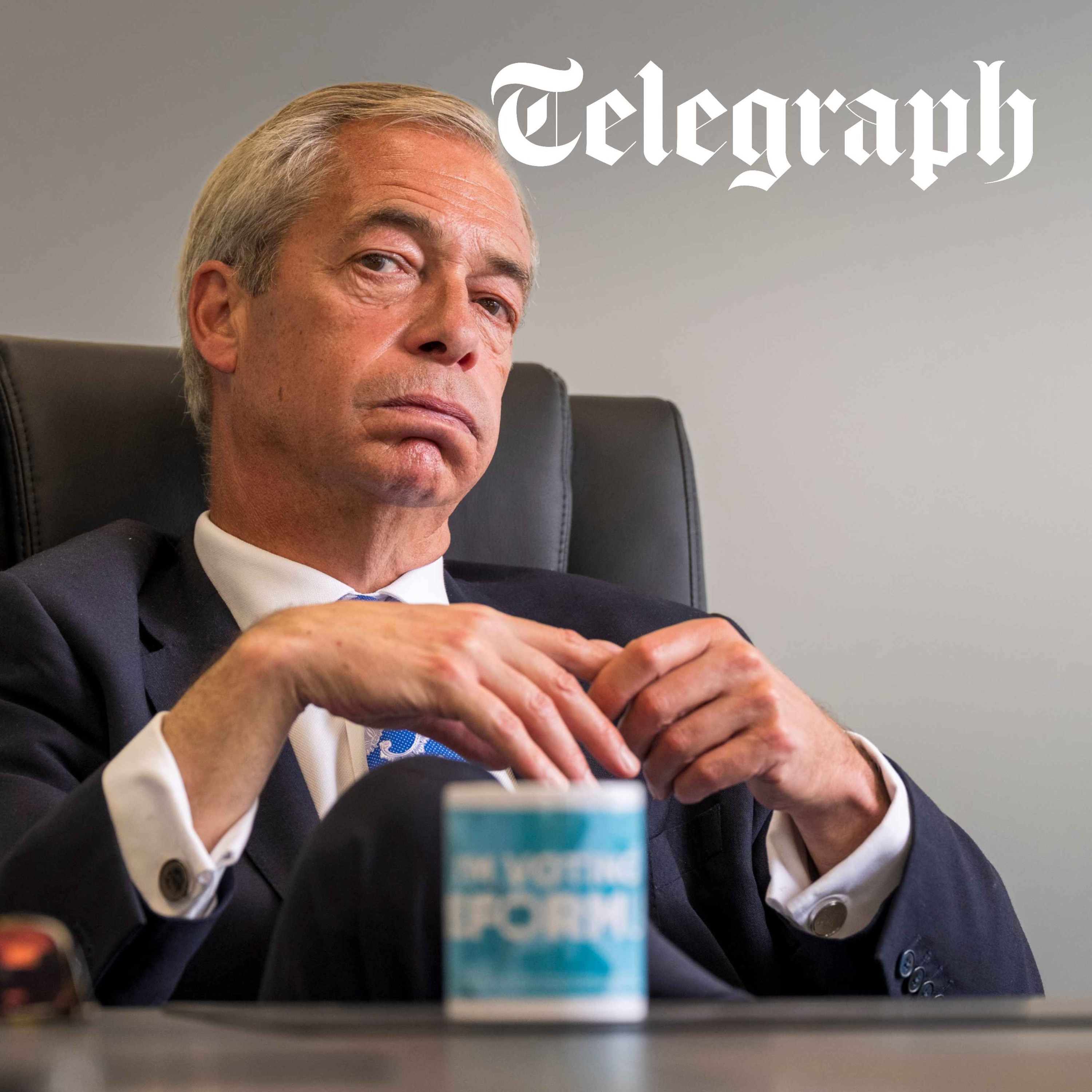
In this episode of The Daily T, Tim Stanley and Poppy Coburn discuss the state of free speech in the UK following Allison Pearson’s victory against Essex Police’s crime commissioner and The Met Police confirming it will take no further action against Zack Polanski for sharing a post that appeared to threaten Nigel Farage. Is there a double-standard in the way different views are policed?
Tim Stanley and Poppy Coburn also speak to ex-ITV This Morning editor Martin Frizell about his wife Fiona Phillips’ Alzheimer’s diagnosis, and what he wants to see from Andy Burnham’s social care reforms.
We want to hear from you! Email us at [email protected] or find @dailytpodcast on TikTok, Instagram and X
► Sign up to our most popular newsletter, From the Editor. Look forward to receiving free-thinking comment and the day's biggest stories, every morning. telegraph.co.uk/fromtheeditor
The Telegraph is the Publisher Podcast Awards' Podcast Publisher of the Year 2026
Studio Operator: Meghan Searle
Producers: Emma Williams, Georgia Coan and James Keegan
Video Producer: Will Walters
Social Producer: Nada Aggour
Executive Producer: Charlotte Seligman
Editor: Camilla Tominey
Highlights
Hosted on Acast. See acast.com/privacy for more information.


