
 Ask ChatGPT

 The Daily T
13 Mar 2026 · 52m · 16 chapters

The episode features an interview with William Hague, a former Conservative leader and foreign secretary, discussing his career, current UK politics, and foreign affairs. Hague reflects on his time as a politician, critiques Keir Starmer's leadership, and shares insights on the UK's special relationship with the United States.
Written by AI. May contain mistakes.
Discussion on the future of the UK-US special relationship amidst criticism of the UK Prime Minister.
“Welcome to The Daily Tea with me, Camilla Tominey.”
Analysis of the UK’s defense posture and the implications of recent government actions.
“I am personally having dealt with the Chagos Islands a lot as Foreign Secretary against the deal that the government has done.”
Lord Hague shares insights on managing relations with unpredictable US administrations.
“It would be very difficult for any government to cope.”
A candid discussion on past interventions and the current political landscape.
“But the risk should be diversified of who we're working with.”
William Hague reflects on his leadership, successes, and failures during his political career.
“Because I was in favor of that, and now I have to admit that's about to be a complete disaster.”
William Hague reflects on his early experiences and challenges as a political leader.
“But as leader of the opposition, I did keep the Conservative Party alive.”
Hague discusses the shifting political spectrum and his position within it.
“Now I'm a sort of centrist because my slogan was in Europe, but not run by Europe.”
Exploring the challenges and motivations for young people entering politics today.
“It's very, as Tim says, in a mining area, so very, what you would truly call at that time, a working-class area, But a small business family was a real small business value.”
Hague reflects on the effects of his early fame and how it shaped his political journey.
“because that was all replayed, the speech, and that plays into, oh, here's Tory boy.”
Hear how attending Oxford transformed the guest's life and academic journey.
“Yes, I think my phrase was Oxford transformed my life, which I think it did more than the speech when I was 16 years old, even though I was already notorious for that.”
Explore the dynamics of student politics and the importance of free speech on campuses.
“At least I knew what direction I was going in.”
Discuss the implications of rising tuition, the student loan system, and the value of a university degree.
“and one of the things I enjoyed most in my first year as Chancellor was going to Freshers' Fair for the first time in 40-odd years.”
Discussing the difficulties young people face regarding housing and education.
“So I do think we need more ideas from the political parties on how to back young people.”
Exploring the changing perceptions of degrees and graduate unemployment.
“That's something you will not need to do in five to ten years' time.”
Examining the qualities needed for effective political leadership today.
“It's not that we're necessarily producing too many graduates.”
Discussing the need for reform within political parties and international cooperation.
“And that we are going too far down the local route.”

Get the gist, explore an idea or ask about something said.
 Claude
On The Daily T, what are the key points of this episode?
Searching your listeningAutomatic transcript. May contain errors.
0:02The Telegraph.
0:30Camilla Tominey: one of our properties so we can handpick the perfect holiday for you. Simpsontravel.com, because your time is precious.
0:42Camilla Tominey: ¡Feliz cumpleaños, Rafa! ¡Sopla, sopla! Traigan la manguera, que son 45. Cuando cumples 45, te toca soplar muchas velas y examinarte contra el cáncer de colon, Ya que al detectarse temprano, es más tratable en 9 de cada 10 personas. Usa la prueba de Cologuard en la privacidad de tu casa y envíala de regreso para obtener tus resultados. La prueba de Cologuard es una opción con receta para detectar el cáncer de colon en personas de 45 años o más con riesgo promedio. Resultados positivos deben ir seguidos de una colonoscopía. Pueden darse resultados falsos positivos y falsos negativos. La prueba de Cologuard no reemplaza la colonoscopía en pacientes de alto riesgo.
1:23Camilla Tominey: No uses Cologuard if you have adenomas, if you have an inflammatory intestinal disease and certain hereditary syndrome or a personal or family history of colon cancer. Ask the test of Cologuard to your doctor. For more information in Spanish, visit Cologuard.com. We're going to go to everyone.
1:45Camilla Tominey: In one of his most candid interviews to date, we speak to Lord Haig about the horrors of running the Conservative Party at the height of Blairism, the press intrusion, the lurid headlines and what he makes of Kemi Badenock and Nigel Farage.
2:00William Hague: He tells us he is wary of war in Iran because of Iraq but fears that the special relationship has been damaged by Keir Starmer's dithering.
2:09Camilla Tominey: Welcome to The Daily Tea with me, Camilla Tominey.
2:11William Hague: And me, Tim Stanley.
2:23Camilla Tominey: Lord Hague, William Hague, joins us in The Daily Tea studio for the second time, I believe. You have been in here before. How do we describe you? Once a very young Conservative who presented himself to the masses at the Tory party conference aged 16, went on to become party leader, was Foreign Secretary, now Chancellor of Oxford University. So much to discuss with you. Shall we start on foreign affairs, as that is the headline-grabbing story of the moment?
2:50Tim Montgomerie: Yes, of course.
2:51Camilla Tominey: And shall we start by asking you what you think of the future of the special relationship in light of Trump's really quite stunning criticism of our own Prime Minister, describing him as weak, not Churchill, Chay Costeel is woke, He's disappointed. He didn't let them use the air bases soon enough. And by the way, this war is already won. We are talking earlier in the week. Everything could change by the time this podcast goes out. But Lord Haig, your view?
3:20Tim Montgomerie: I think it will be rocky the next few months, the special relationship. Now, in historical context, there have been many previous rocky periods and disagreements, of course. The UK never got involved in the Vietnam War, despite President Lyndon Johnson begging Harold Wilson to do so. So even Margaret Thatcher fell out furiously with Ronald Reagan over invading Grenada. And of course, there was the Suez crisis. And it's always recovered from those things. But it had the Cold War keeping the US and UK together through that period. So their main strategic purpose was aligned. And it didn't have such a vengeful and temperamental president as we have now in the United States.
4:00Tim Montgomerie: So I think it would probably be rocky over the next few months. And I agree with Trump about some of these. I am personally having dealt with the Chagos Islands a lot as Foreign Secretary against the deal that the government has done. On the other hand, I think staying out of these U.S. attacks on Iran has been the right thing to do. Mishandled by the government. They're caught very flat-footed on defense. But nevertheless, it's the right thing to do because this is a war that Trump got into where he doesn't know how to get out of.
4:32Camilla Tominey: But on Starmer, do you think he has been humiliated on the world stage for dithering and delaying and appearing to be indecisive?
4:40Tim Montgomerie: Yes. Yes. I think it's a reflection not just on him, of course, but on how Britain's defences have been thinned out. You know, when I was Foreign Secretary, which is now nearly 12 years ago that I left that office, it would have been unthinkable not to have minesweepers stationed in Bahrain. In fact, they were stationed there until recently. And it would have been pretty rare not to have a frigate or destroyer in the Mediterranean that could quickly go to Cyprus. And I would have hoped we would have anticipated this situation as well better than it has been. So I think the government has been caught out.
5:17Tim Montgomerie: And it illustrates a wider point about the need for much higher defense expenditure now in the UK. And Starmer has been caught out. Nevertheless, it's a small point in the geopolitics of it. You know, what happens to Iran? What happens to the price of oil? What happens to the whole future of the Middle East are much bigger things than whether the UK had a destroyer in the right place.
5:42William Hague: When you were foreign secretary, the president was Barack Obama. It was a very different kind of administration to be dealing with. How should a British government handle a maverick American administration that seems to be placing so many strains on the special relationship? I mean, when one thinks about what he said about Greenland, for instance, how is Britain supposed to cope when the Western alliance is central to its defence? And here is a man who seems to be shaking up the Western alliance.
6:07Tim Montgomerie: It would be very difficult for any government to cope. I'm really glad it's not me that has to deal with the Trump administration, because it was very predictable. Predictable, except, you know, you mentioned Obama, but the worst moment I had as Foreign Secretary was when Obama, and we said we would intervene in Syria if chemical weapons. Yes. You remember the red line. Yes. And Obama said no. And then Parliament said no and Obama said no. And that was the collapse of Western credibility in the Middle East. And we had no purchase at all on what happened in Syria after. So he had his faults too, but it was generally much more predictable.
6:46Tim Montgomerie: Of course, you know, whatever you, 99 % of things you agreed with him, he then stuck to. That is very different with Trump. How does a British government cope with that? Well, you can't just get into a constant war of words, I don't think. I think you have to do all the things that I think the government have been trying to do. You have to try and maintain the personal relationship in a patient way with the prime minister of the day. You have to make sure all the other channels, the intelligence and the military channels, where the cooperation is still very, very close, are maintained. So the whole US system can see how useful it is, which is still immensely so to the United States, to have the United Kingdom around.
7:25Tim Montgomerie: You have to build up all the business and personal connections, you know, and then to some extent you have to sit it out until there is a better day. But above all, you have to increase the capabilities of this country because there will be more issues on which we are on our own. Is that the way forward?
7:45William Hague: We have to become more independent of America in our foreign and military policy?
7:50Tim Montgomerie: Yes, it is. We will have to have more defense equipment that doesn't rely on American components. This is far away. You know, you can't just suddenly invent something that is like an F-35 fighter that isn't American. That's a gradual process. But the risk should be diversified of who we're working with. So it is important for the UK to do more, to do projects like is happening now on a new fighter aircraft with Italy and Japan and to do it to have more defense production with European states, as well as, of course, still buying stuff from America, but not being so dependent on America. I think that is inevitably the way that British governments have to go.
8:33Tim Montgomerie: The special relationship is a bit less strong than it has been. You'd still find it there if you could see all the intelligence chiefs in a room or you could see generals and admirals in a room, although nearly all the ships and tanks would belong to one side. But it's not as strong as it was.
8:50William Hague: You mentioned Syria. Of course, that was Red Ed Miliband who prevented parliament support for government strikes in Syria. And it's reported that he may have led the charge against Britain being involved in the early part of this war recently. Do you think Labour has particular problems when it comes to foreign policy because of its constituency politics, be it the left or large Muslim constituencies?
9:12Tim Montgomerie: It has a problem on the left, how much that is added to by MPs elected with a particular vote, a particular religious vote. I find that hard to quantify. I've not been in the House of Commons for 10 years. But Ed Miliband, certainly him that kiboshed, in effect, that intervention that we intended against chemical weapons in Syria. Yeah. Now, having said that, of course, on this particular issue, I would have broadly agreed that I didn't hear what Casey put in the National Security Council. But I don't think we should have been part of these strikes on Iran. I think we could have handled it much better with America, though, to say, because really what the government did, as the prime minister explained, it was take two decisions.
9:56Tim Montgomerie: One was not to allow use of our bases. Then another one, two days later, was to allow it for defensive purposes.
10:04William Hague: Yes.
10:04Tim Montgomerie: That should have been one decision to say to the United States, well, actually, we're not going to be with you on attacking Iran. We don't think regime change will come from the skies. I think that is true and that is the right position. But forgive me, I suspect there's a tension in motivations
10:18William Hague: because I suspect you're motivated there by foreign policy realism and pragmatism, whereas we all suspect Labour's motivated by, as I say, constituency politics. They're actually just held hostage by their backbenchers.
10:29Tim Montgomerie: Could be, but I think there are some of, maybe I'm being too fair-minded now. I'm not in electoral policies, but I think they're also haunted by the memory of Iraq. Yes, of course. Of course, and aren't we all? Because I was in favor of that, and now I have to admit that's about to be a complete disaster. And that makes me much more wary of supporting these things, of things that look good for a few days, and then you don't know where it's going. So I think it's a whole mixture of motives. But I do think the government could have handled all of this better. As I say, it's a detail of the geopolitics, but they could have handled it better by giving one answer to the Americans.
11:09Tim Montgomerie: We won't be with you on attacking Iran, but we will help you straight from the off with defending against Iranian missiles and our allies. And what's more, we will have positioned enough ships in the right place to do so. So that would have been, without getting involved, without taking Britain into a new war, that would have been the right posture, I think.
11:31Camilla Tominey: I'm glad you mentioned Iraq, because I think when people look back on your career and at the end of the day, you became party leader at an extremely difficult time for conservatives and conservatism. Tony Blair comes to power with a landslide victory in 1997. You're across the dispatch box from him. He's made his own intervention, hasn't he, in recent days, saying that he would have advised Starmer to have backed the Americans immediately. And many people might say, well, you would say that, wouldn't you? When you reflect on that period, 1997 to 2001, and then what came afterwards, what are your feelings about it?
12:06Camilla Tominey: And I mention that because my children have been looking up old clips of Prime Minister's questions, and there's this sense that it was much better in the old days. And you were a great orator at the despatch box, but you're almost right person, wrong time. Is that how you view that period?
12:20Tim Montgomerie: Oh, absolutely the right person. Absolutely the wrong time. And how do I think about it? Well, I enjoyed that side of it. Clearly, I enjoyed it for 26 years. All the time I was in the House of Commons. I loved the debating of the House of Commons. And that was actually, at that time, the only thing I had going for me, really, because everything else was against me. The Labour government had a huge majority. The Conservative Party was in a shocking state. Nothing seemed to go wrong in the world. Very different from today for an opposition. Because it's really hard for oppositions to get going unless the government is in trouble over something.
13:00Tim Montgomerie: They had a charmed life in the state of the world and the state of the country and a very strong economic position that Ken Clarke left behind as Chancellor of the Czech. Ken Clarke and John Major left behind. So it's very frustrating. The only thing I had going for me was every Wednesday afternoon I could raise the morale of my own side at Prime Minister's Questions. So I had to put a lot of attention on that. But overall, I have to admit, it was the least successful part of my life, of my professional life, was leading the Conservative Party.
13:33William Hague: That's a fascinating admission. I respect the courage of that admission. Because that's the thing everyone in Parliament wants to do. But you acknowledge there are other things to be accomplished beyond that.
13:44Tim Montgomerie: Well, there are, because I think I did some good things when I was foreign secretary. I think I did a really important thing when I was minister for disabled people. I designed and took through Parliament the Disability Discrimination Act, which was a landmark piece of legislation. I think I did a reasonable job when I was secretary of state for Wales. But as leader of the opposition, I did keep the Conservative Party alive. And by the time I'd finished, we had won a European election. Remember those things? And we had won the – we had taken – rebuilt the party in local government. But we hadn't really taken the conservatives closer back to power.
14:26Tim Montgomerie: So that was a failure. And I wish I'd known then and things I know now. Now, you know, I was too young for that position at 36 years old after whatever it was, eight years in Parliament. Because I think there is, however clever you think you are, there is a certain level of experience of multiple political situations that you need to just know instinctively what to do rather than work everything out from first principles.
15:00William Hague: One of the first things you had to do was respond to the death of Princess Diana. which I remember very well, because that defined Blair's leadership. He handled it really, really well. And forgive me, I remember you being interviewed in a field. It looked like a field by a gate or something. And you gave a very traditional, you gave exactly the statement you should give. But what people wanted at that time was thoughts and prayers and tears. Printed as a heart.
15:24Tim Montgomerie: Yes, people, it was a period like that where people wanted politicians to be more emotional. And that was just not, I was absolutely not, actually, however old I'd been. You know, you've got a Yorkshireman here who has a fairly conventional view of a lot of things. So you're only ever going to get that traditional reaction from me on those. Perhaps even if I'd been 20 years older, that would have been the same. No, emoting in public is absolutely not my way of doing things. So I wasn't quite in tune with that part of those times. I think many of the warnings I gave at the time did turn out to be true.
16:00Tim Montgomerie: I was making speeches saying asylum and immigration is getting out of control and was really drowned out as if even raising that was something racist. But actually, that did build up, of course, into a huge issue in later years. And I was saying this government's taxing the pension funds and nobody was minding at the time. but that will hit our future savings and pension entitlements, which, of course, it has done, of course, massively over time. But if things are going well, it's very hard for an opposition to get purchased. So that's partly my excuse that the Labour government then was lucky, very different from today, which is the exact opposite of today.
16:47Camilla Tominey: But is Kemi Bate not doing enough to capitalise on that? because she's got the added problem, of course, of Nigel Farage on her right flank.
16:53Tim Montgomerie: Yes, she's got something I never had, which is I was the right. You know, in fact, I was... Can you believe it? I was the... You were the face of the... I was the Eurosceptic right. 24 hours to save the power. Because it was me who was... Common sense, fairly revolution. It was my insistence against a good deal of opposition that the Conservatives must be opposed to joining the Euro. And that was seen as, oh, he's really... Right. And I was in favor of tax reductions and spending reductions and so on. So I was seen as a right. Now, funnily, over that 30 years since then, my views haven't really changed.
17:29Tim Montgomerie: And maybe they should have, but they, well, we could come on to some things where they have changed. But broadly, where I sit on a political spectrum, I haven't moved, but this whole spectrum has moved. Yeah. So that I was the right. Now I'm a sort of centrist because my slogan was in Europe, but not run by Europe. I never intended that to mean leaving Europe, even though I was very much against joining the euro or giving more powers to the European Union. So the whole spectrum has moved past me in that. So Kemi, this is a long way of answering your question, Kemi. She's got that problem that there's this party, to put it simply, further to the right than the Conservative Party, even though the Conservative Party is more right.
18:13Tim Montgomerie: So that is a huge problem. I think she's doing very, very well in her personal performance in the House of Commons and in setting out some economic proposals. I'm delighted that she's placed the emphasis she has on young people recently, such as coming up with a plan on student loans. Because although the Conservative Party is mainly supported by old people, unless it turns itself back into a party for young people, it's not even going to have the old people in the future. I still think, so this is a monumental project. She's got a harder situation than I had to deal with. And I really admire how she's going about it.
18:52Tim Montgomerie: But I think in the end, for the right or centre-right to be successful in the UK, it will need the Conservative Party to be the main party of them, right or centre-right. I don't think reform, whether they're good or bad or whatever we think of their people, I don't think they will be able to fulfill that role. I think in our electoral system, people will vote to block reform. And that's already been happening in several interesting recent elections, including in the by-election that took place last month. It's only the Conservative Party that can actually develop broad enough support if it can revive itself to lead a future government that isn't a government of the left.
19:38Tim Montgomerie: And so I see it as critical that Kemi is able to succeed in her work.
19:43William Hague: You grew up in Rotherham in the 1960s and 70s in a former mining town. Your parents ran a soft drinks business. How can it be that at a time in which everyone else was putting rings on their fingers and bells on their toes, you addressed the Conservative Party conference at the age of 16? What turned you into?
20:04Tim Montgomerie: Very nerdish, yes. Actually, there is a parallel with today, actually, because I spend a lot of time now, I'm pleased to say, with young people now. And they are gripped by... They're perhaps less likely to go into politics because it's more difficult now, I think. I think there's more harassment, there's all the pressure of social media and so on. But they are gripped by what is going on. And actually, the mid-70s, when I was 13, 14 years old, was a gripping time. There was mayhem in this country, two general elections in 1974 and a European referendum. I mean, how similar is this to the last few years?
20:43Tim Montgomerie: A real crisis over how the country could be governed. Remember the Ted Heath appeal to the country on who governs? And then they answered, not you. So there was a terrible government after that. And the Cold War was at its height. Vietnam was collapsing. You know, the Soviet Union seemed in a strong position. America was going through Watergate. This really got the attention of a boy interested in politics. And so that translated into, actually, it made it easier, actually, that I came from Rotherham because it was easy to become chairman of the locally young conservatives. There hardly were any.
21:23Tim Montgomerie: You just had to go to the AGM and say, oh, right, fine, I'm the chairman. And that gave me a ticket to the party conference. and then all I had to do was show up and give a speech and the rest is history, as I say.
21:35Camilla Tominey: But at that time, William, what did mum and dad say? You've got three older sisters, I believe. What were they all thinking about this young Conservative? Did they think it was an oxymoron? What was their reaction?
21:46Tim Montgomerie: No, because I was in a family with... It's very, as Tim says, in a mining area, so very, what you would truly call at that time, a working-class area, But a small business family was a real small business value. So I was brought up with what you would call conservative values and instincts. So they weren't surprised that I was a conservative. But, of course, there was no nobody being in politics in my family. It's not true that most people are going to politics or following in a political family. And so you can just self-start because you're interested in things. And it is a great thing in this country.
22:28Tim Montgomerie: I hope it's still true. I think it is that there isn't actually a barrier if you just decide you're going to plough into everything. So if I'd sat down and talked to some people at that time about how to get into politics, they would never have said, just go to the conference, give a speech, ignore the fact that you're from Rotherham where there aren't any conservatives and that they don't normally have 16-year-olds. and I have found my whole life, is that a good experience for me in my life is that too many people think they are shut out of things
23:03Camilla Tominey: they're not shut out of.
23:06Tim Montgomerie: If you actually show up and make yourself useful, you'll so soon find you're running the organisation and I have never found there was some class conspiracy against me or an invisible barrier to something if you just charge straight through it.
23:22Camilla Tominey: But did that change your life, that moment at 16?
23:26Tim Montgomerie: No, probably not. I think it was an unforgettable moment in life, and it is still, can you believe, however many years it is now, it's nearly 50 years ago, it is still one of the most common things that people say to me if they stop me in the street. Yes. Certainly people of a certain age. It's child star syndrome, isn't it?
23:45William Hague: You're the Macaulay Culkin of conservatism. They don't say... We remember you as a little boy.
23:49Tim Montgomerie: Sometimes they say, I remember you when you were leader of the Conservative Party, I remember when you were Foreign Secretary, but at least as often they say, I remember that speech. And within the Conservative Party, everybody was there, which cannot have been true. Everybody was, I was in the hall for your speech. And the hall must have had 100 ,000 people in it. It didn't change. It made my life more difficult in some ways. When I went to Oxford as a student, everybody knew who I was already. and I had to sort of live that down. And I think more difficult when I became leader of the party because that was all replayed, the speech, and that plays into, oh, here's Tory boy.
24:32Camilla Tominey: Yes.
24:33Tim Montgomerie: Rather than, here's somebody who came from an area that Tories should be listening to.
24:40Camilla Tominey: That's interesting.
24:40Tim Montgomerie: And that was a disadvantage. So I don't think it did really. I think I would have gone into politics anyway, but without that baggage. So sometimes when teenagers ask me now, how do I go about, what's your advice for giving a speech? The first advice is don't do it. And then they look utterly crestfallen, of course. But I think that is the... But my family, they took it completely in their stride. My mother was a very wise person. And I really owe a lot to my mother. And she said, OK, right, you've had your fame. So I was being offered a newspaper column when I was 16, a weekly newspaper column, with a fee.
25:18Tim Montgomerie: You know, it was the evening standard, I think, at the time. And I said, oh, I'll be able to buy a car next year if I do that newspaper. She said, right, you are going back to your A-levels. And you've enjoyed this for two or three days. That's it now. Now you get your A-levels, you get into university and go back to politics in a few years' time. Very good advice. Very good advice.
25:43William Hague: I remember, because I'm older than I look, stories in the late 90s appearing in the newspaper about you being a big drinker when you were younger. Did that take you by surprise, if those stories came out, or was that you actually putting them about?
25:55Tim Montgomerie: This was one of those accidental... This is the problem with interviews. This has probably happened with something in this interview. This was an interview with, I think, Nicholas Coleridge. We were talking about my life in Rotherham as a teenager. and I used from when I was 15, this probably would be illegal now, but I used to work in the summer. It actually would be against the rules now, wouldn't it? Because I used to work for a wage in the summer holidays when I was 15, which was great. It was great for me to experience life on a delivery truck, to mix with all the people in the working men's clubs, delivering to, certainly made me a lot fitter to at 15 to have all that exercise.
26:39Tim Montgomerie: It was great. But I said, well, we used to have a pint at every stop. And then it just grew from. He said, well, how many stops did you have in a day? Well, ten. And then did you go out in the evening? Well, yes. So it might have been that you drank 14 pints of beer in a day. Yes, could be. And that turned into this sensational story. So, of course, I should not have been led down that path. That's what I mean by inexperience.
27:07Camilla Tominey: Yes. Although, do you think there was a day where you did have 15 pints?
27:11Tim Montgomerie: Yeah, very probably, yeah. That's great, that's our headline. Yeah, there you are, done it again.
27:16Camilla Tominey: Forget everything that happened subsequently.
27:26Camilla Tominey: Romantic retreats, luxury beachfront hotels, expansive family villas with sensational sea views. Not lots of, just the very best of. Simpson Travel, the magical destinations you love, the personal service you expect. We visit every one of our properties so we can hand-pick the perfect holiday for you. Simpsontravel.com, because your time is precious.
28:07Camilla Tominey: When you're 45, you have to get so many bells and examine you against the colon cancer, since when it's early detectable, it's more treatable in 9 of every 10 people. Use the Cologuard test in your home privacy and send it back to your results. The Cologuard test is an option with a recipe to detect the colon cancer in people of 45 years or more with average risk. promedio. Resultados positivos deben ir seguidos de una colonoscopía. Pueden darse resultados falsos positivos y falsos negativos. La prueba de Cologuard no reemplaza la colonoscopía en pacientes de alto riesgo. No uses Cologuard si has tenido adenomas, si tienes enfermedad inflamatoria intestinal y ciertos síndromes hereditarios o un historial personal o familiar de cáncer de colon.
28:48Camilla Tominey: Pide la prueba de Cologuard a tu médico. Para más información en español, visita Cologuard.com diagonal prueba.
29:04Camilla Tominey: just thinking back to you wanting to apply for Oxford and it's interesting you saying your mother was an inspiration for this you're the first in your family to go to university at all you end up at Oxford you end up getting a first and now you're chancellor of that university and you did say that Oxford gave you everything in terms of we'll qualify that because I'm just interested to find out what a boy from Rotherham, albeit with a little bit of a reputation at that point, does get on at Oxford with no familial experience of it at all.
29:35Tim Montgomerie: Yes, I think my phrase was Oxford transformed my life, which I think it did more than the speech when I was 16 years old, even though I was already notorious for that. Because of course, Oxford introduced me to so many new things, people from every walk of life. There were all these public school boys I hadn't come across before. But they had different perspectives and so on. And it gave me a lot of confidence that I could actually, I could run for election among students and beat them all.
30:03Camilla Tominey: Yes. Well, you became president of the Oxford Union.
30:04Tim Montgomerie: That's what I mean about not, don't see a barrier where there isn't a barrier. It's an important thing in life, I think. There were dining societies that they would never have invited this boy from the comprehensive school in Rotherham to join. But did I want to be dining with those people anyway? Probably not. David Cameron. I was going to say, you did end up working and needing a great penny of them. I became a great friend of David Cameron, but not those sorts of dinners. But that wasn't really a disadvantage. And then the merging of the academic and the practical came into my head, obviously at Oxford, because I was studying politics and economics, but I was also practising it.
30:48Tim Montgomerie: I always say to people in Oxford, I'm giving advice to incoming students now, diversify a bit. I spent my whole time at Oxford running for election, trying to be president of everything I could be president of. At least I knew what direction I was going in. But nevertheless, I wish now that I'd done the rowing. I now go as the chancellor and see the rowing eights. I love firing the cannon to start the races and things like this. and it's the greatest spectacle to see just sport on a huge scale. Well, I think you're being a bit harsh on yourself.
31:22Camilla Tominey: You managed to become president of the Oxford Union and get a first. I mean, I'm not sure if you could have fitted in, you know, softball and tennis.
31:29Tim Montgomerie: Yes, I could have fitted in the odd thing. You know, I've just become patron of the Oxford Judo Club because in my 30s I took up judo. And I wish I'd done that as a teenager. That would have been such great fitness and discipline.
31:43William Hague: Do I also remember from that time that you wrestled with Seb Coe?
31:47Tim Montgomerie: We learned together. Yes, we did. Well, we did judo together. Yes, yes, yes. Under clear rules. That sticks out in the mind. Yes, yes. Under clear rules. I've defined my early 20s.
31:58Camilla Tominey: Images of you and Seb Coe wrestling. What a thought. Are you worried about student politics? And you spoke at the very beginning of all this about the important notion of young conservatism. And Tim and I spend quite a lot of time sort of giving speeches at universities. I don't. I do, though. I always turn them down. OK. No desire to do that.
32:21Tim Montgomerie: It's safe, you know.
32:22Camilla Tominey: Well, I do it because I like the students to have an alternative narrative to the left-wing wokery that's often forced down their throats by their actual lecturers, let alone speakers that come in from outside. and young conservatism is important not just for a degree of pluralism in thought at universities and on campuses but also because it became a kind of social club and people got together as a result of being young conservatives and all that, you know, it had a societal impact, let alone a political one. We have covered on this newspaper, as you well know, many, many, many stories about the shutting out of debate on the right and, you know, no platforming of certain speakers and in the advent of October 7th, We've had a great deal of pro-Palestinian, pro-Gaza sentiment on campuses that has alienated and actually frightened Jewish students.
33:10Camilla Tominey: How are you handling that at Oxford?
33:13Tim Montgomerie: Well, there's a lot of issues. I know they're all related, but very important indeed. And the first thing is, across all universities, to have a clear national policy of freedom of speech. And so one of the things I was calling for when I was standing for election as a chancellor it was for the current government to enact the act passed under the previous government, the Higher Education Freedom of Speech Act, which I'm pleased to say after that, they did agree to do so. That came into force on the 1st of August. They haven't yet implemented, though, the complaints procedure for that, which is an important part of it.
33:50Tim Montgomerie: So that if someone feels their freedom of speech has not been permitted in a university, they should be able to take that to the office for students and have redress. So that needs to be brought in. So there is national policy, but it has at least gone in the right direction where there is a clear statement of principle and intent of freedom of speech in universities. And, of course, action has followed. I'm not sure how much we can say about it because I think it's still subject to legal proceedings, but about cases like Kathleen Stock. The Office for Students has announced fines.
34:22Camilla Tominey: Yeah, this is the gender critical professor that was basically hounded out of her own university by campaigners.
34:29Tim Montgomerie: And Sussex University has been fine, which I think is still subject to appeal and so on. But therefore, policy has gone in the right, has recognised as a problem and gone in the right direction. And I think someone like me, Chancellor of University, has to keep encouraging that. And then within a university, it is important to encourage that full freedom of debate within the law. Anything within the law is something you can debate. So I think we're doing well on that in Oxford. There was a survey of students across universities of whether they feel free to express their opinions, which came in as more than 80 percent across Russell Group universities said they would, and 90 percent in Oxford said they felt free in that regard.
35:13Tim Montgomerie: And the university has set up additional, on top of the traditional Oxford Union, which has had its own issues in recent months. The university has established a Sheldonian series, which are debates in the Sheldonian theatre, where different ideas, ideas that make you uncomfortable, are brought up. And there is a mass of societies, and one of the things I enjoyed most in my first year as Chancellor was going to Freshers' Fair for the first time in 40-odd years. and I heard two students behind me, one of them saying, who's that granddad there? And the other one said, that's the chancellor, be quiet.
35:58Tim Montgomerie: But there, in fact, there's the Conservative Association right next door to the Labour Club, which is right next door to the Revolutionary Communist Party. But they're all recruiting people. So there is a lot of freedom of speech going on in university. We should not get the wrong idea. There is a healthy nature, and I speak to a lot of undergraduate societies, and I find the full diversity of these. Universities, though, where there is a global movement of ideas or intense controversy over a war, they will be caught up in that. There will be people who get mixed up in that. There will be people who overstate their case or are intolerant of others.
36:45Tim Montgomerie: and that's when we have to draw a line and correct that. But that doesn't mean that's generated in the universities.
36:52William Hague: But to what extent, if it is true that young people are trending left-wing, for instance, one looks at the support for the Green Party, to what extent does blame lie with the academy itself? Because it does seem to be homogeneously left-wing. Is that true? Can it be fixed?
37:11Tim Montgomerie: With academics.
37:12William Hague: With the people doing the teaching.
37:15Tim Montgomerie: Yeah, well, I'm not sure. You can't order the political opinions of people who go into academia. I must say, as the Chancellor of Oxford, I was elected the Chancellor of Oxford.
37:31William Hague: But we all think you're left wing.
37:33Camilla Tominey: Well, they do want me to tell you. It depends on your standpoint.
37:38Tim Montgomerie: In the Daily Telegraph now, I look a little bit left wing. But to most people, I'm still right wing. Fair enough. And I was elected by the alumni as well as the faculties of the university. But I don't feel that there's an inability to discuss ideas across the spectrum with academics that I've come across. There will certainly be academics in general across universities will lean more to the left than the right. I doubt that is so dominant in the views of young people though.
38:15William Hague: But if I think back to when you're at university, so late 70s, early 80s, in Cambridge there was Morris Cowling. There was a strong conservative philosophical and historical tradition in academia. And of course, it was also the golden age of think tanks like the IEA. And one thinks of the influence of people like Hayek upon the then prime minister. That's a very different intellectual climate to today.
38:39Tim Montgomerie: I think that is true, although I'm not sure there is... I think that might be true across most of the political spectrum, actually. And where is the intellectual activity on the left taking place? But there is institutional dominance. But my point is there is institutional dominance.
39:01William Hague: OK, they're not bright, but they do seem to run everything. They run the BBC, they run the museums. They run most faculties in most universities.
39:08Camilla Tominey: And they dominate social media. Yeah.
39:11Tim Montgomerie: Well, while it is true that academia, most academics are across the whole country, perhaps less so than elsewhere in Oxford, but on the left, I am not sure. I think you're attributing too much weight to that in shaping the views of young people. And I think it does show there is a challenge for political parties, right and left, to reinvent themselves intellectually rather than doing so in a post on X. That's very important. And I think perhaps the academic world will respond to that. And I find young people very open to ideas. Yes, you would see in opinion polls at the moment, yes, young people will vote for the Green Party.
39:54Tim Montgomerie: I suspect that's just because they don't have much faith in the other parties yet. And the Green Party is a new thing that's arrived, that has an ephemeral appeal.
40:04William Hague: It's also because they think they're getting bilked by the university system. And one does have to ask, is an Oxford degree worth the money now, given how much it costs and the extraordinary debt that young people can accrue?
40:15Tim Montgomerie: In the case, an Oxford degree is worth the money. And all the evidence would suggest that.
40:22William Hague: What about Oxford Brookes?
40:24Tim Montgomerie: What about lower down the university ranking? I'm not going to stop picking which university. I once applied for a job there.
40:30William Hague: I'm not knocking Oxford Brookes.
40:32Tim Montgomerie: There's a lot of great expertise in Oxford Brookes, actually. No, I know what you mean. I'm totally in favour of more vocational skills. We all are, but no government has managed to bring that about. This is really, really important. An academic degree is not the way forward for everybody. Nevertheless, I do think that we're entering an age where we are going to need more highly trained people, highly educated people. I don't think slimming down the university sector is going to be. And in the age of AI, we are going to need to train more and more human minds to keep up with that and to adapt to all the new industries and services that will be created.
41:16Tim Montgomerie: So I wouldn't take the country, I wouldn't advocate going in the direction of slimming down universities overall. There will be some courses that die by the wayside and even universities that do. But I do think young people are getting a raw deal financially. And that is, that's true of the student loan system now. But it's also true of life in general. I said in an interview with a different publication last month that my generation are the luckiest that has ever lived. And our financial, because we benefited from all the rising house prices. We still had defined benefit pension schemes that we are about to receive.
41:56Tim Montgomerie: We missed the Second World War. We were born too late for that, but too early to participate in whatever horrors come next. Young people are getting a much more difficult deal with housing, with the financing of higher education, now with the availability of jobs. So I do think we need more ideas from the political parties on how to back young people. Conservatives have made a start on the student loan system. I've always loved the idea of a lower tax rate for young people, including on capital gains tax, to encourage entrepreneurs. I'm always told older people are furiously against that.
42:33Camilla Tominey: Bavenock has also made a point of saying that universities should be about quality, not quantity, that there are some so-called Mickey Mouse courses that need to go. You've alluded to that. When you went to university, 15 % of the population attended. Now it's 50%. Blair's dream of half of all young people attending has been realised. But a consequence of that, of course, is that the funding model has completely changed. And some degrees, let's be honest, are not worth the paper they're written on.
42:59Tim Montgomerie: I don't think there's a right or wrong number. As I said, degrees will have to check. At Oxford, I haven't come across somebody doing something where you think, well, that's completely useless, whatever they do in life.
43:11Camilla Tominey: Norse, ancient Greek.
43:13Tim Montgomerie: Oh, no, but it is very important to keep the... Yeah, I agree. It's particularly important.
43:17Camilla Tominey: More practical than academic amongst us may consider that it doesn't necessarily provide... You know what has suddenly become useless?
43:24William Hague: Coding. Coding. That's something you will not need to do in five to ten years' time. You will still need Norse and ancient Greek. No, probably not that.
43:31Tim Montgomerie: But some of these things are really... But this is not just about whether something is practical for humans to have a rich understanding of their history and the world around them remains extremely important. The humanities remain extremely important as well as as well as sciences. But I think in a way we're looking at the wrong end of the equation here, because here we are with a lot of graduate unemployment emerging in this country, but not so much emerging in other countries where there is more where there is a better growth of enterprising businesses. China and America are not suffering such a great surplus of graduates because there are businesses starting up and scaling up.
44:14Tim Montgomerie: That's the thing we have to get right. Then we will find there is a market for huge numbers of graduates. The problem in this country is that we've got lots of talent. We actually invent a lot of the new technology, but then we do not invest ourselves in the, you know, it's not our pension funds. and it's not our venture capital that then builds that into being great businesses. And this is what I see a lot of at Oxford. It's extraordinary. It makes you feel good about the world to go to Oxford, to visit Oxford. People say to me, tell us something optimistic about the country. Everything is so gloomy.
44:53Tim Montgomerie: I say, you come with me to Oxford for a day. The students are as brilliant as ever. The research is world-beating. We've had more than 200 spin-out businesses from Oxford in the last 15 years. Two of them sold for more than a billion dollars last year.
45:06Camilla Tominey: Wow.
45:07Tim Montgomerie: The problem is they get sold to America and Japan. Yes. They do not get sold to a British entrepreneur or to a British pension fund. And I see that. It's not that we're necessarily producing too many graduates. is that we're not producing enough of the future economic growth of the world in Britain. And my main quarrel with the Labour government is they partly see that, so they support things like an Oxford-Cambridge growth corridor and support the work of UK research and innovation and so on. But they're also driving out a lot of movers and shakers out of the country with misguided tax policies and are not doing enough to make it easy to invest in the UK.
45:56Camilla Tominey: Are we producing enough future prime ministers? I'll ask you this and grasp some of the knuckle. There are so many of them.
46:02William Hague: I know. There are too many of them. There are lots of past prime ministers. There's about five at the moment.
46:06Camilla Tominey: Well, let's put it this way. If a young student, a young Thatcherite student, comes up to you, William Hague, and says, I really want to enter politics, I am really intrigued to hear your answer because we've talked about the highs and lows of your career. you didn't have to deal with social media, which, let's be honest, chews people up and spits them out. You had to deal with some pretty uncomfortable headlines in your time, questions about your sexuality, discussions about you and your wife Fionn's fertility. It was so intrusive. And you think about that and you reflect on it.
46:38Tim Montgomerie: It's probably even more intrusive now. Yes, exactly.
46:41Camilla Tominey: And so if somebody does say that to you, I'd like to be an MP, what is your honest reaction to that?
46:47Tim Montgomerie: My honest reaction is to say, they do ask me that a lot. And I say two things. I say, first of all, only do that if you're really up for it. I repeat what Barbara Castle said. Do you remember Barbara Castle? Yes. The redoubtable firebrand of the left. When I was about 17 years old, I was on a TV program with her. And as she left the studio, she swung around and wagged her finger at me. And she said, you'll do well, young man. but in politics you need single-mindedness and stamina. And then she swept out. And I've never forgotten that moment, Barbara Castle. Single-mindedness and stamina. And so I say, you do need that.
47:30Tim Montgomerie: If you're going into politics, that's always been the case. You need to know 99 % of your being is going to be focused on. And if you're not ready to do that, don't do it. And I say that will be harder than it was for the reasons that you... But then I say it is still the right thing to do. I've had so many difficult times in my own career, but we talked earlier about I can look back and say, well, I did the Disability Discrimination Act. And I can list things I did when I was Foreign Secretary.
48:05Camilla Tominey: You did a lot for women facing violence and persecution. You worked with Angelina Jolie. Yes, and all that sort of thing.
48:13Tim Montgomerie: You can bring a lot of positive change to the world in certain businesses, but politics is still the vehicle in which you can positively change the lives of millions of people. And as well as being fascinated, it's the ringside seat on everything going on in the world, if you're interested in that. So it is still a noble thing to do in that sense. And I still encourage people and mentor a few people to do that. I am concerned that the supply of people is not as strong as it should be. Yes. And that we are going too far down the local route. Now, I know it's very good. Everybody wants to have a local MP.
48:58Tim Montgomerie: But if everybody is a local MP, you end up with a parliament of local representatives, not a deliberation of the nation and international leadership. Winston Churchill was not a local MP. Tony Blair, Margaret Thatcher, David Cameron, you know, you go through our long serving prime minister. They were not elected because they were the local candidate. They were they were elected because they were they had real potential. Politics has got swung too far to voters thinking, you know, they need their emails answering by somebody who is down the street and we're going to end up with a parliament that is wholly local but not global.
49:43Camilla Tominey: People might have made that criticism of your successor in Richmond, Rishi Sunak. Now, I say that. He's not a local MP and he was a hugely successful person both at school, university and beyond in business. He proved to be a pretty bad politician. Am I being unfair?
49:58Tim Montgomerie: Oh, you are being unfair.
50:00Camilla Tominey: His general election campaign was an unmitigated disaster from start to finish. Soaked suits, D-Day debacles, maths to 18 and national service. You're talking about, do we have these people of great character to go forward? You know, Sunak and Starmer are united in being extremely decent men, but not great at politics.
50:23Tim Montgomerie: I think Rishi, which I must defend him, He's a great friend of mine, but I would defend him anyway, because I think he's one of the most talented people who's been prime minister in recent times. But like me, it came too early, the leader of the party.
50:39Camilla Tominey: Yes.
50:39Tim Montgomerie: He hadn't been in parliament that long. He was in Boris Johnson's cabinet as the chief secretary to the Treasury. And then suddenly was the chancellor. And then a couple of years later was the prime minister. It wasn't his fault that all these things fell apart. So was he catapulted into it when he should really have had another 10 years experience? Yes, absolutely. That's the case. But do we have somebody who really, in line with what I was describing earlier, of who we need in politics? Somebody who is as intelligent as that, who cares about things as much as that, who knows the world as well as that.
51:16Tim Montgomerie: Well, yes, that is the sort of person we want in politics. So I think he just needed a better run at it, perhaps with more experience. He took over an aircraft in a tailspin. He was at the end of the... It turned out there was nothing he could do to pull that out of a nosedive.
51:37Camilla Tominey: Bainot could be too young too, though. I mean, if we talk about political experience here with all of the leaders, the only one with any is Nigel Farage. I appreciate he doesn't have experience of governance.
51:47Tim Montgomerie: Yeah, different sort of experience. He's got great campaigning experience. He doesn't have any governmental experience. He doesn't have any experience of having to really take responsibility and keep a team together in government, which I think would be one of his weaknesses. But I don't want to... I have a lot of respect for him. You know, he is one of the most influential political figures of our time.
52:09Camilla Tominey: Is he prime ministerial material there?
52:12Tim Montgomerie: I don't... I would be very sceptical about that, let me say that, because I think he might find that a cabinet would fall apart all around him. But aside from any personal qualities, back to our earlier discussion of why we need the Conservatives to succeed, I think reform is, if you look at what we're going to need in the next 10 years, look at the problems of the world, look at what's happening every day, we are going to need this country to work closely with other countries, with middle powers, you know, as Mark Carney has advocated, as well as salvage what we can of the special relationship.
52:45Tim Montgomerie: Yeah, I'm not sure. Those signals one gets from reform are not really that international cooperation is their thing. We are going to need, although there's so many problems with net zero, and I agree with the criticism of that, we can't deny that climate change is happening. That is going to change the world. We are going to need to be at the forefront of new technologies. It doesn't look to me like a party that is well positioned for that. and the Conservative Party can position itself for all of those things. So it's not so much any personal deficiencies of Nigel Farad. It is that I think intellectually we need a revived Conservative Party and I don't think reform in the way he's put it together, Farad Kek, is going to provide that.
53:33Camilla Tominey: Lord Haig, to finish, we are sponsoring the Telegraph, the Oxford Literary Festival. What are you going to be doing at that event?
53:39Tim Montgomerie: Yes, thank you to the Telegraph for sponsoring the Oxford Literary Festival. which is a great collection of events. And I am going to be hosting on 25th of March the Chancellor's Forum in the Sheldonian Theatre. So there's lots of room for hundreds of people to come along where I'm going to be talking to John Sargent, the former ITN reporter, one of the greatest ever stars of Strictly, who had to be got rid of because he was so popular. And we're going to be looking back at politics in the time he was a reporter, the time I was in politics.
54:15Camilla Tominey: Well, he was on the spot, wasn't he, with Thatcher? Yes. When she was being knifed in the back. Yes. And he was stuck his microphone in her face and managed to get those famous quotes as she was making her way back to the UK.
54:28Tim Montgomerie: Yes. That's right. So he's going to be my guest, and I think that will be a lot of fun, and the Literary Festival will be a fantastic set of events at the end of this month.
54:39Camilla Tominey: Lord Haig, thank you very much indeed for joining us on The Daily Tea.
54:41Tim Montgomerie: It's a great pleasure.
54:42William Hague: We'll be back on Monday at 5pm.
55:22Camilla Tominey: When you get 45, you have to do so many and examine you against the colon cancer, because when you get to the early test, it is more treatable in 9 of every 10 people. Use the ColoGuard test in your home privacy and send it back to your results. The test is a option with a recital to detect the colon cancer in people of 45 years or more with a high risk. The positive results can be followed by a colonoscopy. They can be positive results and negative results. The test no replaces the colonoscopy in high risk patients. No use Cologuard if you have an adenomas, if you have an inflammatory intestinal disease, or a family of cancer.
56:04Camilla Tominey: Pide the test to your doctor. For more information in Spanish, visit www.ColoGuard.com-prueba
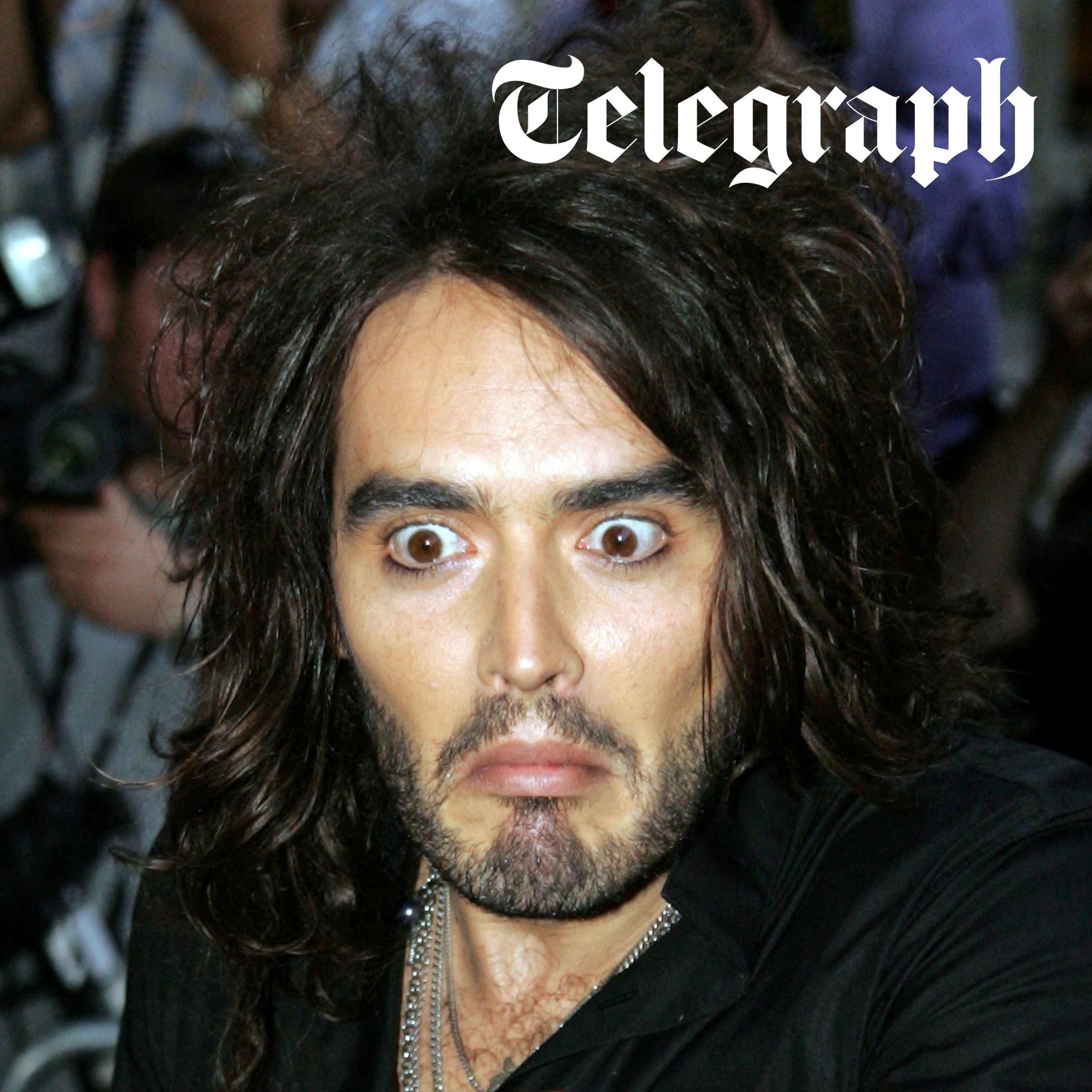
In one of his most candid interviews to date, William Hague admits to the Daily T that his stint at leader was “the least successful period of my career”.
The former Conservative leader and foreign secretary tells Camilla and Tim he was too young to command the role. Hague also reveals how it felt going head to head with Tony Blair every week and opens up about the intrusion into his private life while in the public eye.
Plus, he says Keir Starmer’s “flatfooted” response to the Iran war has brought on a “rocky” period in the special relationship but admits he is “haunted” by Iraq – a military intervention he supported at the time.
We want to hear from you! Email us at [email protected] or find @dailytpodcast on TikTok, Instagram and X
► Sign up to our most popular newsletter, From the Editor. Look forward to receiving free-thinking comment and the day's biggest stories, every morning. telegraph.co.uk/fromtheeditor
Producers: Lilian Fawcett
Senior Producer: John Cadigan
Executive Producer: Charlotte Seligman
Video Producer: Will Walters
Studio Operator: Meghan Searle
Social Producer: Nada Aggour
Editor: Camilla Tominey
Hosted on Acast. See acast.com/privacy for more information.


