
- Podcasts
- The Deal with Alex Rodriguez and Jason Kelly
- Nick Khan on Turning WWE Into a Global Media Power
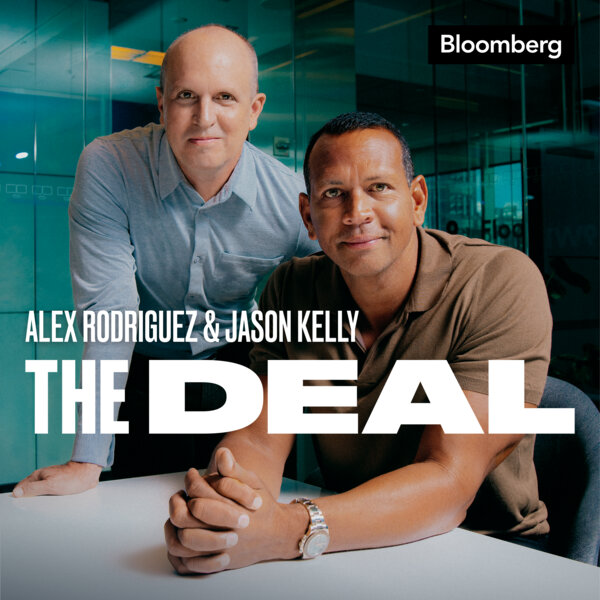
 The Deal with Alex Rodriguez and Jason Kelly
19 Nov 2026 · 23m
Nick Khan on Turning WWE Into a Global Media Power

 Add vo to ChatGPT or Claude to ask about everything you hear
vo listened to this episode to put together the overview and transcript, so there may be the odd mistake.
In short
Nick Khan, WWE/TKO executive, discusses how WWE is being turned into a global media power—balancing public-company growth with protecting the core fan base—plus distribution deals (Netflix, ESPN) and early boxing strategy (Zuffa Boxing).
Guests
Nick Khan (former top TV/entertainment agent; now oversees WWE at TKO; previously brokered major Hollywood deals; works alongside Ari Emanuel, Mark Shapiro, and Dana White within TKO). Interviewers/hosts: Alex Rodriguez and Jason Kelly (Screen Time conference), plus podcast host mentions David Cameron and “The Deal” branding.
Key claims
WWE won’t lose its core fans; live events remain “technology proof”; talent recruiting must find non-identical “next” stars; global expansion requires “boots on the ground,” not just exporting U.S. content.
Notable examples
SummerSlam in Minnesota; recruiting via college campuses (Undertaker visits athletes); Obafemi (Alabama shot putter) as a new star; Netflix deal closed quickly after testing; ESPN “Premium Live Events” included in ESPN Unlimited; WWE pricing strategy (A-Rod seats vs upper-bowl family-friendly pricing); international shows in Chile, Bogota, Mexico City; boxing fights like Ryan Garcia vs Conor Benn and partners tied to Saudi operations.
Transcript
0:00Dementia is a cruel thief. It robs us of our memories, our personalities, the things that make us who we are. Join me, David Cameron, as I search for answers on my podcast from Bloomberg and Kaleidoscope. It's called Ending Alzheimer's. This is the best time we've ever been in Alzheimer's. I'm confident that no child born today will have to say a long goodbye to their parent. Listen to Ending Alzheimer's wherever you get your podcasts.
0:33Bloomberg Audio Studios Podcasts Radio News Welcome back to The DL I'm Jason Kelly And I'm Alex Rodriguez Alright Alex We are here in sunny Los Angeles For the Screen Time Conference With the perfect screen time guest Nick Khan You know this guy I know him well And I go back about a decade And I know him in his previous job Where he was one of the most powerful TV agents around Who did some of the biggest deals in Hollywood And now he's doing even bigger deals. He did a deal with Netflix and with ESPN for WWE, and it is changing the landscape of sports. Check it out.
1:14All right, so we're here to do a live taping of our show, The Deal. It's great to be back here at Screen Time. Thanks to Lucas and the team for having us. And the reality is, is that when we think about what we love most, the intersection of business, sports, culture, entertainment. There's like a dude who sits right there in the middle of that Venn diagram, and he's sitting on our couch. Nick Khan, good to see you. Thanks for having me. Good to see both of you. All right. Kick it off. We've got some things to talk about with you. Yeah, and Nick and I go back almost a decade now, and I've always been a huge fan of what you did as an agent and what you're doing now with TKO and WWE.
1:49My question is, Nick, so I've been a huge wrestling fan. I'm an 80s kid to early 90s. and my favorites, of course, were like Ric Flair, Macho Man, obviously Hulk Hogan and that whole class. And Vince McMahon ran in a certain way. My question to you now, being a public company, how do you balance the fact that, A, you have to make your quarterly earnings and show growth versus keeping that integrity of your incredible fan base, that core fan base. By the way, Minnesota has a huge fan base for WWE and wrestling. How do you think about that? And do you sleep over losing the creativity and the integrity of the WWE?
2:27The most important thing to us is to never lose the core fan base. So even you just referenced Minnesota and how it's been a hotbed for wrestling for decades now, going back to the AWA, which was a wrestling organization subsequently purchased by Vince and WWF at the time a few decades ago. But it was important to us. Our second or third biggest event of the year is called SummerSlam. It's a two-night stadium event. We just did it in minnesota this past summer you say to yourself well minnesota Maybe there's other cities you could go to where you could generate more revenue Sure, but it was important that we hit the midwest And that we not lose sight of the fact that all of those wrestling fans there want to go to a big show So we will choose of course based on finance, but also based on geography Desire and we want to make sure there's not too much supply in a certain area of the country And that keeps obviously the demand up And so inherent I I feel like in alex's question is the talent piece of this You came out of the talent business arguably you're still in the talent business.
3:31I mean, I guess technically we all are How do you spot the next wave of talent? How do you identify them? Where do you go? Especially as this gets bigger and more complex So the next one never looks like the last one that we concluded a long time ago I think that applies to boxing as well. We certainly think it applies to wwe we. So when I hear someone say, Oh, we need the next John Cena. There's no next John Cena. He's one of one. Yeah. Even in baseball, people say, Oh, we need the next a rod. There's no next a rod. That's a one of one type, you know, athlete. So you look for what is the country looking for?
4:05What's the world looking for? We shifted our recruiting about six years ago coming out of COVID. It was always mining the independent wrestling scene. We're still doing that of course, But we shifted it to college recruitment. And basically, if you look at Roman Reigns, who played football at Georgia Tech, a wrestler named Big E who played at University of Iowa, The Rock, University of Miami. There's a lot of football players who, for one reason or another, didn't make it in the NFL, who came our way. So we decided, let's expand that. Why is it only football? So we had the undertaker The person who plays the character of the undertaker go to the campuses and basically tell all the male and female athletes The track and field athletes.
4:47We hope you make it to the olympics We hope you make it on whatever the modern-day version of the Wheaties box cover is But if you don't come this way So one of our big superstars now is a wrestler named Obafemi He was a shot putter at the university of alabama five years ago and when Undertaker went to go speak to them, saw a big athlete, strong athlete, grew up in Nigeria before he came to the United States, so didn't play American football as a kid, didn't sort of develop that skill set, but had that raw athletic skill set that could easily translate over to WWE. He's sort of our next big thing, if you will.
5:25And again, there's never been a wrestler who's looked or felt like him. Yeah. The very first episode we taped of this show happened on the day that TKO went public with your partner, Mark Shapiro. And he sat in a chair similar to what you're sitting in and sort of walked us through. September 12th, 2023. Not that anyone's counting. Clearly a huge day for you, for the company, but more to the point, as we've thought about it, the combined entity is fascinating from a business perspective. I would also say it's fascinating from an ego perspective. You're in the center of some very, very powerful personalities.
6:07How do you manage that room? How do you manage a room that has Dana White and Ari Emanuel and Mark Shapiro and Nick Kahn in it? Are you suggesting that I have a big ego? No, no, no. So by the way, it's very easy from my point of view. First of all, just so we're all on the same page. Ari is obviously the CEO of TKO. Yeah. Mark's the president of TKO sort of running the day to day. Dana runs all things UFC. I'm across WWE. And then we launched a new boxing company. Right. We're going to talk about that. Yes. So to me, that's the easiest part of the day. I think the key is, and to use a sports analogy, Alex, you would know this stuff far better than I would.
6:44As long as everyone knows what their role is and there's no sort of cross streams, everything's okay. So we're three years in, we think the stock price is reflective of the success that we've had collectively and that our colleagues have allowed us to have. And we think we're just getting started. So not an issue. Biggest surprise post-merger? Biggest surprise was a continuation of increased interest in live events. So this was obviously before AI was a day-to-day, minute-to-minute conversation piece. Before the four-day workweek started, it was, yes, people hadn't or had just really returned to the office, but the concept of, hey, there's going to be more free time out there was not really discussed on a daily basis.
7:28We all felt the live events business would continue, that it was, I don't know if it's recession proof, but it's certainly technology proof. You can't replicate it at home. And so far, if you see even the valuations of NBA, we just talked about, but the other leagues, TKO, so far, so good. I know you in your prior life, and I get this question all the time based about a business, But for you, it's been agency to running a public company and all of that. What are some of the arrows in your quiver that you think transferred really well to the boardroom of running a public company? I think for both jobs, you have to be a good listener.
8:04And I often kid a good friend of mine who's in the audience here, Jamie Horowitz, who runs Omaha Productions for and with Peyton Manning. We always say, you know, we'll go to meals with different people. And that person will say, great meal. That was amazing. and we'll say to ourselves like yeah we let you talk 90 of the time people like to talk people like to talk about themselves so if you can develop or you have the good skill set to be a decent listener and if you can actually give them feedback on what they're interested in receiving feedback on whether it's at an agency like ca or at the good fortune of working for or at tko with wwe and zufa boxing it's the same thing
8:49Dementia is a cruel thief. It robs us of our memories, our personalities, the things that make us who we are. Join me, David Cameron, as I search for answers on my podcast from Bloomberg and Kaleidoscope. It's called Ending Alzheimer's. This is the best time we've ever been in Alzheimer's. I'm confident that no child born today will have to say a long goodbye to their parent. Listen to Ending Alzheimer's wherever you get your podcasts.
9:42So how we look at it, WWE, is the P1 tickets, the most expensive tickets, we want to jack those up as high as possible. So for the A-Rods of the world who can afford it, no problem. For the upper bowl, what you need to watch for, you want to say, hey, we want to price it family friendly. But if you price it too family friendly, they all go to third party brokers. That's how we do it. I'm glad it was very nice of him to be like, there are A-Rod seats and then there are Jason seats way up in the upper bowl. So to that extent, I would imagine that conversation also, that tension as it were, extends even to the creative process.
10:24WWE has such a rich legacy. You're building a business. You're selling sponsorships. You're doing all these different things. How do you stay true to sort of the original product? Look, it's sort of in a way like any other business. You got to see what's coming around the corner. When Alex was doing the fundraise to get the Minnesota Timberwolves, it was sort of, at least my recollection, a frenetic, you know, hey, we need to get this done. You know, let's get some from here. Let's get some from there. Of course, there's always doubters when a retired athlete is getting into a different space.
10:58and then boom, we see the news from a couple of months ago on the$4.5 billion valuation. Congratulations on that, by the way. It's no different than that. So we always think for every great macro transaction, it's usually the result of a thousand great micro ones. Same with our creative, same with our pricing. You just got to have your eyes open to what the consumer wants. Yeah. Should we move to Netflix? Yes. Let's talk about Netflix. Well, I mean, I'm just intrigued like how these big deals come together. You know, Netflix was very clear that they would not get into sports. And all of a sudden what I want to know is from the first meeting How do you set up that meeting and from that meeting?
11:35How long does it take to get a five billion dollar deal over 10 years? It was a quick process. It's one of the many things I love about being in business with netflix No bureaucracy or very little bureaucracy So initially it's what you said. Hey, we're never going to get into live And then they tested a reality show post show which sort of crashed a little bit. Yeah And then it was hey, you know, we're never gonna crack down on password sharing You know, they'd send out tweets at the time, you know share your passwords then they crack down on that So what at the end of the day did Netflix need to do they need to grow their subscriber base?
12:10So everyone talks about you need a little bit of luck in business and in life The luck we had in that deal is that Netflix decided to get into the ad supported business So WWE offers 52 weeks of programming a year which you can go to advertisers instead of saying hey, we have a six episode limited series called Beef coming up. Do you want to buy advertising across that? Tough to sell advertising for six episodes. But when you say 52 weeks a year, hey, it matters. So that happened. We obviously had nothing to do with it. Mark Shapiro, Ari Emanuel called Ted Sarandos, Greg Peters, Bella Bajaria and said, hey, the WWE deal's coming up.
12:47We want to come meet. To Bella's credit, they said, let's meet in like two days. And this was like a holiday deal. This was like December one. And anyone who knows this city and this business knows, oh, you know, once Thanksgiving comes around, we'll have to wait until January and January is around, you know, might be, you know, this holiday, there's a lot of slowdowns, at least there were not a Netflix. They want to meet, we'll have an offer to you guys before Christmas. They made an offer. We closed the deal, we papered it and announced. Wow. And so how do you go about at this point balancing where you want people to see different products?
13:26So that is raw. So that's Monday night. Correct. It's global. Global. And shift over to ESPN. That is the PLEs? You got it. Formerly known as pay-per-views, but there's no upcharge for them now. So if you subscribe to ESPN Unlimited, you get them as part of the package. Premium live entertainment. Premium live events. You've got it. Premium live events. Excuse me. I'm saying this as a proxy for all of us out there who sit down on our couch and are like, I want to watch WWE. I want to watch the NFL. And I go to this stream and it's like, nope, it's not there today. Oh, it's the other one. I feel like we've been talking a lot about balancing the needs of people today.
14:04But the desire to maximize distribution channels, but also making it easy enough that people can find you. I think there's a couple of things. You can't speak to your consumers like they're inside the boardroom with you So even when I would hear people say oh, it's very easy just authenticate and you'll get the product Not everyone knows what that means So what what do we do at ww when we went to espn? We had our wrestlers We call them superstars do videos saying this is what you do press this button If you get these cable or satellite companies, you will get it for free and literally show people what to do rather than just assuming that everybody knows what authenticate is it's something that that annoys me about even conversation when people talk about something like they expect you know it like they know it yeah it's always bothered me and i think it's a key thing in business make the message simple right at wwe we also have the good fortune of 600 million social media followers so we will push it out weekly watch raw tonight on netflix right at this time globally so on so forth.
15:11Pretty vocal group, those followers. Oh yeah, definitely. They let you know what they think. Well, by the way, that's a good thing. It's no different than Yankees fans. What are the other Lakers fans? Any of these fans who claim ownership of the team where they'll say we lost last night. Yeah, that's what you want. So if things are going awry, you want to hear from if things are going well, you won't hear from them as much because it's expected that it goes well. That's okay. That's part of the business Where's the wwe in three to five years? What's your vision and how do you continue to grow when there's so much?
15:46Competition for eyeballs out there, right? Look, it's it's not my original line, but everything's our competition Including someone just staying home at night and watching tiktok and texting their friends. So what do we need to do? So six years ago, we made the decision we cannot be An american company that simply pipes out american content internationally It'll never register globally the way that we want it to. We have to be boots on the ground. And you got to give the people what they want. So what do they want? It's no different than part of the success of the World Cup is because there is healthy nationalism that should be embraced.
16:22So when the U.S. men's team was making it much further along than people thought they would make it, I think that helped the overall halo effect of this World Cup. And obviously, you know different people who are around the world rooting for their countries It's the same thing with wrestling. So it was in the 80s That all of the american wrestlers were the good guys all of the foreign wrestlers were the bad guys but that was sort of The 80s also right soviet union if there was a russian wrestler bad guy That's the way it was. So now people want to see versions of themselves So they can root for someone who they're behind as long as our talent remains coming from an international fan base or international talent base pardon me we went to chile recently we did a show in bogota colombia we went to mexico city for four nights we were never doing that years ago and it's something we do consistently now and we'll do more of next wrestlemania is in riad you got it right that's a big move are you gonna come to it or you're not sure yeah far for you come all right all right i'm there Yeah, it's just around the corner.
17:27Easy flight.
17:34Dementia is a cruel thief. It robs us of our memories, our personalities, the things that make us who we are. Join me, David Cameron, as I search for answers on my podcast from Bloomberg and Kaleidoscope. It's called Ending Alzheimer's. This is the best time we've ever been in Alzheimer's. I'm confident that no child born today will have to say a long goodbye to their parent. Listen to Ending Alzheimer's wherever you get your podcasts.
18:10Before we let you go, I want to talk about boxing. Yeah. It's a fascinating business. I remember interviewing Dana White in 2021. And it had probably been on its mind for 20 years before that. Very focused on it. Now that is actually happening. What was the key for Zupa boxing to actually unlock this opportunity in a way that it made business sense for TKO? First of all, we like the sports where there's one entity that you can control or have influence over rather than for us buying teams or part of teams. It's just not our business model. So there's only so many sports like that. so if you're the number one in our opinion certainly leader in MMA with the UFC with WWE in the wrestling space well what's the other sport that's fragmented like those two were at a certain point if you look at even individual sports if you if you harken back to 1984 for anyone in the 50 plus crowd if you asked American fans then who are your favorite athletes keep in mind this is before Jordan went pro.
19:11Bird, Magic, Jack Nicklaus, John McEnroe, Mary Lou Retton, Carl Lewis, Sugar Ray Leonard, Boom Boom Mancini, individual sports athletes for the most part. Then the leagues became the leagues. The individual sports stayed the same. So it used to be when we were children or younger, who's the fastest man on the planet? You knew the answer right away. If you ask somebody now, they don't know because it stayed the same way it was. Wrestling evolved. MMA evolved. If you look at boxing, it's the same product that's been put on certainly since I've been a kid. There's an opportunity to actually bring that business together and it's going to take time and it's going to be all of those things.
19:56No different than buying the Timberwolves. Difficult process. No one will ever know how difficult it was other than you and your partners. So what? That's what it's supposed to be. If it wasn't difficult, everybody would be doing it. So we like the boxing business. We just had a big fight with Ryan Garcia and Conor Benn a couple of weeks ago, Mexican Independence Day in Las Vegas, which did a huge gate and did big numbers on our partner, Paramount Plus. So we're happy where we are. As you're speaking, Jason, I'm going to just put a button real quick because I agree with Nick. As a kid, I can just remember the aura and the life, how big Muhammad Ali was, even though he was a little bit older when I was young.
20:35and the other fight that just jumps off the page was uh haggler versus uh sugar ray yeah and it was 15 rounds and it was just an epic battle and i was like nine ten years old but i remember to this day like still watching that well i mean we talk about you know we open the conversation talking about sports business culture i mean boxing was central to the culture i mean in in an unbelievable way it feels like look max kellerman who's one of our lead broadcasters on Sufa Boxing, he says, if you pull up to a four-way stop sign, one corner, a guy's putting a golf ball, the other guy's shooting a basketball, the other guy's throwing a football, in the other corner, two guys are fighting.
21:12What are you going to watch? He said, the problem with modern day boxing is if you then ask the question, well, what if it's Tiger Woods in his prime putting the golf ball? Yeah. And what if it's, you know, Jordan in his prime shooting the basketball, Peyton in his prime throwing the football, and two guys you've never heard of fighting, then it becomes a different proposition. But if we can get the storytelling right and you can get the right fighters in, I think we have a good shot. And so how soon do you feel like you will be able to achieve the level of sort of control and economic success in boxing that you have been able to achieve in wrestling and in MMA?
21:51Well, listen, these are, you know, our numbers are public on UFC and WWE. So we'll allow those to speak for themselves. They're pretty healthy numbers. Right. But in terms of boxing and organizing and cleaning up, number one, we're already profitable. And again, we're 10 months in. Number two, we have the right partners, the group out of Saudi who we partnered with, who had sort of taken over boxing in a way. WWE's been in business with them for eight years doing shows in the kingdom. So we've partnered with the right people. We're the operators. We're the sole operators. Baina's the promoter.
22:23We think we have the right brain trust on the business side. I don't mean me. I mean the guys I worked with who I mentioned earlier. and a hundred other folks who are across this making it happen on a day-to-day basis. Now we just got to put on a good product. All right, we only have a minute left. Is there a business you're not in now that you would like to be in? Yes. What is it? I'm not going to say that. Oh my God. All right, I got one for you real quick to end it. So Pat Riley has often said that all great talents should or think about changing careers or pivoting every 10 years. What do you see yourself in the next five to seven years?
22:59Look, it's interesting on the 10-year thing. I was a lawyer for seven years. Then I went to an agency, ICM, for six years. Then I was at CA for nine years. Then I've been with WWE for six years. So, so far, so good. We've still got plenty of time to go at WWE and Zufa and plenty of growth to hopefully achieve. I like where I'm at. I like where we're at. We're going to stay put and see what we can do. All right. Stay tuned for what's next with Nick Conn. We really appreciate you on this. Thank you. Thank you, everyone.
23:36The Deal is a production from Bloomberg Podcasts and Bloomberg Originals. The Deal is hosted by Alex Rodriguez and me, Jason Kelly. This show is produced by Anna Mazarakis, Stacey Wong, Eden Martinez, and Tom Connors. Original music and engineering by Blake Maples. Booking by Paige Keffer. Special thanks to Rachel Carnevale, Elena Sos Angeles, and Nick Silva. Our managing editor is David Ravella. Our executive producers are Jason Kelly, Amy Keene, Neville Gillette, Jordan Opplinger, Regina DeLea, Kelly LaFerrier, and Ashley Zingaro. Cheryl Brumley is our head of podcasts. You can also watch The Deal on Bloomberg Originals on YouTube and Bloomberg Television.
24:16Subscribe to The Deal wherever you get your podcasts. Thanks for listening.
24:28It robs us of our memories, our personalities, the things that make us who we are. Join me, David Cameron, as I search for answers on my podcast from Bloomberg and Kaleidoscope. It's called Ending Alzheimer's. This is the best time we've ever been in Alzheimer's. I'm confident that no child born today will have to say a long goodbye to their parent. Listen to Ending Alzheimer's wherever you get your podcasts.
From the publisher
As president of WWE, Nick Khan has merged the business with UFC to form TKO and closed deals with Netflix and ESPN. In this episode of The Deal, filmed at Bloomberg’s Screentime conference, Khan tells Alex Rodriguez and Jason Kelly how he weighs the needs of fans versus those of the company, who the next big WWE star is going to be and why a new boxing league is a good idea.
See omnystudio.com/listener for privacy information.
More from The Deal with Alex Rodriguez and Jason Kelly
All episodesWe use cookies.They keep vo running smoothly and help us improve it. Privacy policy
Scan the code with your iPhone camera
Listen in the app.
- Play everything vo finds for you
- vo remembers everything you hear
Go to the App StoreFree on iPhone