 The Dealmaker Uncut
11 Nov 2026 · 44m

 Add vo to ChatGPT or Claude to ask about everything you hear
vo listened to this episode to put together the overview and transcript, so there may be the odd mistake.
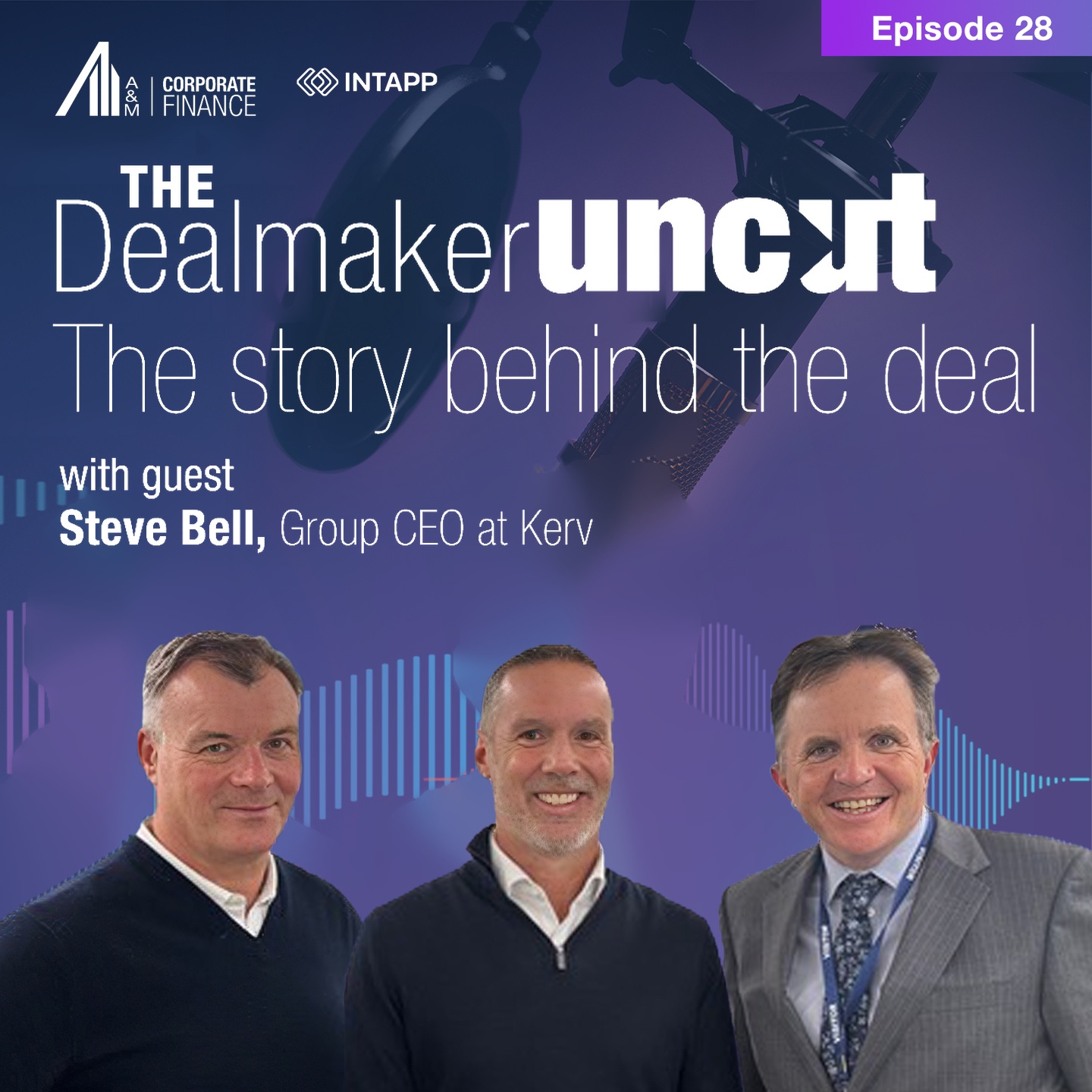
Steve Bell (CEO of Curve) discusses building and selling Iris Worldwide, lessons from a long earn-out, transitioning from advertising to listed gaming, and how private equity and AI are shaping Curve’s next growth phase.
Steve Bell—CEO of private equity-backed digital consultancy Curve; previously co-founded Iris Worldwide (founded 1999, grew to 1,000+ staff, ~7 acquisitions) and later CEO of listed gaming business Everplay Group (Team17 rebranded).
Iris’s culture and cultural due diligence mattered more than commercials in acquisitions; international expansion without client backing “bit us on the backside”; a five-year earn-out is “ridiculous” and forces short-term EBITDA decisions; listed-company governance/roadshows require strategy clarity for shareholders; Curve’s AI is “running through our veins” and is used for customer value and efficiencies; AI will drive due diligence and game development, but ideation still needs human-AI blend.
Bank of Scotland Entrepreneurs Award funding; Meredith investment then buyback; Samsung/Chale (Samsung group) acquisition with a five-year earn-out ending Dec 2019; Everplay back catalogue (Worms, Hell Let Loose, War Dogs).
0:07Chris Maguire: So welcome to the latest episode of the Dealmaker Uncut podcast powered by Alvarez and Marcel. My name is Chris Maguire and I'm the executive editor of Business Cloud. As always, I'm joined by the multiple award-winning dealmaker himself, Jonathan Boyers. Jonathan's been involved in deals totalling billions of pounds during his long and illustrious career. He's the managing director and head of Alvarez and Marcel's corporate finance practice in the UK. Hello to you, Jonathan. Hi, Chris. Now, this is a podcast that gets you inside the deal. In the first part of today's show, we're going to be interviewing our special guest, and I can't wait for that.
0:39Chris Maguire: After then, we'll have a short break before Jonathan leans into his 35-plus years of experience in the world of corporate finance to answer listener questions in part two. So, Jonathan, I know you've been excited about this. Who are we speaking to today? Thanks, Chris. Well, today's guest is very experienced in doing deals. He's the CEO of private equity-backed digital consultancy Curve. But he's had a range of different experiences in the corporate world. So he was the co-founder of Iris Worldwide, which he did sell. And he then became the CEO of a listed gaming business called Everplay Group.
1:19And then earlier this year, he became the CEO of Curve. So welcome, Steve Bell.
1:26Chris Maguire: It feels a bit like this is your life, actually. I'm going to start by asking you a question, which is nothing about you. And I think sometimes it can be hard following in the footsteps of parents, especially when their parent, or their dad in your case, played for Arsenal. Your dad, Alan, played for Arsenal for six years, didn't he? In his 60s, I think. He did, yeah. He left school at 16. He was a very good footballer. He was picked up by Arsenal, stayed there for six years. he was then injured and then realised that he had to go and earn a living for the rest of his life rather than kicking a football around so went back to college and ended up as managing director of Duracell so he had a very good corporate career as well.
2:05Chris Maguire: People forget like Tom Finney you know he had to I think he became a plumber or electrician or something after his football career people had careers after their football stopped you were a talented footballer yourself much too modest to admit it though and you're also an international gymnast and your son I think is quite a talented footballer as well and that was all before you founded Iris Worldwide in your mid 20s. What was the ambition for Iris when you started it and what did your fellow founders, what was their vision for it? So we started Iris in 1999. I was 27 years old, started my career working within one of the big networked agencies, publicists, and really, really enjoyed it, really enjoyed the whole area of advertising, marketing, consumer behaviour, understanding what's going on in people's minds and trying to make them understand what brands they could or should be buying into.
3:02The problem came about probably after three or four years when you're working within a big corporate. It just didn't feel as though it was entrepreneurial enough. It didn't feel as though it was fast moving. It didn't really feel as though there was the right amount of reward for the people that were really making a difference and I remember it vividly we had a night out we were told what our bonus was going to be for the year within the business and it was about 200 pounds and we looked at each other sort of the founders of Iris not that we knew that we were going to found an agency and we said there has to be a different way there has to be a way we've just worked 12 months and we've worked really hard and we've grown customers and we've done incredibly well.
3:43And we went out and that was when Iris was born in terms of an idea. We said, what if we set up an agency where we would be quicker, we would be more senior, we would be better than the corporate sort of dinosaurs that we were working within. And that took us about 12 months from that moment where we went out for a few beers after our bonus to actually create an agency in the marketplace. And in an oversupplied market, it's not as if there's not hundreds of agencies out in the marketplace. So we needed to do something different. We needed to position ourselves differently. We just had a different vision for what a marketing agency could and should be.
4:22So you grew Iris to more than a thousand staff. I think you made about seven acquisitions, something like that. That's right. Could you just talk through that journey, the approach, how you went about the acquisitions, how you found them? Just give an overview of how the M &A bit worked in that growth. Yeah, so we realised, and we didn't acquire for at least six or seven years into our journey, because to start off with, we were just very capable at finding very talented people in other agencies that we could bring into the world of Iris to grow certain disciplines. We then started thinking about international, and we then started thinking about certain disciplines that you couldn't just grow yourself, or if you were going to grow yourself it would take three four five years so we were very strategic in terms of areas we wanted to be in the world geographically and also disciplines that we wanted to grow into because we knew that the clients that we were working with were requesting these on a day-to-day basis so the the main acquisitions that we sort of undertook were either geographical or discipline focused so it was an interesting sort of process that we went through because we spent as much time if not more on cultural integration and cultural due diligence than the commercials because it was just really important that we had created this very special culture within Iris we knew what we stood for we knew what we believed in it was around trying to make sure that we were all having this journey that we wouldn't get in a big a big network so so the acquisitions were relatively straightforward we knew we wanted to be in certain parts of the world we employed somebody to actually go out and find those businesses for us and i remember on a number of occasions going out and meeting like 15 different agencies over a four-day period and you just get a feeling you get a cultural feeling as to i feel as though i could work with these people and and then the commercials almost came second to that yeah we wanted to make sure that we were doing the right deals and we weren't playing paying ridiculous multiples but it was as much if not more about the people and the product and the customer and client relationships that those businesses had and how how did you fund the the acquisitions there's a heard mention of a of a funding line from a bank of scotland but how did you fund fund the acquisition yeah it was it was an interesting process actually because the Bank of Scotland ran an Entrepreneurs Award every year and it was almost like the Dragon's Den where you'd go in there, you'd present your business, you'd talk about your ambition, you'd talk about the history behind the business and also where you feel as though the business could go and it was for five million pounds interest-free and it was one of those things that we thought we would do because it would be a bit of fun.
7:15We didn't think we would have a chance of winning this award. We went to a black tie event and iris was called up on stage as the winner of five million pounds interest-free that five million very quickly turned into ten million pounds interest-free because the bank of scotland were very keen to sort of jump on the the iris bandwagon and grow the business with us so so that certainly helped but it also allowed us to make mistakes that we wouldn't have made if we hadn't have had that five million pounds because suddenly you've got money and you feel as though you have to spend it and you don't go through the due diligence that you would have gone through before we thought international expansion was the right thing to do so we suddenly had offices all over the world where we hadn't really thought about the principles that made iris great which was we would set up if a client wanted us to work in a certain market so you almost have the backing of a client so it's relatively risk-free to go into that market we then just started thinking well it'd be good to be in spain wouldn't it that seems like a good market why don't we set up an office in spain why don't we set up an office in germany why don't we go to north america and we didn't have the backing of the clients we didn't really know what we were doing we were spreading the dna that we had within iris so thinly across the entire business and it came back and bit us on the backside to be honest with you and then the bank of scotland said right can we have the some of the money back now and it was a case oh we forgot it was a loan we thought you were giving us the money and i'm exaggerating to make the point but suddenly we have to start making repayments you have to start thinking about the mistakes we've made and the return on investment we were getting in a lot of the businesses that we had either acquired or set up around the around the world that's really interesting um so meredith corporation then invested in the business and then subsequently you bought them back out can you just talk about that's an interesting little um little escapade can you just talk about that yeah we knew that to to fulfill our ambition investment was going to be an important part of the journey.
9:19And Meredith were quite left field really. So they're an American business. They are a hugely successful American business. They have television channels and magazines and they're a publishing business in very simple terms. And we were introduced to the guys at Meredith, the corporate development team at Meredith. And suddenly it started to make sense. They were very big in the US. US was one of the biggest, if not the biggest, advertising and marketing spend market in the world. They were huge out there, had huge amounts of client relationships that we could potentially tap into. We were very big in Europe.
9:55They had a real interest in terms of shifting the dial with some of their customers and how brand communication could actually work. So on paper, it seemed like an amazing partnership. they bought a small percentage of iris and there was a plan for them to continue to acquire over a period of time the you could say the investment went well it went well from our perspective because they were relatively hands-off didn't really want to get that involved in the business because they're a multi-billion dollar organization at the time we weren't anywhere near that at that size so it felt and i've spoken to a number of people about this and they said well it's a dream isn't it you've got the investment funds they're not marking your homework they're not really getting involved in board meetings but in the same way that they weren't getting involved in that they weren't really making our business any better they weren't teeing up the opportunities that we wanted in North America they weren't giving us the the business guidance that we probably needed because we were all very young when we set Iris up we were all in our 20s so it's not as if we had decades of experience of running P &Ls and really understanding how agencies worked.
11:05So it was good in the sense that it gave us an opportunity to use that investment. It was bad because I don't think Meredith made us a better business than we were if we hadn't joined forces with them. And after a couple of years, we had the decision, do we want to sell another chunk of the business to Meredith or do we want to buy Meredith out of that and that felt like it was the right thing to do we always had the view that we wanted people who had equity in our business to have an active engaged role within the business they were passive were they they were very passive they were very passive really good guys um still get on very well with with all of them they've all gone on to do incredibly well within Meredith or outside of Meredith but it just didn't feel as though it was the right long-term home for for Iris and I think that was a really important point for us so so you bought them back out and then um the business then grew nicely over 100 million turnover and then you you decided to sell the business to Samsung or a division of Samsung um what what was the rationale behind that deal what were you trying to achieve yeah so there's the world of agencies you i would say the majority of agencies will be acquired by either wpp omnicom publicist one of the big holding groups yeah um and having been in the world of advertising and marketing for for two decades you know a lot of people that go through those earn out processes and suddenly the brand is changed they're reversed into another part of WPP and you lose what's special about the business and for us making sure that Iris continued in the way that we created making sure making sure that even though we may not have been there in the sort of the longer term there was a legacy that was a really important word for us around around legacy so so selling to one of the big holding companies just didn't feel as though it was the right thing to do it goes back to what I said earlier around cultural due diligence and making sure that we realised where we would potentially be housed within an organisation.
13:20So the big holding groups didn't work. We looked at private equity. Yeah, that was a potential route that we could go down. But the ownership of Iris was quite different as we matured. And what we realised was for us to be credible and attract the best talent in the marketplace, we would need to dilute and actually give people equity, real equity within the business because if we're setting up in singapore we could take somebody from the iris london office and put them out in singapore that would be fine but singapore is a very specific market and you would need somebody from the singaporean market to really come in and join a partnership with with the business and the best way of getting the best people is by offering them equity within the business so when we sold the business there were over 60 equitable partners that were still operating and working within ours, which is really unusual.
14:17But we felt very strongly that that was the right thing to do. It wasn't about a few people getting rich quick. It was about making sure that we're taking people on that journey. And we all know if people have equity within a business, they think they act in a different way. It is their business. And it wasn't just a, we'll give you 0.001%. we were given meaningful chunks of equity to people who would make a huge difference to that business moving forward.
14:45Chris Maguire: Jonathan's always been of the view that when it comes to selling a business and extracting investment, people look for the strength of the management team. And if you have a management team who are invested in the business, you get the best business. So there are earnouts, Steve, and there are earnouts. You had a five-year earnout after you sold Iris, which is incredible. The idea that you sell your business today and you're not going to leave it until 2031, I think most of our listeners and viewers will be spitting out their coffee as we speak. What was that experience like? And if you could do it all again, would you ever have another five-year earn out?
15:19I think you've hit the nail on the head there as far as a five-year earn out is not something that I would ever and have never recommended to anybody else.
15:30Chris Maguire: How old would you have been when you sold Irish? I would have been 44 when we started when we started the earn out so 44 to just about to turn 50 correct and did you serve the full 5 did the full 5 year earn out quite often people would buy out of that were you still in control of the business or had they taken control of it no we were still very in control of the business and Samsung or Chale because Chale is part of the Samsung group which is the marketing communications part of the group they were very very good um during the earn out process so that they would be very keen for us to do more work with samsung because that was their most significant client that was their who was owning chael and therefore owning iris but when it came to strategic decisions um when it came to hiring people investing in certain areas they were very hands-off which was good and that was very important for us but but in answer to your question five years is a ridiculous amount of time to be feeling that you're in an earn-out process because you don't make some of the right decisions I think for the business because you're thinking about EBITDA you're thinking about margin you're thinking about revenue growth and the multiple of the business was born from from those factors so we needed to make sure we were delivering because we had over 60 partners who had invested a significant amount of their working life that we wanted to make sure were realising value and we wanted to make sure that we as founding partners were realising value as well but it becomes quite hard work after two years three years four years and you're constantly making shorter term decisions based on EBITDA performance rather than mid to long term strategic calls that will make the business more valuable moving forward.
17:26You can get quite awkward misalignment with an earn out, particularly one that long. That is at the longer end of the earn outs I've seen. When the new owner wants you to invest for the future and you want to pull back spending because you focus on profit. I think the other thing that was quite interesting was the earn out ended at the end of 2019. um so 31st of december 2019 so then you go into 2020 and then covid hits within within three months so from a shareholder perspective and the 60 partners that we had within iris obviously that was a really positive thing but it was very difficult for samsung because we then went into within three months we went into probably the greatest shock in the advertising industry for four or five decades because clients weren't spending money you weren't spending on marketing because people weren't going out people weren't buying things people were just hunkering down to to get through the next however long so i think we'll be i think we'll be talking about
18:33Chris Maguire: we were doing this podcast in 10 15 years and he said and then it got to 1999 sorry 2019 and 2020 and that was covid i just think it's going to be a period in our lives where it'll be you know x number years since covid and i don't think it's something you forget just for the benefit of our listeners not the viewers of this podcast as well when jonathan was asking that question you know almost incredulous you did a five-year earn out you were nodding your head vigorously as well um it probably wouldn't have come across um you know to anyone listening as well um you finally said goodbye so you exited iris and then we had covid and you became the ceo of a listed a gaming business called Everplay Group.
19:12Chris Maguire: I think it's fair to say, actually, my insight into gaming is minuscule. I think it has a market cap of around 600 million, but you don't have a background in gaming. How did you find that transition going from a sector you knew really well to a sector you knew nothing about or not much about? I'll be honest, I wasn't phased about that at all. and the reason I say that is having worked in advertising for 20 years you are constantly learning and reinventing your knowledge base around certain clients that you may be working with there are certain clients that you know more about I'm into sports so therefore working with Adidas at Iris for 15 years was a very simple thing to do Starbucks was a huge client for for Iris I don't drink coffee I never really go into coffee shops it's not really my thing So getting under the skin of coffee culture and the way people think and the way that people act.
20:09So I've always been used to understanding about consumer behaviour, target audiences, businesses, and therefore it didn't phase me at all. The business side of Everplay, it just felt very natural. It felt a very natural thing because I think once you've learnt how to run an organisation, a business, a multinational business that had acquired a number of businesses at Iris, stepping into Everplay was a similar challenge. There'd been a number of acquisitions and those acquisitions on their own were hugely successful, but the whole wasn't greater than the sum of the parts. it almost felt as if it was a number of different companies that just happened to be owned by by what was called team 17 at the time and then team 17 rebranded we rebranded the business which i thought was a really important thing because i don't think you can have the name of the top co which is the name of one of the individual businesses because it makes all the other businesses just feel as though they're peripheral to what's going on so i i was i wasn't phased by it I probably underestimated the complexity that there is in the world of gaming because in advertising it's a professional service business you're selling people's time or you're selling products within gaming you're making considerable investment calls that will take one two three five years to develop and then you put them to market and then they might fly or they might die within 24 hours and it's literally that quick you know that whether you've got a runaway success or a game that's going to have to be impaired pretty quickly because you just don't have the customer satisfaction scores that you need to actually deliver that.
21:56So that was a real eye-opener. But probably the biggest eye-opener was the fact I went from running a private company to running a listed company. And the transparency and the governance and the procedural elements of that were significant. I think it actually played to some of my strengths because we're used to delivering strategic guidelines, stories, understandings about businesses and sharing those with clients. And that's what was needed within Everplay. There needs to be a very clear strategy. The shareholders needed to understand what that strategy was to enable them to believe in the company, which in turn allows for an uptick in share price as you go through.
22:40So understanding that relationship that you have with your shareholders where you have a roadshow every six months and you go deep on that roadshow and they ask you absolutely everything and anything. And then the share price will go up if you've built trust and they have an understanding that what you're doing is correct. And that I actually really enjoyed within the listed environment. I suppose what you described is an uncertainty about whether a product is going to fly or not. if you've got a listed the communication with your shareholders must have been quite challenging to get the expectations into the right place when you you couldn't really know what the what the outcome was going to be of each launch yeah i think that's right um however the the thing about everplay and i'm not saying that all games developers and publishers have this but everplay have a very high percentage of their revenues come from back catalogue so these are games that have launched over the previous 5, 10, 15 years
23:39Chris Maguire: Name a couple of the games that our listeners might be familiar with Yeah, Worms was a huge game it's 25 years old now, Worms so it's a huge franchise that is owned by Everplay Hell Let Loose is a huge first person shooter game they've just launched a game called War Dogs which has been the number one game over the last week and a half on Steam in the world. So they've got some sizable games, but they're more in the indie gaming space. So it wouldn't be a Call of Duty or a Grand Theft Auto where they spend a billion dollars and 15 years developing it. These are games that are lower investment, but when they capture the audience, they just absolutely fly.
24:23And with a lower investment level, the returns on investment can be significant. But you're right in what you say. Investors like, they like predictability. They like to know where the money is coming from. And in a gaming world, you can't guarantee anything. But what you can do is you can rely on your back catalogue. You can work that really hard, which means the lion's share of your revenues are relatively safe at the beginning of the year because you know your back catalogue will deliver. And then it's very similar to a private equity or a VC fund, I would say, which is, OK, we know if we're investing in 10 companies, three of them will do exceptionally well.
24:59five of them will do about what we thought and one or two of them might not deliver it's a similar type of makeup within the world of gaming where you know you're going to get or you hope you're going to get a couple that that just fly out of the blocks and that will prop up some of the the downturns on lower performing games so the share price grew and profit grew 40 percent something like that correct um what when did you decide that you'd gone far enough with that and and how did he get out? For me, the Everplay role, it was very much a transformation role and that's how I viewed it when I went in there.
25:39I thought it was an amazing business. I thought that the talent that they had within the business was exceptional. But it never felt as if it was going to be the job I would do for the next five, ten years. It just didn't. It didn't feel that the product itself was something that truly excited me. And people find that quite strange because computer games are hugely exciting. It's one of those amazing things where the storytelling and the craft and the art direction and the style and everything that goes into computer games. But it didn't feel that I wanted to stay within that sector for the next chapter of my career.
26:23I was so pleased that I did the listed business and I actually really enjoyed the listed business side of it I enjoyed what we delivered whilst I was at Everplay in terms of the share price the trust in the shareholders the strategy bringing the business together but I think once you've run your own thing and once you've started something you get a feeling you get the feeling that can I see myself doing this and I'm the sort of person if I can't see myself doing it in the midterm, then I want to find what I do want to be doing. And that's sort of where it got to after a couple of years plus with Everplay.
26:59I just felt as if I'd done what I set out to do. I was very proud of what we delivered, but it didn't feel as though it was the sort of place that I wanted to be. And I also think, if I'm being really honest with you, a lot of the structural and transformation work had been done. It then needed somebody who was just an expert at computer games, somebody that was from the computer games world because it's more about just finding games then greenlighting games and moving them forward and that wasn't the thing that I was most passionate about So I can see it must have been interesting and I can see why it would be enjoyable to lead a public company a lot of people find it frustrating but I can see why it's a really interesting thing to do You then moved on and did some board advisory work you went plural for a while but it sounds like you need you've done everything else so you needed to to work with sort of with a private equity investor as well so do you want to talk about curve and and the other bit yeah no it's it's a good it's a good observation and and the plural sort of life that I led was and and I'll be honest I thought that might be what I want to do I just do a number of non-execs.
28:14I felt unsatisfied at the end of the week. And I'm not used to feeling unsatisfied. You get into the Friday and you feel, it's been a good week. Achieved this or it's been a bit of a crap week because that's happened. What are we going to do next week? I just didn't feel that. I didn't feel that within the... Was that because you weren't gripping the business? You were sort of always consulting and dipping in and out but not really doing anything? Yeah, and in time, I will definitely go on and do that because there were parts of it that I thought were brilliant, really enjoyable. And if you get the right portfolio, I think it can be a really satisfying thing.
28:50But I just felt I felt too young. I felt as if I had too much energy. I felt as if I had ideas. And I just wanted to I wanted to go again. I've just got that thing about me where I talk quite a lot about frustrated ambition and in short to anyone. And they'll say, yeah, I'm ambitious. but I think certain people whether it's an entrepreneurial thing or not have that frustrated ambition I've still got loads of frustrated ambition and feel as though I did want to go again and private equity just really interested me I really liked the fact that it was very clear and transparent around what you as a group CEO has to do you have to create value you have to make the company more successful you have to retain talent all the things that are important but you can do that in the midterm it's not a case of well you've got a roadshow in six months time we've got to make sure that we're exceeding expectations with the city it feels a little bit more medium term the whole the whole world of private equity I also know there are various private equity firms out in the in the marketplace some have very strong reputations and some less so and it was really important for me that I was working with a leadership team from the private equity in the board perspective that truly believed in what Curve could be and can be moving forward and that I really liked and could learn from and I definitely got that in Bridgepoint and you so did you work with LDC before Bridgepoint or no I didn't you joined when Curve was an LDC back business and that then LDC you came in with Bridgepoint did you correct okay so Bridgepoint have held for about two years now Steve you've only actually been with Curve
30:33Chris Maguire: for six months at the time of recording this podcast. And before you joined the business, Curve had embarked on a buy and build strategy. I sort of get the impression from having spoken to you that your first six months has almost been consolidation and making sure that business is ready for the next stage of growth. Would that be fair? Yeah, I think that's right. And Curve has been incredibly successful in the marketplace. It's shown very good growth rates. it's got some incredible businesses that have been acquired over the last five or six years i just don't think going back to this point i said earlier in terms of the whole being great in the sum of the parts i just don't think we're realizing the full potential of that business because we've got some of the most amazing customers in the marketplace that want to go through digital digital transformation ai integration cloud integration all the things that are going on in the world of technology.
31:33But we're not basically spotting the opportunities with those customers to be able to say, we could be doing this for you. And that doesn't mean we go into an aggressive sales strategy at all. But the offerings that we have within Curve are exceptional in so many different areas. And I don't think we're working closely enough with our customers to be able to truly realise the value that we could be generating for their businesses moving forward. So yeah, it's making sure that we've got the right foundations for growth. It's not running around 100 miles an hour trying to acquire new businesses in the short to medium term, but there will be future acquisitions.
32:12There's no doubt about that, but it has to be strategic. It can't just be opportunistic. Oh, we've got this because we're buying it on a low multiple. We've got to make sure that the strategy, the story makes sense. And that's something that I'm really excited about. I think the business is, I really like the people. That's very important for me. Perhaps I didn't realise that before. I like the product. I think the product and the services and the professional service and the strategy side of the business is fascinating. And I think with Bridgepoint and the ambition that we have within the business, I think it's got so much potential.
32:48Chris Maguire: I don't think we could go an episode of this podcast without mentioning AI. There's been a lot of talk about it. You describe yourself as an AI optimist. What does that mean? And where do you think AI will have the biggest impact on businesses like Curve moving forward? Yeah, I think everybody will pick up the newspaper, listen to podcasts, and you'll get an awful lot of headlines from very senior people within the world of AI talking about stuff that we've all read. It's going to take over the world. No one will have a job in five years time, etc, etc, etc. And you could suddenly get yourself in a downward spiral about AI.
33:25I look at the benefit that AI is bringing to Curve on a day-to-day basis, just in terms of efficiencies, how we're operating, how we're structuring ourselves, and also, more importantly, how we're using AI to benefit our customers. And that's the thing that I'm most excited about. Customers are coming to us and saying, we're not really using AI. We're not an AI first organisation. And working with the likes of Microsoft and others to make sure that we're delivering the right solutions for the business they need to be moving forward. there's something we've been talking about within within curve because some people say well what's your ai strategy and and and it's quite a difficult thing to answer because we're a business that has ai running through our veins pretty much every minute of every day and what we talk about is ai is what we ai is what we do and ai is what we what we sell it's basically it is what we are so So therefore, you can't suddenly say, well, here's five slides on Curve's AI strategy, because every customer that touches Curve in one way, shape or form will be influenced by what AI is doing for them.
34:40And that's why I'm an optimist, because I can see the benefits, the efficiencies that it's creating for businesses. And that's genuinely exciting. I think almost every private equity deal that happens over the next year or so, there'll be some form of AI due diligence. I think they will and they're sort of in the gaming world as well not surprisingly every roadshow that I went through the one consistent question within every single investor call was how is AI impacting the world of computer games and the benefit is AI is benefiting the world of computer games in terms of the build of games but when it comes to the creation the ideation around a great idea AI can't do that at the moment It will get there, I'm sure.
35:27But it's still something that I feel as though it has to be the blend of human skills, technological skills with AI. If you can get that blend together, then you've got incredible power. But I'm not somebody that signs up to some of the headlines that are saying that it's going to ruin everything about business. It won't be allowed to. Governments won't allow AI to suddenly create the levels of unemployment that it's talking about. and yeah I just don't I can't see it happening doesn't seem like it does it so you've you've been you've done all of it you've done private equity you've done listed companies you've worked for a corporate and you've worked for yourself so which which is your favorite which do you prefer the it's a brilliant question actually and I haven't I hadn't really thought that someone would ask that but the way that I tend to look at things I don't think there's a I wouldn't say oh it's definitely private equity or it's definitely listed the way I view my career and what I've done is little chapters of learning and and I've always chatted about the importance of learning and that's why I purposely decided not to stay in advertising for a 40-year career I could have quite easily so well go there I'll go to a big group and then I might set up again and I'll back someone else and I just didn't want to do that because I wanted to continually learn and I think every chapter in terms of private company growing it selling it working within the Samsung group one of the biggest companies in the world fascinating spending a lot of time working with within Korean culture as well again a huge eye-opener some amazing things and some things that I would never sort of include within within corporate organizations and then working in the PLC so I couldn't answer the question it was a really simple question I've gone quite a long answer well no it is but I'd sort of say 20 % of that 30 % of that 40 % of that but you can't enjoy them all I can't did you say you can oh I can and I definitely look at the things that I did enjoy I genuinely feel as though the private equity side of it is getting the best out of me and I'm getting the best out of it just in terms of the type of business we are and where we can take it and I'm really excited by that.
37:45Chris Maguire: It's worth saying it's worth saying Jonathan that you spent a large chunk of your career at a big four accountancy firm now you've got you're at Albers and Marcel and you've almost got a certain freedom that maybe you didn't always have. Yeah I'm envious to hear that story because you I did exactly what you what you mentioned you didn't do I did stay for 34 years with one firm and always doing corporate finance and then I moved to another one and still doing corporate finance so I am envious of you having experienced all those different things, obviously I touch all of those different areas all the time, so I do get some variety.
38:25Chris Maguire: So, time for a quick break, when we come back after this short interval, we'll be discussing our interview with you Steve and what we really think of you and And Jonathan will be answering some questions from our audience and also from myself. But thanks very much for your time, Steve. It's a pleasure. I really enjoyed it. Thanks very much.
38:47Chris Maguire: Welcome back to the second half of the Dealmaker Uncut podcast. We've just interviewed Steve Bell, CEO of Curve. He's had a remarkable career, hasn't he, Jonathan? What was your view? So I just thought he's got a really fascinating breadth of experience. He's obviously entrepreneurial. you know he set the business up in the beginning but having worked for you know all the different parts of the corporate finance world in listed company private equity and then obviously he took an investor on then bought them back out again as well he's done almost everything there is to do in corporate finance hasn't there so and he just seemed like such a nice guy as well yeah very level-headed I think the thing about Steve that struck me about him is that he doesn't settle for the easy life he's always looking to improve and better himself as well um it's interesting when he started taking those portfolio roles as an honest director he was a bit unfulfilled on a friday something i can relate to as well because you know i love the busyness and the variety of my life and i get to a friday and i look back on the week and if i've not done anything i get frustrated with myself completely different level to steve i hasten to add but a genuinely really really nice guy as so many of the people are that we have on this podcast a great guest and this next section is called ask jonathan it's where listeners can ask jonathan any questions they want and i can fire a few questions in as well this first question is how do i know what my business is really worth and how can i maximize what valuation before i sell also will different advisors give me different valuations simply to win the mandate okay so how do you know what your business is worth well i mean that a business is is the theory behind business valuation is that it's worth the present value of all the cash flows that it's going to generate in the future and so a valuation is just an estimate of that.
40:35People will often use apply multiples to an assumed earnings figure or a run rate earnings figure to try and estimate what that discounted cash flow calculation would look like and you know the a lot of people focus on what multiples have been paid for comparable companies, either in private transactions or what listed companies are worth and what multiples are implied by the share prices. And then they apply it to their own company. So that's the mechanical process. But often deciding what earnings figure to apply that to is probably the most difficult thing and probably the most important thing as well.
41:16So when you ask advisors what the business is worth, if it's a beauty parade, you might well get people slightly overestimating what they think they might get on the sale in order to try and secure the mandate. The reality is that working with an entrepreneur who's thinking of selling their business, you need to be sort of realistic. It doesn't really help anybody if people think that businesses are going to be worth more than they really are. But if you talk to a good, sensible advisor, you'll get a good idea of the range of valuations that might be achieved and how to achieve it for both trade, private equity, maybe even IPO.
42:03So that's basically how you would do it.
42:06Chris Maguire: Second question, final question, actually. I'm going through a sales process. I'm concerned about the impact of the business if the deal falls through. How do I protect the business and should I be worried? So the best way to make sure a sale process results in a sale is to prepare really thoroughly, prepare the business really thoroughly for sale so it's in as good shape as it can be, the right management team, the right business plan. but also to get all the due diligence done up front prepare really thoroughly so the equity story is really strong so that you've identified any potential pitfalls during the process and then rectified them if that's possible you might need to do technical due diligence and you might need to remedy anything that's found by that DD and then warm up the buyers.
43:07So often before a sale process actually launches, you'd normally have expected to have met some of the buyers, have identified them. And in an ideal world, before you launch a process, you should know that at least two or three people are going to make your offers and you should have formed a relationship with the buyers. So you can be in the market for as short a period as possible. And the name of the game, even if you're running a two-stage sale process, the name of the game is to make it so it's as short as possible and as quickly to completion as you possibly can. I think there's no point in being worried.
43:46You've just got to prepare as thoroughly as possible so you can be as in control as possible.
43:53Chris Maguire: It's a great answer and great advice as well. Thanks very much. That's all for this episode of the Dealmaker Uncut podcast with Alvarez and Marcel. massive thank you to you our listeners and a massive thank you to you as always Jonathan thanks Chris don't forget to subscribe to the podcast tell your friends and family and follow us on social media this is the Dealmaker Uncut Podcast with Alvarez and Marcel
Join Jonathan Boyers, Head of Alvarez & Marsal Corporate Finance, and Chris Maguire, Executive Editor of BusinessCloud, as they sit down with Steve Bell, Group CEO of Kerv.
In this episode, Steve Bell discusses:
Scan the code with your iPhone camera
Listen in the app.