In short
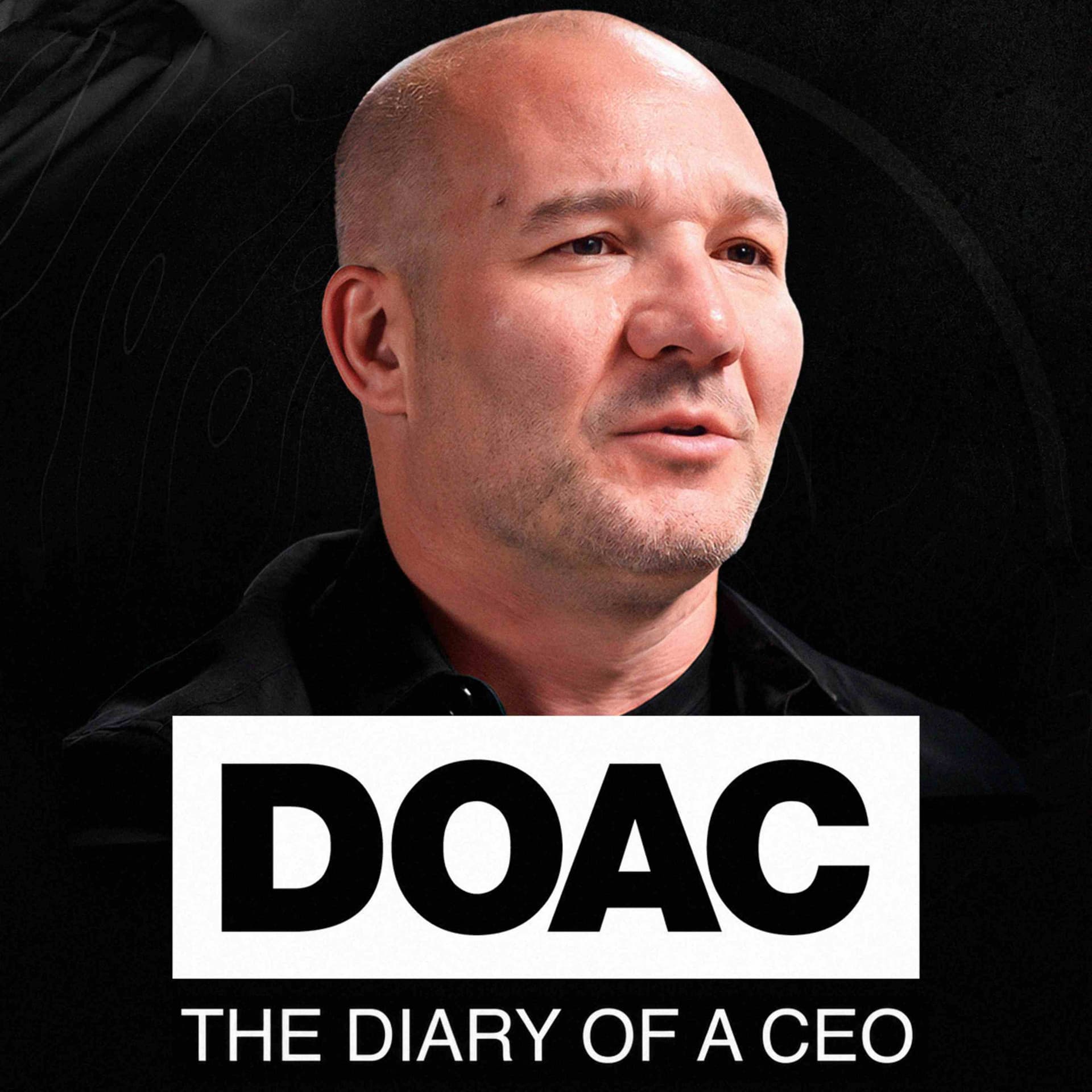
Podcast Notes: The Diary Of A CEO with Steven Bartlett
Episode Overview
- Title: CEO Diaries: Airbnb’s Founder Brian Chesky on Brutal Rejection, Great Leadership, and The Biggest Mistake Founders Make!
- Description: Brian Chesky shares his journey from cold emails to leading a global giant, emphasizing rejection, resilience, leadership, and the importance of company culture.
Key Themes and Discussions
- The Journey of Airbnb
- Initial Struggles: Chesky discusses the early days of Airbnb, including a significant rejection while attempting to raise funds.
- Attempted to raise $150,000 with a valuation of $1.5 million.
- Received multiple rejection letters, highlighting how initial perceptions of market potential can be misleading.
- Resilience and Leadership
- Importance of Resilience: Chesky emphasizes resilience in the face of adversity, likening the entrepreneurial journey to climbing a mountain.
- Key Qualities of a Founder:
- Biological Parent: Founders have a unique emotional connection to their creation.
- Permission to Innovate: Founders have the authority to make bold decisions, unlike typical managers.
- Intimate Knowledge: Founders understand their business deeply, knowing how to rebuild and innovate.
- The Role of Culture in Company Success
- Defining Culture: Chesky posits that culture is the foundation for future innovation and must be deliberately designed rather than left to chance.
- Crafting Culture:
- Culture is formed through shared behaviors, especially in difficult situations.
- Leadership sets an example; cultural principles must be demonstrated through actions rather than mere words.
- Emphasizes the need for a culture of excellence where high standards are maintained.
- Lessons from Steve Jobs and Succession Planning
- Cultural Legacy: Discusses how Steve Jobs’ enduring principles and culture at Apple allowed it to thrive posthumously.
- Challenge of Succession: Acknowledges the difficulties of ensuring company longevity beyond the founder's lifetime.
- Call for More Entrepreneurs
- Encouragement for Entrepreneurship: Chesky advocates for a society with more entrepreneurs, especially women, to drive economic growth and societal change.
Key Takeaways
- Persistence in Entrepreneurship: The journey of a startup is fraught with challenges, and resilience is crucial for overcoming hurdles.
- Culture as a Competitive Advantage: Culture is not just a set of values but the operational essence of a company that can differentiate it from others in the market.
- Leadership Influence: Effective leadership is about modeling desired behaviors and creating an environment that fosters innovation and excellence.
- Building a Sustainable Legacy: Founders must think about the long-term health and culture of their companies to ensure they can endure beyond their tenure.
Conclusion This episode of "The Diary of a CEO" is a profound exploration of entrepreneurship through the lens of Brian Chesky's experiences. It highlights the significant role of resilience, culture, and leadership in building a successful company, providing valuable insights for aspiring and current entrepreneurs alike.
Additional Resources
- Listen to the Episode: [Spotify](https://g2ul0.app.link/WgBxbVavJTb) | [Apple](https://g2ul0.app.link/89nODBivJTb)
- Watch on YouTube: [Diary Of A CEO YouTube Channel](https://www.youtube.com/c/%20TheDiaryOfACEO/videos)
- Follow Steven Bartlett:
- [Instagram](https://www.instagram.com/steven)
- [LinkedIn](https://www.linkedin.com/in/stevenbartlett-123)
---
These notes summarize the key discussions and insights from the podcast episode, providing a structured format for easy reference and understanding.
Written by AI. May contain mistakes. Listen to the episode to check what was said.
Transcript
Automatic transcript. May contain errors.0:01The Direvcio's brought to you by Progressive Insurance. Do you ever think about switching insurance companies to see if you could save some cash? Progressive makes it easy. Just drop in some details about yourself and see if you're eligible to save money when you bundle your home and auto policies. The process only takes minutes and it could mean hundreds more in your pocket. Visit progressive .com after this episode to see if you could save. Progressive casualty insurance company and affiliates. Potential savings were very not available in all states. This was one of my favourite business conversations that I've ever had on the Direvcio podcast and it's frankly set the bar for every CEO or co -founder that I ever interview.
0:38Brian taught me more so than any other guest I've ever had on the show, how important hiring, culture and team building is. The reality of running a small business is that switching off is never really an option. Even when you try the ideas, the excitement and all the responsibility is always there. And because you're always switched on, it's only fair that your hiring partner should be too. LinkedIn jobs who are the sponsor of this moments episode has been that hiring partner for me and for years because it's always working away in the background. My team can post our jobs for free, share them with our networks and reach top talent all in the same place.
1:13So let's get into today's conversation. At the very beginning, I saw this email which I think is really important because maybe it's the most important thing because there are going to be people starting companies now that are getting a lot of emails like that. This is from August 1st, 2008. By the way, so let me give the context this email. So Joni and I were trying to raise money. For everyone trying to raise money, I want you to know that Airbnb was trying to raise $150 ,000 at a $1 .5 million, I think post money valuation. I'll give you that right now. Exactly. And here's one of many rejection letters.
1:55Hi, Brian, apologies for the delayed response. We've had a chance to discuss internally and unfortunately don't think that it's right for filling the blank investment firm from an investment perspective. The potential market opportunity to not seem large enough for a required model. Now, I want you to just put this perspective. Airbnb handles nearly as much money as the entire GDP of the country of Croatia today. One in about every $1 ,500 spent in the world, about $1 spent on Airbnb. That's a pretty large market. In our business is pretty much the same idea as the idea that we propose that person who said our market opportunity wasn't large enough.
2:35So there's probably a myriad of lessons in that, aren't there? And I think that it's a reminder that the world doesn't just change or at least it doesn't just transform towards our dreams, ideals and ambitions that require certain types of people. We might call them entrepreneurs, inventors, all sorts of people in different domains that believe the world could be a little different than the one that they live in. They have the audacity to believe that they can do it. And they have the ability to convince other people to go on that journey with them. But along that journey, everything's going to be different.
3:11You're going to get lost. You're going to be cold. You're going to have obstacles. Things are going to attack you. You're going to fall down pits. And the question is when people are cold and they're shivering and they're not sure what to do when you're running out of resources and rations, can you find your way up that mountain? Do you know why you're going? Can you invent all these different apparatus? Like there's a stream. You can't figure out. You can build a bridge to cross this stream with the limited resources you have. Can you recruit people along the way? And can you beat the drum? And when people are tired and they say, I want to sleep and say, yes, we're going to resp.
3:44But we've got to go just 500 more steps. I know it's right over the edge. I think we can do a little bit better. And can you push people outside their comfort zone? Not enough to hate you, but enough to feel like a trainer. You're like three more reps and you don't want to do it. And then that very moment, they're not your friend. But the end of work, you're like, thank you for pushing me that hard. This is that kind of person. And can you take divergent ideas that no one's ever seen before and just continue to reformulate them? Could you store these ideas in your head? A thousand competing ideas and just reformulate them in your mind.
4:24The turns out this stuff is difficult, but you can work your way up there. Most people watching this have the skill set to be an entrepreneur. Not everyone has a skill set or the desire to run a giant company. I don't think everyone needs to do that. But a lot of people have the skill set to do something, to start something. This is what you need to get up the mountain. And the problem is imagine we got up the mountain. And then somebody was dropped from a helicopter. Having never walked up the mountain and you tell them, okay, now you lead this group up the next mountain. Can you imagine how hard it be for that person to drop from the sky?
5:03Or maybe they joined a third of the way up the mountain, but they weren't there at the very beginning. You see a founder brings three things that a professional manager doesn't have. The first thing a founder has is they're the biological parent. So you can love something, but when you're the biological parent of something, like it came from you, it is you. There's a deep passion in love. The second thing a founder has is they have the permission, right? Like I can't tell another child what to do. But if they were my child, that probably could. I have the permission. And so you have a permission.
5:38I could rename the, I could rebrand the company and a professional manager would probably come and say, I can't do that. But I know how he named it. I know how he branded it. So you know what you can change. And the third thing that a founder brings is you built it. So you know how to rebuild it. You know the freezing temperature of a company. You know what temperature it melts. You know like what this looked like before it was tooled. Where it came from, the alloys, where they, where they were sourced from, you're not just managing it, you're building it. And the problem is professional managers typically don't have any of those three.
6:13It needs not in the abundance of founders, but the problem with founders, there's two problems. The first is most of them cannot scale the run a giant company. And even if they do, the last problem is they don't live forever. And companies, great companies, usually want to live longer than humans do. And so therefore you end up with the inevitable challenge that Disney and Steve Jobs had, which is succession planning. And actually both of them died prematurely and didn't maybe Steve prepared more than, than Walt did. And that's the last step of the journey. But I think there's something really special about founders and founder -led companies.
6:51And I think that if you want the world to change, we need more entrepreneurs. We need more founders. If you want to empower more women, you should make more women entrepreneurs. If you want to lift up more economies around the world, you should lift up entrepreneurs in those economies. It's one of the greatest ways to create wealth, to change the world, and to just change the trajectory of society. So powerful, Brian. It made me think about what Steve Jobs did leave behind. And that's maybe where the word culture comes in. Because I would have bet against Apple surviving and flourishing in the wake of Steve Jobs' passing, because Steve was so, so special.
7:28But he clearly left a set of enduring principles behind culture. You know, I spoke to Danielek, as you said, as a friend of yours. He said to me, 20 years old, didn't care about culture. 30 years old didn't know what it was. At 40 years old, I think company culture and team culture is the most important thing. When you think about culture, how important is that? What is it? How does one go about creating it? It's funny you asked this question. Because last week, I sent an email to the entire company to all 6 ,000 people. And my email was about culture and why it's important and what it is. Can I read you a portion of it?
8:04What a privilege. So the context of email is I hired a head of people in culture, like a different name for HR. Jony and I have always believed that you must design the culture you want. Otherwise, it will be designed for you. And you might not like what emerges. The people and the culture they create at the heart of Airbnb. Simply put, culture is what creates the foundation for all future innovation. In the long run, the culture is the most important thing you will ever design. Because it's the engine that designs everything else. All good designs start with a vision. And I want working at Airbnb to feel like working at the world's largest startup.
8:56I believe we can grow into one of the largest companies in the world without feeling large. A company that's still like Run Like a Startup. With the best people in every discipline collaborating at high speeds with intense focus, all more maintaining middle bureaucracy and communication layers. And to make this happen, we're going to reimagine the HR function. Because too many companies have lost sight of which HR was originally designed to do, reducing it to merely an administrative function. Yet, at score, HR is about people in culture. And it's one of the most strategic functions within a company.
9:30That's why we don't call it HR. Because it should be about bringing out the very best in people. Most of all, I want us to feel like we're building one of the most creative places on Earth. A company that brings together some of the best people of our generation to dream up new products and services that capture the world's imagination. A place where years from now, people would say, if I was alive during that time, that's where I would have wanted to work. I literally wrote that email last week about culture.
10:06It's so incredible. Because the greatest leaders that I've met all arrive at the same conclusion about culture, even if it takes them 10 years or 20 years or whatever they arrive there, the question though, because so many CEOs could send that email. Yeah. Everyone could just, you know, they just heard Brian say it's the copy and paste and send it to their team. The question is, how do you actually create that? It's so great. So big, huge insight here. I used to think you talk about the culture and you talk about how important it is. And you write out a list of, well, what is your culture? Well, our culture are a bunch of principles or values we live by.
10:50So what makes us most unique? Let's do a session. Let's write out a list of our values. Now let's tower one of the values. Let's print them on the walls. Let's have people repeat them. Let's keep telling people culture is important. And that stuff can help a little bit, but it's not how you build culture. So let me give you a few thoughts. Your culture is the shared way you do things. And often, they're based on lessons you've learned. And the lessons you tend to remember the most are the ones that are seared in you. They come from trials and tribulations from your most difficult times. It's the way you rise the occasion and the face of adversity.
11:36Your culture is the behaviors of the leaders that can mimic all the way down every single person. Your culture is every time you choose to hire someone. Every time you choose to fire someone, every time you choose to promote somebody. It's the way everyone does everything. And the way a leader designs the culture is not by writing out a list of values. It's by basically leading by example every single day and taking a survey of every single thing happening and constantly shaping it, pruning it, like a gardener. You know, and you don't just allow the culture to happen. You design the culture. You have an idea of what you want to do.
12:18And you're just constantly getting this group together. You know, you might have a culture of excellence. And a culture of excellence means I review all the work. And I say not good enough, not good enough, not good enough. And eventually, I could not join the meeting, but people know what I'd say. They'd say it's not good enough. This is our standard. And the moment I cannot be in the room, and the same action happens as if I was in the room, that's the moment it goes from management to culture. So it's like a golf swing. To teach a golf swing, you've got to like probably I don't play golf, be it the instructor has to watch the person.
12:57And at some point, the person learns how to swing a golf swing without the instructor there. That's the difference between management and culture. And culture is something that people learn to develop these shared instincts. And it's so important because it's your ultimate intellectual property. Not your technology, not your recipes, not your exclusive contract vendor relationships. The way you know how to do something, that is the most important thing a company has. Because all company is, is a bunch of people, a bunch of money, and a direction that those people are using those resources to go towards.
13:34People resources strategy. And the culture is a thing that bonds those things together. I hope you found today's conversation helpful and insightful. If you're ready to join two and a half million other small businesses already using LinkedIn for hiring, head over to LinkedIn .com slash D O A C now. That's LinkedIn .com slash D O A C to find your next exceptional hire.
13:59It is a really interesting time to be running a business. Tariff and trade policies are in flux. The pace of innovation is relentless and staying relevant means constantly reinventing how you operate. If your business can't adapt in real time, it risks falling behind. Which means leaders need complete clarity across every part of their operation all times. This is what our sponsor NetSuite by Oracle already delivers to 41 ,000 companies. NetSuite is an AI powered business management suite that brings accounting, financial management, HR, and project planning into one platform. And because you've got this one source of truth, you can make fast decisions based on real -time data.
14:33Or if you're looking ahead, NetSuite's forecasting tools give you a clear view of what's coming next and how to prepare for it. NetSuite helps you spot bottlenecks, manage your margins, and stay agile. So if your business is generating seven figures or more, download the free ebook, which is called Navigating Global Trade, three insights for leaders at NetSuite .com slash Bartlett. That's NetSuite .com slash Bartlett.
From the publisher
From cold emails to global dominance - the Airbnb story began with rejection. In this unmissable episode of CEO Diaries, Airbnb founder and CEO Brian Chesky reveals the brutal truth about rejection, resilience, building world-changing companies, and the one thing more important than product or profit: culture.
Visit - www.linkedin.com/DOAC
Listen to the full episode here -
Spotify -https://g2ul0.app.link/WgBxbVavJTb
Apple - https://g2ul0.app.link/89nODBivJTb
Watch the Episodes On YouTube -
https://www.youtube.com/c/%20TheDiaryOfACEO/videos
Learn more about your ad choices. Visit megaphone.fm/adchoices