
In short
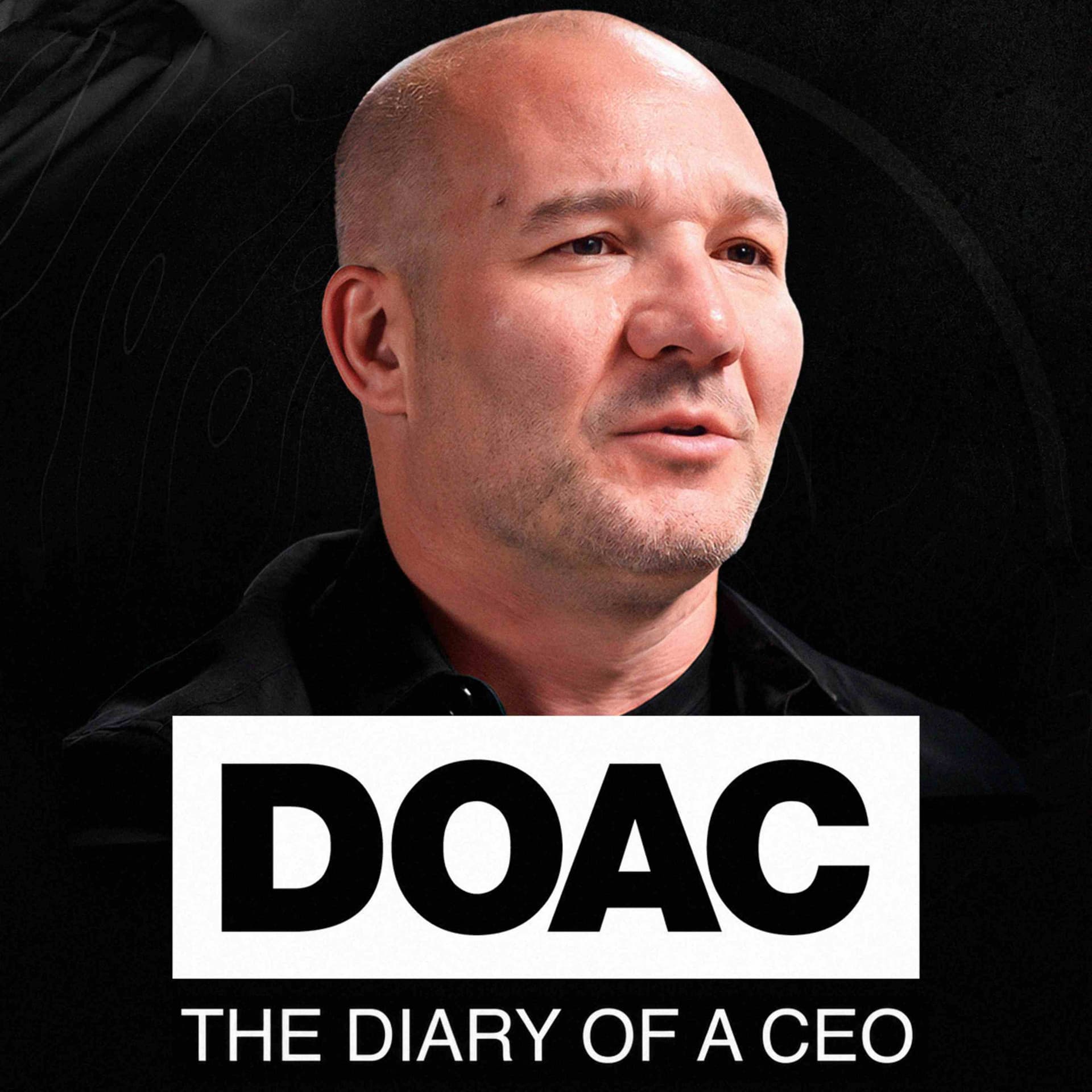
Podcast Episode Notes: The Diary Of A CEO with Steven Bartlett
Episode Title
Highlight: How To Actually Become Disciplined WITHOUT Willpower… The Leading Behaviour Expert
Episode Description
In this episode, Chase Hughes, a leading expert in human behavior, discusses how small changes in habits and mindset can significantly improve discipline. The conversation centers around leveraging focus, emotion, and repetition to create powerful, lasting habits.
Key Themes
- Understanding Discipline
- The Role of Habits
- Small Changes Leading to Big Outcomes
- The Importance of 'Why'
- Utilizing Focus, Emotion, and Repetition
---
Key Takeaways
- Redefining Discipline
- Chase Hughes defines discipline as the ability to prioritize the needs of your future self over the present self.
- Example: Choosing between going to bed early or going to the gym—both can be seen as discipline.
- Shifting Mindset
- Looking back with gratitude for past actions can create a source of motivation (dopamine) for present decisions.
- Strategy: Set up your environment to support future self-care, such as preparing coffee or clothes the night before.
- Start Small
- Emphasizes the importance of beginning with small, manageable habits rather than overwhelming yourself with large goals.
- Example: Leaving a post-it note for yourself to find later can boost motivation.
- Understanding Habits vs. Goals
- Most people mistakenly focus on goals rather than the habits that lead to those goals.
- The aim should be to create habits that naturally lead to desired outcomes (byproducts).
- The Importance of 'Why'
- Understanding the reason behind your actions is critical for sustaining discipline.
- Equation for Discipline:
- Why + Psychological Reinforcement - Perceived Cost = Discipline
- The strength of the 'why' plays a crucial role in maintaining habits.
- Emotional Drivers
- Emotion is essential in driving behavior. Visual cues (like vision boards) can help reinforce emotional connections to goals.
- Disrupting routine and environment can help break old patterns and promote new behaviors.
- The Formula for Change
- Focus + Emotion + Agitation + Repetition = New Habits
- Focus: Directing attention to goals.
- Emotion: Tapping into the emotional significance of goals.
- Agitation: Changing your environment to disrupt old habits.
- Repetition: Consistent exposure to new stimuli.
---
Practical Tips
- Micro Habits: Focus on integrating small changes into daily routines before scaling up.
- Visual Reminders: Use vision boards or digital displays to keep goals front of mind.
- Daily Reflection: Cultivate gratitude for past decisions to motivate future choices.
- Change Environments: Rearranging your space can help prompt new habits and behaviors.
- Engagement with Tribe: Involve friends or public commitments to increase accountability.
---
Conclusion
The episode highlights the notion that discipline is not an innate trait but rather a skill that can be cultivated through intentional changes in habits and mindset. By understanding the 'why' behind our actions and leveraging emotional connections, individuals can create a more disciplined life without relying solely on willpower. The insights provided by Chase Hughes offer valuable strategies for anyone looking to enhance their self-discipline and achieve their goals more effectively.
---
For further exploration, listeners are encouraged to check out the full episode on [Spotify](https://g2ul0.app.link//qeaGbuGkwRb) or [Apple](https://g2ul0.app.link//cFLUNTJkwRb).
Written by AI. May contain mistakes. Listen to the episode to check what was said.
Transcript
Automatic transcript. May contain errors.0:28It takes a little bit of time to realise this as a founder. scale-up mode and that's the stage where we found it mission critical to use NetSuite. We no longer have to juggle multiple systems and having everything together has reduced the number of manual tasks and of course the number of errors. Over 43 ,000 businesses have chosen to future-proof their business with NetSuite. So if you'd like to learn how it can help your business, right now get the business guide Demystifying AI free at netsuite.com slash Bartlett. That's netsuite.com slash Bartlett. How do I fix my discipline if I'm an ill-disciplined person?
1:01Understanding what discipline is is the most critical element. And I define this differently than most people. So I define discipline as your ability to prioritize the needs of your future self ahead of your own present self. And that's it. That's all that discipline is. I'm prioritizing the needs of future me. you're trying to think of a, no, I was thinking of two scenarios. The scenario one is I go home tonight, right? Because I go to sleep, I get to bed early. And there's this other thing I'm thinking about doing after this, which is going to the gym. Yeah. And I'm like, I was just, as you're saying, I was thinking both help future me.
1:43Yeah. I was like, which one is discipline? I think they would both be disciplined. Okay. So the moment that we start understanding that, if I could just make decisions that are prioritizing future me. Then we go back to where am I getting my dopamine from? And I want past tense me to be a source of dopamine for present tense me. Because most of us look back with regret. I shouldn't have drank that much. I shouldn't have mouthed off at the family reunion. You know, whatever it is. I shouldn't have overslept. If I can start looking backwards with gratitude, that's the fastest way to make discipline dopamine generating.
2:27So the tricks are to start small. So like when I go to bed at night, I will pop open the little Keurig coffee thing and stick the thing in there, put a cup under there. Everything's like ready to go. So when I wake up in the morning, I just go, bam, and everything's ready. I'll get my clothes out, everything kind of lined up, ready to put on for the next day. So I'm lowering the threshold of how much attention I'm spending. So I'm going to set my life up in every single way that I possibly can as if I were a butler for future me. So when I wake up in the morning, all this stuff set out, my laundries laid out, my checklist for what I need to do for the day, all the stuff I've got to get on a plane is all laid out by the back door.
3:10I can grab it and jump in the car. Everything that I could possibly do to make my future self go, oh man, that's awesome, and look backwards with gratitude, I'm going to do it. I'll take a hundred dollar bill or maybe a few hundred dollar bills every spring or summer, and I'll stick them in a jacket pocket that I'm not going to use until the winter. And I'll forget about it. And in the winter, I'm looking and now I become a source of dopamine. Past tense me is becoming a source of dopamine for present tense me. That forces me to look in the future, along with like printing that old me photo and putting it all over the house.
3:48But everything that I can possibly do to make myself look backwards with gratitude is what I'm going to start doing. But you have to start small. It's like just going overboard is going to be crazy. And even writing a little post-it note to yourself and sticking it in a jacket or maybe a dress shoe that you're not going to wear for a few months. It means so much to find that. And it's from you. It's not from a loved one. You did it. So you're looking backwards with like, wow, that's amazing. So you're now getting in love and sending gratitude backwards, which automatically means that what's going forwards is concern and care.
4:31The moment I'm always looking back with gratitude, the concern is always going forward in the future. and the concern for present goes away and i'm gonna i'm gonna push that concern to the right out in the future people struggle even with the small things right like getting because it's funny because i watched a video last night about a lady that went to youtube and started her like journey of weight loss and whatever and she was very i think she was 400 pounds or something and she was trying to get down and in the video you watch some people will know who i'm referring to over the space of a year or two years she actually just gains weight so she gets to i think five five hundred pounds or something and as i was watching it you're watching someone who's saying i want to change my life but then is coming on every day and saying i've just gained three pounds i've just gained another three pounds and there's almost this this like visible dissonance that you're observing between this person saying they want to change their life but clearly the actions that they're then taking are like are different to that and many people can relate to that feeling of i want to be this person i mean we're coming up to like we're for anyone that doesn't know we're recording this in december so new year's resolutions around the corner everyone's going to say to themselves who they want to become but it's easier said than done i think what seven eight eight percent nine percent of new year's resolutions will stick yeah so is it just a case of starting small or is there any other tricks to discipline that you can offer?
5:58It's starting small and realizing that all of our lives are about habits, not goals. But what are the habits that make my goal a byproduct? Everything is about byproducts in your whole life, whether you know it or not. So instead of setting goals, set like the byproduct, what are the byproducts I want to have for this year? And then what are the habits that make that up? So what the big mistake most people make is they see somebody like you, you go to the gym, very often. You probably eat really clean. I know you don't drink alcohol because I brought you a flask and gave it to your team. But they took it.
6:36They did. So somebody who doesn't live a very disciplined life would look at you and say, God, I want to be like Steven. He's got all this discipline. He's going to the gym. But they don't understand that you going to the gym isn't discipline. It's a habit. So you're not like forcing yourself to go do something. You're doing something that's a habit for you. The discipline only is necessary. You only need like a teaspoon of it at the very beginning to get this habit started. So start micro habits first and then bigger habits. So the discipline is not something that you should be seeing if you're seeing someone eat healthy and go to the gym, do all the stuff you want to do.
7:15Those are habits. And that person, you're not seeing a discipline at work right there. You're seeing a habit. The discipline was just at the beginning. And I think if more people knew that, that you're just exercising a little discipline at the very beginning, and then it's just, that's just what you do. It's like somebody who sees someone brushing their teeth every day. Like, wow, that's so much discipline. It's just what we do. It's a habit. but there's an interesting part of this um like habit equation you could say or like discipline equation which is the why part which is like why does this matter to you and is it important to get really clear on why this thing matters to you whether it's the gym or like because when i i was playing around with this discipline equation idea for my last book and the kind of conclusion i landed at was that to be disciplined, you have to understand the reason why something matters to you.
8:12You can say that in other words. Plus the psychological reinforcement you get from the pursuit of the thing, minus the, you could say, the psychological or perceived cost of the pursuit of the thing. So in the context of brushing your teeth, I think I know why it matters, right? Because if I don't, then I have to go to the dentist, my teeth fall out, I look ugly, whatever it might be yeah the is it rewarding and fun to do no not really and minus the cost of the pursuit it takes two minutes it's not that bad but when that nets out the why is stronger thankfully on net than the cost so the behavior happens yeah but the key part of this equation here is the why part like it's not the key part but it's a central part is the why part Why does this thing matter to you?
9:01Yeah, and how much why? Like how big is the why? Yeah. Because if the why is I need enjoyment in the present moment, then no other why will be bigger. No discipline why will ever be larger. The only why will be why am I eating these Cheetos right now or why am I drinking 20 beers every night? Because that's the only why. So I think once the why starts edging its way into the future, that's the moment where you break the discipline spiral. And you get out of that because your whys are extending into time that hasn't happened yet. Does that equation stack up for you? I like it. A lot. Because I've been saying it.
9:50I wrote about this in my book. The whole idea is why plus like you could say reinforcement minus you could say cost just to simplify it. Yeah. But is there anything missing from this equation? Do you think? Is there anything? I said it to Simon Sinek and he went, let's try it out. And he talked to me about taking his bin out in the morning, like taking the bin out for like the bin men. And it kind of holds up because he's, so the why is if I don't take the bin out, then I'm going to get fined and my bin isn't going to overflow. Pretty strong motivator. The reinforcement, there's no reinforcement.
10:21Getting out of bed at 7am to take your bin out, it's not nice. The cost is also significant, getting out of bed. but the why still. So it's why plus. You could say like why plus the psychological reinforcement from the pursuit of doing it. So DJing, really fun for me. I would say it would be divided by the cost of inaction. The cost of inaction would either add to it, but it's always going to be your perception of the why, your perception of the cost, and your perception of the cost of inaction. And all of that is going to be about, Can I use, can I leverage my focus, the mammalian brain's focus?
11:01Can I leverage authority over myself in some way, over that mammalian part of my brain, force myself out of bed, force these habits to start developing? And then tribe, are my friends involved? Have I made a public agreement about something? And then the emotion, which I think would be the why. And that's the emotional driver. that animal can understand you visualizing yourself better, like looking with a six-pack or whatever it is, but printing it on a vision board. This is why I think vision boards are so important, not because we're manifesting something out of the universe. Maybe it is, but we're definitely showing something that a dog can understand.
11:44It's imagery, and dog can understand images. So we're routinely exposing ourselves to these vision boards on a very regular basis. And if you follow the brainwashing formula, which is focus, emotion, agitation, and repetition, it spells fear. And that is the best way to brainwash yourself to form these new habits and goals. So how can I get myself to focus? How can I build the emotion, which is the why? recurring emotion, not just one at the very beginning. How can I continue to make it emotional? Or maybe I can make the cost of inaction emotional. Maybe I can buy the app that makes me look fat or one of those things.
12:27And then agitation is if I'm waking up habituation, which you just talked about. If I'm waking up in the same house every day that I've been fat in, let's say I wanted to lose weight or whatever, the same house every day that I've lived X way in, I'm seeing the same hallway, same rug, same couch, everything looks the same. My brain says, oh, I'm here. I'm going to follow that script because our brain writes scripts for us to save us time. So agitation means I'm going to disrupt my environment so much and so often that my brain has no chance to default to an older script. So I have clients that repaint their house.
13:05They rearrange their furniture. They change up their wardrobe a whole lot. They get a completely new haircut. So they're not even looking at the same person in the mirror anymore. They do everything you can to disrupt that rhythm. It's exactly what we would do with a detainee if we were trying to brainwash someone who is in an intelligence interrogation. So I'm disrupting environment like crazy. And what would we do with a dog? Are we going to let it do everything it's always done? Are we going to change that environment? We're going to change the behavior, change the leash, change the collar, so it's not everything exactly the same.
13:41And then repetition. Repetition, which is just repeating the same thing over and over. So like if even just coming to the vision board, the last client I had, I had him go to Best Buy and get a 70-inch TV and then get one of those cheap tablets, those$300,$200 tablets, and just duct tape it to the back of the TV and put his vision point, vision board on that thing, it's like 900 slides of just nonstop photos, but it runs 24 hours a day in his office. Even if he's not there, he walks in the morning, it's on nonstop repetition because him having to turn it off at night means he's got another point of discipline.
14:19I've got to turn that TV on, start that little PowerPoint thing. But that's nonstop and it's just nonstop exposure. So can I generate focus? That's a lot of focus on the goals. Then there's emotion. You're seeing all of that agitation, which is disrupting my life patterns and repetition, which is just over and over and over. How can I re-expose you to the same stimuli, re-expose myself to the same stimuli?
14:50It takes a little bit of time to realize this as a founder, But once you do, it's something you can't unsee. That having the right systems in place with your business is critical. One that's helped me across all of my investments is NetSuite, the number one AI cloud financial system and sponsor of today's conversation. Through their streamlined platform, you'll find all of your accounting, finance, management, inventory, and HR in one place. And their technology has been a massive unlock for all of my companies, especially for my team at Flight Story. As over the last year, we've moved out of startup mode into scale-up mode.
15:21And that's the stage where we found it mission critical to use NetSuite. We no longer have to juggle multiple systems and having everything together has reduced the number of manual tasks and of course, the number of errors. Over 43 ,000 businesses have chosen to future-proof their business with NetSuite. So if you'd like to learn how it can help your business, right now, get the business guide Demystifying AI free at netsuite.com slash Bartlett. That's netsuite.com slash Bartlett.
From the publisher
Discipline isn’t something you either have or don’t—it’s something you build. Chase Hughes, a leading expert in human behaviour breaks down how small changes in your habits and mindset can transform your ability to stay disciplined. Learn how to leverage focus, emotion, and repetition to create powerful, lasting habits.
Listen to the full episode here -
Spotify- https://g2ul0.app.link//qeaGbuGkwRb
Apple - https://g2ul0.app.link//cFLUNTJkwRb
Watch the Episodes On Youtube - https://www.youtube.com/c/%20TheDiaryOfACEO/videos
Chase: https://chasehughes.com/
Learn more about your ad choices. Visit megaphone.fm/adchoices