In short
Podcast Summary: The Diary Of A CEO with Steven Bartlett
Episode Details
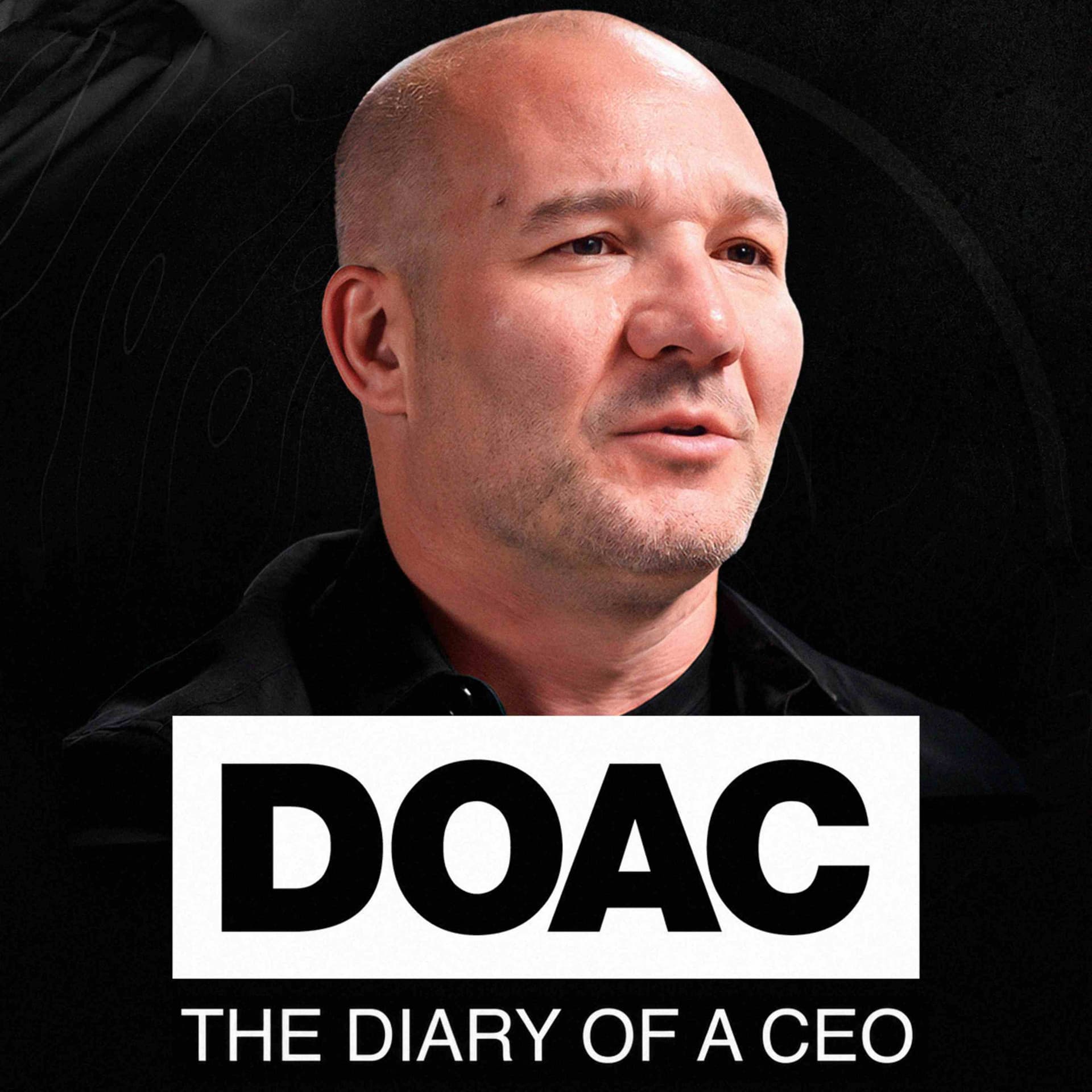
- Episode Title: Moment 120: The ONE Skill, We Can All Learn, That 95% of Millionaires Have!: Alex Hormozi
- Guest: Alex Hormozi - Entrepreneur, Investor, and Philanthropist
- Host: Steven Bartlett
- Podcast Description: A journey into the remarkable stories and untold dimensions of the world’s most influential people, experts, and thinkers.
Episode Overview
In this episode, Alex Hormozi shares his insights on the key skills and strategies that can lead to becoming a millionaire. He emphasizes the importance of choosing a path suited to an individual's preferences and discusses the concept of skill stacking as a crucial element in personal and professional development.
Key Concepts
Pathways to Success
- Multiple Routes to Wealth: Alex highlights that there are various paths one can take to achieve millionaire status, dependent on personal choice and skill application.
- Entrepreneurial Ventures: Starting a business, either independently or by leveraging core skills, can be a successful route.
- Collaboration and Skill Combination: Working with others to combine complementary skills can create a powerful and unified organization.
Skill Stacking
- Definition: The process of adding new skills on top of an existing core skill to create a unique and valuable skill set.
- Example Progression: From learning basic math to becoming a CFO by acquiring additional skills like accounting, tax law, and capital markets knowledge.
- Importance of Continuous Learning: Each new skill builds on the previous one, enhancing overall capability and value.
Application of Skills
- Market Relevance: It's crucial to not only develop skills but also to understand how to apply them in markets where they are in high demand and command high value.
- Personal Story by Steven Bartlett: He shares how he applied his marketing and social media skills to industries where they were scarce but highly needed, resulting in significant financial gains.
Notable Discussions
- Artist vs. Entrepreneur: The decision between focusing on perfecting an art or mastering the business side of things.
- Example of Jay Z: His career as a case study of skill stacking, where initially having rhythm led to learning rapping, promotion, and eventually building a music label.
- Investment Banking Insight: Understanding market dynamics can directly influence the valuation of a business, as experienced by Steven Bartlett during his company's IPO process.
Takeaway Messages
- Skill stacking creates a unique blend of capabilities that can significantly increase an individual's value in the marketplace.
- Identifying and aligning one's skill set with industry demands enhances both personal and business growth opportunities.
- Continuous self-education and strategic application of skills are key to achieving financial success and entrepreneurial growth.
Additional Resources
- Alex Hormozi: [Instagram](https://www.instagram.com/hormozi/), [YouTube](https://www.youtube.com/@AlexHormozi)
- Steven Bartlett:
- [My New Book](https://g2ul0.app.link/DOAC)
- [Instagram](https://www.instagram.com/steven)
- [LinkedIn](https://www.linkedin.com/in/stevenbartlett-123)
- Podcast: [Full Episode](https://g2ul0.app.link/TIVYc9ZjNu), [YouTube Episodes](https://www.youtube.com/c/%20TheDiaryOfACEO/videos)
This episode provides valuable insights into how skill acquisition and application can drive financial success, emphasizing the importance of lifelong learning and strategic market engagement.
Written by AI. May contain mistakes. Listen to the episode to check what was said.
Transcript
Automatic transcript. May contain errors.0:03Kaleb in the corner who works for you, he's a creative director. If Caleb said to me, you know, Caleb said to you, he said, Alex, I want to be a millionaire.
0:15What would you say to him? What advice would you give to him? He says, listen, I've heard you doing all these podcasts, you're running around, I've been filming the camera, but I've been filming, I've been listening. And this millionaire stuff, this sounds amazing. So what advice, how old are you Caleb? 29. What advice would you give to 29 year old Caleb if he said to you, Alex, how do you know me? How do you think I become a millionaire? There's a lot of ways to do it, it just depends on which way you want to go. So say, first off, you can stay at acquies, there's not come, that'll probably happen.
0:44On a long enough time, we're out soon just because we're going to get really big. We're already pretty big and we're just getting started. So like I genuinely believe that and that's 100 % my goals at every single person that we have. It becomes very, very wealthy because I'm willing to die and it's not going to matter anyway. And if everybody else can make some too, great. So that is a path. Another path is he peels off and goes on his own and starts a business of some sort. And so it depends on whether he wants to make the business itself what his core skill is, which would be like media and maybe services around media, or using the skill that he has of media in an opportunity to get to or three other people to maybe co -founded with who have other complimentary skills and then he just runs that division or portion of the business within the larger context.
1:31And that's like a classic question of like, I'm really good at making wallets. Like, what do I do? It's like, well, you can continue to make them and then when you can't make as many as you have demand because you're so good at it, you can either raise the price and just continue to keep raising the prices until eventually become Versace of wallets. And you make tons of profit but you don't have tons of units and that's okay in your luxury brand. Or you put on the business owner hat and you say, okay, how do I mechanize the wallet building process and I become more business -y. And so I think it's like, do I want to be the artist or do I want to be the entrepreneur?
2:05Both of them are fine. It depends which one you feel like you're more naturally inclined to or have a higher likelihood of success doing. I like the game of business. I've played lots of different games in terms of industries. Like, I like the game overall. I don't feel like I have a particular art. I don't think I'm really good at any aspect of business. I feel like I've been decent enough to not make one of them the constraint. I'm not a great copywriter but I'm good enough that that's not going to be the limiter. I'm good enough at hiring that I can make sure that that's not the limiting factor.
2:35And so that's kind of how I think about it in terms of business growth overall. And so it'd be the same thing with Caleb. It's like, we have to identify what the constraint of the system is and then deconstrain it. When you say talent stacking, if I do say that a few times, what do you mean by that? So this is one of my favorite topics. Many skills like 1 plus 1 equals 5 when you put them together. So let's say you have somebody who's really good at math in the beginning. That as a skill, not super monetizable. Okay. Well then you learn bookkeeping. Okay. Well now you had a proclivity for math but you learned something that has value in the business world.
3:10Okay. Then you learn to get your CPA and I become an account. Okay. More valuable. Then you start studying around tax law and insurance and you're like, oh, significantly more valuable. Then you learn how to how capital markets work and how debt markets work. Right. And you understand how mergers and acquisitions work. And all of a sudden you're a CFO and then you learn how to sell and promote a little bit. And all of a sudden now you're a rainmaker. And so you still need to be good at math. But when you stack these other skills on top of it, the original math skill becomes significantly more valuable when you have these skills on top.
3:46But each one kind of requires the one before which is why one of the things I hate about kind of the entrepreneur world a little bit is like they'll learn something new and then poo poo the thing before. It's like I'm not upset up the teacher who taught me arithmetic because I learned algebra. One was necessary for the next. And so as entrepreneurs, a lot of times it takes I think the self awareness to say like where am I at on my skill stacking adventure. Right. And each skill every skill you add to your skill tool belt makes the rest of your skills more valuable, which is why I think it's so cool, which is why I'm such a big advocate for education overall.
4:23And that's I mean mission of that was not going to make business successful with everyone. That's why put all this free stuff out there is his like if we can give people enough skills, they'll be able to stack them on their own and then just achieve whatever they want in a totally different way if you allow me to go there is like you look at Jay Z right. Maybe you some of you naturally had rhythm right. And so then all of a sudden he learned how to rap, okay took his rhythm put in a rap, okay. And then he made his first CD, okay. And then he learned how to promote, ooh, significantly more valuable.
4:50And then he learned how to make a label and then he learned how to recruit other artists. And so he still needed to learn how to know how to promote the other artists if you didn't how to promote at all he wouldn't be able to do it. But once he had the label, he got significantly more leverage on the skill of promotion. And he could recognize people because of his skill in rapping and rhythm. And so like each of these skill stacks on top and then eventually he he pinnigled into Beyonce as his as his top skill. I'm just kidding. That's good. Where is he going? But no, but like that's the idea. So like, and that's why I'm just like learn the skill, find the next skill.
5:25And the nice thing is that it doesn't even matter how disparate the skills are. Like if Jay Z is really good at math and understands capital markets and understands the label, those combined tune to another cool melange, my little French word, like mix of skills that's like unique to Jay Z. And the longer you play the game, the more skills you get and the more unique your mix of skills is. And that to me is like the coolest part about business and just like education in general. I stumbled across a bit of a similar but maybe a Jason idea in my career where when I learned, when my company went public on a stock exchange in Europe, I then learned from an investment bank when we're having the meetings with the banks.
6:08We went on this roadshow met 20 different investment banks. We were considering an IPO in another country. They told me that our business would be worth four times more if it was just on a different stock market. If you move it to the NASDAQ, the exact same business would be worth four times more. Which meant that my net worth would be four X just by taking the exact same business and moving it to a different stock exchange. And I thought about that a couple of years later when I was thinking about the skill set that I had acquired in my career, which was this skill set of marketing and social media and entrepreneurship.
6:40And I was thinking you have to not just have the skill but know what market to apply it to and what ended up happening. I've never told this story before, but I looked, I looked for an industry where my skill set was in least supply but highest demand and return the greatest. And it turned out that industry in terms of social media marketing and storytelling. I felt was most in demand and would return the greatest value for companies that were about to IPO. Because essentially when you're going to IPO, if you have a good story, it can swing your valuation by hundreds of millions or in the case of the first company I worked with when their IPO listed at three billion.
7:26Billions. And so my skill set of social media and marketing, I could do what with it. I could go help with local gym and get paid a thousand bucks or I could go help a company that was in the lead up to an IPO. That was where I can potentially had hundreds of millions in value and take seven million as part of an equity deal. So upon leaving my first company, the equity arrangement that I had was valued somewhere between four, I'm going to say between, it depends because the share price fluctuated. But I think on the day of the IPO, the equity that I got for the nine to 12 months work that I'd done was worth in the region of seven to eight million dollars.
8:05Nine months work. Yeah, basically freelance. Yeah. You know, same skill stack that applied to an industry that would would pay me more for the same skills. And so I thought a lot about that. And that's ultimately why we started our company, which is now called Flight Story. We have probably the time of the airing this about a hundred people. We started the company about a year and a half ago. Oh, crazy. And that's basically that's applying the skill set we have to industries where that need it. And we started out in the IPO market, did a little bit of work in this biotech market. And now we've kind of broadened out.
8:36But people don't think about that a lot. You're like, my skill set, where is it in high demand and can pay the most?
8:44Q1 is often when businesses start implementing new systems and processes in hopes of creating efficiencies for the year ahead. And over the course of my career, I've learnt just how crucial having the right systems in places, one which has helped me across many of my investments is net suite. They're also a sponsor of this podcast. Net suite is the number one cloud financial system through their streamlined platform. You'll find all of your accounting financial management inventory and HR in one place. Their technology has been a real game changer, especially for my team at Flight Studio. As over the last year, we've moved out of startup mode and into scale at mode.
9:19We no longer have to juggle multiple systems and having everything together has reduced the number of manual tasks and errors. Over 41 ,000 businesses have chosen to future proof their business with net suite. So if you'd like to learn how it can help your business head to net suite dot com slash Bartlett and free download the CFO's guide to AI and machine learning that's net suite dot com slash Bartlett. Q1 is often when businesses start implementing new systems and processes in hopes of creating efficiencies for the year ahead. And over the course of my career, I've learnt just how crucial having the right systems in places, one which has helped me across many of my investments is net suite.
9:56They're also a sponsor of this podcast net suite is the number one cloud financial system through their streamlined platform. You'll find all of your accounting financial management inventory and HR in one place. Their technology has been a real game changer, especially for my team at Flight Studio. As over the last year, we've moved out of startup mode and into scale at mode. We no longer have to juggle multiple systems and having everything together has reduced the number of manual tasks and errors. Over 41 ,000 businesses have chosen to future proof their business with net suite. So if you'd like to learn how it can help your business head to net suite dot com slash Bartlett and free download the CFO's guide to AI and machine learning that's net suite dot com slash Bartlett.
From the publisher
In this moment the entrepreneur, investor and philanthropist Alex Hormozi gives his best advice for becoming a millionaire. According to Alex there are many ways to reach this level of success, but it is dependent upon the person on which path they want to take to become a millionaire. This can either come from creating a business around a core skill or working with other people to combine their skills into a unified organisation. Alex believes that one of the keys to personal development and success is the idea of skill stacking. This is the adding of different skills on top of an original skill, until you reach a level of having a completely unique and valuable skillset. Listen to the full episode here - https://g2ul0.app.link/TIVYc9ZjNu Watch the Episodes On Youtube - https://www.youtube.com/c/%20TheDiaryOfACEO/videos Alex: https://www.instagram.com/hormozi/ https://www.youtube.com/@AlexHormozi
Learn more about your ad choices. Visit megaphone.fm/adchoices