In short
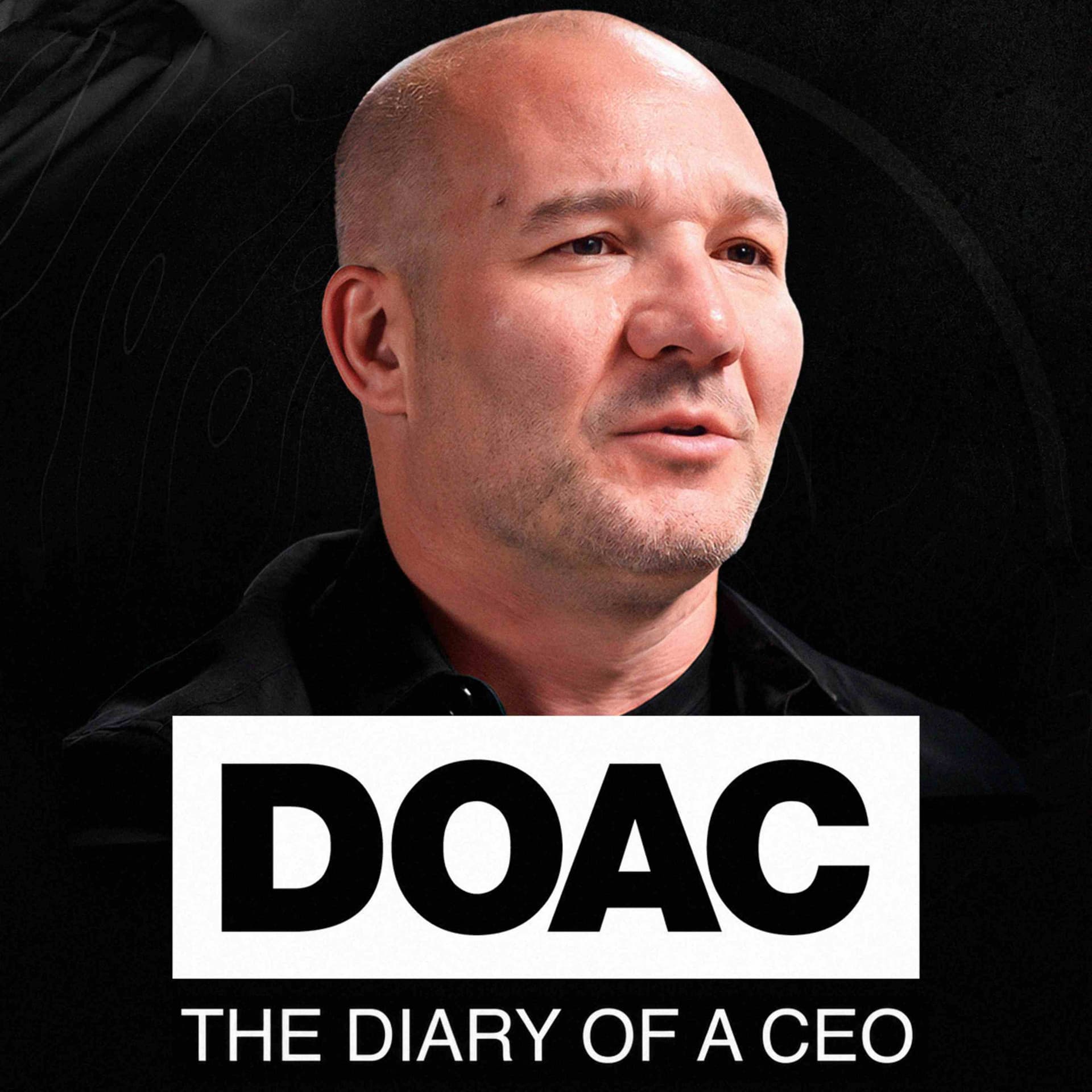
Podcast Episode Summary: The Diary Of A CEO with Steven Bartlett
Episode Title
Most Replayed Moment: Make 2026 Your Best Year Yet! 5 Daily Practices For Health And Happiness
Guest
Ryan Holiday
- Best-selling author and the modern-day philosopher behind *The Daily Stoic*.
- Known for bringing Stoic philosophy to contemporary audiences.
Episode Overview In this insightful moment from a previous episode, Ryan Holiday shares five powerful daily practices rooted in Stoicism that can help cultivate peace, purpose, and resilience in life.
---
Key Concepts and Practices
- Focus on What You Can Control
- Principle: Distinguish between what is within your control and what is not.
- Practical Application: Allocate energy toward things that you can influence.
- Stoic Reference: Epictetus emphasized that our first job is to differentiate between these categories.
- Embrace the Healing Power of Nature
- Practice: Engage in long walks and connect with water (e.g., swimming).
- Benefits: These activities bring peace, calmness, and inspiration.
- Philosophical Insight: Humans evolved to travel long distances, suggesting that movement can aid in mental clarity.
- Challenge Yourself Daily
- Practice: Do something physically difficult each day.
- Context: This could range from light physical challenges to significant feats like running a marathon.
- Purpose: Building resilience and pushing personal boundaries.
- Contribute to the Common Good
- Philosophical View: Meaning in life comes from serving others and making a positive impact.
- Stoic Reference: Marcus Aurelius frequently discussed the importance of contributing to the community and leaving a positive legacy.
- Practice Memento Mori (Remember You Will Die)
- Awareness: Acknowledge the reality of mortality to live with urgency and purpose.
- Impact: This realization can prevent procrastination and inspire meaningful action.
- Historical Reference: Marcus Aurelius often reminded himself of life's brevity.
---
Personal Reflections and Struggles with Stoicism
- Emotion and Stoicism: Ryan discusses the common misconception that Stoicism is about suppressing emotions. He emphasizes the importance of processing feelings without becoming enslaved by them.
- The Balance of Control: Recognizing what is necessary versus what is merely preferred can lead to a more peaceful existence.
---
Final Thoughts from Ryan Holiday
- Legacy of Those Who Passed: Loss of loved ones reminds us of our mortality and encourages us to value our time.
- Call to Action: Reflect on how one spends their time and the impact they have on others.
---
Additional Links
- Listen to Full Episode: [Spotify](https://g2ul0.app.link/vEIEZBwqlZb) | [Apple](https://g2ul0.app.link/MpXjJ9oqlZb)
- Watch on YouTube: [YouTube Channel](https://www.youtube.com/c/%20TheDiaryOfACEO/videos)
- Ryan Holiday's Website: [ryanholiday.net](https://ryanholiday.net/)
This episode provides valuable insights into applying ancient wisdom to modern life, offering practical strategies for health and happiness.
Written by AI. May contain mistakes. Listen to the episode to check what was said.
Chapters
Tap a time to open that second in VOThe Wisdom of Reading
0:45 to 2:20
Exploration of reading as a means to gain diverse life experiences.
“Somebody you don't, somebody doesn't like something that you did, the weather, you know, how much of your energy are you spending emoting about, complaining about, worrying about things that are not up to you?”
Focus on What You Can Control
2:20 to 4:55
Discussion on focusing energy only on what is within personal control.
“All of my best ideas either come usually in the gym or in the shower.”
The Magic of Water and Walking
4:55 to 8:05
The benefits of water and walking for mental clarity and peace.
“I took a spin class, you know, whatever it is.”
Daily Rituals for a Better Life
8:05 to 10:46
Five daily practices to enhance health, happiness, and purpose.
“and you have that in you you know you have that in you we all do and here we are ordering candy on by a robot um and and going ah the air conditioning isn't at the exact temperature that i want it to And number five?”
The Importance of Struggle
10:46 to 14:03
The necessity of facing challenges for personal growth and insight.
“Like the second you were born, that doctor knew with a hundred percent certainty that you would die.”
Embracing Control: The Path to Peace
14:03 to 16:28
Learn how to manage frustrations by accepting situations as they are.
Lessons from Stoic Philosophy: The Art of Acceptance
16:28 to 18:35
Discover the importance of balancing preference with acceptance in daily life.
“If it's not under control, it's not worth thinking about.”
Final Reflections: Life, Death, and Legacy
18:35 to 20:22
Reflect on how the inevitability of death can inspire us to live fully.
Transcript
Automatic transcript. May contain errors.0:03You've read so much. You write so much. You have the wisdom of someone who has lived many, many lives. that's what reading is by the way you know what i mean reading is maybe the only way that you can live multiple lives like you think about the millions of people who have done crazy things groundbreaking things terrible things and you think of all that wisdom it's all there in books and you know it's ten dollars sometimes it's a dollar isn't it funny how similar the wisdom is day yeah i think the more you read that you you come up with some sort of themes it boils down eastern and western philosophy kind of like a horseshoe you know they come come come together towards the the ends but what are those themes what are the themes of living a good life that i must know first would be let's say you focus on what's in your control like what's up to you okay what does that mean in practicality in in day-to-day life so someone cuts me off in traffic Yeah.
1:08Somebody you don't, somebody doesn't like something that you did, the weather, you know, how much of your energy are you spending emoting about, complaining about, worrying about things that are not up to you? And what do the, is there any particular examples from Stoicism where? Well, Epictetus is like, that's our first job in life is to separate things into two categories. Is this up to me or is this not up to me? And it's a resource allocation issue, right? Like if you, are focusing your energy, even half of it on stuff that's not up to you, that's half your energy that's not being focused on the stuff you can make a difference on.
1:49It's like, that'd be like putting 50 % of the power of your car on the wheels that aren't touching the ground. You know, like you want to put it where it's going to get traction. That's a key thing in life is this up to you or not number two uh there's something magical about water and there's something magical about long walks this is where we find a lot of peace find a lot of inspiration find a lot of calmness and stillness like i'm not saying that taking a walk will solve all of your problems i'm just saying that there's very few problems that are made worse by taking a walk same goes for jumping in the swimming pool or the ocean you know what is it about those two things that you believe i mean look i think we evolved traveling very long distances i mean some of the oldest evidence of human beings in america are a set of footprints of a mother carrying and setting down carrying and setting down a child 20 000 years ago in white sand what is now white sands new mexico like that's just what we've been doing for as long as there have been people and there's something about the rhythm of it the movement of it that slows us down forces us to think makes us very present it's just magic and i think there's a reason that every religious tradition or zen garden has a water fountain or something You know, there's just something about sound of water.
3:29It's so true. All of my best ideas either come usually in the gym or in the shower. Yeah. I mean, I don't do a lot of walking. You got it. But in the gym, in the shower, I seem to get my epiphany moments. Yes. Taking a break from what you're doing to go do one of those things often unlocks a lot of stuff. Okay. And you have that as a ritual every day? Every day. Every single day? Yeah, I try to take a walk every day. What else are sort of rituals in your life? The daily rituals? So I would add as a third one, as a ritual, I'd say like do something hard every day. Like do something physically difficult every day.
4:11The art of challenging oneself and pushing those limits and boundaries. That is a essential practice and skill that will help you whatever life has in store for you. and is that is that the third one on this list yeah i'll make that the third okay i love that one so do something difficult every day and that ranges from as small as not eating the cheeseburger to as big as running a marathon yeah i mean not eating the cheeseburger that's not i wouldn't put that i i wouldn't go hey like i really challenged myself today i didn't eat garbage i would say it's like here's the positive thing that i did right like i lifted i lifted heavy rocks you know i went for, I did some sprinting.
4:56I went for a bike ride. You know, I, uh, I went for a run. I took a spin class, you know, whatever it is. The walk doesn't count. The walk is for the mental health. Then you got to do something for the physical health. Okay. So four, I think we have to put something here about like, we are made for each other, right? That the, the idea of, uh, Meaning comes from servicing or contributing to the common good. Mark Surrealist talks about the common good maybe 40, 50 times in meditations. He says we're put here for other people. Our job is to help others to leave this place better than you found it.
5:40Like leave this place better than you found it. To me, that's the meaning of life right there. So what is the positive contribution? what is the legacy you're leaving not how much money did you make you know what records did you break but what is the what is the contribution you are making to the collective that's meaning and purpose and quite frankly your obligation as a human being service service and then the fifth one the fifth one is is i wanted to just pause there and i forgot to ask you for an example on the third one from stoicism of doing something hard yeah like a i mean the greeks trained in wrestling the gymnasia was the central part of the roman life you know you'd go and you'd you'd train you know um and what were they aiming at when they were training what were the means a strong mind and a strong body like to not be flabby and lazy and uh not to fight each other or anything but to no but i mean there's something about combat sports you know that i think is is very primal and probably good for you um you know just something about the challenge of of of pushing oneself not living this sort of sedentary lifestyle i i think that's you know whether you're talking about zen buddhist practicing martial arts or you're talking about the romans you know uh practicing wrestling i think the philosophical tradition is it's it's wrong to think of philosophers as soft i always wonder if there's something innate in human beings that we we're designed to need struggle like we're designed to because if you think about we're in a big building here and with all these all this stuff that humans came up with and the cameras that they they our ancestors just struggled forward to create all this stuff so is it conceivable that they left something in me that says you too shall struggle forward yeah you're you are an heir to people who crossed oceans fought in wars braved the elements you know lived through poverty and depressions sacrificed struggled you know they did all that and you have that in you you know you have that in you we all do and here we are ordering candy on by a robot um and and going ah the air conditioning isn't at the exact temperature that i want it to And number five?
8:28Number five, across all religious and philosophical traditions, there is some version of the practice of memento mori. Remember, you are mortal, that life is short. Talk about top of the list of things that you don't control, right? Death. It is death. And the acceptance and the submission to that fact, the awareness, the urgency, the perspective that that gives you is one of the most essential philosophical practices there is. Like, why do we procrastinate? Why do we not prioritize our health? Why do we not do the stuff that we know we should do? It's because we think we have forever. you know we think we're invincible um and it's only you know in light of a pandemic call from the doctor you know a loved one suddenly going that we get these brief moments of clarity oh wait shit no you can go at any moment um mark sirius says you could leave life right now let that determine what you do and say and think now if he's saying that in a time where he buried six children, six children.
9:48That's how deadly and unforgiving the ancient world was. And he was even then having to remind himself, hey, don't procrastinate. Don't think you have forever. Don't take life for granted. And here, when the average lifespan is so much longer, like inconceivably long compared to the ancients, where you might never see someone die, in your whole life until you are in a hospital bed. You know, we have, we live in even more of a bubble. You know, we are even more sheltered. We are even more detached from the reality of our mortality. As they say, death is the only prophecy that never fails. Like people think about like, well, what would I do if I found out that I had cancer?
10:40Like if you got a terminal diagnosis from a doctor, What changes would I make? But the reality is you do have a terminal diagnosis. Like the second you were born, that doctor knew with a hundred percent certainty that you would die. He just didn't know when. You know, it could be eight years from now. It could be eight decades from now. We don't know. But to live in ignorance or in rejection of that fact is to set yourself up, I think more often than not to waste your life. And so some practice of, hey, time is ticking by now in this very moment. How am I spending it? There's a sand timer behind me.
11:28Oh, there is. That's just there. Oh, yeah, yeah, that's beautiful. Sounds to remind me of that very, very fate. Of all these things, Ryan, what is the stoic wisdom that you continually struggle with the most?
11:47You know, I think people think that stoicism is about the suppression of emotion. That's what the word stoic means to people, right? Emotionless, robotic, superhuman, et cetera. I don't think that's it at all. because I don't think that's possible. If you're stuffing the emotions down, you're pretending they don't exist, they do exist and they will eventually reveal themselves. You've just deferred it, maybe with some interest attached, right? So for me, like when I'm feeling something, when I'm having big feelings, as we say to my kids, you're having big feelings. Well, why are you having those feelings?
12:28What is the cause of those feelings? What does your body feel like. And the practice of going, I'm feeling this, I'm feeling this because I'm feeling as a result of that an inclination to do, and then go, but is that a good idea? You know, is that what I want to do? Like, I've never lost my temper. And then afterwards been like, I'm so glad I did that. You know, I'm, I always regret it. Always. Right. I've never forced my kids to do something out of frustration and then been like, yeah, that was definitely the right call. You know, afterwards, I'm like, we had so much more time than I was under the impression we did.
13:06You know what I mean? It's like, like getting this big fight to leave the house and then we get there and then we're like waiting in the car five minutes to go in, you know, or whatever, right? Like, uh, or you're so stressed about missing the flight and then you, you get there or you don't get there. And neither one of those things is like a matter of life and death. Right. So I think for me, seeing stoicism as the practice of understanding the emotion, processing the emotion, and then not being a slave to that emotion is the practice of stoicism that I think I struggle with. But I think when you read the private thoughts of the Stoics, you see that they were also struggling with.
13:53you know um people are frustrating things are annoying you know things go sideways but then how you deal with that that's what that's what matters and that's the control you have yeah and it is a practice isn't it because we all get frustrated with things i get frustrated with so many things yeah because you have high standards you have expectations wanting things to be a certain way needing them to be a certain way that's like the root of so much of the tension and problems that we we have and the question i ask is why why do i need them to be a certain way yeah you don't you go i need everything to be a certain way or i won't be able to do what i do and then you're like wait how fragile am i that i can't i can't adjust i can't adapt you know what i mean like you it's because you can want it or request it or you think you should have it that's what sets you up but epictetus's thing is he says like uh don't want things to be a certain way want them to be the way that they are that is the path to peace and i think about it's like hey like if i wake up and i go i need the weather to be a certain way today well then there's a pretty big chance that i'm not gonna be happy i was talking to my friend his name shaka smart he's the head basketball coach at marquette he he lived in texas he was the head coach at texas and um he uh he moved to marquette where it's colder and i said what's it what's the weather shift like i said something like uh you know are you are you more of a hot weather guy or a cold weather guy you know and um he goes i'm a dress for the weather guy and i was like that is stoicism right there dress for the weather you know like i don't care what it is i'm good i'm good either way yeah i'll figure it out i love that and the conflict i have is the stoics must have understood the importance of detail and small things sure so yes you know that's why yeah but at the same time they also understand how that can quite easily rob you of that obsession to detail yeah or like routine is important right this is the order i like to do things this is when i'm at my best but what if that routine becomes almost a religion which becomes almost a kind of fragility you know that's the problem shit what am i gonna do i need i need my special socks you know or whatever um i can't no i need 10 minutes before and you're like okay you know you're not diffusing a nuclear bomb here like you're gonna be fine two things can be true at the same time yeah it's better well the stoics say um there's there's such a thing as preferred indifference so basically the stoics were like if it's in your control, great.
16:59If it's not under control, it's not worth thinking about. But they said there's still some things it's better to have than not have, right? Like it's better to be rich than poor. It's better for it to be, you know, nice weather, not nice weather, right? And so the idea is you're going to be fine regardless, right? So if you're going to even go, I am good. I'm a dress for the weather guy. I can thrive in any and all situations, right? That's the first thing that has to be true. And then the second thing is to be true, which can be true is, but if you ask me what I want, here's the circumstances or situation that if it's in my power, that's what I'm going to choose.
17:40I don't need it. I can do great in any and all situations. But if you ask me, do I want it to be cold in here or warm in here? i'm going to tell you the temperature that i like because i know that if it gets too high then i start to feel warm and then i get distracted you know like you can you can know what it's nice to have but not need it of all the of all the things that you know you've read about in um stoic philosophy and wisdom if you were lying on your deathbed and you had the entirety of the world as the audience and you could just say one thing that you believed would be as of most benefit to that audience to relieve them of their suffering the most to you know to leave them with one last statement from ryan holiday drawn from his readings of stoic wisdom and philosophy what might be the insight the last daily stoic what would i say short of last breath we know marcus aurelius's sort of last words his last words in in meditations are about sort of hey man this is the play it only got three acts curtains coming down did you do a good job you know start talking to himself like that it's pretty beautiful and then in real life he's probably dying of the plague uh he his friends are all around him and they're weeping and crying and he goes what are you crying about like don't think about me think about your you think about your life go try to you know do what you can with the time that you have left and maybe i'd say something like that like hey the whole the one the one benefit of people dying is the one way that they can go on living after they die one way they can improve us and help us after they're gone is is the reminder of the fact that they're not here which will be true for you at some point and that's one of the things that the loss of people that we love can do for us it's like hey none of us get forever the song ends at some point and so what did you um what did you do with the time that you've got and the fact that you get tomorrow and i don't is a gift that you should not take for granted what you just listened to was a most replayed moment from a previous episode if you want to listened to that full episode, I've linked it down below.
20:36Check the description. Thank you.
From the publisher
Ryan Holiday is a best-selling author and the modern-day philosopher behind The Daily Stoic. Renowned for his deep exploration of Stoic philosophy, Ryan has brought ancient wisdom to a new generation. In today’s moment, Ryan reveals five powerful practices, rooted in Stoicism, that you can implement this year to cultivate more peace, purpose, and resilience.
Listen to the full episode here!
Spotify: https://g2ul0.app.link/vEIEZBwqlZb
Apple: https://g2ul0.app.link/MpXjJ9oqlZb
Watch the Episodes On YouTube: https://www.youtube.com/c/%20TheDiaryOfACEO/videos
Ryan Holiday: https://ryanholiday.net/