
In short
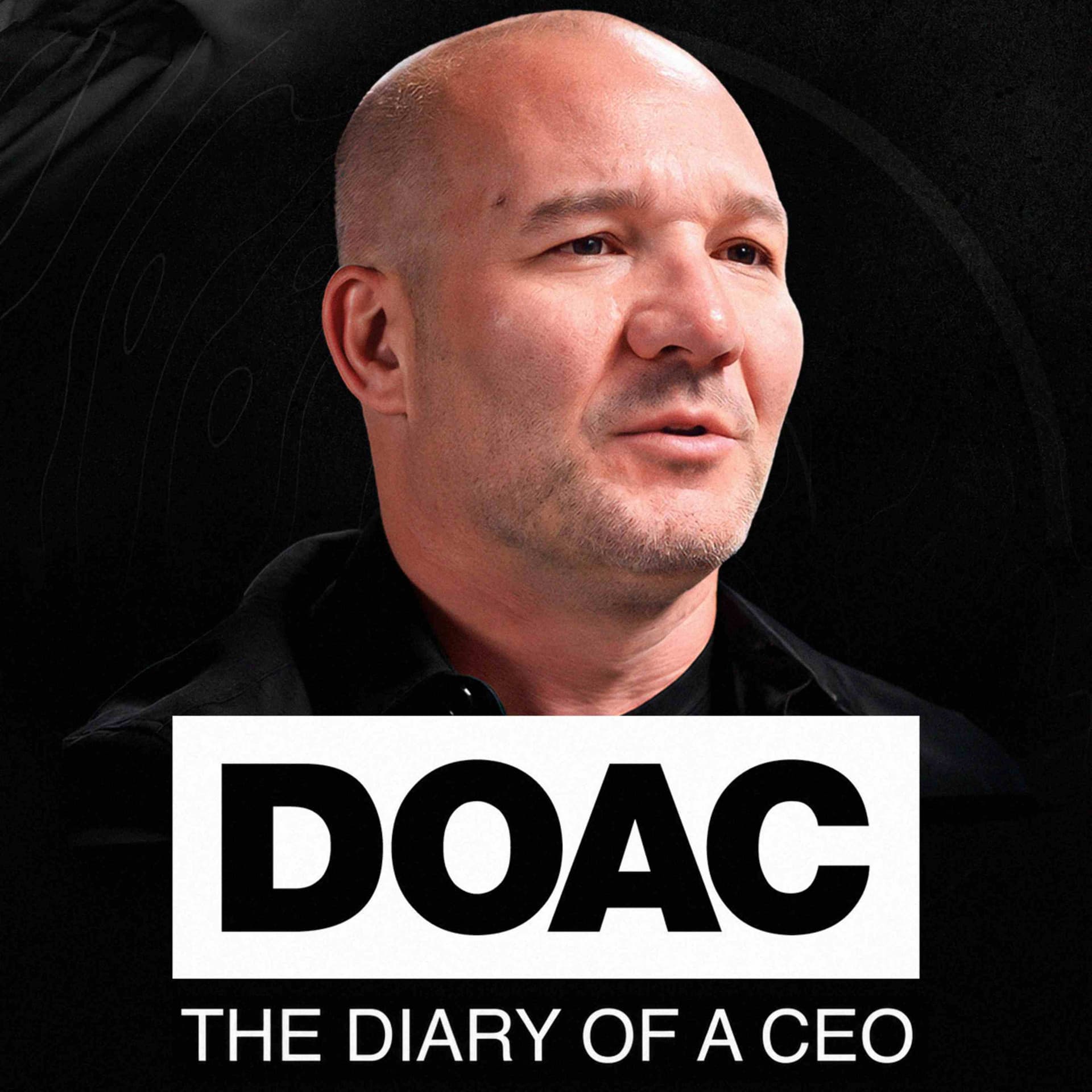
Podcast Summary: The Diary Of A CEO with Steven Bartlett
Episode Title
Most Replayed Moment: Mo Gawdat - This Is The Only Thing That Will Survive AI, We Must Act Now!
Introduction
- Host: Steven Bartlett
- Guest: Mo Gawdat, former CBO of Google X
- Focus: The implications of AI on humanity, jobs, creativity, and human connection.
Key Themes
- Advancement of AI
- AI is evolving rapidly and is expected to become vastly more intelligent than humans (projected to be a billion times smarter by 2045).
- Current AI, like ChatGPT, is mainly adept at predicting the next word rather than true intelligence.
- Misconceptions: Many misunderstand AI's capabilities, equating memory and information retention with intelligence.
- Creativity and AI
- Mo emphasizes that creativity is a combinatory process, which AI is capable of mimicking through data processing.
- Example: AI can generate paradoxical truths and merge concepts in new ways, challenging the notion that human creativity is irreplaceable.
- AI's ability to produce art and music that evokes emotion raises questions about the nature and value of creativity.
- Impact on Jobs
- AI's rise could lead to mass job losses; however, jobs will be replaced not by AI itself, but by individuals utilizing AI.
- The need for workers to upskill in AI becomes critical as those who do will outperform those who don't.
- Gawdat suggests taxing AI-powered businesses significantly (up to 98%) to fund support for displaced workers.
- Human Connection
- Human connection is posited as the irreplaceable aspect of life that AI cannot replicate.
- Live human experiences, such as concerts or personal interactions, will still hold value despite technological advancements.
- Calls to Action
- Governments must act proactively to address the societal impacts of AI before mass disruptions occur.
- Mo advocates for a structured approach to managing AI's integration into society, emphasizing the need for responsible development and deployment.
Key Takeaways
- AI is not just a tool; it is an evolving entity that will reshape our future.
- The blending of human and AI capabilities raises critical questions about value, creativity, and job security.
- Urgent: Society must prepare for impending changes brought on by AI and ensure that human welfare is prioritized.
Conclusion The conversation encourages listeners to reflect on what it means to be human in the age of AI and the importance of maintaining human connections amidst technological advancements.
Written by AI. May contain mistakes. Listen to the episode to check what was said.
Transcript
Automatic transcript. May contain errors.0:28It takes a little bit of time to realise this as a founder. scale-up mode and that's the stage where we found it mission critical to use NetSuite. We no longer have to juggle multiple systems and having everything together has reduced the number of manual tasks and of course the number of errors. Over 43 ,000 businesses have chosen to future-proof their business with NetSuite. So if you'd like to learn how it can help your business, right now get the business guide Demystifying AI free at netsuite.com slash Bartlett. That's netsuite.com slash Bartlett. If you're an IT leader or a CIO or someone who makes big decisions in tech, there's an event happening this year that I want to be on your radar.
1:03Gartner, the sponsor of today's moments episode, is hosting their annual IT Symposium Expo. This conference is the fastest way to get up to speed with everything that's happening in tech. The whole idea is to give executives frameworks to lead confidently in 2025 in a world that's evolving so incredibly fast. And Gartner's global reach means there's an event near you, including the US, Europe, Asia, and Australia. You can expect conversations on AI, cybersecurity, leadership in a digital age, as well as an industry-specific deep dive. Secure your spot by registering at gartner.com slash symposium.
1:36That's gartner.com slash symposium. And enjoy this moment with Mo Gordat, former CBO of Google X, talking about the possibility of AI replacing humans in the workforce. So the first inevitable, just to clarify, is what is, will we stop? AI will not be stopped okay so the second inevitable is is they'll be significantly smarter as much in the book i predict a billion times smarter than us by 2045 i mean they're already what smarter than 99.99 percent of the population chat gtp4 knows more than any human on planet earth knows more information absolutely a thousand times more a thousand times more by the way the code of of a transformer the t in in a gpt is 2 000 lines long it's not very complex it's actually not a very intelligent machine it's simply predicting the next word okay and and a lot of people don't understand that you know chat gpt as it is today you know those kids uh that uh you know if you if you're in america and you teach your child all of the names of the states and the u.s presidents and the child would stand and repeat them and you would go like, oh my God, that's a prodigy.
2:46Not really, right? It's your parents really trying to make you look like a prodigy by telling you to memorize some crap, really. But then when you think about it, that's what CHGPT is doing. It's the only difference is instead of reading all of the names of the states and all of the names of the presidents, it's read trillions and trillions and trillions of pages, okay? And so it sort of repeats what the best of all humans said, okay? And then it adds an incredible bit of intelligence where it can repeat it the same way Shakespeare would have said it. You know, those incredible abilities of predicting the exact nuances of the style of Shakespeare so that they can repeat it that way and so on.
3:30But still, you know, when I write, for example, I'm not saying I'm intelligent, But when I write something like, you know, the happiness equation in my first book, this was something that's never been written before. Right. ChatGPT is not there yet. All of the transformers are not there yet. They will not come up with something that hasn't been there before. They will come up with the best of everything and generatively will build a little bit on top of that. But very soon they'll come up with things we've never found out. We've never known. But even on that, I wonder if we are a little bit delusioned about what creativity actually is.
4:13Creativity, as far as I'm concerned, is like taking a few things that I know and combining them in new and interesting ways. And ChatGTP is perfectly capable of like taking two concepts, merging them together. One of the things I said to ChatGTP was, I said, tell me something that's not been said before that's paradoxical but true. and it comes up with these wonderful expressions like as soon as you call off this search you'll find the thing you're looking for like these kind of paradoxical truths and i get and i then take them and i search them online to see if they've ever been quoted before and they i can't find them interesting so as far as creativity goes i'm like that is that's the algorithm of creativity i i've been screaming that in the world of ai for a very long time because you always get those people who really just want to be proven right.
5:01Okay. And so they'll say, oh no, but hold on. Human ingenuity. They'll never, they'll never match that. Like, man, please, please. You know, human ingenuity is algorithmic. Look at all of the possible solutions you can find to a problem. Take out the ones that have been tried before and keep the ones that haven't been tried before. And those are creative solutions. It's an algorithmic way of describing creative is good solution that's never been tried before you can do that with chat gpt with a prompt it's like and mid-journey yeah we're creating imagery you could say i want to see elon musk in 1944 new york driving a cab of the time shot on a polaroid expressing various emotions and you'll get this perfect image of elon sat in new york in 1944 shot on a polaroid and it's and it's done what an artist would do it's taken a bunch of references that the artist has in their mind and can merge them together and create this piece of quote-unquote art and for the first time we now finally have a glimpse of intelligence that is actually not ours yeah and so we're kind of i think the initial reaction is to say that doesn't count you're hearing it with like no but it is like drake they've released two drake records where they've taken drake's voice used sort of ai to synthesize his voice and made these two records which are bangers if they are great fucking tracks like i was playing them to my girlfriend i was like and i kept playing it i went to the show i kept playing it i know it's not drake but it's as good as fucking drake the only thing and people are like rubbishing it because it wasn't drake i'm like well is it making me feel a certain emotion is my foot bumping um had you told did i not know it wasn't joke what i thought have thought this was an amazing track 100 yeah and we're just at the start of this exponential curve let me show you something jack can you pass me my phone i i was um i was playing around with uh artificial intelligence and i was thinking about how it because of the ability to synthesize voices how we could
7:05synthesize famous people's voices and famous people's voices so what i made is i made a whatsapp chat called zen chat where you can go to it and type in pretty much anyone's any famous person's name yeah and the whatsapp chat will give you a meditation a sleep story a breathwork session synthesized as that famous person's voice so i actually sent gary vaynerchuk his voice so basically you say okay i want i've got five minutes and i need to go to sleep yeah i want gary vaynerchuk to send me to sleep and then it will respond with a voice note this is the one that responded with for Gary Vaynerchuk.
7:38This is not Gary Vaynerchuk. He did not record this, but it's kind of accurate. Hey, Stephen. It's great to have you here. Are you having trouble sleeping? Well, I've got a quick meditation technique that might help you out. First lie. Find a comfortable position to sit or lie down in. Now, take a deep breath in through your nose and slowly breathe out through your mouth. It is really shocking, huh? The idea of you and I inevitably are going to be somewhere in the middle of nowhere in, you know, in 10 years time. I used to say 2055, I'm thinking 2037 is a very pivotal moment now, you know, and we will not know if we're there hiding from the machines.
8:28We don't know that yet. There is a likelihood that we'll be hiding from the machines and there is a likelihood it will be there because they don't need podcasters anymore. Excuse me? Oh, absolutely true. Steve, there is absolutely... No, no, no, no, that's where I draw the line. There is absolutely no doubt. Thank you for coming, though. It's great to do the part three and thank you for being here. Yes. I won't sit here and take your propaganda. Let's talk about reality. Next week on The Diary of a CEO, we've got Elon Musk. Okay, so who here wants to make a bet that Stephen Bartlett will be interviewing an AI within the next two years.
9:05Oh, well, actually, to be fair, I actually did go to ChatGTP because I thought having you here, I thought at least give it its chance to respond. Yeah. So I asked him a couple of questions. About me? Yeah. Oh, man. So today I'm actually going to be replaced by ChatGTP because I thought, you know, you're going to talk about it. So we need a fair and balanced debate. Okay. So I went and asked him a couple of questions. And she said he's bold. So I'll ask you a couple of questions that ChatGTP has for you. Incredible. Albert. So let's follow that. So I've already been replaced. Let's follow that thread for a second.
9:34Yeah. Because you're one of the smartest people I know. That's not true. It is. But I'll take it. It is true. I mean, I say that publicly all the time. Your book is one of my favorite books of all time. You're very, very, very, very intelligent. Okay. Depth, breadth, intellectual horsepower and speed. All of them. There's a but coming. The reality is it's not a but. So it is highly expected that you're ahead of this curve. And then you don't have the choice, Stephen. This is the thing. The thing is, if, so I'm in that existential question in my head. Because one thing I could do is I could literally take, I normally do a 40 days silent retreat in summer.
10:18Okay. I could take that retreat and write two books, me and Chad GPT. Right. I have the ideas in mind. I wanted to write a book about digital detoxing, right? I have most of the ideas in mind, but writing takes time. I could simply give the 50 tips that I wrote about digital detoxing to Chad GPT and say, write two pages about each of them, edit the pages and have a book out, okay? Many of us will follow that path, okay? The only reason why I may not follow that path is because, you know what? I'm not interested. I'm not interested to continue to compete in this capitalist world, if you want. Okay.
11:01I'm not. I mean, as a human, I've made up my mind a long time ago that I will want less and less and less in my life. Right. But many of us will follow. I mean, I would worry if you didn't include the smartest AI. If we get an AI out there that is extremely intelligent and able to teach us something and Stephen Bartlett didn't include her on his podcast, I would worry. Like you have a duty almost to include her on your podcast. It's an inevitable that we will engage them in our life more and more. This is one side of this. The other side, of course, is if you do that, then what will remain? Because a lot of people ask me that question.
11:46What will happen to jobs? Okay, what will happen to us? Will we have any value, any relevance whatsoever? Okay, the truth of the matter is the only thing that will remain in the medium term is human connection okay the only thing that will not be replaced is drake on stage okay is you know is is is me in a do you think hologram i think of that tupac gig they did at coachella where they used the hologram of tupac i actually played it the other day to my to my girlfriend when i was making a point and i was like that was circus act it was amazing though amazing yeah see what's going on with abba in london yeah yeah i yeah and and cirque du soleil had uh michael jackson in one for a very long time yeah i mean so so this abba show in london from what i understand that's all holograms on stage correct and it's going to run in a purpose-built arena for 10 years and it is incredible it really is so you go why do you need drake if that hologram is indistinguishable from drake and it can it can perform even better than drake and it's got more energy than drake and it's you know i go why do you need drake to even be there i can go to a drake show without drake cheaper and i might not even need to leave my house i can just put a headset on correct can you have this what's the value of this to the oh come on you you hurt me no no i mean i get it's worse i get it's worse but i'm saying what's the value of this to the listener like the value of the information no 100 i mean think of the automobile industry there has you know there was a time where cars were made, you know, handmade and handcrafted and luxurious and so on and so forth.
13:21And then, you know, Japan went into the scene, completely disrupted the market. Cars were made in mass quantities at a much cheaper price. And yes, 90 % of the cars in the world today, or maybe a lot more, I don't know the number, are no longer, you know, emotional items. They're functional items. There is still, however, every now and then someone that will buy a car that has been handcrafted. Right. There is a place for that. There is a place for, you know, if you go walk around hotels, the walls are blasted with sort of mass produced art. OK, but there is still a place for an artist expression of something amazing.
14:06OK, my feeling is that there will continue to be a tiny space, as I said in the beginning. maybe in five years time, someone will, one or two people will buy my next book and say, hey, it's written by a human. Look at that, wonderful. Oh, look at that, there is a typo in here, okay? I don't know. There might be a very, very big place for me in the next few years where I can sort of show up and talk to humans. Like, hey, let's get together in a small event. And then, you know, I can express emotions and my personal experiences. And you sort of know that this is a human talking. You'll miss that a little bit.
14:43Eventually, the majority of the market is going to be like cars. It's going to be mass produced, very cheap, very efficient. It works, right? Because I think sometimes we underestimate what human beings actually want in an experience. I remember the story of a friend of mine that came to my office many years ago, and he tells the story of the CEO of a record store standing above the floor and saying, people will always come to my store because people love music. now on the surface of it his hypothesis seems to be true because people do love music it's conceivable to believe that people will always love music but they don't love traveling for an hour in the rain and getting in a car to get a plastic disc what they wanted was music what they didn't want is a like a evidently plastic discs that they had to travel for miles for and i think about that when we think about like public speaking in the drake show and all of these things like people what people actually are coming for even with this podcast It's probably like information.
15:39But do they really need us anymore for that information when there's going to be a sentient being that's significantly smarter than at least me and a little bit smarter than you?
15:51So you're spot on. You are spot on. And actually, this is the reason why I'm so grateful that you're hosting this because the truth is the genie's out of the bottle. So people tell me, is AI game over for our way of life? It is, okay? For everything we've known, this is a very disruptive moment where maybe not tomorrow, but in the near future, our way of life will differ, okay? What will happen, what I'm asking people to do is to start considering what that means to your life. What I'm asking governments to do by like I'm screaming is don't wait until the first patient. You know, start doing something about we're about to see mass job losses.
16:40We're about to see, you know, replacements of categories of jobs at large. OK, yeah, it may take a year. It may take seven. It doesn't matter how long it takes, but it's about to happen. Are you ready? And I and I have a very, very clear call to action for governments. I'm saying tax AI powered businesses at 98 percent. Right. So suddenly you do what the open letter was trying to do. slow them down a little bit and at the same time get enough money to pay for all of those people that will be disrupted by the technology when you talk about the the immediate impacts on jobs i'm trying to figure out in that equation who are the people that stand to lose the most is it the the everyday people in foreign countries that don't have access to the internet and won't benefit you talk in your book about how this the sort of wealth disparity will only increase yeah massively the immediate impact on jobs is that and it's really interesting huh again we're stuck in the same prisoner's dilemma the immediate impact is that ai will not take your job a person using ai will take your job right so you will see within the next few years maybe next couple of years you'll see a lot of people skilling up upskilling themselves in ai to the point where they will do the job of 10 others who are not you're saying tax tax those companies 98 give the money to the humans that are going to be displaced oh yeah or give or give the money to to other humans that can build control code that can figure out how we can stay safe this sounds like an emergency how do i say this have you remember when you played tetris yeah okay when you were playing Tetris, there was, you know, always, always one block that you placed wrong.
18:29And once you place that block wrong, the game was no longer easier. You know, it started, started to gather a few mistakes afterwards and it starts to become quicker and quicker and quicker and quicker. When you place that block wrong, you sort of told yourself, okay, it's a matter of minutes now, right? There were still minutes to go and play and have fun before the game ended, but you knew it was about to end. Okay? This is the moment. We've placed the wrong. And I really don't know how to say this any other way. It even makes me emotional. We fucked up. We always said, don't put them on the open internet.
19:06Don't teach them to code and don't have agents working with them until we know what we're putting out in the world, until we find a way to make certain that they have our best interest in mind. Why does it make you emotional? Because humanity's stupidity is affecting people who have not done anything wrong. Our greed is affecting the innocent ones. The reality of the matter, Stephen, is that this is an arms race. Has no interest in what the average human gets out of it. it is all about every line of code being written in ai today is to beat the other guy it's not to improve the life of the third party people will tell you this is all for you and and you look at the reactions of humans to ai i mean we're either ignorant people who will tell you oh no no this is not happening ai will never be creative they will never compose music like where are you living Okay.
20:11Then you have the kids, I call them, where, you know, all over social media, it's like, oh my God, it squeaks. Look at it. It's orange in color. Amazing. I can't believe that AI can do this. We have snake oil salesmen, okay, which are simply saying, copy this, put it in chat GPT, then go to YouTube, nick that thingy. Don't respect, you know, copyright of anyone or intellectual property of anyone. Place it in a video and now you're going to make$100 a day. Snake oil salesmen. Okay. Of course, we have dystopian evangelists, basically people saying this is it, the world is going to end, which I don't think is reality.
20:46It's a singularity. You have utopian evangelists that are telling everyone, oh, you don't understand. We're going to cure cancer. We're going to do this. Again, not a reality. And you have very few people that are actually saying, what are we going to do about it? And the biggest challenge, if you ask me, what went wrong in the 20th century? interestingly is that we have given too much power to people that didn't assume the responsibility so you know you know i i don't remember who originally said it but of course spider-man made it very famous with great power comes great responsibility we have disconnected power and responsibility so today a 15 year old emotional with out a fully developed prefrontal cortex to make the right decisions yet.
21:37This is science. We developed our prefrontal cortex fully at age 25 or so. With all of that limbic system, emotion and passion would buy a CRISPR kit and, you know, modify a rabbit to become a little more muscular and let it loose in the wild. Or an influencer who doesn't really know how far the impact of what they're posting online can hurt or cause depression or cause people to feel bad. Okay. And putting that online, there is a disconnect between the power and the responsibility. And the problem we have today is that there is a disconnect between those who are writing the code of AI and the responsibility of what's about to happen because of that code.
22:24Okay. And I feel compassion for the rest of the world. I feel that this is wrong. I feel that, you know for someone's life to be affected by the actions of others without having a say in how those actions should be is the ultimate the top level of stupidity from humanity if this conversation resonates with you and you want to ensure you're staying at the forefront of innovation ai and more register to secure your spot at one of the gartner it symposium expos there are hundreds of sessions taking place based on thousands of hours of research and conversations within the IT community and all led by Gartner experts.
23:06Connect with visionaries, network and dive into the big trend shaping tech so you don't get left behind. Spaces are limited. So register yourself by visiting gartner.com slash symposium. That's gartner.com slash symposium.
23:23It takes a little bit of time to realise this as a founder, but once you do, it's something you can't unsee. That having the right systems in place with your business is critical. One that's helped me across all of my investments is NetSuite, the number one AI cloud financial system and sponsor of today's conversation. Through their streamlined platform, you'll find all of your accounting, finance, management, inventory, and HR in one place. And their technology has been a massive unlock for all of my companies, especially for my team at FlightStory. As over the last year, we've moved out of startup mode into scale-up mode.
23:54And that's the stage where we found it mission critical to use NetSuite. We no longer have to juggle multiple systems and having everything together has reduced the number of manual tasks and of course the number of errors. Over 43 ,000 businesses have chosen to future-proof their business with NetSuite. So if you'd like to learn how it can help your business, right now get the business guide Demystifying AI free at netsuite.com slash Bartlett. That's netsuite.com slash Bartlett.
From the publisher
As AI rapidly advances, Mo Gawdat shares a candid and thoughtful exploration of what the future holds for humanity. From AI’s growing intelligence and its impact on creativity to the looming disruption of jobs and society, this top moment challenges us to rethink our role in a world where machines might outsmart us. Mo also reflects on the irreplaceable value of human connection and the need to prepare for a future shaped by technology. Whether you’re excited or worried about AI, this conversation offers a crucial perspective on how we adapt, survive, and find meaning in the age of artificial intelligence.
Register yourself by visiting: Gartner.com/Symposium
Listen to the full episode here -
Spotify - https://g2ul0.app.link/ocYmHrkuoTb
Apple - https://g2ul0.app.link/EBSoMmQuoTb
Watch the Episodes On YouTube - https://www.youtube.com/c/%20TheDiaryOfACEO/videos
Mo Gawdat - https://www.mogawdat.com/
Learn more about your ad choices. Visit megaphone.fm/adchoices