In short
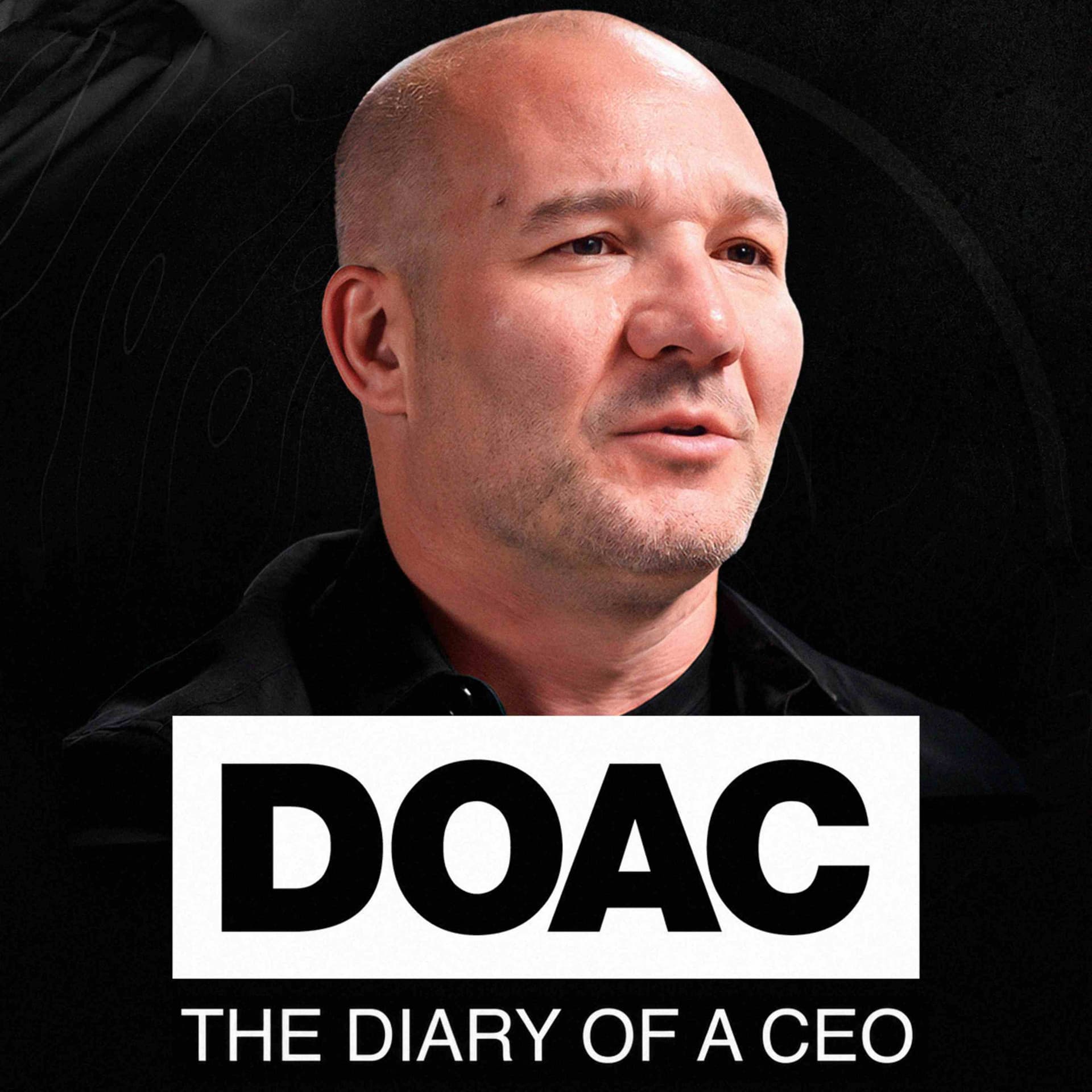
Podcast Summary: The Diary Of A CEO with Steven Bartlett
Episode Title
Most Replayed Moment: The Direct Path To Purpose And Happiness! These 2 Decisions Matter Most
Guest
Gad Saad Description: In this episode, Gad Saad, an evolutionary psychologist, discusses the intersection of relationships, purpose, and happiness, answering key questions about long-term happiness and the choices that influence it.
---
Key Themes and Concepts
Evolutionary Mismatch Hypothesis
- Definition: Problems in modern life arise due to behaviors that were once adaptive in our ancestral past but are maladaptive today.
- Example: Preference for fatty foods developed during periods of caloric scarcity can lead to health issues in a world of abundance.
Fundamental Choices for Happiness
- Choice of Spouse
- The impact of waking up next to the right partner significantly influences daily happiness.
- A positive relationship can lead to greater joy and fulfillment.
- Choice of Profession
- Engaging in work that provides purpose and meaning is crucial for happiness.
- Work that allows for creativity and personal expression contributes to occupational happiness.
Insights on Relationships
- Birds of a Feather Flock Together: Similarity between partners increases the chances of a happy marriage.
- Complementarity: While opposites may attract initially, long-term satisfaction is typically found in shared core values.
Happiness and Creative Impulses
- Jobs that allow individuals to express their creativity are associated with greater purpose and happiness.
- Creative roles (e.g., artist, author, chef) provide personal fulfillment compared to routine roles.
Birth Order and Happiness
- Gad Saad discusses his research linking birth order to creativity and potential happiness.
- Last Born Siblings: Often exhibit higher creativity and openness to experience, contributing to greater happiness.
Notable Quotes
- "Knowledge is power... being aware of the mismatch hypothesis... will allow you to hopefully not fall into behavioral traps."
- “The best way to achieve occupational happiness is any job that allows you to instantiate your creative impulse.”
Conclusion
- The episode emphasizes the importance of deliberate choice in relationships and career paths as essential determinants of happiness and purpose in life. Gad Saad’s insights offer a blend of evolutionary psychology and practical advice, encouraging listeners to reflect on their life choices.
Further Exploration
- Full Episode Links:
- [Listen on Spotify](https://g2ul0.app.link/6mmXoBTan1b)
- [Listen on Apple](https://g2ul0.app.link/UGzk5M2an1b)
- [Watch on YouTube](https://www.youtube.com/c/%20TheDiaryOfACEO/videos)
- Follow Gad Saad:
- [Twitter](https://x.com/GadSaad)
- [Instagram](https://www.instagram.com/doctorgadsaad/?hl=en)
---
This summary encapsulates key concepts discussed in the episode, providing a clear reference for listeners interested in exploring themes related to happiness, relationships, and personal choices.
Written by AI. May contain mistakes. Listen to the episode to check what was said.
Chapters
Tap a time to open that second in VOThe Mismatch Hypothesis Explained
0:47 to 2:15
Discover the mismatch hypothesis and its implications for modern life.
“about the world that he's growing up in, in terms of the mismatch between our evolution and his natural hardwiring?”
Key Decisions for Happiness
2:17 to 4:25
Learn the two critical decisions that significantly impact happiness.
“And what are the most important, because you have a book here called Happiness, Eight Secrets for Leading the Good Life.”
Choosing a Life Partner
4:27 to 8:05
Understand the importance of choosing the right partner for happiness.
“So earlier I mentioned birds of a feather flock together versus opposites attract.”
Occupational Happiness and Purpose
8:07 to 9:59
Explore the relationship between job satisfaction and personal fulfillment.
“talking about exactation versus adaptation one argument for why we love literature so much is that our brains need nourishment via storytelling.”
Creativity and Happiness
10:01 to 12:10
Discover how creativity relates to happiness and birth order.
“happiness is two metrics, one of which is going to relate to purpose and meaning.”
The Birth Order Effect on Innovation
12:12 to 14:01
Learn about the link between birth order and creativity in scientific innovation.
“So does that mean that if we're more likely to be creative and creativity is associated with happiness in the way that you just described, that I am happier than all of my siblings?”
Exploring Birth Order and Innovation
14:01 to 19:32
Learn how birth order influences personality traits and creativity.
“It's a bit technical, but you can get through it.”
Transcript
Automatic transcript. May contain errors.0:00This episode sponsored by Maximus Tribe. You train, you track, you eat right. But if you're over 40, you've felt it. The results don't match the effort anymore. That's not willpower. It's biology. Hormones drop. Metabolism slows. Your body stops responding the way it used to. Maximus is the online clinic that reverses your decline with prescription performance medicines, GLP-1s, testosterone, and peptides that reduce belly fat, restore energy, and boost recovery. Over 50 ,000 high performers have already broken through their plateaus. If you're ready to turn your hard work into measurable results, go to MaximusTribe.com.
0:40That's MaximusTribe.com.
0:46What do you think I should say to my future son about the world that he's growing up in, in terms of the mismatch between our evolution and his natural hardwiring?
1:02Gad Saad:Wow, what a great question. So there is something called the mismatch hypothesis in evolutionary theory, which basically says that many problems that we face today arise out of a mismatch of a phenomenon that was adaptive in our ancestral past, but is no longer adaptive in our contemporary modern world. Classic example to stick to food. We've evolved the gustatory preferences as a response to caloric scarcity and caloric uncertainty. Therefore, being attracted to fatty foods, gorging on a lot of food, makes perfect evolutionary sense when we don't know when our next meal is coming from. When we live in an environment of plentitude, then that exact phenomenon becomes maladaptive.
1:50Gad Saad:So if you look at, for example, I think the top eight or nine killers on the World Health Organization thing, they can all be attributed to a mismatch hypothesis. So I would tell your son, knowledge is power to our earlier point of you getting that degree. You never lose in knowing more. You being aware of the mismatch hypothesis, dear son, will allow you to hopefully not fall as easily into behavioral traps. And what are the most important, because you have a book here called Happiness, Eight Secrets for Leading the Good Life. If I was to give him advice on how to live a happy life, what are the most important things that I should be aiming at?
2:28Gad Saad:So I look at both decisions that we can make for happiness and mindsets. So let me maybe discuss a few of each. So by far the two choices that will either impart upon me the greatest happiness or the greatest misery is choice of spouse and choice of profession. And let's break it down very simply. If I wake up next to a person in the bed and I go, oh, God damn, not this one again. I'm not off to a good start. If I wake up next to this, to that person and I go, oh my God, how did I pull that off? What a delight to wake up next to this person. Well, that's good. Have they empirically measured this?
3:07Gad Saad:Have they? Not in the way I'm explaining the anecdote. Now, if I go off, after I woke up to this lovely person, I go off and do things in my day-to-day activities that make me do existential glee. Oh boy, what a great day I have lined up. I'm going to be working on my next book. I've got a diary of a CEO. That's going to be super fun. A lot of new people are going to hear about some of my ideas. Then I'm going to maybe have a chat with a graduate student on some really exciting research I'm doing. So wow. Yeah, I mean, there's a lot of stress, but it all gives me a lot of purpose and meaning. And then at night, I return to that lovely person, I've cracked the happiness code, right?
3:48Gad Saad:Now, of course, the question is, the devil is in the details. What can I do to maximize my chances that I make those right choices? I explain in the book, contrary to 99.9 % of the quote, self-help prescriptive books, where they tell you exactly with guarantee, here are the eight steps. I explained that life is a statistical game, right? There are statistical vagaries. So all I can do is increase your odds of obtaining happiness. I can't guarantee anything, right? You could never smoke and get lung cancer, but not smoking certainly reduces your chances of lung cancer greatly. So earlier I mentioned birds of a feather flock together versus opposites attract.
4:34Gad Saad:Overwhelmingly, if you want to increase your chances of a happy marriage, remember the maxim, bergeron, feather flock together. Complementarity works really nicely in the short term. It doesn't sustain a long-term marriage. The butterflies, the hormones don't last when you've been in a marriage. That doesn't mean you're not still sexually attracted to your partner 25 years later, but that's not going to carry the train. Okay, so, but just to give a little bit more, I guess, specificity and nuance to this, you know, because my partner, she's really into like spiritual stuff. Yes. She's really into like crystals and lots of things that I'm not into.
5:10I think we have a great relationship. We've been together a long time. And she's like, I'm into Manchester United and soccer. She's not into that.
5:17Gad Saad:Well, we might have to have you revisit that because I'm a Manchester City guy. But go ahead. Okay, well, that's the end of the podcast. My apologies. No, look, I'm not suggesting that there aren't clear differences. but if i were to distill if i were to use statistical term if i were to factor analyze your most fundamental life principles between you and your partner do you think you're more alike or more different we're more alike we're we're aligned that's my point yeah and this is why i say it because when people hear it they might think of it as like tastes no it's not about the taste it's not about the most fundamental deontology right i mean what you know my wife loves the fact that I'm a truth teller.
6:05Gad Saad:My wife loves the fact that I have purity in myself, right? She appreciates the fact that, and similar with her. For example, we both have never been the type to seek to trigger jealousy in the other. Many people will say, oh, you know, if when you trigger jealousy, that spices things up, right? My wife has never a single time done a single thing, right? But that's because she has a standard of personal conduct that's very elevated. Well, can I ask you as well in there, just are there things about your wife that you don't have as much, but are fundamental values, but you're drawn to because she's kind of giving you them?
6:49Gad Saad:I call her MacGyver. Do you remember who MacGyver was? MacGyver was a show in the 1980s, I think, where he was reputed to be able to put things together. He's in a pickle, he's in a cell, so he takes soap and cuts it up to cut the bar. My wife, at a complete reversal of the typical stereotypes of male and female, you give my wife an empty can of tuna and a soccer ball, she'll make a rocket and she'll fly you to Mars. She is unbelievably, in French you say de brouillade. She knows how to put things together and so on. And I'm just mesmerized by her ability to do this. For me, for all my fancy academic stuff, take a light bulb, it'll probably take me four weeks before I figure how it works.
7:39Gad Saad:She's already built a rocket. She's basically Elon Musk of the sad household. I greatly admire that in her. And it's something that I possess very little. I wanted to ask one of the things you said a second ago was about this the evolutionary basis of we're talking about happiness and what it is to be happy you talked about the partner part what is the evolutionary basis of meaning and purpose why do we need that right so we've got a very big frontal lobe right so remember earlier i was talking about exactation versus adaptation one argument for why we love literature so much is that our brains need nourishment via storytelling.
8:21Gad Saad:And therefore, that's an exaptation. My brain expects to be fed stuff that keeps me engaged. And therefore, literature is one way by which I eat that nourishment, to use the food analogy, right? So I suspect that because we are sentient beings, right? We're not beings that are only driven by instincts of survival and reproduction, right? I mean, all animals have to solve two problems, survive and reproduce, right? That's it. That's the entire game of life. But because we have consciousness, because we have meta-knowledge, because we are sentient, there needs to be more to life than simply having sex and reproducing.
9:05Gad Saad:And therefore, the way that you elevate that consciousness is through purpose and meaning. So I'm a very happy, I mean, I should mention though that happiness, about 50 % of individual differences in happiness scores comes from our genes. But the good news is, is that it leaves 50 % up for grabs, right? So I may be born with innately a more sunny disposition than you. So I'm now winning at the race. But if I don't have, make good choices, if I don't adopt good mindsets, then even though you started lower than me in an innate sense, you might surpass me. And so it really is an interaction of nature and nurture.
9:46Gad Saad:Purpose and meaning. So to that, I may be answering it in an oblique way. I argue, and remember I said having a good partner and having a good job are the two ways that you can maximize happiness. I argue that the best way to achieve occupational happiness is two metrics, one of which is going to relate to purpose and meaning. Having temporal freedom, all other things equal is better than not having temporal freedom. Let me explain what I mean by that. An airplane pilot, once the door shuts, the next 16 hours from LA to Singapore, it's set, right? I mean, literally, temporally, in terms of time, Physically, I'm stuck, right?
10:31Gad Saad:That to me is unthinkable. I float through life. I work harder than most people, but I do it in my own way. Right now, I'm going to go to a cafe and work on a book prospectus. Then I'm going to go train for an hour. Then I'm going to go read for three hours. And that temporal, I don't have what I call scheduling asphyxia, right? That helps me. I do. You do. Try to resolve that if you can. Number two, which is going to speak to purpose and meaning. I argue that all other things equal, any job that allows you to instantiate your creative impulse is a direct path to purpose and happiness, purpose and meaning.
11:13Gad Saad:What do I mean by that? A stand-up comic is creating a routine that until he came along, we didn't have. A chef is creating a dish out of nothing. An architect is creating that bridge that didn't exist before. An author, remember earlier we were talking, I think I was off air and you were saying, how long did it take you or what was the process? I said, you know, there's something magical about writing a book, right? Because there literally is a day where you open the laptop, you open a Word document. That Word document, which eventually you're going to call the parasitic mind, save, doesn't have a single letter typed.
11:50Gad Saad:It's blank. and then through the magic of creation, creative impulse, a year later, I press the send button. A year later, you're consuming that book. That has to be a direct path to purpose and meaning. Now, that doesn't mean that the actuarial scientist, your brother, doesn't have a worthy life. But surely, a person who wakes up, who's an artist, who's an author, by the nature of him creating, says oh i can't wait to get to the studio i doubt that maybe not your brother i doubt that most actuarial scientists go i'm gonna get into that actuarial table today like there's no tomorrow i'm gonna spank that actuarial table okay so putting a bunch of ideas together from your work then to arrive at a conclusion that i haven't heard you say i read in the consuming instinct your other book, chapter four, that younger siblings like me, youngest of four, are more likely to be creative.
12:52Oh, you pulled that one out. Okay. So does that mean that if we're more likely to be creative and creativity is associated with happiness in the way that you just described, that I am happier than all of my siblings? Do you want to guess
13:06Gad Saad:what Dr. Saad's sibling order is? You're the youngest. By far. So let me explain, let me step, before I answer that and the way you frame the question, let me explain what the mechanism is, okay? I also just want to add one layer to that as well. I was sat at dinner the other day with about 10 of our directors, really their founders of companies essentially. And I thought it would be interesting to go around and ask them because I've started to perform a bit of a picture about this. And I went around the table and asked every single one of them, where do you rank in order of siblings? And eight of them ranked as the youngest sibling.
13:39Oh, I love it. That was so crazy. Yeah,
13:42Gad Saad:that's psychology. So let me tell you the background to that theory, okay? Which I've done my own research on and published work on it. But the original theory comes from Frank Soloway, who's a historian of science, who wrote a book, which I highly recommend to all your viewers. It's a bit technical, but you can get through it. It's called Born to Rebel. It's a book that explores historically the people who've generated the biggest breakthrough radical scientific innovations and what was their birth order. And it turns out, not unlike how you did it with the 10 and eight of them were last born, out of the 28 most radical scientific innovations ever positive.
14:34Gad Saad:23 out of the 28 were the last born, later borns. Now, so then the question is, okay, well, fine, that's just a phenomenon, but what explains it? Now, the explanation is mind-blowing. You ready? So Frank Soloway argued that typically when we study the psychological effects of birth order, it's from the perspective of the parent's behavior to the child as a function of their birth order. First child, I'm very strict. Second child, I'm getting tired. Fifth child, run the streets, I don't give a shit. Okay? So that's the causality of the birth order effect. He flipped the whole thing. He said, no, no, no.
15:17Gad Saad:Much of the impetus of the birth order effect is coming from the child. And let me explain how. He said that one of the fundamental survival problems, it's an evolutionary theory, one of the fundamental survival problems that a child faces is to differentiate itself from all other siblings to etch maximal investment from the parents. How do I do that? So that's called the Darwinian niche partitioning hypothesis. When you start off, you're firstborn, all of the niches are unoccupied. There is the, I'm a good boy niche. I'm a rebel niche. I'm a, right? There are many, many, there's a panoply of niches that are unoccupied.
16:04Gad Saad:So I'm first born, I'm gonna pick whichever one. The second born is born, there is N minus one niches. One is taken. So the I'm a good boy niche, I gotta differentiate myself. I'm second, I'm an asshole niche. I'm a contrarian niche. Let's keep going down the birth order. There are fewer and fewer unoccupied niches. left for later borns, especially if the sip ship is big. Soloway argued that that forces the last born to score differently on key personality traits, one of which is open to experience. So he argued that later borns up to last borns, by virtue of having to solve that original problem will end up being much bigger out-of-the-box thinkers, not being stuck on conformity, on orthodoxy.
17:01Gad Saad:Hence, in the context of scientific innovations, the last borns are the ones who say, no, this is bullshit. I'm going this way. And so I tested that theory in a consumer psychology setting where I demonstrated that last borns were much more likely to be product innovators and early product adopters. So I took the exact framework, but instead of applying it to radical scientific innovations, I applied it to radical product innovations and adoptions. So all that to say that based on that, one could surmise that if openness to experience is correlated to happiness, then the latter borns would score happier.
17:45I really wonder which one it is, because I can attest to kind of both being true. I probably was a little bit rebellious to get attention, but also by the time I was 10, the same rules didn't apply to me. How many are you? There's four. Okay. When you said run the streets, that's the perfect explanation of my childhood. My oldest, the oldest, which is my sister, Amanda, if she wasn't home by 9 p.m., she was also a woman, so the rules were slightly different for her. 9 p.m., it was hell to pay. If I didn't come home for two to three days, there was no one there to ground me anyway. And I think that opens you up to experimentation.
18:22You start fiddling with stuff. I was doing all kinds of things in the house, like breaking things apart, looking inside them, starting little businesses, selling the cigarettes from my mom's room. Sorry, mother. She really doesn't know that I ever did that. But all these kinds of things, which started to build this repository of information, but also it built my confidence in a way which allowed me to be entrepreneurial and develop this different relationship with risk. So it's hard to figure out which one it is. Maybe it's both. It's probably both.
18:46Gad Saad:I think it's a bit of both. But yeah, you know, I haven't been, I know that your team had asked me, what are some questions that we could ask that no one else? Well, certainly pulling up that birth order one, you've succeeded on asking me a question that I certainly haven't been asked in a long time. So kudos to your team. Well, yeah, it's incredible. We have a lot of great researchers. By the way, both my wife and I are last borns. So to the assortative mating, and I'm not sure if that's been done. And if it hasn't been done, it'd be very easy to do, right? So here's an experiment. If anybody steals it, I better get the credit.
19:20Gad Saad:You just look at a thousand marriages, calculate their satisfaction score, their happiness score, and then see if there is assortative mating on birth ownership. Interesting. Boom. What you just listened to was a most replayed moment from a previous episode. If you want to listen to that full episode, I've linked it down below. Check the description. Thank you.
19:49The sun's shining, birds are singing, and all feels right in the world.
19:54Gad Saad:Until the season changes and suddenly you lose your motivation to get out of bed. In fact, one in five people experience some form of depression no matter the season or time of year. At the American Psychiatric Association Foundation, our vision is to build a mentally healthy nation for all. Because we want you to live your best life and be your best you all year round. Please visit MentallyHealthyNation.org to learn more.
From the publisher
Gad Saad is an evolutionary psychologist, professor, and bestselling author known for applying evolutionary psychology to human behaviour, relationships, and happiness.
In this moment, Gad answers some of the biggest questions people have about relationships and purpose. Is it okay if you and your partner have different interests? Do opposites really attract? And what are the decisions that shape long-term happiness, meaning and purpose in life?
Listen to the full episode here:
Spotify: https://g2ul0.app.link/6mmXoBTan1b
Apple: https://g2ul0.app.link/UGzk5M2an1b
Watch the Episodes On YouTube:
https://www.youtube.com/c/%20TheDiaryOfACEO/videos
Follow Gad: https://x.com/GadSaad
https://www.instagram.com/doctorgadsaad/?hl=en