In short
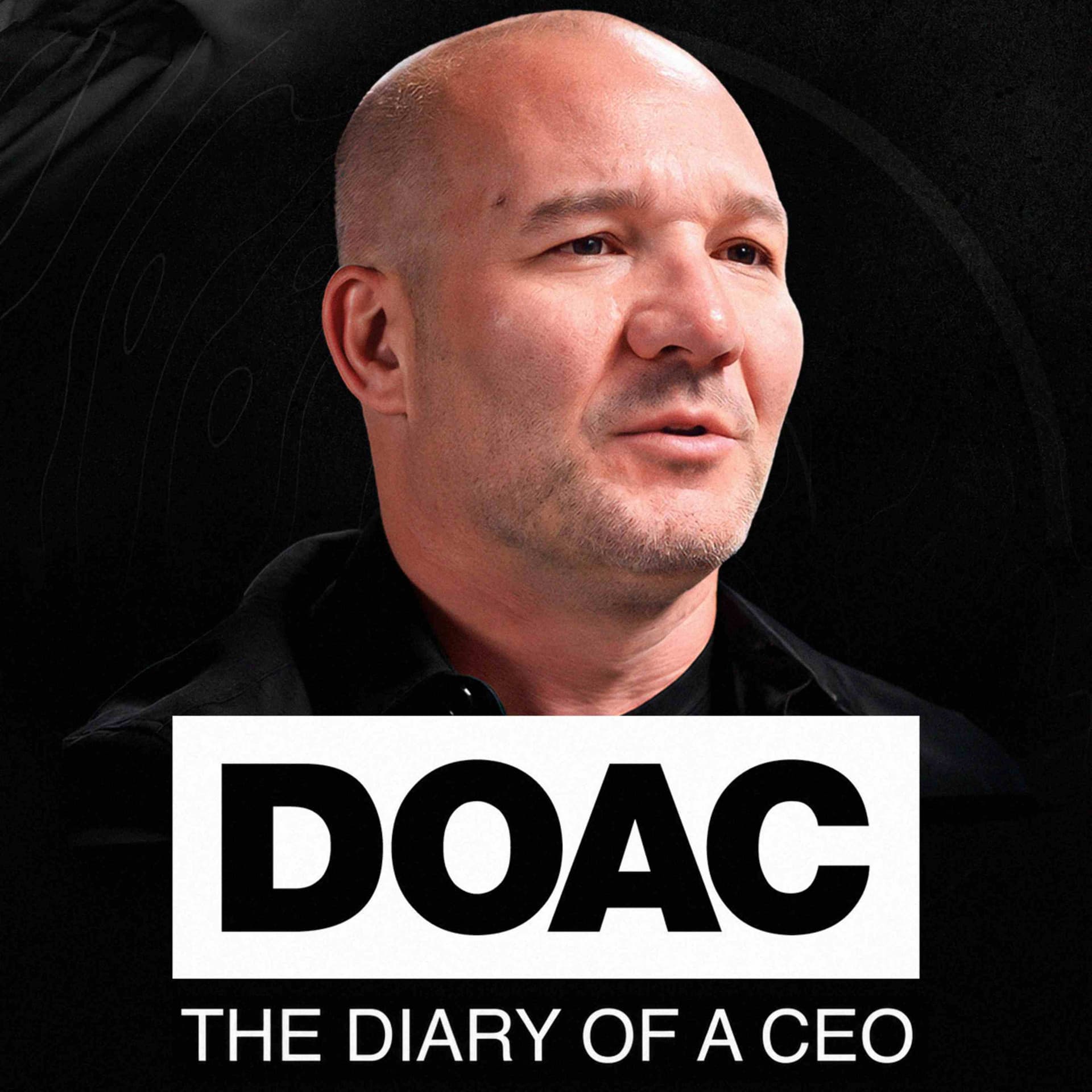
Podcast Summary: The Diary Of A CEO with Steven Bartlett - Episode with Paul Brunson
Episode Overview In this episode of *The Diary Of A CEO*, host Steven Bartlett interviews Paul C. Brunson, a renowned matchmaker and life coach. They delve into the intricate dynamics of relationships, dating trends, personal growth, and the impact of childhood experiences on adult relationships.
Key Participants
- Steven Bartlett: Host and entrepreneur, previously the CEO of a leading social media marketing company.
- Paul C. Brunson: Professional matchmaker, life coach, and head of global insights at Tinder.
Main Themes and Discussions
- The Importance of Relationships
- Central Role: Relationships are highlighted as the most crucial aspect of human life, yet often left to chance.
- Gen Z Marriages: Brunson predicts that Gen Z will have the strongest marriages, driven by their values and understanding of relationships.
- Challenges in Modern Dating
- Complexities of Dating: Dating is increasingly complicated due to societal changes, technology, and unrealistic expectations.
- Breakup Statistics: Infidelity is cited as the leading cause of breakups, with a staggering 99% likelihood of ending a relationship if infidelity occurs.
- Key Characteristics for a Healthy Relationship
Brunson emphasizes five crucial traits to look for in a partner:
- Emotional Fitness: Stability and emotional intelligence are vital.
- Courageous Vision: A partner should have aspirations and a clear direction in life.
- Resilience: The ability to bounce back from challenges.
- Open-Mindedness: Curiosity and willingness to understand different perspectives.
- Compassionate Support: Providing emotional support during tough times.
- The Impact of Childhood Experiences
- Attachment Styles: Discussion of attachment theory and how childhood trauma affects adult relationships and sexual behaviors.
- Awareness Challenge: Misinterpretation and misunderstanding of attachment styles can complicate adult relationships.
- Understanding Narcissism and Relationships
- Red Flags: Identification of the dark tetrad (narcissism, psychopathy, Machiavellianism, and sadism) as significant warning signs in relationships.
- Behavior Patterns: Importance of observing long-term behaviors over initial attraction.
- Conflict Resolution
- Gottman’s Principles: Introduction of John Gottman's "four horsemen" (criticism, defensiveness, stonewalling, contempt) as indicators of potential relationship failure.
- Building Healthy Relationships: Emphasis on the importance of resolving conflicts effectively to avoid relationship deterioration.
Key Takeaways
- Selecting Partners: The decision of choosing a partner carries significant weight on one’s happiness and life trajectory.
- Effort is Essential: Continuous effort and mutual respect are critical for relationship longevity.
- Reflect on Self: Understanding one’s needs and behaviors is foundational for fostering healthy relationships.
- Self-Esteem: The importance of developing self-esteem and how it impacts the dynamics of relationships.
Conclusion The episode is rich with insights on navigating complex relationships, the importance of emotional intelligence, and the challenges posed by modern dating dynamics. Paul Brunson’s expertise provides valuable perspectives on what truly matters in finding and maintaining meaningful partnerships.
Additional Resources
- Paul Brunson's Book: [Find Love](https://amzn.to/47S2XZz)
- Follow Paul on Social Media:
- [Twitter](https://bit.ly/49cXbmg)
- [Instagram](https://bit.ly/3u5JTcx)
Next Steps Listeners are encouraged to reflect on their own relationships, consider the traits they value in partners, and engage in personal growth as a means of enhancing their relational capacities.
---
This summary captures the essence of the podcast episode, highlighting key discussions and insights provided by Steven Bartlett and Paul Brunson. The structured format allows for easy navigation through the episode's major themes and concepts.
Written by AI. May contain mistakes. Listen to the episode to check what was said.
Transcript
Automatic transcript. May contain errors.0:00You know when you're in a meeting, taking notes, trying to focus, but your devices keep pinging notifications. For me, that's really annoying. And usually it makes your brain start to wander away and fall into distraction. This was happening to my producer, Jack. And we were chatting about it when I realized that I knew the exact product that would fix this problem for him. It's from our sponsor, Remarkable. Essentially, it's a paper tablet with no notifications. So it's far less distracting than most tablets. It's called the Remarkable Paper Pro Move. And it really does look, feel, and sound the same as writing on paper, which is really nice if you spend a lot of time taking notes.
0:36But because it's digital, your handwritten notes can be converted into typed text and then you can send it over email or Slack or just keep editing it within the app. All of their products have no blue light, which for someone who looks at screens as much as I do is something I really appreciate. Remarkable is offering a 50-day trial on their products for free. And at the end of that time, if it's not what you're looking for, you simply get all of your money back by sending it back. Give the present of being present. Find the perfect distraction-free paper tablet at remarkable.com. The number one reason for breakups is not finance, infidelity.
1:12If you do that, there's a 99 % likelihood you'll break up. That's pretty crazy when you think about it. Paul Carrick Brunson. The world's most influential matchmaker. You choose a weak partner. Not only do you not live as long, not as happy, more unhealthy, but you could literally suffer death. so who you choose is the most important decision you could make so i have questions you ready for this what is the state of dating it's a hell of a problem how do you spot a narcissist so the key is to this golden mean thing in your book what is that it's the optimal measure of what we consider to be sexy for women it's the percentage of your waist to your hips so what is the future of dating i know a lot of people are going to be mad at me for this but you go there if you want to it's like Arranged marriages.
2:00Data shows us people in the arranged marriage have higher satisfaction because... And this is often where many people go wrong. What should I be looking for in a partner? It has come down 10 years of research on this. There's five key characteristics that we need. One. Paul. I wanted to go over this thing called attachment theory because I think I'm an avoidant attachment style. I love this topic. There's some phenomenal research. looking at the number of orgasms that people have based on their attachment style. And if they were avoidant, the data showed that. No comment. Moving on. But I have to say why though, this is important.
2:46Paul, last time I had you on my show, you were a smash hit. And I look at the episodes and I can see the retention of every conversation I have. The retention is essentially how many minutes of the conversation someone listened to you. And you're a real record breaker on our show in terms of retention. Because the message that you communicate is communicated in such a compelling, relatable way. But you're speaking to a problem that all of us have in our lives, which is this problem of love. And just, I know your story, but there's a chance that some people that have just clicked this don't know your story.
3:21The wisdom you have, what is the experience that you've been on and how long is that experience? What's the sort of flavor and diversity of that experience that has culminated in this wisdom you have about relationship science? What have you been exposed to and how long for? I spent my first part of my career in finance. So I was a researcher in investment banking. I went off, got my business degree. You know, so I was on that track. And then I switched the track to focus on relationship science. And then in the process of switching, I had an opportunity to work for two incredible people, two billionaires.
3:56So on the finance side, it was a gentleman by the name of Enver Ujel, who's a billionaire out of Turkey and owns the largest for-profit education company in the world. And then when I switched into relationship science, I had an opportunity working for Oprah Winfrey, right? And so these were two billionaires. And I say billionaires, I underscore that because they were two entirely different people, different characteristics, different setups at home. but yet they had the same behaviors. And I started to write about those behaviors. And by writing about those behaviors, I ended up becoming a journalist for USA Today.
4:36My wife and I launched what was considered to be the largest matchmaking business in the United States. And then we sold that in 2017. And that's what ended up allowing us to come to the UK. But the heart of what I do is I'm the world's biggest nerd when it comes to relationship science. I wake up every morning, I'm reading some bit of research. I'm going to sleep every night, falling asleep on some lecture around relationship science. I think it's one of the most undervalued areas and the decisions that we make around relationships have dramatic, dramatic impact on how we show up, what happens in our lives, what happens to the lives of those around us, and what happens to the lives who come after us, our children.
5:23So these are very important decisions. And I think that's the reason why it occupies so much of my thought. Have you been exposed to any first party data? I know that you, I think maybe, was it Tinder have shown you some data? Yeah, absolutely. Last year I became the head of global insights for Tinder. And what that has allowed me to do is see, quite honestly, more data on dating. That gives me more insight than I think, I'd say a lot of people in the world. I co-wrote a report this year called the future of dating 2023 that looks at behavior on the app and also behavior around the world. And I made some projections in there.
6:04Gen Z is going to have the strongest, the strongest marriages ever, which a lot of, yeah, look, I see that face. It was like, what? So I made some bold predictions in there. But absolutely, Tinder, that partnership has allowed me some great insights. What is the state of dating? What is the future of dating in your view? I want to know like where we are as a, as a people. And also, I guess, understanding where we are, we have to understand where we've come from. And then from there we can understand where we're going, I guess. Yes. Yeah. Let's look back. Okay. So we, you know, humans 300 ,000 years ago, right?
6:43Started, there was no dating. It was more so what was called assortative mating, which was the selection of other people based on similar characteristics. So we would look at someone and say, okay, you behave similar to how I behave. You look kind of like how I look, therefore we will mate. And the whole objective was procreation. That was it in hunter gatherer days. And you could take that all the way up into almost the 1800s. So Eli Finkel is a great researcher out of New York. And he wrote one of my favorite books, The All or Nothing Marriage. And he calls that entire phase the pragmatic phase.
7:21You were making a selection based on the fact that you wanted to live next week, right? That was why you chose a partner or the procreation of it. But then between the 1800s and the 1960s is what Eli Finkel calls the romantic period. This is the period where we began to say, okay, hold on for a second. The industrial revolution is happening. We're moving into more nuclear families. So we're moving away from our clans, if you will. And therefore I'm lonely. I don't have my cousins around me anymore. I'm working in this job all day, this factory all day. So this partner of mine who formerly was all about pretty much just my sex partner now is going to become my friend.
8:06So this romantic age is where you see companionship rise. But still in that phase, you're still not receiving all of your value. All of what you love about a partner is not coming from just the partner. Or should I say, all of what you need in life is not coming from your partner. Your intellectual stimulation is coming from someone down the street, right? You have friends at work that you use for your entertainment and joy, but your partner is beginning to become your companion. And that's the second phase, right? That's the second phase is the romantic phase. And then in 1960, what you see happening, and this is in Western society, is you see what?
8:49The pill is created. You see the washing machine is created. And these tools, if you will, begin to free women, right? We're still living in a patriarchy, hands down. But in the 1960s, you began to see women for the first time begin to have a little bit of decision, a little bit of choice in who they chose as a partner. And from the 1960s on, you have what Eli Finkel calls the age of self-expression. Now, the reason why this is so important for us today is because what ends up happening is now you move forward to today. What do we want? Well, we want the highest level of well-being. As Maslow would say, you think about Maslow's hierarchy of needs.
9:40At the bottom is you just want food. You just want shelter. You just want to be safe. But as you get those things, you go higher and higher to the pyramid. And the top of the pyramid is self-actualization. And this is what most of us want. Because most of us are living in a state of privilege. We have water. We have food. We have shelter. So we want to be our best selves. We want to flourish, as Aristotle said, we want to flourish. So if we want to flourish now, then we need a partner who can help us flourish. It's no longer about the 1800s or the 1000 where you just needed a partner to, you know, basically have sex with and make sure they could, you know, protect you.
10:23Like we're gone from that. We're now we want self-expression. And if we want self-expression, we have different demands on our partner. And that means dating is now more complicated than it has ever been. Everybody thinks they want choice. Men and women, we all think we want choice. But I'm quite fascinated by the psychology of choice and how it can result in indecision, but also valuing what you've chosen less or more. And that's sort of context dependent. I think here about arranged marriages, and you talk about that in the book and what we can learn from arranged marriages, because, you know, that's a situation where you're given very little choice.
11:03Yes. Yeah. So what happens there? Yeah, this is a controversial one in the book. And I know a lot of people would be mad at me for this. But here's what the data tells us, that arranged marriages on average last longer and both people in the arranged marriage have higher satisfaction. Now, I will also say a lot of people are entering arranged marriages with no decision. A lot of arranged marriages are happening where I would say are amoral, right? However, let's look at why it could be, because I think that's the beauty of empirical evidence of research is it allows you to think about the possibilities of why and what can we learn from this?
11:52One of the reasons why is because when we think we're in love, most of us are not. Most of us are in this blind state of limerence where we are infatuated with the person in front of us and we really know nothing about them. and we know nothing about decision-making and we don't fully trust them. The sex is good, right? And we say, okay, I wanna spend the rest of my life with this person, right? What's happening in most arranged marriages is you have a village. You have multiple people in your sphere. It could be parents, brothers, sisters, friends who have your best interest and they sit and they cohesively decide, is this the right partner for you?
12:38And they're looking at behaviors that you may not be able to see. You know, I saw this with my matchmaking agency. In the matchmaking agency, the first thing that we would do when a client would come in is I would interview friends and family, coworkers, colleagues, people you report to, people who report to you, previous girlfriends, you know, love interests. And with that, I would look for the consensus and I would use all of that to say, okay, this is who Steven is. He comes in and he tells me, this is who he is, but I talk to all of these people in his sphere and I understand this is who he is.
13:19And the reason why we have a hard time understanding who we are is because of cognitive dissonance, right? We believe as human beings, we think that we behave as we think we behave, but we actually don't. Like we don't. What we say we value, chances are we don't really value that. You know, in matchmaking again, I would ask, what are your values? And then they would give me this long list. Oh, you know, I'm a Christian and I value health and right. So this is what you do. And then two days later, I'd say, okay, last Saturday when you were off work, what did you do with your time? Oh, I went out and I pigged out.
14:04I ate all day. And then I went to this concert and I did this and I said, well, where was church in that? Where was Bible study? Where was this? And what I've noticed is that where we spend that free time, where we spend our discretionary money, that's what we value. It's so true. I've thought a lot about this recently, about how what I say should be reflected in how my calendar looks. And that is the true sort of evidence of me living my values and really what I do value. And I think people struggle with this sometimes because what they'll say in rebuttal to that is, well, I'm just so busy, Paul.
14:38I'm so, so busy. I've got kids, I've got, you know, mortgage to pay, et cetera. I have to say they are entirely right that we have a finite amount of time, but in that they're showing what they value. They are showing that they value their kids and their life, their ability to live and eat. That is a value. That is a priority. And this is also why I think our values should be viewed in, especially as it relates to like how we allocate our time as a list of priorities. This is most important, then this, then this, then this, then this, because we can value 20 things. It doesn't mean we're going to do them because we, you know, time is finite, but values aren't necessarily.
15:14They're not. I completely agree. It should be a level of prioritization, right and we should own we should comfortably own what that is yes so if it is time with your children then you value that you know that's what you value stand by that because the more that you can stand by that and erect boundaries around that the happier you'll be the more fulfilled you'll be and you can spot it in the language because if if i embodied what you just said when someone asks steve why haven't you gone to the gym my response would would be i had other priorities it wouldn't be i can't right you know right i couldn't or it wouldn't be blame it wouldn't be excuses it would literally be the the recognition that there was other priorities that won and that is okay that's okay that is okay but it's so interesting so arranged marriages people in arranged marriages report high levels of satisfaction and stay together longer yeah on on average and and and even to break that down a bit right is you have the the family making the decision, right?
16:17So the family is able to see things that you may not be able to see. So that's one big driver of it. The second driver of it is let's look at traditional marriage now, outside of arranged marriages. Right now, and this is Eli Finkel research, 80 % of current marriages are more dissatisfied than they ever have been, ever. And 20 % are more satisfied than they than they ever have been. Now, now why is that? It's because of what we were talking about previously. And that is, is that we now want so much more from our partner. We, we want our partner to be our best friend, our lover, our co-CEO, our running buddy, our, you know, our therapist, right.
17:04Spiritual leader, spiritual leader, our Netflix and chill buddy. Like we, we want all of this now out of our partner. And so what many people are recognized is they're waking up, they're saying, you know, I can only get like 50 % from my partner of what I want or 60%. And many people are not satisfied as a result of that. But the 20 % are looking at their partner. They're using all of these available tools we have. We have so much incredible data around how to have a successful relationship that if you are putting in the work and your partner is putting in the work, you can be more satisfied than ever, right?
17:40And so that's the reason why a small percentage are more satisfied. So part of the reason why that group is more satisfied than the average is because the average is not satisfied. So if you're in that sort of 80 % of unsatisfied people in their relationships, is one solution to that to encourage or facilitate your partner in meeting their needs in other places? And I say this because my partner lived in Bali for two years and then I was living here. So there was this long distance relationship where We wouldn't see each other sometimes for 60 days for two months, especially with the lockdowns and all that stuff.
18:14It was crazy. And then we got to that point in our relationship where we realized that one of us has to move if this relationship is going to work. So does she move to London from Bali or do I move my life to Bali? Okay. Which is super difficult. I was like, pretty hard. Yeah, yeah. It was like, quit dragging us down. I stopped the podcast. My business is like, forget it. All for love. Yeah, but I knew that I could never ask her to move here. I could never do that. She had to make that decision for herself because I've seen the scenarios where there's resentment and all of these things and contempt when you move, you, you, it's almost like you take on the responsibility of that person.
18:51If you, if you tell them to come to your, to your neck of the woods. And one of the first things I thought about was I'm a busy person. And if she doesn't have a friendship group here, a purpose here, work here then i'm gonna be have to be the source of all of those things yes and that's terrifying yes and i'll tell you for the first part of our relationship when she'd moved here i felt like i did have to be those things once she'd started her business here and with her business came a community and it came her own little tribe and her own sense of purpose and i look over in the kitchen when i come back from work and she's on the laptop in the corner obsessed with her work and i thought god oh yeah yeah yeah but that's what it must have would have been like back in the day when you're talking about phase two of the history of relationships oh yeah i mean that that's that's the reason why it's interesting why i mean to to that original question of yours is that we are in such a complicated state right now because we all have different goals you know maybe in your relationship you know it all it already sounds that you and your girlfriend are interested in self-actualization, right?
20:04You want to flourish, you know, of course you want to flourish. But some people may not want to flourish. If you go down Maslow's hierarchy of needs, for some folks it's just about belonging, or it could be just about self-esteem, or it could be just the safety. I just know I have someone with me, just the safety. So we have these different needs and I think that's why one of the most important things we can do for ourselves is to identify what is it that we want out of this world. And then unapologetically go after it. Surround yourself with people who are going after it romantically, professionally, socially, you know, find your tribe.
20:42And that's where you'll thrive. On that point as well, you said about friends knowing you better than you know yourself and kind of by way of that, knowing maybe what you should be going for. How important do you think it is to listen to your friends when they tell you that this ain't the one, he ain't the guy. I had a conversation recently with a friend who I shan't name, who, you know, we're all saying to this person, listen, this ain't the guy. And you can see the point is absolutely not landing. You must've seen this a million times. All the time, all the time, all the time. If all of your friends are saying, this ain't the guy, this ain't the guy.
21:21No matter what, it will not work out 100 % of the times. It won't. The friend, I think there's certain things that we did with this matchmaking agency that I really think were groundbreaking. That was one. If you can look at what your friends and family and all of the people who love you are saying, and they all say the same thing, that's the truth. And how important is it to get your shit together before you go into a relationship. I've always wondered this. I've wondered, do you go into a relationship and the situation fixes you or do you fix yourself then go into the relationship? You talk about this in the book.
22:02The idea that our satisfaction levels in a relationship will vary based on our satisfaction levels before the relationship. Yes. So this was one of the most enlightening, I think, pieces of what we're not hearing. What we hear in pop culture all the time is if you have shared values, that's what makes the strongest marriage or that's what makes the strongest relationship. Some people say, if you have great sex, that's what makes the strongest relationship. But actually what we found in the research here is if you walk into a relationship and you have a high level of satisfaction, that is what gives you the highest level of satisfaction in the relationship.
22:41So the key is you want to figure out how you could flourish, you know, on your own, On your own. Carol Riff is one of the people who I don't think she gets enough attention out here in the relationship science space or even in the world, right? She's a brilliant researcher. And in the 1980s, she sat down and she looked at every theorist who's written about flourishing. And then she figures out the consensus. What are all of these great theorists saying about flourishing and well-being? And she created what's called the six dimensions of psychological well-being. And I never hear anyone talk about this.
23:20It's like one of the most important concepts ever for us. And what she's outlined is that there's six areas that we should be focused on if we want to flourish with or without a partner. One of them is personal development. Are you on the path to personal growth? Are you doing things to develop yourself, right? Number two, do you have inspiration? Do you have a goal that you are marching towards in life? Number three is autonomy, feeling like you have control over your time. Next one, number four, is what's called environmental mastery. This is, do you feel like the area that you're in physically, the area that you're in, the city that you may live in, the town that you may live in, is it conducive to you doing all the things that you want to do right in life.
24:11Next is having a strong relationship with other people, whether it be romantically, it could be platonically, but do you feel like you have connections? Do you have friends? Right. And last but not least is a concept that she calls self-acceptance. This is very important. Self-acceptance is knowing the demons that you have inside and being okay with them. It's knowing and acknowledging that, you know, I'm good, but I do have some bad and I accept my bad. If you are working towards all of those things, all of those six dimensions, you will have the highest level of wellbeing. You'll reach self-actualization.
24:55And to your question, this is something that we should be doing with or without a partner. And if you could do it without a partner, when you enter your partnership, it will be that much stronger. People that you've spoken to that are struggling in their relationships, do you think they have this opinion that the relationship is going to fix their problems? Yes. Yeah. I think we walk into relationships and we think it's the end. We think that's check done. It's not, it's, it's, it's where the work begins and we have to change this. And a lot of this has to do with, and I put some of the blame on me.
25:34I think some of this is television. Some of this is the, a lot of people call it the Disneyfication of relationships.
25:47We misunderstand and misinterpret our role in relationships. How? I fundamentally believe that the number one reason for breakups is not, we hear reports all the time that it's finance, it's infidelity, it's none of those things. You know what it is? It's we pick bad partners. We select the wrong partners. Or we don't make the selection at all. Many of us, and unfortunately I see this a lot with heterosexual women, is they allow themselves to be selected, opposed to making this choice themselves. So the first part is, are we choosing the strongest partners for us? That's one. And then once we have chosen the partner, then are we working together to help our partner unveil their best self?
26:43You know, the Michelangelo effect, and Eli Finkel writes about this where, you know, Michelangelo would never look at a stone and say, I'm going to carve this beautiful statue. Instead, he'd look at the stone and say, I'm going to unveil this beautiful piece of art, this beautiful statue that's in the stone. That's how we should look at our partner is that we all have this beautiful statue within us. And when you find the strongest partner, that allows you to see that. I know you've had Dr. Waldinger on. He says it in his research. You live longer, you're happier, you make more money. You get all of the benefits when you choose a strong partner.
27:27But if you choose a weak partner, not only do you not live as long, not only are you not as happy, not only are you more unhealthy, But you can literally suffer not just emotional and psychological distress. There is a rise of domestic violence that is happening in these relationships around the world. So you could literally suffer death, death by choosing the wrong partner. And so it goes to show how important the decision is. This is a life or death decision. I want to go into all of those things you've said about selecting, selecting poorly and the life and death decision that comes with psychopaths and narcissists and all that stuff.
Read the full transcript
28:15You know what's interesting is when you say to me that the work starts at the relationship, there's part of me that goes, oh. Do you know what I mean? Because in the movies, I was thinking of all these movies I'd seen in New York where there's a twist, there's a turn, and then there's a happily ever after and the movie ends. And you think when the movie ends, in all of these movies that we've watched for 10, 20, 30 years, you think that is the end. You think they live happily ever after. I watched the turmoil. I watched the battle. And then they live happily ever after. If that movie was to be extended, any movie we've seen, romantic movie, what you'd then see is another 30 years of like bullshit.
28:54But we don't see that. So I was just thinking, where did we get this idea from that the work stops when we find the person. Yeah, it's coming. So it's coming from a couple of places. One is that's where it did stop at one point. You think about the pragmatic stage, the romantic stage. That was all you needed. You just needed the partner. It didn't matter. You didn't have to do any work with the partner. So we have gotten this honestly as a society, but also it's what pop culture, it's what media, it's what it feeds us. But I would say, don't look at it as hard, distasteful work. Instead, here's a better way.
29:35Let's reframe it. Reframe the negative, right? Is this podcast, right? Incredible. One skill, you're probably learning incredible skills doing this. One of which I'm sure is your active listening is off the charts now compared to what it maybe was day one. Now, if you thought active listening, I'm going to learn active listening during this podcast, did you think then it would be grueling? I don't think so. I think that you probably saw that as a great life skill. I can come in here. I'm going to not only meet all, I'm going to do all this incredible things, but I'm also going to develop skills.
30:10And these skills are transferable to everything I do. That's how we should look at our relationship. Look at it that way. You are going to learn incredible skills that are transferable across your life. And as you develop those skills, the whole tide rises. You're going to develop new skills and better master new skills and then apply those to your business, apply those to your platonic relationships. So it's a wonderful thing. And when you are in a secure relationship, it's boring as hell. It's boring, which is why, you know, not to get myself into trouble, but, you know, when you're watching television and you're watching these shows around relationships.
31:00Actually, I'll give an example. I will give an example. When I got here to the UK, I started on a show called Celebs Go Dating, and then I very quickly went to a show called Married at First Sight UK. And when I was on Married at First Sight UK, my first series, it was a full docuseries and we matched couples and it was boring. You know why it was boring? Because they all loved each other. They all really liked each other. And out of that group of four couples, three of them are together today. Wow. Right? But you ask anyone in the UK, did you see that series? They'll say, no, we didn't see that because it's boring.
31:39And then you change things and you get couples who can still work, but there's tension, right? For a variety of reasons, there's tension. And then it gets exciting. And so one thing that I always say is great love looks boring, but it feels great. You know, good love. It feels, good love looks boring, but it feels great. Men. Mm-hmm. Men are struggling, it seems. Yes. I think, you know, the more and more I talk on this show about dating apps and what it's like to be a man in this dating climate, especially one that's become more digitalized than ever before, the conversation always emerges in the sort of like the comment sections and stuff about men's struggles here.
32:29Mm-hmm. Because, you know, these dating apps, they seem to be not well designed for the like bottom 50 % of men. Mm-hmm. What are your thoughts on this? Yeah, I'm with you. You know, what I like about the conversation today is we're finally acknowledging, it's okay to acknowledge that, you know, men are getting crapped on. You know, I feel like just a year ago, if you said that, oh, no, what are you talking about? You know, we're still in the patriarchy. You can't. No, men are struggling. High suicide rates, highest levels of loneliness, highest issues around mental health. Men are struggling.
33:07And the fact that we can just talk about that and all acknowledge, okay, let's figure out how to deal with this is a good place to begin. But now we have to begin. You know, it begins with the awareness and talking about it. It extends into creating safe spaces for men to be able to talk. I love that what you see now is you see these podcast communities creating these spaces where men feel like they can be acknowledged and seen. And that allows for there to be connection with other men going through those same challenges, which creates camaraderie and helps you to break out of that loneliness.
33:51So we're on the path, but we have to acknowledge some of those larger trends that we see. I know Richard Reeves talks about this quite a bit, phenomenal book of boys and men, where you can see just the levels of unemployment, the lower levels of educational attainment for men, the high levels of drug usage, the high levels of what Richard Reeves calls sedation, essentially, is drug usage, pornography watching, where you have a large number of men just sedating themselves out of pain, right? Out of loneliness. And so I think we're in a great place to begin working on the problem, but it's a hell of a problem.
34:40In your book on page 72, it says that in the Tinder research, you found that one of the main reasons men aren't in relationships is because of rejection, fear of rejection. Yes. number one. And many people would laugh at that. They would laugh at that stat. What? Men walk up to me all the time. So how is it that men are fearful of rejection? But the fact of the matter is that the majority of men report the number one reason why they believe they can't find a significant other is the fear of being rejected. Think about that. And that's not just in person. That's online feeling as if you are going to deny me, you're going to reject me.
35:24And to me, that speaks to self-esteem. To me, that speaks to self-love. To me, that speaks to self-worth. And so therefore, we have to really evaluate the why. Why is that? But I think this is such an important point, and this is why we have to look back. Let's look at history. Why is it the case that the Calvin Klein model, or why is it the case that the higher status person gets more interaction? If you think back to pragmatic, right? If you were a woman, what did you need to survive? I needed a mate that would protect me. Exactly. Now the protection would come in one of two things. And I say that because at some point I'm going to be eight and a half months pregnant and I ain't going to be able to hunt no, you know, or forage or I don't know.
36:20Exactly. And so you need to have the protection. And the protection came in one of two ways. One, physicality, right? Someone's just strong and fight. But the other was high social status. Resource, which would bring resources. Which would bring resources. And therefore, you know, you'd have the protection because of that. So how long did that continue? Yeah, most of human history. Most of human history. So we have, through evolution, this has been indoctrinated into our system. And what is rarely talked about is, so, you know, there were millions of men throughout history who were not the Calvin Klein, not the biggest, didn't have the social status.
36:59So what happened to them in history? Do you know what happened to them, most of them? They were the ones sent to war. these were the men fighting for whatever country the these were the men when you when you watch napoleon and you see oh my god the battle of waterloo you had tens of thousands of people who's dying it's those men it's not the high status status men it's not it's not the calvin cline looking right it's those men were dying and we've reached a point in society where we're no longer fighting wars like that. We're fighting with drones and missiles. You have millions upon millions upon millions of men sitting there saying, okay, now what about me?
37:40What about me? And this is the problem. This is where we are. What about men? What were they selecting for? They were selecting for youth. Fertility. Fertility. Yep. They wanted youth, which spoke to fertility. And that ran through time. And that's the reason why you see a woman who, you know, I talk about this in the book, there's this golden mean. Golden mean. I read this and it was the first time I'd ever heard of this idea of the golden mean, but it was super interesting. The golden mean. Explained why my girlfriend seems to like my shoulders. She doesn't care if I get fat. I swear to you, I asked her one day, I was like, what do you prefer?
38:20Because she asked me, she said, what features do you prefer on me? And obviously I knew that was a trap. So I said everything. I'm not stupid. But then when she asked the question, I asked her the question back. I was like, what features do you prefer in me? She was like, your shoulders. And I was like, really? I was like, I thought they said you wanted, like, I thought women wanted a six pack. She was like, she was holding my shoulders. She was like, your shoulders. And then I read this golden mean thing in your book. And I was like, ah. Yeah. You know, it's interesting. I spot everyone and I almost am calculating golden mean.
38:52because I'm always thinking as a matchmaker, like I can match that. So the golden mean has stood throughout history. And there's a different calculation for men and women. For women, the calculation is the difference between waist and hips, right? So it's the percentage of your waist to your hips. So if on average, your waist is 70 % of what your hips are, that is considered to be fertile, right? You're considered to be at optimal, you know, you're optimal for fertilization in essence. And you could see that ratio tested throughout time. And you could see that ratio tested throughout culture, which is rare to go to an Eastern collectivist society and see something similar to what's happening in a Western individualistic society.
39:47And so the golden mean stands through time. And the reason why it's so interesting is because you look at like Twiggy in the 1970s, I think, in the UK, and you say, gosh, Twiggy was so thin, but she still had a 70 % golden mean. You look at the, you know, people talk about the Kim Kardashians of the world. She has less than 70%. She's probably like 50%, right, golden mean. And so the golden mean is the optimal measure of what we just consider to be fertile, therefore sexy on average. And so that hasn't been influenced by, you know, magazines and media and stuff like that. That's just, scientists think that's innate.
40:31Yes, they think that that's innate, but it is impacted by culture. So you go into different subcultures and there might be more of an exaggeration of the golden mean, right? So maybe it's more than 70%, or should I say less than 70 % could be what's considered more attractive. So it is influenced, but on average, that is it. And the reason why I say that is it is because many men would argue, oh no, you'll say, what are you? Are you, you're a breast man, you're a leg man. Like what is it? Like it's a Thanksgiving dinner, you know what I mean? And those could be characteristics and features that you find sexy and attractive.
41:12But on average, this is what will light up most men. And then for women, when they're looking at a man, the golden mean is the difference between shoulders and waist. And so if you have, if your waist is 70 % or less than your shoulders, then that is considered to be what? Someone who could protect me. That's where that comes from, you know? And therefore, throughout hundreds of thousands of years of history, we get to the point where, okay, it's sexy. Why is it sexy? I don't know. He just looks sexy. No, the reason why he looks sexy is because ultimately back in the day, he could have been a protector.
41:59So that's where that comes from. And in the matchmaking community, what I used to do all the time is if I had a client who was, you know, say a male client and he didn't really represent the golden mean, I'd say put on this blazer here, you know, wide shoulder pad blazer, go out there on that date. You know, so the golden mean is something that has stood the test of time. So many people are going to be doing like shoulder pressing tonight. That's crazy. That's all you need to do. Yeah, just a little bit of shoulder press. That's it. That's so crazy. But it makes evolutionary sense that there is, is it proportions the right word, that we would associate with fertility or protection.
42:48What's this concept in chapter four you talk about, the concept of mate value? Yeah, this is, I feel like the whole book now is controversial. This is another topic that a lot of people want to push back on, right? Mate value is a evolutionary psychology term that is around technically, what value do we bring to the mating marketplace? Because when you think about, you know, our evolution is that we go on one or two paths in mating. We call it dating, evolutionary, they're calling it mating. Long-term mating or short-term mating, right? Now, short-term mating is a separate beast. Short-term mating is literally, I want to have sex tonight.
43:45Therefore, you're going to look at different characteristics. You're not going to care if you can trust the person. You're not going to care. You're like, you're going to look at what they look like and that really might not mean anything to you. That's short-term mating. Long-term mating is much different. Long-term mating is, okay, I'm looking for a partner for life. And part of the calculation that we're doing, innately, the calculation that we're doing is what do we value the person? It's no different than someone saying, oh yeah, he's a nine or she's a 10, you know, 10 out of 10. She's a 10.
44:17In essence, that's what mate value is. But I look at mate value as all of the ingredients that we bring to the table. So yes, it is about physically how we look. It is about status and our job. Yeah, that's important. But it's also about how kind we are. It's also about our behavior. It's also about how confident we are when we walk into a room. All of these pieces add up to mate value. But the reason why I say it's so important to know is because mate value will also change based on the context. For example, if I take, so I keep, you're going to be my reference here. If I take you, Stephen, and I bring you to Richmond, Virginia, where my wife is from, and we go to a restaurant, you walk in, everyone is mesmerized by you the moment you open your mouth.
45:13Amazing. Everyone is. Where is it? Richmond? Got a postcode. Richmond. Peg a note here. Everyone is. The moment that you speak, wow, I've never heard an accent like that. Tell me more about you. They're intrigued. It's what I call the premium effect that lands on top of the mate value. right but we have to understand that there is a value that we assign people when we are mating or dating you conveniently skipped over the one about having kids oh yeah yeah yeah no no but so having kids it goes up or it brings your value up or it brings your value down now it depends on what your partner is seeking so if you if if you if so chances are let's say that you are a woman you have children and you are, you're dating a man who does not yet have children and wants to have children, chances are that is going to lower in his eyes on average, that's going to lower the, that's going to lower your perceived mate value.
46:28However, however, if he has children or maybe he's a little bit older or maybe for whatever the reason, he could look at that as an upside. The point there though, is that it's the context that changes your mate value. And that's very important. The context is what changes it. So this premium effect you talked about then, when you're talking about Richmond, Virginia, how can one use that to increase my chance of finding someone to fall in love with. And just give a bit of color on what you mean by the premium effect. Is it being a scarce commodity in a certain environment? Yeah, that's exactly.
47:10Or a desirable commodity in a certain environment? It's being scarce. Scarce. Yeah. So when we started the matchmaking agency, it was focused exclusively for black women. And the reason why is because I felt as if black women were being highly discriminated against in the matchmaking space. And so I was trying everything. And so I thought, you know what I'm going to do? I'm going to start putting my clients on dating apps and I will act as them. And I saw that they were not getting traction. Is that statistically proven? I'd love to know. Yeah. You know, I will say from all of my experience in matchmaking, it was.
47:50That black women got less matches on dating apps, less swipes. In my time, when I was running that dating agency, absolutely. Absolutely. Hands down, there was no question. Why? Well, you know, there's lots of reasons. One reason is that when it comes to outside of Gen Z, so if you look at millennials, you look at Gen X, you look at baby boomers. And at that time, Gen Z wasn't yet on dating apps. We're talking about millennials and higher. We typically choose ethnicity over every other category. So ethnicity ended up being one of the first selections of a partner. And we would either bring you, you know, we would either include you or exclude you based on ethnicity.
48:40Gen Z has changed this and I'm, so happy to see this. Gen Z is the first generation to, at majority, have interest in everyone. So on Tinder, for example, we see that 80 % of our Gen Z, they are not just open, but they have dated someone outside of their ethnicity. And I believe that we're entering this new phase of what I call, we are inter-everything. We are inter-ethnic, international, inter-religious. That to me is is beautiful, but that didn't happen for millennials. It definitely didn't happen for Gen X, definitely not for baby boomer. So ethnicity was number one. So because of that, and because of the pools of black men on dating apps of that age range were so much smaller that you saw a very small selection rate for black women.
49:35So that's what was driving the low, low, low perceived interest. But what I didn't like what was happening is you would see this data come out, you know, black women are not selected or not swiped on or whatever it may be. And it would be projected as black women are not desirable, which is like the most ridiculous thing in the world. I was like, what are you talking about? But the reason why is because they were taking these small data sets and essentially claiming this larger narrative based on the small data set. And so when I was experimenting with those, with my clients, I then said, okay, what would happen if I put my black female clients onto J-date, right?
50:27Jewish date, you know, and they were not Jewish, like they were ultra Christian, right? What would happen So I started putting them on J-Date. Phenomenal success. Phenomenal success. Phenomenal success. There was a percentage of people who responded who were crude. Why are you here? There was a percentage of people who responded who were obviously fetishizing. Oh, I want to do this to you, right? But then there was a percentage of people who were just curious. Let's see. Why did you? That's interesting. Why are you here? Let's have this conversation. And the interactions were plentiful. And what I realized there is there was a premium effect being assigned.
51:16There was a extra value that they got by being the scarce commodity in this space. And so my objective with a lot of my clients was to take them and put them in places where they are few. That's so interesting. And we can do that IRL as well. We can put ourselves in situations where we're scarce in real life. Is it going to like a different type of sports club or, you know, what is that? Yeah. So I try this out here. I have a friend who lives in Hertfordshire. She is a white woman, friend, 30, mid-30s, completely open to meeting everyone, right? She's like, Paul, I'm single. I don't know what to do.
52:00I said, all right, here's what you do. Come on down to South London. I want you to go to this exhibit that's happening at the Black Cultural Archives in Brixton. And I want you to go down there. And you just tell me what happened. She went down, she was like, oh my God, it was crazy. I met blah, blah, blah, blah. And the point was that she put herself in a place where she was a quote unquote scarce commodity. If you want to look at it in economic terms, which I like, you know, that's exactly what she did. And she met incredible people. Now, did she have romantic connection there? No, but she walked out of there with two friends that she's kept in touch with, you know, for a year plus.
52:40So think about where your interests lie, but where you can step out and be different. where you could be unique. You can do that in every aspect of your life, but you know what the underlying driver is to being able to do that is self-esteem. Because the higher self-esteem you have, the less external validation you need. Less you need to conform to the environment. Exactly. Even there's some great studies that show that the higher self-esteem you have, the less you need to have someone who is traditionally attractive. Interesting. Yeah. Because you start to see all of the value, all the beautiful nature and behaviors and physicality of someone.
53:31And you don't need to walk down the street and have everyone say, he looks like, he's so beautiful or she's so beautiful. You know, you have value in that person. And so therefore, you know, and so high self-esteem is indicative of so many aspects of our life. And you could show up, get that premium effect if you have high self-esteem. I've never heard anyone talk about this before. And that is so interesting because I was, every time I hear an idea, I think we all at home, everyone listening to this will kind of sense check the concept on like friends they know and people they know. and I would say that of all of my of everybody I know the people that are typically lower self-esteem are those that are most focused on appearances and looks in fact there's one of my friends who when he called me one day in the gym and said I'm not sure about his current partner and I'm like why what's that he goes you know like when I walk into a restaurant with her on my arm I just don't know how it looks literally that's what he said to me and I remember having the conversation with him like bro you are screwed if that's what you're judging this individual based on how they look on your arm yes but it's but it's a consequence of his own need for validation from the person he's with and and then it's no surprise that the other correlation you see is those people are probably still single those are my still friends that are still single the ones that care the most about that that can currently have the most the lowest self-esteem are also the ones that are still missing probably great people for looking at the wrong things.
55:00There you go. That's why we need to be in a state of flourishing ourselves before we go out there. Because think, if he was able to just take a breather, work on his self-esteem, there's so many things you could do, boost your self-esteem. Think of how incredible his next relationship would be. Facts. Yeah. Yeah. Self-esteem is really where it's at. Like it's underrated. that's so interesting this idea that when we have low self-esteem we'll care more about how the person looks because they are we believe that they can boost our self-esteem by just being next to them that's crazy yeah and well more so we believe that society accepts them and we won't be shamed by society as a result of being with them right because we want the validation from society when we have low self-esteem but if you have high self-esteem you say you know what this is my partner and i don't care what you think yeah it doesn't matter what you think i'm happy then you can walk down the street with anyone and if you encountered in your work as a matchmaker back in the day someone who was low self-esteem what would you suggest them to do would it be therapy was there something small they could do in their life a first step they could take Yeah.
56:20So what we would do with the agency is we would not even start matchmaking them until we went through months and months and months of coaching, right? Now, what are some things that you could do, practical things you could do? It's about practicing self-compassion is a great way to boost self-esteem. So that could be journaling. That could be meditating. That could be exercising. It also is about setting goals, achievable goals, and accomplishing those goals. That helps to boost your self-esteem. On the pathway to mastering something, boost self-esteem. For example, during lockdown, I started learning the piano, right?
57:02Started learning it. And once I got to phase two of my little piano, you know, at home tutorial, I got a little boost of, okay, I can do a little thing. And then I played Wu-Tang Clan, Cash Rules, everything around me. I did cream on my piano. And just doing that boosts self-esteem, right? So the mastery of something small, self-compassion, surrounding yourself with other people who have self-esteem, high self-esteem. These are some basic ways to help to boost it. I was thinking a lot about this. I said to one of my friends the other day about this idea of keeping commitments to yourself. I think I was talking about it with Chris Williamson as well about the commitments we keep to ourselves when no one is watching feed into our self image.
57:48Like I think some of us think that self-esteem is what we've like accomplished in life or what we haven't accomplished in life. But if we narrow it right down and zoom right into like this morning I told myself I was going to get out of bed at nine, but I hit the snooze button. now it seems trivial but in that one decision to not keep a commitment to yourself you wrote a little line into this the paul brunson story which is actually an instruction manual that governs your life and the line you wrote into that story is i'm the type of person that frequently isn't able to do what i want to do and that's an instruction that you then when you go to work that when you show up, when you think about your big ambitions in life, it's an instruction.
58:32It's a line of code written into who you are. So I've got really obsessed with this idea of these small commitments. And the great thing about small things is they're easy to do and also easy not to do, but they're also easy to do. But because they're easy not to do and because they seem small and trivial, we tend to overlook them. So this idea that like start by keeping these small commitments to yourself that you make could be the pathway to the big results that we're seeking you know because we look up at these these figures on instagram and on social media that are like saying earlier like running ultra marathons and they're starting these businesses and killing the game and we go how the fuck did they get up there it must have been one big decision they made it's baby steps you know baby steps and and you said something that i think is very important within self-esteem and that is is that you've exercised it there's an action it's not just about I'm going to set my goal as I'm going to wake up at a certain time.
59:28No, it's that you have, you woke up at a certain time. You've exercised it. This is the key piece. And it is. It's about all of those small steps. It's about the consistency of the small steps. And I think you've seen this. You must've seen this in your life is that what that does is it builds habits that you then build upon. And then what you'll notice is that the tasks become bigger. And bigger and bigger. But you're able to do it because you have the foundation of the smaller tasks. I've often wondered if there's a generation that are kind of trapped between how things used to be, which is, you know, meeting people in your village, down at church, in real life.
1:00:09And then there was this sort of digital surge where most people now meet online. I wonder if there's like this generation that are trapped in between the two where they were of a certain age where everyone around them was kind of meeting in real life. They didn't manage to meet someone. Then the digital age exploded. And it's literally like this vertical line up when you look at the graphs, just suddenly everyone's meeting online. And they don't have the digital skills. They don't have the social media. They don't know how to like upload a photo. but their way of dating this irl way of dating is now gone out of fashion and no one's doing it yeah and they would roughly be if i had to hazard a guess at their age they're probably 35 yeah plus now 35 plus but it's it's the 50 the 50 year olds or should i say the 45 to 50 are getting hit.
1:01:07And the reason why is exactly what you're saying. But then what's happened is, so the number one age of new daters in the world is age 18, right? We see this on the dating apps, 18 people download the dating apps are out on the dating scene, but you know what the number two age range is? Well, I know because you said it for 50, right? And why? It's because of empty nest syndrome. You and your partner, you've had two children. They go off to university. You look and you say, I don't even know you anymore. I don't know you. So peace, I'm gone. And then you break up and then you reenter the dating market.
1:01:47And you're like, oh my God, we didn't have dating apps when I was doing this. And you're completely confused as to what to do. But I'm going to tell you something wild. And that is, is they end up doing quite well. You know why? Because they show up as their authentic self. What we've been learning, I think, on social media for so long is, you know, create your representative. You go to 80%, maybe even 90 % of folks Instagram, it's just their representative. It's not them, right? And so on these dating apps, et cetera, it's the representative. But a lot of these people who have never used an app before, they go online, they write down the imperfect profile.
1:02:35They talk about what they're scared of, what their fears are, their vulnerabilities. They post the photos without filters, right? Because they don't even know how to use a filter. And you think they're going to not do well. And they end up doing extraordinarily well because they show up as their authentic self. What the data is showing us more than ever is that authenticity is what wins. Leaning into your quirks, leaning into the things that make you extraordinary. You know, I say this all the time to people who have coached, and that is that think about you, right? There have been billions of people who have walked this planet before you, but no one ever walked this earth with the same experiences as you.
1:03:22or the same skills. And guess what? Right now, 8 billion people in the world, no one sees the world exactly like you see it. No one has your skills. No one looks precisely like you. And guess what? It gets even better because no one who will ever live on this planet will ever look precisely like you, talk precisely like you, see the world precisely like you. So therefore, guess what? You are extraordinary. You are truly special. You are truly unique. There's no one ever like you. So if you own that, you win. What if I'm an asshole? Well, you know what? So are you a narcissistic psychopath asshole?
1:04:06You know what I mean? Like if you don't like who you are, you don't want to put that out there. You want to, you know, filter it, you know, face tune it, trim it, cut it, expand it. I'm with you. I'm with you. So yes, many of us don't like, you know, various parts of who we are. The key is to embrace the good, but going back to Carol Riff's Six Dimensions of Psychological Wellbeing, self-acceptance is to say, you know what, these three things I do, yeah, assholes do those three things. But do I lay that out? No. Well, here's what you, in a dating app? No. In a dating app, you lay out what it is that you desire, what it is that you are seeking.
1:04:45But are you transparent about those things when you're interacting with them? Absolutely, you're transparent. because if those asshole traits are part of you, it's going to show up in your behavior. So you alert the person ahead of time, I'm working on these things. I don't want to scare them off. No, you don't. But you want to be your true self. But it depends on what kind of trait we're talking about though. So, I mean, you'd have to give me an example. Okay, I'll give you an example. I'm playing a role here, okay? So people don't click this and put it on the internet. But say that I had a toxic trait where I get ultra needy and I'm like very jealous and I'm very easily triggered by anything that makes me feel like you're cheating on me or you're, you know, I'm like insecure from like maybe, you know, something that happened when I was younger or whatever.
1:05:34Okay. This is good. A lot of people have this. So you'd be very anxious. This sounds very typical of an anxious attachment style. So the question is, is are you working on it? because if you're working on that and you acknowledge that, that's a great relationship to be in because someone is proactively working on their trauma. But if you tell me this is how I am and I'm doing nothing about it, well, that's a problem. I want this relationship so I can work on it with you. No. The best time to work on this relationship is before you're in it. That's pretty much what it is. But you know what? those are the type of conversations that we should be having.
1:06:16How can I work on it before the relationship? So say in that case of insecure, jealous, anxious type, does that mean like going to therapy and when you say working on it? Yeah. Okay. Great question. So let's first say this about therapy. I have tons of friends who are some of the top therapists in the world. Love it. But when you look at the satisfaction rate that most people report going to therapists, very low, very low. If you look at the access to therapists or top therapists, very hard to get access. So most people cannot go. So I'm consciously always saying, okay, it's important to be able to go if you can, but most of this work you have to do on your own.
1:07:00First part is, and this is not me to be self-serving here, but I think podcasts are incredible in creating awareness. But I will say on this particular podcast, quite honestly, you've had all of the greats within this space, all of the greats from, we talked about Dr. Waldinger to Gabor Mate. Like you've had all of the greats who will give you a taste of what you need to create that awareness. And then you dig deeper, you purchase the book. yeah you purchase the book and then you do the work in the book gabor mate all the time he talks about you know what you do let's meditate let's journal like he prescribes he sets it out but a lot of us don't want to do that level of investigation we want quick easy and now and now yeah but guess what you're not going to get to that level of flourishing if that's all you desire Like, I mean, mediocrity is common.
1:08:03Like being mediocre, should I say, is common. The moment that you can step one level above being mediocre in society today, you typically are seen. That's how low the bar is. It's the same way in relationships, but it's also the same way in the relationship that you have with yourself. If you do any bit of work, you become exceptionally better for you, for your partner. Just a little bit of work. Learn to actively listen. Learn to just simply respond, which is active listening, versus reacting. That's a game changer. There's this idea of metacognition, which is thinking about your thinking. and when me and my partner have a disagreement now i it's almost like i now have this metacognition it's like i'm i'm watching the situation and watching myself in the situation and it makes such a big deal my girlfriend was saying something to me the other day and in my head i'm going think about how you're listening make sure you're listening intently make sure she feels heard and that's what my brain is saying now yeah that's it but before it was all like fuck yeah i need to let her know how she's wrong yeah but see this is the work.
1:09:17This is the work that we were talking about that you were doing that is work, but it's paying dividends. It's like the return on investment on learning the skills is infinite. Because I'm sure you take that into your business. You take that into social situations, active listening, stepping outside of yourself. These skills change your life. And to go back to Dr. Waldinger's work is when you're able to make these small adjustments in your life, you're happier, less stress, you live longer, you make more money. The rewards are infinite. This older generation, the generation that we said we think might be trapped a little bit in a technological transition.
1:10:02One of the things my friends that are part of that generation say to me is that there's just no people left anymore. And one of my friends has actually said to me a few times that she needs to put herself in a situation where she's going to meet lots of men, where there's lots of men. And she gets particularly annoyed when her friendship group don't want to go to the places, because they're all paired off, where they don't want to go to an environment where there's lots of men. Does it matter? You talk about this in chapter four, the importance of the sex ratio. Does it matter? So sex ratio is huge.
1:10:34The best example of sex ratio is look at what's happening in the farmland, so country areas of China, where you had basically the one child policy, where you see a heavy number of men. So the sex ratio is the number of women to men, right? And so you look at the number of men, there's many more men than there are women in China, especially in the farm area of China. So what does that mean? What that means is that women now have more negotiation power with the men. If you go back 40 years, you'd have to be buried off by 18, 17, 16 in some of those areas. You would have no say as to who you could.
1:11:20Now, I literally just read an article where you have 30 plus year old women going into those areas saying, we could choose whoever we want out here. You know, we can do whatever we want. You have more negotiation power, but that also impacts the relationships that then do form. For example, look at most university campuses that now have majority women at the university campuses. What's happening in terms of sex at the campuses? Off the charts. Why? Because you have a small pool of men who say, you know what? We now have negotiation power. There, there, there's few of us, there's all these women out here.
1:12:02And, and, and what's, what's happening is the women are looking at the small pool of men and saying, okay, we only have access to these guys. The guys know, okay, we have access to all of these women. So therefore we're going to act a fool, you know? And what ends up happening is you end, you end up seeing how relationships change, the formation changes based on sex ratio. So looking at some of these macroeconomics, you can see how it does impact how a relationship is formed and then what happens in the relationship. There's some environments that are and there's some professions that are typically dominated by one gender, typically, for whatever reason.
1:12:41In the book, you talk about like engineering degree courses. Yes. So if I was a woman and I would say I was just, you know, I was 20 years old and I was desperate to find a man, going into an engineering degree course would put leverage on my side. Yes. It's just something to think about. You know, people choosing jobs and environments to work in, if they are really trying to expose themselves to a gender balance that's in their favor, we're talking about heterosexual couples here, then that is something to consider. It is. But even that point is controversial, right? Because that point that you just mentioned, which I endorse, by the way.
1:13:18Then I'll cut it out. It's all controversial. No, but the reason why I say that point's controversial, but I love it, is because what you're saying is you're saying, hey, young lady, you're going off, you're thinking about your career. Also, start thinking about your long-term partner at the same time. I feel as if a large narrative that's placed on us in Western society is knock out the education and the career, get all of that taken care of. Then once you have all of that wrapped up nicely, now you could focus on these other things in life. I have sat at the deathbed of two people in my life.
1:14:00I will never forget these moments ever. What they did is they both said the same things. These were, you know, two different people, different times. They both died within 24 hours of me seeing them. They said, this thing, life, it goes by fast, goes by fast. The second thing is they begin recounting the intimate relationships that they had with all of their, with their loved ones. You know, they're recollecting this. Now, there's other things that they'll talk about, certain regrets, wanting to be happier, wanting to have done certain things. But ultimately, it's about I remember the good times with the people I love the most.
1:14:43So what's interesting to me about that is there's no talk about their career. There's no talk about what they accomplished professionally. There's no talk about what they learned in school. So does that then mean that the most important facets of our life are the relationships that we form? I would say yes. And then if that's the case, why don't we focus on those things earlier? Let's focus on that. That's the reason why I love that statement. Because yes, you know, my sons are 10 and 13. Already I'm like, look, let's talk about your partners. Let's talk about how you're going to go about doing this.
1:15:25because ultimately that will be the most important decision that you make in life. So let's talk about kids and dating then. We talked about boomers a little bit. There's this word in your book pronounced hyper gamey. Yeah. Hypergamey. That's exactly what I said. Hypergamey. Hypergamey. Seeking partners of higher social status is notable in online dating. What is hypergamey? Yeah, yeah, yeah. And I want to talk about Gen Zs because you said a statement at the start of this conversation about them being the most successful in marriages in your forecasting. Yes, yes. Okay. So, all right. Hypergamy is a topic that gets a lot of pushback, but it is what it is.
1:16:14We cannot disagree with all of the data. And what that suggests is essentially someone who is seeking a partner of equal or greater resources. Men and women. Well, it's always categorized as heterosexual women. Okay. Seeking a heterosexual man of equal or greater resources. And the data that typically people point to is when they look at degrees, college degrees, and they look at women in online dating. So they say, okay, let's look at women in online dating across different dating apps, and we'll look at all of those with a college degree. Who is it that they typically swipe right on or who is it that they typically select?
1:17:04And on average, it's men who have at least a college degree or greater, master's degree, right? And the whole pushback that I think ends up happening is you see people say, well, there it is right there. These women are all opportunists. That's what they're looking for. They're looking for opportunity. And I say, hold on for a second. Do you realize first that for hundreds of thousands of years, this was the structure? This was the only structure you needed. We've talked about it. You must have chosen, if you're a woman, you must have chosen a partner that had equal or greater resources if you wanted to survive to next week.
1:17:47So why is it still here? Or next year? Well, you know why? Because the patriarchy has not been destroyed. It has not been destabilized. It's because modern relationships, these relationships around self-expression, just started in 1960. I mean, I think it is fascinating to think that women just began to have choice. And remember, we're talking about these weird Western educated, industrialized, right, rich democratic nations have just begun to have a bit of choice. You know what I mean? A bit of choice just now. So therefore, we're living in a day and age where you can't argue against this. You know, when I say you can't argue against it is you have to understand why that is.
1:18:41But the reason why I say I believe that Gen Z will have the strongest marriages is I also think they'll have the fewest marriages of any generation. Marriage is without question on the decline. Without question. You can't argue. Cannot argue. It's on the decline. But what we're going to see is we're going to see a small percentage of people who decide to join in union in what we're today calling marriage. And they will have exceptionally strong marriages because they'll have consciously chosen to go into this union. They'll have the tools and they'll help each other to, you know, to self-evolve.
1:19:23And less kids? They'll have less kids. Yeah. Are you concerned about that sort of decline of people having kids? I'm quite aware of some of this data, right? And this replacement rate, this rate of us not having enough children to meet the replacement rate, which I think on average is typically like 2.1, right? So you think that in the United States or in the UK, in Japan, where I know this is hitting heavy, really all throughout most of the world, but I want to get to where it's not happening. But through most of the world, what you have is you have people not having enough children to meet the replacement rate.
1:20:05What's the replacement rate? So that is the number of new births that need to happen in order to replace the aging, dying population. Ah, okay. So typically it's like it's 2.1, right? But we're not. Couples are getting together. They're having 1.8 or 1 or whatever it may be. Now, what that means is it means precisely what you said. And that is that we will have an older population. And as a result of having an older population, we won't be able to do all the things that we need for that older population. Think about the tax base. Who's going to support the older population in terms of monetary resources?
1:20:49Physically, who's going to be in the nursing homes to support an older population? Or who's going to be at home? And so the underpopulation is, I believe, it is a real issue. However, it gets very political. And the reason why I think it gets political, and I've seen, have you heard of neonatalism? No. And natalism. No, what's that? So it is when you begin to look at underpopulation based on nationality or ethnicity. And when you begin to look deeper, you say, hold on for a second. The world is beginning to slowly become underpopulated. But if you look at Nigeria. Yeah, it's going off. It's going off.
1:21:38I have no Nigerian friend that doesn't have like eight, 10 brothers and sisters. You know, and like to this day. And if you look at, it's not just Nigeria, like you look at West Africa, you look at different pockets of mostly what's considered to be black populations, brown populations. You see that the population is growing. You know, when I, David McQueen did an exhibit here in London that blew me away. It was at the Tate Gallery. It was called the Year Three. He took photos of every Year Three class in London. And he puts hundreds and hundreds of photos up in the Tate Gallery. And you walk in, right?
1:22:21And at that time, my son was Year Three. So I walk in and you look at this thing and you say, oh my gosh, this is what London is going to look like in the future. And you know what it is? It's mostly black, mostly Muslim. And I think that what you're seeing in the natalism, neonatalism movement, is you're seeing a lot of people who are scared by that. And they say to themselves, okay, what we need to do is we need to figure out how we can produce more offspring of a particular ethnicity or of a particular nationality. You've begun to see presidential candidates in the United States talk about this.
1:23:05It is, I think, an extremely dangerous category and area or an idea. It's an dangerous idea to put forward. In the future, it's going to be one of the top issues that we're debating. Because if you play that forward, not long, you wouldn't have to play it forward very long to realize that there's certain races that will once the majority that would then become a minority race. Oh, yeah. In the UK, it's already been predicted that by I think it's roughly 2050 that you're going to have roughly half or greater than half of the population in the UK be black or brown. I'm not talking about London. I'm not talking about England.
1:23:56I'm talking about in the UK. That to me is absolutely it's mind blowing. It's mind blowing to think about that. And when some people think about that, they're excited by that future. They're saying, okay, this is wonderful. But there are other people who hear that and they become very scared. And that fear, I think, is facilitating a lot of these more extreme ideas that are very, very dangerous. Before we get into this, some of these key questions, which are really things we talked about earlier, but like, what should I be looking for in a partner? And what should I not be looking for in a partner?
1:24:35I wanted to quickly go over this thing called attachment theory, because in our last conversation, it's one of the most replayed moments from our previous conversation. Just to summarize attachment theory, because I think this is quite key to talk about what we're going to talk about next. What are the four categories of attachments in adults? Yeah. All right. So Mary Ainsworth is really the person that led us to attachment theory. She worked with John Bowlby, but Mary Ainsworth, really, American-Canadian psychologist. And let's just talk about the test that she gave, because I think it adds context.
1:25:07So she essentially would take a child and a caregiver, and she would take this child. She did this in Baltimore, of all places. She would take this child and a primary caregiver and would walk into a room with the child and the caregiver, or she would allow the child and the caregiver to walk into a room and the caregiver would leave and then momentarily come back. Now, if the child saw the caregiver leave, there would be distress. Oh my gosh, I can't believe this. Maybe there's some crying. Maybe there's some yelling. Then when the caregiver comes back, if the child immediately soothed, okay, my caregiver is back.
1:25:43I'm okay. That was considered to be secure, secure attachment. Now, if the caregiver left and came back and the child was distressed when the caregiver left, came back and still a little distressed, but okay, but I'm not sure you're going to leave again. Don't leave, please. Right. The back and forth that was considered anxious, anxious attachment. Then the third, because at that time there was three primary, the third was the caregiver would come back and the child would say, whatever, you know, that was avoidant. So these were the three fundamental attachment styles. And what her work then led is to other researchers, Sue Johnson, et cetera, to then apply that to how we show up as adults.
1:26:31And Dr. Levine in his book, Attached, then starts to write about attachment. But I want to say something very important that I've not heard, I've actually not heard anyone talk about with attachment. And that is, is that we have to understand that attachment is phenomenal in understanding how we show up as adults and how we relate. But we have to understand this is a very Western concept. And the reason why I say that is because there's been some small tests done in Uganda, some small tests done in Japan around attachment. And do you know what happened when the caregiver in Japan left the child and comes back?
1:27:15The child would freak out, would be under complete distress that the caregiver left. And when the caregiver came back, the child would continue to be under duress and stress. But that was considered a secure attachment. So you think, hold on for a second. That same child, that would have been anxious in the U.S., but that's secure? And Japan, why is that? Well, the reason why is because when you investigate how the child was reared, you realize that in certain areas of the world, mostly collectivist or Eastern societies, that child, that caregiver, typically the mother, would never leave the child.
1:28:03So therefore, a secure attachment was always, or the child recognized the caregiver as always being there, always being there. And so that's the reason why the child felt so much distress even when the caregiver came back. But the reason why I say this is because I think what ends up happening with attachment style, and I've seen this in different concepts that get introduced, which are very important. But what we see is we always see it through this Western lens. We have to realize we're living in a global world, right? Where many of us have lineage or parents who are from different parts of the world.
1:28:47And so therefore we have to respect all parts. And therefore, it's just important to know that attachment style or if you're talking about love language or whatever it may be, these are good concepts. But we have to understand that these are not globally applicable. they're very narrow um in that regard and you know we're for some reason we're all drawn to these and we can just when there's just three and we just pick the one we are and then it gives us all the answers that makes life much easier than the complexity of the truth yes so let's preach let's not burst the illusion paul we like late but it's it i think yeah i i relate most to this idea of being the anxious preoccupied one who probably wouldn't care when they came back in the room sorry no i got that wrong yeah you're avoidant yes i'm avoidant yes yeah yeah and but but you know it's interesting okay you know what um well since we're on attachment i've got to go here is there's some phenomenal research that's been done around attachment style and sex right you ready for the cameras cut the cameras are they off they're off okay go ahead yeah This is some phenomenal research that blows my mind.
1:30:12So these researchers looked at the number of orgasms that people have based on their attachment style and the type of sexual interaction it is. So a one night stand, you could probably guess this, a one night stand or a one night, or let's say a one night stand or casual sex. if you are secure or you are anxious, you despise that. The data showed that the percentage of people who had orgasms in one night stands or casual sex was substantially low. If they were secure or anxious. But if they were avoidant, off the charts. Why? Is because the avoidance were like, oh man, I don't want the emotional connection to it, right?
1:31:08And I think it's just important to see, okay, well, attachment style, it does play into how we interact and why. But when you understand who you are, you could begin to shift those patterns. I'm sure a lot of people can relate in various ways. So you're saying that you're much less likely to have an orgasm on a one-night stand if you are a needy or a secure, because you just won't it won't be connecting with you you won't be as able to be psychologically safe in that context absolutely just as an avoidant has less number of orgasms in a friends with benefits scenario why because you have to give up some emotional intimacy as an avoidant in a friends with benefit situation, right?
1:31:57And whereas secure would have a slightly higher than they would with a one night stand. So all of this is really about, all of this at the end of the day, it's about really knowing who you are and why you are. Knowing attachment style, knowing about your traumas in life, knowing about your triggers, knowing about how you communicate. When you know all of these things, you become a master of your environment. Marcus Garvey from Jamaica, right? Would always say, become the person who becomes a master of self becomes a master of their environment. It always begins with self. I've got to dig deeper on this point of sex because it made me ask the question that, does that suggest avoidance in the bedroom will like a different type of sex to a anxious like an avoidant might prefer a sex that is a little bit less intimate right if you know what i mean so uh i'm going to be assuming here yeah but i think this is a topic i need to study now i'm gonna do i think i'm gonna do a research study on this seriously is i'm willing to bet that an avoidant definitely has different sexual boundaries and different sexual interests than secure or anxious.
1:33:21Because ultimately what is driving the avoidant is saying, I don't want the emotional intimacy that comes with this event. So anything that's driving the emotional intimacy, I prefer not to have it, right? So I would willing to bet avoidance like, let's not really talk. We don't need to talk, is it? Do we need to talk? No, we don't need to talk about anything. We don't need to kiss. No, that's kissing. Nah, let's not kiss. Whereas I would willing to bet a secure wants and needs that. It's a good study. And an anxious. Oh, I mean, even more so. An anxious probably needs two days of foreplay, you know, before.
1:34:04And an avoidant just wants a transaction. Just wants a transaction. Right. Let's make it efficient. Maybe that's part of the reason, you know, the last time we spoke, I was speaking about different sex languages. The way I described it was figuring out that my girlfriend was speaking Spanish and I was speaking like French in the bedroom. And we just needed to find a mutual language or I speak a little bit of French, she speaks a little bit of Spanish, whatever. This is a metaphor for different types of sort of sexual preference or fantasy or things that turn you on. But maybe that goes to explain why so many couples are struggling in the bedroom.
1:34:37Because one of them wants a certain type of sex and the other wants much more emotional sex. Yes. This is such an important topic because I think when you can see your partner through that lens, it's no longer, oh my God, can you believe it? He didn't even want to kiss me. Like he's, you know, he's an asshole. But what it could be is that he is severely avoidant. This is what he learned from his parents. And these are behaviors that can change. So let's work on the behaviors. Like, rarely do we have bad people. Rarely. Yes, there's a whole cohort of the dark tetrad. There are bad people. But most people are good, but simply have bad behaviors.
1:35:27We can work on the behaviors. Or just different behaviors. Or different behavior. That's true. That's true. That's true. Different behaviors. I'm really just pondering this idea of these avoidance. Because I'm an avoidant. And none of my fantasies, none of the things that really turn me on involve like talking.
1:35:51And like, you know, the things that you think of, which is all about like emotional connection and all that stuff. those aren't the things that I hold as like fantasies, right? Those aren't the things. And I was thinking about how our fantasies are derived from our, much of our like trauma and our, our upbringing and our disconnection and our, you know, if you were, if you were bullied in school, I see this a lot, actually. I remember it just took flat my head flashbacks when I was 18 and I met a guy and one of his fantasies that he was very vocal about was because he was powerless when he was younger.
1:36:30He was powerless in school. And so he liked using terminology in the bedroom. I remember him saying this to me, that made him feel empowered. And I remember thinking, what a fucking weirdo, like at the time. Because it seemed a little bit sadistic what he was saying. but to think that something that happens on the playground can translate right to the bedroom when you're 35 years old and the thing that gives you an erection is pretty pretty interesting it's worth some further inspection it is i mean how we our experiences at home as we grew up our experiences on the playground, our experiences with our first lovers, but even beyond that, the experiences that our great grandparents had, the wars that they were in, the Holocaust that they were in, the transatlantic slave trade that they were a part of, all of these intergenerational bits of trauma, right?
1:37:30All of these things shape how we show up. It shapes who you are today. It shapes who I am today. And that's why we have to go back and understand this. And when you can understand that, you can more fully appreciate your partner. You know, just like you're saying with your friend. I think it's so great because you're saying, OK, when I heard this, that sounded crazy talk. But now I understand. So we could begin to dialogue about this. And it's an interesting question whether his fetish is wrong and it needs fixing. and it's like, yuck, or if it's just different. And I guess that comes down to whether it hurts anybody.
1:38:12Yeah, I guess that's the key filter. Exactly. If it hurts, he's in the sadist category and that's something that should be addressed. Chapter seven of your book is what to look for in a relationship. Yes. Now, I think this is a really, really important subject because this is often where many people go wrong. And I went wrong for many, many years by having this kind of list of superficial things. We talked earlier about how women are typically, on average, looking for someone that has the same sort of academic level of qualification as them in various studies. And there's multiple websites now where you can go on and input what you're looking for.
1:38:54And these websites tell you what chance you have of finding that. And I think much of the purpose of these websites is just to illuminate the fact that, like, it doesn't exist. Upstairs before I came downstairs, the reason I was a couple of minutes late is I was sat upstairs with my friend, who's upstairs watching now, big fan of yours, and I asked them the questions. I said, can you just tell me what you're looking for in a man? And there's only five questions that one of these websites asks. It says, these are the five questions. Do you want someone who's married or not married? The person upstairs said, not married.
1:39:28Okay, good. Check, check. what race do you want them to be ideally? And I told them to be honest with me. They said white. I said, okay. I said, get out. You know my friend. Yeah, yeah, yeah. How dare you? So they said not married and white. And I said, how high? And she mulled and she mulled and she mulled. She was like that. And then she said, ideally, I mean, 6 '2 or 6 '3. But, you know, I guess I should say, and then she said 6 '0. So I put in 6 '2. And then I said, and then the fourth question is obese or not obese? She said not obese. and I said, what amount of money do you want them to earn?
1:40:02She came out with 150K, right? Sounds about right. In pounds. In pounds. So I converted that to dollars for this website. The last question that I asked was about the age range. Oh, man. Right? So what age range do you want the person to be? And I believe she said, yeah, she said 31 to 45. Wow. Okay. Okay. So that narrows it down further. And using data from the 2020 Annual Social and Economic Supplement, the ASEC of the current population survey in the United States done by the Census Bureau of the United States. This gives her a 0.046 % chance of finding the person. There you go. How'd she respond?
1:40:48It was like that same sound. Yeah. But I think that's important because is it leads into what we're about to talk about, which is what should we be caring about? What should we be looking for? Because listen, if we're looking for someone that's rich, tall, a certain race, a certain waistline, has a certain amount of money in the bank account, and is not married, when we're thinking about 30 plus, we're really setting ourselves up for failure in many respects. It's really limiting us to a very small pool of individuals. We are. So what is it that you need? from all of my research, it has come down 10 years of research on this, is I think there's five key characteristics that we need.
1:41:30One is you need a partner who's emotionally fit. That's nowhere on those questions. I guarantee you she's right now saying, yes, Paul, I need emotionally fit. I think she's going, I need a$250 ,000. colors. No, no, I'm going to convince her on this. Emotional fitness is far greater than any amount of money. And here's the reason why. Emotional fit means that you are emotionally stable. You are emotionally intelligent. But let me talk about emotional stability. This is so important. Is that in relationships, what I often hear people not mention at all is something called low neuroticism. That's being emotionally stable.
1:42:17Now, what is that? That means that when your partner goes through a high or a low, or you go through a high or a low, you still show up as the same person. Now, why is this important? Because life is filled with ups and downs constantly. I would say that the moment I knew my wife was the one that I wanted to marry her was when my grandfather passed away. It was a crushing blow. I loved him dearly. He passes away. She dropped everything to drive me eight hours. She went over and beyond to support me, and she never changed. Her behaviors never changed. She was always the same loving person. when she lost her job, she lost her job when we were dating, never changed.
1:43:09It was demoralizing, but she was still kind to me, right? And so to have someone who's emotionally stable, who can go through the lows, still remain themselves is incredibly important. So you need someone who's emotionally fit. That's one. Second is you need someone who has courageous vision, right? And this speaks to Carol Riff's Six Dimensions of Psychological Wellbeing. You want someone who feels like they're on the path to something, because if you don't feel like you're on the path to something, you are stuck in mediocrity. You are. You don't have any drive to get up in the morning, right?
1:43:48There's no assertiveness to how you show up in life. So you need someone that has a vision for themselves in life. So that's very important. You know, next you need someone who is, I call it, resiliently resourceful. Very important. When times are hard, someone who's resiliently resourceful, they can bounce back. Like, yeah, I'm going to be knocked down. Because you will be knocked down. See, you must have been knocked down. All the time. Countless, right? But what do you do? You get back up. And you figure out a way, how do I take all of these pieces that have been cracked and how do I create a beautiful mosaic out of those pieces?
1:44:26That's resilient resourcefulness, incredibly important. Then you need someone who's open-minded, right? Open-minded understanding. Ultimately, what does that mean? That means curiosity. And I say this, curiosity is one of the sexiest traits in the world, curiosity. Because if you have a partner who's curious, what will they do? They want to know everything about you. They listen. They listen to you. And they care about what they're hearing. And that allows you to have strong emotional intimacy. So that's very important. And then last is you need someone who's going to give you compassionate support.
1:45:02Someone who's going to be there for you. You know, when you get knocked down, I'm right here for you. If you have these traits, you have the makings of the strongest partner for you. And that person doesn't have to test highly in all those categories. They just simply need to be on the pathway to realizing those. Because if you have someone who embodies those characteristics, you have someone who could resolve conflict with you. But then what does this say about online dating and dating apps? Because there's no dating app that helps to illuminate emotional fitness, the courageous vision, the resilient resourcefulness, the open-mindedness, the compassionate, supportive focus, and kindness and empathy that you talk about.
1:45:49There's no dating apps that put that front and center. I have to make a decision on these dating apps within 0.1 seconds, just based on, you know, does their face look like Paul Brunson's? Do they have shoulders like stupid violent? But I mean, so it feels like every time I come now, I'm pitching you a dating app. We should do the dating app. No one would download this dating app though. That's the truth. See, this is why I've written this book, right? What I'm saying here is that, is attraction important? Yeah, it's still important. I say that there's five fundamentals, but then there's also some dynamics we need.
1:46:27We need to make sure that we're physically attracted to the person. We need to have the same relationship goals. That's important. We need to make sure that, you know, we can resolve conflict together. All of these pieces are important. But what I'm telling you is without question, these five fundamentals are the most important. Now, I believe that as our needs change, the technology will adapt to how our needs change. Think about Gen Z, for example. Gen Z is saying physical attraction is important, but my willingness and desire to be authentic is even more important. So already we're changing.
1:47:04Even on Tinder, we're changing. We're allowing more options for people to disclose more and more about themselves. So I think that the technology will change as we depict our needs to change, as our needs change. In your book, Chapter 8, you talk about this, and you said the word earlier, the dark tetrad. Yes, dark tetrad.
1:47:30Narcissists, they exhibit attractive qualities at the beginning of a relationship, right? Because that's characterized by being sort of self-assured. Like on the surface, it seems like confidence. Yes. There's some great research around speed dating. And it looked at who are the most successful when it comes to speed dating. And you know who the most successful are? Two types of people, narcissists and psychopaths. They're the most successful at speed dating. Now, why is it the truth? That's what you were just saying. They show up as self-assured, as confident, but you know what else they do? They're willing to lie.
1:48:11They're willing to tell you anything you want to hear to get what they want, because that's their objective. Their objective is to use you like this cup of water right here. When I'm done drinking this water, the cup is gone. I don't need it anymore. That's how a narcissist or a psychopath shows up. And so that's the reason why they're ultra successful. Is there a certain type of person that's more prone to be attracted to narcissists? Yes. I mean, they're psychopaths. Yeah, they're definitely, there's different personality types that enable themselves to anyone in the dark tetrad. But in essence, what it is, is in essence, it's going to be someone who is not secure.
1:48:54And it's going to be someone who has low self-esteem. because when you have low self-esteem, you're seeking that validation. You're seeking their confirmation, their affirmation of you. And the more that they distance themselves from you, the more you want their affirmation. They probably see you as an easy target as well. They beam right into you and they destroy your life. They destroy your life. I think that the term narcissism or narcissist is one of the most overused words probably like in modern day dating. Everyone is a narcissist, but everyone is not a narcissist. They're just a bit selfish.
1:49:38Yep. Just a bit selfish. Just a bit of an asshole. Yeah, just a little arrogant. People have narcissistic traits, but when you're talking about a clinically diagnosed narcissist, that is an extremely dangerous person. How many people are within this dark tetrad that you talk about. And the dark tetrad is narcissism, psychopathy, Machiavellism, and sadism, right? And sadism, absolutely. So those four make up the dark tetrad. And on average, the estimate is less than 15%. So less than 15 % of the population fall within one of those categories. Now, it's important to say that that category, extremely dangerous, to the point where a narcissist, once a narcissist, always a narcissist.
1:50:27And so the question always to me is, well, Paul, I found out that my partner is a narcissist. What do I do? Well, I say, if you want to remain in a relationship with someone that is going to continually use you and may learn to manage their behavior, but will always see you as an object to use, then stay in the relationship. but otherwise you have to leave. One of my friends is one of the top experts on narcissism in the world. And when I sit down, I always say, are you sure you can't change if you're a narcissist? Like I just met that he's a great guy. Without question, you cannot. And she works with narcissists and tells me how she's able to teach them how to just manage what it is that they do.
1:51:21But if you are someone and your partner is, and I'm not talking about they have narcissistic traits, you know, arrogant, et cetera. I'm talking about they are, they've been clinically diagnosed as a narcissist. You are in for an extremely, extremely hard life with them. How do you spot a narcissist? Oh my God. I mean, you know, so people talk about love bombing all the time, but, but, but ultimately a narcissist's objective is to use you for whatever it is, like to use you, use you for their pleasure. They could have some Machiavellianism mixed in because a lot of the dark tetrad, the characteristics overlap, where Machiavellianism is about strategy specifically for their pleasure.
1:52:10So the key is to look at their behavior and to look at their behavior over a long period of time. And this is where it gets fatiguing, but important. So the studies show that when you are in a committed relationship, committed for two years on average, and then you get married, the divorce rate is substantially lower, right? We found that the divorce rate is 20, 22%. Now, why is that? It's because you've had the opportunity to see your partner in the ups and downs, in the highs and lows, right? To see if they have low neuroticism, can they bounce back? To see, are they using you for whatever their purposes are?
1:52:54The challenge is a lot of us see the behavior and decide to stay. You know why we decide to stay? Because of that list that you, he makes over a hundred thousand. He's over six feet. He's this, he's that. He checks these boxes that mean nothing to my happiness. Truly, it means nothing to your happiness. It means something to the validation that you're getting from the public. But to your actual well-being, it's insignificant. It's nothing. But they check those boxes. So therefore, I'm going to stay. And you're going to stay. And this is what you're going to get when you stay. You're going to live under duress.
1:53:37You're going to feel lonely. You're going to feel isolated. your cortisol levels are going to go up you're going to get inflammation you're more susceptible to disease you're going to die early you are going to be miserable why it's interesting when you're talking about understanding their relationship history because a narcissist wouldn't tell you but then it got me thinking about this idea of like cheating and infidelity and betrayal in previous relationships and i wanted to ask you this random question which is if you find out your partner has previously cheated in other relationships is that a red flag I mean, I don't necessarily ascribe to red, hard, fast, because I believe that behavior can change.
1:54:21So is anything a red flag other than this dark tetrad? No. Nothing's a red flag? There's no such thing? I think the dark tetrad is the red flag and no effort is the red flag. Criminal history at all? You know, this is interesting. I have plenty of family members who have been incarcerated and who are some of the best people in the world. I've met a lot of them actually. Yeah. A lot of incarcerated people that are morally better, more sound than anybody I know. Than anybody I know. I would trust them with my child, you know. I think no effort is a red flag. When you have a partner who says, nah, that therapy, I'm not going to do that.
1:55:06watch a video on active listening? I'm not going to do that. You're talking about we need to do a trust exercise? No, no, I'm not. That is a red flag. The dark tetrad, those are red flags. I can't think of any others. I had a really random question I wanted to ask you as well, which is if you don't want to do something in a relationship, it kind of leads to what you were just saying there. If you don't want to do something, should you tell your partner so your wife goes to you paul hey paul i want to go watch this ballet thing um do you want to come in that moment you have no desire to go and watch the ballet yes right how how does one respond are you asking for a friend for a friend yeah for a friend oh my god all right no because like something i've been thinking about a lot lately which is like me and my partner have talked about it a lot, which is if I ask her if she wants to do something, yes.
1:56:05Should she tell me the truth and go, no, I don't want to go watch Manchester United play. Or should she just come along and do it because she should be helping me meet my needs? Yeah. All right. To answer that question, it's really about your history in resolving conflict. And have you been able to resolve conflict as a partnership in a healthy way? because what ends up happening in relationships is, let's say before she asked you about Manchester United, you've had a disagreement, but the disagreement was not resolved and there's pain on her side, pain on your side. Well, she's going to learn and it will be reinforced to not be truthful with you because she knows that you as a couple have an inability to resolve conflict and therefore she wants to protect herself.
1:56:56And oftentimes what ends up happening in relationships is that patterns, toxic behaviors, patterns are reinforced time and time and time again. So you get to a point where, of course, you can't tell each other the truth because the moment that you do it, there's an explosion. That's why it's important you have to build. A great relationship is just like you're just adding a layer on top of a layer on top of a layer on top of a layer, very thin, a piece of paper. And every time that you're able to do something good as a partnership, every time you affirm your partner, she affirms you, you resolve conflict, whatever it may be, it's another layer that's added to that partnership.
1:57:37And as you're growing and you're growing, it affords you the opportunity to be more bluntly transparent to the point where I walk out, my wife's like, why are you having those leather trousers on? Like, those are ridiculous. Like, we're at the point where we can, in a most blunt way, you know, be ridiculously authentic with each other. And it's because we have stacks and stacks and stacks and stacks of previous foundation of history. So I can't immediately say walk out and be ultra transparent because I don't know what the history is. But if you have a strong history and you're able to resolve conflict in a healthy way, then you are able to be even more transparent.
1:58:23It's, you know, relationships are this constant balance of checking in, understanding your partner's feelings, affirming what those feelings are, understanding your desires, what your feelings are, ensuring that they're affirmed. It's constant. It's constantly moving. which is why i always say it's like the the marriage there's never stagnation in a or in a partnership you're never just this you're either growing or the relationship is dying like there's no in between shit there's no in between but it sounds like it's growing sounds like yours yeah you know it's growing it is growing because do you know why it's growing because of the thing you said earlier which is because of effort and because both parties care to put in the effort.
1:59:07And so there must be so many people, I would hazard a guess that the majority of people are the 80 % that you described earlier. You said there's 20 % that are happier than ever and 80 % that are less satisfied than ever. I would hazard a guess that there's an 80 % of listeners out there now that are in a relationship where they realize that the effort is gone. And when they don't know when it went, maybe it was when they had kids and work became really really busy but at some point along the way effort became deprioritized and there was a belief that things would stay the same even without nutrients and water and sunlight yes you know what i mean but there's nothing in nature can grow without continual nourishment of some form so chapter nine my last question okay in chapter nine of your book you talk about john gottman's four horsemen yes what are the four horsemen okay so john gottman phenomenal i'd say one of the top researchers on what it takes for a marriage to sustain itself and he analyzed hundreds and hundreds and hundreds of couples, and he actually would break them down into six second increments because he would videotape them.
2:00:28And he would look at how they interact with each other. And he determined that based on how they interact with each other is indicative of if they will stay together in a relationship. And he identified these four attributes, if you will, these four types of interaction that suggest, you know what, things are a little shaky. And one of the four, if he sees with 99 % accuracy, he believes they will break up. So what are they? One is criticism. One is defensiveness. A third is stonewalling, but here's the biggest, and I see this a lot, contempt. If you have a partner who shows you contempt, as Dr.
2:01:16Gottman would say, there's a 99 % likelihood you'll break up as a couple. Now, why is that? The reason why is because real contempt suggests that you are on a whole other level than your partner. It's a level of disrespect. You're saying to your partner, you're no longer on my level. And you can see contempt show up in these small six second increments. You're watching a couple, you know, I see it all the time. I see couples arguing and you see the eye roll, the look away, the look back. And just those moments when partner is saying, you're not even on my level. Like you shouldn't even be my presence, right?
2:01:58When you see that level of disrespect coming from your partner, you know, they don't, they don't respect you. They don't value you. And so the, the, the four horsemen of the apocalypse is, is, is real. And it's something that we need to be aware of because when we're aware of these things, we, we, we can witness, are they showing up with our partner? Are they showing up with us? Where does that contempt start? What is the seed that grows into contempt? It could start from a myriad of places. You know, I fundamentally believe it begins with us selecting bad partners. You know, it begins with us choosing a partner that we have very little hope of completing the finish line with.
2:02:45You know what I mean? And so we are not on the same page in terms of our relationship goals. Maybe we don't share the same values. You know, our partner's not kind to us. We can't resolve conflict. And then every small interaction, there's another hairline fracture, another hairline fracture, another hairline fracture, and it grows. Most relationships don't break up because of one incident. They break up because of hundreds of small little incidents that happen over the course of time. And you get to a point where you cannot take it anymore. That's how most relationships break up. So how do we stop those small incidents then compounding into a divorce?
2:03:27Is it about conflict resolution? Oh, yeah. The top reason why most researchers will say that we break up or we divorce is they'll point to finance or they'll say infidelity. But really what it is to me, what I believe it is, is it's our inability to resolve the conflict about those topics. So conflict resolution becomes one of the key drivers towards a highly satisfied relationship. But it begins before that. It begins with us reflecting on us, doing the woo-woo work and saying, am I happy? Like when I wake up, do I wake up with a smile on my face? When I go to sleep, like am I content? Am I happy with where I am at life?
2:04:13Do I feel like, you know, I'm not where I want to be, but do I feel like I'm on the pathway? If you're answering yes to those things, you are in a place of satisfaction, which means that your light is on, which means that I guarantee you the people in your life, their light is on. You're meeting more people. You're interacting with greater people. You have a greater ability to meet new people, meet people who share those same desires, and their light is on as well. If your light is not on and you're checking boxes, then you're most likely going to meet someone and their light won't be on, but they're checking boxes.
2:04:46So you're already starting in a place where... Your relationship is doomed to fail. Well, Sheryl Sandberg, 2014, her book, Lean In. When she wrote that book, it blew me away because she said, who you choose as a partner is the most important career decision you could make. Then a couple of years later, Warren Buffett comes out in his documentary and he says, who you choose as a partner is the most important decision you could make. And when I heard that, I thought to myself, wow, this is interesting because I was seated in finance and I thought it was about my network and education and who, you know.
2:05:30But really, as I began to look at the people who were the most satisfied in my life, it was always the people who had the strongest intimate relationships. Paul, we have a closing tradition on this podcast where the last guest leaves a question for the next guest. The question left for you is, what things are you doing that are contributing to keeping you stuck or stopping you from progressing in the way that you would like? oh wow i i still fight with feeling that i i feel like i'm the underdog all the time and i think there's so many things that i overanalyze that i shouldn't be but i'll give you an example, and this is real, and I know people can empathize with this, is, you know, sometimes I'll talk to someone and I'll say, you know, are you responding to me that way because I'm a black man?
2:06:42Is that why? Are you responding to me that way because I'm American? Are you responding to me that way because I'm whatever? You see me on television? Like, I'm always second guessing what I'm hearing. And I think it's because I view myself as this underdog, maybe not worthy, not enough, that I am overanalyzing. The positive is that it gives me extra drive and extra assert and extra, I'm going to go kill it because of that. But the downside is that I think I'm creating barriers and roadblocks. And maybe they're just asking me the question because they're curious, you know, maybe they're genuinely interested.
2:07:30And that's the reason why the question is being asked. Like maybe I am, I'm adding too much to what it is. I'm overthinking it. But I think all of this is holding me back. I would like to be able to just more so free flow with life and not think of it as chess. I think of it as chess, you know, and I want to think of it less as chess. Chess is, is, uh, is, is exhausting. Yeah. Checkers is so much easier. Paul, thank you. You've, um, you've written a unbelievably great book and the accessibility of this book, the timeliness of this book, and the wisdom that is poured into all of these pages, both qualitative and quantitative research over, you know, the amount of incredible people that I know of, that I dream of having on this podcast one day that you've cited in your work in this book, is phenomenal.
2:08:27And at the very end of the book, you have some actionable elements with this wonderful long-term relationship satisfaction scale, which means that you can turn all the wisdom that you've heard on this podcast today, but also all the book, all the wisdom in these pages into something actionable. And this book is really actionable. That's one of the amazing things about it. You learn and you, and you know, you go right back through the research and the history of humans and technology and match.com and all of those amazing things, but you're left with actionable advice on how to make changes in your life.
2:08:59Um, and key takeaways as we see at the end of the chapters, what a wonderful, timely book, what an important one, because as often is said the quality of our lives can be determined by the quality of our relationships and this is exactly what this book endeavors to do and does so well yes so thank you paul for gracing our show once once again it's always an honor i could speak to you for fucking hours thank you so we're gonna have to do this again sometime but yeah i i deep i deeply appreciate it it is an honor to to be here and uh love the conversation thank you do you need a podcast to listen to next we've discovered that people who liked this episode also tend to absolutely love another recent episode we've done.
2:09:38So I've linked that episode in the description below. I know you'll enjoy it.
2:09:52You know when you're in a meeting, taking notes, trying to focus, but your devices keep pinging notifications? For me, that's really annoying. And usually it makes your brain start to wander away and fall into distraction. This was happening to my producer Jack and we were chatting about it when I realized that I knew the exact product that would fix this problem for him. It's from our sponsor Remarkable. Essentially it's a paper tablet with no notifications so it's far less distracting than most tablets. It's called the Remarkable Paper Pro Move and it really does look feel and sound the same as writing on paper which is really nice if you spend a lot of time taking notes but But because it's digital, your handwritten notes can be converted into typed text and then you can send it over email or Slack or just keep editing it within the app.
2:10:36All of their products have no blue light, which for someone who looks at screens as much as I do is something I really appreciate. Remarkable is offering a 50-day trial on their products for free. And at the end of that time, if it's not what you're looking for, you simply get all of your money back by sending it back. Give the present of being present. Find the perfect distraction-free paper tablet at remarkable.com.
From the publisher
Relationships are the single most important part of our lives, so why do we so often leave them to chance and the randomness of fate?
Paul C. Brunson is a professional matchmaker and life coach. He is the co-host of 'Celebs Go Dating’ and ‘Married At First Sight UK’, he is also the Head of Global Insight at Tinder. Paul has also been named the world's most influential matchmaker by the Matchmaking Institute.
In this conversation Paul and Steven discuss topics, such as why Gen Z will have the strongest marriages ever, why dating is more complicated than ever before, the number 1 reason for breakups, and why men are struggling.
You can purchase Paul’s book, ‘Find Love’, here: https://amzn.to/47S2XZz
Follow Paul:
Twitter - https://bit.ly/49cXbmg
Instagram - https://bit.ly/3u5JTcx
Follow me:
https://beacons.ai/diaryofaceo
Learn more about your ad choices. Visit megaphone.fm/adchoices