In short
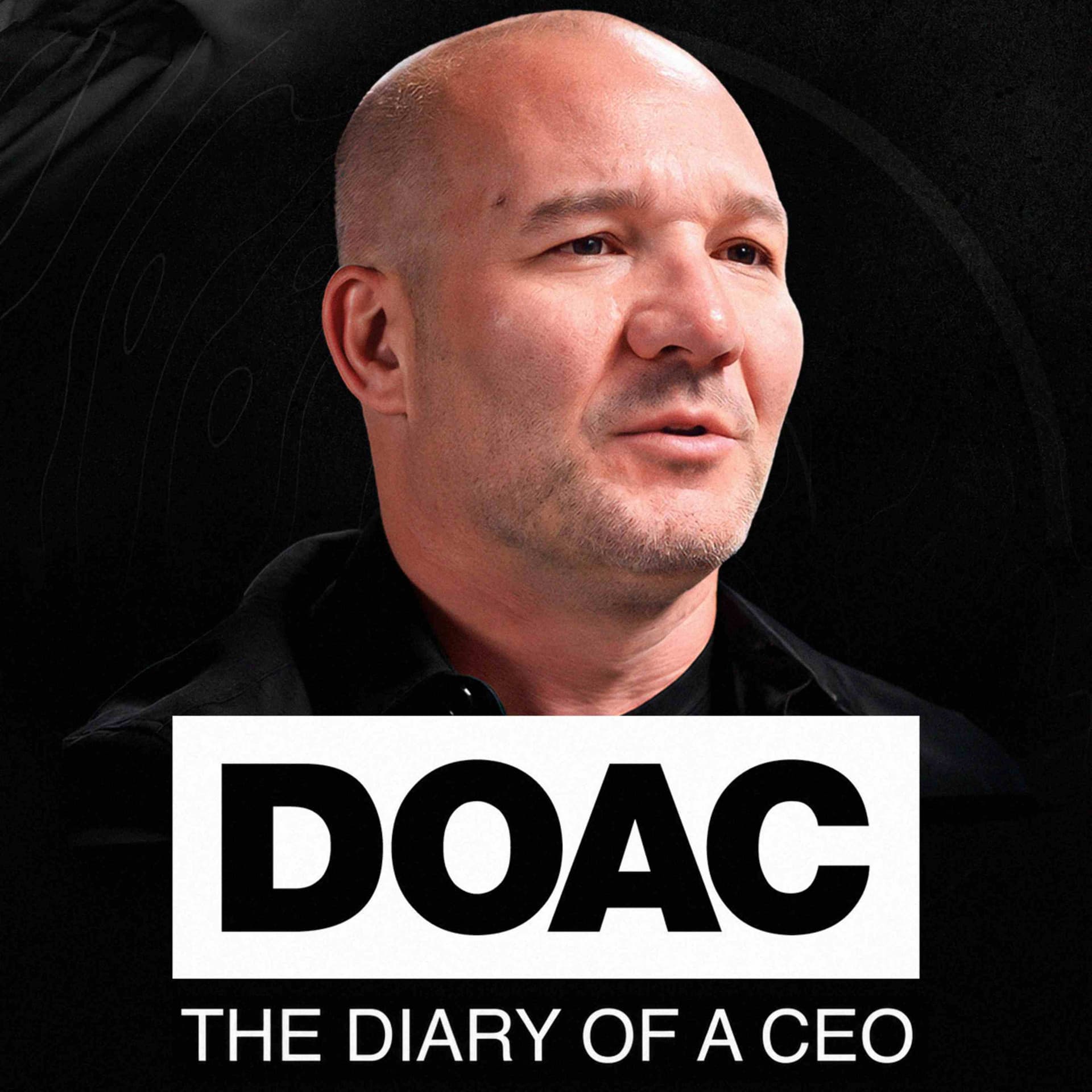
Podcast Notes: The Diary Of A CEO with Steven Bartlett
Episode Title
Rainn Wilson: "I was so unhappy during The Office!" (Dwight Schrute)
Introduction
- Guest: Rainn Wilson, actor best known for portraying Dwight Schrute on the US sitcom 'The Office'.
- Podcast Host: Steven Bartlett.
- Rainn's Ventures: Co-founder of SoulPancake, a digital media company.
- Key Discussion Areas:
- Childhood experiences in Nicaragua.
- Struggles with depression, anxiety, and addiction.
- The transformative power of therapy and spirituality.
- Experiences during and after 'The Office'.
Key Discussion Points
Childhood and Personal Struggles
- Early Life: Grew up in Nicaragua; returned to a loveless household in the US.
- Mental Health: Experienced childhood depression and anxiety.
- Family Dynamics: Mother's affair and a disconnected relationship with parents.
- Addiction: Struggles with substance abuse.
- Therapy's Role: Helped him understand and cope with past traumas.
Comedy and Acting
- Humor as a Coping Mechanism: Comedy helps shift perspective away from pain.
- Acting Pathway: Early fascination with acting, leading to a successful career despite hardships.
- Cultural Impact of 'The Office': Despite its success, Rainn experienced unfulfillment during filming.
Spirituality and Personal Growth
- Spiritual Awakening: Came out of necessity due to a personal crisis.
- Beliefs: Humans as spiritual beings having a human experience.
- Father's Death: Triggered profound spiritual insights.
- Parenthood's Impact: Birth of his son led to deep reflections.
Fame, Success, and Fulfillment
- Unhappiness Despite Success: Struggled with fulfillment even during the heights of his career.
- Present Moment and Gratitude: Emphasizes the importance of appreciating the present.
The Shadow Self and Ego
- Understanding the Shadow Self: Acknowledging and integrating darker aspects of oneself.
- Surrender and the 12-Step Program: Importance of surrendering to achieve personal change.
Notable Quotes
- On Childhood Trauma: "I'm grateful for it because I wouldn't have been an actor or a successful one without it."
- On The Office: "It's a blessing to have been part of something that brought so much joy."
Advice and Reflections
- Gratitude: Daily practice can help combat dissatisfaction.
- Present Living: The present moment is all we truly have.
- Spiritual Journey: Encourages exploring spirituality as a means of personal growth.
Closing Thoughts
- Rainn's Impact: Continues to influence through his work and insights.
- Book Recommendation: 'Soul Boom: Why We Need a Spiritual Revolution' explores these themes further.
Resources
- Rainn's Book: [Soul Boom: Why We Need a Spiritual Revolution](https://bit.ly/3EbRwPP)
- Follow Rainn:
- [Instagram](https://bit.ly/462rF99)
- [Twitter](https://bit.ly/3Eb6fdN)
Sponsor
- Me Undies: Offers comfy underwear and loungewear with Valentine's Day prints.
Additional Information
- Steven Bartlett's Links:
- [Instagram](https://www.instagram.com/steven)
- [LinkedIn](https://www.linkedin.com/in/stevenbartlett-123)
- [Podcast Links](https://beacons.ai/diaryofaceo)
---
This episode offers a profound look into the life of Rainn Wilson, exploring the complexities of fame, personal growth, and the search for meaning. Through candid discussions, Rainn and Steven unravel the nuances of a journey marked by both hardship and triumph.
Written by AI. May contain mistakes. Listen to the episode to check what was said.
Transcript
Automatic transcript. May contain errors.0:00This episode is brought to you by Me Undies. While Me Undies can't totally help your love life this Valentine's Day, they can offer you insanely comfy undies and loungewear to buy or gift. Me Undies has so many awesome Valentine's Day prints and styles. Plus, you can match with your partner, friends, or even your pets. This Valentine's Day, give the gift that'll keep them thinking of you and score huge sight -wide savings at Me Undies .com slash Spotify. That's Me Undies .com slash Spotify. Me Undies. Comfort from the outside in. We're gonna talk about the office. I promise. Stick around, folks.
0:34Rain, welcome! After writer, producer, you know as... Dwight Trute, assistant regional manager. One of the most iconic characters. TV history. Hold on, Michael! I am coming! I experienced a lot of pain in my life. Neglect, abuse, abandoned, and then with anxiety and depression and addiction. I remember getting these anxiety attacks that would leave me shaking on the floor and sweating. And I thought I was dying. Waking up at three in the morning, going, why should I keep living? But this is the curious thing. I'm grateful for it. There's a reason why so many comedians come from painful backgrounds because comedy shifts your perspective away from pain and trauma.
1:16Here's your choice. Are you kill yourself or do comedy? And that was my path. It's my greatest dream come true. You said, when I was in the office, I spent several years mostly unhappy because it wasn't enough. I wanted more opportunities, I wanted more money. And as long as we want to promote the ego satisfaction, we'll never be happy. We all have a shadow. And it's always there. It's self -important and righteous and entitled to buy. I'm not going to get rid of those aspects of myself by keeping that shadow at arm's length. You need to embrace and accept and love one's shadow. Sit the shadow on the lap, almost like a ventriloquist dummy.
1:50Hello! How? You guys are even CEO. Get a new t -shirt idiot. That's a wrap.
2:06Let's start with your context. I always think that the earliest years are the most important. So could you take me back to your earliest context and give me the factors that I need to understand to understand you? Sure. A couple of key pieces in my background that have made me who I am and led me to lead the life that I live are. My mom took off when I was a year and a half, lived with my dad. And we were members of the Bahá 'í Faith, which in a nutshell is the newest of the world's religions. There's about six million Bahá 'í around the globe. It's the second most widespread religion. So wherever you go in the world, there's going to be Bahá 'í.
2:56You're going to Mongolia or Thailand or Botswana or whatever. There's going to be Bahá 'í communities. And after my dad had been kind of essentially a band and a felt a band and they got divorced. We moved to the jungles of Nicaragua when I was three years old. Here was this abandoned kind of toddler kid living in literally the jungle. And my dad was an abstract painter and science fiction writer and Bahá 'í. And that's how I grew up. And then when it was kind of around kindergarten time, first grade time, we moved back to Washington State. And those are some key pieces. In your 40s you started to look back at your childhood and understand...
3:47I heard this in an interview you did, I think, with Chase Jarvis on his show. And one of the things you said is, when I look back at my childhood, it was filled with depression and anxiety that you probably didn't... It seems like you didn't realize at the time behind sites giving you that clarity. What were the hallmarks of that? What were the symptoms of that? And do you have any understanding of the causes of that at such a young age? Yes, 22 years of therapy has given me a lot of insights into the causes of that. So, you've got an abandoned toddler, that'll fuck you up. I don't know if I can swear on your podcast.
4:26You can swear on your podcast. Do Brits swear? Yeah. Yeah, funny ones. And then, you know, it was this weird kind of gaslighting mind fuck, because I just spent five minutes describing the Baha 'i Faith. And these beautiful ideas and prayers and meditations and about world peace and finding love and connection and service. And then, in my family, my dad remarried my stepmom, who pretty much raised me, and they lived in a loveless marriage, a hollow, empty marriage. So, I come back from the jungles of Nicaragua at five or six. My dad's remarried. We're living in suburban Seattle and Washington state.
5:15And we were going to all these Baha 'i meetings. We're singing, we're doing kumbaya, we're holding hands, we're praying, we're meditating, we're reading holy scripture from all over the world. And talking about love, and yet, here's this loveless shell of ours. So, that's what I grew up in. So, you know, addiction is something that I've struggled with. I've struggled with depression. I've struggled with anxiety. I've struggled on a lot of different levels in my life, a lot of alienation. And it's born of this petri dish that I grew up in. Maybe I was also wired for it. You know, I have alcoholics that run on both sides of my family for generations.
6:00But that'll mess you up. What have you learned about the nature of childhood trauma and how delicate children are? I've learned so much from speaking to people on this podcast about it and how... If I listen to too many of these episodes, I might be scared to be a parent because it's so interesting how such small interpretations can leave really lasting impressions on a child about the nature of the world. And I sat here with Gabel Matten. He's talked about how children are basically narcissists and how they interpret everything as about them. So, if there's an argument over there, a baby will think it's about the baby.
6:36But what have you learned about through your years of therapy, but also your own experiences? Well, I experienced a lot of pain in my life and a lot of suffering with anxiety and depression and addiction. And as I kind of dove into recovery and to the therapeutic process, I can pin that squarely on a lot of, you know, gross imbalances and trauma that I suffered as a child. So, there's that. We all have that to some degree. And it's important to excavate and honor the pain that we went through and the lies that we were told, the gas lighting we might have undergone. There's religious trauma that we undergo as well.
7:25There's all kinds of different traumas that we suffer. And this is the curious thing. I'm grateful for it because you know what? If I had had a happy well -balanced childhood, I don't know what my career would have been. But it certainly wouldn't have been an actor. And it certainly wouldn't have been a successful actor. So, these confluences of pain and difficulty and abuse and neglect, they caused me a lot of suffering later on. But at the same time, they caused me to be driven to try and be the best version of myself. They set me on a spiritual path to really deeply explore the world's spiritual traditions and to try and connect with my higher power and to go on a journey of self discovery.
8:17And then to take what I've learned and to share that with others. And they made me funny. So, there's a really interesting thing I heard Dr. Arthur Brooks from Harvard University, who you should have on the show, speak about. And he talked about how the opposite of pain and trauma is humor. He was saying, for instance, if you're feeling depressed, let's say, we all know you fill that with gratitude. And when you have a gratitude journal and you share gratitude, experience gratitude, meditate on gratitude, the other stuff evaporates. When you shift your focus and your perspective to what you're grateful for, what brings you hope and joy and purpose and meaning, even if it's a small thing, like this delicious cup of tea right here.
9:08So, the same mechanism works in comedy. And there's a reason why so many comedians come from painful backgrounds because comedy is what you plug in to shift your perspective away from pain and trauma. Just like gratitude takes you away from depression. So, you'll see time and time again, these amazing, you know, the great comedians of the age, you know, and how much suffering they underwent in their lives. But comedy became the necessary thing to plug in to their perspective in order to carry forward. It's like, here's your choice. You kill yourself or do comedy. And then they do comedy and you think about so many of the great ones.
10:06Jim Carey, you think about Robin Williams, they talk about mental health and comedy. We did a, for Sulpankic, we did a documentary called Laughing Matters about the intersection of comedy and mental health. And so, in this sense too, I'm grateful for what I went through because I wouldn't be here today having this incredible conversation with you had I not gone through that those difficulties, that neglect, that abuse, and that gaslighting that I underwent as a kid. When you say the word abuse, you mean the gaslighting?
10:42Yeah, you know, I don't want to get into stories. There was, you know, there was some, there was, there was lots of different kinds of abuse. Yeah. So. If I had met you 15, 16 years old, who would I, who would be the man that I met at that point when your mother came back into your life? You said you needed to hurt that point. And 15 or 16, I was a gauky and self -hating and innocent and completely cut off from my emotions and had my dad and stepmom had zero emotional tools. And so, I was the only kind of expression of emotion that I experienced in my household was rage. And then either rage or like, again, these spiritual behind gatherings were singing and praying and meditating.
11:32So it was, but the idea of, you know, sadness, frustration, disappointment, all these quote unquote negative emotions and how to navigate them. There were, I had zero tools. So I'll never forget sitting down was one of the first meetings with my mom. And we was at a Denny's restaurant in Yakima, Washington. And she said, Rain, you seem very tightly wound. What's going on? How is your heart? And I just started sobbing. I just started bawling. I mean, it was pretty unsightly that the Denny's waiting for the Grand Slam breakfast. And there's a corporate sponsor for you potential. And just like that kind of crying of the heaving sobs.
12:31And that's what I'm talking about. That's the kind of connection that I needed. Like, finally someone was asking me what was in my heart, you know. And that began a kind of a process of having conversations about human emotions that I was so happy with. And I was so ignorant of that we're also ignorant of. And it helped me immensely. When you said that the, the only emotion you understood was like rage. And then this real happiness at the spiritual gatherings. It made sense. The gaslighting because it's such a confusing message to send a young person. It's this juxtaposition between like. And yeah.
13:16Yeah. Yeah. In fact, I remember, I remember times. And I don't really blame my stepmom for this because my dad was not a good husband to her. And there was a lot that was out of balance. And he could be incredibly narcissistic. But I remember having, we would have a behind gathering, let's say at our house. And people were going to come over and we were going to pray or we were going to study holy writings or whatever people do at behind gatherings. And they would have a fight. And she would be raging in the kitchen and slam dishes down and break the dishes. And they would be fighting and then, ding dong.
13:56And people would come over like, hi, I brought flowers. And here's some cookies. And they would come in and my stepmom would then march across the living room. C'mon, c'mon, c'mon, c'mon, to the bedroom door. And go, so bam! And slam the bedroom door. And the people would be there in the doorway and my dad would go, come on in. Thanks so much for coming. And it was never any kind of, you know, acknowledging what had just happened. And that was, and so for an eight year old, nine year old, ten year old being in that milieu, you're like, what the hell is going on? Is this how people act? Is this how we're supposed to act?
14:35We have all these emotions, but we don't talk about them. And then we go and we pray together. So, you know, this led me to a very long period of time where I was completely alienated from my faith in my twenties. And I didn't want anything to do with religion or spirituality, certainly not morality, because I just saw the hypocrisy in it. And that's when I really started undergoing a spiritual crisis, a mental health crisis, things started breaking down for me. And that's when I decided to kind of re -examine these ideas as a potential way out, as a potential path forward for my own transformation for my personal healing.
15:22And I was ultimately able to come back to the religion of my youth and find great peace and solace and meaning in it after a long journey through my twenties and early thirties. That trauma and experience from your youth, how does that play into you becoming an actor? Because you said you wouldn't have been, you're grateful because you don't think you would have been an actor or the actor that you are without that experience. What is the, I'm trying to figure out where acting fit into that. You talked about comedians using comedy as a kind of like a life raft away from their pain. Why was acting the thing that found rain?
16:04I don't know. And there's the genetic component as well that my birth mother was also an actor and interested in acting. I don't know exactly. Even before I thought like, oh, you could be an actor or you could make a living in an actor or you could train as an actor. Like, I didn't even know like I want to do that. But it's like whatever that is is magical and amazing. And I was drawn to it like a magnet. So I don't know. And then, you know, I took my first acting class. We had moved to Chicago from Seattle and went to a high school that had a really good theater program. And I took my very first acting class.
16:44And I did a scene where you're supposed to pretend that you're in your bedroom and that no one's watching. So I put on this Elvis Costello song, Mystery Dance. I brought in my record player from home and I brought in some stuff from my room. And I put on the record of Mystery Dance by Elvis Costello. And I started just thrashing around and just being ridiculous and lip syncing and jumping around and flopping on the floor and stuff like that. And I was a brand new student. This was like in the first week at this new school. And it brought the house down. And the 15 to 16 year old that I said that was kind of pimply and gangly and emotionally cut off and self hating.
17:31All of a sudden people were patting me on the back and punching me in the shoulder and saying, oh my God, that was so great. And high -fiving me and all of these cute girls from junior year and high school were like, oh, where are you from? You're from Seattle. Amazing. We come sit with us at our lunch table and like, and here I was, this kid from suburban Seattle where I had been on the chess team and played the bassoon and been unmodeled United Nations. And I'd barely talk to a girl. And then I was like, all right, I'm in. Whatever this is, I want this, I'm good. This is it. Forget all that other stuff.
18:12Screw the bassoon. Screw the chess team. I'm in with the drama geeks. And that was my path. So part of it is not so noble. Part of it is I went where there was acceptance, where there was love, where I had some skill. I could make people laugh. And where I got attention from the opposite sex. Hello. That's to be the case. Most of us 20 years old you graduate with a degree in drama. 20th 23. And then you speak of 1991 when you were 25 years old. That's really when you had your, as you say, your spiritual crisis. Was there a catalyst for that? It seems to it seems that at that point in your life is when you started experiencing anxiety attacks in a really debilitating way.
19:00Was there a catalyst for that? Was there anything in your life that was was absent? Or was it just, do you think it was just things catching up on you from your earliest years?
19:11Well, I don't know about a catalyst, but I will paint the picture that I'm out of drama school. I'm getting a few little acting jobs here and there, but they're not paying anything. I'm living with a friend in an abandoned beer brewery in Brooklyn. Essentially kind of legally squatting, but we didn't have heat. We didn't have a shower. There were rats scuttling around. And I was working in this bar where I get off work at 4 a .m. And I had a roommate and we were living out there. And I was really directionless. I started really experimenting with a lot of drugs and alcohol. And I was pretty rudderless.
19:53And I started getting hit with really crippling anxiety attacks. So I wasn't in the most healthy living environment. But at the same time, I remember getting these anxiety attacks that would leave me literally shaking on the floor and sweating. And I thought I was dying. And I was like about to call 911 like five different times. And heart palpitations sweating. And I talked to a doctor at NYU about them. And they said, oh, these are just anxiety attacks. So I knew that that's what they were, but I didn't really know anything about them. And I started getting really depressed. And so there wasn't really like an event, but circumstances provided the perfect environment for kind of a mental health breakdown of someone who's 25 years old.
20:51And how long did that chapter, that period of your life last where you were having anxiety attacks and you were rudderless? I would say five or six years. Yeah. There were some things got better. I started working a little bit more. I had a relationship with my girlfriend who's now my wife. We've been together for 32 years. And that was great. But even that, even a better apartment and a nice relationship couldn't save me from some of what was going on. And we didn't in the 90s, we didn't really have words for a mental health breakdown or mental health issues or crisis. And people didn't really go to therapy.
21:36You can really afford it. That was for rich people like Woody Allen or something. So it stayed. Things got nominally better. But I still was pretty depressed and frustrated and overwhelmed. And just generally alienated the kind of waking up at three in the morning with just wide awake. And I was like staring at the ceiling going like, what the fuck does life mean? Why am I here? What, you know, why should I keep living? What's? How do I find meaning? And just that, that, that, that just anguish and disconnection at a really core level. You asked yourself that question, why should I keep living?
22:29Yeah. And it wasn't at that point. I mean, I've had some suicidal ideation over the years. That wasn't a time when I was actively thinking about ending it. But it really was kind of again, one of these life's big questions, life's deep questions that I've been kind of poking at in my various books of like, why should we keep living? What is the purpose? Is it because one of the odd things, Stephen, was that I was in certain regards living a life beyond my wildest dreams. Here was that kind of abused and gaslit kid with low self esteem from suburban Seattle, who kind of hated himself and really had trouble fitting in socially in any way, shape or form.
23:17Here I am living in New York City, beautiful girlfriend working as an actor in the theater, not making much money and it was only fitfully. But still, that's a big leap to go from where I was. And, and yet I wasn't happy. So there was this odd disconnect because I think, societally, we're taught like, hey, you find the thing you left to do. Go study it. You put in your time, you work at it, you're going to start working and yeah, you're going to start slow, but it's going to build. And then you're going to find incredible joy and purpose and meaning in your work. And I was doing that work in the theater and I was getting to be an actor and I was getting paychecks as an actor, which is an incredible experience.
24:03But I was still chronically dissatisfied and it didn't make any sense because society had been telling me this thing for a decade or two. And I, I felt like I shouldn't be this chronically dissatisfied, but I am. When did that reach its peak?
24:29It's hard to say it came in waves throughout my mid 20s and early 30s. And that's what prompted me. And this is why pain can be such a valuable teacher. And in fact, Arthur Brooks just had a column today out in the Atlantic where he was talking about pain and anxiety and depression does not mean that you have a mental health issue. Those are, those are normal standard aspects of being a human being. So, but my pain prompted me to go on a spiritual quest and I'm really grateful for that, like I said.
25:10To go on a spiritual quest, depression and pain and anxiety and those things were signals telling you something. So, things out of balance, how are you going to bring yourself into balance? How are you going to make sense of all this? And at the time, there weren't podcasts on positive psychology and there weren't, I mean, I guess there were some self -help books, but I didn't really know about them. Because of my background, because of my childhood, I thought, well, perhaps because I have abandoned anything and everything to do with God and spirituality and religion, maybe that's where I have lost my way.
25:46And maybe I need to re -explore those avenues and maybe I can find personal meaning and serenity by exploring spiritual ideas. So, it was a long process, it was a good eight or ten year process, but I'm grateful that my pain took me along that path. One of the things that I think brings spirituality and some of these big questions into focus is death, something you talk about in your new book, Soul Boom, and something you've spoken about previously as well, something that I've often pondered about. I think it was one of the things that really made me go in search of answers, deep questions at a very young age.
26:31I think it's in chapter three of your book, but I listened on the audiobook, so it's chapter six on the audiobook about the passing of your father. How did that bring into focus spirituality, meaning in some of these big questions of life? Well, I think if you're going to look at spirituality, one of the top three big questions is what happens when we die. And of course, we don't know. But just because we don't know or will never know, does that mean that we shouldn't explore that question? Hint, no. So, it's something, it's a topic and a theme and a question I had thought about a lot. I had spoken about it, researched and pondered deeply, but obviously, and I had had, you know, some people that I knew that had died along the way, of course.
27:25But when my father died about three years ago, that made a profound impact and really prompted me to write the book, Soul Boom, because I had one of these key kind of transcendent experiences, spiritual experiences, which was in, my dad died of heart disease. He was getting a quadruple bypass surgery and he just couldn't make it. He didn't have any way to repair the damage in his heart in any way. We thought he was going to get through the surgery and he died. So, we knew it was risky, but it was not a predicted death. And his current wife, his widow and myself were in the hospital with him and we had to essentially unplug him.
28:24And it was devastating and terrifying. And oddly enough, strangely cliche at the same time. And I couldn't help but, maybe this is that trauma -based comedic kind of aspect of my self, that I just kept witnessing myself in this situation where my father was dying. And there was a heart machine going, there was a little oxygen machine going, and there's doctors and nurses walking around with their squeaky shoes and the linoleum floors. And I was like, wow, this is just one of those hospital shows. I just kept thinking, this is just like ER, Grey's Anatomy. Wow, it's so cliche. But we had to unplug him.
Read the full transcript
29:20He was going to be dead within an hour. And we were sobbing and I looked at his Grey body there on the table and I saw all these aspects of my dad that I loved. The one eyebrow hair kind of poking out and the mole on his arm and the way his hands are and his hair kind of messy and was filled with such love and such heartbreak. And at the same time seeing his lifeless body, I was like, this isn't him, this isn't my dad. This is the vessel that carried my dad, Robert Wilson and his beautiful heart and spirit and his dynamism and his creativity, his light as it were is no longer here. But that's his reality.
30:18This body is just a shell. It's a vessel. It's an avatar. And I also didn't experience it as, oh, he has, it's been snuffed out like a candle. It just seemed very clear like, oh, it is passed on. It's somewhere else now and here is his body. And that was such a profound spiritual experience that I knew intellectually from my study, but it's one of those learnings that kind of has to hit you in the gut to make you really understand. And go, oh, and I remember that amazing quote that I often pull out from father Tehardt Deschardin, a Jesuit priest who said famously, we are not human beings having a spiritual experience.
31:07We are spiritual beings having a human experience. And that quote, which I've always loved, I saw just evidenced with my father. He's a spiritual being. He had a human experience for 79 years in this body. And now his spiritual reality has passed and moved on. And this is one of the essential messages of sol -boom is that we are spiritual beings. We're having this incredible human experience. Look at us having this incredible dialogue right now. And then I'm going to go get an Uber and then I've got to go do some voiceovers. And I'm going to go play tennis with a friend. And I'm having this, you know, I'm having a relationship with my wife and with my son.
31:50I'm learning, I'm growing, I'm being challenged. And it's magnificent. And here's my, my fleshy somewhat corpulent 57 year old body that has done, I've done pretty well by its ridiculous enough. So I get to take my shirt off occasionally as white and people can laugh at my absurdly pale and oblong torso. And I'm fine with it. It's all for comedy, right? And parts of my body are starting to break down. I've got like half hearing in my, in my left ear and I've got mild sleep apnea. And I have to wear a mouth appliance that just my jaw forward and I wake up in the morning and I go, I place it on the side of the bed.
32:29And here I am. This spiritual being having a human experience as rain, detrick Wilson. It's this is fabulous, but this is part of what we need to recognize. And this could help people. This can help people with their mental health struggles. Is an understanding that where we're radiant, luminescent, precious, shards of the divine, inhabiting these, these fleshy meat suits for hopefully 89 to 100 years. And struggle and suffering and anxiety just comes with the game, baby. It's just part of the game. Talk about a friend called Dave. Yeah. David or Dave, you also passed quite suddenly. And he's handling of that in particular, surprised you in many ways.
33:19Oh, Dave. One of my best friends, David Von Enken, he was a television director, film director, brilliant guy, wonderful human being. And he just got diagnosed out of, out of nowhere with stage four stomach cancer. I mean, just like out of nowhere, mid fifties and essentially a death sentence. So I get to spend a lot of time with him in his last year and a half after that diagnosis. And we did weekly beach walks. And he said to me several times, and he would just grab my arm and he would say, rain, it's just static. It's all just static. You've got to get the static out of your life. The emails, the meetings, the career, the appointments, the driving, the traffic, the phone calls, the zooms.
34:14It's all just static. It's all noise. And that really resonated with me. And I know a lot of people have mentioned that in the book because we do experience our life as this kind of like buzz of like appointments and chopping and zooms and a point and bills to pay and whatnot. And that was profoundly impactful. And I would always encourage David to, it's a tricky situation, you know, when someone's dying, I don't want to like God forbid lecture him on death or thinking about it. But I would always just turn it a little bit toward a more profound discussion about, you know, the soul and the journey of the soul and the movement of the spirit, you know, beyond our this corporal 3D surround sound experience of being a human being to the realms beyond.
35:10But he like many people, he, he got a little stuck in a way that made me sad because he really just focused on fighting the cancer, which is super, super important. Right. So he devoted all of his waking time and energy to research and treatment and diet and everything to fight the cancer, which is super important. And I don't blame him, but it was pretty terrifying for him to consider mortality and the implications thereof, you know, the daughter. But I'll never forget him talking about the static in that way. And I find that to be also very clarifying, you know, in my daily meditation practice.
35:53Like, how can I, again, the Buddha uses the image a lot of the lotus flower, you know, it's floating on top of the swamp, you know, these beautiful lotuses. And there's the swamp and the mire and the bugs and the dirt and the, and this beautiful flower rising above. And how can we in our own little way be a lotus flower and the rest of the swamp is, is our daily static. The rest of the swamp, the alternative way of living to everything you've just described. What is the alternative way of living? So, you know, you've got the realization that everything is static and the understanding that we are spiritual beings having a human experience.
36:37What is the opposites of that that you see when you walk the streets or you observe people? What is the opposite way of living to that? And why is it causing suffering? Thoreau talked about the unexamined life is not worth living. Why did he say that? And what did he mean by that? Well, it's been a long time since I read Walden pond and the night Thoreau spent in jail. But I loved the transcendentalists because that is really kind of the first authentic American spiritual movement. And this idea that we're seeking transcendence that was kind of the first movement that really acknowledged like we are spiritual beings.
37:19So, I think, you know, it's the unexamined life. I think living in the static and living in the swamp is not taking the time to honor the sacred divinity of aspects of our life. And, you know, I have a, when you study meditation and you participate in meditation, there's this strange thing that happens where you realize that you, the reality of you, is the watcher, the observer. When you meditate, your thoughts are still bouncing around. You know, the Buddhists call it the monkey mind, right? So your thoughts are bouncing around. You might have some anxiety and worry like, oh, is that person going to accept my offer on this or is this thing going to work out?
38:10Or, oh, is my wife still mad at me or whatever? So you have this emotional dissonance and you have this kind of intellectual dissonance. And then in the meditative state, you're just witnessing that. It's almost like you're floating above it and looking down. And then you realize like, oh, my reality is not my thoughts. My reality is not my feelings. My reality is not even just my body and the sensations that my body takes in. There is some kind of aspect of the eye that is the witnesser. And it's getting in touch with that that allows us to get above the static. So meditation is very important to me.
38:55The next step of meditation for me is connecting with the ultimate divine. You can do it in prayer. I have a chapter in the book called the notorious GOD getting into God. So, yeah, that's one way to rise above the noise and the static and the swamp is in that practice. And then I mentioned at the very beginning, like recognizing the sacred and the divine. And we can do this. It's certainly easy to do in the beauty of nature. It's also when you have children and you're raising a kid, you kind of see that, the beauty in the kids' natural curiosity and wonder and open -heartedness. And then you experience it in human interaction.
39:46I think I view this conversation as sacred. This is a sacred conversation where seeking to understand each other. You're being a service to your incredible audience. They want to learn about how to make themselves better people, how to start a business, how to maximize their health, how to go on a spiritual journey as a human being. They want to learn all this and you're providing the way into them. So we get to have this conversation. People may not agree with what I'm saying, but it might spark something and gratitude and witnessing the sacred. And that meditative practice of kind of rising above our thoughts and feelings.
40:32Those are tools that we can use to make our lives better and richer. If someone is on the outsides of this conversation and they don't really understand what spirituality is, and they've not really gone under the journey that you've been on, what kind of questions would you pose to them to help them open their mind? So if someone's listening to this, they find the word spiritual to be kind of hippie stuff. And they're not really, you know, they manage to get this far in the conversation, but they don't really understand spirituality, what it means. They manage to get this far. Don't turn off the pod.
41:05Yeah, there's more good stuff coming. We're going to talk about the office. I promise. No, stick around folks. Way too many cameras here. Is it, I think there's nine or something.
41:17What would you say to those people? I just think of a guy driving his like, Laurie up the country. He's put the podcast on and he doesn't really know what spirituality is. Doesn't really understand. It doesn't understand why he would therefore need it in his life. Yeah. That's a great question. I don't know that I have an answer for that. I mean, I guess, you know, the dictionary definition of spirituality that I use is a focus on the non -material aspects of life. So that's our heart. That's our soul. It's our connection. It's the light that we bring. It's kind of a connection to what I would call the divine qualities that we all carry to some degree or another spiritual virtues.
42:09You could call them love, compassion, honesty, humility. These are qualities that don't necessarily serve us as human animals. So there's something. They're not about the quest for power. They're not about the quest for status and comfort. They allow us to kind of rise above our kind of humdrum human experience. So that's what I would, that's how I would define spirituality, something in that realm. But I would say that, listen, we all want more love in our life, right? And love is the most precious and beautiful resource. And I would say, maybe you don't believe in spirituality, but, or maybe you don't believe in God, but you can focus on love.
42:58And we can all focus on love. That's something we all have an experience of. And so we want to increase love in our life. That's, that's increasing spirituality. It's the same thing. Like, I had a profound experience of love. When my son was born, he almost died. It was very traumatic birth. An ER room with blood in the middle of the night. And really, Pistpore, Van Nies, California, you know, County Hospital in a hallway, emergency C -section. And when I held my son, like, again, I had one of those handful of truly transcendent experiences, one of those cosmic experiences of looking into my son's eyes.
43:48And they were bright, bright blue. And he just been ripped from the womb of his mother. And I felt such profound love for him. And it was just like waves after waves of love. And just almost, I had tears, but it was almost just beyond tears. It was like this transcendent, like, love orgasm. That was minutes long as I held him. It just was such a gratitude. And, you know, for a lot of materialists, they could say, well, that's just neurons and biochemicals in your brain that are causing that. And that's true. There are neurons firing, and there's biochemicals. But it's so much more than that. You're never going to tell me that that's all it is.
44:40And that is just some biological imperative to, you know, have the species move forward. And that's why parents love their children. Like, what I experienced, I'm sorry, it's just beyond that. You can call me deluded. But that's what spirituality is, is just increasing that love connection. I think that was a dating show in the 90s, love connection. But we want to increase that love connection. And that is what a spiritual journey is about. And we can increase that with ourselves, with nature, with time, with beauty, and with our fellow human beings. How did the both of you suddenly change your life?
45:20Well, having kids is a paradigm shift because you have a creature that's in your care and is dependent on you. And it was actually really profound when my son was a year and a half, the same age that I was when my mom left to have the affair. That was a really profound time in my life. It brought up a lot for me emotionally, because I saw this toddler kid, and he would go out and explore the world. And he'd be like, oh, there's a cup, and he'd play with some blocks, and he'd, oh, tree, and he'd had some words going and stuff like that. And then immediately you'd see this look on his face, like, oh, I'm out too far.
46:04Like, oh, I've swam out too far, and then he'd run back to the shallow end to his mom, and cling to his mom, and like, ah, and mom was home base, right? And I was like, oh, that home base was script for me, it was taken away from me when I was that same age. It was pretty profound. But this idea that our, we're responsible, we brought a life into the world, and we're responsible for that life. Not just for five or 10 years, not just for the first 18 years, but for eternity, it's, it's profound. I can't really say intellectually what that means, but it shifts the way you are alive in the world.
46:48That example you gave of your, your son at one and a half years old, being able to return to home base in that you can also see what, what might have happened to his development and his perspective. If, when he'd gone out too far and turned around, there was no mother there. Yeah. Who he might have become. And if there was no mother there, and then if, if I, and then he had the father, which is a close second, right? But then my dad, who was so traumatized by being abandoned by his wife, and was so already emotionally shut down, and he couldn't really access emotions are the best of scenarios.
47:27He had been colossally abused as a kid, and his mom died, and his dad was abusive and beat him and left him in his sister alone in the house for weeks at a time. It was very Charles Dickens. So this, you know, my dad's case, he was, he was the worst possible person to have to bond to, you know, or to need to bond to. So, you know, if little Walter, if my wife holiday had left her or died for some reason, and Walter had to turn to me, like, it would have been okay, but there's, there's nothing that fulfills that, that, that primal human connectionness, then a child and the mom. One of the things that really surprised me was when I was reading about your time at the office, which by the way I have to say is my favorite show of all time, she probably said that I'm sure it's the case for a lot of people.
48:29Wait, are you saying right now that the US office is better than the UK office? Yes. Wow. Yes, I know. Do you hear that? It is, maybe because there was more of them. There's a hell a lot more of them. So, I've watched, I watched, honestly, when I was going through a difficult part in my life and I was trying to building my businesses, I was shoplifting food because I was just, I was so broke at this chapter of my life, it was the, and I had this beat up laptop where I had to like, solder the charger because I couldn't afford the 10 pounds to buy a new one. It was the only thing I watched, and I watched it for about two years.
49:02So, obviously, I just kept going back and back and back. It was, you know, you're talking chapter 10 about the seven pillars of spiritual revolution and one of them being about spreading joy. It spread a whole lot of joy in my life, a whole lot of joy. And I don't watch TV, to be honest. I don't watch TV movies, don't really watch any of it. These guys will know. But the office, I watched. I don't think there's anything else that I've watched. But when I read about your experience on the show, there was a real sense of unfulfillment, especially in the early years when you were making the show.
49:33You talked about that a little bit on Bill's podcast as well. When I was in the office, I spent several years really mostly unhappy because it wasn't enough. Yeah. Well, first of all, I'm so glad that you enjoyed the office. And I just need to speak to how deeply gratified I am and all of us are that the office has brought so much serenity and peace and love and upliftment and inspiration to people. I mean, getting on a TV show is one of the hardest things in the world. And then getting on one that lasts is a really hard one. And then getting on one that lasts and is good. And then one that lasts and is good and still has a cultural impact 10 years after it has ended is, I mean, talk about hitting the lottery.
50:24I mean, we had no idea. We knew we were on to something really special and funny and magical. And of course, Steve Carral is one of the great comedic actors that will ever live. But we had no idea I would have this kind of impact and we're so deeply grateful and gratified around that. And I going back to the English office, it's always like, it's so funny to me in the Bison King, the other book there, I talk a little bit about that. That competition is so absurd. Like the anger and vitriol that you Brits brought to the fact that the Americans were going to remake the beloved office. It was so staggering.
51:05I mean, it was so enraged and vitriolic. And it was like, guys, guys, the English office isn't going anywhere. You can watch it over and over again. We're not going to take all the copies and burn them. You know what I mean? We're going to take a brilliant idea by Ricky and Stephen and the BBC. And God bless them. It's astonishingly brilliant. And we're going to kind of run with it instead of 12 episodes. We're going to make 200 episodes. How's that? If you don't like it, you don't have to watch it. But that was an interesting time frame. But yeah, so it's interesting that you bring this up because I was very frustrated because I was on Bill Marne.
51:49I was on one other podcast and I was talking about how there were times on the office that I really struggled because I really wasn't happy. Because it wasn't enough. Here I was on the greatest job that I could ever imagine, beyond my wildest dreams of that geeky chess playing, bassoon playing, kid from Suburban Seattle that walked around like a Pimpley serial killer, that I would be part of one of the great TV shows of all time. I mean, give me a break. And here I was getting paid like millions of dollars and playing one of the most memorable characters. And I'm getting nominated for awards and I'm working with the most beautiful family of actors and writers imaginable.
52:36And yet I was like, how come I can't get more movies? And why did my movie I did bomb? And why won't they make a deal with me? And I just, I want to have this and I want an office and Warner Brothers. And why can't I get a, you know, and I spent a lot of time, unnecessary time and angst and anguish in that angle. And I think that I'm just an anxious discontent. At a time when I should have just been like, this, it doesn't get better than this. Just enjoy it. Drink it in and be a part of this incredible artistic, because it was artistic experience. So, but I think the reason I've been bringing that up and some interviews is I think it's important for people to understand that, you know, here's someone who, you know, 15 years into their acting career or 20 years into their acting career, because I was, I started playing Dwight when I was 38 years old, is has officially made it.
53:39Yeah. And they're still unhappy. And that is so human. It's so quintessentially human. And to think that, oh, if I hit this end result, then I am going to be happy. And that's why I brought it back to that unhappiness that I experienced in my 20s. Like, I was an actor. I was from suburban Seattle. Here I was. I had an apartment in New York. I was doing acting. And yet I was really unhappy and miserable. And it didn't make any sense because society had always told me like, there's this if then proposition. Like if you achieve X, Y and Z, if you make a certain amount of money, if you get a certain position, if you're in a certain kind of relationship, if you have a house at a certain level, if you're a member of a certain club or whatever, then you will be happy.
54:24Once I achieve this, then I will be happy. That's bullshit. It's absolute and total crock of bullshit. Now, certainly I'm not meaning to demean anyone that's struggling to pay bills. And they're going like, you know, fuck you, Hollywood elitist. You got millions of dollars in the bank. And you don't have to worry about, you know, paying the bills. I was there. You know, I was having to worry about, you know, paying the bills. And it was a struggle for the first 15 years of my career. So I've been there. I know what that's like. And I honor that. So you certainly want to make enough money to, it does take an incredible pressure off your shoulders once you have achieved that.
55:04But to think that then you're going to be happy. I mean, you've interviewed a lot of millionaires and a lot of successful people. Like how many of them are really fulfilled, deeply fulfilled and happy? What would I have had to have done to have gotten rain at the height and the peak of that success, even when it was going to be in the moment and to enjoy it for what it was because it's not just you. It's all the people that are listening now that are in jobs. They've just got that promotion. And now they're thinking about becoming a director or a CEO that they are deferring the happiness off to the future behind some goal.
55:36What can we do in the moment to just like enjoy life today, bring our happiness into the into the now. If you always think you're happy, this is somewhere in the future, it always will be. What would I have had to have said to you to get you to snap out of that?
55:57That's a great question. I don't know that there's anything that you could have said to me in a couple of sentences or a couple of paragraphs. But I think if you could have encouraged me to go back onto my spiritual journey, back into my spiritual journey, because you're absolutely right. All we have is now. All we have is this next breath, this breath that we're currently experiencing. And this is where the joy is. And if we're waiting for the joy to be 375 breaths from now or 3 ,000 breaths from now or 300 breaths from now, we're missing out 100%. And I think gratitude has a great deal because one of the cures for chronic dissatisfaction, the cure for Dukha is gratitude.
56:45And I would have been to rain. One of the things that would have been really helpful is like rain. You need to start every day with 10 things you're grateful for. It's like I'm grateful for Jennifer Fisher and John Kuzinski and Steve Carrell. And I'm grateful for a nice paycheck and a healthy son and a beautiful wife. And I'm grateful for the fans of the office and the fact that I get to... I've trained as an actor my whole life and I get to use those skills and tell wonderful stories and make people laugh. If I could have been stayed hooked into that and I did get hooked back into that. I'm describing a period of like three years, three to four years where I was really struggling with that.
57:26And then I came around. Does it rub you if you're ambition though? This is a question I was used to mow with myself because that rain that wanted more versus the rain. I guess I'm grateful for what I have. Is one more or less ambitious than the other? Yeah, that's a great question. And I don't know the answer to that because there is... Did my chronic dissatisfaction field my spiritual drive and also field my career drive and my ambition? Because I was so chronically disenchanted and disaffected that I wanted more opportunities. I wanted more money. I wanted more knowledge. I wanted more wisdom.
58:12There is a drive there that can be healthy and a drive that's... There's an unhealthy aspect to it. So I don't really know the answer to that. I think for now when I look in my life, I still have great ambition. I still want sold boom as a brand. I'm just kind of starting to think about how to expand that as a brand. I still want to act in movies. I want to direct. I want to maybe create companies. I created SoulPancake, maybe create another company or something like that. There's a lot I want to do. But I'm hoping to bring the best aspects of myself toward that ambition. For me, that has to do with service and God.
59:00And utilizing myself, my God -given talents and faculties. And maximizing those. And living in God's will, I'm sorry to get all hippy -dippy religious now. But to me, that's what's driving me now. But it's... As long as we're in the Battle of the Ego, and that's the most ancient human spiritual struggle, it's the Battle of the Ego. And psychologists talk about it and prophets talk about it and gurus talk about it. Right? So, as long as we want to promote the self and the self -will and ego -satisfaction, we'll never be happy. Are you happy? I am. Yeah. Happy is the wrong word. But whatever it is you mean by happy, I have that thing.
59:49What is that thing? I don't know what the word is. And I ponder this a lot. Like, what's the perfect word? Social scientists talk about well -being. So, I like that one a lot. That works. It's partially contentment. But it's also partially meaning and purpose and vision. And when I'm in alignment with meaning and purpose and vision, then I feel like I'm vibrating on the right frequency. Q1 is often when businesses start implementing new systems and processes in hopes of creating efficiencies for the year ahead. And over the course of my career, I've learnt just how crucial having the right systems in places, one which has helped me across many of my investments is NetSuite.
1:00:36They're also a sponsor of this podcast. NetSuite is the number one cloud financial system through their streamlined platform. You'll find all of your accounting financial management, inventory and HR in one place. Their technology has been a real game changer, especially for my team at Flight Studio. As over the last year, we've moved out of startup mode and into scale at mode. We no longer have to juggle multiple systems and having everything together has reduced the number of manual tasks and errors. Over 41 ,000 businesses have chosen to future -proof their business with NetSuite. So, if you'd like to learn how it can help your business, head to netSuite .com slash Bartlett and free download the CFO's guide to AI and machine learning.
1:01:15That's netSuite .com slash Bartlett. One of the things that you still struggle with because sometimes when we read the books and stuff and I've written a book myself, it can sometimes exude the illusion of fixed or figured it all out. I'm done. Right. So, what do you still struggle with on an ongoing basis? Yeah. I think that I can be a better husband and I think I can be a kinder father and a more compassionate friend. There's still some really basics of human interaction that I haven't quite gotten figured out. Well, because I wasn't really, I didn't learn these things from my parents. I didn't learn connection and compassion in the household that I grew up in.
1:02:09So, I've had to, you know, parent my adult self in that direction. And, you know, to really, I struggle with making sure that I'm again using the tools that God has given me to try and make the world a better place. I think there's a lot more that I could be doing to try and make the world better and to help heal people that are disenfranchised and bring more joy to people's lives and try and bring spiritual tools to a young generation that I think will make their lives better. There's more I could be doing to that end. And I still have a big ego. You know, I'm still narcissistic and I still want ego satisfaction and it's always there.
1:02:57You know, it's, it's, you know, they always say an addiction that your addict is in the basement doing push -ups, you know, even when it, but I would say the same thing about the ego. You know, it's there in the, in the basement doing push -ups, just getting ready to come in and take the reins. Does it speak to you sometimes that the guy in the basement? Yeah, absolutely. Yeah. You know, Jung talks about the shadow side and it's so important part of the therapeutic process is to get to know one's shadow because and to know and embrace and accept and love one's shadow. And I have a, I have a dark shadow, you know, it's an addict shadow and it's a miserable shadow and it's self -important and righteous and entitled.
1:03:42And this is, this is part of who Rain Wilson is, you know, and I'm not going to get rid of those aspects of myself by keeping that shadow at, at arms length or locked in a closet or something like that. I have to, you know, keep your, keep your enemies closer, you know, keep that, keep that shadow. There you are, buddy. There you are. Huh, doot, doot, doot, right on the belly. Goot goot goot goot. Yeah, you little, you little mean little addict, you know, you little narcissistic entitled asshole. I love you. I love you. You're right here with me. You're part of me. Let's go on this. We're in this together.
1:04:20I got you right where I want you. Everyone's got a shadow. A lot of people are trying to fight their shadow. I mean, a lot of the prevailing narratives are that you can therapy your way out of the shadow. Yeah. No, it's, it's sitting the, you got to sit, sit the shadow on the lap, almost like a ventriloquist dummy, you know, it's, that's why I love ventriloquist, ventriloquist stories and horror films of like the dummies that come to life and attack, you know, because that's, that's your shadow. Hello, is that, hello, how are you? Fuck you, Steven, die or have a fucking CEO. Get a new t -shirt idiot.
1:04:59That's going to be the trailer.
1:05:07The 12 step program, you and Russell have both spoken to me about this, but Mac or more talk to me about it as well. And what I've since the conversation with Russell, I've spent a lot of time talking to other people about. Really like what makes us change. So the 12 step program is has some principles, which I think are applicable for all of our lives about how to create change. If someone's going through something in their lives now and they're struggling to change it, how does that 12 step program help us to go to change? What, what is it about that program that causes that change in people?
1:05:42I love the 12 step program. That's such a great question. There's going to be people that are way more knowledgeable than I, but I will say there are some essential components of the 12 step program that you write are applicable to everyone and could make everyone's lives better. I think society as a whole could benefit from a lot of the way that the 12 steps work. I think it's the most profound spiritual movement of the last several hundred years. It is transformed millions of people's lives. First of all, there's the idea that there's this wonderful dichotomy at the center of the 12 steps, which is if I surrender, if I admit defeat, if I admit powerlessness, I find great strength.
1:06:35There's a beautiful spiritual co -on at the center of that. I give up. I throw up the white flag. I can't do this on my own. I need the support of a community. I need to get vulnerable. I need the support of a higher power. Then I find great strength. There's something just so beautiful about that. The community of the 12 steps is amazing too. Sharing with like -minded alcoholics and getting the support of that community, the fact that there's servant leaders, that there's elections, that it's the inmates running the asylum. There aren't these leaders. In fact, if there's someone who presents as a leader in 12 steps, you should be immediately wary of them that they have any kind of answer at all.
1:07:26The surrender point really is the thing that's compelled me. When Russell was talking about this idea of - I think what he said was like - he broke it down into three processes. Awareness of whatever it is. The belief that you can change the thing. In this third step, this principle of surrendering to it. In an individualistic society, materialistic society, where we're becoming more and more isolated and an individualistic in our approach to life, we are living in full white walls alone more than ever before. We think we can do it ourselves. This idea of surrender and admitting that you need the collective and help with something that you might not have the answers.
1:08:05I think it's so powerful, so important as well. I think we all need to surrender in many ways. I think I need to surrender. In terms of my ego, I think I need to surrender. In terms of - even spirituality, I told you a second ago about my partner who is very - anyone might call spiritual. And surrendering to her way of living has brought me so much value in my life. So this idea of surrender being the solution to - the resistance we're encountering by the ways that we're living. I think it's something that everyone can consider. If you're feeling a deep sense of dissatisfaction in your life, surrendering and saying, I need help, I don't know the answer, can you help me?
1:08:55It brings in everything - it's probably the medicine that you're seeking. But surrender feels like an interesting word. It feels like powerlessness. But again, there's great power in that powerlessness. And what do you surrender to? And that's why there's a higher power as well. Boy, there's so many things I wanted to say there. But there's a humility in the process that is missing in contemporary society. We say we're the least humble that humans have been in our history. I'll 8 billion of us sharing this planet. So - and I think God or a higher power requires a certain humility. Like there's a power greater than myself.
1:09:39The ego is the opposite of surrender. The ego wants to control outcomes. The ego wants to control other people. As long as we're trying to control other people and control outcomes, we're going to be unhappy. So there's something about surrendering like your partner's journey, you surrender to that. You don't know if she's going to go live on a commune or worship a mushroom or something like that. Okay, you're on your journey. She already does. You know, so it's again that central spiritual struggle is the ego, is the primacy, the primacy, the primalcy of I the self as being separate from everything else.
1:10:27And the essential spiritual teaching at the center of every faith tradition is that we're all connected. We're all united. We're all one. This is an illusion of self. So surrender eliminates that illusion of self. But there's so many other nuggets in 12 steps like one of them, just in the middle of the steps is when we are wrong promptly admit it. Like that's just a really good piece of advice. And you know what, we could all benefit politicians could benefit CEOs could benefit people in relationships parents with their children people in partnership could benefit like when we're wrong promptly admit it promptly being the word not not eventually.
1:11:09You know, as soon as you know, say you're sorry and do it faster, you know, and do it better. And the world would be a much better place if everyone around said when I'm wrong, I'm in a promptly admit it. That's just one little gem. There's so many dozens more holiday. Yeah, she's been with you through a lot. Yeah, yeah. When I was looking at the timeline of when you guys got together, I think you met an enacting class, right? Yeah, it's been a long time, almost four decades, right? Hell a long time. Yeah, we were an acting class together in 1985. We weren't together as a couple till 90, 91 really when she moved to New York, but I was even born then.
1:11:51You've grown a whole steven in that time. I was born a night too. So what is she? What is she? What does she mean to you? Are you gonna make me cry? Aren't you? You're gonna try to make me cry? I don't know. I don't know. You might hate her. She's everything to me. I mean, I am so blessed to have her in my life. She's dealt with me when I've been a raging asshole. And she's dealt with me when I've been depressed. When I've let my anxiety get the best of me, we've had a lot of ups and downs in our marriage. And I think that's really important for people to hear. We're soulmates. And I really wouldn't have achieved anything that I've achieved without her help and guidance and love and support.
1:12:42And it all sounds like a cliche, but it's just the truth. And she's really the wisest person that I know. She has a deep, deep wisdom. And she knows me better than anyone. So I'm just grateful and I tell her every day. I tell her every day. What is she taught you about the nature of what love is? You know, it's interesting. She also had a very traumatic childhood and a difficult, her parents had a very difficult situation. And she had a lot of issues in her own way. And her own journey. I'll let her tell that story. But she loves very naturally in a way that it's a lot more work for me. So she just has a big heart and is just able to love our son and other people and animals.
1:13:37And you know, I, I always felt I as an analogy I use in my in my books where because I had such a weirdly fractured childhood, I would observe how humans interacted and try and emulate that because I didn't understand it. So I would like observe people in the lunch room in my school and they'd come in and someone would say like, Hey, buddy, how's it going? You have a good weekend? Good to see you. And I would, I would watch it. And I would, I'm like, Oh, that's, that's how normal people interact. And so I would, I would literally copy it and I would try it out. And I'd go up to someone like, Hey, buddy, how you doing?
1:14:22Have a good weekend? And, you know, so for me, I felt like I was an alien, like I was literally a science fiction film where I was like this alien, like learning about human behavior and interaction and like studying humans and seeking to fit in. And I bring this up because holidays does this stuff so naturally, you know, she just has a natural warmth and grace. So sometimes I emulate her about, Oh, here's what it means to be loving and warm and and live life with grace. You and me both. My partner sounds exactly the same and I feel like I've learned how to love someone by emulating the things she does so naturally.
1:15:08The things she says, the things she admits when she says, sorry, how open she is, the her ability to tell me her feelings. All of these things I've, I've learned from just watching that she seems to have no issue or no resistance in doing it. That makes sense. I've learned how to parent from her so well. And our son, bless them. Walter is 18 and a half about to go off to college. But I always want to maybe lecture or react a little too much or say the thing I feel that needs saying and my wife is so good and like she'll see me starting to do it and she'll just be like. Just this little thing and I'll be like, and I think Walter, well, we'll talk about it later.
1:15:52I just, I take my cues from her little like she's a conductor. She's a conductor of my parenting too. Rain, thank you so much. We have a closing tradition on this podcast where the last guest leaves a question for the next guest not knowing who they're leaving the question for. They leave it in the diary of a year. That's good. The question they have left for you. I didn't get to read it until. So give me a second handwriting is not always great. Can you recall a time when you observe he reads it observed someone being treated badly and could have intervened but didn't. So what might you have done differently if you could go back to that moment?
1:16:43That's such an exceptional question. I was reading a, someone was writing about bullying and they were talking about how bullying is a three -step process like you stop the bully. You say, hey, that's not okay. Speak up to the bully. Maybe not getting a fight but speak up to the bully. Tend to the bullied and then report it to an authority. And we often just kind of view bullying as like that first step process of like trying to shut down the bully. And you know back in the 70s and 80s when I was growing up there was a hell a lot of bullying going on. And I feel bad that I didn't bully myself because I was far too nerdy to partake in bullying.
1:17:36But I think that's any reason why. Well part of it was part of it was because I wish that I could have been a part of that process of especially people that had been bullied to. I guess I just didn't have the tools to give them empathy and compassion and support. And then to take an active part in reporting this whole dynamic to the authorities because when I go back and replay my high school years and junior high and elementary school years, it was non -stop bullying. I mean it was taunting and teasing and taking the piss out and demeaning and belittling and hierarchies. And we may be going a little too far in contemporary society about what qualifies as bullying because it's not criticism and it's not even necessarily like having some good nature fun.
1:18:40But I wish I had been more actively a participant in kind of a part of that three step process. It's super interesting. I've never heard about that three step process before. This particular individual, I don't usually give clues but they were writing a book about adult bullying as well. Having been on the receiving end of that and they think adult bullying is something we don't really talk about a lot which is like the workplace stuff and as we get older. Rain, thank you so much. Thank you for so many things. There's two really incredible things that changed my life in a really important way.
1:19:18The first was obviously the office. You know, you are by far my favourite character and I think I just can't understand how a human could have been so good at acting. I really mean that. I don't bullshit people but you're so good at acting. Playing that role of Dwight. I think there was occasions where I tried to do it. So it's almost, it comes as a shock to many people that, but you know this because you kind of alluded to it in the first chapter of the book. That someone that could embody Dwight can also write such a great book like this about something that is so far from what I think Dwight might be interested in.
1:19:58And it's actually all a testament to your ability to act really, really unbelievable. I think your role as Dwight is one of the all -time great performances in any show like that. It's incredible, incredible. And you talk about, as I said, in the 10th chapter of the book about spreading joy. You gave me so much joy. And then you came out with this app called Soul Pancake back in the day, which caught me at the perfect moment, whereas a young man that was really obsessed with these big questions still am. And it allowed me to find this community where I just peppered people with really profound questions about whether dogs have, you know, a sort of soul and all these kind of things that I was struggling with at the time.
1:20:35So thank you for both of those things because you helped me in ways that you'll never know. And I live tens of thousands of miles that way. And it changed just nudged the direction of my life in so many important ways. And it's led me to this moment now, which you can understand for me is an incredible one, absolutely incredible one. So thank you. Means a lot. And everyone should go check out this book. It's wonderful. It's super accessible. It's kind of, I don't have to describe this, but it as it relates to books that are confronting this idea of the spiritual revolution, it takes it easy on you and it holds your hand across the bridge, you know, and that I think is important because that person in the lorry or the truck, that's exactly what they need.
1:21:12If they are going to access the wisdom in this book. So thank you, rain. Stephen, what a profound pleasure. Thank you for having me on the show. Congratulations on all the incredible work that you do. And thank you for acknowledging the fact that you owe everything to me. So, and that's a wrap.
1:21:58Q1 is often when businesses start implementing new systems and processes in hopes of creating efficiencies for the year ahead. And over the course of my career, I've learnt just how crucial having the right systems in places, one which has helped me across many of my investments is net suite. They're also a sponsor of this podcast. Net suite is the number one cloud financial system through their streamlined platform. You'll find all of your accounting financial management inventory and HR in one place. Their technology has been a real game changer, especially for my team at Flight Studio. As over the last year, we've moved out of startup mode and into scale at mode.
1:22:33We no longer have to juggle multiple systems and having everything together has reduced the number of manual tasks and errors over 41 ,000 businesses have chosen to future proof their business with net suite. So if you'd like to learn how it can help your business head to net suite dot com slash Bartlett and free download the CFO's guide to AI and machine learning that's net suite dot com slash Bartlett.
From the publisher
From a childhood in the jungle to Dunder Mifflin and fame, this is the Rainn Wilson you don’t know.
In this new episode Steven sits down with actor, comedian, podcaster and author, Rainn Wilson. Rainn is best known for playing Dwight Schrute on the US version of the TV sitcom ‘The Office’, which ran from 2005 to 2013. During this time Rainn was Emmy Award nominated three times for Outstanding Supporting Actor in a Comedy Series. In 2008, he co-founded the digital media company SoulPancake, which aims to encourage open-hearted dialogue about what it means to be human.
In this conversation Rainn and Steven discuss topics, such as:
His childhood in the jungle of Nicaragua
Growing up in a loveless home
Childhood depression and anxiety
His struggles with addiction
How therapy has changed his life
His mothers affair
Being grateful for his traumatic childhood
Channelling pain and trauma into comedy
His spiritual and mental crisis
Why he chose to become an actor
Struggling with anxiety attacks
His search for meaning and purpose in life
His journey into spirituality
How humans are spiritual beings having a human experience
Why a lot of life is just static
Coming to spirituality out of necessity
The impact of his son's birth
Feeling of unfulfilled while filming 'The Office'
The cultural impact of 'The Office'
Being unhappy despite his massive success
Why there is no end point of happiness
Why the present moment is all we have
The importance of gratitude
The battle of the ego and why it causes unhappiness
How everyone has a shadow self
The 12 step programme and how it encourages change
The power of surrendering
You can purchase Rainn’s most recent book, ‘Soul Boom: Why We Need a Spiritual Revolution’, here: https://bit.ly/3EbRwPP
Follow Rainn:
Instagram: https://bit.ly/462rF99
Twitter: https://bit.ly/3Eb6fdN
Follow me:
https://beacons.ai/diaryofaceo
Learn more about your ad choices. Visit megaphone.fm/adchoices