In short
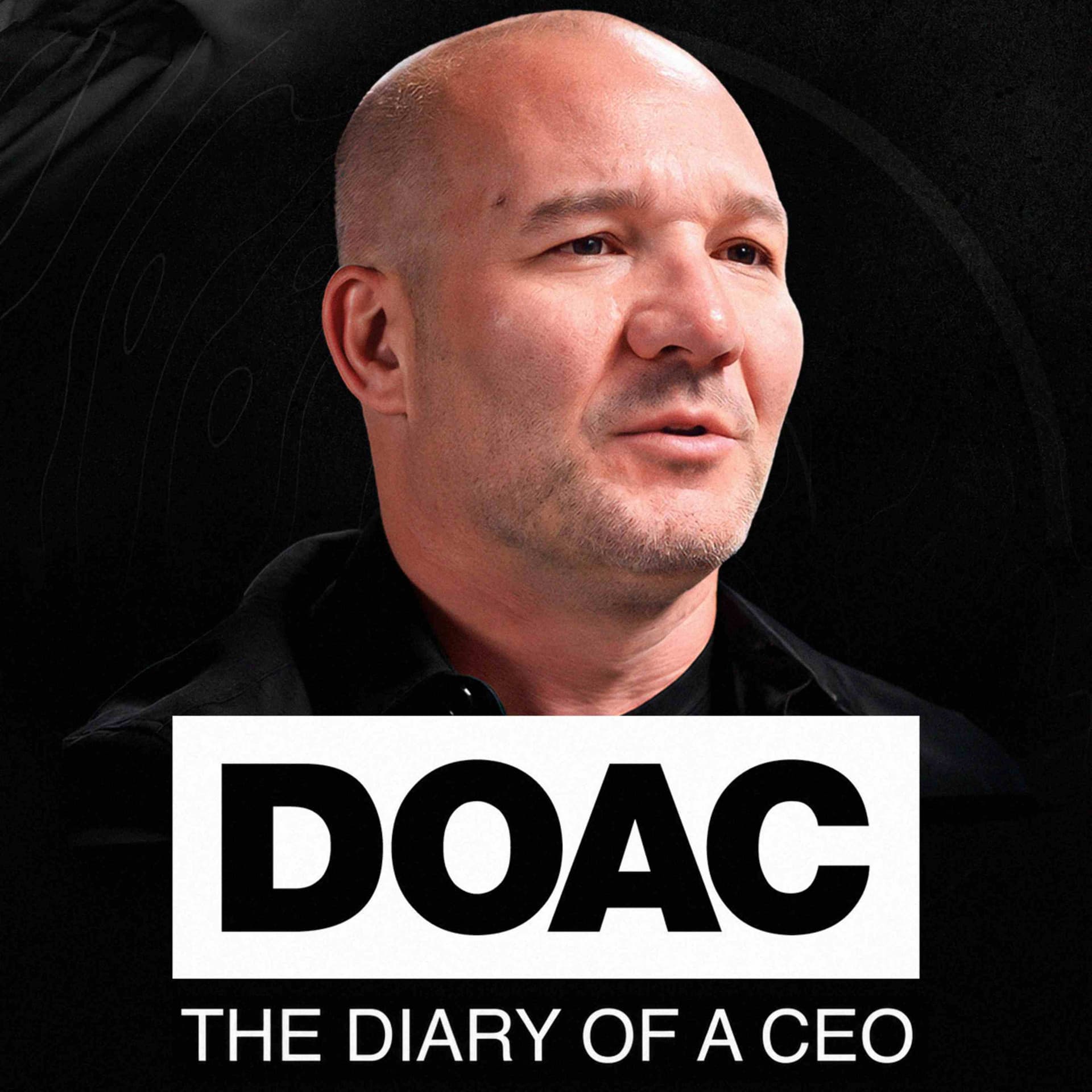
The Diary Of A CEO with Steven Bartlett
Episode
The Money Making Expert
Featuring
Daniel Priestley
Episode Description: The episode features Daniel Priestley, an award-winning serial entrepreneur who discusses the entrepreneurial journey, mindset shifts while scaling a company, the importance of passion in business, and the impact of AI on the business landscape.
Key Discussion Points
- Entrepreneurial Landscape:
- Exciting Era for Business:
- The present is described as the most exciting time in history for businesses.
- Technology enables global small businesses, providing opportunities similar to what multinational corporations had.
- Entrepreneurial Journey:
- Entrepreneurs are encouraged to conduct experiments and embrace a process-driven approach to building businesses.
- Mindset and Passion:
- Mindset Shifts:
- Differentiation between reptile (fearful) and visionary mindsets, where visionaries are expansive, think long-term, and are open to possibilities.
- Role of Passion:
- Passion is crucial as it helps endure hardships and maintain resilience in business.
- Passion is defined as the alignment between one's origin, mission, and vision.
- Idea Validation and Business Testing:
- Testing Business Ideas:
- Use waiting lists to test ideas and gauge interest cheaply and quickly.
- Conducting tests to sharpen ideas in the market rather than in the mind.
- Importance of Fast and Cheap Tests:
- Validate market demand before manufacturing supply.
- Pitching and Sales:
- Attributes of a Great Pitch:
- Clarity, authority, problem identification, solution, personal why, defining opportunity, next steps, and emotional essence.
- Sales and Deal Structuring:
- Sales are crucial; entrepreneurs need to embrace their role as chief salespersons.
- Work-Life Balance and Team Building:
- Work-Life Balance:
- Acknowledgment that people can work many hours when their work is fulfilling and asset-building.
- Importance of Team:
- Business success is a team effort. Complementary energies in teams (visionary, implementer, connector, and data/finance) are key.
- Shift from solopreneurship to team-driven business growth.
- Business and Investment Strategy:
- Building Assets:
- Income follows assets. Accumulate assets such as brand, databases, and company culture.
- Digital assets play a crucial role in modern businesses.
- Investment Perspectives:
- Invest in personal skills development and relationships.
- Favor building investable businesses over personal investments.
- Embracing AI:
- AI and Business Transformation:
- AI is poised to revolutionize business operations by enhancing content creation and efficiency.
- Emphasis on the need for businesses to adapt to AI-driven changes.
- Final Thoughts:
- Vitality and Functionality:
- Shift from valuing functionality to valuing vitality—breathing life into projects.
- Closing Tradition:
- The last guest leaves a question about sex and relationships, highlighting the broader perspective of entrepreneurship beyond business.
Important Links
- Daniel’s Businesses:
- KPI Scorecard: [Link](https://bit.ly/49mYu2w)
- ScoreApp: [Link](https://bit.ly/3OQ0lVg)
- Daniel's Book - 'Scorecard Marketing': [Link](https://bit.ly/48tZksS)
- Follow Daniel:
- Twitter: [Link](https://bit.ly/49qhSMa)
- Instagram: [Link](https://bit.ly/49EioWr)
- Steven Bartlett:
- Instagram: [Link](https://www.instagram.com/steven)
- LinkedIn: [Link](https://www.linkedin.com/in/stevenbartlett-123)
Watch the Episode on YouTube: [Link](https://g2ul0.app.link/3kxINCANKsb)
This episode offers a blend of practical advice and thought-provoking insights, ideal for those keen on entrepreneurship, scaling businesses, and leveraging modern tools like AI in their ventures.
Written by AI. May contain mistakes. Listen to the episode to check what was said.
Transcript
Automatic transcript. May contain errors.0:00This episode is brought to you by Me Undies. While Me Undies can't totally help your love life this Valentine's Day, they can offer you insanely comfy undies and loungewear to buy or gift. Me Undies has so many awesome Valentine's Day prints and styles. Plus, you can match with your partner, friends, or even your pets. This Valentine's Day, give the gift that'll keep them thinking of you and score huge sight -wide savings at Me Undies .com slash Spotify. That's Me Undies .com slash Spotify. Me Undies. Comfort from the outside in. I've started seven businesses that have gone zero to a million in their first 12 months, three businesses that went north of 10 million.
0:35But here's a crazy thing. Anyone can do this. And I'm going to take you step -by -step through the best ways to start making a life -changing amount of money. Down your prison. Money and business expert. That's helped thousands of people start scaling grow your own multi -million pounds businesses from scratch. These are the best ways to start the business. We start with an idea, but we need to sharpen our ideas in the market, not in our minds. I see so many people they'd raise money, book an office, buy computers, but after all of that, no one's interested in their idea. So we have to conduct tests where we fail fast and fail cheap.
1:05Before example, waiting lists is one of the fastest ways to test an idea. And this is what really smart entrepreneurs do. Like Elon Musk launched a waiting list for the Model 3. He launched a waiting list for the cyber truck, validating the idea. In fact, Rolex had a massive breakthrough when they stopped selling Rolexes and they started selling the waiting list. But if it's crickets. Okay, fair enough, let's have another idea. But what if someone steals my idea? Ideas aren't worth anything. The value is for the person who does it. What are the fundamentals of being an exceptional salesperson picture?
1:34First you will have to use the businesses as a team spot. Is there anything you found that is consistent across all of the best people you've partnered with? So here's what I'm looking for. And there's a lot more to go through. But one of the other strategies for building a business is... And that should get you into the six figures of revenue just by doing that. It's shocking because it's so simple. Let's talk about money. Let's talk about it. If someone's out there and they've got £100 or £1000 worth of disposable income, what should I be thinking about to making myself financially free? The truth is that there's an incredible wealth to be created.
2:05And one of the biggest opportunities in the world at the moment is...
2:17Daniel. If someone has just clicked on this podcast, can you tell me the reason why they should stay around and listen and what you think they're going to get from this conversation? I think we're living through the most incredible time in history. Never before have people had the opportunity to build something that is a global business full of fun freedom and flexibility, full of passion and purpose. And today that is accessible to almost anyone who'd be listening to this podcast. The baby boomers, they got access to affordable housing. We get access to affordable global small businesses. Now, the entrepreneurial journey is scary to a lot of people.
3:00But if you conduct the right experiments, have the right mindset, follow the right process, it's really predictable and safe for people to get involved in entrepreneurship. And I think anyone who's listening to this is going to see that it's a lot more process driven than I think that we can go step by step to build a business that you absolutely love. On the other end of this conversation, in an hour's time or two hours time, or whenever this podcast finishes, what are they going to have that they didn't have before this conversation? We're going to talk about the entrepreneurial journey as a set of steps, predictable steps.
3:31And they're going to be able to have a map of how do you move through that entrepreneurial journey? Like what do you do first? What do you do next? How do you go to the next level and scale up and who do you contact? And it's based upon literally coming across thousands and thousands of entrepreneurs at each stage of the journey. So ideally, what I want people to walk away with is just that clarity around how this entrepreneurial thing works. And who are you? What's your experience? So my background is over 20 years of entrepreneurship. I started my first company when I was 21 years old. I did two years working from mentor from 19 to 21.
4:04We built a business from scratch to millions of revenue. I then left that mentor. I went out on my own, started my own first small business. I grew very rapidly. Went from zero to a million in the first year and then 10 million in year three. I started seven businesses since that have gone zero to a million in their first 12 months. I've done three businesses that went north of 10 million. And what about this accelerator? I read that you have an accelerator where you have thousands and thousands of entrepreneurs who come to your accelerator for business advice coaching from getting from zero to, you know, up on that up to their trajectory.
4:36Yeah. So 12 years ago, I noticed this trend around this idea of global small businesses. And I basically saw that technology was making it possible for anyone to do the things that multinational corporations were doing. And I started an entrepreneur accelerator designed for people to position themselves as a key person of influence to build their personal brand, to build a core team of people around them, to digitize the value that they offer, and to take the most, or make the most of the times that we're living in. And since then, about four and a half thousand companies have gone through this whole process.
5:06We've seen people go from zero to multi -multimillion pound exits. We've seen people build the business of their dreams where they get to live and work from anywhere. And, you know, we've also seen what people struggle with and what they've found difficult. We've gone through pandemics and global financial crisis and all of this sort of stuff with our clients. It's dancing classes for entrepreneurs. It's a high performance environment where you get to be around people who want the same sort of things that you want. You get to have some accountability, some best practices. You get a community or a network around you.
5:37And you go through that entrepreneurial journey with other people who are going through it as well. Do you think anyone can be an entrepreneur? I think entrepreneurial spirit is something that we're all born with. Entrepreneurship is this idea that we want to create value for others, that we want to take a little bit of a creative risk, that we want to do, something that represents self -expression. There are different stages to the entrepreneurial journey. Everyone can go through those stages. There's also not one type of entrepreneur. There are people who are very good at finance. There are people who are good at operations.
6:07There are people who are visionaries. There are people who doers and get the stuff done. And there are businesses that suit those types of people. So it's about finding out who you are, finding out what kind of business would actually be well suited to that person. And then making sure that you're doing the thing that you're well suited to. How does one know that a business would be suited to them? Because if you gauged on the people that come up to me in the street or the taxi drivers I speak to or my friends or the DMs that I get, everyone's got an idea. Nobody seems to be sure to have ideas.
6:37But so many people seem to be stuck at that moment of making a decision to pursue a particular idea that they almost get like paralysis, like sofropinous. All of their ideas stay on the sofa that they were conceived on. But they never seem to get out of the sofa because of that paralysis. I don't know if this is the one. I get that all the time. Is this the idea? The thing is we need to sharpen our ideas in the market, not in our minds. So what we have to do is go make contact with other people and see what they say and see what they think. So we have to conduct tests where we fail fast and fail cheap if we fail at all.
7:13So here's an example of what I like to do when someone has an idea. I say set up a very simple waiting list landing page. And essentially let people know I'm thinking of starting something in this particular space or we're launching something in this space later in the year if you're interested, join the waiting list. Now that waiting list concept essentially if people will join the waiting list and if you get hundreds of people joining a waiting list, it's pretty good indication that it is a good idea. If you launch a waiting list and you message 3 ,000 people and say I'm launching, I'm launching this thing, do you want to join the waiting list and no one joins?
7:45Then it's a good indication that's not the idea, right? Because we have to have a good marriage between what we're passionate about, what we want to do and what the market wants. There's 6 million businesses in the UK, 30 million businesses in the USA. And that basically means there's a lot of businesses doing a lot of things that already exist. So the market might not have an unmet need. The market might say, hey, I already have a great cupcake supply. There's already someone who makes great coffee in my neighborhood. We don't need another one. Okay, fair enough, let's have another idea, right?
8:13You can always have plenty more ideas. So you've got to test. The faster you can get on with conducting a fast and cheap test, the better you're going to go with your entrepreneurial idea. Because that's one of the big sort of mental barriers that people have. As they see that committing to any of these ideas is going to cost them three years, their reputation, and potentially hundreds of thousands of their money or an investors money. So that again creates paralysis because the discomfort associated with being wrong when you think there's so much on the line will hold you in place. But your idea there of just throwing up a landing page immediately kills the paralysis.
8:44And also just a landing page of a waiting list. So you're not even saying that these things are dead certain. You're just saying we're going to be launching something if we get enough interest. And here's the waiting list. And by the way, this is what really smart entrepreneurs do. Like Elon Musk launched a waiting list for the Model 3. He launched a waiting list for the cyber truck. I think he launched a waiting list for a flame thrower. I joined all waiting lists. Yeah. And he's essentially what he's doing is a very smart process of validating the idea. One of the best mindsets that we have as an early stage entrepreneur is the mindset of a scientist conducting a little experiment.
9:20And what we're trying to do is not be emotionally attached to what happens one way or another. What we want to do is we want to say, you know what, if people don't like this, okay, I'll have another idea. If people do like this, I'll go to the next step. So a scientist is just kind of like conducting an experiment. And the best experiments are cheap and fast. A waiting list is probably the most powerful early stage experiment you could go with. Elon Musk, when he launched the waiting list for cyber truck, I don't think there would have been an investment bank on the planet that would have backed a factory for something that looked like cyber truck.
9:53But when he walked in and said, I've got a million people who have put down $100 deposit. If only 5 % of them go ahead, they can crunch the numbers on that and say, yeah, okay, we'll fund that fair enough. Let's build it. So it's very powerful. I did this recently. I had my team come up to me and say, hey, we could do a startup around an AI that helps people write a book. And I said, well, I'm not sure if anyone would like that. But let's launch a waiting list. And so launched a waiting list, put one post on LinkedIn 750 people joined the waiting list. I was expecting 150. And in the waiting list, we actually asked questions like, how much would you pay for it per month and how many months do you think it would take you and what would success look like and what would fail you look like and what else would you try instead of this if this didn't exist, what would you use.
10:42So we asked all these questions. We collected a ton of data. And then off the back of that, we specced out the product. I also went to angel investors and said, do you guys want to co -invest in this one? We raised 300 ,000 pounds on the SCIS scheme at a three million pound valuation for an idea, no lines of code, nothing built, nothing designed. And essentially, we got ourselves ready to launch in a couple of months, just simply off the back of that waiting list and all the data that we collected. So interesting. The other point you said within there was about, you said there's kind of two things, what you're passionate about and what the market wants.
11:19Now on the point of passion, it's so cliche, people say, follow your passions, do things you're passionate about, et cetera. How important do you think the role of passion is in actually succeeding at any of these ideas? So if I've got four ideas, cupcake business, floristry business, soccer business and I don't know, AI business. What role does my own intrinsic passion of any of these areas matter in the chances of success? Passion matters a lot because business is hard and you have to stick with it through the downs. So the reason passion is valuable is because you are going to go through valleys and they're going to be painful and they're going to be the gratification is going to be very much delayed in any business journey.
12:01So passion is the thing that gets you through. It's not the thing that you write high on. It's the thing that you get through the hard times with. I have a very weird definition of passion. I kind of like tried to strip it back to its bones and I look for an alignment between origin mission and vision. So I essentially say, what is your origin story? What's your background? I want to see that you're doing something that aligns to what you've always been doing. I want to see that this goes back to age 10. For me, when I ask people about why you're doing this thing, I want them to start the story a long time ago.
12:33And I want them to tell me about little wins that they've had along the way that have led to this moment, which is why they're starting this business to me. That's great. Because anything that we keep coming back to as a recurring theme is what we're meant to be doing. So for me, I've going right back to age 10. I have experiences throughout my teenage years and going back to age 10 that were about business as a force for good. And it goes right back to a garage sale that I did when I was 10 years old. We had a house fire. It was a horrible experience, but it turned into a positive experience because I set up this garage sale and made some money.
13:06And something bad happened and I turned it into something good through business. And for me, there's this recurring theme that all of my little wins line up to these themes. So the origin story is really powerful. The vision for the future is what do I want to see happen in the future? If all of this goes well and other people are doing it too, what would this look like in the future? What would 10 years from now, 20 years from now be if we were celebrating? What would we love to be celebrating? And then the mission is what is the most high value thing that I could possibly do that's in alignment with that vision?
13:38So essentially, if there is a strong alignment between origin, mission and vision, something happens where you carry yourself in a different way. You sit differently, you speak differently, you're in this alignment. Other people pick up on it. They want to quit their job and go and work on your team. They hear about the vision. They hear about your origin story. They hear about the mission and they go, oh, I'm going to leave what I'm going to do. I'm going to leave what I'm doing and come and join that. And that's the magic of entrepreneurship. So for me, that's passion. It's not about like superficially, I like snowboarding or I've always enjoyed baking a cake.
14:14It's the alignment of origin, mission and vision. Interestingly there, I was trying to think about what the opposite of everything you've said just looks like. What's the opposite of passion in your definition? What's the misalignment look like? So can you give me an example of what the opposite of that definition looks like? The opposite is I heard about some guy who pumped a crypto coin and made millions of dollars. So I want to go and find out how to pump crypto coins or I heard someone who made money flipping property. So I need to flip property and I'm going to do a course on flipping property.
14:54I've got no interest in property. I've never been interested in property. I've never shown any interest in any of these things. I just want to make money and it's got nothing to do with my background. I've got no little wins in this. I have no real vision for the future other than being rich. So essentially this is of no value 21 listening. No one cares. In fact, when people hear that, they're repulsed by it. In most cases, just hearing someone talk about that makes you feel I definitely don't want to see you for the next two years. Why are they destined to fail? Because they can't attract a team.
15:26Essentially all of business and life is a team sport. And it's your ability to attract great talented people around you who want to work with you that is ultimately the reason we succeed. And it's ultimately the reason we feel good. So if you're saying things that repulse people, then talented people leave and talented people don't want to be involved. If you're saying something that feels resonant, that it feels aligned and it feels like something's happening. It feels like this guy's up to something. Well, this woman is up to something. She's enrolling people in this vision that she's got and people love her story.
15:59It's destined to succeed because good people are getting involved and more and more good people are getting involved. Knowing what's a good opportunity and what's not a good opportunity, do you think that when you're younger, you should be saying yes to more stuff? Because in the position you're in now, you're bombarded with opportunity. So you have to use a different angle framework. I have to say no. Do you think when people are younger, they should have a different bias towards accepting opportunities or fucking around and finding out? Yeah, definitely. We should definitely go through that phase and also be willing to say, oh, that wasn't it.
16:32I'm going to stop and go try something else. So you dropped out of university, I dropped out of university. I was so excited to go to university. And then as soon as I realized this is not going where I want to go, I had to make the decision to leave all my friends and walk away from university. That's what a dark valley you have to walk through of uncertainty. When you make the decision to leave the well -worn track of university or a corporate job or the nine to five, how does one prepare mentally? Like, what's the mindset of someone that goes, do you know what? I'm going to go through the stinging metals, through the bushes and be lost in fine my own way.
17:07I always enjoyed all of this, by the way. So my mindset was that I was always quite excited that being lost I felt was probably going to be part of the process. I have a simple view around mindset, which is you're either being a reptile, an autopilot or a visionary. What's that reptile then you mentioned? What's the definition of that? Oh, well, reptile mode is fight flight freeze, freak out, throw tantrums, be angry at the people you should not be angry at. It feels unfair that the world's against you, all of that. And the visionary? It's the definition of that. So the visionary, I don't know if you've had these moments where you feel anything is possible and you feel very expansive.
17:49You think in long time frames, so you think in maybe 10, 20 years out, you also might see the world as one small place. So you might mentally, your mental model might be that the world is just one little ball that flies around the sun. And there's markets everywhere and that there are opportunities everywhere and that there are people trying to get stuff done. And I could have a business that's anywhere. And you feel a sense of love and compassion and optimism. And you typically become more influential in your circles. The other strange thing about the visionary mindset is that they did some research with Indian farmers and they found that these particular people they got paid their yearly salary in one lump sum.
18:34And then they had to make that last for the whole year. And as they were getting close to the end of that cycle, they had an IQ test which showed that they were 15 points of IQ lower than when they had just been paid the lump sum. So the lump sum allowed them to think long term. It allowed them to feel affluent and abundant and their IQ scores on the IQ test went up as a result of feeling good and feeling amazing and feeling affluent. And then by the time the money had run out and they're not sure whether they're even going to make it to the next one, their emotional intelligence, their actual IQ intelligence had dropped significantly.
19:11So one of the things that is a real challenge if you're doing it tough is that you're essentially regularly putting yourself into these situations where your IQ is right down. Your emotional intelligence and your IQ suffers as a result of being in reptile mode. I remember a time where I got a parking ticket for $40. And I freaked out. Like I flipped out. I had a massive fight with my friend and you know, like I was in a place where $40 was was seriously an issue. And I remember thinking I'm just going to eat cereal for weeks to try and get through this. And so for reptile meltdown mode. What would the visionary have responded to the parking ticket?
19:55Well, the visionary has a different view of life. And the first thing is that if a resource exists on the planet anywhere, that resource is really just a couple of conversations away. So essentially a visionary would say, well, someone's got $40. I just have a talk with them and see what they need. And I'll help them with whatever they need. And they can help me with the $40 that I need. Maybe I need to wash their car. Maybe I need to help them with their video editing or something. So the visionary is all about the idea that there's really not a lot of boundaries between the resources on the planet that it's just a gray zone around who owns what and who's got what and we can just have conversations about that.
20:31So visionaries can easily raise money and raise funds because they just think well, someone's got the money and they want to put it to use. So I'll just give them a plan as to how we're going to put it to use. There's a great story that I love, which is I think it was the producers of top gun. We're creating these little models of airplanes and boats and they're trying to figure out how they would do like a Star Wars style top gun movie. And someone said, have we actually called the Navy and us whether we can use their planes and their boats and everyone's like, no, it's like well, they've got planes and boats.
21:01Let's see if they want to do it. So they ring up the Navy as you do. And they speak to the general and the general says, oh, yeah, we want to enroll more people in the Navy. So we would love for you to make a Hollywood blockbuster film. What do you need? And they basically say, well, here have the jets have the boats have the aircraft carriers, whatever you want to do. So it's kind of weird to think that someone woke up this morning with the resource that you want. And if you have a conversation about how that resource gets used, right? Essentially, you are now as good as you having the resource.
21:31Someone woke up with an aircraft carrier. If you've got a good use for that aircraft carrier, why not have a conversation about how that aircraft carrier gets used today? It's shocking because it's so simple. And but it's so resonant with me. There's two examples I'll give the first. I've talked about many times. It was when I was 16, 17 in six form, saw Carly Stokes and friend of me, who was a girl in my school. I think she was head girl, but she was picking the vending machines we were going to get in the school. And in my brain, I thought we have 2 ,000 paying customers here. Surely there's a vending machine company that would love to put these machines for free.
22:03And give us a cut, went to the computer and sent 5 emails based on Google search rankings. By the same day, Mr. Sprinkle, who was head of key stage 5 has confirmed this on live TV. Someone showed up with a tape measure to fit the machines. Because one of my emails had gone to a former student who was now the CEO of a vending machine company, and he had been looking to give back to the school. Example B comes in that one. Yeah. Did you feel what it felt like to be a visionary where it's like anything is possible? Like why are we not just, of course, we've got 2 ,000 clients. Like, did you feel, because you must have felt reptile versus visionary in your life.
Read the full transcript
22:37You've had reptile moments where you're like, 100%. I hate everyone. I want to kill everyone. And then you've had moments where it's like, oh, you know what? You've been in the world. Yeah, we can bend reality. Exactly. We have conversation about how reality works and we'll just, you know, bend it. Yeah. And so my question has always been like, where does that come from? Because I view our beliefs, all of our beliefs as a stack of evidence we either have or don't really have. And for me, the youngest of four siblings, I had so much space compared to my siblings when I was young that I got to, like we said earlier, like if I could find out I got to conduct experiments.
23:10And that led me to believe that the world is bendable. I used to say when I was 14 that if someone said to me that we need to go to the moon next week, I believe there's a way because I think there's probably a rocket going and all I need to do is contact the person and make a compelling pitch. That's how I get to the moon next week. You thought that up 14? Yes. I used to say this all the time, like my difference between myself and my peers, they were academically better. But in my head, there was the only thing that stood in the way of where I am now and where I want to be is a bunch of people.
23:37A bunch of conversations. Pitching. Essentially pitching is enrolling people into new ideas. So what entrepreneurs do to advance their ideas is we pitch them into existence. We start with an idea and we pitch it and we pitch it and we pitch it. We sharpen our pitch by talking to people. But what we're doing that's different is we're not just explaining the idea to people. We're trying to enroll them into that vision. We're enrolling people into this vision that we've got for the business. And that process of getting people to do something that they didn't wake up thinking they would do that day is pitching.
24:11And that's one of the first tools that you learn as an entrepreneur. And actually on Dragon's Den, that is the main tool that people are given in order to enroll the dragons into investing or getting involved or not. So where does it come from? I think it was your question. I believe it's built into every single individual that it's an evolutionary function that essentially at the very base of our brain is this reptile mode which is fight flight freeze which is rarely appropriate. But in a survival situation probably is appropriate. And then there's autopilot mode which is essentially just do what you've always done.
24:43Repeat the past. You know, just get into a loop. If it worked last week and I didn't die last week, well, then I might as well do the same week again. And then there's visionary mode which is what could I do differently? What, you know, what might, what would be a creative way to solve this problem? So I feel that a lot of people think they're missing something and actually it's all built in. And if you can get yourself into that visionary mode, often it's the people you hang out with. It's the books that you read, the podcasts that you listen to. If you can get into that mode, then a lot more becomes possible.
25:15You get more IQ points, you get more EQ points and you see the world in a very different way. The key question there is like, how would you get into that mode? I have a very one dimensional biased journey. So I'm not sure if my journey is the best one to take notes from. But from what I've seen personally, people are either in some kind of upward spiral towards being more visionary because it's compounding in their favor that they're sending the email. And then it's working, which means they have the evidence to send more, they're more likely to send emails with more conviction and more frequency because it worked last time.
25:52And then more work, they get more responses. So they send more emails. It's this upward, wonderful reinforcing spiral upwards and they become more and more visionary. Like Elon Musk is at the very top now. He's like, space ships to Mars. Yeah. He's like, no chips in your brain that monkeys can control computers with. That's someone at the very top of that visionary cycle. And at the bottom of the reptile cycle is someone who, you know, at work, the CEO says, does anyone want to stand up and share the right ideas and they just slouch back in the chair? Because they've had their confidence negatively reinforced.
26:24Maybe last time they tried, it didn't go bad. Maybe their father or their mother gave them bad feedback one day and they're in this downward spiral. Well, when they do show up, they show up with low confidence. They put in a bad performance. It goes bad. I would call that auto pilot mode, which is, I've never done this before. So I won't do it next time. Reptile mode is very destructive. You're actively breaking your world. So it's where you do the worst possible thing. Okay. So you are throwing tantrums and you're lashing out against the people who you should, you're actually lashing out against the people who are trying to help you probably.
27:04So that's where you're really at the bottom of Reptile mode, very destructive. Auto pilot, in your situation where you said about the person who, you know, is given an opportunity to speak and they say, oh, it's not what I do, is the auto pilot response. The visionary is like, oh, this is a chance to mobilize resources. I've got an opportunity here to expand my sphere of influence and become a key person of influence in this room. You know, so the visionary is like, oh, great. This is, this is a good opportunity. I can do more with this. If the pitch is the keys to everything you want to be, because if we were saying that it's really conversations that stand in the way of where you want to go, and it's the pitch that is essentially the key to wherever you want to go, what are the attributes of a perfect pitch?
27:49What are the fundamentals of being an exceptional salesperson picture? Well, you've seen some great pictures on the den. Not a bad ones too. Yeah. So here's what I look for. Clarity is the base level. You just don't want to confuse people. Authority is the ability to communicate that you are worth listening to. That there's something about your background or what you've done or the data that you're possessing or the mentor that you've got that gives you some sort of authority to be talking about this. So clarity and authority defining some sort of a problem that the customer has or some sort of problem that exists in the world that needs solving and that you've identified an insight or a solution for that problem.
28:30Then the why, which I would say is about communicating why you care enough about this that people would buy into you as the person to drive this forward. You then want to define the opportunity. What is the bigger opportunity for anyone who gets involved? The next steps. What should someone do next? And then the emotion or the essence that you want to leave people with so they remember you based on that essence or that emotion that you made them feel. So that's the great arc of an inspiring pitch. What was the last one there? The emotion. So clarity, authority, problem solution, the why, opportunity, next steps and the essence.
29:09And it spells out capstone. Capstone. So that's how I remember a great pitch. I had to come up with a way of remembering this because I was pitching so often. I had to be able to come back to, okay, how do I pitch this? So the essence, that's the one I wanted to some more definition. People remember you based on how you made them feel. So you want to think, how do I want to leave people feeling? What's the emotion that I want people to remember? Well, I'm pitching. Yeah. So you want to finish the pitch on an emotion. You want to finish the pitch by expressing what it is that you essentially, what is the emotional, the feeling that you want, you want this business to be about?
29:45And what's the opposite of that then, the emotional piece? So what's a pitch that is lacking? Well, a lot of pitches finish on next steps and it's very logistical. So I've seen a lot of pitches that are going great and then they go, and then here's what we need to do next. And then it becomes a little to do list and everyone goes, oh, that kind of landed flat. And if you finish on the essence, then you actually just bring people back to. This is what it's really about. So that we even though we've talked about opportunities in next steps and the finances and all that sort of stuff, you want to finish on, this is what we're really about.
30:13This is what we're up to in the world. I've been thinking a lot about, you know, some adjacent subjects to what we're talking about here. But this idea that if you just asked five times more than you're currently asking, your life would change. The secondary example I was going to give after my coffee machine example from when I was 16 was when I was 18 and I was completely broken. That's when I was dropping into Chicago town pizza to feed myself. And I need I started I was starting this business called wallpark and I needed camera equipment. I sent 20 emails to camera company saying, hey, I've got a, this website I'm going to launch.
30:46We're going to record videos on campus. I need some cameras. If you lend us the cameras will put your logo on all the videos we make on campus within 70 to hours. Samsung had sent 10 ,000 pounds worth of camera equipment to my front door in my side. I got an email the day after the cameras arrived. And it said, these are returns send them back when you don't need them anymore. And I'd solved someone's problem for him because he had returned cameras in a warehouse that you didn't know what to do with. He sent me 10 ,000 pounds worth of camera equipment for free within 72 hours. I'm just asked. And I go, oh my God, like when you're at the bottom and you have nothing to lose and you have an internet connection and a Gmail account, why aren't you sending out 20, 30, 50 emails a day asking?
31:29You think in emails, I think in calls because when I was 18 you pick up the phone and make a call. I always had this rule called make three calls. And I remember a nightclub party that I saw these 15 year olds sitting in the street. I'd just turned 18 and I was loving going to nightclubs. And I saw these 15 year olds in their skateboarding and they're hanging out in this little area. And they were asking me what it's like to go to a nightclub. And I said, oh, someone should put on an under 18 nightclub party so that you can experience it and see what it's like. They're like, oh, that would be amazing.
32:00And I thought, oh, I'm going to do it. So I called the nightclub and been going to and said, oh, I have a promotions company. And we run nightclub parties for under 18 during the school holidays. We've selected your venue to be one of our venues for the next holidays. Would you be interested in discussing that? So like, yeah, send through a proposal. And then I'm like, oh, okay, yeah, we'll send a proposal. And anyway, we ran a series of nightclubs at that thing. And we, it was the first time I'd ever made 10 grand in the night because we had a thousand people pay 10 bucks ahead. And that was a lot of money and it was all cash and it was wild.
32:34And it was just literally just asking. I have to say, a lot of people send me messages. I get many thousands of messages a week across my inbox. It's linked in Instagram, the podcast, et cetera. And because I'm exposed to so many thousands of messages, as I'm sure you are, you get to see the variance in a good ask versus a bad ask. Now, I want to drill down on that. What are the core components of a great ask? The best to ask has with or without you energy. With or without you energy is the energy that you have when this is going to happen with or without you. So essentially, when you say we're going to be doing this filming and do you want to send some cameras and we'll put your logo at the bottom, it's happening with or without you.
33:15You can be the company that gets the logo or not. But it is happening with or without you. The worst asks are, I desperately need this to happen. And if you don't say yes, no one will ever say yes. And therefore, I'll give up. So if I think about the best asks that come through, something is going to happen. And it's going to happen whether I'm involved or not. And I get to choose whether I want to jump onto that or not. And those are the most compelling, most exciting opportunities that get pitched. So I'll give you an example. But when I first arrived in the UK, I had a suitcase and a credit card.
33:49And I'd never been above the equator. I arrived in London and I'm going to launch a business in London. And within the first two weeks, I message all the people who are influential in my industry. And I basically say, I'm hosting a dinner party. There's going to be about 30 amazing people there who are the who's who of the industry. I've just arrived from Australia. If you'd like to come along to the dinner party, let me know and I'll allocate a spot here. And within two weeks, I'd filled 30 spots at my dinner party. And they're all people who had massive databases. The biggest database was like 600 ,000 people.
34:23So I've got this dinner party and I stand up and I say, I'm Daniel Priestley. And I've just arrived from Australia. And I'm going to be launching a business here. I thought I'd put together a dinner party just to kind of get to know everyone. I've got my diary with me. I'd love to make a time in the next couple of weeks to sit down and have a chat with you about how we could do a commercial partnership or a joint venture as part of our launch. I'll just come around and I'll make a time and then other than that, enjoy the evening. So I walk around and I book 28 one -to -one meetings for the following two weeks.
34:56And everyone who I had a one -to -one meeting with knew that I had 28 other one -to -one meetings. And I could see that I hosted this party. Mind you, this dinner party cost like 1 ,500 quid. It wasn't nothing, but it wasn't a lot. So I then end up having these meetings and everyone starts agreeing to support my launch. So I'm pitching into existence that we're launching this thing. And then the biggest database with 600 ,000 people, they say, yeah, we'll support your launch. So when we did the launching email campaign to everyone's database, we booked hundreds and hundreds and hundreds of people.
35:28We did two nights in Manchester, two nights in Birmingham, Milton Keynes. And then we did like three or four events in a row in London. We did four million pounds worth of sales off the back of it in the first few months. It was interesting that whole experience of just putting together a dinner party and getting everyone involved. But it had with or without you energy. What's the sort of psychology underpinning that? Is it like scarcity? What is it that's causing with or without you energy to make people choose to buy from you or go with you? I think people like to get involved in something that I feel is happening.
36:04And it also demonstrates that you're a key person of influence. That you're actually an influential person in your industry. That you have the confidence to say, I'm putting this on and it's going to happen. We're going to make the movie. We're going to launch the business. We're going to do the thing. We're going to raise the fund. You're free to join or not. Totally fine. There's no neediness. And humans respond to the idea that they don't want to miss out on something that's going to happen. Very rarely exciting things happen. Most of the time for most people, everything's humdrum. And then occasionally something exciting is happening.
36:36And you don't want to miss out on something that's happening. So, you know, I don't like no one likes neediness. People like things that are happening. And people like to flock around key people of influence. So by demonstrating that you're a key person of influence who's putting something together, people just naturally gravitate around that. It's interesting because it reminded me of an example from a company that I invested in five or six years ago. And in one of my first meetings with them, I looked at their website and they had this button on there that said, become a member now. And I said, we should try changing that to join the waiting list.
37:10And when I had my first board meeting with this company, they said, Stephen, of all the things you've done for us, the most valuable thing you did was getting us to change that button from, become member now to join the waiting list. And I said, why? They said two things happened. The first is the amount of inquiries we got, the amount of people clicking that number, rose by 500%. The second thing is conversion went up by about 300%. That's right. Because previously, just by changing a couple of words on that button, people would click the button, they would then get scheduled an appointment to have a tour of this facility.
37:45They would then not even show up for their tour. They would, because they didn't value it. Yeah. The minute we changed it to join the waiting list and then they got an email saying, hey, you've been selected for a Q jump or whatever. They would never, ever miss the tour. And if they were late for their schedule tour by one hour, they would profusely text and apologize and try and reschedule. It's tiny shift, tiny shift in just a couple of words. Well, it's not a tiny shift because if you look at how human psychology works, in order for someone to want to buy something, they have to be about 100 % certain.
38:18In order to join a waiting list, you only have to be 5 -10 % certain that you want to do something. People like to warm up to things a little bit slowly. So join the waiting list means that, hey, you only have to be slightly sure that you want to do this. Then the uncertainty of, do I get through or not? I've joined the waiting list. I've made a micro commitment. Now there's an uncertainty gap. And it's like, oh, I need the certainty. I need to know whether I'm off the waiting list or I'm through to the next phase. So now we enter a different, like, will I or won't I get through? But it also gives the business a great opportunity to warm people up.
38:53So you talked about doing a tour of the club. Let me give you some other examples. Glastonbury Music Festival, they tell people that they can't book a ticket. They can only register for a ticket that they're interested in a ticket. So a registration of interest, but not a ticket sale. So what they do is they get 700 ,000 people to register interest. And then they tell you slowly who are some of the bands and they warm you up to, will you get it or not? And they tell you 500 ,000 people are now registered. 600 ,000 registered. 700 ,000 registered. And they say, but there's only 140 ,000 tickets.
39:25Then they say we're going to make the tickets available at 5am. So only the true believers are going to be there. Only the true music fans who are willing to get up early. And then there's this whole, like, suspense and excitement of, like, will I get a ticket or not? People set their alarm in the morning. They know that 700 ,000 of registered 140 ,000 will get through. So they just fight for those tickets. Rolex had a massive breakthrough in the way that they, in becoming a big brand, when they stopped selling Rolexes and they started selling the waiting list. So you can't buy a Rolex. The way it works with the Rolex is you go into a Rolex retail store.
40:02And the only thing they will sell you is getting on to the waiting list. So they won't actually sell you a watch. So first you will have to get on the waiting list and register. And then about six months later, they'll say, good news. We have the watch that you want available, but it's only available for three days. Other than that, we can hold it for you for three days. But after that, we'll have to sell it somebody else. And essentially everyone goes rushes down and gets the Rolex. So that cycle of joining the waiting list and then make the sale is brilliant. And this translates perfectly for people at the early stage of the entrepreneurial journey.
40:39Because it doesn't matter whether you want to do a rocket to Mars or whether you want to launch a cupcake business or you want to do a fashion brand or you want to do a service of bookkeeping and accounting. All of those you can launch a waiting list with minimal cost. You set it up very simply and basically use a template. But you've got a waiting list and you can also collect the data. So you can't just join the waiting list. Name, email, answer five questions to get on the waiting list. How much you willing to pay? What are you trying to achieve? What's your biggest fear that could go wrong?
41:10What would you try if this didn't exist? So you ask a few of these questions and then people get on the waiting list. You've got all that data. When people hear that, they'll think that putting someone through a set of sort of rigorous questions to give them access to the product on the other side will deter most people. But it reminds me of a psychology study that I read about then wrote about in my last book where they got two groups of people. And they had a boring community forum online as the sort of the product. They let one group of people straight into the boring community forum. And then they asked them how much they appreciated and found value in the boring community forum.
41:49That group of people said it was boring. Then they had this other group of people in this study. And they didn't let them into the boring community forum. They made them go through a rigorous selection process. And the people that got into the boring, the same boring community forum when asked in surveys after, how much do you value the boring community forum? They said it's great. And it's the psychological bias because you've had to fight for something. What you're describing is Harvard. Yeah. It's Harvard University. Exactly that. It's the same university subjects that everyone teaches, but it's hard to get in.
42:22Yeah. I use one of the other strategies for building a business is waiting list, but also discussion groups. So one of the things we do when we launch a business is we don't launch the product or service. We launch the discussion group. So the first thing is let's say I was going to launch a gym in one's worth. I might say we're going to do weight loss one's worth an online discussion group on WhatsApp. And we just promote the hell out of that group. And if we had 4 ,000 people in that group, we could then launch a gym pretty easily off the back of the discussion group. So I'm a big believer like in weightless discussion groups.
42:57Anything like that that is super fast, low risk, low cost. These are the best ways to start businesses that you know, and you're collecting data. You're getting people to answer questions to get in. And you're learning about what the product market fit probably is going to be the right product for those people in one's worth. Exactly. And sometimes you get very surprised. You find out that, oh, I thought this was going to be for men who want to build big muscles, but it's actually for women who are excited about CrossFit. It's like, oh, okay, didn't didn't know that like I now I've asked the questions.
43:26I'm finding out that it's slightly different to what I thought I thought everyone would love red, but everyone loves blue. Okay, we can we can do that. So in those early stages of business, you want to when I said before about conducting fast cheap experiments, weighting lists, discussion groups, online assessments are amazing. So an online school card or an online assessment. Great way to think of them is a readiness assessment. So readiness assessment like are you ready to launch podcast answer 10 questions to find out are you ready to build your brand answer 10 questions to find out are you ready to be an investor in this type of investment answer 10 questions to find out.
44:00So it's an online assessment where you answer a series of questions to get a readiness score. And then based on the readiness score, you people will then find out if they're 30 % ready 40 % ready. And people love these readiness scores. This is one of the fastest ways to test an idea and getting signals of interest. Everything is downstream from lead generation in business. So you essentially have to you have to generate leads and then you figure out if you've got a business or not. So the fastest you can get into the lead generation, the better. One of the worst things that people do when they're starting a business is that they think that having a business is about the supply side of what they're doing supply side means your ability to look after a customer and keep a customer happy.
44:45But actually a business has to start with the demand side. It's good. You've got to test the demand side before you test the supply side. If you can't manufacture demand, there's no point manufacturing supply. It doesn't matter. If you say, oh, I've come up with this Chilean basil flavoured ice cream, great. You can make that. But does anyone want that? You've got to check out whether you have the ability to get that product into a market. So what I see so many people, they take qualifications, they get certifications, they might raise money, they might set up a venue, they might book an office, they might buy laptop computers, all of this stuff.
45:21And there might spend three to six months doing that. And then finally, after all of that, they then experience, oh, no one's interested in this. Now what do I do with all that stuff? So in the Chilean ice cream example, what should they have done? Join a waiting list. We're launching Chilean basil ice cream if you'd like to try it and taste it, join the waiting list. People don't know what they want though. Because in the ice cream example, it's a taste thing, right? So it sounds good. But in reality, it could be river. So I mean, this is a crazy idea. It's a terrible idea that we're there. But anyway, let's go with it.
45:52So you create a waiting list where we're doing really wild flavoured ice creams. And it's crazy flavours like Chilean basil ice cream and salt and pepper ice cream and blah, blah, blah. If you're interested in really different exciting new flavours of ice cream, join the waiting list. And we will invite you to a taste tester when it's ready. You'll get to come to an exclusive event where you get to try and test our latest recipes in central London. So now you promote the waiting list and you see, can I get lots of people? And some of the questions might be which flavour you're most looking forward to.
46:26Are you looking for octopus ice cream? Are you looking forward to, you know, which one? Right. So you go through and answer all the questions and then they join the waiting list. Then you say, join the ice cream discovery discussion group. So now they're in there talking about their favourite ice creams and what crazy flavours they like. And you can actually have a daily poll and you're doing that all in WhatsApp. And then you say, now come to the event that we've got the taste testing event. You could launch the ice cream assessment. What kind of what, which type are you? Are you the savory ice cream person or the sweet ice creamer?
46:58Are you the, you know, so you could have four ice cream personalities and they take the test and find out which ice cream personality they have. So you can do all of this stuff for free or almost for free without making a scoop of ice cream. But none of this stuff involves actually any commercial kitchens, none of it involves packaging or branding or any of the expensive stuff. You're just doing the things that's testing whether people are actually interested in this. And if it's crickets, if you put a lot of effort into trying to get people interested in this and you've got 12 people in your little group.
47:27And they're all, you know, sadly looking at each other, go, where's the buzzer ice cream? You know this is never going to fly. If it, you know, I was thinking there, some people might come to the discussion group, you know, your friends, whatever your mom comes down. So because yeah, your ice cream's great, Daniel. Well, you want to do cold outreach, cold outreach. I don't know how long we're going to talk about ice cream. But cold outreach is where you essentially make a list of all the communities and groups that exist online, all the all the accounts that already have followers. And you just cold outreach a thousand people and get them involved.
48:02But Daniel, what if someone steals my idea? Well, my experience tells me until you've got a Ferrari, no one steals your idea. Yeah. People steal ideas from people who have Ferrari's right. So it's that bias towards if you've been successful in the past, then your ideas are worth stealing. The beauty of having nothing is no one's going to steal your ideas. Ever. They're going to look at your account on Instagram and go, oh, you got no followers and you know you haven't got a Ferrari. So I'm not going to steal your idea. So you've got this great advantage when you're starting from zero that no one, no one will steal the idea.
48:34And here's the other thing. Ideas aren't worth anything. Here's a great idea. Let's rip down all the old buildings in London and build brand new buildings. What's that idea worth? Trillions? Well, it would be worth trillions if we did that. Well, actually, no, the value is for the person who does it. So if someone else steals your idea, but does it, they deserve the money. Let them have it. They're better at executing. Get on with the next idea and be better at executing next time. So if someone's able to execute better and faster than you, they deserve that money. That's fine. Let them have it.
49:04Get on to the next idea. Think about it like this podcast. There's lots of podcasts. There's like three million podcasts. There's a lot of podcasts. The idea itself to start a podcast isn't where the value is derived from. No, so much of it is pitching and and also the commercials behind the scenes, you know, creating the right offers, making sales. So this is the other thing that early stage businesses need to do. You've got to stop calling yourself an entrepreneur and start calling yourself a salesperson. Are you going to get out there and make sales in the early days? So a lot of people are really uncomfortable with the idea of making sales, but that's what an entrepreneur does.
49:37An entrepreneur is a salesperson, especially in those first couple of years, you are the chief salesperson. If you can't sell it, nobody's going to sell it. At the heart of a lot of these topics is this idea of failure because you're talking about experimentation. We're talking about asking with all these things and people's relationship with failure seems to correlate to their eventual success over the last couple of years in particular, especially from doing this podcast and a lot of other more recent businesses that I run. I've realized that that experimental mindset, the type of person that quickly runs the test versus sits and procrastinates for years is really the winner in most pursuits and then I studied Amazon and Jeff Bezos' shareholder letter says this has to be the best place in the world to fail.
50:20I looked at booking .com and they have that moment where they launched their experimentation platform because they were sick of arguing about what the best feature was in the boardroom. I look at Thomas Watson back in I think 1950 or 60 where he says one of his employees had just made a huge mistake which cost the company $600 ,000 and he's asked in an interview, are you going to fire them? And he goes, fire them, I just spent $600 ,000 training them. These people seem to have a different attitude towards the value of failure. Yeah, this goes back to the school system. The school system is designed for component labor and you don't want components to fail.
50:54What we're doing now is different. So we're especially now we're entering the entry in the age of AI. So in a post AI world, most of the things that we think of as valuable that the school system could possibly teach us are not going to be very valuable very long. So functionality versus vitality when something is functional, it performs a task reliably when something is vital, it's irreplaceable life force energy. So what we have to do is recognize that the value has swung from something that is reliably able to perform a task is something that breathes life force energy into into a project. So I know this is kind of woo woo but essentially this is the difference when you are breathing life force energy into something you're okay with failure where we're just conducting experiments, we're finding the way that works and we just found 900 ways that don't work and now we're going to find the next one and you're you're bringing something into existence.
51:48So it's like being a parent, you know when when you see the child fall down you get the child back up and you get them onto the next thing and when we learn writing a bike we have to go through falling off the bike. So there's all of these experiences that you know what it's like to bring life force energy to something and that involves a process of failure. And then functionality if we're really putting our value around the idea that something has to be functional or that I have to be functional that my value is in my functionality then failure is such a bad thing. So this is a big difference in how the pendulum is now swinging we have to remove the idea that you are valuable because you're reliably functional and we have to swing it back to this idea that you're valuable because you breathe life force energy into something.
52:35For someone that doesn't know the definition of life force energy, how would you define that? So this word vitality has two definitions irreplaceable and life force. So if something is vital, it's irreplaceable and it's life force. So you need to find something that you are the irreplaceable life force, you pitch it into existence, you create it, you innovate it, you take ownership of it, you enroll others into it. That's the alignment kind of thing you were talking about, you're aligned to that thing. Yeah, you fully express your life, you're enjoying this because it's your life journey. And we're so tuned out from the idea of this that essentially we have to relearn what the hell does this even mean this definition.
53:15Life force energy is what kids do, right? Think about everyone's talking and everyone's serious and then a five year old bounces into the room, look what I've found. And it's like, look, there's mud and there's this and there's, you know, it's like, well, and suddenly everyone's disrupted and they bring energy into the house, they bring energy into a room. So they just know what it's like to fully express themselves and breathe life force energy into something. Let me give you another example. There are magicians and they have these like fake thumbs and these things. Those fake thumbs are functional things, right?
53:48There's a functional thing called a fake thumb and that's how you do the magic trick. But it doesn't mean that everyone who has that fake thumb can do the magic trick. In fact, some people do the magic trick and people go, you're just wearing a fake thumb, right? Then there are magicians who completely make you believe in the magic. And they're using just the fake thumb as well. They're just doing the same functional thing as the other magician, but they're so good at doing it. They're so good at enrolling you in it. They're so good at getting you your attention and your engagement and your beliefs aligned to what they want you to believe that suddenly bringing that magic trick to life is what the magician is doing.
54:23When you study magicians, you realize that it's not about the gadgets. It's not about the functionality. It's about the way they do the trick. It's the way they breathe the life force into the trick. So the life force is the magic. It's the way you bring it to life. So the idea that I noticed years ago when I wrote the book, Key Person of Influence was that there are these people who make stuff happen around them. And these people, they build reputation, their names come a conversation, they have more fun, they build reputation, all that sort of stuff happens. And when they're involved in something, it all comes to life.
54:55And when they're not involved in it, it almost dissipates. Something magically doesn't happen. Your involvement in 40 different companies, people would ask the question, but how are you involved in 40 different companies? And the thing is that you're not functionally involved in 40 different companies, but you're breathing a life force energy into 40 different companies. There's something that your energy brings that stuff happens with you involved that wouldn't happen if you weren't involved. You're the irreplaceable life force. And if that irreplaceable life force comes gets removed, the result won't be the same.
55:30If you're involved, the result will be different. And that's what people want from you. And it's not functionality. No one's saying can you come work in the office? It's very, very interesting, very, very true. And the two sub questions that spiraled off that were, how does one know and does one need to know what their vitality, their life force energy is? Do we need to know? And is there a way for us to find out what it is? We need to get into environments where it becomes normal to explore this stuff. And we need to be around people who are full of life. So when you are around vital people, you discover things about your own vitality.
56:05You've had this experience of launching a podcast that gives you access to the world's most interesting people and me. And you've got this, I bet from every single person you've raised your energy, you've raised your vitality, something inside you was awoken in each and every interaction that lifted your vibration up. When you're in a low vibration environment where everyone's functional, everyone is suppressing their life force in order to be functional. You essentially just resonate with that new, suppress your life force in order to be functional. So we need to get into environments where vitality is the norm, where we raise our energy, where we feel good about thinking about vision, mission and values, and we feel good about exploring origin and what value that might add to the world.
56:49It feels normal to be conducting experiments. It feels normal to be making sales. It feels normal to want to be a key person of influence in your industry. It feels normal to have a conversation about what resources already exist on the planet and how they could be used differently. So all of those things happen inside the right environment. So I have a saying that environment dictates performance. I went into a number of prisons with a charity called Key for Life. And what we discovered is that a lot of these young men are entrepreneurs. But in their environment, the product that you would sell is an illegal product.
57:24But they're in that environment, the only successful entrepreneurs they come across and they only successful entrepreneurs they meet selling drugs. So they go, oh, that is my pathway. That's what I do. That's my mentoring. That's the environment. If you were to take this same entrepreneurial spirit that these young men have and showed them, oh, here's an IT services company, that go start an IT services company or here's a book publishing business. Oh, okay. Now I'm going to be a book publisher. So they're entrepreneurial spirit. The only place they saw in the environment of someone who's on the rise was this drug dealer friend.
57:54So they got involved in it. So environment dictates performance. What we need to do is we need to find environments that lift us up. What if we're not in an environment that lifts us up because there's going to be a couple of million people right now that when you've described the definition of life force energy and you've also used the word stagnation. I was almost the antithesis of that. They're thinking, oh, my God, I would love some life force energy. I'm in a corporate job in the city. I've been doing it for 10 years. I'm institutionalized in this place because I've been here so long that I don't even know what the outside world would look like.
58:27And I've got these ideas, but I've been they can feel their soul has been drained to some degree. Change it. We'll change environments for at least an hour or two a week. And what I mean by that is I'll give you an example. When I was 21 I was going out to pubs drinking with friends all the time. We're getting drunk and that was the normal night. And there was this one night where these people turned up who did LeBop Latin Jive dancing. And I looked across the room and I saw them drive dancing and I went, oh, that's incredible. And I get talking to the guy and I say, how did you how do you do this?
59:00And there's like six beautiful girls and this one or two guys who they're all waiting for a spin. And I'm like, how do you doing this? He goes come to dance classes. I'm like, you're at a dance classes. That's I would never go to dance classes. I rock up at dance class. And then when I was there, I was in this environment where it was completely normal to dance. That was just the normal thing. In that environment, you grab a partner and the music comes on and they show you the moves and you do the moves. When they demoed the moves and I can vividly remember this from 20 years ago when they demoed the moves.
59:31I thought to myself, there is no way I'll learn that in three months. And then by the end of that first two hour session, I'm doing the whole routine and I'm comfortable with it. And I'm like, wow, I can do this. So being in the you can't do it outside of the environment. You can only do it in the environment. So entrepreneurship is an environment thing. You do it inside an environment. And it's very hard to do that outside of the environment. So you basically have to find entrepreneur meetups, entrepreneur groups. You you find a mentor. You know, in every city around the world right now, there are entrepreneur meetups every night of the week online.
1:00:08There are entrepreneurial events every day of the week. So you just get in you just get in the environment. There's this thing called social shedding, which I've never actually shared with anybody before, but it's this idea that when you take that first step into dance class and you get to see behind the curtain of another world. You slowly no longer resonate with your other friendship group. And what and there's often a friction there where they say, oh, Dan's dark, they start cracking the jokes. Oh, Dan's a ballet dancer now, and what they're doing there is somewhat linked to this phrase, misery loves company.
1:00:38They don't want you to leave no one wants you to change your down priestly. We know you as this do not change right density. If you try to change your identity, we will mock you. We will disguised as a friendly roast and we will try and hold you back because if you change, what does that say about us? What that's holding a mirror up to me, it means that I'm less than you in some way. And I hear this from entrepreneurs or start a bunch of partners that when it that decision to start building a personal brand or starting that cupcake business typically causes resistance from their existing social circle.
1:01:15And then this decision, whether they want to socially shed, which means letting some of those people go. If we were born at any other time in history, you would grow up in a town, get a job in that local town, go to school in that local town. And everything would revolve around just the local issues of that particular place. You probably would know a thousand people for your entire lifetime. And you'd have this very tight circle. There's something in our evolution about being part of these little local communities. And for the first time in history, you can choose to be tapped into a global community, anyone in the world who shares values or you want to share their values.
1:01:52It's now freely available to us. There's something that feels very foreign about that because it's never happened for the last five thousand years. And then there's something very exciting about this where you go, actually, I'm living in a different time now. This is an incredible moment. I think that what's happening is that we're going through an empire shift. And the current empire shift is this empire shift away from geography to digital, which means that we connect on values and we connect on purpose and we connect on origin, mission, vision and those sorts of things. So what the larger shift that's actually happening is this shift of, do I want to play by the older rules of the geographical base system or do I want to play by the new rules of being in the cloud.
1:02:31And in the cloud, anything's possible because I can go anywhere, I can do anything, I can access any information, I can connect with any person on the planet. And as soon as you make this shift into the new empire, that's where everything starts to shift. And now you, so we all have to make that shift. So the big shift is not even just changing your friendship group. It's the courage to change empire. It's the courage to say, actually, you know what, the world is a very different place than what I was born into. It's now going through a big change. The fast -driving actually get into this wave and surf this wave, the better.
1:03:01That's so interesting. And one of those shifts from the old empire to the new empire is seen in building a personal brand because the old gatekeepers of media and reputation were just newspapers in the radio. And there was like, you know, ten of those. So you've got to be lucky to get one of those now in the new empire in the clouds. You can build your own media company around you. Mission free. You can digitize your value. You can connect with anyone in the world who resonates with what it is that you do. So when we launched the most recent business score app, we launched it in London, but because it was the pandemic, we ended up with employees all over the world.
1:03:40And we've never had an office and we still don't have an office. And it's this incredible business. And what's happening is that we now have clients signing up every single day over a hundred people sign up. And we have clients in 152 countries. I checked yesterday. And they resonate with a message. And there's no, the business doesn't exist anywhere. There's no actual place that you can go to visit score app. It's just a digital business. The employees are everywhere. The customers are everywhere. But what holds it together are these intangible things such as values and vision and the value that we offer and the ideas and the, you know, all the stories.
1:04:14And all of that intangible stuff now exists in the cloud and the whole business exists in the cloud. So it is an incredible time. Personal brand is one of these incredible things where you don't need permission. You can just go straight to the market. You've done that. And anyone who resonates with your story or ideas, you know, you're the things that you want to get done in the world, they can just follow along. I hate the idea of personal brand being like showing up and doing dancers. It's actually it's about sending out a signal of this is what I'm up to in the world. And do you want to come along for the right?
1:04:48Do you want to be part of that? Like are you up for this game that I'm playing? Do you want to, do you want to take part in what I'm interested in? So it's a connection. It's, it's not an image. It's not like a voice or a message that gets repeated over and over. It's I'm up to something in the world. And I would love more people to be part of that. Come with me. I think her my her Adam Grant speak in one of his books about the big misconception with personal branding. Is it that it's this kind of pursuit for fame? Whereas great personal branding isn't self promotion. It's idea promotion. It's this is what I believe this is my perspective.
1:05:23Gather round if you think the same. Self promotion sounds like we just won an award last night at the marketing awards and you're all on the table taking a selfie. We are amazing. That isn't cultivating a personal brand. Personal brand is this is my perspective on the world. And if you've got the same perspective, which we call idea promotion come join me. It's not look at me. It's look at this. Yes. It's not chasing the spotlight. It's becoming a spotlight and spotlighting the thing that matters most. And it's it's shining the light on something else, especially on an idea. So we see people online who are shameless self promoters.
1:05:55I went to the gym today. Look at my avocado on toast with chili flakes. And they're saying, look at me, look at me, look at me. And the people that we most want to follow are the ones who say, don't look at me. Look at this. This is what's going on in the world. And this is what you should you should be excited about this. And that's the difference because on the surface, we might see you and say, oh, you know, Steven's all about like look at Steven. It's like no, no, no, you miss in the point. If you think it's about that, you've missed the point. He's shining a light on something that's going on in the world.
1:06:25And he's bringing stuff into the spotlight. He's not trying to say, check me out. He's saying, check this out. It's interesting that the podcast was the most accelerating thing for my personal brand. And it's really bringing people here and then doing my very best to listen as much as I can, which is interesting. Right. Because we've kind of cultivated. It's almost like the campfire. We've cultivated more people sat around the campfire listening to conversations like this. It is incredible that these times that we're in, these are the conversations that would have been behind closed doors 20 years ago.
1:06:53And you would have been incredibly privileged to be able to sit and listen in on those chats. And now they've been democratized these type of high level conversations, the types of conversations you have that you share with the world. You've democratized something that was once a very elite activity and you've made it freely available. People. I've come to learn it, especially over the last couple of years about the importance of people. You talked about people at the very beginning of this conversation, hiring people, finding the right people to join you in your mission. How central to being successful in both business, but just more broadly in life, is assembling the right group of people.
1:07:33So business is a team sport. There's no, there's no getting around it. I don't believe in solo pre -nurship. I don't believe that you can be a one person entrepreneur. I think entrepreneurs are team players and that they assemble teams. They put together teams of amazing people. Sometimes they put together teams of ordinary people at the beginning and then they become amazing people. So I'm a believer that two person co -founders or a founder plus an assistant is a great place to start. Four person campaign teams, eight person core teams, 30 person performance teams. So I love the British military's approach to team building.
1:08:06So in the British military, they have two person scout team, four person fire team, eight person section, 30 person platoon. So they go two, four, eight, 30. And I've used that myself in my own scale -up approach where if there's a new idea, we put two people on it. Once it's proven, four people are on it. Once it's up and running, eight people are on it. Once it becomes a business that has its own standard of learn value, 30 people are on it. So it's two, four, eight, 30. And that's been a British military learning that I kind of went, well, if they've done 400 years of HR experiments, why wouldn't I just learn from how they organize their teams?
1:08:44Is there anything you've found that is consistent across all of the best people you've hired worked with, co -founder company, where the partner is there any consistent thing? I'm always looking for complementary energies. So here's what I'm looking for. In the deck of cards, there's four suits. So you've got clouds, so head in the clouds, spades, doing the work, hearts connecting with people, diamonds, money, finance data. So I always look for a balanced team of someone who's visionary with someone who's a spades person doing the work, implementer, someone who's hearts connector with someone who's money or data.
1:09:23So I'm looking to try and perfectly balance my team with the four suits. And I've seen visionary people who get nothing done because they don't have an implementer around. I've seen amazing connectors who don't have anyone balancing them out. So they never retain any of the money that's flowing around them because they're an amazing networker. People are doing deals around them, but they're not involved in any of it. So for me, it's the connection between those four energies. And when you get all four energies firing, and in one team, then you get the value creation and retention. Let's talk about money.
1:09:58Let's talk about it. We're in a cost of living crisis in the UK and many countries around the world are either in or on the brink of recession. So one of the most popular questions we've had at the DiroVaseo in the last three to six months is about money. People's concern about their own money, spending, finance and saving. If I'm someone out there now that has, I don't know, $100 or a hundred pounds worth of disposable income every month or a five or a thousand or ten thousand pounds. What should I be thinking about as it relates to creating more money and making myself financially free? The first thing is you just want to earn more.
1:10:35People massively settle for how much they could earn. So the first place to I think to invest is in yourself. But here's the first principle. The first principle is income follows assets. Income follows assets means that the more assets you have, the more income you'll earn. If I want rental income first, I need a house. If I want dividend income, I need shares. If I want to be paid as a brand ambassador, first I need a brand. So essentially the more we can accumulate assets, the more easy and effortless the money flows. So we have to figure out what assets could you accumulate and what assets could you formalize and own.
1:11:16I wrote a book called 24 Assets and I listed out all the different digital assets that are new economy assets that people could have. Things like brand and positioning, things like databases, things like company culture is an asset now. I talk about how do you formalize those things? If someone's just starting out and they've got 100 a month to be perfectly honest, trying to invest 100 a month for any of that. It's not going to do anything. It's not going to change your life. But if you put that into your own skills and your own development, let's say you don't have negotiation skills. Well, there are courses that you can take for $100 that give you negotiation skills.
1:11:49Let's say you don't know how to close sales. You can take a course on how to make sales. Let's say you don't feel confident public speaking. You do public speaking course. So there are things that allow you to gain your skills. The other thing too is money as relationships. So if you don't have a lot of money, you typically don't have a lot of relationships. You might have a limited number of relationships or a limited number of relationships with people who have a flow of money. When you have a high degree of relationships with people who've got money flowing, it's very effortless for that to flow to and from you as well.
1:12:21So you might have to invest in relationships. When I arrived in the UK, I knew that one of the places that I would meet interesting people would be private banks. So I didn't qualify for private bank, but I went into a private bank and I said, I'm going to be launching a business. And of course, it's going to be great and successful. I want to bank with a private bank. Do you have an entrepreneur's program? Oh, yeah, we did. And they start selling me joining the entrepreneur's program. Now, it cost me 600 pounds to open an account with that private bank, but they immediately invited me to dinners and they invited me to networkings and all these sorts of things in the private bank.
1:12:57One of the things that I've recommended a lot of people do is host dining dinner parties and reach out to people who you don't know. Here's a silly story. I was just into buy and I know someone who has a hundred foot yacht. So I said, Jeremy, can I borrow your yacht for the evening? I'm going to be putting 15 really influential people for a dinner party. We're going to have burgers on the boat. And he said, oh, great. Can I come? And I said, of course, you can come and see your boat. Right. And so he said, great. That'll be exciting. So he basically said, you can host this party on my hundred foot boat.
1:13:34So I reached out to all the people who I didn't know. And I said, hey, we're putting together burgers on the boat. Would you like to come along and have some burgers with interesting people? And then they came along and I made the investment into relationship. Now, the funny thing is a lot of people say, oh, but you know someone with a hundred foot yacht. Funny thing is I think plenty of people who have a boat, especially in Dubai, it sits empty most of the time. You could reach out to 30 people and say, we're going to do it on someone's boat. Would you like it to be your boat with or without your energy.
1:14:01So making investments into relationships is a really powerful thing for a hundred dollars a month. Personally, what would I do with a hundred dollars a month? Take people out to dinner. That would be my number one investment. I'd probably be taking people out to dinner. Why? The investment into the relationship. So I would be inviting the most interesting people I could possibly invite. If I had the ability for a hundred dollars a month, I guess that's one dinner. So I would reach out to someone interesting and say, I've seen your story. I've seen what you're interested in. Can I take you out for lunch?
1:14:33Can I take you out for dinner? It's my shot. I'd love to get to know you a little bit better. Obviously don't do that with someone who's famous. You get a hundred of those a day. I get plenty of those a day. Reach out to someone who's not famous, but who's accomplished, who's successful, who's a mentor -esque type person. Not necessarily a superstar, but someone who's a few steps ahead. Take those people out to lunch. Take them out to dinner. Would you say in that message that you talk about calls, I talk about emails? What would someone have to say to you, considering where you are in your life now, with all the inquiries you get, for you to actually go for a coffee with them?
1:15:10I'm going to remind everyone's going to email you and say, Yeah, well, it happened today actually. Someone said, Daniel, I noticed in the background of one of your photos that you have an amazing, Fender Stratacaster, I teach people how to play guitar. I would love the opportunity to do a guitar lesson with you and help you to shred on that guitar. And it was really nice. He had watched my podcasts in the past. He had noticed the guitar. He reached out with something that was valuable for me. I'd love to have a chat with you and teach you how to play some guitar. Obviously, I'll have a chat with him while we do that.
1:15:45But that was a very sense. It felt like a good connection. I also had a look at his profile. He looked like a really lovely person, who's getting on with doing stuff. There's a bit of wither without your energy as well in terms of, I can see this person's up to stuff. So I look at that and I go, he did some research on you. He offered you value in an area where you were potentially seeking all of the value. That's definitely true if you've seen me play guitar. But that's like the cool component. I feel the same way that I try and figure out why sometimes I reply to these cold outreach messages, but 99 .9 % of the time I don't.
1:16:28It tends to be the case that the person will say they'll show that they've done some kind of research on me, which is good for your ego. Like everyone has an ego. You want to feel like someone actually cares. And then they'll offer me something in return for the part where I do know I did this to you. I don't even know if you remember. You and I were both speakers at a conference. And we were in the elevator. And I prepared for you a really nice leather briefcase. And it had your, I created the happy sexy millionaire thing. And we gave all the speakers one of those. You want that special? We had, we had come from all the fun.
1:17:03But anyway, it was interesting because I actually have done that with you. And we never ended up following up with you and you never followed up with us. But here's a thing. I want to share that. No, I want to share that because sometimes it doesn't work. Right. Sometimes you have to send out like when I sent out 3000 cold DMs to launch a business, I didn't expect 3000 people to respond. I expected 30 or 40 people to come back to me when I gave, gave that to you. Do you remember it? I remember getting a briefcase. And I'm trying to, I do, I do quite a lot of public speaking these days. So I only had like a five, like a two minute interaction.
1:17:34And I said, hey, this is a little gift for you inside. We've created something for you. Have a look. Was it something I had to scan? Was it something scanable in there? Yeah, we'd built your little landing page campaign. Yes, I remember. Yeah. And I'm beginning in the current thing to my team. Oh, this is cool. Yeah. And then of course it gets past the team and they're like, yeah, fair enough. Yeah. Put that on the pile of cool things. So the point is, I'm saying that to say these things, you don't want to get hung up on the idea that one person's like in that same event, we gave that same thing to another really well known person.
1:18:07They've gone with it. And they're like, you know, millions of followers in there, one of our clients now. So we have with or without you energy, which is when when my team do this, we pick 30 or 40 people who'd make amazing connections and contacts in our VIP outreach team. And then we reach out to them and we expect maybe two or three of them to get back to us. So it's that idea of, you know, don't like if someone messages you and you don't message back, it's not the end of the world. There are other people you can message and there's a and look what happens. It comes around again. It always comes around again.
1:18:41If it's if it's meant to happen, it'll happen. So what about people, you know, so many members of my teams beat to me and ask me about investing. They might have tens of thousands to invest or whatever, but I'm curious about your personal investment thesis with a with a capital that you have spell. What do you do with it to create more money? So what does your portfolio look like? It's extremely boring. I just stick any available capital into S &P 500. Well, the S &P 500 for anyone. Yeah, the top 500 stocks in the US. So essentially any government that inflates its currency anywhere in the world, that money will hit the economy.
1:19:19And it will eventually make its way back to the top 500 companies in the US through spending. Or that capital will end up being put into the S &P 500, which inflates. So one way or another, it's going back to the top 500 companies in the US. So it's almost impossible to beat the S &P 500. I hate investing. It's not my thing. I like expansive business creation. I'm an optimist. Great investors are often pessimists. They're very good at thinking what could go wrong in the analyzing risk. I hate that shit. So for me personally, I want to as much as possible, expand the portfolio of businesses that I think should exist in the world.
1:19:56And I've always made my money by just saying I romantically like the idea of this business existing. And I'm going to pour my energy into it. And it's going to become worth millions rather than thinking about where I want to invest money. I want to create something that's investible for other people to put money into. Because that's how you really make money. So the exciting thing is not placing my own chips. The exciting thing is creating something where others want to place chips into that. So let's talk about that journey then. That journey from got an idea. I want to start that ice cream business, that Chilean basil ice cream business, whatever except for tens of millions.
1:20:30Except for tens of millions. I get off the ground. People love my Chilean basil ice cream. What is the journey that Anonchipanad goes on from zero up until they exit? So there's a key stages. The first four stages where everyone gets caught is called chaos. Concept, audience, offer sales. So you have to develop your concept. So it's a good concept. You've validated it. You've conducted some experiments. You're aligned to it. Other people are excited about it. Audience is that you engage in audience. Waiting lists, dinner parties, scorecards, acquizzes, discussion groups. All of those are great audience builders.
1:21:05Offer is that you construct a packaged up offering so that people can buy something. And that audience can now act on something and buy. And then sales, which is the ability to talk and discuss with your interested parties to close deals, to actually get sales across the line and to do that predictably and reliably. So for sales, we established something called a rhythm of laps, leads appointments, presentations and sales. And we measure our pipeline every week. How many leads, how many appointments, how many presentations, how many sales? So those are the first four things. Concept, audience, offer sales.
1:21:37And that should get you into the six figures of revenue just by doing that. The next thing is about team building. You've got to establish a key person of influence who's got a personal brand, who's the leader of the company who's going to embody the brand. And you've got to build a team of eight people around them. A general manager, marketing and sales, finance admin, IT media and operations, those kind of roles. And essentially, you now build this core team of eight. And the key person of influence job is to engage bigger and bigger audiences. And so they get out there and tell the story of the business, they get on stages, they pitch, they publish content, they raise their profile, they do joint ventures and partnerships.
1:22:16So they're leading from the front while the general manager or ops director is making sure things don't fall apart behind. And to hit about eight people, you now have to digitize absolutely everything of value in that business. And now you go through the whole process of digitization of the value. So you're getting ready to scale, which means for example, moving physical relationships to a CRM, some kind of data database or building a CRM, formalizing your intellectual property, building a brand, a company brand, formalizing your organizational culture, getting into really good investor relationship and documentation governance.
1:22:54So all of these are developing systems, developing assets of the business, having online marketing and sales systems, having an online way of generating a lot of leads reliably, having an online way of making customers mostly happy most of the time. So you're basically trying to build as many assets as possible. What you're trying to do at about eight to ten people is raise revenue per person. So let's say you've got ten people with a hundred thousand per person. So you've got a million of revenue, ten people times a hundred thousand, a million of revenue. If you can add assets and get it to go to 1 .1, 1 .2, 1 .3 million, now you've got a hundred and thirty thousand per person.
1:23:32So what you're trying to do is add as many digital assets as possible to get the revenue per employee or the revenue per person up. Once you see that the revenue per person is going up, now you can add people. Because the more digital assets there are, times by the number of people, now you're going to be successful. Now the really hard jump is from 12 to 30. From 12 people to 30, you're too big to be small, too small to be big. Very difficult time in any business's life. And what you have to do is go through a transformation of a small team of rebels and misfits to a professional team that's manufacturing value.
1:24:07A lot of people have to go. Unfortunately, some of the earlier people who were there because they could breathe and add a pulse and all of that sort of stuff. They unfortunately have to go find a new startup. And you now have to go and bring on team members who come through recruiters with a proper process. And who they go through an entire process of how they join the team. They're onboarded correctly and now you transform into a more valuable professional organization. Once you hit 30, you've got a five person executive team plus a non executive director and an advisor. And then you've got some teams of teams.
1:24:44And now you're doing 10 million of revenue, three million of profit. And now you're acceptable. Have you got to make a decision early? That was a mouthful. So true. It's so it's so funny. Did you agree with that? I agree with all of it. The interesting thing as well as the part you said about of the first 10 people you hire, very few of them are equipped already or able to adjust to the environment you have at 30, 40, 50, 60, 100. And part of the reason I've noticed is that when there's 10 people you're acquiring a different set of skills and you're thinking more about multi, multi disciplinary individuals that can kind of wear a few hats but not do anything exceptionally well.
1:25:20Swiss Army knives. Yeah, they can do 25 things badly. Yeah, exactly. And then when you get to like 50, 60, 70 people, it's really special. Specialists. Bread knife. Bread knife. Just cuts bread really well. Just that. So on this then when we're thinking about our own careers, we've got to ask ourselves that question, which is are we a specialist that should be going into a company where there's 50, 60, 70 people or are we that kind of Swiss Army knife that should be playing in start -ups and then going from 0 to 1 versus like 1 to 2. Yeah, I have I've had to wrestle with that myself. I personally absolutely adore the first two million of revenue.
1:25:51That's that is where my fun that that for me is fun. It's where I find it exciting. I become almost pathologically distracted once we hit too many in a revenue and I have to remind myself, oh, wait a second, we've got a fast growth business here. Stop thinking about other things. I really enjoy getting businesses past that first couple of hundred thousand a month and then for whatever reason, I'm like dreaming of a blank page. I just want something like what if we did this? What if we did that? But here's the cool thing. There are so many amazing people who are phenomenal at the 2 to 20 million jump.
1:26:30So at the moment, the person who's leading dent global is Glenn Carlson. Glenn is, I've known him since I was 14 years old. And actually what he's phenomenal at at the moment we've discovered is that he's really, really good at driving that next jump, the 2 to 20 million jump. So there's the zero to 200 grand like testing. There's the 200 grand to 2 million, which is like, yeah, okay, this thing's got some legs. There's the 2 million to 20 million jump, which is we're professionalizing. We've become a proper business. We're becoming valuable. We're getting all the right people. What's shocked me because I've known Glenn for so many years is that we've just recently discovered that that's what he suited to.
1:27:09He's really good at the 2 to 20 million jump. He's so good at recruiting talent to people. He's so good at pushing them through a process that weeds out like 15 amazing people down to 2 amazing people down to 1. How would you make the case to someone that's just had what you've said about your companies and that you like that 0 to 2 million face. What case would you make to me to admit what I'm not good at for the sake of my business because everyone can relate. I don't mean to share this without asking him, but I'm sure he's in control of the edit so he can take it out if he doesn't like it. Did you think I was going to do it?
1:27:45Jack turned around to our team the other day and it was I've actually spoken to so many people about this moment since he said it. Jack said, you know what? He tracks from this podcast from zero. So zero subscribers to where it is now. Five million subscribers. Jack turned around at five million subscribers and was like, I'm not the best in the world at doing a lighting. So what I've done is I've gone out and I found someone who's the best at lighting and they're going to teach me they're going to redesign my set. Five million subscribers. He's getting someone else to redesign his set so that the lighting is amazing.
1:28:14It takes a certain kind of person to put winning over ego. I love that. You know what I mean? I think about this so many. Jack probably didn't know the profoundness of that moment to me, but someone who is applauded from ever what you've built the best. You know, whatever. If him to go, do you know what? There's so much I don't know. He role model humility and he role modeled the idea of winning is better than being right, right. And ovaling is not underlings. That a great company is great because you bring in ovaling is not underlings. So an underling is someone who's not as good as you are and an ovaling is someone who's way better than you are.
1:28:51So it's that confidence to bring in the ovaling. All of my businesses have been great because ovaling is run them. Everyone who is in my organization is way better than me at the thing they're doing. And I feel like the conductor in the orchestra can't play all the instruments and probably maybe is okay at one instrument, but actually their ability to bring in the best in the world at that instrument is what makes them a great conductor, the ability to enroll people. So the first thing I'd say is that there's value to be made at every level. If you're watching this and you're you know you're not a founder and you're sitting there going all the people who make the money are the people who start from scratch and get something off the ground and look at Daniel and look at Steven.
1:29:34Those guys are the zero to one guys wouldn't be great if I was one of those, but I'm not. Well, actually, that's not true. The truth is that there's there's incredible wealth to be created if you can take something from two to 20 million. There's amazing wealth if you can take something from 20 to 200 million. Do you know this is worth mentioning one of the biggest opportunities in the world right now biggest there's two major opportunities in the world, but one of the biggest opportunities in the world at the moment is baby boomers who want to retire. And a typical scenario is you get someone who's late 60s early 70s, the business had a high watermark of a couple of million.
1:30:09And now it's dropped down to maybe a million or six high six figures because the person semi retiring and because the business has been on decline. It's almost unsalable. The person wants to retire and they just want to hand over the keys and they just want that business to go to someone who's fresh. And what they're willing to do is to do a vendor sale exit Cody Sanchez who you had she talks about this I've done deals like this. And actually Jeremy with a hundred foot yacht that's how we make that's how he does it. So you essentially you buy a business that the person wants to retire and you take over that business with fresh energy and you bring it back to its high watermark.
1:30:46So there are so many people who what they would be suited for is not starting with a blank sheet of paper like me, but they would actually go and find you know Bill and Sarah who want a retire and they want to do a deal where they get paid out over five years to hand over the keys to the business. Let's zoom in on this because a lot of people don't understand the concept of like a management buyout. So I see Bill and Sarah they're running a laundry mat. Yeah. Oh, here's a real life example. A real life example from a friend of mine is called kit king. And basically he approached someone who had that business they built it up to I think a few million and then he was the guy was ready to retire.
1:31:24When when he walked in the orders would get printed out and put on to a spike and spike number one was like this is an order and then when it was fulfilled it goes on to the fulfilled spike piece of paper. And then you know he this young guy comes in and he digitizes the business and he gets all the automated order thing flowing cost about 25 grand to get in a specialist who could do all of that. And then he basically reengaged the team the team was totally on the guy I think there's about a dozen people and they'd not had a team meeting in ages they'd not there was no vision for the business.
1:31:58They'd not gone and spoken to customers in forever and then he comes in goes and talks to customers starts hosting some online events starts sending out messages starts digitizing builds a bit of the brand. And that business has I think only like 500 % in like two years it's massively successful but he started with something that had been going for 30 years in that example you don't necessarily need any money. No, no, no, this was no money down so you can create a multi million pound business theoretically starting with zero money remember that money is just a database. So it's a database of the value so what you do is like if I want to buy a house I go to the bank and they lend me the money to buy the house if I want to buy a business the person who already owns the business is probably the most likely person to see the value in funding the business bank probably won't.
1:32:50But the person who is selling it let's say I let's say I go to Bill and Sarah as I look there's no question your business is worth 1 .2 million I don't have 1 .2 million I have a little bit of money that I'm going to invest into the business. To grow it can I pay you the 1 .2 million over six years seven years and what we will do is this is my business plan you will be the board members chair person of the board and the business will be the security for that loan. So if we screw up when we can't make our payments you take the whole business back with everything that we've thrown at everything that we've done it you'll be able to take it back and sell it to somebody else if we skip our payments.
1:33:28So you're securing the purchase of the business with the business itself you're doing a business plan where it makes sense that the business could make the payments now think about it from Bill and Sarah's point of view they've got this thing that's driving them crazy they want to retire they want to go south of France they want to go spend time with the grandkids and now someone's coming along and saying yeah we're going to pay you 120 grand a year for the next seven years and if we don't then you get your business back and if we don't you get the business back. And if they believe you which is the key point if they believe in your ability to execute because and if there's and if there's no one else offering anything else they believe you and there's no other options it's a great deal now there are here's a here's a crazy thing 65 % of the value of all business equity in the economy zone by baby boomers right now.
1:34:08So if you were to take if you were to throw a dartboard at all the valuation of every company in the UK or the USA there's a 65 % chance that you hit a baby boomer. Right so it's it's it's incredible now all of those businesses have to be passed on somewhere now all of these young people they all want to have the latest psychedelic startup although you know something like that and they're like I don't want the elevator repair business that does eight million a year you know it's like go get and get involved in that right there so that's a huge opportunity. The other charge and the opportunity here is boring businesses.
1:34:41Boring businesses that you can you can bring something to it you can digitize it you can make it interesting you can create a culture that's exciting the thing about a boring business. Boring boomer business boring boomer business right that's the big first. We get my next book so that I said that first. trademark yeah could you guys grab the. You're. So the boring people business the BBB's what you know a business can be exciting it can do a boring thing but still be an exciting business you could the way you run the team and the culture the the the money that it spits out can be exciting you can use that business to sponsor charity you know I've got a friend and a client called Sebastian Bates he's got an amazing martial arts school it's in the UK and the by called warrior academy and he's used all of his he's very profitable he's now set up martial arts schools in Kenya Nepal all of these different areas that are struggling areas now have a martial arts academy set up his own charity and he's basically doing martial arts schools for kids who have never had anyone look out for them they're often street kids and homeless kids they come into martial arts and they get talk life skills and martial arts and confidence character.
1:35:55The point is is you can take a boring business and the way that you run it you can do you can launch a charity associated with it you could hire young people who are coming out of prison and give them a second chance to get started that could be part of the excitement of the business there are so many ways to make a boring business an exciting business most of the times Bill and Sarah have given up on that they're just you know they've been doing it for 20 30 years they're not fresh and the business has been in decline anyway that's a huge opportunity massive way bigger than starting something new like if I was starting from scratch that's probably actually where I'd probably start.
1:36:29It's so that never dawned on me when I was penniless in Manchester and I was very persuasive but my strategy for world creation was to pitch a brand new tech company because I just seen that social network moving with Mark Zuckerberg whereas really I could have just you know as you said gone for bills business yeah and presented a young fresh digital social first vision and and misguided his risk. And even if you wanted to do social chain you could have started by buying a marketing agency that was already doing 2 million that's high watermark was 4 million and it's halved over the last 6 -7 years but it still has a core team and it's got a 20 year reputation and has a contract with AWS has a contract with Harper Collins and it's like oh yeah we've got all these things in place you buy that business that's doing 2 million as a starting point and then you say now I'm going to do social chain on top of that so now you go from 2 to you know whatever but rather starting from absolute scratch you could you could actually start with a couple of 2 million of revenue just by just by going in and doing a deal with someone who's already got a starting point 2 key skills here the first skill is sales we've talked about that you have to be persuasive and the second key skill is even understanding the structuring of that deal you know and those are 2 very different things but they're imperative what I've come to learn over the last 5 years is the people in my life that are the best wealth creators have those 2 skills they understand how to structure a deal and they understand how to sell the deal yes yes sales sales that demand creation the doing the deal and structuring phenomenal skills and everything that you want is on the other side of a structure that exists so with score app 2022 AI comes out and I go oh my God AI changes the fundamental nature of this business we need to be on AI I thought the first thing I want to do is bring someone onto the team who is an AI expert so I approach professor Andy Pardo who's the head of AI for Warwick University and I say we're setting up an AI advisory board would you like to be on our advisory board here's how much we pay per year and would you like to join the board and he's like yeah I'll join the advisory board so he comes and joins our advisory board he starts making some recommendations about how we adapt to the AI challenge we didn't need anyone else that was absolutely perfect he brought with him a team of researchers who came in and worked on the back end of our system as well but what was interesting is that that happened in 2 weeks so from 2 weeks we went from no AI integration to having professor Andy Pardo who's a PhD of AI who's got 25 year background of AI as our advisor because we set up an advisory board so I just knew what structure the structure it is you know so how do I say can you help me I need to figure this out you went every day no but how did you get someone that's you know the very start of their journey they don't understand all these structures yeah I mean it's hard because in theory you you know you go talk to a CFO and you basically talk to an experience CFO who's done a lot of M &A and you just say well actually you know it's even wild today you don't even need a CFO you go and talk to me actors of CFO explain to me what structures I would use to do this how would I structure how would I structure a deal with this explain to me I would like to buy a business an existing 20 year old business I would like to buy it so that I don't have to pay anything up front and that the owners of the business finance my new ownership of the business actors of CFO and advise me on how to do that transaction and what's amazing is chat gbt will do a good job of that or a good starting point draft the heads of terms you can ask chat gbt to do yeah draft draft the heads of terms for that deal review the draft of heads of terms to see if there's any emissions or mistakes would you have now that you've seen that would you do anything differently yeah I would change this it's on the email yeah to the finance director of this company proposing that we acquire the business with no money down I think for a meeting yeah isn't it crazy that we live in this new era where the possibilities in terms of communication storytelling persuasion and the cost of a sale have completely completely changed dynamics of shift to the eyes changing everything we haven't realized yet have we if you think about how we're behaving no no no we haven't quite realized the potential of the technology we have we are like on the movie the Titanic when they hit the iceberg and they're all just like dancing on the thing and someone says oh it's an unsinkable ship and the guy with a white face says it's made of steel it will go down it'll sink when I first saw AI do what AI does I had that moment of like oh no this changes everything we've just hit a nice book this is a fundamental general purpose technology that is going to change everything it's going to change every industry top to bottom everything is going to have to reorganize itself around an AI landscape that we're all pretending like it doesn't exist we're all pretending like this thing isn't doing what it's doing but yeah there's one thing that AI disagrees with you when I said AI mean Sam Altman from chat GPT you said earlier businesses a team sport now he has a WhatsApp group Sam Altman the founder of chat GPT and in that WhatsApp group he's got a bet with some friends that they'll be the first ever one person billion dollar company soon and they're guessing on the date of the first ever one person billion dollar company because with AI the team sport becomes you and a large language model like a chat GPT I think that it's directionally correct what he's saying the one person AI business will be beaten by the 10 person AI business and that like yes it probably will happen if like assuming it of course it will happen there will be a person who creates something using AI and it will be a standout thing but to replicate that again and again having what we will see a lot of is five person teams with a CEO CTO CO CMO CFO who work together as five people doing the work of 500 people using AI that will happen definitely and that will be rep you know that'll reproduce but to a degree businesses is always going to be a team sport that essentially five or six people will always be one because they're they're talking to each other and they're covering different angles and whatever AI strengths AI is very good at content but not context and having five people who share a context and create a context together then the content can happen using AI AI without that context it doesn't know what to do so it doesn't have any purpose right now yeah to a degree it can start to it still needs a first mover on what is the context why are we doing this in the first place right now so well that's the one person yeah I agree with you that there is like we are at a time in history where we can't see around the corner we don't know what society will look like but here's a few things I do know about I do know that as it as it stands right now humans are great at context and AI is good at content and if you can provide AI with an amazing context of what it's meant to be doing it will fill in all the blanks but it needs the context first I know that vitality versus functionality AI is great at functionality but it needs someone to breathe life force into it it's the human life force that we that we breathe that we breathe into things so it still needs vitality even though AI does a lot of functionality and the warning that I have for people is that AI is very good at turning you into a creator or consumer so it essentially figures you out and it says oh TikTok how about we get you to spend 16 hours on TikTok and hypnotize you into spending way longer than you thought on this thing and the AI is really good at saying we'll drive you down the to the edges of how much someone can consume but it will also drive you to the edges of how much someone can create and one thing that is going to happen in the next few years is everyone is going to have to make a conscious decision do I want to be a creator or consumer when it in relationship to AI because if if you allow AI to use you it'll just turn you into a consumer you'll listen to more stuff watch more stuff do more like spend more money because I as good at that or if you use it to build stuff and make stuff and produce stuff you will be doing super human levels of creativity because of AI but it's going to divide society into consumers and creators Q1 is often when businesses start implementing new systems and processes in hopes of creating efficiencies for the year ahead and over the course of my career I've learnt just how crucial having the right systems in places one which has helped me across many of my investments is net suite they're also a sponsor of this podcast net suite is the number one cloud financial system through their streamlined platform you'll find all of your accounting financial management inventory and HR in one place their technology has been a real game changer especially for my team at flight studio as over the last year we've moved out of startup mode and into scale at mode we no longer have to juggle multiple systems and having everything together has reduced the number of manual tasks and errors over 41 ,000 businesses have chosen to future proof their business with net suite so if you'd like to learn how it can help your business head to net suite dot com slash Bartlett and free download the CFO's guide to AI and machine learning that's net suite dot com slash Bartlett work life balance Daniel work life balance is it a thing is there is it possible to be wildly successful and not work exceptionally hard the people who talk about work life balance as a as an important thing they normally worked their arses off to the extent that they almost burn themselves out then they had to come to Jesus moment and then they now spouse work life balance in hindsight after having a massive breakthrough from the massive amounts of work that they did and that is typically the pathway towards the work life balance guru so here's the unfortunate thing you've got to look at what you got to look at the statistics people who earn over a hundred grand typically work 55 hours but per week but there's work in this work so you and I work enormous amounts of hours but we're not digging up roads we're not laying cables we're not doing boring repetitive stuff in most cases our work is creativity it's publishing things it's pitching deals it's sitting there in dragons den analyzing what's going on it's doing interviews so there's a new style of work so when people get angry about work life balance and they say damn it work life balance has to be a thing it's normally because their association to work is that work is such a negative thing and work is something you have to do in order to make money and when people say oh I do 55 hours a week and I love it they go well something's deeply wrong with you it's like toxic yeah you're toxic well actually that's up look apples and oranges yeah I'm enjoying I'm doing something that's deeply fulfilling and passionate and I could do it from home and I do it online and it's digital and I see my kids all the time while I'm doing it and I actually don't feel like I even work that hard I'm just enjoying it but I am but I am doing that stuff keep in mind this if you're doing a lot of hard work that doesn't develop an asset simultaneously it's probably going to end up toxic you may burn out if you do a lot of hard work that simultaneously develops an asset the asset value eventually takes over and then you're working completely by choice so simplify that as if I was a 10 year old if you create podcasts and those podcasts go onto YouTube and that people can watch them a year later two years three years later you've developed something that has a life of its own and it's going to continue to create value without you having to physically be there so if your work is creating a byproduct of an asset if you own the company that you started and you own the shares in that company and that company becomes more and more successful and the equity value becomes more and more valuable your building your work is creating a valuable asset if like my wife you renovate horrible properties into amazing properties her work creates income and an asset simultaneously what's the opposite of that where you're working but you're not creating any assets well Uber driver I used to work in McDonald's for two days I worked in McDonald's as well I loved working McDonald's the asset that I created was a deep appreciation for systems but the problem with being an Uber driver is that you can actually do 16 hour days however at the end of 16 hour days that's it you've earned that amount of money and you've not developed any additional asset you've just performed a role so you're not building simultaneously an asset the people who love their work and don't burn out other people whose work creates income and asset at the same time and they're doing something that's fulfilling and passionate and an asset could be reputation skill deep skills yeah something that has a life of its own something that lives beyond the day that you created it Daniel thank you so much we do have a closing tradition on this podcast with the last guest leaves a question for the next guest not knowing who they're leaving it for and the question left for you is what is the one thing you'd wish you'd known about sex and relationships in your youth that you later learned a lot of the enjoyment of sex is the relationship that you're having with someone outside of that moment so in my youth I saw sex as a standalone thing that was a compartmentalized thing and essentially if you can pick up and have sex then that's a win but you discover pretty quickly that it's actually empty and meaningless and also awkward and really awkward the following day and all of that sort of stuff whereas when you find someone who you really love and you're building a life with them and you're sharing highs and lows with them and there's a deep connection then it's actually something that is it's almost like an ingredient that is infused through all of that so it's very linked to love and connection and life does that change your framework of function and functionality and vitality so it's either done from a space of love and life force energy or it's done as something that's functional probably something that people have to go through to experience learn I think that there's you know the other thing for young men is that the way that sex happens for a man is different to how it happens for a woman and that you know you may have a feeling or I had a feeling when I was a young young guy in my late teens early 20s that I was unlovable and unattractive and and that no one would want to have sex with me so I'd have to trick them into you know having sex through pickup lines or things like that and actually when I built my confidence and when I built who I was as a person then it actually became much more of a natural experience and I'm not sure what I'm trying to say here it's not what I'm trying to say.
1:51:59No big goes back to the house. No one goes back to the house. So you were describing the way you don't necessarily need the sale. Yeah with or without your energy that definitely happened. Yeah so you know when I became an entrepreneur and I was speaking in front of big audiences and wrote a bestselling books and all of those sorts of things I had much more with or without your energy and the beauty was is that when I met my wife I was in a really great space where I you know she was she had with or without your energy I had with or without your energy and we recognized each other as great an amazing force of collaboration and partnership and we realized that one -on -one would be 11 in this situation and actually it was a magic moment I knew I was going to marry her within about 12 hours.
1:52:42Daniel thank you so much for your time. You have so many of the most interesting books. That are real smash it so it's funny that these books are growing in popularity despite the fact that times are changing which I think speaks to how timeless they are. And you create a lot of content so I think if people want to hear more from you on an ongoing basis and continue with this sort of education that we've had today then they should definitely check out your social media channels because I followed them and the way that you create content is very much like the way you speak. You're very good at taking large complex ideas distilling them down to sort of simple relatable understandable concepts and delivering them to people in a way that's actionable and accessible.
1:53:16That's what your books do, that's what your content does and that's what you do so well. So thank you Daniel for being on my show. It's a huge compliment coming from you thank you. You're a master of what you do so appreciate you Daniel thank you. Cheers.
1:53:50Q1 is often when businesses start implementing new systems and processes in hopes of creating efficiencies for the year ahead. And over the course of my career I've learnt just how crucial having the right systems in places one which has helped me across many of my investments is net suite. They're also a sponsor of this podcast net suite is the number one cloud financial system through their streamlined platform you'll find all of your accounting financial management inventory and HR in one place. Their technology has been a real game changer especially for my team at flight studio as over the last year we've moved out of startup mode and into scale at mode.
1:54:25We no longer have to juggle multiple systems and having everything together has reduced the number of manual tasks and arrows over 41 ,000 businesses have chosen to future proof their business with net suite. So if you'd like to learn how it can help your business head to net suite dot com slash Bartlett and free download the CFO's guide to AI and machine learning that's net suite dot com slash Bartlett.
From the publisher
There has never been a better time to be an entrepreneur, but what is the first step?
Daniel Priestley is an award-winning serial entrepreneur who has built and sold several successful businesses and written 5 books on starting and scaling businesses. He is the founder of Dent Global, an accelerator and venture studio, and the cofounder of ScoreApp, an AI powered marketing software.
In this conversation Daniel and Steven discuss topics such as, the entrepreneurs journey, struggling with mindset shifts when scaling a company, why passion is crucial for success in business, and how AI is changing the business landscape.
(00:00) Intro
(01:15) The Most Exciting Time Of History For Businesses
(03:22) Growing Small Businesses & Making Them Millions
(04:39) Can Anyone Be An Entrepreneur?
(05:20) How To Know If It's A Good Business Idea
(10:09) How Important Is Passion In Being A Successful Entrepreneur
(13:18) Don't Pursue Entrepreneurship For This Reason!
(21:42) How To Be A Visionary
(27:05) How To Be Great At Pitching Business Ideas
(34:46) The Magic Of 'With Or Without You' Energy
(40:17) The Steps To Know If It'll Be A Good Business
(48:43) Fear Of Failure
(51:34) Life Force Energy & Bringing Stories To Life
(56:59) The Importance Of Changing Environments Regularly
(01:01:59) Starting A Business/Personal Brand
(01:06:11) Solopreneurship Doesn't Work
(01:08:55) How To Make Money
(01:15:01) Your Team Is Essential In Your Business
(01:17:41) How Do You Invest Your Money
(01:19:18) How To Build A Business From Scratch
(01:23:46) Should You Work For A Big Company Or A Start-Up
(01:26:19) The Humility Of Accepting Others Are Better Than You
(01:29:01) What's A Management Buyout?
(01:35:33) How To Structure And How To Sale A Deal
(01:38:42) AI Will Revolutionize How Businesses Work!
(01:45:25) Work-Life Balance
(01:48:54) Last Guest Question
You can check out some of Daniel’s businesses below:
KPI Scorecard: https://bit.ly/49mYu2w
Scoreapp: https://bit.ly/3OQ0lVg
You can order Daniel’s most recent book, ‘Scorecard Marketing’, here: https://bit.ly/48tZksS
Follow Daniel
Twitter - https://bit.ly/49qhSMa
Instagram - https://bit.ly/49EioWr
Watch the episodes on Youtube - https://g2ul0.app.link/3kxINCANKsb
Flight Fund:
https://flight-fund-manager.seedrs.com
Follow me:
https://beacons.ai/diaryofaceo
Learn more about your ad choices. Visit megaphone.fm/adchoices