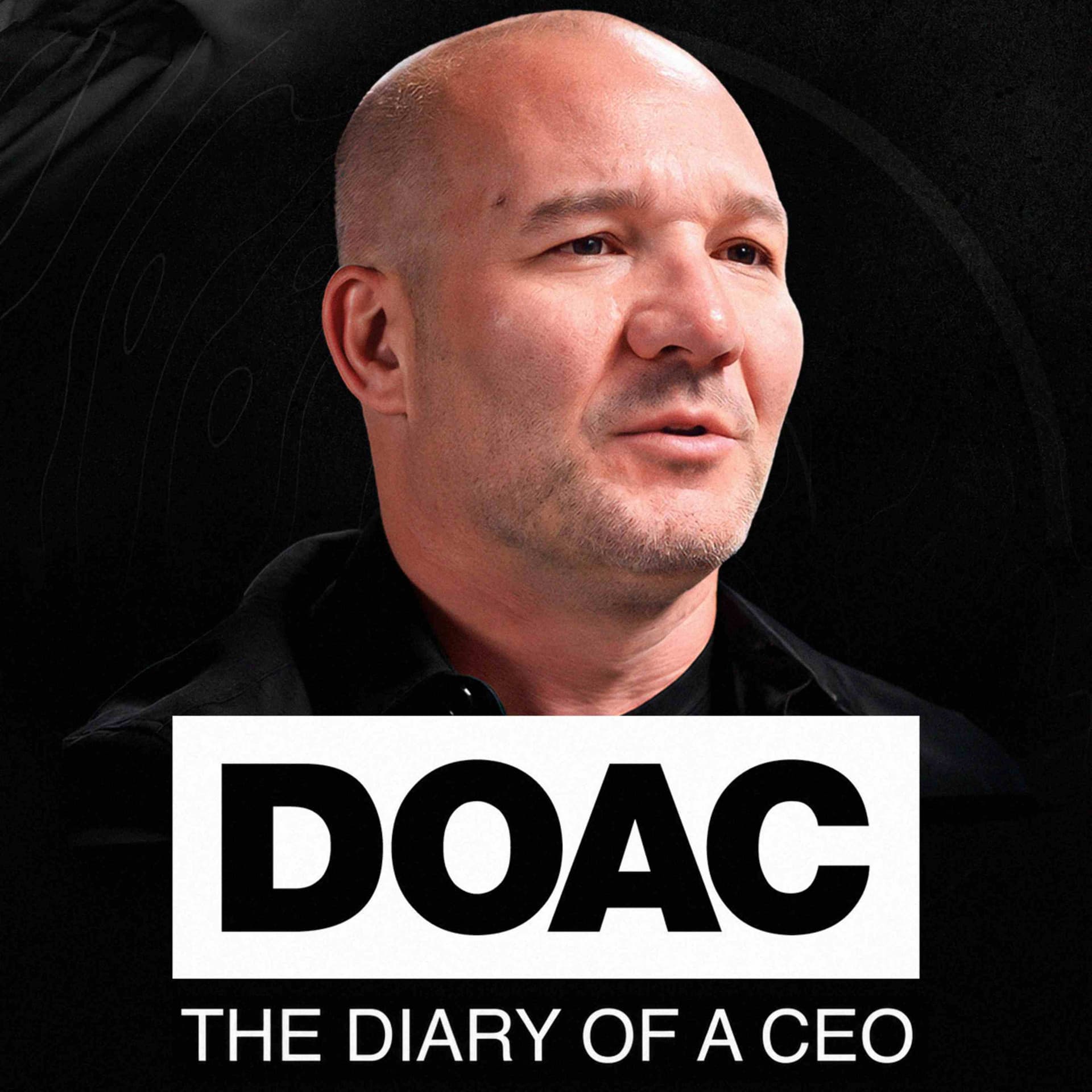
In short
The Diary Of A CEO with Steven Bartlett - Episode: Tim Dillon
Episode Overview
Guest: Tim Dillon, Comedian, Actor, Host of The Tim Dillon Show.
Theme: Tim Dillon discusses his journey into comedy, influenced by personal experiences including his mother's mental illness, his addiction, and the generational impacts on society, particularly focusing on Gen Z and mental health.
Key Topics Discussed
- Early Life and Challenges (00:00 - 18:40)
- Addiction and Coming Out: Dillon reveals his struggles as a closeted gay addict from ages 13 to 25.
- Family Impact: The significant influence of his parent's mental illness, particularly his mother's schizophrenia.
- Parental Divorce: How his parents' separation affected his upbringing and led to him raising himself.
- Substance Abuse: Use of drugs as a coping mechanism for childhood trauma.
- Path to Sobriety (18:40 - 23:27)
- Rock Bottom: Realization of being out of control after a boating accident.
- AA Meetings: Transition towards sobriety and the challenges faced, including the need for honesty and making amends.
- Comedic Journey (23:27 - 32:20)
- First Open Mic Experience: Dillon's initiation into stand-up comedy and the sense of belonging it brought him.
- Comedy and Taboo: Discusses tackling darker, taboo subjects in comedy and the challenge of cancel culture.
- Cultural and Generational Commentary (32:20 - 57:24)
- Podcasting Landscape: The evolution of podcasting and the challenges faced by celebrity podcasters.
- Generational Differences:
- Boomers: Critiques their selfishness and lack of concern for future generations.
- Millennials: Describes them as seeking constant validation.
- Gen Z: Praises their skepticism of institutions but notes their challenges, including increased mental health issues.
- Personal Insights and Reflections (57:24 - 01:08:46)
- Therapy and Processing Trauma: Dillon's experience with therapy and the ongoing journey of processing past trauma.
- Embracing Spirituality: Growing interest in developing a spiritual side.
- Social Media and Current Events (01:06:27 - 01:08:46)
- Elon Musk and Twitter: Views on Musk's acquisition of Twitter as a positive step for free speech.
- Social Media Critique: Concerns about the impact of social media on public discourse and mental health.
- Future Outlook (01:14:03 - 01:29:26)
- AI and Robotics: The potential impact of AI on jobs, personal life, and society.
- Men's Mental Health: Acknowledges the struggles men face today, including loneliness and societal expectations.
- Wrap-Up (01:32:53 - 01:33:49)
- Final Thoughts: Reflection on the journey, future goals in comedy, and ongoing self-improvement.
Key Takeaways
- Mental Health Awareness: Tim Dillon’s journey underscores the importance of addressing mental health issues and the impact they can have on personal and professional life.
- Comedy as a Coping Mechanism: Comedy served as a vital outlet for Dillon, allowing him to process his trauma and connect with others.
- Generational Commentary: Insightful critique of generational behaviors and attitudes towards work and societal norms.
- AI and Future Prospects: Raises thoughtful considerations about the role of AI in shaping the future workforce and society.
Links and Resources
- Tim Dillon's Show Tickets: [Purchase Here](https://bit.ly/4aHE6JN)
- Tim Dillon Show Podcast: [Watch Here](https://bit.ly/3U1DOYp)
- Follow Tim Dillon:
- [Twitter](https://bit.ly/49oMOLV)
- [Instagram](https://bit.ly/3PPbRRb)
- [YouTube](https://bit.ly/3U1DOYp)
- Steven Bartlett's New Book: [The 33 Laws Of Business & Life](https://smarturl.it/DOACbook)
- Follow Steven Bartlett:
- [Instagram](https://www.instagram.com/steven)
- [LinkedIn](https://www.linkedin.com/in/stevenbartlett-123)
Closing Thoughts
This episode highlights Tim Dillon's comedic brilliance and his ability to tackle complex personal and societal issues with humor and candor. His story is a testament to resilience and the transformative power of comedy.
Written by AI. May contain mistakes. Listen to the episode to check what was said.
Transcript
Automatic transcript. May contain errors.0:00This episode is brought to you by Me Undies. While Me Undies can't totally help your love life this Valentine's Day, they can offer you insanely comfy undies and loungewear to buy or gift. Me Undies has so many awesome Valentine's Day prints and styles. Plus, you can match with your partner, friends, or even your pets. This Valentine's Day, give the gift that'll keep them thinking of you and score huge sight -wide savings at Me Undies .com slash Spotify. That's Me Undies .com slash Spotify. Me Undies. Comfort from the outside in.
0:58Because, from 13 to 25, I was a closeted gay, cocaine addict. But, some of our best qualities don't come about because of the best reasons. There's no one better at those random brands. There's a lot of topics I want to go through with you. And the first is the future of AI. We've bred some of the least interesting people on the planet, influencers. These generic barcodes with feeds, those people don't need to exist. They need to be replaced by an AI version of die. What's your assessment of different generations? Well, we've given up on the children. They're being raised by algorithms. The boomers, they are the funniest generation because to be funny, you kind of have to just not care.
1:37And there's no generation of people that have cared less about the future of this planet, about their children. And then the millennials with this very, very, very generation of like, want to constantly be padded on the back and told how great they are. I believe the right things. I tweeted the right thing. I am good. I know that's unpopular, maybe to say. But I'll just keep going.
2:07Tim, I've watched you for many a year. Now, and I think you're one of the most exceptional, interesting, provocative, talented comedians, because you have a remarkable ability to improvise. It seems. Well, thank you. And I wonder how someone learns to do that. Where does that talent come from? I was a closeted gay cocaine addict for many years. You really have to be good on your feed. When you are a closeted gay cocaine addict from like 13 to 25, you're going to run into situations where you're going to need to lie. And you're going to need to be able to kind of, you know, filibuster. And I guess I got good at it then.
3:06I was always good at talking. But I think that was good. That kind of allowed me to think on my feed. More than other people would have to, perhaps. Not always for the best reasons. Some of our best qualities don't come about because of the best reasons. But it's good that I have that quality now, I guess. Do you know Jimmy Car? I don't know. Personally, I adore his comedy and he's like an amazing Canadian. But I don't know if we've met. I was not here with him two weeks ago and he said to me, Steve, when you meet a comedian, you don't ask a comedian if they're depressed. Do you ask them which one of their parents is depressed?
3:44That's good with us. Sure. Well, my mother was a schizophrenic. So I tend to think on the mental illness hierarchy, she was kind of the gold standard, whereas depression, older respect is slightly less. And then I think my father might have been on and off depressed. But schizophrenia was the, that was the, you know, central challenge in her life. For people that don't know what that is or have an experienced it, what is, how does it sort of manifest being schizophrenic, especially for you as a, you know, 10 year old when you have a schizophrenic. Yeah. It started to really come out when, when I was about 13 and 12 or 13.
4:27It's a lot of paranoia. It's a lot of confusion that as a child, you're trying to contextualize, you don't really understand why your mother is talking about people following her. Or these grand elaborate stories that aren't true. And even at 12 or 13, you know they're not true. And you're worried for her because physical illness is very easy to kind of understand as a child. Because, you know, somebody's get sick. As a child, you get sick. So you get it. Mental illness is much tougher to understand. As a child, you only really start to understand it as you go through life. And when you become more of an adult, you start to look back at it because you've had your own mental struggles.
5:18You know people that have had mental struggles at 12, you really don't for most 12 year olds. So it's something that I've understood more as I got older. And then it was kind of just very disorienting and confusing. And what was the sort of cost or the impact that that confusion had? Because you're so right. With schizophrenia in particular, when you can compare how your parents are acting to other parents, that sort of disparity of that distinction must be quite... It's jarring. Yeah. It's jarring. When you're young and you are at somebody else's house and you see the way their mother is talking, and you see the way that the family interacts.
6:01And in your house, when that is different, my mother was a very fun person, very eccentric, a free spirit, her whole entire life she had been. It wasn't hellish to grow up with her. I loved her and she loved me a lot. But around my early teen years, it became apparent that something was wrong. I think I was in the car one day. And I remember she said, there are people that are following us, but don't worry, they're protecting me. And I found that to be so crazy, like doubly crazy, right? Not only did she believe that there were people following her, but that they were doing it to protect her. I thought that was so crazy.
6:43And I remember being young and hearing that and internalizing that as something is actually really wrong. And I remember thinking about it and telling a friend of mine, like, I think my mother is crazy.
7:03And that got progressively worse as I got older. And what was the impact of all of that on you, like growing up in your family home? How does that shape you? And does that leave any sort of fingerprints on you that are still with you today in terms of comedy or who you are? Yeah, for sure. The fragility of mental health is something that I understand in a way that other people don't. I understand that people can have a nerve, it's breakdown. People can have a stress -related event that tips them in a direction where you know, I've had friends that have had this, right? Like, you know, it's a difficult thing to understand at 12 or 13.
7:50But that was a huge impact on me growing up was basically, your world is rocked a little bit when someone is suffering from a mental health issue. You feel less secure, less safe. You kind of feel like something is coming that isn't good. You know, schizophrenia is a degenerative disorder. There is no real cure. There are modifications that can make the effects less apparent for periods of time. Those medications have really bad physical side effects. So watching my mother go through a lot of like physical side effects from those medications, you know, rocking back and forth, right? Muscle, twitches and things like that was also very, was very tough to watch as, you know, as I got older and she was medicated.
8:46I was in very strong drugs to try to like, you know, I guess mitigate the schizophrenia. It's very tough. It's a kin to a loved one getting a physical ailment. It's very similar to that in the sense that, you know, you are saying goodbye in a way to someone little by little. And your father, your parents divorced around this time as well. Yeah, yeah. And that's what confounds things I imagine. Yes, I believe that that was an event that probably was, I believe she was always a schizophrenic. There was an underlying predilection for that. I mean, from speaking to doctors, this is what I believe.
9:26I believe that the divorce, the stress that was, but she initiated the divorce. I think it was a catalyst for her to feel perhaps a vulnerable or she, you know, I think a lot of stress brought on kind of the symptoms because I had never, there were always indications. She was kind of a, again, a wild person, right? She would go out and collect these Disney toys sets at McDonald's. She would collect beanie babies. She would pick up junk on the street and say, we're going to fix it up and refurbish it. And these are antiques and everything. There was a lot of compulsive obsessive kind of behavior.
10:09Some of the behavior now, you know, little conspiratorial. I do a joke now that where I talk about it, I go, you know, the people that are saying the things that my mother said for years are now in Congress. So, you know, had we known about YouTube, we could have thrown her on there. She would have made a good living. You know, really she would have done well. She was a personable woman. But yeah, I mean, that was, that was tough because he was out of the house. She was there and she was struggling. And because I'm from an Irish Catholic family, nobody talked about it. And people would use words like eccentric or she's fun.
10:49They're like, patty's fun. Nobody would really go, wow, I think she's got a real problem. And you're sort of 13 years old. So you're going through all of the, you know, the stuff 13 year olds get through, figuring out life. Yeah. County siblings. No. Okay. Just me. Okay. Just me. That's all the fun for me. Yeah. Just one. Yeah. It was just me. Do you think you were parented from that point onwards? No. No. I kind of grew up and it's the generation to a degree as well. I think I'm more of an extreme case because my mother cared about me and she wanted, you know, she hated drugs and alcohol. She hated cigarettes.
11:30She hated all these things that if you know, she would, you know, find a thing she would go nuts and scream. She was never like a permissive person. She did not encourage any of my behavior. She always wanted me to succeed. And she was always very, you know, critical of my behavior. So there was that sense. There was parenting in that sense where it wasn't a free for all, right? But generationally, you know, we just weren't parented the way kids today are parented. There were no cell phones. There was no, you know, where's your location? Nobody was being tracked. You were able to spend hours on your bike riding around the suburbs with your friends.
12:07You had a curfew. You had to be in bike curfew. You had to make sure that your eyes weren't bloodshot when you went home because, you know, you were smoking weed for the entire time you were gone. So there were things like that. But in addition to that, which is kind of a generational difference in parenting, there was just the idea that she was dealing with her own issues. And my father was out of the picture. So I had this freedom where it's kind of like I kind of raised myself in a weird way. A lot of freedom and a lot of trauma by the sounds of it. Yes, yes. Yeah. There was a lot, I would say, um, unprocessed for a long time.
12:49And that tends to find an avenue unprocessed, right? It tends to find an avenue. For many years, it was drugs. That was the avenue, which is where a lot of it goes, you know. And then how would we unistodied drugs? I was sort of smoking weed in eighth grade and seventh grade, the summer between seventh grade and eighth grade. I smoked weed a few times in seventh grade and the summer between seventh and eighth grade, we really ramped it up. We really, you know, I was friends with a girl in my town who was fun. She was a lesbian who rollerbladed everywhere, which I thought was an interesting archetype.
13:31But I still do. And she always was smoking weed while she rollerbladed. I thought it was a very cool, you know, just kind of a goth lesbian who smoked weed and just kind of very London, to be honest. And she would just kind of rollerbladed places high all the time. And I just became friends with her and I said, this seems like a good way to live. And I just, you know, start to smoke a weed with her and then very quickly, you know, within a year that, you know, we were doing blow and acid. You know, I dropped acid on stage in my eighth grade graduation, you know, with her and another buddy of mine, we dropped, dropped tabs of acid.
14:07We were doing an ecstasy, we're doing lines, a special K. It was a good time, you know, I mean, this was obviously a response to everything I just talked about. But, you know, drugs are a lot of fun. They have a lot of negatives. But they that period of my life was was a lot of fun and terrible. But, you know, that's why I haven't done any of any drugs or had a drink in 14 years. So I'm not advising it. It's not a course of action. I advise, but looking back at it, you know, there were certainly good times. I know that's unpopular, maybe to say, I don't think that, you know, it wasn't all terrible is my point.
14:45But don't do it. But, you know, what I mean, but I wouldn't have traded those moments for anything, but it's not a good thing to do. I would have rather be like a hot surfer or have gotten into sports or something. What about, were you comedic at that age? Probably. Yeah, I was always kind of a goofball. So, people, were people telling you at that age that you were funny? Yes. I would like to make people laugh. I, you know, would imitate. We had a teacher who died. She was a smoker. She died of lung cancer and chat of voice like this. And I would imitate her in the back of class. And I would be like, I'm here and I'm in hell now.
15:23And because of you, you know, things like that. And I would, I would just we would, you know, it was always kind of like we'd drive around Long Island. We'd smoke marijuana in cars. And I would point at big houses. That's kind of a lot of what we did. You know, we'd drive around like rich areas because no one was ever home. No one's ever home in these rich areas. By the way, to real, you know, that's just something your audience can take with them, which people don't, they're never home. So we would just smoke pot and, you know, drive around. And then I would just try to be funny. And sometimes I would be funny.
15:53And sometimes I guess I would be annoying. But I was always trying to be funny. What was the age range of drug usage into and was there a, yeah, a rock bottom? I was going to say a peak, but I should go see the way when we talk about Chuck's, doesn't it? Yes. So the rock bottom was I was 25. I owned a house that I bought with a subprime mortgage in a town called Baldwin, New York. And I was an alcoholic. I had not come out of the closet. I had not done any kind of stand -up comedy. I was working at a mortgage bank in Long Island. Several years after the mortgage industry had completely collapsed.
16:32It was really nothing to do. It was an incredibly depressing place. I worked next to a guy who was kind of losing his mind. He was just, he was losing his house, but he was ordering koi fish for a pond. He wanted to have a nice koi pond. And he would spend the majority of the day. His wife would call and scream at him. We have nothing we're going to die. And he would always just call people and he go, what, what size are the fish? And how many of the fish can I get? You know, so everybody was kind of losing their mind at that point in this particular very bleak office, you know, kind of industrial park in Long Island.
17:09And I was just sitting there trying to be a billionaire in real estate, I guess. And I was hanging out with my friend's father who's passed away, but he was a really fun guy. He was such a fun guy. I was in two boating accidents with him. That's how fun he was. Most people tap out after one boating accident. I was in two boating accidents with this man. He had three deweys and a bee we a bee we is boating while intoxicated. It's incredibly difficult to get a boating while intoxicated. It's an actual accomplishment. He was a fun guy. He never had a job his whole life. He sold drugs and his wife worked and I was friends with the son of a high school with the son, but this guy was so much fun.
17:57We adored him. There was one time me and my friend were sitting at a bar. It was an outdoor bar in Long Island. You know that kind of dumb teaky bar vibe. And his father came up to us. He was me and my friend and a few girls that were friends with. And he said, I want, I want you guys like, I'm going to buy all your drinks. And we said, OK, thanks. And then he walked to the bartender pointed at us. He pointed at himself. The bartender thumbs up. We given the thumbs up. We said, OK, we never got the drinks. We forgot about an hour later. We got a tab that was like $2 ,500. We go with what the hell is going on.
18:29And the bartender said, you just you agreed to pay that man's tab. He pointed at you. You said thumbs up. He's been drinking here for two days. He has no money. That's the type of guy he was, right? He was just a fun guy. I mean, you know, so we would go for out of Long Island from bar to bar in his little boat. He had like this little little cigarette boat, like a little, you know, and we'd go from bar to bar to bar. And one time I was 24 years old, we were going really fast was late at night. And we just ran up on like a marsh. And we were both thrown out of the boat. And I like, I literally came to him like a nest of eagrets that bird at those big white birds that I was just in the middle.
19:12And I felt to my side said, my life is kind of out of control. That was the rock bottom. That was kind of the where I said to myself, I said, you know what this is? I could have been paralyzed. It could have been killed. I'm like, this is probably not going to end well if I keep drinking. So I was laying in that eagrets nest at probably one o 'clock in the morning in the middle of, you know, the Long Island sound or whatever I was even the ocean, we're on freeport. And I was just basically going like, this is a real problem. So then I went to AA, you know, I started I was like, this is this is probably time to like fix this.
19:46So you made the decision to go to AA. Yeah. I'm trying to figure out how you get from the eagrets nest. Yeah. To that first AA session because it doesn't seem like one just wakes up the next day and goes, okay, I'm going to go to AA. Well, I it wasn't the next day, but I woke up and what what basically happened was I, I was around a lot of really end stage alcoholics, meaning like these people are drank their entire lives. I was hanging at this bar called Lisa's Lounge, which was a bar in Long Island. It was in the town I lived in and up the block from the house it was for closed was this bar I can walk to it.
20:24It was named I kid you not after a woman who died in a drunk driving accident. Her father had named the bar after her. She had died. She was hit by a drunk driver and he named a bar after her. And people would touch and she her picture was on the I mean, it's unreal. It's true. Her picture was on the wall of the bar and people would toast her to Lisa and everybody would get you. It was a it was a great community of people and it was a lot of drugs and alcohol and people that had you know, nowhere to go. Like the owner told me once he goes as people doing coke on the pool table, he was I opened this bar.
21:03I swear to God he said it's because I open this bar because I really wanted people that didn't have a place to go to have somewhere to go on Christmas. And then he just did a lot of cocaine and I said, well, that's a nice thing at 24 years old. I thought that was a great thing. And I was just like hanging out in this old man bar. This was not a fun bar. This is not where you'd go to get laid. This was not a club. This was not. This was the end. The end a late stage alcoholism after decades. People found themselves here and it was so close to my house. I went there and that was, you know, that was a weight.
21:45I was, every night when I went to bed, I looked at their lives and I said, I'm young, but this is where I'm going. This is where I'm heading. I had that example kind of right in front of me. And that together with my friend's father together with that accident started to basically I said, I've got to make a choice now or this is where I'm going. Which seemed a little bit worse than death sitting there in a bar every night, being afraid of who I was being afraid of trying something in life that I loved trying to make something in myself, sitting in that bar, drinking my life away, felt like a huge failure.
22:28I didn't want to fail. So that's why I stopped. There was still something in you. There was still some kind of desire for fighting you, which isn't always there for some people who are in sort of that late stage addiction. There was some reason to persist, right? Yes. Well, I thought that I could have a better life. And that's all you need. I think and I think that that is the primary motivating factor for anyone to change anything in their life is that they have the hope or the idea. They have the imagination that they can have a better life if you can conceive of a better life. So I said there's probably a version of me that's not drunk every day.
23:08That's not working at a dead end job that's doing something that he likes. And it was tough. It's not hard to change. Very difficult to change anything. But that was that was my, you know, moment where I had that realization. Did you know what that better life looked like specifically or did you just know that it existed? Well, I knew that it was sobriety. So I knew that it was being sober. I didn't have a road map for exactly what it would be. But I knew that it wouldn't involve sitting in a bar, getting drunk next to someone named March, you know, for example, right. I knew that it would be sobriety.
23:42I knew that it would be honesty. And those two things go hand in hand. So that was what I knew when I and I always wanted you know as an actor as a little kid, right? From six years old to 13 to 12. I acted. I was in theater. I was at plays. I was in Sesame Street on the show Sesame Street a few times. I tore around the country in sixth grade with my mother right before the divorce right before the onset of her symptoms. I was with a Broadway show any get your gun. I was in act right. I liked performing. I enjoyed that life. I had given up to do drugs when I was like 13. But then when I sobered up around 25 about exactly 25.
24:27I went to a standup comedy open mic and that that was the thing that kind of pivoted the direction of my life. So does this all happen around the same time the AA meeting of first standup comedy. Yes. The AA thing in particular was that difficult for you because I kind of understand the 12 step program and there's some quite challenging elements of that 100%. I was also around this time a juror on a murder trial. This is something that I shouldn't leave out because this really did impact me as well. There was a murder trial in Long Island. It was pretty well known. I was unknown to me at the time I was selected.
25:04But a guy had murdered the mother of his children and he was an informant for the police and they had failed to follow up on many orders of protection that this woman had against him because he was providing them information. They subsequently after the verdict settled an $8 million loss it with her family paid paid her $8 million. So this was like a pretty big case it involved police, you know malfeasance and things like that. And I was selected as a juror and I really wanted to be a juror on this case because I was bored in my life. And I thought that maybe it would be interesting to be a juror on a murder trial.
25:44I thought it was going to be something stupid like someone fell in a Wendy's and wanted $100 ,000. But I heard it was murder one. And I'm like, well, that's fun. You sit there every day and every day it's just mortality is the theme of every single day life, her life, his life, his life being taken, you know, him losing his freedom, her life being taken. And that really kind of impacted me too because I was going to bars every night drinking after that thinking about life and going, I'm on a really bad course and I got a change. And it was tough. It was difficult because it's hard to be vulnerable like as a comedian you hide behind the jokes and the bits and things like that.
26:37But in that room, you can't do that. So that is difficult. The God thing was difficult. The higher power. I had to come to that in a different way. There are challenges. You know, being honest is it was a big challenge. I was a God there like you have to be honest. And I'm like, OK, I can stop drinking. I can stop using drugs. I don't know if I can be honest. That seems insane. Look at the world we live in. Why would anyone be honest? That doesn't seem to get you anywhere. And they were like, yeah, but if you are become a liar and you're a compulsive liar, you will go back to drinking drugs. That's the way it works.
Read the full transcript
27:15So that was the toughest thing for me. And you have to forgive yourself. You have to forgive yourself. You have to forgive other people. You have to make an inventory of people you've wronged. You have to go to those people and say, I apologize for what have done for taking money from your drawer and using it on drugs for lying to you for making you worry about me. These are all important things and you have to do it. It's really hard to do, but it's important to get over that hump. That first stand up gig. Yeah, how did you get on? It was an open mic. And it was a coffee shop in Long Island in a place called Merrick.
27:58Yeah, it was for the 25 years of 25. It was 25 and it was also a tattoo shop. So you would hear like tattoo needles as you, if you weren't doing well, it would. And it would just be guys having, you know, having their girlfriends like tattoos like changed because they were no longer in the relationship. So they were like, they were making them into missiles and like patriotic things or 9, 11 remembrances, you know, whatever the case may be. And occasionally they would chuckle and then there was a few like local people that liked comedy that will come to the coffee house. But it was kind of an everybody gets on thing.
28:35So that's the beginning of comedy is like everyone gets on it to an open mic. You just go and you're on. And it went well. It went as well as it could have gone for the first time. I got some laughs. Certain things didn't hit. But I felt confident and I felt like I belonged and I felt like I was doing the right thing. And I for the first time in my life was like, I, I felt kind of certain that I would keep doing this. There was a certainty. And for the majority of my life, I wasn't certain of anything. I was kind of trying different identities out, trying things out, seeing what would work. And then this, this was like, okay, this is I'm good at this.
29:27I can get better at it. And I like it enough to work hard at it. Comedy. Comedy is, um, comedy isn't an interesting time. It appears to someone that's not at all involved in comedy at all because you have these like fought these two forces almost colliding more. So then I've really ever seen in my lifetime, which is good and evil. I'm kidding. No, but it's like correctness and comedy. Yeah. Or at will. It seems sure. Well, and even correctness is now made its way onto the stage of comedy. Yeah, I think that there is always going to be taboo subjects. There's always going to be things that are harder to make funny than other things.
30:15There's always going to be a line is George Carlin said your job as a fight over the line is cross it, you know, you got to get good at stuff to make people laugh at stuff. I like making people laugh at stuff that is inherently maybe a little darker because of the way I grew up. But I got to make sure those jokes are funny enough so that people laugh at them. And then there's some people that will never laugh at them. There's some people that don't understand comedy. They take it very literally. They don't like it. They like to be bothered by it. They get angry about it. They're unhappy about it.
30:48Someone's making someone laugh somewhere and they're angry. I don't know what to do with those people. I don't know how much we can pay attention to those people. I know many of them write articles and, you know, you know, the monologue on television about that they're upset about something. I just don't know how much attention we've paid. We've paid a lot of attention to them over the last four years. I think people are a bit exhausted by it. I think people are a bit over it. I think there are people in society that they're allowed to have their reactions to anything you do. You're allowed to hate me.
31:20Find something I've said offensive disagree with me. You can write about it, talk about it, whatever you want to do. So it's really kind of not my business. And there's only so much attention that I could pay to it. I think that's kind of the way comedians have to look at this stuff. They go like, hey man, we're making jokes. We're having fun. You have the right to be very angry about it and be upset about it. But I mean, again, that's a little crazy in my estimation to be that upset by comedians that have no real power. The thing about comedians, we don't happen. Now people say, well, you have cultural power, soft power, whatever.
31:54That's sure. But we don't have the type of power that CEOs of large companies do. Our job is not to move a conversation forward. Our job is not to. Our job is to be funny. Now, if we do some other things, if we happen to shed light on something that's good, if we move a conversation forward, if we illustrate a truth, that's a great thing. And it's secondary. Our primary job is to be funny. And that can be that's being wrong. That's being stupid. That's being shortsighted. It might be even being bigoted. If it's funny, we're not in the. We're not in the job of being right. We're not in the job of being correct.
32:37There are people whose jobs are they have to be right. A surgeon has to be right. They can't just wing it. We are in the job of being funny. So if you confuse those things, which a lot of people have to do, that's where you get this tension. You know, but again, I'm a clown. I perform at comedy clubs and theaters. I do a podcast. If I say something you don't like, there's it's really, really in infinitesimal chance that anything I say is really going to have the gravity and weight that these people think it does. You want to be looking at other people that have more power. Direct that energy somewhere else.
33:26You say direct that energy somewhere else, but I watch that video of you getting very irate because, yeah, Rogan, yeah, he gets canceled. And you don't. And you say some pretty. Yes, try to get canceled. Yes. You seem unconsolable to many respects. Well, no, no, no, I'm not a cancel ball. I'm a goofball. I wear crazy glasses. I'm a comedian. I say things that probably are intelligent. And sometimes people will look at me and go, that's a good take. A lot of the things I say are completely absurd. And I don't even know which is which when I say it because I do two hours of broadcasting. I've done it for eight years.
34:06And I don't know what I'm going to say until I sit down and I talk. And some of the things I say that are absurd start intelligently and some of the things I say that are intelligent, maybe start absurdly. And that's the fun of it to me. If I knew what I was going to say or if I had an agenda if I wanted to say a certain thing, I would get very bored very quickly. But I just try to look at stuff and go, what do I think? What do I think? I'm being told this. You know, what's my reaction, you know, and that's kind of like what I try to do. But yeah, I think I'm goofy. And if people are mad at me, they're kind of there.
34:44They look stupid sometimes because of how over the top I am about certain things and how wild. And again, a lot of it, I think is funny, right? So Joe is a different podcast. He's like a podcast where it's sometimes it's funny, but he is very serious. People on. He's the biggest podcast. I think in the world, I think you guys are maybe the second, right? You're up there. I have no idea. You have no idea. Okay, clever. But you know, like he's hugely successful and he, you know, does all these really amazing interviews where he researches and he reads books and he's smart and he's talking to somebody.
35:21And I'm like shooting from the hip. I'm just going off the top of my head and like halfway through a story. I'll go, oh, no, and I'll just go the other way on it because I'll realize I'll sometimes I'll read the third paragraph. I'll be dismissing the whole thing. And then when I get to the third paragraph, oh, this is a problem. So it is. And that's what I think makes it funny. Joe Rogan. Yeah. Going on his show, you described that as being really pivotal for you in your career. He's the most generous person that I've met with his audience, with his fan base. All he wants is other people to succeed.
35:55He brings on comedians. He brings on writers. He brings on journalists. He helps them promote whatever they're doing. He has this huge fan base. He shares it with people. So I'm very lucky that he's had me on a show a bunch of times. And he's a very good friend. Like when I go on a show, we just have the conversation that we would have privately. We have it on a show. So I think that's why people like it. Podcasting. Yeah. It's taken on a life of its own. What do you think of podcasting? It's been on a bit of a journey. Obviously, there's, there was this big. I think podcasting was like the OGs of podcasting like Rogan started out.
36:26And then I'm crawled to Joe Rogan. Yeah. And then the girl is showing New York City, Mark Marren. Those guys were in the very, very early before it was cool before anyone was really like. Yeah. Before the money was there. And then the celebrity show up. It was like a bit of an experiment for a couple of years. It seems Spotify have kind of rolled back from back. Yeah, because they have nothing to say. Most celebrities don't. A lot of them, you know, are invented people who are created in a laboratory. Laboratories. The CIA, my agency. And they create a person and they get public relations people.
37:00They get lawyers. They get all these people, business managers agents. They come in and they go, this is who you are. This is what plays. These are the things you highlight about your past. These are the things we don't talk about. Let's leave the Confederate flag at home. You know, they create a person. That person then goes and they're now famous. It's a terrible idea to give that person a microphone and tell them to talk for an hour. It's terrible. You know, many of these people aren't that talented. Some of them are. Some of them are amazingly talented. Some of them is very, very kind of banal people.
37:31People tend to think of Hollywood as this place where it's all satanic pedophiles eating children. Now, undoubtedly, some of that is true. But a lot of it is just very banal boring people that have been created by these corporations that when you realize how boring they are and then you look at how much money they have and where they live, that's what will drive you. You'll go, oh my god. So that's what podcasting is a really, really bad idea for these people. They should be kept somewhere. They should have very managed things where they come out on the red carpet and they go, how are you doing?
38:06And they just go, climate change and then walk into the auditorium and get an award. They should be allowed to speak two to three words at once and they should know what those words are beforehand. It is a terrible idea to give someone again these people that all of their interactions are with other famous people. All of their thoughts are filtered through a prism of corporate lawyers before they can say anything. This is not what podcasting is in my estimation. Is there any celebrity post cost that you think is I'm sure there's something really good. This is not everyone, right? I'm sure there are people that have really good podcasts.
38:45But like if we're just talking in general about let's give a list actors a microphone, probably not the best idea. You know, what's your own, because I know they get mega market money they gave a lot of people money there. Spotify and you know, and so I don't know that that, but that didn't came out and said we made a mistake. We shouldn't have given these people money. Do you think you should have gone to money instead? Of course, I absolutely believe that. But you know, I, I can't compare. I can't help them to give me the money. I can't compel them. I can't get a member of the royal family to marry me.
39:30And I would have stayed in that castle, no matter what was said. But I can't have that happen. So I can't, you know, Oprah doesn't interview me. So you got you, you, I have enough money. But the, sure, you know, I think it's podcasting to be the fun of podcasting is being unfiltered free and just having fun. What's your assessment of these sort of different generations? We have these Gen Z's millennials and we have the boomers. What's your read on this? Well, we've given up on the children. The future is not the children. The children are no longer the future. The future is AI. The future is robotics.
40:03We're very clear on that. We don't even talk about the children anymore. We talk mainly about AI. No one's even said anything about the children in months years. Really? We've given up on the children. They're dead eyed little monsters. They're running around killing each other. We can't deal with it. It's very traumatic. I've even stopped thinking about what they're doing because it's crazy. I'm more excited about AI than the children, just like anyone else. Who's reviving the economy of San Francisco? The children? No, AI. So AI snacks. We don't know what we're going to do with the children build prisons.
40:33That's what I say for children. They're crazy. They're being raised by algorithms. They're all on fence and all the rolling drugs. We're running around trying to kill each other and record it. There was a case in Phoenix, Arizona. These rich white kids running around beating up kids at random filming it and putting it on TikTok. No mode of nothing. Just for cloud. Just for things psych and they killed a kid. And finally now because they're all white, of course, the cops didn't do anything for a year. And they were like, wow. Just a couple of kids having fun killing the other kids. This is how people grow up.
41:08So the Gilbert Arizona Police Department does nothing about the whole thing. Finally, they just arrested these kids because they killed somebody. But this is not only there. I mean, it's kind of an epidemic where like all over the place, you see like, you know, young people. Unfortunately, you know, these crazy acts of violence that are now being uploaded for cloud. People go and look at what I did and what they did was like, you know, assault someone or kill somebody. This is a real problem. So we have to deal with the kids in some way. Jail them, but I don't know what to do with them. But AI's big robotics is big.
41:42That's what is next. The boomers. I have a book coming out about them. I love the boomers. There is selfish generation of people. The state of the boomers, these paranoid people who refuse to leave their mick mansions. They will not leave. They will not retire. They lured around their houses. They diminish their children. They say, I can't believe you don't own something like this. They like holding these houses over their kids' heads. They retired at bigger houses. They have thousands of thousands of square feet. They're very sick people. They refuse to give up their jobs or dying in the Senate to collapsing in Congress.
42:20They will not leave. They will not see any of their power. They're emotional terrorists. And I grew up with them. They're very interesting people. They've proven the lie of the 60s. These hippies that everybody thought were like progressive. They're actually not. They were always just selfish drug addicts. They never cared about anything they purported to care about. They just wanted to get high and roll around in the mud. And then as soon as the drugs changed from whatever from acid to money, they became this very materialistic, soulless group of people. But the funniest generation that has ever lived nobody's funnier.
43:01Nobody's funnier because to be funny, like we talked about, you kind of have to just not care about anything. And there's no generation of people that have cared less about the future of this planet, about their children, about anything than the boomers. They're all little islands. And they all are about themselves forever and ever. And there's something actually refreshing about that. Funny. And they're holding the planet hostage. They won't die. They won't leave. I've suggested they be forcibly evicted from their homes and committed to mental institutions. Legally, we have some problems. That's not easy to do.
43:36I've spoken to some lawyers. There are problems doing that. And then the millennials were this very shitty generation of like pin a metal on me, pin a ribbon on me. I'm right. I went to the right college. I got the right internship. I believe the right things. I tweeted the right thing. I did the right thing. I have all the right beliefs. I have the good politics. I have this. Show me with tell me I'm good because my boomer parents, they don't care about me. But you tell me I'm good. The world needs to fill the void that exists inside of me. And these millennials are these kind of ambitious people that want to constantly be padded on the back and told how great they are.
44:13So they're kind of shape shifters that conform to any popular sentiment, the crowdsource all of their opinions. They just were as the boomers just kind of didn't care about anyone or anything. You have the millennials who are kind of like more like I am good. And you tell me that I'm good because they're not there good to be told to be good. Their politics are aesthetic. They want everyone to look at them and to tell them how great they are. And then the zoomers are the younger generation after the millennials. They seem to be, you know, somewhat like their self starters. They're very skeptical of institutions or a little more cynical.
44:49That's some of their positive qualities that they're more independent minded. The negative qualities are the aforementioned murder and the filming of the murders and the killings and the drugs and the fentanyl vapes and all of that. That seems to be less. I mean, we need a draft to be honest. You know, now that I'm kind of older and fat. Now we need a draft. Young people should probably just go into the military. I know that's going to be a controversial thing to say, but if they're just going to do fentanyl and attack each other and malls and put it on TikTok, they can go dying the Ukraine so the Boeing can make some money.
45:29Are we still on YouTube? So would you consider yourself to be optimistic about the future? There's a lot going on. No, no. No, I don't. I'm sane. So I don't. I don't. I think there's good things happening, but I mean, optimistic with the future overall. I don't know. That's tough to be. Maybe, right? I mean, you've got you've got elections coming up this year as well here. Yes, you asked which is the big one. Well, we all know elections solve everything.
45:57We all know that's where the real power lies. The elections. Now, yeah. When you're talking about refusing to language control and power, the boom in generation, I was thinking a lot about Biden there. Sure. Because it seems like your president's getting older and older and refusing to. Yeah, I mean, Biden seems to be a bit old, Trump's old, you know, Biden seems to be at another stage of mental decline though. He was really good at the state of the union. They gave him something to shout about with something, which is great. We have no new talent in the country. Nobody wants to be a politician anymore unless they're psychotic.
46:30You need young people that care about the country and that want to change it. And what you're getting now more and more is, you know, all of the interesting people in our country are and the people that are ambitious and the people that have talent, they don't want to be in politics. They want to be somewhere else. It's more fun to go to Miami and trade Bitcoin on a yacht. You know what I mean? They just don't want to be in politics. They don't want to do it. So you end up with these octogenarian drooling somewhat, you know, a dementia ridden elderly people who are incapable of even understanding what's happening.
47:16Because they don't even know what they they barely know what TikTok is. TikTok is something their grandchild shows them, you know, at some party they're having a main. They're sitting on a hill and main eating laps just falling out of their mouth. They go, look grandpa, look at the TikTok. And then they have to then go into Congress and hash this out. No, so I mean, the problem really is we just don't have young people that care enough about the country because the press is going to rip their lives apart. Right. They're going there's so much more money elsewhere. There's so much more and the system so toxic and so corrupt.
47:50I don't want to get involved in that. They get a band tick to come. They're talking about it. I have no followers on it. So I'm for the band. You know, for personal completely personal reasons. I'm for the band. And I also think it's probably it's I don't know. I don't know anything about it. I just know that people are making a lot of money on it. And so if I say I'm for the band, people get angry with me. It's not a good. It's not a good cultural force. But what is? Do you have goals in terms of your comedy in your Korean, which in relate you have like state of goals? Yeah, I have things I want to do.
48:23I have, you know, the boomer thing I want to do a show about boomers. I've always wanted to. The book is going to be a large part of that. I want to do either a movie or a show. There's something I find it very funny the way I grew up. My friends families, their parents were very funny people. Now, I want to do something that kind of immortalizes that because they are going about to leave. They are about to go. And there's something very funny about them. And I want to make something about I think a lot of comedians, maybe everyone wants to do something about their childhood or do something about how they grew up.
48:56But you know, I mind will be good. That would be the difference. No, I really like the idea of that. That's a goal just to tell that story is a goal. I'm banging on the desk. And then it's just to keep making people laugh and to keep having fun. You know, I mean all the things that I, they're certain that that boomer story is something I want to tell. They got to find the right platform with the right medium, but that's something I want to do. The, the, all those early experiences that you've had quite clearly manifested in your work in various ways. You talked about the unprocessed trauma from your earliest years.
49:34Yes. Have you processed it? No. No, I mean, I process some of it. Some of it. I mean, I don't know that I process all of it. I don't in one lifetime is a tough thing to process all of it. But I process a good amount of it. And I've come to a point where there's always more work to do. You could always be in a better place mentally. And you should try that. Try to get there. But I think I've done a good job of processing it. I lost my mother about six months ago. I think. I don't know. It was August. She died in August maybe six months.
50:15And it was a very difficult thing to go through because the, their life was not great at the end, but it was in the beginning. She had a lovely, amazing life in the beginning. Her, my father were married for 10 years before they had me. She loved surfing and boating. And she spent a lot of time in Florida. And she was kind of, she's voted best looking in her high school. She's very, very attractive early on. The front nine were good. The back nine were a little tough. But I had her out to my house on Long Island. And the whole family was kind of there. We had a really nice day of everybody. My cousins, my her sister, everybody being there.
50:52And that was a good moment. That's what I'm remembering. And it was, you know, she was as good as she could be. I try to get more religious as I get older and more faith. I think faith is a good thing to have. You know, obviously religion being a human institution. There's, there's pitfalls. There's problems. You know, we don't have to rehash them. The idea of there being a spiritual realm to me is. I think very interesting. I think it seems to be quite possible. I think that people are more than their bodies. They're more than the flash. They're more than there is a spirit there. And I think there was a spirit in my mother that was trapped in a very difficult situation.
51:47And I think that spirit is free. And I think that's the way that I feel about a lot of things now is that I seem to be getting more into this idea of, you know, the physical not being everything. And that we should develop a spiritual side of ourselves. And I looked at the struggles that she had later on in her life. And I was a keeping her in a body and in a mind that is actively fighting against her was a selfish thing. So letting her having her be free. I think is the best, you know, outcome. It's a complex set of feelings. It is because there's grief on one end and then there's something else on the other right there's like a relief because she was in pain.
52:39So when someone's in pain and they depart this world, you are there's a relief that you have because watching them go through that is terrible. It's hard. And this is people that suffer in all kinds of ways. So, you know, again, I think people are more than their bodies. And, you know, I think they are, you know, the soul, I believe is a real thing. I believe the spirit is real. And I was raised Catholic. There's parts of the Catholic. I don't vibe with as much. Obviously the terrible lineage of abuses. But then there's parts of it that I think are really good having a spiritual dimension to your life.
53:15I think is really good. So, you know, I look at it and I would never say like it was time. But she had suffered greatly for a while and having her out at the house and having her be with everybody kind of for the last time nobody knew she was going to die. But like that was just kind of a moment where I think she might have felt like it was OK to let go. I don't know if that's true or not. Have you been to therapy to process? I have. I've been. Yeah. I'm not in it currently because I'm on tour. But I haven't been in it in a bit. But I certainly have. And I think it can be very good. I've been to therapy.
53:53Yeah. It can also not be good. Yeah. It can also not be good. But it can be good. Because you presumably you want to have your own family someday. I'm presuming perhaps. Yeah. I mean, I don't know. I've done. I've done a lot of career stuff for a very long time. And I think at the age of mat in your late 30s, you kind of start realizing that there's just a ceiling. Not even career wise, but in how happy it'll make you. So my career might get a lot better. But the amount of joy you derive from accomplishments. As you get older starts to dim and you actually start enjoying other people's accomplishments.
54:38You start looking around community makes you happy. Being involved in things makes you happy. I'm helping people makes you happy. It starts to shift. If you are, you know, on a good path, I think you start to shift from like me, me, me, look what I've done to like, hey, can I help somebody or can I be part of something that has a value? What's the biggest side of you that you already understand or don't know? Because I've watched you for years. And I think I've watched a one dimension of you. Yes. A funny one, hopefully. It really funny. But I think everyone that they watch me as well is a human being and not always on all the time.
55:25And I think that, you know, there's a dimension of me that you get on the show. There's a dimension of a lot of enter. You get a lot of what I think on the show. Like, if you went out to dinner with me, I, and the things that I'm saying on the show or what I would say there. Like I would, I'm not going to have an opinion on the show and then sit down and go, well, actually, this is a way really feel. Everything you hear is what I think. And some of it's really funny. Some of it's not. But I think it's just like just a dimension of like being a human being apart from being a product, right? Where people just consume the things you're saying and doing a lot of people probably didn't know.
56:04So a lot of this, some of them did, because I'm pretty open about it. But like, you know, I think that a lot of people just see one side of you where here's a guy who makes everything funny or tries to make everything funny. But then there are a lot of things to where. You know, I have interest in aren't comedy. I've interested or not. You know, my career, I've interested or not. And I like to, you know, you know, talk about the spirituality stuff. That's probably something that I don't talk about. Maybe I'll bring it up. It's like an aside. But there are interest that I have that are varied. But for whatever reason, I'm like, it's not funny.
56:40I mean, or it doesn't fit the show that I'm doing. So there's a show and then there's a person, right? That's not me. That's every entertainer everywhere. You'll show it the rule of a whole that's coming up. It's in a couple of days time. Yeah. One of the things that I am always shocked by with you and you said earlier is that when you do your podcast or when you do these sort of long, long, long form bits, it appears that you're basically freestyling. Yeah. What's going through your head? Like I've always wondered when your sad on road going to feel sad on your podcast and you know, you produce a pulls up some article.
57:12Right. Do you just kind of trust? Yes. But that you're fine. It's what I used to do when I was a drunk. I would sit at a bar and talk. And now I just do that without alcohol. Like I, I like looking at things and trying to figure out what's going on and trying to make them funny. And that's the value and the service that I provide is like, here's a. The landscape of stories and articles and things and what the hell's going on and let's see if we can make it funny. And let's see if we can understand it on a deeper level because there's so you know the press has all these agendas about like what they want you to believe all over the place left wing, right, whatever, centrist corporate just buy things, whatever it is.
57:54And what I like to do is look at them and go, well, maybe there's a dimension here that's more human that I can flesh out because I'm looking at it. I don't have an agenda. I don't care either way. I'm not sponsored by the person in this article. I don't have a lion's or an allegiance to anything. I'm looking at it and going like, what's the funniest take and how does this, you know, how does this explain something larger that's going on. That's interesting to me. That's fun to me. I like doing that. So I think it's been successful because I enjoy it. You came out as gay roughly sort of 25 years old.
58:33Yes. You're in a period of your time during that period of your life. They're elite by today's standards. Most people statistically today come out at the age of two.
58:45You came. So when do you fit love into all of this? You try to fit it as into it as as much as you can. You know, you try to you got to, you know, it's hard because you travel a lot. That's hard because you are spending a lot of time doing the things that are benefiting you in one part of your life, but sometimes I'd hurt another part of your life. So you try to, and again, like once you start like, you know, having success, it's so a lot of comics like marry other comedians or somebody in that world who gets it, who understands it. So, you know, I think, you know, that's been something I've seen and that works a lot of times.
59:29Like people really happy and bring up great families kind of in the world of comedy because their partner gets it. But for me, I don't know if that's going to, I don't want that really. I would like somebody who's completely like not involved with this at all. You do anything? Yes, but not in not one person in like a serious way. You know, like you're just around and you know, kind of meeting people and seeing like what's fun. Have you ever been sexually slightly different? So it's not like a whole, you know what I mean? It's not the royal wedding per se. It's not like moving to the castle. But maybe one day, you know, have you ever been in a long -term relationship with a therapist on and off, but not serious words like again, like it's going to lead to marriage in children.
1:00:12There is kind of that difference where like, you know, not that gay people can't get married and have kids and they can have and blah, blah, blah. We know that. But I personally have not been in a relationship where it was like, this is where it's going. And I think it's a lot of it is because I was just so hyper focused on like trying to figure out a way to do this really hard thing, which was like be a comedian. But you know, now I think I'm more open to that stuff because like I said, you know, you do some stuff, you do some cool stuff. And then you like want to enlarge those other parts of your life that you've neglected.
1:00:45I was the same for most of my life, but I actually think when I look back, I just had a... I think the first model of what love is you learn from observing your parents. Yeah, uh -oh. Yeah, but you're right. You know, and then you go, okay, this is love. Okay, so this man, this woman, how they interact. And then you grew up and you go, that never leaves your brain and you think, is that what I want? That's right. That's right. That's right. Yeah, it is not... But you're right. And a lot of it is an excuse when I go, oh, it's all the real... It's all the career. That's me being kind of a selfish person that you...
1:01:19I needed to be selfish to figure out a way to like get to where I wanted to go. But you know, I could have made more time, but I did it, right? So it's like, you know, you battle a lot in life with like the things you want, the things you think you want. You know, it's kind of... You want the thing, you want the nice stuff, you want the nice cars, you want the nice things. But then you realize that the things you really like are the things that you feel drawn to. And you feel drawn to obviously making people laugh. You also feel drawn to being, you know, you know, like a situation where you're being appreciated, loved and, you know, taking care of.
1:01:56What do you love about yourself? My ability to do it and keep doing it. And like, I don't... I'm not an excuse person. I don't... I take rejection and I kind of move on pretty quickly. I've done that since I'm a kid. I have a lot of the qualities that a lot of the YouTube guys try to... Not the go to the gym every day and do this and do that. Obviously, but like, I don't let someone tell me something's not going to happen. I'll just keep going until I figure out a way to make it happen on my terms. And I like that about myself at all. You know, I like that about myself a lot. I think that that's a good quality to have.
1:02:39Growing up the way I grew up. There's a version of me that's just a drugie that's just on the street that's dead. That is blaming everyone else for every other thing that's talking about how, you know, whatever. So many people had it so much harder than me. Right? I had a mom that was sick and, you know, a dad that was maybe not as involved as maybe he could have been. But they're both really good people, both very supportive of me. The drugs were something that I did. You know what I mean? Like, so many people grew up in genuinely abusive environments. And they succeed wildly. So I'm inspired by people like that.
1:03:19So I'm not trying to say like it's woe is me or anything. But like I did come from an environment. And I do have that thing in me. We all do where I could just offload everything and say, hey, I didn't get what I wanted. It wasn't a perfect scenario. I'm going to use drugs for the rest of my life. I'm going to mismanage my money. I'm going to go broke. I'm going to, you know, blame everybody else. I could have been that guy. I was that guy for many years. And I know who that guy is. I'm happy I was able to get rid of that. That doesn't mean the guy that I am now is a perfect person. Not at all.
1:03:55There's a whole host of other problems you have once you get rid of that guy. But I'm glad I got rid of that guy. And what are you working on now over that? I mean, everything. Eating better, sleeping better, spending more time with people, going on dates and listening to actually what people say. Even if they're terribly uninteresting as most of them are. But you have to bless them. You have to God bless them. They're children of God. You have to just kind of listen. And you did. You majored in marketing. But all that stuff. I'm obviously a, I'm kidding. But like all of the stuff that human beings have to do.
1:04:31They're mental, physical health. You know, the way they balance their lives. It's all, once you sober up, it's not like wow, the journey's done. It's like wow, the journey can actually begin. And I can learn how to negotiate all this stuff as a human being. And you fail all the time across the board. But what you don't do is you don't start using drugs. You don't start drinking. You don't start becoming a pathological liar. You don't start doing the things that you used to do when you were out there. You know, being the worst version of yourself. Coping mechanisms. Yeah. Mental health, coping mechanisms.
1:05:09What's, how is your mental health? And what are your new sort of mechanisms for managing mental health? Well, I think it's good. I'm a comedian. So it can't be great. If it was great, I wouldn't have became a comedian probably. I think talking to people, you know, taking long walks, again, helping people in large in your life. Your spiritual life trying to be a better person is what everyone should do all the time. I think that's what I try to do. I try not to get too caught up in, you know, the insanity of the world of spending too much time online, looking at the internet too much, you know, not being around real people, being in your head, obsessing about things you can't control.
1:05:56All of that, if you can, if you can find ways to not watch the murders on TikTok and go somewhere else and just sit on a beach or take a walk or do something. It's much better for your mental health than just watching this parade of insanity. You know, it is fun to do. I do it. Sometimes I have to do it as part of my show. But I think if you can get away from it, as I get older, I spend less time online. I grew up without it. And then it became your life. And now if you spend less time on it, I actually think you look at it as, oh, this is something I do for my career. But then you actually have a real life.
1:06:30You read a book and go somewhere like that to me has more value now than just scrolling and the endless that that to me is a recipe for unhappiness. We know it too. All these young kids, we know how bad it is. We know how bad the effects of a lot of this stuff. And we will lie about it on these tech companies like there's no correlation between the mass to a side in my new app, which tells them how to do it. Like there's no, no, there's no, you know, they have a new app suicide or they're like, that has nothing to do with that. You know, it's like, you know, just filters, which you can kill yourself.
1:07:07Like, that has nothing to do with what's happening. It's for entertainment. The kids know it. So we know how bad this stuff is. We know how toxic it is. We're seeing it with young people now the way we've never seen it before. And, you know, so I think that's another thing. Your mental health can be really dramatically improved. If you have a human human interaction. Elon obviously bought Twitter and that seems to have kind of balanced the scales in terms of giving you one could call it free speech, but another outlet for people to just be in a more unscensored free away with her. Are you happy?
1:07:46I think it was good. Yeah, I mean, listen, Twitter had become a really unfortunate example of censorship. In American society. Twitter itself, you know, as a thing is not a holistic thing it never was. It was always this kind of battleground where people would just be crazy and fight with each other and this and the other thing. I don't know that it is. You know, people say it's the town square. It might be. I don't know if it is. I think it's good that he bought it. I think it's good that people could say what they want to say. Again, I just I think that at the end of the day, it's like whatever Twitter is for people if they really enjoy it or they like it use it.
1:08:30You know, their times when I enjoy it and I use it this time. When I just don't care as much and I'd rather put those thoughts on my show and develop the more. I think that's, you know, where I'm at. Do you have a good, well, the feedback you get sure everyone does everyone does, but I don't get a lot of I've tried to limit feedback because feedback can work in two ways. You can also start doing something you think people will like and then end up destroying the beauty of what you do or what you enjoy. So I think when people go, well, why don't you do more of this? Why don't like this? This sucks.
1:09:08Do more of that. You shouldn't be in that headspace. You should go out and do what you do. And then the responses to it are all valid because the people that are having them. This is their reaction. But you don't have to consume their reactions as a way to program your mind about the things you create. I think you can let them have their reactions and you know, you can tell, you know, you can look and you know, does what you're doing feel good? Does it make you laugh? Is it funny? Do people you trusted like enjoy it? And you know, you know, in comedy, they're a matrix, right? Either there's all kinds of things the internet.
1:09:46There's all kinds of metrics and people like getting it to my tickets today. Are they enjoying it? People communicate in all kinds of ways. So your tour comes to the UK very, very excited. I'm going to do my very, very best to make sure I'm at least one of the shows. I would love to you. Go to the one in Finland where 19 people have bought ticket. I'm kidding. I love the finish of woman sent me a message because it's not London and it's not the Hamptons. But she goes, it's what we have and I'll show it to you. And I was like, well, I like that. I like someone who's very grounded like that who really knows what it is.
1:10:17But the Royal Albert Hall. That's the iconic venue and I'm really happy to do it. And I'm so mad you're in Australia. We would have, you know, I'm pretty sure I'm in Australia in that down to because I when I saw you post on Twitter that you were coming to London, I send it to my team within about a millisecond and say, yeah, oh my god, let's all get tickets. And then someone rebuttled and said you're in Australia at that time, but you're doing you're in Manchester. And the seventh of April, the Royal Albert Hall. What, what can one expect from that show? I think if you are into darker comedy, if you like, you know, kind of it's a lot of it's somewhat, you know, topical to a degree.
1:11:01I look back at the year that we've kind of had and I talk about stories that have interested me in funny ways. You know, obviously, and there are cultural trends in America and probably a lot of them have been Britain that, you know, we talk about all these things. A lot of the things we've covered today, whether it's social media and it's effect on children and mental health. All of these things are themes in the hour of comedy, right? And like people getting canceled for certain things and homelessness I talk about because that's an epidemic in American cities like drugs, everything. So a lot of what we've discussed today, it's, it's funnier there.
1:11:35And you, hopefully, you, I think I heard you say you were thinking about potentially moving to London at one point. I want to, I'd love to own something in London. I like one high park, but it's very expensive. And the reason that I like it is because it's the most expensive residential real estate building in the world. No one really lives there, but you see these young Saudi kids drive their boggates and stuff and every now and then one or two lights is on. And to me, it symbolizes the utter coldness and emptiness of having things. And I think there's a beauty to that. There's something very interesting about it.
1:12:07You know, that whole city of London really interests me. And I don't mean the city of London. I mean that city of London, that city within a city, which most people don't know about. There's a great article of Vanity Fair, read it or don't. The point is that whole area of night's bridge is very interesting to me. And one high park is interesting because the, the banality and the hollowness of extreme wealth really shocks, but we tend to, and listen, we know the rich are doing crazy things, right? The mega rich, they craze the yachts to this to that, the Epstein stuff, a lot of it, not good regrettable.
1:12:40We understand it. There's those are an element I think people don't understand it. And that's the banality. How boring, how it passionless. A lot of people are at that level of, and that's always made me. You would like to join the night's bridge crowd. Well, I should observe, you know, they'll never let me in. That's the other thing I love about addicted to rejection, right? Since I'm sick, I've been auditioning and have no no, so they'll never let me in. But it's just fun to kind of look at. And you don't even want to be in Persex. It's not fun. That's I think it's not really that fun. But it is funny to me when I look at like, you know, the secrecy and how, you know, some of it really is really bad and people doing crazy things and they're overthrowing governments and it that's probably 10 % of them.
1:13:25And then 90 % of them, it's just they're fighting extreme suffocating boredom. And the North of England's very different as you've observed very spirited, lively, fun, interesting. I love it there. They like alcohol a little bit more. They love it. They have a lot of fun. I guess they probably hackle you more perhaps. Yeah. I mean, I haven't been in the North. This is my first time. I really had been in Glasgow, which is Scotland. I've been in Dublin. But this is my first time in the North. I did a show the first show Dublin. I did last show one of the greatest shows I've ever done. Second show.
1:13:57I was a late show and it was to drum so drunk. They were crazy and one woman screamed fuck Catholics and then there was a big fight in the audience. And then I screamed at them. I said, this is why Dubai is winning. This is why China is winning like look at you people. Your scream you all look alike. You will you look like me. You're all potatoes screaming at other potatoes that they're slightly different kinds of potatoes. It's stupid. And they like that. They cheer and I said, this is why you guys are losers and Dubai is taking over. They're building buildings that reach the sky and they all cheer.
1:14:29They understood. They get it. I mean, that's where I'm from. That's where closely I'm from. So. Dubai really is doing well by all sort of economic. People love it. People love it. You like it. I've never been. You've never been. I've never been. It's a beautiful clean. People like it. That's the themes. Right. I mean, this is this is what you know, we're seeing is that this is what people want. They want beautiful clean it orderly and you know, now there's an underbelly there. Obviously, you know, this is not ideal. Right. You know, but these are the things that America's struggling with right now.
1:15:07A lot of our cities are in disarray. Yeah, I mean, California is a good example of a city in disarray. I can quite believe it because the image we all have of California is Brits is this beautiful. No, no lie lies Hollywood lies. That's what we've seen on our TV. There are some. There are some beautiful parts of this state that are incredibly stunning. And you are, but it the people are hollow. They're empty. They don't exist. All the people you meet in L .A. are figments of your imagination. They're fractals. They're not real. You didn't meet them. They are an entity of which they are they go between worlds, but they're not physically in reality the way that you are or I am.
1:15:51So keep that in mind is navigating the city that the people many of them that you're seeing. It's just kind of, you know, some of them are attractive and whatever, but they actually don't meaningfully exist in any way that you would understand. There's quite actually a thing as you say that there's a thin line between the two polar sides of L .A. The extreme like wealth and then the extreme poverty. There's like a thin line psychologically between. Most of L .A. is people waiting for instructions. That's what it is. Now because everybody here is on the chopping block from the CEO of Paramount to a bus boy who's trying to get a showcase to get a spot at the Hollywood improv or maybe he wants to be an actor, whatever.
1:16:39Everybody in this town is replaceable. Everybody feels that everybody. So everybody's waiting for instructions. Nobody wants to act. Everybody's waiting for somebody else to let them know what's okay because that is how the town works and people tend to wait for consensus to build before they do something. You know, again, they don't believe anything. The town is not a town of people who believe things. They stay sitting their house. They're sitting, you know, you look at these house and Beverly Hills or wherever you are. Malibu, they're just sitting like this. They're sitting like this a very still and they don't, you know, and then they go out to train and work some out to go back and they sit and they stare and they're waiting for instruction waiting for the phone call.
1:17:17They're waiting for an email. They're waiting to be told what to believe and who to believe in and what reality is the reality of today are fat women in great. Get them on. Get a bunch of women in this on oxygen machines. What are we in today? Are we doing something else tomorrow? Are we back to hot people? Get them. They're waiting for instructions. They have no beliefs. They are empty. They're hollow. They are vessels. But it is pretty and the tacos are good. The thing that we've, you know, as Brits, we've watched America for so long and we see California, Hollywood, we, you know, we, it seems glamorous.
1:17:52We see New York, which looks like an amazing place as well. New York's amazing. And it started different. I love New York. I love New York's. New York City. This is an idea and not a good one. And you said at the start of this, you said the phrase that like you can, that it's bad advice that you can do anything and be anything. But to us, that's always been like the American dream. As you come here and then you can do anything and be anything. That's what we see as the American dream in the UK, like the land of possibilities. You can become anyone and you rise to the top of the world. Well, yes, we market that quite well.
1:18:24And sure, I mean, listen, yeah, I mean, could you, yeah, but the reality of the situation is that journey is a bit more involved than people say. When you go, oh, you can be the president of the United States when you tell a kid, you know, eight years old or whatever, you can be the president. Yeah, but the journey is a bit involved. You leave out a lot. You leave out a lot about the compromises that you have to make to become the president of the United States. It's kind of like telling someone that can be a superhero. Yes, I'm sure that you can be a version of that. But there's a little bit you're going to have to do.
1:19:06I think it's a very bad overall thing to tell masses of people that they should without regard to reality, without regard to their own limitations or their own without regard to their own tolerance for work and how much work they want to be without regard for any of that. Telling them that they can just be anything they want to be. It's such a deeper conversation and it's such a, it's a catchphrase. It's a license plate. It's something to put on a shirt. It's a bumper sticker. It's not a philosophy for life because there's a lot more. There's a lot more that goes into that statement. And I think that's what I mean, not that people can't do great things.
1:19:55People can absolutely do great things. I think people can do great things in the UK too. Right. People can do things in the UK. I mean, maybe the class systems will more stratified there than it is here. But I just think that like, you know, what we mean when we say you can be whatever you want in America, you can make as much money as you want. That's what we're really saying. We're really pushing this idea that the only route to happiness is this upwardly mobile vertical where you have to grab everything and be a boss and be an entrepreneur and run an empire and that's the way to happiness. That's not the way to happiness.
1:20:34That's what we're pushing. We're not telling everybody that can be anything they want to be so that we have a lot of challenges to like our ideas and stuff. We're not we're not looking for that type of feedback. We just want people going out and working themselves to death. That's what we really want. When you say you can be anything you want to be the translation is work yourself to death. I'm going on my boat. But this younger generation on apparently working themselves to death. If you observe things like TikTok where they're having like the mockery of frappolateys and doing the yoga and working at the big tech company and quite quitting and working.
1:21:09They figured out that the country's a scam and here's the good news. They're not wrong and when when you figured out the country's a scam. You can approach it. The way a con artist or a scam or would approach it, which is what a lot of them do. They invent mental health ailments. They don't have. They take days off on end. They terrify their superiors into respecting their mediocre shot equality of work. This is something that. Gen Z has latched onto this is something that I fully support. This is their way of rising through the ranks. They're taking advantage of people that they work with. And and you know making them tolerate less and less work and work of a lower and lower quality because they've realized that a lot of this is bullshit so they're like why should I get in on it.
1:21:55And there's obviously the remote work now as well. That's a big thing. Post -pandemic, which is absolutely we've realized over the pandemic. I think a lot of people that a lot of the things that we thought were guarantees aren't at a lot of the things we tended to believe in. And fervently we at the very least right now question. I think young people like why in the hell should I spend 40 hours doing a job I hate when I can pretend to do it and threaten my boss if they try to fire me and fake a mental illness that I don't have and demand everybody conform to what I want. And then use whatever diversity chips I have to go out and throw a scare into anyone that tries to call me to account for any of my behavior.
1:22:46And I think that's a beautiful thing. I mean it's very interesting. It's really destabilizing a lot of society. Now obviously the same thing is to shut those people up and say shut up. You have to do these things or get out. But nobody's going to do that. They found the flaw in the system. They've kind of exposed the scam. And once the scam is exposed it's for all to be seen. And now everybody can kind of just approach it the way it is. Everybody now is kind of like even big companies. Everybody's like in it for themselves and just trying to figure out like how do I get the most. And there's nothing wrong with that.
1:23:20That's the most American thing ever. Right. Is to try to get something for yourself. There's no there shouldn't be any hate for that. It's a bit silly ridiculous and crazy how they do it. But they're only taking the tools that you've given to them and that you've allowed them to use. Right. So they use these things. You know. They go, why are you late today? They go, I'm gay. You go, don't worry about it. You know, like what they're there. They're you it's the most American thing ever to use the playbook that someone hands you and goes, here's the playbook. And you go great. I'm an anxiety. I have things that you keep coming into my physical space.
1:24:02It's great words. You keep coming into my physical space. You're using volume right now. I have anxiety. I need time right now. This report is not ready, but I need time right now. And I have and you know what I need right now is just to be a little quiet. So it's great. I mean, I'm for it. Q1 is often when businesses start implementing new systems and processes in hopes of creating efficiencies for the year ahead. And over the course of my career, I've learnt just how crucial having the right systems in places. One which has helped me across many of my investments is net suite. They're also a sponsor of this podcast.
1:24:36Net suite is the number one cloud financial system through their streamlined platform. You'll find all of your accounting financial management inventory and HR in one place. Their technology has been a real game changer, especially for my team at flight studio. As over the last year, we've moved out of startup mode and into scale at mode. We no longer have to juggle multiple systems and having everything together has reduced the number of manual tasks and errors over 41 ,000 businesses have chosen to future proof their business with net suite. So if you'd like to learn how it can help your business head to net suite dot com slash Bartlett and free download the CFO's guide to AI and machine learning that's net suite dot com slash Bartlett.
1:25:16I've interviewed a lot of people about AI experts at the very top of these AI companies, but you mentioned earlier, and I was when I knew you're coming to know I thought this is the guy needs to ask about the future of AI because as it relates to that generation, the thing that's going to disrupt them, but also many other generations is the advent of super intelligence where, you know, apparently all of the things we do. That report can be done by some kind of robot or AI. So you just have a pretty, you know, informed view about artificial intelligence. Well, listen, it's affecting the industry that I'm in greatly.
1:25:47I think I'm lucky enough and comedians are lucky enough that we won't be replaced as quickly, perhaps as other people, but it's certainly going to disrupt the world of writing, the world of acting, certainly, you know, Tyler Perry just canceled and $800 million expansion because he looked at this new AI. It was generating locations because why do we have to have on location shoots. Then you start thinking about set dressers, prop companies, all these things that will be, you know, maybe unnecessary now with AI. So the business that I'm in, it seems like, and again, not to be overly dramatic about it, but people are looking at it like an apocalyptic event because there are jobs that when we look at how profoundly AI is going to impact the business that just simply won't exist.
1:26:38You know, we have AI influencers now that are actually because we've bred in this country, some of the least interesting people on the planet and some of the most interesting, but some of the least interesting people, the most generic people are making millions and millions of dollars essentially just hawking products on the internet. So all they do. They go, someone asked me about my skincare routine and I thought I would share something with you guys. I'd share a promo code with you guys because a lot of people come up to me and they go, your skin is really good. It looks really good. So I'm really excited to share this promo.
1:27:10And so those people don't need to exist. In fact, they really don't. They don't exist as human beings. So they need to be just replaced by a pixelated version of that and AI version of that. Now going from Robert to newer AI, that's going to be a thing going from, you know, a Tina Turner to AI. That's a big deal. Going from these people, these generic barcodes with feet, these promo codes going from them to AI is going to be literally unnoticeable. Let it happen. I saw an AI influencer the day that had 200 ,000 followers. Of course. Yeah. And there's some with millions. There's that lin. What's lin?
1:27:50AI influencer that's got millions and millions and I was thinking, gee, and the crazy thing was the comment section of like these men that were genuinely messaging this AI. Very healthy, very healthy man. Yes. Genuinely. Yes. Well, you know, not everyone's happy with women at right now and they say, I woman might be, you know, doing better. I don't know. If you play this forward, you talked about robotics earlier, AI robotics, people are getting loanier than ever. It seems like a lot of people in the future are going to be dating these AI. That might be that might be where I finally find someone that respects my autonomy and respects me and it might be someone I like.
1:28:30I mean, I'm very open to that to dating kind of an AI. Really? Well, I mean, you never say never. You never say never. I mean, humans are over. We've had a run. It's ending. It's all around us. That's why I mean the whole thing about the children. No one cares. Politicians use to talk endlessly about children and families. Now the only reason children come up is if they're using a bathroom and it's a gender thing. Other than that, no one cares. No one care. They're only a battering ram about like a cultural conversation or whatever. It has nothing to do with like, are they being educated? Are they going to have any money?
1:29:06Can they own anything ever? And you know, all these all these companies that own everything now and they have excluded people have locked people out of owning them, the black rock things like that. Basically, they're just having, they're just like the internet's your home now. That's what you, that's your home. You can't own a house. You can't own anything. But you own your avatar. You can date someone who's AI. You can have any comments on anything you want. If we, you know, something comes out and you don't like it, you can type about it. You'll never own a thing. You'll never own a house. You'll never own a car.
1:29:35You'll never have any money. The best parts of the world will be colonized by the super rich. The rest will be ravaged by climate change. The good news is you can close the door to your little pod. Talk to your AI influencer and have an opinion. But it won't change anything. And it won't matter because you'll be living in this world that we've created for you to feel like you have a purpose. But we've robbed you of all of the things that you could say that are yours and everything that is yours, even your own thoughts, we now own. Even your locations are digital. The way you, you know, where you park your memories are digital.
1:30:12We own all of that. We've taken everything from you. The physical dimension of your life. We've just completely removed it. We've let the cities you used to love get invaded with hordes of drug addicts and you're scared to leave your home and isn't that is not great because you don't really need to leave your home anyway. So after we've taken all this from you, we're going to give you a nice AI influencer today. Am I optimistic about the future? The answer is yes. What about men, men are struggling, it seems. If you look at the data, there's men seem to be lowly, even have this higher rates of suicide.
1:30:45There's lots of sort of addictions, pornography addictions and stuff like that. Now we have sort of quote and quote masculine influences emerging, presenting a set of answers and telling them that they're losers. And those people seem to be the most compelling to that group. Yeah, well, I think it's again, I think that dividing the world into interest groups and having them only be interest groups and, you know, giving our humanity away to this idea that we should all be pitted against each other, whether it's men and women, whether it's different races, whether it's different religions. At the end of the day, it all feeds the same type of isolation that you're seeing now, right?
1:31:29It feeds that. It is an ideology that is not about building anything. It's not about constructing something. It's about tearing something apart. So when everybody endlessly talks about how terrible men are or that matter, the result of all of these horrible things happen because of men and that, you know, having a man in something or giving a man an opportunity for whatever read now, obviously, men do grade in the world, right? So even as people hear me say this, they're going to get angry. They're going to go, no, every president's been out in that way. But no, the reality is, you know, hearing if you're a young guy, your young boy that goes to school and you hear that your toxic and his traits about you that are toxic and that you're contributing to a world view that is unknowingly or that you're inherently racist or that you're inherently sexist, learning that and hearing that and feeling that.
1:32:19And everything else I just talked about this world that is harder and harder to stand out in. It's harder and harder to get something that feels like it's worth while it's more difficult now to carve out a space for yourself for everybody, you know. But I think nobody wants to hear men talk about it. Nobody wants to hear men commiserate about the difficulties and the challenges they're having because I think a lot of people's knee -jerk reaction is to just tell men you've had a good shut up. Nobody wants to hear you. That's terrible. These roles are the same people to talk about the importance of mental health.
1:32:58How important it is to talk about mental health. So I think we have to stop pitting people against each other and stop, you know, tearing everything apart and start to build things based on values and the values cannot be just this rampant tribalism of your man, your straight, your gay, your white, your black, your indigenous, your... I think we have to build it on values. Like, what do we believe? What do we believe? And then you should be around like -minded people who believe the things you believe in. They all don't have to be the same thing. America is a very big country. The people that live in Malibu, California, don't believe the same things.
1:33:37The people that live in Louisiana, that's okay. We're all going to die if we keep trying to convince each other to think the way other people think. There is not a bigger waste of time on this planet than for me to go to people and convince them to have the same thoughts I'm having and the same experience on this planet than I am having. The way forward is to respect people's differences and to create a world where different people can thrive. And Andrew Tate has shown up as kind of a symbol for that group of people with the Lamborghini and the muscles and the fighting, the money and the women.
1:34:11And that's drawn in a big group of men who say, you know, well, you know, I think I've many Andrew Tate, I've had him on my show and he's very, very lovely to me. He was a nice guy. I think what he speaks to and he says wacky things like everyone does a guy do like a lot of people do. He's not again, he shouldn't be a senator. But I think what he speaks to is that desire that a lot of people have, a lot of men have to be respected. They want to be respected. And they want to do things in life that bring them respect. And I think he's preaching certain things that can get you respect can raise your status as male.
1:34:51Now, some of those things have negative connotations and some of those things might have unintended consequences. But the things he's talking about it's easy. Why young people understand why they would want to have money and have status and, you know, being good shape and all these things that are, you know, somewhat demonized, you know, potentially by people. But then also at the same time coveted, meaning that a lot of the people that demonize the entertains of the world are doing the same thing he's doing in another way. Nobody would ever, you know, if you're if someone goes and celebrates female CEOs, they would never be criticized.
1:35:31It would actually be a great thing if I had an event for women leaders, fight an event for women leaders. And I got up and I said these women are rich. You have money, you have status, look what you've done. It will be cheered. This would be the aspect ideas, conference, it would be anywhere, right. Now, what Andrew Tate has said to men, among other things that are probably not all great, but one of his things is go get your financial status up because that's how you're going to get respect in this world is by having money and not relying on other people. That is demonized endlessly as this crazy thing that is terrible and the worst advice for men to get and he says, yes, it'll get you women by having these things will get you women and the people demonize that they go, how dare you that's crazy.
1:36:20But on the flip side, if I'm celebrating the material accomplishments of women, that's in our culture great and telling girls that they all should be girl bosses and they all should get material things and own your house and own a company and be. So I think there's a little bit of a double standard where we're kind of we look at the annotates the world, we completely demonize the idea that they're telling men money gets you status these things get you status and get women. However, from the other side, we're constantly telling young women that career oriented goals are the most important thing in life.
1:37:00We have a closing tradition on this podcast, we've been asked, guess leaves a question for the next guest, not knowing who they're going to leave it for. Interesting, wow, that's a good one. Oh, I think you know this person. But I, okay, but interesting, F right, say the question, can you tell me who it is? Well, that violates the rules. All right, all right, then I won't violate the rules. But you would be able to figure it out if you cared enough to actually we turn these into cards, which are over there. So it's a stack of cards. And if you turn over your question, the question you'll, well, if you find this question in there, you turn it over and you scan the back of the card, it will show you answering it.
1:37:37So you would be able to figure it out. Oh, interesting. Okay, so I have to leave a question for the next person, and you don't know who that's going to be either. Do I answer their question first? Yeah, you answered this one first. Okay. Who should you have apologized to, but didn't and why? Good question.
1:37:55Megan Markle, because when she launched her lifestyle brand, American Riviera orchard, which is a beautiful collection of glassware and dishes for the upperly mobile woman. I really thought I had doubted her level of shamelessness. I am now I respect it. I like it. I'd have lunch with her. I've come full circle on her. Using all of that social capital about this supposed racist treatment you received using all of that social capital to launch a lifestyle brand so that people have glasses of which they can drink shardon a in Santa Barbara. Perfect. So I'm sorry Megan that I had ever doubted you.
1:38:45I am on board now in a major way. And if there is a job for me at American Riviera orchard three words that don't really make sense together, but yet sound lovely. I would love to I would love to be I'd love to be considered for a position. So you are fine with Megan Markles now big time big time. It's gone the other way. Often with me it does. I'll criticize a person for being sort of grotesque. And then they start to own their grotesqueness and it makes them you inevitably have to like them because they're just so shameless. Unless you just go I like this I adore this you know like I saw. I saw her and she's like American Riviera orchard Montecito.
1:39:27It's just so funny. It's everything she supposedly hates which is privilege and class and all this stuff and it's just right there. You know it's great. It's it's actually fun and it gives me hope for the future. I sense you I'm being serious with that answer. But I am I would apologize to her I would say to her. I doubted you and you know and I am kind of deadly serious about that. Megan Markle is at her essence. Okay a climber. This is all she is the Hollywood actions climber look where she's climbed. Look where she's climbed. She's living in a mansion Montecito. She's got all these idiots like she has climbed that way.
1:40:10We're not talking about her character. We're not talking about that. I'm hitting the desk again. We're not talking about her character. We're talking only about the results. You have to give it to her. A lot of sea list actresses end up a lot of places. Very few of them end up in Buckingham Palace or our version of Buckingham Palace, which is Montecito. So good for her. I'm not going to let you leave until you give me another answer. Another answer about who I should apologize to. I don't know if apologize to so many people. I guess my grandmother who died I should have been more apologetic about you know when I was a drugie and when I was out there and how much she worried about me I think people tend to not realize how much anxiety their behavior causes.
1:41:01I didn't realize how me going out and staying out late and doing these things. She just spent a lot of time worrying about me and she was such a positive force in my life. If I could speak to her again, I would apologize for you know how you know in considerate I was. Tim, thank you. Thank you. Thank you so much. You know, you're potentially my favorite comedian. I only say that because I've never seen you live but I absolutely you've given me so many moments of joy laughter amongst the life that's sometimes difficult. I'm not going to say I've got a very difficult life these days but sometimes I struggle like everyone else.
1:41:41In those moments I actually found myself gravitating towards you because I think you represent the other side of my brain which I'm not sort of publicly allowed to you know in the last of years. Because your humor is so acceptable at times that it is so wonderful. Well, thank you so much. And it's rare in the world where people are increasingly scared. I was always it's funny. The amount of times I've played clips or videos of yours to all of my team here. Yeah. Way before you know we I knew we were sitting down sitting down together. He's incredible and to hear that you're coming to London and you're going to be doing the show is very very exciting.
1:42:15And I would recommend everybody every single person to go and get tickets to Tim Dylan's tour called American royalty. It's American royalty tour and we're all over the UK and Royal Alberts the you know the penultimate the really the great one you know but then there's also places like Finland and other places that you know are of less importance to me in the world. Thank you so much. The links to your tour all below in the description below so everyone can go and get those go and get those tickets right now before they all sell out. So Tim thank you. Thank you very much. Thank you for everything you do and I don't think you'll ever you're probably not very good at taking compliments.
1:42:50I can kind of see that. Yeah I'm not afraid of it but I'm usually being yelled at but thank you. Thank you for having me on I really enjoyed this.
1:43:21Q1 is often when businesses start implementing new systems and processes in hopes of creating efficiencies for the year ahead and over the course of my career I've learnt just how crucial having the right systems in places. One which has helped me across many of my investments is net suite. They're also a sponsor of this podcast net suite is the number one cloud financial system through their streamlined platform you'll find all of your accounting financial management inventory and HR in one place. Their technology has been a real game changer especially for my team at flight studio as over the last year we've moved out of startup mode and into scale at mode.
1:43:56We no longer have to juggle multiple systems and having everything together has reduced the number of manual tasks and errors over 41 ,000 businesses have chosen to future proof their business with net suite. So if you'd like to learn how it can help your business head to net suite dot com slash Bartlett and free download the CFO's guide to AI and machine learning that's net suite dot com slash Bartlett.
From the publisher
Making a living by telling jokes, takes making it through a life that’s no joke.
Tim Dillon is a comedian, actor, and host of the Tim Dillon Show podcast. In 2017, Rolling Stone magazine named him as one of the top 10 comics you need to know, and in 2022, he released his first Netflix standup special, 'Tim Dillon: A Real Hero’.
In this conversation Tim and Steven discuss topics such as, how his mother’s illness inspired him to become funny, his addiction, how Generation Z has exposed society’s scams, and the mental health struggles that pushed him into becoming a comedian.
00:00 Intro
01:01 I Was a Closeted Gay Addict
02:23 Which One of Your Parents Were Depressed?
06:03 The Impact of Your Parent's Mental Illnesses on You
08:05 Your Parents' Divorce
11:32 Childhood Trauma & Taking Drugs
14:51 Hitting Rock Bottom
18:40 AA Meetings
22:15 Trying to Get Sober
23:27 Being a Juror on a Murder Crime
26:41 His First Open Mic Comedy Show
28:25 The Taboos in Comedy
32:20 Why You Don't Get Cancelled
35:09 The Podcasting World
38:42 What’s Up With the Different Generations?
47:09 What Are His Goals in Comedy
48:18 Have You Processed Your Trauma?
54:38 His Experience with Therapy
57:24 Coming Out as Gay & Dating
01:00:50 What Do You Love About Yourself?
01:04:00 Mental Health Coping Mechanisms
01:06:27 Elon Musk Buying Twitter
01:07:35 Social Media Criticism
01:08:46 Touring The World
01:14:03 What Happens in Hollywood?
01:16:40 Rising to the Top: The American Dream
01:19:51 New Generations Don't Work Hard
01:20:49 Remote Working
01:24:05 The Future of AI
01:29:26 Men's Mental Health
01:32:53 Andrew Tate's Influence
01:33:49 Who Should You Have Apologized to and You Didn't?
You can purchase tickets to Tim’s new show, ‘American Royalty’, here: https://bit.ly/4aHE6JN
You can watch ‘The Tim Dillon Show,’ here: https://bit.ly/3U1DOYp
Follow Tim:
Twitter - https://bit.ly/49oMOLV
Instagram - https://bit.ly/3PPbRRb
YouTube - https://bit.ly/3U1DOYp
Watch the episodes on Youtube - https://g2ul0.app.link/3kxINCANKsb
My new book! 'The 33 Laws Of Business & Life' is out now - https://smarturl.it/DOACbook
Conversations Cards:
https://thediary.com/products/the-conversation-cards-1st-edition
Follow me:
https://beacons.ai/diaryofaceo
Learn more about your ad choices. Visit megaphone.fm/adchoices