


- Podcasts
- The Disciplined Investor
- TDI Podcast: Breaking NEWS (#926)
The Disciplined Investor22 Jun 2025 · 1h 3m
TDI Podcast: Breaking NEWS (#926)

 Add vo to ChatGPT or Claude to ask about everything you hear
vo listened to this episode to put together the overview and transcript, so there may be the odd mistake.
In short
The presidential cycle’s market seasonality in the second half of a first year of a second-term U.S. presidency, plus retirement planning for longer lifespans (“longevity paradox”), and a Reuters editor’s take on “breaking news” dynamics, tariffs, valuations, and Tesla.
Guests
David Gaffin, U.S. breaking news editor at Reuters (15+ years at Reuters). Previously U.S. energy editor and U.S. deputy markets editor; business journalist 20+ years; covered the 2008 financial crisis and the 2020 oil-market meltdown; Wall Street Journal experience; nominated for a 2015 LEB award on stock buybacks.
Key claims
- Second-term, year-one, second-half markets often stabilize after early policy volatility; Q4 benefits from seasonal tailwinds (Santa rally, year-end rebalancing).
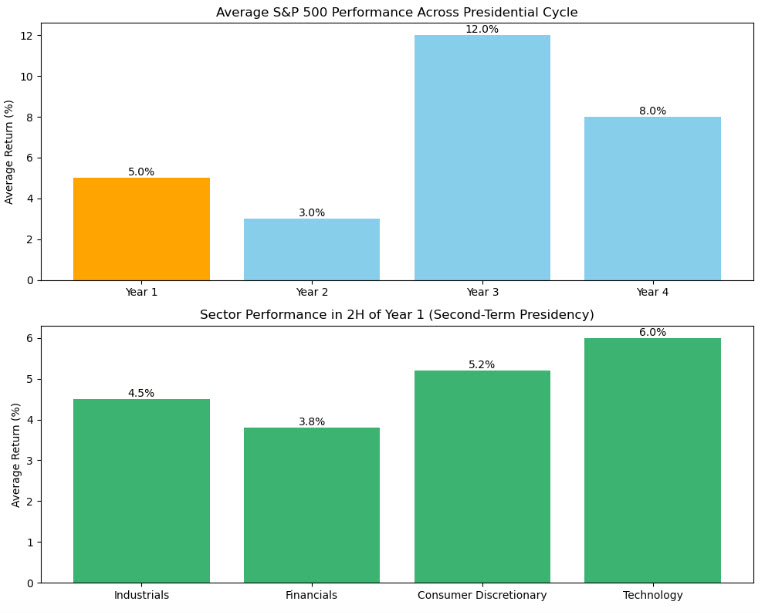
- Sector averages in that window: industrials +4.5%, financials +3.8%, consumer discretionary +5.2%, technology +6%.
- Retirement plans assume too-short lifespans; half of today’s five-year-olds may live to 100 (Stanford Center on Longevity), creating “longevity risk.”
- Tariffs may be “selective isolationism”; markets may be discounting tariff impacts amid mixed macro data.
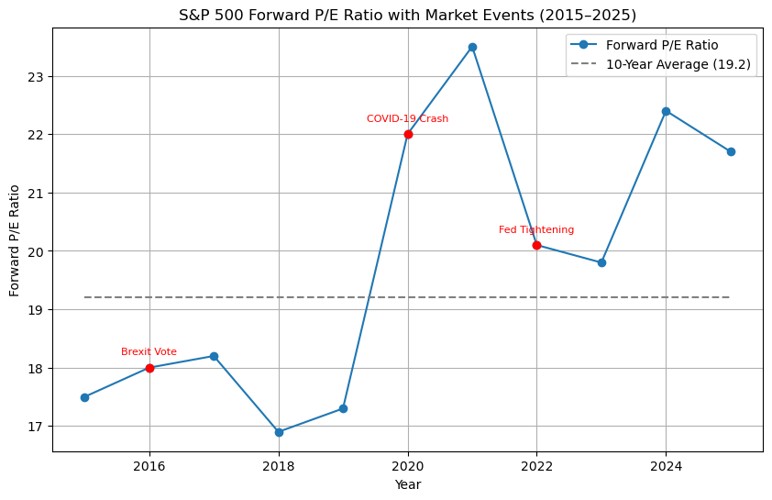
- Valuation risk: forward S&P 500 P/E cited around 21.7 vs ~19 ten-year average; possible higher cost of capital if safety premium rises.
Notable examples
- Trump–Elon/Musk social-media flare-up affecting Tesla shares (down ~4% before the noon blowup; “cratered” after).
- Tariff “first sale rule” example: duties based on an earlier sale price (e.g., $5 shirt to Hong Kong vendor) rather than final $20 price.
- Retirement vignettes: Eleanor (retired 62, planned to 85, now 87 with inflation/pension shortfall) vs James (engineer, planned for a 35-year retirement, still independent at 91).
Transcript
0:06This episode is sponsored by Interactive Brokers. And here's a question for you. Will U.S. oil production exceed 13.4 million barrels per day for April 2025? Well, the Yes Forecast contract recently traded at 39 % and the No was at 59%. With Interactive Brokers forecast contracts, you can trade on future events like climate change, the economy, or politics. You choose yes or no, and if you're right, you get paid. It's that simple. Explore trending data on U.S. oil production. Spot the trends and make your prediction for April 2025. Trade forecast contracts at Interactive Brokers and earn a dollar for every correct prediction.
0:48Plus, you'll earn 3.83 % APY on your investment with an interest-like incentive coupon. And you get$3 when you start trading forecast contracts. Forecast contracts are not suitable for all investors. Go to ibkr.com slash forecast and start predicting today. Last trading for this contract is June 29th. The Disciplined Investor is all about you, your money, and the markets. Sit back and get ready for this edition of The Disciplined Investor Podcast.
1:24David Gaffen: This episode of The Disciplined Investor is sponsored by Horowitz & Company. If you're looking for a portfolio manager, look no further. Horowitz & Company, from seed through harvest, cultivating financial success.
1:42Digging into the presidential cycle, second term, the longevity paradox. What you need to know, tariffs and inflation. Is it all just a hoax? And our guest today, David Gaffin, breaking news editor at Reuters. All this and much more on episode number 926 of the Disciplined Investor Podcast.
2:21And welcome back to The Disciplined Investor, where we break down the markets with, I think, clarity, maybe a little context. It's a touch of curiosity. I'm your host, Andrew Horowitz, and today we're going to be diving into what I think is a pretty fascinating intersection of history and politics and even market behavior. And we're talking about the presidential cycle. We're going to go through that and see how that pans out because it's the second half of the year. and we're in the first year of a second-term presidency, right? I mean, yes, there was a four-year period that separated the two of them, but I want to look at this setup that's historically packed with all these nuances about what happens during a particular second-term presidency.
3:16We don't have a lot of history for one that's separated by four years, But still, a second-term presidency where we know what the basic parameters of that president was and what they're going to try to implement during their second term. Because a lot of the headlines that we see are going to focus on things like policy shifts and global uncertainty. And we know as seasoned investors that the seasonality factors that happen in markets are pretty strong. And they tell their own story. We can look at the history. We can look at the charts. We can look at the actual numbers behind all this and glean some really important information out of this.
3:58And from the post-election positioning to all the fiscal recalibrations, the back half of the year in this political cycle has some really interesting patterns. We did some work on this and came up with some charts, which actually you can go see on the show notes for episode number 926 at thedisciplinedinvestor.com. So make sure to check those out as we're talking through this. So then the question is, what does history suggest and what should be, what will all of us be watching for? and how might all this shape our strategies going into quarter three, quarter four, end of year, second half, 2025, right?
4:46And then let me just take a moment and mention that we're also going to be talking about retirement. I'm going to talk about two things before we get to our guest today. Because what if you're, I was thinking about this, you know, what if we're wrong about how long you're going to actually retire? What I mean by that is the idea that you actually need to plan for living to 100 and why your current plan may not actually be all it's cracked up to be and factually, potentially dangerously outdated. So let's unpack all this. Let's get into it. Let's talk about it. Because I think these are two different, entirely different discussions.
5:34You know, what is all about what's happening with the investments and what's happening with our lives? But let's first start with the presidential cycles.
5:45So some ideas about the seasonality in terms of markets. In the second half of the year, during the first year of a second-term U.S. presidency, right? You understand what I'm saying? We have this is the second term. It's the first year of that second term. It's the second half of that first year that we're entering into, right? We have another, what, a week and a half or so?
6:11So backing it up and give you some context here. There is a presidential cycle. It's a four-year cycle. It can be for one-term president or two-term president. And it has this history that the first year of a president's second term often mirrors the first year of a new presidency in terms of market behavior. A lot of that deals with the thought of uncertainty, this policy recalibration we talk about, and oftentimes muted performance. We're seeing that play out pretty well, at least in the first half. But this is interesting because if we think about what happens during this time, we can really understand this a little bit better.
7:00Because the first half of the first year can be pretty choppy. We have this post-election adjustments and early policy moves. And in the second half, especially the fourth quarter, by the way, has shown pretty strong performance. And why is that? Well, we have stabilization of policy direction. Right? We have the early, hey, we're going to do this, we're going to do that. We're going to play, you know, we're going to, I'll say it in the parlance of what happened. And we're going to put 90 % tariffs on this. And we're going to shut down the borders. And we're going to take away all your money from Social Security.
7:35And we're going to shut down Medicaid and Medicare. These are all the policy direction issues that were really pronounced in the beginning that was being laid out. And everybody's like, what? Wait a second. How is that going to work? And now what usually will happen in this, everything starts to subside like it has. The pause, the pause, the pause on the tariffs. The not-so-bad thoughts about taking away things and actually this new bill, the big beautiful bill, giving us back, in fact, a lot more money than we thought. And the stabilization of policy direction after the early year volatility turns around and gives investors a bit of optimism around the fiscal planning, the budget cycles, everything that's going on right now inside of what we see is happening in Washington.
8:27And then we get something else. In the fourth quarter. We get seasonal tailwinds. We get holiday rallies like the Santa Claus rally, right? We get year-end performance benefits because things like portfolio rebalancing. So the question then is where do we go? Where do we play? Where do we actually put our money to work? Because we have sectors that actually will do better inside of this presidential cycle as well. And we have these charts that show this again over on thedisciplineinvestor.com. Go over there. In the second half of the year, there are certain sectors that actually benefit, like industrials and financials.
9:07They often rebound as the infrastructure and budgetary initiatives really take form and take shape. And this is what's happening, right? The first half of the year is this big talk about this big bill that's going to break down and give and take and do and all the different things that are going on. But the reality is that when that kind of subsides, we get often benefits to the industrials, the financials. Consumer discretionary also may look to gain because we head into the holiday season. And technology, interestingly enough, what does that have to do with anything? because oftentimes we see this renewed interest in the continuation even of innovation.
9:52Tax incentives are usually a part of the administration's agenda, and that is exactly what's happening again. What we're seeing now is a replay of what we've seen time and time again in these presidential cycles, particularly second term, first year, second half, and first half for that matter. Now, according to the stock traders' almanac, the second year of a presidential, now I'm skipping ahead, the second year itself, if you look at this chart that's on the site, you'll see it's the weakest, right? The average return in the second year of a presidential cycle, second term, second year, is 3%.
10:42First year is actually 5%. We're on a weight of that. We were down 12%. Where are we now, right? Up a little bit. So, in fact, if we have tailwinds into the second half of the year, we could definitely get this average at least of the S &P 500. Now, the third year is the most prominent. Everything subsides, things come in, more promises made. Hope springs eternal, 12 % average annual return in the third year of a presidential cycle, and 8 % in the fourth year. Now, when we go and break it down, one more chart that's also on the site, under the show notes, you'll see sector performance in the second half of the year of the second term presidency within the first year.
11:33And again, industrials up 4.5%, financials up 3.8 % on average over time. Consumer discretionary up 5.2 % and technology up 6%. So here we are in a situation where we have already a significant amount of technology innovation going on with AI and chips and all this that's happening. And the incentives that are going to play out from the tax bill. And then the seasonality that we already have embedded in this with the presidential cycle, second half of the year, second term presidency, year one. And, hmm, that's an interesting setup for the second half of the year. Because the other thing you notice is we saw a big flush out in the first half of the year, in the beginning, as we really saw big concerns about valuations.
12:22Now, valuations itself, I'm going to save that discussion to talk about with our guest today because I do want to talk about some of the issues with valuation as we stand right now and looking back historically on that. And there's some charts on the website about that also. I'll just give you a preview of that before I get to our discussion there because I set that up, sent it off to the guest and said, let's talk about this. We need to talk about this. So in summary, when we talk about the issue of the presidential cycle and we look at where we are, I think, I don't think the analog can be played out any differently.
12:59It's almost like President Trump and the administration looked at the history and said, okay, let's just follow that plan. Weirdly enough, it's playing out just like that. Why? It just does. There are reasons why there's the market psychology behind it. There's a reason why that we're probably seeing a bid in some of these markets right now, thinking about the headwinds, the issues that are going on, the finalization of some of these deals that are going on, whether or not they actually amount to something or not. But in the end, we know that we could look at these historic seasonal trends. Now, I'll tell you something.
13:36Oftentimes I've found that once we know the trend, it usually doesn't repeat very well. So now did I just throw everything I just talked about right out the window? No, not at all. In fact, I think these are trends that are provided for our benefit in a way by the presidents, by the administrations. It is just a way of doing business. And that way of doing business is reflected on the stock market and that that's how it's displayed out over time. And with that, use that knowledge to your benefit. Moving forward into the next year.
14:23So, I want to touch on something else. I want to touch on the longevity paradox. We're paying a lot closer attention to this situation. I think we're going to get to touch on some of this today. We're going to have a longer form episode focusing on this in the future. But I think that right now we just want to touch on this whole idea of this. And here's just the basic thing that you need to think about and ask yourself is how long do you think you're going to live? How long do you think you're actually going to live? Because most people guess somewhere, what, in their 80s? You know, that's my parents, my father, my mother, my grandfather lasted to 60, 70, probably modern day medicine and better, cleaner living and all the things that we know about.
15:06I made my 80s. But what if I told you that in your 40s, if you're in your 40s, if you're in your 50s, there's a 50 % chance that you'll live into your 90s. And a growing chance you're actually going to live to 100. And that's what all the experts are starting to call this longevity paradox. Because we're living longer than ever before, but our financial plans honestly haven't caught up. I see that time and time again. In fact, I've told the story that we've had these discussions with clients dating back to, let's say, 1990. When I first got into the business, we were trained to look at retirement as retiring at age 60, 65, living until age 75.
15:53Because you look back historically behind this paradox. In 1900, the average life expectancy was just 47 years old. By 2020, 79 years old. And according to the Stanford Center on Longevity, half of today's five-year-olds can expect to live to age 100. That's not science fiction. That's actual math. Let me tell you about some stories and kind of frame this a little bit. because I think these implications in a real-life sense is pretty important.
16:33With regard to, let's talk about Eleanor, a fictional character that I made up, okay? Because I want to explain this to two different people, James and Eleanor. So Eleanor is a retired schoolteacher from Ohio, okay? A pleasant woman. She retired at age 62. She had a modest pension. She had some savings. and she decided to live rather frugally, expecting to make it to about 85. Now, Eleanor is 87.
17:09Her pension hasn't kept up with inflation. Her savings are gone. And her family's helping her covered her assisted living costs. So think about that for a second. Was it anything that she did? No. She was actually planning. She was doing what she thought she should do when she retired at 62. But now you fast forward, you know, 25 years. She only thought she was going to live to 85. You know, one of the worst things that can happen in life is not living too long, but it's living too long and outliving your money. That's a combination that's really, really bad. Now contrast that with James He's a retired engineer Who planned to live out a 35 year retirement He invested in a diversified portfolio Bought long term care insurance in the 60s And downsized early At 91 He's still financially independent Still traveling What happened?
18:09What was the difference? Well The difference was That He had a longer
18:20life expectancy in his plan. If you're planning to live to 85 and you put all your numbers together and assumptions that you're going to have just enough money to live to 85, by the time you get there, you're probably going to be pretty close to the zero line. You have to plan for a lot more. Put like a slush fund concept together. The problem is that you have these financial calculators out there and they still default on a lifespan of 85 or 90. But if you live to 100, that's like 10 to 15 years of unplanned expenses and potentially hundreds of thousands of dollars in healthcare, housing, what, daily costs, maybe long-term care costs.
19:01And that's what we call the longevity risk. The risk of outliving your money. It's not just about having enough. It's about having enough for long enough. I want you to think about that. Whatever planning you're doing, you need to think about having enough for long enough. And if you're in your, what, your 40s, your 50s, your retirement can actually last as long as your working career. Have you thought of that? And what that means to you is that your financial strategy needs to shift from savings, just simply saving for retirement to funding a 30 year or more lifestyle. lifestyle. And you have these three distinct layers of lifestyles you need to think about.
19:46Because when we think of retirement, I think a lot of us also imagine as one long, relaxing vacation, sitting on the porch with lemonade, rocking back and forth throughout the day, lunch and dinner, go to sleep, play the golf, et cetera, et cetera, canasta, pinochle, whatever you're doing. Truth of the matter is though, retirement isn't just one simple phase. It's actually three distinct phases. So let's break it down real quickly. We're going to have some fun with this. Because the first phase, when you're about 60 to 75, we consider that the go-go years. This is the active retirement phase, right?
20:25You're healthy, you're energetic, you play pickleball, you finally have the time to do all the things you've been putting off, you could travel, you start maybe one of those passion projects you want to paint, You want to sculpt? You know, you want to start picking up archery? Whatever it is. Maybe it's even working part-time on your own terms. Well, spending is often highest in this phase. Big ticket items, you get cruises, home renovations, second homes. It's all common themes. Health costs are relatively low. But lifestyle inflation can sneak in. All right. So we need to budget at least about 120 % of your pre-retirement income for the first 10, well, I'll say five to 10 years of your retirement.
21:12You need to probably stay in growth-oriented investments, you know, and consider making sure to take money out of your most tax-efficient assets first. Now, the next phase, the age 75 to 85, that's the slow-go years. This is the kind of settling in phase. You're still independent, right? You're still doing what you're doing. You don't rely on anybody else for anything. You're traveling a little bit less maybe. You're staying closer to home. Energy levels may start to slow up a little bit. Kind of relaxing a little bit more. Taking it easy. What happens here financially is, well, your spending starts to decline.
21:56Especially on travel and entertainment, right? Health care, well, that's going to start rising, especially on things like prescriptions, mobility aids, doctor's costs. Home maintenance and support services, a little bit more relevant in this phase. And what you need to do is reevaluate your housing situation here, right? Are you going to stay in that big house or are you going to go on a downside? Do you need to possibly start thinking about a long-term care facility or maybe even some people, you know, they're going to come in and help. Maybe even move a little closer to family. You need to think about shifting some of your assets into more income-generating assets, like maybe some bonds.
22:37Or, you know, still have a tilt towards inflation protection through other assets that can provide upside opportunity. You need to do things like, you need to be looking at your wills, your trusts, you need to be thinking about estate planning a lot more clearly. I saw a great quote about this. They talk about this is the phase where comfort and convenience start to matter more than adventure, right? That's the summation of this. The next phase, you're over 85. This is the no-go phase. The no-go years, it's the care intensive phase. You may need some help at this phase, right? With your daily activities, things that you're doing, understanding, your cognitive abilities may start to shift.
23:20Your physical abilities clearly are decaying. although I play some pickleball with 85-year-olds or so, and they can whack a ball pretty well. What happens? Medical expenses. This is skyrocketing. Whole different scenario than our first phase, right? The go-go to the no-go. This is also the phase that most people really fail. I don't want to say they fail. They just didn't do a good job because who told them to? Nobody really thought that they'd lived this long. They really didn't plan adequately financially. Healthcare is clearly the largest expense in this. You know, you think of things like the assisted living, home healthcare aides, nursing facilities, doctors visits, hospitalizations.
24:06Cognitively, well, there's declines there as well. And, you know, we have a lot of problems potentially we've seen with financial fraud, mismanagement of clients' monies. Spending is going to probably drop. but you have those unpredictable spikes because you may have a hospitalization, like I said, or something that comes up. So this is where you want to start. Definitely had an already planned for, it's too late at this point if you haven't, for long-term care insurance, setting up things like trusted contacts, durable power of attorneys, your state plan becomes really important at this phase.
24:40But that all should have been set up before. Create a care plan for your family. Don't leave it to chance.
24:50So, bottom line, I guess, when we look at the three different chapters, we realize that retirement isn't a single chapter. It's more like a trilogy, I guess we could call it. And each of these phases requires a much different script, much different playbook. And that's something I really think we need to just start thinking of. So, if you haven't done any planning up to this point, I think it's time to start thinking about what you can be doing, dependent on where you are in the phases or even pre-phase. Make sure to elongate at this point what your plan is and over plan rather than under plan.
25:35I know that we want to kind of die and in the coffin we die with zero. That's something that, you know, die broke, die with zero. There's a concept out there. But you know what? But that becomes a real dangerous situation if you didn't calculate the day of your death correctly. Well, I'm going to die at zero at 82. Well, Johnny boy, you're 92. What happened? Not so good. Not so good. So this is something to consider there. I thought it was something I wanted to bring up. I try to put in these pieces of planning inside of this because financial security is not just all about investing. It's also about how we plan our finances and plan, you know, you say you don't plan to fail, but you fail to plan.
26:23I think that's something we really need to consider here. All right, let's get to our guest before we do so. I want to talk about interactive brokers again, because interactive brokers has key advantages and competitive advantages for sophisticated investors like you. IBKR's margin loan rates, for example, are from just 4.83 % to 5.83%, which is also, by the way, rated among the lowest margin fees by stockbrokers.com. I want you to compare IBKR's low margin borrowing rates to other ones like Schwab or E-Trade, Fidelity, Vanguard, and several others who charge hundreds of basis points more. Now, of course, rates are subject to change.
27:03And margin, it's only for experienced investors with high risk tolerance because you may lose more than your initial investment if you're using margin. But check it out because the best informed investors choose interactive brokers. Go to ibkr.com slash compare. Let's bring in our guest. It's David Gaffin. He's the U.S. breaking news company's editor at Reuters, where he worked the last 15 years or so. He also did a few different deals and stints at the U.S. energy editor and U.S. deputy markets editor, and has been a business journalist for more than 20 years. Worked at the Wall Street Journal for some time or two, I believe.
27:48He's covered the 2008 financial crisis, the oil markets meltdown of 2020. Nominated for a LEB award for a series on articles on the growth of stock buybacks in 2015. 2015. Let's get right to it. David, how are you? Thanks for joining us again. I appreciate you being there. Oh, it's great to be here again. Thanks so much. You know, you covered breaking news, right? So breaking news. And I would dare say that the breaking news over the last four months is a lot more breaking regularly than it was in the last, I don't know, two years? I think that's correct. Yes, it feels like a fire hose. That's for sure.
28:32I, you know, I was thinking about it because I remember, you know, certain parts of your life, you remember these things. Like I remember the first part of COVID that was God awful, but it was kind of relaxing. You know, it was like you didn't have to do anything. Nobody pressured you. You didn't have to say yes or no to going out to dinner with anybody for a while, right? Yeah, you had all social obligations could be put off, you know, Larry David style. Exactly. No, no, no. I think I have a sniffle. Sorry, we're not going out with you tonight. And the other one was I was always remembering very clearly the first Trump administration with the nonstop overnight alerts that I would get.
29:08You know, the things that you would get on a regular basis and that stopped for about two years. And then it stopped. It started again. It started again. So the latest kerfuffle. between Trump and Elon. Tell me a little bit about how that was covering that and what your sense of this whole thing was. I think that, you know, one of the funny and interesting things we thought about a lot was that essentially this thing was playing out as you would expect over social media in a lot of it, but that even more kind of crazy was that it was playing out over two social media networks, both of which were are owned by one of the two men.
29:53So you have X on one side and truth social on the other. And the two of them just sort of banging back and forth these messages on other networks, you know, to each other going, you know, in, you know, rapid fire and, you know, being a traditional media, even with what we call a live page, where we have a page that's sort of live blogging things that are happening, which is very good for some things that aren't exactly happening online. Having to keep up with that was certainly a challenge. And then certainly watching it and how Tesla shares were reacting. Now, we saw that morning before this whole thing blew up that Tesla shares were down probably about 4 percent.
30:33And there were a few traders out there telling us, you know, this is a little bit of people worrying about where things are going with the Trump-Musk relationship. And so we started to pull a story together just that there's some concern and there's people taking some money off the table on Tesla because they were worried about this. And then lo and behold, that day around noon is when Trump blew up on Musk and the shares, of course, you know, cratered. And, you know, we were sometimes better to be lucky than good, you know, and when we were fortuitous in our timing and we had a really nice sort of smart side story on, you know, hey, look, look at this and look what's happening to Tesla shares.
31:13So what did you make of the whole thing? I have on DH Unplugged, we talked about this and the conspiracy theory behind it is that, or theory, depending on how we don't look at this, is that this was orchestrated to create a clean cut so that Elon Musk can get out of it and not have to come back so that he could focus on his companies. That, you know, this weird, that it wasn't really as much of a tiff, but a way it was done on The Apprentice a couple of times to try to get rid of somebody so they can kind to get off of it and they just replayed that in the form of a way to, but I don't know, I don't mean to tarnish the question here, but you have to be pretty good to try to orchestrate something like that.
31:58You know, I think so. And I think that we sort of underestimate sometimes, you know, the, you know, emotions of people who in both cases we know tend to be emotional people. You know, Trump has been never shy about throwing everything out there that he's thinking at any given moment. And Musk does the same. And the two of them are similar personalities in that regard. So there were a lot of people that were saying that this relationship was going to find its way to a logical end before long. And it seemed to come perhaps a little sooner than expected and a little bit more, you know, volatile. Yeah, abruptly.
32:37Absolutely. Absolutely. And does that mean it's over? No. I mean, people seem to flit in and out of Trump's orbit, you know, whether they be politicians, business executives, world leaders or what have you. You know, he is, you know, people revolve around him in a very elliptical kind of path, you know, so they're closer and further at any given time. Milan is now a bit on the outs, as you can see. And then there will be questions about how that affects things like his businesses and people he wanted to have appointed to NASA and the like, but just the same. I'm sure there will be reproachmen and those kinds of things that come with that.
33:11The biggest question for me remains around Tesla. It is clear that there is a large demographic that liked buying Teslas that does not want to now. And the question is whether he can make that up with the other side of the equation, the more conservative buyers. And even if this is patched up, is there some sort of animus amongst people now who weren't all that inclined to buy electric vehicles to begin with? So I'm really curious about that, especially with this stock. It has a market cap of a trillion dollars. And I think it's a fair question to ask whether it is worth that. Well, that's the question we've always asked is the same question about is a car company slash, you know, technology company of its sort worth that?
33:55It's fascinating. Two days after he is everything calmed down. The announcement of a sighting of a self-driving vehicle, two of them in Austin came up. That's first of all. Second of all, I also wonder, you know, the whole idea of he was appointed because he was going to save the government. billions, maybe trillions of dollars, right? That was the whole thought. Originally, it was$2 trillion. Then it was$1 trillion. And now it's like, OK,$250 billion maybe, OK? Which is still unproven and unverified. But then he comes in, and the reason that he got under the skin of the Trump administration was that he was saying, hey, this bill that you're passing is ridiculous.
34:38It's bloated. There's all sorts of spending in it. But I think, well, wasn't that Elon's job to look for the extra spending and the extra cost factors? And now they're mad at him for that? I find it's like his job was to do that to look at the extra spending right that's what I'm saying and that's what he did but they didn't like that they did it on his on their watch yeah I think that it's clear that it's very difficult to have two personalities like that in the same room and they end up acting at cross purposes uh it appears that he engaged in a lot of activity or his underlings engaged a lot of activity that people are going to question down the road.
35:16I don't know how, but they probably will. And then we were trying to keep, I believe, a rolling track of the savings total. I think we got in the range of 150 million. And that was their claim, excuse me, billion. And that was their claim. But I don't think that amount is verified. And so you're still talking largely about, you know, the coffee and donuts budget. You know, it's a decent, you know, it's something. But is it that significant? That's a real question, particularly when you consider, you know, what has been lost. And that's a conversation for other people. Look, it's like anything else.
35:56Musk comes in and says he's going to have autonomous driving in six months. It doesn't happen for five years still. You know, he comes in and he says, you know, we're going to do$2 trillion. You know, or Trump's saying we're going to end the war as soon as I become president. I mean, it's all the same. It's all the same crap. I don't want to talk about it anymore. To be honest with you, I'm done with this. Let's talk about something important here. And one more thing about you, because I'm kind of curious about this. So I'm a Reuters subscriber, by the way.
36:27And you're the breaking news editor, right? So on companies and all that. So how do you qualify what's urgent in a world where everything feels like it's breaking news? That's a good question. It feels like everything is urgent sometimes. And so we have a lot of ways in which we have to try to filter out things. And, you know, some things are obvious. You know, Musk, of course, and all his antics are certainly a big deal. The big M &A deals that we've seen, Meta recently was buying up this AI company that, you know, some people are saying looks like an acqui-hire becomes a big deal. And a lot of my job ends up being triage.
37:11So I look to see, first of all, are the shares of the company moving? OK, if that's an issue, that's not the only metric, but that's possibly one. So that's something that comes into play. Is it something that tends to get a lot of attention, a lot of readership? Certainly the big tech companies are almost always giant news. The big banks are giant news. The oil companies, the car companies, the names that people recognize amongst retailers. But you're right. There is an element of this that is something of a firehose, and we don't always get it exactly right. There are some people that, you know, talked about this taco trade that happened, and, you know, I don't know that we were right there on that.
37:50There's this, you know, a lot of there's a penchant for a lot of different groups that I've never heard of to announce boycotts of a given company based on the perception of an issue that they don't like. We have to be kind of vigilant on that because every once in a while those things work and they can surprise you. If you remember last year or the year before it was the boycott of Bud Light that actually turned into something when in 95 percent of these cases, these boycotts don't do anything or don't really muster much attention. I can't count on two hands the number of times I've heard about a boycott.
38:25Target was another one. Target was another one. It was the same thing as Bud Light, right? It was the same. It was the same. Genre of issue. Yeah. And in some ways, the Tesla takedown thing is the same kind of issue. And you can see that that's certainly had an effect and that's real. And then on the other side, I'm sure I've heard of plenty of boycotts of McDonald's and Disney. And I feel like those just sort of like, you know, are like trying to power wash your house with a squirt gun. I don't see much effect on things like that. But you have to. All right. I have to have my backup and worry about this next one.
38:58And that's an ongoing thing, you know? Yeah. Let's talk about the tariff, shall we? Sure. So you've been covering the impact of global tariffs, and especially on U.S. companies, because that's your beat. That's right. So what's your take on how businesses are adapting to, first of all, this new era of economic nationalism? I've looked at this, and I've called it selective isolationism. where we kind of use the areas that we want to and kind of put everybody out. And it's happening around. It's the same thing as nationalism to a degree when it comes to economic nationalism. But it's selective, right?
39:48It's like, okay, well, we don't want to have China, but we'll have India. Like, okay, okay. Because why? Well, there's no fentanyl from India. Okay, maybe, maybe not. I don't know. But that's because we made an excuse why we want to do this. You know, we're targeting them. How are businesses dealing with all this? There are a lot of ways they're dealing with it. Some of them are easier to deal with than others. There's definitely a lot of discussions and sort of pleading and cajeling that's going through being stovepiped up from a lot of these businesses in towards the White House. I've noticed that there are a lot of executives that are very quick to put out statements that come around, things like investment announcements.
40:35One of the more recent that I thought was interesting was that Micron Technologies announced a big investment in the United States. Now, this investment over the next whatever number of years was largely a – there was a new little add-on and then the rest of it were things that they had announced before, well and good. But there were also comments in there from the chief executives of Apple and NVIDIA talking about the need to build in the US and promoting whatever it is the administration is saying. And it feels like a lot of real obsequiousness of a real fawning over things like this when these companies, some of them are kind of over a barrel when it comes to the idea of, let's say, producing iPhones in the United States, something that is just not going to happen.
41:21The other side of it then you would have to deal with the likes of companies like the big shippers and things like that, like the DHLs and FedExes of the world who are adding to customs compliance teams. And a lot of smaller companies are dealing with this by trying to bring in these customs brokers and people who understand the tariff situation. That's interesting. I want to just hold it. Time out. Yeah. Customs brokers. This is tweeners that are basically experts in, I'm just going to throw this out from my understanding, but you tell me. Navigating the world of customs and trying to find ways out of the tariffs or reducing.
42:10In part, but I think it's more that they're also dealing with paperwork involving processing shipments and taking care of how companies calculate their tariff bills as well. It is an industry that's sort of about$5 billion in size, and it's the kind of thing that probably until now had been mostly optional. But it's getting more and more difficult to have people try to figure this stuff out. So there are people who are these independents who get lots and lots of questions from different clients who are saying, what do I owe to customs? I don't know. How do you help me get through this? And they need to spend more money and they need to hire more people to figure this out.
42:56These kinds of firms have kind of always been around, but they – Are these part of the accounting firms out there? Who is this? They are small custom brokerage trade groups is what they are. You know, they're these custom brokerage groups, you know, things like that. They don't I'm not sure if the accounting companies have them. It wouldn't be surprising, but they are their own sort of, you know, their own little niche and telling people about this product fee and that type of product and this one, you know, and therefore there's this fee for this and that will go up and then that will go up. And I guess I'm expecting that what it will do is it will add a lot of, you know, what you would call friction, you know, in terms of payments from bringing stuff in from foreign countries.
43:41Plus it has another fee. Yes. This reminds me of roofers that are thrilled when it rains, thrilled when there's a hurricane. This is a group that's like, oh my God, there's tariffs. Fantastic. You know, they're all happy about this whole thing. But one of the things that we're seeing that companies are doing, because companies in the United States, well, around the world, really, I always say that one of the – this is not my quote by any means. I mean, it's obviously somebody else's that have been used a billion times. You know, one of the greatest mechanisms to create capital is the stock market because the companies in the stock market are there to find a way to make capital themselves and to hold on to it, grow, expand, et cetera.
44:26And one of the things that they do on a regular basis, the brilliance of the companies and their management teams is find ways to do things better in adversity and to get around things. We've seen it time and time again, whether it's between financial crisis, you know, you go back to whatever you want, the 70s, the oil crisis. You can go back to the various market meltdowns due to long-term capital management. You can do the COVID, whatever you want. But the fact is they're still here, you know. So, and, you know, you look at, for example, I was in India. And there's McDonald's in India. There's Burger King's in India.
45:01But they're not selling burgers. They don't eat meat there. Right. So what do they have? I don't know, some other veggie sandwich of some sort. But you know what? It's popular and they do their thing. One of the things, I don't know if you've been tracking this, but I have been, this whole first sale rule. Have you been looking at this at all? No. So the first sale rule is, so it's an interesting little loophole in the cut. This is where I want to talk about with regard to the brokers. So within the U.S. customs law, the first sale rule allows U.S. importers to basically use the first price of the sale in a number of transactions to calculate their duties, the tariffs.
45:38So, for example, you have a T-shirt. Let's just use a T-shirt. A T-shirt is manufactured and sold to a Hong Kong vendor for$5. The Hong Kong vendor then may sell it to a U.S. retailer for$10 or maybe somebody else inside the loop. And then eventually it's going to be sold to$20. By the time it arrives to the port, it's a$20 item. Got that? So you have a, pick your number, 20%, 30 % tariff. It's not on the$20. It's actually on the first sale rule on the$5. if it could be proven that it wasn't done to obfuscate the actual tariff itself. But how do you prove that? That's another story entirely. So this has been around for decades and decades and decades.
46:27Yep. So kind of a cool thing that companies are doing these end runs to try to get around. But in the end, are you hearing a lot of companies complaining? I mean, everybody's talking about tariffs. But are they talking about margin compression at this point? There's a little bit of that going on. Obviously, we heard the words from Walmart not long ago about that. Some of the other retailers have started to talk both either about margin compression or just about weakness in sales that's coming as a result. It's coming in certain areas, certainly with products that are originating in China and they're seeing sales getting hit.
47:05But the overall, I think, feeling seems to be that we're in a little bit of a weird kind of, you know, sort of, you know, state of limbo where the market freak out is over and the economic data is not really showing us much of any of it. But it's starting to trickle its way through in terms of confidence and in terms of jobless claims that are starting to rise. It's certainly affecting these retailers, many of whom have pulled their guidance for the rest of the year or they've lowered it. But somehow the market, of course, is continuing to just grind its way on. I mean, the markets are discounting any of the tariff concerns because, you know, what you're seeing is you talk about the taco trade, right?
47:44That Trump always chickens out. The fact of the matter is that what I am seeing is a market that realizes that they are just – see, they made a mistake. They talked about this as a negotiation tactic. They made an epic mistake. The first rule of Fight Club is there was no Fight Club, right? The first new rule of negotiation is don't let them think that you're actually negotiating. Because then they're going to just believe you're bluffing. And that's what they did. Not only do they do that, but they actually pull back. In fact, last week, there was a conversation from Besant that talked about how there may be another 90 days that they're going to pause.
48:24So when we look at things, though, about the tariffs, is this a red herring? because it appears that general markets are, again, discounting all of this. Tariff concerns are kind of like there. People are nervous. But you look at the CPI, the PPI from last week, from May, nothing burgers, right? Maybe June. Everybody's talking about June. Maybe June, maybe June. But it appears that developments over this, it seems to me, is more bark than bite. Thoughts on that? It seems like at the moment, as you're saying, we are not really seeing some sort of massive pass through. It's little things here and there.
49:01The Federal Reserve's beige book that they put out, which is anecdotal, seeing a lot of concerns about that. You're seeing declines in certain categories, a slight rise in jobless claims. The inflation data, as you noted, has been kind of steady. We're expecting acceleration. It hasn't really shown up, not really dropping anymore, but again, hasn't really shown up in there either. And the markets have also, I think, gotten used to this back and forth where you will have someone like the Treasury secretary say things about how they've got more trade deals coming and there's more negotiations. And then Trump will then come around and say that he's got more unilateral tariffs that he plans on imposing.
49:41And the market now has kind of gotten used to this point where it all seems like they're crying wolf over and over again. So will that cause the market to really go into some sort of breakout surge? I mean, I realize that we've more or less regained the highs in the market. I'm not sure about that. But then will it sell off dramatically again? I don't know about that either. It seems like we're just kind of caught in this whatever limbo. The trade deals will get finished somehow eventually. Will the market, will the economy respond? I don't know. And some of that I wonder is around there's been a recent Moody's report that noted that the top 10 percent of earners in this country now account for half of the consumer spending.
50:20So if they can just go on forever, then what are we, you know, what do we expect to happen? It seems like we're just in this kind of ongoing limbo, as you said. It seems like they want to fight. That's what it seems like. And I think, again, the markets are getting whiffed of that. And that's why they're discounting some of that. And let's talk about that. Let's just write the valuations, I think. Because let's talk about this. And as a matter of fact, there's some on the show notes page for episode number 926 over on the disciplinedinvestor.com. There is a couple of different charts on there.
50:54And one of the ones I sent to you, David. So as of the most recent update on June, I think it was June 5th or 6th, when we kind of looked at the core numbers and calculated this back, they don't change that often. The forward PE ratio of the S &P 500 is 21.7, which is a slight decline from the 22.5 or so that was in the previous quarter and the 25 that was one year ago. One year ago when everybody was like, Ola Gaga, about tech and all that. And the MAGA names were really running and really pushed everything pretty hot, right? That's right. But the 10-year average is about 19. And this chart that we show that shows a couple of different things in here, I'm sure we're not the highest level, but, you know, are we at a point that from 2015 to now that is a concerning level of valuation?
51:50I think that you have to ask that question right now. And I'm not, you know, the most adept in terms of, you know, the valuation. I think that, you know, we are looking at, based on various bunch of places, a decline overall in terms of expected growth around the world and in the United States. And so you have that real step down in GDP growth that's anticipated. There's the immigration restrictions, the uncertainty around tariffs. And so I think that the concerns that people have raised, including you, about valuation are well-founded. My question would be what then happens to work that out? Do you have a market that just goes sideways for most of the rest of the year and then by that notion kind of regains a valuation level that is a little bit more – I don't know what you would want to call it – appropriate?
52:49But, you know, the market has played with elevated valuations for extended periods of time for quite a while, and it's been able to absorb that. So the thing I think I worry about with regard to this the most is if you have a real somewhat permanent, even though small, shift in how people view U.S. assets in terms of the safety factor that affects our bond yields. Well, that does raise the cost of capital and that does raise a premium needed for people to invest in stocks. And those are the things that probably manifest themselves over time. And I'm curious what you think about that aspect of it.
53:27I think that the interesting thing is that, first of all, if you invest based on valuations on a broad category like the S &P 500, you've lost all sorts of money over the years, right? Because you would have been like, no, we are overvalued. Look at this number here. You know, 2022, it still was overvalued to 20. 2022, when it came down like crazy from 25 into that horrible year, we were still overvalued. We never really broke. We have not broke the long-term 10-year average of valuations since 2018. and that's something to be said about that there is this optimism. I've talked about this a lot about the long-term thought.
54:04That's why we have these V recoveries all the time because people are not thinking. In the yesteryear, it was like, okay, action, reaction. Information, let me do something. I need to get out. I need to do this. I can always get back in. Now it's like, you know what? It goes down. I'm going to put more money in. Now that's traditionally known as buying the dip, of course. But there's not a lot of selling the rip. People are more inclined right now. And I think also because over the years, the mechanics of the markets have lent itself to being such a situation that as long as we have an unemployment rate, let's call it below five, just for a number, below five, that you have people working.
54:48I mean, that's obviously the point there. Every single time someone gets a paycheck, money goes into the market. The mechanics of that, the constant movement of money into the markets due to the 401k plans rather than the defined benefits plan that we had years ago is a much different animal. The amount of retail investors, the average person that has money in the markets and in equities is far more than it was in yesteryears. And I think on top of that, the idea we even heard about it here that the U.S. government is talking about doing a sovereign wealth fund. Like what? Are you kidding? that is just a way for the government to invest in stocks legally and the amount that Norway has and you have from Singapore and you have around the world the sovereign wealth funds and the blatant buying of stocks by the Japanese government directly in the market and the indirect but yet semi-direct buying of stocks by the Chinese government by flushing more money into the banks and saying hey banks why don't you support the stocks and that's an indirect indirect right way of buying stocks.
55:54And the idea of supporting it is, why not? I mean, I'm not necessarily in favor of this due to price discovery issues and the ability or inability for us to really understand what the valuation should be. Should we have a situation where you have a stock that doesn't earn any money having a valuation of, I don't know, something, you know, price to sales of 50?
56:23or a PE of 800 or whatever, you know, whatever the numbers are. But my thought is this, that as long as we have people working and as long as interest rates stay within this range on the yield curve, et cetera, and as long as we have this debt outstanding that's not going to be extinguished, I don't think people care. I really don't. I don't think people are nervous about it. We haven't had any major sovereign blowups lately. Right, right Yeah You know, we had Greece and all that But you know what? They were going out of business, right? But it was all It was saved Yeah That was very different too You know, a different weak currency And a, you know, a weak economy And a currency they couldn't handle That's very different from us Where we, you know, with the world's reserve You know, it changes things And I think that there is this upbeat overall attitude That time will heal If you look at a chart for a, let's say a one-year basis of a stock, just one year, it's pretty volatile.
57:22You stretch that out to 5, 10, 15, 20, 50 years, all of a sudden that line just looks like bottom left to top right with a couple little bumps. It's little speed bumps rather than giant mountains that you have to hurdle. And I think that's the new investor. I think they realize they've seen that the people in life have made all their wealth in that. They don't just sit under the mattress like they did 30, 40 years ago. You make 4 % or 5 % interest, you were happy with it. That was it. That's all you needed. Yeah. It's changed. It's definitely embedded in the market now that you just put that there and sit and forget about it.
58:01And I think that that's probably a good lesson. It has worked. It's going to work until it doesn't. Correct. And when it doesn't, it's going to be bloody. I should say when, not when, if. If that ever happens, it's going to be bloody because nobody's going to pull out and they're going to keep on funding it until all of a sudden there's no more money to fund it. Correct. And then all of a sudden, who's going to be back? Who's going to be the backstop for this? And that's something that I don't know if it's going to happen. I'm not even predicting. I'm not, you know, I'm out of the prediction business.
58:30There's just no need to predict. There's a lot of these guys out there that love to predict. It's the stupidest game in town. If the guys that know the data and know the information can't predict, if the Fed, who has all the information, all the tools, all the people, all the budget to predict where things are going to go and can't do it, why should anybody else be able to do it? It's a fool's errand. Fool's errand in my opinion. Absolutely. Yeah, absolutely. That was John Bogle's argument all that time. Exactly. I don't know about necessarily indexing only with that comment. I do like some active management opportunities.
59:04I mean, you look at, you know, we've had a few stocks over the last, I would say, well, for a little while, but particularly over the last two months that have been like, wow. And it was based on not inclusion in a particular index. It was based on a thesis that here would be a great opportunity if it would play out. And it played out pretty well. I will tell you that the small modular reactors, as an example. Yes, sure. Or Toast. Toast. My recognition that everywhere I went was Toast was being used. I looked into the company, did the research, found out that, you know, how much they're charging, what they're doing, why companies are using them, the restaurants.
59:37Bought that in 23, you know, as an example. You know, Palantir, when it was down and out, but I've looked at it as an AI military play. And I said, wow, if they're going to do this and they have this and they're going to, you know, and looked into all the product line they had, you know, had that since 17. Not 2017, but$17. Right. You know, and those kind of things are not able to be captured by indexing. But then again, then again, neither are the losers necessarily. You know, the one off losers. So I guess it's all that. David, appreciate you coming aboard. Look forward to speaking to you again soon.
1:00:15And make sure everybody gets their subscribe. You know, I will tell you seriously, I'm not blowing smoke here, but I'm just pulling this up. I'm on my phone right now. And in my finance area, right? I got things like Schwab and TradeStation. I got TradingView and all this. But right there, I got Reuters right in the middle. Bing. Nice. Excellent. Right there. And then, you know, it's a great resource. And I appreciate your cutting through all the nonsense and putting up only the information that needs to be seen. It was really good to be here. I always like talking to you. And it's good to sort through some of these things as best we can.
1:00:47Yep. All right. I'll see you soon. Thanks. Take care. That's going to wrap it up for this episode of the Disciplined Investor Podcast. Great time talking with our good friend David Gaffin there. and we will, of course, be here next week with some great guests. John Pugliano is next week and we have Larry McMillan and Anthony Scaramucci and we just had a couple, oh, Peter Schiff just booked up and a few others that are really interesting. So make sure to keep pace, make sure to do your proper planning like we talked about at the top of the show and make sure to look at your financial planning, dates, years, expectations, how long you gonna live, look at it a little more seriously.
1:01:28Thanks for joining me this week and every week. I'll see you again real soon.
1:01:37Nothing discussed in this podcast should be considered a recommendation to buy or sell any security. Past performance is no indication of future results. In addition, the information presented is not intended to be used as a sole basis of any investment decisions, nor should be construed as advice designed to meet the individual needs of any particular investor. Nothing herein constitutes legal, accounting, or tax advice or individually tailored investment advice. Remember, investing involves substantial risk. Past performance is not a guarantee of future results and a loss of original capital may occur.
1:02:09No one receiving or accessing this information should make any investment decision without first consulting his or her own personal financial advisor and conducting his or her own research and due diligence, including carefully reviewing any applicable prospectuses, press releases, reports, and other public filings of the issuer of any securities being considered. Please consider this for educational purposes only. As always, use your best judgment when investing. Horowitz & Company, Inc. is registered as an investment advisor with the state of Florida and conducts business in other states where it is properly registered or is excluded from registration requirements.
1:02:45Registration does not imply any level of skill or training. advertisements are not related to the host or affiliates and are not considered recommendations by the host of the show or any affiliates of Horowitz and Company.
From the publisher
The Presidential Cycle and the sectors that may benefit.
Taking a look at the Longevity Paradox
Tariffs and Inflation – is it all a hoax?
Our guest this week – David Gaffen, Breaking News editor at Reuters.
NEW! DOWNLOAD THIS EPISODE’S AI GENERATED SHOW NOTES (Guest Segment)
David Gaffen is the U.S. breaking news companies editor at Reuters, where he has worked for 14 years. He also did stints as the U.S. energy editor and U.S. deputy markets editor and has been a business journalist for more than 20 years.
In that time he has covered the 2008 financial crisis, the oil-market meltdown in 2020, and was nominated for a Loeb Award for a series of articles on the growth of stock buybacks in 2015. He lives in New York with his family.
Charts Discussed: Chart 1 Chart 2
Check this out and find out more at: http://www.interactivebrokers.com/
Looking to invest in The Disciplined Investor Managed Growth Strategy?
Click HERE for the virtual tour.
Stocks Mentioned in the Episode: (MSFT), (DELL), (NVDA), (TSLA)
More from The Disciplined Investor
All episodesWe use cookies.They keep vo running smoothly and help us improve it. Privacy policy
Scan the code with your iPhone camera
Listen in the app.
- Play everything vo finds for you
- vo remembers everything you hear
Go to the App StoreFree on iPhone