
 Ask ChatGPT

- Podcasts
- The Disciplined Investor
- TDI Podcast: Options for Numb Zone (#927)
In short
The episode argues markets are in a “numb zone” where bad news is ignored despite stretched valuations, low-but-not-extreme volatility (VIX ~16), and rising risks. It discusses hedging with volatility tools (VIX calls/spreads, protected puts) and portfolio risk management, plus why oil’s spike after a U.S. strike reversed quickly. It also covers how to think about trading commodities/options and the mindset needed for active trading.
Guest
Carly Garner of DeCarly Trading (Zanner Financial Services), a futures/options broker with nearly two decades of commodity market analysis experience. She’s appeared on CNBC, Bloomberg TV (Option Insights), and RFD-TV/Futures, and is an award-winning author of commodity trading books.
Key claims
Valuations are historically high (S&P 500 forward P/E ~22 vs ~15–18 average) while sentiment is euphoric; this setup often precedes painful corrections. Hedging is prudent when VIX is “sedated.” Oil’s fear premium evaporated because the Iran response was viewed as symbolic/guardrailed, not a supply-shock start.
Notable examples
Oil spiked ~8% then Brent fell ~7.6% (about a 15% round trip). Garner cites gold’s parabolic move starting before major Middle East headlines and crude rallying before reported peace developments. She also describes structured option hedges in bearish oil and warns against silver trading.
Written by AI. May contain mistakes.
Chapters
1:44
Current Market Valuations and Sentiment
Discussion on current market valuations, investor sentiment, and risks.
“The VIX, pricing in smooth sailing and commodities.”
6:16
Strategies for Navigating Market Uncertainty
Exploration of hedging strategies and understanding market volatility.
“Markets don't, they just, they can't go on like that forever and they don't ignore risk forever.”
13:32
Listener Engagement and Feedback
Encouragement for listener feedback and sharing thoughts on the podcast.
“We have been hedging a small portion of some of our portfolios.”
14:00
Profit Taking Strategies
Learn about the importance of taking profits in trading.
“Went from a 2.5 % position to a 2 % position to a 1.75 % to 1.5 % to a 1.25 % position.”
14:28
Listener Engagement Call
The host encourages listeners to share feedback and thoughts.
“By the way, if you want to write me, if you want to talk to me, you go to the ask Andrew area on the disciplined investor.com.”
15:12
Oil Price Dynamics Explained
An analysis of recent price movements in the oil market and geopolitical influences.
“the price of oil and what happened last week.”
20:27
Trading for a Living Insights
Carly Garner discusses the mindset needed for trading full-time successfully.
“She's a futures and option broker with DeCarly Trading, which is a division of Zanner Financial Services in Las Vegas, Nevada, with nearly two decades of experience in commodity market analysis.”
23:04
Misconceptions About Futures Trading
Exploring common misunderstandings retail traders have about futures markets.
“Again, as you can imagine, I talk to a lot of paper traders.”
28:00
Understanding Trading Styles
Learn about the importance of finding a trading style that suits your emotions.
“I see it over and over, especially like with Middle East tension in crude oil.”
29:32
Strategies for Trading Oil
Discover how to structure trades in oil to minimize stress and risk.
“So unfortunately, I don't think there's a way to do it without just getting some skin in the game and trading in a very small scale.”
Show all 22 chapters
32:06
The Role of Fundamentals in Trading
Examine the relationship between market fundamentals and price action in trading.
“Unfortunately, you just have to, you have to figure it out on your own.”
35:46
Navigating Emotional Trading Decisions
Understand how emotions impact trading decisions and strategies to mitigate risks.
“I had somebody recently, I'll just give you a quick note.”
39:40
The Challenges of Trading Silver
Learn why silver is a difficult market for traders and the risks involved.
“And now you're going to be rethinking, well, you know what?”
42:00
Navigating the Silver Market
Learn about the challenges and risks of trading silver and options.
“Cause you can't like, it's just such an aggressive market.”
43:31
A Cautionary Tale: Dickie's Silver Journey
Listen to a true story illustrating the pitfalls of over-relying on silver investments.
“This has got to be, I don't even know what the year this had.”
44:36
Understanding Charting and Software
Discover various charting platforms and the importance of proper chart setups.
“Yeah, that market has ruined some people's lives.”
45:43
Navigating Exchange Fees and Trading Challenges
Explore the issues related to exchange fees and their impact on trading.
“They're really bad at marketing, but it's an amazing, amazing software.”
47:31
Analyzing Timeframes and Trading Indicators
Learn how to effectively use timeframes and indicators in trading analysis.
“So getting, getting back to the charting and what you use is, is it, is a very, you know, well, let me, let me set you up here.”
52:37
The U.S. Dollar and Market Sentiment
Gain insights into the current state of the U.S. dollar and market sentiment.
“I think it hit the lowest point this week from 2021 against some of the majors.”
56:00
Market Conditions and Personal Strategy
Discussion on current market volatility and personal investment strategies.
“Yeah, it's, yeah, it's an interesting, interesting, environment.”
57:51
Evaluating Treasuries Amidst Chaos
Exploration of treasury investments and risk-reward dynamics.
“So I managed my risk, and it just happened to work out nicely.”
58:56
Interview with Carly Garner
Carly Garner discusses her trading insights and resources available.
“And if you have to hold for 10 years, so be it.”

Ask about this episode
Get the gist, explore an idea or ask about something said.
 Claude
On The Disciplined Investor, what are the key points of this episode?
Searching your listeningTranscript
Automatic transcript. May contain errors.
0:00This episode is brought to you by Interactive Brokers. And here's a question for you. Will the U.S. Consumer Sentiment Index exceed 56 in July of 2025? Well, the yes forecast contract recently traded at 24 % and the no was 74%. With Interactive Brokers forecast contracts, you can trade on future events like climate change or the economy or even politics. You choose yes or no. And if you're right, you get paid. It's that simple. Explore trending data on U.S. consumer sentiment, spot the trends, and make your prediction for July 2025. Trade forecast contracts at Interactive Brokers and earn a dollar for every correct prediction.
0:41Plus, you'll earn 3.83 % APY on your investment with an interest-like incentive coupon. And you get$3 when you start trading forecast contracts right away. Forecast contracts, of course, are not suitable for all investors. The best informed investors choose interactive brokers. Go to ibkr.com slash forecast and start predicting today. The last trading day for this contract is July 31st.
1:13Carley Garner: The Disciplined Investor is all about you, your money, and the markets. Sit back and get ready for this edition of The Disciplined Investor Podcast. This episode of The Disciplined Investor is sponsored by Horowitz & Company. If you're looking for a portfolio manager, look no further. Horowitz & Company, from seed through harvest, cultivating financial success.
1:43The PCE is out. The Fed's preferred inflation metric. The VIX, pricing in smooth sailing and commodities. What's going on there? Our guest today, Carly Garner of DeCarly Trading. All this and much more on episode number 927 of the Disciplined Investor Podcast.
2:21All right, let me just say this. Let's talk about valuations here at the top of the show before we even get into anything else because I think it's something that needs to be discussed because here we are when we see that basically we hit an all-time high last week for the NASDAQ 100, the S &P 500, and of course, trailing along a little bit is our small cap index, the Russell 2000, we'll call it. And that's pretty amazing. Considering all the things that are going on right now in the world and the concerns we have about wars, not wars, tariffs, not tariffs, you know, So we're right now in a, yes, we are.
2:53Oh, no, we're not. Maybe it isn't. Maybe not. We're in a moment in time that there is no absolutes. Are tariffs going to be inflationary? Well, maybe, maybe not. Are rates going to go up or down? I don't know. Are we going to see inflation? I'm not sure. There is no definitive. There seems to be no consensus on a lot of things. And the stock market itself, well, I got to tell you, If the stock market valuations had a personality, the S &P 500, maybe the NASDAQ would be that friend. You know, the one that's always a little too optimistic at dinner. Ordering the most expensive wine and assuming the check when it comes is going to be somehow taking care of itself.
3:41Because when you look at valuations right now where we are, the issue is that we are at PEs that are historically high. Not at the highest we've ever seen. No, no, no, no, no. But they're high. The S &P 500 PE ratio on a forward basis is 22. Now, considering when the average is more like 16, 17-ish, 15 to 18, we'll call it, 22 in a time when we see that consumers are pulling back, there's inflationary pressures, there's global concerns about politics and policy, wars. all these things that come into play right now are not really telling the story in terms of stocks. And I think that what's happening is when we see a VIX in the 16 range, we'll get to that in a second, we're in a period that I guess we're in the mode of.
4:34Who cares? Bad news is discarded. Good news is cheered. There's nothing wrong. I'm not, listen, I'm not cross about this. I'm not mad about this. In fact, I'll go right along with it if we're going to do it, but we have to be very aware of something. We have to be aware that this is a pattern. It's probably as old as time itself, at least as old as markets themselves. When you see valuations that soar and bad news gets shrugged off, like a late season, a summer breeze. It's a familiar setup. Listen, I've seen it, and I've got to tell you that it rarely ends well, but it's okay to ride it. I remember one time in the past, Howard Lindzen, I remember we were talking and he said, you know, you've got to ride the wave.
5:25You've got to ride the wave until it's too much and then get off before it crests and breaks. And right now, we're seeing a market that's priced for perfection. I've got to tell you, valuations are stretched. Sentiment is at best euphoric. and every dip, you've seen this, come on, it's not like it's not noticeable. It's not like I'm telling you something you don't know. Every dip is treated as a buying opportunity. And meanwhile, we have waning signs whether it's the economic, like I said, geopolitical, structural issues. They're all piling up. The markets, they don't care. I mean, at least not yet.
6:02And again, that's okay as long as we're aware of what's going on. because we're in a period that I guess we could best say is, I guess, could we all agree it's the numb zone? It's a kind of an idea where investors are desensitized to the risk, right? Bad earnings? Okay. Blame it on seasonality. Weak economic data? That just means the Fed will cut rates. Geopolitical tensions? Eh, it's already priced in. Let's not worry. but here's the thing. Markets don't, they just, they can't go on like that forever and they don't ignore risk forever. They absorb it, you know, until they can't. You've heard the phrase, climbing the wall of worry.
6:53Climbing the wall of worry. What does that mean? Well, markets will continue to try to see beyond, get over the wall, if you will, while there's this negativity, hoping that on the other side of it is smooth sailing. Like I said, we're seeing a VIX in the 16 range midweek, and that was pretty low, down from 20. But when we look at the markets and we have this wall of worry and the risk that was being ignored, you have to realize that when the dam breaks, it's not a trickle, it's a flood. So what do you do as an investor? That's the big question. If we could all agree that, okay, that's where we are, and that's fine for now, and it can last for a pretty good period of time.
7:47What do you do? Well, first of all, we have to understand that historically, these kind of movements of this market just going up, the moments that we have now of disconnect from reality, when fundamentals and price action diverge, have preceded some pretty painful corrections. Most painful ones in history. We saw about it, let's say 2000, 2007. And think any time when the phrase came up, well, this time is different. What happens when that starts to make the rounds? Perk up. Something's not right. And when we think about what that means is that, again, you know, quoting the great Howard Linsen, ride the wave until it's time to get off.
8:40So what do we do right now? How do we know? That's the big question, right? Well, it sounds great. Okay, yeah, I'm going to ride that wave. Oh, yeah, I'm going to get off right in time. I'm going to buy low, I'm going to sell high, I'm going to short at the top, I'm going to buy back at the bottom. All right, let's disagree that market timing doesn't work. So what do we do? First thing is you got to stay alert. You got to stay alert. You got to recognize the pattern. don't confuse momentum with immunity. And remember, when the bad news doesn't matter, oftentimes it's because the market's overconfident, too confident, uber confident to care.
9:16And that's not a sign of strength. That's a warning. That's something we need to pick up on and understand. So what do we do? Back to the question. Okay, Horowitz, great, I get it. Okay, what do we do? You got to start thinking about hedging your portfolio in this environment. Because it's something you can't ignore. When we're in chaotic times, who knows what crazy thing's going to happen tomorrow. We could wake up tomorrow in a day or two, and all of a sudden those crazy tariff and reciprocal tariff discussions are back front and center. We know that there was a 90-day period of cooling off or pending or pausing.
9:57Pausing, pausing. What happens if all of a sudden it's like, all right, you know what? We didn't do it. We're going to put those tariffs back on. Those crazy tariffs done by Navarro that were just insanity. Looking at the reciprocal tariffs in the 50, 67, 80%, 144%. So let's talk about this. Let's talk about one of the things that we're looking at, right? The VIX. The VIX. the market's so-called, they call it the quote-unquote fear gauge. Right now, it's not low. It's not crazy, crazy low. It's not like 15 or 12. It's 16s. But it's almost sedated, considering the craziness that we're living in.
10:45And when volatility is that cheap, it's like the market is offering you, I guess, like fire insurance when there's a firestorm all around you and your neighbor's house already smoldering and you're just sitting there going, eh, I don't have any. Maybe I'll think about it. Well, maybe that's the time. It's a wake-up call and your cue that maybe it's the time to hedge. Now, one of the cleanest ways to do this is straight up in a VIX call option. When the VIX is snoozing, out-of-the-money call options are pretty cheap. You can buy one for May at$20 at like a buck. so think of these as like smoke alarms for your portfolio right going with that fire discussion we just had it's quiet most of the time but priceless when things heat up now you want to get fancy you can do things like a vix call spread buy a lower strike price and sell a higher one and you can get a cost-effective way to bet on the volatility spike without lighting your cash on fire too now if you're holding equities protected puts or another smart move.
11:51When the VIX is low, those puts are like buying a luxury seatbelt at economy prices. You know, you hope you never need them, but the market hits turbulence. You know what? It's going to be pretty happy. You're going to be very happy, ecstatic, that you buckled up. I mean, you could be in a car driving around forever without a seatbelt, but what happens when they have that accident? So you know what? Maybe sometimes are more important than other, well, seatbelts all the time, but let's talk about it. You know, if you're going two miles an hour, versus 50 miles an hour. The markets are going 50, 60, 70 miles an hour right now.
12:24So it's time to start thinking about that. And then there's these other things you could do, these wild cards. I'm not recommending these, but people that don't like to use options, they want to go out. You could use these inverse volatility ETFs like UVXY, UVXY or VXX. Now these are like caffeinated hedges. They're faster. What happens when you're on a call? You're twitchy. and probably more important of all these things and not to be left unattended. Use them tactically. I don't really like them. I don't mind using inverse hedges for some parts of the market, but some of these that are commodity-based, I don't like as much.
13:06So the bottom line is when the VIX is blinking, this subtle caution sign, when it gets low, it's easy to believe that the market is, oh, pound the chest invincible. But history, well, it tells us otherwise, doesn't it? Volatility doesn't, it doesn't stay subdued forever. And when it wakes up, by the way, it usually doesn't knock. It kicks the door in. So that's something you want to think about. And one way to start hedging. We have been hedging a small portion of some of our portfolios. The global allocation that we have don't really, I don't think, require a hedge as much because of our diversification.
13:45but our equity-oriented strategy that is long short, we just picked up some shorts. We have hedges and reduced down cut some of our really meaningful gains that we had and took the profits. Not all of them, but some of them. Went from a 2.5 % position to a 2 % position to a 1.75 % to 1.5 % to a 1.25 % position. All profits along the way.
14:16smart to take those down because no one ever went broke taking a profit. We know that. Now let's talk about something else. Something that a lot of people have written in. By the way, if you want to write me, if you want to talk to me, you go to the ask Andrew area on the disciplined investor.com. Just write whatever you want. Tell me what you're thinking. You like the show. Do me a favor. If you like the show, I'd like to hear it. I'd like to know what you're getting out of it. Please do me a favor. Maybe we'll even read those on the air. Tell me what you got out of the Disciplined Investor podcast over the years.
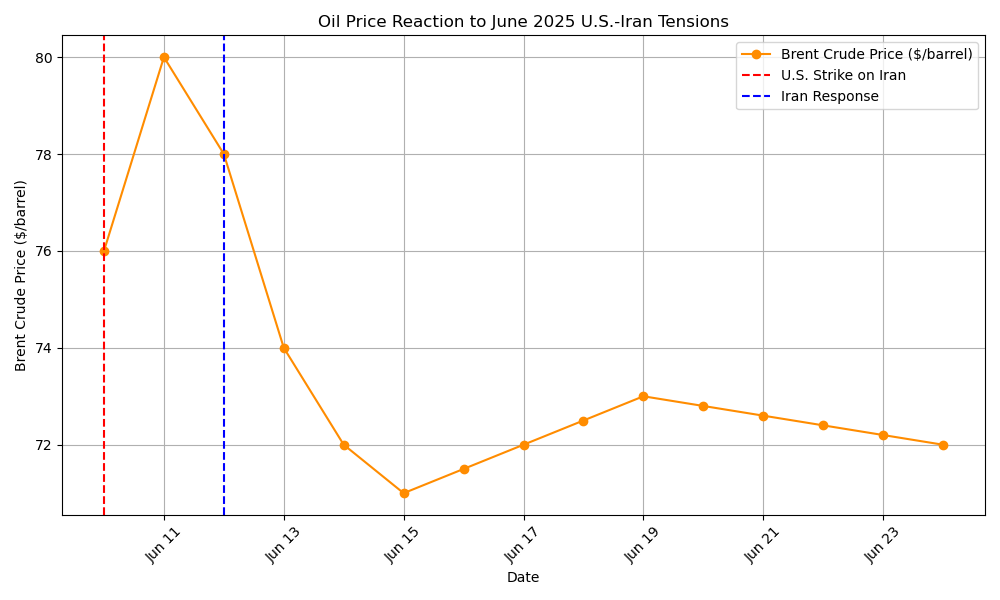
14:50It's going on, you know, a decade and a half plus. You're getting something out of this you wouldn't be listening. For those of you that are new, tell me what you think. And if you don't like it, Horowitz, you're full of hot air. Let me know that too. Go over to thedisciplinedinvestor.com and go on the click, click the Ask Andrew area. And we'll just give you a form to fill out and just send it right to us. Now, I want to touch on something that many people are asking me about, the price of oil and what happened last week. Now, I put a chart on the episode show notes page over on The Disciplined Investor, so you can check that out, episode 927.
15:25Because after we saw the U.S. bombing on Saturday, by the way, a well-choreographed, a well-scripted, a well-planned, not only for the surprise impact of it on Iran, et cetera, but also for the markets. It's done on a Saturday. Well done, folks. Golf claps all around for making sure that it didn't disrupt markets. Because after the U.S. bombed the Iranian nuclear facilities, oil initially spiked Sunday night. It went up about 8%. And this is what you would expect after tensions are flaring in the Middle East and investors are bracing for the worst. We have potential disruptions in the Strait of Hormuz.
16:04We have these retaliatory strikes that we're worried about. But broader regional conflict comes into mind, choking off the global oil supply. All these things are in our heads, right? On Sunday night going, uh-oh, oh, man. How is this going to impact markets and commodities and oil and all that? But something unexpected happened, didn't it? Didn't it? Brent crude, for example, fell as much as 7.6 % to 71 % after spiking 8%. It's like a 15 % round trip right there. Why the reversal? Well, a lot of people are asking that. It seems to be, from what we can gather, is about how the interpretation of what happened and Iran's response.
16:53When we look at that, it clearly showed that it was for show, the response in particular. When Iran launched their missiles at the U.S. air base in Qatar, Well, it wasn't seen as a start of war, but this very carefully scripted, choreographed show of force. You know, hey, just to let you know, what we're going to do is we're going to fire 12 different missiles in. Please make sure that everybody is not in the area of these coordinates at this time on this day. Iranian officials reportedly coordinate with Qatari authorities in advance what does that mean? it was symbolic what they did was just a symbolic gesture showing that hey, we gotta do something we gotta save face which is pretty much what happened in 2020 when it warned Iraq before they retaliated for the killing of General Soleimani, right?
18:01Remember that? So I think that what was happening right now is very much in line with that. And in short, the market priced in this escalation risk. And then it quickly repriced everything as they saw restraint, right? Everybody's like, all right, the B2 bombers are going home. That's all we're going to do here. Nobody got hurt. Nobody got killed. Nobody's coming back. And traders realized this wasn't the beginning of a supply shock. So all the money that was flowing into oil as a hedge or as an investment or a speculation ahead of this quickly flowed out. This is nothing more than a geopolitical flex of muscle with some guardrails.
18:44A show of strength that really had no intention of causing a further fight or escalation. So the fear premium, basically what did it do? It evaporated almost as fast as it appeared. That's what happened with oil and came down pretty good. I mean, we saw that WGI was at what, 66? It was a 78, a$12 turnaround. And struggling to keep up at this point. So there you have that. We're going to get to our guest. Before we do so, I want to talk one more time about interactive brokers. I want to talk about their interactive broker's bond marketplace. Did you know that you can access over 1 million global bonds, including governments and corporates and municipals, all in one place?
19:31With IBKR's bond search tool, finding and comparing yields against other brokers really has never been easier. And what this does is it streams your entire investment research and decision process. Plus, you could trade U.S. Treasuries around the clock five days a week, allowing you to react to market news and economic events whenever they happen. And you could trade bonds with no markups or built-in spreads and low transparent commissions, which can help you improve your returns. Rated top online broker, Interactive Brokers has won awards from Barron's, Investopedia, Stockbrokers.com, and has been Benzing as number one overall online broker for bonds four years in a row.
20:17Interactive Brokers is a member of SIPC. Visit ibkr.com slash bonds and start trading today. So let's get right to our guest, and that is Carly Garner. She's a futures and option broker with DeCarly Trading, which is a division of Zanner Financial Services in Las Vegas, Nevada, with nearly two decades of experience in commodity market analysis. Often, you've probably seen her, referenced on Gene Cramer's Mad Money, CNBC. She's a regular guest on Bloomberg TV's Option Insights segment with Abigail Doolittle. And she's also on the Cow Guy Clothes hosted by Scott Shellady on RFD-TV and Futures aired on Schwab Network.
21:00So there you go. It's all over the place. She's been featured on thestreet.com and she can be found at Traders Expos. She's also an award-winning author of Commodity Futures and Options Trading Books. I want you to check it out. Trading Commodity Options with Creativity. she's also authored Higher Probability Commodity Trading if you go over to the website for this show there's going to be a link to see her books and all that but I want you to check that out so let's get right to it so Carly hey welcome back how are you thanks Andrew it's good to be here hot summer huh in more ways than one absolutely you got it so especially for traders I want to dig in I want to start and talk about trading to begin with because you've talked about in the past that trading for a living is possible, right?
21:50But it's not easy. I mean, obviously. So I wanted to start and ask you, what's the biggest mindset? What is the thing that you need to do when you're making this transition from investing to active trading and maybe even trading for a living? Sure. So I'll start with just one kind of disclosure. Trading for a living, again it is possible it's very very difficult i know you just said that but i want to reiterate that and i'll tell you why i've known traders that trade um and make money for a long period of time and do very well but as soon as they quit their day job and try to trade for a living their it their emotional capacity to accept losses and handle the ebb and flow um diminishes and And it's because if you're trading as a side gig, it's one thing.
22:42But if you have to put food on your table, put a roof over your kids, that's a whole different sort of pressure that people don't anticipate. So to be honest, I don't recommend most people trying it. If you if you have a good career going, it's probably not in your best interest to drop that and try to trade because it's it's really a tough game. And why do it if you're making money doing one thing and the other thing? And the other thing is, is this the phenomena that happens when you go from paper trading to real trading? Is that that phenomena, same thing? It's the same thing, yes. Again, as you can imagine, I talk to a lot of paper traders.
23:16They paper trade for years, and it's like printing money in their paper trading account, and then they go live. And it's the exact opposite experience, and we all know why. So, you know, emotions, it's a crazy animal. So, obviously, trading for a living. I know many, many years ago, I actually spent some time in a couple of different courses because I wanted to understand how to better tag my trades, right? I wanted better entry and exits and understand a little bit more about level two trading and all this stuff that went on. This is years ago. And one of the things that this coach, if you will, said that if you're going to trade, you know, you don't have to try to knock it out of the park.
23:53It's make your$200, your$500 a day, which may not seem like a lot at first. But if you think about that, multiply it, it kind of adds up. It does. You know, you just make those little first and second base hits along the way. And that's actually could be a very lucrative career. And a lot of times don't trade in the hours that aren't tradable, right? You know, opening, well, there's a difference for futures, but opening market hours, you know, 9.30, 10.30, 11. And then you kind of shut down, do your thing, play golf, I don't care what, come back at 2 o 'clock. Yes. Now, our approach is a little different because we're option trading, so it's more position trading, not day trading.
24:32But regardless of the strategy, you're absolutely right.
24:38It's been my experience that people that feel like they always have to be doing something, if the market's open, they feel like they have to be doing something, those people are going to have a very difficult time making money. In fact, I would say it's probably impossible. So you're right if you just sketch out like whatever your strategy is, if it's day trading, a couple hours a day and just kind of keep it to that as opposed to getting bored or thinking. A lot of people have this mindset that if they're not trading, they're missing out on something. They're wasting their capital. And it's actually the exact opposite.
25:09The more you trade, the more likely you are to make a mistake or be in the wrong place at the wrong time. it's a lot easier to be on the sidelines wishing you were in than in the markets getting your butt kicked wishing you were sitting on the sidelines yeah this is like the old sit on your hands don't do anything and by by the way i used to call something i so way way back when when i was doing a little bit more of of active well i still do back trading but but differently i'm saying um there was trades i called walkaway trades like the trade is moving in my direction hard just leave for a minute.
25:41Just don't do anything. Don't even look at the screen. Don't even just get out. Take a walk down the hall. Seriously, right? Yeah. Because you're so, the desire is, all right, let me do, I got to do something. I got to do something. Right. Right. Humans are, we are our own worst enemy. It's absolutely true. Yeah. So you've also talked about the futures markets are often kind of misunderstood. Understood. What is maybe a couple or some top structural features of the markets that a lot of retail traders often overlook? Okay. So for starters, some people look at futures and commodities as investments, not trades like we've been talking.
26:23There's a really big difference between investing and trading. But where I'm going with this is a little bit different. because they view them as investments, they tend to want to be long, not short. And they also tend to assume that, you know, I'm investing in crude oil so I can just buy and hold or I'm investing in, you know, whatever, soybeans or corn. But the reality is, if you look at the last 25 years or even if you go beyond that, commodities do not go up like stocks do. They don't appreciate it in time. In fact, commodities go down more than they go up. And that's because technology always gets better.
27:02We always get better at growing things or extracting things from the ground. So the bias is to the downside. So in other words, if you just went short, any given commodity, I'm not talking necessarily about precious metals, but renewable commodities, if you just went short with the intention of always being short and always riding it out, you'd probably do much better than you would if you were long. And so that's kind of a misconception. Everybody wants to buy commodities. And the worst part is they don't want to buy commodities when they're in the dumps. They want to buy them after some sort of big headline.
27:33For example, with all the bombs dropping in the Middle East and all the tension going on over there, nobody was calling me to say, Carly, I want to go on crude oil at 55. But with crude oil is at 75 and it's already priced in a complete elimination of all Iranian oil, the phone's ringing off the hook. People want to buy crude oil. So it's really unfortunate that people think they can trade commodities based on headlines because it's actually the exact worst thing you could do. I see it over and over, especially like with Middle East tension in crude oil. Once that rally's already occurred, you're too late.
28:08Just shut off your computer. Don't look at it. Don't worry about it. Wait for something else because you've missed it and you're just going to cause yourself a lot of misery trying to buy after the fact. Commodities are buy the rumor, sell the fact. They always are. They always will be. You know, in the last couple of times that we've talked, you've mentioned many times about this whole idea about, I don't know if we ever get to the really delved into this, but that there's really no wrong or right way to trade, right? It's what you're comfortable with. And that's kind of interesting. A lot of people don't understand that.
28:38They think that, oh, I have to follow an exact program. But a lot of times those programs were developed by people that were comfortable with that program that they developed, right? And first of all, there's no magic bullet. the stuff that you see on TV that's like, okay, you know, open up account. AI is going to trade for you and it's going to do great and blah, blah, forget that. But, but there's, there's, there's different styles because you have different emotions. You know, if, if I don't want to say that if you're emotional, you shouldn't trade. No, use that as an, but understand it, understand that you have that and work around it.
29:12So talk to me a little bit about, you know, how someone can figure out what style best suits them. you're exactly right um it's an emotional game it's a psychological game so it the most important thing is making sure you're comfortable at all times if you're i mean you're never going to be comfortable 100 of the time but you need to put find a strategy or a system or whatever it is that you're comfortable the majority of the time because if you're uncomfortable you're going to make very bad decisions you're going to act irrationally you're going to take too big a risk, you're going to revenge trade, all of these things.
29:48So unfortunately, I don't think there's a way to do it without just getting some skin in the game and trading in a very small scale. Me personally, I learned it took me a while, but I learned that for me, option trading is the way to go because I can structure strategies that I have lots of room for error and I'm not stressing myself out even believe it or not we um we were playing the downside in oil during this whole fiasco we actually ended up coming out nicely ahead and um we didn't even really have that much stress because the way we'd structure our trade so for example when oil was at 55 we we were bearish we i i still think oil is going to high 40s to be just to throw that out there not of common.
30:32Most people are looking for the exact opposite. But that's my take. But what we also knew, look, it doesn't make sense if we think oil's going to 48 and oil's at 57. It doesn't make sense to be aggressively short because if something happens in the Middle East, all heck breaks loose. We're going to be in the wrong place at the wrong time. It's going to be no fun. And we knew that. So what we did is we did low limited risk trades to be there if it fell like we thought it would. And if it didn't, it wouldn't cause us much harm. We might be out two, three, four, 500 bucks, whatever the case is. And that's exactly what happened.
31:05But then once bombs started dropping and oil started just exploding higher very quickly, at that time, the option pricing had all had changed. So at that time, we could sell 95 calls for$2 ,000. And at the time, there were$20 out of the money and use that money to pay for put spread. So I know this is kind of complicated for this conversation. But the point I'm making is I didn't lose any sleep over it because I was patient. I'm not always that patient. Sometimes I really screw it up, but we just happened to play it well. We were patient. And then when something did happen, we were able to use the market's money to buy our puts.
31:42And I knew I could be wrong by$20 in oil and still break even at expiration. So that's the type of thing you have to, you know, that works for me. If I had tried to sell a futures contract, I probably, we probably I would have made a lot more money, but the problem is I probably wouldn't have been there to make it because holding over the weekend was a little bit scary. And, you know, you just, I probably would have panicked. So it's just one of those things, find what works for you. Unfortunately, you just have to, you have to figure it out on your own. You can't read it in a book or learn it in a seminar.
32:13You have to actually put some money on the table and figure it out. So let's, let's kind of, uh, sashay over to, uh, how you do this, like how you figure this stuff out. Like, is it, is it, you know, what is it, is it, um, technical only? Uh, is it fundamental? I mean, we're talking about things like, okay, well, I'll give an example. Um, you know, wheat. Well, uh, there's, there's a fundamental, uh, crop issues, rain, uh, maybe even it could, it could even be things like shipping. It could be tariffs. It could be consumption, you know, who knows? I mean, GLP ones are causing people to eat less.
32:51So maybe wheat isn't going to be used because people aren't eating breads. I don't know. I'm just making that up, right? But then again, there's like, all right, throw that stuff in the garbage. Let's just look at the chart and just, that's what we're dealing with with the price action. Where do the two either diverge or collide? So this is a very good question. In my opinion, I believe fundamentals is only about 10 % of commodity trading. The other 90%, in my opinion, is analyzing, number one, the chart number two seasonality number three where traders are positioned because the reality is if everybody's already long or already short it doesn't matter if the fundamentals continue to support that theory if everybody's already acted the only thing that can happen next is the market reverses because all those people that went long because you know there's a war in the Middle East in crude oil, they're going to have to get out.
33:49And that's exactly what we saw. So, and another thing is the, you know, you read this in just about any book you pick up about charting, the markets know way more than we do. Like a lot of this stuff gets priced in before we ever hear the news. And you can say, well, yeah, but technology and we get, you know, we have X and we can see things coming out in the news. Like immediately, we don't have a lag like we did before, and that's true. But that doesn't mean somebody doesn't have information that we don't have. And a good example of this is actually two of them. It's kind of been a masterclass of this theory the last couple of months.
34:25So in February, gold futures just started going parabolic. And most of the buying was occurring overnight, not during the US session. It was occurring when other people around the world were trading metals. And I know some people think there was really good reason for gold to have broken out from its 10-year-long trendline resistance and go parabolic. But I personally don't think there was a good fundamental reason for it. I think somebody knew that there was going to be a kerfuffle in the Middle East and everybody was preparing for it. And we saw it in crude oil as well. Crude oil started rallying way before Israel attacked Iran.
35:02And the interesting thing is when crude oil topped out on the peace deal a few days ago, the market sold off four or$5 before any of us heard there was a peace deal. In fact, probably more than that. When the market peaked out, it was when Iran was attacking US bases in Qatar. And the reason being, we didn't know it at the time, but somebody knew that there was a peace deal on the table and it was being worked out. And so the markets know things that we don't know. So in my opinion, trading on fundamentals is almost impossible. So wisdom of the masses or a combination of wisdom of the masses and a little bit of insider information going on.
35:40Well, yes, that is true. Unfortunately, I'm never the insider. So all I've got is the chart. Yeah. I had somebody recently, I'll just give you a quick note. I was somewhere, I was on a Sunday and the guy says, look, I can't trade on this. I'm like, oh, okay. He says, you know, this stock is going to go private. I'm like, oh, does that make sense? I'm thinking to myself, okay, it's a retail. A retailer. I'm thinking, all right, and what am I going to do with this, right? I decided to do with it. What I usually do with it is nothing, okay? Zero. Stock is down like 35 % since then, right? Now, maybe it's going to be even taken private because most people, what would they do?
36:17What would most people do with that information? Monday morning, the first thing, they're going to call up, dial in, go on their app. They're going to buy a chunk of this or options or something, right? Right. But the fact of the matter is that if you try to believe that some of the things that happen from what we – again, emotionally, but following the – as you mentioned, the price action is a telltale sign of something that is actually – that's truth. Brian Shannon, you know, price is truth. Correct. That's the fact of that.
36:52But to tag on to the issue that you mentioned earlier about the emotions and how you structured your oil trade and how you structured it in a way that you would not have to freak out and cash out of it, because you've written about the importance of lasting power in trading. Correct. So in practice, is that the whole thing of making sure that you don't, I guess, implode? It is. So my theory is you have to be in it to win it, but you also have to have enough chips left on the table to be in it. So the idea is like our strategy with options is, for example, we went short copper today, but going short copper futures outright is super scary.
37:39I don't know if you've ever experienced that, but copper is a pretty wild animal. However, instead, what we did was we were able to sell December$6 calls and use that to buy for, I think we did. I'm not recommending this, by the way. This isn't a recommendation. I'm just letting you know, like, this is the type of thing you can do. This is not someone's recommendation at all. It could go way against you. Risk is on your own if you decide to even think about this beyond this podcast. Yes. Don't do it. I'm not telling you to do it. But you can basically sell a call and buy a put spread for free.
38:11So it's a free trade, but you have to have the margin. It's about 5 ,500 margin. But the reason I'm mentioning this is copper right now is at like 515-ish. So we can be wrong by 85 cents and just break it. If we held all the way to expiration and copper was below$6, but above our long put strike price was just 475, we break even. So we can be wrong by 85 cents and still not lose money if we hold the expiration. So those are the types of things where I can, I feel comfortable, just put it on, let it go. Now, where we get wrong with that type of approach is, I'm sorry, where we get in trouble, I should say, is we can be wrong and still not lose money.
38:49But if we're really wrong, like if we're just off the charts on the completely off the rails on our thoughts, that's where we get into trouble. And we are, we're facing unlimited risk above$6 in copper. So how we combat that is we can control our delta by buying micro futures against it. So I know this is complicated. It's hard to explain in a conversation. But the point is, we put these trades on with lots and lots of room for error. We don't have to be perfect. We just have to not be super wrong. And if we are super wrong, we hedge first and then ask questions later. Because trust me, I've been doing this long enough.
39:24If you're wrong and you don't take action immediately, you're going to get completely run over. like you can ruin your life pretty quickly. It's not only about the money. It's also about that. The, the, the, the head screwing that happens because now you're going to be tentative on the next trade. Correct. Yeah. And now you're going to be rethinking, well, you know what? I was so wrong on that. What makes me believe that I should be right on this one. And it kind of is, it's, it's a mind, you know what I'm saying? It is. It is. The good news is, um, see, I've been doing this for a long, long time and you get to a point where you kind of just are dead inside.
39:58And so that's where you want to be. Unfortunately, it doesn't happen right away. It takes a lot of hard, hard lessons and some pain, but eventually get to a point where you're dead inside and you can, you know, and even, even someone that's been doing it for a long time, um, slips back into the mindset of, you know, doubting themselves and that sort of thing. And you just have to keep in mind that prices are temporary. And I have this, uh, thing on my wall that says you're never as smart as you think you are when you're winning and you're never as dumb as you think you are when you're losing. So it's just something to keep in mind.
40:31Yeah. Um, so not doing the copper, what other, uh, areas do you like to, well, let me ask you this. What do you just like stay away? Like, you don't, I don't want to have a touch it now. It could be because you got burned, but I think we talked about that on one of our shows once. Um, but what is it that's like, just don't even bother. I mean, do we not want to get near like cotton? Uh, or I don't know, pick, pick what it is. What is this? It's like, just, just let's not even talk about it. So I will say we're long cotton. I think cotton's been doing nothing for like, for like six months. It's going nowhere.
41:04It's tortured everyone. I think everybody's given up on it, which is why we're, we're kind of in now we've been long for a while and it just hasn't done anything for us, but I think it's going to pay out. I think it was just one of those things. You have to be patient. So it's probably also about the tariffs and the fact that people aren't buying and the retail is coming down and people aren't buying Levi's and shirts and all that. That is, that is a lot of it. But one market that people always want to ask me about, and they always want to talk about is silver. And I will not touch silver with a 10-fold.
41:31Very volatile, very volatile. And thin. It is the, it's the most uncivilized market I can imagine. It's just pathetic, to be honest. Like if you're, you know, people are like, yeah, but you know, it started at$5 20 years ago and now it's at 35. Well, okay, sure. But if you bought literally at almost any point in the last 20 years, you'd be underwater or only moderately ahead. It doesn't pay dividends. And that's if you buy and hold, if you're trying to actually actively trading it, you're going to be toast. Cause you can't like, it's just such an aggressive market. It goes nowhere. And then it goes somewhere dramatically all at once.
42:08Like there's nothing in between. So you can't use stops. If you use stops, you're almost guaranteed to get stopped out with a loss. If you don't use stops, you're almost guaranteed to blow out your account. If you trade options, the exchange has listed just way too many strike prices, way too many expirations. So they've, there's a lot of volume, but it's spread out between too many instruments that it's ends up being thin and they're overpriced. So it's literally an impossible market. I've never seen anyone legitimately make money in the long run in silver. I've seen people make a lot of money in a short amount of time, but they always give it back.
42:40It's just stay away. Just remember something also. I think people have to understand that when this, when we're talking about futures here, there's something important to understand. There's a date of expiration on it. So you couldn't have 20 years ago said, I am buying silver futures today and let's see how it goes. Right. Because what would have happened is it'd been over. You could have bought the actual company, the actual commodity, you know, bought a coin or bought a chunk. It's true. Yes, you're right. So I should have also added, you're right. So like you can buy and hold if you buy the ETF or the bullion.
43:11But I'll also point out the only reason everybody's talking about silver now is because we're at like a 13 year high. But what, what I think about what I read that headline is if you bought 13 years ago, you've been waiting this long to get your money back. You've sustained a 50 % drawdown and you weren't earning dividends or interest. So to me, it's just not, I just don't get it. I don't understand. Let me tell you a story about Dickie. This is a true story. Seriously, it's a true story. Dickie. This is, I don't know. This has got to be, I don't even know what the year this had. This had to be, I'll tell you what exactly it was.
43:402005. So 20 years ago. Dickie. Okay. I met Dickie around my lake, at a lake house at the time, up in Lake Placid, Florida. And Dickie was there. Dickie was just so happy. Because gold hit, I mean, silver hit like, what, 44, something like that back then? It was something very high. Yeah, it got up to 50, the all-time highest 50. And he was like, oh, man, I got so much silver. And I'm with my friend Scott. And we're like, Dickie, you know what? We just thinking out loud here. How about you take some off? No, my entire retirement, everything is based on silver. I got so much of it. I'm finally at this point.
44:14Dickie, Dickie, do me a favor. Listen, I'm an investment advisor. Do yourself a favor. Take a little bit off the top. No, I'm not selling. I'm going to retire in a couple, three years and blah, blah. Well, we know what happened from there. Yeah. To this day, to this day, when silver goes up, I get a text from my friend Scott with the word Dickie. That's all it says is Dickie. I'm not kidding. Yeah, that market has ruined some people's lives. I've met them. It's awful. Let's talk about the gold. You talked about the gold issue. We talked a little bit about crude oil, right? Right. And let's talk about charts for a second.
44:57There's a lot of different ways to set up your charts and a lot of different charting platforms, we'll call it. Right. Some of them are free. Some of our online. Some of them are they cost a lot of money. Some of you give me all sorts of like things. You've seen the charts with like a mess on the screen. Right. Now it's just like 42 different indicators going on. I like some indicators that I built myself. So and I learned to read those. Let's talk about charting software. Can you tell me what you use to track and to markup? So I use software. It's called QST. It's basically a quote service that also has charting.
45:33QST stands for quick screen trading. I guarantee you 99 % of your listeners have never heard of it. They are really good at technology. They're really bad at marketing, but it's an amazing, amazing software. but it's kind of expensive. So it's not for everybody. Um, I mean, just to give you an idea, I don't know. They've, I'm not even sure what I pay. It's close to 400 a month plus the exchange fees and all that kind of stuff. So it gets into the$800. Yeah. So it gets really, it's almost, I mean, just a bone to pick with the exchanges now that I'm talking about it. You know, it really pisses me off about this.
46:10You know, if you have QST and you have, I don't know, pick your other poison, whatever other. Yeah. You have to pay double exchange fees. Yes. That is the stupidest thing ever. I am one person utilizing the exchange and I'm putting into different components and they're just, and there's nothing that can be done about that, nor will it be except trying to escape it somehow. Well, here's the thing. I am with you a hundred percent. I think it is just, anyway, I'll just, I'll be nice. So two things. When they first started charging fees, we had a lot more brokers in the business that we do now. And believe it or not, the exchange fees and just the cost of doing business skyrocketed so much when they started charging for that.
46:57and or it makes our life so much harder because if, for example, I have clients that are different clearing firms using different platforms. And so if I want to put, if somebody wants to trade on CQG at this clearing firm and Rhythmic at this clearing firm and I don't pay for the data, I'm blind. I can't manage their risk. I can't see what they're doing. So it literally is basically kicked about half the brokers out of the business. So if you ever want to know why there's no full service brokers anymore, anymore. That's why it's, they've made it impossible. It's the exchange. So getting, getting back to the charting and what you use is, is it, is a very, you know, well, let me, let me set you up here.
47:37So let's start with a discussion of timeframe. Let's discuss and then, and then go into indicators. Okay. So I always, I, so in this business, as we know, we're talking about what happened last week, what happened yesterday. But if you really want to know what's going on in the market, the only way to know that is to pull up the weekly or monthly charts. You have to see what's going on in the big picture. Sometimes we think, for example, you know, a couple of weeks ago, I talked to farmers, they thought 450 corn was cheap. And I pointed out to them, hold on a second. Actually, we're not cheap until we get into the low threes.
48:14So like people have a hard time remembering what happened more than six months ago. So I look at monthly and weekly charts. That's how I get my bias. And I start there. Then I go to the daily and try to kind of pinpoint where I think might be a good place to enter in one direction or the other. As far as indicators go, it's my opinion that they all tell us the same thing. They tell us what's already happened and they kind of try to insinuate what might happen next. But they're all using kind of the same data. So I feel like they're either fast or slow, but they're all going to basically, if you went 20 years and took every signal from every oscillator, or I would suspect you'd probably end up having about the same results.
48:53So I've picked two that are one's quick, one's slow. I use RSI as my slow. You're using RSI for what? Can you give me some details of the setups? Like the parameters? To be honest, I just use the default, 147030. I figure whoever developed that probably tested every combination, and that's probably what they figured was the best. I don't, I don't mess with it. I'm not trying to reinvent the wheel. I keep it really simple. So RSI is my, um, primary indicator. And I also use Williams, Williams percent are well, uh, Larry Williams. Is that Larry? Is that Larry Williams? It is. It's Larry Williams indicator.
49:36Yeah. He's actually coming on the show. Oh, cool. I think he is. I have to look at that. I'm pretty sure. Yeah. Yeah. Legend Larry Williams. That's him. Yeah. Uh, I know him. he's his indicator is no no i take it back so larry mcmillan's coming on larry williams is retired now yeah larry williams i've tried to get on and he says maybe one day we talk back and forth he and i a lot and he's like i'm not doing anything anymore i'm like dude just come on what's the big deal no shoot well i don't know but his indicator is nice because it's kind of like a get ready type of signal for me because it's it's quick to trigger and so i don't take action on it, but I use it as a, Hey, maybe I'll kind of keep an eye on this.
50:18And then if the RSI triggers, it gives me the, uh, maybe the, the red light or I'm sorry, the green light to possibly go. And then other than that, I really just stick to a 200 day moving average, or if I'm looking at weekly or monthlies at 200 period moving average, and I draw some trend lines, some real basic trend lines, that's it. Uh, I keep it very, very simple. And for whatever reason, the trend lines work. They probably shouldn't. There's no good reason for it other than everyone's kind of looking at the same general thing and reacting the same. So I don't know. But so one of the things I use is one of the things I use and I built is volume at price.
50:53We create trend lines based on volume based, not just price trends on trend lines and all is I shouldn't say trend lines. We there are trend lines, but we have volume at price based pivot points that is much much more accurate, I find, because we're not only, because trend lines are only about price. There's nothing else. Sure. Which I guess it's only prices pays. Thank you, Brian Shannon. But the fact of the matter is that, and I get it, right? You know, it's probably, what do you care about anything else? You can't spend volume, right? I mean, let me cash in on the volume today. I really did well on that.
51:30But the thing is that what we built is a volume at price swing that looks at a certain range and it goes back. It looks like where it is. It finds what's called the point of control, which is the highest volume node. And it says, okay, if it breaks above here, but then there's a top end, bottom end. Top is, hey, don't go long. Don't go short. The bottom end is don't go long, right? So the top end breaks out. You want to be in that. You want to be for that trend. In between, it can kind of consolidate forever. So we've noticed, and you probably noticed, when you break a trend line, what's important about that is that it's a long-term position that has kind of – people have been happy in the consolidation.
52:15Oftentimes, you see that consolidation. But once you see a break, a vertical move is a very quick move, is a very substantial point. You could trade on the inside if it's wide enough for a long period of time. But those breaks up or down are really the place you want to have because those are what are volatile and very rewarding, right? Sure. Yeah, absolutely. Let's talk about the U.S. dollar. I think it hit the lowest point this week from 2021 against some of the majors. Very interesting. The only economy in the world, I think it's the only economy, that is increasing or is in the state of increasing rates is Japan.
52:55in. Right. Which is fascinating. This is exactly opposite of what we had for what? I don't even know forever. As long as I've been alive. Yeah. Yeah. It's, it's pretty wild. So, um, the dollar index is really interesting to me. I'm glad that you brought it up. Everybody in their dog seems to think that the weaker dollar is going to continue. I actually think we're pretty close to a bottom. I think the dollar index future, um, reverses somewhere between 97 and 95, probably closer to 97. We're a little bit below that today. But if you look at when Trump was in office and Trump point one, 1.0, we had almost the exact, exact same scenario that we're seeing today.
53:32The market tried to break out over like a trend line and it failed. And then we collapsed into the low nineties. And here we go again. We're not in the low nineties, but that's because it's kind of an inclining trend line. But anyway, the bottom line is I think when I look at sentiment, The sentiment readings are as bearish as they've probably ever been in the dollar. Traders, if you look at COT report on the futures, it doesn't, we don't see a big, massive short position in the dollar. Time for a quick break. COT is commitment of traders. That is showing what? So commitment of traders tells us basically who's long, who's short, and by what degree.
54:13And when I'm saying who, I'm not talking about individual traders. I'm talking about basically speculators, large speculators, small speculators, and hedgers. the dollar index futures trades on a different exchange than almost any other commodity it trades on the ice exchange and it's just um it's a very inconvenient place to to trade because they charge for data they charge a lot of money for data we just we talked about data earlier theme here yeah so the cme only charges like brokers and professionals a ton for data but isaac charges everybody professional fees so if you want real-time quotes of the dollar index you're looking at like 140 bucks a month plus New York sales tax.
54:48So it's kind of silly. So not many people trade the index, but from what I've seen, like Bloomberg put out a thing a few weeks ago, from what they can see in the option markets, there's basically more bearish positions now in the dollar than has ever been the case. So all I'm saying is, I think it's an overcrowded trade to be long the euro, short the dollar. And I think it's getting kind of running out of steam here. and let's face it like interest rates of the u.s are double what they are almost anywhere else so it doesn't make really doesn't make sense i mean when i was in college all we talked about was the interest rate differential and it's like the market's just completely ignoring that because there was this sell america trade where everybody overseas liquidated their u.s assets and you know repatriated it but if i was them i would look back and realize that was a mistake um you can you can buy, you know, basically they're missing out on double the yields in either a savings account in the U S or treasuries and U S stocks are doing just fine.
55:48They recovered all of the April losses. So, uh, I think they're going to start regretting that we have, cause we don't have actually anything like an extended sell-off ever anymore. It's just not possible. Matter of fact, I think the sellers piss off the buyers. Yeah, it's, yeah, it's an interesting, interesting, environment. It's definitely different than it was in the early 2000s, that's for sure. And I'm old enough to remember that. So for me, this is actually kind of unnatural and unhealthy, but it's good. I mean, I'm not, you know, I'm not complaining, but it's kind of scary also. Yeah. I mean, we talked about this.
56:18I talked about the VIX hedging at the top. Before you came on, I had a whole discussion about the idea of these kinds of things go on for a period of time where the markets can seem a little bit out of joint in terms of fundamentally with PE on the S &P 500 over 22. And the idea that, you know, when, when do you want to buy, you talked about this too. When do you want to buy? You didn't want to buy oil when it was 75, but 55 would have been a much better deal. Right. Same thing with the VIX. When do you want to buy the VIX? Do you want to buy the VIX necessarily when it's 28? Well, it's a little bit too late.
56:48It's like buying fire insurance for your house after the fire is gone. So, so the thing is the VIX now is at a point in the 16s, maybe, maybe 17, right at that, that is dead center of kind of where the norm is, but we have a chaotic condition here. We have a lot of stuff that's going on that like is, okay, you know, let's get this guy in, let's get this guy out. Let's get war here, let's stop it. Let's start it again, let's get the tariffs on, tariffs off. And it's not only here, it's around the rest of the world also, but we have a lot of pandering, everybody's saying how great everything is and we're kind of like trying to put a little bit of chocolate syrup over a giant pile of shit.
57:25I agree with you. It looks good by the way, but biting into it's not so good. I am very cautious. In my personal portfolio, I'm down to 10 % stocks. I was lucky enough that I was mostly cash going into the April correction, and I bought a bunch. I didn't buy enough. You never buy enough. You never buy enough. And I'm not saying I'm a genius. It was just, listen, things don't feel right. I'm too old to be dealing with big drawdowns. So I managed my risk, and it just happened to work out nicely. And now I'm back to managing my risk because this is really crazy what's going on, in my opinion. And I will say this, during Trump 1.0, the markets did very well overall.
58:05Like the stock market went up, that's kind of what he's famous for. But if you look closely, there were some really, really big corrections. So I'm hoping we get a repeat of that. So I'm basically taking this opportunity to scale back. And if we do get a big correction, which is very possible because there's a lot of chaos going on, as you mentioned, then it'll get a chance to get back in. It's chaos 2.0. Exactly. But you are a part of the V economy. You're a part of the people that are waiting for the thing. And you're just going to bang it right in. But you're going to be right there with money waiting to bail it out.
58:38That's the hope. And it might just run off without me. I don't think so. But it might. And if it does, I can live with that as well. Let's not overlook treasuries. I think everybody's overlooking treasuries. Nobody wants to be long treasuries. I totally get it. I understand the reasons why. but it's four and a half, 5%. And if you have to hold for 10 years, so be it. Not the worst thing. Hard to lose money. Yeah, not the worst. I could think of a lot worse things. I don't know. To me, it just seems like such a great risk reward prospects as opposed to trying to buy these stocks that I think are a little overvalued.
59:13Carly Garner from DeCarly Trading. We'll make sure they have all the information how to get you, buy your wonderful books, understand more about what you do over on the show notes for episode number 927 on thedisciplinedinvestor.com. Thank you so much. Have the best summer ever. Thank you. Okay, and go, go cotton. Yes, go. See ya. Okay, bye. There you go. Some good stuff there from Carly Garner. Let's go wrap it up for this show, this episode, this edition of thedisciplinedinvestor.com or Disciplined Investor podcast that you find on thedisciplinedinvestor.com. Also on YouTube and Amazon Music Apple Podcasts, Spotify, wherever great podcasts can be found.
59:52That's where you'll find this as well. Thank you so much for joining me this week and every week. Next week, we've got coming up John Pugliano. Then we have Larry McMillan, as I mentioned. Anthony Scaramucci, Jim Rogers, Thomas Thornton. Lots of great names coming up over the next month. Thanks for joining me this week and every week. I'll see you again.
1:00:09Carley Garner: We'll see you.
1:00:13Nothing discussed in this podcast should be considered a recommendation to buy or sell any security. Past performance is no indication of future results. In addition, the information presented is not intended to be used as a sole basis of any investment decisions, nor should be construed as advice designed to meet the individual needs of any particular investor. Nothing herein constitutes legal, accounting, or tax advice or individually tailored investment advice. Remember, investing involves substantial risk. Past performance is not a guarantee of future results and a loss of original capital may occur.
1:00:44No one receiving or accessing this information should make any investment decision without first consulting his or her own personal financial advisor and conducting his or her own research and due diligence, including carefully reviewing any applicable prospectuses, press releases, reports, and other public filings of the issuer of any securities being considered. Please consider this for educational purposes only. As always, use your best judgment when investing. Horowitz & Company, Inc. is registered as an investment advisor with the state of Florida and conducts business in other states where it is properly registered or is excluded from registration requirements.
1:01:20Registration does not imply any level of skill or training. Advertisements are not related to the host or affiliates and are not considered recommendations by the host of the show or any affiliates of Horowitz & Company.
1:01:40Thank you.
From the publisher
PCE – The Fed’s preferred inflation metric…
The VIX – pricing in smooth sailing – how to hedge…
And commodities – The one most interesting trade right now is…?
Commodities on the move – great time to bring on our guest – Carley Garner of DeCarley Trading
NEW! DOWNLOAD THIS EPISODE’S AI GENERATED SHOW NOTES (Guest Segment)
Carley Garner is a futures and options broker with DeCarley Trading, a division of Zaner Financial Services in Las Vegas, Nevada. With nearly two decades of experience, her commodity market analysis is often referenced on Jim Cramer’s Mad Money on CNBC, and she is a regular guest on Bloomberg Television’s Options Insight segment with Abigail Doolittle. You might also see her on the Cow Guy Close hosted by Scott Shellady on RFD-TV and “Futures” aired on Schwab Network. Garner is a regular contributor to TheStreet.com and its Pro service and is also a regular on the speaking circuit. She can be found at TradersEXPOs and MoneyShows throughout the country.
Garner is also an award-winning author of commodity futures and options trading books. In addition to Trading Commodity Options with Creativity, Garner has authored Higher Probability Commodity Trading; A Trader’s First Book on Commodities (three editions); Currency Trading in the Forex and Futures Markets; and Commodity Options. She pens a monthly column for the long-running Technical Analysis of Stocks & Commodities Magazine. Her e-newsletters, The DeCarley Perspective and The Financial Futures Report have garnered a loyal following; she is also proactive in providing free trading education at www.DeCarleyTrading.com
More information available on Horowitz & Company’s TDI Managed Growth Strategy
Check this out and find out more at: http://www.interactivebrokers.com/
Stocks mentioned in this episode: (SPY), (UVXY), (VXX)
Chart mentioned in this episode:
More from The Disciplined Investor
All episodesWe use cookies.They keep VO running smoothly and help us improve it. Privacy policy