
In short
How Afghan women in Panjshir use a weekly women-made radio program to keep girls’ education and women’s health information going under Taliban restrictions; also, a separate segment on caste-linked sanitation work in India.
Guests
Shakiba Habib (BBC Afghan Services journalist; previously lived/left Afghanistan in 1996; returned in 2019 for a funeral and later traveled to Panjshir). Asha Yedgay (BBC India reporter; interviews sanitation workers and officials).
Key claims
Panjshir’s radio helps girls who lack school and basic services; teachers record lessons at home to work around bans; success brings hope via listener messages. Earthquake aid gaps for women stem from lack of female health workers and cultural barriers.
Notable examples
Science classes (chemistry/biology/physics); health topics like breastfeeding and menstruation; widows denied jobs without chaperones; Sunil Yadav (Dalit sanitation worker with multiple degrees) blocked from promotion in Mumbai.
Written by AI. May contain mistakes. Listen to the episode to check what was said.
Chapters
Tap a time to open that second in VORadio's Role in Panjshir Valley
0:45 to 2:30
Discussing the significance of radio for women in Panjshir Valley under Taliban control.
“It was a stronghold against Soviet forces in the 80s, the Taliban in the 90s, and it was the last place to fall to the Taliban when they came back to power in 2021.”
Shakiba's Journey Back to Afghanistan
2:30 to 4:25
Shakiba shares her emotions and experiences returning to Afghanistan after years abroad.
“And I must admit, I was a bit scared as well.”
The Importance of the Women’s Radio Program
4:25 to 6:40
Exploring the content and impact of the women's radio program in Panjshir.
“Shaky, but then you traveled to Panjshir.”
Overcoming Taliban Restrictions
6:40 to 9:00
Discussion of how the radio program navigates Taliban restrictions on women's education.
“Yeah, because I spoke to the editor and then he said it's a private radio and he's working hard to keep it running.”
Voices of Afghan Women
9:00 to 11:20
Shakiba shares conversations with Afghan women about their struggles and resilience.
“So she was really happy to speak to me, open up to me and tell me everything.”
Challenges for Women Post-Earthquake
11:20 to 13:00
Discussion on the impact of recent earthquakes on Afghan women and access to aid.
“And then I was told, OK, you can't come to work.”
Challenges for Women Health Workers in Afghanistan
14:03 to 16:06
Learn about the barriers faced by Afghan women in accessing healthcare and the lack of female health workers.
“So there are no female health worker there to see women casualties there and then.”
Reflections on the Future of Afghanistan
16:06 to 17:43
Explore the mixed feelings of Afghan locals about their current situation and the uncertain future for women and girls.
“Shaqiba, reflecting on your trip, seeing these people who are doing all they can with all the restrictions to help people, especially women, and talking to locals, how do you feel about the future of Afghanistan?”
The Life of Sanitation Workers in India
17:55 to 19:19
Understand the lives and challenges faced by sanitation workers in India, especially women.
“India is a country of well over a billion people, so the clearing of waste requires a huge number of sanitation workers.”
Caste System and Its Impact on Sanitation Workers
19:19 to 22:52
Discover how the caste system influences sanitation work in India and the struggles faced by workers.
“So this triggered something into me and I was more curious about finding out about their life, how do they live, where do they live.”
Show all 11 chapters
Education and Aspirations of Sanitation Workers
22:52 to 26:09
Learn about the aspirations of sanitation workers and the role of education in their lives.
“So since last 10 years, he's trying to get a promotion, just one level above the sanitation worker.”
Transcript
Automatic transcript. May contain errors.0:00Welcome to the documentary from the BBC World Service.
0:20This is The Fifth Floor, at the heart of global storytelling, with BBC journalists from all around the world. I'm your host, Farnak Amidi.
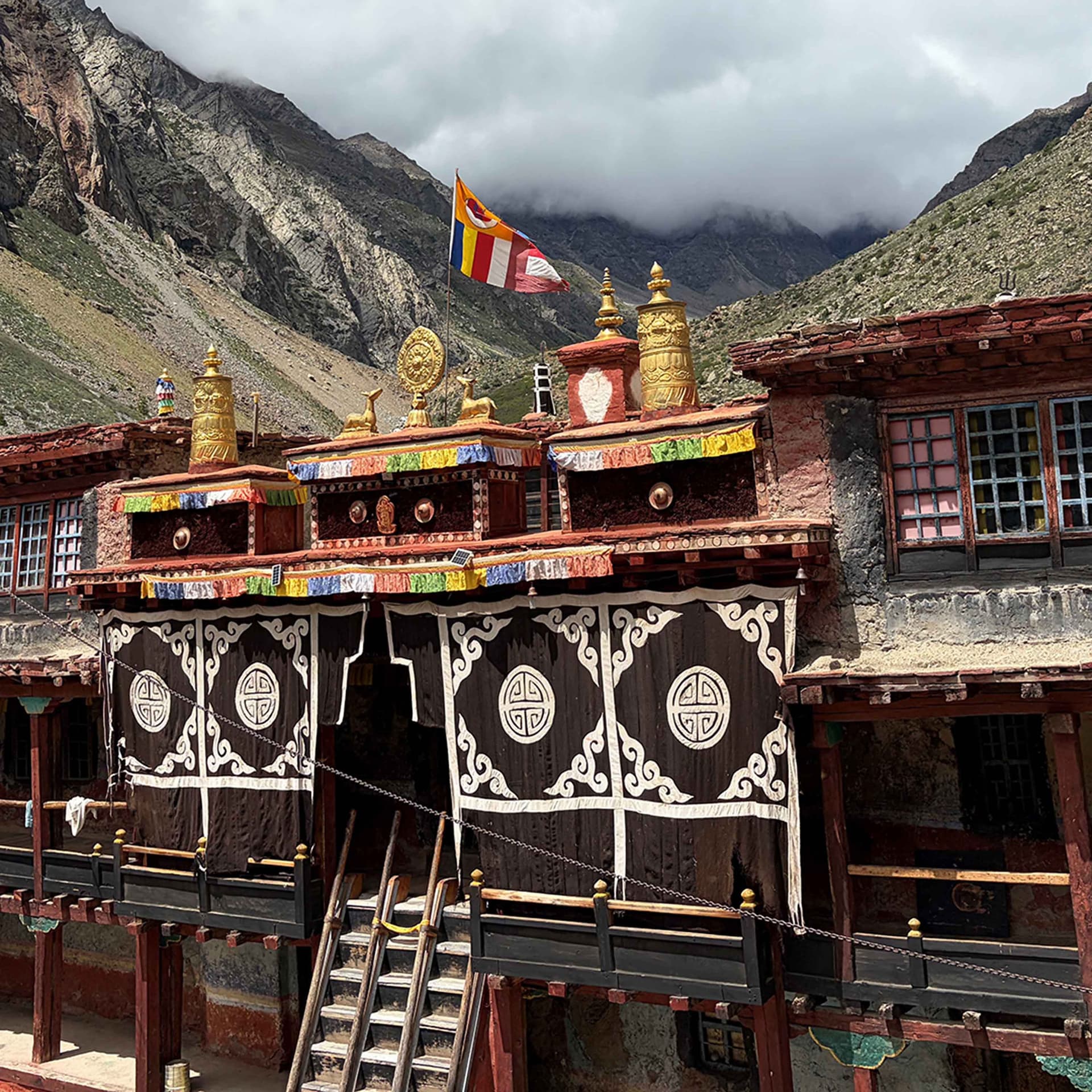
0:37Just an hour's drive away from Kabul is the Panjshir Valley. It's one of the smallest provinces in Afghanistan, and it's known for its beauty, semi-precious jewels, and resistance. It was a stronghold against Soviet forces in the 80s, the Taliban in the 90s, and it was the last place to fall to the Taliban when they came back to power in 2021. But now, despite being under Taliban control, people there are finding a way to help each other, especially women, through the power of radio. In Panjshir, there is a weekly radio program made by women for women trying to meet the crucial needs of women and girls who no longer have access to schools and in some cases, basic medical services.
1:25This is a clip of the presenter discussing what will be in the program for that week.
1:34Shakiba Habib of BBC Afghan Services recently travelled back to Afghanistan to meet the people resisting through radio in the Panjshir Valley. Welcome Shakiba to Flip Lours. Always great to have you. Thank you. The pleasure is always mine. Shakiba, before we speak about the radio station, before this visit, when was the last time you went back to Afghanistan? I left Afghanistan when the Taliban came to power the first time in 90s, in 1996, to be precise. And then I went back only for a couple of nights in 2019. But it was literally a couple of nights because I was there for a funeral. How did you feel before going back to Kabul after such a long time and knowing that you are going to go to Panjshir and travel around and be among your fellow Afghans?
2:28I was really excited. Since I've left Afghanistan, I have always been homesick. And that feeling, I have never left. So this is always with me. And I must admit, I was a bit scared as well. I had been in Afghanistan while the Taliban were there, But obviously, I was away for such a long time and in a safe place and living in London. And obviously, my mindset had changed. And I was so used to the way of life in London. So, of course, I was a bit scared as well. As a woman as well, knowing that you're going to Taliban country. Yes. Yeah. The thing is, is that home feeling that obviously, when you go back to your country, so you have that feeling that oh okay this is my country and then I feel like this is my place.
3:17I was really thrilled and I was so happy but obviously I didn't know what to expect. I was on my own basically however I had my male colleague with me from Afghan service so we went out and then as soon as I just put my passport there for chicks because I traveled with my British passport so the gentleman at the desk didn't look at me at all so he looked at the passport and he just fix the camera just to take my picture for immigration reasons. And then he stamped the passport and just put it back on that little shelf. So I just picked it up from there. He never looked at me. And he didn't talk to you?
3:52No, no word at all. So how did I feel? Probably I was too excited to notice it, to be honest. I was just like, wow, I'm in my home country. Yes, I'm back in Afghanistan. I haven't been to Iran for 16 years as well. And I keep playing this in my mind that the day that I go back to the airport what is gonna happen I'm gonna be stressed are you gonna question me blah blah blah yeah so I was while you were saying I was like okay how did it feel you give your password and nothing happens and you can just walk out it was great feeling but then you as you said you expect things that you don't even know what will happen so you just say okay I saw ladies who were working at the airport and I it just was a bit of reassurance I would say and then I came out of the airport and then obviously the bright sun of Kabul is shining and I just came out and yes it was a great feeling but also you had this in mind that I'm here for work and they might not like it and obviously I probably will raise eyebrows yeah But still, I was just extremely happy.
5:06Shaky, but then you traveled to Panjshir. Just give us some context. Why is Panjshir so significant? Because as you mentioned earlier, it was known for its resistance. And also it was the final province to fall into the hands of Taliban. It took them almost a month fighting in Panjshir for the Taliban to take over. And one of the reasons you wanted to go to Panjshir was because of this group of people who are making this radio program that the main audiences for this program are women. What kind of topics are they covering? What are they doing? and I found it really amazing I went there and I just sat with this lady and she was just like so enthusiastic despite all the bands and everything happens there she was just like so full of energy and she was just like so enthusiastic and she said the program that she's making it makes such a huge difference and it's actually she put it really nicely and she said that it gives hope to those girls who might think so hopeless otherwise and they are actually running classes science subject classes for girls of the age of high school and they are emphasizing on chemistry biology physics and in particular and also because this particular lady she was doctor from the local clinic and she would come there once a week and run a program a really informative program about health issues that are specific to women for example breastfeeding and what are the benefits how they can do it how they can cope and also other stuff like period for young girls and stuff like this that I find it really informative and then I spoke to some of the locals and they said it's just they're just waiting for these programs to go on air and then Listen to it.
7:03Incredible grassroots work. Yeah, because I spoke to the editor and then he said it's a private radio and he's working hard to keep it running. And sometimes it's been really difficult, but he is trying his best. And he's actually trying to ensure that all the rules are abide by because he doesn't want to get into some sort of disagreement with the Taliban leaders. because he wants to keep this radio and he knows that it's really beneficial to the listeners. So this is what I want to get to, because we know that the Taliban are extremely strict when it comes to anything related to women, their education, their work, everything.
7:46So how does this radio get away with this? Teaching women, educating them? Yeah, it was really interesting. And employing them. Absolutely. I mean, that was one of the things that I was really surprised When I was asking the editor, he said he's finding ways to work around these restrictions. Mainly, for example, they are recording these lessons at home. So the teachers are recording these lessons at home. They are sending it out to the radio and then they broadcast it through radio. So they're working really hard to work around these rules and restrictions. It gives you a feeling that they really want to do it.
8:24It's so important to them. Absolutely. So it's just like something they put their heart into it. And I was pleased to go there because even I had my male colleagues with me on the journey. But being a woman, because Afghan society is really conservative. And even there, this lady who was working in the radio, she wanted to say this to a woman who basically understands the restrictions. And also because I understood what was going on with women in Afghanistan as a woman, so I could relate to those restrictions. So she was really happy to speak to me, open up to me and tell me everything. And also the achievement that how successful these programs are and how good it is for girls of school age.
9:11And also she was telling me that sometimes she gets really, really nice messages from people. And that was one of the significance that I was there as a woman journalist. And she said it's a hope. It's a huge hope for some of the girls that otherwise they will be so hopeless and they will be like sitting in a corner of the home doing nothing, maybe like ending up in depression and anxiety. but this program is a small ray of hope in that situation that for a girl who otherwise couldn't do anything so this was something and also the health program that they were running it would just help some of the women who were stuck at home in the villages really remote and they didn't have no access to any other type of information any other resources and she was really enthusiastic about the way she was putting this information to me and she was actually enjoying the work she was doing.
10:05Shakiba, when you were there, who else did you get to talk to? I spoke to a group of women that they were actually talking about the restrictions and how it made it difficult for them and obviously poverty. This is for every other person in Afghanistan you speak to. They just complain and then they say that they hardly have any source of income, especially for women. Many of them are widows. Absolutely. And this particular woman that I met with, she was with it many years ago. And she had children to look after. And then she said, I don't have a job. I was kicked out of my job. And then at the same time, if I get a job, then I have to have a chaperone and I don't have no one.
10:48And she had a grown up girl who actually had a disability. And she said that you can see it for yourself. How can I earn for these children? How can I feed these children? That was one of the things that I realized. Even in Kabul, I spoke to a woman who was widowed like two years ago and she was looking after three children. She was just like so hopeless. And she said, I don't have no way of earning for these children. I'm capable. I can work. And she used to work in one of the media stations. And she said, I was kicked out of my job. And then I was told, OK, you can't come to work. And now even if I look for any other job, they will just tell me, oh, because you're a woman, obviously, you're not allowed to.
11:30And the second thing is you need to have a chaperone. And then whom am I going to bring to work? So you have to have a chaperone to take you to work and then pick you up from work? Yeah, I assume so, because her children were too young. And then the son was obviously attending school. She said, I can't take him out of school to take me to work. So it's just it wouldn't work because I was like really surprised. And I said, how you how you feed yourself and children? And she said, I'm just relying on my relatives. I'm relying on handouts. And then I have to ask people for money. And she was capable.
12:02She said, I can, I know how to do things. And I'm like really capable. It's absolutely a sad situation when you think about it. Did you ever get to talk to any Taliban officials? They wouldn't talk to me. so however i was listening to those taliban member when i was going through the checkpoints because once you get to panchir there are a number of checkpoints that they will stop the car and then they were asking my colleagues that where we are going and we were where we were from so things like this so they were getting there yeah shakiba earlier in september a couple of earthquakes hit Afghanistan.
12:45And there are reports that thousands of people died in those earthquakes. And there were also reports of women not getting the help that they need because of the strict rules by Taliban. And also cultural issues because there are not enough female aid workers who can help women. Is this true? Are women left out of this aid and help missions? By the time the earthquake happened, I had left Afghanistan a couple of weeks before that. However, my colleague who traveled with me, Yama Boris, was there. So we traveled together to Kabul and he's still there. So he actually went to the field and then he was reporting from there.
13:36and I saw the footage that there was no systematic measures in place to deny any sort of help to women. However, there are reasons, as you mentioned, the cultural reasons. But the other reason was because the local hospitals and health centres in Asadabad, so there are some small clinics when you enter every valley that was affected by the earthquake. Those small clinics, they don't have female staff. So there are no female health worker there to see women casualties there and then. So that's one of the drawbacks. And for women to... They're not allowed, so a male health worker is not allowed to see women?
14:23The thing is, I think culturally women wouldn't want to be seen by... Cultural. Yeah, and this is the thing. They don't want to be seen by a male doctor. they would definitely prefer a female and those small clinics they didn't have a woman health worker or no nurses no doctors probably some of the women would have been able to be treated there with minor injuries so probably they would have been it would have been much easier also those mobile health teams that they went to the area the affected areas they didn't have a female health workers so obviously this hinders the process my colleague actually spoke to the Taliban official who is in charge of the rescue operation.
15:06They said that because of the weather, so women and children are usually sleeping indoor, where men can sleep outdoor. So obviously once the earthquake has happened, so there are more casualties in women and children rather than men. For women to take a long journey, especially those who were pregnant, obviously with young children. So that was really difficult for them to take these long journeys. And when we spoke to the Taliban officials, they said, because these helicopters haven't got that much capacity, and they can only carry 50 people. And the thing is, they were actually prioritizing those who were really seriously injured to take them to the local hospital.
15:47Some of the injured had to be treated on the spot. Once again, there was no female health worker available. It's sad. I'm sure there are many health workers, capable women, female health workers there in Afghanistan who can help. But they're not allowed. Yeah, it's sad. Shaqiba, reflecting on your trip, seeing these people who are doing all they can with all the restrictions to help people, especially women, and talking to locals, how do you feel about the future of Afghanistan? When I spoke to everyone, The first wording would be, oh, we are so pleased. There are no explosions. There are no war.
16:30And there's no fighting. But all of a sudden, the scenario will change. And they will say that it's the poverty, it's the restrictions on women and girls. And it's just every family is so worried about their daughters. And they say that, OK, even if I stay in Afghanistan, what I'm going to do? So these girls will be just here doing nothing. And I was actually speaking to a group of people just in regards to their plans for leaving Afghanistan. And there was one woman that I spoke to and she said she tried so many ways to leave Afghanistan. She had applied for colleges, universities abroad. She said that she's even ready to get married to someone abroad that she would be able to go out of Afghanistan.
17:20and at least she can continue to study and also she can get a job. So this sort of feelings that nothing is clear and nothing, and no one can see the future for themselves. So this is really worrying. But still trying to keep some hope. In Farsi we say, humans are alive because of hope. Thank you very much, Shakiba Habib from BBC Afghan Services. You are listening to the documentary from the BBC World Service. This is The Fifth Floor, and I'm Farina Khamidi. India is a country of well over a billion people, so the clearing of waste requires a huge number of sanitation workers. About 98 % of those workers are from one caste in society, who find it difficult to get jobs in other industries.
18:12Asha Yedgay reports for BBC in India, and he talked to some sanitation workers about why. I live in Delhi, and I live alone here. So a woman came daily to collect my garbage every day. So one fine day I asked her, she was not looking well, so I asked her what happened to her health and all. So she told me for 15-20 minutes about her life, the difficulty she faced while living and doing this work of collecting garbage. She was the third generation sanitation worker from her family. So her grandfather used to do the work of collecting garbage in Rajasthan. And now her son has also joined in this work.
18:56He is educated, he has taken a formal degree, but as employment is quite scarce in India, so he decided to join her mother in this work. And they both now collect the garbage from the last 10 years in Delhi. In terms of social security, in terms of the health conditions, their life was very difficult. So this triggered something into me and I was more curious about finding out about their life, how do they live, where do they live. This was the basic inspiration. Tell us a little bit about who historically does sanitation work in India. So historically, sanitation has been done by the Dalit communities.
19:42And these communities and people from these communities are historically considered untouchables. So India has this very complex and unique caste system. On paper, it was abolished in 1950s with our constitution. But in reality, this caste system still works in India. And in this caste system, there are different stratas of society. So untouchables are the lowest among them. And Dalit communities are from the untouchables. So for centuries, they have been assigned to clean the human waste, sweep the streets, carry the dead animals to their houses from streets. And they were assigned this work.
20:24According to some data also of government, of course, 98 % of sanitation workers in India are from the community. And is there a reason behind that that you can explain? At first, if we see, Indian society, Indian caste system was created in such a way that you are assigned a role in a society by birth. So if a carpenter's son comes into this world, he's assigned the work of carpentry for his whole life. If a teacher's son is born, then he's supposed to teach for his whole life. Like this, this sanitation work was assigned to people who were born in this untouchable communities from centuries, like from 6th century, 7th century, these people were forced to do this work.
21:11And that's why that stigma still remains in Indian society after independence also. Anashe, for your piece, you spoke to a man. His name is Sunil. Tell me about him. How long had he worked in sanitation? Sunil Yadav. He's from Meheter community, which is another name of a Dalit community. So he's 43 years old and he's from Mumbai. So he has been working as a sanitation worker with Mumbai Municipal Corporation since 2005. It's been 20 years and still he's doing the same work every day of cleaning Mumbai streets. From what I understand, he's a very educated man. He has a few degrees and been to some prestigious institutions, educational institutions.
21:58Does he have to stay in this business for the rest of his life? He, of course, when he was assigned to this work, he was some 22, 23 years old and he was not educated at that time. But later on, he decided that he should get educated and leave this work and do something different in the field of sanitation. So he acquired different degrees. He has master's in journalism, master's in social work, master's in law also. So for the rest of his life, he intends to work for the sanitation workers. But as a community development officer, he don't want to sweep the streets, but he just want a promotion.
22:36He wants to work for them as an officer. He's doing his PhD on the issues of women's sanitation worker in Mumbai. So he wants to do something related to it, but not exactly sweeping the streets and collecting garbage from the streets. And how is it going for him? It's quite difficult. So since last 10 years, he's trying to get a promotion, just one level above the sanitation worker. But there are numerous reasons, which is why his promotion is denied to him. So he's fighting against Mumbai Municipal Corporation in the high courts of Bombay. Still, he's not able to get that promotion. So currently, he's working as a sanitation worker.
23:17So he applies for these promotions and he gets rejected. What is he told when he gets rejected? Is it obvious that it is because of his caste? Officially, on paper, Mumbai Municipal Corporation says that you are not eligible for this job. But Sunil alleges that this is just because of his caste. Because one officer even told him once that if you become an officer, we'll sweep our street, we'll clean our neighborhoods. We should see what communities these people come from. So there are two layers in sanitation workers. One is the people who are working on the streets and other ones are officers sitting in, you know, offices and doing things for them.
24:03So these officers are not Dalits. They are most of them officers are not Dalit and all the sanitation workers are Dalit. So there's this silent kind of battle going on amongst them to keep the sanitation workers on their rolls forever. So that's why he thinks that the caste is the major reason, which is why he is denied promotion. It's very interesting that he can access education, but not be able to get a promotion. Is it easy for people from the Dalit caste to get education? It's not easy, but yeah, it has become, you know, accessible with various mediums. Nowadays, you can earn degrees using remote learning.
24:51And that's why he has acquired so many degrees. But it's not still easy to get educated. But he has done a lot of hard work to get all of these degrees. And does the government actually do anything to combat this caste-based discrimination? Yes. So there are anti-discrimination laws in India. There are caste abolition laws in India. There are also national commissions for the sanitation workers. But in reality, these commissions and all these people, these departments have very little power to, you know, do something for the sanitation workers. Many posts in these commissions are vacant. And the reports, you know, which are published in the recent years, they have confirmed that all of these government efforts are not sufficient to erase this stigma.
25:39So this gentleman, Sunil, he also has two daughters. Will they be forced to work in the sanitation industry as well? He hopes not. His elder daughter, she wants to create a career in basketball. And younger one, she wants to become a lawyer. But condition, the economical condition is such that you never know that they would be also forced to do this work eventually if the overall conditions doesn't improve for them. Thank you. Asha Yedgay, who reports for BBC in India. That's all from me, Farhanak Amidi, and the rest of the Fifth Floor team. Thanks for listening.
26:24You've been listening to the documentary from the BBC World Service.
From the publisher
Women in Afghanistan are unable to access education, and getting medical help is difficult. But a radio station in the Panjshir Valley is trying to get crucial information to them nevertheless. Their broadcasts cover everything from breast feeding to basic school science lessons for women and girls who are often isolated. Shekiba Habib of BBC Afghan services went to meet the people making this lifeline radio.
India is a country of well over a billion people, so the clearing of waste, requires a huge number of sanitation workers. About 98% of those workers are from one caste in society, who find it difficult to get jobs in any other industries. Ashay Yedge reports for BBC in India talked to some sanitation workers about why.
This episode of The Documentary comes to you from The Fifth Floor, the show at the heart of global storytelling, with BBC journalists from all around the world.
Presented by Faranak Amidi
Produced by Rebecca Moore and Caroline Ferguson
This is an EcoAudio certified production.