In short
A BBC World Service documentary following Ghanaian football dreamers and the Right to Dream Academy’s pipeline from street football and rural trials to education-backed scholarships and international development, while also examining risks of football migration and allegations of harsh discipline.
Guests (people interviewed on-mic)
- Justice Beidou (presenter/narrator).
- Alex Esiedu (head of Right to Dream Academy in Ghana; explains the academy’s “no child left behind” education pillar).
- Jamal (head of scouting for Right to Dream Ghana; describes trial selection criteria and scouting routes).
- Winifred Suda (14-year-old Ghanaian midfielder; discusses playing style, discouragement, and aiming for a US scholarship).
- Foster Yeboah (10-year-old trialist; selected then later assessed for scholarship).
- Hallelujah Gospel Atopra Anak (9-year-old; excels in reading test; scholarship decision delayed due to age).
- Daniel Kofi (10-year-old; returns for a second trial; selected).
- Jeppe Lausen Brock (Danish journalist; reports 2018 investigation alleging corporal punishment).
- James Notte (head of pastoral care; critiques “colonial mindset” in player exploitation).
- Fentuo Tahiru (sports journalist, Joy FM; discusses agents abandoning players and FIFA/agent issues).
- Ben Garner (International Academy coach; match briefing).
- Collins (16-year-old IA player in Denmark; talks adaptation and family).
- Theo (IA player support; mentions adaptation, especially food/weather).
- Michael Lesian (coach; former Chelsea/Black Stars midfielder; explains transition to professional football).
- Prince Amuaku Jr. (FC Nordsjælland player; compares his style to Vinícius Jr.; plans community tournament).
- Jamal’s companion: not named beyond “Jamal” (scouting).
Key claims
- Right to Dream combines football with heavy education emphasis (“no child left behind”).
- Street soccer in Ghana builds skill for small spaces and midfield play.
- FIFA rules under-18 transfer restrictions aim to reduce trafficking, but exploitation still occurs via rogue agents.
- The academy’s scholarship selection is rigorous after trials of ~23,000 students.
- International Academy (under-18) helps players adapt to Europe before professional exposure.
- There are allegations of corporal punishment (2018), which the academy disputes/declines to discuss for the program.
Notable examples
- Kamal Din Suleymana (selected on a pothole pitch; later plays for Atlanta and Ghana).
- Foster Yeboah (10-year-old trial heartbreak/selection process; later assessed).
- Hallelujah Gospel (reading-test excellence; scholarship decision delayed).
- Daniel Kofi (selected on second attempt; praised for integrity/behavior).
- Collins and Prince Amuaku Jr. playing in Denmark; Prince’s community giveaway plans.
- FC Nordsjælland fans boycotting matches over the “sell quickly” model.
Written by AI. May contain mistakes. Listen to the episode to check what was said.
Chapters
Tap a time to open that second in VOJourney Begins in Accra
1:28 to 2:34
Justice Beidou shares his childhood memories and introduces the documentary's focus.
“Welcome to the documentary podcast from the BBC World Service.”
Exploring the Right to Dream Academy
2:34 to 3:16
Introduction to the Right to Dream Academy and its mission to nurture talent.
“and in this documentary for the bbc world service i will be asking how you can take a boy or girl form a neighbourhood like this one and transform him or her into a global football star.”
The Impact of Street Soccer
3:16 to 5:50
Discussion on the role of street soccer in developing football skills in Ghana.
“We are challenging the narrative of that.”
Education and Football: A Dual Approach
5:50 to 7:48
The academy emphasizes balancing education with football training for all students.
“It's about helping young people achieve their dreams in a nutshell and achieving their dreams on the field and off the field.”
Winifred's Journey in Football
7:48 to 10:05
Winifred shares her experiences as a girl in football and her aspirations.
“Near where Alex and I are standing, the girls' team is practicing.”
Scouting for Future Stars
10:05 to 12:20
Insight into the scouting process for selecting talented football players in Ghana.
“And to find them, they have a scouting program which takes them to towns and villages across Ghana, where they watch thousands of children compete in tryouts for a fully paid scholarship to the school.”
The Dream of Success
12:20 to 14:06
Discussion on the significance of football success for young players and their communities.
“For example, here, this is where Kamal Din came from.”
Local Coaches and Talent Development
14:06 to 14:55
Learn about the challenges local coaches face in developing young football talent.
“The coaches know that they need Right to Dream to take their best kids to the next level.”
Heartbreak and Hope in Selection
14:55 to 16:44
Witness the emotional moments during a football selection process for young players.
“So it's really possible that there are several people who have the born talent but will never ever be up there?”
Meeting Foster's Family
16:44 to 18:58
Follow the Right to Dream coach as he meets with the family of young talent Foster.
“Yeah, it is, but we have to go with the reality.”
Show all 29 chapters
The Dark Side of Football Dreams
18:58 to 21:29
Explore the risks and exploitation faced by young football players in Ghana.
“There are obviously issues of, you know, people trafficking.”
History and Impact of Right to Dream
21:29 to 22:34
Understand the historical context and founding principles of the Right to Dream Academy.
“It was against this background of exploitation that the Right to Dream Football Academy was set up more than 25 years ago.”
Pressure of Expectations in the Academy
22:34 to 23:24
Discover the pressures faced by students in the Right to Dream Academy.
“So when they did the justify in Ashaiman, you went there to play?”
Pressure of Expectations in the Academy
24:38 to 24:49
Discover the pressures faced by students in the Right to Dream Academy.
“We all can agree that housing is expensive.”
Pressure of Expectations in the Academy
25:45 to 26:22
Discover the pressures faced by students in the Right to Dream Academy.
“This podcast is your shortcut back to clarity.”
Football Passion in Ghana
26:22 to 28:00
Experience the vibrant football culture in Ghana and its significance to the people.
“I'm going to take you into a place which is a common sight in many Ghanaian neighborhoods like this one that shows the sheer passion that people in Ghana have for the game of football.”
Ghana's Football Identity
28:00 to 28:50
Exploring how football shapes Ghana's global image and success stories.
“Ghana here, our best source is football.”
Trials at Right to Dream Academy
28:50 to 29:40
Follow the intense trials for young footballers at Right to Dream Academy.
“It's a week on from the intense trials and I've come back to the academy to find out if Foster and Hallelujah made the cut or if they've been sent home.”
Daniel's Journey
29:40 to 30:58
Meet Daniel, a 10-year-old trialist sharing his aspirations and challenges.
“It's actually really interesting because when we went to Foster's village, he was like the little Messi or the little Ronaldo in the village.”
Hallelujah's Struggles
30:58 to 32:59
Hallelujah faces challenges as a young female footballer at the academy.
“You came last year and you've come back this year.”
Disciplinary Concerns
32:59 to 35:09
Investigating the discipline practices at the Right to Dream Academy and criticisms.
“Ride to Dream is a high-pressure environment with long days of training.”
International Academy Insights
35:09 to 37:10
Exploring the benefits and challenges of the International Academy experience.
“signs of this harsh punishment on my three visits to the Right to Dream Academy in 2025.”
Collins' Life in Denmark
37:10 to 40:06
Collins shares his experiences adapting to life and football in Denmark.
“But adapting to a new culture is part of the goal of the International Academy.”
FC Deutschland and Career Pathways
40:06 to 42:00
Understanding the significance of FC Deutschland for player development.
“I was just telling him about our game and what happened.”
The Journey of Right to Dream Players
42:00 to 43:38
Explore the importance of the Denny Superliga as a stepping stone for young Ghanaian footballers aiming for professional careers.
“Whereas I think that final step here to go and play first-team football and get these young players here that have got 50 to 100 games very, very quickly by the age of 19, 20.”
The Criticism of FC Nordsjælland's Model
43:38 to 44:54
Hear about the mixed feelings of fans regarding FC Nordsjælland's player development and sales model.
“which has also given Danish fans a chance to see top talent such as Mohamed Kudos.”
Prince Amuaku Jr.'s Aspirations and Community Impact
44:54 to 47:36
Learn about Prince Amuaku Jr.'s journey from Right to Dream to professional football and his commitment to giving back to his community.
“fans boycott the game as a protest against Right to Dreams business model.”
The Selection Process at Right to Dream Academy
47:36 to 50:03
Discover the rigorous selection process at Right to Dream and the emotional stakes for hopeful young players.
“After surveying 23 ,000 students in trials, just 18 students remain.”
Celebrating Achievements and Future Aspirations
50:03 to 52:41
Reflect on the achievements of selected students and their dreams of influencing their communities through football.
“First, relief that we've gotten through this smoothly.”
Transcript
Automatic transcript. May contain errors.0:00This BBC podcast is supported by ads outside the UK.
0:30travel dollars work harder. Follow Smart Travel on your favorite podcast app. Ever wonder why we make the choices we do and how to make smarter ones? Introducing Choiceology, an original podcast from Charles Schwab. Join Wharton Professor Katie Milkman, an award-winning behavioral scientist and author of the best-selling book, How to Change, as she shares true stories from Nobel laureates, authors, athletes, and everyday people about why we do the things we do, and how to make better choices to help avoid costly mistakes. Each episode covers the latest research in behavioral science and dives into themes like the power of self-control, shaping your mindset for success, navigating new beginnings, and why starting over can feel so hard.
1:19Listen to choiceology at schwab.com slash podcast, or wherever you listen.
1:28Welcome to the documentary podcast from the BBC World Service. My name is Justice Beidou and this is Africa's Football Dreamers. I'm standing just outside a local church in Domi Pila 2. It's in the heart of Accra, Ghana's capital. So right in front of me is about 20 young kids who are running around after a football that is just about the size of a tennis ball. So I want to have a bit of a play with you guys, right? OK, so let's go. OK, OK, OK. The ball is so tiny, it's actually even hard to find where it is. it's really memorable watching and taking part in this it sends me back to more than 20 years ago when i was about 10 years old playing in the village where i grew up and this right here is the start of our journey that i'm going to take you on over the next one hour my name is justice and in this documentary for the bbc world service i will be asking how you can take a boy or girl form a neighbourhood like this one and transform him or her into a global football star.
2:48How do you give them the confidence, the resilience, the mental fortitude and the skill to go through the journey of becoming a football icon? Football for them, it means everything. I've been given unprecedented access to one of Africa's top football schools, the Right to Dream Academy in Ghana. We truly believe that there's talent in Africa and we are changing football. We are challenging the narrative of that. I will be travelling with their scouts as they look for the next World Cup superstars in rural Ghana, meeting their top talents as well as players taking their first steps in a professional game.
3:30This is Africa's Football Dreamers. It's my dream to play for Real Madrid and I know it will come true. I've been dreaming to play for them, to play in the Champions League, even to win the Ballon d 'Or. Yeah, my dream to win the World Cup with Ghana. I have big dreams that I want to achieve.
3:56We're heading to the Wright Dream Academy now. Finding this place is so hard because it has no signpost to show you. But I find it in the end. and turning off that dusty pothole road is like stepping into another world. I could see about five different football pitches, all lush green. They all looked recently mowed and tidied up. I arrive at the start of a football training session. Nearby, some boys juggle the ball between one another. Then a coach gathers them to play a game of piggy in the middle.
4:42A group of boys form a circle holding hands and try to pass the ball to each other before two boys in the middle can intercept it. Five, six, seven, eight, nine, ten. Let's go, let's go. Watching this fan warm-up game, I'm reminded of those young kids playing in the streets of Accra. That might seem like a bit of a stretch, but according to the head of the academy, Alex Esiedu, street soccer is at the heart of our identity as Ghanaian footballers. So we don't have all these fields you're seeing. You'll see them in most other places in Ghana. So we're used to playing in small spaces. And there are a lot of young kids around.
5:23So getting the ability to get out of that space with the ball from when you are age 2 up. By the time you're 10, 12, you are a fantastic midfielder. And I think that's how come, especially West Africa, comes up with such good midfielders. So we're used to getting our way out of trouble in small spaces. On the field and off the field too.
5:46Street soccer is coded into the way we play the game. that intricate tiki-taka style and when you combine it with our natural athleticism it's really no wonder that so many of the world's top players have guinean heritage you might think of today's stars like manchester city's antoine semino and jeremy doku but also legends like michael asian abedi ayu pelli sammy kufuo and tony yeboa to name a few Then there are all the players who have passed through this academy A lineup that includes Ghana Internationals Mohamed Kudus and Kamal Din Suleymana And Ivorian stars like Simon Adingra and Mohamed Diomande They are four of more than 260 students who have gone on to forge careers as professional players So I ask Alex, what is this academy all about?
6:46It's about helping young people achieve their dreams in a nutshell and achieving their dreams on the field and off the field. I think that with a lot of academies, it's more on the field. What we've done that is special is that there is an education pillar, apart from the football pillar, and we put as much emphasis on education as we put in football. So the bottom line is that we have a no-child-left-behind policy. So that's what makes this place unique. After all, even at this elite level, only a small number of teenagers are going to make it as pros and being released from an academy can be a crushing blow to a child who has pinned all their hopes on making it in football.
7:34Right to Dream takes the approach that while all children start the school hoping to become footballers, some will end up pursuing higher education instead. And it's not just for boys. Near where Alex and I are standing, the girls' team is practicing. This school was the first soccer academy in Africa to recruit girl players. And 13 of the 64 students are female.
8:06One of them is a shy midfielder with an efficient, unshowy style, Winifred. I'm Winifred Suda. and I'm 14 years old. I'm not like those when they take their ball, like they want to dribble before they pass. I'm not that type. I like playing simple. Take touch, I'll pass. Take the pass and support. That's how I am.
8:31How is it like for girls to play football? Tell me about it. They will say I'm a boy. They say because of football I'm a boy. Some people told me, some people even discouraged me. that football wasn't going to help me. What did they say? They said, why is it that only me am deciding to play football? But I didn't mind what they were saying. And my dad told me that if I put my mind to something, I have to make sure I do it and no one will discourage me. Yes! Come on! Good. Here's my class. Oh, nice. I'll see you now. Hello. After training, Winifred shows me around the school building The classrooms are all named after black icons like Maya Angelou and Martin Luther King.
9:20And for Ghana, they are well equipped. And yet we have computers that is for each one on their own. Everybody has a computer. Everybody has their computer. Although Winifred is a promising footballer, she is focusing on her education just as hard. She tells me she wants to win a scholarship to a U.S. high school and on to university. but she needs to prove herself over the next few months. I just have to work hard on both sides, football and school, because that place, I learned that it's 50 % school, 50 % football, and that's the type of school I want. That's why I'm really pushing. Right to Dream make the No Child Left Behind policy work by selecting students who show exceptional footballing and academic promise.
10:10And to find them, they have a scouting program which takes them to towns and villages across Ghana, where they watch thousands of children compete in tryouts for a fully paid scholarship to the school.
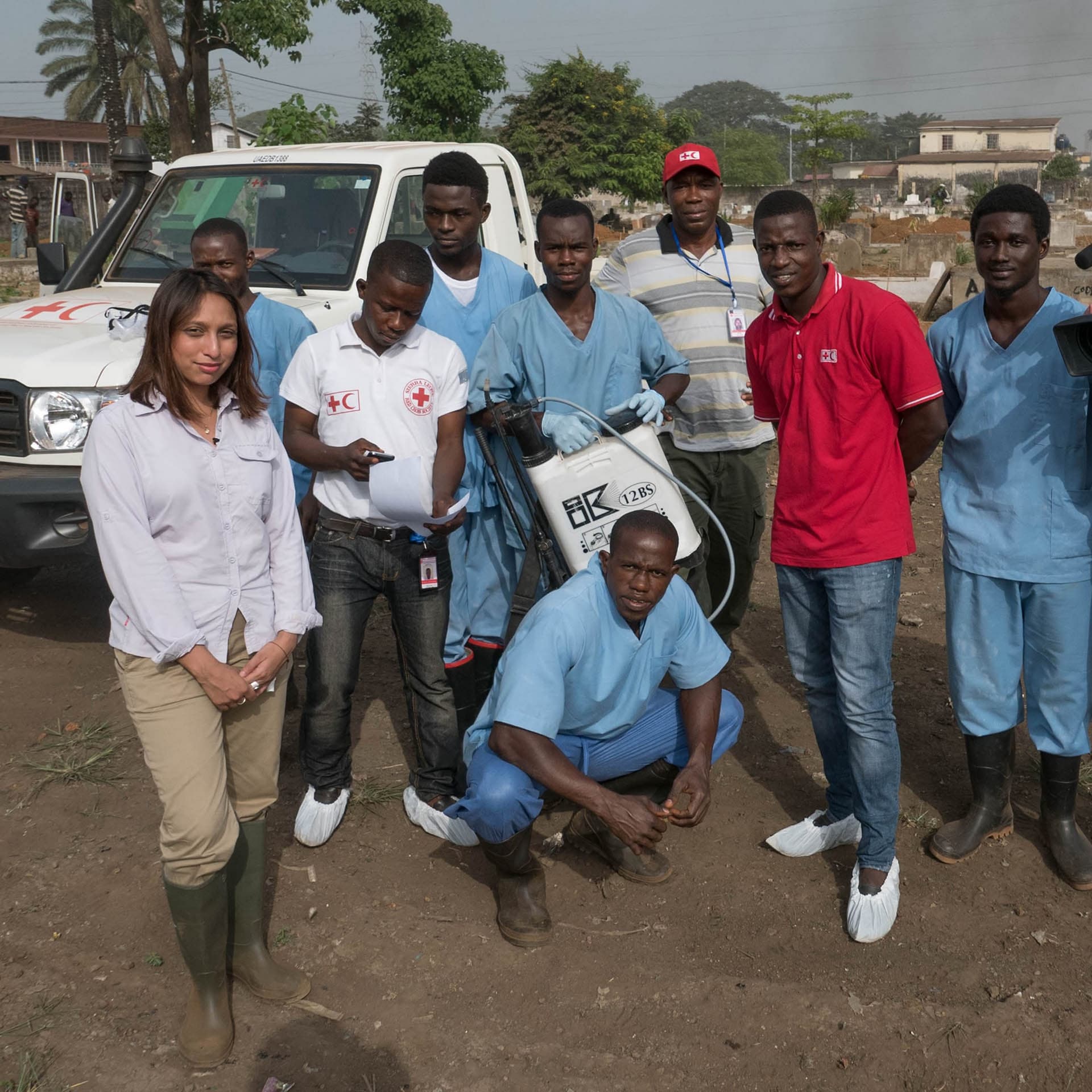
10:27I joined the school on a scouting trip, and my traveling companion is a Tanzanian man called Jamal. He is a softly spoken man with a gentle manner. But if you are a Ghanaian child who would love to be a pro-footballer, Jamal is one of the people who can make that happen. I'm the head of scouting for Right to Dream Ghana. So, so far on this particular session of the scouting, where have you been so far? Yeah, so far we've been doing a lot in Greater Akra region. And now we are heading now to do the Bronga Afri region, Ashanti region and the Northern region. So tell us, what's the journey ahead?
11:07How long is it going to take us to get to where we're going? I think approximately maybe seven, seven and a half hours. Yeah. Right. Jamal has asked me not to reveal where today's trial is taking place. Right to Dream is not the only academy trying to find the top talent. We travel through towns and forests before we pull up next to a dirt pitch filled with potholes. the place is already busy. I watch about 200 boys and a few girls compete in a series of hits which seven kids play against one another while Jamal and his team watch from the sideline. I ask him what he's looking for. So you look for the first touch, how he strikes the ball and how he passes.
11:56And then what does he do next? And that is how you look for the intelligent part of the player. But the chances of any of these kids going all the way are very small. We see a lot of players, sometimes over 50 ,000 players all over the country. And you pick five? Yeah, we pick five. Last year, 2024, was eight players, seven boys and one girl. So for young people in this area, what does football mean to them from your experience? Football for them, it means everything. For example, here, this is where Kamal Din came from. So they have like a role model who they can look for and they don't perceive this opportunity as a fan or like just to enjoy, but something to change their life and their family's life.
12:45Jamal is talking about Kamal Din Suleymana, who plays for Atlanta in Italy's top Serie A league. His career began on the same pothole pitch where he was selected by the academy. He plays for the Ghana national team too and will be playing for the Black Stars at this year's World Cup in the United States. Kamal Din is living the dream of every kid here and his presence is felt everywhere here. Not far away is a grand house that he built for his mother. A reminder of what success on a day like this can lead to. Everybody knows Kamal Din Suleyman.
13:27He is a Ghana player who plays for Liberty Professionals. He is a wonderful player. He played a justifier here on the pitch and they took him away. I feel happy whenever I see him on TV. It motivates me to play harder so that I can be selected just like him so that I can be chosen. These kids play for small local clubs, many of which lack even basic equipment and don't have the ability to fully develop the children's talent. The coaches know that they need Right to Dream to take their best kids to the next level. When you go to their training grounds, they have about 40, 50 boys and maybe girls.
14:20And then you only one or two boys. How can you develop the talent? This is local coach Swale Mohamed.
14:55So it's really possible that there are several people who have the born talent but will never ever be up there? Yes, because the talent can be wasted. So today is a make or break moment. So are you ready for the final? Yes. So no pressure. I want you to enjoy. Good luck. Thanks. Thanks. In the final of the tournament, one boy in particular makes an impression. A small 10-year-old called Foster Yeboah. Foster is fast on the ball and strong. He weaves his tiny body through the defenders crowding around as he moves the ball. He's a hard shooter and looks like a proper baller.
15:55Jamal makes the final selection of the day which means it's heartbreak for some so thank you so much, don't lose hope so go and put more effort and we'll come and see you next year again thank you so much
16:16There's one boy who's just been pulled out that he didn't qualify for the final, who's just broken down in tears. It's quite painful to watch. His friends come around him, and he's all in tears now. Next time, OK? Let's keep working hard, OK? Keep working hard. Don't cry, huh? Don't give up. We'll make it one day, OK? We make it one day. It's really heartbreaking for some of them. Yeah, it is, but we have to go with the reality. So it's heartbreaking, but we don't have a choice. One of the kids that was chosen was little Foster. But before he can proceed to the next stage, Right to Dream coach Jamal and his team want to meet Foster's parents to introduce themselves and also see proof of his age.
17:12So we pay a visit to his home. So I've just come into the compound house where Foster lives with his mother and father. So my name is Jamal. As part of our scouting today, we saw your boy Foster among the players that we selected. With the team in Foster's home already, it's drawing a lot of attention. many people are coming in.
17:45Watching on is Foster himself. The little 10-year-old is so shy he can only speak in a whisper. My name is Yabwa Foster. I was hoping that I would be selected. I was hoping they would take me away. My coach told me to do my best, So I would be selected. So that's Fosta, who looks very scared from the way that he looks like. Everybody following him to his house, finding about who he is. He looks like a young little lad who basically just wants to play football and enjoy himself. These meetings with families present a delicate moment. Too often, scouts have come to poor families with promises of football stardom that come to nothing.
18:40World football's governing body, FIFA, has rules that ban players moving abroad to play for clubs until they are 18. But families in Ghana are often unaware of those rules. And while European clubs must only work with licensed agents, that doesn't stop rogue operators from selling false dreams. There are obviously issues of, you know, people trafficking. Anyone can just come to Ghana, find a player and say, we're going abroad, I'm taking you to a team abroad. You know, it shouldn't be. This is my friend and former colleague, the sports journalist Fentuo Tahiru from Joy FM in Accra. Some of the agents abandoned them along the way.
19:25You have instances where players are asking relatives of money to come back home because they can't find the agent that took them there. Because the agent that took them there, they didn't manage to find a team for that. And he said, let me cut my losses. So they leave the player and then they go away and they can't find them. Underlying these horror stories is a view of talented African children as commodities to be discovered and traded. This is James Notte, the head of pastoral care at Right to Dream. For me, that's the colonial mindset. It's like, I'm coming there, not because I care for Africa, not because I care for the people.
20:04I want that thing that will benefit what I'm doing over there in Europe, and then I'll take it. I've heard there's gold there, and I'm going to go and find the gold and bring it. The unchanging coastline of the Gulf of Guinea borders a British colony, the Gold Coast, with the prospect of great changes ahead of it, changes that would bring to its new future a new name, Ghana. Ghana, which was formerly known as Gold Coast, was a colony until 1957, for the final century belonging to Britain. This contact with Europeans is of course how we got into football in the first place. But it's a dark history.
20:45Dotted along the coast are the old trading forts built by Europeans. The most profitable form of trade was not in gold but in men. For 400 years, Gold Coast endured the harsh realities of the global slave trade. Men and women selected for their physical attributes were sold and shipped abroad. They often spent months in the dungeons of these forts before being taken in chains from their homelands across the ocean to the West Indies and North America. This brutal history inevitably colours how I think about football migration. It is so important that Kenyan footballers have a say in their future, that they are fully rewarded for their value.
21:29It was against this background of exploitation that the Right to Dream Football Academy was set up more than 25 years ago. And it's this background that explains why the school emphasizes education as well as football. So we'll start now with the reading test. It's five weeks after my scouting expedition and I'm back at the Right to Dream Academy. This time I'm joined by about 50 children who have passed through all the regional trials and come here for two weeks of intense training and exams to select who gets the scholarships. And I'm delighted to see among them a familiar face. Foster is here, as shy as ever.
22:18One of the children that excels at the reading test is the small nine-year-old from Ashaiman, a slum area near Accra, where she lives with her father, a football coach. What's your name? Hallelujah Gospel Atopra Anak. Wow, that's an interesting name. So when they did the justify in Ashaiman, you went there to play? When the ride to dream people came to Ashaimov? Yes. They first picked me. First final, second final, third final. And this one they picked me. They picked you five times? They picked you? Yes. Yesterday did you pray? When you first came here did you pray? Yes. My father prayed for me and I prayed that I should pass.
23:06So that I'll go abroad and go and get money. I'll go abroad and go get money. The stakes are so high for these kids and facing them it's an intense two weeks during which time most of them will be sent home. But talking to those that have already made it into the academy I realize that pressure doesn't go away. It can be hard for students when they go back home where people wrongly think they have already made it as footballers and must be rich. People see me as a big woman, like a professional who is having money. Just all get, give me this, give me that, because we are in an academy where kudos used to play for.
23:52So they treat me different from the others. Right, that's interesting. How's your experience when you go home? When I go home, I try to humble myself and tell myself that I'm no one yet. I just have to keep working at them, stay humble. So I try to play barefoot with them on the same dusty pitches every day, We play with them, talk with them, yeah, every day. You're listening to the documentary from the BBC World Service with me, Justice Beidou.
24:23With the Blue Cash Everyday Card, it's easy to earn 3 % cash back on groceries at U.S. supermarkets, U.S. online retail purchases, and U.S. gas stations. That's how we grow our family's little nest egg. Learn more at americanexpress.com slash explore-bce. Terms and cash back cap apply. We all can agree that housing is expensive. Rent, mortgage, it doesn't matter which one you're paying, it stings every month. But Bilt can make you feel a little better. Let me explain. Bilt started out rewarding members on their rent. Now, as of 2026, Bilt members can also earn points on mortgage payments wherever they live.
24:58Every housing payment earns you points you can use toward flights with top travel partners like United & Hyatt, Lyft Rides, Amazon.com purchases, and so much more. And here's what you might not expect. Build members can also get access to a neighborhood concierge. It can make restaurant reservations, book fitness classes, and find new local spots, all while being rewarded at more than 45 ,000 merchant partners. It's like having a personal assistant baked into where you live. It's simple. Being a renter and now owning a home is better with Bilt. Join the membership for where you live at jointbilt.com slash podcasts.
25:33That's J-O-I-N-B-I-L-T dot com slash podcasts. Make sure to use our URL so they know we sent you. Today's episode is sponsored by NerdWallet's Smart Money Podcast. Ever Google a money question and end up 12 tabs deep with 12 different answers? This podcast is your shortcut back to clarity. NerdWallet's Smart Money podcast breaks down financial decisions with a team of trusted journalists. They explain the why behind decisions like investing, home buying, and choosing credit cards with clear research-backed insights. No jargon, no misinformation. Make your next financial move with confidence. Follow NerdWallet's Smart Money podcast on your favorite podcast app.
26:21I am walking through one of the densely populated neighborhoods in Akra, Ghana's capital. It's a Sunday evening. Usually people are relaxed. Chickens are running around. I'm going to take you into a place which is a common sight in many Ghanaian neighborhoods like this one that shows the sheer passion that people in Ghana have for the game of football.
26:53I push aside a curtain and go through to a dark space where dozens of men are sitting in front of a big TV screen, watching something that is happening 3 ,000 miles due north in a city that perhaps none of them would ever visit. It's a game between long-term rivals Manchester City and Manchester United. And it's essential viewing here in Accra. So today, Manchester United has a lot of supporters here, but Manchester City doesn't have supporters. But Chelsea supporters, Arsenal supporters, Liverpool supporters would come here and ensure that City wins. And then they will keep the heat while Manchester United supports.
Read the full transcript
27:41You are wearing a Chelsea football club jersey. What are you doing at the Manchester City United game? As you can see, I'm a Gans fan, someone who gives Man U. And I want to see Man going down, down, down the drain. Yes, to see them going down. Ghanaians love football. It's a passion. Ghana here, our best source is football. Because football, that will excel Ghanaians into the higher stage. If it wasn't football, I don't think people would be knowing the name Ghana. My United Hating friend is right that our country has produced many great footballers that have played in the world's top leagues.
28:22Three current success stories are Mohamed Kudus, Kamal Iddin Suleyman and Enes Niyama. And all three pass through the Right to Dream Football Academy right here in Ghana. And with Ghana's Black Stars in the World Cup again this year, there's a chance of even greater glory. Seven players at the 2022 tournament came from the Ride to Dream Academy.
28:50It's a week on from the intense trials and I've come back to the academy to find out if Foster and Hallelujah made the cut or if they've been sent home. As soon as I get there, I seek out head scout Jamal and ask for an update.
29:31You know it's a process. Plus it's also like 2015, so there's no rush for him. He still has a chance to join next year. It's actually really interesting because when we went to Foster's village, he was like the little Messi or the little Ronaldo in the village. Everybody said he was the best footballer. Yes, so he was the best in the village, but here there's also the best ones. So he's the best there, he's not making the cut here. Yeah, that's how the reality is. As usual, on a weekday morning, the students at Right to Dream are training. The 18 remaining trialists are mixed in with the existing students.
30:12Yes, get it, it's life, it's life, keep it up, it's life. Yes, move, move.
30:24He just had the ball, lost the ball and then was able to tackle and get it back, dribble. and then be able to put the ball into the net. It's amazing. Jamal and some of his assistants watch the drills to the side of the pitch. At this stage, they aren't just looking at ability, but how players listen to feedback and learn. One player that is impressing the coaches is a boy called Daniel. It's the second year he's tried out after not making the cut the first time. My name is Daniel Kofi. I come from Accra. I am 10 years old. You were here last year. You came last year and you've come back this year.
31:06What are the things that they will look out for? Integrity. Your behaviour. And how you talk. No complaining. OK. Danny, I wanted to play some penalties with you. Are you a good penalty taker? Yes. OK.
31:30Yeah, I just caught it. I just caught his first penalty kick. I could be a goalkeeper, maybe. Oh! That's a heavy shot, Daniel. Still in the running for a place at the academy is hallelujah. But she still has more to do to win her scholarship. The last time I spoke to her, I think she's about nine years. And then she's playing in a team that has people, like teenagers. between 12, 13 and maybe 15 years old. Some of them really strong, tall, athletic. And she is the smallest, tiny little girl finding her feet in between all of them. All the people you are playing with are older than you. So how are you playing?
32:20It's a tough dream, but I tried my best. So since you came, have you spoken with your father? What did he say? She was very happy. And what did he say to you? He said that she had confidence with my teammates. One of the older girls who was taking Hallelujah under her wing is Winifred, who we heard from earlier in this documentary. She's good, but it's because of her size. She's afraid to play with us. When she has the ball, she's never asked to lose it because she's afraid she might get injured or someone will do something to her. But I knew she was good. That's why she was here. Ride to Dream is a high-pressure environment with long days of training.
33:09As with any elite sports team, there is pressure and a focus on discipline. But some former students have said that at times this went over the line, that the academy pushed them too hard and even used harsh corporal punishment when they stepped out of line. My name is Jeppe Lausen Brock, and I'm a journalist with the Danish newspaper Politiken. In 2018, Jeppe published an investigation into the system of discipline at Ride to Dream Ghana, using testimony from four former students. The main criticism from the players we talked to were the use of corporal punishment at the Ride to Dream Academy in Ghana.
33:52if players did something that the leaders at the academy didn't like it could be like using the phone during the daytime it could be losing a ball or something like that i just didn't show enough enthusiasm they told us they could be punished and the the most used punishment was what they called kneel down. So basically they were told to kneel in the baking sun for an undisclosed amount of time until the leader told them they could get back up and move on with the day. And that could be one, two or three hours. They also told about incidents of where they had been caned and one of them even slapped.
34:41after yeppi published a story right to dream issued a statement saying the allegations were false exaggerated or taken out of context and have been made by disgruntled former students however they acknowledged a small number of incidents that happened years earlier which went against their policies right to dream declined to discuss the allegations with us for this program. This event we are alleged to have taken place around a decade ago and I saw no signs of this harsh punishment on my three visits to the Right to Dream Academy in 2025. Indeed, in the last 10 years, Right to Dream has changed a lot.
35:26The Ghana Academy has a new boss, Alex Esiedu, who we heard from earlier, and it's opened sister schools in Denmark, Egypt and the United States. This global network gives Right to Dream players the opportunity to join something called the International Academy or IA as the players call it. This is effectively an under-18 squad which travels abroad for games. One of the IA players is Collins who is currently playing for the Right to Dream team in Denmark. I'm Collins and I'm 16 years and I play for Right to Dream, Ghana and now I'm in IA with all the boys from Denmark, Africa and Egypt. When I first came here, it was so tough, everything was new to me.
36:16And I also came in the winter, it was super cold, it was freezing. So I had to wear three jackets, because it was my first time in that kind of cold. and also the food. I never had that kind of food in Ghana mostly so I had to also learn how to eat it and also enjoy it too. What they miss most, if you ask them right now, they'll tell you it's the food. This is Theo. He also came up through the Right to Dream Academy and now works in the player well-being department here in Denmark. But then when we are in the wintertime, It's the weather that they have to get used to because if they're going to play here in Europe, they have to get used to it.
37:01But the number one thing will be the food because we grew up not having a lot of that option at each meal. But now I went to a culture where, OK, for breakfast, I can choose like four or five things. So that can also be difficult. But adapting to a new culture is part of the goal of the International Academy. Under FIFA rules, players under 18 from outside Europe can't sign to European clubs. These rules are important and exist to try to stop trafficking. But this can arguably put international players at a disadvantage too. It means they don't get exposure to elite-level European football or European culture until they are ready to start their professional careers.
37:51The IE addresses this issue. Why the AIA is so unique and important is that by the time they turn 18, you're actually understanding the level of football, the level of the game, you're understanding the lifestyle. So when they move here, then life is already easier for them.
38:18The academy team are playing a match tonight. They all high-five the coaching staff as they go in for a pre-match briefing with their coach, Ben Garner. Bravery, courage, intensity. I'm still waiting for the first game this season where we really light it out. Okay, I want to see this destroyer team. Chance after chance, press after press, action after action. And be relentless with it. Okay, don't hold back. Yes? Good. Best of luck. Let's go. Let's go.
38:50Run in there. Run forward. Go, go, go, go. The game is against Swedish side Halstenberg. Their opponents are young professional players, older and bigger than the right to dream kids. But the IA have greater agility and determination. Collis himself hates the woodwork at one point.
39:13The team do make mistakes though, one of which leads to an equaliser from the suites. Then, in the 8th-7th minute.
39:26The International Academy wins two goals to one. Coach Ben was impressed with Collis' performance Collins physically is outstanding His numbers tonight for a 16-year-old are already on a senior level He's already running and covering distance that professional players are doing So physically very good, really intense guy He's improving a lot on the ball, but that will come He's got the attitude to do it, so that will come After the match, Collins calls his dad back home in Ghana Hi, my mom. My dear, my dear. This is my dad. His name is called Anisho. I was just telling him about our game and what happened.
40:10I told him I did better, but I can improve. So there's room for improvement. I'm very, very proud with him. Every two days, I call him and ask him what is going on there. and what is he doing? Is he doing well? And I always pray for him. Although he's thousands of miles away from his parents, Collins thinks about them all the time. They're the first thing in my life. I can't just leave them behind and then be out here. So I work for them to move out of the village and also have a good life. So I'm trying to make a better life for all of us together. Maybe Collins will one day fulfill his dreams to buy his parents a big house, playing for one of Europe's top clubs in England or Spain.
41:10And one of the stepping stones to get there is where he is right now, in Denmark. In 2015, Right to Dream took an extraordinary step of purchasing FC Deutschland, a club in Faro, a small town in the north of Copenhagen, which plays in the Danish Superliga. Ben Garner explained the thinking behind the purchase. The way it is here is that our first teams are the final piece on the pathway. Because the style of play is the same, it's a very simple adjustment. So they get the opportunity to play first-team football very quickly in a style of play that they know. If they went elsewhere from IA to somewhere else, it could be a completely different style of play.
41:58And now you're relearning the game, you're adapting to new things. Whereas I think that final step here to go and play first-team football and get these young players here that have got 50 to 100 games very, very quickly by the age of 19, 20. Although many right-to-dream players want a bigger stage than the Denny Superliga, it's been an important stepping stone for Genian players, a way to get lots of playing time in a city they already know. Plus, FC Deutschland has a secret weapon in their locker room. My name is Michael Lesian. I'm one of the coaches and also an individual coach. Michael Lesian is a legend.
42:41one of Ghana's footballing icons. The former Chelsea and Black Stars midfielder now works at New England, helping academic graduates make the tricky transition to the professional game. He's famously shy of speaking to the media, but he gave us a couple of minutes. They have to earn it to come to New England to be in the first teams. It's all about earning it. My job is to make them settle because IA is just academy football. Then you move on to the Super League, it's professional football and it's not academy football anymore. It's all about helping them get into tempo and get used to the professional environment.
43:25And then the football and the style of play. It's very nice. With someone like SCN in the locker room, no wonder that FCN has been a popular choice for players from Africa. About 40 have made their way through the club, which has also given Danish fans a chance to see top talent such as Mohamed Kudos. But not everyone is happy. As Danish journalist Jape Lawson-Brook explains. For many years, I would say the atmosphere around FC Norsaland was really positive. However, lately, there has been a lot of criticism about the model of FC Norsaland within the fan base. They have been somewhat fed up with the model of selling the players within half a year, one year or one and a half a year.
44:16I think if you're a fan of FC Nordschiland, you would want those players to stay within the club for maybe two years or three years even, and then they can go on. The nature of stepping stones is that people step on them and move on. And that is exactly what has happened with FCN's biggest stars. Of course, these players sell for a lot of money. But a good portion of that goes to write to Dreams Academies. That's great news. for African players, but frustrates some local fans here in Farum. At a home game against Viborg, the stadium is barely a third floor as a group of Danish fans boycott the game as a protest against Right to Dreams business model.
45:05But one player who doesn't seem to notice is Prince Amuaku Jr., the latest star to have graduated from Ride to Dreams International Academy into the professional game, playing for FC Neuzeland. With his pace and technical flourish, Prince looks every bit like his hero, Vinicius Junior of Real Madrid.
45:36I like to entertain the crowd. That's what I do. I mean, I dribble, I take on players, has scored goals. In contrast to his flamboyant playing style, Prince lives a simple life in a nearby apartment. Like Collins, he isn't a huge fan of Danish food, but he's doing his best to make the home comforts he was used to back in Ghana. This, I have this, chili pepper. That's like African pepper. If you want spicy, this is spicy. What's your plan? Where do you want to take your career to? The goal, to be honest, has never been to be successful or famous, to be honest. I always say that the goal has been always to positively impact the people around me, my community, the people that look up to me.
46:28Evidence of Prince's intentions to give back to his community is scattered across the apartment floor. He's planning a tournament for his community and has gathered together some prizes for the kids entering. So I've got boots and I've got some gloves for goalkeepers too. I've got some slippers, slides for players. I've got my own jerseys where I can give out and then I've got some bags too. Prince puts his determination to help others down to what he learned at Right to Dream. I think they added a lot more understanding to my values because I had them. but I didn't know what my values actually were.
47:12I was obviously good at football, but there's a lot more to it than just playing. It just comes down to it. What do you play for? Why do you play? And where do you want to get with football at the end of the day? That's a question now facing the young people hoping to win a place at Right to Dream.
47:35Back in Ghana, it's decision time. After surveying 23 ,000 students in trials, just 18 students remain. The school leadership gathers to discuss which of them should be awarded a scholarship. They discuss the 18 students one by one. When they get to Hallelujah, it's clear she is impressed with her intelligence and composure. Tonight, at the beginning age of 12 years and 10 months.
48:11but the scouting and footballing teams are concerned about bringing her in right now when she is still so young
48:27eventually right to dream choose to wait a year before deciding whether to offer hallelujah a scholarship. In the meantime, they will monitor her growth and performance. When it comes to Daniel Kofi, who was trying out for the second time in a row, the hard work has finally paid off. The school is really keen to bring him in, partly because of the positive impact he has on his teammates. When he's in a team, you can feel his presence. He knows what can drive people when he He uses it very well. He may be a politician. I've just come out of the room where the decisions have finally been made and having followed this process for the last five months or so, it's gratifying that I can have a sense that this has been absolutely rigorous and very fair in my estimation.
49:23Being here is going to be a life-changing opportunity and I can't imagine any of them being told that they have to go back home. The thing about meetings like this is that it gets very emotive because you see, you saw the process, 23 ,000 kids in the end, we chose just nine. Head of the academy, Alex Asidu. But because there's structure, there's not too much noise about agreement because everybody knows what the strengths are and what the weaknesses are. If it's not rigorous, then we allow space for emotion. And how does it feel finally after everything like this is done on a day like this? First, relief that we've gotten through this smoothly.
50:07Then secondly, the pain that there are some who you've seen walking around, their dreams might not be shaped up the way they would want the dreams to be shaped up. That's painful. So it's a mixture of relief and then pain.
50:27A week after the big decisions were made, Hallelujah has gone home and Daniel receives his scholarship to Ride to Dream. Daniel Kofi. Daniel. I want to say a big thanks to the almighty God, my parents, coaches and other staff members for making this possible. Thank you.
50:54daniel isn't the only one who has taken a step towards his dream i catch up with winifred soda over a video call remember that when we first met she was trying to get a scholarship to a prestigious school in the united states she has an update for me they gave me the news i was selected Wow. I was excited. Does this, do you feel this brings you closer to your dream? Yeah, very close. When I go to the US and I achieve great things and I come back to my community, girls will feel inspired by this. And I know that it's not only boys who can play football. Girls can also do it and achieve great things like in their dreams.
51:39My journey has taken me across Ghana and across the world. From the streets of Accra and the pothole pitches of rural villages to stadiums in Europe. Of the thousands of kids in Ghana that try to make it as professional footballers, only a tiny number get the opportunity. And it is hard work. And what I have learned is that those that do are changed by their experience. They are serious young men and women who are keen to give back to their communities. Winifred and Daniel, Collins and Prince, these four young Africans are determined to use their footballing talent for good and they have earned their right to dream.
52:31You've been listening to the documentary from the BBC World Service, presented by me, Justice Beidou, and produced by William Kramer.
From the publisher
Football is an obsession for many Ghanaians and a route to fame and fortune for a talented few – and it can be a gruelling journey for the children dreaming of stardom in the world’s top leagues.
Against this backdrop, the country’s Right to Dream football academy aims to provide a safe passage to international game. Unusually, the school owns a number of top-tier clubs in Denmark, Egypt and the USA, which can act as stepping stones to the world’s top leagues, a path that stars such as Tottenham’s Mohamed Kudus and Atalanta’s Kamaldeen Sulemana have taken.
But while as many as 50,000 children try out for the school, just a handful win scholarships every year. Justice Baidoo meets the talented dreamers who hope to become the next generation of African superstars, from 10-year-olds attending their first trials in rural villages, right through to those taking their first steps as pro footballers in Europe.