In short
BBC World Service “The Fifth Floor” documentary about alleged enforced disappearances in Pakistan’s Balochistan, focusing on Dr. Mahrang Baloch’s activism and life sentence; it also includes unrelated World Cup segments (Cape Verde vs South Korea).
Guest backgrounds
Farhad Javed (BBC Urdu reporter) interviews host Irena Taranuk; Dr. Mahrang Baloch is a Baloch rights activist and public face of missing-person campaigns.
Key claims
Activists/right groups say thousands of ethnic Baloch have disappeared over two decades, allegedly detained by security forces and/or linked militias; authorities deny state involvement, claiming missing people joined militants or left the country. Mahrang’s activism is portrayed as peaceful, but authorities say she incited violence during a Gawadar protest where a security official was killed.
Notable examples
Mahrang’s father disappeared as a teenager; his body was later found after three years. She was arrested and sentenced to life in prison.
Written by AI. May contain mistakes. Listen to the episode to check what was said.
Chapters
Tap a time to open that second in VOExploring American Soft Power
0:44 to 1:30
Discussion on the concept of soft power and its origins in the U.S.
“How did the United States build the largest soft power empire in the world with the help of some tiny metal objects?”
Mahrang Baluch's Father's Disappearance
1:50 to 2:12
Mahrang's personal story of searching for her missing father in Balochistan.
“Mahrang Baluch was a teenager, she joined hundreds of families across Pakistan's southwestern province of Baluchistan to search for her father, who had disappeared.”
The Fate of the Missing Persons
2:12 to 2:34
Overview of the issue of enforced disappearances in Balochistan.
“After three years of being missing, Mahrang's family received a call telling them that her father's body had been found.”
Understanding Balochistan
2:34 to 4:24
Description of Balochistan's geography, resources, and socioeconomic challenges.
“Farhad Javed of BBC Urdu has been reporting on Mahrang Baloch and she joins me now.”
The Conflict and Its Impacts
4:24 to 6:18
Discussion about the insurgencies and their impact on civilian life in Balochistan.
“despite being so rich in natural resources?”
The Nature of Disappearances
6:18 to 8:21
Insight into the issue of disappeared persons and the alleged state involvement.
“So all this conflict has a lot of consequences for people who live in Balochistan.”
Mahrang Baloch: A Voice for the Voiceless
8:21 to 11:21
Exploring Mahrang Baloch's activism and her legal troubles.
“Now, authorities, of course, deny all these allegations.”
Media Coverage of Balochistan
11:21 to 13:16
Analysis of how Balochistan's issues are reported in national media.
“So this particular sentence, it takes us back to a march that she had organized in Gawadar, which is the port city.”
Introduction to BBC Podcasts
14:00 to 14:28
Learn about the diverse topics covered in BBC podcasts.
“This soft power, this influence was an incredible invention.”
Cape Verde's Historic World Cup Journey
14:28 to 15:01
Explore Cape Verde's unexpected success in the World Cup.
“Critics say it could undermine democracy.”
Show all 19 chapters
Fan Reactions and National Pride
15:01 to 18:01
Hear the exuberant reactions of Cape Verdean fans celebrating their team's achievements.
“It's their first ever time at the tournament.”
Team Unity and Strategy
18:01 to 18:57
Understand the factors contributing to Cape Verde's success, including teamwork.
“and they had a very good score, 23 points in the qualifying rounds.”
Key Players and Coach
18:57 to 21:16
Discover the standout players and coaching strategies behind Cape Verde's performance.
“is that they play very strongly against big teams, against big opponents.”
Impact of Cape Verde's Performance
21:16 to 21:53
Learn how Cape Verde's success has changed perceptions of the nation.
“There is a sense of even if they are knocked out, they've done well.”
South Korea's Disappointment
21:53 to 22:36
Analyze the contrasting emotions of South Korean fans after their World Cup exit.
“Paul, whatever the outcome, they have put Cape Verde on the map of the world football.”
Blame and Accountability in South Korean Football
22:36 to 25:49
Explore the blame directed at the coach and the historical context of football in South Korea.
“If you look at the captain, Son Heung-min, household name, we had Kim Min-jae as well as Lee Gang-in who plays for Paris Saint-Germain.”
Cultural Significance of Football in South Korea
25:49 to 28:00
Discuss the deep connection between national identity and football in South Korea.
“This is the sport that Korean people becomes most invested in.”
Reflections on South Korean Optimism
28:00 to 28:40
Learn about the self-critical yet optimistic nature of South Korean people regarding their sports culture.
“And even though South Korean people, I think they can heat up quite a lot and very quickly.”
Exploring U.S. Soft Power
29:13 to 29:28
Discover how the U.S. built its soft power empire with innovative strategies.
“This soft power, this influence was an incredible invention.”
Transcript
Automatic transcript. May contain errors.0:00This BBC podcast is supported by ads outside the UK.
0:30No bouncing between tabs. And best of all, no spreadsheets. Stop managing software and start managing your business with one unified system. Try for free today at odoo.com. That's O-D-O-O dot com. How did the United States build the largest soft power empire in the world with the help of some tiny metal objects? I'm Tristan Redmond, one of the hosts of the Global Story podcast from the BBC. to mark 250 years of the United States, we speak to Roman Mars of 99 % invisible. This soft power, this influence, was an incredible invention. For more, listen to The Global Story on bbc.com or wherever you get your podcasts.
1:15You're listening to the documentary from the BBC World Service.
1:30Welcome to The Fifth Floor from the BBC World Service with me, Irena Taranuk. The BBC World Service broadcasts in 45 languages around the world. Our job here at The Fifth Floor is to bring you the best of those stories in English and also to get you closer to the extraordinary work our journalists do. When Dr. Mahrang Baluch was a teenager, she joined hundreds of families across Pakistan's southwestern province of Baluchistan to search for her father, who had disappeared. Activists and rights groups say thousands of ethnic Baluch people have disappeared over the past two decades, alleging many were detained by security forces, tortured and killed as part of operations against a long-running separatist movement.
2:16After three years of being missing, Mahrang's family received a call telling them that her father's body had been found. This led Mahrang herself becoming a campaigner, leading protests and marches, demanding information about missing persons in Balochistan. But last year she was arrested and she has now been sentenced to life in prison. Farhad Javed of BBC Urdu has been reporting on Mahrang Baloch and she joins me now. Before we delve into this story, could you tell us first about Balochistan as a province in Pakistan? What is it like?
2:53Dr. Mahrang Baloch:Balochistan is Pakistan's largest province. It covers around 44 % of the country's land area, but it is home to only around 6 % of the total population. and Pakistan has one of the fastest growing population in the world. It has a vast landscape of mountains, deserts and a coastline which stretches for hundreds of kilometers along the Arabian Sea. It borders Iran and Afghanistan and many communities live in remote areas that can take hours to reach. It is also Pakistan's poorest provinces despite being rich in natural resources which includes natural gas, gold, copper, coal. Despite all these richness in natural resources, many residents, they still lack reliable access to, for example, health care or education, electricity, clean drinking water.
3:47Dr. Mahrang Baloch:And I have traveled across Blachistan, and I was shocked to see the kind of infrastructure that I witnessed because I have been to other parts of Pakistan, almost all the tribal areas in the northwestern province which borders entirely Afghanistan. And it has been war ridden for many decades, but the infrastructure level was way better than Balochasan, which is the richest in natural resources. So I always find a striking contrast between the province's resource wealth and the everyday reality for many of the people who live there. Farghat, why is it so underdeveloped despite being so rich in natural resources?
4:28Dr. Mahrang Baloch:To be honest, there isn't a single answer. So like, for example, economists and researchers, they point to several factors. I think it's difficult geography and a scattered population. It makes infrastructure projects more expensive. And then also we have decades of insurgency and insecurity, which has also discouraged private investment and it has disrupted development in the province. There has been like, you know, this very big element of distress coming from Baloch nationalist groups who say that they have not benefited from their own resources. Now, successive Pakistani governments, they reject this criticism and they say that they have invested heavily in roads, in ports, energy projects and social services.
5:14Dr. Mahrang Baloch:But the reality is that despite those investments, many development indicators in Balochistan, if you look at them, they remain among the lowest in the country. So there are very genuine concerns in Balochistan when it comes to the development of the province. So this province has experienced several insurgencies since Pakistan's independence. Armed separatist groups like Baloch Liberation Army, we call it BLA, they say that they are fighting for greater autonomy or outright independence. Pakistan considers them militant organizations. They have also been declared as a terrorist organization by several other countries, including United Kingdom, USA, and many other European nations.
5:56Dr. Mahrang Baloch:Pakistan says that these groups are responsible for attacks on civilians, security forces, and infrastructure. For ordinary people, I would say that this conflict has had profound consequences. Security concerns affect daily life, and it has also made independent reporting from parts of the province particularly difficult. I am a Pakistani national, but I work with the BBC, and it has always been very difficult for me to travel to Balochistan and work there. So all this conflict has a lot of consequences for people who live in Balochistan. Can you tell us about your story of disappeared? So in Balochistan, we call them disappeared persons.
6:41Dr. Mahrang Baloch:And this refers to people whose families say that they were detained or they were taken away and then disappeared without their whereabouts being disclosed. Human rights organizations describe many of these cases as alleged enforced disappearances, which under international law refers to someone being detained by state agents or with state involvement, followed by a refusal to acknowledge what happened to them. Farhad, and what do the authorities say about these reported disappeared people? So authorities reject their involvement as a state policy. They say that people who have gone missing, they have either joined some militant organisation or they have left the country.
7:26Dr. Mahrang Baloch:And we have met lots of families who have no information about their family members who were picked up from their homes. Some of them were picked up by the security forces, they say, but many of them were picked up by people who came in civilian clothes. And they insist that these people were part of the militia that operate in Balochistan. Balochistan is a tribal area. We have landlords, warlords there. And many families allege that these people, these warlords, they have support from the government that if they want to pick somebody up, they can go and do that, and the authorities won't take any action.
8:05Dr. Mahrang Baloch:Even if they want to go to a police station to register a case against, you know, a kidnap or their son or brother going missing, they face quite a lot of resistance there. They allege that these militia, these groups, are protected by the government authorities. Now, authorities, of course, deny all these allegations. When we were filming a documentary about missing persons last year, we went to an area where like usually people from other provinces cannot go there and then we could see like people with with weapons roaming around freely and you know and my driver who was a bloached person he was insisting that we should not go to that area because it's very dangerous to go there and if they find out that i am a bloached person they would like either kill me or they would like you know kidnap me so it's very dangerous and i think that that element of distrust when people think that, you know, it's the government which is supporting a particular militia.
9:01Dr. Mahrang Baloch:That is the level of distrust that reflects in these protests and marches and, you know, their distrust over authorities or any commission they form, that it would take finally some action. And that is where there is this much distrust in Baloch communities against the Pakistani government. Can you tell us about Mahrang Baloch? So Dr. Mahrang Baloch is probably, Today, she is probably one of the best known Baloch rights activists. And she has become the public face of many families who are campaigning over the issue of missing persons or extrajudicial killings. I have interviewed her before her arrest.
9:41Dr. Mahrang Baloch:She said that her activism began as a teenager after her father disappeared. His body was later recovered and she alleges that he was tortured to death. And years after, another member of her family, her brother, also went missing. He was also arrested by the security forces. He came back, but that incident, you know, both these incidents shape her life. And it was, I think, that moment in time that she decided that she would become a campaigner and actively participate in this movement. Over the past few years, she has helped organize long marches, sit-ins and peaceful demonstrations demanding information about missing persons and accountability for families.
10:26Dr. Mahrang Baloch:Her campaign has attracted significant support among many Baloch communities and attention from international human rights organizations. I went to her hometown to interview her and then I interviewed her in Kota City as well. And I remember, you know, she was sitting in this camp and it's a very busy road outside Press Club in Koyta. There are many restaurants and tea stalls and, you know, and I see lots of people who don't have anything to do with the Baloch movement, who have no family person missing. They would just come and meet Maharang Baloch. I would see like every other hour, there's like, you know, cups of tea, coffee coming from different restaurants to serve and all free of cost.
11:12Dr. Mahrang Baloch:And that is like the kind of love and attachment that people feel for Maharang Baloch. And there has been a lot of anger over her arrest. What was she accused of? So this particular sentence, it takes us back to a march that she had organized in Gawadar, which is the port city. And in Gawadar, people have the same grievances. It's about the missing persons, but at the same time, it is about autonomy over their resources in Gawadar. They want more share in Gawadar, which they say is not being given to them. And during that protest, a security official was killed. So what authorities, they say that it was Maharang Baloch who incited violence in that protest.
11:57Dr. Mahrang Baloch:Now, Maharang Baloch, her family and other protesters in that demonstration, they deny all these charges. But officials say that the action was taken under the law because protests, They disrupted public life, posed security concerns and resulted in killing of a security official. Her lawyers, her supporters and human rights organizations, they strongly dispute all those allegations. And they say that she was participating in a peaceful protest and argue that the charges were politically motivated and intended to discourage criticism against the authorities. Pakistani authorities, of course, they reject all those claims.
12:34So how are the stories like this reported in the rest of the Pakistan? Is it something that people in other parts of the country would hear about?
12:44Dr. Mahrang Baloch:When it comes to public opinion, I would say that they know much less than, you know, what is actually happening in Balochistan. And same goes for me as well. I'm a journalist. When I went to Balochistan, it was then that I saw how different and difficult life is there. So Pakistan's national media do report major developments from Balochistan, especially militant attacks. However, long-term issues such as alleged enforced disappearances or extrajudicial killings, it often receives much less sustained coverage than stories from Pakistan's other provinces. Part of that is because reporting from Balochistan can be difficult.
13:27Dr. Mahrang Baloch:Access to many areas is restricted due to security concerns. So I think the knowledge and the understanding is very limited. Thank you, Farhad Javid of BBC Urdu. This is the documentary from the BBC World Service.
13:44How did the United States build the largest soft power empire in the world with the help of some tiny metal objects? I'm Tristan Redmond, one of the hosts of the Global Story podcast from the BBC. To mark 250 years of the United States, we speak to Roman Mars of 99 % invisible. This soft power, this influence was an incredible invention. For more, listen to the global story on bbc.com or wherever you get your podcasts.
14:27Calci lets you trade on anything from elections to the weather to war. Supporters say it predicts the future. Critics say it could undermine democracy. So is she a visionary? Or has she turned the whole world into a casino? Good bad billionaire. Listen wherever you get your BBC podcasts.
14:47I'm Irena Taranuk and this is The Fifth Floor. As the group stage of the World Cup comes to a close, residents of Cape Verde, a tiny nation off the coast of West Africa, are celebrating a remarkable achievement. It's their first ever time at the tournament. But the Blue Sharks, as their team is known, have made it out of the group stage with a series of strong performances where they have held big teams like Spain and Uruguay to account. Meanwhile, in South Korea, a much more seasoned squad packed with international talent have arrived home in defeat after losing to teams their critics feel they could and should have beaten.
15:31The fallout has been painful. I have Paul Njia, journalist with the BBC West Africa, and Jake Kwan, Seoul correspondent for BBC News with me. Paul, I'll come to you first. You've been speaking to fans in Cape Verde. Let's hear a bit of what they've been telling you. I'm more than excited. This is a blissful moment for us. It's an amazing achievement. As a Cape Verdean, I can see the whole trajectory of a nation for us to be here today celebrating this classification. First time for Cape Verde to work up and first classification is unbelievable. Like we say here, 1 % of change, 99 % of faith. This is Cabo Verde.
16:19Small country, big dreams. Small country, big dreams. So much excitement there, Paul. Does that capture the spirit of the fans of the whole nation? Is the whole of Cabo Verde celebrating? Yes, indeed, Irena. It does capture the essence of the feelings of Cape Verdeans and their sentiments at this moment. In fact, that day when Cape Verde qualified for the knockout round, you could see the excitement among the fans and supporters because it was the first time in history. It's the first time they are participating in the tournament. And people were very upbeat that they would qualify. They were hopeful because they had been written off by mostly the rest of the world.
16:57And as you did hear from that fan, he said that faith had been a key part of this. Faith because they had been underestimated, undermined. But they believed that they had what it took to go to the next round. And that's what they did. Paul, another fan talked about being able to see our whole trajectory as a nation in this world Cup success. And you mentioned they've been written off, they've been undermined, underestimated. What more does she mean, do you think? Well, I think she recognises the efforts that led to that glory or achievement, if you can call it that. Cape Verde came to the tournament as the underdog, as I said, but they did have a track record before getting there.
17:36They emerged as leaders of their group during the World Cup qualification round. And they qualified over Cameroon, a continental giant with five African Nations Cups and several World Cup participations. And I'm Cameroonian, so I can tell you that people back home are very frustrated because they are not taking part in this tournament. So it's very surprising. Cape Verde beat the Cameroonians to qualify. And so you can understand from that moment the energy and the spirit that they had to sail through to other rounds in the World Cup because they felt that if they could qualify, then they could go very far in the tournament.
18:12and they had a very good score, 23 points in the qualifying rounds. What is the secret of their success? How did they achieve that? Based on what I've learned from being here in Praia, in the capital, people attribute that to the unity that reigns within the team. The team members seem to have a common vision, a common purpose, and that's to win collectively. So whenever I try to ask, what do you make of this particular player and his contribution to the team? They say, while this player is good, you have to credit it to the whole team because it's a team sport, it's a team effort. No one person can do it on their own.
18:46So that's just one element, the unity that reigns within the team. But another thing is that they seem to cash in on the fact that they are underestimated. And a football analyst told me that one of the things that makes them really strong is that they play very strongly against big teams, against big opponents. And we did see that clearly when they played against Spain and Uruguay. Spain won the World Cup in 2010, Uruguay won in 1930, the very inaugural edition, and also won in 1950, two decades after. But you could see from the matches we watched in the World Cup, the Quevedia national team held these two teams to a draw.
19:29And that was very surprising. So people believe that when they are faced with such opponents, they give it their all, especially in a match which is very consequential as a qualifying game. And who have been the standout players? We have to talk about a 40-year-old Wozinha first though, right? That's right. Wozinha, who also made history as the very first ever goalkeeper to debut in a World Cup edition at 40. He impressed the world during the opening game against Spain, saving about seven attempts, and that brought him to the limelight. And Wozinha has been a source of inspiration, not just to the team, but to the wider population here on the islands.
20:10Around the world, he's now known as the one who saved Cape Verde at the opening game of the tournament. Absolutely, against Spain. One goalie doesn't make the weather, doesn't decide the score. Who else has been key in Cape Verdean's side? We cannot speak about people who are influential to the squad without mentioning the person who scored the very first ever goal for the country or for the team, and that's Kevin Pina. He scored a free kick and that moment was quite historic. It awoke their emotions. But there's also Helio Varela, who also scored in that very game. He scored the second equalising goal in that game against Uruguay.
20:51So these are very key players. And their coach? Oh, coach Bubista. That's another one. In fact, Bubista used to be the national team captain. He was a player before transitioning into coaching. And Bubista has been credited for instilling discipline among the boys. He has designed the common vision and purpose which the team is supposed to go through. The president himself has also been praising his leadership. So lots of love for Bubista on the islands. There is a sense of even if they are knocked out, they've done well. How important has that positivity been to Cape Verdeans? Yeah, that's right.
21:25I mean, the sense is that this is the first time they are taking part and they've done the country proud. And people on the islands and even abroad believe that the team has already performed well. They've brought international attention to the country. Of course, people know Cape Verde now not just for its idyllic beaches, but also for the fact that it's a growing football powerhouse on the continent. But regardless, whichever height they attain, the people will remain endeared to the team. Paul, whatever the outcome, they have put Cape Verde on the map of the world football. Exactly. 100%. Thank you so much, Paul.
22:03Please stay on the line because we are going to talk to Jake now. In South Korea, the feeling amongst football fans couldn't be more different from what Cape Verdeans are feeling. How are they processing the grief over crashing out of the World Cup? I think it's quite complicated. Obviously, everyone's very disappointed. A lot of people had a lot of hopes going into this World Cup, especially more kind of general public. Because going to this World Cup, South Korea had such a star-studded team. If you look at the captain, Son Heung-min, household name, we had Kim Min-jae as well as Lee Gang-in who plays for Paris Saint-Germain.
22:45So these are very much very known names if you watch football. And South Korea also became very lucky by being put in the same group as Chequia and South Africa, which were considered less competitive teams to play against. So a lot of South Korean analysts, fans, they predicted that South Korea will advance out of the group stage. Now, instead, after the first victory against Czechia, the second game with Mexico, there was a fumble and then South Korea lost 1-0. And then the third game against South Africa, that's when the mood completely had changed. This is when South Korean coach, for a certain reason, decided to bench Son Eung-min, the captain, the star player, for the first half of the game.
23:39And then in the second half of the game, the players simply look very sluggish, as if they're not trying to win. So by the end of the game, I was there at the public watch party. Normally, you don't really hear South Korean fans cursing at the giant screen. But a lot of people were getting very visibly upset. Who did the fans blame for such a result of their team? South Korea blamed really one man, Hong Myung-bo, the coach. And of course, behind that anger is this decades-long anger against the Korea Football Association, which a lot of football fans had blamed as the ultimate evil. And even more, South Korea's president, Lee Jae-myung, the top man in the country, piled on.
24:25He posted on social media pretty much within hours after South Korea's elimination was confirmed that coach Hong Myung-bo is an incompetent leader. He's a result of cronyism at the Korean Football Association. And he had ordered the sports ministry to audit, investigate into what had happened. And he said he himself was utterly baffled by South Korea's failure to advance to the next stage. So it was a very emotional post. And I think it somewhat represented the general mood of the country. And when Hong Myung-bo, you know, returned to South Korea, it was 4am and hundreds of fans already showed up.
25:09Think about how much effort it takes to show up at the airport at 4am in the morning. And they were holding up signs that said Hong Hong Myung-bo, give up your salary and leave. They held up signs that said Korean football is dead. And they were yelling curses at Hong Myung-bo, telling him to get out, blaming him for the failure. And I saw a coach and the football officials hurrying out of the terminal. So the anger was very much there. How big is the football in South Korea? It is not the number one sport when it comes to the professional league. It doesn't bring in as many people as baseball.
25:47But when it comes to the international games like World Cup, it is the number one sport. This is the sport that Korean people becomes most invested in. And I think there's a healthy or some might argue unhealthy amount of nationalism that is projected into football. There is a long history of this. After South Korea gained independence from Japan and the first international game they were playing, This is 1954, and they were playing against the Japanese in Japan. And the team told the president of South Korea at the time that they would throw their bodies into the water if they do not win. They won't come back to South Korea.
Read the full transcript
26:28You know, there is a history of really, you know, close tie between nationalism and patriotism and football. So there is a long history of kind of thinking it equal. South Korea's performance in the World Cup is the pride of the country itself. I would like to bring in Paul here. Paul, any words of wisdom from you to Jake here? I know Cape Verdeans are celebrating, but how can you improve Jake's and South Koreans' mood with what you are seeing in Cape Verde? I would love to hear it. I think the wider sense of things, I think the World Cup is a tournament without a specific formula. So what works for one doesn't work for everyone else.
27:17So the South Koreans could perhaps be a little bit forgiving towards their coach, as I'm sure the Cape Verdeans will towards Bobista. But then they should also believe that football is give and take. You win, you lose. However it is, you take it and you try to improve from the next game and the next tournament. So the Cape Verdeans, like I said, there's not going to be rancor. There's not going to be dissatisfaction, disbelief or disappointment because this is a historic moment for them. And they believe that it's something that the rest of the world can emulate. Jake, and any words from you to Paul?
27:52No, no, no. I think Paul is right. I think Koreans are envious of all the teams that's doing very well. And one ism that we always say is that the ball is round and anything can happen in the World Cup. And even though South Korean people, I think they can heat up quite a lot and very quickly. And, you know, they're also very self-critical people. And they do hold their leaders to account, as you've seen in the past with our history of presidents. But I think South Korean people also are very optimistic people. And I think people will be at the bars watching the rest of the games. They're very much enjoying the rest of the show.
28:30And they'll turn up again for the next World Cup. Thank you, guys. Thank you, Paul Njie and Jake Kwon. And thank you to all my guests this week. If you have questions for us or our correspondents, or you want to tell us what you thought of the programme, you can email us at the5thfloor at bbc.co.uk. Don't be a stranger. Until next time. You've been listening to the documentary from the BBC World Service.
28:59How did the United States build the largest soft power empire in the world with the help of some tiny metal objects? I'm Tristan Redmond, one of the hosts of the Global Story podcast from the BBC. To mark 250 years of the United States, we speak to Roman Mars of 99 % invisible. This soft power, this influence was an incredible invention. For more, listen to The Global Story on bbc.com or wherever you get your podcasts.
From the publisher
When Dr. Mahrang Baloch was a teenager, she joined hundreds of families across Pakistan's southwestern province of Balochistan to search for her father, who had disappeared. Activists and rights groups say thousands of ethnic Baloch people have disappeared over the past two decades, alleging many were detained by security forces, tortured and killed as part of operations against a long-running separatist movement. After three years of being missing, Mahrang's family received a call telling them that her father's body had been found. This led Mahrang herself becoming a campaigner, leading protests and marches demanding information about missing persons in Balochistan. But last year she was arrested and she has now been sentenced to life in prison. Farhat Javed of BBC Urdu tells her story.
As the group stage of the World Cup comes to a close, Cape Verde, a tiny nation off the coast of West Africa, is celebrating a remarkable achievement. It's their first ever time at the tournament, but the Blue Sharks, as their team is known, have made it out of the group stage with a series of strong performances where they have held big teams like Spain and Uruguay to account. Meanwhile, in South Korea, a much more seasoned squad packed with international talent have arrived home in defeat after losing to teams their critics feel they should have beaten. The fallout has been painful. Paul Njie, journalist with BBC West Africa and Jake Kwon, Seoul Correspondent for BBC News, reflect.
The Fifth Floor is at the heart of global storytelling on the BBC World Service, bringing you the best stories from journalists in the BBC's 43 language services. We're here to help you make sense of the stories making headlines around the world; to excite your curiosity and to get to grips with the facts.
Recent episodes have investigated Russia’s youth armies and how they make soldiers of Ukrainian children; featured the BBC team who were the first journalists to the site of the Nigerian school kidnappings and reflected the effects of internet blackouts in Iran, Uganda and India.
If you want to know more about Venezuela’s acting president, Delcy Rodriguez, and the legacy of Hugo Chavez; or how Vladimir Putin’s network of deep cover spies operates; or why Donald Trump signed an executive order granting white South Africans asylum in the US, we have all those stories and more.
This episode of The Documentary comes to you from The Fifth Floor, the show at the heart of global storytelling, with BBC journalists from all around the world.
Presented by Irena Taranyuk.
Produced by Laura Thomas, Caroline Ferguson and Hannah Dean.
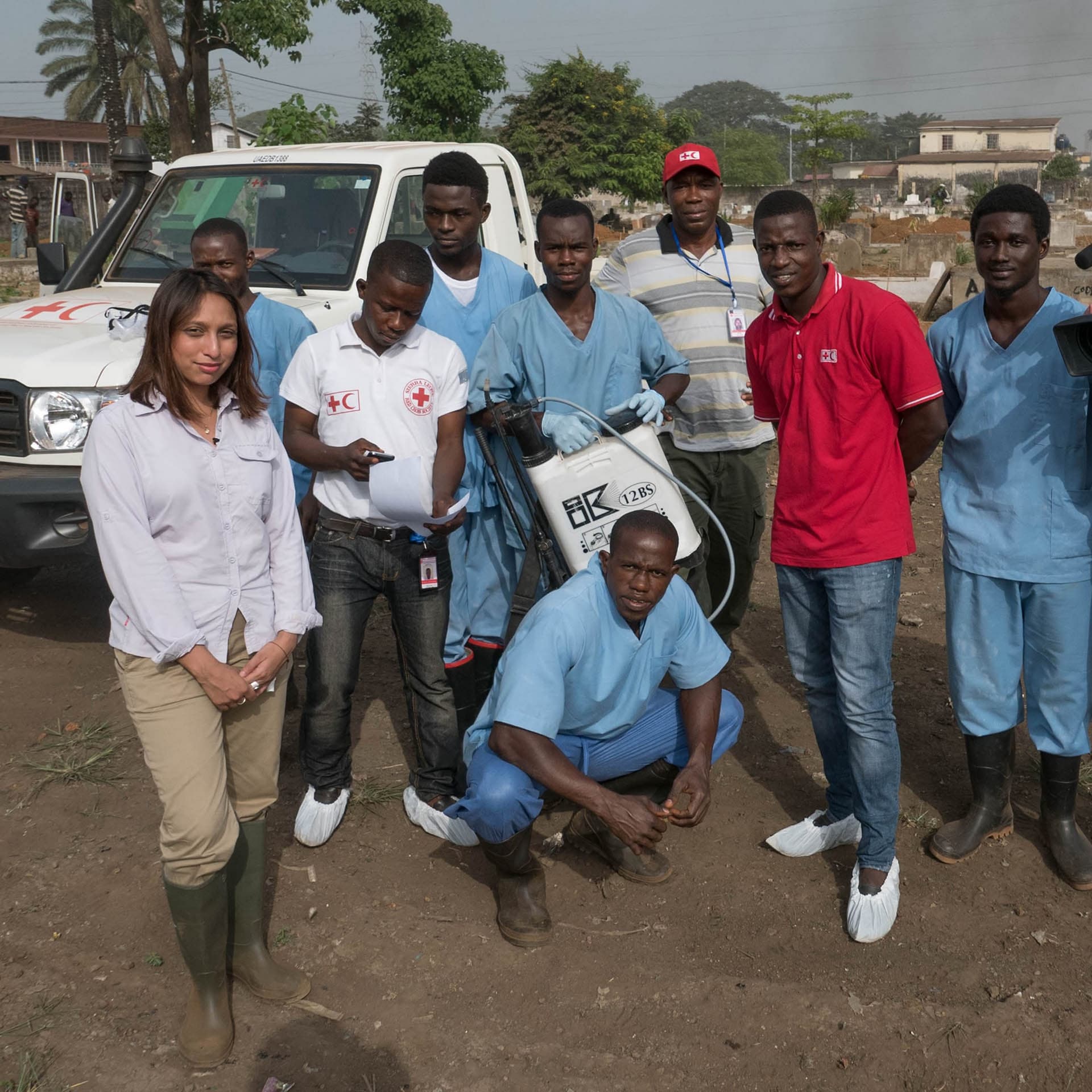
(Photo: Faranak Amidi. Credit: Tricia Yourkevich.)