
In short
Belarus’s European Humanities University (EHU) and how Belarusian authorities criminalize links to it; plus a separate segment on polygamy in South Africa via a TV series.
Guests/backgrounds
Alina Isachenka (BBC Russian) reports on EHU’s exile; Kanisile Nkobo (BBC Africa) covers South African polygamy and a Zulu-language series.
Key claims
Belarus revoked EHU’s license in 2004, EHU relocated to Lithuania in 2005, and in recent years EHU’s social media and then the entire university were labeled “extremist.” Under the law, current/past students (former students from 2016 onward) could face up to five years in jail for financing; professors up to six years. KGB pressure includes threatening students with death penalty and targeting parents to force resignations.
Notable examples
Anonymous graduate “Elena” questioned by KGB, threatened with death penalty, escaped but can’t return; student “Kira” held, beaten, offered “freedom” for cooperation. Polygamy segment: Nkobo attended a mass wedding with 50+ couples; South Africa census shows decline since 2011-2020.
Written by AI. May contain mistakes. Listen to the episode to check what was said.
Chapters
Tap a time to open that second in VOBelarusian Government Crackdown
1:59 to 3:42
Discussion on the Belarus government's new legislation against dissent.
“Dozens of independent media outlets, including the BBC, have recently been designated as extremist organizations in the country as the government cracks down on dissent.”
The European Humanities University
3:42 to 5:10
Overview of the history and current status of the European Humanities University.
“And Lukashenko once said that we will raise our own students in our own Belarusian universities, suggesting that this is some kind of European institution, European funded, and there is no place for it in Belarus.”
Consequences for Students and Families
5:10 to 6:16
Exploration of the dangers faced by students and their families in Belarus.
“When we had a trip to Lithuania recently to make a documentary about this story, we have spoken to the administration of the university.”
Student Experiences with KGB
6:16 to 7:58
Sharing accounts of students' encounters with the KGB and their threats.
“Because even if they decide that, OK, I'll go to university and I will not come back to Belarus for a number of years, their families are still there and they can be harassed.”
Student Choices and Safety
7:58 to 10:29
The difficult choices students make regarding their education and safety.
“So what we just heard is Alina, she is actually a graduate of EHU.”
Exodus of Young Belarusians
10:29 to 14:01
Discussion on the mass exodus of young Belarusians seeking a future abroad.
“so it's basically a very difficult thing for Belarussian students, young Belarussian students, to choose between an independent education and the safety of their families and to be able to go back home.”
The Future of Belarusian University
14:01 to 14:58
Exploration of the uncertain future of Belarusian students and their university amidst political pressures.
“But if there is no more Belarusian students, what is the purpose of this university?”
Remembering Tijan Bai
14:59 to 17:45
A tribute to Tijan Bai, highlighting her contributions to the Pandavani performance tradition.
“Bai never had the opportunity to receive a formal education.”
Polygamy in South Africa
17:50 to 19:59
Discussion on the practice of polygamy in South Africa and its cultural significance.
“Well, a new hit Zulu language TV series, The Polygamist, has got people discussing the topic.”
Mass Wedding Experience
20:00 to 21:06
A firsthand account of a mass wedding ceremony involving polygamous unions.
“How many couples were roughly getting married in that ceremony?”
Show all 14 chapters
Cultural Representations in Media
21:07 to 22:58
Exploration of how media and TV shows are portraying polygamous marriages and societal reactions.
“So in South Africa, traditional polygamy is governed under the Customary Marriages Act.”
Modern Adaptations of Polygamy
22:59 to 24:48
Discussion on the evolution and adaptation of polygamous structures in modern society.
“It's for them to stay, but obviously not being forced to stay, you know.”
Women's Role in Polygamy
24:49 to 27:41
Insight into how women participate in the selection of additional wives within polygamous unions.
“Like many of our grandmothers and great grandmothers were in polygamous marriages in Iran.”
David Beckham's Rise and Public Perception
28:15 to 28:43
Exploring David Beckham's transformation from a controversial figure to a billionaire.
“In the stands, in commercials, during ad breaks, sorry, hydration breaks.”
Transcript
Automatic transcript. May contain errors.0:00This BBC podcast is supported by ads outside the UK. If you are currently overpaying on software to run your business, remember this number, 10 ,000. That's the number of new businesses that join Odoo per month. Join Odoo today at odoo.com. That's O-D-O-O dot com. Throughout this World Cup, David Beckham has been everywhere. In the stands, in commercials, during ad breaks, sorry, hydration breaks. which is wild when you consider he was once the most hated man in Britain. I turned around to a fan and he was screaming about my wife and about Brooklyn right to my face and wouldn't even look away.
0:42How do you go from that to being a billionaire? That's next time on Big Lives. Listen to Big Lives wherever you get your podcasts.
0:53This is the documentary from the BBC World Service.
1:08Welcome to The Fifth Floor from the BBC World Service with me, Faranag Amidi. The BBC World Service broadcasts in 45 languages around the world. Every week here at The Fifth Floor, we bring you the best of those stories in English. Coming up, although the practice of polygamy is in decline in South Africa, A new TV show has got people across the continent talking about the phenomenon. But what does a mass polygamous wedding look like? It was such a unique experience, you know, seeing the pomp and the pageantry. I mean, I had wives telling me that, look, we know what we're getting into. We love it.
1:47Songs were ringing out in the church or across the auditorium. We love polygamy, you know, so it was such a unique experience to see. And especially given how much debate and how controversial the issue is. But first, in Belarus, new legislation from the government of President Alexander Lukashenko targets anyone who might be regarded as an opponent with charges of being extremist. Dozens of independent media outlets, including the BBC, have recently been designated as extremist organizations in the country as the government cracks down on dissent. But the Belarus government isn't only targeting media outlets.
2:31It's taking aim at a wide variety of groups and organizations, including a well-respected Belarus university, the European Humanities University, which since 2005 has been based in Lithuania. Alina Isachenka is from BBC Russian, and she's here with me in the studio. Welcome to the program. It's great to have you back again. Great to be here, Fran. So Alina, can you tell us a little bit about the history of EHU and how did it come to this point that it had to actually leave the country? So EHU was the first private university founded in Belarus in 1992. In 2004, the Ministry of Education has revoked its license, claiming that there were a number of issues with the university, that it was not adhering to the Belarusian law.
3:27And the following year, EHU has relocated to Lithuania and has been there ever since. Belarusian authorities have multiple times said that it's too progressive, that it works against the national Belarusian interests. And Lukashenko once said that we will raise our own students in our own Belarusian universities, suggesting that this is some kind of European institution, European funded, and there is no place for it in Belarus. And so since then, it's been, EU2 has been in Lithuania. Last year, its social media has been designated as extremists. And just a couple of months ago, the whole university has been designated as an extremist organization.
4:13How did that affect the students and their families? Directly. So since that designation, any current or even past A2 students, because this law tackles former students from 2016, so it spans across 10 years, any student who goes back to Belarus can now potentially face up to five years in jail for financing an extremist organization, if we put it in simple words, just simply paying for their education. So that could result by being behind the bars for five years in Belarus. And by the way, the same applies to the professors at the university. Because of their teachings in EHU, which is now extremist organizations, if they go back to Belarus, they can face up to six years in jail.
5:02Wow. Yeah. So you described studying at EHU as a one-way ticket for Belarusian students. Why is that? What do you mean by that? When we had a trip to Lithuania recently to make a documentary about this story, we have spoken to the administration of the university. And by one way ticket, essentially what they mean is that you can still leave Belarus and you can still go to Lithuania and study, but you cannot go back. Or you can go back at the price of your own freedom. And what also has been happening in Belarus since that designation, there were dozens of arrests of the former students, current students, but also their parents.
5:43And this is what's interesting, because the police is coming to the parents and saying, unless your child leaves the university, you might be arrested on the links to that university. So the parents could be prosecuted as well. and by the way this is what they're doing as a leverage to the students because when police is contacting the students and we know multiple reports of KGB contacting EHU students and saying unless you resign from the university your parents might end up in jail so it becomes dangerous not for the students themselves but also for for their relatives who are mainly back staying in Belarus.
6:24Because even if they decide that, OK, I'll go to university and I will not come back to Belarus for a number of years, their families are still there and they can be harassed. No, absolutely. And what we learned with this story is that quite a number of students either decided to go back to Belarus or decided to transfer to another university or quit university altogether, which suggests that partly whatever authorities are doing is working. But when we spoke to human rights group representatives, they said, do not contact Belarus authorities, do not send them documents, just ignore their requests, because it is never a good idea to do what they tell you to under pressure.
7:05As you mentioned, a number of students have been questioned by the KGB. And we have some clips of them sharing their experiences of what has happened to them. Let's have a listen. I'd only just woken up when the doorbell started ringing. I'm quite a nervous person, so I didn't answer at first. Then they started calling my phone. A whole group of people came in. There were five of them at first. One immediately started filling out paperwork. Another began searching the apartment wearing gloves. And there were three witnesses. They simply introduced themselves as KGB officers. They said you're a witness in a case involving an extremist organization.
7:50We're now going to conduct a search. So, Alina, this is really scary. Yes. So what we just heard is Alina, she is actually a graduate of EHU. She came back home a couple of months ago and she essentially have been questioned by the KGB who have later took her to custody in one of their centers. And they asked her all the details about the university. They said she must give them details of her fellow students, of the professors, etc., if she wants to be free. And they have also asked her to sign certain papers about extremism, suggesting there is a maximum sentence of death penalty. So essentially, they threatened her with death penalty if she continues pursuing links with EHU.
8:45She was terrified and she spoke to us anonymously and she managed to escape Belarus after. But she cannot return. And her family is still there. Her family is still there. Okay, we have another clip. Let's have a listen. They put me behind bars. I still don't understand why they had to be so harsh. I had no contact with my parents for five days. I was held there for five days. They told me what kind of prison I would end up in, that I would basically rot in that cell. They insulted me personally, and they beat me a couple of times. Nothing too severe, but they did beat me. What was her story? So this is Kira.
9:23She's currently an E2 student. And unlike with Elena, she says she was approached by the KHB several times, and they wanted to establish some sort of cooperation with her. So what they wanted is to receive a regular information about the university, its staff, its students, etc. And when she asked what is she going to get in return, they said just safety and freedom. You're just going to be free. But as you heard in this clip, they were also threatening her with putting her in jail and also her family if she refuses to cooperate with the regime. Again, she spoke to us anonymously. She was extremely terrified.
10:02Even talking to us. she cannot go back she's really worried for her parents who are back in Belarus but she keeps studying in HU and considering possibly transferring to another university in Europe just think about it she just cannot freely pursue her education because now she could face up to five years in jail according to her she still receives messages from the KGB even whilst being in Lithuania so it's basically a very difficult thing for Belarussian students, young Belarussian students, to choose between an independent education and the safety of their families and to be able to go back home.
10:43Absolutely. And as university puts it, it's their choice. You either choose to pursue an education with the EHU, which is, by the way, very affordable for Belarusians and like many universities in Europe, or you stay at home and you don't leave the country. And again, when we spoke to the administration, they said that the KGB encounters with the students is not a new thing. It's been going on for some time and KGB has been looking at this university. And now, by the way, it's facing great challenges because if there will be no Belarusian students, who will be studying there and what will be the mission of this university down the line?
11:21Absolutely. So why do you think that the Belarusian authorities, the regime, sees this university as such a serious threat? It's a great question. And when I ask this, the students, they say we don't even discuss Belarus that much. We are here to study European politics, humanities, arts, journalism. We are not here to be brainwashed on Lukashenko's regime, etc. However, the Belarusian authorities believe that EHU breeds the next generation of extremists and their direct role is to disrupt Belarusian regime. So this is what they're saying. But as I said, again, students don't feel that way at all.
12:04They just feel that they have a great chance to get a good education in Europe. So Alina, young Belarusians are not only leaving Belarus to go to EHU, we are seeing kind of like an exodus of young Belarusians. Can you just paint the picture of what is happening there? Absolutely. So after the presidential election in 2020, widely contested, many Belarusians don't see the future in Belarus anymore. I think it was awakening called to thousands of people who saw what regime is capable of, who no longer want to study there or work there. Because if you think about it, if you can get an arrest and a sentence for a Facebook post like you don't want to be in the country.
12:55So that's what we have been saying. There are no official statistics, but we are talking about hundreds of thousands of people who have exited the country since 2020. Majority of them are the Belarusian youth who not only going to pursue education, but looking for opportunities in Europe for both studying and working. working. And it's actually quite interesting because this year alone, we saw the statistic that the Belarusian state universities are struggling to get enough students. There is a drop of 50%, which is quite significant. They want the youth to come back. And this could be, at least according to some of our sources, part of the reasons why they are attacking EHU and the students and asking them to go back to Belarus.
13:42And it's kind of working, as you said, they are having difficulty recruiting students in AHU. Absolutely. And the interesting thing about AHU that it mainly functions on the outside donors, on European Parliament, etc., who have been very supportive of independent education for Belarusians. But if there is no more Belarusian students, what is the purpose of this university? So the future of the university, of students there, is now very questionable. and authorities are achieving at least some of their goals. Thank you very much, Alina. Thank you. Thanks to Alina Izachenka from BBC Russian. Tijan Bai, who died this week, was one of India's greatest folk performers and storytellers.
14:30She was the most celebrated exponent of Pandavani, a unique oral and musical performance tradition from central India based on the Mahabharata, the ancient Indian epic.
14:57Born into a poor tribal family, Bai never had the opportunity to receive a formal education. But with little more than her voice, expressive body language, and a single symbolic prop, she could create an entire world on a stage. BBC Hindi's Alok Putul explains the heart of her talent. She could transform herself into different characters within seconds. She could become a fearless warrior, a grieving mother, an as-in king, or a wise narrator, making audience feel as though an entire cast of actors was performing on a stage. Even audience who did not understand her language could follow the drama through her expressions, moments and voice.
15:47That is why her performance connected not only across India, but also with audience around the world. Tijan Bai's greatest strength was her belief in herself. Married very young, her husband initially tried to prevent her from performing. She defied him and continued. And at a time when women were generally expected to perform Pandavani while sitting, she chose to stand and stamp her authority on the stage. Tijan Bai went on to receive three of India's highest civilian honours and to perform Pandavani around the world. You're listening to the documentary from the BBC World Service. Throughout this World Cup, David Beckham has been everywhere.
16:38in the stands, in commercials, during ad breaks, sorry, hydration breaks, which is wild when you consider he was once the most hated man in Britain. I turned around to a fan and he was screaming about my wife and about Brooklyn right to my face and wouldn't even look away. How do you go from that to being a billionaire? That's next time on Big Lives. Listen to Big Lives wherever you get your podcasts. What do Beatles member Sir Paul McCartney, YouTube megastar Mr Beast and former Facebook executive Sheryl Sandberg all have in common. They're all being discussed in the new season of Good Bad Billionaire, the podcast which explores the lives and fortunes of the world's super rich.
17:19That's Good Bad Billionaire from the BBC World Service. Listen now and search for Good Bad Billionaire wherever you get your BBC podcasts.
17:30This is The Fifth Floor and I'm Farah Nike Amidi. The custom of men being married to more than one person at the same time, known as polygamy, is practiced in many parts of the world, particularly across the African continent. It's traditionally rooted in cultural, social and economic values across various tribes in different regions, such as the Zulu in South Africa, a country where polygamist marriage is legally recognized. Well, a new hit Zulu language TV series, The Polygamist, has got people discussing the topic. BBC Africa reporter Kanisile Nkobo has been following the issue. Welcome to the program, Kanisile.
18:13Hi, Faridnak. Thank you so much for having me. It's great to have you. So as I mentioned, polygamy can be part of traditional Zulu culture. But what are some of the other places in Africa where we can see such marriages? So yes, in South Africa, polygamy is recognized not just in the Zulu culture, but across several cultures, you know, and not just in South Africa, but across Africa. We know in Kenya as well, it is practiced, but it's mainly in Western Central Africa, you know, so in countries like Burkina Faso and Mali. And when you speak of religion, it's not as widely practiced within Christianity.
18:50But I know in South Africa, there are churches which are a blend of African tradition and Christianity that practice polygamy. But it is more widely practiced in the Muslim religion. So you actually attended a mass wedding in South Africa last year, which included several polygamist ones as well. Tell me about the ceremony. What did you see there? So, yes, I had the privilege of covering a mass wedding and it was at this church, one of the few Christian churches that practices polygamy. Sure, it was such a unique experience because I've never attended a polygamous union. And not only that, but on that scale, you know, so seeing the pomp and the pageantry and just speaking to the couples and seeing how polygamy is such a rooted part of the church and how the women embrace it.
19:43I mean, I had wives telling me that, look, we know what we're getting into. We love it. We want more of this. There was excitement, you know, songs were ringing out in the church or across the auditorium. We love polygamy, you know, so it was such a unique experience to see. And especially given how much debate and how controversial the issue is. How many couples were roughly getting married in that ceremony? It was over 50. You said that many of the women, the brides, were really happy and they said, we want more of this kind of marriage and relationship. What was the reason behind it? So, you know, polygamy traditionally, it's been about the family, you know, people entering into it.
20:24It's a way for them to honor their culture and their tradition. So for this church, it's a part of the church. So everyone embraces it. You cannot become a member without being open to polygamy. But it's also about building solid family structures, which, you know, in the society that we live in, at least in South Africa, there are a lot of broken families, you know, a lot of fractured relationships. And I think for them, it's embracing that, that, you know, we want to give our children stability that they may not have found in a monogamous or in a traditional setup where it's just the man and the wife.
20:57And Kanisele, in a country like South Africa, are you seeing rates of polygamist marriages declining or increasing? The last census taken in 2022 shows a decline. So in South Africa, traditional polygamy is governed under the Customary Marriages Act. That's the only type of union that allows for polygamous marriage. So under those ones, you know, it doesn't necessarily break it down into polygamous unions. But when you look at customary marriages, stats tell us that there's been a decline, you know, from 2011 to 2019 to 2020. You know, there's been a sharp decrease in people registering under those types of marriages.
21:37So, as I mentioned, there's this new drama series and it has stirred up conversations around this topic. Is it quite unusual for TV series, movies like that, like pop culture in South Africa to depict such marriages? In, I'd say, about the past 10 years, we have seen an increase in shows talking about addressing polygamy, but it's mainly reality shows. We have had TV shows, I suppose local movies, but it's mainly been polygamous families coming out into the open, showing viewers how they live, their day-to-day living. And that has caused a stir, you know, there's caused controversy and debate.
22:25So like every time that show returns to our screens, it just enrages people. People talk about it. So would you say those shows are just opening the eyes of the society to that kind of marriage? I'd say yes, they are, but not always in a good way. You know, you see, you know, like in the show where someone just wants to hide their sexual appetite. They're looking for a way to legitimize this by taking a second wife. so you see those kind of things come up it causes a stir especially with traditionalists who say this is not how polygamy is done this is causing a stain on polygamy and it's turning people away from it and indeed it is you know because instead of people seeing that family structure and the stability they're just seeing families torn apart they're seeing one person's insatiable appetite you know being fed over and over again with the taking of multiple wives they see wives threatening to leave which goes against polygamy The point of polygamy is not to have any wife leave.
23:23It's for them to stay, but obviously not being forced to stay, you know. The traditional structure of polygamy, how has it changed and evolved to suit the modern life? Things are more expensive. Housing is more expensive. Having children is more expensive. How is it adopting? Oh, yes, definitely. I think as with a lot of traditions, polygamy has had to adapt, you know. So the traditional structure where, you know, you would have a husband either working or who's wealthy enough to support his family, that has changed. You know, you now have a situation where, yes, the husband is the main breadwinner, but with the support of the family, you know, so the family contributes.
24:02Either the wives will also have their jobs or some of them, depending on how many there are, they will also work. And whatever income they generate will go towards supporting the family. It's no longer a case of, you know, a husband would have land, which you would be passed down from generation to generation to build homes for the family, which at the time, obviously, were not as expensive. Now, you know, you would have to buy property for each wife, but you would still have to find a way to bring the family together. So if one person is living in one city, another lives in another, you still have to be able to bring them together.
24:39So the upkeep of the family is for a large part rest with the husband, but you now have the wives going out, working, supporting. I come from Iran, so polygamy was part of the culture. Like many of our grandmothers and great grandmothers were in polygamous marriages in Iran. But in the Iranian culture, in the old days at least, it was that all the wives lived in the same house. There were big houses and the first wife had the best quarter, for instance. and they all lived together and it was kind of like a communal style of living. Do you still have something like that in South Africa or is it quite separated?
25:18Oh, yes, it would depend. There's still a communal way of living, but each wife has their own separate home. So now, I mean, you know, as much as polygamy has evolved, unless a wife finds a job somewhere else, it's really rare to have people living so far apart because it's also important to keep the children together because you are growing a family, you're keeping a family together and the children have a different relationship from the wives. So as much as whatever relationship the wives have with the husband, for the children, they are siblings. They see each other as siblings. So you want to keep them together.
25:52You want to keep them as a family. But, you know, there's no longer that need to live in the same house or to live in the same yard. It would depend on various factors. You know, when we talk about polygamy, it's usually quite a patriarchal structure. But from what I understand, some women, they also can get quite involved in finding the second wife. Yes, definitely. So traditionally with polygamy, when a husband first takes his wife or marries the first wife, there's that clear intention. It's stated that this will be a polygamous union. So all the parties involved, all the families get into the union knowing that this is how the marriage will look.
26:37And because of that, you know, the wife has a say in the selection of a new wife. I mean, for example, the church event that I attended, one of the wives had been very active. She was the one complaining that, you know, I entered into this polygamous marriage. Why am I the only wife you have? I'm going to find someone, you know, and women in the church actually took a lead. You know, it wasn't just the husband decides and we'll have to agree to it. there was that active participation, you know, in finding a wife, because it's about more than just someone marrying a second wife, you know, taking on a second wife.
Read the full transcript
27:13It's about family. So you want someone who will fit in with the family. You want to help choose a suitable mate. And I would imagine it also adds to the harmony within the family. You know, if a wife selects the next one or, you know, the incoming wife, it makes it easier for them to live together because she chose this person. She identified this person. She was able to use, you know, whatever guidance was given to select this wife. So yes, definitely. Thank you very much, Khani Sile. Thanks to Khani Sile Nkobo of BBC Africa. That's all we've got time for today. If you want to let us know what you think about the show or you have questions for us, send an email to the fifth floor at bbc.co.uk.
27:56We love hearing from you. You can write to us at the fifth floor, all one word at bbc.co.uk.
28:08You're listening to the documentary from the BBC World Service. Throughout this World Cup, David Beckham has been everywhere. In the stands, in commercials, during ad breaks, sorry, hydration breaks. Which is wild when you consider he was once the most hated man in Britain. I turned around to a fan and he was screaming about my wife and about Brooklyn right to my face and wouldn't even look away. How do you go from that to being a billionaire? That's next time on Big Lives. Listen to Big Lives wherever you get your podcasts.
From the publisher
In Belarus, new legislation from the government of President Alexander Lukashenko targets anyone who might be regarded as an opponent with charges of being ‘extremist’. Dozens of independent media outlets including the BBC have recently been designated as ‘extremist organisation’ in the country, as the government cracks down on dissent. But the Belarus government isn’t only targeting media outlets. It’s taking aim at a wide variety of groups and organisations, including a well-respected Belarus university, the European Humanities University, which since 2005 has been based in the apparent safety of Lithuania. But recently, students, staff and their families have begun to be visited by Belarus's security service, the KGB. BBC Russian's Alina Isachenka has been investigating.
The custom of men being married to more than one person at the same time, known as polygamy, is practiced in many parts of the world, particularly across the African continent. It's traditionally rooted in cultural, social, and economic values across various tribes in different regions, such as the Zulu in South Africa, a country where polygamous marriage is legally recognised. Now, a new hit Zulu language TV series, The Polygamist, has got people discussing the topic. BBC Africa reporter Khanisile Nkobho has been following the issue.
This episode of The Documentary comes to you from The Fifth Floor, the show at the heart of global storytelling, with BBC journalists from all around the world.
Presented by Faranak Amidi.
Produced by Laura Thomas, Caroline Ferguson and Hannah Dean.
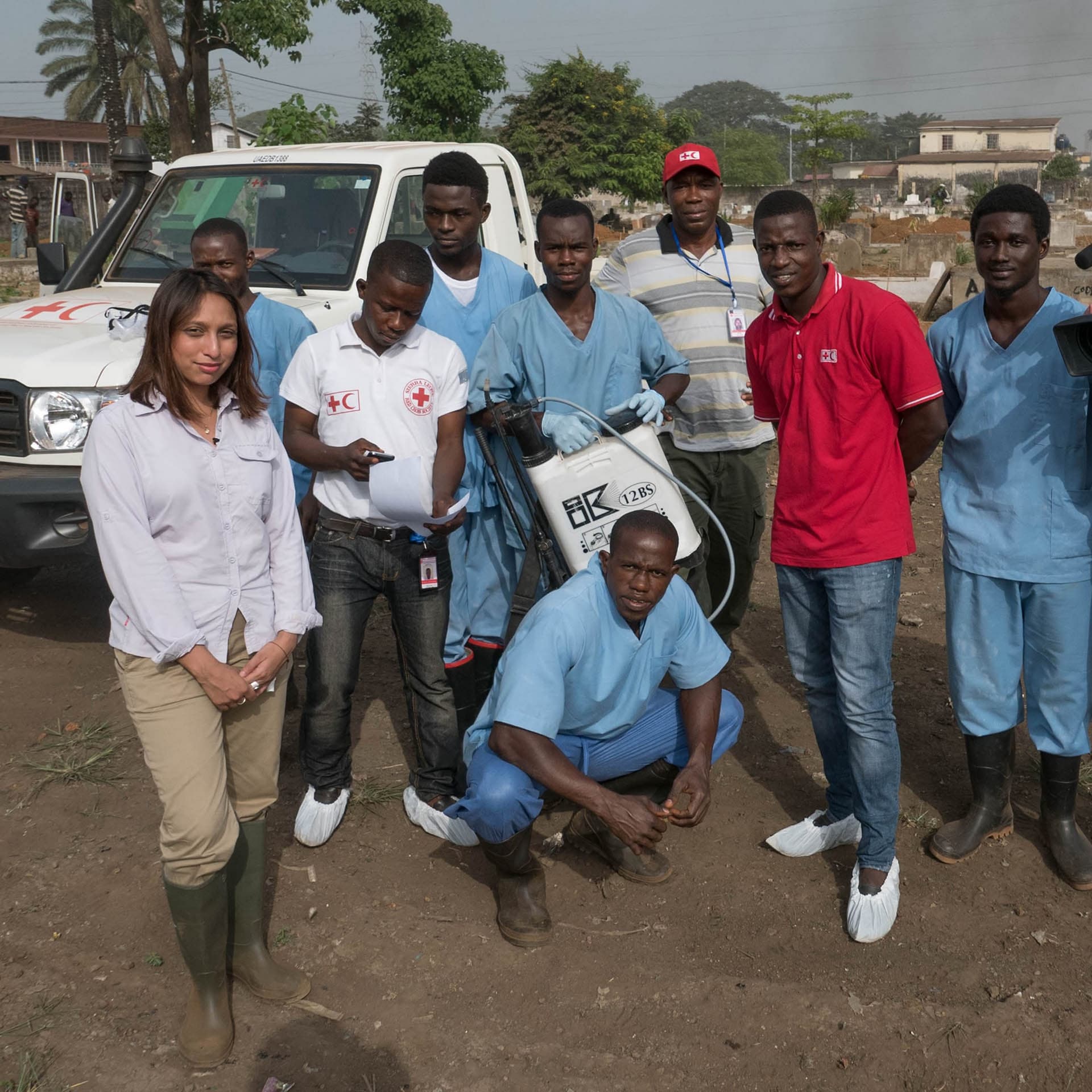
(Photo: Faranak Amidi. Credit: Tricia Yourkevich.)