In short
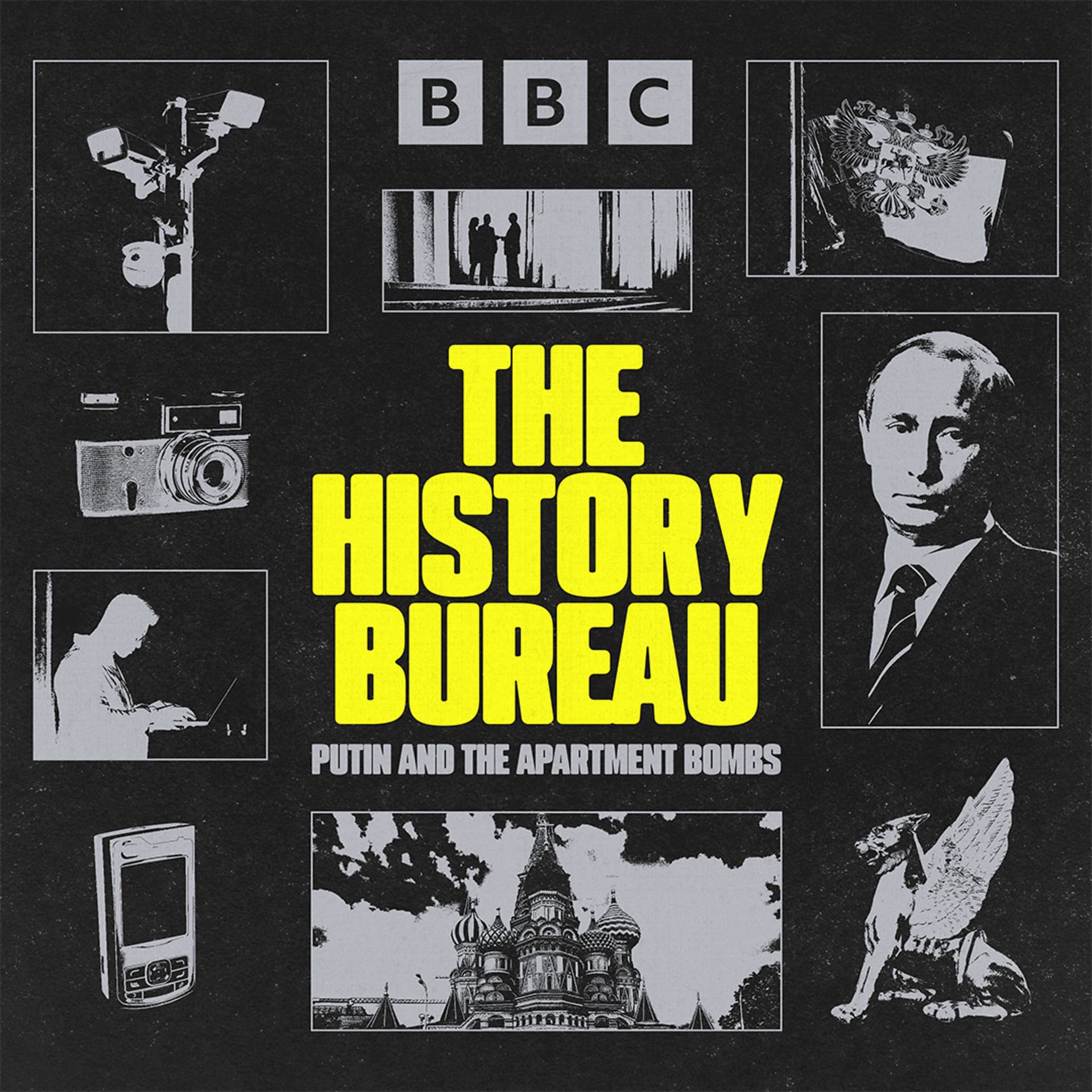
The Documentary Podcast: Bonus Episode - Introducing: The History Bureau
Podcast Overview The Documentary Podcast delves into global stories, uncovering hidden truths through compelling documentary storytelling by the BBC World Service. Each episode features deep-dives into significant narratives, from international politics to personal journeys exploring spirituality and societal impacts of news.
Episode Summary
Episode Title
Bonus: Introducing: The History Bureau
- Premise: The History Bureau revisits significant historical events and the journalistic coverage surrounding them, questioning what was accurately reported and what may have been overlooked.
- Focus of Season 1: The mystery surrounding the apartment bombings in Russia in 1999, which resulted in hundreds of civilian deaths and set the stage for Vladimir Putin's rise to power.
Key Themes and Discussions The Flawed Nature of Journalism
- The podcast articulates the concept of journalism as a "first draft of history," prompting discussions about the implications of flawed reporting and the nature of truth in journalism.
The 1999 Bombings
- Overview of Events: Four bombs exploded across Russia, killing approximately 300 people. The immediate aftermath led to widespread panic and speculation about the identity of the perpetrators.
- Primary Suspect: Initially, Chechen militants were blamed, which resonated with the Russian public due to the ongoing conflict in Chechnya.
- Competing Theories: As the narrative unfolds, the possibility of a government conspiracy is raised, suggesting that the FSB (Russian Federal Security Service) may have been involved.
Journalistic Reflections
- Journalists Involved: The series includes insights from journalists who covered the bombings, expressing their evolving understanding of the events and their implications.
- Danger of Inquiry: The podcast highlights the risks faced by journalists who challenge official narratives, with references to those who have died investigating the truth behind these events.
Key Takeaways
- Historical Context: Understanding the socio-political landscape of Russia in the late '90s is essential for grasping the significance of the bombings and their aftermath.
- Impact on National Identity: The bombings and subsequent coverage are portrayed as pivotal moments that shaped modern Russian identity and political dynamics.
- Continued Investigation: The episode emphasizes the ongoing debate regarding the truth of the bombings, with unresolved questions that still provoke discussion and inquiry.
Conclusion The episode of The History Bureau sets the stage for a deep exploration of an event that not only changed the course of Russian politics but also serves as a case study in the responsibilities and challenges faced by journalists. The discussion underscores the importance of critical scrutiny in journalism and the implications of historical narratives on present-day perceptions and realities.
Listening Information
- For UK listeners, the episode is available on BBC Sounds.
- For international listeners, it can be found on BBC.com or various podcast platforms.
Written by AI. May contain mistakes. Listen to the episode to check what was said.
Chapters
Tap a time to open that second in VOThe History Bureau's Mission
0:45 to 2:43
Introduction to the History Bureau and its exploration of historical events.
“We explore what was a terrifying moment in history.”
The 1999 Russian Apartment Bombings
2:43 to 4:50
Discussion on the bombings in Russia and their historical significance.
“And for this, our first season, we're digging into a story that the world may have been getting wrong for years.”
The Context of Yeltsin's Russia
4:50 to 5:39
Exploring the political landscape in Russia leading up to the bombings.
“Asking questions about this story, even now, can be dangerous.”
The First Bombing Incident
5:39 to 13:30
A detailed account of the first bombing in Buiynaksk and its aftermath.
“That's a nursery rhyme designed to make babies say sh.”
The Reaction and Investigation
13:30 to 14:02
How the second bombing prompted a larger investigation in Russia.
“the building catches fire and one by one the five floors collapse soon the firefighters come then the ambulances And then, from Russia, Andrew Harding reports.”
The Initial Bombing - A Tragic Event
14:02 to 15:30
Learn about the devastating impact of the first bombing in Chechnya and the aftermath.
“This 10-year-old girl was dragged from the ruins, both legs crushed.”
The Second Bombing - Moscow Under Attack
15:41 to 19:18
Explore the chaos and fear following the second bombing in Moscow.
“We explore what was a terrifying moment in history.”
The Roots of Conflict - Chechnya and Russia
19:18 to 23:18
Understand the historical context that led to the bombings in Russia.
“Our correspondent Andrew Harding is in Moscow.”
The Aftermath - Rising Tensions and Insecurity
23:18 to 28:00
Examine the immediate response and growing fears of further attacks in Russia.
“They kept that resentment, that anger against Moscow.”
The Fifth Bomb and Its Controversy
28:00 to 30:05
Learn about the unresolved mystery of a fifth bomb related to a tragic event and its implications.
“But then this story takes a strange turn, one that people have been puzzling over ever since, because there's a fifth bomb.”
Transcript
Automatic transcript. May contain errors.0:00This BBC podcast is supported by ads outside the UK. America is changing. And so is the world. But what's happening in America isn't just a cause of global upheaval. It's also a symptom of disruption that's happening everywhere. I'm Asma Khalid in Washington, D.C. I'm Tristan Redman in London. And this is The Global Story. Every weekday, we'll bring you a story from this intersection, where the world and America meet. Listen on BBC.com or wherever you get your podcasts. I am Nina Khrushcheva, the great-granddaughter of Nikita Khrushchev, the leader of the Soviet Union in 1962. And I'm Max Kennedy, the nephew of U.S.
0:45President John F. Kennedy. We explore what was a terrifying moment in history. The story of the Cuban Missile Crisis. How close the world came to nuclear war. And what they had to do to pull it back from the brink. The bomb, Kennedy and Khrushchev. All episodes available now, wherever you get your BBC podcasts.
1:33They say that when a bomb goes off, you feel it before you hear it. The explosives create a shockwave that pushes walls inwards, disintegrates glass, compresses air. And for a brief moment, there's just silence. Then, you hear it. A blast so loud it can rupture eardrums. After the explosion, the aftermath of a bomb follows a familiar pattern. Sifting through the rubble, counting the dead, the hunt for survivors, and finally, the search for a story. Something to make sense of the horror. Sometimes the story gives closure. Perpetrators are named, motivations identified. But then there are the stories that don't make sense.
2:34That lead to more questions than answers. From the BBC, this is the History Bureau. Where we take journalists back to a story to ask, what did we miss the first time round? It's a second draft of history. And for this, our first season, we're digging into a story that the world may have been getting wrong for years. It's about a bomb. In fact, four bombs. Four bombs that blew up four apartments across Russia in 1999, killing some 300 people. The entire country felt under siege. There were people screaming, just utterly traumatised. Children were terrified. Adults were patrolling round the clock.
3:25And these bombs, and everything that followed, have sparked some chilling theories about who was behind them. Because they set the stage... ...for perhaps the most consequential rise to power in modern history. Vladimir Vladimirovich Putin! It's part of the origin story of Vladimir Putin. It's something which explains Putin and the rise of Putin, or might do, And I think in that sense, it's a mystery which matters. I've been talking to journalists who were there in Russia during those brutal attacks. Journalists who've spent big chunks of their careers trying to figure out who killed all of those innocent people.
4:09We are watching some kind of government conspiracy. A lot of what we should know has been classified or buried or covered up. If it really happened, it's a story for the ages. The journalists we brought together for this series don't all agree about what happened. It was quite clear that something very dirty is going on. I would say that's a conspiracy theory. I've read the evidence, believe me. I'm very, very wary of conspiracies. But when it comes to the Kremlin, they've often proved to be true. But there's one thing they do agree on. Asking questions about this story, even now, can be dangerous.
4:57He has been transferred to intensive care and he's on monitors. His immune system is gone. It's a mystery some have died trying to solve. We know their names, the people who've been killed. They all investigated the bombings. And that message has reached the Russian public as well. And that message is? That it's dangerous. Don't go there. You know, you might end up dead. I'm Helena Merriman, and we are going there, in the History Bureau. Putin and the apartment bombs. Episode 1. The Four Bombs.
5:49One, two, three. Let me get to my Russian.
5:55That's a nursery rhyme designed to make babies say sh. OK, what does it mean? Sasha went along the road licking a lolly, I think. Yeah, yeah, yeah. So I'm Andrew Harding. Let me think about this. I arrived in Moscow in 1991, age 24, thinking let's go somewhere exciting to try and do this thing, be a foreign correspondent. Why Russia? I had a friend in Moscow and they allowed me to sleep on their floor. It was incredibly dramatic. The Soviet Union was coming to an end. It was always in the news and I was very interested in what was happening. And it's quite a place to land. This is 1991. Soviet Union is collapsing.
6:41You're in the middle of one of the biggest stories in the world. What was it like to experience that collapse happening in a day-to-day way? It was so surreal because you walk through the centre of Moscow and there are still these huge grey buildings with things like shoes and fruit written above them. No advertising, very Soviet, very communist. There was so much optimism and a desire to become part of the West and all these foreign fast food outlets were coming, Pizza Hut, McDonald's, Snickers bars everywhere. Somebody coined the phrase snickerization, the snickerization of our country. Andrew's been a BBC foreign correspondent for over 30 years.
7:29But through the years, his time in Russia in the 90s, it's always stuck with him. Even now, he's still trying to make sense of it, this wild, unpredictable decade that ended with the four bombs. And those bombs were about to get into them. But first you have to understand the years that led up to them. This time in Russia when history was playing at double speed. So when Andrew arrives in Moscow in 91, the Berlin Wall's just fallen, the Soviet Empire collapsed, and he's living in a new country. Russia. A country that's just elected its first ever president. Many votes are still to be counted, but there is no doubt that Boris Yeltsin has become the first president of the Russian Federation.
8:14Boris Yeltsin. And at first, people love him. He's flamboyant, charismatic. He says he's going to shake things up, ditch the old Soviet economy, embrace capitalism, and fast-track Russia into the 21st century. The problem was, Yeltsin went too far, too fast. Shock therapy, he called it. He freed prices overnight. Inflation soared to over 2 ,000%. And the result? People's savings were wiped. The old people, the pensioners, started to come out of their apartments and sell everything they had on the icy, snowy streets of Moscow. And they would be sitting there all day in these big fur coats, or if they'd sold their fur coats, in thinner coats and hats.
9:06and people would walk past in the slush. It was really wretched and made a huge impression on me. The Russian ruble collapsed and suddenly the only thing that mattered was dollars. And that changed everything. The jobs you could get, the places you could eat. Restaurants didn't want to let you in unless you had dollars. So you'd want to have to queue up outside. So you'd literally do a$5 handshake with the doorman. To bribe your way in. Which was, you know, a source of great pride, you know. I bribed my way in somewhere. It felt very dramatic. And once you're inside, for another$5, you could eat and drink all night.
9:42For$5, you could fly nine time zones to the far edge near Alaska. The dollar was extraordinary. And of course, most people didn't have access to that. Most people, except for a new breed of businessmen, the oligarchs. They got very rich very fast, buying up former state-owned companies at knockdown prices. And as they got richer, they moved into politics, funnelling money to Yeltsin, helping to keep him in power. But as Yeltsin and the oligarchs scavenged on Russia, the rest of the country was getting poorer. And by the late 90s, people had had enough. Where Russians had once lined the streets to support Yeltsin, now they wanted him gone.
10:30In Yeltsin, he was falling apart. Last week, President Yeltsin arrived a little unsteadily at a press conference. He's long had a reputation for boozing. By the last few years of the 90s, Yeltsin was a shadow of himself. Yeltsin's hope for another term in office won't survive his latest illness. He was a sort of shabby, pathetic figure, really. drunk often. When he wasn't drunk, he looked like he might be. Clearly struggling with his health. He spoke painfully slowly. What would Russians say to you when you interviewed them about this, about him? They would say, we need somebody new. And every time he went in for an operation, it was this huge drama because would he survive the operation?
11:16Who does he hand the nuclear briefcase to? Who can he trust to be there when he comes round from anaesthetic? The problem was, Yeltsin had no obvious successor, and he was terrified that the next president might turn on him, take up one of the corruption scandals surrounding him and his family, and throw him in prison. The oligarchs were nervous too. They needed a new protector, someone who'd keep the money flowing. These were gangs essentially competing for power. The stakes were incredibly high. And what were they after, power or money or both? Well, the two were sort of came hand in hand in a way.
11:58It was a real cowboy capitalism and it was very, very dangerous. And so by the autumn of 99, you have a country with a failing president, no clear successor and powerful men operating in the shadows, searching for a new leader they can trust. And it's at this point on September the 4th that our story begins. It all starts in a town in southwest Russia, Buiynaksk. It's remote, thousands of miles from Moscow, surrounded by mountains. And lining its streets, as in so many Russian cities, is a smattering of grey, identical buildings, Russia's apartment blocks. There's one apartment right next to a Russian military base.
12:46Five floors, small flats, kitchens just big enough for a table and two chairs, and TV sets, which tonight are showing a football match, a qualifier for Euro 2000, Russia versus Armenia. In the game, it's a good one for Russia. They win 2-0. After the game, some of the families stay up to watch the news. others bed down for the night this is when the apartment is at its fullest and this is when it happens a truck parked outside the apartment explodes windows shatter the building catches fire and one by one the five floors collapse soon the firefighters come then the ambulances And then, from Russia, Andrew Harding reports.
13:45The journalists, like Andrew Harding. Southern Russia is in turmoil tonight. Rescue workers have spent the day searching for survivors in this mound of rubble. It's all that remains of a block of flats torn apart by a massive car bomb. This 10-year-old girl was dragged from the ruins, both legs crushed. It takes a few days to find all the bodies in the rubble. The final count, 64. Men, women and children. It's not clear yet what caused the blast, but the finger of suspicion is likely to point towards a group of militants who've been trying to drive Russian forces out of the region. This first bomb makes the news, but only briefly.
14:34The explosion happened in a remote city near Chechnya, where militants and the Russian military have fought for years. So it's a tragic story, but it seems like more of the same. And the country moves on. A few days pass. It's now the 9th of September. I was at home in my apartment in southern Moscow, and I remember getting the call. There'd been a second bomb, another apartment blown up.
15:29Every weekday, we'll bring you a story from this intersection, where the world and America meet. Listen on BBC.com or wherever you get your podcasts. I am Nina Khrushcheva, the great-granddaughter of Nikita Khrushchev, the leader of the Soviet Union in 1962. And I'm Max Kennedy, the nephew of U.S. President John F. Kennedy. We explore what was a terrifying moment in history. The story of the Cuban Missile Crisis. How close the world came to nuclear war. And what they had to do to pull it back from the brink. The bomb, Kennedy and Khrushchev. All episodes available now, wherever you get your BBC podcasts.
16:11Is the US conceding the green energy race to China? When the Trump administration said it was pulling out of the Paris Agreement for a second time, it seemed like a wholesale withdrawal from the climate change question. All the while, China's becoming a global powerhouse of green technology. What could happen in the long run if the US continues to cede the floor to China on clean energy? Listen to The Global Story on bbc.com or wherever you get your podcasts.
16:44This second bomb explodes in the early hours of the morning, when most people are asleep. But this time, it's not in a remote, war-torn part of the country. It's in the heart of Russia, in Moscow. I remember rushing off with a cameraman, Bob, from the Bureau and heading off to, I think, the southeast suburbs. And we arrived at this giant pile of rubble.
17:17There were already police and there were these crowds around, people scrabbling in the dirt. People screaming, people just utterly traumatised.
17:34Everybody from the neighbourhood was there, a lot of them in their dressing gowns. Could you see the insides of apartments? There were some places, I do remember, where the front peeled off. It was almost like a doll's house. So you could see inside, and you could see the layers that had been compressed as well. Rescue workers are continuing to hunt for survivors beneath the smouldering rubble, but hopes of finding anyone else alive are now fading. In Russian news footage, you see firefighters in black uniforms. They're kneeling in the rubble, prising apart slabs of concrete as they search for bodies.
18:15Suddenly you see an arm, then a face, then an eye that twitches, This man is still alive.
18:27The firefighters scoop out the rubble around him, heave him into their arms, and they carry him away. He's naked, except for a pair of green underpants.
18:42I remember the dust, and I remember the smell. There was just a mood of hysteria. You know, Russians were used to a certain degree of chaos. They were used to mafia hits. They were used to all sorts of things. But this was not something that anybody in the city had seen. Again, the counting begins. Ninety-four dead. And this time, with Moscow hit, the story breaks out.
19:13It's on every front page, every TV bulletin, every radio show. And the question everyone's asking, who did this? Our correspondent Andrew Harding is in Moscow. Within days, people think they know who's to blame. Andrew, have the authorities there actually nailed the cause of this explosion? Is it now beyond doubt? Well, various obvious possibilities have sprung to everyone's mind and the leading candidate is the Islamic militants, the Chechens, who are now fighting against Russian troops in the south of the country. All over Russia, people are blaming them. Chechen militants. And this was a terrifying thought for Russians.
19:54Because if the Chechen militants had bombed two buildings already, then maybe they'd do it again. They have promised to wage the campaign against the Russians in every major city, including Moscow. It was almost instinctive for people because they were the ones who Russia had been at war with. And that war between Chechnya and the Russian state had been so brutal that people thought it could be reason enough for Chechen militants to blow up apartments full of Russian civilians.
20:29It all goes back to 1991. The Soviet Union was falling apart, different states breaking free and declaring independence. And Chechnya, a republic in the south of Russia, wanted that too. It was partly about identity. Most Chechens are Muslim. But it was also about decades of brutal treatment by Russian leaders. So Chechnya declared independence. But Russia had no intention of letting Chechnya go. The Russians moved in at first light this morning. And they sent in the tanks. Hundreds of tanks and armoured personnel carriers crossed the border, backed up by helicopters. The Chechens responded with a classic, provocative swagger and said, come and get us.
21:15We are Chechen. We are not afraid of this superpower army. It was the first conflict Andrew ever covered. I think my first visit would have been in the summer of 1994. And I would have driven over the mountains in my little Lada Neva Jeep that I was just in love with. How did it deal with the rocky mountains? Amazingly, because it sort of bounced over everything. It was very light. The Soviet joke was that this was the thing that the Soviet industry invented instead of fixing the roads. They came up with this amazing... Small but mighty car. ...that could drive over everything. He drove all over the country meeting Chechen fighters.
21:56Chechnya was overrun by warlords, armed to the teeth, just bristling with weapons. And we really had no idea what we were doing. I mean, we'd never covered anything like this. He was there when the tanks rolled in, when Chechen women walked into the streets to try and stop them. And he was there in the capital, Grozny, when Russia tried to destroy the city. The war for Grozny was just hell on earth. It was the most intense bombardments on a big city. And I, to this day, have never been more scared of anything. And you've covered a lot of wars in your time. It was insane. This was Russia's superpower ex-Soviet military with every imaginable missile, mortar, bombs, jets, helicopters, all targeting this city and pulverising.
22:52I mean, the word is appropriate. The war dragged on for two years. Thousands of Chechen civilians were killed and there were reports of horrific abuses on both sides. It ended with a peace deal, but the Chechens didn't win their independence. So there was a sense of unfinished business, that a day of reckoning would come. They kept that resentment, that anger against Moscow. It burned and it still burns. And that anger in Chechnya, it became a fertile place for a new kind of extremism. After all the bloodshed and all the chaos and misery of the first war, you could start to see a more militant Islamism starting to come in, starting to fund people, more shadowy figures emerging with their own power centres.
23:52Chechen militants started taking hostages, aid workers, journalists, anyone they thought could bring in money or attention. And in one particularly brutal case, they kidnapped four foreign engineers. A few months on, their bodies were found dumped by a roadside. All four had been decapitated.
24:15So when those first two bombs explode in 1999, this is why most Russians blame Chechen militants. And in the news reports, you can hear a deeper fear that this might just be the beginning. So are you saying that Russia is bracing itself now for some kind of wave of terrorist attacks from this source? I think that it's quite likely that that's going to happen. As long as neighbouring Chechnya remains in a state of near anarchy, more turmoil in the region seems almost inevitable. And sure enough... The blast happened before dawn as the building's 150 residents lay sleeping. Only a few nights later, at five in the morning on the 13th of September...
24:56An entire apartment block collapsed, leaving a scene of utter devastation. The death toll is rising by the minute. The third bomb explodes, again in Moscow. It's the third one to tear down an apartment in just nine days. And now, the panic sets in. Russian police patrol the streets of Moscow. Yesterday's deadly explosion has triggered a massive security clamp down here. Every nook and cranny is being searched. In Russia, almost everyone lives in these tall, precarious prefab concrete apartments. And with the bombs exploding in the middle of the night, people are now too scared to sleep. There was a sense that this is going to carry on, that we're all at risk now.
25:44People began to patrol every apartment block where they could to make sure it didn't happen to them the next night.
25:58That night, Russia's latest prime minister, the fifth in 18 months, talks to the press. For most Russians, this is the first time they've ever seen their new prime minister speak. He's only been in the job a few weeks. He's short, a forgettable face, And the only thing most people know about him is that he was, until very recently, the head of the FSB, Russia's internal security service, formerly the KGB. His name? Vladimir Putin. With President Boris Yeltsin nowhere to be seen, Prime Minister Vladimir Putin has stepped into the light. Russia's Prime Minister, Vladimir Putin, blamed Islamic militants for the attack and said that Russian forces would wipe out their bases in Chechnya.
26:49Putin offers comfort, but he also offers revenge. Says he'll go after the rabid animals who did this. Then, three days later, at five in the morning... Volga Donsk in southern Russia hasn't experienced anything like it since the Second World War. The fourth bomb explodes, demolishing an apartment building in Volgodonsk, a city hundreds of kilometres away from Moscow. It rips the façade off a nine-storey building. Someone somewhere in Russia is doing this, but no one knows who or why. Once again, people are killed as they sleep. Two are children. The police are flooding the streets. In the battle to beat the bombers, no stone is being left unturned.
Read the full transcript
27:38The building destroyed this morning had only been checked yesterday. Nowhere now is safe, nothing beyond suspicion.
27:52At this point, all four of the bombs have gone off. Over a period of just 16 days, four apartments have been blown up, killing some 300 people. But then this story takes a strange turn, one that people have been puzzling over ever since, because there's a fifth bomb. I remember this extraordinary news coming through that another bomb would be found in another apartment block. And then I remember it seemed almost instantaneous that there was a twist, just the worst possible twist. And this fifth bomb, it doesn't explode. People find it, they call the police. And the police, they follow the trail.
28:46A trail which ends up not with Chechen militants, but with the FSB, the Russian Government Security Service, formerly known as the KGB. If it's true, it changes what Russia's sense of itself is. It changes everything. If it's true. Because the story of this fifth bomb is contested. 25 years later, people are still arguing about it. But at the time, like so many Western journalists, Andrew didn't report on this twist. With so much going on, a bomb that didn't go off, well, it didn't feel like a priority. I think it's very difficult to, it's quite painful to confront that failure. I, all I can say is I think we should have done, we should have covered it more, and we didn't.
29:44But a few journalists did. The bombings were extremely suspicious. My premonition was that there was something very, very sinister going on.
30:02Next time on Putin and the Apartment Bombs. The problem is a problem of imagination. It's so evil, so horrible, so outside the normal comprehension of people. You have to believe the unbelievable. Once you understand that the impossible is really possible, everything makes perfect sense. But how many people, how many journalists, how many diplomats, how many political leaders are equipped to believe the unbelievable? The History Bureau, Putin and the Apartment Bombs, is a BBC Studios production, written and presented by me, Helena Merriman. The series producer is Sarah Shebbia. Sound by Eloise Whitmore.
30:51And the executive editor is Annie Brown.
31:01America is changing. And so is the world. But what's happening in America isn't just a cause of global upheaval. It's also a symptom of disruption that's happening everywhere. I'm Asma Khalid in Washington, D.C. I'm Tristan Redman in London, and this is The Global Story. Every weekday, we'll bring you a story from this intersection, where the world and America meet. Listen on BBC.com or wherever you get your podcasts.
From the publisher
If journalism is the first draft of history, what happens if that draft turns out to be flawed? The History Bureau revisits the defining stories of our times with the reporters who first covered them. What did they get right first time around? And, in the chaos and confusion of unfolding events, what did they miss?
Season 1: Putin and the Apartment Bombs. In September 1999, just weeks after a 46-year-old Vladimir Putin became Prime Minister, four bombs blew up four apartment buildings across Russia, killing hundreds of people while they slept. The attacks plunged the country into panic. Families fled their homes. Residents patrolled their blocks around the clock. An entire nation paralyzed by fear. But who did it? It's a mystery that has fuelled some chilling theories. The government blamed Chechen militants. Many reporters agreed. But then the whispers started. Was something even more sinister going on?
If you're in the UK, listen first to The History Bureau on BBC Sounds - or elsewhere in the world, listen on BBC.com or wherever you get your podcasts.