In short
The Documentary Podcast: Episode Summary
Podcast Title The Documentary Podcast
Episode Title Can Syria’s Kurds save their women’s revolution?
Episode Description This episode explores the Kurdish autonomous area of Rojava in northeast Syria, a unique social experiment in gender equality during the long civil war in Syria. As Rojava comes under the control of the Syrian government, the future of its women's revolution and the broader democratic changes are uncertain.
---
Key Themes and Discussions
- Background of Rojava
- Rojava, the Kurdish autonomous region in northeast Syria, has operated independently for 14 years amidst the Syrian civil war.
- It is seen as a model for gender equality with initiatives such as all-women fighting units (YPJ) and joint leadership roles for men and women.
- Current Threats
- Rojava's autonomy is at risk due to the Syrian government—now led by former Islamist factions—regaining control.
- Kurdish women express fears for their hard-won rights and the future of their community.
- Women's Perspective
- Natasha Walter, a feminist writer, recounts her experience witnessing the fervor and determination of Kurdish women advocating for their rights.
- Rukhsen Mohamed, a spokesperson for the YPJ, emphasizes the importance of women defending themselves and their society.
- Cultural Significance
- The phrase "Jin, Jian, Azadi" meaning "Woman, Life, Freedom" has become a rallying cry, symbolizing the empowerment of women in Rojava.
- Kurdish culture has a historical precedent of women’s strength, rooted in traditions that celebrate female fighters.
- Political Structure
- Rojava employs a system where every public office must be jointly held by a man and a woman, ensuring gender representation in governance.
- The concept of "genealogy" is introduced, focusing on integrating feminism into governance and societal structures.
- Challenges & Obstacles
- Despite the progressive ideology, reports of forced military recruitment and societal pressures on women persist.
- The podcast discusses the complexities of Kurdish-Arab relations, noting growing tensions and violence as the region's political landscape shifts.
- Personal Stories
- The episode features poignant personal testimonies from women who have experienced both empowerment and threats.
- Accounts of violence against Kurds by fighters aligned with the Syrian government highlight the precarious situation on the ground.
- Future of Rojava
- Experts express doubt about the sustainability of Rojava's democratic and egalitarian structures under renewed central control.
- There are concerns about the potential rollback of women's rights and the dismantling of joint governance structures.
- Hope and Resilience
- Despite the looming challenges, there is a sense of hope that the ideals and lessons learned during Rojava's revolution may inspire future movements for equality.
- Women leaders like Berevan Omer are determined to continue their work and resist being relegated to traditional roles.
---
Conclusion The episode presents a complex and nuanced view of Rojava's revolutionary progress and the significant threats posed by changing political dynamics. It raises critical questions about the future of women's rights and democracy in a region fraught with conflict and historical tensions, leaving listeners with insights into the resilience and determination of Kurdish women.
Key Takeaways
- The future of Rojava and its women’s revolution is precarious amid returning governmental control.
- The empowerment of women in Rojava serves as a beacon of hope for feminist movements worldwide.
- Personal stories highlight both the achievements and ongoing struggles of women in the region.
---
This summary encapsulates the main ideas and discussions presented in the episode, providing a clear view of the current state and future prospects of women’s rights in Rojava.
Written by AI. May contain mistakes. Listen to the episode to check what was said.
Chapters
Tap a time to open that second in VOThe Women's Revolution in Rojava
1:11 to 2:15
Discussion about the Women's Revolution in Rojava and its significance.
“that's inspired people around the world and that now faces a very uncertain future.”
Challenges Facing Kurdish Women
2:15 to 3:17
Exploration of the challenges Kurdish women face amid political instability.
“Believe me when I say that there are many, many women across the world who are hearing your voice and who want to join you in saying woman, life, freedom.”
Rukhsen Mohamed's Perspective
3:17 to 4:35
Rukhsen Mohamed discusses the role of women in the Kurdish defense forces.
“It would be heartbreaking if what they have fought for was lost.”
Equality and Governance in Rojava
4:35 to 6:34
Examination of governance practices aimed at gender equality in Rojava.
“I am the spokesperson of the Women's Protection Unit's Yephije.”
Historical Context of Kurdish Women's Rights
6:34 to 9:26
Understanding the historical context of women's rights in Kurdish culture.
“There have been reports even a forced recruitment of young women or girls into the army.”
The Influence of Abdullah Öcalan
9:26 to 10:34
Discussion on the ideological influence of Abdullah Öcalan on Kurdish society.
“If we were going to talk about fighters, in the Kurdish history, there is, for example, a fighter called Aisha Rash.”
Criticism and Self-Criticism in YPJ
10:34 to 12:30
Insights into the culture of criticism and self-criticism within the YPJ.
“Apul is an affectionate name for Abdullah Erjalan, the imprisoned founder of the Kurdish political movement and armed group the PKK, that's designated as a terrorist organisation by Turkey and many Western countries.”
Current Situation in Rojava
12:30 to 14:01
Update on the current political situation and conflicts in Rojava.
“But often those who would not accept would see their mistakes through time.”
Rojava's Struggles Amidst Conflict
14:01 to 14:40
Learn about the precarious situation in Rojava as Kurds defend against government attacks.
“Night after night in Rojava's towns and cities, Kurds have gathered round campfires in the streets, drumming and dancing.”
Displaced Families in Crisis
14:40 to 15:10
Explore the living conditions of displaced families in Rojava amidst ongoing conflict.
“But it's been shaky, and the Kurdish city of Kobane remained besieged in the freezing cold of winter, with little water or electricity, and filled with people who'd fled government attacks on surrounding villages.”
Show all 15 chapters
Inter-community Tensions
15:10 to 16:43
Discuss the rising fears and tensions between Kurds and Arabs in the region.
“Even there are some families who brought their cattle with them from the villages.”
The Impact of Conflict on Women
17:50 to 22:30
Hear powerful accounts of women affected by the conflict and their struggles.
“For now, Kurds can't just think about how to preserve women's rights.”
Power Dynamics in Rojava
22:30 to 27:25
Analyze the shifting power dynamics between Kurds and Arabs and implications for governance.
“They're showing me a video of the first moment that they're meeting Hamoudi.”
The Future of Rojava's Women's Revolution
27:25 to 28:00
Consider the future of women's rights in Rojava amidst ongoing patriarchal pressures.
“We'll fight rather than disband, some women commanders say.”
Women's Revolution in Rojava
28:00 to 28:48
Explore the resilience and determination of women in Rojava to maintain their freedoms.
“Sometimes we think when women, like, found their way they can go back.”
Transcript
Automatic transcript. May contain errors.0:00Tim Whewell:This BBC podcast is supported by ads outside the UK.
0:30Tim Whewell:Schwab. Visit schwab.com to learn more.
1:00Tim Whewell:Visit bbc.com slash docs to learn more. Welcome to Assignment on the documentary from the BBC World Service with me, Tim Hewell. This is the story of a social experiment that's inspired people around the world and that now faces a very uncertain future.
1:22Kurdish women:I've never walked into an atmosphere like there was in that hall that day. Hundreds of women, all united in this massive determination to hold on to the gains of what they call the Women's Revolution. One after the other, women rose to their feet and called the hall to these chants of Jin Jian Azadi, Woman, Life, Freedom.
1:51Kurdish women:I felt the reverberations kind of rose through my body.
1:56Tim Whewell:That's Natasha Walter, a British feminist writer, A year ago, she travelled to North East Syria, to a place that says it's empowered women more successfully, perhaps, than anywhere else in the world.
2:08Kurdish women:Their determination, their daring, their confidence is something quite extraordinary.
2:14Tim Whewell:Natasha too rose to her feet.
2:16Kurdish women:Believe me when I say that there are many, many women across the world who are hearing your voice and who want to join you in saying woman, life, freedom. Jin, Jan, Jain, Jian, Azadi. Jin, Jian, Azadi. Thank you.
2:36Tim Whewell:The language is Kurdish. For 14 years, amid the chaos of civil war, Syria's Kurds, a minority in an Arab-dominated state, ran their own autonomous enclave, Rojava, which means west, or where the sun sets, because it's further west than other Kurdish territories, and defended it against so-called Islamic State, ISIS. And they started to build what admirers around the world see as a model society, where men and women are equal. But now the civil war's over, Syria's Kurds, men and women, are losing their freedom.
3:12Kurdish women:This is a time of great, great crisis for the women in the area. It would be heartbreaking if what they have fought for was lost. heartbreaking for them, heartbreaking for women across the world.
3:26Tim Whewell:Rojava will now be controlled by the new government in Syria's capital, Damascus, whose leaders were once the very Islamists that Kurds regarded as their nemesis.
3:42Tim Whewell:A video shot a few weeks ago showing an Arab fighter with a plait of hair he apparently cut off a dead Kurdish woman soldier, spread panic in Rojava.
3:52Kurdish women:He was proudly putting in his hand and said, I got it. To be honest, we are afraid.
4:03Tim Whewell:Plats, braids, the uncovered hair of independent, active women have become such a symbol of Kurdish freedom that the video prompted protests around the world. Over the border in Iraqi Kurdistan, men and women carried a giant braid metres long on their shoulders.
4:25Tim Whewell:But protests won't save Rojava. What will remain of its autonomy and its women's revolution?
4:33Kurdish women:My name is Rukhsen Mohamed. My name is Rukhsen Mohamed. I am the spokesperson of the Women's Protection Unit's Yephije.
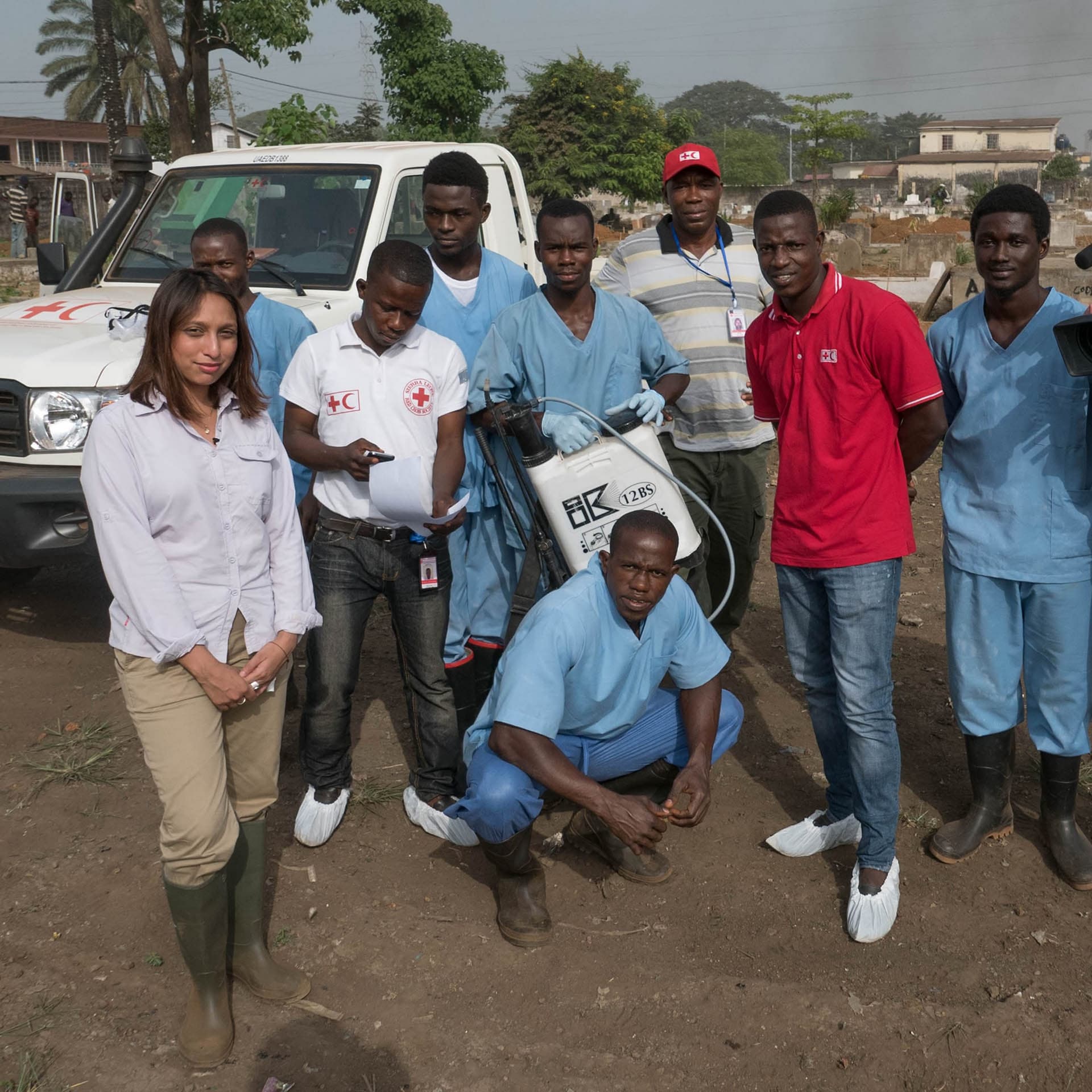
4:40Tim Whewell:Rukhsen speaking via a wobbly Wi-Fi connection from Kamishli, Kamishlo in Kurdish, a city on Syria's northern border with Turkey. The translator is Eve Morris Gray, a young British woman so fascinated by Rojava that she spent three years working there, becoming fluent in Kurdish.
5:00Kurdish women:When I joined, as the Kurdish people and also as a woman, within Syria's system, we did not have rights, language, culture, politics or law. So Yeh Peje was a hope for every woman, that women can defend themselves, their country and their people.
5:22Tim Whewell:The YPJ, YPJ, all women military units, became famous around the world. They fought in 2012 against the Syrian dictator Bashar al-Assad, under whom even speaking Kurdish in public could land you in jail. And they fought in 2014 against so-called Islamic State, the antithesis of everything they believed in. but they didn't just fight.
5:47Kurdish women:Maybe to many people they think of the YPJ as a military force but actually it's a revolution of mentality. I was 22 years old when I joined. At that time I really didn't know much, how to think but in the YPJ I learned how I could actually change things, how to build confidence. For women we never really had this self-belief. It's been 14 years of revolution. But in these 14 years, every day I've learned something new. Also, it was my first time living all together as women, living free, thinking free, talking and expressing ideas freely. It all sounds too good to be true.
6:28Tim Whewell:Assuming, of course, that you believe in fighting in the first place, which Natasha Walter doesn't.
6:33Kurdish women:I don't want to romanticise Rojava. There have been reports even a forced recruitment of young women or girls into the army. It's a highly militarised society. But I think that what it has achieved in terms of equal power sharing and its desire to move towards direct democracy, restorative justice, I think is truly, truly impressive. They have built a new science of women, as they call it, genealogy.
7:04Tim Whewell:From the word gin, meaning woman.
7:06Kurdish women:So about how can you put feminism into practice. And I was told that everybody who holds any kind of position in the autonomous administration has to study genealogy.
7:18Tim Whewell:The women fighters are only the most visible element of a much broader social and political experiment. In Rojava, every public position must be held jointly by a man and a woman.
7:30Kurdish women:My name is Betty Barama. I'm a co-mirror of Kamsla municipality. We think that if there is a man and a woman together responsible for the decision, they will take the best decision because the way of thinking is different. Women think about children, about environment. Also, when you put a law that there should be a man and a woman, we give more opportunities for women to be in this position. If we let it for one person, especially in our society, we believe that they will choose a man. Also in the constant, 50 % is women. We think it affects how we can design spaces and buildings.
8:12Tim Whewell:So, Berivan, give me an example of something that you've done in Kamishwa.
8:16Kurdish women:In our society, it's not safe for women to take a house by herself. So we build two big buildings for women who want to live alone. and we build a place for a gym, only for women, because here they can't go to a place where there's a man going to gym.
8:35Tim Whewell:Tell me, how much opposition have you faced from men?
8:41Kurdish women:Actually, when we started this system, it was very difficult for society to accept a woman as a mayor. Sometimes when they come to us, they say, where is the man? I want to talk to him. And after 11 years now, they say it's not matter if it's a man or a woman. And sometimes they ask for a woman because she's very strong. She listens to them. She can solve our problem.
9:09Tim Whewell:Where did this radicalism come from? Partly, according to singer Mizgin Tahir, from a long-held tradition of respecting women.
9:20Kurdish women:One of the Kurdish proverbs, it said, which means the lion, it's lion, regardless if it's a female or a male. If we were going to talk about fighters, in the Kurdish history, there is, for example, a fighter called Aisha Rash. She was a very famous, very heroic fighter that she was never get out of her horse. back. She was always fighting alongside with the men to protect her tribe.
10:00Tim Whewell:Dear Mother, the song goes, a day will come of a free country without war.
10:11Tim Whewell:But free Rojava was built not just on tradition, but on ideology. The vision of a man who's now far away behind bars in an island jail in Turkey.
10:27Tim Whewell:Before Apul came to lead us, we were in deep sleep, suffocated, this Rojava fighter says. Apul is an affectionate name for Abdullah Erjalan, the imprisoned founder of the Kurdish political movement and armed group the PKK, that's designated as a terrorist organisation by Turkey and many Western countries. Kurds, who've never had a state of their own, a split between Turkey, Iraq, Iran and Syria. It's only in Syria, which has the smallest number of Kurds, where Erdogan lived in the 1980s and 90s, that his ideas have been put into effect. The Rojova project implements the system of democratic confidualism
11:11Kurdish women:that Erdogan came up with. multiple levels of councils from village to district level to the top level.
11:19Tim Whewell:Zeynep Kaya of Sheffield University in the UK, co-editor of a new book on Rojava's revolution.
11:25Kurdish women:It's like this laboratory for implementing this ideological political programme for the first time. And in practice, it looks very interesting because they have this kind of centralising, top-down, disciplinary attitude. That kind of comes from their Marxist history, but at the same time they have this decentralising approach as well. So they have different entities that their sole role is to criticise the decision makers.
11:56Tim Whewell:Dissidents who oppose the entire project aren't so welcome.
Read the full transcript
12:00Kurdish women:There are reports that they have been put in prison and there are reports that they have been expelled. But I personally haven't heard really bad treatment like people disappearing, getting tortured.
12:11Tim Whewell:What does Rukhsen Mohamed of the Women's Protection Unit say? Were there things that you couldn't criticise?
12:19Kurdish women:The most fundamental thing in our life in the YPJ is criticism and self-criticism. This is what develops us. So in the YPJ, I learnt to be able to say when I thought something was wrong, with no fear in my heart.
12:32Tim Whewell:And men accepted it?
12:35Kurdish women:Some yes, some no. But often those who would not accept would see their mistakes through time. But some people also don't.
12:44Tim Whewell:What about the family of Berevan Omer, the co-mayor of Kamishwar? Did you personally face any obstacles in trying to do all the things that you wanted to do?
12:57Kurdish women:Actually, there's a lot of things happened. And now I live by myself. I can't live with my family. I'm not married. So I live with my friend, a female friend. When I was with my family, they said, you are late. Why are you going there? Why are you going here? Then I took this decision to live alone. It was very difficult for them. Now they're good with this idea because they see how I can do good things for my people. But it takes a lot of time, a lot of pace when you hear words from your mother and when she cries. And now I'm not like young anymore. I'm 35 years old. So when I visit my mother, the first thing she said, when do you quit from this job and date in marriage?
13:51Tim Whewell:But now the council stopped all but the most essential work because no one knows what its future will be.
14:01Tim Whewell:Night after night in Rojava's towns and cities, Kurds have gathered round campfires in the streets, drumming and dancing. They've been guarding their city against possible attack by forces of Syria's central government. In early January, it launched an offensive against the Kurdish army, the Syrian Democratic Forces, or SDF, after negotiations to reunite the country broke down. The SDF was quickly driven out of Raqqa and other mainly Arab areas that it took from ISIS with American help eight years ago. In mid-January this year, a ceasefire was declared before government troops reached the Kurdish ethnic heartland further north.
14:44Tim Whewell:But it's been shaky, and the Kurdish city of Kobane remained besieged in the freezing cold of winter, with little water or electricity, and filled with people who'd fled government attacks on surrounding villages.
15:00Kurdish women:So I came to one of the schools full with the displaced families.
15:06Tim Whewell:This is local journalist Mustafa Al-Ali.
15:09Kurdish women:The families have washed the clothes of their kids and they just are drying it on the desks. Even there are some families who brought their cattle with them from the villages. Each two families are sharing one classroom. They don't have water, they don't have heat, and they don't have any electricity. The reason they came, as they told me, because they are afraid from the jihadists who have attacked their villages. They told me that we don't want to have the same massacre that happened in the coastal area of Syria.
15:50Tim Whewell:Kurds were terrified by the killing last year of hundreds of civilians from another minority group, Alawites, along Syria's Mediterranean coast. The main perpetrators were militias supporting the new central government. And in Kamishul, this year, an Arab serving in the Kurdish security forces suddenly turned his rifle on his comrades.
16:16Tim Whewell:And filmed himself spraying them with bullets, adding a celebratory ISIS-style soundtrack to the video he then released. Co-maire Berevan Omer says relations between Kurds and Arabs are now at breaking point.
16:32Kurdish women:We were living together for many years, but now people are afraid from their neighbour because they see it by themselves, how they kill our people, go to other side.
16:42Tim Whewell:This is Assignment on the documentary from the BBC World Service. I'm Steve Rosenberg, the BBC's Russia editor. In Our Man in Moscow, I'll show you what it's like being a news correspondent in Russia as the Russian authorities wage war on Ukraine and try to silence dissent.
17:01Kurdish women:The sound of war has reverberated around Ukraine for three years.
17:05Tim Whewell:Dramatic geopolitical upheaval alongside threats of intimidation and imprisonment. Our Man in Moscow. Watch with a subscription to bbc.com and the BBC app. Visit bbc.com slash docs to learn more. This message comes from Schwab. At Schwab, how you invest is your choice, not theirs. That's why when it comes to managing your wealth, Schwab gives you more choices. You can invest and trade on your own. Plus, get advice and more comprehensive wealth solutions to help meet your unique needs. With award-winning service, low costs and transparent advice, you can manage your wealth your way at Schwab. Visit schwab.com to learn more.
17:49Tim Whewell:I'm Tim Huell.
17:54Tim Whewell:For now, Kurds can't just think about how to preserve women's rights. The threat now many feel is to the whole nation, to the human rights of everyone in North East Syria. I can clearly see how traumatised she is.
18:09Kurdish women:She's chain-smoking. соб exempt by men and women
18:17Tim Whewell:Now they've got nowhere to go but they're barely thinking about the future. Their minds froze on the day in mid-January when they set off in a convoy of cars and tractors and hit a roadblock.
18:48Kurdish women:She says, they asked my son.
18:50Tim Whewell:The older one, aged 21.
18:53Kurdish women:What do you do? He said, I have no job, I'm not doing any work. She's saying, then they opened the trunk, they saw a bag there. there was a military trouser in the bag. Then they started to beat him in his head. We were panicking inside the car. They took my son. They made him lie down with 14 others. 15 guys lied down by the side of the road. My 11-year-old daughter, she was like crying and screaming that they took my brother. and they told her the sign of, we're going to behead you if you keep crying and shouting like that.
19:38Tim Whewell:We're going to behead you? Putting the hand on the throat.
19:42Kurdish women:My brain jammed. I'm hugging my daughter.
19:45Tim Whewell:They'd known there was danger ahead. People driving the other way said to turn back, but that would have been dangerous too. Then their car broke down. A tractor had to tow them, but the rope kept snapping, so at the roadblock they were trapped. And the woman's sister-in-law, also in the convoy, says the fighters manning it looked different to the ones they'd seen earlier in the journey.
20:10Kurdish women:She's saying they all were wearing military clothes, but each one is differing a different style or different brands. They had, like, long beards and long hairs, and we even saw the ISIS flag on some of their shoulders.
20:23Tim Whewell:The black flag of ISIS. But you think those people were part of the Syrian army?
20:29Kurdish women:They were mixed, including the Syrian army. She's saying for us they all are ISIS, they just have different names because they all have the same ideology and looks.
20:43Kurdish women:They moved them, they moved 15 guys, including my son.
20:48Tim Whewell:This is his mother talking again.
20:49Kurdish women:To a trench that you can't see what will happen behind it. And they started to shoot them. There was 15 guys with arms, like AK-47, 15 guys shooting them.
21:03Tim Whewell:She couldn't see her son in the trench, but her husband, higher up on the tractor, could.
21:09Kurdish women:My husband is keep crying and he's keep shouting and saying, like, I lost my son, my son is gone, my son is killed.
21:16Tim Whewell:But suddenly they had a chance to leave because somehow they'd retied to the tow rope.
21:21Kurdish women:I'm telling him, let's just save the family. let's go, I have this feeling that my son is alive. We are about to get in the car and then this little girl from our family came. She says, Hamoudi is alive there ahead of us.
21:36Tim Whewell:He'd been released and delivered to his uncle and aunt who were further forward in the convoy beyond the checkpoint. This is his aunt.
21:49Kurdish women:Hamoudi came shivering, hugged me very tight, crying. His whole face was full of blood. He said, miracle, I did not get killed. There was one nice guy saved me. He said, look, I can see his hands. It's very small. It's not a hand who carries weapons. But they were telling me to bark like a dog, like you Kurds are dogs. And I was like, I'm not going to bark like a dog. That's why I got all these beatings in my face. But I saw, like, they killed, they shot all of those guys who were lied down behind me.
22:21Tim Whewell:Hamoudi was reunited with his parents further down the road after they'd also eventually got through the checkpoint.
22:30Kurdish women:They're showing me a video of the first moment that they're meeting Hamoudi. They're hugging him and Hamoudi looks, like, really tired and exhausted. They all are crying.
22:38Tim Whewell:You don't think there'll ever be any kind of justice for the people who were killed.
22:46Kurdish women:Just to see something that you don't find in Syria. Whatever happens in this country, there are always enemies of each other.
22:54Tim Whewell:I'd put those allegations to the Syrian government, but I've had no response. It's only one of many stories of killings in north-east Syria in the past two months, of Kurds killed by Arabs, and in some cases it's also alleged Arabs killed by Kurds. What went wrong after years when Kurds said that local Arabs had been part of their democratic system? Faris Viran, from the mainly Arab district of Deir Ezzor, now teaches at Princeton University in the United States.
23:24Kurdish women:Yes, yeah, there were some local elections. Arabs were in charge of certain, like, city councils and stuff. That's true. But who are the top leaders who are controlling the military? The Kurds. Who are the people who are controlling the big businesses and taking the money from the oil and the crops that they sold outside of the region, the Kurds. And they forced too much of the Kurdish, the PKK leftist, Ojalan propaganda on Arab citizens. And when that happens, of course, people will revolt against you. That's why Arabs, when the moment came and they saw the SDF is going down, that's why they rose up against them.
24:04Kurdish women:And somebody might say here, well, look at the SDF. Like a few weeks ago, it was 70 % Arab ethnically, like the soldiers. And my answer to that is like those Arab soldiers joined the SDF for the$300 salary. That's it. Not for ideological dreams or goals as some Kurds did.
24:27Tim Whewell:I put that Arab perspective to Rojava's most powerful woman, Fauza Youssef, a leader of the ruling party, the PYD. Maybe you tried to impose a system on Arab populations that they were not ready for.
24:49Kurdish women:The sociology of every place, it's different from other locations. To impose any system, or we can't say imposing the system, to explain this system, we needed a longer period. Also, I think what happened in the Arab majority areas, it's not only the people who choose to be against the administration. It's basically a very well-established game, a special war that's been prepared by some actors and posed on the people over there.
25:17Tim Whewell:That's enigmatic. Beryvan Omer, the co-mayor of Kamishwa, is more direct.
25:22Kurdish women:There's a lot of people who want to make this crisis because they're Islamic. They think women should stay at home, women shouldn't work.
25:32Tim Whewell:She's talking, among others, about the president of Syria, Ahmed al-Shara. Under his non-de-guer, Abu Muhammad al-Jolani, he fought with al-Qaeda and led other jihadi groups. Now he's trimmed his beard, wears sharp suits, and has been embraced by President Donald Trump. Young, attractive guy, tough guy. Strong pass. Strong pass fighter. Al-Shahra's government is still negotiating with Rojava's leaders about what exactly integration into the Syrian state will mean. Diplomats from America, formerly the Kurds' big backer, have tried to exact some concessions for them. But Kurdish expert Zeynep Kaya says Rojava's unique system is over.
26:16Kurdish women:They've lost all their territory. Their administration has been dismantled.
26:23Tim Whewell:The idea of a man and a woman in charge of everything is gone.
26:26Kurdish women:In their internal practice, I think they will continue that. But officially, there will be one person. This is my prediction.
26:33Tim Whewell:And usually that official legal person will be a man?
26:36Kurdish women:We'll see. But al-Shara government is very patriarchal. I don't think they would like to have a woman in power. I think they would prefer a man.
26:47Tim Whewell:There's only one woman in the current Syrian interim government. As for the new Syrian army, the Kurds have been promised four brigades of their own within it. But does their leader, Fauzi Youssef, think there will still be all women units?
27:05Kurdish women:There is no crystal clear decision in this regard. They still don't give any positive signs.
27:12Tim Whewell:That, in a way, is a red line for you, the continuation of those units.
27:19Kurdish women:Yes, it's a red line for us because the YPJ, it's the only guarantee to protect the Kurdish women as we're still in critical times.
27:27Tim Whewell:We'll fight rather than disband, some women commanders say. But if it came to that, the odds now would be against them. What will survive then of Rojava's women's revolution? Academic Zeynep Kaya.
27:42Kurdish women:That project has ended now, but as an idea, it's not going to end. The fact that they planted seeds gives a lot of hope for people going forward that something like that might happen again in the future.
28:00Tim Whewell:SINGER MIZGIN TAHIER CERTAINLY IS HOPEFUL
28:04Kurdish women:I do believe that after the freedom that the women in Rojava have practiced they would accept to go back to be slaves for men or they will be covered up and just be housewives I think the women will be going to fight and will keep their freedom
28:22Tim Whewell:And Berevan Omer, who overcame family opposition to run a major city in her early 30s, she certainly isn't planning to give up work and just get married.
28:33Kurdish women:Sometimes we think when women, like, found their way they can go back. It's impossible to go back.
28:47Tim Whewell:Assignment was presented and produced by me, Tim Hewell, with sound mixing by Neil Churchill. The production coordinator is Katie Morrison and the editor, Penny Murphy.
From the publisher
For 14 years, while Syria was divided by civil war, Kurds in the north-east of the country tried to build a new democratic society, with equality for men and women – an inspiration for feminists around the world. But now, the Kurdish autonomous area, Rojava, is coming back under the control of a central government that’s now run by former Islamists.
Reporter Tim Whewell asks whether Rojava’s rare social experiment - including all-women fighting units – will survive? He interviews Kurdish women, including the young co-mayor of one of the area’s main cities, who’s determined to continue her work, and learns about the origins of Rojava’s unusual system. He also talks to a woman who says she and her family witnessed the killing in January this year of unarmed Kurdish men, by fighters supporting the central government. As such allegations multiply, many Kurds are nervous about their future in a united Syria.
This episode of The Documentary comes to you from Assignment, investigations and journeys into the heart of global events.