
In short
The episode is a BBC World Service “The Fifth Floor” documentary segment focused mainly on Colombia’s cocaine supply chain, especially how narco-traffickers are using new technical methods to boost profitability, including “narcotic race” improvements in coca cultivation and “narco submarines”/semi-submersibles for shipment. It also includes other unrelated segments: Labubu collectible dolls, sandstorms, and leopards in Mumbai.
Guests (and backgrounds)
José Carlos Cueto (BBC Mundo journalist investigating Colombia’s cocaine story). Leonardo Correa (UN Office on Drugs and Crime regional coordinator; quoted). Cesar Alvarez (researcher studying Latin America–Australia smuggling routes). Maria Zakharov (BBC journalist on sandstorms). Mayurish Kanur (BBC Marathi reporter on Mumbai leopards). Fan Wang (BBC journalist on Labubu craze). Nikit Surve (Wildlife Conservation Society project manager). Richard Washington (Oxford climate science professor). Sarah Bazar (WMO scientific officer).
Key claims
Colombia’s cocaine production hit a 2023 high (2,600 tonnes; +53%); traffickers exploit resilient coca enclaves and improved agrochemicals/irrigation/precision farming to enable up to six harvests/year. Shipment tech is evolving: lighter materials (fiberglass/carbon fiber), 3D-printed components, GPS remote navigation, silent engines, and radar-dodging submersibles. Government countermeasures include shifting away from glyphosate-only approaches toward targeting other chain links, but experts say seizures may not reduce overall supply (“buckets without turning off the tap”).
Notable examples
A Colombian Navy discovery of a cocaine semi-submersible in the Pacific with enough fuel to reach Australia; a seized Atlantic-crossing semi-submersible carrying nearly 5.5 tons; a remotely manipulated vessel near Santa Marta with satellite-navigation equipment.
Written by AI. May contain mistakes. Listen to the episode to check what was said.
Chapters
Tap a time to open that second in VOIntroduction to the Cocaine Trade
0:52 to 1:56
Overview of the cocaine trade in Colombia and the latest trends.
“The Fifth Floor, you're listening to us.”
Technological Advances in Cocaine Production
1:59 to 4:25
Exploration of new technologies used in cocaine production.
“So, José, what are the latest trends in the narcos world these days?”
The Evolution of Narco Submarines
4:32 to 7:21
Discussion on the advancements and design of narco submarines.
“I mean, that remains a bit of a mystery.”
State Responses to Cocaine Production
7:34 to 10:08
Examination of the Colombian government's strategies against cocaine production.
“on navigation technology like GPS and the use of silent engines and improvements in submersibles that prevent detection by radar.”
Episode Discussion
14:00 to 28:00
“which is 150 ,000 US dollars or 110 ,000 British pounds.”
Transcript
Automatic transcript. May contain errors.0:00This BBC podcast is supported by ads outside the UK.
0:30us. And then we'll be learning about Francis Galton and the racist, discredited pseudoscience of eugenics with Desiree Birch. We'll meet many medieval saints in their bone boxes with Rachel Parrott. So if that sounds like your sort of thing, listen to You're Dead to Me wherever you get your podcasts. Thank you. Bye.
0:51Welcome to the documentary from the BBC World Service.
1:00José Carlos Cueto:Estás escuchando The Fifth Floor. The Fifth Floor, you're listening to us. We're listening to you. To me, I'm the Fifth Floor. Faranak Amidi. This is The Fifth Floor, at the heart of global storytelling, with BBC journalists from all around the world. I'm your host, Faranak Amidi.
1:27Specially designed submarines, GPS tracking, and highly trained chemists and agronomists. Can you guess what trade I'm talking about? No, nothing to do with the army or the agricultural sector. These are some of the new technologies that Colombian narco-traffickers are reportedly employing to make the cocaine business more profitable. José Carlos Cueto from BBC Mundo has been looking into this story. Welcome to the fifth floor, José. It's great to have you back.
1:58José Carlos Cueto:Hello, thanks for having me back. So, José, what are the latest trends in the narcos world these days? Well, I guess we should start with a bit of context. Colombia is the largest producer of cocaine in the world and the largest exporter as well. And the UN Office on Drugs and Crime said there is a historic level of production in Colombia at the moment. The most recent report in 2024 said cocaine production in Colombia soared 53 % in 2023 to 2 ,600 tonnes. And they say part of that is because the coca leaf is more productive and resilient, at least in some key enclaves in the country. That is Catatumbo, which is along the Venezuelan border in the northeast of Colombia, Putumayo in the south, and Cauca-Narinho, and particularly Tumaco in the southwest, toward the Pacific coast.
2:56José Carlos Cueto:I spoke to Leonardo Correa, who is the regional coordinator for the Office on Drugs and Crime for the United Nations, and he said that half of the cocaine that is produced in Colombia actually only comes from these enclaves, which in terms of territory represents 15 % only of the coca leaf territory in Colombia. So here you can find more productive and resilient varieties, more efficient use of agrochemicals, improved irrigation system, and even precision in farming and fertilization techniques. New strains have been introduced with technical improvements and are capable of producing up to six harvests a year.
3:37José Carlos Cueto:Normally, they would have two or three. Land utilization has also improved, and there can be up to 10 ,000 plants per hectare. Previously, there were four to six thousand. But why is that happening? Cocaine is not such a profitable business as it used to be before. There is way more supply than demand, so that lowers prices down. So now, in order to make more money, they need to produce and export more. So they need new developments in chemistry, in the construction of submarines or vessels that can transport the product. And the people that we have been talking about call that a kind of narcotic race to boost cocaine's profitability.
4:25Does this mean that they are actually employing people who are highly specialized? How do they find these people? Yes, indeed.
4:35José Carlos Cueto:I mean, that remains a bit of a mystery. These areas are very easily accessible by, you know, authorities or investigators. But what they're saying is that even though it's difficult to quantify how much of these improvements depends on drug traffickers, because also, you know, you count with the experience of the coca farmers. They said that there are some of these improvements that definitely have to come from a more technical, experienced talent. This has been a very common practice in Mexico over the last decade. There have been reports of Mexican drug carters recruiting people in universities and, you know, essentially transferring them into the drug trafficking markets.
5:18José Carlos Cueto:So the suspicion is that they're using something similar to what the Mexican carters have been doing. But there are also reports of the Mexican council's presence in Colombia. So they could be bringing these agronomists from Mexico in order to teach the people here and to prepare the people here in Colombia. So what kind of work are these scientists doing at the moment? They're meant to be involved in many chains of the whole production chain. But it's hard to say their level of involvement. What they have just been spotted is that there is definitely an expert brought from the formal world into the informal economy somehow.
5:56So, Jose, we talked about the production, but what about the shipment? Are narcos using new technologies there too?
6:04José Carlos Cueto:Yes, essentially what they are doing is refining the old ways of transporting the product. These so-called narco submarines or narco vessels have been used in Colombia for quite a long time, for decades now. The thing is that they are getting more refinements of that because now, for example, the Australian market is very important. It's very far away from Colombia. It's essentially a gold mine for drug traffickers. In that country, a kilogram of cocaine can be worth up to$240 ,000, which is like six times more than in the United States, for example. In the late 2024, the Colombian Navy discovered a cocaine semi-submersible in the Pacific that had enough fuel to sail to Australia.
6:46José Carlos Cueto:It was then described in articles as a near smuggling route, which is not new at all. The thing is that by the time the authorities discovered these so-called near smuggling routes, they have been already operating for quite a long time. And in the past, these vessels were not very cheap to build. They could cost up to a million dollars, but now they use lighter construction materials like fiberglass or carbon fiber with components assembled in 3D printers. And drug traffickers are able to design some high capacity vessels for as much as 50 ,000 or 100 ,000 dollars. And then if you bear in mind the cost of the kilo of cocaine in Australia, obviously you will get huge returns if you do that and you invest in improving these vessels.
7:33José Carlos Cueto:But experts, for example, Cesar Alvarez, who studies these smuggling routes from Latin America all over to Australia and the rest of the world, he says that they've also seen improvements that optimize navigation, such as the ability to operate remotely based on navigation technology like GPS and the use of silent engines and improvements in submersibles that prevent detection by radar. I had never heard of narco submarines before. What do they look like? Do they look like a normal submarine? How much cocaine can they transport? How far can they go? Tell us more about them. It's hard to say because they are able to measure this by the ones they discover.
8:16José Carlos Cueto:Recently, they discovered one semi-submersible that crossed the Atlantic last year and was seized with nearly 5.5 tons of cocaine. And then very close to the port of Santa Marta in the north of Colombia, in the Colombian Caribbean, They discovered also one semi-submersible remotely manipulated with two antennas on top and electronic equipment inside for satellite navigation. And what they're saying in the Colombian Navy is that, you know, these vessels are evolving more and more every day. And they can say that there is a definitely highly technical workforce behind it. How is the state fighting this?
8:56José Carlos Cueto:There are many ways, essentially, of fighting the cocaine production because the chain is so large and has so many links. In the past, they used to attack the coca fields using a product that is called glyphosate, which essentially kills them all. But this new government has a new approach, which is essentially saying that the coca production shouldn't have to be necessarily the destined for the cocaine market. and is an ancestral plant as well for the indigenous community. It's part of the tradition for cocoa farmers for a long time. So the government is trying to attack other links of the chain.
9:33José Carlos Cueto:The thing is, even though they are confiscating at the moment, according to Colombian government figures, record tons of cocaine, for example, 800 tons confiscated in 2024, several experts, what they are saying is that it's very difficult to quantify the impact. The record number could reflect, for example, the overproduction that we have nowadays. One of the experts, Cesar Alvarez, the one who is based in Australia, who's saying a very telling phrase, which is like simply ceasing is like taking buckets of water out of a house without turning off the tap that is flooding it. So, again, it's a very obscure market.
10:09José Carlos Cueto:And the experts think that we just see the tip of an iceberg, what we're not seeing actually under the water. José Carlos Cueto from BBC Mundo. You're listening to the documentary from the BBC World Service.
10:46through the story of Homer, the Iliad and the Odyssey. And that's with Kyle Smith-Bino joining us. And then we'll be learning about Francis Galton and the racist, discredited pseudoscience of eugenics with Desiree Birch. We'll meet many medieval saints in their bone boxes with Rachel Parrott. So if that sounds like your sort of thing, listen to You're Dead to Me wherever you get your podcasts. Thank you. Bye.
11:13This is The Fifth Floor and I'm Farinak MED. Would you queue up for hours or even get into a fight to buy a toy? Well, I was a kid in the 80s and back then, kids and parents were lining up outside department stores and toy shops for the Cabbage Patch doll. I drove my parents crazy and got one at the end. I still have the doll 41 years later. Now the current craze is the Labubu doll, which has got people queuing for hours. Fan Wang, a BBC journalist based in Singapore, has been reporting on this craze and can tell us more. Labubus are these little monsters, elf-like toys. They come in different shapes and sizes, but the most popular ones are usually around 17 centimetres long.
12:08People usually buy them to use as bag accessories. These dolls come with a signature look, pointy ears, big eyes, and mischievous screens showing exactly nine teeth. The internet just can't decide whether they are cute or ugly. Their fans would think they are adorable, but a lot of people also think they are weird. The word La Bubu itself doesn't really mean anything. is the name of a character in the Masters toy series created by Hong Kong board artist Ka Sing Long. And in 2019, the Chinese toy maker Pop Mart started selling these dolls. Most of these dolls are being sold in these so-called blind boxes.
12:53You know, customers would usually buy these boxes and they would only find out what they had bought when they opened the packages. One of the fans I interviewed, who is a longtime collector, he told me that the element of surprise is a big appeal to him. And when I interviewed him, he was just walking around at a store in Singapore and he was vigorously shaking blind boxes before he decided which one to buy. And the shaking is actually a very common sight in stores these days. So these dolls are surprisingly affordable, actually, which is another big appeal to the fans. The original price ranged from like£10 to£30 for most of the dolls.
13:40Although now, because the demand has been so high, it has pushed up the prices on second-hand market. Some rare editions can go for like hundreds of pounds even. And recently, there was a human-sized Labu doll that was sold in an auction for 1.08 million yuan, which is 150 ,000 US dollars or 110 ,000 British pounds. And so some collectors do say that they buy these dolls as an investment.
14:14Before the world discovered these dolls, their fame was mostly limited to China. One of the analysts we spoke to, Ashley Duda Renok, who is the founder of China-focused research firm Chouzen, She said these dolls started to become a hit just as China emerged from the pandemic in late 2022. She said that post-pandemic, a lot of people in China felt that they wanted to emotionally escape. And these dolls were a very charming but also embodied anti-perfectionism. And globally speaking, their popularity surged in 2024 when this K-pop superstar Lisa began posting photos of her dolls on her social media.
15:05And then more global celebrities have turned these dolls into an international phenomenon. Rihanna was photographed with a LaBoubou clipped to her back. And then Kim Kardashian shared her collection of dolls on her Instagram. And David Beckham also posted a picture of his doll, which was gifted by his daughter. And ordinary people are just as obsessed. From Shanghai to London, there are long queues to snap up a doll. And these long queues would usually make headlines everywhere. Sometimes the competition could be so intense that it ended up in a fight. It's really hard to explain why these dolls are so popular these days.
15:48So I think it's a mixture of, you know, timing, celebrity influence, I don't know, people's taste, and just a pinch of randomness. But also depends on who you ask. If you ask Chinese government and their state media, they would tell you that the popularity of these dolls showed the appeal of Chinese creativity, making everyone think China is cool. But actually, a lot of people probably are not aware that these dolls are from China. So yeah, you know, it has really boosted the performance of Popmart. And it operates more than 2 ,000 vending machines around the world. And you can now buy these dolls in stores, either physical or virtual, in more than 30 countries.
16:31And sales from outside mainland China actually have contributed to nearly 40 % of Pobmar's total revenue last year. So global market is a big part of its success. Fan Wang reporting from Singapore.
16:47What's it like to be inside a sandstorm? The sky often turns orange or even darker. It's actually hard to see. And that's all because the sand is lifted by winds. And in the worst cases, objects could also be flying around and it can be dangerous to be outside. This is Maria Zakaro, a BBC journalist reporting for the Global Journalism Science and Climate team. In the past few months, sandstorms have swept across many countries, from Iraq to Peru and the US. So Maria has been looking into this. What causes sandstorms and how worried should we all be about them? Here is Maria. As the name suggests, a sandstorm is a storm, but instead of rain, we see strong winds and a high concentration of dust particles.
17:37And these storms are actually part of Earth's natural cycle, and they form when strong winds lift sand and dust from dry soils into the atmosphere. Now, according to the UN, about 2 million tonnes of dust reach the atmosphere every year. And Maria, what are some of the main issues we are seeing when sandstorms hit? these storms can cause a number of issues such as respiratory problems in people for example they can kill livestock destroy crops and force the closure of roads and airports because of poor visibility so for example in March a sunstorm in Texas and Kansas in the U.S. killed about 12 people and caused vehicle pileups while another sunstorm in New Mexico caused limited visibility and car crashes.
18:26And a few weeks later, so in April this year, more than a thousand people in Iraq were left with respiratory issues. And UN experts say that if dust particles get trapped in the nose or mouth, for example, they can lead to problems like asthma or pneumonia. And finer particles can get even deeper, they can reach the bloodstream and affect all organs. And also we know that dust storms also contribute to air pollution. When we think about sandstorms, we usually think about something negative, but they do have some benefits. Yes, they do. Because for example, I spoke with Richard Washington, who's a professor of climate science at the University of Oxford.
19:07And he told me that dust particles can travel thousands of kilometres. So for example, dust originating in Africa can actually reach places such as Europe, the Atlantic Ocean, or the Amazon rainforest. And what they do throughout this journey, they actually carry nutrients that then fertilise oceans and land. So effectively, they contribute, they support both the marine and terrestrial ecosystems. But some of the experts I've spoken with actually told me that some of the effects of climate change, such as the melting of glaciers and increased desertification, could potentially increase the amount of dust exposed to wind.
19:48Tell me, where does this dust come from? It mainly comes from vast deserts. So, for example, the Gobi Desert in Asia, the Sahara in Africa and the Arabian in the Middle East. And you mentioned that desertification and the melting of glaciers might contribute to us having more of these sandstorms. Is it something that we should be worried about then? Well, Farunak, there's no clear answer to that yet. But the World Health Organization has recently observed a surge, both in the frequency and in the intensity of such storms, especially in the Mediterranean region and beyond. And the UN has also been calling for further global mitigation effort.
20:32And I assume there are countries that are more prone to these sandstorms, aren't they? Yes. So according to the UN, about 330 million people around the world are affected by sandstorms. And that can happen in different ways, right? So, for example, according to a new report, which has been published by the World Meteorological Organization, so the WMO, the countries that are most vulnerable to long range transport of dust are actually Latin America, Central Eastern China, and some other areas like the Atlantic Ocean, especially between West Africa and the Caribbean. But according to this report, last year alone, there were many hotspots in many countries, including Ghana, Cameroon, Egypt, Colombia, Brazil, Venezuela, also China and countries in southern Europe, such as Spain and Italy.
21:28So what are experts recommending? So Dr. Washington from the University of Oxford says that the most important step to actually avoid a potential increase in the dust available in the atmosphere is to bring CO2 emissions under control. And that's because we know that CO2 acts like a blanket, right? So it traps extra energy in the atmosphere and causes the planet to heat up. But also the UN says that about 25 % of global dust emissions actually come from human activities, you know, activities such as construction, agriculture and poor land management practices that strip vegetation and effectively expose soil to winds.
22:12And I also spoke to Sarah Bazar, who's a scientific officer at the WMO, and she explained that there could be other measures as well. You know, for example, planting more trees can help or keeping soils more humid can also help. But overall, experts also said that investing in more prediction systems so to alert people in time would also be very helpful. And when you were doing this report and looking into this issue, did you find that governments or states and regions which are more prone to these sandstorms having any initiatives along the lines that you just said? Well, the UN had recently, over the last year or so, has really been pushing for more action and, you know, more measures to be taken.
22:58But all the different governments, because ultimately, this is a global issue, you know, even if it doesn't just affect countries which are close to deserts. As we said, you know, dust butsles can travel thousands of kilometres. So the UN has been calling for a global cooperation among nations to make sure that every country takes all the steps that can be taken to kind of mitigate the effects of these storms. Thank you very much, Maria. Thank you for having me. That was Maria Zakharov reporting for the BBC's Global Journalism Science and Climate Team. Mumbai in India is one of the most densely populated cities in the world.
23:35And I'm not just talking about humans. Apparently, Mumbai is the perfect habitat for leopards. BBC Marathi recently posted a video on their YouTube channel. You can see these huge wild cats strolling down residential streets, even entering people's homes. How did this happen and how do people and leopards live together? Reporter Mayurish Kanur has been working on this story. Mumbai probably is the only city in India which has such a huge national park exactly at the center. The forest is very old. But as the city grew, you know, deep on expanding, the population kept on growing. The city took the forest inside and they even expanded beyond it.
24:23There have been wildlife here ever since, including leopards, bears. At one point of time when this was declared as national forest, and then the Forest Department of Maharashtra started taking care of it and you can still go inside the National Park. You can also take a safari and they'll show you around. Right now, there are about 54 leopards. This Mumbai forest is their home. They roam around, they move around, they can go anywhere. Sanjay Gandhi Rashtra Udyanath, Mublak Pramanath, Vanyaprani Te Uplavda. I met Nikit Surve, so he's currently the project manager for Wildlife Conservation Society.
25:00It's an NGO working in the field of wildlife
Read the full transcript
25:06So he told me after they saw rise in human-animal conflict You know, because the human population increased around the periphery of this particular forest And they also had a lot of garbage, a lot of dogs and cats because of humans The leopards inside the forest, they thought they had a prey So in order to attack dogs or cats They started wandering in the human colonies around. And that's how the human-animal conflict began. And it peaked some couple of decades back. In the month of June 2009, there were nine deaths due to leopard attacks. The first reaction that comes to anyone's mind, if there is a leopard standing in front of you, you fear, you start to run away.
25:55Maybe you attack them. But as Nikit was telling me, there were very much misconceptions regarding the behavior of leopard. Leopard don't attack you just like that. If that animal feels any kind of threat from you, it attacks you back. But that is not their natural instinct. So, you know, you need to react properly. But then as there was sensitization about the behavior of leopards, how people should react, how they should call the forest authorities. Then they also established a kind of a rescue group that would come to any place within 20 minutes or so and they would rescue the leopard and take it back to the forest.
26:39The government authorities, the police authorities, especially the schools and the societies around the forest, they were included. These kind of activities, this kind of trust building between human and animal, if you can use that word, that reduced the human-animal conflict. I was talking to the director of this particular national park and she said at least for last two years, they have not seen a single attack by leopard on human. Between 2011 to 2014, 41 incident occurred of human-animal conflict, you know, attacked by the leopards. The last such attack was reported in October 2022. A death of a girl was recorded nearby.
27:26But after that, they have not recorded any attack by leopard on humans. The story of leopards of Mumbai is all about the decline of human-animal conflict and saving human life as we live leopards' lives. The key word here is participation and acceptance. Human and leopards, they both have accepted each other even in this populous kind of city. Mayurish Kunur reporting for BBC Marathi. I'm Farhanak Hamidi. The Fifth Floor team this week was Alisha Joya and Caroline Ferguson. Thanks for listening.
28:07You've been listening to the documentary from the BBC World Service.
28:34and The Odyssey. And that's with Kyle Smith-Bino joining us. And then we'll be learning about Francis Galton and the racist, discredited pseudoscience of eugenics with Desiree Birch. We'll meet many medieval saints in their bone boxes with Rachel Parrott. So if that sounds like your sort of thing, listen to You're Dead to Me wherever you get your podcasts. Thank you. Bye.
From the publisher
Deep inside the Colombian Amazon hi-tech submarines are being built. When it comes to making the cocaine trade more profitable, there’s nothing narco-traffickers aren’t willing to try. Some of the solutions they’re reportedly employing sound like something out of the American TV series Breaking Bad: GPS-trackers, remotely operated submarines and recruiting highly specialised scientists. Reporter José Carlos Cueto of BBC Mundo has been investigating the new trends and technologies used by cartels in Colombia and abroad.
Labubu dolls, the elf-like plush toys from the Chinese toy maker Pop Mart, seem to have taken the world by storm. Singer Rihanna had one clipped to her bag, influencer Kim Kardashian shared her collection of 10 dolls on Instagram, and former England football captain Sir David Beckham also shared a photo of a Labubu, given to him by his daughter. So, what’s behind this craze? Fan Wang reports from Singapore.
From the US to the Middle East, sand and dust storms have recently swept across many parts of the world, colouring the skies and leaving people with breathing problems. These storms traditionally originate in vast deserts. However, scientists believe that climate change means more people could be affected - with desertification and melting glaciers, exposing more dust. Maria Zaccaro, a BBC journalist reporting for the Global Journalism Science and Climate team, finds out more.
Mumbai in India is one of the most densely populated cities in the world - and it’s also the perfect habitat for leopards. BBC Marathi recently posted a video on their YouTube channel, showing these majestic wild cats strolling down residential streets and even entering people’s homes. In the past, there were several reports of human-animal conflict, including some deadly attacks. But since 2022 there have been no accidents at all. So how did people and leopards manage to find a way to live together in harmony? Reporter Mayuresh Konnur has the story.
This episode of The Documentary comes to you from The Fifth Floor, the show at the heart of global storytelling, with BBC journalists from all around the world.
This is an EcoAudio certified production.
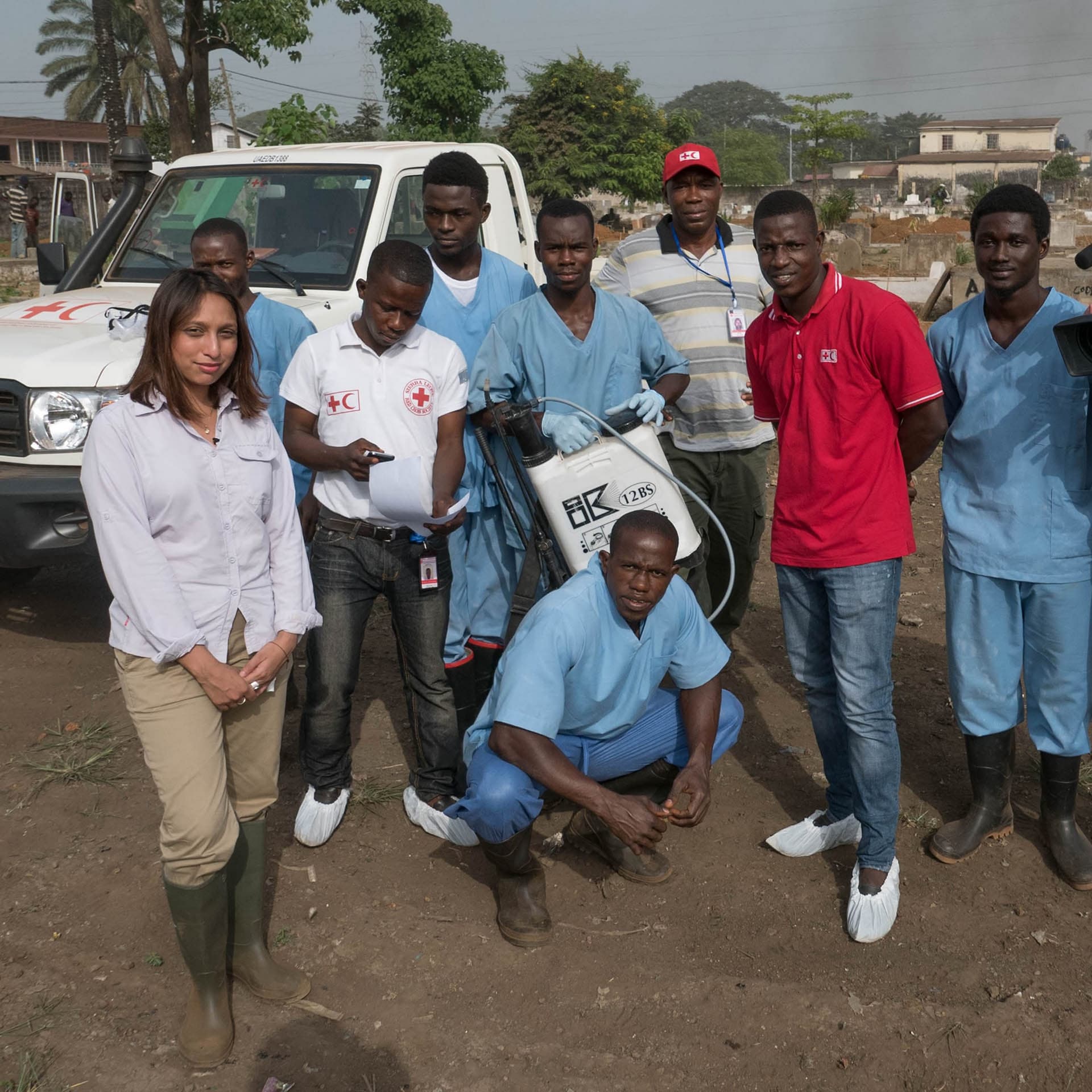
(Photo: Faranak Amidi. Credit: Tricia Yourkevich.)