In short
BBC World Service “The Fifth Floor” episode about counting Russian soldiers killed in Ukraine using open-source verification, and a separate segment on Aceh, Indonesia’s Sharia law and public caning.
Guests/backgrounds
Olga Ifshina, BBC Russian journalist who has tracked Russian casualty names for over four years with volunteers and MediaZona (independent outlet). Astujastra Ajangrastri, BBC Indonesian journalist who explains Aceh’s history and Sharia caning.
Key claims
Confirmed Russian killed via open sources: 207,000; real deaths likely 1.5–2x higher (350,000–400,000). Western “irretrievable losses” differ because Russians may be wounded multiple times, return from POW, and be counted repeatedly. Recruitment shifts from elite early invasion troops to older contract soldiers (~45) with brief training; Wagner pioneered prison recruitment (50,000+ inmates). Prisoners/accused can sign contracts under new law.
Notable examples
Ethnic republics (Dagestan, Buryatia, Tyva) deaths reflect economic hardship, not minority-targeting. Tyva’s high crime and low life expectancy correlate with more recruits. Aceh segment: January caning of six people (including a 21-year-old woman receiving 140 lashes for sex outside marriage and drinking; an Islamic police officer among the caned).
Written by AI. May contain mistakes. Listen to the episode to check what was said.
Chapters
Tap a time to open that second in VORussian Casualty Figures Overview
1:42 to 2:20
Understand the scale of Russian military losses in Ukraine.
“Both the Ukrainian and Russian armies have faced massive losses.”
Counting Russian Military Deaths
2:20 to 3:15
Discover the challenges of tracking Russian soldier deaths.
“But on day two, we were talking to my colleague and she was like, you know, Russia.”
Verification of Casualty Figures
3:15 to 4:02
Learn about the sources used to verify Russian military death numbers.
“So what is the current figure right now?”
Surprising Findings in Casualty Tracking
4:02 to 4:19
Hear about the surprising insights gained from tracking casualties.
“The last time Russians have released official figures was September 2022.”
Demographic Patterns in Casualties
4:19 to 8:34
Explore demographic trends in soldier recruitment and casualties.
“So when you first started looking into these numbers, what were some of the findings that really surprised you?”
Prisoner Recruitment in the Military
8:34 to 9:48
Investigate how the recruitment of prisoners has evolved in the military.
“But now the backbone of the Russian army are people who sign the contracts with the Russian army, mostly voluntarily, but there are some nuances to that.”
Challenges in Reporting Death Figures
9:48 to 12:54
Examine the challenges of reporting accurate death figures in Russia.
“We know that Wagner alone have recruited more than 50 ,000 criminals, 50 ,000 inmates from prisons.”
Soldiers' Perspectives on Casualty Numbers
12:54 to 14:03
Gain insights into how soldiers perceive the casualty figures.
“So in Russia, there are very strict wartime censorship laws currently.”
Life Expectancy and Military Recruitment in Russia
14:03 to 15:43
Explore how lower life expectancy correlates with higher military enlistment in Russia.
“Also, what's interesting, we actually have established a clear correlation.”
Russia's Military Strategy and Adaptation
15:43 to 17:18
Learn about Russia's military strategy changes and the implications for the war.
“And all of these numbers, figures and patterns that you have found out, what does it tell you about the war and how is it how it's going?”
Show all 13 chapters
Aceh's Sharia Law and Public Caning Practices
18:47 to 23:08
Examine the origins and implications of Sharia law practices in Aceh, Indonesia.
“This is The Fifth Floor, and I'm Farina Kami Di.”
Public Reactions to Sharia Law in Aceh
23:08 to 28:00
Uncover the diverse public opinions and criticisms regarding Sharia law in Aceh.
“What are some of the reasons for public caning in that region?”
Revisions to Sharia Law in Aceh
28:00 to 28:27
Learn about the ongoing revisions to Sharia law in Aceh and the challenges faced.
“Aceh also has several times revising the Sharia law, and then the latest version came up a couple of weeks ago.”
Transcript
Automatic transcript. May contain errors.0:00This BBC podcast is supported by ads outside the UK.
0:30travel dollars work harder. Follow Smart Travel on your favorite podcast app.
1:00company and affiliates price and coverage match limited by state law.
1:06Olga Ivshina:Welcome to the documentary from the BBC World Service.
1:14Olga Ivshina:Estás escuchando The Fifth Floor. The Fifth Floor dinniyorsunuz. Vizim le calo. Tomi haikta The Fifth Floor, Farnak Amidi Sobat. This is The Fifth Floor, at the heart of global storytelling, with BBC journalists from all around the world. I'm your host, Farhanak Amidi.
1:41Olga Ivshina:Russia's full-scale invasion of Ukraine is now in its fifth year. Both the Ukrainian and Russian armies have faced massive losses. Authorities in Ukraine regularly publish figures, But Russian authorities have released no figures since 2022. Throughout the war, BBC Russian's Olga Ifshina has been keeping track of how many Russian soldiers have been killed and trying to find out more about them. Olga, welcome to the fifth floor. It's great to have you as always. So tell me, when after the full-scale invasion started, did you decide to start counting the dead? Day one was a bit shocking for everyone.
2:21But on day two, we were talking to my colleague and she was like, you know, Russia. And, you know, if we don't do it, we might never know in our lifetimes, at least, what the real scale of losses is. Because Russia has a track record of not being really precise with its losses. I mean, the official number of Soviet losses in World War II has changed over the years dramatically. You know, the first figure Stalin has announced was something around eight million, I think. And then it grew up to 27 million, which is the official death tally now. So, yeah, that's why on the day two, we just thought, OK, we need to start counting the losses as much as we can using open source information.
3:00Later on, we were joined by a fantastic team of volunteers who I wish I could talk more about. But I can't, unfortunately, due to security concerns and our colleagues from independent outlet, Russian outlet MediaZona. So now we do it jointly for more than four years. So what is the current figure right now? So the current figure now we have confirmed via open source is 207 ,000 killed. So it's killed only. And for each of those names, we have open source confirmation from the Russian side. That's very important because we don't use, you know, US, British intelligence estimates. We don't use figures provided by the Ukrainian side, pictures of the bodies.
3:40We only count those who have been verified by the sources, official open sources on the Russian side. That's why the figure I said, 207 ,000, is absolutely undisputable. So it can't be lower than this number. It can't be lower. It can't be lower. It's definitely higher.
3:57Olga Ivshina:And it matches what the Russian government is saying? The last time Russians have released official figures was September 2022. And back then, the figure they released was lower than the number we had via open source only. So it was already way higher than they have acknowledged. So when you first started looking into these numbers, what were some of the findings that really surprised you? You know, they keep surprising us because it's not just the numbers, because, you know, probably our audience have heard bigger numbers like 1 million, 2 million. But it's very important because the figures they might have heard, which will sound more loud, so to say, these are figures of combined so-called irretrievable losses, which means wounded, killed, missing in action, etc.
4:49But first of all, there is a big trouble with, in my opinion, with these numbers we hear from the Western intelligence, for example, because they are counting using the Western mindset. So if a person was wounded, he's like, OK, they count him as wounded. If the person was prison of war, they count him as a prison of war. sort of assuming that's it. But in Russian reality, that's not it. We have evidence that people who have been wounded three, five, seven times return to the front line. Some of them return on crouches. And there is evidence of that. There is footage of that. People going inoffensive on crouches.
5:25There is extensive evidence of people who were prisoners of war after some time they are sent back to fight.
5:32Olga Ivshina:They were prisoners of war in Ukraine. They were released and then they were sent back. They were swapped. Yeah, they were swapped because there is, yeah, and they were, so some people can be found, can be counted several times, right? Because first he's wounded, then he, for example, he was sent back. He became prisoner of war, he was sent back. Then he was wounded again, he was sent back. And then finally he was killed. So at least four times he might have been counted. But because of differences in the mindset, it's still the same man in Russia. That's why the count we do is very important because we don't just give the figures.
6:03We know a lot about each of those guys, where they're from, how they ended up in the army, what's their age, what's their social background. And it tells us how Russian society, how Russia itself is changing during this war.
6:18Olga Ivshina:And just give me an example of like, when you found these facts, what does it tell you about how the war is going? For example, At the start of the invasion, we recorded a significant amount of people from Russian ethnic republics being sent to the front line, from Dagestan, from Buryatia, from Tyba. And some of the people out there started saying, oh, Putin is sending ethnic minorities to die, to slaughter. But what our evidence shows, because we have their names, we ask sociologists to analyze our data. And they come back saying, yes, there is disproportionate number back then from from Dagestan, from Buryatia, from Tyva going and dying in Ukraine.
7:03But if you look deeper, it's actually within those regions, the possibility to die for Russians and non-Russians is equal. So it's not policy sending minorities. It has more connection to the economic background of those regions. So these are depressive regions where it's hard to find a job. That's why many people back then, many males, were thinking, OK, army gives me a stable job. Army is a social lift, which is not working in other instances. So they were more eager to sign up. Fast forward four years. Now we see more people signing up, again, from depressive regions, from regions where their influence of the authorities is high.
7:44For example, if it's forgotten the little village far away and you depend on the state to provide supplies, to provide helicopter connection to the mainland, you are more prone to propaganda. You're more prone to listen to the authorities. And we see more people living from those areas. We also see more people living from villages and small towns rather than from the big cities. Once again, because in big cities, you have more opportunities for education, to get better job, to get high paid job. So those bonuses Russia offers to sign a new contract, and those bonuses are huge. You can get up to 20 ,000 pounds roughly, just as a sign-up bonus.
8:25It's just a sign-up bonus. But in Moscow, you can sort of earn it without risking your life. So that's one of the little insights we've got. There are many of them, you know, how the Russian army is changing, because first few months of the invasion, we have seen Russia using its best troops, Special Forces operators, paratroopers, Marines, people who were really trained and prepared. But now the backbone of the Russian army are people who sign the contracts with the Russian army, mostly voluntarily, but there are some nuances to that. And they are way, way, way older. They are about 45 years old normally.
9:01Some of them have underlying health conditions. They receive, best case scenario, one month, but normally 10 days of training, and they're being sent straight to the front lines. So it's very different.
9:12Olga Ivshina:The pattern is changing. Yes. One thing that, Olga, is very well known is that Russia is using criminals and prisoners as soldiers. How has the recruitment of prisoners and criminals changed throughout these few years? It's also very interesting because actually the recruitment of prisoners was pioneered by Wagner Private Military Company. Its founder, Evgeny Prigozhin, he started recruiting from prisons quite successfully. And then later on, he was moved away and the Russian Ministry of Defense picked up. We know that Wagner alone have recruited more than 50 ,000 criminals, 50 ,000 inmates from prisons.
9:57And once again, you know, these are different people. Some served 10, 15 years for killing someone. But what we see now, for example, that many people who sign up are young people who were accused of or who were found guilty of drug trafficking. Drug couriers, this job is really appealing to some youngsters in Russia because it offers quick money. But we see that the young people, so people under 25 years old, they're not that willing to sign up for the Russian army. But we have seen a spike that young people sign up and die exactly at the time when Russian authorities allowed for people being accused or for people being under investigation, under criminal investigation.
10:42So now you can sign the contract with the Russian army if you are being investigated for a criminal charge. So even before the trial, before you're pronounced guilty or not. So before the trial goes on, you can avoid the hassle altogether. That's in the law now. And also, because it's in the law now, both lawyers and prosecutors, they have to mention this opportunity to people. So we see extensive amount of people now signing up before they have been even put on trial.
11:10Olga Ivshina:So, Olga, let's go back to the number of dead. You say that you have been able to confirm or verify more than 200 ,000 dead on the Russian side. how close do you think this figure is to the reality of the real number yeah of course let's talk about our sources first so how do we verify these numbers first of all it's official statements it might it may sound strange but actually still most of deaths are verified by russian officials you know at the start of the invasion it was head of the regions regional governors who would pronounce the names now it's like the head of the local school the head of the local library that would pronounce, you know, our fellow such and such is dead and they would have funerals, etc.
11:53Second important source is social media. So people post on social media about, again, funeral or death of such and such soldier. But we only count those if we see a clear connection between the deceased and someone who is posting. So if you see that that must be his mother or wife or daughter, then we don't bother them, of course, with additional questions because the connection is clear and there must be enough information as well. If the connection is less clear, then we'll double, triple check. Who is this person posting to try to verify the identity of the soldier? And the third big source of information is information we get from volunteers.
12:30So it's pictures of the graves people send us, pictures of war memorials with the names. So coming back to you finally to answer, We think that the real number of dead can be 1.5, two times higher than the figure we have. So we think probably the real number is 350 ,000 or maybe up to 400 ,000. So in Russia, there are very strict wartime censorship laws currently. And disclosing the number of Russian soldiers deaths in the wartime is officially state treason, officially a crime. Yeah. Also, most of independent media, Russian media websites are blocked in Russia. So the information is scarce. We see that Russians, most Russians are not aware of true scale of losses, even if they go to the cemetery and see all those flags.
13:21So we think that Russians notice roughly maybe half of the real number of deaths. And of course, because of that, the perception of war is different.
13:32Olga Ivshina:But of course, the soldiers themselves who are on the front line, they have a better idea. What do they say about that? Have you been able to talk to them and get their opinion about what these numbers mean to them? Yeah, again, people have to be cautious. And yeah, yeah, I speak to some of the soldiers. For them, what mostly matters is the number of people they know who died, right? So their fellow soldiers from the unit, etc. But generally, the attitude towards your own life is different in Russia. Also, what's interesting, we actually have established a clear correlation. So regions of Russia where life expectancy is shorter, they seem to provide more soldiers for the front line.
14:15For example, in Russian Republic of Tyva, the life expectancy is the shortest in Russia. The conditions there are harsh, economic conditions are harsh. Also, the crime rate is higher than average in Russia. For more than 10 years in a row, Tiva is number one in Russia for the crime rate. The most widespread crime is grave bodily harm and killings. So your chance to survive as a male in Tiva is already low. So your perception of how important, how precious your life is, is already distorted, right? Of course, people in such conditions are more eager to sign up. Recently, I have spoken to a Russian soldier He's about 50 years old.
14:56He has four kids, I think. He has a higher university degree, sort of PhD. I was like, why did you sign up? He said, I spent all my life trying to deliver to my kids and my family, and I always failed. I have so many debts. And he says, I think if I sign up, like, I lived my life. I gave them as much as I could. But he said, I'm ready to gamble my life because the social guarantees they would get now since I signed up is much more than I can provide them as a living human being. So if your father serves for Russia in fighting in Ukraine, his kids get opportunity to enter university with the minimum marks.
15:32You get huge discounts. Your wife gets some additional social services. So he's like, I can provide a better future for my kids just signing up. If I die, it's fine.
15:43Olga Ivshina:And all of these numbers, figures and patterns that you have found out, what does it tell you about the war and how is it how it's going? Is it going the way Russia wanted it to go? Of course not. Of course not. It's obvious that Russia has planned for a blitzkrieg, so to say, for a quick war, quick, quick so-called special military operation. They thought they'll achieve success quickly. That's why they used the best troops, the special forces. That failed. But what it also tells us, that Russia learns quickly. You know, it's still prone to corruption, nepotism, etc. So those worms, so to say, are still there.
16:25But also soldiers are learning quickly. The system is adapting constantly. You know, they had a lack of manpower. They did mobilization, partial mobilization. Now then they started drafting prisoners. Then they started drafting foreigners. Then they changed the strategy again. So they're always adapting. Now they're switching more to the youngsters. They're trying to draft university students who failed their exams. They're trying to draft more youngsters saying, oh, you know, it will be fantastic. You'll join drone units. It's not this blood and sweat and tears. It's all fancy mancy like a computer game.
17:03So they're constantly changing their strategy, which tells you that, you know, Kremlin is thinking that they are ready to continue. and Putin is sure he can outlast Ukraine. He can outlast the West because unlike Western politicians, he doesn't need to worry about internal elections, you know, the level of public support. He can ignore that.
17:28Olga Ivshina:Thanks to Olga Evchena from BBC Russia.
17:37Olga Ivshina:You're listening to the documentary from the BBC World Service.
17:46Spring showers bring epic off-road adventures. So bring on the mud and bring on the spring at the Honda Spring Event. Honda vehicles are built for exploring. With the rugged Honda Pilot, Ridgeline, CR-V, and Passport, the road might stop, but you're not done. All from the 2025 Kelley Blue Book Best Value Brand. For great deals, visit your local Chicagoland and Northwest Indiana Honda dealer today. Based on 2025 Consumer Choice Awards from Kelley Blue Book, visit kbb.com for more information. At the BBC, we go further so you see clearer. With a subscription to bbc.com and the BBC app, you get unlimited articles and videos, ad-free podcasts, the BBC News Channel streaming live 24-7, plus hundreds of acclaimed documentaries.
18:30From less than a dollar a week for your first year, read, watch and listen to trusted, independent journalism and storytelling. It all starts with a subscription to bbc.com and the BBC app. Find out more at bbc.com slash unlimited.
18:47Olga Ivshina:This is The Fifth Floor, and I'm Farina Kami Di.
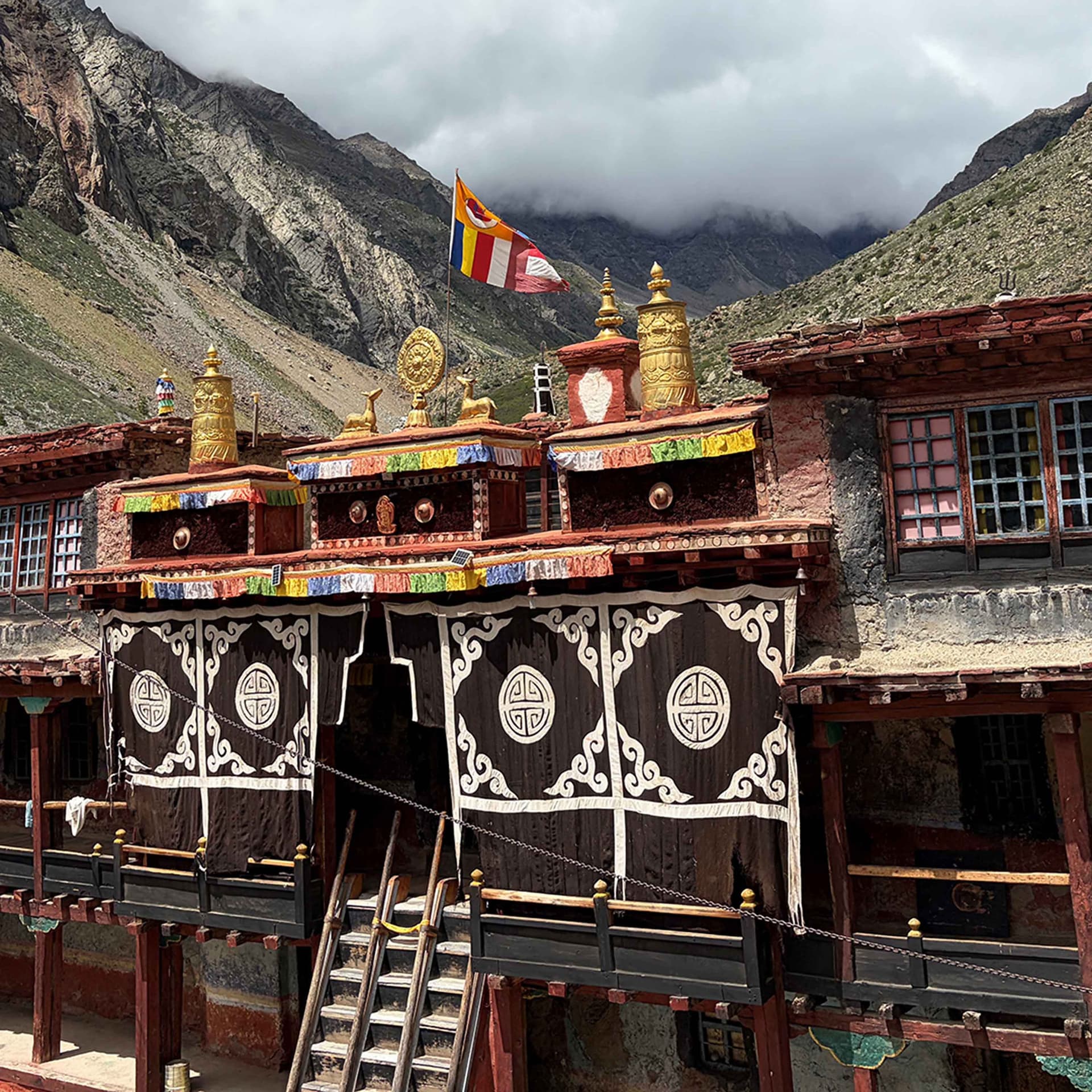
18:55Olga Ivshina:At the end of January this year, six people were caned in public for violating Sharia law in Aceh, Indonesia. Caning is a common punishment for breaking Islamic law in religiously conservative Aceh, although the practice has drawn criticism from rights groups who say it's cruel. Aceh has a unique identity within Indonesia and is the only part of the country to practice Sharia. I spoke with Astujastra Ajangrastri, a BBC Indonesian, about Aceh's history and why it chooses to be different from the rest of the country. So Indonesia is like different islands, but in Aceh specifically, in the 12th centuries, Aceh is actually a home for one of the biggest sultanate called Samudra Pasai, and it's an Islam sultanate.
19:47Aceh is also in the northest part of Indonesia, and it hosts a big international port or trading hub. So lots of merchants from the Arabic, Persian, India, and China first came to Aceh to enter the Indonesian regions. Now, Aceh also has a close relation with the Ottoman Empire in the past because Aceh once helped the Ottoman Empire to resisting Portuguese control in the Strait of Malacca. That's why Islam identity for Aceh is very important and very strong. They are calling themselves as the veranda of Mecca or porch of Mecca because Aceh kind of serves as the gateway for Islam to enter the archipelago.
Read the full transcript
20:40Olga Ivshina:And what happened after the independence with Aceh? So, as you know, Indonesia was colonized by the Dutch and it's a long struggle to gain Indonesia's independence. These different provinces fight the colonialism on their own until 1928, where there's a call from Indonesian youth at the time for every province and every tribe to declare themselves as one identity, which is Indonesia. And so that includes the fighters from Aceh because Aceh is also known as people who are really strong, you know, like they're fighting fiercely against the Dutch and the Dutch allies. And so they are a very important part of the struggle to get the Indonesian independence.
21:38At Aceh at the time, they agreed to fight alongside with their Indonesians with other provinces. But there's also kind of an agreement when the independents declare to let Aceh keep their Islamic identity. Around 1976, there were a huge rebellion in Aceh. They have this independence movement. They want to be separated from Indonesia because they are not happy with how the central government governed them. So they had a huge militarization from the Indonesian government to Aceh. The fight, it got colossal. Many people died because of that. Eventually, the Indonesian government tried to offer Aceh some advantages, not like other provinces of Indonesia.
22:36So they grant Aceh a local autonomy. But then the tsunami happened in 2004. Many people died. But after that tsunami, also kind of there's something that came out of it because the separatist movement finally agreed to sign a peace agreement. But also they make it clear that they want full autonomy over Aceh, including to have a Sharia law for that province.
23:07Olga Ivshina:And so that's how Aceh came to practice Sharia law in some sort of a way. And public caning happens in Aceh. What are some of the reasons for public caning in that region? Sharia law in Aceh is kind of nuanced and they also have to use the national criminal law. So the Sharia law in Aceh focus on like moral values. It rules more about like morality, sexual behavior and social conduct. So lots of this actually ruling the social behavior, including like drinking alcohol or gambling. So that's kind of the things that a chastereo law rule. And the punishment is public caning, fines, and imprisonment.
24:06Most of the time, the canning actually done where onlookers can see, like local people can see. And that's also like it becomes one of the main critics of the canning in Aceh.
24:23Olga Ivshina:And it was in January that a public canning took place in Aceh. What was noteworthy about it? So that was the first public canning held in Aceh of the year. There were six people caned in a single session. So three couples, three men and three women. One of the women is a 21-year-old woman, and she received 140 times of caning for having sex outside of marriage and drinking alcohol. She was seen crying and then fainted and she had to be rushed into an ambulance and sent to a hospital. Another noteworthy thing from that session is one of the men who was being caned is an officer from the Islamic police force.
25:21So Aja has a local police force who their job is to enforce the Sharia law.
25:27Olga Ivshina:So he was one of the officers of that unit himself. He was. And we interviewed the police head in the area with his boss, basically. And he said that this law is applied to everybody, including someone who is working as the Islamic police force. And when these public canings happen in Aceh, what is the reaction of people? Are people supporting it? Is there any criticism? Many criticism. Yeah. So right now I'm based in Jakarta and, you know, I have seen Aceh doing public canning for years. And so when it first happened, it was shocking. You know, people were like surprised that Aceh did this. Even the process leading up to them having the Sharia law implemented, it's also very long.
26:26It's created quite a big discussions and public debate whether Acha should have a Sharia law or not. When they eventually have the first public caning in 2005, it was shocking. But now, you know, for me, as someone who's from Indonesia knows that Acha has this law, there's an understanding that Acha is doing this. But of course, a lot of criticism coming from rights groups. Amnesty International is, you know, always very focal about how caning is cruel and inhuman and degrading, especially like feminists and women activists who constantly say that the law frequently targeted marginalized groups, including women and the LGBTQ communities.
27:19There's also a division within Aceh because in one side, they still want to have the Sharia law implemented because that's their Islamic identity that they want to preserve. But other part of who opposed to the Sharia law is saying that, you know, what is the effectivity? Because even though Aceh has implemented Sharia law, the criminal rate in Aceh is still pretty high. because they don't have a punishment for corruption, which critics say is actually more important than just ruling morality. Aceh also has several times revising the Sharia law, and then the latest version came up a couple of weeks ago.
28:12They're still trying to figure out details of the Sharia law. They wanted to include other aspects like corruptions or economy and educations, but it's still an ongoing process.
28:27Olga Ivshina:Thank you, Asudestra Ajangastri of BBC Indonesian.
28:35Olga Ivshina:You've been listening to the documentary from the BBC World Service.
From the publisher
Russia's full-scale invasion of Ukraine is now in its fifth year and armies on both sides have faced massive losses. Authorities in Ukraine regularly publish the numbers of their soldiers who have been killed, but Russian authorities haven’t released official numbers for their dead since 2022. Throughout the war, Olga Ivshina of BBC Russian has been using open-source information to keep track of how many Russian soldiers have been killed and trying to find out more about their lives.
At the end of January, six people were caned in public for violating Sharia law in Aceh, Indonesia. Caning is a common punishment for breaking Islamic law in the religiously conservative state, although the practice has drawn criticism from rights groups. Aceh has a unique identity within Indonesia and is the only part of the country to practice Sharia. Astudestra Ajengrastri of BBC Indonesian explains more about Aceh's history and why it chooses to be different from the rest of the country.
The Fifth Floor is at the heart of global storytelling on the BBC World Service, bringing you the best stories from journalists in the BBC's 43 language services. We're here to help you make sense of the stories making headlines around the world; to excite your curiosity and to get to grips with the facts. Recent episodes have investigated Russia’s youth armies and how they make soldiers of Ukrainian children; featured the BBC team who were the first journalists to the site of the Nigerian school kidnappings and reflected the effects of internet blackouts in Iran, Uganda and India. If you want to know more about Venezuela’s acting president, Delcy Rodriguez, and the legacy of Hugo Chavez; or how Vladimir Putin’s network of deep cover spies operates; or why Donald Trump signed an executive order granting white South Africans asylum in the US, we have all those stories and more.
Presenter: Faranak Amidi. Producer: Laura Thomas and Caroline Ferguson
Presented by Faranak Amidi.
(Photo: Faranak Amidi. Credit: Tricia Yourkevich.)