In short
The Documentary Podcast: Episode Summary
Podcast Details
- Title: The Documentary Podcast
- Description: The podcast features unique voices at the heart of global stories, exploring hidden truths and diverse narratives shaping the world.
Episode Title
Does Kruger Deserve a Park?
- Description: This episode examines the complex legacy of Kruger National Park in South Africa and the ongoing debate about renaming it due to its association with apartheid.
---
Key Themes and Discussions
- Kruger National Park and Paul Kruger
- Historical Context: Kruger National Park is named after Paul Kruger, a 19th-century president of the South African Republic.
- Founded to protect wildlife, but also a figure associated with South Africa's racist past and apartheid.
- Contemporary Debate:
- Calls for renaming the park stem from the desire to address the legacy of colonialism and apartheid.
- The Economic Freedom Fighters (a political party) and Afroforum (a lobby group) are key players in the debate.
- Afroforum argues that renaming could affect tourism and financial implications.
- Name Change Process in South Africa
- Procedure:
- Proposed by individuals, communities, or institutions to the South African Geographical Names Council (SAGNC).
- Involves public consultation before recommendations are made to the Minister of Sports, Arts, and Culture.
- Conservation and Economic Injustice: Pirarucu Fish
- Success Story:
- The pirarucu, a giant Amazon fish, faced extinction due to overfishing but has seen a resurgence due to sustainable fishing practices.
- Fishermen monitor fish populations and protect against illegal fishing in exchange for limited harvest rights.
- Economic Disparity:
- Fishermen earn minimal returns compared to the high market price of pirarucu products (like bags made from its skin).
- Local fishermen feel they deserve a larger share of profits from the booming eco-friendly fashion market.
- Cultural Insights: History of Toothbrushes
- Unique Collection:
- Tejas Vaidya reports on Dr. Chandarana, who owns the world's largest toothbrush collection, showcasing the evolution of dental hygiene.
- Historical Highlights:
- The museum includes items dating back thousands of years, illustrating changes in dental care practices from chewing sticks to modern toothbrushes.
---
Key Takeaways
- Kruger National Park's Name: The ongoing debate reflects South Africa's struggle to reconcile its history with its present.
- Economic Inequality in Conservation: The story of pirarucu highlights the challenges faced by local communities in benefiting from conservation efforts, despite their crucial role in protecting biodiversity.
- Historical Awareness through Collecting: Dr. Chandarana's museum serves as a reminder of the importance of dental health and the evolution of hygiene practices.
---
Conclusion This episode of The Documentary Podcast delves into the intertwined themes of history, identity, conservation, and economic justice, provoking thought on how societies reckon with their past while striving for a more equitable future.
Written by AI. May contain mistakes. Listen to the episode to check what was said.
Transcript
Automatic transcript. May contain errors.0:00This BBC podcast is supported by ads outside the UK.
0:30to make those markets work for you. Follow Merrin Talks Money on Apple Podcasts, Spotify, or wherever you listen. Welcome to the documentary from the BBC World Service.
0:46Estás escuchando The Fifth Floor. The Fifth Floor, ¿reduy? ¿Cómo estás? ¿Cómo estás? ¿Cómo estás? ¿Cómo estás? ¿Cómo estás? ¿Cómo estás? ¿Cómo estás? ¿Cómo estás? ¿Cómo estás? fifth floor, at the heart of global storytelling with BBC journalists from all around the world. I'm your host, Faranak Amidi.
1:12Kruger National Park in South Africa is one of the most famous nature reserves in the world. But like so many things in South Africa, it has a complicated history. It is named after a man called Paul Kruger. He founded the park to protect nature, but for many South Africans, he is viewed as a relic of the country's racist past, as he was one of those responsible for driving black Africans off their land, and is seen by some as an architect of the country's later system of legalized racial segregation known as apartheid. We have a clip of a black South African man who worked in Kruger Park during apartheid in 1968.
2:00Ironically, it is in the Kruger National Park that Africans are allowed to carry guns in order to protect the whites against the wild animals. As a black man, I have come to realize that the animals have far better freedom than the black people of this country. The Kruger National Park is segregated in the sense that there are separate facilities for both black and white. So one will come to realize that the animals have a far and a better freedom of movement than the African people. Apartheid was officially ended in 1994, 26 years after this man was speaking. But South Africa is still reckoning with its past and with Paul Kruger.
2:56The economic freedom fighters say the defacing of the Paul Kruger statue in Pretoria is part of their nationwide campaign to bring down all apartheid era statues. The statue which stands in the capital's church square in the CBD was painted lime last night by an unknown number of men. Meanwhile, lobby group Afroforum says the destruction of statues will only serve to further polarize South Africa. In October, it was suggested by someone in South African Parliament that the name of Kruger Park should be changed. Kanye Kobo is a reporter for BBC Africa based in Johannesburg who has been covering this potential name change.
3:34Name changes in South Africa have become quite common, especially in the last 30 plus years with the ushering in of a democratic area. You'll know that South Africa came from a colonial and there was legalized racial discrimination up until 1994. So name changes were initiated when the country entered a democratic era as a way to better reflect the country's diversity and to break with the past. So we've seen towns, we've seen cities, we've seen numerous infrastructure undergoing that process over the years to reflect the country's broad diversity. And who was this Paul Kruger and why did he have a park named after him?
4:20So Paul Kruger was a 19th century president of the then South Africa Republic, which was locally known as the Transvaal Republic. And, you know, he was known as sort of his role in wanting to protect the country's wildlife. He led to the proclamation of a wildlife park to protect the country's wildlife. And decades after the park was established, it was renamed in honor of him because of his efforts. So why are people not happy with his name still living on? And why do they want to change the name of this park? For many South Africans, you know, who are still dealing with the effects of the racial discrimination from the past, Paul Kruger is seen as representing that he was the leader, as I mentioned, of South African Republic.
5:14What had happened at the time was that, you know, it had been the Afrikaner, who were descendants of 17th century European settlers. They had formed their own government structure with their own republic. And there was also British, the British had established colonies, you know. So this left out a majority of the country's population, which is black. So for a lot of people, Paul Kruger represents as a representative of the country's colonial past. So although he was president decades before the legalized system of apartheid came into play, he was revered, you know, he is revered by Africaners as a leader.
5:53He symbolized their resistance to British colonialism. But for a lot of black people who were excluded from government, who were driven off their land by the likes of Paul Kruger, he's a representative of that. And there's an issue for them in having places named after him. And are there people who oppose the renaming and the changing of the name of the park? Yes, yes. So there have been political parties and an Africana lobby group called AfriForum who have come out in opposition of the proposed name change. So at the heart of it, the argument is that, you know, the process that was undertaken, it wasn't the correct one.
6:36But over and above that, for them, it's the financial implications in renaming the park. Kruger National Park, it's an iconic attraction site. Its brand is internationally recognized. And the argument is, you know, the cost implications. And even beyond that, you know, the impact it'll have on tourism to have the rename or to have the name changed. Moreover, Afroforum, for example, would argue that, you know, it was Paul Kruger's vision that led to the establishment of the park. He's an integral part of its history. and to remove that, to remove his name from it, it's to ignore the contribution that he has made to the park.
7:17And is this a big national debate right now in the country? Is this something that people are talking about? So at the time that the motion or the issue came up, it was a big topic because name changes, they are often welcomed. But in recent times, there's a debate going on that, Yes, it is vital to, you know, initiate name changes, but where they are necessary. So the debate was, do we need to rename the park and not other things to consider? You know, you'll know that South Africa struggles with a high unemployment rate. You know, we're considered one of the most unequal societies. Our economy is facing issues.
7:59And so people are cognizant of that, that is this where we want to focus our priorities instead of solving more pressing issues that are facing the country. And regarding this Paul Kruger Park, what are some of the suggestions for names to replace it? So at this point, the political party that suggested the name change, they floated one name, which in and of itself turned out to be a bit controversial. They brought up the name Skukuza, which they thought would honor a struggle hero or a struggle veteran. But it then turned out that this was actually the nickname given to the park's first warden, who was very instrumental as well in its establishment.
8:44So Mr. Stevenson Hamilton, he was instrumental in driving porches off the place or the designated area that would become the park. But he also drove off the native inhabitants, which are black families and communities, off the park. And that's how he earned the name Skukuza. So the party that made the suggestion in their eagerness to sort of move away from its association with Paul Kruger, inadvertently then brought up another name that for communities in the area is problematic. And you said that's how he earned that nickname. What does that nickname mean? So the name Skukuza, it comes from a local language, Istonga, and it essentially means he who sweeps clean.
9:33And this referred to how he writ the park of poachers and just swept it clean before it was established and became known as a game reserve and then a national park. And that also included the native black community that lived there. Yes. When a name is suggested in South Africa for a place to be renamed, what is the process? How do you go about doing that? So, yes, it is an extensive process that needs to be followed. And this is governed by the South African Geographical Names Council or SAGNC. And it starts with an individual, a community or an institution can propose a name change. They will obviously have to motivate the reasons for the name change.
10:18So they were then motivated to their local office, which would then initiate a process. There would be a discussion. And oftentimes, depending on how the process goes, there would be extensive public consultation because people do have to have a say in the name change that's being effected. Once that process has been concluded and at that stage it passes the master, it then goes on to the national office where there could be more debate and consultation that takes place. Following that process, the SAGNC will then make a recommendation to the Minister of Sports, Arts and Culture who will have the final say.
11:01So, you know, the chairperson of the SAGNC told the BBC that sometimes it can be a long process, it can be a short process, but there are steps that need to be taken before a name change can be effected. Seems like a complicated process. Indeed, yes. And Kania, in general, do South Africans look at this renaming places and things as a positive thing? how do they think it will help the country broadly? I mean, for the most part, name changes have been widely welcomed, especially in the early years after apartheid ended or, you know, the system of legalized racial discrimination. So they were widely welcomed because, as I said, for a lot of people, the names that were proposed, at times it was new names in honor of historical figures who contributed to the country's formation but were ignored in the past.
12:03Or it's reverting to a name, a town, a city, a street. It's just reverting to its old name. So they've been widely welcomed because then the place becomes more reflective of the country's diversity. I must say in recent years, that process has slowed down on a larger scale. And so when it does come up, it does do a debate. For the most part, people welcome it. You know, they want that street or town or city to be more reflective. But at times, it just ends up feeling like, is this necessary? Do we really, is this where we want to focus our priority? Thank you, Kanye Kobo, our BBC Africa reporter.
12:44You're listening to the documentary from the BBC World Service. If there was a big red button that would just demolish the internet, I would smash that button with my forehead. From the BBC, this is The Interface, the show that explores how tech is rewiring your week and your world. This isn't about quarterly earnings or about tech reviews. It's about what technology is actually doing to your work, your politics, your everyday life. And all the bizarre ways people are using the internet. Listen on BBC.com or wherever you get your podcasts.
13:25This is The Fifth Floor, and I'm Farina Camidi. There is a fish in Brazil's Amazon River called Pirarucu. It's a huge one. And back in the 90s, its numbers were so low that fishing the Pirarucu was banned. But today, its comeback has become an example of how conservation and economic prosperity can go hand in hand. As the numbers of the fish have risen, its unique skin has also become an environmentally friendly alternative to leather for fashion brands, including luxury and exclusive European brands. But local fishermen say they are not receiving a fair share of this profit for all the work they do to protect the fish.
14:08BBC Brazil's Luiz Fernando Toledo has been getting into the root of the story and he joins me now. Welcome to the program, Luiz. Thank you. Thank you very much for having me. So, Luis, before we dig into the story, tell me about this fish. I was looking at some of the photos that you have in your article, and it's an understatement to say it's big. It's huge. It kind of looks like something from the Jurassic Times. Yeah, so this fish can reach over three meters in length and weigh more than 200 kilos. So if you see the pictures in the article, you can see that there are at least three or four people with one fish.
14:46and its skin is thick, resistant, covered with large scales. That's why a few years ago, some people saw it as a way to make money. So it's not only the fish, but it's also because of its skin that made it so interesting. And did you know about pirarucu? Is it a well-known fish? Do people eat it? Yeah, most Brazilians know about pirarucu, but it's not that common to find it in a restaurant. But it's getting more common because more and more fish is getting caught nowadays. So take us back to the 90s. Why was this fish endangered? So by the late 90s, Pirarucu population were dangerously low due to overfishing.
15:27And then there was this Brazilian environmental agency called IBAMA. They decided to ban all the fishing. But then they created a new system, which we call manejo do pirarucu. And then there was this rule where only 30 % of the adults can be caught each year for a period around four to five months. And for the rest of the year, it's forbidden. In exchange, fishermen need to monitor the lakes. So they prevent illegal fishing because illegal fishing in the Amazon is still really, really common. So the same people who are responsible for fishing, they are also responsible for monitoring. And if they see something wrong, they need to tell the authorities.
16:07So there are these strict restrictions. For your article, you talked to a fisherman, his name is Pedro, and he belongs to one of the fishing associations that fish pirarucu. What did he tell you about how much money they make? If you look on this brand's websites, you can see bags that are made from the Piraruku skin and are sold for around$1 ,000. And that's exactly how much money one fisherman gets for one year of work. So they don't really get the money that these brands are getting. So this is their main concern now because they are responsible for this whole system that made the fish survive.
16:48It's considered really good. If you talk to an authority, if you interview any expert, they would say that the manejo of the pirarucu is a really important project, but they are not getting paid for that. And is this their main source of income, fishing pirarucu? They fish other types of fish. They also work with agriculture, but this is part of their income. These people are not rich, so they don't really have money to buy other things other than surviving day by day. So this is like kind of an extra money to do things other than just living. And in your story, Pedro recalls a trip he had to Rio de Janeiro that changed his mind about this whole industry and where he stands in it and how much money he makes.
17:33What happened to him in Rio? What did he see? Yeah, so it's really, really hard to get to Rio if you live in his city. So he lives in a city called Maran, which is in the state of Amazonas. it's 600 kilometers but that is like a straight line and there is no straight line you would have to travel by boat then you need to take a plane to another city and from that city to Rio so he said he took a whole day just to get to Rio and that's when he saw this bag for the first time and he told me he was really amazed and at the same time concerned about how expensive they were He never saw something so expensive before.
18:12And he thought something like, we are not responsible for producing the bags, but we are the ones who created and make this system of fishing work. So how come that we are not getting paid enough for doing that? But why is that? So fishermen work in associations that sell both fish, meat and skins. But the skin is worth much more because it requires complex processing. Only a few companies are able to do that. So I would say that the main problem is that the processing of this skin is not that easy. It's complex. It requires investment. They don't have that money. They don't have the machines.
18:51So they need to sell the fish and these companies, they do the rest and they get the profit. So these brands that are using the Pirarucu skin, they promote themselves as environmentally friendly and sustainable. Why is that? In first place, because they kind of created part of that system. They started something with those bags. So Osklen, the biggest brand, for example, they present Piraruku as part of a circular economy and say that this system is supporting Amazon communities. There's this other company, Piper and Sky, and they say that they combine luxury and sustainability. So I think like they come from a market, the luxury market, where using animal skin is not that good for their brand.
19:39And for the first time, they could say that what they do is supporting environmental communities. But I think now it's been more than 10 years since they started doing that. And I felt when I interviewed this fisherman that they need to talk more because for these companies, they think they are doing something good for everyone. but the fishermen don't feel like that. I think like maybe in the beginning, it was good for everyone, but now these fishermen feel like they should be paid more because they are doing much of the process. So you actually contacted a few of these brands that use Pirarucu for their product.
20:17Did they acknowledge that very little of the value and the final product was reaching the fishermen? To be honest, most brands replied only by email and only one accepted an interview, Nova Kairu. Many did not want to appear in the article. There was this company saying that they didn't want to be mentioned. Then I had to talk to them and say, we are going to mention you. Do you want to talk to us? And they never replied. But the general response was that they recognized challenges, but they still say that they are doing investment and sustainability, logistics. That's why they can't give more money to the fishermen because they say it's complex and they spend a lot of money and they need to wait part of the year because you can't fish during the whole year.
21:02And Nova Cairo, the company who actually spoke to us, they said prices are fair compared to other skins and that luxury fashion represents less than 5 % of the demand. And what about Brazil's environmental agency? Are they happy with this whole process and the system? Brazil's environmental agency, IBAMA, they consider that the system is very successful for conservation because Pirarucu populations are stable again. But at the same time, during one of these interviews, they told me the same thing that fishermen told me after I spoke to them. So telling us that the economic returns are low compared to the workload and costs involved.
21:41So they also agree that the fishermen should get paid more. And in your article, these fishermen kind of hint that that if things don't change and they don't get a bigger share, they might just stop fishing and protecting pirarucu. Did you get a sense that they were serious about this? I think like not these people because they do things under the law, but the illegal market is huge. So I think what they meant was if this market is not good for us, other people will come and do it in the illegal way. So I was talking to Pedro, the fisherman, And he told me that for just one fish, you can get around a hundred and something dollars.
22:22If you sell it like in the unofficial market, you can get much more money. So I think that that's what they meant when they said like they need to get paid more, not because they are going to do something wrong, but other people could do it. And it's not that hard. And how did your audiences react to this story? Many, many people went to this brand's Instagram page, Facebook page, and started complaining about not paying fishermen enough. These people understood the message and started asking Ausklin for a response. Did you approach Ausklin? I didn't have an interview with a spokesperson, but they sent me a note.
22:59And the note was honest. They recognized that this market is really challenging. But at the same time, they were pioneers. They started to create these bags. They wanted to talk to the fishermen. They wanted to make this industry happen. Just to make it sustainable for everyone, basically. Exactly. I spoke to the fishermen again, to the associations again, and they are trying to create a place and time where they can have this conversation, like a forum or something like that. So it is an ongoing story. At some point, they are going to talk. That was Luiz Fernando Toledo from BBC Brazil. We use it in the morning and in the evening, sometimes even in the middle of the day.
23:39It's an everyday essential that we also need when we travel. I'm talking about the humble toothbrush. Have you ever thought about the history of toothbrushes or dental hygiene? If like me, you haven't, then don't worry. My colleague, Tejas Wadia, went to meet an Indian man who owns the world's largest toothbrush collection, and he will tell us more. Did you know that 100 years ago, toothbrushes were made of animal bones and health. This is one of the quirky facts I discovered at the dental museum in Varodara.
24:22This museum was started by Dr. Chandarana. He is a dentist and he has been collecting more than 8000 items related to the history of dental hygiene including 2371 different different types of toothbrushes. He holds a Guinness World Record for the largest collection of toothbrushes in the world.
24:54Dr. Chandrana started his collection in 1975 and the museum now has items on display from more than 45 countries around the world. In ancient times, people used chewing sticks to clean their teeth. These sticks were made from the roots or twigs of certain plants and people would chew on them until the end was worn out. The other end was often carved into a toothpick.
25:32Dr. Chandanana told me that he has collected more than 500 types of toothpaste and 150 types of tooth powders. Experts believe that the first tooth powders were in use around 7000 years ago and contained various ingredients including herbal mince. In the 1800s, tooth powder was available in hand-blown glass bottles. Dr. Chandarana showed me a few of them, collected from countries in America and Europe.
26:10Before it was sold in tubes, toothpaste used to be available in ceramic pots. They were beautifully made round pots with drawings on them. During World War II, Tooth Soap was also popular. It was toothpaste that came in the form of a soap bar. You had to rub your toothbrush on the soap and then brush your teeth. At the museum, you can also see a collection of drawings and ads related to dental hygiene. One of them is a combo package with toothpaste and toothbrush. with colorful illustration on the box that said do it every morning do it every night dental clinics would also give out comic books to children to try and teach them how to clean their teeth dr chandarana believes that after becoming a dentist society gave him a lot and now he wants to give something back.
27:11That's why he opened this museum. He hopes to inspire people, especially children, to look after their dental health and to help them overcome their fear of the dentist. Tejas Vedia reporting for BBC Gujarati. That's all from me, Farhanak Amidi, and the rest of the 5th Floor team. Thanks for listening.
Read the full transcript
From the publisher
Kruger national park in South Africa is one of the most well known nature reserves in the world. But the legacy of Paul Kruger, who the park is named after, is complicated. He founded the park to protect South Africa's wildlife, but he is also considered to be a relic of the country's racist past and considered by some as an architect of apartheid. Khanyisile Ngcobo is a reporter for BBC Africa and she tells us more about the name change debate.
Luiz Fernando Toledo BBC News Brazil tells the story of the successful conservation of the giant Amazon fish, the pirarucu. Its skin can be turned into leather, which is used to make high end fashion items. The fishermen who catch them do so in exchange for policing illegal fishing, which has pulled the fish numbers back from the brink of extinction. But despite their role in conservation, and providing the leather, these fishermen don't share in the economic benefits of this fish.
Have you ever thought about the history of toothbrushes or dental hygiene? Tejas Vaidya of BBC Gujarati went to meet an Indian man who owns the world’s largest toothbrush collection.
This episode of The Documentary comes to you from The Fifth Floor, the show at the heart of global storytelling, with BBC journalists from all around the world.
Presented by Faranak Amidi.
Produced by Caroline Ferguson, Rebecca Moore and Alice Gioia.
This is an EcoAudio certified production.
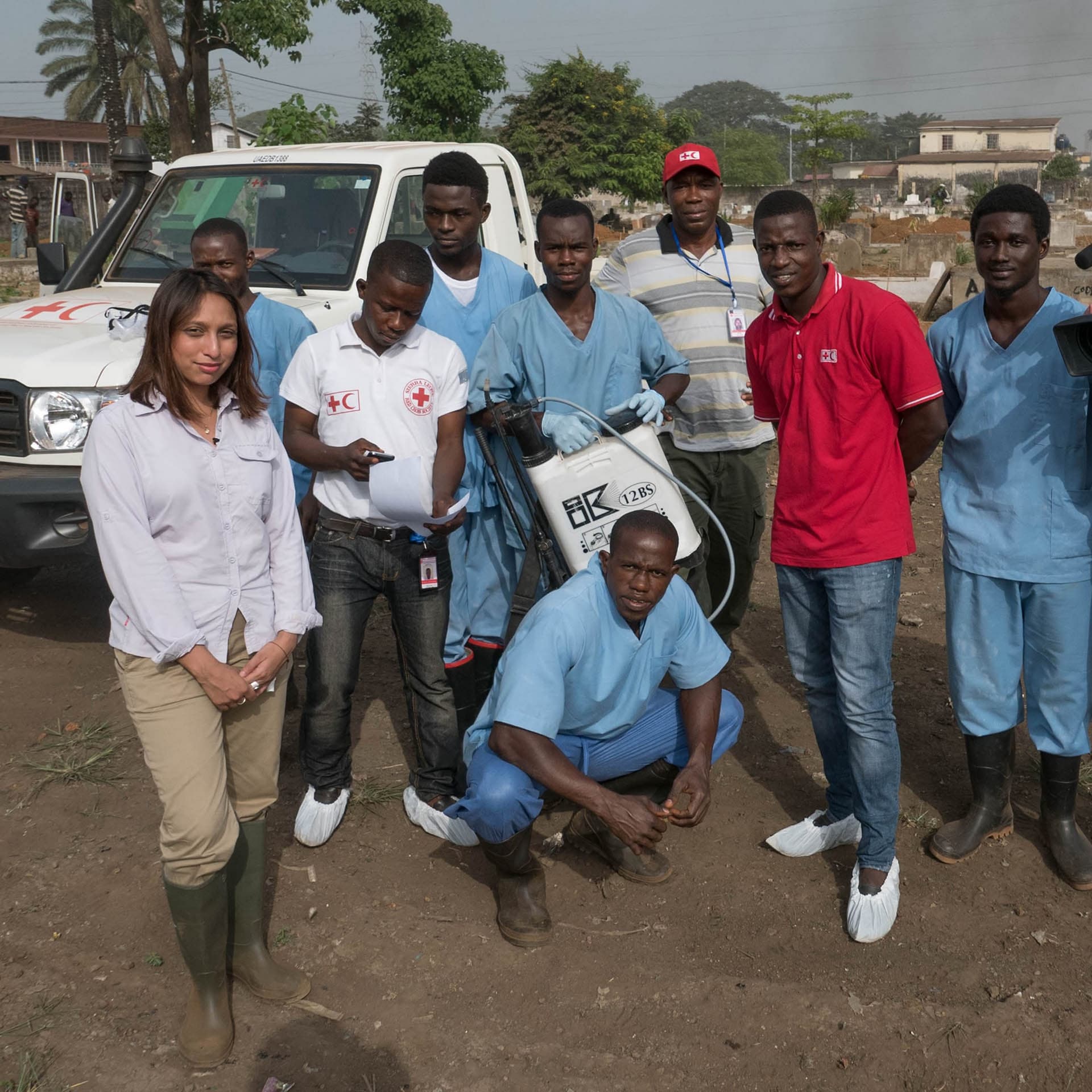
(Photo: Faranak Amidi. Credit: Tricia Yourkevich.)