In short
Podcast Episode Summary: Eternal Horizons
Overview The Eternal Horizons episode of *The Documentary Podcast* explores the spiritual and cultural significance of the Sky Burial ritual practiced in the Nepalese Himalayas. The episode is presented by Tashi Bista, who shares his personal journey back to his roots to witness this rare and profound funeral rite as he grapples with the recent death of a family member.
Key Themes
- Sky Burial Ritual: A deeply spiritual practice in which the deceased’s body is offered to vultures, believed to represent the highest form of cremation, allowing the soul to ascend to the heavens.
- Cultural Heritage: The episode highlights the intersection of spirituality and cultural tradition, emphasizing the Bon and Tibetan Buddhist beliefs surrounding death and rebirth.
- Modern Challenges: The encroachment of modern infrastructure and declining vulture populations pose significant threats to the continuation of this ancient practice.
Episode Breakdown
Introduction to Sky Burial
- Ceremony Overview: The Sky Burial is reserved for individuals with pure karma and favorable astrological signs, allowing their souls to transition smoothly to the afterlife.
- Personal Connection: Tashi Bista recounts his motivations for attending the burial of his cousin, revealing intimate family connections and cultural backgrounds.
The Ritual Process
- Preparatory Steps:
- Monks and family gather to perform rituals to assist the deceased's soul in navigating the afterlife.
- Body Preparation: The body must be cut and prepared for the vultures, a process that includes astrological analysis to determine the timing and methods used in the burial.
Description of the Ceremony
- Physical and Emotional Landscape:
- The episode provides graphic accounts of the body being prepared, underscoring the physicality of the ritual while also showcasing the emotional gravity felt by family members.
- Vultures, considered sacred due to their role in the natural cycle, are awaited to consume the body.
Observations and Reflections
- Vulture Population Decline: The episode discusses the significant decline in the vulture population, largely due to modern veterinary practices and agricultural changes, affecting the ritual's success.
- Cultural Significance: Tashi reflects on the larger implications of these changes on the cultural landscape of Mustang and the continuity of the Sky Burial practice.
Philosophical Insights
- Buddhist Perspectives on Death: The monk’s reflections provide insights into the beliefs surrounding life, death, and karma, emphasizing the importance of living virtuously.
- Human Connections: The narrative suggests that death is not an end but a part of life's journey, inviting listeners to reflect on their own lives and connections to the land.
Key Takeaways
- Cultural Preservation: The fate of the Sky Burial ritual is tied to broader environmental and societal changes, highlighting the fragility of cultural practices in the face of modernization.
- Spiritual Reflection: The episode serves as a reminder of the connection between life and death, urging listeners to live with virtue and mindfulness.
- Human Experience: Tashi Bista’s journey reflects the universal experiences of loss, mourning, and the quest for meaning within cultural traditions.
Conclusion The *Eternal Horizons* episode captures the beauty and complexity of a unique cultural ritual while addressing the pressing issues that threaten its existence. Through personal narrative and cultural exploration, it invites listeners to consider their relationship with death, spirituality, and the environment.
Written by AI. May contain mistakes. Listen to the episode to check what was said.
Chapters
Tap a time to open that second in VOExploring Sky Burial in Mustang
0:30 to 2:44
An introduction to the sky burial practice and its significance.
“Listen on BBC.com or wherever you get your podcasts.”
Preparing for the Sky Burial
2:44 to 4:19
The speaker discusses the customs and beliefs surrounding death in their culture.
“This is Eternal Horizons for Heart and Soul on the BBC World Service.”
Arriving at the Burial Site
4:19 to 6:05
Description of the funeral gathering and the emotional atmosphere.
“The process she is referring to, in which the soul separates from the body, takes time, according to Tibetan Buddhists.”
The Role of Body Breakers
6:05 to 8:10
Insights into the role of body breakers and the rituals involved in sky burial.
“There is smoke blowing from the chimney of the house of the deceased cousin because there are a lot of relatives and village people who have gathered here and so there is tea being served to the ones who are mourning.”
The Ritual of Sky Burial
8:10 to 10:00
Detailed explanation of the sky burial procedure, including cutting the body.
“The first step is what we call in the local language C, astrological analysis.”
Final Preparations and Departure
10:00 to 12:10
Preparation to transport the body to the burial ground amidst traditional practices.
“The vultures don't consume it without the cuts.”
Witnessing the Sky Burial
13:05 to 14:07
Describing the journey to the burial site and preparations for the ceremony.
“I'm Tashi Bista, and you're listening to the documentary on the BBC World Service.”
The Decline of Vultures and Sky Burials
14:07 to 18:09
Learn about the factors causing the decline of vultures and the implications for sky burial traditions.
“but recent changes in veterinary science, particularly in livestock farming, have caused their numbers to plummet.”
Witnessing a Sky Burial Ceremony
18:10 to 22:24
Experience a first-hand account of a sky burial and the emotional challenges faced by participants.
“The villagers believe the monks inability is what caused the vultures not to come.”
Reflections on Life, Death, and Cultural Change
22:25 to 27:38
Explore philosophical insights on death and cultural practices as they adapt to changing circumstances.
“and witnessed the ceremony intended to liberate his soul from the human realm.”
Show all 11 chapters
Reflections on Death and Virtue
28:00 to 29:05
Explore the importance of living a virtuous life and the significance of death.
“I felt physically and mentally exhausted.”
Transcript
Automatic transcript. May contain errors.0:00This BBC podcast is supported by ads outside the UK. America is changing. And so is the world. But what's happening in America isn't just a cause of global upheaval. It's also a symptom of disruption that's happening everywhere. I'm Asma Khalid in Washington, D.C. I'm Tristan Redman in London. And this is The Global Story. Every weekday, we'll bring you a story from this intersection, where the world and America meet. Listen on BBC.com or wherever you get your podcasts. I am Nina Khrushcheva, the great-granddaughter of Nikita Khrushchev, the leader of the Soviet Union in 1962. And I'm Max Kennedy, the nephew of U.S.
0:45President John F. Kennedy. We explore what was a terrifying moment in history. The story of the Cuban Missile Crisis. How close the world came to nuclear war. And what they had to do to pull it back from the brink. The bomb, Kennedy and Khrushchev. All episodes available now, wherever you get your BBC podcasts.
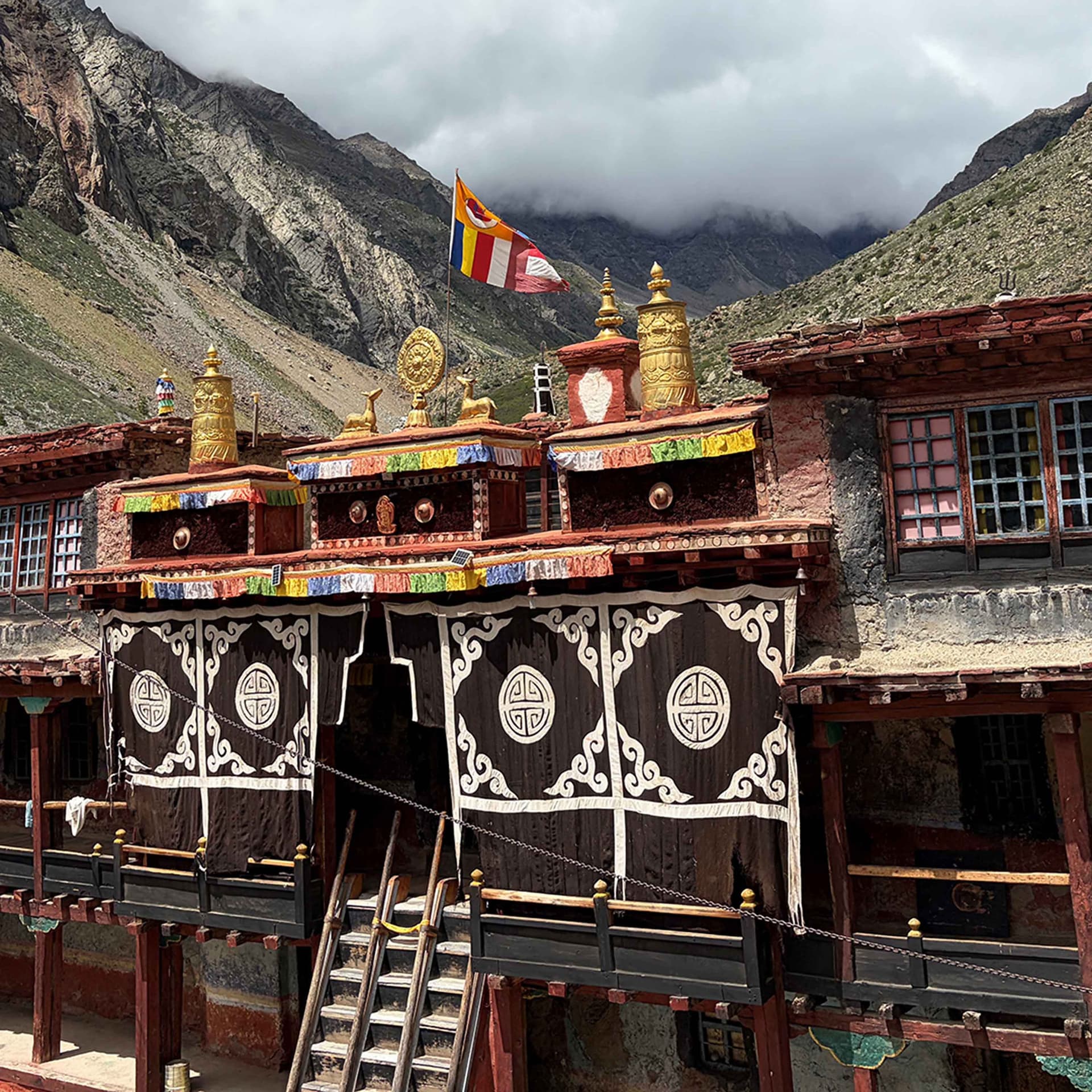
1:31my relative and be together one last time before the soul leaves his body and enters the next realm. I have come to the upper reaches of Mustang, roughly an hour's drive from where I grew up, to witness a funeral called sky burial. In local culture this practice is believed to be the highest form of cremation. After a death monks seek astrological guidance and determine the deceased's karma. If the deceased has led a good life and the stars are correctly aligned, the body is offered as food to wild vultures so that their soul may enter the realm of heaven.
2:13My name is Tashi Bista. Before I became a filmmaker and conservationist, I was brought up in a culture which has remained relatively unchanged for centuries. I've seen firsthand how our local belief system, a mix of Bon and Tibetan Buddhism, has shaped the landscape and ecosystem of this area. I'm taking you to the remote valleys of Mustang, Nepal, to follow local monks and morticians as they undertake one of the world's most unique burial ceremonies. This is Eternal Horizons for Heart and Soul on the BBC World Service.
2:57It is Monday afternoon and I'm sat in Kathmandu Airport's departure lounge. I'm about to take a flight and then drive through the night to a village where if I'm lucky, I hope to arrive in time for the sky burial. Two days ago, I learned that an elder relative of mine had passed away. When someone dies in Mustang, close family and friends gather at the home of the deceased. Few people are allowed to access these intimate gatherings. I decided to call my mum, Pema's niece, to get the lay of the land.
3:33He must have been 73 years old, Nogulman Pema, my uncle Pema. He was a farmer and from a very prominent family. But later in his life, he sold his land because most of his children went abroad and he couldn't handle managing the livestock alone. So did you know him personally? Of course, I knew him. He used to come to our house all the time. He used to be the leading figure of the philis back in the day, as he was from an important family. Dying is a lot of trouble. For up to 49 days, the efforts of the monks perform prayers and rituals which help the soul find its right path. that is when they pass through hell and reach Buddhahood if they are eligible.
4:24The process she is referring to, in which the soul separates from the body, takes time, according to Tibetan Buddhists. It's said the soul is in Bardo, a state of limbo before reincarnation, or ideally transcendence to a higher level. So where do you think Pema's soul is now? His poor soul is wandering around his village
5:02In the Himalayas, vultures are thought to be special creatures While they may not look beautiful, they have excellent karma because they do not need to kill in order to survive By living off livestock carcasses and the occasional human corpse, they are thought to be selfless.
5:27As I looked out my window and watched emerald forests and windswept mountaintops pass below the plain, I couldn't help but think of circling vultures waiting to meet my cousin in the early hours of tomorrow.
5:48So after eight hours of drive throughout the night, we have finally arrived here in Nyanuel, a tiny village of about 32 houses next to Lomantang in the area of Lowe, more commonly known as Upper Mustang. Nyanuel is an ancient village full of mud houses and poplar trees with their farmland just to the south of the village. There is smoke blowing from the chimney of the house of the deceased cousin because there are a lot of relatives and village people who have gathered here and so there is tea being served to the ones who are mourning.
6:37the body had been wrapped in ceremonial scarves and it was put on a chair in meditation position and this chair was tied with four long wooden poles I could see the family members crying out in grief mourning the loss of their cousin their father, their brother, their husband.
7:09Keeping their distance from the family stood four men bearing heavy expressions. Judging by their plain clothes, they didn't look like monks. But I soon learned they would play a vital role in the proceedings to come.
7:26A lot of monks say vultures are the best way to go with the second best being fire cremation and then aquamation water burial the least preferred out of the three If the fishes in the river consume the body and then we consume them he shook his head in disapproval at this last option People say the vultures are gods and that they'll take the soul to heaven. That is the main reason sky burial is preferred.
8:00A person who carries out our role is called a body breaker. The custom is that it has to be someone unrelated to the deceased. Immediately after death, the body cannot be touched. The first step is what we call in the local language C, astrological analysis. Through this analysis, we determine the deceased's karma. The traditions he described date back to a 14th century Buddhist text, Bardo Todol, the Tibetan Book of the Dead. It teaches that reality is created in the mind and that death is merely a transition of awareness. Only by having a good death can true spiritual liberation be achieved.
8:45Then, in visceral detail, he began to explain how the dead body is first tied with rope and then cut using knives in preparation for the burial.
8:56We tie up the body in a meditative posture with a piece of wood for support. It has to be tied here to avoid compressing the bowel. He gestured to his stomach. At first, this part has to be tied, then this part, to stop human waste coming out, which gives off a bad smell if not tied correctly. After that, we take the body to the burial site. The monk performs rituals and we cut the body. It used to be very challenging back in the day because our knives weren't very sharp back then, compared to now. We start by making crosses all over the body. everywhere from top to bottom, like this and this.
9:46With no sense of embarrassment or concern for my squeamishness, he marks crosses on the fleshy parts of his own body, the thighs, buttocks and torso. Butchering the corpse and breaking its bones might sound like an act of desecration, but he explained why it's important. The vultures don't consume it without the cuts. With the crosses, they normally consume the body right away and leave behind the bones. The skin is tough, but the meat is soft.
10:24As he detailed the ritual, I felt both nausea in the pit of my stomach along with a respect for the committed nature of his work.
10:38Looking to the horizon, I could see daybreak approaching. The bodybreakers and relatives placed the corpse on a makeshift gurney, made from two poles of wood and carried it out of the house. Then, under phone torch lights and butter lamps, the monks began trumpeting horns and banging drums. It was time for us to take the body to the burial ground.
11:16America is changing. And so is the world. But what's happening in America isn't just a cause of global upheaval. It's also a symptom of disruption that's happening everywhere. I'm Asma Khalid in Washington, D.C. I'm Tristan Redman in London, and this is The Global Story. Every weekday, we'll bring you a story from this intersection, where the world and America meet. Listen on BBC.com or wherever you get your podcasts. I am Nina Khrushcheva, the great-granddaughter of Nikita Khrushchev, the leader of the Soviet Union in 1962. And I'm Max Kennedy, the nephew of U.S. President John F. Kennedy. we explore what was a terrifying moment in history.
12:01The story of the Cuban Missile Crisis. How close the world came to nuclear war. And what they had to do to pull it back from the brink. The bomb, Kennedy and Khrushchev. All episodes available now, wherever you get your BBC podcasts. Eric Marante had always been a fighter. Age 21, he found himself with a squad stationed on a bridge in Iraq. On the morning of April 21st, 2007, a truck packed with 3 ,000 pounds of explosives was detonated just a few feet below them. This is a story about a man who turned pain into purpose. Therapy for me is being in the boxing ring. It's just good for your soul, good for your body.
12:48This is season four of Legacy, Defiant. Search Defiant Legacy wherever you get your podcasts.
13:05I'm Tashi Bista, and you're listening to the documentary on the BBC World Service. I'm in Nepal, high in the Himalaya, for this episode of Heart and Soul. Just two days ago, I learned my relative had passed away in a remote village in Mustang. I've come to pay my respects and witness a sacred ritual known as sky burial, still practiced in these valleys.
13:31Following the elder monk, we said goodbye to my family and began descending downhill. As the bodybreakers carried the corpse under steep and barren cliffs, I asked the monk about the location we were headed to.
13:49When someone passes away, there is no such thing as doing the burial wherever they want. It has to be one of the sites. Just leaving the body there when the vultures don't consume it isn't an option at all. Vultures are found across the Asian subcontinent, but recent changes in veterinary science, particularly in livestock farming, have caused their numbers to plummet. And as people continue to leave Mustang, disrupting local agricultural patterns, their numbers have struggled to return. Until now, it hadn't occurred to me that the ceremony might not succeed. And then he revealed another bombshell.
14:35I've never taken part in a sky barrel. This is my first time.
14:48We are here in south of Nyanyol by the riverside at a sky burial location. There is one monk and four helpers. The four helpers are supposedly the body breakers and the monk will perform the last rituals for the soul to escape into the air and so we're currently waiting for vultures. So for now everyone is just playing the waiting game.
15:31The bodybreakers let out their knives in preparation and the monk sang a prayer to summon the soul of the deceased. With the body on a boulder right next to the river, they began to make incisions on the arms, legs and torso. After a while, they turned their attention to the skull and removed a square portion of bone from the forehead, casting it into the fire. As the monk chanted, the bodybreakers used their knives efficiently. They worked in silence as if conserving energy for the intensity of the situation, and I watched as dawn began to break.
16:12So we now have about six vultures that are circling above very high. Five of them have landed on the mountain just next to us. They're all sitting on ridge lines and looking at the scene down towards us. So we're all just waiting now and watching as they fly around us, casting big shadows over us and descending slowly. As we sat and waited for the vultures to descend, I asked the bodybreakers what motivates them to perform these ceremonies.
16:47My name is Angel Gurung and I'm 42 years old. I must have probably done between 150 to 200 sky burials by now. It was terrifying the first few times for me, but then you get used to it.
17:05It is through personal choice and it is a work of virtue because it is helping the family of the deceased. It is not an occupation, but it is something most people in the village have done at some point in their lives. How old were you when you first witnessed a sky barrel as a child?
17:26I carried my father's body to the side when I was 18 which was my first time seeing it I carried the body but I wasn't allowed to touch it as there were other body breakers present It was terrifying The thing is that once you have been through two or three of them they don't feel so scary anymore Right now I'm not terrified of even spending a whole night near a body That's how I feel How does today compare to the barrels you've performed over the years? Vultures used to come in their hundreds back then. They even used to come near us, but the vultures have declined in drastic numbers now. I worry it could be a lost tradition.
18:08Some monks are reluctant to even perform the rituals if they have failed to summon the vultures on previous occasions. The villagers believe the monks inability is what caused the vultures not to come. But none of them know how difficult it is on site. They are all too eager to put the blame on the monk. In reality, it is very difficult for the monk and for the body breakers.
18:37Being so close to death, do you feel a greater sense of human impermanence through this work?
18:47Yes, definitely. I consider it very normal now. Some of the local tourists are very shocked to learn about this tradition. They ask us, is it true that you cut human bodies into many pieces to feed birds? They came to me a couple of times asking for interviews. I didn't agree to it.
19:10I want to be fed to the vultures as long as it is possible. It is the best way to go as after being consumed by the vultures, its excrement is laid only in very pure areas, in the mountains or the hilltops. If the body is cremated, the ashes will end up in the river. If the body is offered to the vultures, it will end up in the highest of places where the vultures reside, the highest and purest places.
19:50The sun was now high and the wind had started to funnel through the valley we were in. The arrival of the vultures had raised our spirits, but as much as we willed the birds to consume the body, they remained cautious, which prompted the monk to make some phone calls. Because most of the vultures did not descend onto the body, the bodybreakers and the monks called the family of the deceased and asked them to go onto their roof and bow down in all four directions and also light some incense near the field where the water channel runs. This they said might help his soul be forgiven and hence the vultures would descend.
20:33Just as we said that 15 minutes later about 12 vultures descended on the body but they were still a little bit nervous to completely sit on the body and tear it. What was to come was what I found most challenging and difficult. They say it might have been because one of the bodybreakers cut a piece of the skull and the insides of the head was flowing out so they have decided to make some more cuts on the body so that it's easier for the vultures.
21:06And so as we waited, one of the bodybreakers suggested that Wow, maybe when the vultures peck on the body, the head keeps dangling left and right. Maybe that's scaring them off. One of them decides to separate the head from the rest of the body. I felt utterly shocked by this. And that was quite a sight. I mean, like, I was always shocked at seeing a body, especially of one of my cousins, even though I hadn't particularly met this cousin many times in my life. Part of his body was being laid out there as flesh on the riverbed and birds pecking on it. It was the first time I actually witnessed something like this, so I was quite struck by the whole scene that was going on and these four body workers and the monk being so completely casual about it.
21:49They had this very strong sense of being able to not attach with the person who is dead, especially while the cremation was happening. So I tried to get into their mood and make myself more at ease, even though I knew I would never get there, but still maintain my calm. And then at some point they all decided, okay, this is the end of it. The vultures have already eaten parts of the body, which is a great sign, and that the soul has passed on to another stage, and that we can wrap up.
Read the full transcript
22:23I had paid my respects to Pema and witnessed the ceremony intended to liberate his soul from the human realm. But I also had unanswered questions.
22:38I'd watched as my cousin was partially consumed by the vultures over that morning. The bodybreakers chopped up what was left, crushed his bones with stone slabs, and scattered his remains in the river. Because the burial had been partially successful, I wondered if his soul would transition to a higher level at all.
23:02The next day at the local monastery in Lomantang, I arranged to speak with the monk who had conducted the ceremony the day before.
23:12I'm 74 years old. I wouldn't call myself a great monk. But due to the grace of my gurus, I've attained much wisdom and completed many solitary retreats. Without the proper empowerment and completion of retreats, performing this kind of ritual would be like having a visa but no flight ticket. So where do we believe Pema Soul is now?
23:39The soul of the one who passed away three days ago is still here. He won't be able to do anything though. After each passing week, he will become more self-aware and finally realize his own death. Most of the souls enter bardo. The soul is like a feather in the wind, sowing without a will of its own.
24:05Why do you think the vultures only partially consumed his body?
24:11Yesterday, we went to the Bureau of Sight and we recorded whenever there were a lot of vultures. But due to the obstacles like unresolved disputes in the deceased person's life, ill feelings and other factors, the vultures were reluctant to land and consume the body. However, the vultures did come and eat in the end, even though they got scared and took some time. They came in great numbers.
24:45I'd heard from the bodybreakers that sky burials were becoming harder to perform. By claiming Pema's burial had been a success, I couldn't help but feel he was trying to make the best out of a not-so-ideal situation. And with its reputation potentially on the line, perhaps this wasn't surprising. Maybe the sky burial I had observed revealed a wider story about human migration and vulture decline across Mustang. So I absolutely think that sky burials are more rare than they were 50 or 30 or even maybe 10 years ago in the Himalaya and Tibet. And the reasons for that are complex. Over a Zoom call with Professor Sienna Craig, a cultural anthropologist at Dartmouth University, I asked why she thought these rituals were becoming rarer.
25:34It takes particular types of initiation and teaching and meditative work to be a monastic who oversees sky burials and to be a monastic who is a body breaker, right? So that's one set of reasons. But the other set of reasons also have to do with the vultures themselves. Chemicals in veterinary care, in particular of domestic animals, are causing cyclic breaks in the capacity of vultures to reproduce. And that then is causing part of their population decline. But there's also a narrative, which I think is in some ways equally true that I've heard in Mustang and heard in other places that because of depopulation in Himalayan regions like Mustang, the vultures know that there's less to eat, you know, that there is not enough death, if you will, to sustain their life.
26:36In 2001, there were around 6 ,000 people. And then in 2011, it went to 4 ,800. And then now on the last 2021 census in Upper Mustang, it's around 4 ,000. Do you think there's a chance that this custom could die out entirely? It's a great question. What will become of this practice as population continues to decline or change or shift? We talk about population churn, you know, people leaving Mustang, but other Nepalese coming in to this territory, right? So it's not that the place will necessarily be empty, although it is a lot emptier now than it was 20 or 30 years ago, but rather who will be there and what they value and whether or not sky burial is something that remains an important cultural anchor for the people who will continue to live and die in a place like Mustang.
27:29I do think it will probably continue to decline. I would hope that it wouldn't entirely disappear, but some of that is also out of human control. You can't tether a vulture to a place, Nor can you tether a human to a place, really. And that's part of the challenge, right, of this particular moment.
27:54As I began my journey home to Kathmandu, I was struggling to sink into the reality of what I had just witnessed. I felt physically and mentally exhausted. I was reminded of the words of the monk who led the ceremony.
28:09I think the takeaway is for people to live a virtuous life while they are in a human realm. Those are the only things that can be taken with you after death. Nothing else you do is going to benefit you after death. Death is a part of everyone's life.
28:34To believers, death is never the ending. It's a mirror held up to how we live. As vultures decline and Mustang's population churns, sky barrels sit on a precarious edge. Yet what endures is the message at the heart of this ritual, to live with virtue, humility and connection to the land. My cousin's final journey assured me that even in loss, there is an invitation to live more fully while we're still here.
29:04This program was presented by me, Tashi Bista. The producer was Hunter Charlton, and it was an Ember production.
29:26America is changing. And so is the world. But what's happening in America isn't just a cause of global upheaval. It's also a symptom of disruption that's happening everywhere. I'm Asma Khalid in Washington, D.C. I'm Tristan Redman in London and this is The Global Story. Every weekday we'll bring you a story from this intersection where the world and America meet. Listen on BBC.com or wherever you get your podcasts.
From the publisher
*** This programme contains graphic descriptions of body mutilation *** In the Nepalese Himalaya, one of the world’s rarest and most spiritually profound funeral rites is still practised: the Sky Burial. In some circumstances when a person dies, their body is offered to wild vultures. According to local Bon and Tibetan Buddhist customs, this burial is reserved only for those whose karma is deemed pure and whose astrological signs align with sacred guidance. The ritual represents the highest form of cremation, allowing the soul to ascend freely to the heavens. But the arrival of infrastructure projects and modern roads into these remote valleys have also created challenges for monastics and Sky Burial practitioners too. We follow Tashi Bista as he meets the guardians of this ceremony and comes eye to eye with human mortality. This episode of The Documentary, comes to you from Heart and Soul, exploring personal approaches to spirituality from around the world.