In short
The BBC World Service documentary “Heart and Soul” episode “Fighting for the children of Chernobyl” follows Irish humanitarian Aidy Roach’s response to the 1986 Chernobyl nuclear disaster and the long-term impact on children in Belarus/Ukraine, including the charity’s volunteer work, summer stays in Ireland, and adoption corridor.
Guests and backgrounds
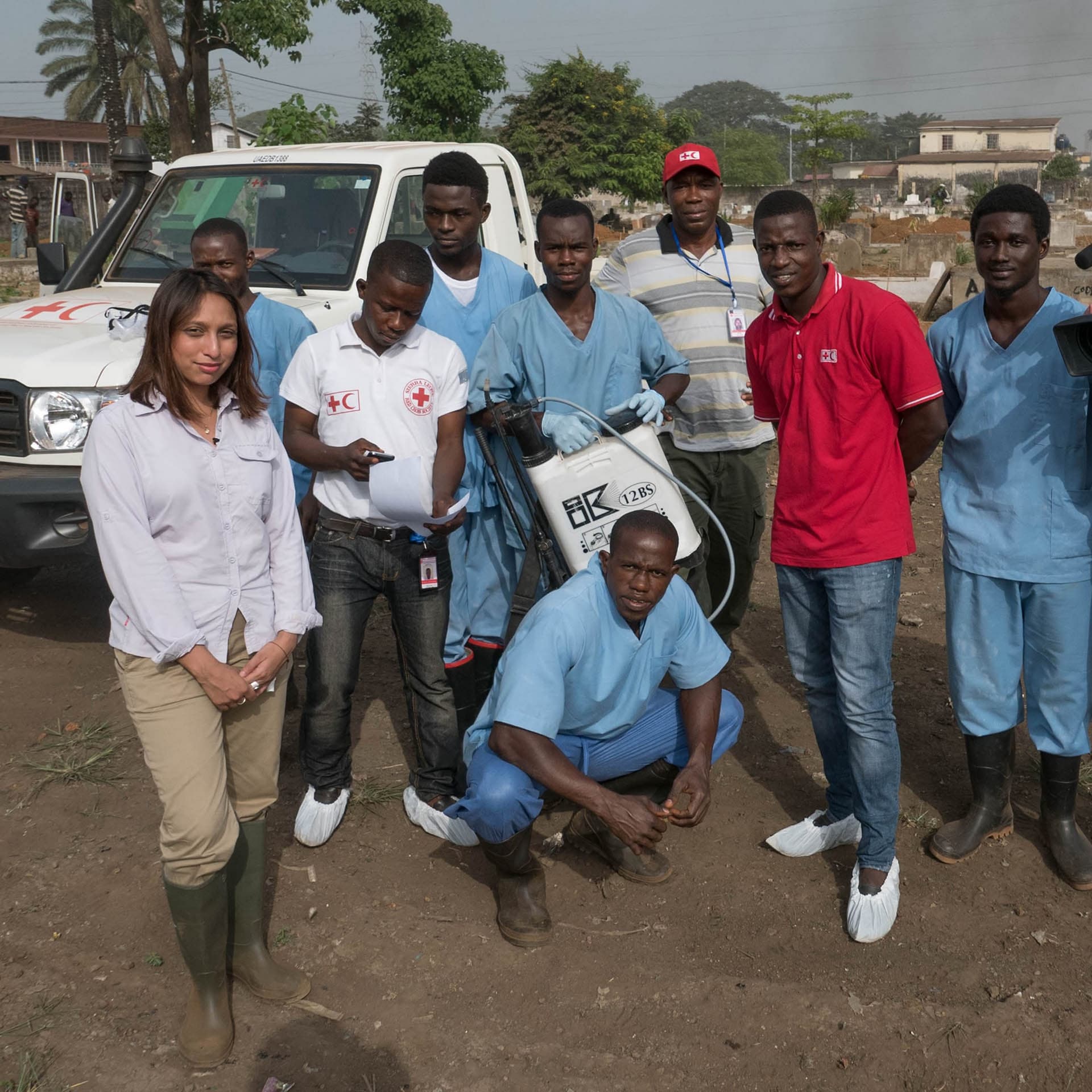
Aidy Roach, Irish human rights/humanitarian and founder of Chernobyl Children International; raised in an Irish-speaking Catholic, social-justice family; worked as a peace activist and later became National Secretary of the Campaign for Nuclear Disarmament. Riyasa Carolyn, now 33, born in Minsk, Belarus; abandoned at birth and raised in a Chernobyl-affected orphanage; adopted by the Carolyn family in Ireland; works for Google in Dublin.
Key claims
Chernobyl’s worst effects were driven by secrecy and man-made failures; orphanage conditions resembled “concentration camps”; a month in a clean environment can add about two years to life; adoption access later closed, leaving many children institutionalized.
Notable examples
Aidy’s 1987 trip after receiving an “SOS appeal” by fax; descriptions of shaved-head children, abuse, and institutional transfers; Riyasa’s memories of punitive routines; her 30+ surgeries and later adoption; Ireland’s host-family Christmas/summer program and the adoption corridor.
Written by AI. May contain mistakes. Listen to the episode to check what was said.
Chapters
Tap a time to open that second in VOChernobyl Disaster Overview
2:18 to 4:24
Learn about the Chernobyl disaster and its catastrophic effects.
“there's been perhaps the worst accident in the short history of the world's nuclear power industry.”
Aidy Roach's Background
4:24 to 5:34
Explore Aidy Roach's upbringing and motivations for her humanitarian work.
“Oh, listen, I grew up in that tradition of where we had the May altars in the corner.”
Reactions to the Chernobyl Disaster
5:34 to 7:09
Understand the panic and misinformation during the Chernobyl crisis.
“So I saw very early on in my young life, maybe from five or six perhaps, that not everybody had a charmed, idyllic life like we did.”
Aidy's First Visit to the Affected Regions
7:09 to 8:08
Follow Aidy Roach's journey to Chernobyl and her shocking discoveries.
“80 and a team of doctors set up an office and phone number where Irish people could call and get advice if they were concerned about the effects of radiation.”
Conditions in Orphanages
8:08 to 10:40
Hear Aidy's harrowing accounts of the orphanages post-Chernobyl disaster.
“You know, it's easier to ask for forgiveness than it is for permission sometimes.”
Faith and Humanitarian Work
10:40 to 11:51
Discuss Aidy's faith and its role in her commitment to help others.
“And Aidy soon learned that this was just one orphanage of hundreds in the region, all filled with children who the state said had been affected by the Chernobyl nuclear disaster.”
Adie's Mission Begins
15:04 to 15:18
Adie's journey to help children affected by Chernobyl starts.
“So profoundly affected by what she witnessed, Adie went on to establish what became Chernobyl Children International, which brought teams of volunteers from Ireland to Chernobyl and the affected regions every year.”
Summer Program for Children
15:18 to 15:59
Children from Chernobyl are brought to Ireland to escape radiation.
“from the worst affected regions of Belarus and Ukraine to Ireland to stay with host families during the summer.”
Welcoming Children for Christmas
15:59 to 16:39
Christmas celebrations for children from Chernobyl in Ireland.
“There was a huge cheering welcome for the 105 children from Chernobyl who will be spending Christmas with families all over the country.”
Riasa's Early Life
16:39 to 17:15
Riasa shares her story of abandonment and survival in an orphanage.
“What do you know about the circumstances in which you were born and how you ended up in one of the children's orphanages?”
Show all 18 chapters
Memories from the Orphanage
17:15 to 19:16
Riasa recalls her traumatic experiences in the orphanage.
“either by a doctor or a nurse, that I probably wasn't going to survive.”
Adjusting to Family Life
19:16 to 20:39
Riasa discusses her transition to a loving family environment.
“And like I was very unfamiliar with how a family works or what a family even is.”
Religion and Belief
20:39 to 21:36
Riasa reflects on her newfound faith and questions of suffering.
“The Carolyn family went on to adopt Riasa and to date she has had over 30 surgeries in Ireland which have improved her quality of life.”
Finding Meaning in Suffering
21:36 to 22:57
Riasa contemplates the purpose of her difficult past.
“And now she was being brought up in a Catholic family.”
The Impact on Other Children
22:57 to 24:17
Discussion on the fate of other children remaining in Belarus.
Aidy's Moral Dilemma
24:17 to 26:30
Aidy talks about the emotional impact on children returning home.
“But then the tragic side for the ones who were not adopted, who then had to return home.”
Advocating for Change
26:30 to 28:00
Aidy emphasizes the importance of advocating for children in need.
“And they are the ones, they are our hope for the future.”
Faith, Hope, and Vocation in Child Care
28:00 to 29:59
Discover the inspiring conversation about faith and hope in caring for children.
“Even if a child doesn't survive, even if there is, they say there is no hope.”
Transcript
Automatic transcript. May contain errors.0:00This BBC podcast is supported by ads outside the UK.
0:30Make your travel dollars work harder. Follow Smart Travel on your favourite podcast app. Ever wonder why we make the choices we do? And how to make smarter ones? Introducing Choiceology, an original podcast from Charles Schwab. Join Wharton Professor Katie Milkman, an award-winning behavioural scientist and author of the best-selling book, How to Change, as she shares true stories from Nobel laureates, authors, athletes and everyday people about why we do the things we do and how to make better choices to help avoid costly mistakes. Each episode covers the latest research in behavioral science and dives into themes like the power of self-control, shaping your mindset for success, navigating new beginnings, and why starting over can feel so hard.
1:20Listen to choiceology at schwab.com slash podcast or wherever you listen.
1:31Adi Roche:Eddie Roach was sitting in her office in Cork in the south of Ireland when all of a sudden the fax machine lit up. Well, first of all, can I just say in terms of technology, it was the first fax machine we had ever seen. We didn't know anybody with a fax number and we used to wait in case somebody miraculously might send us a fax message, but it actually happened.
1:59and it just said SOS appeal, for God's sake, help us to get the children out.
2:17It does now seem likely that sometime in the last couple of days there's been perhaps the worst accident in the short history of the world's nuclear power industry.
2:27Adi Roche:The facts she received was an urgent appeal from doctors in Belarus, then part of the collapsing Soviet Union. They were pleading with people around the world to help them care for children affected by the Chernobyl nuclear disaster. A new word entered the history of language, the history of world disasters and the history really of the world itself. And that word. The accident was at Chernobyl. Is Chernobyl. I'm Colm Flynn and you're listening to Heart and Soul from the documentary on the BBC World Service. On the 26th of April 1986, the world's worst nuclear disaster took place at Chernobyl in the then Soviet Union.
3:15Adi Roche:As a result of a combination of reactor design flaw and human error, reactor number four at the power station exploded, releasing tons of radioactive material into the atmosphere, which the wind carried over huge parts of Europe, especially Belarus to the north. Aidy Roach is the founder of Chernobyl Children International, an Irish charity which supports children and families affected by the Chernobyl disaster. And she is one of Ireland's best-known humanitarians. Aidy Roach. She's raised over€100 million in aid to help tens of thousands of children. And in 2016, she made a landmark address at the United Nations General Assembly after Belarus gave her its speaking time in recognition of what she has done for their country.
4:08Honoured representatives of member state countries, my name is Aidy Roach and I'm from the Republic of Ireland.
4:16Adi Roche:She's also been awarded the Freedom of Cork City, where she lives, and honorary doctorates from several universities. But as you'll hear, it's not the awards or recognition that drives AD. It's something much deeper.
4:38Well I come from a beautiful little place called Clown Mala the meadow of honey in County Tiberary Now the blood is Cork both of my parents, my dad is from Donnerale in County Cork and my mother is from a place called Iscaril in North Cork but I was born and reared in Clownmel
4:57Adi Roche:Edie when you were growing up was faith important in the house Were you raised as a Catholic? Were you going to Mass? Oh, listen, I grew up in that tradition of where we had the May altars in the corner. And I remember we used to, I come from a Gaeilgore, an Irish speaking family. And the rosary would be said in Irish and we'd all kneel down with the rosary beads. The foundation really of my life are rooted in my parents column. My parents were, we'd call them today, social justice activists. They weren't called anything back then because I was the youngest and my parents had to bring me places because they couldn't leave me home alone.
5:34So I saw very early on in my young life, maybe from five or six perhaps, that not everybody had a charmed, idyllic life like we did. Adie Roach from Clonmel has lived in Cork for 16 years and is National Secretary of the Campaign for Nuclear Disarmament.
5:54Adi Roche:In the 1980s, Adie was teaching and working as a peace activist and remembers vividly when the news of Chernobyl broke 40 years ago. You were in a school that day, weren't you? You were teaching in a class. I was, and the principal teacher of the school in Middleton County, Cork, walked into the room and she said there's been a newsflash on RTE and it said that there was a terrible nuclear accident.
6:24For the first time ever, the Soviet Union admits it has had a nuclear accident, and it's clearly a major one.
6:33Adi Roche:Panic spread across Europe as the wind carried the radiation north and then west. But still, the Soviet Union was trying to play down the scale of the disaster. With the lack of information, all sorts of rumours can spread, and that really builds up a terrible fear in people. and it also kind of paralyzes people. But the unfortunate thing, because it was the Soviet Union, because you had a very active KGB, and unfortunately, as in any war column, the first casualty is the truth. 80 and a team of doctors set up an office and phone number where Irish people could call and get advice if they were concerned about the effects of radiation.
7:17Adi Roche:They were trying to get and give out as much information as possible. But because of the secrecy, nobody really knew how badly the people were affected in Eastern Europe, in the regions most contaminated by the radiation. And it wasn't until a year later, when Aidy visited the region on a humanitarian mission. I went in 1987. I took a train from Moscow down to Kiev, or Kiev as we used to call it then. And then we were taken by boat from there all the way down the Black Sea to Odessa. and on that journey down, of course, there was the exploded reactor. You can see the cranes, which are still over Reactor 5 and 6.
8:00You can see the sarcophagus, which is surrounding the exploded reactor. They built the cemented tomb to try and control the radioactivity inside. I suppose we kind of did it a bit. You know, it's easier to ask for forgiveness than it is for permission sometimes.
8:16Adi Roche:And it was on that trip that Adie ended up somewhere she was never meant to be. A place that the Soviet Union did not want the world to see. And you'll always, you know, befriend somebody that will say, I'm going to bring you here or I'm going to bring you there. You're not supposed to be here, but look, we'll try it. And it was always just some ordinary person that brought us in and showed us, you know, the impact of what was to be seen that was hidden from the rest of the world. Because they're built in the middle of forests, they're built out of sight. out of mind. Out of mind at the end of roads and the only message to a poor child or young person in this place is that you've reached the end of the road and many times you'll find the graveyard is across the road from the institution so they don't have far to take them.
9:05Adi Roche:Adie was brought by a local inside a children's institution and what she saw there shook her to the core and a warning some listeners may find parts of what she describes distressing.
9:32I'm closing my eyes because I can still conjure up the smell, what hit the back of my throat, the smell of death, the smell of human decay, of despair, the disgusting smell, which was like, you know, human waste and children walking around with shaved heads, like in striped pyjamas. It just flashed back to the images we saw from Belsen and from Dachau. And these children didn't know their names. They didn't know their ages. Some of them didn't know that they were boys or girls. I mean, it was just so absolutely almost paralysing for us.
10:21Adi Roche:This orphanage had hundreds of children who had been abandoned at birth. Many had severe physical and mental disabilities. The conditions were appalling. And when the children turned a certain age, they would be automatically transferred to what they called an adult mental asylum. And Aidy soon learned that this was just one orphanage of hundreds in the region, all filled with children who the state said had been affected by the Chernobyl nuclear disaster. Like the faecal damage was just extraordinary. They made tens of thousands of women have abortions, which was a terrible thing. so many children were contracting cancer of this gland here the thyroid gland so many children were born with damage to damage to their little hearts and you know colin an awful lot of what we discovered in the early days was that so many people committed suicide what made you want to stay and help rather than doing what i think most people would do is turn around and run back home as fast as you can because this problem how are you going to even begin to to make a difference or tackle what you could see in front of you.
11:32I could never, ever walk away. I just couldn't. My conscience wouldn't allow me. And that kind of, I think, probably has got to do with my own faith. I just can't turn away. I just kind of feel, you know, maybe it's my guardian angel who's always there, tap, tap, tap.
11:51Adi Roche:But Eddie, did it make you question your faith or your belief in God? You know, you grew up hearing about it and learning about this all-loving, all-caring God. And all of a sudden you see these children in places, as you describe, like concentration camps. And did it not make you wonder, God, where are you here? Why aren't you here with these children? Why are they allowed to live like this? That is a very interesting and a very valid question that has never come. I swear to God, that has never come into my mind because I know that God has given us the beauty of free will. He has given us the whole capacity to go with the light or to go with the darkness.
12:35And we have the right to choose. Sometimes dark things happen and we make very poor decisions for all of the wrong reasons. Everything that happened at Chernobyl was man-made.
12:48Adi Roche:I'm Colm Flynn and you're listening to Heart and Soul from the documentary on the BBC World Service.
12:57Missed calls and slow follow-ups are silent killers. That's how businesses lose money without ever realizing it. Your customers don't tell you they're frustrated. They just go somewhere else. That's where Quo comes in. Quo is the business communications platform built for how modern teams actually work. Your entire team can manage calls and texts from one shared number. Everyone stays in the loop. conversations are visible in real time and your customers get fast consistent responses no dropped leads no missed follow-ups just better communication that helps you close more business over 90 000 businesses from solo operators to growing teams rely on quo to stay connected professional and consistently reachable even after hours try quo for free plus get 20 off your first six months at quo.com slash hello.
13:50That's q-u-o dot com slash hello. When money's on the line, always say hello with Quo.
14:17period dramas, including The Lady, inspired by a true story of murder and scandal, and from the world of Jane Austen, The Other Bennett Sister, only on BritBox. Start your free trial at BritBox.com. Today's episode is sponsored by NerdWallet's Smart Money Podcast. Personal finance can feel like a pop quiz you didn't study for. This podcast is your study guide. On NerdWallet's Smart Money Podcast, you'll hear from trusted journalists who explain the why behind major financial decisions. You'll get research-backed insights and clear pros and cons, whether you're planning a big purchase or just want to grow your wealth.
14:52Make your next financial move with confidence. Follow NerdWallet's Smart Money podcast on your favourite podcast app.
15:04Adi Roche:So profoundly affected by what she witnessed, Adie went on to establish what became Chernobyl Children International, which brought teams of volunteers from Ireland to Chernobyl and the affected regions every year. And in the 1990s, Adie and her team began a programme that brought children from the worst affected regions of Belarus and Ukraine to Ireland to stay with host families during the summer. Many of these Belarusian children were just babies or not even born when the world's worst nuclear disaster at Chernobyl destroyed most of their country and would continue to affect their young lives.
15:41They live with the effects of radiation every day. Many have cancer or have had intensive surgery to prolong their lives. And doctors reckon that a month spent in a clean and healthy environment will add two years to their lives.
15:53Adi Roche:And as the years went on, it wasn't just the summer that the children were allowed to come to Ireland. It was Christmas as well. There was a huge cheering welcome for the 105 children from Chernobyl who will be spending Christmas with families all over the country. So, I mean, it just makes Christmas, it's what it's all about, when we have the five and our own three. After years of sensitive diplomatic work, Edie and her team were able to open an adoption corridor, where for the first time, children from Belarus could be adopted by families in Ireland. And one of those children was Riasa Macnovich-Carolin.
16:30Adi Roche:She was just five years old when she first came to Ireland for a summer break, and stayed with a host family in Trim, County Mead. So I was born in Minsk, so it's the capital of Belarus. What do you know about the circumstances in which you were born and how you ended up in one of the children's orphanages? Yeah, so that's an interesting one. And it's one that I am still trying to find the answers to. and what I was told is just that I was abandoned when I was born and that I was just left, kind of left to die, people like to put it quite bluntly. I think they were told as well from a medical perspective, either by a doctor or a nurse, that I probably wasn't going to survive.
17:25You just leave her here and we'll look after her until she passes and make sure she's fine. and you kind of go on and live the rest of your life.
17:35Adi Roche:And I know you were so young, but do you have any memories from being inside a children's orphanage in Belarus? Do you remember the sights, the sounds, what it was like, how you felt at the time? I do. I have a lot of kind of sometimes vivid memories of the rooms like where we slept would just be one room with 20 beds for all of the children. and we would all have to go in and sleep together, go into bed at the same time, kind of like a curfew. The duvet would be placed over our heads. And one thing as well that I would always kind of remember, you know, is that any time that you would, you know, pull down the covers, like, you would be hit.
18:22Sometimes it was often with belts. There's another memory I have where just beside the orphanage was kind of like a forest area. And we would go out there, pick nettles, and the nettles would actually be used to discipline you. You cannot also go to the toilet. So if you go to the toilet, you're going to get punished. If you wet the bed, you're going to get punished. So it's like, you know, no matter what you did, there was always something. up until maybe three four years of age i was just stuck in a cot for most of my time for every day every night you know you're kind of a prisoner in an orphanage you were you were neglected you were abused um and you have to kind of just live i suppose live it to get through it
19:13Adi Roche:when all of this was happening what was going through your mind did you think well you probably didn't know any better so you thought this is the way everybody lives or like how did you cope with those terrible conditions yeah I think at the beginning you're right I think you know I didn't know any better this is how I grew up so it to me it was just normal you know and because we never even really got to go outside I think once I only ever have a recollection of going outside and playing on the swing you know it was a very freeing time for me and and i actually even to this day i i like i love swings because it brings me back to that one happy moment i suppose in the orphanage that i had we asked i remember is going to stay with tom and and the rest of the carolyn family the freedom wow there's loving families wow there's other like you can go outside you can And you could do all these things and you could eat and all like it was just a whole new world.
20:15And like I was very unfamiliar with how a family works or what a family even is. I've never known, didn't know what love or affection or anything like that was. So it was an adjustment, you know, because my siblings, you know, they would hug me and I'm just like, oh, what is this? You know, and kind of like, you know, I don't. So affection was something that I found very difficult to grasp because obviously I'd never been exposed to it before.
20:43Adi Roche:The Carolyn family went on to adopt Riasa and to date she has had over 30 surgeries in Ireland which have improved her quality of life. She's now 33 and working for Google in Dublin. My sister actually told me a story not too long ago about how my mother had a miscarriage in the later years after she'd had some of my siblings. And she said that she always felt in her heart that something was missing or that someone was missing in the family. And then she said essentially when she adopted me, she's like she found her missing piece. That's beautiful. And it's just lovely because my mom would always have said that I was like her little ray of sunshine.
Read the full transcript
21:27Adi Roche:This was a whole new experience for Riyasai, including religion. Growing up in these orphanages, there was never any mention of God or faith. And now she was being brought up in a Catholic family. Kind of as I got older, like you definitely, it can't help but kind of wonder, and it does kind of make you question things. Because it's like, well, you know, if we're all God's children, and if we're all, you know, mental, like, why is there so much pain and suffering in the world? you know and even you know with what i experienced and my upbringing and the life in the orphanage it definitely can make you it can make you wonder and sometimes question question things you know and and again like when my mom passed that was kind of a bigger point time that i started to question my belief a little bit because i was like oh like why why would you know why would i have to lose my mom so young like I was 16 years of age like I still had the rest of my life to live you know but then at the same time I always kind of I believe that everything happens for a reason and and I think my experience and my upbringing as hard as it was and as difficult as it was like it has led me to where I am today it has also made me the person I am today and you know I have to take comfort in that as well and that was just meant to be my journey.
22:58Adi Roche:Do you ever struggle with the idea that when you were describing you as a child in a room with maybe 30 other cots filled with children that you're one of the the lucky ones who won the lottery most of them statistically when we look at the numbers are probably still inside the walls of an institution in belarus right now as you and i are speaking here yeah absolutely and and that is the thing you know that that's a lot of why because i was one of the the last few if not the last person to be adopted in belarus before they shut the adoption board so no other child has ever since been able to be adopted and i definitely feel very lucky and fortunate that i was one of the lucky ones and one of the chosen ones so to speak and and it you know it hurts it hurts me as well at the same time because it's like it's sad because like you said like a lot of these children are stuck in orphanages are stuck in asylums are you know stuck in this vicious cycle that has become over there and we can't really do much about it other than yes they come to Ireland but then they have to keep going home as well.
24:21Adi Roche:I remember in my hometown of Venice in County Clare as well, seeing all the children that were coming from Belarus and the affected region, seeing them going into loving families and getting fresh air and clean food and healthy food and going to school even, some of them. But then the tragic side for the ones who were not adopted, who then had to return home. and did you ever worry Aidy that you know ignorance can be bliss and for all the good that they get when they come to somewhere like Ireland and they experience a loving family for the first time how tragic it is for that little boy or girl who may have you know autism or some disability and they can't comprehend what have I done wrong that I've experienced this love and this goodness and this incredible life and now I'm back in this asylum in this orphanage I you know No, you see, there's a real moral dilemma.
25:15And my only consolation, if children are, when they have to go back into really, really dark places, the one thing that their jailers, as I often call them, cannot take from them is what is in their hearts and what is embedded in their memories. It is of that touch, that person that held them in their arms, that person that sang to them, suited them, who fed them, who cleaned them, who made them smell good. They have all those memories of how different life can be. And that can become, they hang on to that dream. I absolutely, even children that are locked in and that cannot communicate. Kate.
26:02I honestly believe that they have all the memories of being here from the touch, from the feeling, from the smells, and they know that there is hope out there. And who are we to take that hope away from them? And I suppose really, Colm, what we're all working for here is change and that the change will ultimately come. You know, we have to believe that dream because I believe that, you know, all children, they are the greatest treasure of every nation. And they are the ones, they are our hope for the future. And we are building this for them.
26:50Adi Roche:It is often been said that Ireland's humanitarian response to Chernobyl was extraordinary, particularly for a country of its size and Adie says she believes it is rooted in the faith of the people of Ireland. Deep inside the race memory I think lies the answer that we see the value in everybody and that we feel that all life is worth protecting and you know I suppose like you know like we would say dine le dia in Irish like people who are special, God's children and like even if children were disabled in Ireland like generally speaking like families kept them at home and protected them and nurtured them and you know what's nice about it Colm it's by example we lead because now in countries like Belarus and hopefully in Ukraine in the future when the war is over that they will learn that we see the value in every that we don't see the disability we see the ability and that they will start to picture things differently And we have seen over the decades the changes actually happening.
27:58And, you know, isn't that a powerful thing, Colm, to say you or I, we actually can do something.
28:08Even if a child doesn't survive, even if there is, they say there is no hope. I have seen too many interventions where we were told there is no hope for that child. Send him home to die. And I would say, can we just try? Can we let the surgeons just try just one operation just to see and to see a miracle happen? And we're always hoping for the miracle. We're living our faith.
28:36Adi Roche:Did you feel that, Eddie, that this was you living out the gospel message? I did. But maybe I didn't kind of, you know, sit down and intellectualize that or, you know, having been at mass one day to say, like, I've had my hallelujah moment. and off I go. Oh, do you know, but the basic... Sister Eddie Roach. Oh my God. Well, listen, I did go as far as trying on a nun's habit one time because I did have notions of maybe joining, but I fancied the fellas more than I fancied the habit. But Eddie, isn't it amazing that you were able to... This is your vocation. This became your vocation, a lay vocation in a way.
29:14It is about my own salvation because I couldn't not. Because if you are a person of faith and if you believe that the message of Jesus Christ is primarily about love, about hope and about justice, like our work is also about justice.
29:34Adi Roche:Did you ever lose hope, A.D., at any stage? No. Never? No, it gets very weak and I call it the flicker. like, you know, it's like a candle. You know, sometimes it's literally just an ember. It's just keeping hope alive. And that's what I live and breathe to do. You've been listening to a conversation with Aidy Roach and Riyasa Carolyn on Heart and Soul on the BBC World Service. And until next time, from me, Colm Flynn, and executive producer Rajiv Gupta, thanks for listening and take care.
30:13102 miles ago, the oil light came on. 100 miles ago, you noticed. Now, it's time to head to Take 5. This oil change, fall in love with your car all over again. In just 10 minutes, your dream technician will check your tire pressure, top off fluids, change your oil, and verify with Carfax exactly what your car really needs. All while keeping you in the driver's seat. Take 5, the stay-in-your-car 10-minute oil change. Save up to 30 % on your next oil change to Take 5. $15 value. Valid to participating locations. Terms and conditions apply.
From the publisher
Forty years ago, the world’s worst nuclear accident took place at Chernobyl, in what was then the Soviet Union. When news of the disaster began to emerge beyond the Iron Curtain, one of those paying close attention was Adi Roche in Ireland. At the time, Adi was working as a peace educator, teaching about nuclear weapons and Cold War tensions. She went on to found Chernobyl Children International, which became one of the most significant and sustained humanitarian responses to the disaster. Over the years, she brought aid and medical support to Ukraine, Belarus and other affected regions, established a paediatric cardiac programme for children born with heart defects, and helped arrange for children from Belarus to be adopted in Ireland. Colm Flynn meets Adi Roche to hear about the work that has shaped her life, and the Christian faith that she says has sustained her through it. This episode of The Documentary, comes to you from Heart and Soul, exploring personal approaches to spirituality from around the world.