In short
The BBC World Service documentary “Finding soldier Tom” follows the search for a Soviet POW known only as “Tom” (Bokudron/Boki John Akram), who escaped Nazi captivity on Jersey in 1945 and hid with the Le Breton family for over two years. It also explains what happened to many Soviet POWs after repatriation, including Stalin’s Decree 270 and filtration camps.
Guests/backgrounds
Farnak Amidi hosts. BBC Russian journalist Olga Ifshina leads the investigation. Dulcy Le Breton (nearly 90 at the time) is the surviving daughter who sheltered Tom as a child. John Le Breton and Felice Le Breton are described as the parents who took the risk. BBC Africa’s Wycliffe Muia appears in a separate segment about Kenyan “goons” (politically linked gangs).
Key claims/notable examples
Tom was forced to build Nazi fortifications (tunnels, bunkers, anti-tank walls) and left diaries describing brutal conditions (including bare feet on gravel). He hid for ~3 months after escaping, learned English, and lived with the Libertans until liberation in May 1945. The family’s risk could mean extermination; another Jersey helper was arrested and died in a gas chamber. After return to the USSR, many POWs were sent to filtration camps; Olga tracked Tom via three letters and Soviet databases, identifying Bokidjon Akramov from Uzbekistan, then reconnecting descendants.
Written by AI. May contain mistakes. Listen to the episode to check what was said.
Chapters
Tap a time to open that second in VOThe Mystery of Soldier Tom
1:46 to 2:32
Discover the story of Tom, a Soviet POW who escaped during WWII and his connection to the Le Breton family.
“Nazis on the Channel Islands and spent the rest of World War II hiding from the German occupiers with the local family, the Libertans.”
Life Under Occupation
2:32 to 4:25
Explore the harsh conditions faced by Soviet prisoners of war and Tom's desperate escape.
“I sat down with BBC Russian's Olga Ifshina to hear the story.”
Finding Refuge with the Le Bretons
4:25 to 6:28
Learn about Tom's life with the Le Breton family and the risks they took to keep him safe.
“And during that time, he learned a bit of English because from time to time he would go to local villages, beg some food, but also he would ask some words and slowly he would write them down and learn some phrases.”
After the War: The Return to USSR
6:28 to 7:20
Examine the fate of Soviet POWs after liberation and their treatment upon return.
“I asked Dulcy saying why your parents decided to do so.”
Tracking Down Tom
7:20 to 9:21
Discover how the BBC team managed to trace Tom's descendants through letters and diaries.
“So overall, Germans brought around 2000 people to Jersey Island only.”
A Touching Reunion
9:21 to 13:35
Witness the emotional meeting between Tom's family and the Le Bretons, revealing the impact of their shared history.
“which he sent back while he was still in Europe.”
Exploring K-Shamanism and AI in South Korea
14:03 to 17:29
Learn how South Korean youth are using AI for fortune telling as a form of emotional support.
“Well, in South Korea, young people are turning to AI to predict their futures.”
Exploring K-Shamanism and AI in South Korea
18:14 to 19:14
Learn how South Korean youth are using AI for fortune telling as a form of emotional support.
“Plus, check out our weekly flyer on Menards.com for all the great deals happening now.”
Political Violence and Gangs in Kenya
20:03 to 28:10
Understand the rise of politically motivated gangs in Kenya and their impact on society.
“Moments later, a group of hooded youths attacked him.”
The Impact of Government on Internet Freedom
28:10 to 29:24
Explore the tension between internet freedom and government control.
“So he's torn between those two tendencies.”
Show all 11 chapters
The Impact of Government on Internet Freedom
29:43 to 30:31
Explore the tension between internet freedom and government control.
“Grow Therapy helps you find care before burnout hits.”
Transcript
Automatic transcript. May contain errors.0:00This BBC podcast is supported by ads outside the UK.
0:30Make your travel dollars work harder. Follow Smart Travel on your favorite podcast app. Playing mobile games and not getting rewarded for it is a thing of the past. Why haven't you switched yet? If you're going to spend the time playing, you should be earning rewards doing it. With Misplay, you play what you love and earn points for gift cards and more. Plus, you can enter the Misplay sweepstakes for your chance to win tens of thousands of dollars in cash, bundles, and gift cards every week. So yeah, keep playing games. Just maybe get rewarded for it? Download Mistplay today and enter for your chance to win.
1:07Welcome to the documentary from the BBC World Service.
1:15Estás escuchando The Fifth Floor. The Fifth Floor dinliyorsunuz. Vizimle kalı. Tomiha ekta da Fifth Floor, Farnak Amidi Sobat. This is The Fifth Floor, at the heart of global storytelling with BBC journalists from all around the world. I'm your host, Farnak Amidi.
1:45For more than 80 years, no one knew what happened to a Soviet prisoner of war who escaped from the Nazis on the Channel Islands and spent the rest of World War II hiding from the German occupiers with the local family, the Libertans. Known only by his first name, Bokudron, or simply Tom, he was one of about 2 ,000 Soviet prisoners and forced laborers brought to the island of Jersey to build Nazi fortifications. After liberation, Tom and the other surviving POWs were sent back to the USSR, and the Le Breton family, particularly their daughter, Dulcy, always wondered what became of him. That was until BBC teams tracked down his descendants.
2:36I sat down with BBC Russian's Olga Ifshina to hear the story. So in 1940, Nazi Germany occupied Channel Islands, including Jersey. And since 1941, they started bringing forced labor workers to Jersey to build extensive fortification network on the island. And they were bringing people from approximately 10-12 countries, but the majority were coming from the Soviet Union. Tom was one of these prisoners of war. What was he doing there? They were forced to build tunnels, bunkers, anti-tank walls, communications. So the hardest and the most dangerous tasks were assigned to them. And Soviet prisoners of war were treated the worst compared to other forced labor workers.
3:28Germans called them untermensch, not really humans, right? Subhumans. Subhumans, yeah, exactly. That's why the conditions they got were the worst. The treatment was the worst. And so Tom, he actually left a few diaries. He actually described his experiences and it's just heartbreaking to read. You know, many of them didn't have any footwear, so they had to go bare feet. Can you imagine on the very sharp gravel on the sharp mountains and work to eject stone bare feet? And how did he end up living with this local family, the Le Bruton? He wrote that at some point he felt so desperate and so close to death that he decided to escape.
4:12because if he tries to escape and he's killed, fine, you know, he's going to die anyway during this impossible forced way. But yeah, so he escaped and he was just living in the field. So he was hiding for around three months. And during that time, he learned a bit of English because from time to time he would go to local villages, beg some food, but also he would ask some words and slowly he would write them down and learn some phrases. So he learned a bit of English. He approached Le Breton's house and then he was met by a farmer, John Le Breton. I think he was around 39. And he let him into the house and just asked whether he could stay for a little bit.
4:53So he said, OK, let me talk to my wife. So it was him, John, his wife, Felice, and four little kids. One member of Le Breton's family, Dulcy, she's still alive. She's almost 90 years old and she remembers the soldier because he was playing with her. So it was her parents who made the decision and who took the biggest risk. But she was there. She remembers Tom very well. He was playing with her. He was reading her fairy tales. He learned English very quick in just three months. And just to show you how dangerous this was for them. What would happen to them if the Nazis found out? The whole family could die, could be exterminated.
5:31And it actually happened to one of the families. So there was another Jersey, a brave Jersey woman, and she helped to save another Soviet prisoner of war. But eventually she was tipped off by neighbors. So Germans came, arrested her, and she was put to the Nazi concentration camp and eventually died in the gas chamber, unfortunately. So it wasn't just this family. You know, when I speak to Libertans, they always say, never say it's just us. Please always undermine. It was many families like this who were trying to help prisoners of war. It was a whole network. And we know that at least 20 families were actually acknowledged by the Soviet Union.
6:11They gave them a golden watch. But maybe maybe it's even more. And, you know, if anyone who listens to this knows any more stories, please get in touch with us. Olga, did you understand, were you able to understand why the Libertans were willing to take such a risk and do such a dangerous task? I asked Dulcy saying why your parents decided to do so. And she said they just believed in God. They truly believed in God. If someone asks for help, they believe that that was meant to be and they decided to risk it all. She admits her mother was super scared. And that's why she said we will call him Tom, especially for the kids so that kids don't say something by mistake at school or something.
6:55So they invented him an English name, Soldier Tom. And that's how they called him. Wow. How long did Tom live with them? More than two years. Wow. He lived all the time until the island was liberated in May 1945. And then what happened to him after the war? So then some weeks later, the Soviet major came to the island and sort of counted and gathered together all Soviet citizens who were still remaining at the island. There were not so many, unfortunately. So overall, Germans brought around 2000 people to Jersey Island only. It was more to other Channel Islands. But many of them died because of the horrible conditions, malnutrition, torture, etc.
7:38So he gathered them all together and that's it. That's it. You're all going back to the Soviet Union. And off they went. And Tom promised to write back. He wrote three letters while he was being moved through Europe. But then the silence fell. So Olga, when you were looking into this story, what did you find that happened to most of these prisoners of war that were taken back to USSR? Yes, that's where the trouble starts, because the Soviet Union had a very particular view of prisoners of war and generally everyone who was taken by the Germans. In 1941, Stalin and other Soviet leaders, they signed so-called Decree 270, where they said that everyone who is surrendering to the Germans is a traitor.
8:25And if you are an officer surrendering to the Germans, you are enemy of the nation and even your family should be punished. So that built a specific attitude towards prisons of war in the Soviet Union, which persisted over a number of years. It became a little bit better after the death of Stalin, but still, you know, the stigma, the suspicion remained. So automatically, all prisoners of war, all forced labor workers, when they returned to the Soviet Union, they never went straight back home. They went to so-called filtration camps. and people were checked, questioned numerous times. People who survived this state was a very, very tough experience.
9:05So they were checking whether they were collaborators or whether they were still loyal citizens. And it took a long time. But eventually, most of them, as we see, were released. So was Bucky John, it seems. So Olga, how did you track him down? So our only clue was those three letters, which he sent back while he was still in Europe. He signed one of them as Boki John Akram, Tom in brackets. So that's as much as we knew. And also there were some little hints in his diaries. Not much. He wasn't writing much about his past. But still, there were little hints. So we knew he was more than 25, so probably most likely 30 years old.
9:47And I was going through the Soviet databases. Some of them are digitalized, you know, the documents of the Soviet soldiers. So I was just going step by step, also trying to try different variants because he wrote in English Bokidjon Akram. And I wasn't sure how would they write it down in Cyrillic because the documents were filled in Cyrillic. So it took me a while to narrow it down. But eventually only one man matched all the little facts we knew. And it was Bokidjon Akramov from Uzbekistan. And then the next trouble was to get his address because I saw that he was in 1985 only. He was awarded an order of Great Portratic War.
10:30So he got this award and I saw that there must be an address there, but I couldn't see it because of the GDPR laws. But then I was lucky because one of my friends was going to the archive physically. Physically. And she was able to see the original and she wrote me back. Found the address. Yes, yes. He went back to his hometown of Namangan and he had a family there. He had a daughter. And then the BBC magic happened because I just went to BBC Uzbek service and my colleague, Ruiza, she said, sorry, I'm a bit busy. I'm going on leave. Where? To Uzbekistan. I was like, no way. And she was like, okay, it's four hour, five hour drive to Namangan.
11:10But she's like, yeah, I'll do it. Wow. We just need to go and try and knock on the door hoping that someone would remember him. So she got the pictures. The Leverton family, for 80 years, they were preserving two photos of Tom and his diaries. So it's amazing. So we had two pictures. I sent her the photos. She went, she knocked on the door. And guess what? There was still his grandson is still living at the same place. Wow. He was there and he looks very suspicious. He's like, who are you? Why do you have photos of my grandfather? Yeah, he died in 1996. So were you able to put Dulce Le Brisson and Tom's family in contact with him?
11:54Yes. Did they talk? Yes. It was very touching because, of course, we were all nervous. And so Dulce only speaks English. Shamsuddin, the grand kid, only speaks Uzbek. But yeah, but Luisa was translating. We were waving hands and sharing stories because both of the families were missing a big chunk, right? Dulcy never knew what happened to him after the war, and those guys never knew what happened to him during the war. And so they were sharing, exchanging the stories and crying, of course. If I speak now, will they hear us? Yes, yes. I am going to be telling all the family all about this. They're never going to believe it.
12:37It's the same with me. I'm a big shock. But my father was adamant that people had to know other people were good to Tom, not only us. Now I'm going to be 90 in June, you see. So I remember, as I say, I was only four, but there was the other. My sister was older, just by two years. And nobody's going to hold to this the way I have. and eventually they said you know what come to uzbekistan you must you must visit it's our turn to invite you to be in our house and after you know while we were doing all that the uzbek officials got wind of the story of course one week later they flew to jersey and they awarded the family post-itemocly two orders of friendship to john and felice le breton the couple who risked everything to save this unknown guy who just knocked on their doorstep.
13:39Oh, that is so nice. And Dulcy got these two orders. Thanks to Olga Ifshina from BBC Russian.
13:50AI is becoming increasingly integrated into our daily lives. What was the last thing you used it for? Maybe to compile some work notes or to suggest a good nearby restaurant? Well, in South Korea, young people are turning to AI to predict their futures. It's a phenomenon that's been dubbed K-shamanism. But it also draws on an older tradition called Saju. My colleague, Yoo Jin Choi from BBC Korean service, has been looking into what it's all about. An AI Virgin Telling Center opened in February in Jongno, central Seoul. and it's proved to be quite a hit attracting around 200 to 300 visitors a day.
14:37I went there for filming and the atmosphere was honestly fascinating. When you walk in, it doesn't feel like a traditional fortune-telling shop to be honest, but what you found inside is a couple of AI-powered kiosks with visitors standing in front of that and are greeted by a face on a screen.
15:01Ah, you have come at last. I have awaited this moment for so long. Now, look into my eyes. I shall read the heavenly omens that dwell within you. So some visitors told me that they felt nervous or even slightly scared during the experience because the AI had a face, a voice, and a dramatic sound effects. The heavens have revealed their secrets and your faded moment is here. Your expression betrays a shadow of concern. And I met some young Koreans, but also there's a lot of tourists from overseas who became curious about K-shamanism through K-content and social media. It's very interesting and very strange because in French we don't have this.
15:49Many people weren't only there for entertainment. Some people told me that they actually felt more comfortable opening up emotionally to AI than to another person. Another visitor told me that she thinks many people turn to things like Saju to ease their anxiety and to find something they can hold on to.
16:16There is clearly growing demand for AI-based fortune telling in South Korea, especially among younger generations. One major fortune-telling app, Jomshin, has recorded around 90 million cumulative downloads, and 8 out of 10 users of the app are in their 20s to 40s. Of course, for many people, it's still entertainment or curiosity, but whilst reporting this story, I also felt that anxiety about the future plays a big role. Youth unemployment recently reached its highest level in several years in Korea. So many young Koreans feel uncertainty about jobs, housing, and relationships. So for some people, these AI fortune-telling services are becoming more than just entertainment.
17:05They can also feel like a source of emotional comfort. Your wish has reached its mark. I bestow upon you a talisman infused with the energy of the guardian spirits. And maybe that's the interesting irony here. People are now turning to AI to ask about their future, while at the same time wondering what the future of AI itself will look like. But perhaps you have to ask K-Shaman to find that out. If your heart is prepared, press the Start Experience button below to begin. Thank you, Yujin Choi from BBC Korean Service.
17:49You're listening to the documentary from the BBC World Service.
18:13Save big on concrete landscape blocks at Menards. Plus, check out our weekly flyer on Menards.com for all the great deals happening now. Save big money at Menards. We're halfway through the year, and a lot of people are running on empty without fully realizing it. Grow Therapy helps you find care before burnout hits. Grow makes it easier to find a therapist who fits you, not the other way around. They connect you with thousands of independent licensed therapists across the U.S., offering both virtual and in-person sessions, including nights and weekends. You can search by insurance, specialty, identity, or availability and get started in as little as two days.
18:54And you can cancel up to 24 hours in advance at no cost. No subscriptions, no long-term commitments. Just pay per session. Whatever challenges you're facing, Grow Therapy is here to help. Grow accepts over 100 insurance plans. Sessions average about$21 worth insurance, and some pay as little as$0. depending on their plan. Visit growtherapy.com slash try now today to get started. That's growtherapy.com slash try now. Availability and coverage vary by state and insurance plan. A History of the United States in 100 Objects is a brand new podcast from 99 % Invisible and BBC Studios. Each week, we're looking at a different object from across American history with a unique story to tell about who we've been, what we've built, and what we've allowed ourselves to forget.
19:42Some of these objects are well known, many are not, but all of them carry the story of how we got to this moment. Find a history of the United States and 100 objects on the 99 % Invisible feed, wherever you get your podcasts.
19:59This is The Fifth Floor, and I'm Farina Kami Di. Earlier this year, a Kenyan senator stopped for coffee after getting his hair cut. Moments later, a group of hooded youths attacked him. punching and kicking, leaving him badly injured, stripping him off his phone and valuables before vanishing into the streets. He later alleged that the attack was politically motivated. Over the past few decades, Kenya has witnessed periods of extreme political violence, and with general elections scheduled for next year, many are worried that political attacks are on the rise again. Wycliffe Muia of BBC Africa joined me to tell me more.
20:42about this issue. So Kenya needs to with these political criminal gangs dates back to the early 90s when we were doing the reintroduction of multi-party democracy. During that time, we had so many unemployed youths who were first hired by politicians to turn into tools of electoral intimidation. They are politically linked criminal gangs, often made of unemployed youth. And so locally, we call them goons because they are specifically used by politicians to intimidate and disrupt or attack political rivals. So when you say they are used to intimidate and disrupt, what do they exactly do? And what is their purpose?
21:28So their primary purpose is political intimidation. And in other words, creating fear. They descend on rallies armed with crude weapons. They disrupt political events, including elections, and also attack politicians who are seen as not supporting the right side. So their aim is to weaken rivals, you know, control political space, influence voter behavior, and protect the interests of their sponsors who are basically their politicians. So when you say they're like political gangs, could you explain how you know that they are politically motivated and they're not motivated by any other thing, just like any other criminal gang?
22:15Yeah. So, well, when we talk about the goons in Kenya and an ordinary Kenyan, you tell you that a goon is someone who is associated with a particular politician. and recently the interior minister while addressing a parliamentary committee confirmed based on the state intelligence that in the country currently we have more than 100 gang groups who are active in the country and majority of them are sponsored by politicians so this came from the state minister himself and also the police chief said that they have identified those who are funding such groups. And they were investigating with the aim of arresting those who are mobilizing and funding them, and mostly are politicians.
23:04And also there are repeated accounts by victims who linked such violence to politicians. Is this happening across the political spectrum? Is there evidence of that? Yes, we've seen opposition, you know, blaming the government of using the police to protect such gangs with the name of suppressing critical voices, while the supporters of the president, William Ruto, say the opposition is using such gangs to train the government, to give the government a bad name. So in the recent past, the opposition figures have been targeted. But we have also seen attacks on politicians who are linked with the ruling party.
23:47So it's across the political divide. And when you put these allegations to politicians, what is their response? What do they say? Well, so each side is accusing each other, literally. So no one is, you know, taking the blame. The government denies that it's, you know, this third state sponsorship and it maintains that the criminal guns will not be tolerated. But on the other side, the opposition states that it's only the government who has the monopoly of violence. It is the government who has the final mandate to protect everyone in the country. What about the police? Have they ever attempted to arrest or stop these gangs?
24:27Yes, there have been sort of crackdown, you know, on these gangs. And recently the police arrested about 300 suspects and recovered weapons and communication devices. And also the previous governments have tried to ban such groups. But no politician has been arrested or charged with any links to these guns. Police investigation and prosecution has been weakened by, you know, reports of corruption, complicity and inconsistent enforcement. So it's a political really problem that needs a political solution. And there's going to be a general election next year in Kenya. What are the worries if these political gangs are not put under control?
25:19Yeah, yeah, there's that real fear that if this goes unchecked, these gangs could suppress, you know, political campaigns, fuel reterratory violence, and also undermine trust in the election process. and this also risk of a past political unrest, especially the memories of 2007, 2008, when Kenya witnessed the worst political violence where, you know, more than 1 ,500 people were killed. And there have been voices against this and warnings, you know, coming from the church, from the civil society, that an action needs to be taken to stop this because the country cannot afford going back to, you know, such electroviolence that can cost the country a lot of, you know, loss of life and also business and property.
26:12What do everyday normal Kenyans say about the situation? I guess, you know, it's not only the politicians that are being intimidated or attacked or targeted by these gangs, but the normal everyday people who might attend rallies or political gatherings might also face intimidation and violence. What do they say? Well, they're worried. People would like to go and support their political leaders. But there's also that fear of, you know, going out and coming back while you're injured. So there's that, but most of the people are using social media to raise alarm. And, you know, one politician again is continuing to sponsor and support this kind of violence.
Read the full transcript
26:59Because Kenya is a democratic country where everyone can go out there and support their, you know, their politicians of their choice without any fear. Thank you, Wycliffe Mouya of BBC Africa. If you're a regular listener to The Fifth Floor, it's great to have you back. If you're just catching the program for the first time, I should let you know that The Fifth Floor is at the heart of global storytelling on the BBC World Service, bringing you the best stories from BBC journalists from all over the world. Before, everyone just believed what they got from the authorities. But to see us actually speaking to these leaders, holding them to account, a lot of people understood that the authorities are actually saying different things.
27:42And in most cases, they actually also don't even have the facts. Journalists from the BBC's 43 language services are here to help you make sense of the world. He's caught in a tug of war between uncompromising demands of his Islamist constituency and demands of governing a diverse society. So he's torn between those two tendencies. To excite your curiosity. You know that in Venezuela, we kept in the central bank one of the swords that Bolivar received, for example, from Peru. This sword is made with silver, but also gold and has a lot of jewels. And even when I was a kid, I was like, this is weird because if he had this, why he died poor?
28:40And to get to grips with the facts behind the headlines. Of course, internet was very, very bright and exciting when 30 years ago, 30 some years ago, it was going to be the perfect vehicle of democracy, perfect vehicle of pluralism, where it's decentralized by design, by design. Nobody can control it. But of course, the governments always find a way, especially with massive resources they have. there are still promises and hopes for the future that there will be less capabilities for governments to restrict people in Iran and any other countries. That's all we've got time for today. If you want to let us know what you think about the show or you have questions for us, send an email to the5thfloor at bbc.co.uk.
29:34We love hearing from you. You've been listening to the documentary from the BBC World Service. We're halfway through the year and a lot of people are running on empty without fully realizing it. Grow Therapy helps you find care before burnout hits. Grow makes it easier to find a therapist who fits you, not the other way around. They connect you with thousands of independent licensed therapists across the U.S., offering both virtual and in-person sessions, including nights and weekends. You can search by insurance, specialty, identity, or availability and get started in as little as two days. And you can cancel up to 24 hours in advance at no cost.
30:15No subscriptions. No long-term commitments. Just pay per session. Whatever challenges you're facing, Grow Therapy is here to help. Grow accepts over 100 insurance plans. Sessions average about$21 worth insurance and some pay as little as$0, depending on their plan. Visit growtherapy.com slash try now today to get started. That's growtherapy.com slash try now. Availability and coverage vary by state and insurance plan.
From the publisher
For more than 80 years, no-one knew what happened to a Soviet prisoner of war who escaped from the Nazis on the Channel Island of Jersey and spent the rest of World War Two hiding from the German occupiers with a local family, the Le Bretons. Known only by his first name, Bokejon, or simply Tom, he was one of about 2,000 Soviet prisoners and forced labourers brought to the island of Jersey to build Nazi fortifications. After liberation, Tom and the other surviving PoWs were sent back to the USSR and the Le Breton family, particularly their daughter Dulcie, always wondered what became of him. That was until BBC teams tracked down his descendants. BBC Russian's Olga Ivshina was one of the journalists who tracked him down.
Political violence has been a problem in Kenya for decades now. It is often carried out by gangs of young people, known as 'goons', who are sponsored by politicians to threaten, disrupt and attack rivals. After the general election in 2007 over 1500 people were killed and with another election planned for 2027, there are fears violence could erupt again. Wycliffe Muia of BBC Africa has been looking into these politically sponsored violent gangs and what can be done to stop them.
Traditional fortune telling culture, known as Saju, is popular in South Korea and has ancient roots. It uses data such as a person's birth year, month, day and hour to determine their future and in South Korea people still sometimes consult it before important life decisions like marriage, or seeking a new job. Now, the practice of Saju is beginning to be combined with AI technology and it's finding a wide audience both online and as a walk-in, more immersive experience. BBC Korean's Yujin Choi went to try it out.
The Fifth Floor is at the heart of global storytelling on the BBC World Service, bringing you the best stories from journalists in the BBC's 43 language services. We're here to help you make sense of the stories making headlines around the world; to excite your curiosity and to get to grips with the facts. Recent episodes have investigated Russia’s youth armies and how they make soldiers of Ukrainian children; featured the BBC team who were the first journalists to the site of the Nigerian school kidnappings and reflected the effects of internet blackouts in Iran, Uganda and India. If you want to know more about Venezuela’s acting president, Delcy Rodriguez, and the legacy of Hugo Chavez; or how Vladimir Putin’s network of deep cover spies operates; or why Donald Trump signed an executive order granting white South Africans asylum in the US, we have all those stories and more.
This episode of The Documentary comes to you from The Fifth Floor, the show at the heart of global storytelling, with BBC journalists from all around the world.
Presented by Faranak Amidi.
Produced by Laura Thomas, Caroline Ferguson and Hannah Dean.
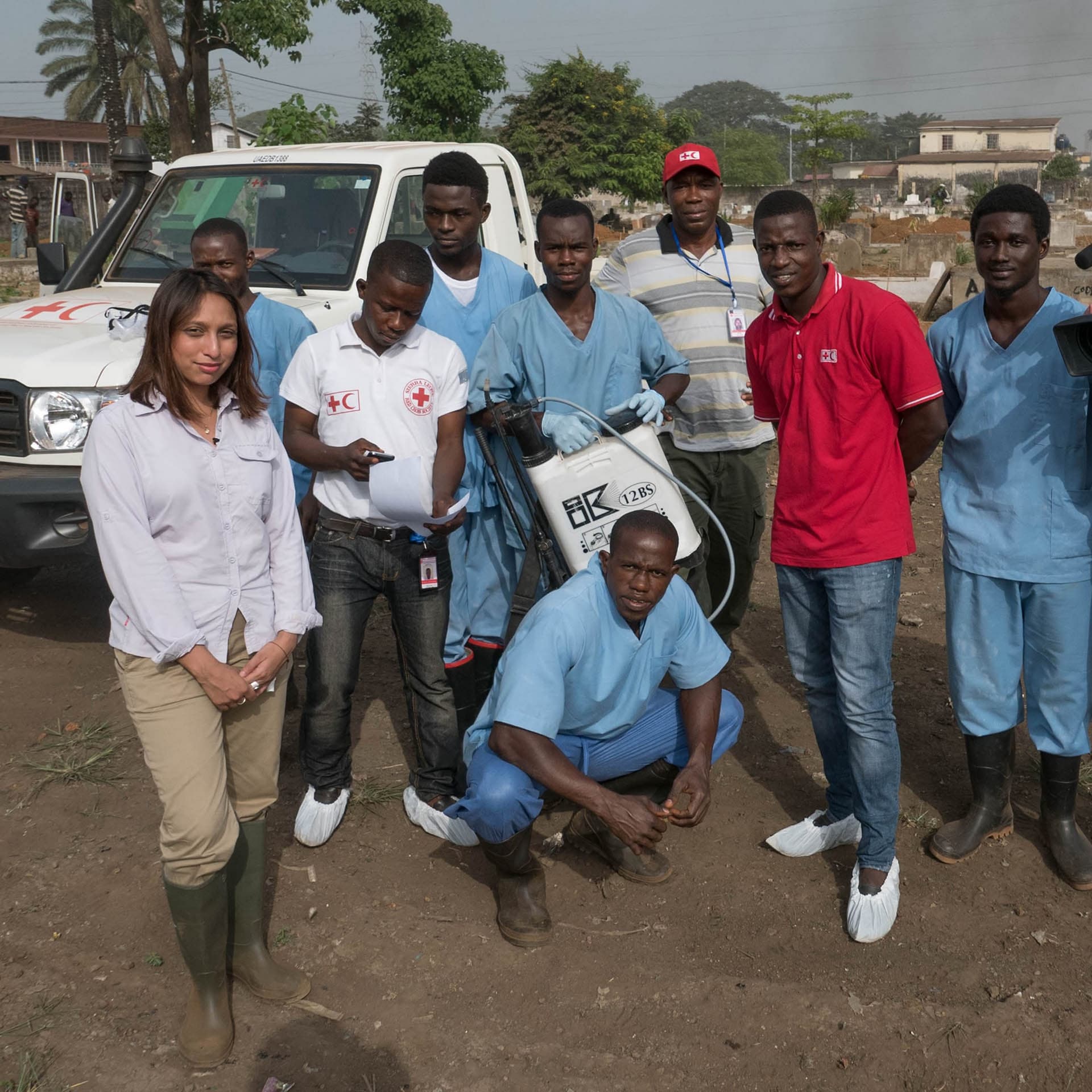
(Photo: Faranak Amidi. Credit: Tricia Yourkevich)