In short
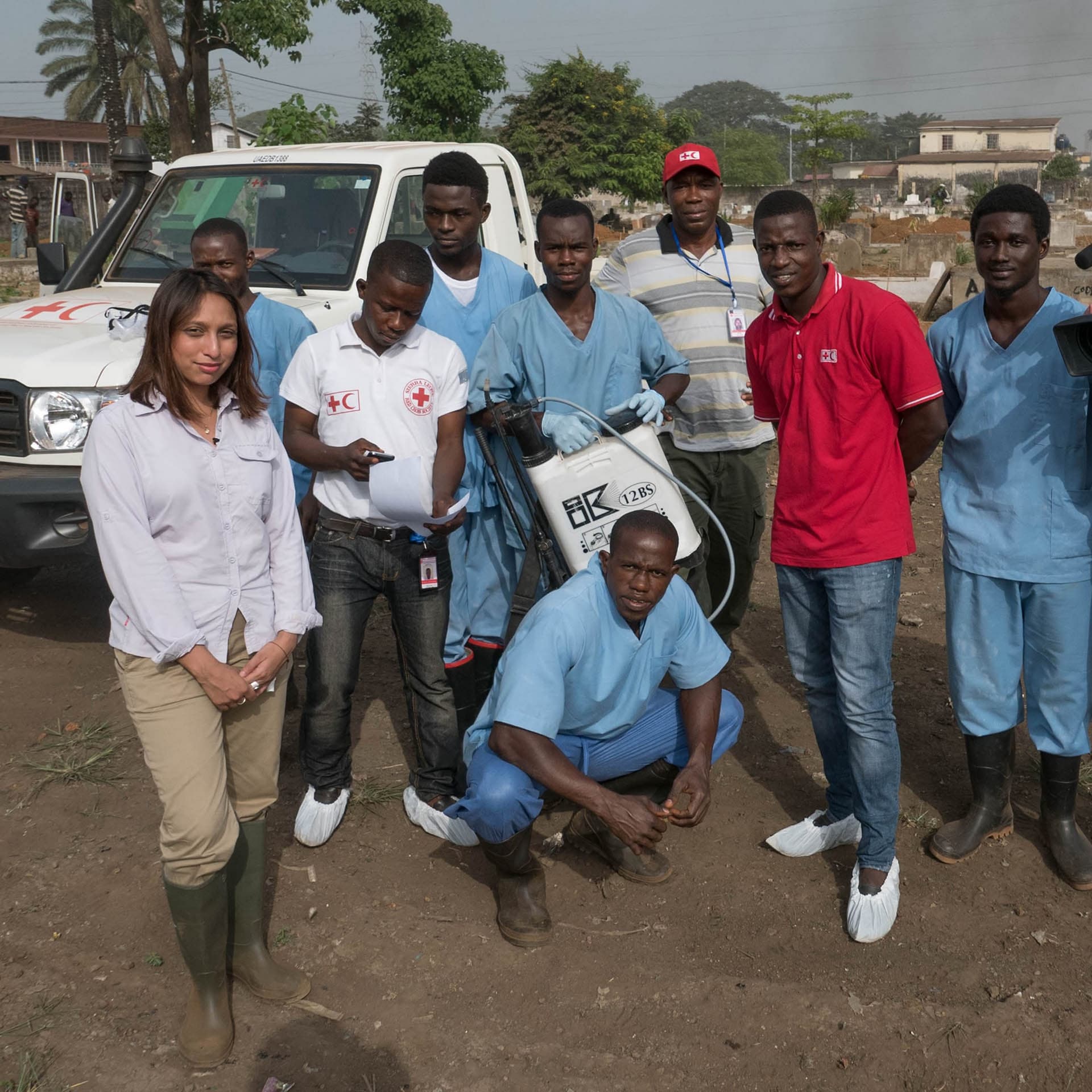
How BBC journalists report from the center of an epidemic, using the DRC’s current Ebola outbreak as the main case, and comparing it with past outbreaks (Sierra Leone Ebola, Brazil Zika, Argentina hantavirus). It covers safety for reporters, verifying uncertain origins, countering conspiracy theories, and the role of community mobilization and public information in changing behavior.
Guests (backgrounds)
- Imeri Makumeno, BBC West Africa journalist reporting from Kinshasa on the DRC Ebola outbreak.
- Musa Sangari, Sierra Leone country director for BBC Media Action; led public information campaigns in the 2014 Ebola epidemic.
- Camila Mota, BBC News Brazil journalist; reported on Zika (2015–2016).
- Matias Zibel, BBC Mundo producer; reported on Argentina’s recent hantavirus outbreak.
Key claims
- Ebola spreads rapidly and kills about half of infected people without containment.
- Misinformation spreads faster than verified facts; “patient zero” narratives can be fabricated.
- Journalists can report safely if trained and prepared.
- Community trust is crucial; mistrust and attacks on health workers can hinder containment.
- Behavior change messaging (e.g., “have a plan”) can break transmission even when healthcare systems are overstretched.
Notable examples
- DRC: Ituri skepticism, burned isolation tents, and attacks on health workers; epicenter described as Ituri/Brunia with additional provinces North Kivu and South Kivu.
- Argentina hantavirus: global claims tied the outbreak to a landfill and a specific bird-watching “patient zero,” later challenged by local epidemiology (no prior hantavirus cases in Tierra del Fuego since 1996).
- Brazil Zika: initial underestimation, later link to microcephaly; attention faded after cases dropped in 2017.
- Sierra Leone “Mr Plan Plan”: drama series prompting household-level steps like isolating sick people and calling for help.
Written by AI. May contain mistakes. Listen to the episode to check what was said.
Chapters
Tap a time to open that second in VOExperts Discuss the Ebola Epidemic
0:30 to 1:23
A panel of journalists share their experiences reporting on epidemics.
“Follow Smart Travel on your favorite podcast app.”
Experts Discuss the Ebola Epidemic
2:08 to 3:31
A panel of journalists share their experiences reporting on epidemics.
“Early on Sunday, I declared a public emergency of international concern over an epidemic of Ebola disease in the Democratic Republic of the Congo.”
Challenges of Reporting from Ground Zero
3:31 to 6:20
Journalists discuss the dangers and responsibilities of covering Ebola.
“So reporting on an epidemic can quickly gather apocalyptic overtones.”
Finding Accurate Information Amidst Misinformation
6:20 to 8:08
Exploring the difficulties in reporting accurate information during outbreaks.
“We are preparing and there's a lot going on in preparation before you go to report on an outbreak like Ebola.”
Lessons from Previous Epidemics
8:08 to 11:34
Journalists reflect on their experiences and the challenges of reporting on health crises.
“Well, the fact that I am here in the country, so I have quite a wealth of contacts to reach in order to verify some of these claims or allegations.”
Community Engagement Through Drama
11:34 to 14:01
Discussing the impact of media dramas on public health awareness and behavior change.
“We have to be even more skeptical than we are normally.”
Addressing Community Health Challenges
14:01 to 15:45
Explore the importance of community engagement in health emergencies.
“So we create this drama for people to start asking these difficult questions.”
The Zika Virus Epidemic: A Global Focus
16:54 to 19:41
Analyze how the Zika virus outbreak captured worldwide attention.
“$15 value, valid to participating locations, terms and conditions apply.”
Community Mobilization and Trust
19:41 to 22:25
Understand the role of trusted community leaders in health crises.
“Musa, you've worked in situations where communities were, in certain ways, able to come together and offer important responses to the outbreak.”
Funding and Community Ownership
22:25 to 24:11
Discuss the financial needs and community engagement in outbreak responses.
“Mary, I want to come to you now because you're on the ground right now.”
Show all 13 chapters
Accountability in Public Health
24:11 to 27:07
Examine the importance of holding governments accountable in health crises.
“Is there a capacity in your audiences for absorbing that kind of reporting as well, Matthias?”
Interconnectedness of Health Issues
27:07 to 28:05
Learn about the relationship between epidemics, poverty, and environmental factors.
“But I'm sure there's a need for us to look at the whole health care system and see how media can also be able to hold government accountable to improve those services.”
Connecting Epidemics: Climate Change and Public Health
28:05 to 29:31
Explore the links between climate change, urbanization, and health crises like Zika.
“And specifically on the question about all the underlying issues, poverty and other things that come together and are also part of the problem.”
Transcript
Automatic transcript. May contain errors.0:00Musa Sangarie:This BBC podcast is supported by ads outside the UK.
0:30Musa Sangarie:Make your travel dollars work harder. Follow Smart Travel on your favorite podcast app.
0:35Camilla Mota:So you're running out of closet space. The good news? You don't need to stop shopping. You just need to start selling with The RealReal. The RealReal is the world's largest and most trusted resource for authenticated luxury resale. Whether it's that mini bag that can't even fit your phone or those boots you never fully broke in. The RealReal handles everything from photography and copywriting to shipping and pricing. So you can just sit back, get paid, and make room for things that actually feel like you. And with 10 ,000-plus new arrivals every single day from top designers like Prada, Celine, Louis Vuitton, and Loewe, all for up to 90 % off retail, you're bound to find something perfectly on-brand to fill that extra closet space with.
1:16Camilla Mota:Plus, right now, you can get an extra$100 to shop when you sell for the first time. Make room for what feels like you. Go to therealreal.com to start selling and get your extra$100 to keep shopping at therealreal.com. That's therealreal.com. Terms apply.
1:36Camilla Mota:This is the documentary from the BBC World Service.
1:46Camilla Mota:Welcome to the Fifth Floor from the BBC World Service with me, Faranak Amidi. The BBC World Service broadcasts in 45 languages around the world. Our job here at the Fifth Floor is to bring you the best of those stories in English and also to get you closer to the extraordinary work our journalists do. This week, the Democratic Republic of Congo's Ebola outbreak continues. Early on Sunday, I declared a public emergency of international concern over an epidemic of Ebola disease in the Democratic Republic of the Congo.
2:27Musa Sangarie:I'm afraid, like any human being, because we have children at school and they still come into contact with a lot of people. Once they come home, they can infect the whole family.
2:36Camilla Mota:Ebola is a frightening and deadly disease, killing on average half of those infected and spreading rapidly without containment measures. So how do BBC journalists report from the center of an epidemic? With me is BBC West Africa journalist Imeri Makumeno, who has been reporting from Kinshasa in the Democratic Republic of Congo on the Ebola outbreak. Musa Sangari, country director for Sierra Leone for BBC Media Action, who led public information campaigns in the country back in the 2014 epidemic. Camila Mota, journalist with BBC News Brazil, who reported the country's Zika virus outbreak in 2015 and 2016.
3:22Camilla Mota:And Matias Zibel, producer at BBC Mundo, who reported on the recent Hantavirus outbreak in Argentina. Wow, what a team. Welcome to the fifth floor. Great to have you all experts here. So reporting on an epidemic can quickly gather apocalyptic overtones. We might hear words like ground zero, patient zero. And we usually have conspiracy theories spreading not only locally, but even globally. So, Imari, I want to hear from you because you are on the ground reporting this epidemic right now. What are you hearing and what are you seeing? Well, here in the DRC, let's say that the Etuli province in the eastern part of the country is the current epicenter of this new and also rare Udubingo Ebola virus.
4:15Camilla Mota:But you also have North Kivu and also South Kivu. These are neighboring provinces still in eastern DRC. One of the other things which is coming very often is, of course, unfortunately, the conspiracy theory among the communities. Some are saying this is something that, you know, humanitarians and aid workers have come up with to get more money and get more funding. It is unfortunately there, despite the fact that at least over 100 have already died and you have currently over 600 confirmed cases of Ebola. But you still have a lot of skepticism around this Ebola virus within the communities, particularly in Ituri, where we've seen a couple of attacks in Rampara, in Mungualu, which are also MP centers whereby the isolation tents and where health workers were trying to attend to the Sikhs.
5:17Camilla Mota:These tents have been burned by the population and some of the health workers have been even attacked because they were trying to safely bury the people who have died from Ebola. Unfortunately, it's part of the mix within this epidemic. So a lot of people listening to this program want to know that, you know, when you're in a situation like this and you have to go to the field to report, is it scary? Is it something that you worry about your own health, Emery, because you're right now in it? Well, I spent a day in the epicenter in Brunia and I had to be there because that was where things were happening.
5:59Camilla Mota:It's part of our job. It's what we have to do for our audience. Of course, we're not going just for the rush. Of course, we have to make sure that we protect ourselves so that we get to the heart of the story and we do the job properly and also come out safely. So we're not just jumping into a void. We are preparing and there's a lot going on in preparation before you go to report on an outbreak like Ebola. Matthias?
6:32Emery Makumeno:I think with hantavirus in the last case, for me, it was easier because I had the knowledge before that what hantavirus can do, how you can get hantavirus. I didn't feel I was jumping into the void, as Emery was saying. But, I mean, it's going to depend on every new pandemic that we will face.
6:53Camilla Mota:Yeah. Musa?
6:53Emery Makumeno:Yeah, absolutely. I think journalists can report safely in the midst of an epidemic. But I think the key aspect here is providing them the basic knowledge and training, you know, in terms of keeping themselves safe. And I don't know if they also get infected and we can also increase the risk, you know, in terms of reporting on epidemics.
7:14Camilla Mota:And Camilla, you? I'd say it can be scary.
7:19Musa Sangarie:Maybe scared is not the best word, but cautious. And I think it's a good thing to be cautious. You know, whenever I'm covering, I see myself in situations like that. there's always like butterflies in your stomach right before you jump in, but just the second before I jump in, because when you're there, you're working and things change. And it makes me think, because here in Brazil, we cover a lot of urban violence as well. So we go to a lot of places in which there are armed groups. So I'd say it's kind of a similar situation, even though the comparison might sound crazy. But still, you know, you're kind of, okay, yeah, let's do this.
7:55Musa Sangarie:And then when you're in, you're in.
7:57Camilla Mota:And Mary, in situations like this, people want to know where did the virus come from? Why did it spread? How did it spread? And they're looking for answers. How do you report on a situation like this if you don't have the answers? Well, the fact that I am here in the country, so I have quite a wealth of contacts to reach in order to verify some of these claims or allegations. So the bottom line is that we are able to reach the people in the response and also the authorities and trying our best to stick to what has been verified coming from officials themselves and also from our own sources on the ground.
8:42Camilla Mota:It's not easy, but it is our responsibility to inform accurately the rest of the world. I want to hear from the rest of you as well, because you've all reported on different kinds of epidemics. Like, Matthias, what about you? Have you been in a situation that you were looking for answers but really didn't find answers?
9:02Emery Makumeno:I think with the recent case of Jantavirus in Ushuaia in Argentina, we went to Ushuaia to cover how this virus got into a cruise ship. And suddenly we started to read in the international press, even in the local press, that the outbreak started in Ushuaia, Tierra del Fuego, in a landfill full of garbage. And so the whole global press was talking that the patient zero was a bird watcher and bird watchers in Ushuaia go to this landfill to watch some specific bird. So you're right to Ushuaia, and logically you started to ask, where is the landfill? Which bird they are looking for there? And suddenly you realize that Ushuaia, which is a city, capital city of the province of Tierra del Fuego, Tierra del Fuego never in its history registered any case of jantavirus.
10:00Emery Makumeno:There is an official registration since 1996, and never Tierra del Fuego has a case of jantavirus. So you started to think, OK, maybe that answer, the answer that it was in a landfill full of garbage, is not the right one or maybe it's not the most probable one. So sometimes the problem is you don't have the answer, but someone created an answer. So you are fighting for looking for answers and fighting the ones that are already established.
10:27Camilla Mota:Yeah. And it spreads like wildfire as well. It's just it spreads faster than the truth.
10:33Emery Makumeno:Absolutely. It's incredible because people say, OK, the rodents transmit the hantavirus. There is a landfill full of garbage, garbage rodents. So it was there. And it's like, OK, wait a minute. Talk to the people there. Maybe you have another kind of answer.
10:49Camilla Mota:Yeah. Camilla, does that resonate with your experiences as well?
10:54Musa Sangarie:Yeah, definitely. And I was thinking I was actually thinking about the COVID-19 pandemic. The memory is still very fresh. As Emery was saying, we reached out to scientists, to doctors, to authorities, but sometimes they're still figuring out along the way. So there's a lot of hit and miss. And I think the COVID-19 was a humbling experience for journalists because I remember reporting, you know, saying to people that we should bathe our groceries in alcohol because scientists were saying that to us. And then a couple of weeks later, we were like, maybe not. Things have changed. So I think it's also part of the challenge, right?
11:34Musa Sangarie:We have to be even more skeptical than we are normally.
11:38Camilla Mota:And it's so important at times like this to give the correct information. And that's why I want us to hear a bit from this public information drama by the BBC Media Action for the audiences in Sierra Leone in the 2013 Ebola outbreak. It's called Mr. Plan Plan.
12:27Camilla Mota:That's very catchy, Musa. But can you tell us why Mr. Plan Plan was so important? Yeah, I think that was something very interesting in terms of the response in Sierra Leone at the time.
12:41Emery Makumeno:Because one thing that we noticed was the fact that increased knowledge and awareness about the virus does not necessarily translate to action. So you might meet people who understand the symptoms of the virus and all the sciences behind it. But at the end of the day, they're not taking action in terms of protecting themselves, their loved ones, families and communities. So we came up with Mr. Plan Plan from the point of view that how could we inspire behavior change and action? So this short drama series is more or less like creating conversations at individual and community level, household level, for people to have a plan.
13:26Emery Makumeno:In a situation where if there is an outbreak of Ebola, either in your community or your household, what are some of the practical steps you are expected to take? So you don't have to wait until the virus comes. You need to have conversation at the household level. to say, for example, if my son falls ill, I mean, there might be doubt whether this person has been infected with Ebola, whether this person is ill with malaria, because the symptoms are similar. And there is always this urge and tendency for you to touch a sick person, for you to care for the person. So you are faced with this dilemma.
14:01Emery Makumeno:So we create this drama for people to start asking these difficult questions. How do we isolate, you know, sick people? You know, how do we call for help? So once you start having these conversations and you have a plan when such situations happen, because we have to consider the fact that we are also operating in a context and an environment, you know, where the healthcare system is very, very overstretched. It's very, very limited. It's not a situation where, for example, somebody falls ill, you can just call an ambulance. So what are some of the localized solutions that you can put into practice?
14:36Emery Makumeno:And I think Mr. Plan Plan helped to kind of engender some of those conversations, you know, and inspire action from community people. And once you start doing some of those things, then you can help to break the transmission. And also that will also inspire action, you know, from other people.
14:51Camilla Mota:You're listening to the documentary from the BBC World Service. So you're running out of closet space. The good news? You don't need to stop shopping. You just need to start selling with The RealReal. The RealReal is the world's largest and most trusted resource for authenticated luxury resale. Whether it's that mini bag that can't even fit your phone, or those boots you never fully broke in, The RealReal handles everything, from photography and copywriting, to shipping and pricing. So you can just sit back, get paid, and make room for things that actually feel like you. And with 10 ,000-plus new arrivals every single day from top designers like Prada, Celine, Louis Vuitton, and Loewe, all for up to 90 % off retail, You're bound to find something perfectly on brand to fill that extra closet space with.
15:38Camilla Mota:Plus, right now, you can get an extra$100 to shop when you sell for the first time. Make room for what feels like you. Go to therealreal.com to start selling and get your extra$100 to keep shopping at therealreal.com. That's therealreal.com. Terms apply. Saving money on everything for your next project when you shop at Menards. Get your project started right with our huge selection of concrete and mortar mixes. Our concrete products are great for a variety of applications, from installing a walkway to setting a post. View our entire selection of concrete mixes and supplies in-store and on Menards.com.
16:18Camilla Mota:Plus, check out the weekly flyer for more great deals happening now. Save big money at Menards.
16:26Emery Makumeno:102 miles ago, the oil light came on.
16:29Camilla Mota:100 miles ago, you noticed. Now, it's time to head to Take 5.
16:34Emery Makumeno:This oil change, fall in love with your car all over again. In just 10 minutes, your dream technician will check your tire pressure, top off fluids, change your oil, and verify with Carfax exactly what your car really needs. All while keeping you in the driver's seat.
16:50Camilla Mota:Take 5, the stay-in-your-car 10-minute oil change. Save up to 30 % on your next oil change to Take 5. $15 value, valid to participating locations, terms and conditions apply.
Read the full transcript
16:59Camilla Mota:This is The Fifth Floor with me, Farhanak Amidi. Camila, you've reported on the Zika virus in Brazil. These days we're living in a world where like the attention span is literally 30 seconds. How long do you think the world, the wider world, will stay with stories like this in your experience?
17:22Musa Sangarie:That's a good question. It's usually, as you said, the attention span is really short. And with the Zika virus epidemic, it was actually really interesting because the world was really watching Brazil at that time because Brazil was on the run up to the Olympics, right? The Rio Olympic Games happened in 2016 and the outbreak happened in 2015 here in Brazil. So everyone was watching and then Brazil declared a national health emergency. Then the World Health Organization, right, declared a state of attention because the disease was spreading further away from Brazil in dozens of countries. And the thing which is really interesting, at first, authorities thought that the Zika virus was a benign disease because you'd get a rash and then you had fever and it wouldn't be that bad.
18:12Musa Sangarie:But then doctors in Brazil started to realize that a lot of babies were being born with microcephaly. Then they thought there might be something wrong. And the images were so strong, you know, of kids with the tiny heads and everything and the suffering of the family. So everyone was watching Brazil. 2 ,000 babies were born with microcephaly at that time, with congenital Zika infection. So, but then in 2017, cases dropped sharply, probably because of the development of herd immunity. And the world, you know, there's so much going on in the world. People stopped paying attention. Yeah. And that's why 10 years later, last year, we actually went back to some of those families to see how these kids were doing.
18:55Emery Makumeno:Talking about the spam of the attention, I had an incredible discussion with the health authorities in Tierra del Fuego because when we arrived to Tierra del Fuego, we arrived on Friday and I started to talk to local authorities to give me an interview during the weekend so we can have your version. And they say, no, we don't work during the weekend. We start on Monday. And I said, look, the spam of attention of this story will die on Sunday when the last patient from the ship is evacuated. So on Monday, nobody will care and everybody will think that the outbreak started in your province. So if you have an alternative version, I would suggest to give us an interview during the weekend because people on Monday will be talking about something else.
19:40Emery Makumeno:And thanks to this explanation, we had an interview at midday on Saturday. Musa, you've worked in situations where communities were, in certain ways, able to come together and offer important responses to the outbreak.
19:58Camilla Mota:Can you explain that to us a little?
20:00Emery Makumeno:This is very critical, like in terms of breaking the transmission. So what we did back then was to mobilize people who are trusted in communities, you know, using trusted voices. So this could be traditional leaders, this could be religious leaders, because they have like a very large following. And it's easier for them to mobilize, you know, their people and engage them in terms of positive health seeking behavior, you know, like not touching dead bodies, you know. and reporting early and seeking early treatment. And by engaging these local people who are trusted in communities, because there is quite a lot of mistrust, which is currently happening in the DRC, because people are linking the virus to business, looking at the whole NGO sector as an infrastructure built upon the misery of people in the DRC and they want to make money out of this misery.
20:56Emery Makumeno:So once you have those local voices, trusted people within communities, and they're able to mobilize their people, because if there is this tension between the response and the community people, which in some cases can manifest itself in violence, then it's a lot more difficult for us to break the transmission. So in all this, the media has to play a very strong role.
21:17Camilla Mota:Camila, I know you've had similar experiences. Could you please tell us about that as well? Sure.
21:23Musa Sangarie:And to add on that, it was actually more on the coming together of the scientific community. I think that Brazil's experience with the Zika epidemic was really interesting because you have babies being born with congenital Zika syndrome in other countries. And until then, you know, doctors hadn't put together that maybe those two things were correlated, that the microcephaly cases were due to the Zika virus infecting the mothers. So it was in Brazil in August 2015 in the northeastern part of the country, which is one of the poorest parts of Brazil. But then doctors started to realize maybe these two things might be correlated.
22:06Musa Sangarie:And then it started like wildfires, you were saying before, but within the Brazilian scientific community. And Brazil is such a large country, but doctors and scientists were exchanging information, you know, and working together to try to understand what was going on. And then the world was watching Brazil, not just because of the disease, but also because part of the answers were coming out from here.
22:31Camilla Mota:Mary, I want to come to you now because you're on the ground right now. And are there community mobilizations happening in the DRC at the moment? Things are starting to be put in place when it comes to community owning this response. It is only now, this is about 27 days into the response this Thursday, There's a lot of mobilizations of community in order to own and also use leaders of the community to convince the people that reporting early also increases the chance of being healed or to survive Ebola. And it's only starting now, but resistance is still there. I also wanted to add one more element that as the World Cup is starting, of course, there will be a big concern over here.
23:28Camilla Mota:This response is in need of over$500 million and not much has been disposed according to the response teams. And now the word is focusing on the football, the biggest event. So the fear here is that commitment or pledges might be forgotten and the people as well might be in shortage of the necessary funding in order to contain this outbreak. Though the government seems to be positive that they've had to deal with Ebola for this is the 17th time for the DRC. But money is needed and more international mobilization is needed for them to contain it. When we're talking about reporting, do you also get a chance to talk about underlying issues, giving more analysis, for instance, about the relationship between poverty, war, disease, all of these things?
24:24Is there a capacity in your audiences for absorbing that kind of reporting as well, Matthias?
24:31Emery Makumeno:I think you have different steps. I mean, in the first situation, people are scared that they can get whatever they are afraid of. I remember with COVID and now with Hantavirus. So for me, this first moment phase is the phase of, can I get it? Or how can I avoid getting it? getting it. So it's really difficult in this first moment to try to explain, you know, links between touristic industry, people flying or things like that. After this first moment of are we having another COVID pandemic? I think you have more opportunities to explain, okay, these are linked with this. Don't be afraid if you are here because it's happening here.
25:21Emery Makumeno:They are, for example, hantavirus is a virus that has not a lethality level like COVID or Ebola. So it's like, people are like, is hantavirus as lethal as COVID? No, it's not. So for me, it's different in the first phase of the concern. And after a week, maybe you have this chance to explain a little bit more.
25:44Camilla Mota:And Musa, is it something that you and BBC Media Action also get to talk about?
25:49Emery Makumeno:Yes, of course, because you can't just isolate Ebola from the other diseases, which are endemic in most parts in Africa, in those communities. And for us, yes, Ebola is a public health emergency and there is a need for us to provide life-saving information. But during the course of our programming, we also had to take a hard look in terms of the whole health care system. And I think that brings us to the question of accountability as well, because I don't know if the government has a responsibility for them to provide some of those basic services. And if you don't ask those questions, you know, and people feel that we are moving from one epidemic to the other, you know, today's Ebola, probably two or three years time, another outbreak of cause.
26:34Emery Makumeno:You know, how do you hold some of those leaders accountable so that you have a health care system that is also resilient, you know, to some of those issues? We cannot more or less, like say, prevent another outbreak, but the response system can be a lot better. And there will also be a mechanism where we're able to address some of those endemic diseases that people suffer with on a daily basis. You know, because if you take Ebola away, people still die of malaria. You know, probably more people die of malaria than even Ebola. You know, there are other diseases as well that are also affecting people.
27:06Emery Makumeno:You know, you have pregnant women who are also facing challenges in terms of delivery, lack of ambulances, you know. So the problem is just so massive. And I think we have to take a hard look at some of those issues, even though at times it's very difficult for you to treat all those, you know, in the heat of an emergency because you want to focus much more on providing life-saving information to audiences. But I'm sure there's a need for us to look at the whole health care system and see how media can also be able to hold government accountable to improve those services.
27:36Camilla Mota:Interesting. Camila, you know, as Musa mentioned, you know, we are having more epidemics, more outbreaks more frequently these days in today's world. Do you find that it's become more important to actually talk about these interrelations and underlying issues in our reporting?
27:58Musa Sangarie:definitely and i think that um audiences might be paying more attention to that because of the covid pandemic so much was talked about how these things are intertwined you know climate change and deforestation i mean if you take forests away mosquitoes will reproduce and invade your city and that might be a problem and i think the more we go through these traumatic experiences the more maybe people are open to, you know, consuming that kind of coverage. And specifically on the question about all the underlying issues, poverty and other things that come together and are also part of the problem.
28:40Musa Sangarie:I also think that there is, I mean, with the experience with Zika, whenever you have an answer for unanswered questions, even if it comes years after the fact, people are paying attention to it because these have been such traumatic times that people are like oh wait a minute and we have a specific example because in Brazil pregnant women in the northeastern part of the country were the most affected more than in any other part of the country so when there were the first hypothesis on why that happened people were like oh wait I remember that explain it to me so that's still the memory is still fresh which is a good thing for us right and we're we're talking about the attention span being so short nowadays i think maybe there are these windows in which we can still you know access and connect with audiences
29:31Camilla Mota:yeah guys musa camila emery matthias fantastic to have you thank you so much for giving your time to us. Thank you. You're welcome. That's all we've got time for today. If you want to let us know what you think about the show or you have questions for us, send an email to the5thfloor at bbc.co.uk We love hearing from you. You can write to us at the5thfloor all one word at bbc.co.uk
30:12Camilla Mota:You've been listening to the documentary from the BBC World Service.
From the publisher
Ebola is a frightening and deadly disease, killing on average one half of people infected and spreading rapidly without containment measures. So how do BBC journalists report from the centre of an epidemic? BBC West Africa journalist Emery Makumeno has been reporting from Kinshasa in DR Congo on the Ebola outbreak; Musa Sangarie, Country Director for Sierra Leone for BBC Media Action, led public information campaigns in Sierra Leone in the 2014-16 Ebola epidemic; Camilla Mota, journalist with BBC News Brasil, has reported on the fall-out from the country’s Zika virus outbreak in 2015 and 2016; and Mattias Zibell Garcia, producer at BBC Mundo, reported on the recent Hantavirus outbreak in Ushuaia, Argentina.
The Fifth Floor is at the heart of global storytelling on the BBC World Service, bringing you the best stories from journalists in the BBC's 43 language services. We're here to help you make sense of the stories making headlines around the world; to excite your curiosity and to get to grips with the facts. Recent episodes have investigated Russia’s youth armies and how they make soldiers of Ukrainian children; featured the BBC team who were the first journalists to the site of the Nigerian school kidnappings and reflected the effects of internet blackouts in Iran, Uganda and India. If you want to know more about Venezuela’s acting president, Delcy Rodriguez, and the legacy of Hugo Chavez; or how Vladimir Putin’s network of deep cover spies operates; or why Donald Trump signed an executive order granting white South Africans asylum in the US, we have all those stories and more.
Presented by Faranak Amidi.
Produced by Laura Thomas, Caroline Ferguson and Hannah Dean.
(Photo: Faranak Amidi. Credit: Tricia Yourkevich)