In short
Whether Polish public support for Ukrainian refugees has shifted from “love” to mistrust or hostility, and why—covering refugee experiences, policy changes, historical memory (Volhynia), and Russian-linked online disinformation.
Guests/backgrounds
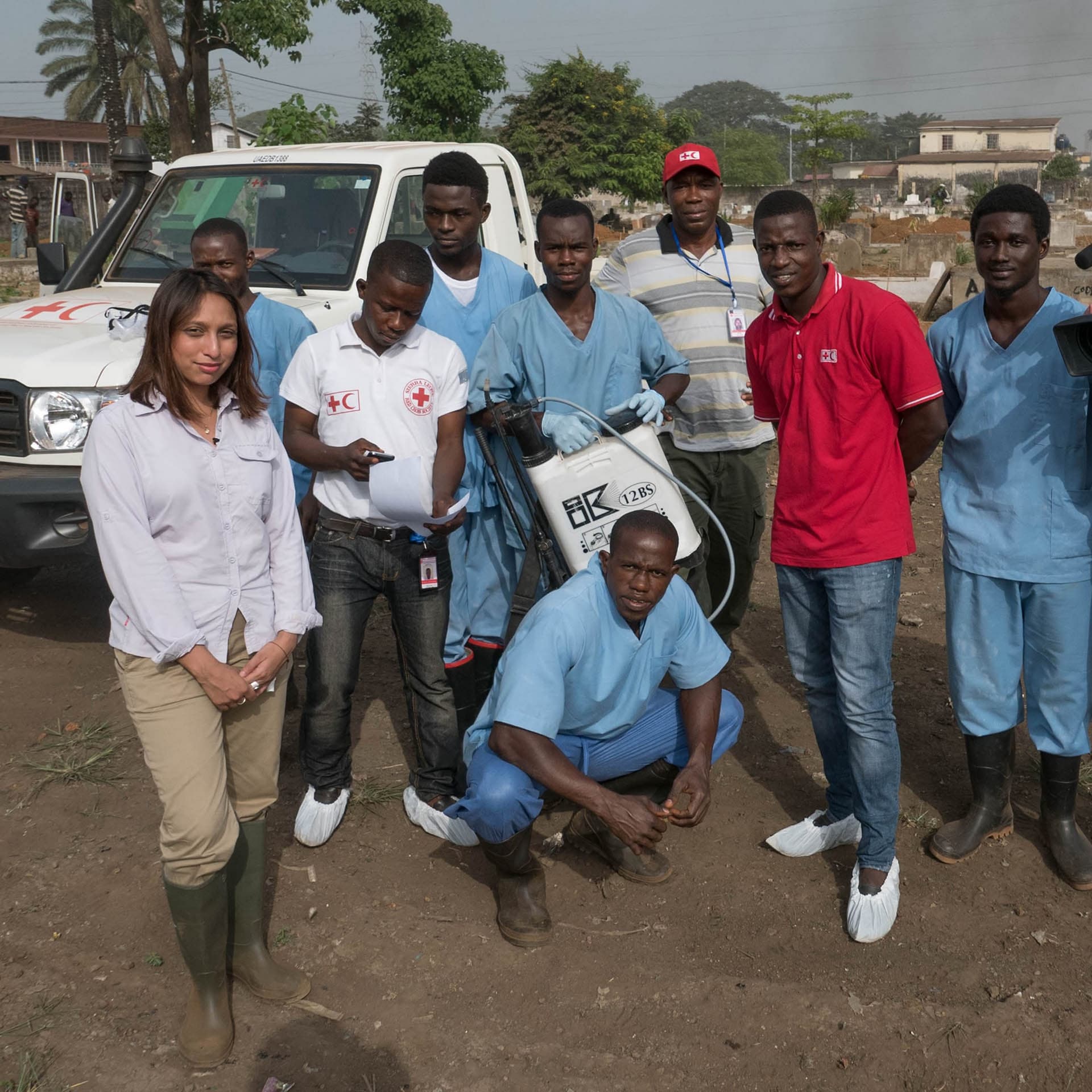
Maria Krul, Polish doctor and founder of “Krokza Krokiem/Step by Step” (since 1992) running rehab/therapeutic centers for disabled children and families in Zamość; Zhegor Shokul, translator; Valentina and her 15-year-old daughter Julia, Ukrainian refugees from Ternopil region living in the charity’s housing; Milena Kloszkowska, board member of Homo Faber human-rights NGO in Lublin; Olga, Ukrainian psychologist working at the same NGO; Michal Fedorowicz, Res Futura (European collective) analyzing social-media data; Olena Babakova, journalist/political analyst (Kiev-born, Polish citizen).
Key claims
Early 2022 support exceeded 90% positive feelings, but now over half report negative feelings; some Ukrainians allegedly overstayed or abused access; Polish government funding and benefits were cut after President Karol Nawrocki vetoed extensions; Russian bots/propaganda and algorithmic amplification helped shift narratives; historical disputes (Volhynia/UPA) are used to fuel doubt.
Notable examples
Maria’s center helped 300–400 families (mostly Polish, a few Ukrainian) and hosted hundreds of Ukrainian families at first; Valentina’s daughter Julia uses a communication tablet and has learned Polish; Olga reports threats and assaults tied to speaking Ukrainian; Res Futura cites a coordinated 2025 drone+information operation blaming “Ukrainian drones”; Volhynia memorial imagery and Zelensky’s UPA honor trigger anger.
Written by AI. May contain mistakes. Listen to the episode to check what was said.
Chapters
Tap a time to open that second in VOMaria's Charitable Work in Zamosc
1:41 to 6:16
Exploring Maria Krul's health charity and her help for Ukrainian families.
“where we report on the stories shaping our world, I'm exploring how Poland is falling out of love with its neighbour, Ukraine.”
Changing Attitudes Towards Ukrainian Refugees
6:16 to 7:38
Discussing how Polish sentiments towards Ukrainian refugees have shifted.
“Maria raised hundreds of thousands of euros from donors around the world to pay for the help she was giving all those Ukrainian families.”
Challenges Faced by Ukrainian Families
7:38 to 13:14
Delving into the difficulties faced by Ukrainian families in Poland.
“So you've gone from quite positive at the beginning to quite negative now.”
Community Support for Refugees
13:14 to 14:01
Highlighting the support services provided to refugees in Lublin.
“Ukrainians must now have jobs to qualify.”
Exploring the Community Center in Lublin
14:01 to 15:20
Learn about the services provided to refugees in Lublin and concerns about anti-Ukrainian sentiment.
“Milena Kloszkowska is showing us around this 100-year-old building in the city of Lublin.”
The Rise of Anti-Ukrainian Sentiment
15:20 to 16:45
Discuss the shift in Polish attitudes towards Ukrainians and the impact of political rhetoric.
“Politicians started to say that, oh, they took a lot of money from us.”
Personal Experiences of Ukrainians in Poland
16:45 to 20:17
Hear firsthand accounts of Ukrainian refugees facing hostility and their coping strategies.
“Much of the political rhetoric in Poland during last year's presidential election campaign and ahead of next year's parliamentary election has been hostile towards Ukraine and Ukrainians here in Poland.”
Historical Context of Polish-Ukrainian Relations
20:48 to 24:30
Explore the complex history between Poland and Ukraine, including Volodya and its impact on current relations.
“I'm John Murphy, and this is Assignment from Poland.”
The Role of Russian Propaganda in Shaping Opinions
24:30 to 28:00
Analyze how Russian propaganda influences perceptions of Ukrainians in Poland and the ongoing information war.
“What's often left out of the Polish narrative on Volinya is that Polish forces also killed tens of thousands of Ukrainians.”
The Information War: Ukraine and Poland
28:00 to 33:25
Explore how misinformation and propaganda shape Polish views on Ukraine.
“This happened across Europe, Michal says.”
Transcript
Automatic transcript. May contain errors.0:00This BBC podcast is supported by ads outside the UK.
0:30we do the things we do, and how to make better choices to help avoid costly mistakes. Each episode covers the latest research in behavioral science and dives into themes like the power of self-control, shaping your mindset for success, navigating new beginnings, and why starting over can feel so hard. Listen to choiceology at schwab.com slash podcast, or wherever you listen. If you are currently overpaying on software to run your business, remember this number, 10 ,000. That's the number of new businesses that join Odoo per month. Join Odoo today at odoo.com. That's O-D-O-O dot com.
1:16The Documentary, home of the best documentaries from the BBC World Service.
1:25Gosh, Maria's brushed her head. Where are you? Oh, there she is. Springing her step. Welcome to the documentary from the BBC World Service. I'm John Murphy, and on assignment, where we report on the stories shaping our world, I'm exploring how Poland is falling out of love with its neighbour, Ukraine. I'm following this energetic 66-year-old Maria Krul as she takes us on a quick tour of the building, part of a health charity she set up 36 years ago in the town of Zamoszczyk in southeast Poland. Ah, this looks like a gym. This is the first rehabilitation and therapeutic centre for children. 1992 started.
2:14And after, we organised a lot of facilities for adults, for example, so now we have 12. 12 different centres? In Zamość and around Zamość, and help 300-400 families. We have schools, we have health centres, we have social care centres, residential places, workshops. So when you say 300-400 families, you're talking about Polish families mainly. Polish, yes. But you also have a few Ukrainian families still with you. Now, few. And on the wall there, there's the big sign. This is Croquem. Step by step, Pa à Pa in France. That's the name of your association. The name is good for different languages.
3:03Yes. It's English, you know. OK, that's from England. But what I can see is various wheelchairs. There's this equipment to lift up patients because one of the things they do deal with here is cerebral palsy. 20 rooms for class for children, very severe disability. You have a son who's also disabled. My son has cerebral palsy and now he's 41 years old. Wow. On the power chair, but clever. So are you, I'm sure. And the thing is, Maria, your organisation has been helping a lot of Ukrainians, particularly since 2022, since the full-scale invasion. Yes, a lot. If there's ever a good example of a Polish person who's gone out of her way to help Ukrainian refugees, Maria Izet.
4:01For years, she'd been providing training and workshops to Ukrainian teachers and therapists. Then Russia launched its invasion. She's looking through her covers, which are full of files. She's brought out a kind of laminated poster, which is in... It is in Polish and in Ukrainian language. And what does it say? We give information for Ukrainian refugees with disabled people, with disabled children, to come to us for help. So you put these up in Ukraine? Yes, it is my phone and my colleague's phone, so we stopped sleep by two months. So you didn't sleep for two months at the beginning of the full-scale invasion.
4:50A lot of adrenaline. It was adrenaline. It's a very important word. So as a result of that, lots of Ukrainians came here. 300 families. 300 families. 500 families. So that's a lot of people because each family would have had several members. Yes, and with dogs and cats. And stay in our places. We gave them two small rooms for three, four days. And we looked for support, for help in different places, in Poland, in Germany, in Sweden, in different places. You've talked about adrenaline, you've talked about the important work, but were you happy to be doing it? Yes, because I am a woman who likes to help people.
5:43Because I am a doctor, I want to help children and different people. And because we Polish people, we understand very good the terrible time of war. Because in Poland, we have very bad periods. Yes, you've got a tough history. Yes, and our enemy is Russia. Every time is Russia. So we identified with them, with Ukrainian people, because our common enemy. Maria raised hundreds of thousands of euros from donors around the world to pay for the help she was giving all those Ukrainian families. Three families are still living here, while other Ukrainian children come in for regular treatment. And yet, four years on, listen to this from her.
6:35We had a lot of problems with Ukrainian people because they stayed, not three days, but three years, four years, you know. So this period, a lot of problems like in, maybe in Polish people, you know, with alcohol, with not good order and different things. So we are tired, a little tired after this support because it isn't our duty, you know. A lot of people in Ukraine asked me as a doctor, help me with operation, with surgery, with different places. Not help me because of war, but help me because our health service was worse than in Poland. We wanted to help refugees, not to open our health service for all Ukrainian people who wanted to...
7:31Get some treatment. Yes. So you're saying some Ukrainians maybe took advantage? Yes, of course. So you've gone from quite positive at the beginning to quite negative now. Is that a fair representation? A little like it is, yes. Maria also told me many of the Ukrainians her charity helped didn't express much gratitude. She's far from the only one to change her views. Opinion polls show that when Russia's full-scale invasion began, more than 90 % of Polish people held positive feelings about Ukrainians. Millions of refugees poured across the border and Polish families took them in. The Polish government gave them financial support and fast-tracked work permits and residency.
8:21Meanwhile, weapons went the other way, to help Ukraine defend itself. But today, surveys show that more than half of Polish people have negative feelings, and many want the million or so refugees to go back. Attacks, both verbal and physical, on Ukrainians in Poland have risen significantly, though admittedly from a low base.
8:49We've travelled to another of Krokza Krokiem's properties, where those three Ukrainian families Maria mentioned are still living. Here on the pictures you can see some photographs of some of the people who've been here, maybe all of them in wheelchairs, young people. With me is Zhegor Shokul, who's helping me with this story and translating. Hello. Hello. Valentina. We meet Valentina and her 15-year-old daughter. Hello. It's really hot. The fan is on. So we've come into Valentina's room and her daughter, totally disabled daughter, is on a screen there. She's watching some kind of film. Yeah, yeah.
9:42Valentina, how long have you been here with your daughter? Three years already have passed. And where from? From Ukraine in Ternopil region. It's quite close to the Polish port. It's western Ukraine. Valentina says Yulia's dad is also disabled and has a part-time job as a truck driver back in Ukraine, while her other daughter has been finishing a master's degree there. But for now, it's not safe to take Yulia back. We came to the centre and she liked it very much. There's a place where you could have everything in one place, medical at rehabilitation in the school and we were able to stay which is so good.
10:25She loves it. She's not afraid. She has everything in one place. She likes it very much. For instance, she has this tablet that she uses for communication, a communicator because she doesn't speak at all but using the communicator, she can express everything. So Julia here is on her person. My name is Julia. My name is Julia. I have 15 years. I go to the eighth class. I am 15, I go to the 8th grade. On this pad there are all sorts of symbols that she can flick through. You can talk to her about anything, almost anything you want. It's great, we're here in Poland that we got this communicator.
11:11It's great for me because she's learned Polish. When we came here we couldn't speak any Polish. She didn't understand any Polish at all. And now she's learned so she can speak Polish in Ukrainian using this. Wow. We didn't have access to such a program. So 15-year-old Julia here, who cannot communicate verbally, is using this tablet in front of her. So, Julia, do you like living here in Poland? Tak, tak, yes. She's pressed a green triangle and it says tak, yes. Tak, tak, yes. Yes. So do you think, Julia, you'd like to stay in Poland or would you like to go back to Ukraine?
11:52Valentina is responding for her daughter, saying, you know, she wants to stay here in Poland and stay at school, but she also wants to go back to Ukraine, where her father is and her sister is, and she wants her school and home to be in one place. She wants all of that. But right now it's not possible. Talking about the help you've received here, are you grateful? Are you grateful?
12:19Of course, very much. I always thank, because they've done so much for my child and for me. But you'd rather be together as a family if you could be? Yeah. This is how our daughter is, and this is how we have to deal with it. You know, what's good for her is good for all of us. Thank you both. Thank you, Julia. Thank you, Valeria. Dziękuję. Thank you. Thank you. Thank you in Polish. Maria Krul wouldn't dream of throwing people like Valentina and Julia out, but she has a problem. Now we have a difficult situation without money for accommodation. Electric, water and different, it is my problem. Partly because Polish government funds have been cut.
13:04Yes, and it is incredible that four people like these cut the money for disabled people. the most vulnerable people. In August last year, Poland's new president, Karol Nawrotsky, who was supported by the right-wing Law and Justice Party, vetoed legislation which would have prolonged benefits Ukrainian refugees were getting, including, for example, child benefit. Ukrainians must now have jobs to qualify. For a mother or grandmother looking after young children, that can be very difficult. It was a bank here. Oh, really? Yeah. Oh, yeah, you can see all the big solid metal doors and stuff. And there is a safe.
13:56OK. A bit over an hour's drive north-west of Zamosch, Milena Kloszkowska is showing us around this 100-year-old building in the city of Lublin. She's a board member of Homo Faber, a prominent Polish human rights NGO. We're in a community centre they call Baobab, like the tree, a place to gather safely. We have a lot of services here. We are helping people with taxes, with the legalisation. We have a lawyer, psychologist. We work in English, Russian, Ukrainian and Polish language, of course. So we are trying to help people because here in Lublin we have a lot of people from Ukraine, from Belarus and from Zimbabwe.
14:42Zimbabwe? Yeah. Given that you, where you work and that you work to help some of these refugees, have you recognised more anti-Ukrainian feeling? Yes, of course. People are afraid. People are afraid to take children on the playground during the holiday. The Ukrainians are afraid. They are afraid to speak in Ukrainian language on the street. Because? Because Polish people are so angry and we're still seeing new attacks on the social media, etc., etc. So they are afraid because a lot of people can scream to them something, you know, like back to Ukraine. Politicians started to say that, oh, they took a lot of money from us.
15:25They should always thank us, but they are not. They are speaking in the media that we have to stop the hell. You know, people in Poland, I think, really like to have an enemy. This is the highest moment with the aggression to Ukrainian people here in Poland. Who are you blaming for this sort of change of attitude from the love position four years ago to this really anti-Ukrainian feeling? I think it started with the Russian bots because they started a few, few years ago. Milena's referring to Russian bots, automised accounts used for online attacks. So they are started, but our politicians saw that, OK, that works.
16:11People like it in Poland. They love to prepare, you know, commentary that back to your country, you are, you know, I don't want to use the words, but I think they catch the occasion and they use it. And do you expect all this anti-Ukrainian feeling to increase? Or do you think this is just a temporary problem? I hope that this is temporary, but I'm afraid that it will be still higher and higher. Much of the political rhetoric in Poland during last year's presidential election campaign and ahead of next year's parliamentary election has been hostile towards Ukraine and Ukrainians here in Poland.
16:58They're often accused of sponging off the Polish state, of not being grateful enough that there are just too many of them. Though the evidence points to Ukrainians paying their taxes and boosting Poland's GDP, for instance in 2024, by 2.7%. I can show you the big kitchen. Upstairs in the kitchen area we meet Olga. Her young child is chewing on a sweet and some cucumber, and sitting at a table is her 18-year-old daughter with a plate of dumplings. Mother and three daughters, including a baby, came here four years ago. We have her first birthday here. Olga speaks Polish now and works as a psychologist with children with disabilities here in Lublin.
17:47Most Ukrainians in Poland have jobs. The employment rates are incredibly high, about 75 % for recent refugees, though many of those jobs are below their qualifications. As for pre-war Ukrainian migrants, more than 90 % are employed. Obviously you've been getting on well here, it seems. But as a Ukrainian, do you ever worry nowadays when you go outside, just in the street? My daughter has had an incident like that. happened to her. When she was on the bus and someone addressed her in an aggressive, vulgar way and was calling her names and someone who was abusing alcohol, that kind of person, but, you know, telling her to, you know, get the F out and go back to Ukraine and such.
18:35Just to be clear, was this, did you get the abuse because he heard you speaking Ukrainian? So I was speaking with a friend in Ukrainian, and there was a man who started sort of cursing at me. She was 15 at the time. So I have a friend whose friend had this situation where she was walking and talking to someone in Ukrainian, and there was a guy passing by on a bicycle, and he passed him, and then he turned around, came back, and he cut her on her arm with a knife, with a blade, so that she actually has now problems with her fingers. He cut some of the veins. He was caught, but then he has some documents from the psychiatrist.
19:21So the police got him, but they couldn't do anything. I speak to my youngest daughter only in Polish in public spaces, on the bus, for instance. Only at home speaking Ukrainian. And here in Baobaba, you can speak Ukrainian, and I know no one will sort of turn against us for that. but I'm a little afraid and I'm careful, so I stick to Polish in public. You're listening to the documentary from the BBC World Service. Self-directed investing, trading, full-service wealth management, automated investing, financial planning, thematic investing, retirement planning. Phew! And to think, that's just a small taste of what Schwab offers.
20:02because Schwab knows that when it comes to your finances, choice matters. No matter your goals, investing style, life stage or experience, Schwab has everything you need all in one place so you can invest your way. Visit schwab.com to learn more. A beautifully designed Squarespace website is the difference between thinking about photography school and selling your portraits online. It's the difference between giving away those cookies you just made for free and running your cookie empire. A beautifully designed Squarespace website is the difference between having a movie-reviewing hobby and a movie-reviewing career.
20:40Squarespace, because no matter what you're into, a website makes it real. Use offer code DIFFERENCE for 50 % off select plans. Terms and conditions apply. I'm John Murphy, and this is Assignment from Poland. This region has a troubled history. Borders have shifted back and forth over the centuries. Lviv, for example, now in Ukraine, was, before the Second World War, the Polish city of Lviv. During the Austro-Hungarian Empire, it had been Lemberg. In World War II, it was captured by the Soviets, then the Nazis, then the Soviets again, who pushed Poland's frontiers westwards. That dark history has reared its head again recently.
21:26Just by the side of the motorway west of Zamosch, there's a giant memorial. Yes, it's certainly a very dramatic monument. It's about, I don't know, 15 metres high. It's pretty tall. Shape of the Polish eagle with a cross in the middle. At the bottom, there's this family group. Two children holding on to their parents, and the mother is holding on to a baby and the father's just behind her holding up a crucifix and there are flames at the bottom. The writing says, Volinia massacre. This is the same word that we use for the massacre of the innocent in the Bible, Rzeczny Vinyątek. So there's a pattern of the two, yeah.
22:17And above that, in the middle of the cross, there's this trident. Which is the symbol of Ukraine, right? Yeah. And right in the middle of the cross, the top of the trident, is skewering through a baby. Anger in Poland over Volodya has been turbocharged in recent months, certainly on the political right and on social media, after Ukraine's President Zelensky named a military unit Heroes of the UPA for their defence against the Russians. The extreme nationalist UPA fought for Ukrainian independence against the Soviets in World War II, as well as against the Nazis and Polish authorities. In Poland, though, they're accused of committing a genocide of 100 ,000 Polish civilians at Volodya and elsewhere.
23:07Poland's president, Nawrocki, responded by stripping president Zelenski of the highest Polish state honour, the Order of the White Eagle, which had been awarded to him by Nawrocki's predecessor. Yeah, and round the back of this monument, you can see children's heads on metal spikes or on wooden spikes. It's all pretty gruesome.
23:36several people turned up to look at the monument when we were there including this young woman she explains how seeing the memorial and reading the information board has left her with difficult feelings how shocked she is at the scale of the masker how she didn't even know about it what's it make you feel about the ukrainians So, yes, of course those who are here, I mean, I have no grudge or they're not guilty of it. Although when one looks at it, it makes one think, you know, is it a good nation, you know? It makes one worried about whether something like this could happen again. It makes one wonder, you know, who is it that we're helping?
24:18And also the person who is ruling Ukraine, is that a good person? because people are people, but the authorities and the rulers are something else. History and memory are complicated. What's often left out of the Polish narrative on Volinya is that Polish forces also killed tens of thousands of Ukrainians. However, that growing sense of doubt about Ukraine is something I also heard from Maria Krul. Her own mother and grandmother escaped from Volinya with the help of a Ukrainian family. But now, after Ukrainian president glorified Ukrainian bandits, it's terrible for me. You know, it's terrible.
25:03I didn't think that when I come to Ukraine to help disabled children, maybe this grandfather of this child was a Ukrainian bandit from the Second World War. Yes, but try to understand me. I'm afraid. So what are you afraid of? Aggression from Ukraine. You're afraid of aggression from Ukraine? Yes, for example, in the future. And are you more afraid of Ukraine losing or of aggression from Ukraine, losing this war, which would mean you'd have Russian troops much closer to you? I don't know. That's just one view, of course But similar questions about Ukraine have been pushed by nationalist politicians in Poland And especially on social media Wow, cool And you get a seat in here And this little lift Please shut the door quietly Is that what?
26:09Yeah We're taking a wood-panelled lift up to the top floor of one of the few pre-Second World War buildings still standing in the capital of Warsaw. It was spared as the Nazis razed most of the city in punishment for the Warsaw Uprising of 1944 because it housed SS officers. Hi, I'm John. We're here to meet Michal Fedorowicz of the European collective Res Futura. They analyse online data and what's happening on social media. So we can tell the story about the relations, online relations, Ukraine and Polish from 2022 when Russian attacked Ukraine till now, 2026. It is a story, when you look online, it's a story from love to hate.
27:04The question is why. Michal's clear a lot is down to the ever-present Russian propaganda on social media in Poland. which was Ukrainian people are taking your social securities, hospital, doctors, etc. So they switch from the country to the people. And it was quite easy because, as you know, Ukrainians were in Poland before the war. They are entrepreneurs, they have their own businesses. So it was quite easy to attack, look, your Ukrainian neighbour have a better car. He is living a better life. He is earning loads of money. It was every day spreading little lies, little fake news, little disinformation.
27:57It was really, you know, every day one degree more, half degree more. This happened across Europe, Michal says. The goal being to sow division and make Europeans question their support for Ukraine. The negative messages are boosted by social media algorithms and influencers who repeat them because they're looking for attention. Negative messages, more than positive ones, generally get more reach and garner more likes. We see every week more hate, more anger. So right now we are in the middle of an information war between Russian propaganda and European values, which the main enemy is Ukrainian citizens living in Poland.
28:46Arguments about history, particularly Volodynia, have been a gift to the Russian propaganda machine, Michal says, as have arguments about Ukrainian grain exports undercutting Polish farmers. Anything can be picked on, even when Russian drones or missiles have crashed onto Polish soil. In September 2025, when we had drone attacked from the 9th to 10th at night. Yes, you had some drones that came over the border. Yeah, there were 16 or 14 drones crossing the border, Russian drones. The drone entered in the night, 2, 3 o 'clock at night. When Polish nation wake up at 6 o 'clock, 7 o 'clock in the morning, all the social media was full of the story that they were not Russian drones, but Ukrainian drones, because Ukrainians, now they drag you to the war, because they send special drones.
29:40They said they were Russian, but they are not Russian, they are Ukrainians. Are you saying this was all very coordinated, that the drones came over and that social media took off because they were ready to do that. We know it was coordinated. We know exactly that they prepared this operation because it was only 15 drones, but it was also about 10 ,000 accounts which spread information even when the drones were in Ukraine. So in the air, you mean? In Ukraine, and they were spreading. They started spreading information, fake news. It was psyops, typical psyops, that they, Ukrainian drones, attacked Poland just to drag Poland to the war.
Read the full transcript
30:25So this was a two-pronged attack? It was the drones and the social media at the same time? Yeah, it was kinetic and information attack, both. And it's working, he says. Political parties echoing Russian lines about stopping support for Kiev, giving Russia what it wants and ending the war, are gaining in the polls. With parliamentary elections in Poland next year, that could be significant. One argument that's been gaining traction in Poland is that unemployed adult Ukrainian males should be deported. That means they're likely to end up on the front line. A large part of Polish society is so attached to this new quality of life, this Polish well-being, that Poland already, after decades of hard work, after decades of being in the periphery of the West, it became a really true rich Western state.
31:19Olena Babakova is a journalist and political analyst. Originally from Kiev, she's lived in Poland for 18 years and became a Polish citizen last year. As she points out, Poland has been doing well economically. It's now the sixth largest EU economy. But somewhere they feel threatened that the presence of Ukrainians, so a large number of Ukrainians, can affect this well-being. And the information that Ukrainians give a lot to Polish GDP, the information that Ukrainians contribute in taxes and social contributions much, much more than Poland spent on them. This information is available. This information is public.
32:01But what I see in both social media discussions and offline discussions, that people undermine this data. They were badly calculated, it's not true. Or they said that this data is actually not so important in this discussion, because actually one person said to me that I hear what you say, but I feel it differently, because they feel that their level of life, their social rights are threatened by these foreigners. So these facts don't matter? Yeah, unfortunately, facts don't matter. Emotions, emotions, it's what fuel its debate. Yeah, I know the facts, but I feel them different way. So the ground for the political decisions too, it's this feeling, not the objective statistics or objective numbers.
32:50Emotion, historical memory, political rhetoric in Poland and in Ukraine, with a sprinkling of economic concern and a large dose of misinformation, have all been part of a heady mix, sowing doubt in Polish minds about their neighbour and Ukrainian refugees. For most Poles, the ultimate threat remains Russia. But speaking to Ukrainians and Poles on this trip, many of whom I couldn't include here, I was left with little doubt that the steady drip of negativity is having a real impact. The love of four and a half years ago for many has shifted towards, if not hate, than to wariness and mistrust. But in a world where emotions, not facts, matter, those emotions can change quickly and are too often easily manipulated.
33:42I'm John Murphy, and that's Assignment from the BBC World Service. If you want to know more about Volenia, my colleague Tim Hewell made a great programme about it in 2024. Working with me in Poland was Grzegorz Szukó. The programme was mixed by James Beard. The production coordinator was Gemma Ashman. And the editor is Penny Murphy.
From the publisher
When President Putin launched the full-scale invasion of Ukraine in 2022, Poland opened its doors and their hearts to Ukrainian refugees. Millions of Ukrainians passed through Poland, getting all kinds of help from local people and from the Polish government. Many stayed. But there has been a dramatic change in feelings towards Ukrainians, particularly in recent months. From over 80% of Poles feeling positive about Ukrainians four years ago, that figure has fallen to 40%, according to opinion polls, while around half of Polish people express anti-Ukrainian sentiment. Cases of Ukrainians receiving verbal and physical abuse, both online and in real life have risen significantly. Polish military support for Kiev remains vital. So why has this downturn happened and what could the consequences be? John Murphy travels to Warsaw and to south-east Poland, close to the Ukrainian border, to speak to Poles and Ukrainians about how and why things are getting worse.