In short
French adoptee Stephanie (39) reconnects with her Indian birth story after being sent from India as a baby; the episode examines “shadow children” and identity erasure in inter-country adoption.
Guest backgrounds
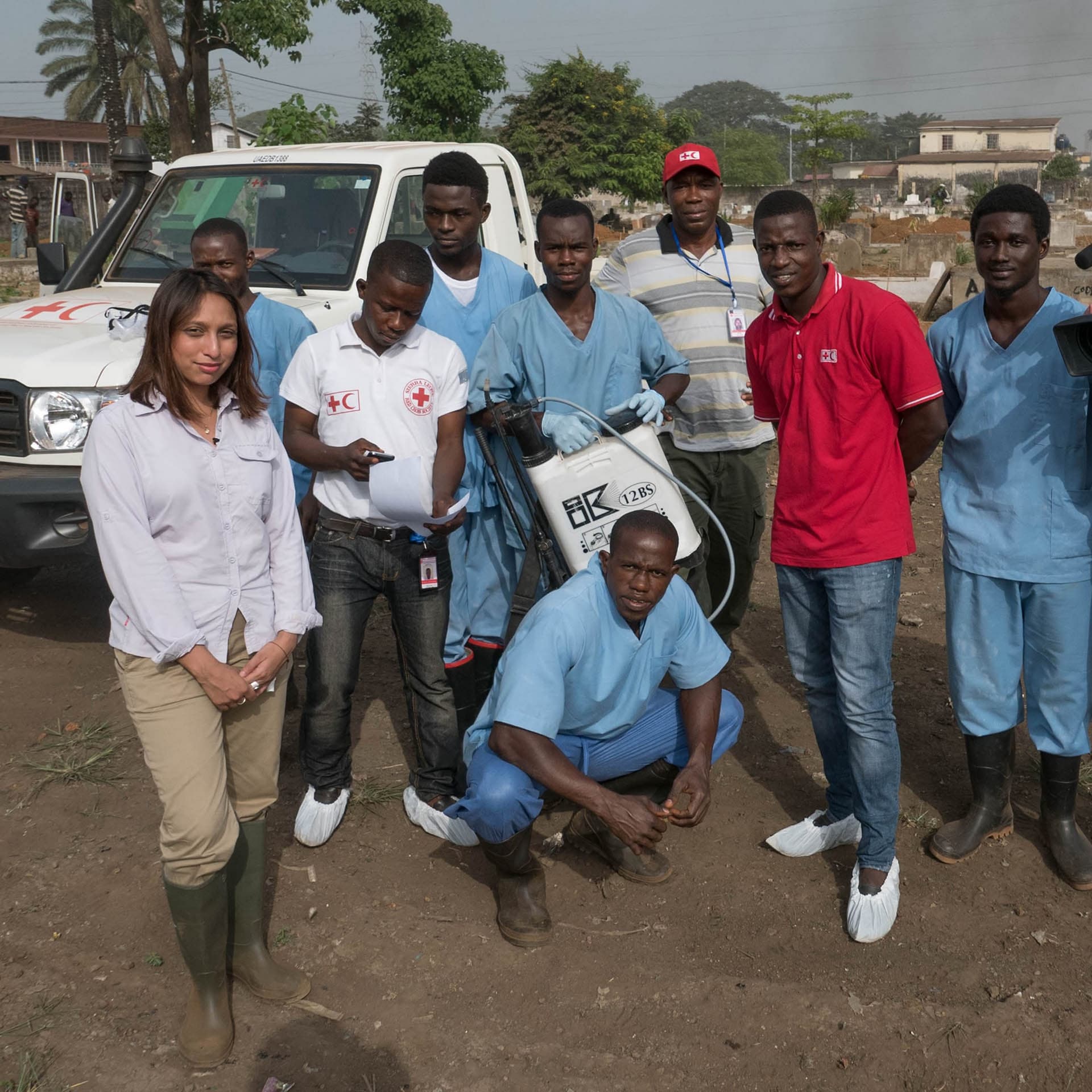
Tanya Datta (BBC World Service host/reporter) follows Stephanie’s search. Anjali Pawai (Adoption Rights Council co-director; social worker and lawyer) discusses adoption rights and reunions. Maithili Pamwani (Maharashtrian native) accompanies Stephanie in Maharashtra.
Key claims
Adoption documents described Stephanie as “abandoned and destitute,” but an orphanage birth file says she was surrendered by an unmarried teenage mother, Suman (name given; surname withheld). Activists argue documents can smooth adoption by erasing identity; reunions require strict privacy protections. Inter-country adoption from developing nations has faced fraud/forgery concerns, leading to restrictions.
Notable examples
Missionaries of Charity homes in Mumbai (Ville Parle) and Amravati; Sister Josiane shares the birth file; Sister Rosine and Dr Hemant Murake (hospital pediatric/OB context) provide limited leads; Stephanie ultimately pauses the search after learning her mother’s first name.
Written by AI. May contain mistakes. Listen to the episode to check what was said.
Chapters
Tap a time to open that second in VOEncountering Stephanie: A Personal Story
2:16 to 3:40
Tanya meets Stephanie, who reconnects with her Indian roots.
“I'm sorry for dragging you out but look, that's the most amazing sunset.”
The Journey of Discovery Begins
3:40 to 6:12
Stephanie shares her background and feelings about her adoption.
“In the 1980s, India sent the second-highest number of children to Western nations for inter-country adoption after South Korea.”
Uncovering Birth Records
6:12 to 7:20
Tanya and Stephanie read through her birth file from the orphanage.
“Those words conjured an image of a baby abandoned on a roadside and apparently the same vision had haunted Stephanie too.”
The Emotional Weight of Adoption Papers
7:20 to 8:10
Stephanie confronts the stark reality of her adoption documents.
“Once she did, I asked her to email the orphanage in Mumbai run by the Missionaries of Charity, the Roman Catholic Order established by Mother Teresa, for more information.”
Visit to the Missionaries of Charity
8:10 to 10:44
Stephanie visits the orphanage where she spent her early years.
“Firstly a child could be surrendered by an unmarried mother a married couple or a widow or widower.”
Challenges in Retrieving Information
10:44 to 12:14
Stephanie discusses the difficulties in obtaining her mother's name.
“Sister Josiane doesn't want me to record.”
Understanding Adoption and Unwed Mothers
15:48 to 16:41
Explore the complexities of adoption in India, especially for unwed mothers.
“They are scared, but you need to give them confidence that their privacy will be maintained.”
The Journey to Amaravati
16:41 to 19:26
Follow Stephanie and Tanya as they travel to Amaravati to uncover Stephanie's past.
“Since then, many European states have halted inter-country adoption altogether or significantly restricted it due to concerns about fraud, forged documents and unethical practices.”
Visiting the Elora Caves
19:26 to 20:59
Discover the cultural significance of the Elora Caves during their journey.
“we were so advanced, India, in terms of our knowledge of yoga, our knowledge of Ayurveda, architecture, astrology.”
Searching for Clues in Amravati
20:59 to 22:42
Stephanie seeks information about her birth and her past in Amravati.
“This city, close to the very centre of India, is a commercial hub and it looks it.”
Show all 13 chapters
Encountering the Doctor - A Potential Connection
22:42 to 25:14
Meeting Dr. Murake, who may have played a role in Stephanie's birth.
“There's no paperwork here in Amravati either.”
Reflections on Identity and Acceptance
25:14 to 28:00
Stephanie reflects on her identity and the impact of her search for her birth mother.
“That will be heavily heartbreaking and heavily emotional.”
Reflections on Identity and Belonging
28:00 to 29:44
Explore the emotional journey of understanding one's identity and roots.
“And it's months later, when we meet in Paris, that I have the chance to ask Stephanie that question again.”
Transcript
Automatic transcript. May contain errors.0:00This BBC podcast is supported by ads outside the UK. This podcast is sponsored by Pocket Hose. I gotta tell you, being a homeowner, there's so many things you have to think about all the time. For example, I have to replace my hoses every single year. Because they're weak, they get tangled, and there's kinks. Then I found the Pocket Hose Ballistic. This is the upgrade I've been looking for for a long time, man. It's reinforced with a liquid crystal polymer used in bulletproof vests. You know what that means? No kinks. It's not going to get tangled. It also comes with this pocket pivot, which gives you total freedom of movement.
0:36And the spigot has like a 360-degree rotation, which is pretty cool. There's also this upgraded UV coating. They add it for free. So your hose basically looks brand new all the time. Right now, when you get the new Pocket Hose Ballistic, you'll get a free 360-degree rotating pocket pivot and a free thumb drive nozzle. Go to pockethose.com slash podcast. That's pockethose.com slash podcast for your two free gifts with purchase. PocketHose.com slash P-O-D-C-A-S-T This message comes from Schwab. At Schwab, how you invest is your choice, not theirs. That's why when it comes to managing your wealth, Schwab gives you more choices.
1:15You can invest and trade on your own. Plus, get advice and more comprehensive wealth solutions to help meet your unique needs. With award-winning service, low costs, and transparent advice, you can manage your wealth your way at Schwab. Visit schwab.com to learn more. Thanks for downloading the documentary from the BBC World Service. I'm Tanya Datta. A sense of identity is something most people take for granted. We know where we're from and we know who we're related to. But for thousands of people, those building blocks are trickier. Since the 1970s, babies from orphanages in developing nations have been removed from their countries of birth and sent abroad to be adopted.
2:03I've tracked the story of one of them, Stephanie from France. Here's assignment, India's shadow children.
2:15Can you believe we're sitting here together, Steph, on a beach in Mumbai? Not really, actually. After my 12-hour flight. but it feels good. I'm sorry for dragging you out but look, that's the most amazing sunset. It's an amazing sunset and a really amazing place. I've been thinking, dreaming about coming back to India for quite some time now so I wanted to have this connection to know a bit more India where I'm from and Mumbai is a special place for me. It is. Can you say why? I spent a year in an orphanage here in Mumbai, and this is where I've been adopted from by my French parents. And now you're back.
3:02And I'm back, and I'm trying to reconnect with my birth story. Stephanie is French. She's 39, and we've known each other for years. We're both of Indian descent. Stephanie was adopted from India and sent to France when just a baby. I'm a second-generation British Indian migrant, born and brought up in the UK. I visited India often. So when I found out that Stephanie knew almost nothing about her Indian roots, I offered to help her search for her birth mother whenever she felt ready. Stephanie's story isn't unique. In the 1980s, India sent the second-highest number of children to Western nations for inter-country adoption after South Korea.
3:52We're talking about thousands of babies sent abroad over the past five decades. And increasingly, they're returning to unearth their stories. They are India's shadow children. You know that I wrote to the orphanage, actually. Yes. I didn't get any reply up until two days ago. And they replied very kindly to my email attaching the birth file. They attached your birth file? Yeah, they did. Have you read it? Not yet. I was waiting to be with you. That's fantastic. That's amazing. That's an amazing feeling. And you weren't Stephanie there, were you? You were baby... Chaya. I was baby Chaya. Chaya means shadows.
4:37Yes, it means shadows. Are you ready to bring your story out of the shadows, Steph? Yes, I am.
4:50Stephanie had a happy childhood with her adoptive French parents, Pierre and Dominique. From the age of 16 months, she was brought up in a small village near the city of Annecy in southeastern France. She felt deeply loved by her family and recalls her parents concealing nothing about her adoption from her, nor her connection to India. Obviously I didn't have the same color as them so you cannot lie about that and you ask questions so in fact they could not have kids on their own so like it was the most amazing experience for them but there were never any lie or hidden things or whatever no I remember them telling me that when I would be 18 something we would go back to India if this is something that we wanted to do And to be honest, I felt that I didn't want her to go back at all to India.
5:46But why wasn't Stephanie interested in her roots? I was abandoned. It was on paper. So you move on somehow. It's not like the story was, oh, she could not keep you. I didn't have that. I just have a line on the paper and saying, you've been abandoned, parents unknown, and that's it. So you have to move on too. You have to grow up with that. abandoned that's what it said in the official adoption documents that stephanie's parents were given and those papers are what she's referring to here when i first saw them i was struck by the absence of information they contained beyond the name of the place where she was born and the name of the orphanage that had looked after her there was virtually nothing but it was the bluntness of the phrase absolutely abandoned and destitute that jumped out.
6:39Those words conjured an image of a baby abandoned on a roadside and apparently the same vision had haunted Stephanie too. So she felt a deep sense of rejection. It was a feeling that only changed when tragedy struck in France. Because unfortunately I've lost both of my adoptive parents. After that I felt the need to be a bit more balanced, to have roots somewhere. So, yeah, that was the trigger. After the deaths of her French mum and dad, almost a decade passed before Stephanie felt ready to take up my offer to visit our motherland together and see what we could uncover about her origins. Once she did, I asked her to email the orphanage in Mumbai run by the Missionaries of Charity, the Roman Catholic Order established by Mother Teresa, for more information.
7:33This is where Stephanie had spent the first year of her life as baby Chaya. Back in her hotel room, I sat beside her as she opened the reply from Sister Josiane, containing her birth file that had never been shared with her French parents.
7:51So, OK, here's the reply. OK. So, my dear Stephanie Chaya, I hope you're well. I was happy to read your email. in regards to your request I look at our admissions register and I'm sharing a few lines about your birth. She explained that so there's two ways in which we receive a child in our home so one is by way of... Firstly a child could be surrendered by an unmarried mother a married couple or a widow or widower. Secondly an abandoned child found in a public place could be brought in. all her life stephanie thought she was abandoned by unknown parents because that's what it said on her original document from the orphanage she reads on so i admission register state that you were born on 10 march 1985 to a single unmarried woman by the name of sue man oh my god that's that's the name of your mom that's the name of my mom that's incredible i mean that's just the first name though her name is of indian origin and it means flower cheerful pleasant and intelligent wow that's an amazing signification she came with you to surrender you to our missionaries of charity home at amravati i can't believe i have a name actually so if you've always had abandoned and destitute on your documents and when you showed them to me all those years ago i felt really sad But you weren't abandoned and destitute.
9:28Not in this way. Not in the sense, yes, that you've always believed. You have a mum and her name is Suman. I think that's a Hindu name as well, you know. I don't know. Oh, you're crying. No.
9:46Stephanie's search has got off to an unexpectedly good start. She's found out she was surrendered to the orphanage by Suman, her unwed teenage mum. and not just left on a roadside. Anti-adoption activists call this, the difference between what's in her adoption documents and what's in the orphanage's private birth file on her, part of the erasure of identity that's necessary to smooth the way for her adoption.
10:16Stephanie's keen to find out more during her visit to the Missionaries of Charity home in Mumbai's bustling neighbourhood of Ville Pal. She's got an appointment with Sister Josiane, the nun who emailed her birth file. With its terracotta-hued stone walls and sky-blue metal gates, the convent seems a refuge of serenity, tucked away in an urban street. And inside, the buildings are simple and modest. And unfortunately, that's as far as I got. Sister Josiane doesn't want me to record. Instead, I wait in the courtyard until Stephanie emerges half an hour later. So I went to the room, the room where I spent the first year of my life, so I'm quite emotional, actually, super emotional.
11:02I can see that. Yeah, yeah, yeah. I was not expecting on crying this day, but, yeah. Did you ask for the surname for your mother? Yes, I did ask. I did ask, of course. But they clearly don't want to give the name. She didn't say it? No, no, no, she didn't say it. Do you think she knew it? Yeah, yeah, she knows it, for sure. But clearly she said, no, it's confidential, and that she could not disclose more information because my mum did not want to. Your mother stated she didn't want her information going out to you? Yes, this is what she said. The missionaries of Charity Orphanage in Mumbai must be well acquainted with adoptees like Stephanie, hoping for more details about their origins.
11:46From 1975 to 2019, the French adoption agency Enfants du Monde France, which arranged Stephanie's adoption, organised nearly 800 inter-country adoptions in France from India. More than 500 were from this particular home. Of course, many would argue that giving a child a home in Europe is better than being destitute in India. As we wait in the street outside for our taxi Stephanie smokes cigarette after cigarette Is your mic on? Yeah So now that we're outside and thinking about it actually I don't know what you thought and how you felt it but really felt like they don't want to give any information and really being like the gatekeeper at the end they just want to push you away.
12:43So you feel now they were really there to block you? Yes, they were really there to block me, that's for sure. Because she said that I need to focus on the future, no need to dig in my past, that will disturb the life of my mother. But I mean, it was 40 years ago, so people can change and change their mind. And your mother might cherish a desire to see you. Yeah, we don't know. and she went further and said, when I asked about Amravati, she said, you won't find any information. I said, but this is my city, this is where I've been born, so I want to see. She could have said so many things, but she said, you won't find any more information over there.
13:21That's the first thing she said. That's triggering. This is the documentary from the BBC World Service.
13:34The sun is out, the birds are chirping, and the open road is calling. Bring on the spring at the Honda Spring Event and take that road trip you've been dreaming of. Now's the time to check out the Honda Civic and HRV from Honda, the 2025 Kelley Blue Book's KBB.com best value brand. For great deals, visit your local Chicagoland and Northwest Indiana Honda dealer today. Based on 2025 Consumer Choice Awards from Kelley Blue Book, visit KBB.com for more information. Today's episode is sponsored by Smart Travel, a podcast from NerdWallet. Do you have a friend who treats airfare like a puzzle and somehow always ends up with a first-class upgrade?
14:14Smart travel is like that friend, minus the group texts. NerdWallet's travel journalists break down the pros and cons of travel decisions, like when lounge access is worth paying for and which hotel loyalty programs actually pay off. Make your travel dollars work harder. Follow Smart Travel on your favourite podcast app. Investing with Schwab is like spending a Saturday at a great farmer's market. You can fill your reusable tote with a bit of everything. Maybe you go for some free-range self-directed investing. Or perhaps you pick up a few farm-fresh trades while you peruse. You can even get help from a dedicated advisor.
14:48That's full-service wealth management. Mix, match, and change your mind whenever you want. Because at Schwab, you can invest your way. No matter your goals or appetite for investing, Schwab has everything you need all in one place. Visit schwab.com to learn more. I'm Tanya Datta with Assignment from India. Stephanie's determined to forge ahead with our plans to travel to the city of her birth. But what if this journey actually leads Stephanie to Suman, her biological mum? What can Stephanie expect? Anjali Pawai is co-director of the Adoption Rights Council, a non-profit helping Indian adoptees reconnect with their roots and heritage.
15:32Her experience has left her critical of inter-country adoption. As a social worker and lawyer, she works undercover, sometimes for years, to facilitate highly sensitive reunions between adoptees and birth mothers. So do these mothers actually want to meet the children they gave up? They are scared, but you need to give them confidence that their privacy will be maintained. and no one will know about their secret, then they want it, definitely. But not where they are staying. They always ask some discreet place. But all mothers, it's their love child. Very rare cases where they were raped. So they wanted to know how that child is doing.
16:14So in your experience, are the majority of children that are given away for adoption, are they mostly from unmarried mothers? Yeah, mostly. Old cases, mostly unmarried, but during the 90s, 2000, there were many scams exposed where children were sourced from poor families, uninformed consent which adoption agencies took from them. In the 1990s and 2000s, the number of children sent from developing nations to be adopted in the West soared to more than 600 ,000 globally. Since then, many European states have halted inter-country adoption altogether or significantly restricted it due to concerns about fraud, forged documents and unethical practices.
17:05Even so, recent figures show India still sends just over 200 babies abroad annually. Anjali says the age-old stigma around unwed mothers continues. news. Whomever I met, not a single mother said that I never wanted my child. They requested adoption agencies that give me a job. I will take care of my child. But I don't want to go back to home because in this situation no one is going to accept me or I have to get married to such a man who might be alcoholic, who might be poor. So I'll do my job, some work and then I'll take care of my child and allow me to stay here. But adoption agencies never gave them any alternative.
17:45And the children who come from all around the world, are they able to form a meaningful relationship with their birth mother? They are having a relationship, but not the way it should be, because language barrier is there. And we are going out and spending nice time dancing, singing, doing a lot of things, a lot of fun, even though they are not knowing language. Stephanie and I don't want language to be an obstacle either, so I've invited Maithili Pamwani, a Maharashtrian native, to accompany us as we continue our quest.
18:28Well, we've left the urban sprawl of Mumbai far behind, and we're now ploughing through a landscape of red earth, mountains and hills. and we're making this journey across the state of Maharashtra to take Stephanie back to the provincial city where she was born. It's called Amaravati. This is pretty much the only thing I know. Maithali, how long a journey is it to Amaravati? It's a 10-hour journey and I thought it would be best to break it and I was thinking how could I show Stephanie a little bit more of India and immerse her more in her roots was Elora Caves. It's actually a UNESCO World Heritage Site, the Elora Caves, and it's one of the largest rock-cut Hindu temple complexes and really just a marvel in rock-cut architecture.
19:25How much part of having this ancient civilization is being Indian? I think so much of it, honestly. we were so advanced, India, in terms of our knowledge of yoga, our knowledge of Ayurveda, architecture, astrology. As an Indian, we all know what our country is all about, and I really wanted Stephanie to see it firsthand. I've been connected with yoga and practicing yoga for the past years, and also very interested in vegetarian food, Ayurvedic treatment. so, yeah, the more I think about it, it's in my brain somehow.
20:11Oh, wow. This one is actually cut out of one single large rock. A single rock, this? I don't even know how that's possible. Stephanie is mesmerised by the Elora Caves. If they were still alive, this is a trip she might have done with her adoptive French parents. I wish they were here, for sure. I miss them every day. When did you lose them? So I lost my man when I was 20 years old and lost my dad at 30, so nine years ago. It took me years to recover. You felt alone, really alone in France? Absolutely. And lack of identity, because now they're not here.
20:58The next day we reach Amravati. This city, close to the very centre of India, is a commercial hub and it looks it. There's not much to see of interest apart from some celebrated temples that we pass in our efforts to locate the Missionaries of Charity home here. At last we find it on a sleepy suburban street. With its portrait of a smiling Mother Teresa, it gives off the same aura of serenity as its sister branch in Mumbai. But there the similarities end, because here we're all welcomed in with tea and biscuits.
21:39We meet Sister Rosine, who seems genuinely sympathetic, and as we sit down with her and a handful of smiling nuns, there's a palpable air of excitement. Could Stephanie finally be on the verge of discovering some real information? I was born in Anwar. 85? Yes. And then I was transferred to Bombay. I don't know when. It's not written. So you are here and you are under my care to us. What was your older name? Chaya. Chaya. C-H-H-A-Y. Any photos? You have a small baby. We're just showing a photo of baby Chaya to Sister Rosine. She's seeing if she remembers her. Do you? I cannot make up the face. Maybe you have come under my care because I was there.
22:30You must be 85 born. You maybe came 87. 87, I was already in France. Stephanie's hopes are dashed. It turns out they didn't overlap. She was never under Sister Rosine's care. There's no paperwork here in Amravati either. Sensing her disappointment, Sister Racine fills in Stephanie as much as possible about those days. There were lots of babies like her. Expectant mothers arrived here all the time, sometimes up to four admissions daily. Because, you know, Amravati is a very poor place. So if it says on Chaya's birth certificate, born Amravati, does it mean she was born here? No, no, not at home.
23:20We have a hospital here, Dr. Kermant Nurke. Kermant Nurke. So all our inmates, all our girls, we take there because he's a doctor or children's doctor. We have a lead, the name of the paediatric doctor who might have looked after Stephanie following her birth. And apparently he's still working. revitalized by the nun's kindness and sympathetic reception we press on to see if we can track down this doctor it looks like it's a shop are you sure it's a hospital yeah there's a cross maithali's right it is a hospital in the waiting room we are told dr hemant murake has already left for the day but we're not giving up yet.
24:10We find a young maternity doctor who tells us that he's actually still in the outpatients department. She takes us to meet him. Stephanie Chaya, she's come from France. I was told that she was potentially born here, then my mother got... Your mother was an unmarried mother. Exactly, an unmarried mother. All the unmarried mothers used to get admitted here. in the last trimester so that the babies are born intact. So it was our responsibility and we derived lot of pleasure out of it because our aim was that this should be kept secret. Once she becomes all right after delivery, we used to send at home so that she is accepted for the marriage.
25:01It's a noble job, though the basis was unfortunate. You know your mother and know where she is? No, I don't. I don't. And you probably will not like to go in that detail? I would love to know more about my story and the story of my family, actually. That will be heavily heartbreaking and heavily emotional. He might be right. Dr Hemant Murake has been working at the hospital since 1983. and his wife, who isn't here during our visit, took care of all the deliveries of babies like Stephanie. My wife is a gynecologist and obstetrician. So it's highly possible your wife delivered Stephanie? 99 % of the deliveries are attended by my wife and then there was a nursery that time.
25:53So you would then go and check on them as a pediatrician? I used to come there twice a week. And is there likely to be any record of Stephanie Chaya's birth? I don't know. Because we don't keep record more than 21 years. And you're 39. I'm excited to see you. Yes, the baby has grown up.
26:19Thank you for taking care of us.
26:25In front of my eyes, a heaviness lifts from Stephanie and she leaves the office of Dr Murake, who almost certainly looked after her as a baby, noticeably lighter and happier.
26:43Back in the car, as we start our long journey back to Europe, we reflect on the warm welcome she received in the city of her birth. And yet, still no new leads. Very warm welcome, a lot of stories behind my adoption and the time I was there, but no information. In your whole search, the one person who has been completely silent in all of this is your birth mother. What I was surprised of is that yesterday, when I arrived in Amarati, I was really looking at women and saying, oh, maybe it's her. So it was all on my mind all day in Amravati. So what were you looking for? The skin, because I'm very dark-skinned, so the skin, the nose, the shape of your eyes.
Read the full transcript
27:32Everything. Every woman in this city could be her.
27:39So, does that mean she plans to continue the search for Suman, her birth mother? I'm not sure. It has been a lot for me these past few days, so I really think I need to digest that before knowing if I want to continue the search. In India, we leave it there. And it's months later, when we meet in Paris, that I have the chance to ask Stephanie that question again. At this point in time, and I took a lot of time to reflect, I'm not going to continue the search. I'm good with that decision. I'm good on not having all the answers. You were so happy to find out the name of your biological mother. Are you still curious about her?
28:27I still have this curiosity, but it's OK to leave it like this. What I realized is that even though I didn't know where I was born, my identity, I mean, the whole part is France. My life, my home is in France. My identity has been shaped by the people that grew up with me, my parents, basically. So I don't feel the need to unbalance my life for this search. unbalanced stephanie's desire to look for her birth mother started with her not feeling balanced now she clearly feels far more grounded after our trip enough for her to put her search on indefinite hold and to live without all the answers it also seems our journey has cemented a profound change in her sense of identity i feel also that i'm belonging to india it's not like a distant country now, I feel much more closer.
29:32Do you describe yourself ever as Indian? I would say French Indian now. Does that feel good? Yeah, it does feel good. In general, I think I want to say thank you, Tanya. Oh, it's my pleasure. Yeah, no, definitely, because it's been the biggest journey, I would say, for me. So it's deeply emotional. Sometimes I don't have all the words to express that, but it's been amazing.
30:27Editor.
30:57your wallet, your career choices, in meetings with your colleagues and at dinner parties. Listen to Big Technology Podcast wherever you get your podcasts.
From the publisher
Stephanie was brought up in France in a French family, but her birth parents are Indian – she’s an intercountry adoptee. In the 1980s and 1990s thousands of babies, like Stephanie, were adopted from India into white, western families. Now, inter-country adoption is more regulated, and there’s a recognition that this is a practice open to abuse – several countries have banned it altogether.
In France, Stephanie grew up very happily with her adoptive mum and dad. But after they both died, she began to think more about her origins. And she experienced a desire to re-connect with her motherland. In this edition of Assignment, Stephanie journeys into rural India in the state of Maharashtra with journalist, Tanya Datta. Together they attempt to find Stephanie’s birth mother. Along the way, Stephanie discovers she isn’t an ‘absolutely abandoned and destitute child’ found on the roadside as she’s been led to believe her whole life, but was born to an unmarried teenager. Nearly 40 years later, will she find that 50-something woman?
This episode of The Documentary comes to you from Assignment, investigations and journeys into the heart of global events.