
In short
This BBC World Service “Focus on Africa” episode links Africa’s rising fuel/energy costs to two alternatives: electric mobility and sustainable fashion. It argues that US-Iran war-related energy disruptions are pushing up fuel prices, raising transport costs and food/commodity prices; in Kenya, matatu fares are projected to rise 25% as operators lose money from higher fuel. Electric vehicles are presented as a way to reduce exposure to imported fuel shocks: Kaara’s owner Geoffrey Mutabazi describes switching motorcycle milk-riders in rural Uganda to electric bicycles charged from Uganda’s hydropower grid. Rome Electric country manager Habib Lukaya says demand is growing in Nairobi due to petrol/diesel costs doubling since 2017, and that financing/payment plans help offset higher upfront prices. It also notes only nine African countries are ready for EVs at scale (e.g., South Africa, Kenya, Rwanda, Morocco). The episode then pivots to fashion waste: in Lagos, designers at a sustainable exhibition and Tutunre founder Temilade Salami (Yoruba) upcycle thrifted denim into bags, using commercial dry-cleaning and deconstruction, and adding “Digital Product Passports” for traceability (water saved, carbon).
Key claims
recycled fashion can be desirable if it looks good, and systemic policy/subsidies are needed for affordability.
Written by AI. May contain mistakes. Listen to the episode to check what was said.
Chapters
Tap a time to open that second in VOExploring Africa's Fuel Crisis
1:26 to 2:52
Discussing the impact of fuel prices and the potential of electric vehicles in Africa.
“You can listen and subscribe to Focus on Africa wherever you get your BBC podcast.”
The Role of Electric Mobility
2:52 to 5:54
Examining how electric mobility can alleviate fuel price pressures in Africa.
“As the full crisis keeps getting worse with uncertain outcomes every week from the U.S.-Israel war with Iran, what other alternatives can the continent rely on?”
Challenges and Opportunities in Electric Vehicles
5:54 to 13:10
Insights from Habib Lukaya about the electric vehicle market in Kenya.
“According to the 2025 Electric Vehicles Readiness Index by the Energy for Growth Hub, only nine African countries are prepared to adopt electric vehicles at scale, among them South Africa, Kenya, Rwanda and Morocco.”
Sustainable Fashion in Africa
15:01 to 17:45
Explore the impact of textile waste and sustainable fashion in Africa.
“while a pair of jeans can require nearly 10 ,000 litres?”
Interview with Temilade Salami
17:45 to 22:36
Insights from Temilade Salami on transforming waste into fashion.
“Now one of the many sustainable fashion designers trying to fill that gap is the creative director and founder of Tutunre Temilade Salami who transforms old and thrifted denim into stylish bags.”
The Future of Sustainable Fashion
22:36 to 25:22
Discussion on the challenges and potential of sustainable fashion in Africa.
“So when you put a human story behind the things that you buy, you have a little bit more empathy, even in how you buy it, how you use it.”
Transcript
Automatic transcript. May contain errors.0:00This BBC podcast is supported by ads outside the UK.
0:30travel dollars work harder. Follow Smart Travel on your favourite podcast app. Decisions made in Washington can affect your portfolio every day. But what policy changes should investors be watching? Washington Wise is an original podcast from Charles Schwab that unpacks the stories making news in Washington right now and how they may affect your finances and portfolio. Listen at schwab.com slash Washington Wise. That's schwab.com slash Washington Wise. Hello and welcome to the documentary from the BBC World Service. I'm Nkechi Obunna and I would like to recommend the podcast I host, Focus on Africa.
1:14Every day we bring you two essential stories from the continent, offering in-depth analysis on the biggest headlines and hearing from the voices at the heart of the stories. You can listen and subscribe to Focus on Africa wherever you get your BBC podcast. In this episode.
1:38The uncertainties around the US-Israel war with Iran continues to cause disruptions in the energy sector as fuel prices continue to rise in Africa. But how sustainable could the alternative of electric-powered vehicles be on the continent? It is sustainable to a certain degree. You mentioned about South Africa and Nigeria. They have a huge power demand. There's a lot of potential in terms of utilising wind power in South Africa for generations. Also, millions of tons of fashion waste end up in Africa yearly. But some designers are turning that waste into opportunity by creating new fashion items.
2:22Would you wear them? If they are very nice to look at and something that you can carry out, definitely I will. I mean, if you're making rebranded products, it shouldn't be obvious that all these things are gotten from waste products, you know, it's looking shabby and all of that. Or if it's looking presentable, yeah, sure.
2:44We recorded this episode on April 16th.
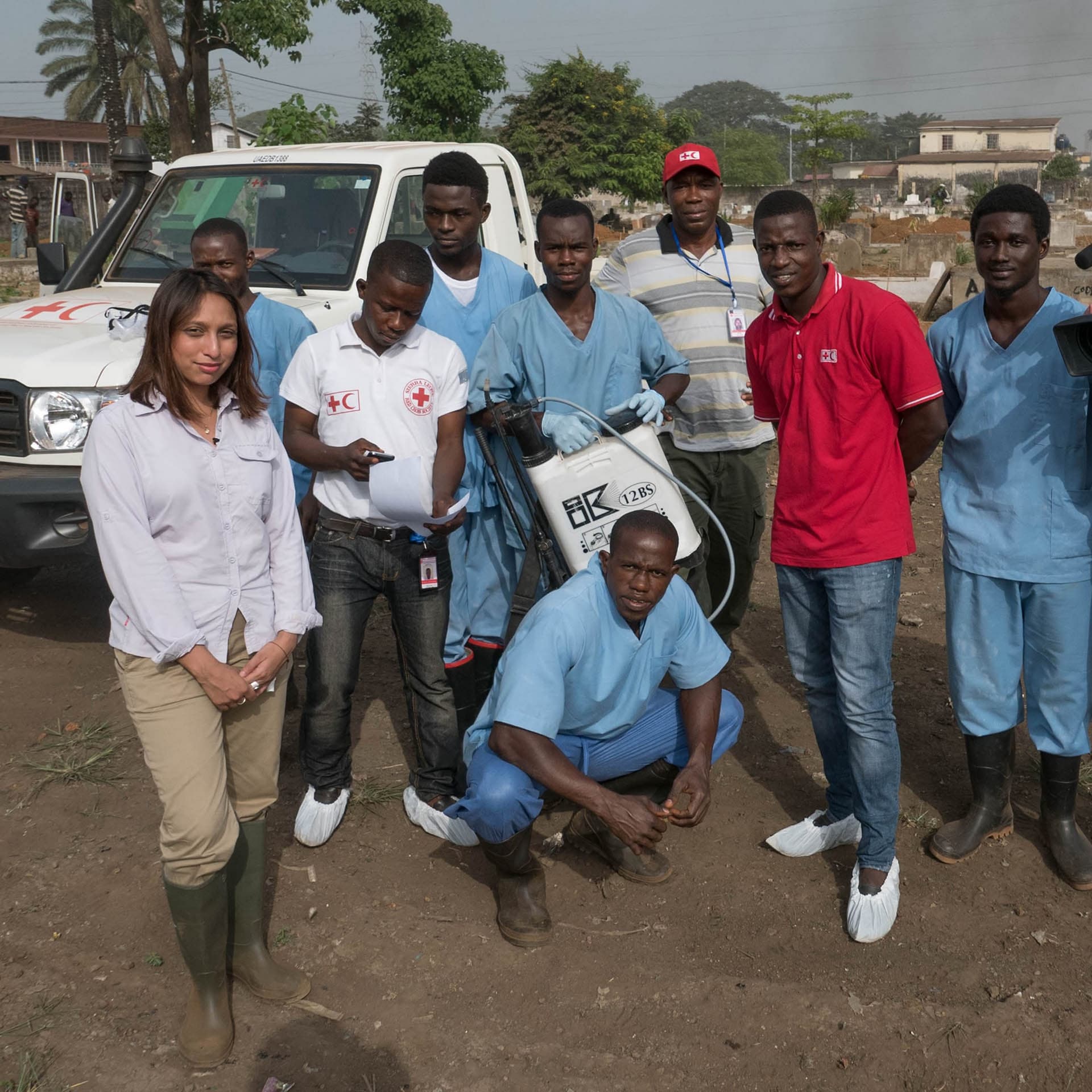
2:52As the full crisis keeps getting worse with uncertain outcomes every week from the U.S.-Israel war with Iran, what other alternatives can the continent rely on? In different cities across Africa, the full crisis is translating into expensive transport costs and price hikes on commodities. In Kenya, for instance, following a significant increase in pump prices, the public transport sector is set to increase fares by 25 % according to the Matatu Owners Association. Matatus, which are minibuses and the major means of transport in Kenya, carrying about 14 to 25 passengers per trip, earn roughly$61 a day.
3:39But the operators say they now stand to lose$18 daily due to rising energy costs. Now the electric vehicles industry, on the other hand, is eager for a rise in demand given the full crisis. We heard from Geoffrey Mutabazi, the owner of Kaara, a company that builds electric bicycles in Uganda.
4:06This fuel crisis actually hits different when you're building the alternative. And what it really looks like on the ground is every morning somewhere in rural Uganda, a rider on a motorcycle will pick up milk from smallholder farmers and rush it to a milk collection center before it spoils. And that rider typically spends about$3 a day on petrol. When those fuel prices go up, that cost doesn't disappear. it gets passed on, the farmer gets paid less for their milk or the price at the shop goes up. And that's usually both. A farmer in Western Uganda will typically see this more than just about anyone down the chain.
4:45And it's not just milk. Across the continent, transport adds 30 to 40 percent to the final price of food and energy actually runs all our economies. When energy prices go up, the cost of everything actually goes up. And goods typically cost more to move, services cost more to deliver, and people who feel it most are the ones who can least afford it. Now, this fuel crisis has been a real-world validation of something we believed from the start, that electric mobility and energy sovereignty actually matter. Not as policy goals, but really as practical tools that can protect businesses and households from shocks they have no control over.
5:25So by replacing these motorcycles with electric bicycles, we are able to ensure that our riders can charge their bikes from Uganda's grid, which is running on hydropower. Fully renewable energy generated right from the continent. No imported fuel means no exposure to global prices and the whole chain from the grid to the battery to the bike and finally to the milk is local.
5:54According to the 2025 Electric Vehicles Readiness Index by the Energy for Growth Hub, only nine African countries are prepared to adopt electric vehicles at scale, among them South Africa, Kenya, Rwanda and Morocco. The index measures stuff like affordability of vehicles, access to finance and the overall reliability of the national grid. To help us understand if and how electric vehicles might solve Africa's fuel crisis, I have been speaking to Habib Lukaya, the country manager at Rome Electric, a company making electric motorcycles and buses in Kenya.
6:38What has been your experience launching and operating an electric mobility entity in Nairobi? It has been exciting. A new industry, a new market that is just booming right now, getting to grow. So it has been adventurous with a few challenges here and there, but nothing out of the usual. What's the cost of building these vehicles and what determines that cost? For an industry like ours where we are building from scratch, where eight years ago there was zero electric mobility in Nairobi to a point where we have thousands driving around and moving around the city. It has been challenging because you are starting at a point where you have zero experience, so there's a lot of learning that goes into it.
7:29You get to burn a lot of cash. You have to invest quite heavily into the development of the product itself before you actually get it to market. Are people buying or using these vehicles? Like what exactly is the market demand for it? It's a good question to ask. I think the answer will have been different eight years ago where we are struggling to create awareness of electric mobility. There's a lot of skepticism and lack of knowledge from the consumer segment. But where we are right now, we are now being driven by the demand. we have a huge demand coming up and this is purely affected by or driven by the need to reduce the operational costs on the business.
8:18As you're aware, there has been a lot of changes in terms of cost of doing business and this purely driven by diesel and petrol, which is a heavy key driver in terms of most of the business operation. In Kenya, to be specific, the costs of these two products has progressively gone up each year. So it has never remained the same. So from 2017 up to now, the cost has gone up more than 100 % for some of those products. And this has now driven the consumer to seek for alternative solutions for their businesses. And secondly, we have so many micro and small entrepreneurs in big cities like Nairobi.
9:06With the lack of formal employment, most graduates have to find ways to make a living. For most of the East African countries, the two-wheeler segment, which normally referred to as Boda Boda, has been the first option to be able to earn a living. So there has been a continuous boom in terms of the demand that is now driving the acquisition of this asset. The stories we hear about how much they're able to save, they end up referring other people to us to be able to transition and also driven by what I said, the cost of fuel right now. Just yesterday, we are now at 200 Kenya shillings per litre of fuel.
9:49So that is just increasing the pressure on the transition. So the pressure goes to us to be able to build more vehicles. Public transport is very fragmented in many countries. Not everyone can afford an electric car because they are basically more expensive. Now, how viable are electric vehicles as a reliable means of transport? When you speak about the cost factor, yes, it's true that the cost of electric vehicles sometimes goes to 2x or to three times more expensive than petrol or diesel vehicle. However, we have tried to be innovative enough to work with financial partners who are able to reduce this barrier by offering the vehicles on a payment plan, giving room for people to be able to transition.
10:39So this makes it more viable for new users to be able to transition to electric mobility. You know, right now the world is experiencing a hike in fuel prices following the crisis in the Middle East. Could they especially help right now, given the current situation in the world? Definitely. The most affected countries like ours in Kenya, where we are not oil producers, any disruption in global oil price or supply affects us directly and affects the end users directly. We feel the impact almost immediately, as I mentioned earlier. So it's no matter of us persuading the consumers if they can switch or transition, but then they're doing the math and figuring out how the cost affects their business.
11:34So for all the viable businesses that are being moved by vehicles or two-wheelers, they end up switching to electric with no question. What about countries with insufficient electricity, countries like Nigeria and South Africa with load shedding? How would they keep up? Is this sustainable? It is sustainable to a certain degree. You mentioned about South Africa and Nigeria. They have a huge power demand. There's a lot of potential in terms of utilizing wind power in South Africa for generation. And this has to be also a public-private partnership to be able to support the transition. So it is not a one answer or one solution fits all.
12:19It's more of a slowly paced transition that has to be supported by policy and also infrastructure that is able to grow up the adoption. But most of the governments and public institutions are playing catch-up in terms of making sure there is favorable policy and infrastructure to support the transition. And this, in return, hurts them. But if you look at the industry as an electric mobility itself, it's a multi-million dollar industry. If it's well structured, it can actually grow the economies of this country.
13:05Many thanks to Habib Lukaya, Country Manager at Rome Electric. This is Focus on Africa from the BBC World Service.
13:17Spring has sprung and big savings are in full bloom at Menards. Visit Menards Garden Centre for everything you need to get your garden growing. Choose from hundreds of beautiful, colourful flowers, lush trees and shrubs, and everything in between. Menards Garden Center is back in bloom. Stop in today to get your garden on. Check out fresh deals happening now at Menards. Save big money at Menards. She was the sister who went unnoticed. A daffodil might look plain next to a lily, but on its own there is much to be admired. Now her greatest chapter is yet to come. The most important thing is to be yourself.
14:02From the world of Jane Austen's Pride and Prejudice comes a new Britbox original drama. Mary, you will flourish. Based on the best-selling novel The Other Bennett Sister, now streaming only on Britbox. Watch for the free trial at Britbox.com. Today's episode is sponsored by NerdWallet's Smart Money Podcast. Ever Google a money question and end up 12 tabs deep with 12 different answers? This podcast is your shortcut back to clarity. NerdWallet's Smart Money podcast breaks down financial decisions with a team of trusted journalists. They explain the why behind decisions like investing, home buying, and choosing credit cards with clear research-backed insights.
14:44No jargon, no misinformation. Make your next financial move with confidence. Follow NerdWallet's Smart Money podcast on your favorite podcast app.
15:00Did you know that a single cotton shirt takes up to 2 ,700 litres of water to produce, while a pair of jeans can require nearly 10 ,000 litres? According to the United Nations, the global fashion industry produces 92 million tonnes of textile waste every year, with much of it ending up in landfills or being burned. Once thrown away, a significant portion of these clothes find their way to countries across Africa, where the infrastructure to manage such waste is often lacking. But a growing number of sustainable designers are working to change that narrative. My colleague, Blessing Adderogma, attended a sustainable fashion exhibition and paints a picture of what it's like.
15:51I'm here at a sustainable fashion exhibition in Lagos, Nigeria. where designers from across Africa are using creativity to tackle one of the fashion industry's biggest problems, waste. Now, standing in a bright hall, mannequins around me are dressed in striking pieces, robes in bold colors, discarded fabrics transformed into art, old clothes and beads carefully woven into new designs. And beyond the display, the space is filled with mostly young female fashion designers and enthusiasts taking photos, exchanging ideas and soaking in the creativity on shore. But beyond the exhibition, one question remains.
16:38Would you be willing to pay for clothing made from recycled materials? If they are very nice to look at and something that you can carry out, definitely I will. I mean, if you're making rebranded products, it shouldn't be obvious that, oh, these things are gotten from waste products. You know, it's looking shabby and all of that. Or if it's looking presentable, yeah, sure, definitely I will. As long as it is fine, I like it. For me, of course, I'm trying to promote sustainable fashion. But one very important question is it has to look good for me to wear. There are some things that I might not be able to afford, but if it's something that I can afford, yes, I'll get it.
17:13at first it sounded bizarre like who wants to wear a reused item or anything like that when you actually come to the understanding of why these things are like this what changes you're making being conscious about your fashion decisions and everything and the larger impact the long-term impacts of it i think it just kind of makes you feel at least for me i feel proud that i am able to pick up upside food item i'm using reusable fashion items many thanks to my colleague Blessing Adoraba in Lagos. Now one of the many sustainable fashion designers trying to fill that gap is the creative director and founder of Tutunre Temilade Salami who transforms old and thrifted denim into stylish bags.
18:00I began by asking her what inspired the brand and what the name Tutunre means. Tutunre means this is new and basically we're making bags accessories from what already exists but in a new way and tutunre is a word in my dialect so that's what tutunre means this is new and what's really inspired me i think a bit of my background in climate action and policy for the past nine years and i just really woke up one day and said i wanted to you know make something out of all of the knowledge and theoretical expertise that i have and that's how tutunre started you said it's a word in your language What language is that?
18:41That's Yoruba. Spoken largely in Nigeria and the New Republic. Can you walk us through your creative process and how do you turn waste materials into finished fashion pieces? So at first, we just get the gin and ensure that we deconstruct them properly, right? And also take what we think is going to be best for what we're trying to build. So we take that, we dry clean it commercially. And once we're done with that, we begin to deconstruct. But more of the creative process is centered around functionality, thinking about what will this be used for, rather than just the beauty and the aesthetics of it, so the functionality.
19:24So our creative process is quite simple and very much more centered on functionality and durability. We're talking about fashion waste, and this is a growing concern globally. Now you're turning waste, jeans, materials into fashion pieces. Why does this issue matter so much? And how big of a problem is fashion waste, especially in African countries? If you talk about waste, the fashion industry is going to be at the top three level. I know not so many people know about it, but that's the reality, right? And I think also the fact that people don't know makes it a problem. because when you're more conscious of a thing, your attitude towards it also changes, right?
20:10So it's a big issue. For example, we already have the issue of waste dumping where waste that are not more useful in other countries in the West are brought down into Nigeria, Ghana. And there's already surplus of these items. So even if they don't bring in anyone again or people don't buy jeans again, there is enough for us to use. And even going out of the context of importation, there's also the context of the local artisans right here in the country also have fashion waste, but there's no infrastructure to recycle some of those things at scale. You've also introduced digital traceability in your work.
20:47First of all, what is that and how does it work? So digital traceability for us is sort of mimicking what is happening globally in the European fashion world. And it's called the DPP. It's called the Digital Product Passport. So the way you have a passport, you present it at immigration and they tell you all the places you've been to without you saying anything. We are very open and clear about where your items are made, the day they were made, how to take care of your items and the person that made them the impact of that product. So basically, when you scan the code that comes with your item, it shows you where that item has been, how it was produced and how many liters of water was saved and carbon emission.
21:30So just see it as an identity of the product, basically. So that's what digital traceability means. And is there something you're trying to solve with this digital traceability? But I'm just trying to understand what's the aim? Why should I know where my jeans came from, for instance? That comes from the basics of ethics, right? Most of the clothes we wear, we never think about who made them. And it's a whole world on its own in sustainable fashion where we're talking about ethical engagement for the garment makers, for the people who are making these things, right? And it's very important to know where your items are coming from because you have a sense of responsibility.
22:07I'm going to give you a very good example. When people buy things that they eat, they really care where that thing is coming from because you obviously want to have something that is good for your system. And yes, there are also clothing items that are not sustainable, that are not good for your health, actually. So just having that information allows you to make informed decision and to just humanize the making of our bags, right? Because sometimes you just say, oh, I bought this, but somebody made it, even though they paired out a machine, it was not a robot. So when you put a human story behind the things that you buy, you have a little bit more empathy, even in how you buy it, how you use it.
22:46Talking about storytelling with fashion, do you think sustainable fashion can realistically tackle the global waste crisis. And another thing is people always say recycled items or green items are always more expensive. So I'm also concerned about the affordability for everyday people. You're very right. And I'm not going to come on here and tell you that it's cheaper. Most resources are finite, either we like it or not. We use it to a point where, you know, the earth begins to demand more. But one of the things I would say is that there are different levels to sustainability so most times people see it as an abstract word and the fact that it is really expensive for example when you have people who recycle maybe garments it takes a lot more process right because you have to do a lot of deconstruction before you put back the item together so to be frank it's going to be a little bit more expensive and going back to the first question of can sustainable fashion help us with the global waste problem yes now sustainable fashion has so many facets and it's not just upcycling it's not just recycling It's also in the textile that is being used, right?
23:53So what kind of material are you using? Now, we have a lot of polyester right now, as opposed to materials that are very ethical and good for the planet. So even starting from the source itself, and like I always say, garment makers, people like Tutunre, we're not the sole solution to sustainable fashion. It's a systemic thing. So when it's tackled on a system level, even down to what kind of materials are used in the nation, the kind of, you know, maybe tax reforms around sustainable items, you know, tax evasion. So it sort of gives a level of subsidy and encourage people to use that over and over again.
24:28Talking about people knowing and the sustainable fashion growing, from your experience, are young designers and consumers alike in Africa interested in sustainability? And do you see it like a game changer, basically, in African fashion? If we have young designers, it's better to focus first on the desire of the people you're trying to serve than impact comes. So what I'm trying to say is the fact that it's sustainable does not mean that it has to be ugly. So that's why many people also don't uptake fashion items. So until I really tell you that this bag in Tutunray comes from a jean that was reused, you wouldn't know.
25:07And that's where we need to get to, where whatever you create is bought based on desire and not just for sustainability. Because frankly, so not everybody will be interested in it. So how do we get people to be interested without pushing it down their throats? Many thanks to Temilade Salami, founder and creative director of Tutunre.
25:30And that's it on Focus on Africa today. If you enjoyed listening to the stories we brought you, we'd love to hear your feedback. Our WhatsApp number is plus 254-745-768-738. You can also send an email to focusonafrica at bbc.co.uk or get in touch via social media at BBC Africa or my handle at IamNkechiNna and that's with double N. This episode was produced by Bella Twine in Nairobi and blessing Agderogba in Lagos. Charles Gitonga was the senior journalist in charge and Davies Mossaro, the technical producer. Our editor is Mariam Abdallah and I am Nkechi Obona. I will speak to you again soon.
Read the full transcript
26:25Focus on Africa won't normally be here in the documentary. So if you'd like to hear more episodes, search Focus on Africa wherever you get your BBC podcasts.
26:59photography and copywriting to shipping and pricing. So you can just sit back, get paid, and make room for things that actually feel like you. And with 10 ,000 plus new arrivals every single day from top designers like Prada, Celine, Louis Vuitton, and Louis Vuitton, all for up to 90 % off retail, you're bound to find something perfectly on brand to fill that extra closet space with. Plus, this May only, you can get an extra$200 to shop when you sell for the first time. Make room for what feels like you. Go to therealreal.com to start selling and get your extra$200 to keep shopping at therealreal.com.
27:33That's therealreal.com. Terms apply.
From the publisher
Kenya is the latest African country to increase fuel prices citing the US-Israel war with Iran. While announcing one of the steepest pump price increments in recent times, the government reduced Value Added Tax (VAT) on fuel products from 16% to 8%, as the country's political opposition threatens street demonstrations if measures to lower prices further are not taken. In this episode, we explore if electric vehicles are a viable transport alternative in African countries.
Also, the global fashion industry produces 92 million tonnes of textile waste every year with much of it ending up in landfills or being burned, according to the United Nations. We hear a Nigerian fashion designer's journey to curb rising fashion waste through upcycling.