In short
Podcast Episode Summary: Kai Höss: My Grandfather, the Commandant of Auschwitz
Podcast Title The Documentary Podcast
Episode Overview This episode features Kai Höss, the grandson of Rudolf Höss, the notorious commandant of Auschwitz. Through interviews and reflections, Kai discusses his family legacy, grappling with the burden of his grandfather's actions during the Holocaust while seeking reconciliation with Jewish communities. The episode is presented by reporter Shiroma Silva as part of the BBC's Heart and Soul series, exploring personal stories of faith and reconciliation.
---
Key Themes and Discussions
Introduction to Kai Höss
- Background: Kai introduces himself as the grandson of Rudolf Höss, responsible for the murder of 1.2 million Jewish individuals at Auschwitz.
- Legacy Burden: He acknowledges the immense burden and responsibility tied to his family history.
Discovery of Grandfather’s Legacy
- Childhood Silence: Discussion of how Kai’s family rarely talked about Rudolf, rooted in shame.
- School Education: A pivotal moment in school where Kai learned about the Holocaust prompted him to inquire about his grandfather.
- Reading the Autobiography: At 16, he discovers Rudolf’s autobiography, which details the atrocities committed, leading to a deep emotional reaction.
Emotional Turmoil and Faith Journey
- Initial Response: Kai felt pity and a desire to apologize to Jewish communities for his grandfather's actions.
- Life Changes: A health scare leads Kai to read the Bible, where he finds personal conviction and a new understanding of his past.
Reconciliation Efforts
- Marking Events: The episode captures Kai participating in events commemorating the liberation of Auschwitz, engaging with Jewish audiences.
- Jewish Community Engagement: Kai speaks with younger Jewish audience members, receiving mixed reactions but generally fostering dialogue.
Interactions with Jewish Individuals
- Dialogue about Guilt: Conversations about whether the guilt of grandfathers should be inherited and the complexity of forgiveness.
- Meeting Holocaust Survivors: Kai’s interactions with survivors, including Yeheikshel Tala, highlight a transformative journey toward mutual understanding.
The Role of Faith
- Christianity’s Influence: Kai discusses the intersection of Christianity and Judaism, emphasizing the need for proper understanding of scripture to combat historical anti-Semitism.
- Cognitive Dissonance: He reflects on how historical figures like Martin Luther misinterpreted the relationship between Christians and Jews.
Current Life and Responsibilities
- Kai as Pastor: Now a pastor, Kai shares his faith journey, emphasizing the importance of understanding and bridging gaps between communities.
- Family Legacy: He openly discusses his family history with his children, aiming for transparency and education.
---
Key Takeaways
- Personal Struggle: Kai’s journey reflects the complexity of dealing with a painful legacy and the steps towards personal and communal reconciliation.
- Importance of Dialogue: Engaging in conversations about history and faith can pave the way for healing and understanding.
- Faith as a Foundation: Kai attributes his transformation and perspective on Jewish communities to his Christian faith, advocating for a deeper comprehension of historical injustices.
---
Conclusion The episode underscores the power of personal narratives in addressing historical atrocities. Kai Höss exemplifies a journey from shame to responsibility, seeking understanding and reconciliation with those affected by his grandfather's actions. The discussion invites listeners to reflect on history, faith, and the potential for healing through dialogue.
Written by AI. May contain mistakes. Listen to the episode to check what was said.
Transcript
Automatic transcript. May contain errors.0:00This BBC podcast is supported by ads outside the UK. America is changing. And so is the world. But what's happening in America isn't just a cause of global upheaval. It's also a symptom of disruption that's happening everywhere. I'm Asma Khalid in Washington, D.C. I'm Tristan Redman in London. And this is The Global Story. Every weekday, we'll bring you a story from this intersection, where the world and America meet. Listen on BBC.com or wherever you get your podcasts. I want to put all the issues on the table that keep me up at night. The interview brings you conversations with the people shaping our world.
0:44From global leaders. I've much more than fulfilled the promises that I've made. To cultural icons. I'm just interested in how it feels to be playing songs that are 50 odd years old. Songs are like children. They're with you forever. The interview from the BBC World Service. Listen now wherever you get your BBC podcasts.
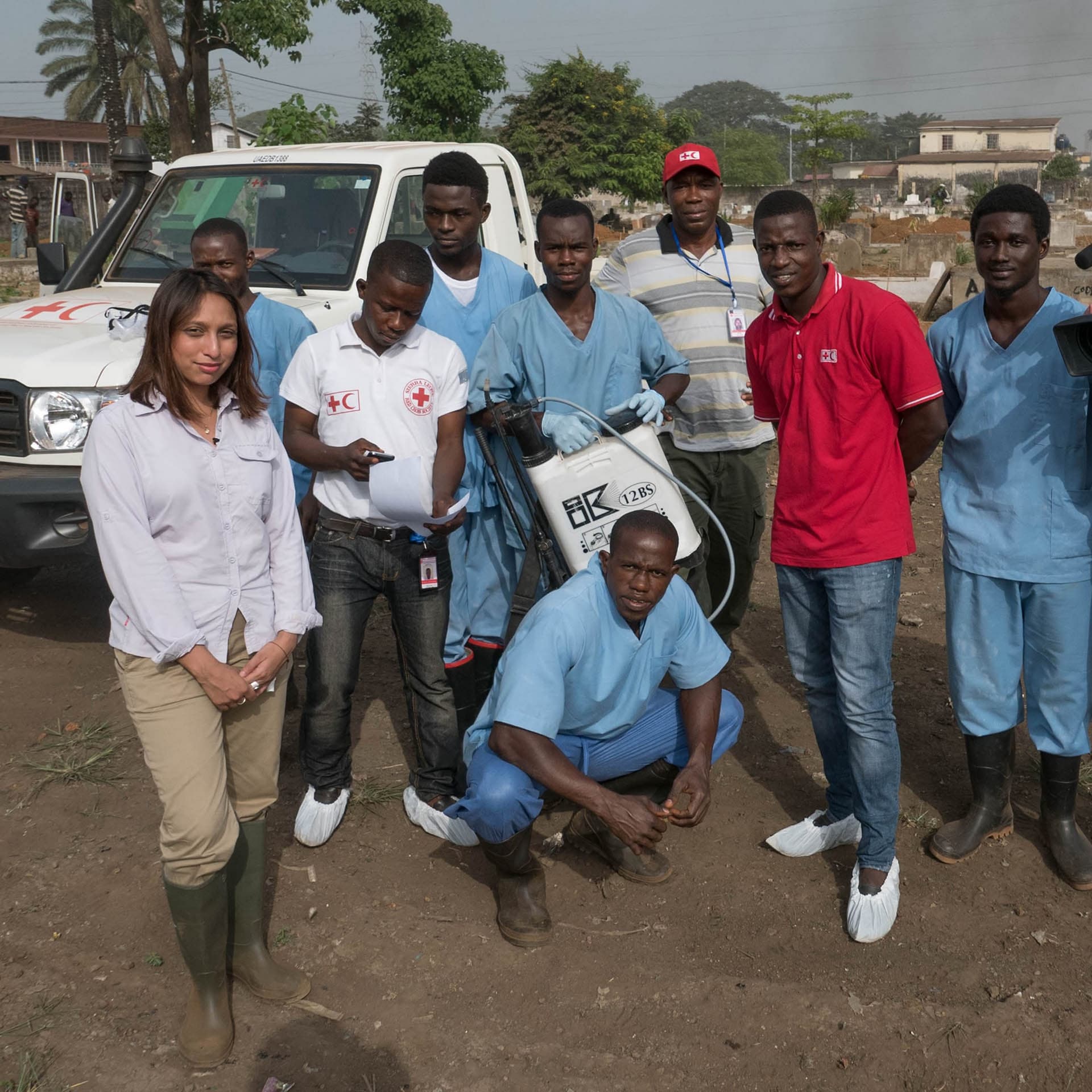
1:07My name is Kai Huss. My name is Kai Huss. I am standing here before you with a family legacy that brings with it an immense burden and responsibility. I am the grandson of Rudolf Hörs, the notorious commandant of Auschwitz, who is responsible for the cold-blooded industrial murder of 1.2 million Jewish people and countless others. I'm Shiroma Silva, and this is a documentary on the BBC World Service. For this episode of Heart and Soul, which looks at personal stories of faith, I'm speaking to Kai Hus to learn how, against the backdrop of his grandfather's crimes, he's seeking reconciliation with Jewish communities throughout the world.
1:58My grandfather was the greatest mass murderer in human history. He was the architect of the Auschwitz concentration camp. He built it from scratch, instructed or ordered by Himmler, obviously by the Fuhrer, to build this super extermination factory where you could murder people at an industrial scale. And he handled all the operational aspects to make this murder machine as effective as possible. I've heard this expression that he was the greatest mass murderer in history. Surely there's Stalin, other people like that. Stalin and Mao, there's a lot of people throughout history. You could call it political ideologies, the way they did things that actually caused the death of people.
2:47I don't think these people sat down and personally planned the extermination of 40 million Chinese people or 20 million Russians. Rudolf, as he actually oversaw it, he was hands-on involved. He was the executioner that was there. As a child at home growing up, what did you learn about him? We never spoke about him when I was a young boy. They were ashamed. And it was in school, I think in sixth grade or seventh grade. I can't really recall exactly. In Germany, it's mandatory in schools. It's part of the curriculum. You have to teach the Holocaust and the Third Reich and the Nazi rule. And that's where I heard about this concentration camp and about this notorious murderer, a brutal first.
3:34And then I went home that day and I asked my mom, just curiosity. I said, you know, same name. He has the same name. Has that got anything to do with us? And she said, yeah, that's your grandfather. Just like that, you know, matter of fact. And it just blew me away. I mean, I felt so ashamed. I felt like I don't want to go back to school because people know who I am. But no one really knew. Even the teachers didn't really realize. Then, several years later, around the age of 16, Kai found an old hardback copy of his grandfather's autobiography, Commandant of Auschwitz, on his mother's bookshelf.
4:08And I discovered that book. I saw that. Wow. So obviously they wanted to know. They read it. My dad didn't. He refused to read it, but my mom read it. And so I read it too, and that really broke my heart. These are his own words where he gives statistics, numbers, facts. He's observing this entire operation that he led. Very matter of fact. Matter of fact. He wrote this while he was waiting for his execution. And is that when you fully took it on board? Because this is a big thing for any child to understand. Well, at that point, when I read the close encounters with people that were about to go into the gas chambers, you get a real picture how children were playing on the ground.
4:47He found this woman and he shot her in the head and threw her into this mass grave. When I read that, in my heart, something happened. And I wasn't a Christian believer or anything, but I felt so pity for those Jewish people and what he did to them that I thought I don't know what I can do can I somehow do something good to them can I put my arms around them can I say sorry to them for what he did and that was a reaction I remember but of course then I was a young man about to do my school exams and then go on and embark on a career you know go to the military and study. So then my focus changed.
5:23I still knew, but my new goals were like making it in the world. Things have come a long way for Kai. I'm with him at one of the events to mark the 80th anniversary of the liberation of Auschwitz, the camp for which his grandfather, Rudolf Huss, was responsible. He's speaking at the screening of an Oscar-winning film, The Zone of Interest, about his grandparents' idyllic family life in their home next to the camp. The red and yellow art house Friedrichbau Kino is jam-packed, but I managed to squeeze into a no-show seat.
6:03The weight of my family history is indescribable. My grandfather was the architect of an industrialized killing machine that aimed to systematically wipe out an entire people. the Jewish people. And his actions are a sobering reminder of what inhumane ideologies, unbridled hatred and blind obedience are capable of. Afterwards, I spoke to some of the younger audience members. What were your reactions to Thay just now? He was an impressive person. The way he's dealing with his history, his past, yeah, just totally blew my mind. He is taking on a great burden and he is also taking on a great responsibility.
6:53As well as to Holocaust survivors and older Jewish people. I feel sorry for you. That's what I feel. My opinion is that the commandant's wife was just like him. She had no empathy. What does it make you feel now being here, right amongst these people, amongst Jewish people? It's a blessing. I mean, it's nice to have the dialogue and speak with people, because it's all part of the process of waking people up. It must be very, very difficult for him to know all that, and very painful for him. I think for him it's surviving, just like we survive. I'm sure that he had nightmares too, and I hope that he can manage in the day to forget that.
7:38So there's no such thing as intergenerational sin? No, I don't believe that. He has to accept what his grandfather did and forgive himself, because he wasn't guilty. Away from the cinema, I accompanied Kai to the nearby synagogue. Freiburg was home to a synagogue in a different location, dating back to 1870. But in the 1938 Kristallnacht, also known as Reichspugrennacht, where Germany's Jewish population faced state-sanctioned terror, the building was burnt to the ground. So we're walking in now to the new synagogue that was built in the 1980s.
8:22It's a good building, isn't it? Yeah, it's nice. If you look here, there are names of people who've perished. All the same families, aren't they? Yeah, yeah. Even very Jewish names. Löwe, Löwe, Ryd, Rosenblum, Rosenstock, Liebmann. Rothschilds, its names. Very sad. Yeah, very sad, but we can change things. We can fight. Okay, first floor. Pretty solid wooden door here, isn't it? It's an oaken door. Yeah, it's a beautiful place of worship. And the different seating arrangements. Star of David is ever-present. Again, the Ten Commandments and so forth. There to greet us is Irina Katz, chairwoman of the Israelite community of Freiburg.
9:12She explained that the door, two tablets on the other side with the Ten Commandments, and the chandelier right above us was all that remained from the fire. The Jewish community of Freiburg had to deal with this rubble and ashes at its own expense. The city of Freiburg removed the remains but issued the bill to the Jewish community. I asked her about her initial thoughts about Kai, given his background.
9:42I really liked what you said yesterday. It actually says in our Bible, in the Old Testament, that the children and grandchildren and great-grandchildren are responsible for what their parents or grandparents have done. That this guilt, as you said, it is passed on to the third or fourth generation. We know that some people have wrongly interpreted it from a Jewish perspective, that this is revenge, but it is not, and you interpreted it wonderfully. She mentioned that this is not like retribution or a blood feud, but it's about how the children deal with the sins of the fathers. Do they justify them, deny them, or continue in that same sin?
10:20Or will they acknowledge that it was wrong? And then when that happens, obviously there is grace and forgiveness. And this is very much the same, because the Old Testament, the Tanakh, is the same. Then we spoke to Holocaust survivor Yehekshel Tala, who, as a child, was hidden for a year and a half in the cellar of a house belonging to a Polish family. He now lives in Israel and met Kai a few days before. Sometimes when people have a background, they have it in their DNA, it's very hard to not initially think, is there some small thing that remains in this person, especially when you yourself have been so affected by the consequences?
11:04Of course, I was very ambivalent, no question about it. But because I saw his effort and his real belief that it was wrong, and he's trying to change it, I decided to talk to him and shake his hand. And I felt that he was pretty embarrassed by meeting me face to face. They didn't know exactly how to react to me. And, you know, we are here now two days and we became close friends. And the handshake is completely different. It was a regular handshake and now it's a very warm handshake, even hugging. I sent the pictures that we took to my family. Some wrote back, it's very nice. Some said, you are crazy?
11:50with his grandson you can shake hands. Traveling back after the events with Kai and his wife Rahma, I wonder how people received him. Most people were, you know, intrigued and always, of course, the same question. How come you did this turnaround? You know, I just want to speak about my life, how it happened, but eliminated the curse in my life. There's only one that can eliminate the curse. And how that curse was eliminated is what I wanted to know next.
12:48and America meet. Listen on BBC.com or wherever you get your podcasts. I want to put all the issues on the table that keep me up at night. The interview brings you conversations with the people shaping our world. From global leaders... I've much more than fulfilled the promises that I've made. ...to cultural icons. I'm just interested in how it feels to be playing songs that are 50-odd years old. Songs are like children. They're with you forever. The interview from the BBC World Service. Listen now wherever you get your BBC podcasts.
13:47about a man who turned pain into purpose. Therapy for me is being in the boxing ring. It's just good for your soul, good for your body. This is season four of Legacy, Defiant. Search Defiant Legacy wherever you get your podcasts.
14:08You're listening to the documentary on the BBC World Service. I'm Sharoma Silva and in this episode of Heart and Soul, I'm in Germany meeting Kai Huss, whose grandfather was the commandant of Auschwitz. I've come to meet Kai at his home in Renningen, a sleepy historic town west of Stuttgart in southwest Germany. Hello. Hello.
14:39You okay? I'm fine. You're going to step soon. Look at this. You've got a mic in your hand. Is that recording? It is, yes. Well, I'll have to be on my best behavior then. Kai and his wife Rakhma showed me around. You have a nice house? It's nice, Kai. Kai's been good to us. He blessed us with this huge area where we can meet and we can have people over for fellowship at the church or even Bible study. I wanted to dig into Kai's early life, learning that he'd studied hotel tourism and worked at some of the top establishments in London followed by Hong Kong and then Singapore where he rose up the ranks.
15:20Certainly you're earning good money right and so here comes that whole lifestyle issue you know Rolex, Golden Amex, going out in the clubs, partying at a nice condo just 100 yards from the beach. Were you a bit of a playboy? Of course you know 26 going around you know why you go out do you want to meet nice girls and hanging out with other expats and managers that were there for different corporations whether that was banking or something so you're in that echelon you know we won several tourism awards i worked very hard to do a good job to police management to increase profits and to of course increase our standing within the five-star hotel that mattered a lot that mattered a lot so i was a tough manager i was tough i was hard i was there i was omnipresent i used to like machiavelli's idea of the cost justifies the means no matter what that means but you got to get it done that's why you're the manager that's what himler said to my grandfather when he said sorry i don't have the means to build this camp i don't have the people i don't have the materials and he says you are an ss officer and ss officers get the job done they don't complain about problems.
16:31And I had the same kind of rudimentary attitude to get things done. Then a life-changing event occurred when Kai suffered internal bleeding after an operation to remove his tonsils. I kept swallowing because it runs down the back of your throat. You don't realize that you're swallowing your own blood. And so blood transfusions. And in those days, really scary because AIDS was there. They understood AIDS, but there was no real cure. There was no hope. You had AIDS, you died, right? And I had to sign a paper in that hospital in Singapore that if I got AIDS because of it, there's no way I could actually sue them.
17:01So that must have been scary. It was very scary. And they had to cauterize the wounds to close that somehow, stop it from bleeding. And the pain was excruciating. It was an emergency and it was really bad. I could see my life, the futility of my attitudes, my managing, the way I looked at the world, all my hobbies and the fun stuff. It meant nothing at that very moment. You were scared of dying. And so I was looking around this hospital room, and I found the Gideon Bible in the drawer. And I remember telling myself, you're not going to read that garbage. And then somehow, the realization kicked in.
17:37I said, you know what? You read it, and at least you can see it, right? And so I started reading that book, and I was just convicted. What really touched my heart was Psalm 51. King David, the most famous king of Israel, God calls him a man after his own heart. But King David struggled with his sinful nature. I realized that, hey, whoa, look at me. Look at the way I live. Parties, girls, showing off. It's all about me, pride. My ego was like incredible. And it just really touched me how this king was humbled before God. And as I read on, I said that Jesus came for sinners. And I knew I was a sinner.
18:18And probably quite bad on the scale because my pride. And I think pride is sort of one of the biggest issues that God hates. It's a prideful heart. And I was very prideful. And when I see my grandfather's picture, some of the photos, when he stands there with all his team behind him there and leaning back, and you can see his swagger and the facial expression, pride. While they were murdering millions of people, they weren't even touched. And that is what changed in my heart when I read the Bible, when I saw it and I really believed in Jesus Christ. I was right there. I knew it was true. The change for Kai began to kick in.
18:56I hated my old nature. I hated the way I used to be, the way I looked at women, the way I'd drunk, the way I managed, the way I'd treated people. I knew it was wrong. I remember I got saved, and maybe two weeks later, I walked down Orchard Road in Singapore. And I used to be scanning for girls all the time. Oh, you know, all guys are right that age. And I remember going down Orchard Road, walking there in a shopping area. I forced myself to keep my eyes on the ground so I wouldn't be sidetracked by looking lustfully. And I was so convicted all the time about my own character traits, and I wanted to get away from that.
19:29And it was a struggle, you know. It was a real struggle. Kai's work took him to Bangkok and then Bali, where he met Rahma, who comes from a Hindu family based there. We were dating, and one day he invited me to come with him to church. and my first impression was like, what? No, I've never been to a church before. And I thought about it and I like Kai. And I said, OK, I come along and see what it's all about. And through the wife of a mutual friend, Rachma also experienced the Christian faith. When she shared about the Word of God in the Bible, about if you have the Son, which is Jesus Christ, in your life you have life eternity.
20:18So I said, I want to have this. So she prayed with me. And then when I left, I felt peace in my heart. I didn't know what it was, but I felt like God got something. It was so overwhelming, but I didn't know how to share. I wanted to share it to everybody, but I didn't know how to do it. Kai and I, God brought us together. How did you go to school today? Yes. Because mine, it didn't work. Today, life is busy for Kai. He juggles being a dedicated pastor with being a father to four. What do you tell your children about your family's past? Sammy, when he turned 11, and they started Holocaust education in school, and we sat down and said, is this your great-grandfather?
20:58And he asked questions. I think Shiloh also, she heard so much about it now with everything. And of course, Rachma, I never kept that quiet from her. And what's been their reaction, your kids? Wow yes really is it yeah Sammy he was very sad how anyone can do such a thing You okay Sammy? How was today? You're in this lovely house now I haven't seen any memorabilia marking any family history We don't have my mom she had a shoe carton full of photos 50s 60s black and white photos one or two one of my grandfather. That's all. But for what? I mean, why would we display that? I wondered, though, about his parents' silence.
21:50They were ashamed. They were covering it. They were basically keeping quiet. I think in their heart, they were also heartbroken about it. My mom was, I mean, she was tough. She was a materialist. You know, she came out of a local Swabian farmer family. Farmers are hard people. They've got to get the job done. So not much, you know, don't worry about pain, you know, what's your problem? Like, you know, but they were heartbroken about it. Okay, okay, here we are. On his laptop, Kai shared the scan of one of the only pictures he has of his grandfather, Rudolph, with his wife and their young family.
22:29So who's that there in that picture? That's Rudolf Hirst, that's Klaus, that's Hedwig. Hedwig is the wife. This is Annegret. She's probably 9 or 80s. This is Bridget. They look like a happy family, actually. Yeah, I guess. He's got a strange haircut. Who? Your grandfather. Shaved on the sides, almost slightly Mohican style. That's what they do in those days. I think it was quite common. Is the boy in uniform as well? Yeah, this Klaus. He was that age. He was probably really looking up to his dad. Hitler Youth emblem. What is it? Belt. And your dad? He's just in short trousers, isn't he? Yeah, he's just a kid.
23:08I probably don't know how old he is, maybe eight. Are you in touch with any of these people? No. You know, I was abroad all those years. I wasn't here. I spent 20-plus years living, working abroad. Many Nazis, of course, were raised in the Christian religion, so I'm keen to know about his grandfather's background. I know his parents were a staunch Roman Catholic. Where they lived, they had missionaries staying with them, so they were really plugged in. But what about when you were growing up yourself? Church for us was religious tradition. How did that impact on your view of religion at that time?
23:42What I had was my dad's statements that church is all fake. And look what they've done over the years. They fought wars. To him, they were just a bunch of hypocrites. It was after turning to faith that Kai's perspective on the people his grandfather had tried to exterminate also began to be viewed through a different lens. Then I started reading the Bible, understood Israel, their existence, because they're God's people. He chose them in Abraham. The whole thing started making sense. And then I realized, wow. And that's when I remembered my initial emotional response when I read the book. When I was 16, 17, what can I do?
24:22How can I embrace those people? How can I do good to them? And that really came back in a more powerful way. And I was actually looking for Jewish people. When I found out someone is Jewish, I would actually really try to get close. So that change did come about after you? Absolutely, yeah. You will read about his people, Israel, and what they mean to us, and that they're a blessing to all the nations of the earth. But it takes that understanding. That's why you need the Word of God. Once that happens, you can't but have a completely changed attitude. Now, does that mean I agree with everything that happens politically in Israel?
24:57No. Actually, some of these things I feel they're absolutely wrong. When you speak about Israel, you're speaking from the biblical perspective. That's where I'm coming from. I don't come from politics. That really means nothing to me. That's man-made. The place of Jewish people in the Bible, this has been historically difficult with lots of Christian communities. Martin Luther, big anti-Semite, and many others. Because they did not understand scripture. They don't read a whole book in context. And Martin Luther did not understand Romans 11. That's why Romans is such an important book in the New Testament, to clarify how we should see Israel, and that we're actually grafted into the olive tree as Christians.
25:40We are in them, right? And yet they have nailed Messiah to the cross, but God has a plan for that. Look how many people have been saved. It's not rocket science to see that from Scripture, that he loves his people very, very much. I mean, if you just read that Jews killed Jesus, right? They had him nailed to the cross. And you say, I'm a Christian. I mean, you hate them, right? Look what they did, those high priests, even though they didn't do anything wrong. They'll make you think and feel in a way that will justify to do just that, to go after them, yeah. The Jesus killers, right? That's what they call them, right?
26:13But Christians who hate Jews, it's because they're not informed. Today, Kai's sermons are delivered with that same spirit. He's a pastor at the Bible Church of Stuttgart, a non-denominational church situated in a hilly residential area that's also home to a production plant of Mercedes-Benz. So it's up here. Is this your church? It's a lovely wooded area, isn't it? Yeah, I told you it's nice.
26:45This is our fellowship hall. I mean, that's where we have the worship service. That's the pulpit over there. So this is in 10 minutes we set it up. It's not like in conventional churches where the pulpit is on high. I'm not some, you know, holy guy talking down to the people. I'm just like everyone else. It's a big hole we get, like, seat 140, 150 in here. And now Kai gets speaking invitations from around the globe. It's just a precious gift to have this platform to speak about my faith. And does that affect the perceptions that people have about Jewish people? I have heard, yeah. I have people say, thank you so much, spot on.
Read the full transcript
27:22Jewish people too. I didn't know that. I said, well, yeah, because you don't read your book. You don't read your side of the book, the Tanakh. I mean, it's difficult to, obviously, for Jewish people. Many of them see Christianity as their enemies because they've been treated so badly, which has to do with misconstruing the text. We're on the same base, really. After he was sentenced to death, Rudolf Huss is said to have reverted to Catholicism. He wrote about the shame he felt resulting from the humane treatment he'd received while in jail and his regret in following an ideology so blindly. but there was no specific remorse for the Jewish people he'd murdered.
27:59He did not fully understand the gospel. He did not fully understand Israel. He probably didn't have remorse for them. Again, I can't say this with absolute surety because I don't know. But not mentioning, not really breaking down in tears and pleading and confessing his crimes and saying sorry to the Jewish people for what he's done, that is a sign that somehow there was no repentance. And as for Kai, how would he have approached his family's history before he found faith? I wouldn't have had the right attitude, understanding the love. I couldn't have had that. My approach, my outlook, the way I see God's people, the way I see my own family history would have been completely different.
28:43And here's Yeheikshel Tala, who we met at the synagogue. I didn't know that his wife is from Bali, but I saw him's son and I thought, wow. His grandfather would kill this boy because he's not a pure race. What would he think of you today? Rudolf Hess? He probably couldn't relate to me in any way. But coming from a religious background, I think he probably thought I was completely off the rocker. Probably think I'm a freak. Something wrong with me. This edition of Heart and Soul was presented and produced by me, Sharoma Silva. The executive producer was Rajiv Gupta. America is changing. And so is the world.
29:28But what's happening in America isn't just a cause of global upheaval. It's also a symptom of disruption that's happening everywhere. I'm Asma Khalid in Washington, D.C. I'm Tristan Redman in London. And this is The Global Story. Every weekday, we'll bring you a story from this intersection, where the world and America meet. Listen on BBC.com or wherever you get your podcasts. Thank you.
From the publisher
In a cinema in south-west Germany an audience is gathered to watch an Oscar winning film, Zone of Interest, about the life of Rudolf Höss, Commandant of Auschwitz. Those present comprise Jewish people from around the world, and the special guest is Rudolf’s grandson. The topic was rarely visited during Kai's childhood. It was only after a school history lesson that Kai began to comprehend Rudolf’s role as head of the largest mass murder site in history. Reporter Shiroma Silva travels to his home in Germany to question Kai on his personal struggle. She tracks Kai’s outlook today through Christianity, in which he uses his past to look forward and understand the particular place of Jewish people in the Bible. He questions how antisemitism thrived in Christian societies and his grandfather’s early life in a devout Catholic family. This episode of The Documentary, comes to you from Heart and Soul, exploring personal approaches to spirituality from around the world