In short
Kenya’s Gen Z-led protests against a 2024 finance bill and the government’s crackdown that escalated into abductions, beatings, and killings; the episode follows how repression reshaped protest tactics ahead of the 2027 election.
Guest backgrounds
Beli “Billy” Mwangi, 25, former accountancy student and X/Twitter activist with ~80,000 followers; Wanjira Wanjiru, Nairobi social-justice activist from the Madhari Social Justice Centre; Mwende Kingori, student and rising TV actress; Dr. Darlene Ikerima, humanitarian health worker who volunteered at protest first-aid stations; Monica, sister of abducted Kalani from Mlolongo/Kibera; Davis Malombe, head of the Kenya Human Rights Commission.
Key claims
security-linked actors abduct and torture activists; authorities deny involvement; protests became about governance and sovereignty, not only the bill; repression likely deepens before 2027.
Notable examples
Billy’s blindfolded detention, beatings, forced social-media password handover, and release after ~2 weeks; Monica’s court case leading to bodies of friends Martin Mwau and Justice Musimi at the mortuary; reports of gunshot wounds and ~400 treated victims at aid stations.
Written by AI. May contain mistakes. Listen to the episode to check what was said.
Chapters
Tap a time to open that second in VOBilly's Abduction Story
1:01 to 3:23
Billy Mwangi recounts his abduction and the fear he faced.
“Personally, I didn't feel like I was at risk.”
Context of Protests in Kenya
3:23 to 6:05
Exploring the protests by Kenyan youth against government policies.
“I'm Michael Kaloki, and this is the story of young Kenyans who find themselves caught in a struggle over the future of Kenya.”
Activism and Social Justice
6:05 to 9:07
Wanjira Wanjiru discusses the importance of protests and activism.
“we have to look at the protests which have gripped Kenya over the past year as a new generation of Kenyan youth really started flexing its political muscle.”
Violence During the Protests
9:07 to 13:09
Details of violence and casualties during the protests against the finance bill.
“Mwende is a student and an actress, a rising star on TV.”
Government Response to Protests
13:09 to 14:00
The government's reaction to the protests and subsequent changes.
“I remember my dad was very scared for me.”
Protests Lead to Government Changes
14:00 to 14:14
Learn how protests in Kenya forced governmental changes.
“bill and then fired much of his cabinet, a victory of sorts for the protesters.”
Exploring Other BBC Programs
15:02 to 15:42
Overview of various other BBC podcasts and their themes.
“And on Good Bad Billionaire, we're exploring the life and fortune of music megastar Sir Paul McCartney.”
The Story of Billy Mwangi's Abduction
15:42 to 19:55
Listen to the harrowing experience of Billy Mwangi post-abduction.
“When you first heard of the abductions, were you worried, Wanjira?”
Monica's Search for Her Missing Brother
19:55 to 24:46
Monica recounts the abduction of her brother and the aftermath.
“asked me if I'm okay, came outside the gate, told people to come here, Billy's back.”
The Climate of Fear and Resistance
24:46 to 28:00
Discussion on the atmosphere of fear and the ongoing protests in Kenya.
“Monica refuses to believe that her brother shared their fate.”
Show all 15 chapters
Youth Protest in Kenya: Fear and Determination
28:00 to 28:32
Explore the fears and resolve of young Kenyan protesters amidst violence.
“And, you know, we are one of the best countries in the world, extremely progressive and transformative.”
Changing Tactics: Organizing for Elections
28:32 to 29:49
Discover how Kenyan youth are strategizing for political change ahead of the 2027 elections.
“But I don't think there's any point that we would change our mind and say we are OK.”
The Struggle for Democracy in Kenya
29:49 to 30:16
Learn about the ongoing battle for democracy and freedom in Kenya amidst rising autocracy.
“In Kenya, like much of Africa, the youth certainly have the numbers.”
Personal Stories: Trauma and Resilience
30:16 to 31:13
Hear firsthand accounts of trauma and the quest for change from young activists.
“the middle are paying a high price Billy so how are you now I've been healing but I was traumatized definitely.”
A Mother's Plea: Searching for Kalani
31:13 to 32:28
Follow Monica's emotional journey in search of her brother amidst political turmoil.
“In Nairobi, Monica is still searching for her brother, Kalani.”
Transcript
Automatic transcript. May contain errors.0:00This BBC podcast is supported by ads outside the UK.
0:30and up to 60 % off outdoor and bedroom furniture. Shop Wayfair's huge selection of styles and find the piece to fit your style, budget, and space. Plus, free shipping. Black Friday in July ends July 27th. Shop today at Wayfair.com.
0:53Welcome to the documentary podcast from the BBC World Service.
1:01Personally, I didn't feel like I was at risk. I was just feeling like I'm doing the right thing, fighting for every Kenyan. Beli Mwangi is a slim, young-looking, 25-year-old former accountancy student. On Sunday, 21st December 2024, he was sitting on a bench outside a barber shop on a busy street in the heart of the town of Embu, a few hours north of Kenya's capital, Nairobi. That's when they took him. I saw a pickup white in color with very big wheels. It came straight to where I was and three men alighted from it. So those three men were armed and muscular and they came for me, all of them. So they lifted me up and bundled me in the back of the car where I was sandwiched between two heavy body-builded men.
1:57So from there I was immediately handcuffed and they torn my t-shirt, blindfolded me and commanded me to bend so that I cannot be able to track which way we are actually going or heading to. But this was no arrest. It was something different. I remember asking them, why am I being taken? Who are you guys? But they just told me to shut up and cooperate with whatever they say. no one identified himself. They drove for hours. Billy, blindfolded in the back, didn't know where. It was getting dark because I could hear crickets. We moved off from Tamak Road. I was worried that maybe they were going to kill me.
2:47Over the past year, at least 80 Kenyans, many of them young, have been abducted. Some have been freed, but few will talk publicly about what happened. The abduction started in the aftermath of massive youth-led protests which challenged the government. No one has admitted responsibility for the disappearances. Human rights groups believe elements of Kenya's security services are responsible, but the authorities deny any involvement. For the past two decades, in East Africa, Kenya has been seen as a beacon of hope, of freedom in a region of repression. So what's going on? I'm Michael Kaloki, and this is the story of young Kenyans who find themselves caught in a struggle over the future of Kenya.
3:35At night, hours after Billy was taken, his abductors pulled up to a gated compound and then led him into a building. Looking down through a small gap in his blindfold, Billy could see a little of his surroundings. It looks like somebody's house. because I could see tiles, I could see sofa sets, I could see a TV which was actually switched on on Citizen TV. So I thought I was in a good place then being seated and being asked questions, but that was not the case. They took me inside a dark room with the torches. They removed my blindfold. All of them were all masked. They removed one handcuff on my right side so that I can be able to strip everything naked and they took all my clothes and they told me to sit down and they had to handcuff my right hand to another metal hinge on the wall.
4:36The metal door closed. Billy was left naked on the floor, chained to the wall, in a room without lights, without windows. He didn't know who had taken him nor why. But then his interrogation began. One came, he was masked. He was beating me recklessly on my back, whipping me, asking me, why am I criticizing the government, doing the activism on Twitter because they had known that I was on X. Why are you doing this? You should respect the president. Now it became clear. Billy had 80 ,000 followers on X and amid the protests a few months earlier, like many young Kenyans of Gen Z, he too had called for change.
5:24I was being told, who are you? Why are you correcting the government? Why are you posting these things? Why are you disrespecting this regime? I was receiving beatings every day. I was just saying, I'm sorry then. We have the freedom of speech. We are tired of what's actually happening in this country. We need a new change. and I was left in the dark, in a dark room, waiting for the next action and fearing for my life because every time I could think that these are the last moments of me being in this earth.
6:03To understand what's been happening, we have to look at the protests which have gripped Kenya over the past year as a new generation of Kenyan youth really started flexing its political muscle. I'm here at the Madhari Social Justice Centre, located on the edge of Madhari Slum, here in the city of Nairobi. And I'm hoping to meet one of the prominent activists who've been taking part in the protests. And as I look around me here, I see a number of children outside here playing what looks like dodgeball, with an improvised ball made out of a carrier bag stuffed with clothing. And there are murals of prominent African activists painted on the walls, as well as inscriptions here on the door.
6:46We don't fight for ideas in our heads. We fight to attain social justice. My name is Wanjira Wanjiru. I am a social justice activist from the social justice movement in Kenna. Also a very vibrant and active Genze who was participating in the protests. Wanjira is petite with braided hair. She's wearing a pink outfit and very practical boots. She's a veteran protester, but she says what started last year was different. I felt like we birthed a new country when the protests began, and I strongly believe that Kenya will never be the same again. The trigger was a new finance bill which proposed big tax increases across the board, including on many everyday items, all while millions of Kenyans were already struggling.
7:33I was part of the committee that was organizing the protests to reject the finance bill because it was going to make our lives even more difficult. On top of this, the cost of living is very high and we were already having a high-taxation kind of situation with no services because corruption is part of the system. So young people are coming to say, no, no, no. In many ways, people were primed to protest. Popular anger over poverty, youth unemployment and corruption had been simmering for a long time. And crucially, the vast majority of Kenyans are young. They've grown up in a Kenya which has a progressive constitution, freedom of expression, and the internet.
8:13Young Kenyans took to social media to denounce the bill, spread the word, and mobilize across the country. That was new. It almost became like you are a sellout of the people if you do not reject finance bills. So also celebrities were, hey, I'm one of the people who's rallying my followers to come and reject the bill. So it became a very community-oriented, patriotic-centered activity of rejecting the finance bill. And because we know what they do to protest leaders, they are often compromised or eliminated. So we said we are not going to have a figurehead. Many responded to the call on social media.
8:52Mwende Kingori was one. I knew that if a drastic positive change would happen even in the next five years, even in the next election, I would probably say I took part in those protests that made this change. Mwende is a student and an actress, a rising star on TV. I meet her for coffee in a leafy restaurant in an upmarket neighbourhood of Nairobi. One of the big things about these protests is that they drew in a cross-section of young people, cutting across class and ethnicity. I'm a Gen Z. We are the future. so we want a new set of leaders that are ready to listen and are ready to change how things are being run in this country.
9:35Two, we want to fight corruption. We want a balanced country where all of us get to live life equally. We want jobs. We don't want to live in a country where people are just really struggling to make it in life.
9:54in june 2024 as mps were set to pass the bill a peaceful protest started downtown near parliament over the days the numbers of protesters swelled tens of thousands took to the streets in towns and cities across the country mwende went to the protests in nairobi with her sister we all left the house knowing we are going to a peaceful protest and it was really encouraging seeing that we were a lot in the streets. And we were not just a lot. We were a lot and we were young. It was so encouraging that young people have actually woken up and they have taken up charge and they've decided we are the future.
10:30We need to fight for our future. But as the numbers on the streets grew, there were clashes as police started to push back using whips, baton charges, tear gas, water cannon and rubber bullets. There were casualties, even fatalities. Sometimes you'd find someone would fall and just run because we're running and we don't want to get hurt. We don't want the canisters to bust maybe near us. It was traumatic. But still, Parliament voted the legislation through and that's when things really kicked off. Huge demonstrations took place across the country. In Nairobi, protesters even managed to briefly storm the Parliament complex and politicians fled.
11:11Kenyans were reminding politicians you are elected to be our representatives and not lord over us in asserting that all sovereign power belongs to the people of Kenyans as stated in Article 1 of the Kenyan constitution. So it became a fight for the sovereignty of Kenyans. Who owns Kenyans?
11:33Now the stakes for both sides escalated. At Parliament, security forces opened fire. Several protesters were killed. Especially when they started shooting at us. We lie down as bullets fly over our heads. When they stop, we stand up and run. When they shoot again, we lie down. I felt like I was in a movie. And I felt like I was trying to get out of the danger zone and I did not stop running even after I was out of the bullets. I just kept running and running and running. There was a message that went out on social media that said, if you're in town, you need to leave. There have been orders to shoot to kill.
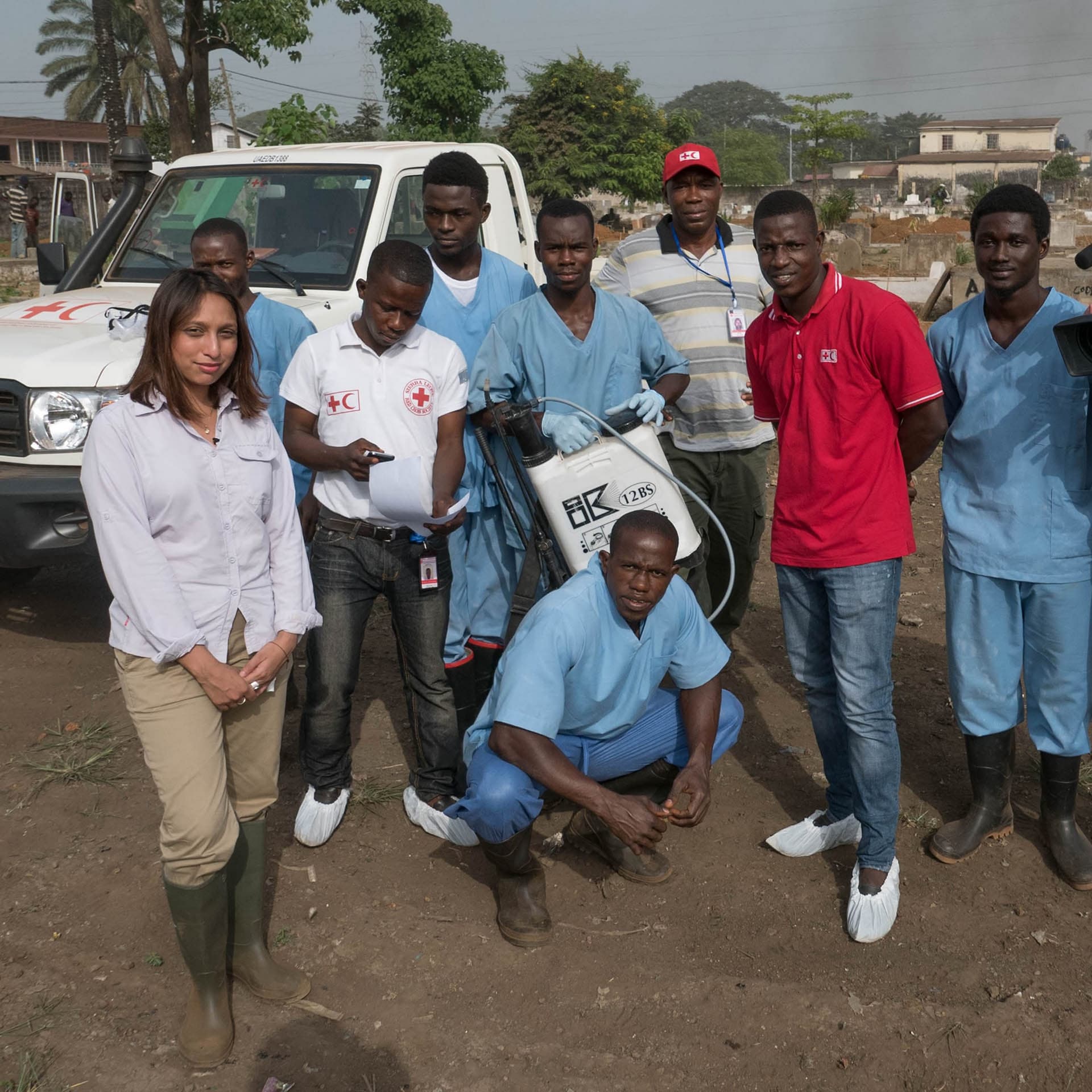
12:15Dr. Darlene Ikerima is a humanitarian health worker who volunteered at first aid stations set up during the protests. So I came to the camp and there was so much going on. At that time, the amount of victims had doubled in number. We had more victims, worse injuries that included GSWs, gunshot wounds, we had extreme cuts, we had traumas, we had people who had even like, even had a dead body that was brought to us. And I could say he was around 19, 20. He had no identification. When he was brought in, they said he fell from a building. But when we turned him around to assess the body, we found gunshot wounds at the back, two of them.
12:55We treated almost over 400 victims. A lot of lives have been lost, a lot. Across the country, in the first wave of protests, human rights groups say at least 63 people were killed, hundreds injured. Kenyans were horrified. I got home that night. I remember my dad was very scared for me. I remember I cried, actually, because I've never seen so much happen, so much intentional harm happen to, you know, innocent people. They were out to kill. They were not out to discipline. They were out to kill. For the protesters now, it wasn't just about a finance bill. It became about how Kenya was being governed by President William Ruto.
13:40But the storming of Parliament also shocked those in authority, who saw it as an attack on democracy, an attack on the country's legitimate elected representatives. The President said the protests had been hijacked. He talked of treasonous events and threats to national security. Still, in the aftermath, the President did abandon the finance bill and then fired much of his cabinet, a victory of sorts for the protesters. On the streets, things appeared to calm down, but it was in this quieter period that the abduction started. You're listening to the documentary podcast from the BBC World Service.
14:23Hello, Greg Jenner here. I'm the host of You're Dead to Me, the BBC comedy show that takes history seriously. Every episode I pair up a top historian with a fantastic comedian and we have a lovely, funny, fascinating chat about a different subject from world history. And in this new series we're beginning with an epic voyage through the story of Homer, the Iliad and the Odyssey. And that's with Kyle Smith-Bino joining us. And then we'll be learning about Francis Galton and the racist, discredited pseudoscience of eugenics with Desiree Birch. We'll meet many medieval saints in their bone boxes with Rachel Paris.
14:57So if that sounds like your sort of thing, listen to You're Dead to Me wherever you get your podcasts. Thank you. Bye. I'm Simon Jack. I'm Zing Zing. And on Good Bad Billionaire, we're exploring the life and fortune of music megastar Sir Paul McCartney. Macca. As one of the primary songwriters in The Beatles and with an extensive solo career, his work generates vast and continuous royalty streams. But were song royalties alone enough to break the billion? And earn him the title or the first British billionaire rock star. Find out in Good Bad Billionaire from the BBC World Service. Listen now, search for Good Bad Billionaire wherever you get your BBC podcasts.
15:41I'm Michael Kaloki on assignment in Kenya. When you first heard of the abductions, were you worried, Wanjira? I was. I was worried. I was worried and then I told myself, I am a tiny girl from Madhari. I don't think I'm much of a troublemaker. So I was trying to comfort myself that they would definitely look at me, but then I'm also very vocal and vibrant and visible. So that also made me feel like I have some sort of protection because there would be a lot of noise if I was abducted.
16:22but Billy Mwangi was one of dozens who were taken after four days of being beaten languishing in his dark cell Billy was blindfolded and put in the back of an SUV with five other detainees Billy was told he would be going home instead he says they were driven to what appeared to be another informal prison after we are lighted from the vehicle they started beating us again and I was slapped on my right side of the cheek and I become unconscious. I don't know for how long, maybe several hours or I don't know. I found myself inside a room with a mattress inside another cell and with a bucket there and my hair was already shaved.
17:08Another abductor came, opened my door. He gave me some whips. I asked him why we were told that we are leaving the other place to go home but he told me this is this actually home and you're still beating me up and i feel like indeed these were the last days i'm here to stay they continued to interrogate him and forced him to hand over the passwords to his social media accounts he was kept alone but could hear there were other prisoners there i could hear from afar there was another set of abductees who are also held in there. From the environs, you can hear like you're in a forest because the breeze, the trees, and there's...
17:55I don't know if it's a monkey. Every night that I was sleeping there, you could hear... Every night. But by then, the abductions had become headline news. Kenya has a vibrant independent press. Families made public appeals, human rights groups and lawyers started petitioning the courts, demanding action from the police. Billy's father attended one court hearing, weeping, begging for answers. The government denied it was responsible and promised to investigate, but pressure on the authorities was mounting. After almost two weeks at the new facility, Billy was brought before what appeared to be a special panel of interrogators.
18:36They handicapped me and I was taken inside another room. No, they told me, Billy, who funds you? Why are you in activism? Who gives you money for mobilization? I told them I don't have anybody. I was just myself. They told me then not to post bad things, not to correct the government because I don't have any right. I'm not a member of parliament. I'm not a senator. I'm not an MC. I'm not the president. I was just agreeing to everything they were saying. I told them that I will stop being an activist. After a 30-minute interview, they told me then don't tell anybody what happened, don't tell anybody what transpired, and I should prepare.
19:22I'm going home. And so Billy was put in a car and driven for hours. He was dumped by the side of the road, but they gave him a little cash, and eventually, using public transport, Billy made his way to his family home in Embu. I tried to say to Dad, Mom, nobody was hearing my voice. And that's the moment where Mom opened this door. And I said, Mom, Mom, it's Billy. And they came rushing and hugging me and crying, being emotional, asked me if I'm okay, came outside the gate, told people to come here, Billy's back. Yes, it might be a happy feeling that you're back home, but it's a very sad feeling because I've never seen my mom cry.
20:13So it was the first time seeing her cry, and not crying because of something good, but crying because of the worries and the sadness that she had during that time that I was missing. He went to the hospital to be checked out, have his injuries treated. Billy didn't talk about what he'd been through, but his re-emergence and that of other detainees gave the families of the missing some hope. My brother was a very humble young man. We loved him very much. He was the youngest, he was a good boy, very friendly. In Kibera, a poor neighborhood of shacks and narrow alleys in the capital Nairobi, Monica sits in a neat, tidy beauty salon with red and purple hair extensions hanging from the wall.
21:04Shortly before Christmas, her brother Kalani was abducted from his shop in Mlolongo, a small town on the outskirts of the city. It was the 16th of December last year. We heard that there were some cars that came while my brother was working, two white cars. Three or four men got out, they had masks on and they were armed. They came into his shop and took him in broad daylight and they put him in a vehicle and drove off. Three of Kalani's friends were also abducted in Mlolongo around the same time. Steve Mbisi, Martin Mwau and Justice Musimi. Locals believed that they must have been arrested by security agents.
21:48Who else, they assumed, would be armed, knocking on doors and detaining people in broad daylight? but Monica couldn't believe that Kalani would be in trouble with anyone, let alone the authorities. He was hardworking, took pride in himself and his work. He didn't have any issues. He was never in trouble. He's never been arrested. He wasn't into politics or protests, though perhaps his friends were. But he's very innocent. very innocent monica filed a police report and went round the police stations but was told there was no record of them in custody we gave up on them the police we got together with other families and searched areas where they used to hang out we checked hospitals and morgues monica and the families of the other missing boys from mlolongo went to court the judge ordered the chief of police to appear to give evidence on the disappearances.
22:47It was a day Monica can't forget. We went to court and Kanja, the police chief, came and said our boys are not in custody. Then, all of a sudden, we got a call that the bodies of some boys had just been delivered to the city mortuary and we should go and see them. When they got there, they found the bodies of Kalani's friends, Martin Mouau and Justice Musimi. There were other unidentified bodies there too. Monica and her mum were asked to check if Kalani was among them. The door was opened. My mother just stood there, frozen. I told her, mum, wait here, I'll just go. And she said, no, I want to see my baby.
23:32So, you know, I held her hand and we entered. Two bodies had been placed on a table. A policeman told us, these are the unidentified bodies. Have a look. I didn't know where the strength came from, but I approached one of the bodies. They pulled the cover from the face. I saw it wasn't my brother. His hair was shaved and my brother has dreadlocks. The policeman told me, come to the next body. He was only wearing a jacket and his arm was stuck in a strange way. I had a look and I told the policeman, this is not my brother. But then Monica asked to see the bodies of her brother's friends. She wanted to know how they died.
24:17So, like, Martin, the thing is, they look like they were beaten. They were beaten because if you look at them, there was blood. And for the other man, I saw what looked like a wound on his neck. It was weird. A government pathologist said Martin and Justice had died from multiple abdominal and chest injuries caused by a blunt object and strangulation. No one has been prosecuted for their deaths. Kalani and his friend Steve remain missing. Monica refuses to believe that her brother shared their fate.
24:53We believe that he is alive because even when I ask my mom, do you sense anything? She said no. And as a mum, if your child dies, you will sense it. My thinking is they are locked up somewhere. We have faith in God and that one day he will re-emerge.
25:15The killings, the violence and the abductions reinvigorated the protest movement. After the death in custody of a teacher and blogger, a new wave of demonstrations took place across the country in June and July this year. The violence seemed to have escalated In some towns, police stations and government buildings were attacked Human rights groups say more than 60 people were killed in the demonstrations Many more injured Wanjira was there It was extremely violent There was more tear gas There was more people were being beaten by police when they would find you That evening when I got home, I got to see reports of women who had been raped That was very new.
25:58It was the first time we were hearing. So that day, there was palpable anger and a little bit of fear.
26:08The government's rhetoric hardened. The president said he would not allow anarchy and police should shoot in the leg anyone seen to be attacking property. The interior minister said it was terrorism disguised as dissent. Dozens were arrested. some protesters are facing prosecution under anti-terrorist laws. We asked the government for an interview. No one was available. Earlier this year, a spokesman told the BBC, and I quote, the president has not sanctioned any forms of abduction whatsoever because he is a man who believes in the rule of law. The police oversight body, Aipoa, says it is investigating allegations of police brutality and the killing of protesters as well as the abductions.
Read the full transcript
26:52The government and the police have repeatedly denied any involvement in the disappearances. It's believed at least 20 of those taken in the last year are still missing. So where do we go from here?
27:10As we move towards the 2027 election, our prediction is that we are likely to face deeper repression because I think the regime we have in office is willing to narrow the space so that it can survive. Davis Malombe is head of the Kenya Human Rights Commission. He remembers the civil rights campaigns that brought an end to decades of authoritarian rule in 2002. He says the government has reverted to tactics of the past. We are back to the old dark days where state depression and the dictatorship was the order of the day. The only saving grace is that we have gone through a history of political liberation from the colonial to post-independence regimes.
27:59We have a history of liberation and resistance. And, you know, we are one of the best countries in the world, extremely progressive and transformative. So we have paid so much price to be where we are. Even when we are facing problems, Kenyans are always able to race to location. But given the violence, it seems for many young protesters, including Mwende, taking to the streets is for now too dangerous. We're scared because we've seen when we go to the streets and we protest, we'll be killed. But I don't think there's any point that we would change our mind and say we are OK. No, we will continue fighting until we see change.
28:39And that's why I'm saying we need to get back to our roots and find a different strategy. While lots of Kenyans agree that the economy, police brutality and corruption are real problems, many have questioned the protesters' tactics and wonder how, in practice, they will achieve their goals. The protest movement likes to see itself as leaderless, fearful that any leaders will be co-opted by the political elite, and within its ranks, there's palpable mistrust of established parties. So, what's the plan? back at the social justice center in madhare a support group for teenage moms is doing dance practice by the way they too took part in the protests wanjira says given the risks on the streets the youth are adopting a different strategy and getting organized to have a big say in the next elections in 2027 you don't go to the slaughter when you when they have said they're going to slaughter you.
29:37You've changed acting. And I think that is what we are doing now. We're saying let us root this resistance in our grassroots communities. We are working on this road to bear the alternative political leadership because 2027 is around the corner. So we are preparing for elections. Will they succeed? Will anything really change? In Kenya, like much of Africa, the youth certainly have the numbers. Yet across the continent, there's also been a rise in autocracy repression and military rule Kenyans are proud of their hard-won freedoms the government too says it stands to defend democracy so it seems to be a struggle over what kind of democracy Kenya should be whatever the answer those caught in the middle are paying a high price Billy so how are you now I've been healing but I was traumatized definitely.
30:31I had those thoughts that they'll come back again. Before I left, they told me that I'll be under surveillance. They'll make sure they have various cops monitoring my moves, monitoring where I am. Up to today, I don't feel safe. I feel like I'm still being followed. They told you not to speak. Why do you think it's important to tell your story? It might be risky, but I believe that But God didn't rescue me for me to come back and sit, watch TV and enjoy life. But he brought me back because he needed to be the actual change. Young persons are the future leaders. They are the tomorrow, but they are the ones who are actually being arrested or abducted or face sexual judicial killings.
31:21It's something that needs to stop. In Nairobi, Monica is still searching for her brother, Kalani. Every few weeks, she goes to check the hospital morgues. I look and look, but I haven't found him yet. It has not been easy. I sit around asking myself many questions. You find yourself crying alone. But she hasn't given up hope of finding him alive. And she has a message, an appeal to those who might be holding him. I can say this. Whoever took our boy, we beg you, please return him home. And if he wronged you or did something bad to you, we ask you to forgive him. It's human to make mistakes, but people are forgiven.
32:13We just pray that you release him wherever he is because we are suffering as a family. He's our youngest, we don't have another Release our son please So he can return home And if he's made mistakes Just forgive us Just that, that's all
32:37This edition of the documentary podcast Was presented by me, Michael Kaloki The producer was Alex Last The sound mix was by Neil Churchill The production coordinator is Katie Morrison And the series editor is Penny Murphy
33:17And the Odyssey. And that's with Kyle Smith-Bino joining us. And then we'll be learning about Francis Galton and the racist, discredited pseudoscience of eugenics with Desiree Birch. We'll meet many medieval saints in their bone boxes with Rachel Parrott. So if that sounds like your sort of thing, listen to You're Dead to Me wherever you get your podcasts. Thank you. Bye.
From the publisher
Over the past year, Kenya has been rocked by anti-government protests. What started as a demonstration over proposed tax increases soon turned into a nationwide, youth-led protest over the state of the economy, alleged political corruption and police brutality. But it's come at a cost. Dozens of protestors have been killed in clashes with the police, and human rights groups say many activists have been abducted and tortured by agents of the states. Michael Kaloki meets the young Kenyans who are caught in a battle for change.
This episode of The Documentary comes to you from Assignment, investigations and journeys into the heart of global events.