In short
Episode “Landmines” (BBC World Service, BBC OS Conversations) discusses the ongoing human and political impact of anti-personnel landmines and the work of deminers. It notes mines in nearly 70 countries/territories (NATO) and highlights Ukraine’s mine-laden situation after Russia’s war, including Ukraine’s announced withdrawal from the Ottawa Convention; Finland, Poland, Estonia, Latvia, Lithuania are also mentioned.
Key claims
landmines “do not win wars,” remain dangerous for years, and mostly harm civilians (often children).
Notable examples
Ruslana (Iraq) describes a husband’s foot injury with decaying bones and likely amputation; Kamil Al-Fawachi (Iraq) lost his left leg in 2002 and became an Iraqi disability-rights deputy.
Guests
Alex Munyambabazi (Uganda, former insurgent turned prosthetics/doctor support), Tun Chanareth “Reth” (Cambodia, landmine campaigner; Nobel Peace Prize acceptance), Zoran Ješić (Bosnia, UDAS landmine-survivor support). Second segment: Muyed (Damascus, Syria, demining team; ~4,000 hazards cleared since Dec 2024), Yevhen (Kharkiv, Ukraine, FSD deminer; >5,000 explosive ordnance findings), Sven (Tajikistan, FSD explosive expert/operations manager; safety procedures and risk education).
Written by AI. May contain mistakes. Listen to the episode to check what was said.
Chapters
Tap a time to open that second in VOThe Global Landmine Crisis
1:25 to 2:00
Exploring the prevalence of landmines in conflict zones like Ukraine.
“Welcome to the documentary from the BBC World Service.”
Personal Stories of Landmine Survivors
2:00 to 2:46
Hearing from individuals affected by landmines in Syria, Tajikistan, and Ukraine.
“We'll also hear from three men in Syria, Tajikistan and Ukraine who risk their lives daily working to demine their country.”
Ruslana's Story
2:46 to 4:07
A woman's account of her husband's injuries from landmines.
“Finland, Poland, Estonia, Latvia, Lithuania and now Ukraine are signalling they may leave the long-standing mine ban treaty, also known as the Ottawa Convention, pointing to security concerns.”
Kamil's Experience with Landmines
4:07 to 5:35
Kamil shares the story of losing his leg to a landmine.
“Right now, we are on a waiting list for surgery.”
Voices of Survivors from Around the World
5:35 to 7:41
Meeting three survivors who share their traumatic experiences with landmines.
“and make the Iraqi lands clean from these kinds of mines.”
The Impact of Landmines on Civilians
7:41 to 11:59
Discussion on the indiscriminate nature of landmines and their long-term effects.
“I was fighting in the northern part of Uganda during the Rhodes Resistance.”
Arguments Against Landmines
11:59 to 13:05
Survivors discuss why landmines should be banned and their future consequences.
“their women and innocent civilians, not the enemies.”
The Call to Action Against Landmines
13:05 to 14:00
Survivors express concerns about countries withdrawing from landmine treaties.
“Because what scares me most is the ripple effect it may create.”
Landmine Survivors' Stories
14:00 to 16:44
Learn about the experiences of landmine survivors and the ongoing threat of landmines.
“On 7th December 1997, we got 122 countries run to sign to support to ban antipersonal land rights.”
Demining Efforts and Challenges
16:53 to 24:48
Explore the challenges faced by deminers in Syria, Ukraine, and beyond.
“Listen now wherever you get your BBC podcasts.”
Transcript
Automatic transcript. May contain errors.0:00This BBC podcast is supported by ads outside the UK.
0:30No bouncing between tabs. And best of all, no spreadsheets. Stop managing software and start managing your business with one unified system. Try for free today at odoo.com. That's O-D-O-O dot com. Lives Less Ordinary is bringing you a special series of extraordinary love stories. Roshan Sethi was an uptight Canadian doctor who couldn't come out to his Indian family. Karanshani was an actor from India who felt he had to keep his sexuality a secret to make it in Hollywood. But they met, fell in love, and things began to change. They decided to make a romantic comedy based on their relationship. Lives Less Ordinary Love Stories from the BBC World Service.
1:10Listen now wherever you get your BBC podcasts.
1:25Hello, I'm Mark Lowen. Welcome to the documentary from the BBC World Service. In BBC OS Conversations, this time we bring people together from around the globe to share their experiences of landmines. They are present in nearly 70 countries and territories, according to the military alliance NATO. Among those is Ukraine, where the war has made it one of the most mine-laden countries in the world. Recently, Ukraine joined several other countries bordering Russia in announcing it will withdraw from an international agreement banning anti-personnel landmines. In today's edition, we discuss how lives have been permanently changed.
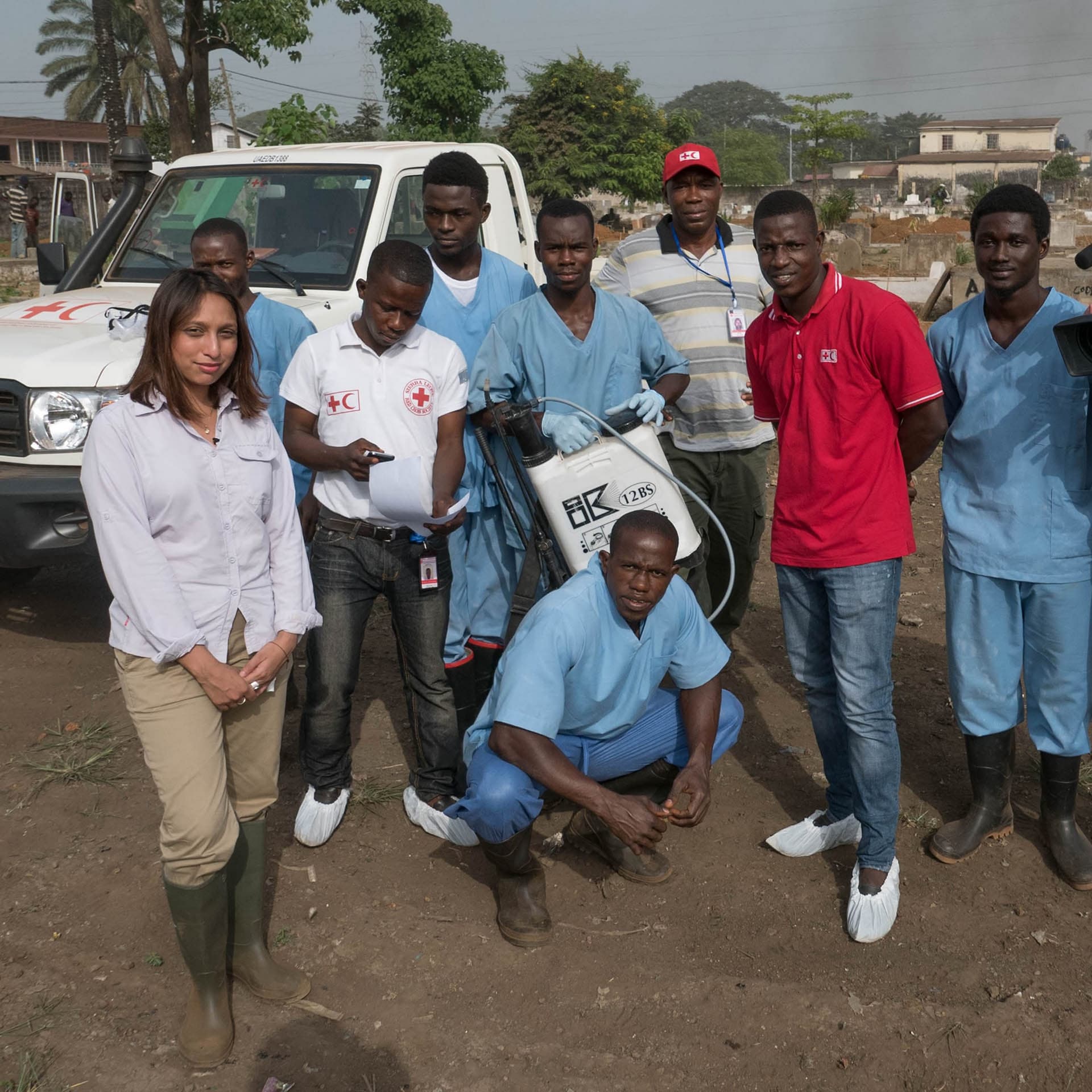
2:04We'll also hear from three men in Syria, Tajikistan and Ukraine who risk their lives daily working to demine their country. To be honest with you, I'm doing this because I have seen too many lives destroyed by mines and exploded ordnance. people losing limbs, families unable to farm their land safely. So someone has to clear these deadly remnants of war.
2:36Researchers say each year more than 5 ,500 people are killed or injured by landmines. Most are civilians. Many are children. Finland, Poland, Estonia, Latvia, Lithuania and now Ukraine are signalling they may leave the long-standing mine ban treaty, also known as the Ottawa Convention, pointing to security concerns. Before we play you two messages we've received from Iraq and Ukraine, I should warn you that during both of the following conversations, you'll hear our guests describing injuries from explosions due to mines.
3:42My name is Ruslana. surgery on his foot. He has a big hole there. The bones are decaying. We had reconstructive surgery, but it's not holding up very well. It's been a year and a half. After they did the surgery, they found two more fragments in his leg than another one later. I think there is still one more fragment in there. It's been like this for two years now. Right now, we are on a waiting list for surgery. They are going to amputate the foot. His psychological state isn't good. Not good at all. Understanding that your husband is without a leg is very hard. It's very hard. For a woman, when an arm or leg hurts, it's one thing.
4:27But for a man, to be without a leg and still have to earn a living, that's very hard. I am Kamil Al-Fawachi from Iraq. I am one of the mine survivors. I injured in 2002 near the border of Iran. We went, me and my colleague, four or five persons to a hunting trip. And unfortunately, there were a flood and rain which moves the mines toward the civilian villages. My bad luck, I step on one of this mine and lost my left leg. I used to be a teacher of English. I lost my leg and lost my job. I retired. I didn't feel shock because I am a man of beliefs. I believe that this is my destiny. after 2003 involved in the civil society.
5:26Now I am a deputy of the Iraqi Alliance of Disability just to ensure the rights of persons with disability. And we are working to ban mines and make the Iraqi lands clean from these kinds of mines. To understand more about the impact they have, my colleague Luke Jones brought together three survivors. All the men were soldiers. not civilians, at the time of their injuries. All three lost a leg or both legs. They are Alex Munyambabazi in Uganda. He is now a doctor who works supporting amputees and victims with prosthetics. Tun Chanareth in Cambodia, widely known as Reth, became a campaigner and accepted the Nobel Peace Prize on behalf of the international campaign to ban landmines.
6:16And Bosnian survivor Zoran Ješić now works with UDAS, a Bosnian organisation that supports landmine survivors. I was 21 years old. It was during the war in Bosnia and Herzegovina. I stepped on a mine by the end of 1994. And after that mine incident, I'd find out that it was a mine of my army. That is the biggest problem and the biggest absurd of the using of landmines. You never know who will hurt. And usually it waits for some civilians and innocent people who will have traumatic experience. Yes, I was a soldier, but a lot of civilians also had been hurt by the landmines. It was a really traumatic experience for me.
7:07At that moment, you are in shock, but after a few weeks, you became aware of a new situation. People tell you, oh, it's nothing, you will get a new leg, maybe even better than yours. But when you get the first prosthesis, then psychological struggle started. And it needs me years just to accept that now I have to live without my leg. And that is something that is waiting for the countries who want to use land mice again. Thank you for explaining that. I'm sure it's very difficult to go through again, but I appreciate it. Alex, what was your experience? I was 22. I was fighting in the northern part of Uganda during the Rhodes Resistance.
7:47I made an insurgent by Joseph Konyi. And one bright afternoon, I stepped on a landmine. We were very deep in the bushes. And it took me almost three days to get the help I needed in the hospital. And as you can imagine, that comes with a lot of trauma, a lot of pain, a lot of uncertainty. How did you make it through three days with that amount of pain?
8:39had remained so I had to pull it up above my knee. I used my bayonet, the army knife, its shell to try and tighten the tonicot. I wouldn't say that I know how I survived but I've kept on using that as my inspiration to say that maybe I survived so that I can support the other landmine survivors to see that they don't go through what I went through. Rath, you were fighting with the Vietnamese army in the 80s when they were fighting the Khmer Rouge in Cambodia. You are Cambodian. Had you ever seen a landmine before? Were you aware that they were an issue? It was 1979 when the killing field finished because we got Vietnam army group, they come to Cambodia and they try to say that they want to help Cambodian to rebuild new Cambodia.
9:32So I just escaped to Cambodia and Thailand border because over there we have a United Nation. But at the end, I decided to become a volunteer army. Every five minutes, I fight. I tell you too, I fight. And landmines, I lay every day too. We don't know exactly how about the dangers of antipersonal landmines. One day, I saw my friend stood on antipersonal landmines. His leg is disappeared. On 18 December 1982, I stood on an antipersonal landmine. Both legs destroyed. I took my own gun to kill myself. My friend took my gun away, and the second time, I saw them carry an axe. I asked them to chop my both legs off, but they said they are not a doctor.
10:18But they tried to carry me to the hospital. I really upset I don't want to leave anymore. In the hospital, I tried my best way how to kill myself. Day by day, the first child coming. But for what for? It's difficult for me that many, many problems, but hope comes. That is very often a situation that people after that traumatic experience think also to take their lives. So like Alex said, our mission now is peer-to-peer support to find out as soon as possible survivors, mind victims, and to speak with them that it is not the end of their lives. For example, I had persistent support of my family, of my friends, so I succeeded.
11:00I find myself now a very happy man. But hundreds of thousands of people, especially in Africa, in Cambodia, unfortunately are not so lucky. Their lives are destroyed and I'm so angry about what is happening these days with countries leaving the Myanmar Treaty. Well, let's talk about that because that is Ukraine, but also Finland, Poland, Estonia, Latvia, Lithuania have said that they want to withdraw from this convention. The president of Finland said that this is basically because in reality, they live next to a country, Russia, which never signed up to this Ottawa Treaty. They use landmines and they need to be potentially fighting on a level playing field.
11:45That is just an excuse, you know, because they must know one thing. The most of that land mines they will use will wait for their civilians. They must know that they will watch the pictures of dismembered and torn bodies of their innocent children, their women and innocent civilians, not the enemies. In these days with modern technologies, every army, every soldier will avoid that minefield. But one day it will be over. war, tensions or whatever and that mines will wait definitely for their civilians. They must think about that. It's not too late. Our argument is that landmines really don't win wars.
12:26And when they are talking about it, when you say that, everyone says yes, but they will slow down the enemy. But then it doesn't make any sense. These are weapons that should belong in the past. They are indiscriminate. They will not say this is the sorry jar so let us get detonated, we sense that it's a soldier. These mines, like Zoran has said, will stay in the ground, silent, quiet, for years to come. It doesn't matter when the war ends. So it doesn't make any sense that any country at any point in this time we are in can have any justification to bring back landmines. Because what scares me most is the ripple effect it may create.
13:11So if powerful European countries choose to abandon the treaty, they actually contributed in setting up and upholding, then it is very, very absurd. It makes me want even to cry because, like Zoran said, back in Uganda, back in Africa, I am in the field. I meet these survivors. I meet women who lost their legs. I meet women whose husbands abandoned because they lost their legs to the landmines and the children they had never went to school because they can't afford to send them to school. I meet people who are crawling down because they cannot afford prosthetic legs. And I wonder, Raith, if you have a similar concern about what this might mean for other countries around the world.
13:59Yes. On 7th December 1997, we got 122 countries run to sign to support to ban antipersonal land rights. Norwegian government tried to give us the Nobel Peace Prize. I told them at that time, we don't need Nobel Peace Prize. We need the way how to clean antipersonal land rights. When I arrived in Switzerland last June, I met Finland, I met Estonia and other three. I saw my body. I asked them, why you left from the treaty? Because you run to sign to support Japan, the delegates on behalf of each country. They start to cry in front of my face. They said they don't want. I tell them, do you want your children become like me?
14:46Do you want your wife to become like me? Do you want your nation to become like me? You know, they said they don't, but they promised that when they left from the treaty, they are not using any landmines. I said to them that, you tell me a lie, because this convention protects the human being. Zoran, the other issue as well is that there's still loads of landmines out there which were laid decades ago causing problems. Yes, for example, in Bosnia and Herzegovina, still 1.6 % of the whole territory is contaminated with landmines, And that means that 100 ,000 of people still living with fear of the landmines 30 years after the war.
15:29We were hoping to finish the job until 2025, but it's not going so easy. Again, I wanted to underline everything like Rhett said. We are ready to show our bodies for all the people to see what landmines are doing to the human beings. and we are landmine survivors, but there is much more landmine victims. So it is a huge number of problems that only one landmine can cause. Zoran Ješić in Bosnia, Tun Chanarev in Cambodia and Alex Munyambabazi in Uganda. Landmine survivors and former soldiers who are now working hard to ensure no one else has to undergo their experiences. I'm Mark Lowen and you're listening to BBC OS Conversations on Landmines from the BBC World Service.
16:44to change. They decided to make a romantic comedy based on their relationship. Lives Less Ordinary Love Stories from the BBC World Service. Listen now wherever you get your BBC podcasts.
16:59In our first conversation, you may have noted the phrase, landmines do not win wars. And so next, we turn to those who are trying to remove the thousands of devices that are left over from wars, often hidden from sight, and still posing a threat. Muyed runs a demining team in Damascus. They're currently clearing one of the biggest minefields in northeast Syria. Yevhen is a deminer based in Kharkiv, Ukraine. He works for the Swiss mine action organisation FSD, as does Sven, an explosive expert and operations manager in Tajikistan. Sven began by giving us an idea of a typical day working with landmines.
17:41be on site by six o 'clock most of the time it's boots hard wearing pants long sleeve tops then your personal protective equipment mine aprons and visors our team leader will give a safety brief to everybody just explain what the plans are for the day what achievements they want to get done they'll sign off on that and then start getting ready get checked by the team leader before entering the actual minefield safety distance is a big thing obviously making sure that we work in safety nobody does something to endanger themselves or anybody else in the team it can be a very dangerous job. When you are out there, what kind of precautions do you have to take when you are sending your teams to go into the minefield?
18:17It has to be quite controlled, maybe going out just doing what they feel like. There's certain precautions in place. Obviously, we have to start from a known safe point and then working from that and clearing and creating a larger, safer area as we go. Initially, we might only be able to employ one deminder at a time to ensure that there's a safe distance should an incident occur that it won't create multiple casualties and expanding on that. Everything has to be demarcated so that we know should somebody come into the field or relieve somebody that was in the field that they can see where the safe area where the hazardous area is and ensure that they don't go into any hazardous areas.
18:52Moyet tell me a little bit about what it's like demining in Syria. Like my friend mentioned we are starting in the early morning starting with the safety brief for all our staff make sure that they are wearing personal protective equipment remind them about the safe roads which we should follow and looking for safety distances and to make sure that our teams are safe and secured. We are doing as well quality management for all the work that we are doing. How many mines have you had to clear in Syria? Actually, up to now, since the fall of of Assad regime in December 2024 up to the end of June we cleared 4 ,000 hazards items between mines and unexploded ordnance.
19:41It's extraordinary. Yevon, in Ukraine, I mean it's obviously the war is ongoing there so not only do you have the threat of the mines and the unexploded improvised devices but also I mean you must be operating in an area where there can still be an active war zone. Yeah, demining is ongoing when the conflict is still going. So it's quite unique. And confronting landmines specifically, however, is quite a rare case, as the majority of them, they were removed by the special services. and everything what we find, what we identify to be as a dangerous item, we then submit an application to special services and we conduct a handover.
20:25Or if it is still dangerous, if it's not safe to move, they conduct a demolition. A handover to do what? To do a centralized disposal. So more common findings here are unexploded munitions and other military related scrap metal that were fired by both sides and during both wars. So not to forget that Ukraine was a frontline during World War II as well. And we still find objects as a heritage of that war. Can you say how many mines you have cleared from Ukraine? It's a combined number of all the explosive ordnance and it's way more than 5 ,000. But there is a reminder that even a bullet with a cartridge also considered to be an explosive as it has powder, basically.
21:21And at some of our work sites, we found numerous bullets. Sven, you said, for example, that you would have a limited number of D-miners going in so as to try to avoid mass casualties. have you lost colleagues in this line of work i fortunately haven't obviously i've worked with people that have been involved with incidents luckily non-fatal we have had incidents like that in the past thankfully they're very for at least for where i am very few fortunately and thanks god we we have been any incident in our work since 2017 in syria which is good and this is because we are like having a heavy training for any staff and we have like as well a heavy monitoring and like when when the people like follow the standard operation and procedures in the right way but in general there is a lot of incidents in my country and the civilians lost their life and lost part of their bodies through these items same for ukraine we've been working in this region since 2023 we haven't had any accidents unfortunately and we've got strict rules and procedures, how to do things right, and they are adhered to.
22:32But of course, I imagine that ordinary civilians are losing their lives and losing their limbs as well to mines on a daily basis in Ukraine. Absolutely. That's why another part of our job is educating people as well. And I'm glad to see that we have our own explosive ordnance and education teams. And I'm glad to see positive statistics that less and less people are getting injured and more and more people know what can be dangerous and how to deal with them. Sven, I know you have worked in Ukraine as well. I agree with him with the Expressive Ordnance Risk Education. They're doing a really good job and they're very proactive in getting out in the villages and getting the word out and making people more aware.
23:18I think it had quite a positive impact. And, you know, obviously the guys, you know Yevon and all the demand is there you know they're really good they're really positive and proactive and it was a good bunch of guys to work with thanks can I ask all three of you given the safety concerns that there are and the risks why do you do what you do Moed it's a tricky question yeah to be honest with you I'm doing this because I have seen too many lives destroyed by mines and exploded ordinance, people losing limbs, families unable to farm their land safely. So someone has to clear these deadly remnants of war.
23:59And I wanted to help communities to rebuild without fear. I agree with that. It's quite rewarding. Once you go into an area like being now, you're carrying agricultural land, you know, and once you finish that job and you're able to hand it back to the community, for instance, like where I am now, they haven't being able to go into that area for 20 years and not to be able to make use of it again. It's quite rewarding, you know, making a good difference, you know. I think that the main factor is that our land of my country is very fertile and seeing it abandoned in desolation, it is somehow painful and it depresses really.
24:34So I wanted to bring it back to life and production. D-minors Yevhen in Ukraine, Mouyed in Syria and Sven in Tajikistan on how they are doing their best to make their countries safe again. I'm Mark Lowen and you've been listening to the documentary from the BBC World Service.
25:08who couldn't come out to his Indian family. Karansani was an actor from India who felt he had to keep his sexuality a secret to make it in Hollywood. But they met, fell in love, and things began to change. They decided to make a romantic comedy based on their relationship. Lives Less Ordinary Love Stories from the BBC World Service. Listen now wherever you get your BBC podcasts.
From the publisher
Hidden landmines and other devices left behind from wars are present in nearly 70 countries and territories, according to the military alliance Nato. Among those is Ukraine, where the war has made it one of the most mine laden countries in the world. Recently, Ukraine joined several other countries bordering Russia in announcing it will withdraw from an international mine ban treaty. Since 1999 that agreement, known as the Ottawa Convention, has prohibited the use, stockpiling and production of anti-personnel mines. We discuss the global impact of the weapon. Researchers say each year more than 5,500 people are killed or injured. Most are civilians. Many are children. We hear from landmine survivors in Ukraine, Iraq, Cambodia, Bosnia and Uganda about how their lives have been changed by landmines. Also, three men in Ukraine, Tajikistan and Syria, discuss why they put their lives at risk by trying to remove landmines. This episode of The Documentary, comes to you from BBC OS Conversations, bringing together people from around the world to discuss how major news stories are affecting their lives.