In short
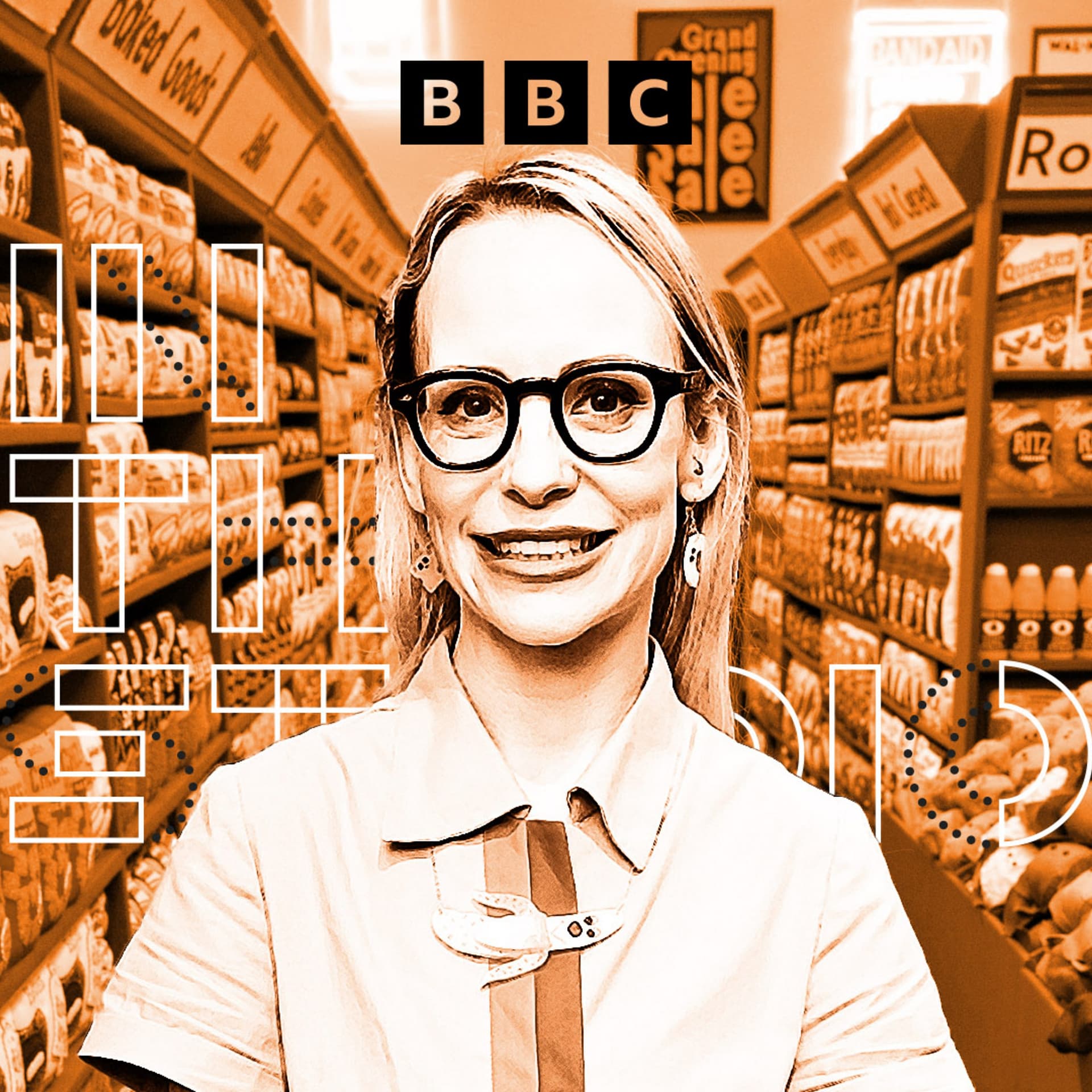
BBC World Service “In the Studio” with felt artist Lucy Sparrow building and installing a life-size 1980s Walmart-style felt supermarket in Bentonville, Arkansas, including a “TV dinner” freezer aisle, candy, pharmacy, photo processing, and immersive retail-like details. She explains her felt materials, studio organization, and how the installation is managed to prevent touching (a “petting zoo” felt item for visitors).
Guest backgrounds
Lucy Sparrow is a British felt artist (born in the 1980s), known online and admired by artists like Grayson Perry and Tracey Emin; she runs her studio in a former ambulance station in Suffolk. Host is Anna Bailey.
Key claims
felt sculptures are made mainly from 1mm acrylic felt (100% acrylic for durability); machines cut patterns “Team Felt” speeds production 5–10x; the project celebrates everyday consumer design, not consumerism critique; creating felt helps her recovery from anorexia.
Notable examples
200 strawberries (one shown), heathered felt drumsticks, foil trays and silver stitching on felt TV dinners, lint-rolling/vacuuming to manage bobbling, and a “petting zoo” workaround for museum touch.
Written by AI. May contain mistakes. Listen to the episode to check what was said.
Chapters
Tap a time to open that second in VOCreating Felt Artworks
1:56 to 3:21
Discover how Lucy Sparrow creates her felt grocery items and the inspiration behind them.
“But a word of warning, although her work looks soft and cuddly, she'll be talking about her lived experience with an eating disorder and her struggles with her mental health.”
Tour of the Studio
3:26 to 5:14
Join Lucy as she gives a tour of her vibrant studio and discusses her work environment.
“So this is where all the felt magic happens, is it?”
The Process of Felt Production
5:17 to 9:13
Learn about Lucy's production process for making detailed felt items and the challenges she faces.
“This is number one of three cat trees I have in my studio and this is to accommodate the four cats that live here.”
Nostalgia and Artistic Choices
9:46 to 11:04
Lucy shares her thoughts on nostalgia in her art and her personal connection to felt.
“Why do you like working with felt so much?”
Teamwork and Artistic Collaboration
11:04 to 14:00
Explore the role of teamwork in Lucy's artistic practice and her journey in art.
“So I've just added an extra centimetre all the way around there just so it fits in that box a little bit better.”
The Importance of Teamwork in Art
14:00 to 18:08
Learn how teamwork plays a crucial role in Lucy Sparrow's artistic process.
“And how important is teamwork to your artistic practice?”
Personal Struggles with Eating Disorders
18:08 to 20:44
Lucy shares her journey through anorexia and its impact on her art.
“because you did a corner shop in East London, you did a Sparrow Mart in LA, a quick shop in Florida.”
Creating a Felt Supermarket
20:44 to 24:49
Explore the creative process behind Lucy's felt supermarket installations.
“So we are going to be turning around to the right here, and this is where you're going to be able to see everything.”
Visitor Experience and Interaction
24:49 to 28:00
Understand how visitors become part of Lucy's art and the immersive experience.
“It's a day where I will remember this for the rest of my life.”
Transcript
Automatic transcript. May contain errors.0:00This BBC podcast is supported by ads outside the UK. If you are currently overpaying on software to run your business, remember this number, 10 ,000. That's the number of new businesses that join Odoo per month. Join Odoo today at odoo.com. That's O-D-O-O dot com.
0:33fascinating chat about a different subject from world history. And in this new series, we're beginning with an epic voyage through the story of Homer, the Iliad and the Odyssey. And that's with Kyle Smith-Bino joining us. And then we'll be learning about Francis Galton and the racist, discredited pseudoscience of eugenics with Desiree Birch. We'll meet many medieval saints in their bone boxes with Rachel Parrott. So if that sounds like your sort of thing, listen to You're Dead to Me wherever you get your podcasts. Thank you. Bye.
1:09I am making strawberries out of 100 % acrylic felt so I've got red felt green felt and I've got my scissors cutting out the shapes based on the pattern that I've got so I've got my two body bits I've got the head of the strawberry and I've got the what maybe the hair of the strawberry and two eyes black plastic amiguri eyes i think they come from japan
1:37welcome to the documentary in the studio from the bbc world service the program that gets inside the minds of some of the world's most creative people like lucy sparrow i'm anna bailey and as soon as i saw lucy's art i wanted to find out how she makes it so appealing But a word of warning, although her work looks soft and cuddly, she'll be talking about her lived experience with an eating disorder and her struggles with her mental health. Lucy's become a bit of a global internet sensation, admired by artists like Grayson Perry and Tracy Emin. Her work has been described as quirky yet subversive, and there's no mistaking her playful style.
2:21I think for as long as I can remember, I have humanised everything that I've kind of made. I love things that are cute. I anthropomorphise everything in my life. I guess in a way, kind of like they're all like my little children. No matter how hard I try, they're never going to be all identical because they're all handmade. Lucy always works with felt, that dense, non-woven, soft fabric which doesn't fray. She chooses bright colours to make groceries in everyday household products. And when she lines them all up in her life-size felt shops, whether it's her New York bagel joint or her fish and chip shop in London, the effect is striking.
3:00For her next commission, she's recreating a 1980s Walmart supermarket in Arkansas, USA, where the first branch opened more than 60 years ago. This is one strawberry of 200. Making a show like this just means that I've got 20 ,000 little children that all need nurturing and all need sending off to America. So I've got quite a long way to go.
3:26Hello. Welcome to the Felt Cave. Welcome to the ambulance station. So this is where all the felt magic happens, is it? Yeah, it is. It's an old ambulance station. We're in the middle of Suffolk. And I took this over about five years ago and it's been acting as my studio ever since. It's a few months before the opening when I visit Lucy's studio in the east of England. And just like her artwork, it's fun and slightly unconventional. This is Sebastian. So he's your felt companion, is he? Yeah, he's my emotional support banana. They go like everywhere with me. Would you mind showing me around? Absolutely.
3:58So I've obviously changed the decor. It didn't used to be all these like crazy bright colours. There's five ambulance bays downstairs. So there's a huge garage and that's where the cutting machines are. And then upstairs, eight or nine different rooms that I use to mainly make stuff. Right. OK. So we'll go up the next set of stairs. And there is felt everywhere. Yeah. So this is colour coded scrap bins for all the different types of felt. So yellow scraps need to go in the yellow bin, pink scraps need to go in the pink bin. On the other wall, there's probably about 10 ,000 skeins of embroidery thread, all sorted into colours.
4:32And how important is organisation when you're recreating supermarket stores? Do you have to keep a log of all the products that you make? I mean, I can only liken it to herding about 30 ,000 sheep. Each one likes to fall on the floor, fall down the back of radiators. And like, I can't even tell, like, the spreadsheets are complicated. Yeah, because some of the things that you create are so tiny. Like at your chippy in London, you had these tiny pickles. I can imagine those getting lost quite easily. Yeah, they're very small. And not only that, tiny prawns are like they go everywhere. I found one in the car park the other day and I put it in my car.
5:04It only had one eye. So effectively, not only are you an artist, but you're like a retail stock controller. Yeah, it does feel like that at points. But like it's an organisation against my will. So I've got this side of me that needs to keep things creative and interesting. but I've also got to be really, really organised because otherwise it would never work. Right, OK. And what's this stand over here? What's this contraption? This is number one of three cat trees I have in my studio and this is to accommodate the four cats that live here. Oh my gosh, what a beautiful cat. This is Ogilvy, named after the astronomer in War of the Worlds and he is a sphinx cat, so hairless.
5:42Hello. But they're not allowed near any of the fabric rolls because they treat them like scratching posts. Lucy was born in the 1980s, back when I was a teenager, watching movies on VHS tapes and sharing pink bubblegum with my friends. It's also the era that her new exhibition is nostalgically showcasing, so she's had to do her homework. I have trawled the depths of the internet to try and find the most suitable product. So this is a whole frozen dinner. All you need to do is put in the oven. This one in particular is fried chicken with mashed potato, carrots, peas and sweet corn. and like little knobs of butter.
6:18So I'm going to start off with this picture that I found, kind of just sketching it out straight onto the fabric with a permanent marker. Yeah, that's kind of plate-shaped. I'm kind of doing it just by eye. Quite big. It is quite big, but I mean, it's going to look great on the shelf and there's a lot of detail in something like this. I'll paint round that to make it look more 3D and then I'll have another knob of butter that seems to be in the vegetables.
6:49that's a good shape like a rounded square and then I just need some more bits for the carrots this is quite a complicated one so I'm looking at about 25 pieces to it just because the amount of detail that needs to go into making it look realistic and it's tv shaped is that why they called it the tv dinner I mean I think it's more about like that you would eat it in front of the TV on like one of those TV trays. Yes. And then you could carry on watching the TV as well as eating your dinner which is you know one of my favourite ways to eat my dinner. Then I don't have to stop what I'm doing. This is the pellets that we use for anything that needs to be weighted.
7:30It's the stuff they put in weighted blankets and we use this scoop to scoop out the pellets that we need. Ah right so this is almost like um the stuffing but to actually make them look a bit more substantial yeah so this would go into steak fish packets of dried beans ah okay and you've got every color of felt here turquoise purple pink another pink there's gray and you've even got like sparkly like glittery and this is not felt that is a mixture between yeah foil or mirror lycra spandex we've got organza down there that's what i would use for things that are metal so like a Coke can would require silver lycra.
8:11And you've got massive rolls here of felt and it's very thin isn't it? Yeah all felt that I use is going to be one mil in thickness the colours that are used the most are red, yellow a sort of royal blue, white. Gosh the primary colours basically. It really is and I think red being probably the most used one especially like pasta, soups. It's tomato-y. It's the most tomato-y red there is. So why choose to make a supermarket from the 1980s? I think it evokes the most amount of nostalgia of any of the decades really. Consumerism was kind of at an all-time high. You wouldn't have necessarily the mum at home slaving over hot dinners.
8:54It would be putting things in the microwave and the felt really lends itself well to the 80s. And I have to say this material and the colour of it is just perfect for the chicken drumsticks because it's an orange felt but it's got brown flecks on it. So this is called heathered felt and it's mottled. So I've just cut that drumstick and I've just now realised it's too big so that now I can slim this down into a smaller drumstick so it will fit. If you use felt that is too much of a high wool content, it gets very strandy. The structural things have to be made of 100 % acrylic. Otherwise, over time, it'll just sort of get worn down.
9:31So these are pretty durable then? In a way that like you would display them as art but you wouldn't sort of like give them to kids or anything like that because that's not what they are. You know, they're sculptures in the same way as, you know, like a marble statue would be. They're delicate and need to be looked after in that way. Why do you like working with felt so much? It's just from when I was a kid. I just wanted to make toys that weren't available. So I was like, right, what if I wanted a cuddly strawberry? Where do I get that from? And my mum's like, well, you could just make it. sort of started out from this mission of being like six or seven years old where I just wanted to make everything that exists I wanted to make fluffy the felt world is like nothing bad happens it's all very chilled fun there's no evil in the world it's like an alternate universe where everything is friendly and happy and smiley so your world is literally soft then yeah my world is soft and like you know if if the real world isn't living up to your expectations you can always sort of revert into your imagination and that's something that I do probably about 80 % of the time.
10:31Okay so here I have got the approximate plate shape so I can already see that is a little bit too small for what I'm working with so I'm going to try again on a bigger bit of fabric adapt it as it goes and that's how you end up getting it right in the end. There's not really any places that teach you how to make felt tv dinners that you can practice on it's just something that you learn on the job. Yeah there isn't a felt tv school to go to. No, there isn't, but, you know, maybe one day there will be. Well, yeah, the Lucy Sparrow. School of TV dinners. School of convenience food. So I've just added an extra centimetre all the way around there just so it fits in that box a little bit better.
11:12Next layer is going to be this foil tray that it comes in. And again, I'm eyeballing this instead of drawing anything out.
11:22OK, that is done. That will just need pinning down. That looks great. And you did that, what, in 40 minutes? Yeah, I reckon so. That's for a complicated sample, and that is ready to go in the bag and be sent downstairs to the cutting machines.
11:39Hello, Greg Jenner here. I'm the host of You're Dead to Me, the BBC comedy show that takes history seriously. Every episode, I pair up a top historian with a fantastic comedian, and we have a lovely, funny, fascinating chat about a different subject from world history. And in this new series, we're beginning with an epic voyage through the story of Homer, the Iliad and the Odyssey. And that's with Kyle Smith-Bino joining us. And then we'll be learning about Francis Galton and the racist, discredited pseudoscience of eugenics with Desiree Birch. We'll meet many medieval saints in their bone boxes with Rachel Parrott.
12:12So if that sounds like your sort of thing, listen to You're Dead to Me wherever you get your podcasts. Thank you. Bye.
12:23You're listening to the documentary In the Studio from the BBC World Service in the company of the felt artist Lucy Sparrow. Because of the sheer number of objects she has to make, Lucy relies on a strict process to ensure all her carrots, tubes of toothpaste and magazines look the same, though not identical. The pattern pieces are cut out by hand for the prototypes and then the big machines come in. So this one nearest the door is Boris. Bertha is newer, so she's younger than Boris, and they are big flatbed cutting machines. The fabric is suctioned onto the belt, and it follows a computer pattern which cuts all the felt out individually in huge numbers.
13:07They're part of Team Felt. They are very hardworking. We very much appreciate everything they do, and they like being fed by being oiled. They were more expensive than my car, and I have a nice car. Wow. Wow. So you really do have to invest into this business? Yeah, you do absolutely have to invest. And it's really expanded everything that we were able to do. We were cutting everything out by hand before. I think they've sped up our capacity for cutting out by about, I think, anything between five and ten times the amount of cutting out that we were able to do. It hasn't cut out the jobs of people.
13:42It's actually created work for more people. And it's now freed up everyone to be doing stuff that requires more handwork. I'm going to measure the piece of fabric because I need to input it into the system so that Bertha knows how big the fabric is. Lucy works with a small team of women trained to operate the machinery, including Geraldine. And how important is teamwork to your artistic practice? I can't even explain that because I feel like we sort of almost like think and move as one because everyone's, you know, you're anticipating other people's movements. There's so many things that need to be put into place to make this place run smoothly.
14:20I think I've just been incredibly lucky and we all get on really well. And are you self-taught or did you go to art school? I mean what's your background? I went to uni for about six months and I dropped out because I didn't like it. To be honest I didn't do any felt there. I found that most of the time they were just telling me to do stuff in the style of other people and I was like I want to do stuff in the style of me. So I kind of just dropped out doing normal jobs for like 10 years until I could make my art full time. And here you are now. Yeah. Overnight success only took 15 years. do you ever get bored doing the same thing over and over again i don't think i ever get bored it's more i'm wanting to do them quick so that they're done embarrassingly i i set myself a schedule every day and it's in like sort of two hour intervals and then i'll add up how many i can count during that day but it generally always is down to the wire just because of the nature of how much there is to do if i'm very stressed and the girls will sort of notice i'll generally go a little bit quiet and at the worst case scenario I'll go for like a little mental health nap, go and lie down for an hour, come back and I'm like okay I'm ready.
15:25So what we do now she's cut out the eight drumsticks. We then make sure that we push the blade away so that once we're dealing with the fabric we're out of danger of cutting ourselves and everything. Yeah they look absolutely perfect, she's done a great job. Comes out exactly the shape that we inputted into the machine. and all this talk of food is making me really hungry but I know that you've had a difficult relationship with food in the past and recently you went into rehab for anorexia can you tell me more about that yeah I have had an eating disorder since I was about 13 when I was a teenager I was so so unwell I managed to kind of get myself into a place where I wasn't in a physical danger anymore but my mind wasn't better so from the ages of like 17 onwards I kind of was like weight restored enough that I was able to live a normal-ish life but like my relationship with food was terrible I know when I'm stressed I can literally just stop eating and it got to a point like last year where going through a breakup and doing too much work that I just stopped eating and I lost that ability to look at it with any perspective you know I always got to the point where if I got to a low weight I was like no come on Lucy and I'd actively make an effort to eat more this was completely different and I completely nosedived so I went into rehab for 10 weeks and kind of really got stuff sorted what the cause of it was why I was using that to cope in times of stress and how to how to get better really I can't do what I love doing if I can't walk up the stairs without getting out of breath being a stone heavy means that I can do all these amazing exhibitions and I can enjoy life and not faint that's my compromise do I have to enjoy it no hopefully one day I'll accept it but in the meantime for the good of the felt and for the good of everyone I work with I will do that.
17:19So creating fake felt food is actually helping you? Weirdly yes and I really wasn't convinced of the connection and it really took someone to hammer it home to me when I was in treatment and say you're not eating but you are making supermarkets full of food that you can't eat and has nothing to do with your eating disorder and I I was like, you have a point. According to the spreadsheet, I'm 25 % made in the sewing department and 16.6 % painted. Right, so you've got five months to go. Is there anything keeping you up at night at this stage? Everything. But that's okay. And without that fear, I wouldn't have the drive to do it as quick as I can.
18:03I need that amount of pressure to be able to deliver the project. Having said that, though, you're no stranger to retail because you did a corner shop in East London, you did a Sparrow Mart in LA, a quick shop in Florida. What's your attraction to places where we buy things? People always say about British people, it's like we're a nation of shopkeepers. And, you know, I grew up, my mum working in a shop. One of my favourite games to play as a kid was playing shops. I haven't really changed from when I was a kid, to be honest. I've just got bigger, more ambitious ideas. And it's taken me into the world of art.
18:34And what's your vision for the store? Is it about celebrating or is it about deconstructing the supermarket experience? The idea for the show is very much about celebrating the supermarket. My work's never been at any kind of criticism about consumerism or anything like that. I'm really not interested in that. I see beauty in so many everyday objects, whether that's the design on a frozen pizza from 20 years ago or a Michelangelo painting. I think there's beauty in those things. As well as the staff in her studio, Lucy has a dedicated team around the country to sew the pattern pieces together.
19:08A parcel has just arrived and I can see felt candy bars. That distinctive triangular shape of the Swiss chocolate bar, Toberone, ready for her favourite, most creative job, hand painting the products. I've got red paint edged in gold and then I've got the drop shadows in black. The font is different to how it would be now. It's got quite an Art Deco feel to this. Fabric paint comes generally just straight out the tube when I'm painting it. And you're going to be applying this without even having a go beforehand? Yeah, that's how it's done pretty much. And are you applying a certain technique as you're doing this?
19:47So I'm almost dragging it along. I know how much pressure to sort of put on it before the paint's going to come squirting out the tubes. So I'm just finishing off the E here. I think the T needs to be slightly longer. And are you pleased with your progress today? I mean, I know I've been around and I've interrupted you quite a bit, but are you pleased with what you've done so far? Yeah, I'm pleased with my lettering. You know, obviously it needs a couple more coats. But every bit that I do and every one that I knock off the spreadsheet, I know I'm getting closer to it. And I'm sort of really blessed with optimism and faith that I know that if I've put my mind to anything, I can do it.
20:23I'm finally in Bentonville, Arkansas. And last night I heard that most of Lucy's team have actually been sick. While I meet her at the momentary art space, she's very tired, but she's also quietly optimistic. We open tomorrow, so there's still some boxes around, but it's 90 % there. Right, well, let's go and have a look. OK. The moment of truth, I'm very excited. So we are going to be turning around to the right here, and this is where you're going to be able to see everything. Oh, Lucy. This is the beginning of convenience. We've got the fresh fruit section here. What else have we got? I mean, there's a whole coffee section.
21:01The candy section is huge. That's what I was painting before. We were painting some TV dinners. There's a pharmacy where you can come and get your prescriptions. A snack bar. We've got the photo processing centre, which I think personally is my favourite area of the show. Can we go and have a look at the TV dinners? Yes, of course. Let me lead you down this aisle towards the freezers. This is the TV dinner that you were recording me making. That looks absolutely amazing. It is a piece of art. It's not just a TV dinner. It's shimmering. It's got this lovely sort of silver stitching there. It's three-dimensional fabric paint.
21:35We've got the fried chicken that's got some gold glitter, as if it's been deep fried in batter. Yeah, I love the TV dinners. How have you got them to stand so upright? Is that the 100 % acrylic felt? Yes, but also in everything that needs to stand upright, there's a strip of cardboard so that it can support itself because there's no way that it would survive a year of being on a shelf. And how do you keep everything so clean? We've talked through it with the museum about lint rolling. or like just vacuuming any kind of surface. There's no like wiping of stuff. The main problem with felt is bobbling.
22:05And even the freezers are made out of felt. I feel like I've entered a real supermarket. Just need my trolley basically and off I go. Yeah, absolutely. Just fill your trolley with all the things you absolutely cannot eat. And I just love the way the strawberries are winking and smiling at me as we go past. And then next to you, what are these? These are the cherries. And the corns. I love the corn. Because he looks like he's throwing his arms in the air. Whatever. I'm just a corn. And when you're arranging the products, do you think like an artist would? Or do you think like a visual merchandiser would?
22:36Honestly, it's a bit of both. So the general rule is that no two same colours next to each other because it's too jarring. And I hear that you ran out of white felt. Yeah, I bought out all the felt in the three stores that were in 20 mile radius. And in your other shows, they've been pretty immersive because you've dressed up as the shopkeeper. you've stood behind your felt tills or I should call them cash registers and you actually have sold your works to visitors who come along to your shows is that going to be the case here or is this slightly different yeah it's it's different this time I can't be here running it for a year and there's no way that I would be able to keep up the demand to fill the shelves for a whole year so what's on the shelves stays as a static installation and then because people like to buy it I have a range in the gift shop where I've chosen 50 of the most popular and visually exciting pieces from the show and I've made 20 ,000 of them to last the whole year.
23:31I'll be at home as the year goes on they'll sort of like to be regular retail drops. But can people touch your products though because I know in your other shows you've actively encouraged it but what about here when it's in a more of a museum setting? Again here is different so how we've combated that is that the museum had this idea of a petting zoo which I think is the best name ever so when people come in they are given a piece of felt so people can take that around with them to stop them touching the exhibit because it's really difficult to keep that looking good so we've given them a little friend to take around the museum and it all feels the same.
24:05So that avoids any sort of sticky fingers on your lovely works here? I hope so I mean it's not something I've done before but it has worked in other museums. And what do you want people to get from this ultimately? You know it can be visually exciting as well as having a serious message of examining a period of time that doesn't exist anymore so it'd be great to have them transported back to a simpler time come and escape to the felt supermarket if you're feeling you know slightly stressed in any way and you're actually wearing what looks like a replica of a of a supermarket sort of overall so i went to the archives of the supermarket and they luckily lent me one of the uniforms that one of my sewing ladies because she's a seamstress put together so that I could wear it for the opening.
24:47It looks brilliant. I mean, you do look the part. It's a good day for you then. It's a day where I will remember this for the rest of my life. You spend so many years with just five people in the studio. The similar thing would be, you know, a musician writing an album and they're coming out, they're performing on this huge stage and suddenly they're overwhelmed with having to do lots of social stuff, but that's the reward to me. And is the artwork finished when people are actually in it? Would you say the visitors are part of the artworks in a way? The visitors are the final puzzle piece to any of my shows.
Read the full transcript
25:19I'm not an artist who has white walls where people walk around in hushed voices, quietly respecting the art. My installations are music, announcements, photos, selfies, everything. I'm maximalist in every single part of my life. My art practice is the same. Anybody having a grouchy day, you just walk in there and look at all the bananas and it's got to bring a smile to your face. So it's brought you joy, has it? Yes. I had no idea the emotions that I would feel. It was very hard not to touch. She's obviously a genius in the fact that it all started with her getting a stuffed banana from her dad at nine years old and boom, the rest is history.
26:04Staff announcement, can I get a member of the team please to report to a fruit and vegetable department? Thank you. It was fascinating seeing some of the items that I even used to eat when I was younger. Which ones? The memento candy. I saw the Tabasco hot sauce, which is really neat. You don't really see a stuffed supermarket very often, do you? Was there a particular product that you liked? I like the Brussels sprouts. They have cute little faces on them, and then they have all the leaves, so they almost look like little cartoon characters. Every piece had really a lot of life to it. Even like a banana, it feels like it's going to talk to you like a Toy Story character.
26:46Did you talk back? I think we were kind of singing songs. You expect them to break into song. They really look like they have personalities. They're excited to go home with you and be part of dinner. Nostalgia has a little bit of sadness to it because it means you're missing something in the past. But it also can make you very happy. I like that all of the produce had little eyes and smiles. You had to look it in the eye and it makes you think a little bit more about what you're getting. And watching those little kids in there and they're doing such a good job of not touching it, but you can tell that's all they want to do.
27:16It is a little maybe Andy Warhol derivative. It's pop art, but I love it. Who do you think it's aimed at? At children? At adults? It's adults that want to be children again. Did you feel the art was trying to communicate with you? Yeah, it was trying to say, wow, we're quite the consumers here. to be in there and see the VHS rental the film section is really cool what was your favorite item oh man there was a Bobby Brown cassette tape and that was one of my first cassette tapes and so when I saw that my prerogative started playing in my head did you know that about your husband being a Bobby Brown fan no I didn't I had no idea that was his favorite cassette I love it You've been listening to the documentary In the Studio from the BBC World Service with the British felt artist Lucy Sparrow.
28:10I'm Anna Bailey and the executive producer was Paula McGrath. And I'm looking forward to seeing what Lucy does next.
28:28Hello, Greg Jenner here. I'm the host of You're Dead to Me, the BBC comedy show that takes history seriously. Every episode, I pair up a top historian with a fantastic comedian, and we have a lovely, funny, fascinating chat about a different subject from world history. And in this new series, we're beginning with an epic voyage through the story of Homer, the Iliad and the Odyssey. And that's with Kyle Smith-Bino joining us. And then we'll be learning about Francis Galton and the racist, discredited pseudoscience of eugenics with Desiree Birch. We'll meet many medieval saints in their bone boxes with Rachel Parrott.
29:02So if that sounds like your sort of thing, listen to You're Dead to Me wherever you get your podcasts. Thank you. Bye.
From the publisher
Lucy Sparrow stitches life into everyday objects, creating vibrant felt worlds that look just like the real thing. Following the success of her hand-stitched felt fish and chip shop, she has recreated a Walmart convenience store from the 1980s, complete with TV dinners and a felt photo booth.