
In short
India’s 2025 census (“the world’s largest count”), the first fully digital decennial in nearly 100 years, and how it will reshape policy by updating counts of population, religion, languages, housing, education, work, migration, women’s status, disability, and especially caste (returning after 95 years). It also examines how census categories can erase or distort realities, such as “other” religions, undercounted women’s work, and language lists that can cause smaller languages to disappear.
Guests (backgrounds)
Dr. Sonalde Desai (demographer, National Council of Applied Economic Research); historian Tripura Daman Singh; Prof. Satish Deshpande (sociologist/caste expert); linguist Ganesh Devi (led People’s Linguistic Survey of India); political scientist Gilles Vénière; sociologist Sunil De Desai; sociologist Amitabh Kundu; economist/demographer Sangeeta Vyas; demographer Dr. Srinivas Goli (International Institute for Population Sciences); economist/demographer? (also Dr. Binoy Peter, migration specialist, Center for Migration and Inclusive Development).
Key claims
Census data drives electoral seat reallocation and affirmative action; caste enumeration is complex and politically sensitive; digital self-enumeration may reduce cross-checking; women’s employment and disability are systematically underreported; homelessness and the very rich are hard to count; language recognition rules can delete thousands of mother tongues over time.
Notable examples
1881 census origins after the 1857 uprising; 2011 excluded caste but had a separate caste census with withheld data due to taxonomy/quality issues; 1961→1971 language list collapse (1652 to 108 mother tongues); 2011 “other” religion category hiding hundreds of practices; 2011 census first detected India’s male-skewed sex ratio at birth.
Written by AI. May contain mistakes. Listen to the episode to check what was said.
Chapters
Tap a time to open that second in VOIntroduction to The Documentary
0:58 to 1:29
Introducing the Documentary's focus on India's census and its scale.
“Imagine buying a toy for your kid, but it doesn't come with batteries.”
Introduction to The Documentary
1:32 to 1:46
Introducing the Documentary's focus on India's census and its scale.
“The Documentary, home of the best documentaries from the BBC World Service.”
The Scale and Importance of India's Census
1:46 to 2:55
Understanding the vast scale and significance of the ongoing census in India.
“I am Rishbhanu Bharuwa in India, where the country is in the middle of the world's biggest census.”
Historical Context of the Census
2:55 to 5:20
Exploring the historical background and evolution of India's census.
“India has launched the largest population count the world has ever attempted.”
Challenges of Counting Diversity
5:20 to 8:11
Discussing the complexities and challenges of conducting a census in diverse India.
“a sense of how people across India view the census.”
Caste and Its Role in Indian Society
8:11 to 10:57
Examining the implications of caste in the context of census and identity.
“But the original British census model hit difficulties.”
The Evolving Concept of Caste
10:57 to 13:40
Analyzing the evolving nature of caste as a social institution in India.
“Surveying caste now is an enormous undertaking.”
The Future of Caste Measurement
13:40 to 14:00
Considering the implications of reintroducing caste questions in the census.
“So in that sense, it's changing all the time, but it's there all the time.”
Caste in the Census: A Complex Question
14:00 to 15:00
The complexities of caste-related questions in the upcoming census are discussed.
“So 95 years since it was last counted, the census teams will once again be asking about caste.”
Diverse Perspectives on Caste
15:00 to 17:40
A group of friends share their individual experiences and views on caste in their lives.
“After nearly a century without up-to-date caste data, India is trying to understand how its social landscape has changed.”
Show all 23 chapters
Caste Compliance and Societal Norms
17:40 to 22:00
Discussion on how caste influences behavior and societal norms in India.
“If you're from their community, the conversation would be different.”
Challenges in Caste Data Collection
22:00 to 23:40
The difficulties faced in collecting accurate caste data for the census are explored.
“So your responses may be caste compliant rather than describing the actual situation.”
Census Awareness and Participation
23:40 to 24:20
Exploring public awareness and participation regarding the census in India.
“Can we generate the caste data appropriately by giving some kind of a standard option?”
Public Opinions on Caste Questions
24:20 to 28:00
Citizens express their feelings and opinions about being asked caste-related questions.
“All right, quick round of trivia before we get back into the show.”
Personal Experiences with the Census
28:00 to 29:36
Explore personal testimonies about the census process and questions.
“I'm Jotirma Sharma, and I'm here from Royal Avaaz, Guwahati.”
Importance of Caste in the Census
29:36 to 31:15
Discuss the significance of including caste in the census after decades.
“Basically, they were trying to assess the hygiene and sanitation.”
Language and the Census: Recognizing Diversity
31:15 to 33:19
Examine how the census captures language and the implications for diversity.
“With the help of the caste census, the government can identify the socio-economic conditions and study how many have been uplifted and how many still require assistance.”
Counting Religions: The 'Other' Category
33:19 to 36:28
Analyze how the census categorizes religions and the impact of the 'other' classification.
“So 1961 census had a list of 1652 mother tongues.”
Women in the Census: Underreporting Issues
36:28 to 38:51
Discuss the challenges of accurately reporting women's participation in the census.
“There are some other religions practiced by a smaller number of people.”
Challenges in Capturing Disabilities
38:51 to 42:00
Explore the difficulties in accurately recording disabilities in the census.
“There are reality that census doesn't capture and there is the reality that it does capture both affect women.”
Census Challenges: The Invisible and Vulnerable
42:00 to 45:51
Explore the difficulties in capturing data from marginalized communities in India's census.
“And that's not because in a country which is relatively more malnourished and having less access to medical and other facilities, I would expect the percentage figure to be high.”
Migration Trends in India
45:51 to 48:18
Learn about internal migration patterns in India and their socio-economic implications.
“Another area the census will be watching closely is migration.”
Demographic Shifts and Future Predictions
48:18 to 53:23
Understand how fertility rates and aging populations are reshaping India's demographics.
“So as we know, India is the world's most populous country.”
Transcript
Automatic transcript. May contain errors.0:00This BBC podcast is supported by ads outside the UK.
0:30we do the things we do, and how to make better choices to help avoid costly mistakes. Each episode covers the latest research in behavioral science and dives into themes like the power of self-control, shaping your mindset for success, navigating new beginnings, and why starting over can feel so hard. Listen to choiceology at schwab.com slash podcast, or wherever you listen. Imagine buying a toy for your kid, but it doesn't come with batteries. That sucks. But honestly, it's even worse when you buy business software. You end up with fragmented, disconnected systems that cost a fortune and don't talk to each other.
1:12Odoo completely changes that. Odoo comes fully complete, with all your business apps perfectly integrated and working together seamlessly. It's everything your business needs in one place, saving you time, headaches and serious money. Stop paying for missing pieces. Go to odoo.com. That's O-D-O-O dot com to learn more.
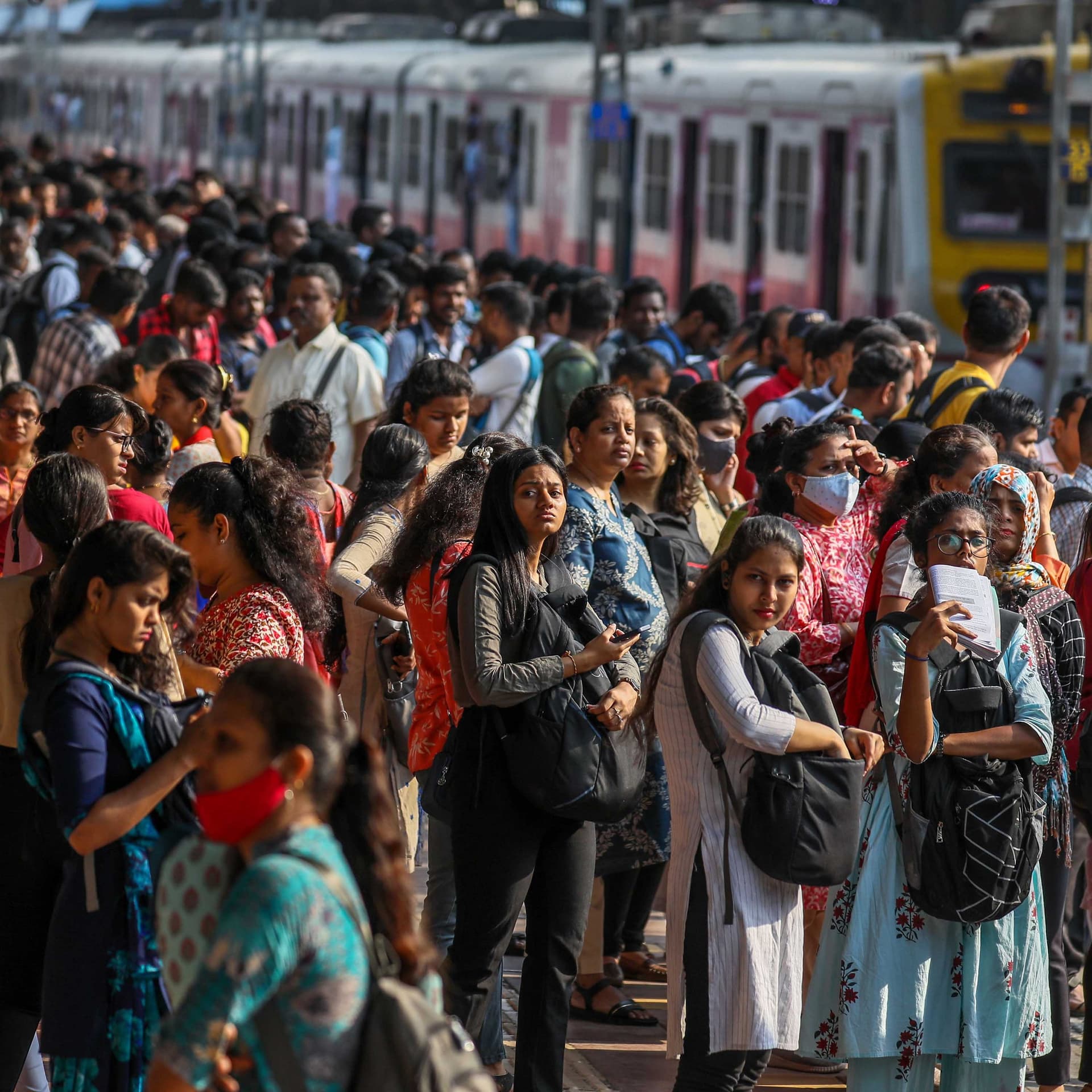
1:37The Documentary, home of the best documentaries from the BBC World Service. I am Rishbhanu Bharuwa in India, where the country is in the middle of the world's biggest census. It's a count that reaches every corner of the country, from the floodplains and tea gardens here in Assam, to the crowded lanes of Kolkata and the high-rise stars of Mumbai. The scale is staggering. And since the last census was conducted in 2011, India has added about 200 million people to its population. It doesn't just record how many people live here. It captures religion, languages, housing conditions, education, work and migration.
2:23All censuses are important and this one is particularly important. The current one is also important because it may be, it can be used for reallocation of electoral seats in India. And for the first time in nearly 100 years, caste is back on the agenda. It's probably the most complicated thing that the census will count. There are more questions on this census than ever before, as India tries to understand itself and all its diversity. This is the documentary, Mapping India, the world's largest count, from the BBC World Service.
3:06India has launched the largest population count the world has ever attempted. and it's the first to be conducted digitally. More than 1.4 billion people, over 3 million field staff and self-enumeration in 16 languages. The whole operation monitored in near real time making it one of the most ambitious civic exercises on the planet. But for all the technology and scale, this is a national ritual that's been part of India's administrative tradition for more than 140 years. Demographer Dr. Sonalde Desai is from the National Council of Applied Economic Research in New Delhi. Early encounters with the census helped shape the work she does today.
3:48I grew up in a very small town in Gujarat. And in those days, they would come on your door and they would actually write up numbers. Because the areas in India don't always have house numbers. Even the streets are not very well labeled. So they would write with a chalk on your door a number so that they would know that this house has been already counted. You know, I don't remember a lot of it as a kid. But later on, now look, I'm a demographer and I use census data on the time. So I'm very interested in how it gets collected. So I remember at one point, census interviewer came to our house. and I was sure that I'm only going to answer as many questions as they ask.
4:34I don't want to give any information in advance. And they are supposed to try and figure out how many families are living in the household and then interview each family. But we also had a household help and our family who lived in a couple of rooms nearby. And the enumerator is asking us everything. and I kept thinking, okay, are they going to get to this household help or not? And turned out that they were so good. Then not only did they get information about our family, he very carefully asked us about the helper and then went to their household to get the information. The quality of data collection done by some of the senses and numerators in India is just outstanding.
5:19And those experiences also gave Sonal De Desai a sense of how people across India view the census. Many see taking part as a basic civic duty. People are pretty used to the idea of census. They do want to cooperate in as much as they can. To understand how India's census became the vast operation it is today, we need to look at where it began.
5:46Historian Tripura Daman Singh says, the original census was born out of crisis. Censuses were very much an outcome of the 1857 uprising. What happened was that the East India Company was disbanded and the Crown took over the government of India. And they were faced with an underlying problem that was at its crux quite basic. The uprising had exposed the quite dangerous lack of knowledge about this vast territory that the Crown had just become the ruler of. If further discontent were to be avoided, then they really needed to understand their subject population a lot better. And then, of course, if you wanted to improve government, you needed better estimates and statistics for your revenue administration, for your fiscal needs, for sanitation and public health, which were increasingly becoming a thing.
6:40And so, India quickly became the template for the British to work from when gathering data. Here's Indian sociologist and caste expert, Professor Satish Deshpande. Indian statisticians were at the forefront of the development of the technology of a sample survey, something that is taken for granted today. On the other hand, the British colonialism perfected most of its techniques of governance, including the technique of the census, because India was its largest laboratory and the most complex place among the British colonies. In the early period, that is to say in the 19th and the early 20th century, there was also a major anthropological side, the need to know and understand this huge country that they were governing with actually a very, very small, relatively speaking, a very small set of administrators.
7:33So in many ways, the technology of the modern census, India is the birthplace of that technology. And India is a very critical place in the history of that technology. So the first proper decennial every 10 years census started in 1881. And some of the colonial administrators got quite enthusiastic about this. So, for example, the first professors of anthropology in Cambridge and Oxford universities were former census commissioners. India's statisticians really were leading the world. Techniques developed here were exported to other parts of the empire. But the original British census model hit difficulties.
8:15India's sheer diversity making it almost impossible to apply. There were large pastoral nomadic populations with kind of no settled abode. There were no pre-existing registration systems like there had been in Britain. Britain had birth registers, parish registers, etc. Against which the new kind of surveys could be checked. India had none of that. And then there were dozens upon dozens of languages and dialects. Often you had completely illiterate or semi-literate intermediaries and subjects. So they had to really address all of these problems. Plus they had to, and this is the controversial bit, introduce categories that they were never really used in Britain.
8:59Religion, but a kind of not an open-ended category of religion, but, you know, fixed category. so you had to choose whether you were Hindu or Muslim, but also caste. And this was a pretty big undertaking, both in terms of administratively, but also normatively, because it was more than just bean counting. It made the Indian census a kind of almost an ethnographic exercise. So by the late 19th century, the Indian census is fully established, counted every 10 years from 1881 until 1931. There is a census in 1941, but a stripped-down wartime exercise without caste. Then comes a decade of upheaval, war, famine, partition, independence, and the new Indian government has to decide whether caste should ever be surveyed again.
9:53The idea that caste and modernity could coexist was a very uncomfortable idea. understandably the early Indian leadership thought that caste should be done away with. Unlike religion, unlike many other things which are essential to our identity as Indians and this was given the circumstances at that time in retrospect this appears naive but at that time it was a very very understandable response to caste so if you want to abolish it then it was felt that counting it would be counterproductive. And that's true as well, that counting caste would give it fresh life. Plus, there was this association with the British colonial divide and rule policy.
10:41So, the new Indian government said, we will not count caste. So, after independence from Great Britain, India drops caste from the 1951 census altogether. It means those questions have not actually been recorded in an Indian census for 95 years. Decisions today are still being made on data that is almost a century old. Surveying caste now is an enormous undertaking. But what actually is caste? Think of it as a form of identity. Unlike race or gender, it is difficult to detect caste visually, as one might say racial difference or gender difference most of the time. The simplest way to think of it is as a sort of tree where the identity part of caste is the trunk of the tree, the economic part of caste are the roots and its branches are political.
11:38Caste is an institution that regulates both identity in its double-edged sense. That is to say, it promotes feelings of we-ness and belonging on the one hand, and otherness and othering on the other hand. And it is largely not a matter of choice at all. It is given by birth. So it's a kind of a complex form of identity, but it also regulates life chances in India today. People in other parts of the world often confuse caste with class. In India, caste and class are very, very closely intertwined together. It's very hard to separate them. Let me put it this way. While caste may not determine your class, the meaning of your class position is greatly inflected by that caste position that you occupy.
12:34So being an upper class person is all very well. But if you are a lower caste person who happens to be in the upper classes, you're going to be a minority. And if you're going to be an upper caste person in an upper class position, you're going to be surrounded by people like yourselves in your class. But what your class means for you, whether you're upper class, lower class or middle class, is shaped by your caste position. And in fact, some of us in academics have suggested various ways of thinking of them together, making it difficult to think of them separately. So neologisms like CLAST, for example, have been experimented with in India.
13:19And caste is always evolving. We have to think of caste as a sort of semi-benign, semi-toxic virus that inhabits the human body as a normal situation. It's not a disease, it's a norm. And that's as our bodies adapt to the world, it also adapts to the world. So in that sense, it's changing all the time, but it's there all the time. The problem is that it's not visible in the same way. And the languages that are available to us at a specific historical moment to speak about caste keep changing and these languages constrain us and enable us in different ways. So 95 years since it was last counted, the census teams will once again be asking about caste.
14:11With more than 3 ,000 castes and many more subcastes, it's one of the most complex questions enumerators will attempt to measure. Asking somebody their caste in India is itself a social event. So I respond to that according to what sort of social event I think it is. I'm thinking, who is this person who's asking me? What is his status relative to mine? How am I supposed to answer? Am I supposed to answer from above as somebody who's graciously answering a question that an underling is asking? Or am I below this person who has authority or who has, you know,
15:01After nearly a century without up-to-date caste data, India is trying to understand how its social landscape has changed. Sociologist Sunil De Desai says the picture is far from straightforward. Historically, what the caste data was collected was on the five big categories. that sort of allowed people to put themselves into categories that are most disadvantaged and who are eligible for affirmative action benefits. Now the idea is that let's try and collect caste information for everyone so that what we can do is we can determine what proportion of population falls into this, either the lowest caste or the middle caste, so that the reservation for them in jobs, in politics, etc.
15:47can be realistic. The problem is that the counting of these castes is very difficult, largely because there are so many names. You know, it's the same thing for our occupations. You could be a clerk in a government. You could be a clerk in a small shop. And those are very different kind of positions. Similarly, the castes can be sort of taken very broadly or very narrowly. What is really needed in India is to get an accurate count of various castes so that we can evaluate A, who is deserving or who has been left behind and hence is deserving of some sort of affirmative action. And B, which is even more politically sensitive, is which caste has actually done well now and maybe doesn't need to be receiving some of the affirmative action benefits.
16:4095 years on, how do people feel about being asked the caste question again? I've been catching up with a group of friends in Guwahati. Hello, I'm Anindam Goswami from Assam, Guwahati. Hello, I'm Konkana. I'm working as a banker in Assam. Hello, I'm Barsha. I'm a research scholar and based in Guwahati. What does caste mean in your everyday life? Do you know your caste? I know my caste. when a census person comes over are you comfortable sharing it? Yes I am. For me caste in everyday society is something which is irrelevant for me. Sometimes I would like to conceal my surname because as you know in India people associate your caste with your surname.
17:26So I don't want anybody to know me for my caste but for who I am. What people notice first about you when you say your name is your surname and then your caste. Oh, you belong to that. You belong to this. And then they kind of relate to you in that sense. If you're from their community, the conversation would be different. You know what I mean. Also in our marriages, occupation, everywhere caste is, you know, somewhere ingrained in a manner you don't want it to be. If I would have that option, I would omit my surname and I'd just say caste is irrelevant. Because coming from a specific caste also, we can say that it is irrelevant, which is true.
18:05But then if we talk about a person who belongs to the so-called lower caste, I think caste in that person's everyday life really matters. And he can never shy away or he can never escape that thing. Which I, coming from a very different caste, can really get away from that thing. For me it is irrelevant, but for others it is very, very different than how it is for me. I have been treated differently because of my caste. I have seen people talking to me in a different manner and bringing up caste to just sometimes kind of patronize me also, which is a negative thing. But coming from a place of privilege, I cannot say that it does not affect others the way it affects me.
18:47But I think it is ingrained in our minds. And from decades and generations, we have been operating in a certain society where caste has always mattered. Actually, it's a big elephant in the whole society, not in the room. Where people know it exists, they kind of, you know, slightly ignore it and let it be. We see two different things here. Exactly polar opposite, I guess. So there is one thing that is the privilege that my friend just talked about. Also, there is a kind of reverse bias, you know. We don't enjoy both. As millennials and Gen Z people, we do not enjoy the privileges as well. We don't want, we don't demand the privileges.
19:24of the rules we also don't want to reverse bias that sometimes we see but we cannot be complaining about reverse bias because there are other people who are facing worse situations than us when you have official data in a census based on caste like for example there are certain ghetto areas right only based on cause where they're uh you know marked as communities who are backward okay that will again you know kind of create something in a society we can't imagine about people would not want to go there private companies might not want to invest because they know they will not have that kind of a profit.
19:55So my point is there when you point it out that data should be secure. With me as a child of an intercaste marriage and especially where my mother is a Brahmin and my father belong to an OVC community. So now when the census arrives at my house and they ask for my caste, I don't really know what caste do I actually apply for. Like, we understand the caste is patrilineal, which by that logic, I should actually opt for my father's caste. But I've never really grown up with him. And I've never really interacted or had any sort of sense of belonging with the community. And since my upbringing has been with my mother and my mother's family the kind of lived experience is of a brahmin lived experience although i would not fall under the brahmin category so it becomes very confusing scenario for me and i was actually checking up uh online if i could refuse to answer the question about caste what i've recently gathered is that you could just say you're indian i'm wanting to believe the census makes good effect on the society regarding upliftment and all.
21:20But I just cannot divorce the religion and the caste. It's very difficult because religion is in us. We are not in religion. Somehow it is living in us. I really want to believe we can try and move outside this a little bit. But it will take time. Sociologist and professor Amitabh Kundu has been looking at the issue of caste for over 40 years. Now what happens? the moment you mention your caste, you try to give your other responses, which is caste compliant. You know, your food habits, whether your wife is working outside or not. You know, there are many castes in India where women would not go out.
22:02So your responses may be caste compliant rather than describing the actual situation. And actually, India has attempted to count caste in recent years. Gilles Venier is a New Delhi-based political scientist. The census in 2011 did not include caste enumeration, but there was a separate exercise called the socioeconomic and caste census, which was conducted by a different ministry. Some of the data was released in 2015, but all the caste information was withheld. And the official explanation at the time provided by the government was that there were data quality problems, there were errors, inconsistencies, duplicate entries, and just the sheer complexity of reconciling thousands and thousands of reported caste names into a coherent taxonomy.
22:55So different states sometimes grant different status to similar cast. Some castes have different names in different places. The spelling is haywire, so it's an extraordinary complex exercise. Something like 2 million castes were recorded because everybody recorded, sometimes some people record their own profession, some people recorded their surname and their linguistic variations. There are different states. So same caste may be spelled differently. So it made absolutely no sense. So this time, what they are trying to do is to standardize. Don't give the option to write down what caste you belong to.
23:32But they are giving the standard options for each state. Out of this, how many? So that they become comparable. remain a few thousands. So that is the challenge. Can we generate the caste data appropriately by giving some kind of a standard option? But the Indian government is confident it can collect accurate data this time around. Ministers recognize the sensitivities around caste and argue that collecting the information is essential to give policymakers a clearer picture of inequality. I'm Rajvano Barua and you're listening to the documentary Mapping India, the world's largest count from the BBC World Service.
24:18This is Steve Covino from Covino and Rich. All right, quick round of trivia before we get back into the show. But we're doing it differently this time. Every guy listening right now, you're a contestant. No buzzers, no calling in. Just answer honestly to yourself. Here we go. You got a belly and a little chest that won't go away no matter what you try. gassed by the middle of the afternoon, no drive left in the tank, and lastly, you lack that confidence and mental edge. Fellas, here's the thing. Those are classic signs that your testosterone's been sliding, and nothing drags it down faster than extra weight.
24:50The good news? Emerging research suggests that getting rid of it may actually be more effective than TRT. So why not take matters into your own hands? Strip off the weight that tanks your testosterone with Bioma GLP-1 booster. Every serving is packed with science-backed and third-party tested ingredients that crank up your natural GLP-1 production. So you can enjoy a leaner physique, surging energy, and increased drive. Visit bioma.health slash GLP-1 and use code CRSHOW to get 15 % off your first order. That's bioma.health slash GLP-1, code CRSHOW for 15 % off. Decisions made in Washington can affect your portfolio every day.
25:31But what policy changes should investors be watching? Listen to Washington Wise, an original podcast for investors from Charles Schwab, to hear the stories making news in Washington right now. Host Mike Townsend, Charles Schwab's Managing Director for Legislative and Regulatory Affairs, takes a non-partisan look at the stories that matter most to investors, including policy initiatives for retirement savings, taxes and trade, inflation concerns, the Federal Reserve, and how regulatory developments can affect companies, sectors and even the entire market. Mike and his guests offer their perspective on how policy changes could affect what you do with your portfolio.
26:12Download the latest episode and follow at schwab.com slash Washington Wise or wherever you listen. This advertisement feature is paid and presented by GoTurkiye. This is what most people come to Antalya for. Beach, sun and not much else. And that's fine. But head inland just a little and you can experience a different kind of Antalya. At Köprüle Canyon National Park, one of Türkiye's most accessible places for adventure sports. And personal favorite spot of local guide Berfin Özçelik. You can spend your whole day here. First, you should go to the canyon to do a rafting. But there is so much more than that.
26:54Yes, it's not just adrenaline that's to be found in these hills. High above the river, the pillars of Adam Rock surround the ruins of Selge, an ancient city that's been here far longer than the rafting routes. Selge is like a gem waiting to be discovered. So it's not exactly what you expected from a day in Antalya, but that's exactly the point. Plan your next detour at goturkiye.com today.
27:25I'm Brijhwanu Burwa and this is the documentary Mapping India, the world's largest count from the BBC World Service. This is not just the biggest census in the world. It also has more questions than ever before, up from 29 to 40. Everyone must legally take part in the census and the government has spent a lot of time and money trying to raise awareness of the current. So are people getting to grips with it. I'm on the streets of Guwahati, the gateway to the northeast of India, finding out.
28:08I'm Jotirma Sharma, and I'm here from Royal Avaaz, Guwahati. So when the census team comes to your door, what's the first thing you expect from them? they'll be asking some personal questions like like the numbers of people in my family my father mother the what whatever the stuff that we all do so this instance includes questions about caste okay how do you feel about being asked about that like i won't say it's unnecessary but as you know like i come from a you know brahmin family but i do not have that kind of thinking If a person who is below caste than me, I do not care much. I think of him of the same level as me.
28:50I don't say, hey, you cannot come and do some stuff like that. So I'm pretty cool with that. I do not think it's pretty sensitive, but I don't think it's unnecessary because the majority of the people think it's necessary. So I'm not going to question that.
Read the full transcript
29:10So tell me about your experience with the census. What did they ask?
29:19First, they asked how many people lived there, and they asked if the floors are tiled or otherwise. Then they asked about the number of rooms. However, they don't count the kitchen as a separate room. They asked about the condition of the bathroom and toilet. They asked if it was inside or outside the house. Then they asked about the drainage conditions. Basically, they were trying to assess the hygiene and sanitation. They also asked about our source of water. I told them we have to buy water. Though yes, they also asked about our roof, whether we have a tin roof or if it's terraced. Then they asked about electricity.
29:53And they even asked if we have a radio or if we listen to FM. I told them we have a TV, which prompted them to ask if we have cable TV. I said yes. Then they asked if we had Wi-Fi internet services. I said, yes, we have CCTV in our house.
30:16My name is Ashok Kumar Sharma. I'm a retired teacher. What do you expect when the census people show up at your door?
30:29I feel that the correct estimate of the socio-economic conditions of the country is essential. Based on these estimates, the government can take measures for economic reforms. That is what I feel is the point of a census. Do you see taking part in the census as a duty?
30:51It's important that we cooperate when they arrive, as a good citizen or a conscious citizen of India. I'll definitely cooperate when they come. It's our duty as well to participate and cooperate in this process. What are your thoughts on caste being included in the census for the first time since 1931? I believe there is a need for caste being included in the census. With the help of the caste census, the government can identify the socio-economic conditions and study how many have been uplifted and how many still require assistance. The government can then outline schemes and plans to further alleviate those sections.
31:43As we've already heard, caste is the most controversial addition, back in the census for the first time in 95 years. But caste is only one part of a much wider picture As people will also be asked to declare the nationality this time And the Indian census captures religion, language, household conditions, gender data, social and economic indicators Migration patterns, education, health and the everyday realities of how people live One of the most sensitive parts of India's census is language Not just what people speak, but how those languages are recognized, grouped, or sometimes absorbed into larger categories.
32:26The government says the census rationalizes and classifies the mother tongue responses it receives, grouping people's self-reported speech into the official list of recognized languages. We have 22 languages listed in the constitution as the scheduled languages to be provided patronage, state patronage. But there are far more than those 22 and those get neglected, particularly in the census process. And the census makes a further distinction between what people say they speak and what the state chooses to recognize. Languages are what the government recognizes and mother tongues are what the people claim.
33:11That distinction between official languages and people's mother tongues is at the heart of how India counts language. And few people understand its consequences better than linguist Ganesh Devi, who led the largest independent survey of India's languages. So 1961 census had a list of 1652 mother tongues. In 1971, and they showed only 108 mother tongues. That single administrative decision erased more than a thousand names from the official record and reshaped India's linguistic map for decades. There was a principle introduced that was, if there are more than 10 ,000 speakers of a language, the mother tongue, then the government census would include the name.
34:03If not, that inclusion was impossible. So in 2011 census, which is the last census India held, It had a list of 1369 mother tongues. It's a rule that still applies today and it means that many smaller languages never make it onto the list at all. If the state does not acknowledge the presence of a mother tongue language, then there is a very good chance that that language may disappear for want of encouragement. So from 1961 to 2011, exactly half a century, close to 280 mother tongues in India, unfortunately died. For Ganesh Devi, the census doesn't just record languages. It can help sustain them or hasten their decline.
34:56Many languages will be brushed aside, put down under the label all others. That is the worry. It's the limits of the census language list that led Ganesh Devi to begin the People's Linguistic Survey of India, his own nationwide study to understand what the country speaks beyond the official categories. In the past, I've done an exhaustive, comprehensive linguistic survey of the country, covering 780 living languages. This was spread over more than a decade. I'm surprised that it ever got completed because it's a very vast country and great diversity In the last census in 2011 the top 5 recorded first languages were Hindi, Bengali, Marathi, Telugu and Tamil and the two biggest second languages were Hindi and English with English being the largest non-native second language And while many languages struggle to be counted in full the same is true of religion In 2011 Hindus made up nearly 80 % of the population Muslims around 14 % with Christians, Sikhs, Buddhists and Jains making up much smaller shares and hundreds of other faiths placed into a single category marked other But as Ganesh Devi argues that box hides an entire world of religious practice Famously India has been a place for giving birth to many religions Some are very, very prominent world over like Buddhism, Jainism, Sikhism, Hinduism.
36:30There is, of course, Islam. There are some other religions practiced by a smaller number of people. But there are also the nature worshippers, the indigenous communities. In India, people either belong to a caste or they belong to a tribe. The caste people have all these standard religions. that tribes do not fall within those religious brackets. They follow their own religions. But the options given in the census schedule of questions is your religion. Are you a Hindu, a Muslim, Sikh, etc., etc., or others? And so all these tribal communities with their religions will be described as other religions.
37:14And that single word, other, is where hundreds of India's fates disappear from view.
37:29One of the areas statisticians will be watching closely is how India counts women. Not just their numbers, but their work, their health and their place in society. Here's Indian demographer Professor Amitav Kundu again. Women are being underreported. And the underreporting is to the extent of around 1 % or less than 1%. Women employment is being underreported. You know, when you ask detailed questions, you do find that your census has a systematic bias against women's employment. Undercounting of women in India has been a chronic problem and that we have tried to improve over time. If a woman is employed, is she in the agriculture?
38:09there is a tendency of the male head of the household to say no she is not working because there is a problem of property like to land so the head of the household would like to mention that the woman is not working but actually she is working and if that is recognized the head of the household may think that she will put a claim on the property so there is a tendency of undercounting household work of the woman significantly which is about 2 to 3 percent which is much higher than the undercount of the population per se And while the census asks women about fertility and records gender as male, female or transgender, it doesn't ask anything about sexuality.
38:49India's census has never collected data on sexual orientation and there are no plans to introduce those questions. There are reality that census doesn't capture and there is the reality that it does capture both affect women. Indian demographer Sunalde Desai again. What it doesn't capture always very well is the proportion of women who are working. because women's work often doesn't get counted well. You know, you sort of think, okay, women are raising chicken, they're raising children, they're doing it all simultaneously, and maybe it's just part of their housework, instead of thinking of them as poultry farmers.
39:25So women's activities don't always get counted very well, and that is a particular issue with census, because census enumerators don't understand what women do. women don't see themselves as working. But you know, the reality that census does capture, which has also been very important in India, has been that it was the census data which told us that India had more boys than girls. Every other country in the world has more girls than boys because there are more girls survive more. In general, the childhood sex ratio tends to be favoring girls. In India, it tends to favor boys. And that was the census was the first thing that picked it up.
40:09So now the question is, what are we going to find in this census? Whether this bias against daughters, which basically comes out of either neglect or sex-selective abortion, has it disappeared? Here's Indian-focused economist and demographer, Dr. Sangeeta Vyas. Many women do, you know, piecework sewing and things like that. So they're working in the home. They're earning not a whole lot of money, but like they're still earning some money for their labor. And that would be the kind of thing that I worry about being missed. Basically, I think you don't need to change senses as much as you need to train your enumerators to understand and ask the right questions.
40:52So I think that there was this one census, I believe it might have been 1981 census, where women's groups got together and they printed up posters. And they distributed those posters to census workers to show them that all of these activities women could be doing, looking out of cow, collecting fuel and firewood and all that sort of things should be counted as work. So I think what is needed is to train the census enumerators. and I believe that this is going to be the task for the next phase of the census. And it's not just women's work that risks being undercounted. Disability is another area where the numbers may not tell the full story.
41:32There are certain things where people would have hesitation in publicly giving the right information. For example, we have information on physically and mentally challenged people. India records very low percentage. United States would be something more than 15 % of the people who will record some kind of a disability or a challenge. In the Indian context, it is much lower. It's 2%. And that's not because in a country which is relatively more malnourished and having less access to medical and other facilities, I would expect the percentage figure to be high. But since we don't have social security provisions, there's no advantage in my declaring that my child is challenged.
42:20Because if you get some kind of benefit, there is an incentive to declare that. And there is a social taboo to say that my daughter has some eyesight problem or some automotive disability. So they try to hide that. It means millions of people may be missing from the official record and from the services that depend on it. And despite new technology and a vast army of enumerators, there are still basic challenges facing India's census teams. So the two areas of blind spot that are interesting and they are at the opposite end of the spectrum. One is actually homeless people. And capturing homeless people in any country is very difficult.
43:01The US has to make great efforts and still doesn't succeed. So capturing people who are not located in a particular residence is a difficult task. The second area that we might have to look at is actually the rich people. Getting to the rich people is much harder than even getting to the poor people. So that might be something that census will have to make a greater effort. So at both ends of society, there are people the census struggles to count, those with no address and those behind walls. The government says it's aware of these gaps. In its own census instructions, it describes houseless people as a vulnerable group needing special nighttime enumeration.
43:42And it tells states to prepare plans for areas difficult to access, including locked or restricted households, to make sure they're covered. My first worry is about the option being given to the educated, organized sector, relatively middle class and the upper class, to fill up the questionnaire digitally online. Because I think presence of a person allows some kind of cross-checking. Somebody can't say, I have nothing in my house, I'm very poor, and the person who is enumerator who is sitting in front of you. So, you know, it has happened since I have been associated with some of the enumerators.
44:23They say they would mention about three children and then say, but I saw another child here. Oh, yes, I forgot, you know, that somebody is also there, which is related. So somebody being present makes the respondent read the concepts, understand what is being required. On the other hand, if they are doing it casually and for the midi class and the upper class, the time that they give is much less and they think it's a burden. You know, for the poor, it is a question of insecurity. They would like to be counted. But for the rich, it doesn't matter. So they might not really spend that much of time in responding if they are doing it digitally.
45:06But Professor Amitav Kundu says there are even deeper blind spots. the registrar general in 2011 was a good friend and he used to share the fact that in the localities where the minority population lives or the areas where the Shidulka Shidul tribe population lives there is a demand that we have not been counted properly please my house has not been visited and it's quite possible that the enumerator found the house locked and collected the information so they said we took special care of sending people because there is awareness that we should be counted. And the Indian government is moving ahead with a separate count for what it calls the particularly vulnerable tribal groups, the PVTGs, saying that clearer data will finally correct decades of statistical invisibility.
46:01Another area the census will be watching closely is migration. Who's moving, where they're going, and how long they've been there? India is known for its migration. We have the largest diaspora in the whole world. And as a country, India is also one of the most important recipients from other countries in the South Asian region. Indian Migration Specialist Dr. Binoy Peter is the Executive Director of the Center for Migration and Inclusive Development. Internal migration in India is many times larger than the international migration from the country, which means it's humongous. India being the most populous country in the world, there is substantial internal migration for various reasons.
46:46Over a period of time, there is significant migration from north to south. Corridors have evolved connecting northern Indian states to southern Indian states. particularly I would say eastern and northeastern states to southern Indian states. Because in the west you have for people from Rajasthan and Gujarat, you have Gujarat, Ahmedabad, Surat, these industrial towns. And then you have Mumbai. But rest of India towards central, eastern and northeastern side, people were moving towards southern state because climate change has been impacting agriculture. then there is better access to education and you also can liberate yourself from the caste-related occasions or occupations in your native place.
47:34You are not constrained to do what your caste identity demands in the rural areas. So if you go out, you can do any work. The direction of migration is now towards south. Because of the acute shortage of workers, the wage rates are very high. I mean, in Kerala, you have the highest wage rates in the entire Indian subcontinent in the informal sector. So it's very difficult to hire a worker to get some heavy physical job done compared to hiring an accountant or a formal worker for a clerical job. So there are so many factors that are contributing to the evolution of new corridors towards southern Indian states from eastern Indian states.
48:17Some of the longest migration corridors have evolved over time in the past few decades, I would say. And these are going to stay. So as we know, India is the world's most populous country. But the big question is, will it keep growing? Here's political scientist Gilles Vénière. The Indian census is the world's largest population enumeration exercise. The scale is staggering, and by definition, it significantly increases every time. Since last year, India is the world's largest populated country with 1.4 billion inhabitants in counting. And since the last census was conducted in 2011, India has added about 200 million people to its population.
49:07That alone is more people than in the world's most populous countries. And so one can imagine that the logistics alone of conducting the Indian census is staggering. And that sheer scale is why the census matters, because India's population story is changing fast. One of the biggest shifts is simply where people live. In addition to the urban centres identified on the basis of the past census data, they're also using the satellite information and that is happening in many countries. In India, we have not done it so far to see that the identification of the urban centers is not on the lower side.
49:48There's a major concern from the Indian planners that urban population is being underestimated. Since urban is being undercounted, overall development is also being underreported. Since urban figures are higher, the developmental indicators are higher than the rural development indicators. And if the urban population is undercounted, the overall reporting of development gets underestimated. But I think it's very important that we identify the urban centers properly. Of course, we can tell that Indian population is aging. But where is that aging population located? We don't know. Sonalde Desai again.
50:27We don't know how much migration has taken place because some states of India actually are seeing a large outflux of people from, you know, hill estates, people are moving down in search of jobs, leaving their elderly parents and sometimes women and children behind. So getting all this data will be very important, particularly when we start thinking about the number of elderly and who cares for them. I think the biggest
51:20The census will also update the sex ratio at birth. One person watching the fertility decline closely is economist and demographer Sangeeta Vyas. Fertility in India is declining quite rapidly. And this is happening despite relatively low labor force participation among women. And despite the fact that most women get married at a young age and most women have kids at a fairly young age. So I'm keen to see what these patterns are. Despite a lot of incentives, women are not coming forward to go for children. The basic reason is because there's a motherhood penalty, we call it. Women has to bear more cost compared to men in terms of bearing children.
52:08Several states of India have much lower fertility than England and France. A TFR of France is 1.7. Several European countries have 1.5, 1.4, 1.2. But several of Indian states are 1.1, 1.2. So if fertility is falling and some states are already at ultra-low levels, where is India heading next? Indian demographer Dr. Srinivas Goli from the International Institute for Population Sciences in Mumbai has been tracking the long-term trend. We never thought that Delhi will be reaching 1.1 fertility in such a fast way. Actually, we are predicting that the population peak, if it is currently, according to UN Population Prospect 2024, it is 2061.
52:51But it might come slightly earlier than maybe 2055 or even 2050. India might even get old before getting rich. The census will give us the definitive count as it stands. But the deeper story is already clear. Fertility is falling, the south is aging, the north is still young. India may be far more urban than we think and a population peak is likely to come sooner than expected. The census detail will show how the world's most populous nation is changing and what that means for this diverse country's future. You've been listening to the documentary Mapping India, the World's Largest Count with me, Brijmanu Barua, in Assam.
53:34The program was produced by Ashley Byrne and is a Made in Manchester production for the BBC World Service.
54:13Transcription by CastingWords life stage or experience, Schwab has everything you need, all in one place, so you can invest your way. Visit schwab.com to learn more.
From the publisher
India is undertaking the biggest population count the world has ever attempted - a digital census designed to capture the lives, identities and realities of more than 1.4 billion people. With three million field staff, self‑enumeration in 16 languages, and real‑time monitoring across cities, forests, floodplains and megacities, the operation is both a national ritual and a vast technological experiment. The census reaches far beyond population totals. It records religion, language, housing, migration, education, work, and for the first time in nearly a century, caste.