
In short
Spiti Valley’s oral traditions and local beliefs (especially “Lha” spirits), and how modernization (phones, internet, tourism, bridges) is changing or eroding them. The episode also links rituals to survival in a high-altitude, snow-dependent landscape.
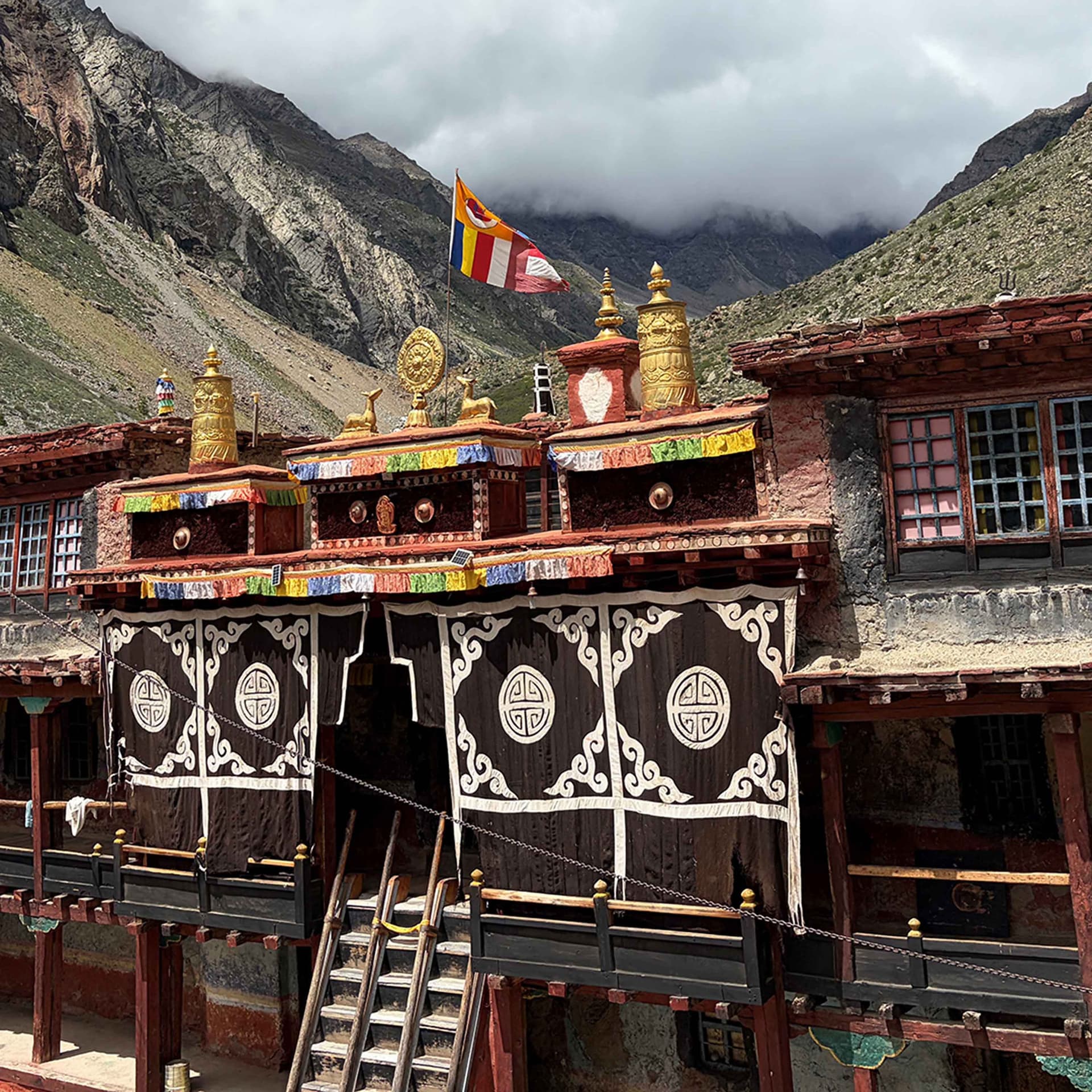
Guests (and backgrounds)
- Jane Orton, folklorist; has visited Spiti for over 10 years collecting stories/songs.
- Lama Tashi Namgyal, monk at Ki Monastery (largest of five monasteries in Spiti).
- Devi Dekit, Sagnan village performer of Gelshung bedtime stories.
- Punchuk Namghal, elderly from Kibber; discusses Lha and karma.
- Dorje Namgal, from Kibber; explains types of Lha and possession.
- Sonam Yangsam, 25; records oral folklore; consulted Lha for illness.
- Lobsang Chepal, architect trained as a monk; recounts monastery defense by a Lha.
- Chetup Sangmo and Dharmabuti, elderly women from Kibber; explain why mediums are rarer.
- Lobsang Dalma, from Chicham; explains Balutu Kangbu.
- Gatuk, in Ki village old people’s home; recounts Balutu Kangbu.
- Dolma Bhuti, elderly from Chicham; comments on phones and storytelling.
- Kalzang Sering, 31; snow-leopard spotting/porter; shares Kinore-music taboo.
- Tashi Doma, 55; discusses songs and monastery-building traditions.
- Lobzang Dolma, 63; contrasts “mythical” vs “real” stories; worries about loss.
Key claims + notable examples
- Gelshung stories can last three nights; Devi learned songs from her mother, now among the few who know them.
- Lha are guardian/protector spirits integrated with Tibetan Buddhism; they can curse/cure but not provide peace/enlightenment; some can possess “paramamo” (fearful) people.
- Mediums are disappearing: in Chicham, no one can receive the local Lha anymore, so spirits/ghosts can’t be seen.
- Rituals/pujas aim to ensure enough snow; people fear polluting water springs because of punishment.
- Balutu Kangbu (wish-granting, bear-like strength) is seen only by paramamo; stories include people tricking him to fetch a whip and bargaining for money or long life.
- Biul hidden lands: some villages are said to have been biul; inside is similar life but without salt.
- Kinore music taboo: playing it in Losar/Hansa can cause punctured tires or frozen phones.
- Tourism brings income and social mixing, but is often “tick-the-list” and not integrated with local narratives; Lama Tashi wants research/collection of oral history and a school teaching traditions.
Written by AI. May contain mistakes. Listen to the episode to check what was said.
Chapters
Tap a time to open that second in VOThe Changing Landscape of Spiti Valley
0:30 to 0:46
Exploration of Spiti Valley's cultural and technological changes.
“Listen to Choiceology at schwab.com slash podcast or wherever you listen.”
The Changing Landscape of Spiti Valley
1:07 to 2:10
Exploration of Spiti Valley's cultural and technological changes.
“Devi Dekit performs a Gelshung, a story about good and evil.”
Understanding La: Spirits of Spiti
2:10 to 6:36
Discussion on the concept of La, its meanings, and significance.
“collecting their stories and songs, documenting a dying tradition.”
Rituals for Snow and Environmental Beliefs
6:36 to 9:46
Insights into local rituals for snow and their environmental implications.
“But nowadays people have paratenbo, so the la cannot enter them, and they can't see ghosts or spirits.”
Legends and Beliefs of Invisible Beings
9:46 to 14:01
Stories of Balutu Kangbu and other hidden entities in Spiti.
“I remember visiting Comic Monastery with a friend one January to see a puja for snow, and he was telling me that they should have already had snowfall by that time.”
The Significance of Larbe in Local Lore
14:01 to 15:51
Explore the local beliefs surrounding the larbe and its connection to karma.
“Once she hid herself, then the larvae hid her and people couldn't find her.”
Changing Generations and Cultural Preservation
15:51 to 16:21
Discussion on the diminishing interest in local stories among younger generations.
“This is Mountain Spirits of Spitty from the BBC World Service.”
Transformations in Spiti's Connectivity
17:05 to 19:07
Reflecting on the technological changes in Spiti and their impact on daily life.
“Has Spiti changed a lot since you grew up?”
Cultural Stories and Modern Music Taboos
19:07 to 21:14
Exploring local beliefs about music and its cultural implications in Spiti.
“Like if you start playing the song of Kinore in that valley, so automatically something bad happens to us.”
Oral Traditions and Language Loss
21:14 to 23:22
Discussion on how language and storytelling traditions are fading away.
“Even right now, thinking about the already lost repository that is there, we've already lost so much because my grandmother, she is like a repository of those stories.”
Show all 13 chapters
Tourism's Impact on Local Culture
23:22 to 25:39
Insights into how tourism has changed social dynamics and economies in Spiti.
“That narrative influences people a lot on how they perceive their own oral traditions and their own roots.”
Preserving Spiti's Oral History
25:39 to 28:00
The necessity of documenting and preserving Spiti's oral traditions and stories.
“He thinks that a project is needed to collect and preserve Spiti's oral history.”
Community Traditions at Risk
28:00 to 28:15
Explore the challenges faced by the community in preserving their traditions.
“it is a big alarm sign for our community and how we'll carry forward our traditions and preserve them in the long run.”
Transcript
Automatic transcript. May contain errors.0:00This BBC podcast is supported by ads outside the UK.
0:30Listen to Choiceology at schwab.com slash podcast or wherever you listen. Odoo, providing tools for businesses across industries into one fully integrated platform. Whatever your business needs, Odoo is committed to providing it. Learn more at odoo.com.
0:51Dr Jane Orton:The Documentary, home of the best documentaries from the BBC World Service.
1:06In Sagnan village, in India's Spiti Valley in the vast Himalayas, Devi Dekit performs a Gelshung, a story about good and evil. It's a story woven to entertain families at bedtime, when they're trapped indoors by Spiti's long, harsh winters. The story can stretch over three nights.
1:33Devi learnt songs like these from her mother. She's one of the very few people who still knows them. The valley is changing. Its isolation is coming to an end. Mobile phones, the internet and tourism are connecting the world's highest mountain range to the rest of the world. But oral traditions, like singing the Gyalsheng, are becoming harder to pass on. Traditional beliefs are disappearing.
2:04I'm Jane Orton, and you're listening to Mountain Spirits of Spiti. I'm a folklorist, and over ten years, I've been visiting Spiti Valley, collecting their stories and songs, documenting a dying tradition.
2:23I am Lama Trashinamjian. I am now across the 60th place. Lama Tashi Namgyal is a monk in Ki Monastery, the largest of five monasteries in Spiti Valley. Spiti is a very remote place, not connected to any other world. Spiti is very calm and quiet. Before, 10 years ago, 20 years ago, now a big change is coming. When I first started visiting Spiti in 2015, it took three days to get to the main town of Kaza. It involved an overnight bus journey from Delhi, followed by a day-long minivan ride. Khaza is over 12 ,000 feet above sea level, and it's usually where people start noticing the altitude. Some people find it hard to breathe.
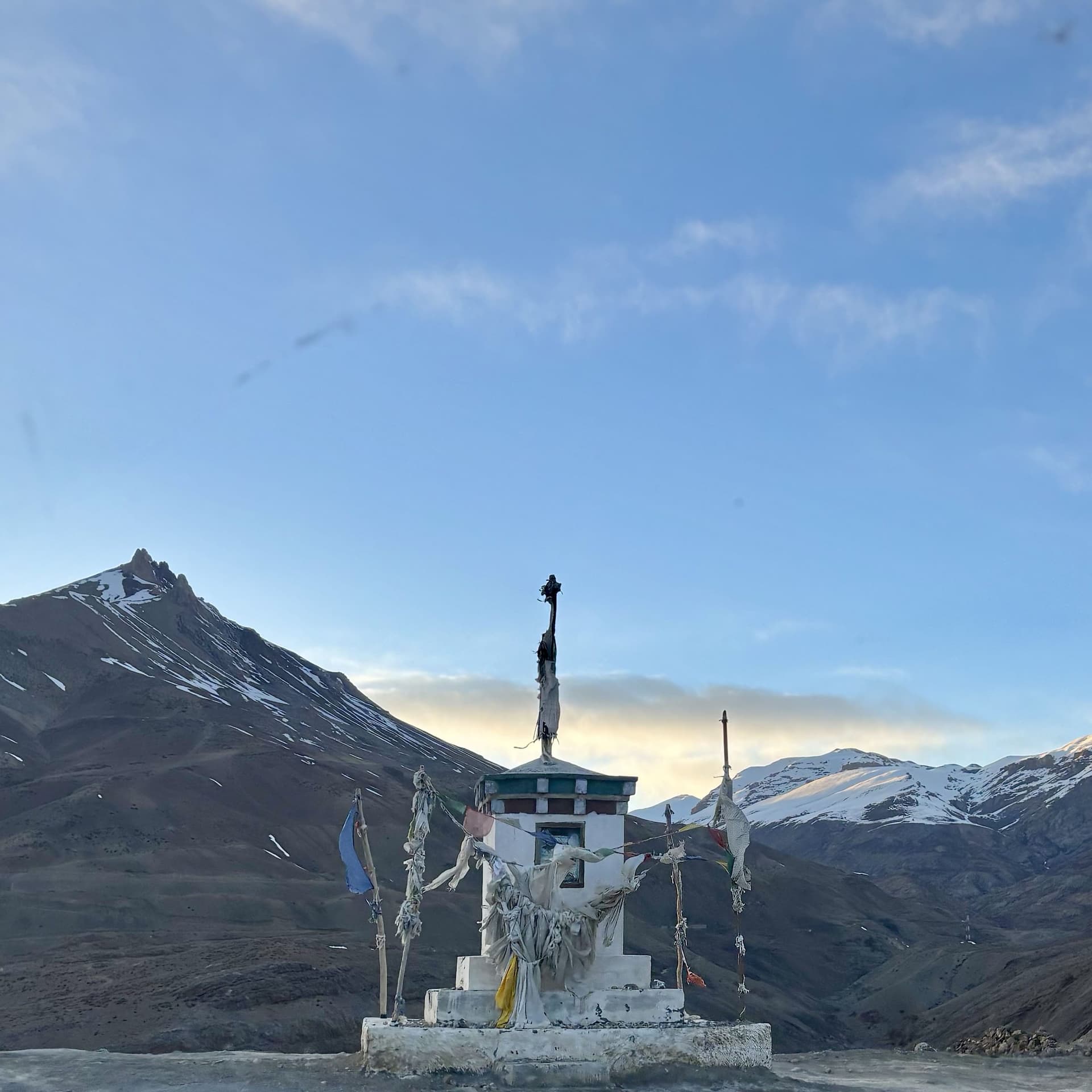
3:13Spiti Valley is heartbreakingly beautiful. Dramatic sweeping views across the valley, sharp mountain edges, and huge drops when you look down. And of course, it's home to the elusive snow leopard. As I got to know people, it became almost impossible for me to walk down the street without being called in to drink tea. And over many, many cups of tea, people told me stories about their beliefs. In Spiti, there are many Laa, and each Laa has its own sonam or luck. If you perform good deeds, whether you are a la or a human, everyone receives the result of their own karma. This is Punchuk Namghal. He's in his 80s now and he's from Kibber village.
4:03Kibber is 18 kilometers from Gaza. Its altitude is a heady 14 ,000 feet. Punchuk is talking about la. It's not a word with a direct translation into English. Some local people translate la as spirit or god or deity. When Tibetan Buddhism came to the Himalayas, local beliefs in Lhaz were integrated into the new religion. Instead of getting rid of them, they were recruited into protecting the teachings of Buddhism. The Lhaz has the power to curse and to cure the cursed person, but he does not have the power to provide spiritual comfort or peace. He can tell where the curse came from and how one can be protected from it.
4:55According to our religion, La is our guardian who will help us to learn how to live. This is Dorje Namgal. He's also from Kibber. And there are different kinds of La. One is Yulla, which means village La, or protector spirits who can only help here. and he is just a Yiddha who can only help us live in this world, but he cannot give us spiritual enlightenment or an afterlife. He will help us if we ask, but he cannot go further than the afterlife. If he tries to help us in the afterlife, then he will take refuge in the Buddha and disappear. That's what Lah is. And some people can also receive Lhaz into their bodies, and they're called Luya.
5:45Dr Jane Orton:The liver also can see the dead bodies, dead men or dead living beings souls. Yeah, he also can see. Lhas are central to local rituals and are often credited with powers like the ability to heal others. But a la can only enter into people who are paramomo, a word that means to have fear. If you don't have fear, you're considered Paratumbo. But loya are increasingly hard to find. In nearby Chicham village, there is no one who can receive Tamchan, the Chicham la. Chopal Tandup, the caretaker of the Chicham temple, tells me why.
6:32Earlier, many people had Paramamo, so the la used to possess many people. But nowadays people have paratenbo, so the la cannot enter them, and they can't see ghosts or spirits. That's the difference.
6:50This was also explained to me by two elderly women, Chetup Sangmo and Dharmabuti, in Kibber.
6:58Dr Jane Orton:If he doesn't find any medium, then he will stay in his realm, in a state of meditation. he is unable to manifest or appear. My interpreter Tashi elaborated further. There is a tamjin, but he doesn't have a body, so he comes inside the kibur's las body. Then he tells people that I don't have any body, so I'm lending his body. And in Spiti, people can call on these las for help. My paternal grandfather is Allah himself. He took the law into his body. I am Sonam Yangsam and I come from Spiti Valley. I am 25 years old and in terms of interests, I have a keen interest for reading, hiking and also recording oral folklore traditions and oral narratives.
7:59I have very vivid memories of my childhood, getting dressed in that white robe that the La wears. And then people used to come to him a lot to consult him and ask him the reasons of the illnesses that they have. I myself was taken once to La by my family for some illness that I had. La's also provide physical protection. Lobzang Chepal is an architect who trained as a monk. Once bandits came to rob Ki Monastery. In our Ki Monastery, there is a lah called Kando Shuyang Shansomba. At that time, there were not many monks there, only a few monks. There was a Sanpa who was a conure or caretaker of Ki Monastery.
8:48When the Sanpa found them, he took a gun and pointed at them from the top of the monastery and called upon the Kando Shuyang. And the kandu is powerful. The gun was pointed at the bandit leader, Mango, and the leader got shot. After that, all the bandits ran away. Even now, their guns and weapons are still in the key monastery. Oh, I didn't know that. I see. So it's kind of teamwork between the technology of the guns and the deity. Yeah, yeah. Yeah, interesting. Life without snow in Spiti is impossible. Drinking water, bathing water, the harvest, all depend on snow. To ensure a good snowfall, local people use prayers and rituals called pujas.
9:46I remember visiting Comic Monastery with a friend one January to see a puja for snow, and he was telling me that they should have already had snowfall by that time. I asked him what happens in the years when there's already snowfall and it's time to do the puja. And he said we ask for more. You can never have enough snow.
10:09So we have a lot of water springs around our village. It was said that near those water springs you cannot pee or you cannot make a mess or pollute those areas. because otherwise you will get punishment from the water law and then you will get, you know, bumps on your skin, pimples or like chicken pox. So it's more like how ideas and measures to protect the environment are linked with, you know, personifying them and kind of spreading a fear. Nobody would like dare flout those rules, you know.
10:48The Lars aren't the only invisible entities in Spiti's hidden landscape. In many villages, I heard about Balutu Kangbu, a wish-granting figure. He's only one foot tall with a one foot tall stick and a one foot tall hat. If you take his stick and his hat, he must grant you wishes, but he has the strength of a bear. In some villages, they say that only people who are paramomo, those who have fear, get to see him. In Chichen village, Lobsang Dalma explains that a woman managed to take Baloo's cap and stick and made him work for her. Baloo managed to escape through trickery.
11:31When spring season came, the family went to the field. They forgot their whip, so they asked Bhalu to bring it. There was a grandmother who couldn't see well. So Bhalu asked, could you lift me up? We forgot to take the whip, so she lifted him. And then he took his stick and cap and ran away.
11:59And in Key Village, in the old people's home, Gatuk tells me that. Balu Tukhangbu used to go everywhere and he has extra flesh on his legs. If we press on that, then he can't go anywhere and sit there. And if we can't press it, then he will run away and hide. If we capture him, then he will ask, what do you want, money or long life? If we say long life, then he will grant it. And if I say, I want money, then he will give us money.
12:40In Spiti, some people believe that those who are paramomo can not only receive Dala and see Baloo, but they can also see Biul, hidden lands that most people cannot see.
12:54There were some bushes over the ridge and houses could be seen from a distance, but when we go closer, they are no longer visible. We can see it from far, from Thakdom near Ronglong. No one has ever been there. We can't go over that mountain.
13:21Chicham, Demiul and even the Mane villages were once biul. So inside of, in a biul, is it like ordinary people and ordinary houses or is it normal life? like here? Yes, they are the same as us. They have houses and live the same way as we do. The only thing is that they don't have salt.
13:51People also told me about the La Bay, a kind of la that hides people. Dolma Beauty and Jetup Sangmo remember the La Bay taking someone in their village.
14:05Once she hid herself, then the larvae hid her and people couldn't find her. She was offered sausages and fire as well. And even if that person is sitting here, people who are searching for her cannot see her. I don't know the reason behind it, but I think La hides people away because of a person's karma. But for Dorje Namgau, the larbe carries a different meaning for him. As for the larbe, it also happened to me. In that larbe, we aren't hidden. But we feel scared and want to be hidden. And also we feel sad when people say they can't see us. It's not that they can't see us, but it's about the timing of the people searching When they were searching for me here, then I would hide there.
15:00And when they come to find me there then, I will hide myself again. That's when people thought Larbe kept me hidden.
15:13But the majority of people you've heard from so far are getting old. These stories and the firm beliefs and the deities who drive them, they stretch back generations. but it's getting harder to see their future. And what about your generation? Are they interested in these stories as well? I think the interest is slowly dying down. These narratives are what give you that rootedness, right? To a place, a sense of belonging. I don't think people are that much interested to preserve. The local people are not that much interested, the younger generation. This is Mountain Spirits of Spitty from the BBC World Service.
16:21Help avoid costly mistakes. Listen to Choiceology at schwab.com slash podcast or wherever you listen.
16:5120 seconds. Join millions saving billions on hidden fees. Be smart. Get wise. Download the Wise app today. T's and C's apply.
17:04You're listening to the documentary from the BBC World Service. I'm Jane Orton. Has Spiti changed a lot since you grew up? When you grow up, what has changed in Spiti?
17:22Dr Jane Orton:Everything.
17:26That means everything has changed. When I first came to Spiti in 2015, to go from Kibba to Chicham, I had to climb into a metal basket on a pulley system to cross a very deep gorge. I dreaded the basket, although old ladies would happily pull themselves across with their shopping. Now there is a bridge to Chicham, famous for its altitude, where tourists stop to take photographs. I asked what Dolma Bhuti, one of the elderly women, thought about having mobile phones now. It is a good thing. We can see a lot of videos and we get news from all over. For me, I don't know how to use it. so my son shows me some dancing videos and other videos and it is so good from the youngest to the oldest they now have phones and in old times in plowing season people used to scream and shout to call each other for lunch and other things now they have phones so it is really easy
18:37Dr Jane Orton:Is it disturbing you? Like, it's okay? No, this is fine. Thank you for agreeing to the recording. What's your name, please? My name is Kalzang. Kalzang Sering. I am 31 years old. So you were telling me that you worked as a snow leopard spotter? Yeah. Actually, last year I went there as a porter. So there were some foreigners, like from France, Italy, like this thing. Kauzang told me about Allah, who famously takes offence to music from a neighbouring place, Kinore. It is a very deep story. Like if you start playing the song of Kinore in that valley, so automatically something bad happens to us.
19:19Dr Jane Orton:Like if you are going through a vehicle, you start getting punctured. One of my friends, he's in the army. He went to a function, like a marriage ceremony there. so when he was coming he was playing a loud music of that Kenori song so when he was coming his tire got punctured like not even a single like two tires got punctured
19:46Everyone agrees that you should not play Kenori music in Losar and Hansa even people who are a bit sceptical about other local stories A friend of mine was in Losar, having a party after a cricket match in Hansa. They completely forgot this rule and started playing Kenori music on their mobile phones. Their phones froze until morning. To me, this is one of the most interesting aspects of technology's arrival in Spiti. Even though technology is new, the Lars still interact with it.
20:17Dr Jane Orton:Her name is Tashi Doma and she's a 55 year old. So the song she is about to elaborate is on how the monasteries are built.
20:58Dr Jane Orton:SONG PLAYS
21:20So, I'mção. Even right now, thinking about the already lost repository that is there, we've already lost so much because my grandmother, she is like a repository of those stories. Not just the bedtime stories, but just the oral narratives. She knows a lot of oral folk songs, which are not written and recorded anywhere. Like when I go and meet her, I sometimes tell her to tell me those stories. I also record the songs on my diary and on my phone. Sometimes I am also not able to understand particular words that she uses when she is narrating those stories. And she also fails to explain me what those mean.
22:03So you can also see how language loss is also happening.
Read the full transcript
22:10In old times, people didn't go outside. They just stayed in. Lobzang Dalma, the 63-year-old from Chechen village. Our grandparents and mothers used to tell stories. There are two types of stories. One is Khyakshung, means mythical stories. And one is Gilshung, means real stories. Nowadays, people see all stories in the TV and there is no need to tell them. And they don't come to sit with us and even if they do, they will not listen to it. then they will probably say, this must be your rubbish. Be quiet.
23:03I remember that I used to feel kind of ashamed that I was from such a remote area. I was not proud of my roots or my identity. It is because of how we perceive indigenous knowledge systems and traditional knowledge systems. It is about, you know, leaving the village life, embracing the city life. That narrative influences people a lot on how they perceive their own oral traditions and their own roots. We can also take in our traditions and we can also develop and go forward. Tourism has also accelerated some of the changes in Spiti. What do they think about all the tourists that are coming here?
23:46It is very nice to see tourists coming here. We used to get very scared of outsiders. And we used to hide in Sarku's brother's house. All the girls used to hide there. Now people are socializing. Now all Spiti people and Indian tourists or foreigners are together.
24:16Other people I spoke to in Spiti were also happy. Yes, it is good for the youth to earn money. Before, there was nothing to earn. It is really good that people can now earn enough to feed themselves. If many people come, then more people will get hired. For example, if one tourist comes to watch Snow Leopard, then they can hire two to five people and they will get to work with them.
24:50When I first got to Spiti over 10 years ago, I could only get signal by positioning my phone in one window in Kibber at an exact angle. Today, I can watch videos of Kibber's snow leopards on Instagram. Sonam Yamzo again. But I also feel that Spiti has a long way to go in terms of ecotourism or sustainable tourism. The kind of tourism that is happening right now is not very integrated with the local culture or the local narratives. It is more about just going to places and ticking off the list. I think the Spiti people have that need to find the middle path. Lama Tashi Namgiel, the monk from Ki Monastery, started a school that teaches modern education to the next generation.
25:40He thinks that a project is needed to collect and preserve Spiti's oral history. This is a big reason Spiti has not any collective, what should say, history. Now I think Spiti needs a big, good research of the oral history. And we target 200 people, then we can get all the Spiti history, Spiti's dialogue, songs, everything collected, you know, it can maybe be a big influence for the young children. Lama Tashi Namgiel's school also teaches Spiti Valley's traditions to the younger generations. For the modernization, for all the local people, all the family, modern education is very necessary and very important.
26:23And together we should learn a little bit about our own culture, our belief and our thought that have so we have to learn together.
26:39We asked Lobzang Dolma if she thinks the younger generation will know these stories and if she thinks they will disappear.
26:50Yes, it will disappear in time. If you guys write it in books and record it on mobile, then our folk songs, our history and folk stories will be preserved. Back then, we only knew about eating, enjoying life like dancing and singing. We didn't know how to preserve it. Soenam Yangsam again. I feel like every region has its own unique stories. And there's always a reason like why those stories exist, right? Why those people are believing in these things in the first place and how we can trace that to history or how the community interacts with nature. Preserving these traditions, like it will be very important, especially now we have technology.
27:45so I think the mediums to preserve the traditions is very broad. So we have a lot of possibility and a lot of potential in how we can do that. So I definitely feel that if these stories are getting lost and the younger generation is not interested in preserving them, it is a big alarm sign for our community and how we'll carry forward our traditions and preserve them in the long run.
28:14Mountain Spirits of Spiti was presented by me, Jane Orton. It was produced by Sasha Egyalindna and Jill Achineku. It was a Whistledown production for the BBC World Service.
28:40management, automated investing, financial planning, thematic investing, retirement planning. Phew. And to think, that's just a small taste of what Schwab offers. Because Schwab knows that when it comes to your finances, choice matters. No matter your goals, investing style, life stage, or experience, Schwab has everything you need, all in one place, so you can invest your way. Visit schwab.com to learn more.
From the publisher
Over the last 10 years, Dr Jane Orton has visited the remote Spiti Valley in the Himalayas to speak to the local Bhoti people about their lore and spiritual beliefs. In the many villages across the valley, stories about the deities are consistent from place to place but also transfigured. She hears about deities like Lhas, powerful beings that have been incorporated into Buddhism. Lhas serve many purposes from protection and curing illnesses to ensuring water security by bringing snow. Jane hears about Biyuls – hidden lands – where people are like those of Spiti valley, except they have no salt and only certain people can see and hear them. And she chases stories of the figure of Balu Thukangbu, a wish granting entity. Spiti Valley is rapidly changing, but its hidden deities remain a part of the spiritual life of the region.