In short
The Documentary Podcast: Episode Summary
Episode Title
Orthodoxy or Death: The Fight for Mount Athos
Episode Overview This episode, presented by Nikos Papanikolaou, explores the ongoing conflict surrounding the Esphigmenou Monastery on Greece's Mount Athos, a site of significant importance in Eastern Orthodox Christianity. Focusing on the so-called "rebel monks," the program delves into their illegal occupation, their radical beliefs, and the broader implications of their actions within the context of Greek identity and politics.
Key Themes and Concepts
- Mount Athos: A sacred peninsula in Greece, home to 20 monasteries, exclusively male, deeply rooted in Orthodox Christian tradition.
- Esphigmenou Monastery: A contested site where a splinter group of monks, excommunicated from the mainstream Orthodox Church, has illegally occupied the monastery for over two decades.
- Conflict and Violence: The struggle between the rebel monks and the state has led to violent clashes, highlighting tensions between religious authority and state governance.
- Identity and Nationalism: The monks' fight is presented as a microcosm of broader issues of Greek national identity, faith, and resistance against perceived external influences.
Key Points Discussed
- Historical Context: The split in Orthodox Christianity dating back to the 11th century and its repercussions, especially the rejection of the Pope’s authority and the subsequent schism.
- The Rebel Monks: Led by Abbot Methodius, the monks of Esphigmenou maintain a hardline stance against modern interpretations of Orthodoxy, often associating their beliefs with extreme nationalism and claims to traditional values.
- Eviction Attempts: Historical attempts by Greek authorities to remove the monks have been met with violent resistance, and recent efforts have been largely ineffective.
- Internal Dynamics: Interviews with both the rebel monks and representatives from the legitimate Esphigmenou Brotherhood reveal a stark contrast in perspectives and approaches to resolving the conflict.
Key Characters
- Abbot Methodius: The leader of the rebel monks, he espouses a hardline view of Orthodoxy and has been a central figure in the conflict, advocating for a return to traditional values.
- Father Gabriel: A member of the legitimate Esphigmenou Brotherhood, representing a more moderate and conciliatory approach, seeking dialogue and resolution with the rebel monks.
Major Discussions
- Radical Beliefs and Rhetoric: The episode addresses the controversial beliefs of the rebel monks, including anti-Semitic views and a rejection of modern societal norms.
- Support from Extremist Groups: The monks’ ideology has attracted right-wing support, complicating the situation politically within Greece and highlighting the intersection between faith and nationalism.
- Government Inaction: Insights from civil administrator Thanasis Martinos reveal the government's reluctance to act against the monks due to fears of political backlash and potential violence.
Conclusion The episode presents a complex narrative that intertwines faith, political identity, and the struggle for power within a religious context. The situation at Mount Athos symbolizes larger tensions in Greek society regarding tradition versus modernity and nationalism versus global influences. As the episode concludes, it leaves the audience questioning how long the rebel monks can maintain their position amidst increasing scrutiny and societal change.
Additional Notes
- Discriminatory Language Warning: The episode contains language and opinions that may be considered discriminatory or inflammatory, reflecting the controversial beliefs held by some of the individuals featured.
- Production Information: The episode was produced by Hester Underhill and Hunter Charlton, under the Ember production label.
This summary encapsulates the key discussions and themes of the episode, providing insight into the ongoing religious and cultural struggle surrounding Mount Athos and the rebels fighting for their version of orthodoxy.
Written by AI. May contain mistakes. Listen to the episode to check what was said.
Transcript
Automatic transcript. May contain errors.0:00This BBC podcast is supported by ads outside the UK. We focus on the part of the internet that most people don't know about. It's called the dark web. Undercover in the furthest corners of the dark web, US special agents are on a mission to locate and rescue children from abuse. Move in now. From the BBC World Service, World of Secrets, The Darkest Web follows their shocking investigations. Search for World of Secrets wherever you get your BBC podcasts. America is changing. And so is the world. But what's happening in America isn't just a cause of global upheaval. It's also a symptom of disruption that's happening everywhere.
0:48I'm Asma Khalid in Washington, D.C. I'm Tristan Redman in London. And this is The Global Story. Every weekday, we'll bring you a story from this intersection, where the world and America meet. Listen on BBC.com or wherever you get your podcasts.
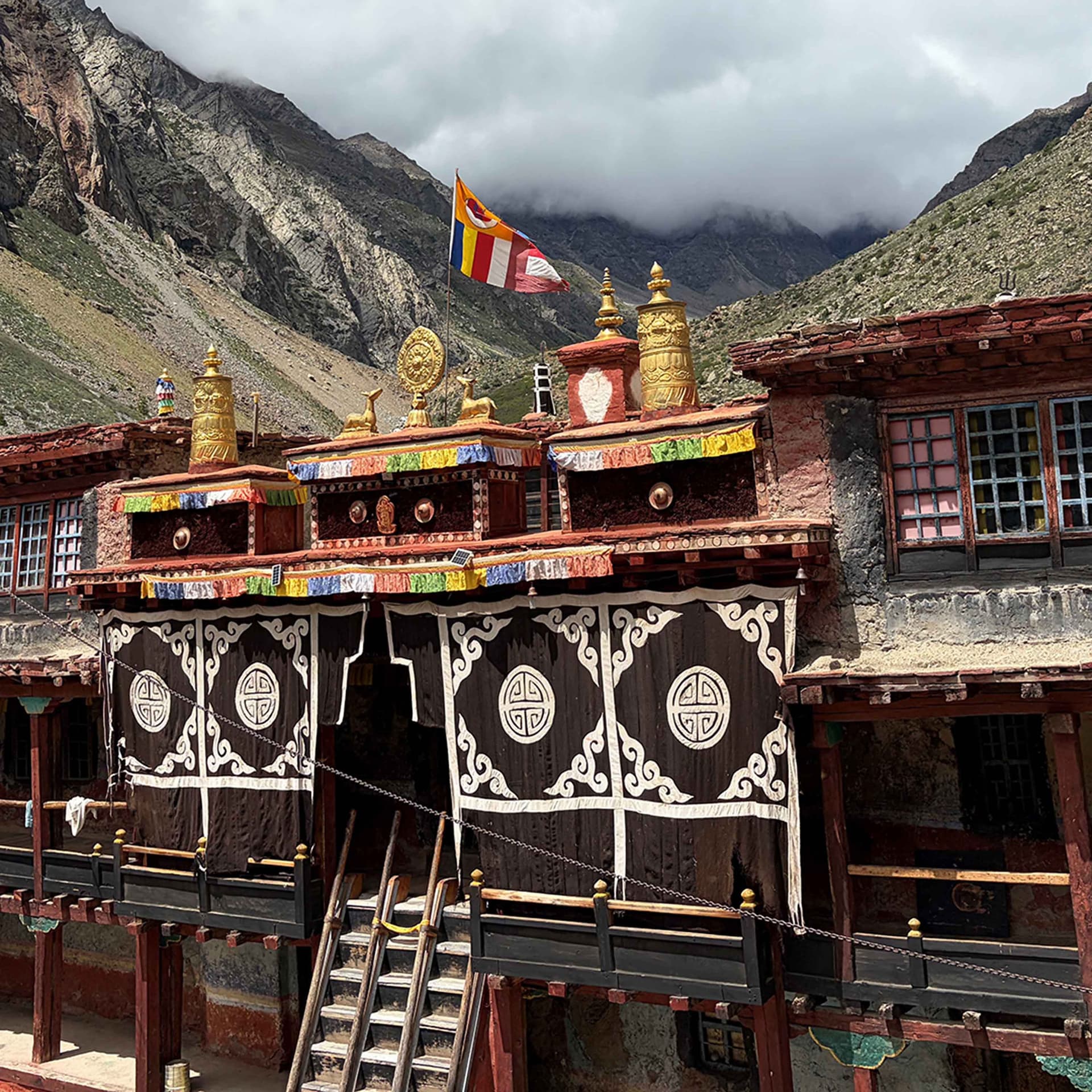
1:07This programme contains discriminatory language. I'm sitting on a ferry in the Aegean Sea. It's taken me to an ancient monastic community in northern Greece, where I've come to investigate a violent rift inside the Orthodox Church. The boat is heading to a peninsula called Mount Athos. It's a rugged stretch of land with towering peaks cloaked in dense forests that tumbled down to the craggy coastline below. Known among Orthodox Christians as the Holy Mountain, monks first arrived here more than a thousand years ago, drawn to the natural beauty and remote location. Today, it's home to 20 different monasteries.
1:54One, however, might not be able to call Mount Athos home for much longer. I'm headed to the Holy Monastery of Esfigmenu to meet a brotherhood that has become known as Greece's rebel monks after breaking away from the mainstream church several decades ago. Legally, only brotherhoods that adhere to mainstream orthodoxy are allowed to remain on the peninsula. So the police have long been trying and failing to get them out of the monastery. These eviction attempts have led to some violent clashes. In 2013, the story made headlines across the country when the leader of Esfighmenu, Abbott Methodius, was jailed for inciting violence following an incident during which Molotov cocktails were launched at police.
2:42Today, the Esfigmenu Brotherhood are holed up in their fortress-like monastery, which bears a banner emblazoned with awards, orthodoxy or death. Welcome to the documentary on the BBC World Service. I'm Nikos Papanikolaou, and for heart and soul, I've come to investigate a story which has been rumbling in Greece's press for decades. A story at the heart of a bitter feud within the Greek Orthodox Church, which has intrigued me for as long as I can remember. So we've just got off the boat at Jovanica. Looking around, I can see there's no public transport. Luckily, Esfigmenu has organized a driver to help transport us.
3:30As his jeep rattles its way over deep potholes, I get talking to the driver about what took him to Mount Athos. I was going through a personal crisis, professional pressure, and then COVID hit. Our driver was one of around 150 ,000 pilgrims who visit the holy mountain each year. Many of them men who arrive carrying burdens they can't explain, hoping to find answers in silence, in prayer, or in the quiet council of a monk. And then it hit me. I had stopped saying thank God. I stopped lighting a candle, praying. Tears came out of nowhere. Things started happening. My wife understood me more. She said, the Virgin will show you.
4:16Keep praying. And I did. I started going to Mount Athos in 2020. For the driver, that first trip to Mount Athos brought with it a profound sense of spiritual solace that has stayed with him ever since. And in that very moment, I felt divine grace. I felt a chill go down my spine. And just like that, I made it all the way to Esfigmenu. See how things work out sometimes? Where you think there's no way, the road opens up within the same day.
4:54Like millions of Greeks, I was baptized as Christian Orthodox. Orthodox. Today, around 90 to 95 percent of Greeks identify as Orthodox. It's so deeply embedded in our culture that for many it's hard to separate where faith ends and national identity begins. For Orthodox men, their spiritual journey often begins with making a pilgrimage to Mount Athos, which despite being connected to the mainland, is only accessible by ferry or private boat taxis. No women are allowed to set foot on the peninsula, a rule that extends even to most female animals. And any male pilgrims interested in visiting must first obtain a special permit.
5:37I've spent months trying to set up a meeting with a monk satesfigmenu, a process that involved countless dead-end leads, unanswered phone calls, and the advice of various other Greek journalists to approach the situation with extreme caution or to give up altogether. But a couple of weeks ago, I had a breakthrough. Abbott Methodius, the same monk who was jailed after the Molotov cocktail-throwing incident, agreed to a meeting, and I set off to find him.
6:12Broken-down tractors and rusting cars littered the entrance to the monastery, a towering stone building which looms defiantly over a windswept sea. The first monk we meet is Father Gregory. Methodius is second in command. He takes us along bustling corridors and up several flights of stairs to a balcony overlooking Sfigmenu's chapel. It's here since the 18th century. In the very beginning, it was there 500 metres east. It was the first location of Sfigmenu's monastery. This was in the midst of the 4th century. Today, there are around 100 monks living here. But given that there is no official registry, the exact number is unknown.
6:58I asked Father Gregory what brought him here 32 years ago. I wanted to be separate from the world, even though I had the opportunity to go to America for studies. I didn't like that because I focused on my salvation. Because I have read in the scriptures about salvation that the value of the spirit we have, it's so important, the matter of being saved in the afterlife. So I wanted to focus on my salvation. That's why I'm here. What does your typical day look like? The day is divided into three equal time parts. We devote eight hours in our ceremonies, eight hours in our labor, and eight hours for reading, personal rest, personal pray, and other activities.
7:44And yeah, I like very much this kind of life. It's the way I spend my time here. So, if there was someone, a young man, who wanted to join this monastery, and he was asking you to explain to him the conflict, how would you explain it? The issue is very simple. The conflict is about what? It's about our brotherhood. We want to keep the traditional lifestyle and the traditional faith according to our whole fathers. we want pure orthodoxy to follow the programs of our holy fathers, to follow exactly the same faith as we received from our holy fathers without pluses or minuses. And that's why all the new novices who come here and want to join our brotherhood want the same thing.
8:39To understand the rift, we need to go back to the 11th century when orthodox Christians broke away from the Roman Catholic Church. At the heart of the split was their rejection of the Pope's supreme authority. This led to a deep and lasting divide between Eastern and Western Europe. Fast forward almost a thousand years, interfaith relations between Catholics and Orthodox Christians had improved. In 1965, the leader of the Orthodox Church, known as the Ecumenical Patriarch, sent a declaration attempting to mend the Great Schism, an act of conciliation that was viewed by the Esfignenu monks as heresy.
9:22By 1972, Esfignenu had officially broken away from the church, declaring the patriarch a traitor to Orthodoxy. Leading the fight today is Abbot Methodius. As birds nest in the ancient wooden beams above our heads, he greets us on the balcony.
9:46When I arrived here, the place was in ruins. There was nothing. We repaired everything. If you look at the paving stones around here, I laid them all with my bare hands. He's a small man in his mid-70s with a wispy grey beard, big dark eyes and dressed in flowing black robes. Far from a ranting zealot, he's charismatic and softly spoken. I ask him about his experience joining the monastery more than half a century ago, and he talks candidly about his family's despair when he left home at 19 to make a new life on Mount Athos. I left my job, and it was a good job. I had a brother and two elderly parents who depended entirely on me because I was the only one who had studied.
10:35Everyone was counting on me. they were losing the person who would support them in their old age. It's now been 26 years since he took over a Zabot. Under his leadership, the brotherhood has grown more hardline. And it doesn't take long before our conversations start to reveal some of the more uncomfortable beliefs underpinning his vision of the faith. Our crime is that we don't commemorate the patriarch because we believe he's not walking in accordance with the Holy Fathers. He prays alongside everyone, with women bishops and priestesses, with homosexuals, with heretics, with people of other faiths and so many others.
11:21How can we call that a sacred mystery? Shortly after Methodius was elected abbot in 1999, he was issued an ultimatum by the Ecumenical Patriarch to hand over the monastery or face excommunication. But Methodius was adamant that he wasn't going anywhere, despite various eviction attempts, and as he claims, access to medical supplies, electricity and food law being cut off. These are crimes. The pressure is unbearable. No human rights. We're treated like we're nothing. I've been here since 1970 and I'm treated like nothing. I mean, if someone came to your own house and said, this house is mine, what would you do?
12:09All we ask is to be left in peace, to live in our spiritual homeland. We didn't come here by accident. All we want is to be left free. Why? What have we done to them? Who have we harmed? In what way are we to blame? It's all nonsense. Many will strongly disagree with those statements, not least because of the violent run-ins with police, but hanging a banner that reads Orthodoxy or death is a pretty incendiary action for supposed peace seekers. And while Methodius paints an us-against-the-world picture of the Brotherhood, they are not without their supporters. The country's far-right groups have taken up their cause, celebrating them as the protectors of traditional Greek Orthodox values.
12:54Support from these groups increased in 2017. when Methodius gave a speech at a demonstration in Athens. Speakers at the rally were calling for a return to traditional values and demanding that Greece reject foreign money and influence. Methodius' speech took a dark turn when he began railing against the other monasteries of Mount Athos for accepting EU funding. Because these funds are raised by European taxpayers, a small percentage of which are Jewish, he claims the money is tainted. And the speech then took a further anti-Semitic twist. And they will make us subjugated to the Jews for the rest of our lives.
13:38My dear brothers, if the Jews complain that Hitler appeared and killed them, they should be careful this time because a Greek Hitler may arise. They should be very careful because we do not need their money. The shocking statement was met with cheers and whoops of support from the crowd of far-right extremists. But it hasn't helped them win sympathy among more moderate members of the Orthodox Church who view them as dangerous fanatics. There have even been rumors that Esfigmenu Harburt, one of the leaders of Greece's now outlawed neo-Nazi party Golden Dawn, when he was on the run from the law in 2020.
14:19and Methodius also has some troubling views on women. This money doesn't just come from male taxpayers but also from women and now they are saying that even women should be allowed in Mount Athos. Well, we cannot accept that.
14:40Although my instinct was to press Methodius on his alarming views and inflammatory rhetoric, I sense it would be wise to approach the conversation with caution. It had taken us so long to set up this meeting and I was worried the whole thing would go up in flames if I pushed him on his beliefs. We were also in the depths of their fortress-like monastery in the heart of a brotherhood infamous for their violent classes. I had already noticed a row of glass bottles lined up by the door half filled with a clear liquid. I did not ask what they were for, but I couldn't keep the images of Esfignenu monks clutching Molotov cocktails out of my head.
15:25Instead, I asked him whether any of the other Esfignenu monks had ever challenged him on his beliefs. No one has ever said I disagree, but someone might say I don't feel at peace here, I'll go somewhere else. They're free to do so. Many have left. That's why I never pressure anyone to stay here if they don't want to.
15:51Methodius is adamant that his only wish is for Esfigmund to be allowed to exist quietly and harmoniously within the whole Mount Athos ecosystem. As he sees it, he and his brothers have done nothing wrong and have every legal right to remain in the monastery. All we ask is to be left in peace, to live in our spiritual homeland. We didn't come here by accident. What have we done to them? Who have we harmed? In what way are we to blame? It's all nonsense, lies.
16:27We focus on the part of the internet that most people don't know about. It's called the dark web. Undercover, in the furthest corners of the dark web. US special agents are on a mission to locate and rescue children from abuse. Move in now. From the BBC World Service, World of Secrets, the darkest web follows their shocking investigations. Search for World of Secrets wherever you get your BBC podcasts. America is changing and so is the world. But what's happening in America isn't just a cause of global upheaval. It's also a symptom of disruption that's happening everywhere. I'm Asma Khalid in Washington, D.C.
17:11I'm Tristan Redman in London, and this is The Global Story. Every weekday, we'll bring you a story from this intersection, where the world and America meet. Listen on bbc.com or wherever you get your podcasts. I want to put all the issues on the table that keep me up at night. The Interview, the best conversations from across the BBC. We're coming up against technology companies that are richer and more powerful than many nation states. With the people shaping our world. There are those that believe that the power of law should be replaced by the law of power. The interview from the BBC World Service.
17:52Listen now wherever you get your BBC podcasts.
18:00I'm Nikos Papanikolaou and you're listening to the documentary on the BBC World Service. I'm in Greece for this episode of Heart and Soul, where I'm investigating how a group of rebel monks have managed to defy the government's efforts to remove them from Mount Athos, a sacred peninsula considered the spiritual heartland of the country. After my meeting with Abbott Methodius, I was left feeling disorientated. I had been gearing up for so long to meet him, a man around whom so much legend has been built. But it was hard to square the charisma and humility with which we'd been greeted with the alarming facts of his ideology.
18:41It was a strange and disquieting feeling. The day after, I headed to the town of Caries to meet someone who has a very different perspective on the fight for Esfigmenu. Father Gabriel is the second in charge of another brotherhood who also call themselves the Holy Monastery of Esfigmenu. In 2005, they were appointed as the legitimate successors to the current occupiers of Esfigmenu, and ever since, they've been waiting in the wings, poised to take over once the rebel monks vacay the ancient monastery. So, we just made it to Karyes. It's this quiet little town in the middle of Mount Athos, where most of the administration happens.
19:25A couple of shops around me, some monks walking by, barely saying a word. It's peaceful, but there's a kind of formality in the air too. This is where the legal Esfigmenu Brotherhood is based, the one that's officially recognised by the church and the Greek state. After a few wrong turns, I find the home of the new Esfigmenu Brotherhood. It's a modest stone house tucked away down a side street where Father Gabriel greets us and shows us some of the gifts and religious icons which they've received over the last two decades. These two thrones are from Norwich and these are Victorians. They are from London.
20:04Please sit. When his brotherhood was appointed as the rightful successors of Methodius and the rebel monks, he tried everything in his power to reconcile with the current occupiers of Esfigmenu. I will speak it in Greek because my English are not so good. At first we had a rather naive belief that the service would be purely one of love and offering, that with understanding, goodwill, everything could be resolved by those inside the monastery. Our first approach was to reach out and say, we are here, come let's find a solution, let's talk, let's try to understand each other. They rejected every offer, every compromise, no matter how accommodating it was.
20:48They would say things like, you're nothing, we don't want you, we don't even want to see you, you're heretics. They refused everything. While the authorities have made several attempts to oust the rebel monks, Father Gabriel believes her efforts have been relatively toothless. As a result, the situation has been allowed to fester at a terrible spiritual price. They believe orthodoxy is under attack, that all of creation is conspiring against it. Jews, masons, anyone they label as the enemy. That way they never have to look inwards or take responsibility. Another troubling phenomenon we are seeing in relation to Methodius is what we call gerontism, elder worship.
21:33It's when Christians become fixated on one religious figure, an elder, a leader, and believe that through him alone they will be saved or problem solved. That's cultish. Blaming everyone else is a convenient way to control people, to shepherd them as you please. But it's a path that leads to madness, to violence, to extremism. That's what their slogan, orthodoxy or death, really signifies. Their behavior, the violence, the propaganda, the condemnation of all the Christians and monks shows that they don't mean we'll die to protect orthodoxy. They mean either you accept our version of orthodoxy or you die.
22:20And this ideology hasn't stayed confined to Mount Hathos or even to Greece. Over the past decade, support for Esfighmenos' brand of radical orthodoxy has found traction among extremist groups abroad. That slogan, orthodoxy or death, became very popular in Russia about a decade ago due to ties between the Esfighmenu occupiers and certain Russian groups. A whole movement formed. They called themselves Russian Esfighmenites, laymen with beards, wearing black t-shirts with skulls and that slogan. The same group publicly burned effigies of pop stars like Madonna and used violent means to protest against what they saw as moral decay.
23:08It became so dangerous that Russian courts banned the slogan by law in 2010 as inciting violence. After speaking for several hours, he gave us a lift down to the port, where we waited for a taxi boat to take us off the peninsula. We're standing by the dock now, waiting for the boat that will take us off Mount Athos. After everything we've seen and heard, the stories, the silences, the divisions, it's hard to leave this place without carrying some of it with you. I came looking for answers, but I think I'm leaving with more questions. What I couldn't quite wrap my head around was why exactly the authorities hadn't managed to get the rebel monks out, and it had been years since their last eviction attempt.
23:59So I put the matter to Thanasis Martinos, a shipping magnate who served as Mount Athos' civil administrator between 2019 and 2023. He agreed to speak to me over Zoom, where I began by asking him whether the monks' claims that they are being denied access to food and medical supplies were true.
24:19Nikos Papanikolaou:They have no lack of food or lack of medicine, no. That is an exaggeration. People are sympathetic to helpless and poor monks. They have outside donors who are of the same ideology, so they have support. They have food, they have money, they have support. Are the Greek authorities, in your opinion, prepared for potential bloodshed or even fatalities when it comes to evicting these monks from there? I don't think it's worth it. I think they better be ignored and left to their peace and hope that when some of the older people, more fanatic, die, the younger may become more moderate. There's always hope, never dies.
25:04Nikos Papanikolaou:There's always a hope. Miracles happen in the Holy Mountain, so you never know. What do you think the main reasons that the authorities haven't been able to evict them so far? The ultimate authority in the Holy Mountain is the holy community, the 20 representative monasteries. It's up to them to take decisions about what to do with the old monastic menu. If they take a collective decision and they invite forces to impose the law, then the government is obliged to do that. It's like the Vatican. So you cannot, in a way, interfere if you don't have the consent of the holy community. But there's another reason Martinos believes that the state is hesitant to act.
25:57According to him, current Prime Minister Kiyakos Mitsotakis and his center-right New Democracy Party are afraid of alienating or even angering right-wing voters who support Esfigmenu.
26:08Nikos Papanikolaou:In this present political context, when more people in Europe and Greece vote for ultra-right parties, from a political point of view, it's not in the interest of a centre-right government to try and use force, because they only have to lose. We put two questions to the Greek government in the making of this programme, asking why they're yet to enforce the eviction of the Old Esfigmenu Brotherhood, despite court rulings and legal orders to do so. We also ask whether this inaction is related to a desire to avoid alienating right-wing voters. We never heard back from them.
Read the full transcript
26:51On the surface, the Reef at Esfigmenu is about theology. ancient arguments over papal authority, sacred tradition and the meaning of true orthodoxy. But beneath it lies something more contemporary and more volatile, a struggle over identity, nationalism and for monks like Methodius, the power of belief to both unite and divide.
27:18How do you define homeland? Our land, the place we were born, and in general for us, our Greece. I ask because many people associate the homeland with the government. No, the government is not Greece. Today it's one person, tomorrow another, then another. What truly matters is faith.
27:44What I found on Mount Athos was not just a dispute between monks, but a microcosm of broader tensions playing out across Greece, between past and present, faith and politics, isolation and integration. And while the state continues to hesitate, perhaps out of fear of bloodshed or political fallout, the question remains, how long can the Esfighmenu monks hold out?
28:12That is my mountain, resistance until the very end. And God says, be faithful unto death and I will give you the crown of life. Remain faithful until death, even if you face temptation, whatever may come. If you make your stand, you stay firm. Who can stand against God?
28:47This program was presented by me, Nikos Papanikolaou. It was produced by Hester Underhill and Hunter Charlton. It was an Ember production.
29:13We focus on the part of the internet that most people don't know about. It's called the dark web. undercover in the furthest corners of the dark web. US special agents are on a mission to locate and rescue children from abuse. Move in now. From the BBC World Service, World of Secrets, the darkest web follows their shocking investigations. Search for World of Secrets wherever you get your BBC podcasts.
From the publisher
**This programme contains discriminatory language** On Greece’s Mount Athos, the most holy site in Eastern Orthodox Christianity, lies a rift in the faith. For more than 20 years, a banned monastery has operated illegally and at times violently towards their sacred community. Nikos Papanikolaou visits these excommunicated monks ready to become martyrs in order to protect their ultra-orthodox way of life. The inhabitants of Esphigmenou monastery are known as Greece’s "rebel monks". Living on a remote peninsula in the north of the country, they are holed up in their fortress-like monastery, emblazoned with a banner reading "Orthodoxy or Death". This schismatic brotherhood broke away from the mainstream church decades ago, an act which has led to their excommunication and violent clashes with police after attempts to evict them from their monastery. Nikos Papanikolaou travels to Mount Athos to meet Esphigmenou’s leader, Abbot Methodios. This episode of The Documentary, comes to you from Heart and Soul, exploring personal approaches to spirituality from around the world.