
In short
A BBC World Service documentary/Assignment investigation into a suspected HIV outbreak among children in Tonsa, central Pakistan, allegedly linked to unsafe practices at Tehsil Headquarters Hospital (THQ), including syringe reuse, “double dipping” vials, and poor infection control.
Guests and backgrounds
Ghazala Bassi (reporter/narrator). Dr Gul Mohamed Kasrani (private clinic doctor who noticed rising HIV-positive cases). Health officials: Nadia Saqib (Punjab Health and Population Secretary, announced a UNICEF/WHO/Punjab task force). Experts: Dr Fatima Mir (paediatric medicine professor, Aga Khan University) and consultant microbiologist Altaf Ahmed. Dr Fatima Mir and Altaf Ahmed assess risks from reuse and cannula injections. Dr Ghasem Buzdar (THQ medical superintendent after March 2025). Also referenced: Dr Gul’s clinic staff/parents; local government officials Dayab Chandio/others (denied links).
Key claims
Over 300 children in Tonsa tested HIV positive (2024-2025). Parents report injections at THQ with reused syringes and vials. Undercover footage shows injections through clothing, lack of sterile gloves/cotton swabs, used syringes left out, shortages leading to reduced doses, and volunteers/“double dipping.” Experts say reuse and cannula injection make transmission “very high” risk. Government suspended senior staff and set up investigations, but the report isn’t public; infections appear to continue.
Notable examples
Mohammed Amin (8) treated at THQ, later diagnosed HIV and died after seizures. His sister Asma (10) later diagnosed HIV and continues treatment. A volunteer refills a syringe from a multi-use paracetamol vial and injects multiple children, potentially contaminating the vial. Data cited: 331 HIV-positive children (Nov 2024-Oct 2025) with fewer than 1 in 20 having HIV-positive parents.
Written by AI. May contain mistakes. Listen to the episode to check what was said.
Chapters
Tap a time to open that second in VOIntroduction to the HIV Crisis in Thonsa
1:12 to 2:58
Learn about the alarming rise of HIV among children in Thonsa, Pakistan.
“Adults should suffer from HIV, not children.”
Investigating the Source of Infection
2:58 to 4:49
Discover the investigation into the connection between local hospitals and HIV outbreaks.
“For BBC Eye and Assignment, we've gone undercover to investigate what's happened to Thansa's HIV children and who's to blame.”
Personal Stories of Affected Families
4:49 to 6:36
Hear the heartbreaking accounts of families impacted by the HIV crisis in Thonsa.
“In 2024, eight-year-old Mohammed Amin was running a fever.”
Community Response and Government Action
6:36 to 9:06
Explore how the community reacted and what actions were taken by the government.
“After the seizure, his eyes also closed.”
Undercover Investigation at THQ Hospital
9:06 to 13:25
A detailed look into the unsafe practices observed at THQ Hospital contributing to the outbreak.
“For the past year at Dansa Hospital, HIV has been spreading among children in a bad way, this woman says.”
Expert Insights on Healthcare Practices
13:25 to 14:00
Gain insights from a healthcare expert on the alarming practices observed in hospitals.
“The pressure of constant shortages leads staff to take desperate measures.”
Expert Insights on Injection Practices
14:00 to 15:12
Learn about the serious infection control issues in Pakistani healthcare.
“We showed our undercover footage to a leading expert on infectious diseases.”
Government Response and Accountability
15:45 to 19:00
Understand the government's actions regarding the HIV outbreak in Tonsa.
“I'm Ghazala Bassi and this is Assignment from Pakistan.”
Children's Vulnerability to HIV
19:00 to 21:29
Hear the heart-wrenching stories of children affected by the outbreak.
“But it didn't take long for our hidden camera to capture proof children were still being put at grave risk.”
Undercover Filming and Medical Practices
21:29 to 26:09
Investigate the shocking practices observed in THQ Hospital.
“Even after the government intervention into THQ, HIV infections amongst Thonsau's children appear to have continued.”
Show all 12 chapters
Stigma and Future Aspirations
26:09 to 28:00
Explore the stigma faced by HIV-positive children and their dreams.
“this time in Pakistan's largest city, Karachi, in the south of the country.”
Children's Struggles with HIV in Pakistan
28:00 to 28:40
This segment highlights the emotional and social challenges faced by children living with HIV in Pakistan.
“Then she asks her mother, what is wrong with me?”
Transcript
Automatic transcript. May contain errors.0:00This BBC podcast is supported by ads outside the UK.
0:30Make your travel dollars work harder. Follow Smart Travel on your favorite podcast app. Dream big and save big on your next backyard project at Menards. Whether you're shopping for edgers, pavers, or wall blocks, Menards has the largest in-stock selection of concrete landscape block ready to take home today. Build a beautiful border for your landscape with our Crescent Edgers on sale now through April 12th. Plus, check out our weekly flyer on Menards.com for all the great deals happening now.
1:01Ghazal Abbasi:Save big money at Menards.
1:11These children are innocent. They are flowers. Why are they catching it? Adults should suffer from HIV, not children. I'm visiting a community in central Pakistan where something terrible is happening to the children I'm Ghazala Bassi and this is the documentary from the BBC World Service Over the past year, more than 300 children in the city of Thonsar have tested positive for HIV Parents like Yushad don't have HIV and can't understand how their children are getting infected I'm missing him. I don't understand what the reason is, how it transmits. One of my sons died. He had HIV. He is my other son.
2:07Ishaad's surviving son, Giza, is also HIV positive. For now, medication is keeping him alive. I don't know if it happened in the hospital. You only took them to Tonza, only to that hospital? Yes, yes, Tonza, Tonza. Tonza Hospital is a government hospital. During his treatment, he got so many injections. When we came back home, his condition got worse again. There were also so many staff there who said, these syringes are being reused. Irshad feels powerless to act on his suspicions about the hospital and the local government says there's no proof children are infected with HIV there. For BBC Eye and Assignment, we've gone undercover to investigate what's happened to Thansa's HIV children and who's to blame.
3:21With a severely underfunded and understaffed public health system, many Pakistanis attend private clinics like this one in the centre of Tonsa, run by Dr Gul Mohamed Gasrani. He's examining a young child with a cough and a fever. Back in 2024, Dr Gul began noticing something strange.
3:45The first child came around 31st October 2024. Then one came on 21st November 2024. Then I had five to six children in December. Sick children coming to his clinic kept testing positive for HIV. They came from communities tens of kilometres apart, and their parents seemed fine. So how had these children contracted the virus?
4:21One day a mother came to me and she told me that her daughter was injected with the same syringe as her cousin who had HIV. The same syringe was used on her, then it was used on her daughter. Then in front of her, it was used on 10 other children. She told me that this syringe was used at the government hospital, TESOL headquarters, THQ in Tonsa.
4:48Ghazal Abbasi:This is the picture we took in this shower kameez. He passed away on Friday.
5:01In 2024, eight-year-old Mohammed Amin was running a fever. His mother, Sugrabibi, took him to THQ Hospital for treatment, where he was given injections. but after being discharged, he got worse. My son started having pain. He developed a very high fever. I said, my son's condition is getting very bad. She returned to the hospital seeking help. They gave another injection. In the evening, we told them, please tell us some solution. The child is in a lot of pain. They said, there's nothing. He's fine. So Gris says despite what the doctors told her, it was clear to the family that her son was very seriously ill.
5:50Mohammed Amin used to sleep outside in rain and cold. He used to writhe, like when something is thrown into hot oil. They didn't listen to even one of us. When we insisted more, they used to say, take him out of the hospital. Eventually, Mohamed Amin was referred to a hospital in the neighbouring city of Multan where he was tested and diagnosed. They said in the report, your child has HIV, the disease has attacked. He began treatment, but it was too late. He suffered a major seizure at home and his terrified mother had no option but to rush him back to THQ hospital. After the seizure, his eyes also closed.
6:40His voice stopped. Before that, he'd been crying all night. Then, there at the hospital at five in the evening, he passed away. Sugra had already lost her husband two years before. Now, her only son was gone. But the family's trauma didn't end there.
7:06Shortly after Mohamed Amin's death, his older sister, Asma, developed flu symptoms.
7:15Ten years old. Ten-year-old Asma was also treated at THQ hospital. Two months later, Sugra says, her daughter fell seriously ill. At first it was just fever. Then when injections and drips were given to Asma, then severe body pain started. and high fever as well. I told the doctor that my amine had the same suffering as my daughter. I went and got tests done. The hospital staff in Tonsa said, your daughter has HIV.
7:53By early 2025, Dr Kasrani was becoming worried and began comparing the medical histories of the children who had tested positive at his clinic. I have reports of around 65 to 70 children who I've diagnosed.
8:12The TESL headquarters was the common factor. Almost all the children, 95 % of the children, had definitely visited there. He also heard the same story about reuse syringes and poor infection control from parent after parent. One young man, he has three children affected. He says, I tried to stop the nurses, saying, you're injecting the same syringe into others and then coming and injecting my child. So the nurse replied, this is our job, it's not your job. By early 2025, Dr. Kusrani and others had informed authorities that there was a major outbreak of HIV among children treated at THQ. and the parents of those children were demanding action.
9:05Arrest the criminals, they chant at a protest.
9:11For the past year at Dansa Hospital, HIV has been spreading among children in a bad way, this woman says. The hospital had become every parent's nightmare when, in March 2025, the government finally stepped in.
9:30As announced by the TV news on the instructions of Punjab's chief minister, a joint task force between UNICEF, the WHO and the Punjab Healthcare Department was set up to investigate what had gone wrong and why. At a press conference, the Health and Population Secretary, Nadia Saqib, said action would be taken against those responsible and she gave parents a warning. The use of syringes should be kept to a minimum. When your child falls ill, do not immediately go for injections. This is not safe. The government's report has still not been made public.
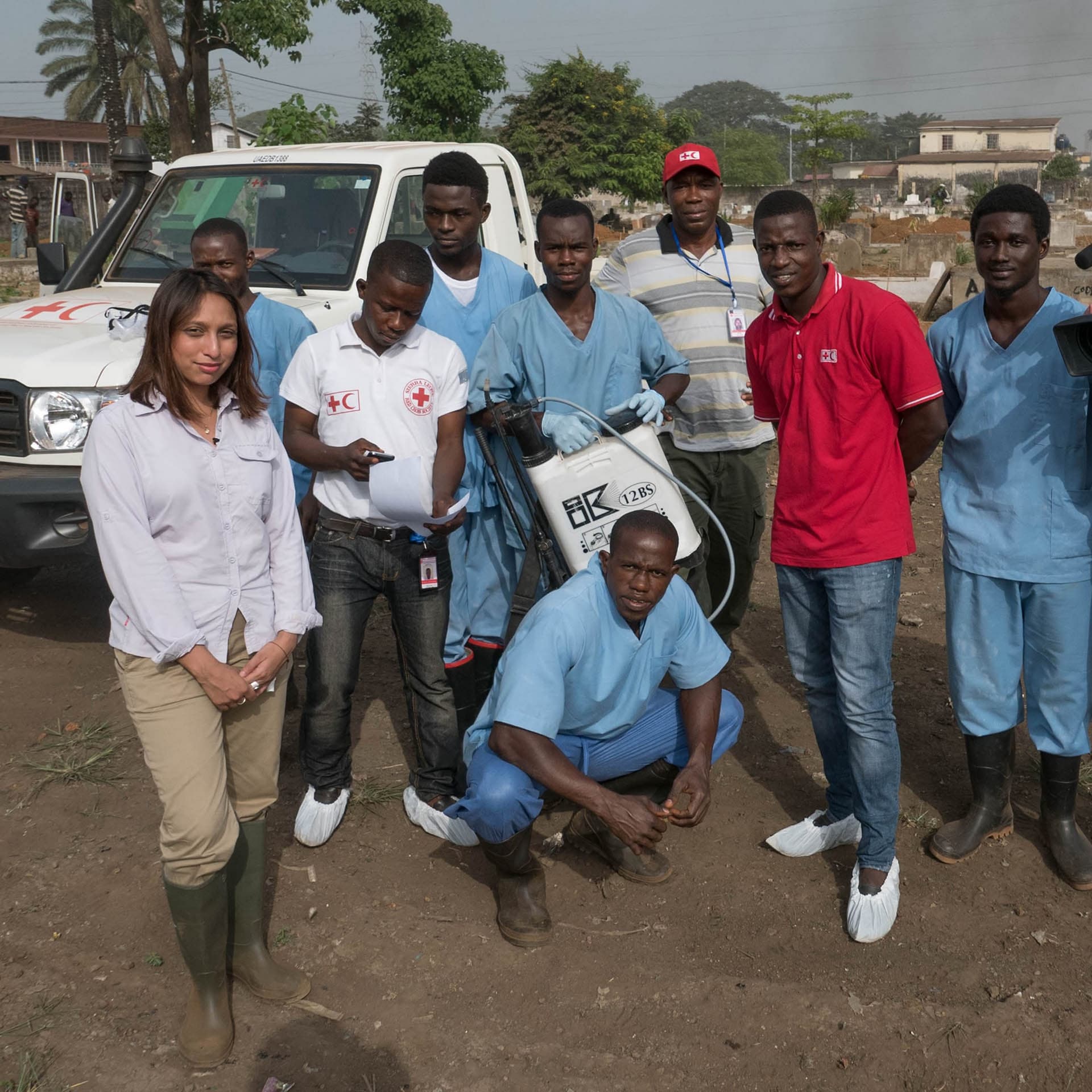
10:15During the last three months of 2025, we went undercover inside the Tehsil Headquarters Hospital, otherwise known as THQ. Dr Kasrani says most of the HIV-positive children he saw had been treated there. A staff member, convinced that children's lives were at risk, helped us to document serious wrongdoing. I felt that some concrete action should be taken. My duty is to save my people. We shouldn't play with our children's future. We're not identifying the staff member who used a hidden camera to film what was going on. He spoke to some of the nurses.
11:01Ghazal Abbasi:Have you got fever? You didn't get a fever injection prescribed from the doctor and paracetamol, but I will give them to you. It immediately becomes clear that the common method of treatment for any fever or ailment is via injection, mostly with liquid paracetamol. Our insider speaks to a nurse. We inject patients randomly with various injections for their peace of mind. And they're satisfied after getting the injections? Yes, so they leave me alone. The local government says infection prevention is routinely conducted at THQ. In our secret footage, we can see patients being injected through their clothing.
11:45The nurses are not wearing sterile gloves. No cotton swabs are used before or after the jabs. Patients walk around the ward with blood on their sleeves. One nurse appears to have some knowledge of the dangers of reusing syringes or medicine vials. We don't use this. It may have been used with children with HIV, so it's discarded. But there are frequent lapses in the safety protocols. Just off camera, we can hear a nurse being asked if there is a 10cc syringe Yes, she says, it's available but in used condition A syringe is placed on the countertop Liquid from the last patient is still visible inside it As her colleague picks it up
12:42A nurse rummages through the discarded needle box, an open cardboard box with no gloves on. We can even see a doctor injecting patients without sterile gloves. Used syringes and vials are frequently left alongside discarded needles on countertops that should be kept sterile. Cross-contamination seems almost inevitable. There's another issue too. No paracetamol vials today? No, we're out of them. I've asked for some, but it'll be difficult to get them. The local government says that THQ has no reported shortages of medicines, but we found patients being told to bring their own supplies. The pressure of constant shortages leads staff to take desperate measures.
13:36Ghazal Abbasi:We reduce the quantity of injection. If it's 40cc, we make it 20. If it's 30cc, we make it 15. We can't give a full dose if we don't have it. According to our source, nurses at THQ Hospital are routinely sharing vials of liquid medicine between children.
14:00We showed our undercover footage to a leading expert on infectious diseases. Dr Fatima Mir is Professor of Paediatric Medicine at Aga Khan University Hospital in Garaji.
14:13Ghazal Abbasi:The needles that have been used, some of the syringes are still seen lying on the table. Some are closed, some are open and they're still lying there as they were. So these are all items that will be reused. These are single-use items that are being used multiple times. It highlights that the infection control training of our healthcare providers is very poor. From dispensers to injectors to physicians. So now we must warn our injectors, you have become an active instrument for passing disease. We have to warn them that you have to move yourself to a safe practice.
14:54The constant use of injections rather than tablets isn't just a choice made by medical staff, says Dr. Fatima. It's something Pakistani families want and seek out when they visit doctors. Many believe that without injections, they're not getting proper treatment. You're listening to the documentary from the BBC World Service. Dream big and save big on your next backyard project at Menards. Whether you're shopping for edgers, pavers, or wall blocks, Menards has the largest in-stock selection of concrete landscape block ready to take home today. Build a beautiful border for your landscape with our Crescent Edgers on sale now through April 12th.
15:39Plus, check out our weekly flyer on Menards.com for all the great deals happening now. Save big money at Menards.
16:14Save big money at the Nards. I'm Ghazala Bassi and this is Assignment from Pakistan.
16:27The government did suspend the medical superintendent, Dayab Jandio, and two other senior managers. But our investigation can reveal that within three months of his suspension, Jandio was allowed to work with children again. We found he'd been reappointed as senior medical officer at a rural health centre on the outskirts of Tonsau. Chandio denies that the HIV outbreak is linked to THQ Hospital and the local government says no inquiry outcome has legally barred Dr Chandio from practice to date.
17:04A ban on volunteers working at THQ was introduced. The local government says the hospital administration enforces compliance of this ban. But as we found, six months on, unqualified volunteers were also back in business.
17:24Recorded secretly by our source, the hospital pharmacist has complained that volunteers steal her supplies and that widespread staff redundancies have left her defenceless.
17:43Today, 10-year-old Asma is with her uncle, visiting the grave of her little brother, Muhammad Amin, for whom diagnosis and life-saving medicine came too late.
17:56He's with God now, she says. He used to fight me, but he also loved me. I miss him a lot.
18:08Ghazal Abbasi:What can the poor do? What voice was I to raise? The child was gone. Asma is taking medicine from the government's doors. It's kept her from sharing her brother's fate. But her uncle, Garry Abid, fears it's not enough. Even now, this girl is becoming weaker. Day by day, she is becoming weaker. Our government does not even pick up those responsible. If the poor get into any trouble, they are detained immediately. But the ones responsible for doing this, nothing is said to them. In the months since it promised to deal with the outbreak, the local government claims to have conducted regular surprise inspections at THQ and that hospital workers who break the rules are subject to disciplinary and legal action.
19:02But it didn't take long for our hidden camera to capture proof children were still being put at grave risk.
19:13In the children's emergency ward, one of the volunteers is getting ready to give a series of paracetamol injections, which have been prescribed.
19:24He takes a new syringe and needle, pushes it into the top of a multi-use vial of paracetamol and fills. Subsequently, he injects his first patient through a cannula in the back of the baby's hand, but then he takes the same syringe and puts it back into the same medicine vial and refills the syringe. It's known as double dipping. There is no reason to believe he does, but if this child had HIV, the entire vial could now be contaminated. Then he uses the same vial to inject two more children through cannulas.
20:06We showed our footage to another expert, consultant microbiologist Altaf Ahmed. If the first child did have HIV or any blood-borne virus, what were the chances of passing that on? Very high chances, very high.
20:29Even if they've attached a new needle, the back part, which we call the syringe body, has the virus in it. So it'll transfer even with a new needle. Not only that, Dr. Ahmed says injecting these children via cannula increases the risk of infection further because contaminated medicine can enter the patient's veins directly, bypassing many of the body's natural defences. They increase a lot because they're directly injecting into the bloodstream so there are many chances of it spreading. Our hospital worker spent 32 hours filming undercover in the children's wards at THQ. He witnessed at least seven occasions when vials were double-dipped with reusable syringes and potentially contaminated.
Read the full transcript
21:19In most cases, the injection was given via cannula, massively increasing the chances of infection.
21:28Since this outbreak happened, it doesn't appear that truly any lesson has been learned.
21:36Even after the government intervention into THQ, HIV infections amongst Thonsau's children appear to have continued. Using data from the Punjab Provincial Aid Screening Programme, another data set leaked by Special Branch and records from local private clinics, we documented 331 children from Tonsa who tested HIV positive between November 2024 and October 2025. Of those HIV positive children whose family agreed to also be tested, less than one in 20 had an HIV positive parent.
22:13We managed to get an interview with the man who took over at THQ in March 2025. Dr. Ghasem Buzdar is the current medical superintendent, or MS, at the hospital.
22:30So as soon as I arrived, my main focus was on HIV, paramedics and staff nurses. We conducted their training on how we have to prevent HIV and how we have to defeat HIV. I myself visit and check infection prevention control monthly, and wherever we see any deficiency, we rectify it. The MS has zero tolerance on this. And as soon as I arrived, we first ordered only those syringes that auto-lock and cannot be reused. They cannot be used for a second dose, even if someone wants to.
23:11So during children's treatment at THQ, only autolock syringes are being used? Yes, autolock syringes are being used. I tell him we have evidence that syringes are currently being reused at the hospital and that double dipping happens. He denies the practice exists at all, so I open up my laptop with our undercover footage on it.
23:39OK, Dr Kasim, I need to show you something. This was happening in the months of November and December at THQ. These were previous practices. As soon as I arrived, I banned 10cc syringes. These are from November, December 2025. Here, injections are being given with these 10cc syringes. This is old footage. This is not old footage. If we go to the emergency paediatric ward, every child will have a cannula and 10cc syringes will be in use. That is not happening. There are none anywhere. But the MS cannot take media people around all day just to provide proof. Dr Buzdar does confirm reusable 10cc syringes can be seen in use in our footage.
24:30but in a shocking display of denial he refuses to admit that what we filmed is current or even real this footage could also be staged this paracetamol that you're showing me isn't government paracetamol this is private paracetamol we've heard this ourselves when parents come in sometimes nurses say we don't even have paracetamol. It's finished. Go and get it yourself. This footage is also staged. Absolutely not. In the example you saw, there were volunteers. They're completely banned. At this time, there is no volunteer in the hospital. Then why were they here?
25:18that's exactly what i'm saying either your footage is staged or this footage is from the time of the ms before me when i say that we can see nurses not wearing sterile gloves and putting their hands into the discard boxes thereby putting themselves at risk he simply says gloves are provided but he can't forcibly grab the nurses and make them wear them Infection preventions are followed at THQ hospital Tonsa. But I'd assured you they are not being followed. I don't agree with that.
25:59This isn't Pakistan's first outbreak of HIV amongst children.
26:07While we were filming in Thorsa, we heard about another HIV outbreak, this time in Pakistan's largest city, Karachi, in the south of the country. Again, it was centred around a specific hospital with children being infected. Experts like Dr. Fatima Meer say the lack of early screening and the reuse of equipment within clinics is what sparks these outbreaks.
26:33In the same healthcare facility, high-risk children are coming in,
26:37Ghazal Abbasi:infected children and uninfected children are coming in. OK? They are all receiving injections. The same injection apparatus is being used for infected, uninfected, at risk and not at risk. And because of this, suddenly the low-risk individual has become a high-risk individual. individual. Going to the health provider has become a risk factor. There's a chance you might leave there with HIV or hepatitis B or hep C. Dr. Meir says to prevent further outbreaks, Pakistani healthcare must reduce its dependence on injections. That means more education, training and supervision.
27:26for those who have contracted HIV the stigma in today's Pakistan can make life very tough especially for children like Asma as her uncle explains not only does the family know about her illness the neighbours also know because often they don't let their children play with asthma there is so much fear They don't even let their children touch asthma.
27:55Harmed in the very place trusted to keep them safe, children like Asma will face stigma and need treatment for life. Then she asks her mother, what is wrong with me? The poor girl says, children don't play with me. They don't even walk with me. Pakistan now faces repeated outbreaks. Ten-year-old Asma lives with HIV, but she still has hopes and dreams. She tells me she works hard at school.
28:34And she says, when I grow up, I want to become a doctor. That's Assignment from Pakistan. I'm Ghazala Basi. The producer was John Murphy. It was a BBC Eye investigation. The programme was mixed by Neil Churchill. The production coordinator is Katie Morrison and the editor of Assignment is Penny Murphy.
From the publisher
Outbreaks of HIV have become regular occurrences in Pakistan. And too frequently it is the children who suffer. In the city of Taunsa, for example, children have tested positive for HIV while their parents have not. So what has been going on? Ghazal Abbasi investigates what and who is to blame. With the help of a staff insider and undercover recording in the city’s main hospital, the BBC finds shocking lapses in medical protocol. Medicine vials and syringes are often reused for different children. Cross-contamination seems inevitable. But the local authorities deny the hospital is at the centre of the problem. This episode of The Documentary comes to you from Assignment, investigations and journeys into the heart of global events.