In short
The BBC World Service documentary “Peanuts for the People” examines the invention and impact of ready-to-use therapeutic food (RUTF), especially Plumpy’Nut, in treating severe acute malnutrition—moving care from crowded inpatient therapeutic feeding centers to community-based treatment.
Guests (backgrounds)
André Briand (French medical doctor; helped develop RUTF after seeing high child mortality in Africa); Michel Lescan (food technologist; co-founder of Nutri-Set); Habtamu Fekadu (Save the Children nutrition team lead; former rural Ethiopia doctor); Diren Chandaria (CEO/chairman of Insta Products in Kenya; local RUTF manufacturer); Francis Kidake (UNICEF nutrition specialist for Turkana County, Kenya); Shifila Ekwa (community outreach worker); Christian Paya (mother of a treated malnourished child).
Key claims
RUTF is safe without added water; community management reduced mortality to below 5%; local manufacturing improves logistics and cost; funding cuts threaten supply chains and treatment systems.
Notable examples
Pilot testing in Chad; UNICEF delivery to 230 health facilities in Turkana; a mother’s child improving after RUTF near home; 2010 patent dispute enabling/limiting local production.
Written by AI. May contain mistakes. Listen to the episode to check what was said.
Chapters
Tap a time to open that second in VOThe Impact of RUTF on Malnutrition Treatment
2:29 to 4:25
Discover how RUTF changed the approach to treating severe malnutrition.
“And I'm looking at the invention and ongoing legacy of RUTFs.”
Challenges in Traditional Malnutrition Treatments
4:25 to 7:09
Learn about the limitations of past treatments for severe malnutrition.
“But back in the 1990s, he was a young doctor treating malnourished children in rural Ethiopia.”
The Development of Plumpy Nut
7:09 to 9:09
Understand the innovation process behind Plumpy Nut and RUTF.
“What did it take to turn it into a viable product that could now be tested by all these regulatory authorities?”
Production and Local Impact of RUTF
9:09 to 11:34
Examine the significance of local RUTF production for communities.
“and be able to offer it to the various NGOs and subsequently to the United Nations.”
Journey to Turkana County
14:12 to 15:39
Follow the journey of life-saving peanut paste delivery by UNICEF.
“to where organizations like UNICEF are delivering it to where it's needed.”
Challenges in Malnutrition Treatment
15:43 to 17:05
Explore the challenges and solutions for treating malnourished children.
“In Kenya, we are talking about 800 ,000 children who are in need of treatment.”
Measuring Recovery Progress
17:35 to 18:52
Learn how UNICEF measures the recovery of malnourished children.
“one-on-one and we identify what are the challenges they are really facing.”
Outreach Services in Remote Areas
18:55 to 20:04
Discover the challenges of providing healthcare in remote locations.
“It is about 16 or so kilometres from the nearest health facility.”
A Mother's Journey with Nutrition
20:06 to 22:52
Hear a mother's experience and the impact of therapeutic foods on her child.
“So how much of your work is going to their homes vis -à-vis?”
Future Concerns for Malnutrition Aid
22:59 to 24:44
Discuss the future challenges of funding and malnutrition treatments.
“For Henri Briand, he sees dark clouds on the horizon.”
Show all 11 chapters
Reflections on Innovation in Nutrition
24:50 to 25:52
Reflect on the past and future of innovations in nutrition.
“All of these are really important to mitigate the impact of the increased case of children with acute malnutrition this year and then the next year.”
Transcript
Automatic transcript. May contain errors.0:00Michel Lescanne:This BBC podcast is supported by ads outside the UK.
0:30Michel Lescanne:No bouncing between tabs. And best of all, no spreadsheets. Stop managing software and start managing your business with one unified system. Try for free today at odoo.com. That's O-D-O-O dot com. Ever wonder why we make the choices we do? And how to make smarter ones? Introducing Choiceology, an original podcast from Charles Schwab. Join Wharton Professor Katie Milkman, an award-winning behavioral scientist and author of the best-selling book, How to Change, as she shares true stories from Nobel laureates, authors, athletes, and everyday people about why we do the things we do and how to make better choices to help avoid costly mistakes.
1:14Michel Lescanne:Each episode covers the latest research in behavioral science and dives into themes like the power of self-control, shaping your mindset for success, navigating new beginnings, and why starting over can feel so hard. Listen to choiceology at schwab.com slash podcast or wherever you listen.
1:41Doctor Andre Briend:A mother tears open a foil packet and puts it to the lips of a painfully thin baby. In it is all that's needed to bring that severely malnourished child back from the brink. Vitamins, minerals, sugars and fats in the form of a peanut paste. It goes by several names. RUTF or Ready to Use Therapeutic Food. Some simply call it the peanut. For many though, it's known by the name given to it by its inventors, Plumpy Nut. And in the three decades since its introduction, it has transformed the treatment of severe acute malnutrition. I'm Jewel Kyungi, and this is Peanuts for the People, for the documentary from the BBC World Service.
2:29Doctor Andre Briend:And I'm looking at the invention and ongoing legacy of RUTFs.
2:34Michel Lescanne:When I saw how the children accepted the product, I understood that we were going to change the way we treated this evacuated malnutrition.
2:42Jewel Kiriungi:In our community, we say that RUTF is a game changer and the most important innovation in child survival.
2:49Doctor Andre Briend:The impact that RUTF brought to our community, there is a change. Those children are being cured. 2026 is the 30th birthday of Plampinart, the invention of two Frenchmen, a food engineer and a nutrition specialist.
3:10Michel Lescanne:My name is André Briand. I am a medical doctor by training.
3:14Doctor Andre Briend:Tell me about how you ended up in this field.
3:17Michel Lescanne:Well, at the end of the medical school, instead of going to the home, you had the possibility to work in a hospital in Senegal. And when I first went to Africa, I first saw children with severe malnutrition. I thought it was a very distressing picture. So very quickly, it came as a kind of objective of improving treatment of these children.
3:39Doctor Andre Briend:What was the standard approach to treating severe malnutrition at that time? What were its main shortcomings then?
3:45Michel Lescanne:In the early days, the diets were rather elaborate, and also there were liquid diets, which were obtained by mixing dry skimic oil and sugar and adding water, and they could be easily contaminated, which made it necessary to treat children as inpatient, to keep them in what we call therapeutic feeding center. And the treatment required about four weeks, which was very disruptive for the family because the mother had to stay with the child, especially if the child was breastfed.
4:17Jewel Kiriungi:It was very crowded. There was a high case lot. Even those who are coming to those facilities are really critically sick.
4:24Doctor Andre Briend:Habtamu Fekadu is a team lead on nutrition for Save the Children. But back in the 1990s, he was a young doctor treating malnourished children in rural Ethiopia. This requirement to treat children in hospital also severely limited the number who could be cared for.
4:41Jewel Kiriungi:I was seeing at that time, you know, the high mortality, the high number of cases in the hospital. Very few of them at the time managed to even access their services because most of the families, they live very far away. Those children who were not able to come to the facility, those hospital care, most of them, you know, die whether at home or in their community.
5:05Doctor Andre Briend:At the time, mortality rates for children with severe acute malnutrition could be as high as 20 or even 30%. André Brion's determination to improve treatment would get a boost after meeting a food technologist and founder of the nutrition manufacturer Nutri-Set.
5:26Michel Lescanne:I am Michel Lescan. The story of Plumpy Nut really begins just after the Rwanda episode. In the treatment of severe malnutrition at the time, you needed to feed a child roughly eight times a day because their stomach is very shrunken, so you couldn't give them large amounts at once. And at night, it wasn't possible to prepare milk. So we were looking for a product to feed the children.
5:51Doctor Andre Briend:A key insight from André's previous work provided a clue to a better solution for treating malnutrition.
5:58Michel Lescanne:During my years in Bangladesh, I had colleagues who did research on food contamination and they told me that the food which were the most dangerous were those containing water because bacteria need water and food to grow. So I told Michelle the thing we should try to do is to develop the food which could be consumed without the addition of water and which would be safe to use at home. And this they get it whether we could make biscuits, whether we could make donuts, We could make pancakes. Pancakes, okay. But all this failed. And eventually we thought as well to make bars, you know, like the bars used by sports people.
6:39Michel Lescanne:The problem is that the diet which was recommended by WHO was very high in fat. And if you make a bar which is high in fat, it tends to melt with temperature. And then we thought, but this looks like a spread. And then I made a comparison with a jar of Nutella. And I found the composition had many similarities with what was recommended from WHO. So I asked Michel to work again with the formula and very shortly came back with an option of replacing part of the dry skin meal by peanut butter. So we thought, well, this might work.
7:16Doctor Andre Briend:What did it take to turn it into a viable product that could now be tested by all these regulatory authorities?
7:22Michel Lescanne:Developing the product took a very short time. What took a very long time is good to convince people to test it. First, people were puzzled by the product because it was so different from the milk formula that was used before. They were afraid children won't be able to swallow it and so on. So eventually we managed to have it tested in a pilot trial in Chad. And when I saw how the children accepted the product, I understood that we were going to change the way we treated the severe acute malnutrition.
7:54Doctor Andre Briend:Having demonstrated the effectiveness of the product, the next obstacle was to convince the medical community that the treatment didn't need to be delivered in hospital. Credit for that goes to Stephen Collins from CONSAN and the U.S. pediatrician Mark Manari. They showed that hospital care was only needed for those children suffering from complications. And putting Plumpy Nut in the hands of the communities meant many more could receive treatment.
8:25Jewel Kiriungi:Because of the introduction of RUTF as part of the community management, that mortality has gone down below 5%. In our community, we say that, you know, RUTF is a game changer because previously the community would work at their screen but refer to the hospital for treatment. Now they can screen and threat at the community level. Yes, it has fundamentally changed the way we treat acute malnutrition and the most important innovation in child survival.
8:55Doctor Andre Briend:There's a third part to the story of how the ready-to-use therapeutic food would change the treatment of child malnutrition. Michel Lescan again.
9:05Michel Lescanne:Our first contribution was to manufacture a quality product and be able to offer it to the various NGOs and subsequently to the United Nations. The second extremely important step was to set up what we called the Plumpyfield Network. This was rooted in the concept of autonomy, what we called nutritional sovereignty, meaning the capacity of countries to meet the nutritional needs of their own children. So we set up the franchise system, and so we produce in principle the same product. So we produce about 18 ,000 cartons a day. We have the capacity to produce it now and we can take it up even more.
9:50Michel Lescanne:One carton is a life save. I'm Diren Chandaria. I'm the CEO, chairman of Insta Products in Kenya.
10:01Jewel Kiriungi:We run a business that makes ready-to-use therapeutic food for severely malnourished children.
10:09Doctor Andre Briend:Tell us where we are and what happens here.
10:11Michel Lescanne:So right now we're at the new factory and here is a big warehouse where we are storing the raw materials and finished products.
10:21Jewel Kiriungi:The equivalent, just to give you an idea, it's about 720 full truckloads of 40-foot containers. Wow.
10:31Doctor Andre Briend:So how many countries are you currently serving from this particular warehouse?
10:36Jewel Kiriungi:My estimate is about 25 countries.
10:38Doctor Andre Briend:Why is it important to manufacture the product here instead of abroad?
10:43Michel Lescanne:A number of things. The cost of producing here is actually fantastic. We're able to compete anywhere in the world, number one. Number two is logistics. How long does that child have before he can get the product?
11:24Jewel Kiriungi:Local people, it's also, you know, these factories use the products that are needed for production of RUTF. I looked at the UNICEF report in 2025, which shows that UNICEF procured 61 % RUTF from countries where it's needed.
11:42Doctor Andre Briend:Dhirin Chandaria has another idea to spread the economic benefit of local production of RUTF.
11:49Michel Lescanne:So right now we're about 30 % local ingredients. We're going to take you to 60 % local ingredients where the recipients actually supply us the ground nuts.
12:02Jewel Kiriungi:And that benefit, you cannot measure that benefit anymore because if the recipients become our suppliers,
Read the full transcript
12:11Michel Lescanne:you can see the circle.
12:14Doctor Andre Briend:The manufacture of RETF hasn't always been without controversy. In 2010, a dispute arose over patents, which while allowing countries in the Global South to manufacture their own version of the product, it prevented more powerful countries from overwhelming that local production with imports. As time moved on, the patents expired and generic versions of the original plumpy nut became more broadly available. You're listening to Peanuts for the People for the documentary from the BBC World Service.
13:13Michel Lescanne:Udikia is a golfer's paradise, and much of that is down to Belek on the country's southern Mediterranean coast. Courses here cut through lush pine forest, set on far, sandy ground that's kept in immaculate condition all year round. And for those never quite ready to call it a day, Belek is also host to the first full 18-hole floodlit course in Europe. Local pro Dennis Satmaz is lucky enough to call Belek her training ground. There are more than 15 courses. You can play golf in winter and summer. And once the round is done, long lunches replace scorecards and spas, hamams and slow afternoons take over.
13:53Michel Lescanne:When I'm not playing golf, I usually go to the beach, tan, go into the sea. You just feel like you're in another world. Because in Belek, luxury isn't about excess. It's about time well spent. Plan your next detour at goturkia.com today.
14:11Doctor Andre Briend:From the Insta Products Warehouse in Nairobi, I'm going to follow the journey of the RETF to where organizations like UNICEF are delivering it to where it's needed. So I'm heading north to Turkana County. After days on the road, supplies of the life-saving peanut paste finally reaches places like where I'm going to next. That's Lokichar, about 600 kilometers from the capital, Nairobi. I'm now joined by Francis Kidake, who is UNICEF's nutrition specialist in charge of this region. Francis, maybe you could tell us, where are we going to next?
14:51Jewel Kiriungi:So we are going to one of 230 health facilities in Drukana County. So this is a site where we actually deliver at the last mile for our nutrition commodities that we want to reach the most in need children who are severely wasted.
15:09Doctor Andre Briend:Talk to us about the difficulties of getting supplies to somewhere like this.
15:39Jewel Kiriungi:children who are malnourished and need treatment. In Kenya, we are talking about 800 ,000 children who are in need of treatment. Tukana County accounts for 10 % of that case load in this county. Around 95 ,000 children are in need of treatment of wasting.
16:09Doctor Andre Briend:away from the facility. So she's telling us she'll continue bringing the child because she wants the child to go. Our first stop is the RCEA Health Centre, where Alice Carl works as a sub-county health promotional officer and community health assistant. We have a catchment population of 13 ,000. In a day you can find around 20 children, depending on the return date for the treatment. so the mothers are screened at the community level by the mothers themselves. We have a program whereby the mothers are being taught how to screen the children so it encourages mothers to do self-referral. How have the numbers of the children you're addressing changed?
16:56Doctor Andre Briend:What has been the trend over the past few years? The trend has been going up, coming down depending on the drought. So when it's very dry, it means a lot more children get malnourished.
17:35Doctor Andre Briend:one-on-one and we identify what are the challenges they are really facing. For the mother and child who've come 20 kilometres to visit the clinic, UNICEF's Francis Kidake explains how they measure the child's progress.
17:49Jewel Kiriungi:Weight gain is very important. At least one kilogram weight gain is plausible within a week. And that makes sure that the child is recovering as quickly as possible and is not going to be on these commodities for long.
18:05Doctor Andre Briend:So 1 kg in a week is a good...
18:07Jewel Kiriungi:Approximately 1 kg, 1.5 kg rice in the weight is pretty good for us within a week. But it can go as high as 2 kgs. The three sachets that we've given to the child is actually what the child needs in a day. 1500 kilocalories, the child needs 1500 kilocalories in a day. But we are saying the child needs to eat that fast. The mother can top up with breastfeeding or any other meals at home and it should not be shared by anybody else in the house. It's only for this child.
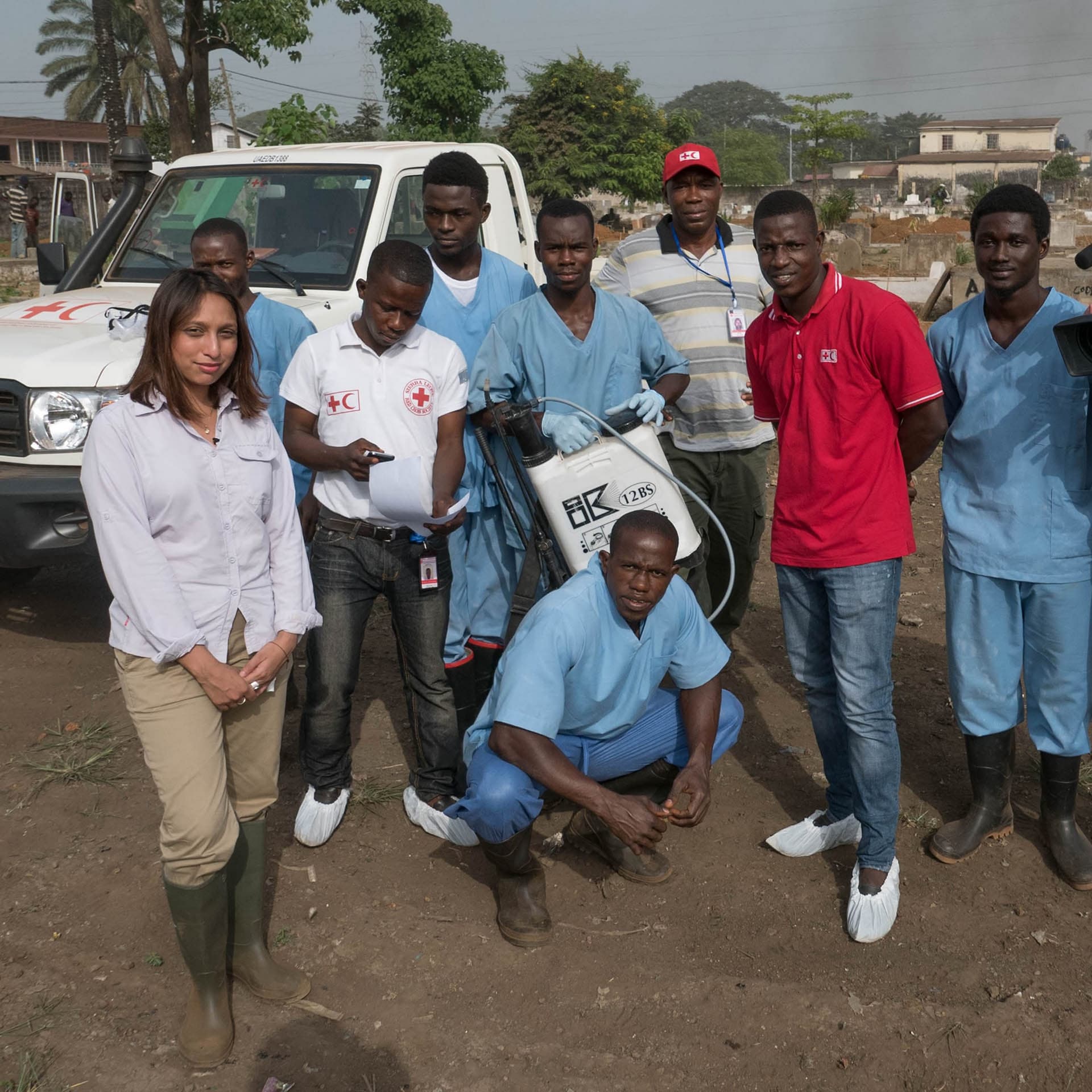
18:47Doctor Andre Briend:We've left the town of Lokichara behind and are now making our way north to the Kaichapaluk Integrated Outreach Site. It is about 16 or so kilometres from the nearest health facility. The outreach centre has been strategically placed near a well where the local people come to get water and let their animals drink in an otherwise dry landscape. My name is Shifila Ekwa. So here in the outreach side we do integrated services. We offer antenatal clinic for pregnant mothers and also we offer nutrition services for children who are malnourished. When we were driving, we drove about 30 minutes from the main road to get here.
19:36Doctor Andre Briend:How does the remoteness of the area impact on treating children with severe acute malnutrition? So we have a challenge when identifying those children. Because some of our villages, the households, they are scattered. It's sometimes so hard to walk that two kilometres from one household to the other. It's so hard. And it takes time to reach the children. So that's our challenge. So how much of your work is going to their homes vis -à-vis? How much of your work is spent here, meeting them at this centre? For me, a lot of my work is in the community. normally of their households. So we do assessment there.
20:25Doctor Andre Briend:We see how the child is being treated, how the child is being managed at home. So most of my work is at the community level. Pila took me to visit one of the mothers she's been supporting and see firsthand the power of the small packets of peanut paste. So she said she's Christian Paya. She has seven kids. Six. Is this one here? This is the seventh one. Could you please tell us more about your child before treatment began? The child was sick. She took her to the hospital. The child was admitted. She was severely malnourished. So she stayed for three months. So the child, after she was advised from the health facility, the child, she was transferred from OTP to SFP today.
21:30Doctor Andre Briend:What is that? From Safiya Limar Nourish. Now she's a moderate. What has brought her child to be Safiya, it's about the food. She was advised to give her child a balanced diet, but the food is not there. What changes have you seen since you started using the therapeutic food? There is a very big change she has seen from the child. The appearance of the skin, it was pale. even the eyes sometimes get reddish sometimes white she was even scared but since she started this this therapeutic food the health of her child has been good even the skin has changed for now the appetite is good she is eating well can you imagine what it would be like if you hadn't been able to access this treatment so close to home
22:40Doctor Andre Briend:She's saying it's only God that knows because if this outreach, these services, this RUT has not been there she does not even know what will happen Yet for all the impact of Plampinat in treating severe acute malnutrition For Henri Briand, he sees dark clouds on the horizon.
23:09Michel Lescanne:We see the climate is changing, and this may have major implications for the risk of having many cases of severe acute malnutrition. So I'm afraid it's a problem which is going to persist and maybe even worsen in the coming years. And the other concern I have, of course, is the food aid situation because the problem which remains is that even if produced locally, the food is expensive and the families cannot pay for it, which is a big problem now because international aid is not on the top of the agenda of many countries and there are difficulties in funding this project.
23:48Doctor Andre Briend:That fear around funding is one shared by Save the Children's Habtamu Fekadu.
23:54Jewel Kiriungi:The recent cut, you know, international aid had really significantly impacted the nutrition program. It has affected not only the availability of RTF, but also the systems that ensure it treats children who really need the most. This includes for like the community health workers, health facilities, the supply chain system. So UNICEF reported in 2025 really looking at what is the demand for RTF to treat the 12 million children who are suffering from acute malnutrition, what is available funding. it has clearly shown the funding is not really sufficient to meet the needs. What we really need is really a multi-year financing across a full nutrition response which means making sure supplies of RTF is available, investing on local manufacturers, supporting frontline health workers and facilities, strengthening community programs.
24:51Jewel Kiriungi:All of these are really important to mitigate the impact of the increased case of children with acute malnutrition this year and then the next year.
25:02Doctor Andre Briend:Andre, when you look back, this innovation that is spanning over 30 years, how do you feel about your individual role in developing this innovation? I feel that I achieved something, but to be frank, I don't spend my time looking at the past.
25:20Michel Lescanne:I prefer to look at the future. Officially, I retired years ago, but I'm still in touch with many groups doing research to improve current program, to improve current product. And this is more of interest to me than looking at the past. Yes, we've made progress, but I hope we still are making progress and progress will be made in the future.
25:43Doctor Andre Briend:High five. High five. High five. Send me. Check. Check us.
25:52Doctor Andre Briend:You've been listening to the documentary from the BBC World Service.
From the publisher
In the 30 years since its invention the ready-to-use therapeutic food Plumpy'nut has saved the lives of millions of children and protected countless others from the effects of malnutrition. Jewel Kiriungi explores its origins and ongoing legacy. The brainchild of two Frenchmen, Doctor Andre Briend and Michel Lescanne, a food processing engineer, they set out to put the power to feed children back into the hands of parents. With the help of organisations like Unicef they created a system of manufacture and distribution that would not only feed the hungry but benefit the economies of the countries where Plumpy'nut was needed.