In short
Podcast Summary: The Documentary Podcast - Reporting the Impact of the Gaza Ceasefire
Episode Overview The episode discusses the recent ceasefire in Gaza and its immediate impacts, including the release of hostages and the return of deceased individuals' remains. It highlights the role of citizen networks in reporting the conflict and features interviews with BBC journalists covering stories from both Gaza and Israel. Additionally, the episode touches upon the work of Dr. Tri Maharani in Indonesia regarding snakebite treatment.
Key Themes and Discussions
- Immediate Aftermath of the Gaza Ceasefire
- Hostage and Prisoner Releases: Post-ceasefire, hostages and prisoners were released from both sides, and remains of the deceased began to return.
- Impact on Civilians: Amira Dakrouri from the BBC Cairo Bureau shared insights on how the cessation of violence affected daily life in Gaza, with poignant reflections from residents who found it strange to sleep without the sounds of war.
- Cautious Optimism: Many residents are hesitant to celebrate, fearing the peace may be temporary. The conversation emphasized the emotional toll of the conflict on ordinary people.
- Role of Citizen Journalism
- Community Perspectives: Dakrouri emphasized the importance of grassroots reporting by citizens, which provides valuable insights into the human experience behind the headlines.
- Emotional Narratives: Reports from civilians highlight their fears and hopes, offering a deeper understanding of the conflict's toll on mental health and daily life.
- Insights from Michael Shouval
- Hostage Families' Experiences: Shouval provided a glimpse into the lives of families affected by hostages, detailing the emotional rollercoaster they experienced during the conflict.
- Public Sentiment: After the ceasefire announcement, celebratory moments were mixed with ongoing grief for the loved ones yet to return, illustrating the complexities of joy in times of trauma.
- Engagement with Hostage Families: Shouval described his efforts to cover their struggles and connect with them through protests and public demonstrations, highlighting the blurred lines between journalist and participant in the emotional landscape.
- Dr. Tri Maharani's Work on Snakebite Treatment
- Background: Dr. Maharani's journey began after witnessing the death of a snakebite victim, prompting her to study toxinology and improve treatment options in Indonesia.
- Challenges in Treatment: She identified significant gaps in medical treatment, including reliance on ineffective traditional remedies and the lack of accessible antivenom.
- Community Education: Dr. Maharani's efforts to educate rural communities about proper snakebite treatment have faced initial resistance, but she has gained recognition and acceptance over time.
- Antivenom Supply Issues: Indonesia's limited antivenom production leads to severe challenges in treating snakebite victims, prompting Dr. Maharani to seek solutions for local production.
Key Takeaways
- Human Experience in Reporting: The episode underscores the importance of human stories in understanding global conflicts, moving beyond mere statistics to real lived experiences.
- Emotional Resilience: The narratives of hostages and families reveal the profound emotional resilience and complexity of human reactions to trauma and loss.
- Healthcare Challenges: Dr. Maharani’s story highlights the gaps in healthcare access and education, particularly in rural areas, and the critical need for community engagement in health education.
- Cultural Dynamics: The challenges faced by Dr. Maharani also reflect broader societal issues, including gender dynamics and traditional beliefs in rural Indonesia.
Conclusion This episode of The Documentary Podcast illustrates the impact of the Gaza ceasefire on individuals directly affected by the conflict, as well as the ongoing struggles faced by healthcare professionals in addressing critical public health challenges. The blend of personal narratives, community engagement, and professional reporting showcases the power of storytelling in conveying the complexities of global issues.
Presented by: Faranak Amidi Produced by: Laura Thomas and Caroline Ferguson Available on: BBC World Service and major podcast platforms.
Written by AI. May contain mistakes. Listen to the episode to check what was said.
Transcript
Automatic transcript. May contain errors.0:00This BBC podcast is supported by ads outside the UK. I want to put all the issues on the table that keep me up at night. The interview, the best conversations from across the BBC. We're coming up against technology companies that are richer and more powerful than many nation states. With the people shaping our world. There are those that believe that the power of law should be replaced by the law of power. The interview from the BBC World Service. Listen now wherever you get your BBC podcasts.
1:00Listen on bbc.com or wherever you get your podcasts.
1:08Welcome to the documentary from the BBC World Service.
1:16Estás escuchando The Fifth Floor. The Fifth Floor dinliyosunos. Vizim le kalu. Tomiha ektai The Fifth Floor, Farnak Amidi Sobat. This is The Fifth Floor, at the heart of global storytelling with BBC journalists from all around the world. I'm your host, Farhanak Amidi.
1:45Following the ceasefire in Gaza, this week has seen the release of hostages and prisoners on both sides and the beginning of the return of the remains of some of the deceased. Over the past two years, the Fifth Floor has been speaking to language service colleagues reporting on the conflict, and this week we reconnect with them to find out how networks of citizens on both sides have informed and provided new perspectives on their reporting. Amira Dakruri checked in from the BBC's Cairo Bureau, where she's part of the team producing Middle East Diaries, formerly Gaza Lifeline. the day after the agreement i woke up in the morning and i i didn't find the news about the death toll of the of the daily death toll of the people who are dying in gaza so i i felt oh is that is the feeling of peace that people are not dying and actually what that also what the people there felt i mean uh i've listened to a lot of people within the this week and one of them said that he cannot sleep without the voice of the planes in the sky.
2:58And it was, he felt very weird that he's sleeping without that voice. We're figuring out what is happening. We are trying to know, will the peace will stand? Will the ceasefire agreement will stand or not? Not all the people there are optimistic regarding the standing of the peace agreement. I mean, And a lot of them are concerned. They are cautious regarding feeling the joy. They are afraid from being happy. We're asking the people to tell what is happening around them, not to go and chase the news, because we have the news already. I mean, we are telling the people the news. We are lifeline.
3:37So we are supposed to have the news, give them instructions. But we want from the people to know what is happening around them regarding the humanitarian aspect, regarding the people themselves, they always have another perspective, another point of view. And we were very keen to deliver this point of view. I mean, you're putting yourself in their shoes. For example, maybe when they say a safe corridor to people to pass from, but when you're listening to the stories of people, you know how they feel the fear inside their hearts when they are passing from this safe corridor and the soldiers on the two sides.
4:18Even if the soldiers are not doing anything, they feel the fear. So it gives you a really different perspective of what is really what this title means on the ground. We were lucky having a way, let me say, to reach people all over Gaza, I mean, from the south to the north sometimes i lost the contact with the people that i used to call for a long time because they they just lost connection they are busy with their life so a lot of them have sold their phones they are busy securing food and water and so and they came back to communicate so uh it it was really useful to know what is happening around them within these kind of um interruption between I can say people in moments were tired from talking.
5:06They felt in a moment that no one is hearing why I am talking. I remember that I talked to a doctor and I wanted to record with him just a three-minute interview with him, knowing what is happening in the hospital. I wanted to ask him how you feel as a doctor at these moments. he just said to me uh look amira i'm hungry i'm very very hungry i didn't eat for three days i'm very exhausted i'm drained my words to you now making me more drained and i prefer to keep this energy for the wounded people that have been keeping flowing to the hospital than talking to you. So at these moments I was holding my cup of coffee while I'm talking to him and I feel, I cannot describe what I felt at that moment but I felt okay it is more important for you now really to deal with the wounded people than talking to me.
6:15I understood at that moment why people maybe do not want to talk they felt in a moment that they are forgotten from the world and i think that the challenging thing now that i'm living in is keeping up my humanity to feel the people to not lose the feeling that i have regarding the other stories or the other people i'm very happy now while i'm talking to people and i'm asking them did you receive food did Did you receive water? Are you able to reconstruct your home? What is your plans to rebuild your life? So sometimes I do not have the hopeful answers that I'm expecting, yet the alter in the kind of questions is a progress in itself.
7:04It's relieving. Meanwhile, in Tel Aviv, BBC Arabic's Michael Chouval has been in close touch with hostage families in Israel for over two years. Here in Israel, it was late at night when President Trump announced that there was a ceasefire agreement. And just a few hours later, after I woke up, I rushed to the hostage square. And there I spoke to Itzi Korin, who was one of his sons, returned in a hostage deal earlier. And another one was supposed to arrive. And thankfully, he did return alive. But you could see from, you know, just speaking to him, I asked him a bit about the excitement, you know, how, whether he was celebrating with all the others.
7:53And he said, you know, he's been through such hell and such turmoil and such an emotional roller coaster over the past two years that he couldn't allow himself to celebrate until his son was back home, until he was with him. There were so many times in which, you know, it seemed as though we were on the brink of the deal, as though it was almost done and that the hostages were about to return home. And then, you know, things collapsed and the hostage families just, you know, were in complete and utter emotional disaster. And so I think he was trying to spare himself that. And he really made an effort to, on one hand, show some, express some positivity and happiness.
8:43But on the other hand, you know, stay really practical and make sure that until his son was back alive, he did not, you know, fully celebrate the ceasefire agreement. And, you know, there were great celebrations that morning after the announcement of the ceasefire agreement. But it was also clear that, you know, once Israel would receive the live hostages, it would also have to deal with the ones who are not coming back alive. And even more so with the ones who are not coming back at all. And I think that's a stage that Israel is still coping with. in the next few days we'll see how it's going to confront this challenge because some bodies have not been returned yet.
9:31I've been almost working for the BBC for almost 20 years now, but the past two years have been very unique in my experience, unfortunately. So from, I would say that on the first few days, I encountered very desperate people. Many of the hostage families were really open and willing to talk to me. I tried to show up to a lot of their protests. So I tried to spend as much time as possible with the hostage families at protests, rallies, where they went to try and get their message across. So I went down to the prime minister's residence in Jerusalem and spent time with them there at the protest tent.
10:17I spent time with them in front of the defense ministry in Tel Aviv, where they would hold a weekly protest Saturday night. I went down with them to the site of the Nova Festival, where they, through loudspeakers, try to call to their loved ones in Gaza and send messages of encouragement, calling them not to despair, that they were fighting for them, sending them love. and we very recently I joined the flotilla of the hostage families that try to get close to the maritime border of Gaza again to send messages of love and hope to their relatives so I spent a lot of time with the hostage families and and I think you know that encouraged them and showed them that there was genuine interest in their cause.
11:15And I think that's something that really resonated with them, you know, and allowed them to share their feelings more openly and sincere. I think that as a journalist, you're supposed to keep a degree of distance. You know, that's what we're being taught. That's part of our guidelines at the BBC and something that also for us, as people who are covering very difficult stories, it's important, you know, for our own emotional balance. But I think that in this story, that line really blurred. There weren't just interviewees. They became part of your emotional landscape. I don't think, you know, expressing empathy, I don't think it's a weakness.
11:57I think it's a strength. And that's something that they really identified with, you know, when they saw someone who feels their pain, who's making a genuine effort to understand what they're going through. I think that's something that really spoke to them and made them feel more comfortable to share their stories over the past two years. We've been constantly criticized by Israelis and their government, and we've been constantly scrutinized by Palestinians and activists who support the Palestinian cause. And we've heard criticism from both. And at times, I have to admit, it was very challenging, convincing, not only hostage families, but also victims of the attack and their relatives to talk to us, to speak to us, to share their experiences, because they felt it might not be reflected genuinely in the same way that they wanted to express it.
12:58But I think, you know, once we managed to establish some dialogue, they saw that my intentions were genuine, that I really wanted to get their feelings and opinions across. And I think that all of them were eventually happy with the result. My thanks to Amira Dakruri and Michael Shubao. You're listening to the documentary from the BBC World Service. This is The Fifth Floor and I'm Farina Kamidi.
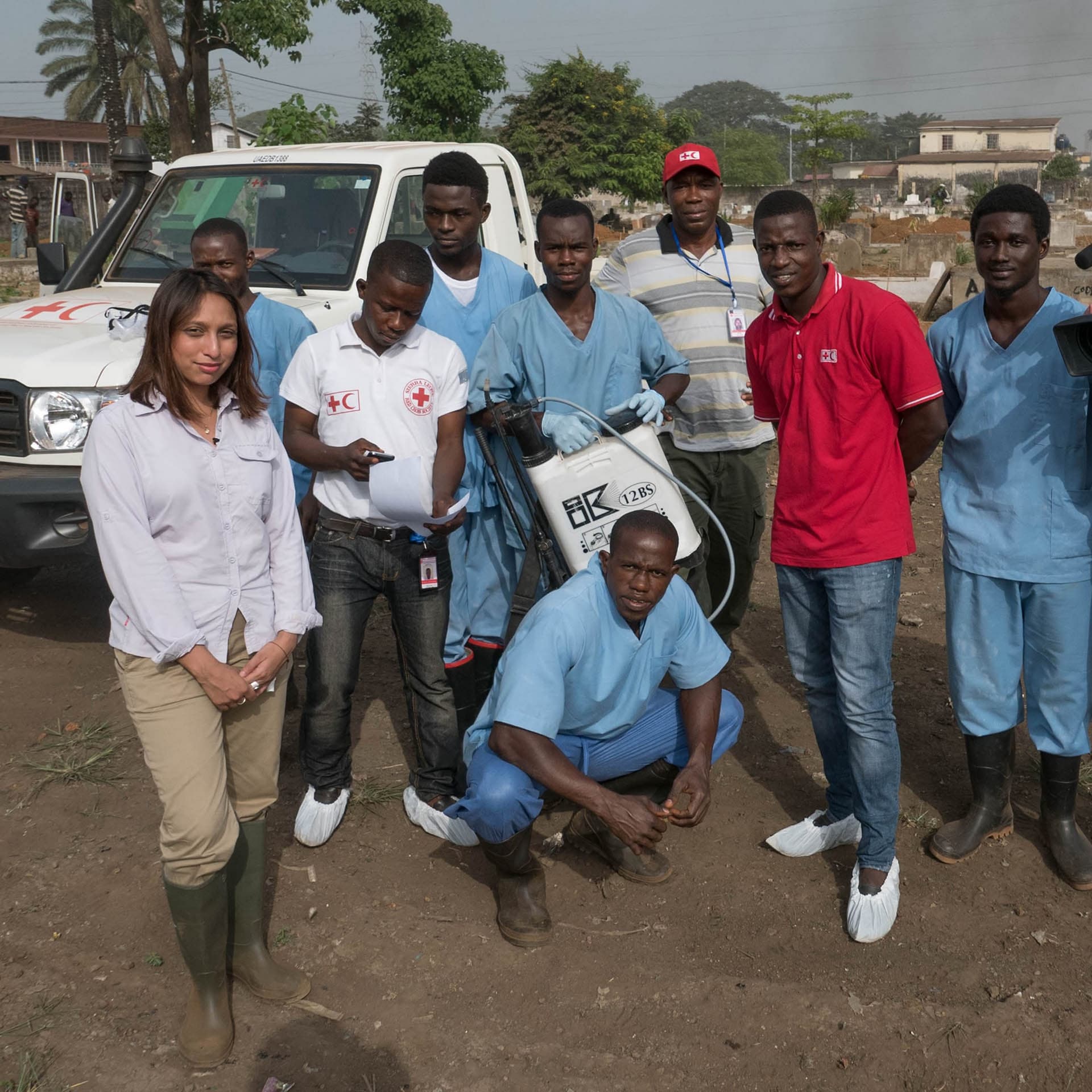
13:43When Tree Maharani was working as an emergency room doctor in a hospital in Indonesia some 15 years ago, a 30-year-old man was brought in one evening who had been bitten by a snake. Treatment for snake bites was basic in the country at that time, and there was little the doctors could do to save him. Worse, the man knew it and he pleaded with Dr. Maharani to save his life so he could see his daughter grow up. There was nothing she or anyone else could do and the man died. Dr. Maharani felt he had been failed and she decided to do something about it. As Sudestra Ajenggrastri or Ajeng from the BBC's Indonesian service has been following the story of Dr.
14:31Maharani, also known as the Queen of Snakes. Ajeng is with me. Welcome to the fifth floor, Ajeng. Thank you. Glad to be here. So Ajeng, you know, we know that doctors face losing patients all the time, but the way Dr. Maharani reacted was different. What was her response? She's actually the head of the emergency service in that particular hospital. But what she told me was that she felt helpless. She thought that she could have done something, but then she didn't know what. So this particular person actually helped her to find her calling. So after this case that this man died, what did Dr. Maharani do?
15:19So Dr. Maharani actually goes to Belgium to study toxinology. And then she took another fellowship in Australia on the same subject. So toxinology is a study of toxin that came from plants and animals. So not from chemicals or other human-made particles. So that's, yeah, I only found out after I interviewed her too. Let's just get a handle on the snake situation in Indonesia. How many snake bite incidents happen in the country and how many of them are fatal? This is the official data from the WHO. It says that more than 135 ,000 snake attacks in Indonesia, 10 % of them are fatal. But Dr. Maharani also said that that number is maybe just the tip of the iceberg because a lot are unreported and untreated and people don't go to the hospitals if they got bitten by snakes.
16:39So official data is very unreliable. So Ajeng, who's most at risk of snake bites? So Indonesia has a lot of rural areas and many of these people works as farmers or they have like vegetable farms and a lot of the time these people have houses directly beside those farms and their houses are just like very simple house they're built by woods and you can see like when you have a house made of woods, then you have those space where small animals could crawl inside. And Indonesia is, of course, a tropical country, and it's hot. It's very humid. So during the night, without you realize it, sometimes small animals or snakes could come crawling and lingering into your house.
17:39And Indonesia is also like geographically located in between two major continental ecosystems, which is Asia and Australia. But in the middle of Indonesia, there is a zone separated by an imaginary boundary. It's called the Wallace Line. So that particular area have very unique biodiversities, and of course, venomous snakes. and not to mention the snakes that are living in the sea. Yeah, so you can imagine the diversity of all of the animals, including snakes, that is in Indonesia. Yeah. And once she studied toxinology, what problems did Dr. Maharani identify with the way snake bites were actually being treated in the country?
18:32Yeah, so a lot of the problems are the information about how to treat snakebite properly. A lot of the traditional healers, they have these different kinds of bizarre treatment to treat snakebitten patients. People would suck out the venom, they would apply hot water, red onions, even hot black stones to the wounds, which is of course unsanitary and it's not medically proven at all. Such treatments could then lead to tissue damage and in most cases it even leads to death. So what her aim when she first started to go into toxinology is to write this mindset. She actually goes directly to a lot of communities like hiking communities and indigenous people communities to tell them the correct way to treat snake bites.
19:41So according to her, this is what you do when you got bitten by a snake. First, you have to stay still. So any part where the snake bites you, you keep that area still. For example, if it's bitten on your feet, then you try not to walk. And you call someone to get you to the hospital without you moving your feet. So what she told me, immobilization is very important because, you know, in the old days, People think that the venom actually goes through your blood veins, but it's not. So it's through the lymph nodes. When you move the area, when you got bitten, the venom actually spread through the lymph glands, not the blood vessel.
20:27So if you drain the blood or applying hot water or electricity even, that makes the patient's condition worse. The most important thing is to just keep it still so that you don't move the limb glands and pump the venom to the body. And how did people react to that? In the first years when she did this, she mentioned that there's a lot of challenges, especially as a woman doing this. You bring new ideas or you bring something that aren't familiar to people who have trusted this traditional healers for so long. So she mentioned that she faced a lot of rejections. some people also questioning her like who are you and you're a woman and then when she told them that she wanted to educate people on how to treat snake bite they would say but you're not a man you're a woman how come you know so anyway indonesia is still in lots of places are still very patriarchal.
21:38But now I think after some years of this doing this nonstop, she finally got that recognitions on BBC Indonesia, we posted the videos, we have a lot of positive comments, and people are saying, Oh, yeah, I've heard her before, you know, I go to her seminars and her workshop, and she's really great at explaining things, you know, so a lot of positive messages now. But of course, when it was started 15 years ago, totally different story. And what is access to antivenom like in Indonesia? The thing is, Indonesia only produce one antivenom that could treat three different snake species. How many species of venomous snakes exist in Indonesia, roughly?
22:30Roughly, it's about 80. Wow. but only three that we have the antivenom. So if other species of snakes attacks, then Dr. Maharani have to go to other countries, most likely Thailand, or she would go to Australia to purchase these antivenoms. And she also told me that it's very difficult because antivenoms are not cheap, they're expensive. and if you want to transport it then you have to keep it under four degree Celsius and you know going through the most remote parts of Indonesia is difficult. So that's why Dr. Maharani right now is collaborating with some universities to make local anti-venoms and they're trying to use like local ingredients to make the production cost cheaper.
23:35And this actually feels quite personal. She travels with her own money on her own and she's doing everything on a personal level. Why is that? I think what she told me was that she has finally received her calling, you know, treating snakebites all around Indonesia. I think she makes this her personal mission with snakebites. I think, you know, it's not like it's a massive disaster where you can see all of the casualties in front of you. But when you look at the data you know there's lots of people are suffering and that's why it become very you know like silent disaster it's sort of like a neglected cases so that's why i think she she feel like she has this calling and you know she needs to go moving forward she wants to do this in this in her life and do we know how successful she's been in changing the outcome for snake bite victims?
24:44She said that, you know, when she looked at social media and people saying those comments, she feels like she has succeeded in trying to change the mindset. There's this anecdote that she also told me. So in Indonesia, you usually go around in Jakarta, particularly because it's, you know, the traffic is really bad. We have this motorcycle taxi drivers and we can go anywhere with them quite, you know, mobile and quite more easily than by car. So she told me that I have this motorcycle taxi driver. And I asked this person just out of nowhere, you know, like what would you do if you got bitten by snake and then this taxi driver told her that oh you have to stay still you know immobilizations and I saw this elderly woman talk about it on YouTube and that woman that the taxi driver talked about is actually her so I love this that's yeah and so when she had these conversations with ordinary people she felt like oh this this is the mission.
26:01I have accomplished my mission, you know. Thanks again to Ajeng from BBC Indonesian. Of course, you can always write to us at thefifthfloor at bbc.co.uk. We love getting your emails. Thanks to Rit Prasaddar for getting in touch with us to tell us he had enjoyed last week's program about loneliness in India and to share his own story. He wrote, For my internship, I traveled 1 ,800 kilometers to Pune, but I was very lucky as I got plenty of friends in my college and the people of Pune were very open and good. I remember that during last year's Diwali, I couldn't go back home as my train tickets were not confirmed and I was the only one in the quarters.
26:47For one week, the Quarture's security guards were my best friends, and we even installed Diwali lights on the balcony together, a bond that we still have till today. Here is that email one more time, the5thfloor at bbc.co.uk. Don't be a stranger. The 5th Floor is back next week, bringing you the best stories from the BBC's language services. Till then, take care.
27:38I want to put all the issues on the table that keep me up at night. The interview, the best conversations from across the BBC. We're coming up against technology companies that are richer and more powerful than many nation states. With the people shaping our world. There are those that believe that the power of law should be replaced by the law of power. The interview from the BBC World Service. Listen now wherever you get your BBC podcasts.
From the publisher
Following the ceasefire in Gaza, this week has seen the release of hostages and prisoners on both sides and the beginning of the return of the remains of some of the deceased. Over the past two years, The Fifth Floor has been speaking to language service colleagues reporting on the conflict. This week, we reconnect with them to find out how networks of citizens on both sides have informed and provided new perspectives on their reporting. Amira Dakroury checked in from the BBC's Cairo Bureau where she's part of the team producing Middle East Diaries, formerly Gaza Lifeline; and from Tel Aviv, BBC Arabic's Michael Shuval reflected on reporting the stories of hostage families.
Dr Tri Maharani's videos about how to treat snake bites are beginning to be well known in Indonesia. For fifteen years, she's worked to improve outcomes for snakebite victims in her country, where only one antivenom is currently available, but more than eighty species of poisonous snake are a threat. BBC Indonesian's Astudestra Ajengrastri spoke to her.
This episode of The Documentary comes to you from The Fifth Floor, the show at the heart of global storytelling, with BBC journalists from all around the world.
Presented by Faranak Amidi Produced by Laura Thomas and Caroline Ferguson